
![On the left of the graphic, Tatânga Mânî [Chief Walking Buffalo] [George McLean] in traditional regalia on horse. In the middle, Iggi and girl engaging in a “kunik”, a traditional greeting in Inuit culture. On the right, Maxime Marion, a Métis guide stands holding a rifle. In the background, there is a map of Upper and Lower Canada, and text from the Red River Settlement collection.](https://thediscoverblog.com/wp-content/uploads/2019/02/blog-banner-1.jpg)
By William Benoit
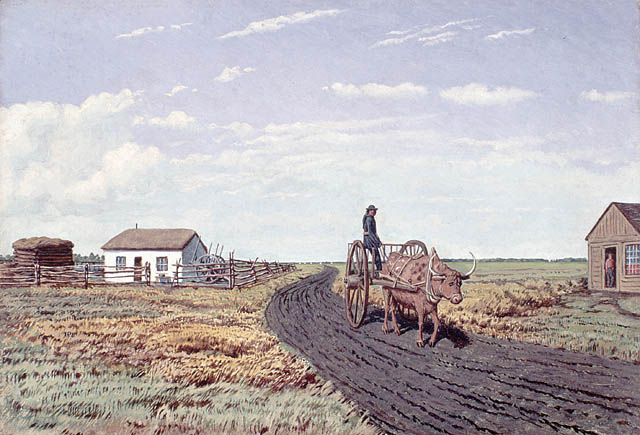
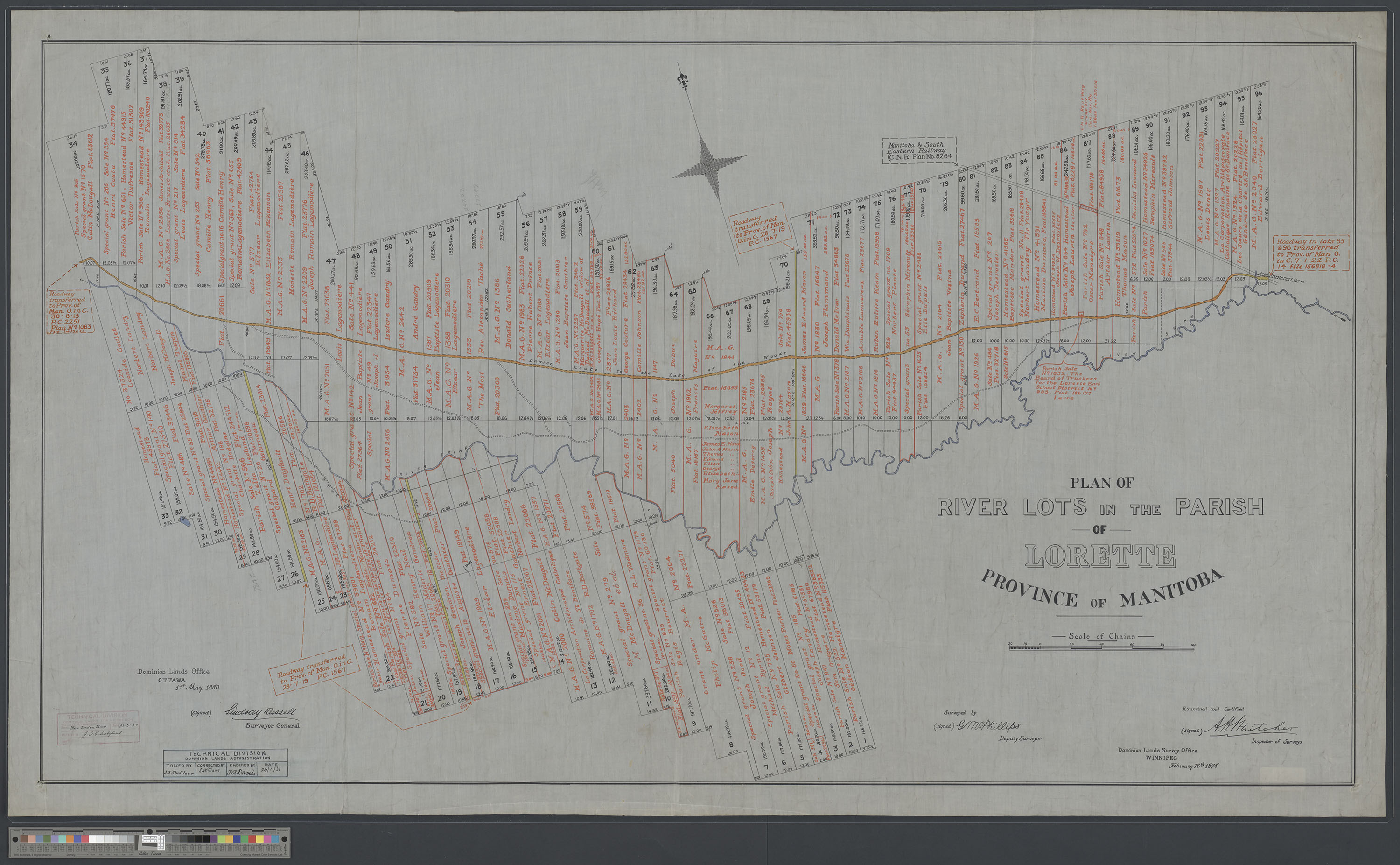
Library and Archives Canada holds plans produced by the Canadian government of existing Métis river lots. These were required by the Manitoba Act and the transfer of Rupert’s Land and the North-Western Territory. These river lot plans are important pieces in understanding the Métis Nation. The plans are invaluable to the entire Métis Nation because they show where many Métis ancestors lived before Canada’s acquisition of the region.
The Métis created settlements across the Métis Nation Homeland. The cradle of this homeland was the Red River Settlement. By 1869, there were 12,000 inhabitants there, of which 10,000 were Métis. Censuses recorded that 5,000 to 7,000 of the Métis were children.
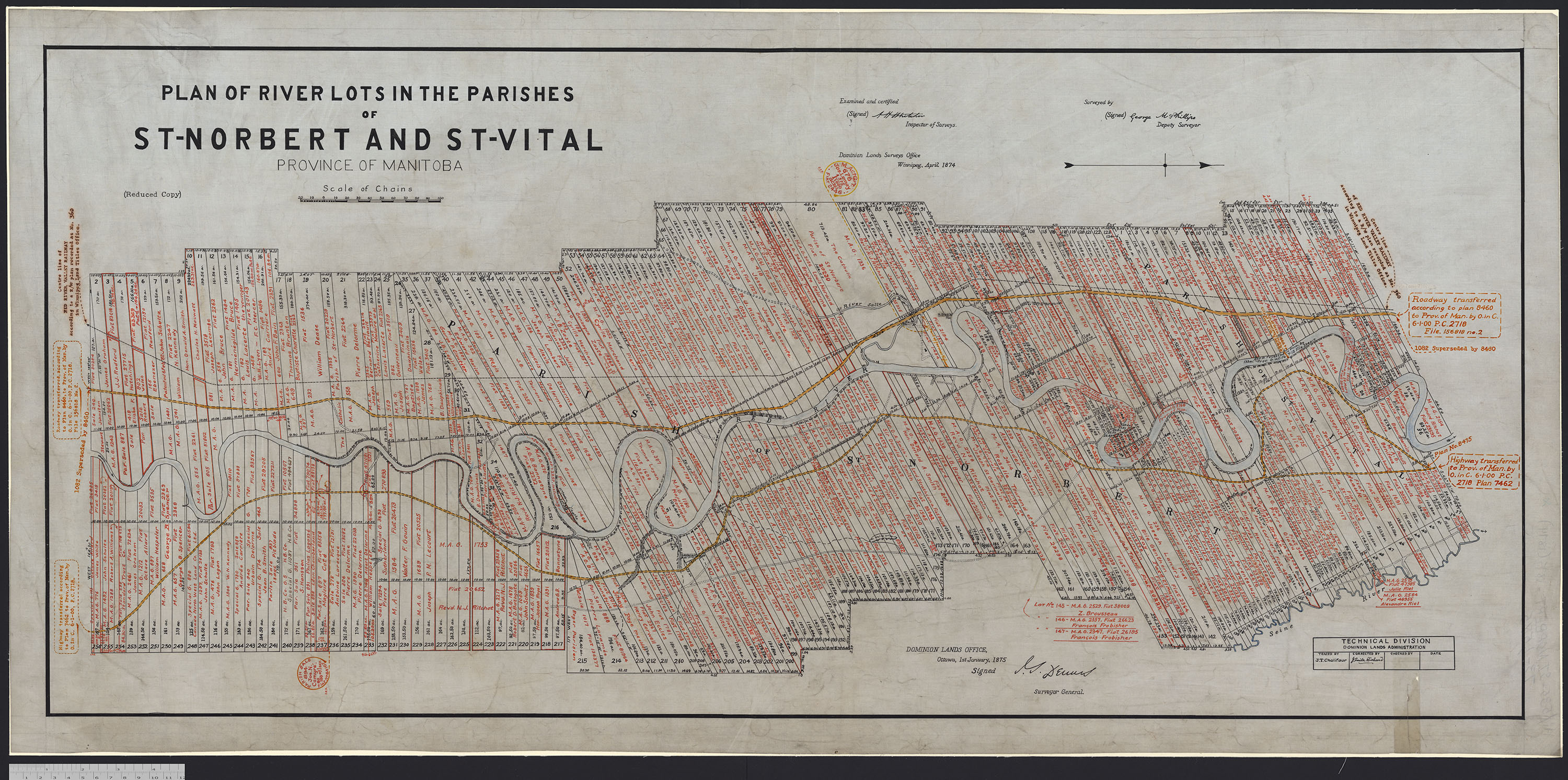
Visit the Flickr album for images of Métis Nation river lot plans.
 Library and Archives Canada Blog
Please print the names.
That’s a good idea! When you are doing research in Collection Search, you can transcribe the records using Co-Lab. In the image viewer, you will see one of two options to contribute using Co-Lab:
If an image has already had crowdsourcing enabled, you can click the button labelled “Contribute” and continue adding your information.
If an image has not yet been enabled for crowdsourcing, once you click on “Contribute” you will see a button labelled “Enable this image for Co-Lab contributions.” After clicking on it, you will be able to answer a few short questions about whether the image needs transcription (does it contain any text within the image?), the language of the text, and what type of media best describes it, in order to help define what types of contributions will be collected.
Happy transcribing!
The map is excellent thank you. My ancestor got land in the Metis Nation Riverlot lands in Lorette. They are Metis and the head of the family along with every on of his children received land and are on the map. They are all listed under the records for land grants. Why did some Metis receive scrips and others applied for land grants.
Good question! Our Reference section might be able to provide you with more information. Please use our Ask us a question form (https://www.bac-lac.gc.ca/eng/assistance-request-form/Pages/assistance-request-form.aspx?requesttype=3). Have a good day.
This is an excellent map. Is there any way to order a print?
There certainly is! Follow this link for more information: https://www.bac-lac.gc.ca/eng/services-public/copy-services/Pages/order-copies4.aspx
Pingback: An Introduction to Relict Landscapes and the Past in the Present – NiCHE