Théâtre Cercle Molière celebrates its 100th anniversary: A legacy preserved in the collections of Library and Archives Canada

Version française

By Ariane Brun del Re

This year, Théâtre Cercle Molière, a professional theatre company located in the St. Boniface neighbourhood in Winnipeg, is celebrating its centenary. This anniversary is all the more remarkable as it marks the existence of the oldest Francophone theatre company in Canada.

Founded to perform classics of the French repertoire, Théâtre Cercle Molière turned to Québécois and Canadian theatre in the 1950s. Over the following decade, it transformed into a professional company and became one of the main hubs of Franco-Manitoban playwriting, a role it continues to play today.

Although the archival collection of Cercle Molière is preserved at the Centre du patrimoine of the Société historique de Saint-Boniface, some documents that reflect the existence and evolution of this important theatre company are part of the collections of Library and Archives Canada (LAC), notably the Gabrielle Roy fonds.

Known for winning the prestigious Prix Femina with her novel Bonheur d’occasion (1945), later translated to English as The Tin Flute, Gabrielle Roy is originally from St. Boniface. Before becoming an internationally renowned writer, she graced the stage of Théâtre Cercle Molière on multiple occasions. She became a member around 1930 or 1931, during her time teaching at École Provencher in St. Boniface. At that time, Théâtre Cercle Molière was led by Arthur Boutal, a journalist and printer by profession, who staged French plays with the help of his wife Pauline (born Le Goff), a visual artist and fashion designer. After the death of Arthur Boutal in 1941, Pauline took over the company until 1968. The certificate below, presented to Gabrielle Roy by the Province of Manitoba in honour of the theatre company’s 50th anniversary, underscores her significant involvement with Théâtre Cercle Molière:

Certificate signed on November 1, 1975, by René E. Toupin, Minister of Tourism, Recreation and Cultural Affairs. The document features the coat of arms of Manitoba and a portrait of Molière.

Certificate awarded to Gabrielle Roy by the Province of Manitoba in recognition of her participation in Théâtre Cercle Molière. (e011271382)

The Gabrielle Roy fonds also contains several drafts of the text entitled “Le Cercle Molière… porte ouverte…”, which she wrote around 1975 for an album intended to commemorate the company’s 50th anniversary. The article was published in the collective work Chapeau bas : réminiscences de la vie théâtrale et musicale du Manitoba français (1980). In it, Gabrielle Roy recalls the challenges faced by the members of Théâtre Cercle Molière: “The main difficulty for us, who had no resources, was always to secure a free space for our rehearsals. We wandered from place to place until, during a rather harsh winter, we ended up rehearsing—scarves around our necks—in the dimly lit and poorly heated space of a warehouse. In the end, I obtained permission from the director of Académie Provencher, where I was a teacher, to use my classroom for this purpose.” [Translation] (p. 117)

The front and back of a sheet taken from a spiral notebook. The text is written in cursive with blue ink and includes several additions and erasures.

The front and back of the first page of the notebook in which Gabrielle Roy wrote the text “Le Cercle Molière… porte ouverte…” published in Chapeau bas. (e011271380)

After taking on various positions for the theatre company, Gabrielle Roy landed her first real role in the play Blanchette by Eugène Brieux, which premiered on November 30, 1933. She played the daughter of an aristocratic couple. Thanks to this play, the company stood out at the Manitoba Regional Festival, a preliminary competition that opened the doors to the new Dominion Drama Festival, which took place in Ottawa in April 1934. Against all odds, the company triumphed in the Francophone category.

Two years later, Cercle Molière once again won the Manitoba Regional Festival, with Jean-Jacques Bernard’s play Les Sœurs Guédonec. The play featured two old peasant women, one of whom, Maryvonne, was played by Gabrielle Roy and the other, Marie-Jeanne, by Élisa Houde, as shown in the program below:

The cover page of the program, printed on blue-grey cardboard, provides general information about the 1936 edition of the Manitoba Regional Festival. The interior pages, printed on yellowed paper, list the casts of four plays performed at the festival—including Les Sœurs Guédonec, presented by Théâtre Cercle Molière—along with an advertisement.

Program from the 1936 edition of the Manitoba Regional Festival, during which Théâtre Cercle Molière presented Les Sœurs Guédonec, with Gabrielle Roy in the role of Maryvonne. (MIKAN 5383741)

Théâtre Cercle Molière was thus selected to participate in the Dominion Drama Festival, where it won the trophy for Best French Play for the second time. During this stay in Ottawa, Gabrielle Roy crossed paths with one Yousuf Karsh. The young Canadian photographer of Armenian descent collaborated with Ottawa Little Theatre, where he learned to photograph actors on stage, as he recounted in his book In Search of Greatness (1962): “This experience of photographing actors on stage, with stage lighting, was electrifying. [My mentor, John H.] Garo had taught me to work with daylight, where one had to wait for the lighting to be right. In this new situation, the director could command the lighting to do what he wished. The unlimited possibilities of artificial light overwhelmed me.” (p. 48) The lighting techniques he honed in the theatre, which allowed for significant contrasts between black and white, would ultimately become his trademark.

Driven by his interest in theatre, Karsh became the official photographer of the Dominion Drama Festival in 1933. LAC preserves several photographs he took of Gabrielle Roy during the performance of Les Sœurs Guédonec:

Black-and-white photograph of two women sitting at a table near a fireplace. Each is wearing a dark-coloured dress, an apron and a white headpiece.

Photograph by Yousuf Karsh showing Élisa Houde (on the left) and Gabrielle Roy (on the right) in a performance of the play Les Sœurs Guédonec at the Dominion Drama Festival. (e011069771_s1)

When their paths crossed, both Gabrielle Roy and Yousuf Karsh were 27 years old. Without knowing it, they were each on the verge of an internationally renowned career, propelled by the world of theatre. The two artists would leave their mark in their respective disciplines: she, in literature; he, in photography.

Years later, while examining one of the photographs of herself and Élisa Houde taken by Karsh, Gabrielle Roy wrote: “I look at the small, yellowed photo and feel a strange shock in my heart. In the end, what was it that drove this woman [Élisa Houde], a calm and already quite elderly schoolteacher, to suddenly throw herself into such a whirlwind? What, after all, was it that drove all of us? Would the world be changed because a group of amateurs, coming from the far reaches of the country, was about to perform a play from the French repertoire in the Canadian capital? In the ethnic diversity of Manitoba, almost entirely dominated by English, what were we—this small group of French speakers, our reckless efforts, this bold hope of ours—still, to this day, I wonder how it could have possibly flourished in our isolation? A flower in the desert!” [Translation] (1980, pp. 120–121)

What is certain is that Gabrielle Roy would be transformed by this “flower in the desert,” as she so aptly put it. Her time at Théâtre Cercle Molière had confirmed her desire to write: “During rehearsals, as I sometimes discovered and expressed myself through the words of an author, I felt the desire to perhaps, one day, give voice to others. What a thrill it must be!” [Translation] (1980, p. 123)

One hundred years after its founding, Théâtre Cercle Molière remains an open house, a gathering place, and a hub of vibrant activity for Francophone theatre in Manitoba and beyond. It has propelled the careers of many artists and left a lasting impact on generations of spectators. Happy anniversary, Théâtre Cercle Molière!

Additional resources:

  • Gabrielle Roy, une vie : biographie, François Ricard (OCLC 35940894)
  • Chapeau bas : réminiscences de la vie théâtrale et musicale du Manitoba français (OCLC 10112702)
  • In Search of Greatness: Reflections of Yousuf Karsh, Yousuf Karsh (OCLC 947443)
  • Website of the Théâtre Cercle Molière
  • Gabrielle Roy fonds, Library and Archives Canada (MIKAN 3672665)
  • Yousuf Karsh fonds, Library and Archives Canada (MIKAN 138136)
  • The Dominion Drama Festival—Theatre Canada fonds, Library and Archives Canada (MIKAN 99527)
  • Performing Arts Collection, Library and Archives Canada (MIKAN 106737)

Ariane Brun del Re is an archivist of French language literature in the Cultural Archives Division at Library and Archives Canada.

Cercle Molière: a century-old Franco-Manitoban institution to discover in LAC’s archives!

Version française

By Théo Martin

Did you know that Le Cercle Molière, one of the oldest Canadian institutions in performing arts, is celebrating its 100th anniversary this year? Library and Archives Canada (LAC) is marking this anniversary by publishing two blog posts highlighting some elements of our archival fonds and collections that showcase the beginnings and evolution of this Franco-Manitoban theatre company.

Le Cercle Molière was founded in 1925 in Saint-Boniface, Manitoba, by Belgian professor André Castelein de la Lande, Manitoba civil servant and administrator Raymond Bernier, and translator and administrator Louis-Philippe Gagnon—who became its first president. In its early days, Le Cercle Molière was an amateur theatre organization dedicated to promoting French culture and language in Manitoba. It also sought to introduce French theatre to the English-speaking population of Winnipeg and surrounding areas, bringing both language communities closer together. Its first production, Le monde où l’on s’ennuie by Édouard Pailleron presented at the Dominion Theatre in Winnipeg in 1925, won over the audience. Throughout the 1920s, Le Cercle Molière maintained its momentum and put on one to several productions per year, gradually carving out its place in the cultural landscape.

Two program covers side by side.

On the left, an image of the production program for L’échelle cassée by George Berr, 1926. Performing Arts Collection, MG28 I 139, volume 18, file 14. On the right, an image of the production program for L’Arlésienne by Alphonse Daude, 1928. Performing Arts Collection, MG28 I 139, volume 28, file 14. (MIKAN 4705232)

From its early years, Le Cercle Molière extended its reach beyond the borders of Saint-Boniface, touring throughout Manitoba and providing the province’s French-speaking communities with invaluable access to theatre. In 1934, its reputation reached a milestone when the 14th Governor General of Canada, Lord Bessborough, invited the theatre company to participate in the Dominion Drama Festival. The same year, Le Cercle Molière won the award for best French-language play, both regionally and nationally, for its production of Blanchette by Eugène Brieux.

This national recognition marks the beginning of a long-term participation in the Festival, resulting in many regional and national trophies. By showing that it was possible to do French-language theatre outside of Quebec, where theatre institutions were already competing, Le Cercle Molière affirmed its role as an ambassador for French-language theatre and promoted its influence across Canada.

Side by side images of a program from the Dominion Drama Festival and a page containing information about a play titled Blanchette.

On the left, an image of the program for the second annual final of the Dominion Drama Festival, April 1934. On the right, a page featuring the play Blanchette, produced by Le Cercle Molière, which won the award for best French-language play. Performing Arts Collection, MG28 I 139, file 14. (MIKAN 4705232)

Photograph of four people standing on a stage in the middle of a set.

Actors from Le Cercle Molière in the production Le voyage à Biarritz during the Dominion Drama Festival in Ottawa, in 1937. That year, Joseph Plante received the award for best French actor. Photo: Yousuf Karsh, Yousuf Karsh fonds, 1987-054 NPC. (MIKAN 4332030)

Doing French-language theatre was no easy task for Le Cercle Molière and other French-language theatre groups outside of Quebec. During the 1936 festival, some Quebec journalists and critics, no doubt offended that the Le Cercle Molière had won the award for best French-language play that year, criticized the poor quality of the French spoken in its productions:

[Translation] “The Quebec actors who participated in the Ottawa Drama Festival are sore losers. At least, that was what was stated in a Canadian Press article that was published in the newspapers. They criticized Mr. Granville-Barker’s decision to award the place of honour to Le Cercle Molière. They claimed that Western artists did not have pure French-Canadian accents. As for the judge, he was allegedly incompetent because he did not know our language well enough […].”

     La Liberté (Saint-Boniface, Manitoba), April 6, 1936. (1)

Fortunately, however, these criticisms died down over the following decades.

In the 1930s, a dynamic couple from France, Arthur and Pauline Boutal, expertly produced Le Cercle Molière’s shows, which received acclaim throughout French Canada and internationally. After Arthur’s death, Pauline kept the momentum well into the 1960s. Le Cercle Molière presented a wider range of productions, including several youth plays. In 1961, it launched l’Atelier, a first training program for emerging theatre artists in Manitoba.

Starting in the 1970s, Le Cercle Molière became a professional company under the artistic direction of Roland Mahé, offering more space for contemporary French-language playwriting, experimental playwriting and youth theatre (notably with the creation of the Festival théâtre jeunesse [1970] and the Théâtre du Grand Cercle [1985]). Little by little, Le Cercle Molière became a hub for Franco-Manitoban and Franco-Canadian theatre. It featured works by artists and playwrights Roger Auger, Claude Dorge, Irène Mahé, Jean-Guy Roy, Jean-Pierre Dubé, Janine Tougas and Marc Prescott.

Poster for a play with hand shadows at the top of the page and writing on the rest of the page.

Poster for the play Montserrat by Emmanuel Robles, presented by Le Cercle Molière at the Dominion Drama Festival in 1971, in Ottawa. The Dominion Drama Festival fonds – Theatre Canada. R5415 1980-058 NPC. (MIKAN 2979533)

Two play covers side by side. The first one shows a woman holding a shopping bag, standing in front of a big-box store on a busy street. The second one shows a person sitting on a chair with a bag over their head and colourful lights wrapped around them from head to toe.

On the left, the play Suite manitobaine by playwright Roger Auger. Les Éditions du Blé, Saint-Boniface, 2007. ISBN 9782921347969. (OCLC 86226189) On the right, the play Sex, lies et les Franco-manitobains by playwright Marc Precott. Les Éditions du Blé, Saint-Boniface, 2013. ISBN 9782923673837, 2923673832. (OCLC 842523879)

Today known as Théâtre Cercle Molière and led by Métis actress and director Geneviève Pelletier (who will conclude her mandate on July 31, 2025), the century-old company continues to explore new artistic horizons. Working to promote cultural diversity, the company proudly showcases Franco-Canadian playwriting in Manitoba, Canada and around the world.

LAC is proud to preserve documentary evidence of this undisputed gem of the performing arts in the country. The national collection includes printed publications of works by Quebec and Franco-Canadian playwrights that have been performed on stage of Le Cercle Molière. LAC’s archival fonds and collections also include several promotional documents (posters, programs, leaflets, press clippings) from Le Cercle Molière, notably The Dominion Drama Festival – Theatre Canada fonds (R5415) and the Performing Arts Collection (R3376). In addition, Library and Archives Canada preserves the archives of individuals who have worked with Le Cercle Molière in their youth, including those of the novelist Gabrielle Roy (R11799) and the journalist Henri Bergeron (R10049). There are also many photographs taken in the 1930s by the renowned photographer Yousuf Karsh (R613) as part of the Dominion Drama Festival in Ottawa. This photographic collection contains some shots of a young actress, unknown at the time, from Saint-Boniface, Manitoba, who would become one of the most celebrated Franco-Manitoban authors of her generation (but she will be the subject of another blog post).

Additional resources

LAC fonds and collections:

Other archival centres:

    • Le Cercle Molière and Pauline Boutal fonds are located at the Centre du patrimoine (Société historique de Saint-Boniface, Manitoba).

Printed sources:

  • Dubé, Jean-Pierre, Lynne Champagne. Le Cercle Molière: 75 ans de théâtre. [Edition] Le Cercle, Winnipeg, Manitoba. [2001] (OCLC 46629181)
  • Le Cercle Molière : cinquantième anniversaire. Éditions du Blé, Saint-Boniface, Manitoba, 1975. (OCLC 2877379)
  • Lee, Betty. Love and Whisky: the story of the Dominion Drama Festival. McClelland and Stewart, Toronto, 1973. (OCLC 786525)
  • The Oxford Companion to Canadian Theatre. Oxford University Press, Toronto, 1989. (OCLC 21293755)

Websites (or online publications):

Reference

  1. Le Cercle Molière : cinquantième anniversaire. Éditions du Blé, Saint-Boniface, Manitoba, 1975. (OCLC 2877379)

Théo Martin is a Performing Arts Archivist in the Cultural Archives Division at Library and Archives Canada.

Through the Scope of a Sports Medicine Icon and Pioneer of the Paralympic Movement

Version française

By Muhamed Amin

In 1994, as part of its 40th anniversary, Sports Illustrated announced its “40 for the Ages” list of most influential figures to have significantly altered or elevated the world of sports. Legendary icons such as Muhammad Ali, Michael Jordan, Roberto Clemente, Billie Jean King and Pelé were obvious selections, not only owing to their athletic dominance on the field of play but also how they redefined their respective sporting disciplines, served as archetypes for societal change and influenced public perceptions of the modern-day athlete.

That said, the inclusion of a medical physician and educator to the list might, at first glance, have seemed peculiar. But when that individual is directly responsible for not only revolutionizing the fields of medical surgery and sports medicine but also serving as a pioneer of the Paralympic movement (in Canada and abroad) and a driving force for the inclusion of athletes with disabilities in the mainstream sporting consciousness, one quickly realizes that such an addition to this list is duly merited.

Portrait of a man wearing a lab coat and using medical instruments.

Portrait of Dr. Jackson, R17017, Vol. 29, File 1 (MIKAN 5965983). ©2024 by Danny Turner, photographer.

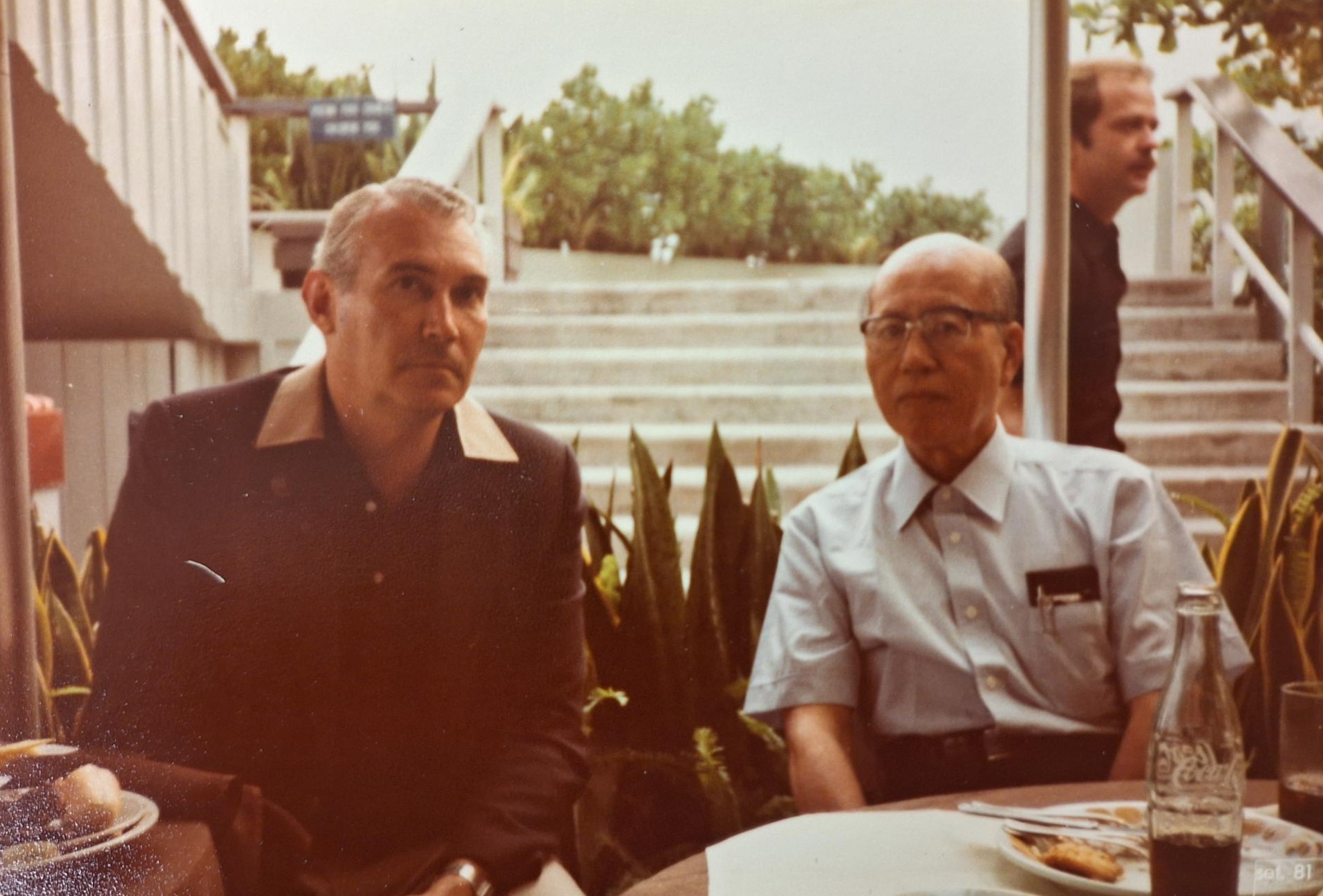
Born in Toronto, Ontario, in 1932, Dr. Robert W. Jackson (O.C., F.R.C.S., M.D., M.S.(Tor), F.R.C.S.(Ed), F.R.C.S.C.) graduated from medical school in 1956 and immersed himself in the field of orthopaedic surgery, not only developing his surgical and teaching skills but also expanding his research and professional interests in the realms of sports medicine and para-sports.

In 1964, while accompanying the Canadian Olympic team in Tokyo, Japan, he met Dr. Masaki Watanabe, Director of Orthopaedic Surgery at Tokyo Teishin Hospital, who had developed the first applied arthroscopic tool for surgery. Under his tutelage, Dr. Jackson learned about the arthroscopic instruments themselves and how to apply minimally invasive techniques during surgical procedures.

A series of four photographs of a doctor, medical tools and medical surgery.

Dr. Masaki Watanabe/early model of arthroscopic instruments, R17017, Vol. 20, File 24 (MIKAN 5966007).

A photograph of two men sitting at a table facing the camera.

Dr. Jackson (left) with Dr. Masaki Watanabe, R17017, Vol. 20, File 24 (MIKAN 5966007).

Eager to discover more about this innovative approach to surgery, Dr. Jackson continued his research upon his return home and soon introduced the arthroscopic method into mainstream North American surgical methodology. This groundbreaking practice is widely credited for being one of the most significant advances in orthopaedics of the 20th century, a feat that not only served as the catalyst for improvements in all other branches of surgery but revolutionized the field of sports medicine as well.

A doctor performing surgery with the assistance of a medical professional while other medical professionals look on.

Dr. Jackson performing arthroscopic surgery, R17017, Vol. 21, File 1 (MIKAN 5966007).

Although Dr. Jackson was internationally distinguished for his proficiency as a surgeon, not to mention his dedication to teaching and his vast contributions to the scientific literature, his passion for sport was equally inspiring. He is credited with having radically transformed the rehabilitation process and treatment of sport-related injuries for both amateur and professional athletes, not only owing to his efforts to develop sport and recreation medicine facilities for the public but also due to his work with professional athletes in various sports such as football, basketball and athletics.

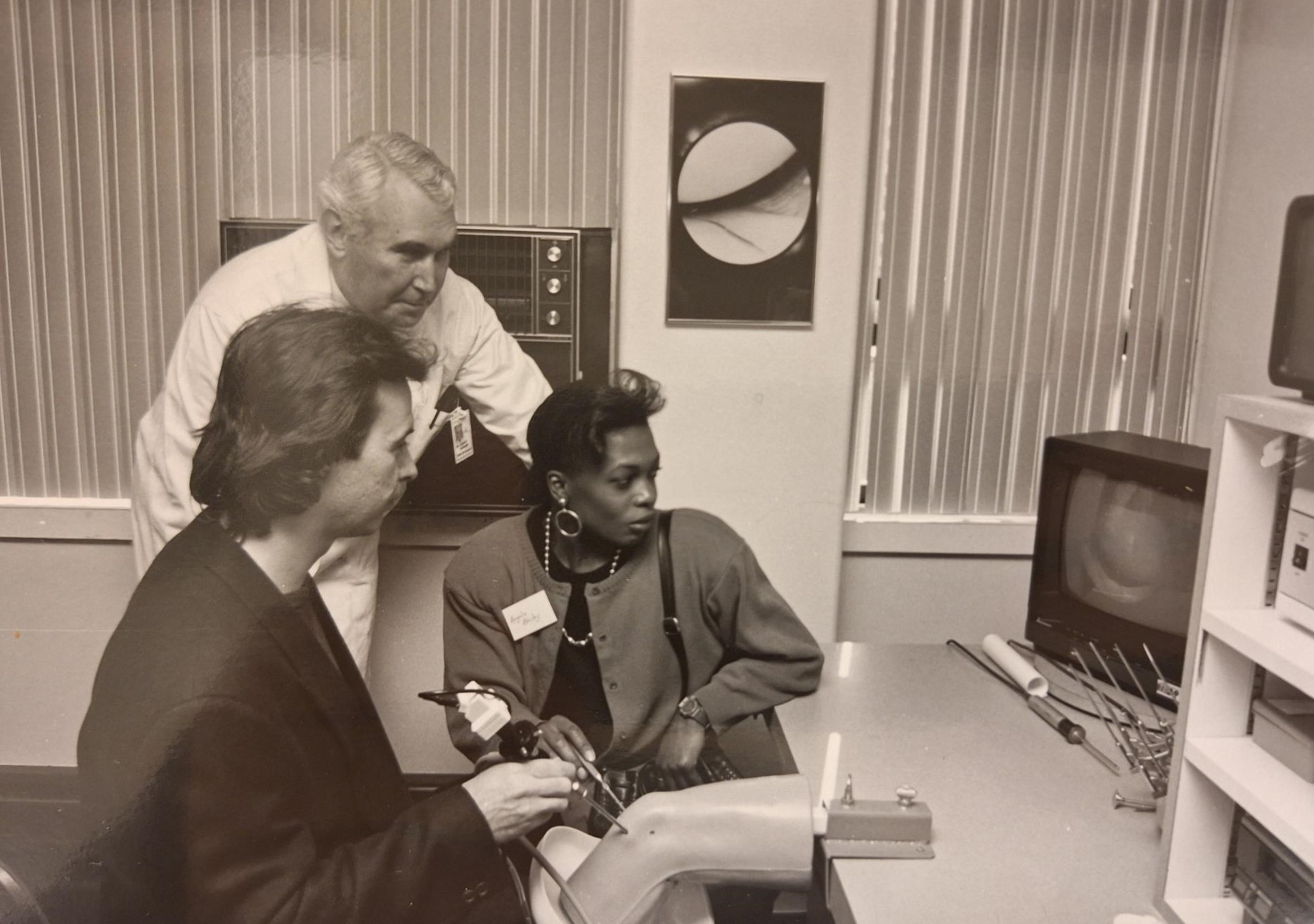
Three people learning new medical tools and procedures.

Dr. Jackson with former Canadian Olympic sprinter Angela Bailey (right) at the Arthroscopy Learning Centre, R17017, Vol. 20, File 24 (MIKAN 5966000).

A group of people and footballers standing on a football field.

Dr. Jackson (left) as team physician for the Toronto Argonauts of the Canadian Football League (CFL), R17017, Vol. 21, File 9 (MIKAN 5966007).

Often referred to as the founding father of the Canadian Paralympic movement, Dr. Jackson’s dedication, commitment and support for athletes with disabilities, including his focus on developing para-sports, were immense. As the founder and first president of the Wheelchair Sports Association of Canada (1967), he took the first Canadian wheelchair team to the International Paraplegic Games in 1968.

A group of people in wheelchairs and two men standing in the back.

Dr. Jackson (back row – middle) with members of the Canadian Paralympic team at the 1966 Stoke Mandeville Games, R17017, Vol. 21, File 5 (MIKAN 5966010).

His work with the International Stoke Mandeville Games—the international governing body for wheelchair sport (and precursor to the Paralympic Games)—led him to organize and preside over the first Olympiad for the Physically Disabled held in North America (Toronto, Canada) in 1976, an event that brought together paraplegic, amputee and blind athletes from around the world.

A Toronto Olympiad certificate for a gold medal (left) and one Toronto Olympiad folded program, three types of passes and one crest of the Toronto Olympiad logo (right).

On the left: 1976 Toronto Olympiad medal certificate, R17017, Vol. 12, File 11 (MIKAN 5966009). On the right: 1976 Toronto Olympiad Program; Admission tickets; Crest, R17017, Vol. 12, File 18 (MIKAN 5966009).

A round commemorative medal with the words “everyone wins” on it and the Toronto Olympiad logo in the middle.

1976 Toronto Olympiad “Everyone Wins” commemorative medal, R17017, Vol. 32, File 4 (MIKAN 5966009).

Dr. Jackson was also responsible for the inclusion of several events as part of the Paralympic Games, most notably wheelchair racing (1500m for men, 800m for women) and blind and amputee skiing, which became regular events at the summer and winter iterations of the Games. Their additions emerged as a result of direct negotiations between Dr. Jackson and then-President of the International Olympic Committee (IOC) Juan Antonio Samaranch. In 1997, Dr. Jackson was presented with the Olympic Order (the highest recognition given by the IOC) for radically altering the treatment of athletic injuries worldwide and for the promotion and development of sport for athletes with disabilities at the international level, an achievement that also led to him receiving the Paralympic Order a decade later.

Two men on the left and one woman on the right standing and facing the camera.

Dr. Jackson (middle), accompanied by his wife Marilyn Jackson (right) and former president of the IOC Juan Antonio Samaranch (left) after receiving the Olympic Order in 1997, R17017, Vol. 20, File 30 (MIKAN 5966010).

Dr. Jackson’s numerous accolades speak for themselves: among the more prominent ones, he was inducted into the American Orthopaedic Society for Sports Medicine Hall of Fame (2005), appointed to the Order of Canada (1997), posthumously inducted into the Canada Sports Hall of Fame (2017), and recognized by the IOC with the aforementioned Olympic (1997) and Paralympic (2007) orders.

But despite all the awards and honours, what really stands out is the legacy that Dr. Jackson left, one that can most aptly be defined by the great impact that he had on people. These include the patients that he healed, the medical community who benefitted from his research and medical advances, athletes whose sporting careers were prolonged thanks to his contributions to the development of sports medicine and rehabilitation, and athletes with disabilities who now share the spotlight with their peers on the international stage at events like the Olympic Games.

Three men, two standing and one seated (left) and one man standing next to a seated woman (right).

On the left: Dr. Jackson (top left) with Rick Hansen (bottom left) at the Rick Hansen charity dinner, R17017, Vol. 20, File 34 (MIKAN 5966010). On the right: Dr. Jackson (left) with former Canadian Paralympian and current Senator Chantal Petitclerc, R17017, Vol. 20, File 32 (MIKAN 5966010).

As a pioneer of arthroscopic surgery and founding father of the Canadian Paralympic movement, Dr. Jackson had a profound impact on both medicine and sport in Canada and abroad, cementing his status not only as a Canadian icon but as one equally deserving of being recognized among the highest echelon of influential figures to have significantly altered or elevated the world of sports.


Muhamed Amin is the Sport & Leisure Archivist in the Private Archives Division at Library and Archives Canada.

Government of Canada Web Archive Launches the Vancouver 2010 Olympic and Paralympic Collection

Version française

Image of fingers on a keyboard

By Tom J. Smyth

As we mark the fifteenth anniversary of the Vancouver 2010 Olympic and Paralympic Games, LAC is proud to launch a web archival collection documenting this important event in Canada’s history.

A poster for the Vancouver Olympics titled “With glowing hearts.”

Image from the web archive homepage of the Vancouver Olympics.

What is web archiving and why do we do it?

“Web archiving” is a specialized digital curation and preservation-based discipline that guarantees future access to unique resources from the Internet. It uses specialized hardware and software to target, download, arrange, describe, preserve and replay the original published and interactive context of web resources via emulation in a specialized public discovery and access portal.

Web archiving is practised by national libraries and archives all over the world to capture and preserve web resources that are usually unique and expressed in no other medium. Preserving our digital documentary heritage from our national Internet domain is, therefore, of vital importance to the nation’s history.

Acquiring web resources became a formal part of LAC’s mandate in 2004 under the Library and Archives of Canada Act, subsection 8(2). LAC’s means of realizing this part of its mandate is the Web and Social Media Preservation Program (WSMPP) within the Digital Services Sector, which has operated as a daily activity since mid-2005.

The program curates data and research collections of unique web resources documenting Canadian historical and cultural themes and events. Curating these collections aligns with LAC’s priorities and policy frameworks, requirements of computational use (e.g. in textual and data mining, AI, Machine Learning [ML], and Large Language Models [LLMs]) and modern digital humanities scholarship. We then make these resources publicly available for generations to come and to support future international research on Canada via the Government of Canada Web Archive (GCWA).

The discipline is advanced by the 50-plus members of the International Internet Preservation Consortium, of which LAC is a founding member and currently holds a Steering Committee chair.

Web archival collections curation for the Olympics

From the inception of the Web and Social Media Preservation Program, LAC has collected resources on the Olympic games as they were running, beginning with the Torino 2006 Winter Games (Turin, Italy).

In the beginning, our effort was modest and consisted of collecting the official Olympic site and the Canadian Olympic Committee site. We then progressed into collecting information on federal support programs (“Own the Podium”), individual Olympic sport organizations and the athlete blogs.

LAC’s extensive holdings in web archival Olympic and Paralympic collections now includes:

  • 2006 Winter, Turin, February 10–26, 2006
  • 2008 Summer, Beijing, August 8–24, 2008
  • 2010 Winter, Vancouver, February 12–28, 2010
  • 2012 Summer, London, July 27–August 12, 2012
  • 2014 Winter Games, Sochi, February 7–23, 2014
  • 2016 Summer, Rio de Janeiro, August 5–21, 2016
  • 2018 Winter, Pyeongchang, February 9–25, 2018
  • 2020 Summer, Tokyo, July 23–August 8, 2020
  • 2022 Winter, Beijing, February 4–20, 2022
  • 2024 Summer, Paris, July 26–August 11, 2024

Canada has hosted the Olympic Games on three occasions: the 1976 Summer Games in Montreal, the 1988 Winter Games in Calgary, and most recently, the 2010 Winter Games in Vancouver.

The Vancouver 2010 Winter Olympic and Paralympic Games ran February 12–28, 2010 (1). Canada sent some 209 athletes to the Olympic games, our fourth-greatest contribution historically, where they placed third in the overall medal standings with 14 gold, 7 silver, and 5 bronze (Canada however placed first in terms of total gold medals) (2).

Women’s hockey team celebrating their victory on the ice. Goalie’s net is displaced, helmets, gloves and hockey sticks are on the ice around the players as they are celebrating.

Team Canada celebrates after winning the women’s hockey gold medal game at the Vancouver Olympics in February 2010. Credit: Jason Ransom. (MIKAN 5570828)

The 2010 Games were special for Canada and involved “unprecedented partnerships” with some Indigenous communities (which does not speak for or reflect the opinion of all Indigenous groups). It was also the last and greatest Canadian Olympic hosting effort and marked an important milestone for the Web and Social Media Preservation Program in the development of the program and thematic collection and curation methodologies.

Evolving collection development and web archival digital curation

Beginning with Vancouver 2010, we have continuously elaborated our methodologies and curated extensive web archival collections documenting Canada’s performance and perspectives, as well as the experiences of Canadian Olympians at the Winter, Summer and Paralympic Games.

Curation for Vancouver 2010 began in June 2009. At that time, we were approached by an academic researcher who was interested in web archiving, particularly in the promotion of tourism and related sports activities. How was tourism in British Columbia being promoted while it hosted the games?

We had to admit that our answer to the question of tourism in British Columbia was… “no idea!” Starting the curation process early, however, gave us plenty of lead time to collect news media and web resources documenting preparations and developments leading up to the formal games. It also allowed us to consider new and uniquely Canadian perspectives in our curation, such as Indigenous viewpoints.

Data and web resources on “tourism” as a parallel topic to the Olympic and Paralympic Games wasn’t something we deliberately targeted and collected previously (again, we hadn’t hosted a Games event since Calgary 1988). This begged the question: what other resources or themes would researchers be looking for in our web archive that we hadn’t anticipated?

This question began something of a renaissance in our curation thinking and our alignment with broader principles of national legal deposit. Since client research needs can never be fully anticipated, it is important that we collect resources as broadly as possible. To take it a step further: how could we curate and arrange our data in such a way that it would support future computational and digital humanities research use of web archival collections as “big data”?

We then began considering new themes and sub-themes for curation, such as infrastructural and venue development, environmental and “green” impact, economic impact of hosting the Games and even anti-Olympic sentiment. Expanding our focus in this way required additional research but resulted in a much richer and more comprehensive web archive for future generations.

This effort paid off. Before the end of 2009, the work came to the attention of our host organization. The Federal Secretariat for the Olympic and Paralympic Games at Heritage Canada learned of our project and expressed interest in promoting the work.  The project was then showcased in the 2009-10 Government of Canada Performance Report (3) as part of LAC’s and the Secretariat’s deliverables for the Vancouver 2010 Games.

Our current collections methodology has matured to the point where many topics, such as the Olympics (also the federal government domain presence, change of government or cabinet, the federal elections and so on), now have a refined “core seedlist.” A core seedlist is a set of web URLs that are unlikely to change and that can be quickly, efficiently and frequently collected as the key resources for those topics. This frees web archiving specialists to concentrate on curating and including extra resources that are generated as a direct result of, and are attuned more specifically to, unique events. A pertinent example is the Paris 2024 games.

Paris 2024 and announcing public access for the Vancouver 2010 collection

For the Paris 2024 games, there would clearly be some new issues and topics that perhaps weren’t as relevant or that didn’t exist in 2010. For example, eSports first became a serious consideration for the formal Olympics, and we also witnessed the introduction of “breaking” as an Olympic sport. Security was also a major concern, which was curated as a major topic for the first time.

While our initial intention was to publish the Paris 2024 collection to kick off our Olympics curation, we discovered that most extensive work on this had already been done while preparing the web archival metadata and controlled vocabularies for the Vancouver 2010 collection. It should therefore be the Vancouver collection that kicked off our publishing on Olympics, as it could serve as the most complex and “template” model for arranging our historical Olympics collections via the Government of Canada Web Archive.

Wouldn’t it be grand(er), if we could lead our Olympics collections with the publication of one dear to our hearts, which was pivotal to the development of the program?

On that note, we are pleased to launch our Vancouver 2010 Olympic and Paralympic collection—within days of the fifteenth anniversary of the Games!

To facilitate browsing and discovery, the collection has been arranged into sub-topics including the following:

  • Blogs
  • Own the Podium
  • Sponsors
  • Tourism
  • Government – municipal
  • Government – provincial
  • Government – federal
  • Environment
  • Indigenous perspectives
  • Sports organizations
  • Non-profit organizations
  • Education
  • Canada Post
  • Official Olympics websites
  • Community
  • News media
  • Alternative perspectives and protests
  • Venues
  • Athletes
  • Paralympics
  • Corporate
  • Commemoration
  • Looking back

In establishing these topics and facets, controlled vocabularies and metadata architecture necessary to support, arrange and publish the Vancouver 2010 Olympic and Paralympic collection, we have set the groundwork on which to build, expand, augment, and publish all our other historical Olympics collections, which can now follow in due course.

We hope you enjoy the Vancouver 2010 collection!

References

  1. Vancouver 2010 – Team Canada – Official Olympic Team Website
  2. Team Canada’s Team Size by Olympic Winter Games – Team Canada – Official Olympic Team Website
  3. Report of the President of the Treasury Board of Canada. Canada’s Performance: The Government of Canada’s Contribution. Annual Report to Parliament 2009-10, pp. 77.

Tom J. Smyth is the Manager of the Web and Social Media Preservation Program (WSMPP) and the Government of Canada Web Archive (GCWA) at Library and Archives Canada. The WSMPP team includes Elizabeth Doyle, Jason Meng, Kevin Palendat and Russell White.

All “aboat” searching for ship registries in LAC’s collections

Version française

By Elaine Young

Did you know that Canadian vessels over a certain size have had to be registered with government authorities as far back as the 18th century? Library and Archives Canada (LAC) holds various types of records related to the registration of vessels and has recently transcribed and made searchable almost 84,000 of these records. The transcriptions include the ship’s name, port of registry, registration number and year of registration, all key fields for researching the rich (and sometimes surprising!) histories of the vessels. These records are a vast resource for researching maritime history across Canada and are also a genealogical tool for tracing the family lineages tied to those ships.

This transcription project is part of LAC’s effort to improve research into the records in its collection. LAC took custody of these records, many of them ledger books, in prior years as Transport Canada (the regulator) moved increasingly towards digital recordkeeping. To support digital access to the records, LAC took digitized copies of some of these ledgers and worked with researchers in the field to identify the best information to transcribe.

The transcribed material relates to ships that were operated then de-registered (closed out) between 1838 and 1983. It includes vessels from the Atlantic, Pacific and inland waterways.

These registries contain a wealth of information about each vessel, including a description, the type of ship, its size, the ownership and when it was built. The registries offer valuable insights for anyone researching shipbuilding, shipping or coastal and open ocean industries. For example, over time these records illustrate the transition from wind to steam-powered ships, as well as the introduction of fibreglass and composite hulls. The records also contain information relevant for genealogical research, as many ships were passed down within families.

Example of a typical ship registration:

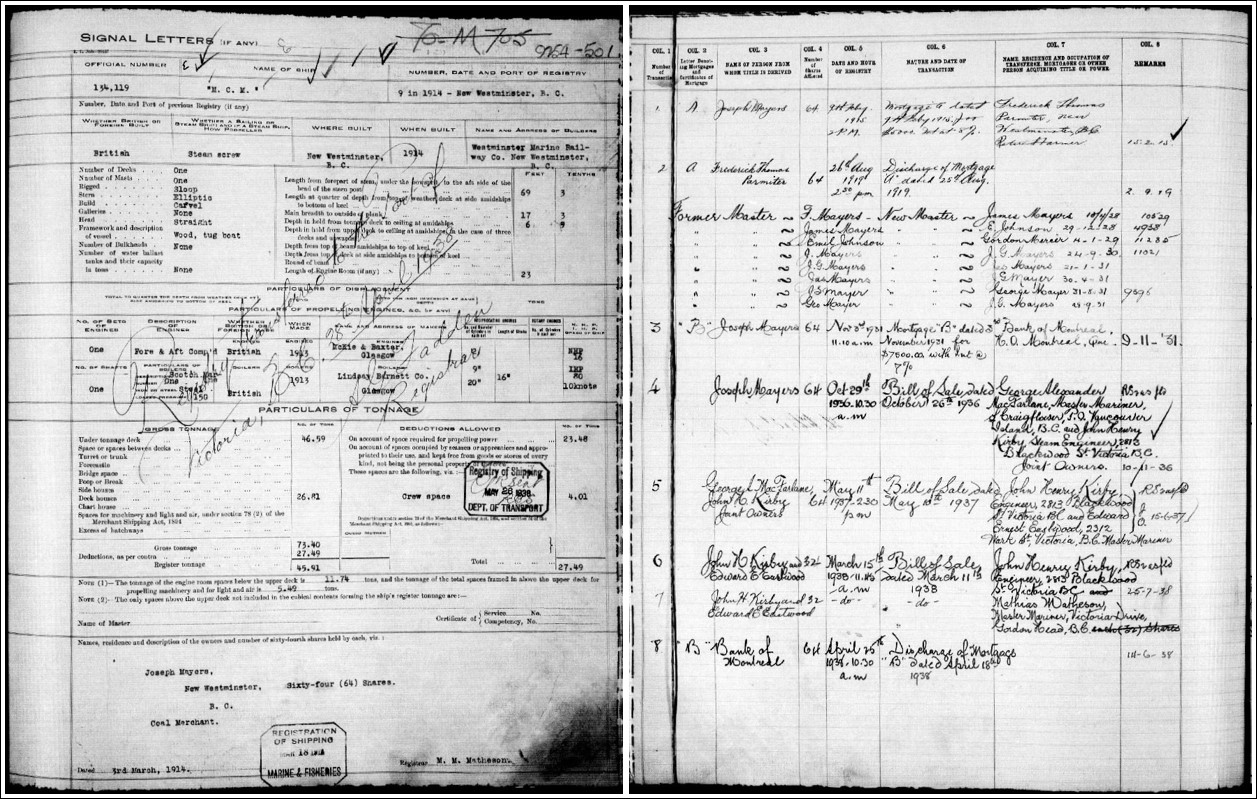
Page one and page two of the registration document for the ship M.C.M. The document has been filled out using both a typewriter and by hand in cursive writing.

[M.C.M., Port of Registry: NEW WESTMINSTER, BC, 9/1914] R184, RG12-B-15-A-i, Volume Number: 3041. (e011446335_355)

The first page of this register for M.C.M., a ship registered in 1914 in New Westminster, British Columbia, contains details about the ship such as its construction, size and so on. The second page includes the names of the vessel’s owners over time.

The caption above demonstrates the naming convention that users will see in Collection search: Vessel name / port of registry / a consecutive number assigned for each vessel newly registered at that port in a year / year of registration.

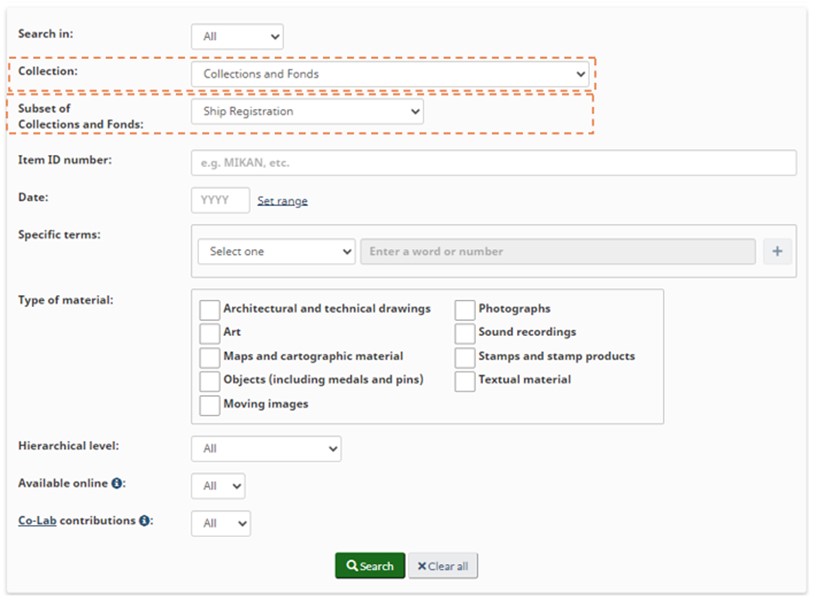
To find the records on LAC’s website using Collection search:

1. Go to advanced search
2. Select “Collections and Fonds” under Collection
3. Select “Ship Registration” under Subset of Collections and Fonds

Screenshot of the Collection search advanced search page. The “Collection” and “Subset of Collections and Fonds” drop down menus are marked with orange boxes.

How to locate Ship Registrations in Collection search. (Library and Archives Canada)

4. To search specific word(s) in the database, enter them in the search bar at the top. You may also enter a date or date range in the Date field (this will reflect when the ship was closed out). If you prefer to browse all ship registrations, leave the fields blank and click “Search.”

Screenshot of the Collection search advanced search page. The search term “Dora Mae” is entered in the “All of these words” search box, and the date range of 1940 to 1950 has been entered in the date range boxes. These fields are highlighted with orange boxes.

How to narrow down your vessel search using keywords and date ranges. (Library and Archives Canada)

For a more specific search, use the “All of these words” field at the top to search by name, port of registry, official number and year of registration.

Name:

  • The name is assigned by the owner at the time of initial registration and usually lasts the lifetime of the vessel, but it can be changed (often when there is a change of ownership).
  • Once a vessel has been closed out, there is a waiting period before that ship’s name can be used again. Two vessels cannot have the same name at the same time.
  • Vessels may have similar, but different names (for example, Karen Dawn, Karen and Dawn, and Karen & Don). Adding a Roman numeral after a name that had been taken remains a common way to create a new name (for example, Dora-Mae II).

Port of registry:

  • The port where the vessel was registered.
  • Vessels may be registered in ports close to where they were built or operated.
  • This can be useful in identifying shipbuilding activity in a specific area.
  • Vessel registration may have passed to different ports over time, as owners were expected to update their ship registration to the closest port of registry when they moved or if the ship was sold and transferred to another region.

Official number:

  • The unique number assigned to a vessel when it was registered—no other vessel will ever have this number.
  • The number remains the same for that vessel’s life, even if it is no longer in service or destroyed.
  • The official number can help you find information on that vessel in other record types:
    • Appropriation books: books that include the inventory of official numbers assigned to various ports of registry
    • Transaction books: books documenting supplemental transactions when the two pages per vessel in a registry book were filled
    • Construction books: books documenting ships under construction
    • Ship dockets: individual files opened by port of registry offices for specific ships

Year of registration

  • The consecutive number, starting from 1, assigned to each ship that was newly registered / (slash) the year that the vessel was registered. For example, 22/1883 would mean the 22nd vessel registered at a particular port of registry in 1883.

The closed-out ship registries can also be accessed via LAC’s staff research list, which provides direct access to the records at the series level. From there, you can navigate to individual ship registration records.

The new searchable ship registries transcriptions make tens of thousands of records accessible in a way that was not possible before. Users can now more easily research information on family histories, shipbuilding, shipping and many other areas. This valuable resource illuminates the complex and varied histories of Canadian shipping and shipbuilding, the communities built around these trades and the lives of the individuals and families who owned these vessels.

The team and LAC wish to thank Don Feltmate residing in Nova Scotia and John MacFarlane residing in British Columbia, who have been tireless advocates for the importance of these records and for making them more accessible.

Additional resources


Elaine Young is an analyst in the Partnerships and Community Engagement Division at Library and Archives Canada.

Turning the Page on Censorship: Navigating Freedom to Read in Fourth Wing and Beyond

Version française

By Rebecca Murray

From fantasy to historical fiction, contemporary authors are incorporating the topic of banned and challenged books in their writing. In Rebecca Yarros’s popular Fourth Wing, a would-be archivist is thrust into the perilous world of dragon riders and, along the way (spoiler), uncovers the truth about a “rare” (i.e., banned) book passed down through her family. Meanwhile, Kate Thompson’s The Wartime Book Club follows a courageous librarian in German-occupied Jersey who smuggles books to her neighbours during the Second World War. Through these tales, both authors bring the issue of censorship to the forefront, celebrating heroines who share forbidden stories and defend the right to read.

However, one need not look to fictional realms or even historical accounts to grasp the importance of this issue. Established in 1984, Freedom to Read Week is an annual campaign that sheds light on the covert nature of censorship, raising awareness about the challenges faced by publication and library programs within our very own communities.

Did you know that even seemingly banal works such as The Complete Fairy Tales of the Brothers Grimm and Bambi have been challenged internationally? The history of censorship and challenges to books and other publications is long and varied both here in Canada and abroad. Library and Archives Canada (LAC) plays a unique role amongst Canadian libraries, preserving copies of all books published in Canada—including audio and electronic formats—to ensure these stories remain accessible for future generations.

Read on to learn about key themes in Freedom to Read Week’s history and how they relate to LAC’s mandate and involvement in the campaign.

Photograph of rows of shelves filled with books.

Access copies of books and other publications preserved at Library and Archives Canada. Photograph: Rebecca Murray, Library and Archives Canada.
School libraries

Classrooms and school libraries are often subject to book challenges due to wide-sweeping policies and book-specific complaints. Since the inception of Freedom to Read Week, numerous challenges in school settings have been documented with responses ranging from training teachers on how to address sensitive topics in literature, to stopping the removal of books from libraries to board meetings drawing hundreds of attendees and, in extreme cases, even book burnings.

National library collections, like the one at LAC, differ from public and school libraries in that they are non-circulating (outside of our reading rooms) and not influenced by public demand or policy changes. As a result, the removal of books from other libraries or schools does not affect the holdings at LAC.

Works about censorship

From the earliest days of Freedom to Read Week to now, writers and thinkers have explored the topic of censorship in Canada, examining its impact across literature, libraries, cinema, and beyond. These important works allow us to trace the history of censorship and publication bans in Canada, offering valuable perspectives on how these issues have evolved over time.

Examples in LAC’s published holdings include Dictionnaire de la censure au Québec: Littérature et cinéma (2006), by Pierre Hébert, Kenneth Landry and Yves Lever; Fear of Words: Censorship and the Public Libraries of Canada (1995), by Alvin Schrader; and Women Against Censorship (1985), by Varda Burstyn.

Three books displayed on a tabletop.

Dictionnaire de la censure au Québec: Littérature et cinéma (2006), by Pierre Hébert, Kenneth Landry and Yves Lever; Fear of Words: Censorship and the Public Libraries of Canada (1995), by Alvin Schrader; and Women Against Censorship (1985), by Varda Burstyn.
Photograph: Rebecca Murray, Library and Archives Canada.

Shifting trends

When we think of classic fairy tales and stories like Bambi, it might be hard to imagine how anyone could find fault with them. Yet, as our society evolves, so do our perceptions of what is considered offensive or appropriate. Ideas about acceptable content are always shifting, and this is evident in various policies and debates: from decisions on whether to include graphic novels (often referred to as comic books) in public libraries, to petitions seeking to revoke awards from past literary winners, to the regulations on importing and selling certain publications in Canada. These changes are part of a broader historical trend that will undoubtedly continue. By examining data on content challenges reported by librarians on the front lines, we can observe how these societal attitudes evolve over time.

You can read all about Freedom to Read Week’s history in Canada and find out about other challenged titles on the campaign’s website.

The 41st edition of Freedom to Read Week will take place from February 23rd to March 1st, 2025. Stay up to date on the campaign and related events.


Rebecca Murray is a Literary Programs Advisor in the Outreach and Engagement Branch at Library and Archives Canada.

Black Porter Perspectives: Giving Voice to Rail Service During and After the Second World War

Version française

By Stacey Zembrzycki

This four-part Black Porter Perspectives blog series is inspired by a striking and haunting set of images found within the Department of National Defence (DND) accession 1967-052. These photographs provide a window into service to country through various vantage points during and after the Second World War, revealing the intersections of class, race and duty.

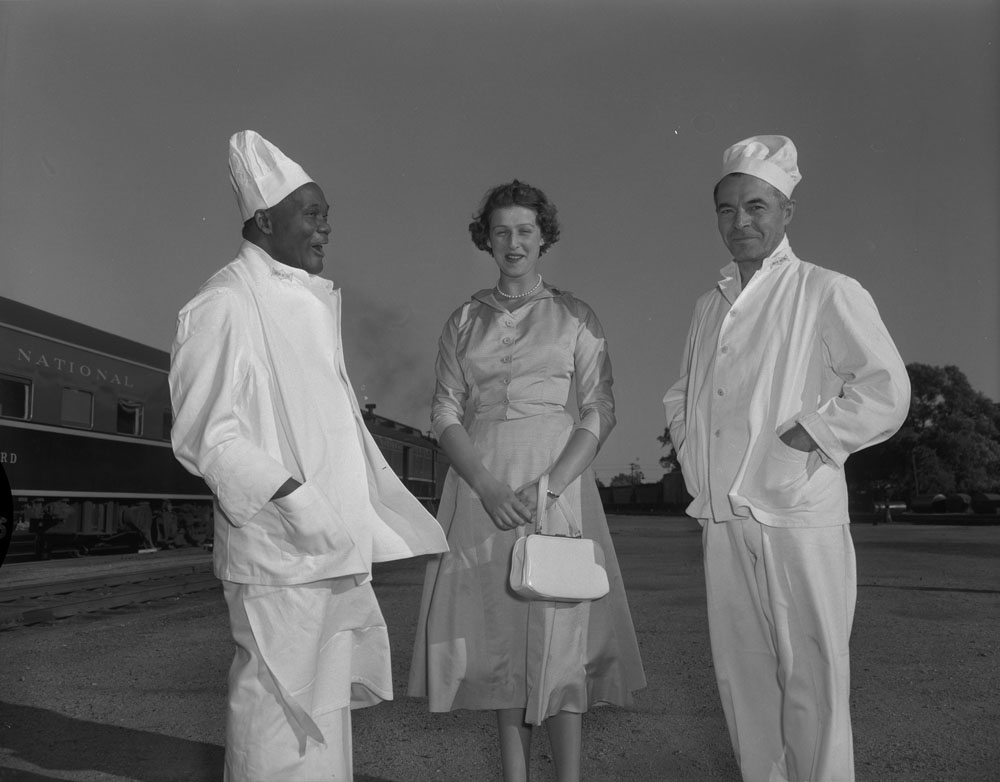
A white woman standing between a black man on the left and a white man on the right.

Princess Alexandra represents the British Crown on Canadian soil during her Royal Tour in 1954. (e011871943)

Volunteer, and in some cases, conscripted servicemen departing for and returning from battle offer us a glimpse into the realities of preparing for war, deploying to distant fronts, and returning home again.

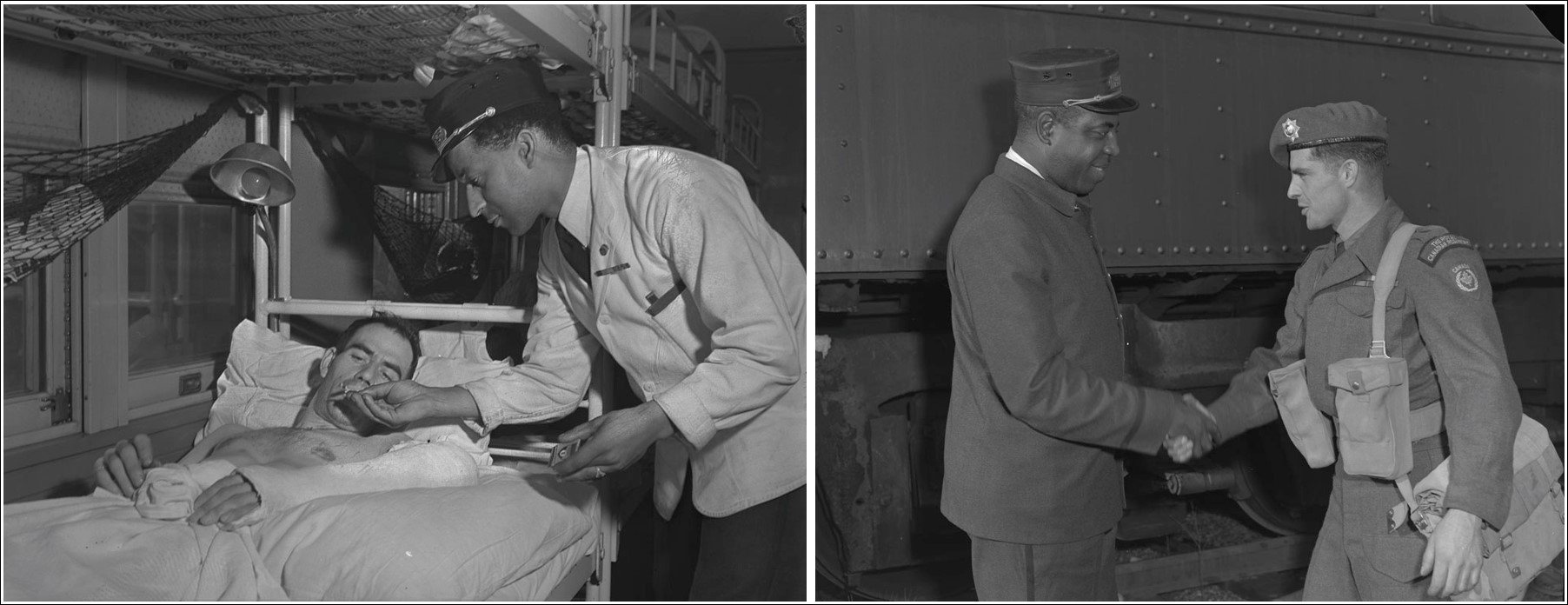
Side-by-side photographs of a Black sleeping car porter lighting a cigarette for an injured white soldier lying in a bed on a train, and of a Black sleeping car porter shaking hands with a white soldier.

Image on left: A sleeping car porter and an injured soldier on the Lady Nelson hospital train. Image on right: Porter Jim Jones of Calgary shakes hands with Private Harry Adams, a Halifax member of the Royal Canadian Regiment, as Canadian Army Special Force units arrive at Fort Lewis, Washington, for brigade-strength training. (e011871940 and e011871942)

Black men, often identified as train staff in the image descriptions, appear in every photograph—serving as the unifying thread in these historical moments. Their essential work, whether as cooks or sleeping car porters, made train travel possible, luxurious even, in times of war and peace. While this labour has often been silenced and overlooked in our national narratives, it is undeniably present in these images.

How can we begin to piece together the experiences that are captured in these images? One way is to turn to the Stanley G. Grizzle collection, particularly the interviews he conducted in 1986 and 1987 with former Canadian National (CN) and Canadian Pacific Railway (CPR) sleeping car porters. Grizzle sought to document the exploitative company culture Black men endured up to the mid-twentieth century and the long and complex struggle that ultimately led to their unionization. At the same time, he also made space for his narrators to recount memorable stories from their time on the rails. These recollections, if listened to closely, allow us to begin piecing together a narrative that enables us to better contextualize some of these DND images. Like the past, however, these moments remain fleeting and fragmentary, with much lost to history.

Five interview clips from Grizzle’s collection provide insight into what portering looked like during the Second World War. While these exchanges provide few details about the images above, they offer glimpses into porters’ working conditions and the added responsibilities they shouldered during wartime. Let’s listen to what these conversational tangents reveal about their experiences:

You can read the transcript from this sound clip here. (ISN 417383, File 1, 34:30)

You can read the transcript from this sound clip here. (ISN 417397, File 2, 9:26)

You can read the transcript from this sound clip here. (ISN 417379, File 1, 17:18)

You can read the transcript from this sound clip here. (ISN 417379, File 1, 5:56)

You can read the transcript from this sound clip here. (ISN 417386, File 1, 32:12)

The experiences of the men, the people they served, and their feelings about the additional duties thrust upon them as a result of the Second World War offer valuable insights that help humanize the role of portering. For George Forray, the demands of wartime rail service provided financial security, allowing him—and many others—to secure full-time employment during this turbulent period. Bill Overton, while recounting the hard-fought union gains he helped achieve, shared a story of being overwhelmed by 83 hungry Air Force cadets needing lunch. While there were white off-duty staff members on the train at the time, he explained the challenges of asking for their assistance. Through his account, we gain a deeper understanding of the intricacies and misunderstandings surrounding overtime pay during this era and the racialized structures that governed and divided rail workers.

In one of the clearest and most concise wartime stories in Grizzle’s collection, an unknown narrator recounts—despite audible breaks in the sound recording—details of transporting German prisoners of war. While he describes the sleeping cars’ physical environment and the meals served, much is left to the imagination, leaving gaps about how porters perceived this service and the potential dangers they faced. These insights are largely lost to history. Eddie Green builds on this discussion while speaking about the evolution of train technology in the early twentieth century. The reintroduction of outdated train cars to meet wartime demands posed significant challenges and physical dangers for porters, who had to navigate these risks while managing increased passenger loads. The stress would have been tremendous.

In many ways, the final interview clip brings the narrative full circle. In it, Joseph Morris Sealy reflects on how the high demand for wartime rail service paved the way for significant union gains. Government-backed wage increases served as a crucial starting point for negotiating the first collective agreement between the International Brotherhood of Sleeping Car Porters and the CPR in 1945. There was no going back to the way things were before the war. The uninterrupted movement of people and goods by rail had proven essential to sustaining a stable and functioning economy. Porters, fully aware of the critical role they played, fought to ensure they were treated fairly and justly compensated.

While piecing together the contextual information behind the images included above may not be possible, these accompanying narratives contain enough information to reveal what may have been happening before and after photographers captured these moments in time. They give a voice to the experiences of porters, shedding light on the complexities of their work during and after the Second World War. Yet, as with all historical sources, this oral and photographic evidence underscores the challenges of reconstructing the past—we must work with the fragments available to us. Despite their limitations, these sources compel us to fundamentally rethink our national narrative and the pivotal role of Black labour within it.

Additional Resources


Stacey Zembrzycki is an award-winning oral and public historian of immigrant, ethnic, refugee, and racialized experiences. She is a faculty member in the Department of History and Classics at Dawson College.

Black Porter Perspectives: Hospital Ships and Hospital Trains

Version française

By Jeff Noakes

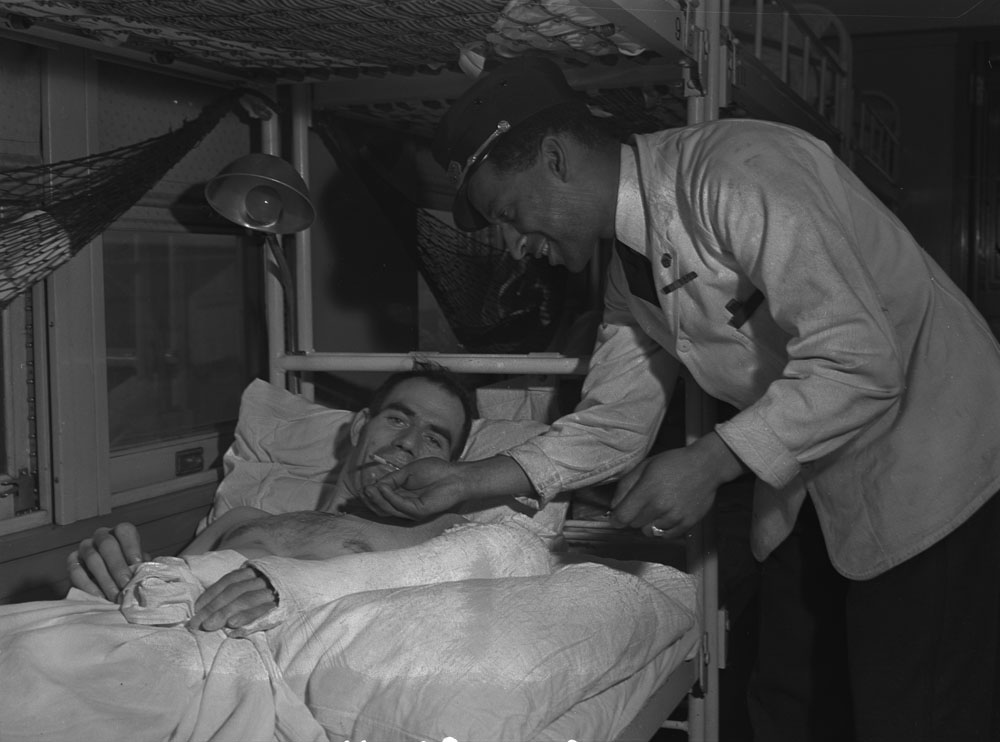
Black-and-white photograph of a porter (on the right, with white jacket and dark cap) leaning over to light the cigarette of a patient lying in the bed on the left.

Porter Jean-Napoléon Maurice (right) leans over to light the cigarette of Private Clarence Towne, a patient on a hospital train, August 20, 1944. (e011871941)

The image above comes from a series of photographs of Black sleeping car porters from during and after the Second World War. This series documents service to country through various vantage points. It also forces us to ponder the backstories to the images. Who appears in these photographs? Why were they taken? Why are they significant? And what stories can they help us uncover?

The date and original cataloguing provide enough information to look further into parts of some of these stories. As a photograph taken for public consumption, this image soon appeared in Canadian newspapers, which identified the two men appearing in the image: Porter Jean-Napoléon Maurice and Private Clarence Towne. Newspaper captions also provided some additional information about both men, noting that Maurice had served with the Royal 22e Régiment and had been wounded in Italy, while Towne had been wounded in fighting at Caen, in Normandy. Not mentioned in some instances is Maurice’s earlier service with Les Fusiliers Mont-Royal, including his participation in the Dieppe Raid.

While Maurice’s military service is explicitly mentioned in the newspaper caption, it is also conveyed through his uniform. Visible on his white jacket are medal ribbons, along with the shield-shaped General Service Badge that he was entitled to wear because of his military service. Both would have been readily recognized by many viewers at the time. Towne’s service, and his wounds, are clearly depicted by his left arm, encased in a plaster cast. In at least one newspaper, the photograph was retouched to make the white cast more clearly visible against the bedsheets.

The photograph was very likely intended as part of a wider publicity campaign relating to hospital trains. Maurice was one of four Canadian Pacific Railway (CPR) porters who were veterans, had been wounded in service and were chosen to work on such trains. Stories about these four men—along with Maurice, they were identified in newspapers as Randolph Winslow, Sam Morgan and James E. Thompson—their military service and their work as porters, including the photograph seen above, appeared in late August 1944.

The date and original caption also furnish enough information to conduct further research into records held by Library and Archives Canada (LAC). While there was no “Lady Nelson Hospital Train,” one of Canada’s Second World War hospital ships was the Lady Nelson. Originally a civilian ocean liner, in 1942 the ship was sunk in the harbour at Castries, Saint Lucia, by a German submarine. After being salvaged, the Lady Nelson was converted into a hospital ship for transporting wounded, injured and sick military personnel; it would later be used to repatriate other military personnel and their dependents. Its voyages included trips from ports in the United Kingdom to Halifax, Nova Scotia. From there, hospital trains, using equipment provided by both the Canadian National Railway (CNR) and the CPR, transported patients to destinations across the country. The photograph, therefore, depicts a scene aboard a hospital car in one of these trains, carrying patients from the Lady Nelson.

During the Second World War, responsibility for many aspects of these operations fell to the Department of National Defence’s Directorate of Movements. Its records form part of the Department of National Defence fonds at LAC [R112-386-6-E, RG24-C-24]. This substantial collection covers the movement of hundreds of thousands of military personnel to and from Canada, as well as the transportation of cargo and military equipment. It also includes extensive records relating to the movement to Canada of military dependents, including war brides and their children, during and after the war. The records, which were microfilmed around 1950, are now available on digitized microfilm at Canadiana by the Canadian Research Knowledge Network.

Advisory: these records are in English only and can include medical information that some people may find disturbing, offensive or potentially harmful, including historical language used to refer to medical diagnoses. The records can also contain other historical language and content that may be considered offensive or potentially harmful, such as language used to refer to racial, ethnic and cultural groups. The items in the collections, their content and descriptions reflect the period in which they were created and the views of their creators.

These records include files relating to the movements of hospital ships and the personnel they repatriated, as well as the planning and operation of the hospital trains and other means of transportation that brought these patients to points across Canada and in Newfoundland. In some cases, these voyages extended even further. This included the repatriation of Americans serving in the Canadian military, as well as members of Allied militaries whose lengthy homeward journeys took them through this country.

Since the cataloguing information notes that this photograph was taken on August 20, 1944, it suggests a connection with an arrival by the Lady Nelson a few days before. A search of the LAC catalogue turns up a Directorate of Movements file [RG24-C-24-a, Microfilm reel number: C-5714, File number: HQS 63-303-713] for such an event on August 18, although the ship may in fact have docked just before midnight on August 17. As a result, the photograph offers an entry point into what the records of this specific voyage contain. It also provides an opportunity to discuss how these sorts of records can be useful, as well as some of their inherent limitations, especially with respect to the experiences of sleeping car porters on these hospital trains.

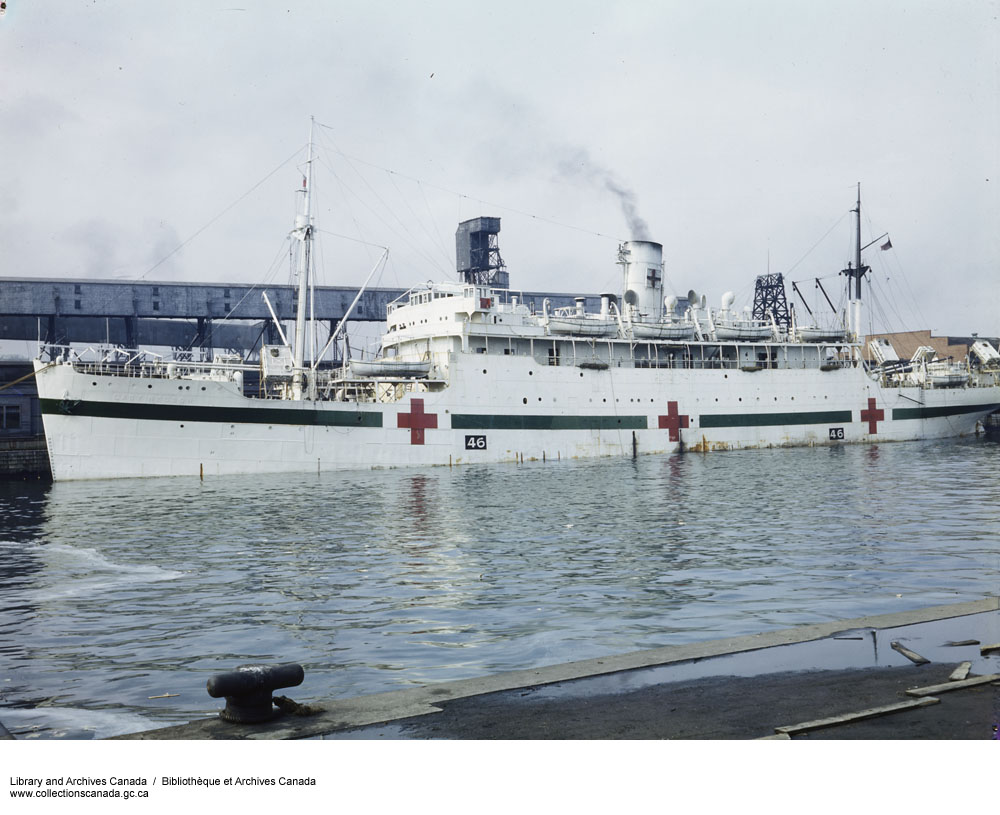
Colour photograph of a hospital ship with a white hull and superstructure and a single funnel, with grey port buildings in the background. A green stripe with three red crosses runs horizontally along the ship’s hull. The number 46 is painted in black rectangles below the green stripe.

The Canadian hospital ship Lady Nelson in Halifax, Nova Scotia. (e010778743)

This particular file’s hundreds of pages of messages, letters, memos and lists of repatriated personnel provide a general outline of these events. When the Lady Nelson left Liverpool shortly before midnight on August 8, 1944, it was carrying a total of 507 personnel to Halifax for medical reasons. Nearly all were members of the Canadian military, with some 90 percent from the Canadian Army. The ship was also transporting two Newfoundlanders who had served in Britain’s Royal Navy, as well as one Royal New Zealand Air Force officer on his lengthy way home via Canada. Two patients died during the trip and were buried at sea: Private George Alfred Maguire on August 11 and Captain Theodore Albert Miller on August 15. Their service files, digitized and available through LAC’s catalogue, help provide some details of their final voyages.

The file for this trip also reflects a number of broader stories, in particular the way that wounded, injured and sick military personnel were being returned to Canada from overseas. In mid-August 1944, this capacity was about 500 at a time aboard the Lady Nelson. The following month, a second Canadian hospital ship, the Letitia, entered service, with the ability to transport around 750 patients. At that point, some 1,000 or more wounded, injured and sick could be repatriated every month across the North Atlantic to Canada.

The need for this augmented capacity speaks to the growing number of repatriations arising from increased combat activity overseas following the D-Day landings on June 6, 1944, and the subsequent campaign in Normandy. The casualties from this fighting added to the ongoing toll of the land campaign in Italy and the war at sea and in the air; a mid-August memorandum refers to a “back log” of casualties in the United Kingdom awaiting repatriation to Canada. The records also make it clear that in addition to those whose wounds, both physical and psychological, were suffered in battle, the patients included those being repatriated for non-combat injuries and for illnesses of various sorts.

The focus of the Directorate of Movements for these voyages was on the personnel returning home, including identifying their medical requirements during their travels and at their destinations. The records consequently provide details of personnel down to the individual level, with lists of those being transported to various locations across Canada, their medical status and their care needs, as well as information about their next of kin.

The records also detail the provision of services to help make these voyages happen, but generally do not discuss those who did this work. Hospital train crews and staff provided by the railways, including porters, do not appear as individuals. While there was one porter assigned to each hospital car in addition to medical staff, as well as porters in other passenger and sleeper cars that made up the trains, the porters themselves and their experiences do not truly speak in these documents. They appear briefly and anonymously in the files as requirements for the hospital trains and indirectly in comments that are made about the train staff and crews more generally. As part of a service being provided by the railways, the porters were an operational requirement, who the military wrote about and recorded in the same way that the remainder of the personnel operating the trains were described.

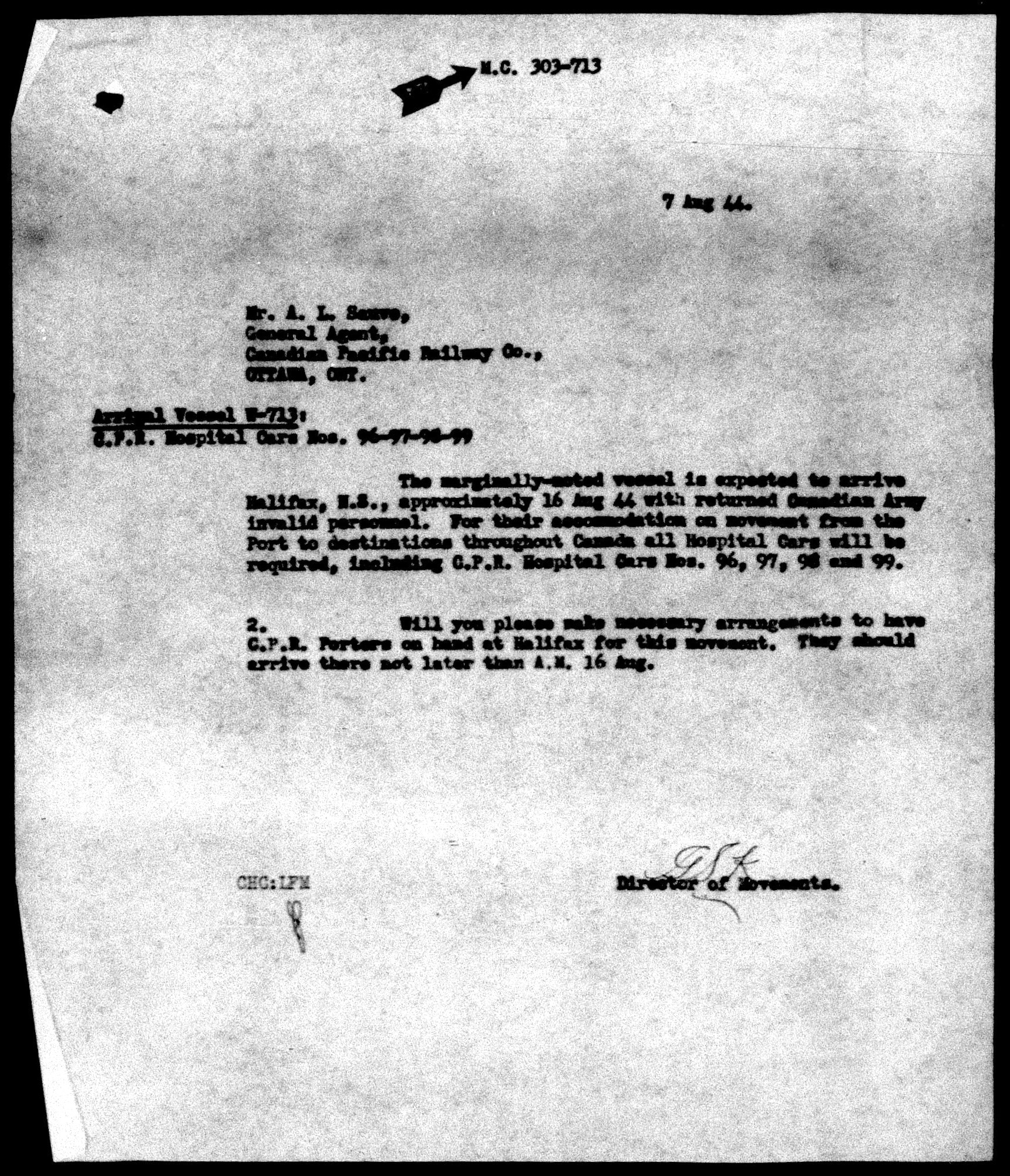
In the roughly four hundred pages of documents relating to this voyage of the Lady Nelson and the hospital train in Canada, there is only one clear and unambiguous mention of porters. A letter from the Directorate of Movements to the Canadian Pacific Railway in early August 1944 alerted the company to the anticipated arrival of the Lady Nelson on or around August 16. In addition to noting that hospital cars would be required for the movement of patients, the letter also requested that porters be on hand for the train. Four CPR hospital cars were identified, each of which required a porter. Given the railway’s decision to provide hospital car porters who had been wounded during their military service, this would have meant Jean-Napoléon Maurice and his three comrades.

Typed letter from the Director of Movements.

This letter from the Directorate of Movements to the Canadian Pacific Railway Company is the only clear and direct reference to porters in the Directorate of Movements file relating to the arrival of the Lady Nelson in mid-August 1944. (MIKAN 5210694, oocihm.lac_reel_c5714.1878)

Transcript for the letter above:

M.C. 303-713

7 Aug 44.

Mr. A.L. Sauve,
General Agent,
Canadian Pacific Railway Co.,
OTTAWA, ONT.

Arrival Vessel W-713:
C.P.R. Hospital Cars Nos. 96-97-98-99

The marginally-noted vessel is expected to arrive Halifax, N.S., approximately 16 Aug 44 with returned Canadian Army invalid personnel. For their accommodation on movement from the Port to destinations throughout Canada all Hospital Cars will be required, including C.P.R. Hospital Cars Nos. 96, 97, 98 and 99.

2. Will you please make necessary arrangements to have C.P.R. Porters on hand at Halifax for this movement. They should arrive there not later than A.M. 16 Aug.

[Signature]
Director of Movements.

CHC:LFM

Directorate of Movements records are more forthcoming about Clarence Towne. They note that he had served with the North Nova Scotia Highlanders and had been wounded in the left elbow and arm by German machine gun fire. Assigned to one of the beds in hospital car 98, he was travelling home to his wife Jane in St. Catharines, Ontario. Towne might have been chosen as a representative patient because, while he was travelling in a hospital car, his wounds would not have been graphic, disfiguring or unsettling for viewers on the home front. The same could not be said for some of the other personnel being repatriated. Towne’s injuries were safely and indirectly depicted by the cast encasing his left arm. Unlike some of the other patients aboard the train, they were also physical and the direct result of combat, rather than being psychological or the result of accident or illness, which may also have played a role in his selection.

In addition to serving as an entry point for unpacking individual stories using a variety of sources, this photograph makes visible the wider history of the essential service of porters in the functioning of hospital trains during and immediately after the Second World War. At the time of its creation, it also likely served other functions. By showing Jean-Napoléon Maurice lighting Clarence Towne’s cigarette, it may have been intended to build on and reinforce popular perceptions and depictions of Black railway porters, the nature of their jobs and their racial and social status, especially how these were manifested through their role in serving travellers.

The photograph also incidentally serves as a reminder of the prevalence of tobacco and smoking in the 1940s. Among their many features, the specially modified hospital cars were equipped with an ashtray for each of the patient beds—something that would be unbelievable today. By depicting personal interactions such as the lighting of a cigarette, the scene was likewise meant to show the attention being paid to military patients. Images such as this provided an opportunity for the Canadian military and government to demonstrate the care being provided to those being repatriated, an important consideration given that the hospital trains and their passengers were a powerful home front manifestation of the increasing human costs of the Second World War.

Additional Resources


Jeff Noakes is Historian, Second World War, at the Canadian War Museum.

Censored Valentines: When Cupid Met Government Scrutiny

Version française

By Rebecca Murray

A few months ago, I stumbled upon something unexpected while digging through the archival database of the Office of the Chief Press Censor. Established by Order in Council on June 10, 1915, this office had sweeping authority to oversee the censorship of printed materials during wartime. It was authorized by the Secretary of State to “appoint a person to be censor of writings, copy or matter printed or the publications issued at any printing house.” Naturally, I was interested. I began to review the series of documents from 1915 to 1920 found within the Secretary of State fonds (RG6/R174). These records mostly pertain to censorship restrictions during the First World War, covering everything from subversive elements in Canada to war propaganda.

With over 1,500 file-level descriptions, the series details a variety of publications flagged by the Press Censor. Unsurprisingly, most of the materials under scrutiny were related to the war: German-language publications, pro-German writings, and other sensitive information. But a file on Valentine’s Day cards? Maybe they were too racy, I thought to myself.

Curious, I opened the file (available on digitized microfilm at Canadiana by Canadian Research Knowledge Network). The correspondence between the Deputy Postmaster General R.M. Coulter, Chief Press Censor Lt. Col. E.J. Chambers, and the Department of Justice began in mid-January 1916. The offending item in question was a Valentine’s Day card and envelope produced by the Volland Company of Chicago.

Valentine’s Day card depicting a woman wearing a wide-brimmed hat with black type below, partially obscured by the stamped words “CENSORED (ENEMY COUNTRY).”

The Valentine’s day card in question, published with censor markings. Source: RG6 volume 538 file 254, microfilm reel T-76, page 655.

The main issue? Deputy Postmaster General Coulter flagged the card on January 18, 1916, to Chief Press Censor Chambers, complaining that the label on the envelope and the facsimile of a rubber stamp on the card resembled official censorship markings. His concern was that these could “mislead the Officials of the Government.” Unfortunately, the file does not include a copy of the censored envelope.

Chambers responded the very next day, agreeing with Coulter: “I certainly think that it would be a grave mistake to allow these particular envelopes to gain general circulation in Canada, for they would not only attract unnecessary attention to the censorship, but might prove a stumbling block in the event of it being found necessary to apply a general censorship to the mails later.”

The issue continued to escalate with a memorandum sent to the Deputy Minister of Justice on January 20, followed by a letter dated January 21 explaining that “it would be most injudicious at the present time to permit Valentines and envelopes such as those referred to me, to be circulated in Canada.”

The same letter also sheds light on the broader role of the Office of the Chief Press Censor: “I might explain confidentially, that one of the main objects sought to be accomplished by Censorship in Canada at the present time, is to intercept enemy correspondence passing to and from Teuton Agents and sympathisers in Canada and Intelligence Officers of the enemy Governments in either enemy countries or neutral ones. Consequently, it is the established practice of the censorship to endeavor to conduct its operations with as little publicity as possible, it being felt that to advertise the fact that there is an active censorship system in Canada is but to defeat the object explained in the preceeding.”

Although the Valentine’s Day card in question was not labelled as “enemy correspondence,” its use of what appeared to be censor markings drew significant concern from both the Postmaster General and the Chief Press Censor. During a time when censorship was highly active but intentionally discreet, they were particularly wary of anything that might expose or ridicule their work.

Something that struck me in the latter part of the file was a series of notes exchanged between regional censor officials and booksellers, along with other vendors who had ordered or purchased the card. In response to government letters, several vendors replied promptly, assuring they would return the cards to the American publisher. However, it’s unclear how many cards were already in circulation or if any had been sold before the recall.

White page with black type, stamp and handwriting.

Letter to Chief Press Censor Chambers from the Regional Press Censor’s office in Western Canada. Source: RG6 volume 538 file 254, microfilm reel T-76, page 674.

In addition to the intergovernmental correspondence, the Chief Press Censor reached out to the publisher in a letter dated January 25, noting that the Canadian authorities wished to avoid letting the war interfere with trade and relations between Canada and the United States: “The sincere desire of the Canadian Authorities is to prevent as far as possible, the war from interfering with the trade and other relations existing between Canada and our good neighbours to the South.” Despite the firm stance, the Chief Press Censor’s diplomatic tone reflected a desire to manage the situation tactfully.

White page with black type and handwriting.

Letter from P.F. Volland & Co to Chief Press Censor for Canada. Source: RG6 volume 538 file 254, microfilm reel T-76, page 669.

A response letter from the publisher to the Press Censor dated January 24, sheds light on their reaction to the product’s removal from the Canadian market. Regardless of the original intent behind the censor markings, the publisher assured the Chief Press Censor that “it was not our intention to direct attention in any undesirable way to the censorship at present in force in the Dominion.”

The work of the Chief Press Censor during the First World War highlights the government’s influence over the flow of information during the conflict. While this particular case may seem benign—more likely to amuse than alarm us today—it serves as a reminder that censorship, in various forms, remains an ongoing issue. To learn more, explore Library and Archives Canada’s role in Freedom to Read Week, an annual campaign that raises awareness of censorship and book challenges across Canada.


Rebecca Murray is a Literary Programs Advisor in the Outreach and Engagement Branch at Library and Archives Canada.
 

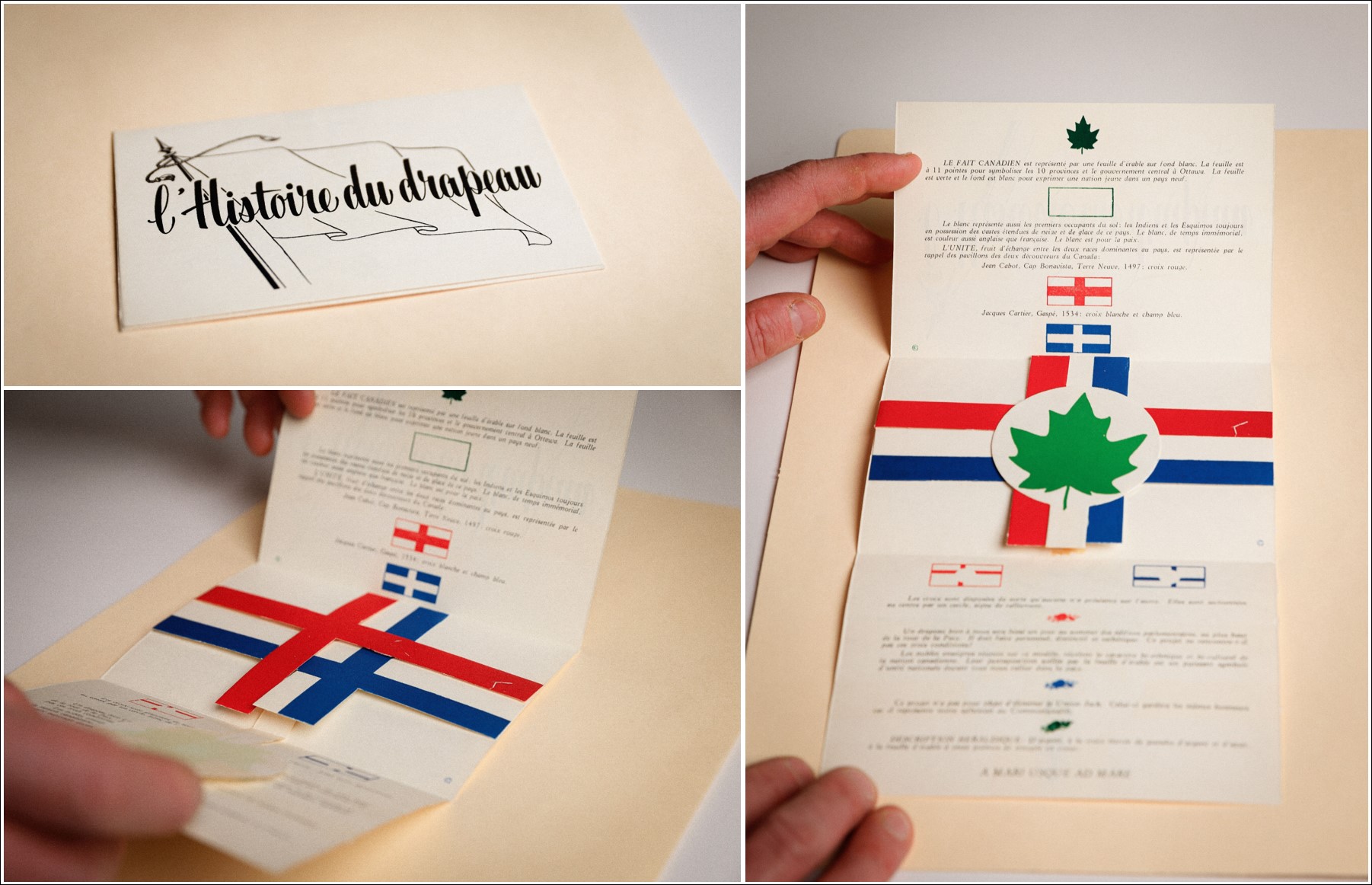
A Sweet Proposal… for a New Canadian Flag

Version française

By Forrest Pass

February 15, 2025, is the sixtieth birthday of the National Flag of Canada. The media and heritage institutions—including Library and Archives Canada—often mark the flag’s anniversary by sharing some of the “also-rans,” a selection of Canadians’ design submissions in the months and years leading up to the flag’s adoption.

It’s fun to speculate about alternative designs: for example, what would the Canadian Olympic teams’ uniforms look like if we had selected a flag other than the now-iconic red-and-white maple leaf design? What’s more, these rejected designs tell us something about their creators’ values and their ideas about the country’s past, present and future.

Flag enthusiasts often have our favourite “also-rans.”  The story of my favourite runner-up brings together two mid-February fixtures: flags and chocolates.

In 2013, while working as a historian at the Canadian Museum of History, I found a set of ten small fabric flags for sale on eBay that appeared to date from the Great Flag Debate. The seller, sadly, knew nothing about their origins, having bought them as part of a trunk load of miscellaneous bric-a-brac at an estate sale. However, these little flags were noteworthy to me because so few proposed designs made it off the drawing board; it took a rare confidence in one’s own design—and a little bit of disposable income—to produce fabric examples for distribution.

Small white flag with blue and red crosses and a green maple leaf in the middle.

A mysterious Canadian flag proposal. (Canadian Museum of History, 2013.47.1)

I could confirm that the proposal had been submitted to the House of Commons flag committee because it hangs, alongside many others, on the wall of the committee’s meeting room in a 1964 press photo. This was enough to justify the flags’ acquisition for the museum’s collection, but I still hoped to identify the designer and the flags’ intended symbolism.

Black and white photo of seventeen men and one woman sitting or standing around a table surrounded by flag designs.

Members of the House of Commons Flag Committee surrounded by 1200 designs for a new Canadian flag, October 7, 1964. The mystery flag is circled in red. (Library and Archives Canada, a213164)

As luck would have it, a colleague came across a reference to this very flag four years later in the Hansard record of the Great Flag Debate. In a speech on August 26, 1964, Clément Vincent—MP for Nicolet-Yamaska, Quebec—had described both the flag and its symbolism to his fellow parliamentarians. A little more digging in Hansard, and I had the name of the designer: Jean Dubuc. And after some Internet sleuthing, I uncovered a letter to a newspaper, an obituary and a Facebook profile. I was soon corresponding with the designer’s son, Daniel Dubuc, who told me more of his father’s story.

Jean Dubuc (1920–1965) was born in Chandler, Quebec, and grew up in Chicoutimi, where his grandfather was a pulp-and-paper and hydroelectricity magnate. He joined the Quebec public service in 1951 and settled in the Québec City suburb of Sainte-Foy. A lifelong heraldry enthusiast, he conceived his proposed Canadian flag in the late 1950s. In 1959, he sent a copy of it to every senator and member of the House of Commons. He included a printed bilingual cover letter, and his son generously donated a copy to the museum.

Among the thousands of designs submitted before and during the Great Flag Debate, Dubuc’s stands out. For one, he cleverly intertwined the red cross of St. George on a white background, the traditional flag of England, with the pre-revolutionary French merchant ensign, a white cross on a blue background. Thus, the Dubuc flag evoked gave equal status to the two principal settler communities without using the more familiar—and sometimes controversial—Union Jack and fleur-de-lys.

A second intriguing feature was Dubuc’s inclusion of Indigenous people in his flag design, at a time when most designs, including the one finally selected, included no such reference. The white field of the flag, wrote Dubuc, represented “the first occupants of the land,” the First Nations and Inuit, “still in possession of vast expanses of snow and ice of this country.” This comment put Dubuc ahead of his time: even the few mid-century amateur designers who did include Indigenous symbolism rarely acknowledged that Indigenous people were still around, much less that they still owned and occupied these lands. (Dubuc did not mention the third constitutionally recognized Indigenous group in Canada today, the Métis Nation, whose history and continued existence were less well known in the 1950s, particularly in eastern Canada.)

During our conversations, Daniel Dubuc also told me a tantalizing tidbit: his father had produced another piece of ephemera to promote his flag design. It was a foldable model that explained the components of the design and showed how they fit together. Unfortunately, the family did not have a copy, at least not at hand. I made a mental note to keep an eye open for one.

Then in 2022, I found it. I was going through the papers of Guy Marcoux, a Ralliement des créditistes (Social Credit) MP for Québec-Montmorency, not far from Dubuc’s home in Sainte-Foy. In Marcoux’s substantial reference file on the flag question, the Dubuc model stood out among dozens among letters, leaflets and collage flag mock-ups.

Three images of a pamphlet titled “l’Histoire du drapeau” (English translation: The history of the flag). Printed paper model of a flag with blue and red crosses and a green maple leaf in the middle. The model also includes instructions on how to layer the symbols and the meaning of each symbol.

Jean Dubuc’s folding flag model. (Library and Archives Canada, Fonds Guy Marcoux, MIKAN 110969)

As I had suspected from Daniel Dubuc’s description, Jean Dubuc’s flag model was inspired by a similar model depicting the history of the Union Jack, distributed by Laura Secord as a promotional favour in the 1930s. Like Dubuc’s model, the Laura Secord version illustrated the layers of crosses, colours, and meaning that made up the Union Jack, Canada’s official national flag for domestic purposes until 1946. The concept was popular: Laura Secord adapted its insert to support the war effort, and American sister company, Fanny Farmer Candy Shops, distributed a similar favour explaining the history of the Stars and Stripes.

Three images of a paper model illustrating the history of the Union Jack. Folding flaps representing the crosses of St. Andrew, St. George, and St. Patrick show how the flag is constructed and how it has evolved.

Folding model of the Union Jack produced by Laura Secord Candy Shops to mark the coronation of King George VI, 1937. (Library and Archives Canada. National Archives of Canada Postcard Collection. MIKAN 15178)
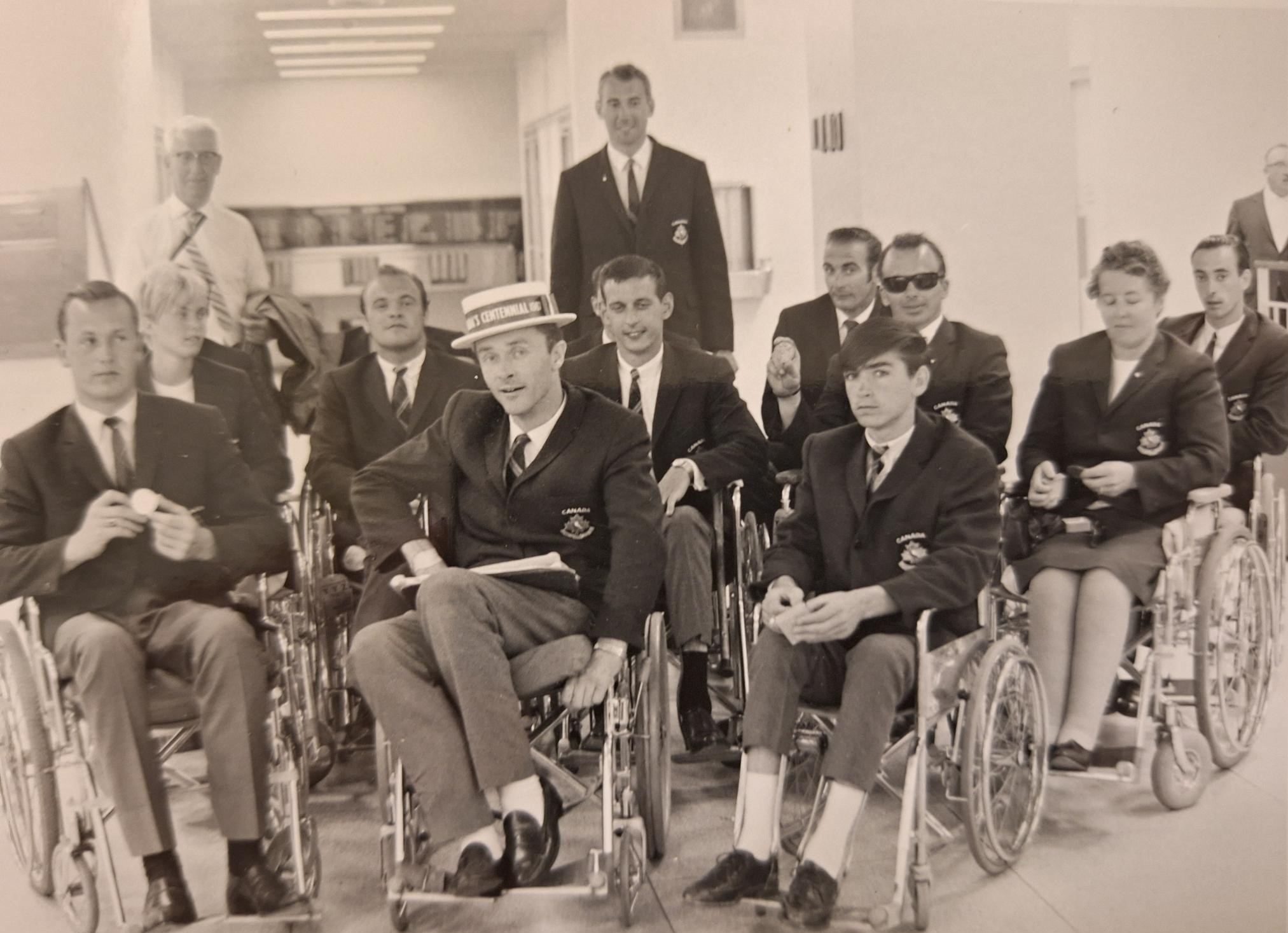
In his personal campaign for a distinctive flag, Jean Dubuc adapted a format—the folding paper model—that would have been familiar to decision-makers and ordinary Canadians, especially if they were chocolate lovers. His simple, striking design lent itself to this elegant promotional form. My rediscovery of Dubuc’s flag model reminds us also that although the records of the flag committee have been well publicized, there are other collections at Library and Archives Canada that continue to yield surprising details of the Great Flag Debate sixty years later. When you open an archival box, as when you open a box of chocolates, you never know what you’re going to get.


Forrest Pass is a curator with the Exhibitions team at Library and Archives Canada.