The Ancient Art of Archery

Version française

By Dylan Roy

This article contains historical language and content that may be considered offensive, such as language used to refer to racial, ethnic and cultural groups. Please see our historical language advisory for more information.

Archery, like most other sports or physical endeavours, can teach an individual many things, including discipline, perseverance, patience and focus.

I began my archery saga very recently and, despite my obvious inadequacies in the sport, I have had a great time learning about its various intricacies. This newfound hobby led me to scour the published and archival collection at Library and Archives Canada (LAC) to see what could be found about the bow and arrow.

Lo and behold, there was a plethora of books to read and many interesting archival materials to choose from. Like Robin Hood of yore, I shall share some precious gems from the rich resources we have at LAC.

First, if you were ever stuck on where to start for archery, there are many beginner guides and archery club-endorsed publications available. One of my personal favourites, due to its charm and whimsical cartoon art style, is the book Archery is fun! This book is mainly geared towards children, but it can also teach adults the basics of archery. With this swell book, you’ll be shooting arrows like Katniss in no time!

Second, as noted in the title of this blog, archery is an ancient art. To learn about the history of archery, why not use a book that was written over a century ago? Archery, by C.J. Longman and Henry Walrond (published in 1894), is a wonderful piece of literature to learn about archery’s ancient roots. Moreover, the book can enable you to understand the shifting thought patterns and language of authors writing over a hundred years ago.
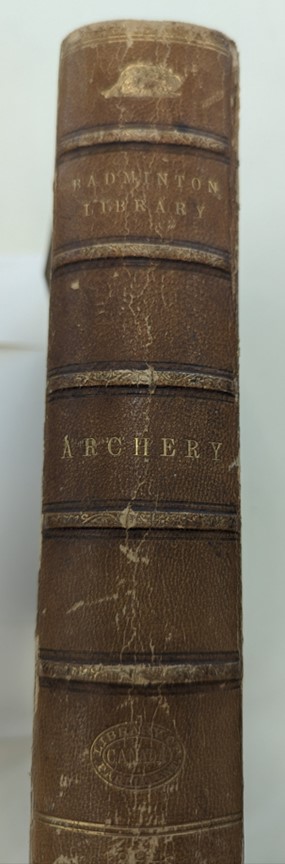
The spine of an old-fashioned book with the title “Archery” printed in the middle.

Spine of the book Archery by C.J. Longman and Henry Walrond. (OCLC 342853)

According to Longman and Walrond, only hunting “can lay greater antiquity than archery.” The archaic allure of archery is one of the things that attracted me to the sport. It’s fun to think that, long ago, our far-distant ancestors were most likely taking part in archery in much the same way as we do today. This intriguing sport connects us with the past through actions in the present.

Longman and Walrond also included a quote in their book from a Hindu poet, which can be seen below:

“May the bow bring us spoils and oxen, may the bow be victorious in the heat of the fight; the bow fills the foe with terrible fear, may the bow give us victory over the world.”

This poem demonstrates the importance of archery and the impact that it has had on human civilization. The unknown poet declares that with the bow, humans may ultimately be victorious over the earth itself—thus indicating the sheer power associated with archery.

The book also provides lovely illustrations of some prehistoric arrowheads, which can be seen below:

Black-and-white illustrations of five arrowheads with a description under each of the drawings.

Five different prehistoric arrowheads found on page 19 of the book Archery. (OCLC 342853)

Many societies have held archery in high regard and many deities have been associated with it, especially in relation to hunting, such as the Greek goddess Artemis.

With the history of archery behind us, I will now share some sources that provide insight on how to get in shape for archery. You’ll be looking buff like Hawkeye in no time!

Floyd W. Johnson’s Fitness for Archery is a wonderful read for anybody looking for some pointers on the types of exercises that facilitate archery. Johnson advises that there are four main criteria needed for fitness as an archer: aerobic capacity (or stamina), flexibility, strength and relaxation.

According to Johnson, “aerobic capacity is the maximum amount of oxygen that can be taken into the blood and delivered to the muscle. Flexibility is the range of movement in a joint or series of joints (spinal column). Strength is the capacity of a muscle to exert force against a resistance.” Finally, relaxation is important because “archery is a sport which demands full mental and physical concentration at all times.” Therefore, if one wishes to practice archery, it is crucial to address all four of these fitness priorities.

Johnson also supplies the reader with several exercises to enhance one’s fitness, which you can see in the images below:
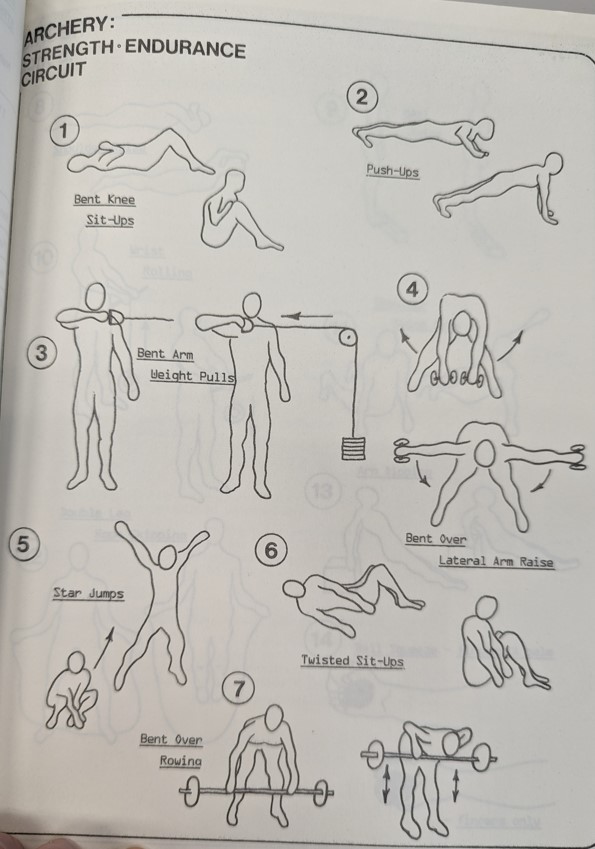
Page titled “Archery: Strength–Endurance Circuit” with illustrations of figures showing how to do seven exercises.

Seven different exercises for building strength and endurance, including bent-knee sit-ups, push-ups, bent-arm weight pulls, bent-over lateral arm raise, star jumps, twisted sit-ups and bent-over rowing. (OCLC 15918112)
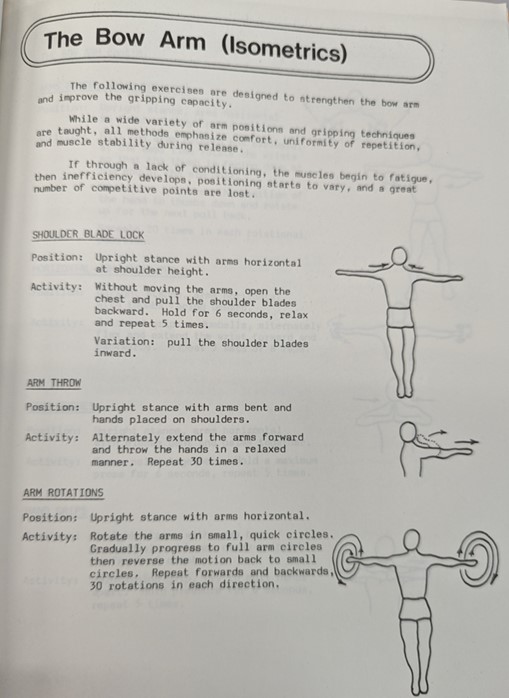
Page titled “The Bow Arm (Isometrics)” with instructions and illustrations of figures doing the exercises described.

Three different exercises for bow arm isometrics: shoulder blade lock, arm throw and arm rotations. (OCLC 15918112)
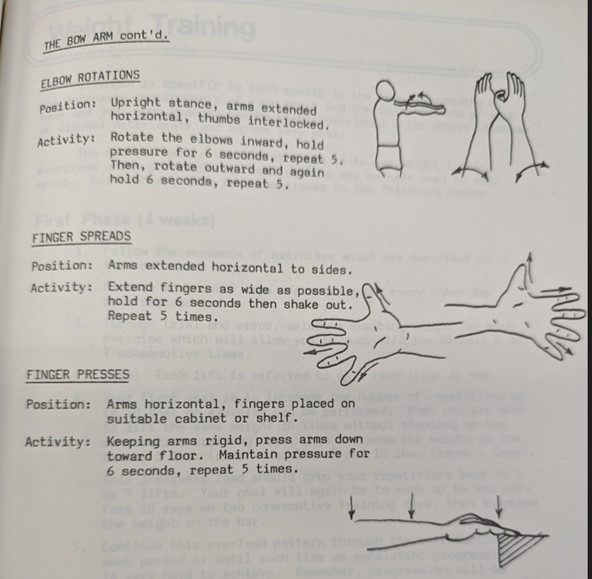
Page titled “The Bow Arm cont’d” with instructions and illustrations of figures doing the exercises described.

Three other exercises for bow arm isometrics: elbow rotations, finger spreads and finger presses. (OCLC 15918112)

By including these exercises in your regimen, you’ll be fit enough to surf down a flight of stairs on a shield while shooting arrows, just like Legolas!

Although our published section provides a vast array of content concerning archery, we also hold many records about archery in our archival holdings.

A good fonds to consult is the Federation of Canadian Archers fonds. This fonds contains a multitude of records concerning the federation. Researchers can garner a wide array of information by consulting the sections found under “Record information – Details.” For example, the “Scope and content” section conveys the following information:

Fonds consists of publications, bulletins, minutes and correspondence; competition records; finances, membership, history; instructional programmes, rules; scrapbooks; athletes’ files; president’s files.

Photographic material depicts various Canadian archery championships and activities of the Federation of Canadian Archers, 1949–1972. Medallic objects consist of six competition medals (1966–1971), and one 1969 Federation of Canadian Archers pendant. Maps contain plans of the competition sites in Montréal and Joliette during the 1976 Summer Olympic Games.

Something interesting I learned from the “Biography/Administrative history” section—also located under the “Record information – Details” header—was the fact that the first time Canada competed internationally in archery was in 1963 at the world championships in Helsinki!

Aside from this fonds, I located many photographs of archery that are available entirely online in our archival holdings. You won’t need to scour the physical records for these!

Some of our photographs show how much a delight archery can be, such as the photograph below:
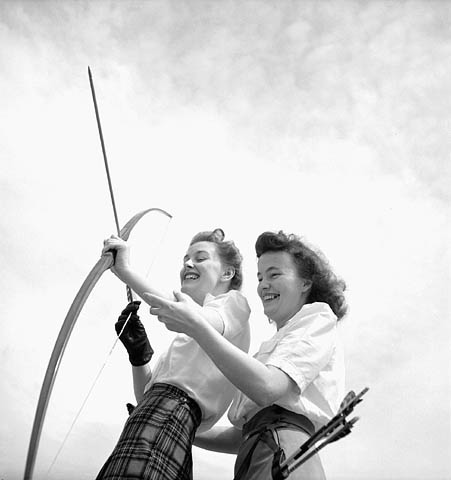
One woman holding a bow and arrow while another woman with arrows in her pocket helps her with her form.

Two women participating in archery while smiling. (e000762820)

Other photographs demonstrate that archery is practiced by a wide variety of individuals—for example, wheelchair archery is a prominent part of the Paralympics:
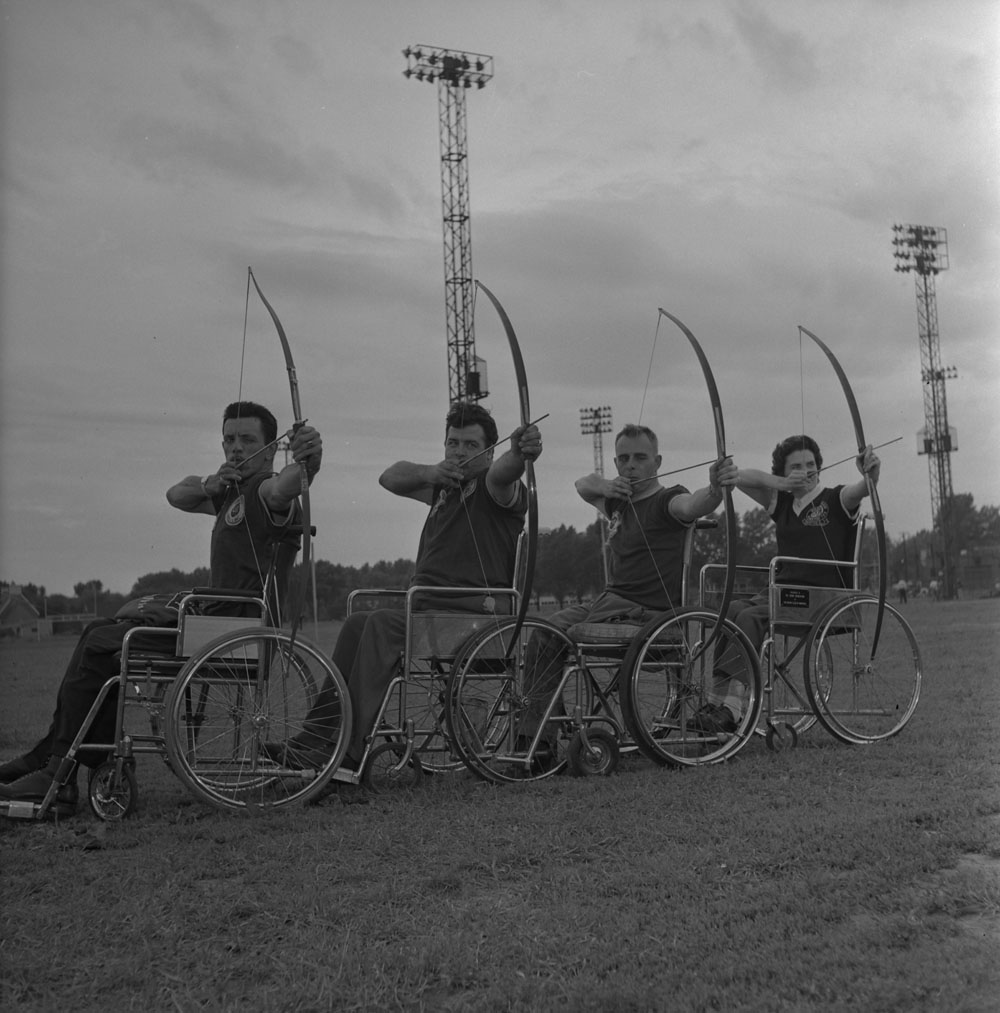
Three men and one woman in wheelchairs in position to shoot their arrows.

Four Canadian Paralympic archers in a field. Left to right: Pierre Brousseau, Roch Poirier, Jean Rochon, Thérèse Tourangeau. (e011176636)

Some of our photographs demonstrate some remarkable archery techniques, like the one below wherein the archer is drawing the bow while holding it with his feet—let’s see Robin Hood do that!
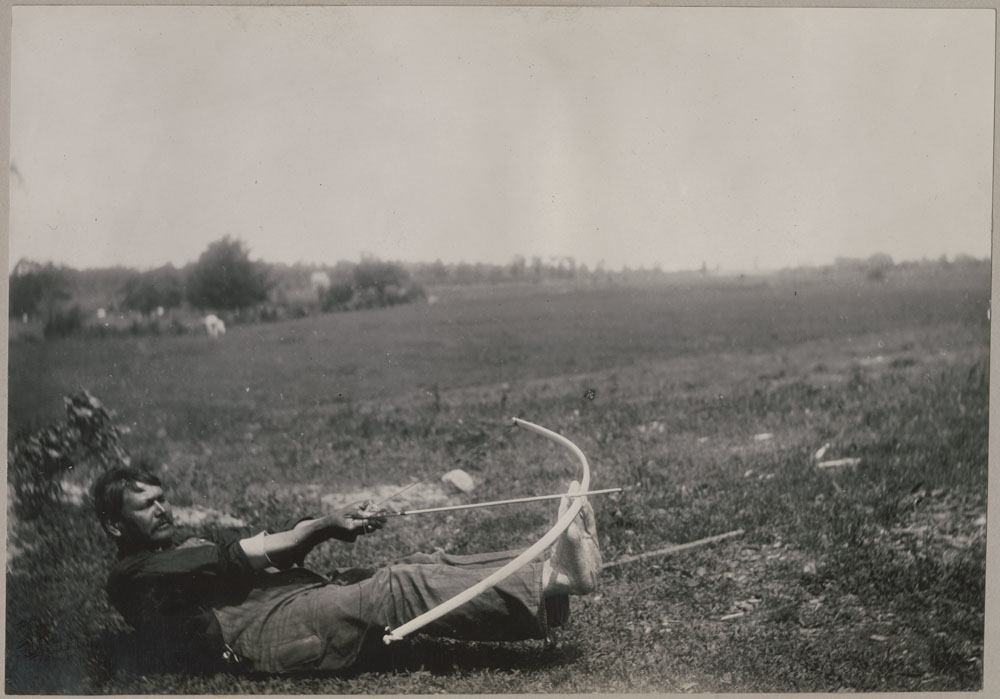
A man preparing to shoot an arrow holding the bow string with his hands and bracing the bow with his feet.

Archer John Jamieson Jr. drawing a bow with his feet while lying down. (e011310538-037_s3)

During my search, I noticed that we had several pictures of military service women practicing archery. The photograph below shows a Canadian Women’s Army Corps (CWAC) member next to a target, demonstrating that they were indeed a force to be reckoned with!
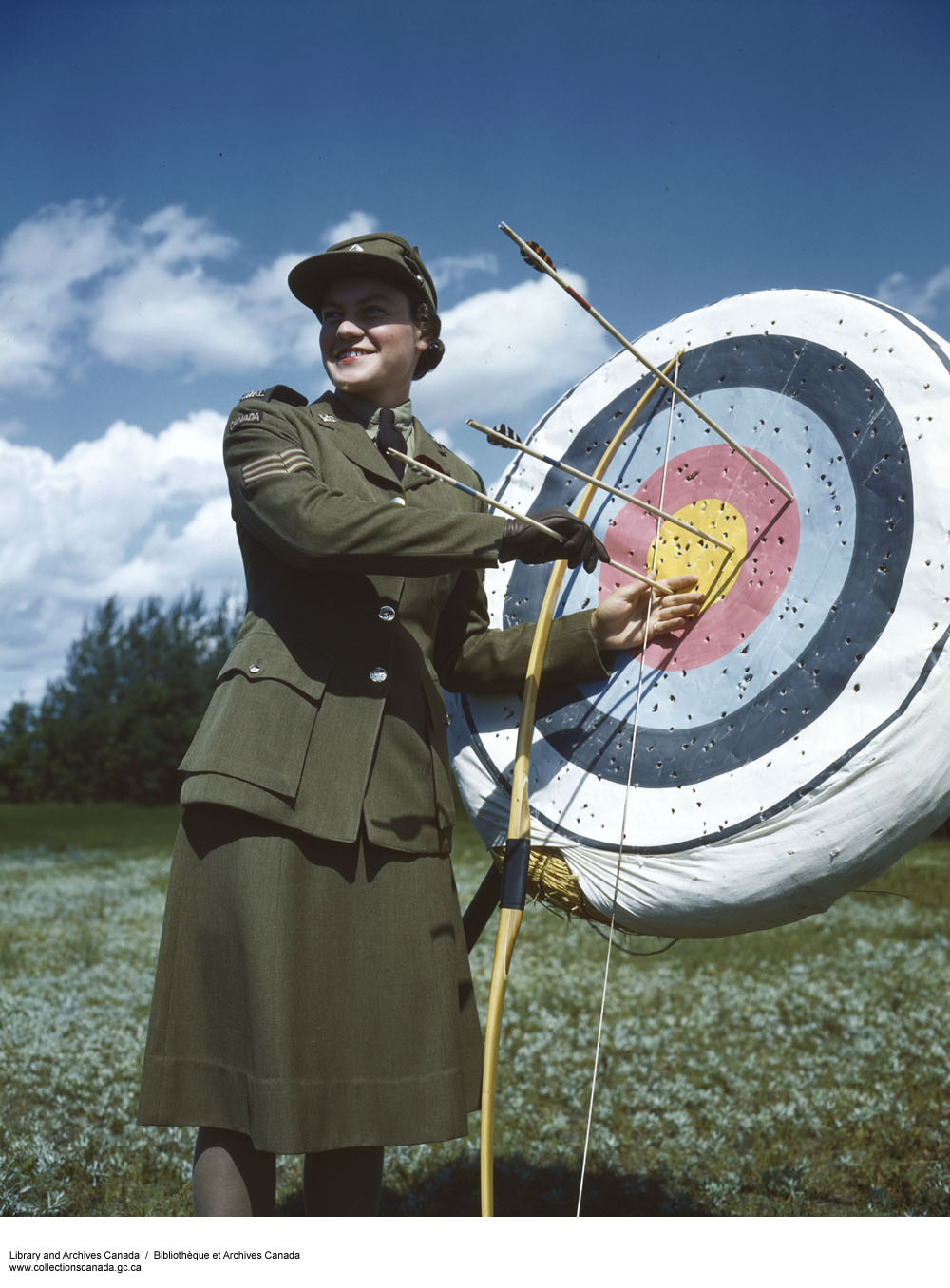
A woman in military uniform taking an arrow out of a target while holding her bow.

CWAC archer in front of target. (e010778805)

Throughout my hunt for archery photographs, I came across some offensive language that I think is important to highlight as it is an unfortunate part of LAC’s archival history, such as the original title of the photograph below:
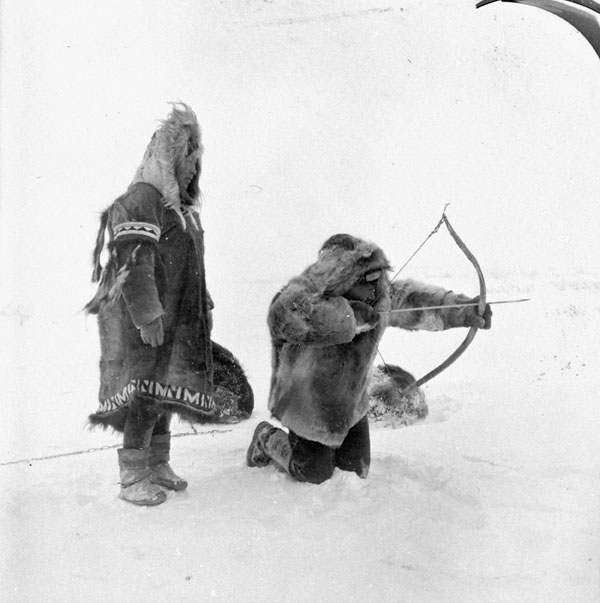
Man kneeling on snow in position to shoot his bow and arrow, with a woman standing behind him.

Inuk man using a bow made of muskox horn as his wife watches. (a211284)

Archival descriptions such as the one above reflect historical language and content that may be considered offensive—for example, language used to refer to racial, ethnic and cultural groups.

Items in the collection, their content and their descriptions reflect the time when they were created and the views of their creators. The items retain their original descriptions to ensure that attitudes and viewpoints are not erased from the historical record. LAC provides additional descriptive information to give background on such records. This is an ongoing process.

If you see records with inappropriate language or content that you think LAC should review, please contact us at reference@bac-lac.gc.ca.

Archery is a sport that requires many faculties to perform well. Although it can be frustrating at times, it is so rewarding to see the arrow strike the centre of a target and to hear that triumphant *thump* as the arrow penetrates its target.

I hope you enjoyed looking through some of the archery-focused holdings we have at LAC, and I hope it inspires you to get out there and try your hand at the ancient art of archery.


Dylan Roy is a Reference Archivist in the Access and Services Branch at Library and Archives Canada.
Spirit in Motion: Canada and the Paralympics

Version française

By Sali Lafrenie

With the Olympic Games winding down and the Paralympic Games winding up in 2 weeks, it’s time for a paralympic preview. The 2024 Paralympics will also take place in Paris, from August 28th to September 8th, and will include 22 sports:

  • Para archery
  • Para athletics
  • Para badminton
  • Blind football
  • Boccia (similar to bocce and pétanque)
  • Para canoe
  • Para cycling
  • Para equestrian
  • Goalball
  • Para judo
  • Para powerlifting
  • Para rowing
  • Shooting Para Sport
  • Sitting volleyball
  • Para swimming
  • Para table tennis
  • Para taekwondo
  • Para triathlon
  • Wheelchair basketball
  • Wheelchair fencing
  • Wheelchair rugby (previously called murderball)
  • Wheelchair tennis

While the Modern Olympic Games date back to 1896, the Paralympics have a different history. The Paralympic Games as we know them date back to 1984. But they had a different name from 1960 to 1980: the International Stoke Mandeville Games.

The International Stoke Mandeville Games

Although the International Stoke Mandeville Games began in 1960, their origin dates to 1948 at the Stoke Mandeville Hospital in England. Like the Inter-Allied Games and the Invictus Games, the Stoke Mandeville Games were meant to be a rehabilitative experience for people with disabilities and for veterans. The Games eventually grew into a large-scale sports competition.

Initially consisting of only wheelchair athletes, the Games grew over time to include athletes from other countries—making them international—as well as athletes with a range of disabilities, which lead to the inclusion of more sports.

While the International Stoke Mandeville Games are considered the precursor to the Paralympics, there are and were many different types of sports competitions for athletes with disabilities such as the World Abilitysport Games, the Special Olympics, the Parapan American Games, and the Deaflympics (first held in Paris in 1924).

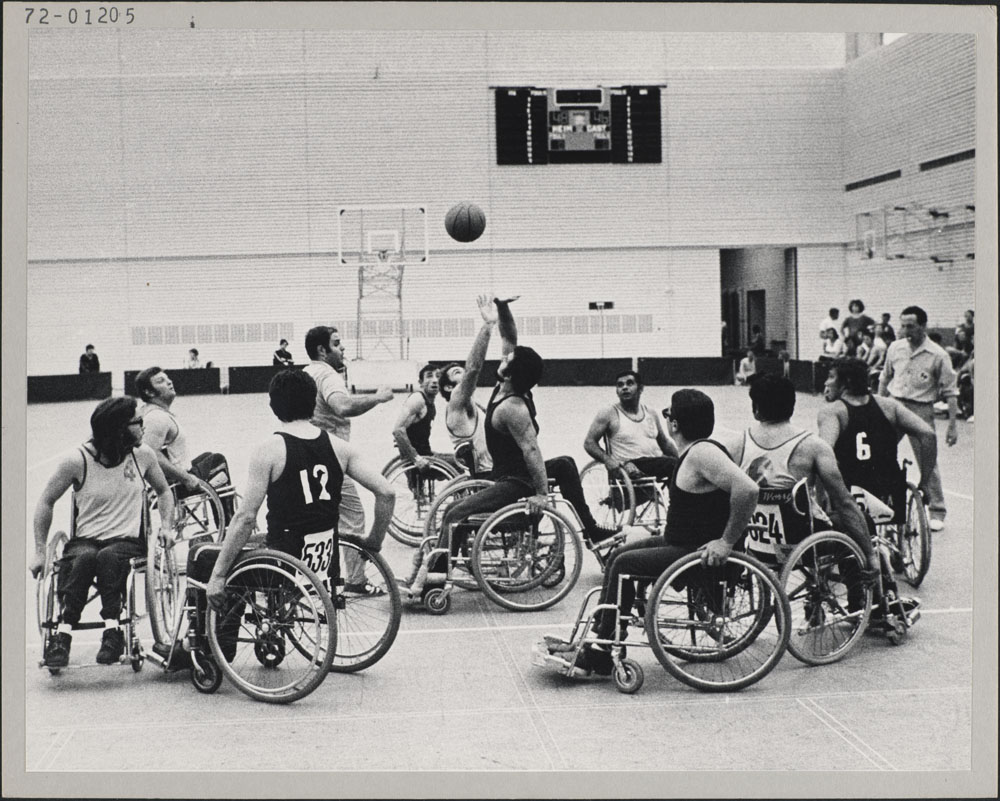
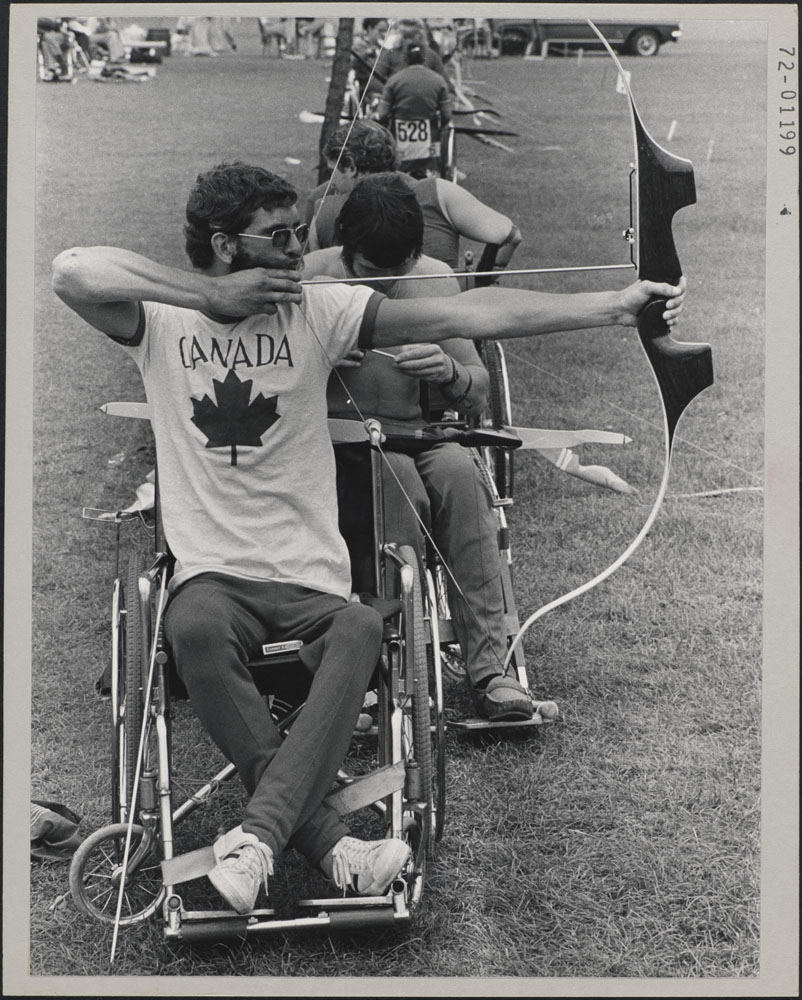
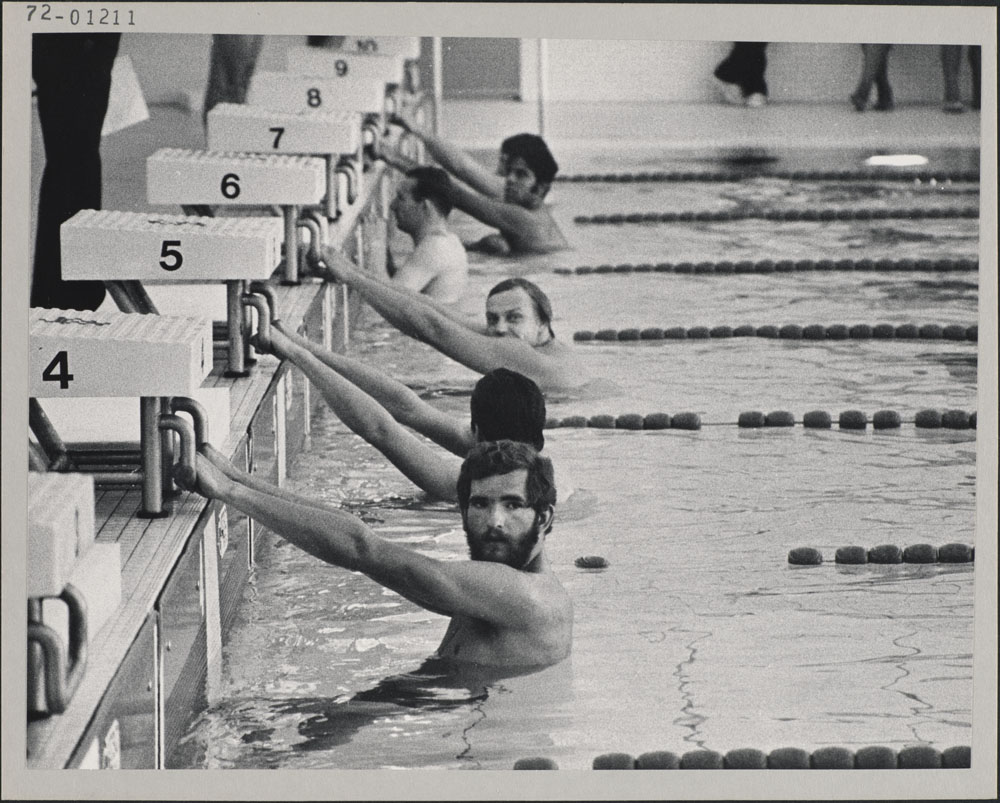
Below, we can see photographs of athletes competing at the 1972 International Stoke Mandeville Games in sports like archery, swimming, and wheelchair basketball.

A black and white photograph of a wheelchair archer drawing a bow and wearing a t-shirt with a maple leaf on it.

Archery, 21st International Stoke Mandeville Games, Heidelberg, Germany, August 1–10, 1972. (e011783300)

A black and white photograph of Para swimmers in the water holding onto the starting blocks.

Swimming, 21st International Stoke Mandeville Games, Heidelberg, Germany, August 1–10, 1972. (e011783302)

A black and white photograph of two wheelchair basketball teams at tip off.

Basketball, 21st International Stoke Mandeville Games, Heidelberg, Germany, August 1–10, 1972. (e011783301)

Canada and the Paralympic Games

Participating in the Games for over 50 years, Canadian Para athletes have a long and shiny history at the Paralympics. It’s safe to say that Canadian Para athletes tend to win a lot, given that they rank fourth in All-Time Paralympic Summer Games Medal Standings. Team Canada has dominating records in Para swimming, Para athletics, Para cycling, and wheelchair basketball. Notable athletes in these sports include Benoît Huot, Michelle Stilwell, Chantal Petitclerc, and Richard Peter.

Each of these athletes have made their mark on parasport history in different ways. Huot did so at Rio 2016 when he earned his 20th Paralympic medal, officially tying the record for second all-time Paralympic swimming medals. Stilwell left her mark in two different sports, wheelchair basketball and wheelchair racing, winning at least one gold medal in both sports. Senator Chantal Petitclerc, perhaps one of the most recognizable names in Canadian parasport alongside Rick Hansen, represented Canada at 5 Paralympics and won 21 medals. Richard Peter, also a dual-sport athlete and five-time Paralympian, competed in wheelchair basketball and in Para badminton, winning multiple medals with the wheelchair basketball team throughout his career. Peter was also featured in the docuseries “Chiefs and Champions” highlighting Indigenous athletes representing Canada in sports.

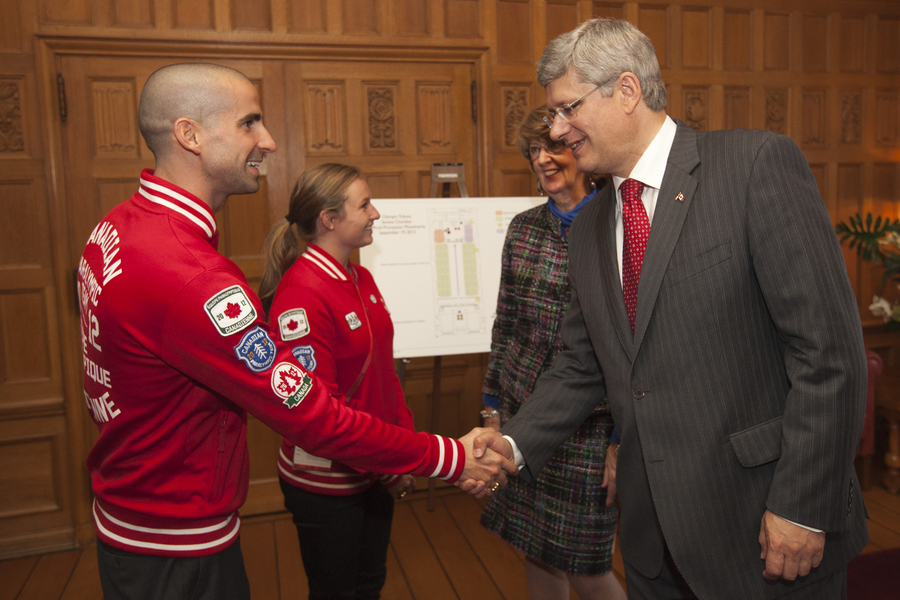
A colour photograph of athletes wearing red Team Canada jackets, one in the foreground standing and shaking the Prime Minister’s hand and another in the background speaking to someone.

Paralympic athlete Benoît Huot during recognition ceremony at Parliament Hill with Prime Minister Stephen Harper. Credit: Jason Ransom. (MIKAN 5586583)

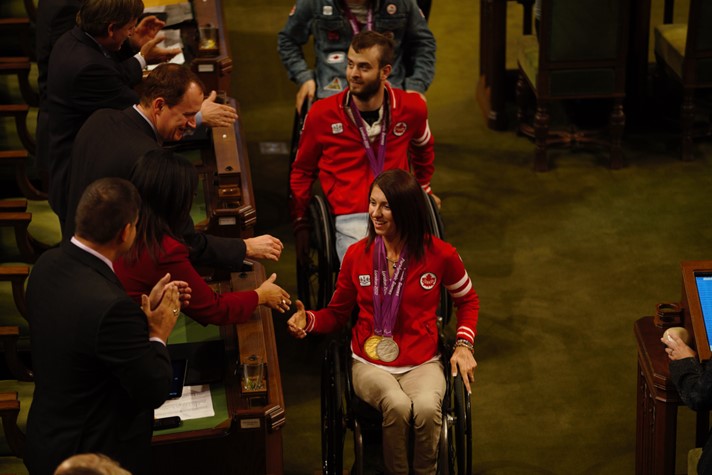
A colour photograph of athletes wearing red Team Canada jackets sitting in wheelchairs and moving in a line to shake the hands of members of parliament.

Paralympic athletes Michelle Stilwell and Jason Crone during recognition ceremony at Parliament Hill with Prime Minister Stephen Harper. Credit: Jill Thompson. (MIKAN 5609841)

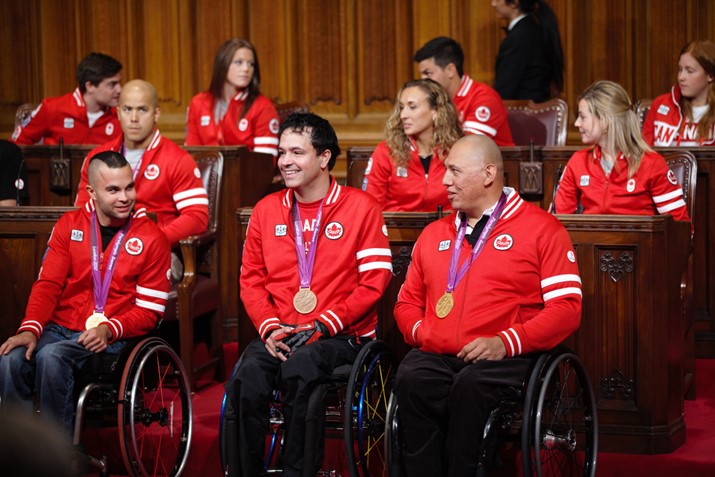
A colour photograph of athletes, three in the foreground in wheelchairs wearing Paralympic medals and seven sitting on benches in the background.

Paralympic athletes Tyler Miller, Marco Dispaltro, and Richard Peter during recognition ceremony at Parliament Hill with Prime Minister Stephen Harper. Credit: Jason Ransom. (MIKAN 5609841)

The Canadian Paralympic Hall of Fame

Canadians have made an impact on the Games inside and outside of the competition itself. Currently, the Canadian Paralympic Hall of Fame consists of 42 inductees in three categories: builders, coaches, and athletes.

One important builder is Dr. Robert W. Jackson, an orthopaedic surgeon who is credited with founding the Canadian Wheelchair Sports Association and as being a major advocate of parasports. While Dr. Jackson’s legacy lies in his contributions to the medical field as a pioneer of arthroscopic surgery, his legacy is also important to the world of sports. Outside of his work promoting parasports, Dr. Jackson also worked with professional athletes in two major leagues: the Canadian Football League (Toronto Argonauts) and the National Basketball Association (Dallas Mavericks). And in 1976, he was responsible for organizing the Paralympics in Toronto, also known as the Toronto Olympiad. All of this and more can be found in Dr. Jackson’s fonds here at LAC.

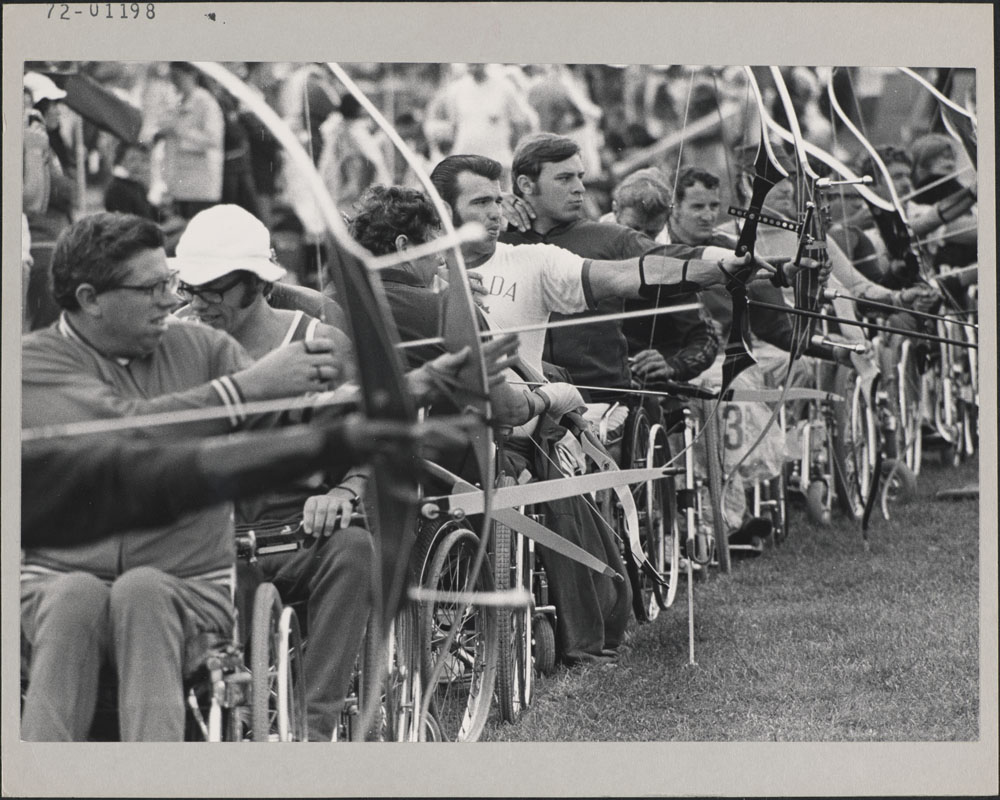
Another important Hall of Fame inductee is Eugene Reimer, a member of the first Canadian Paralympic team and a dominant wheelchair athlete. Throughout his athletic career, Reimer won 10 medals across 4 Paralympics and more than 50 medals at national and international competitions. He was also named Canadian male athlete of the year for these achievements. Reimer was an all-around athlete, a true competitor and multi-talented athlete who also played for the Vancouver Cable Cars wheelchair basketball team—the same team that Rick Hansen and Terry Fox played on in British Columbia. Check out this photo of Reimer competing in Para archery at the 1972 Games.

A black and white photograph of a row of archers sitting in wheelchairs.

Canada’s Eugene Reimer, archery, 21st International Stoke Mandeville Games, Heidelberg, Germany, August 1–10, 1972. (e011783299)

Athletes and sports to watch

Turning back to Paris 2024, let’s look at some of the athletes and sports coming up!

Given Canada’s success in Para swimming, it only makes sense to start there. This year, Canada is sending 22 Para swimmers to Paris. While there are some new faces, there are quite a few familiar ones including Aurélie Rivard, Nicholas Bennett, and Katarina Roxon, who will be competing in her fifth Paralympics.

While there are a lot of crossover sports between the Olympic and the Paralympic Games, one of the best parts of the Paralympics are the sports that are unique to them, like goalball. If you’ve never watched the sport, then you’re in for an exciting time, and if you have watched goalball, then you know exactly what I mean. The women’s goalball team has seen a lot of success recently and historically, securing their spot in Paris by winning gold at the 2023 Parapan American Games.

Just like the Olympics, the Paralympics are always evolving and changing. Sometimes that evolution looks like adding or removing sports, and other times it looks like providing more parity between athletes and prize money. In the last 16 years, the Paralympics have added five sports to their roster: Para rowing, Para triathlon, Para canoe, Para badminton, and Para taekwondo. It’s an exciting time to be a sports fan, and if you can’t get enough of the Paralympic Games and want to learn more, check out this list of 50 Things To Know About The Paralympic Games. Happy watching!

Additional Resources

  • 2012-09-19 Olympians, Library and Archives Canada (MIKAN 5609841)
  • 2015-07-10 Toronto Pan American Games, Library and Archives Canada (MIKAN 5610897)
  • Amazing athletes: an all-star look at Canada’s Paralympians by Marie-Claude Ouellet and Jacques Goldstyn; translated by Phyllis Aronoff and Howard Scott (OCLC 1240172154)

Sali Lafrenie is a Portfolio Archivist in the Private Archives Branch at Library and Archives Canada.