
By Brian Virostek
This article contains historical language and content that may upset some readers, including an illustration of a public hanging. For more information, please consult our historical language advisory.
What goes through the mind of an experimental filmmaker as they grapple with issues of control, resistance, and—crucially—how to capture all that on film in a way that stimulates their audience to engage in the reflection?
What kind of archival materials could we expect to shed light on a film that never had a script, and whose director eschewed conventional methods? It was this curiosity that led me to ask media artist Oliver Hockenhull if he had any images or documentation he might consider donating alongside his films Determinations (1988, updated for 2022) and Exiles (1991). He responded by generously donating a small but fascinating assortment of materials that provide a glimpse into his creative process.
For Determinations, a key item is a copy of Hockenhull’s grant application to the Canada Council of the Arts. It offers a detailed description of the film’s subject and themes, allowing us to gauge the artist’s deep commitment to the project and understand his creative approach.

Page one of Hockenhull’s grant application for Determinations. (MIKAN 6523363)
The application also sheds light on the film’s polyvalent collage form. Hockenhull draws from multiple facets of his experience, conscious that the act of making this film will itself be a process of understanding. By this point, he had attended the trials of Direct Action (also known as The Squamish Five) and had written to each of the members. We can see that he isn’t satisfied to watch the news. He feels compelled to be personally present and open to dialogue. The film retains the quality of a frank correspondence.
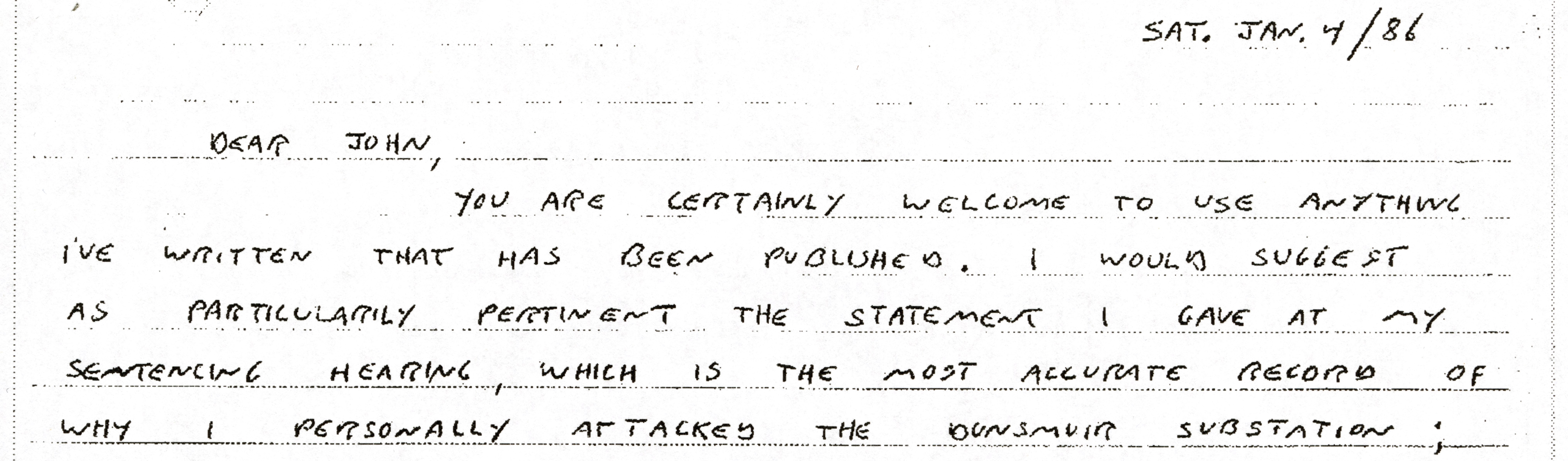
Letter to John Oliver Hockenhull written on January 4, 1986, by Doug Stewart. (MIKAN 6523363)
In the next letter, a scribbled five-pointed star stands out. It appears to be five As joined at the base. It’s unclear when this symbol was added to the letter.
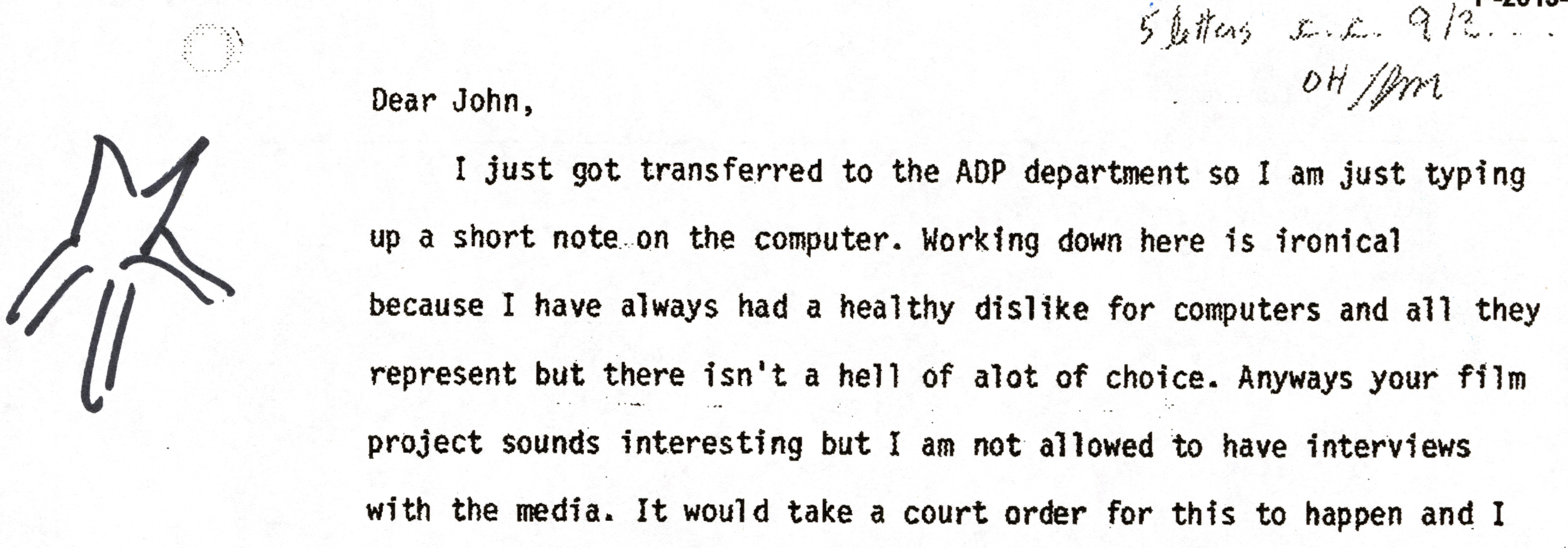
Letter to John Oliver Hockenhull signed by Ann Hansen. (MIKAN 6523363)
One last detail stands out in the grant proposal: the document appears to have been obtained through a Privacy Act request—a process that allows individuals to request access to the personal information held about them by the Government of Canada. True to the subject of his film Determinations, Oliver Hockenhull has pried and leveraged the inner workings of a system and invited us to share in his investigation.
Photographs and slides in this archival fonds show that the film’s conception unfolded not in a word processor, but in an artist studio. Advertisements for weapons and photographs are pasted to the walls, collaged, combined and painted over. We see here the meeting of the personal in the family photo and of the technically mediated with the details from the fax machine.
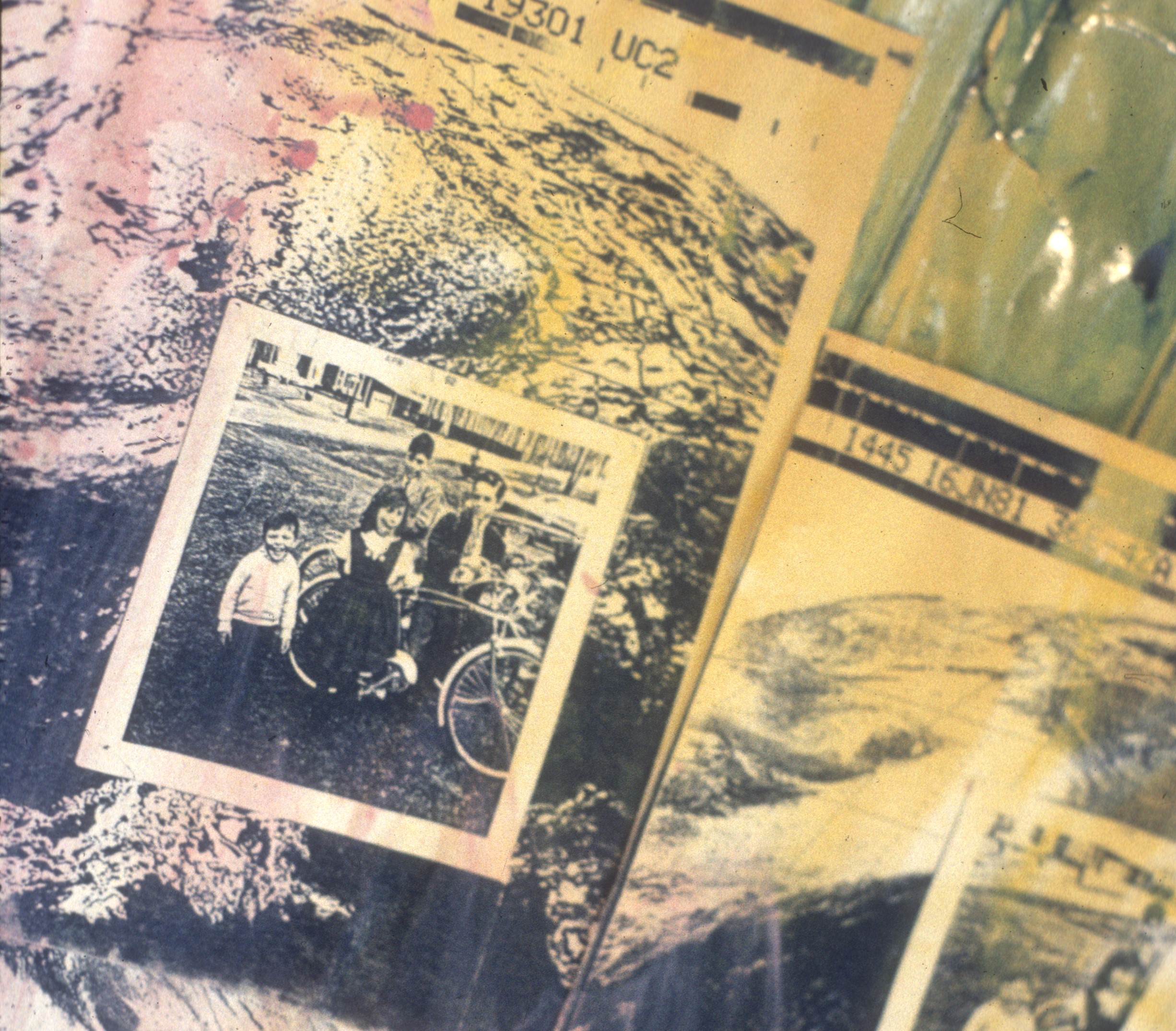
A collage created on the walls of the artist studio where part of the film Determinations was shot. (MIKAN 6523363)
Along with visual artists, we can see that dancers and actors are now part of the studio and are becoming part of the collage. In the image below, an advertisement for weapons has been copied onto a slide and projected into the studio on top of the actor.
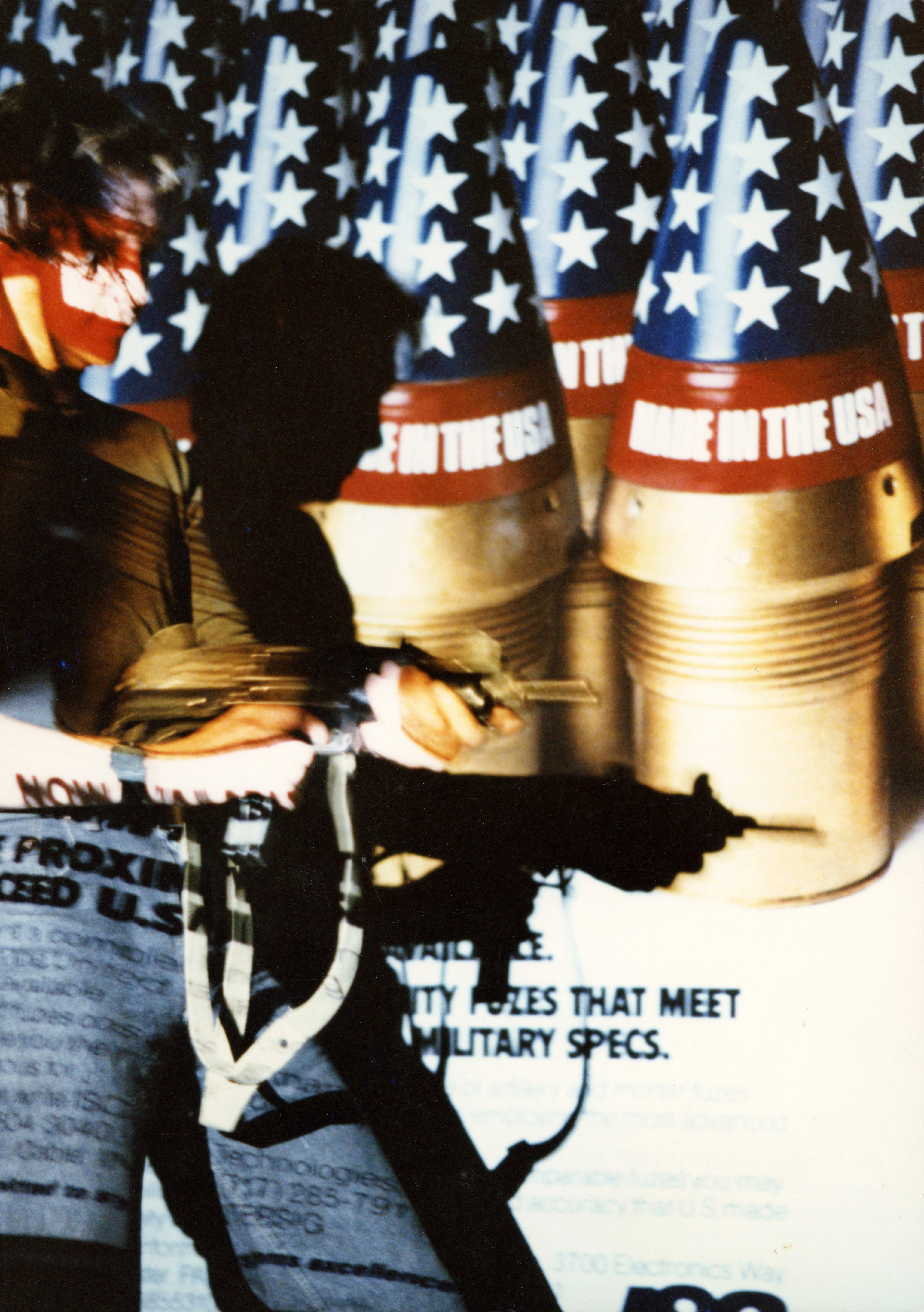
An example of multimedia collage from Determinations: printed media, projection, and performance. (MIKAN 6523363)
In the next photograph, we see the camera operator and the sound recordist working in close quarters. For this kitchen scene, the director chose to use a lived-in space even though it was small and cramped. There wasn’t enough room to fit both actors in the frame or even to shoot from two angles in a traditional shot-counter-shot. Instead, the director opted to frame the conversation using split-screen, capturing both characters within the same physical space but in separate visual fields. It’s another example of the filmmaker imposing material constraints on himself while confronting his characters with tough questions. Each solution contributes to the mosaic of understanding.
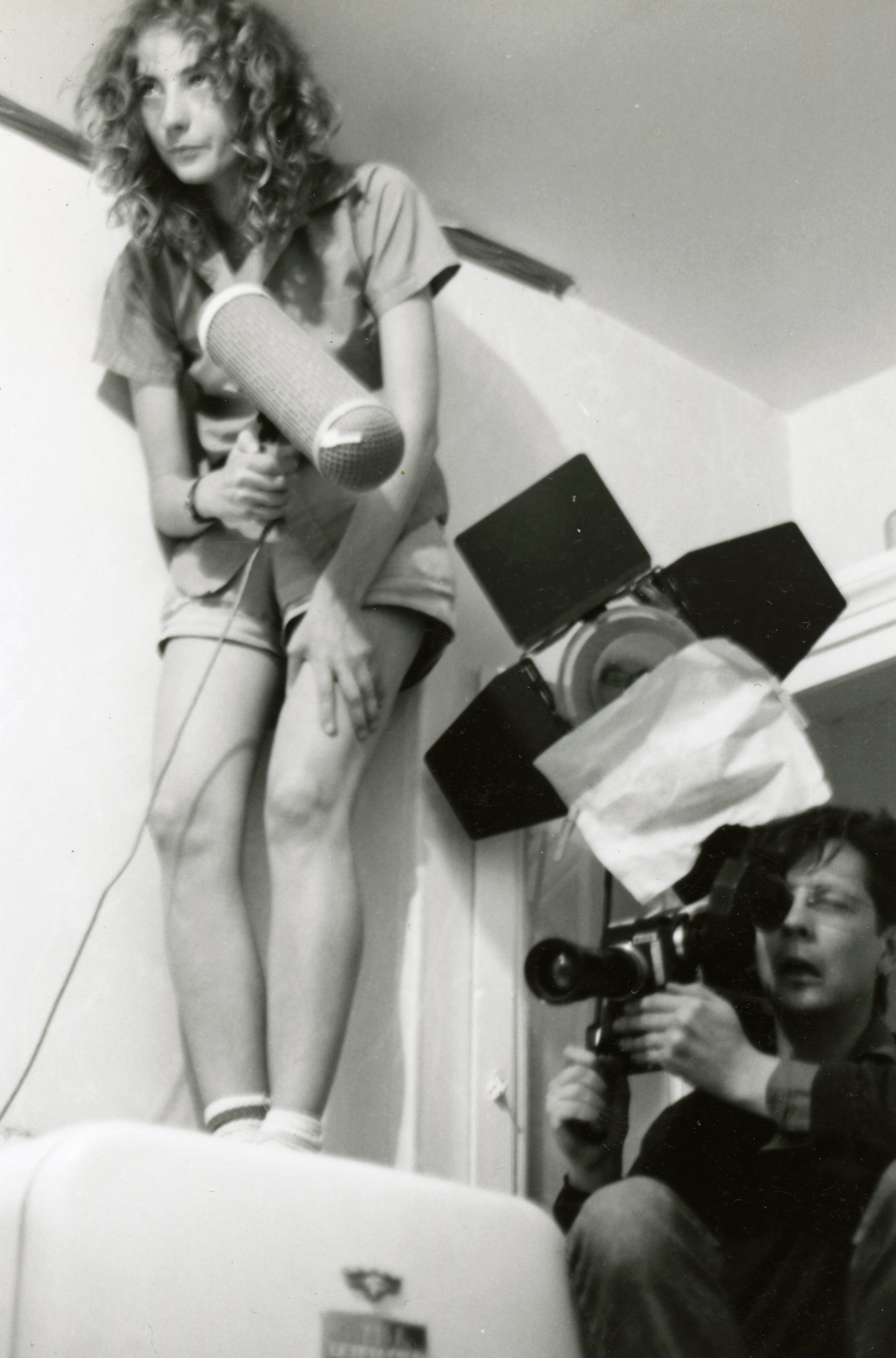
Filming Determinations. (MIKAN 6523363)
Here, working in a sculptural and painterly way, Hockenhull distorts the image of a character’s face in a carnival mirror. Through his persistent exploration of his theme through a variety of plastic and performance media, the director lands at a single frame that will represent the film in photographs and press releases: a person torn in two, with a third eye gazing into a mediated state.
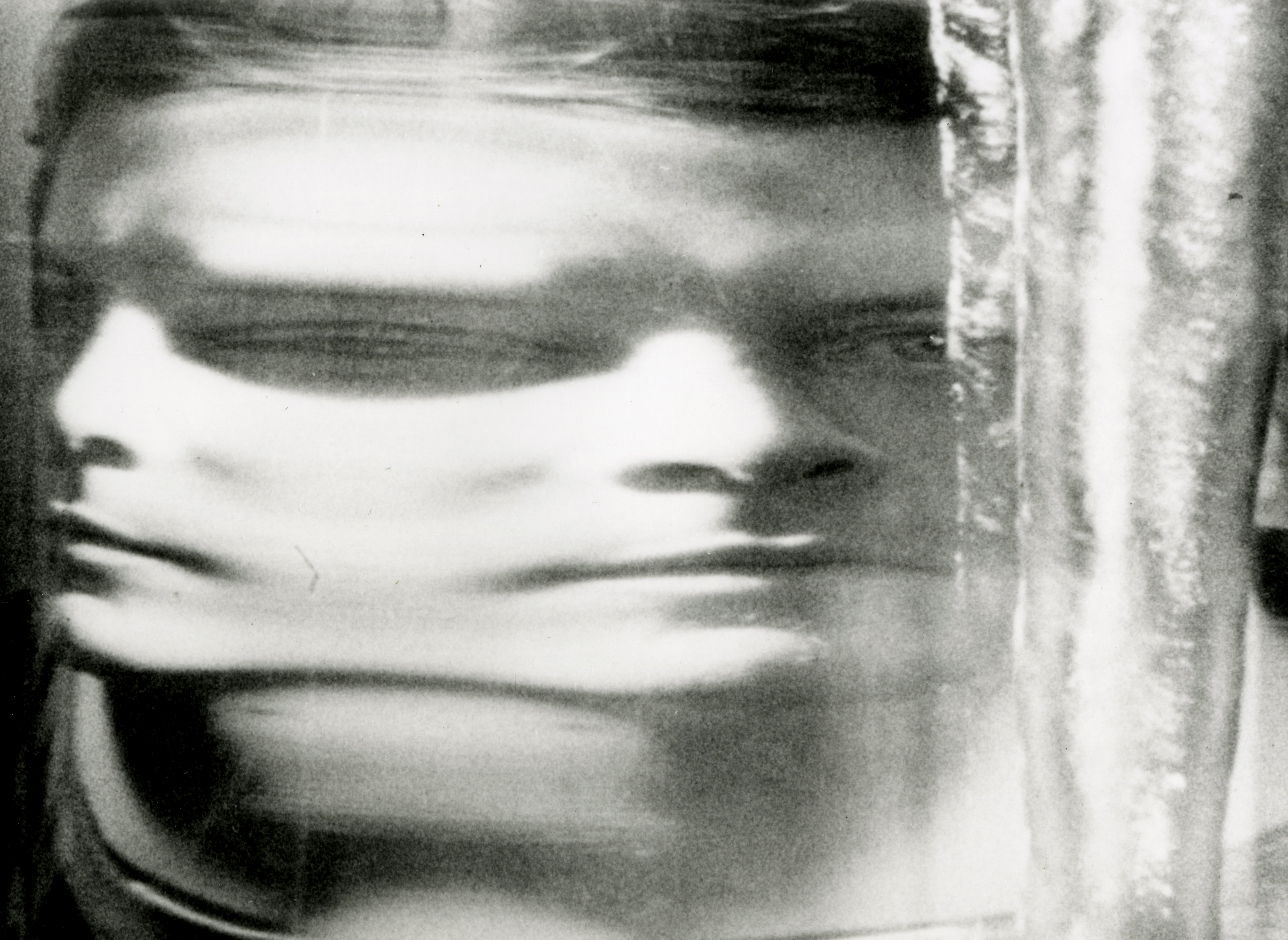
A person torn in two, with a third eye gazing into a mediated state. (MIKAN 6523363)
Library and Archives Canada has a copy of both the original 1988 version of Determinations and Hockenhull’s 2022 version, which features music by Gerry Hannah, a former member of the Squamish Five.
For his next film, Exiles, Oliver Hockenhull began his research at Library and Archives Canada, drawing on the published version of Journal d’un patriote exilé en Australie, 1839-1845, by François-Maurice Lepailleur, along with related texts and illustrations. The reproductions he requested fuelled his creative process.
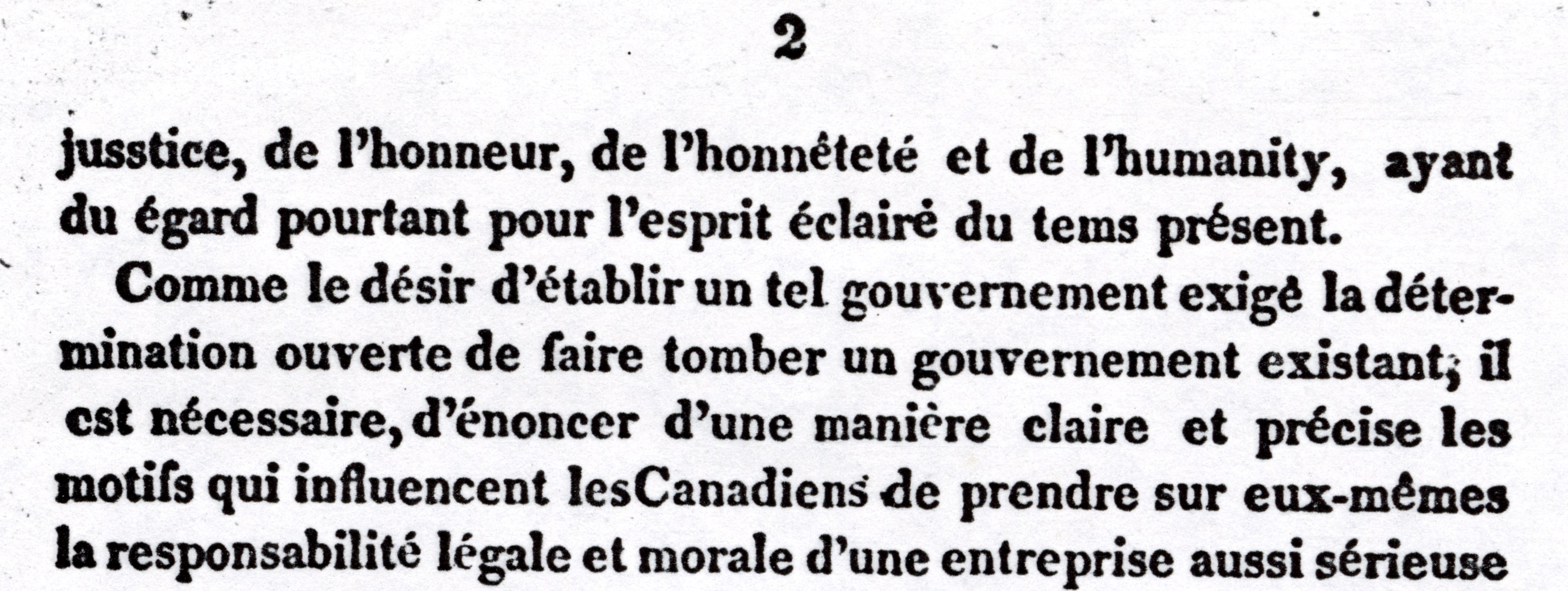
Text from Journal d’un patriote exilé en Australie, 1839-1845, by François-Maurice Lepailleur. (MIKAN 6523364)
From the revolutionary idealism of the previous text, we move to correspondence of colonial officials immersed in a world of intrigue and violence warning that “plots are formed to destroy you by poison or assassination.”
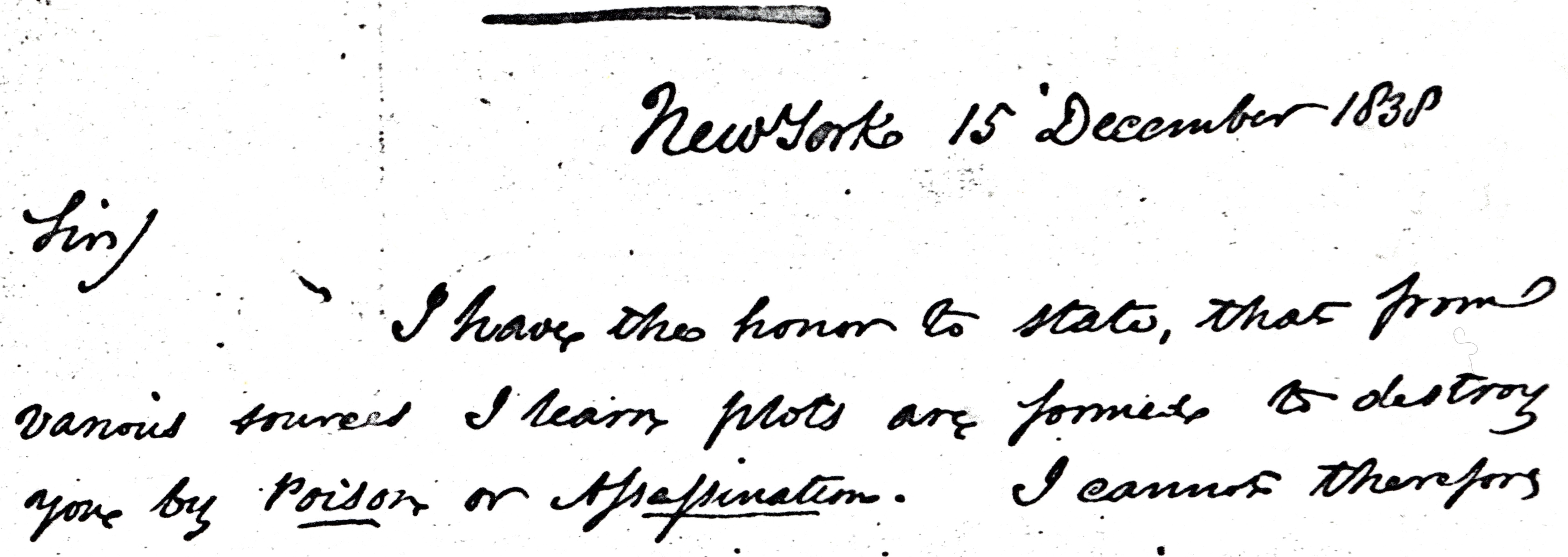
Letter addressed to Lieutenant General Jim John Colborne, written in New York on December 15, 1838. (MIKAN 6523364)
The director’s research reveals that revolutionary Patriotes such as Lepailleur faced a different kind of violence, as illustrated in the image below. The Patriotes-au-Pied-du-Courant prison, visible in the background, is now a small museum in Montréal well worth a visit.
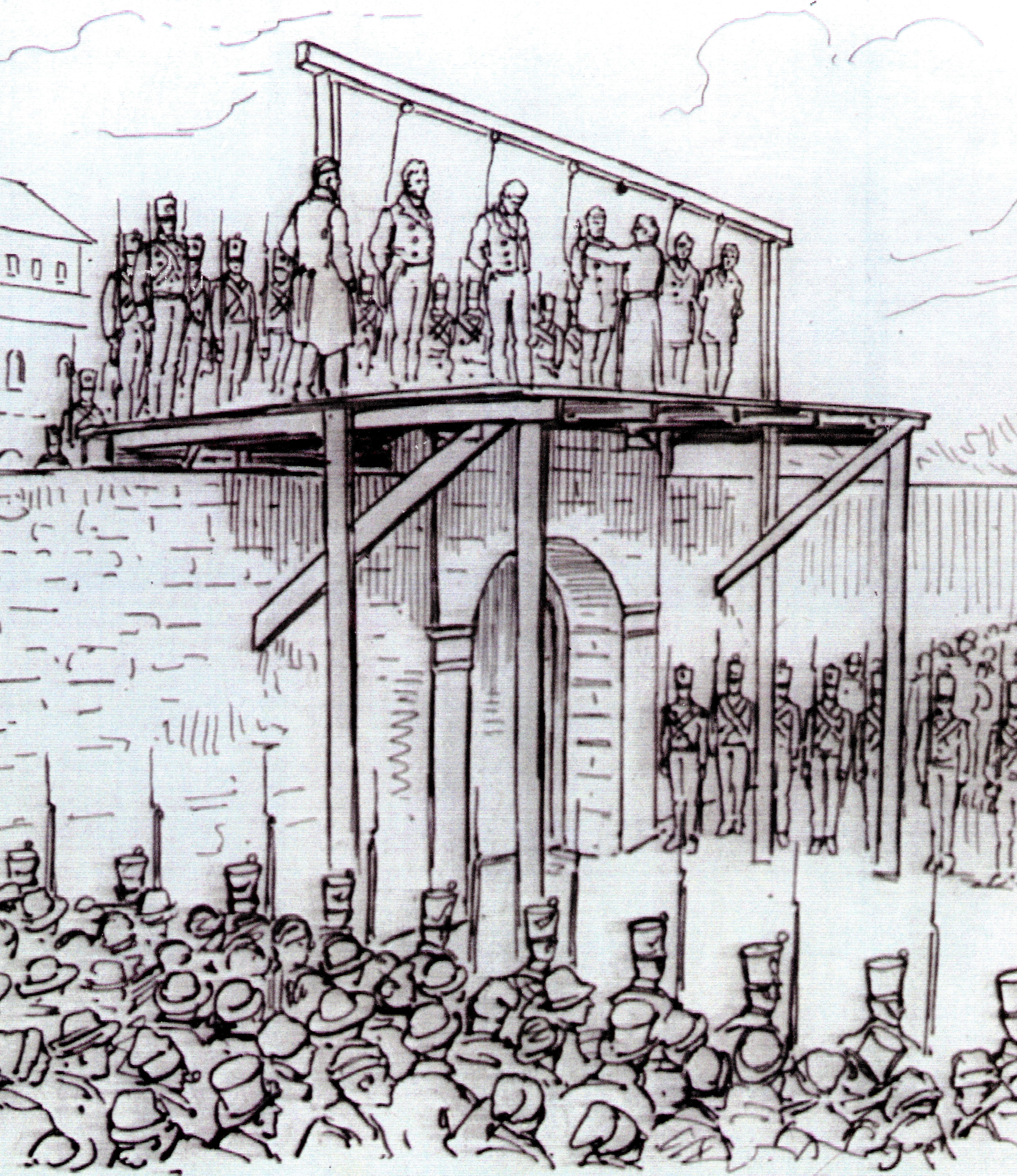
A sense of violent oppression permeates the film, conveyed symbolically rather than depicted literally. (MIKAN 6523364)
As in his previous film, Determinations, Hockenhull seeks an authentic voice, turning to journals and correspondence to tell his story. The longer, more fluid writing and illustrations are reflected in the production, not only in the costumes and locations, but also in a more sumptuous and composed mise-en-scène. From one of the several slides of set photography:
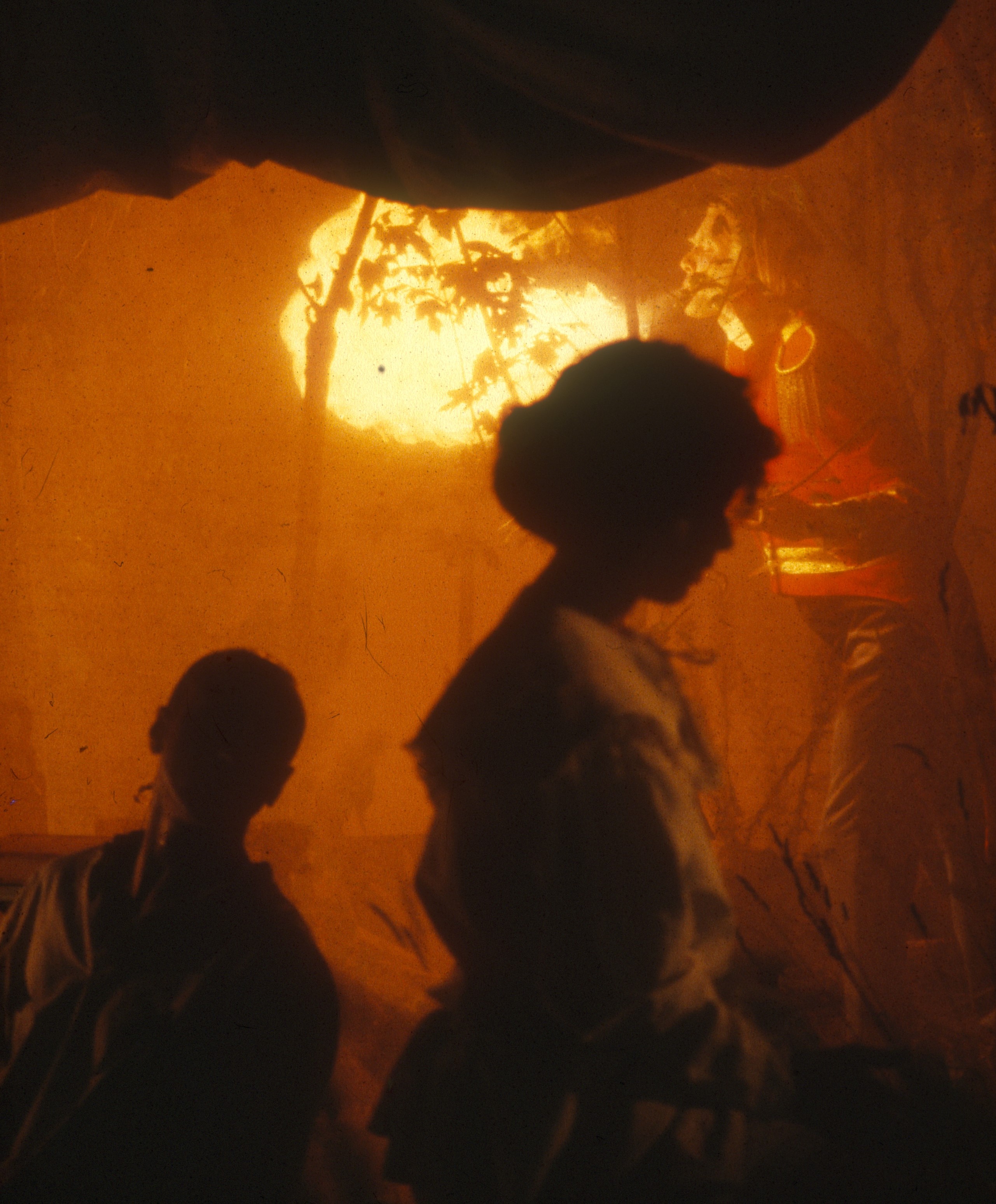
Theatrical mise-en-scène from Exiles, featuring non-diegetic elements such as a circus performer in the background. (MIKAN 6523364)
The following image shows a collage of Polaroid film stills with timecodes, assembled by Hockenhull. In the images of Lepailleur seated in the chair, you can see an old map of Australia in the background. As with his earlier work on Determinations, the director collected visual material during his research phase, copied the images to slides, and projected them into the scene. But there is refinement here: in keeping with the mise-en-scène, the image is integrated using front projection—a special effects technique that allows the projected images to fill the backdrop seamlessly without obscuring the actors.

Collage of Polaroid film stills created by Oliver Hockenhull. (MIKAN 6523364)
An expression of history as split seconds, like a storyboard after the fact, composed of Polaroid impressions and cropped illustrations. Here, the filmmaker connects these discrete events, letting their edges touch, building these blocks back into a world.
Brian Virostek is an Archivist in the Archives and Published Heritage Branch at Library and Archives Canada.
 Library and Archives Canada Blog