Oscar Peterson

Version française

By Dalton Campbell

These photographs of Oscar Peterson and his family were taken in 1944. He was in his late teens and already an experienced professional musician. He had been playing regularly with the Johnny Holmes Orchestra since 1942, a popular swing band that played to the dance crowd in and around Montreal. Oscar left the orchestra in 1947 and began a residency at the Alberta Lounge, a club near Windsor Station, leading a trio there for two years.

A black-and-white photograph showing Oscar Peterson playing the piano in a lounge.

Oscar Peterson, photographed by D.C. Langford [1944]. (e010752610)

Given the vibrant jazz scene in the city, Oscar had lots of opportunities to play: he performed professionally, played live for CBC Radio broadcasts, attended jam sessions, and met and jammed with visiting musicians performing in town. He earned praise from Count Basie, Woody Herman, Ella Fitzgerald, Coleman Hawkins, Dizzy Gillespie and others. Oscar was based in Canada until 1949 when Norman Granz convinced him to join the “Jazz at the Philharmonic” concert series in Los Angeles. This marked the beginning of his international career.

Oscar’s parents were immigrants to Canada. Daniel Peterson, Oscar’s father, was from the British Virgin Islands and worked as a boatswain on a merchant ship. His mother, Kathleen Olivia John, was from St. Kitts, British West Indies, and worked as a cook and housekeeper. They met and married in Montreal, settling in Little Burgundy/St-Henri, a predominately Black neighbourhood. Like many men living there, Daniel got a job at Windsor Station as a porter on passenger trains for the Canadian Pacific Railway.

A black-and-white photograph showing Oscar Peterson with his father, Daniel. Both men are sitting at a piano, with their hands on the keyboard, smiling and looking up at the camera.

Oscar Peterson and his father, Daniel, at the piano [1944]. (e011073129)

With instruction and encouragement from their parents, the Peterson children became accomplished musicians.

Fred, the eldest child, introduced Oscar to ragtime and jazz when he played it on the family piano. Fred died in the 1930s while still a teenager. Oscar said Fred was the most talented musician of the family.

A black-and-white photograph showing Oscar Peterson seated, playing piano. His brother Charles, dressed in the uniform of the Canadian Army, stands next to him playing the trumpet.

Oscar Peterson on piano, with his brother, Chuck, accompanying him on trumpet [1944]. (e011073128)

Another brother, Charles, who served with an artillery battery in the Canadian Army during the Second World War, played in the regimental band. After the war, he continued as a professional trumpet player, doing studio work and performing at various Montreal nightclubs through the 1950s and 1960s. Like his siblings, he also played the piano, but was forced to give it up after suffering an industrial accident while working in a factory in Montreal after the war.

A black-and-white photograph of Oscar Peterson and his sister Daisy seated at the piano with their hands on the keyboard. They are looking at the camera and smiling.

Oscar Peterson with his sister, Daisy, at the piano [1944]. (e011073127)

Daisy, Oscar’s oldest sister, was also a virtuoso pianist. She earned a degree in music from McGill University and had a lengthy and influential career as a music teacher in Montreal. She was her siblings’ first piano teacher and introduced Oscar to her own piano teacher, Paul de Marky, a concert pianist who played in the Franz Liszt tradition. Daisy taught for many years in Montreal; her students included future jazz musicians Milton Sealey, Oliver Jones, Reg Wilson and Joe Sealy.

Related Resources


Dalton Campbell is an archivist in the Science, Environment and Economy Section of the Private Archives Division.
Library and Archives Canada releases tenth podcast episode, “The Virtual Gramophone: Early Canadian Sound Recordings”

Library and Archives Canada (LAC) is releasing its latest podcast episode, The Virtual Gramophone: Early Canadian Sound Recordings. LAC’s Virtual Gramophone is a multimedia website devoted to the early days of Canadian recorded sound, providing an overview of the 78-rpm era in Canada.

Gilles Leclerc, Archival Assistant, and Gilles St-Laurent, Head Audio Conservator from LAC join us to explore the Virtual Gramophone website and music collection. They discuss the different aspects of the collection and bring to light some incredible stories about maintaining the collection for future generations.

Subscribe to our podcast episodes using RSS or iTunes, or just tune in at: Podcast – Discover Library and Archives Canada: Your History, Your Documentary Heritage.

For more information, please contact us at podcasts@bac-lac.gc.ca

Sheet music from Canada’s past

Did you know that Library and Archives Canada (LAC) has one of the most comprehensive sheet music collection in the country? Thanks to Helmut Kallmann, the founding Chief of the Music Division at the National Library of Canada (now part of LAC), who collected any early Canadian sheet music he could find.

Recently, over a thousand pieces of sheet music from this collection were digitized and are now available online. These titles were published before 1918 and include a wide variety of patriotic and parlour songs, piano pieces, sacred music, etc.

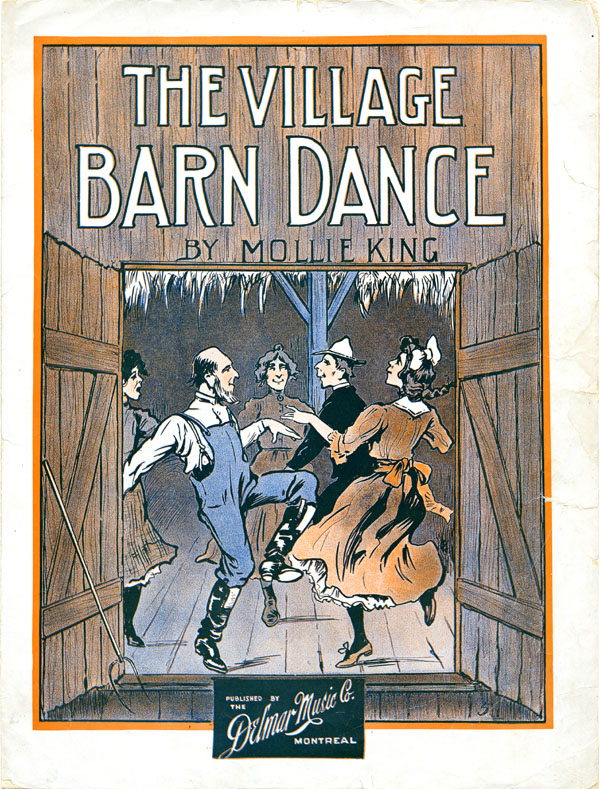
Colour image depicting people dancing in a barn.

Sheet music cover image of a musical piece entitled, “The Village Barn Dance” by Mollie King. Source

Visit LAC’s Sheet Music from Canada’s Past website to learn more or to search for music sheets. Here’s how:

  1. Click on Search Sheet Music located in the left menu.
  2. In the first box, click the down arrow and choose the time period you would like to search, e.g. “1900-1913.”
  3. In the second box, click the down arrow and choose the type of search, e.g. Title keyword (song title).
  4. In the third box, you can enter a search term, e.g. “barn”.
  5. Click the “Submit” button at the bottom.

The browsing options in the fourth box allows you to limit your search to digitized music for which there is either printed music or audio files available. Please note that default searching has been set at “All Time Periods”, “Any Keyword” but you can modify these settings by following the above steps.

Once you have found a piece of sheet music, you will see some or all of the following information:

  1. A description of the music.
  2. A small colour image of the front cover.
  3. A large colour image of the cover.
  4. A “View sheet music” icon.
  5. An “Audio” icon

As the sheet music is available as PDFs, you can print the music on letter size paper.

Yesterday Once More: Canada’s Music Industry in Portraits

Do you have a favourite popular musician or rock group from the last three or four decades of the 20th century? There’s a good chance you’ll be able to find their photographs documented in the Library and Archives Canada (LAC) Portrait Portal.

The Portal contains photographs taken between 1963 and 2000, selected from LAC’s RPM fonds, an archive that includes thousands of Canada’s and the world’s most popular artists and bands. It also features actors, music and entertainment executives, broadcasters, politicians and sports figures rubbing shoulders with music industry greats. These portraits have been digitized and added to the Portrait Portal as part of LAC’s ongoing digitization initiatives.

What is the significance of the RPM archive to the Canadian music industry?

Founded in Toronto in 1964, RPM was a Canadian weekly trade publication that focused on the Canadian music recording and radio industries. In 1964 it established the RPM Gold Leaf Awards (also referred to as the Maple Leaf Awards), which would soon evolve into the JUNO Awards. RPM was among the parties that lobbied for Canadian content regulations in the broadcast media, and it inaugurated the RPM MAPL logo (with MAPL standing for music, artists, production, lyrics) that has been widely used to identify the Canadian content of commercial sound recordings. The periodical ceased publication in 2000.

According to Cheryl Gillard, a Library and Archives Canada music specialist, the collection of RPM photographs, now available online through the Portrait Portal, “allows anyone, anywhere to take a behind-the-scenes look at the inner workings of the music industry. Also, for the first time, the Portal’s collection of RPM photos allows less high-profile but historically important Canadian music professionals to be documented and honoured.” This collection showcases Canadian popular culture and reflects the interconnection between the music industries in Canada and the United States.

You can search for photographs of popular musicians in the LAC Portrait Portal simply by entering the name of your favourite band or musician into the keyword search field.

For more information about Canada’s music industry, check out LAC’s RPM database, which contains the digitized versions of the music charts in RPM Weekly from 1964 to 2000. The Canadian Academy of Recording Arts and Sciences (CARAS) website is also a great place to search for a list of past JUNO award recipients—and more!

Celebrate Glenn Gould on the 80th Anniversary of His Birth (1932–1982)

Library and Archives Canada (LAC) celebrates, today, the life and career of iconic Canadian musician Glenn Gould .

Born in Toronto, Ontario on September 25, 1932, Glenn Gould is internationally recognized as one of the greatest musicians of the 20th century. Gould was, and remains, a pianist widely revered for his probing musical thought, his clear sound and his unearthly, flawless technique. His performances and recordings of works by Johann Sebastian Bach are renowned.

Did you know?

LAC is the official home of the Glenn Gould Archive, which contains:

  • handwritten diaries and unpublished writings
  • annotated scores and compositions
  • incoming and outgoing correspondence
  • concert programs
  • school and conservatory records
  • recording session logs and papers designated by Gould as “keepers”
  • promotional material
  • medical and financial records
  • photographs and non-commercial audio and video recordings

LAC gifted Glenn Gould’s piano and equally iconic custom-made chair to the National Arts Centre (NAC) in Ottawa this year. Read about the piano by visiting NAC’s website [http://www.nac-cna.ca/en/stories/series/glenn-goulds-piano].

To learn more about Glenn Gould and listen to samples from the Glenn Gould Archive, visit LAC’s virtual exhibition on Glenn Gould.

Please remember that not all of our material is available online. Consult our article:
How to Consult Material that Is Not Yet Available Online.

Questions or comments? We would love to hear from you!

Listen to Canada’s Musical History with the Virtual Gramophone

From patriotic songs and sentimental ballads from the First World War era to classical vocalists and instrumentalists from the 1920s to 1940s; that is what you will find on the Library and Archives Canada website the Virtual Gramophone. This is a great place to listen to recordings from our music collection!

Our Virtual Gramophone website documents the history of the recorded sound industry in Canada, provides biographies of Canadian performers, presents a video of a working gramophone, allows you to search the database, and you can listen to some recordings.

Some of the recordings available online include:

  • Patriotic songs and sentimental ballads of the First World War era
  • Recordings from the rising vaudeville and jazz scenes, and the dance band craze of the 1920s
  • Music from Quebec in the 1920s and 1930s, including the recordings of Madame Édouard (Mary Travers) Bolduc
  • Popular music of the post-First World War era, including recordings from New Brunswick’s Henry Burr, the most prolific recording artist of his time
  • Classical vocalists and instrumentalists from the 1920s, 1930s, and 1940s, including Emma Albani, Pauline Donalda, Sarah Fischer, and Hubert Eisdell
  • Military bands, popular songs, and other material in both English and French recorded or released by the Berliner Gramophone of Montreal circa 1901 to 1910

Although the website is no longer updated, it is still a great place to access some of our digitized recordings of the 78-rpm and cylinder music collection held by Library and Archives Canada.

If you have a keen interest in Canadian music, our other websites may also be of interest:

Questions or comments? We would love to hear from you!

Remembering the Titanic at LAC – Part II: Published Materials

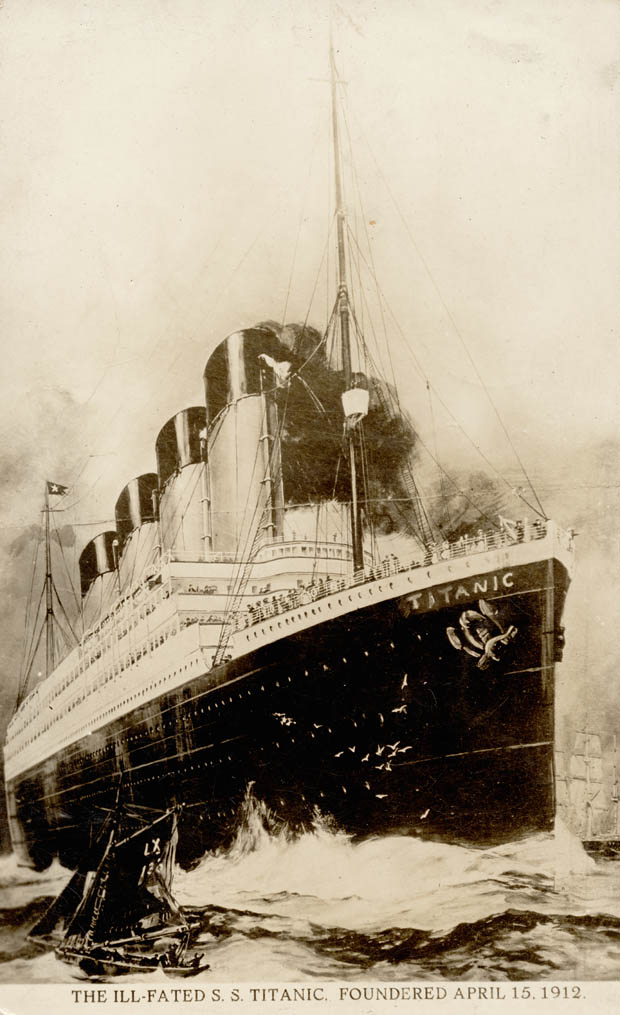
A postcard of a large ship on the ocean

A postcard of the “Ill-fated Titanic”, circa 1912 (e004155512_s1)

The sinking of the Titanic was a source of inspiration for musicians and filmmakers and Library and Archives Canada has some interesting pieces of audio-visual and music material in its collection! Let’s continue exploring:

Music

  • Titanic [music], words by Charles Lavell, music by Norman Fraser, 1912 (OCLC 498649021)
  • Men be British!, words and music by C.A. Frame, 1912. (OCLC 1007608738)
  • The ice king’s bride: song, words by Cecil E. Selwyn, music by Arthur A. Penn, 1913.  (OCLC 1007535382)
  • The loss of the Titanic : song, words and music by Arthur S. Leslie, 1912 (OCLC 1007608969)
  • Back to Titanic , original music composed and conducted by James Horner. Includes My heart will go on performed by Céline Dion, (OCLC 1006762159)
  • Titanic [music]: a voyage in piano music by Rebekah Maxner (OCLC 758437127)

Films and Audio Recordings

  • G. Kleine collection R8745-0-3-E,3 film reels (7 min). Collection consists of short documentary clips about skating in Montreal, skating on the canal and the sinking of the Titanic .
  • The discovery of the Titanic [sound recording] by Robert D. Ballard, with Rick Archbold, 1989. (OCLC 1032981850)
  • Titanic troubles [sound recording], part of The time capsule series of books by Ouita Petty, 1996, (OCLC 79684269)
  • Titanic [sound recording]: survivors in their own voice (1915-1999), (OCLC 226950845)

Books

  • RMS Titanic : the first violin : the life and loss of  the Titanic’s violinist, John Law Hume by Yvonne Hume with a foreword by Millvina Dean, Titanic’s last survivor (OCLC 766386309)
  • Poems that will interest everybody [microform]  by Angus McLaughlin (OCLC 53656650)
  • The wreck of the Titanic by Andrew O’Malley* (OCLC 433993426)
  • Titanic disaster : report of the Committee on Commerce,  United States Senate, pursuant to S. Res. 283, directing the Committee on Commerce to investigate the causes leading to the wreck of the White Star liner Titanic : together with speeches thereon by Senator  William Alden Smith of Michigan, and Senator Isidor Rayner of Maryland (OCLC 560852846)

*E-copy available.

For information on how to order published material, please read our post “How to Consult Material that Is Not Yet Available Online”.

 Questions or comments? We would love to hear from you!