
The word “pest” certainly has many uses, but, at Library and Archives Canada, it refers to any of a number of creatures that can pose a threat to library and archival collections. Many insects like to feed on substances found in documents, photographs and books, such as cellulose, starch and glue. And mice like to shred paper for their nests. Pests can work very quickly, and in a short time precious documents can be irreversibly damaged. It is important, therefore, to be aware of such pests and to know what to do to prevent them.
An improperly disposed of muffin wrapper can provide enough nourishment to sustain a population of 9 female mice to produce litters of 5 to 10 pups each. Proper cleaning of areas where food is consumed makes the area less attractive to mice. Having garbage receptacles with tight-fitting lids is also a good deterrent.
One of the ways to discourage the pests listed in the table below is by controlling humidity within the facility, either by improving an existing heating, ventilation and air conditioning system, setting up fans in high-humidity areas, or installing weather stripping and door seals on exterior doors, etc. Installing dehumidifiers in areas of high humidity can also be very beneficial. It is imperative to always clean and remove any mould or mildew in areas containing excessive moisture. Careful cleaning and good general housekeeping will also contribute to minimizing pest problems in a facility. In areas where there is a pest problem, vacuum in addition to sweeping. If the problem persists, consider taking these additional actions: seal cracks in foundations, concrete or floors, repair any leaks from pipes, such as sinks, roof drains, etc.
The top five most unwanted creepy crawlers in libraries and archives
| Pest | Size | Image | Notes |
|
Booklice |
1 mm | 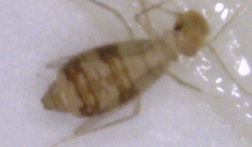 |
Booklice will eat starch and fungi or mould and dead insects, especially if moist as they require damp areas in which to thrive.* |
| Springtail Entomobryidae family |
1 mm | 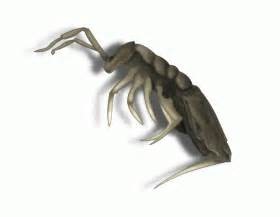 |
Springtail will migrate indoors in large numbers and die quickly, forming mould and detritus for other insects to eat. These organisms feed on decaying plant material, fungi, bacteria, arthropod feces, algae and pollen.* |
| Carpet Beetle Anthrenus verbasci |
2 mm to3 mm | 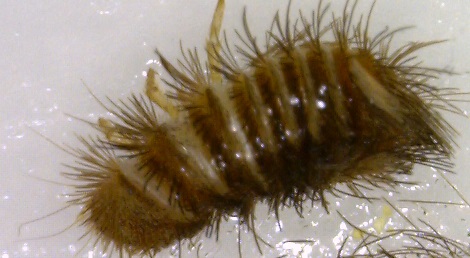 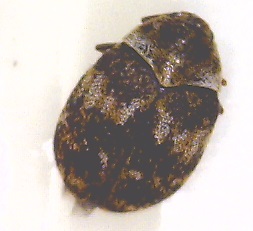 |
Carpet Beetle larvae are particularly destructive and eat animal specimens, fur and feathers, and woolen textiles. |
| Sow Bug Armadillidiidae family |
8 mm to12 mm |  |
Sow Bugs will attract other pests and provide a food source for them.* |
| Silverfish Lepisma saccharina |
5 mm to15 mm | 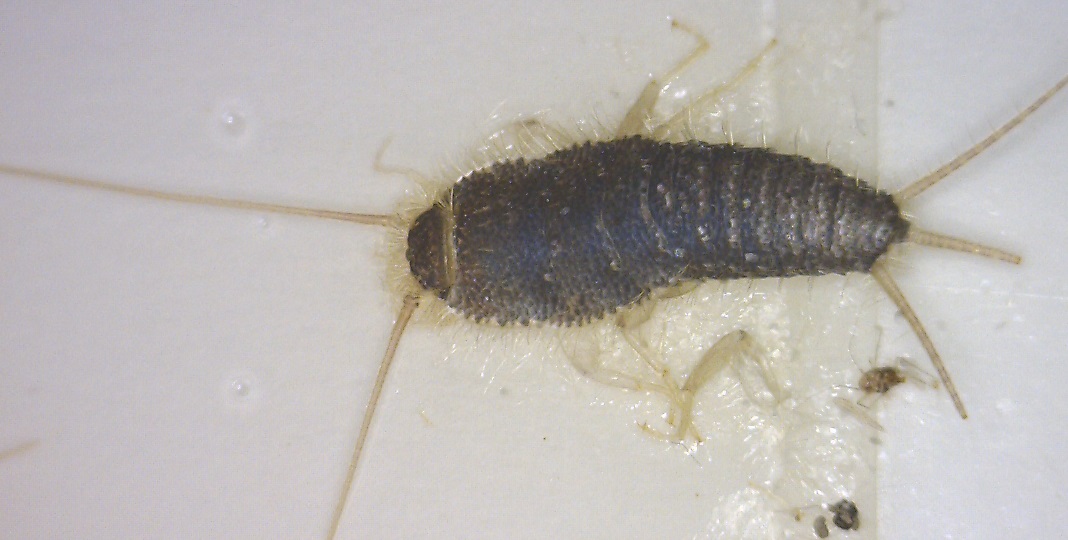 |
Silverfish will actually graze across the surface of items, leaving a clearly defined pathway.* |
*See damage below
Examples of insect damage

Booklice infestation (Wikipedia)
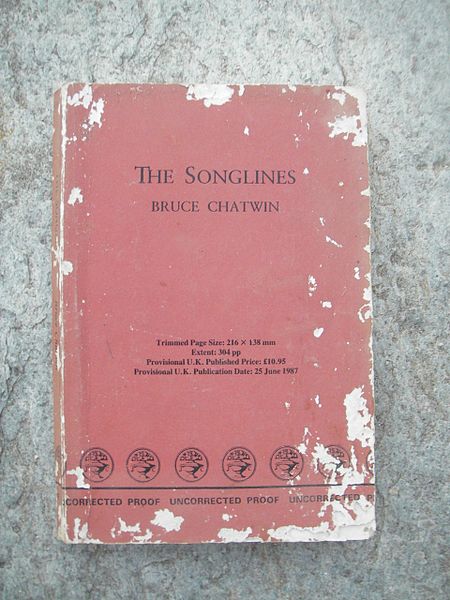
Destruction after grazing of silverfish (Wikipedia)
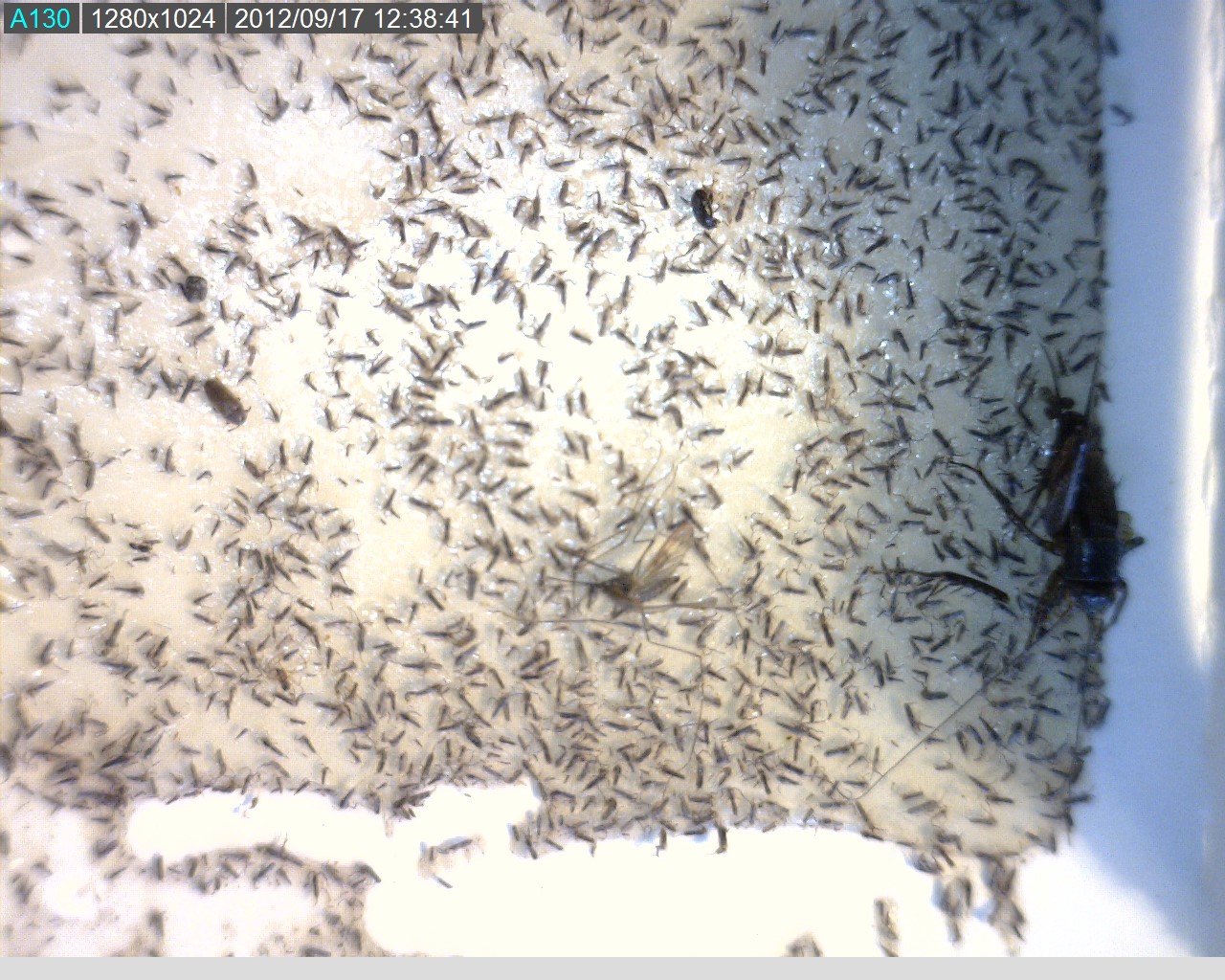
Springtail migration indoors—causes staining of documents and provides food for other insects ©Library and Archives Canada
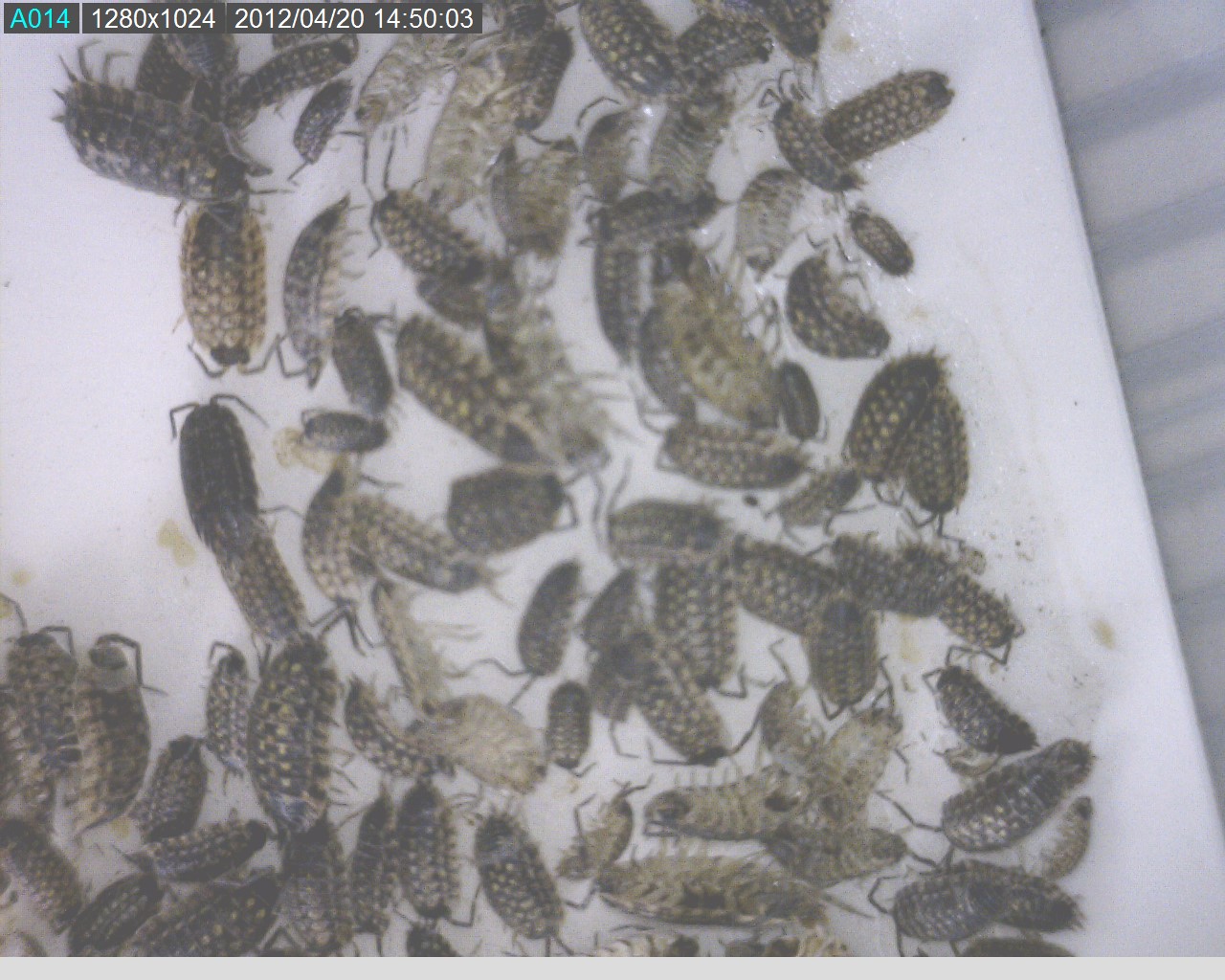
Sow Bugs provide a food source for mice and other insects. ©Library and Archives Canada
 Library and Archives Canada Blog

