Unrevealed Secrets: The 1976 Montréal Olympics

Version française

By Brittany Long

The 1960s and 1970s were marked by global turbulence, with terrorist attacks, airplane hijackings, and kidnappings frequently dominating the headlines. Against this backdrop of uncertainty, preparing the security for the 1976 Olympic Games in Montréal posed a monumental challenge for Canadian security agencies. The Royal Canadian Mounted Police (RCMP), the Canadian Armed Forces, and local authorities had to coordinate their efforts to ensure the safety of athletes and spectators from around the world.
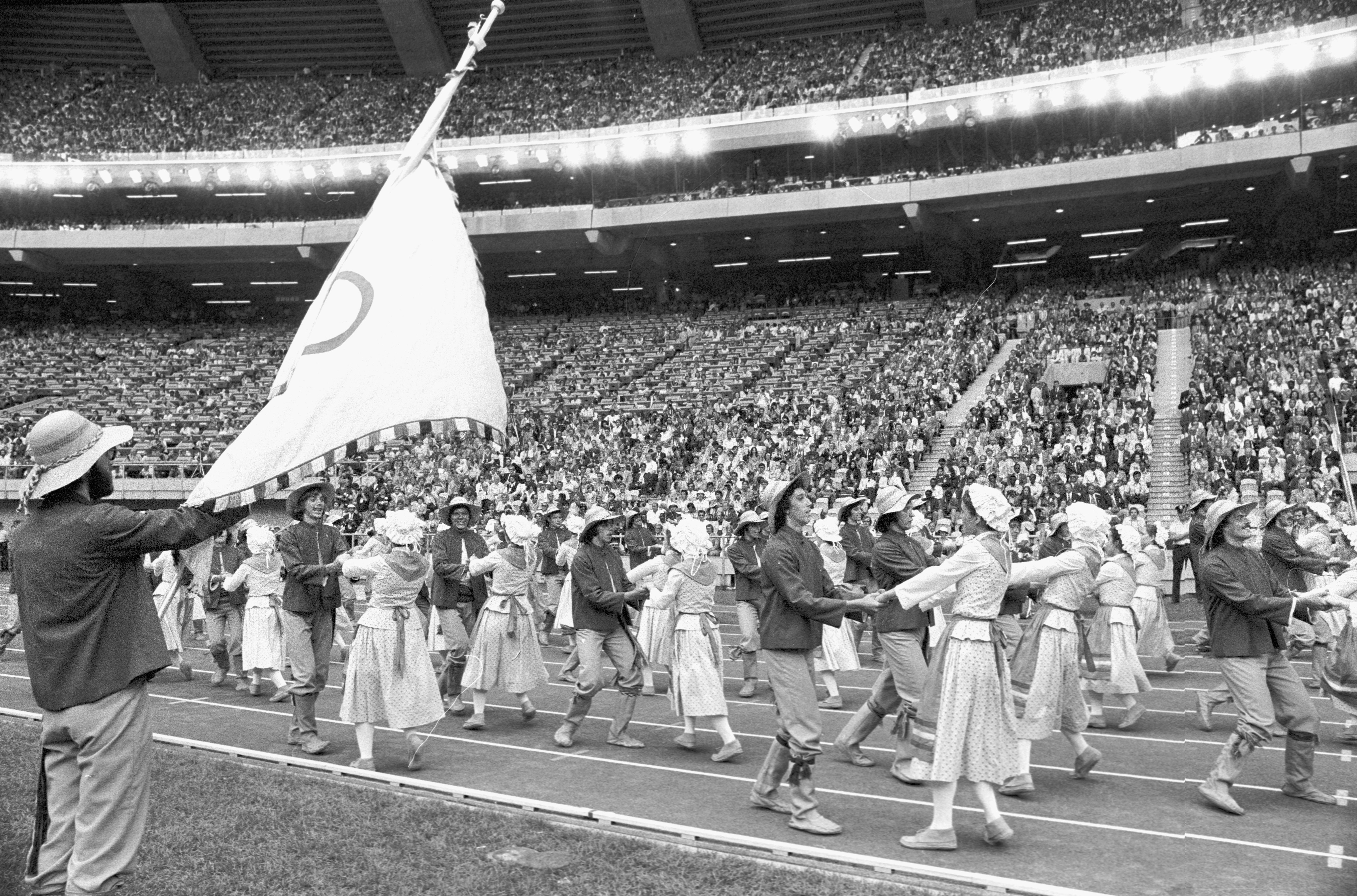
A black-and-white photograph of a group dancing in the Montréal Olympic Stadium during the opening ceremony at the 1976 Summer Olympics.

Opening ceremony at the Montréal Olympic Games, July 17, 1976. Photo: Paul Taillefer. (e004923376)

Not only was Queen Elizabeth II set to visit and officially open the Games, but Montréal was set to host 6,084 Olympic athletes from 92 different countries. Given the scale of the event, no one wanted a repeat of the tragic events at the 1972 Munich Olympics, where 11 athletes were killed in a terrorist attack.

With the 1976 Summer Olympics taking place during the Cold War, it was crucial to assess possible threats, identify areas of vulnerability, and ensure the security of all venues. Security measures needed to be meticulously planned and kept confidential in the lead-up to and during the Games to protect Canadians, foreign visitors, and athletes. For instance, intensive security plans were required for something as simple as Queen Elizabeth II’s route from her lodging to the venue.

Preparation began months before the event, during which the alert level was at its peak, particularly for departments such as External Affairs, the RCMP, and National Defence. All of the agencies and federal departments involved generated a large legacy of records, which were created in order to maintain the security surrounding the Olympic Games.

Eventually, some of these documents were transferred to Library and Archives Canada (LAC). For example, the Department of External Affairs fonds holds at minimum nine boxes worth of material related to the 1976 Games, while the RCMP fonds holds approximately 170 boxes. Additional records are scattered throughout various other fonds as well.
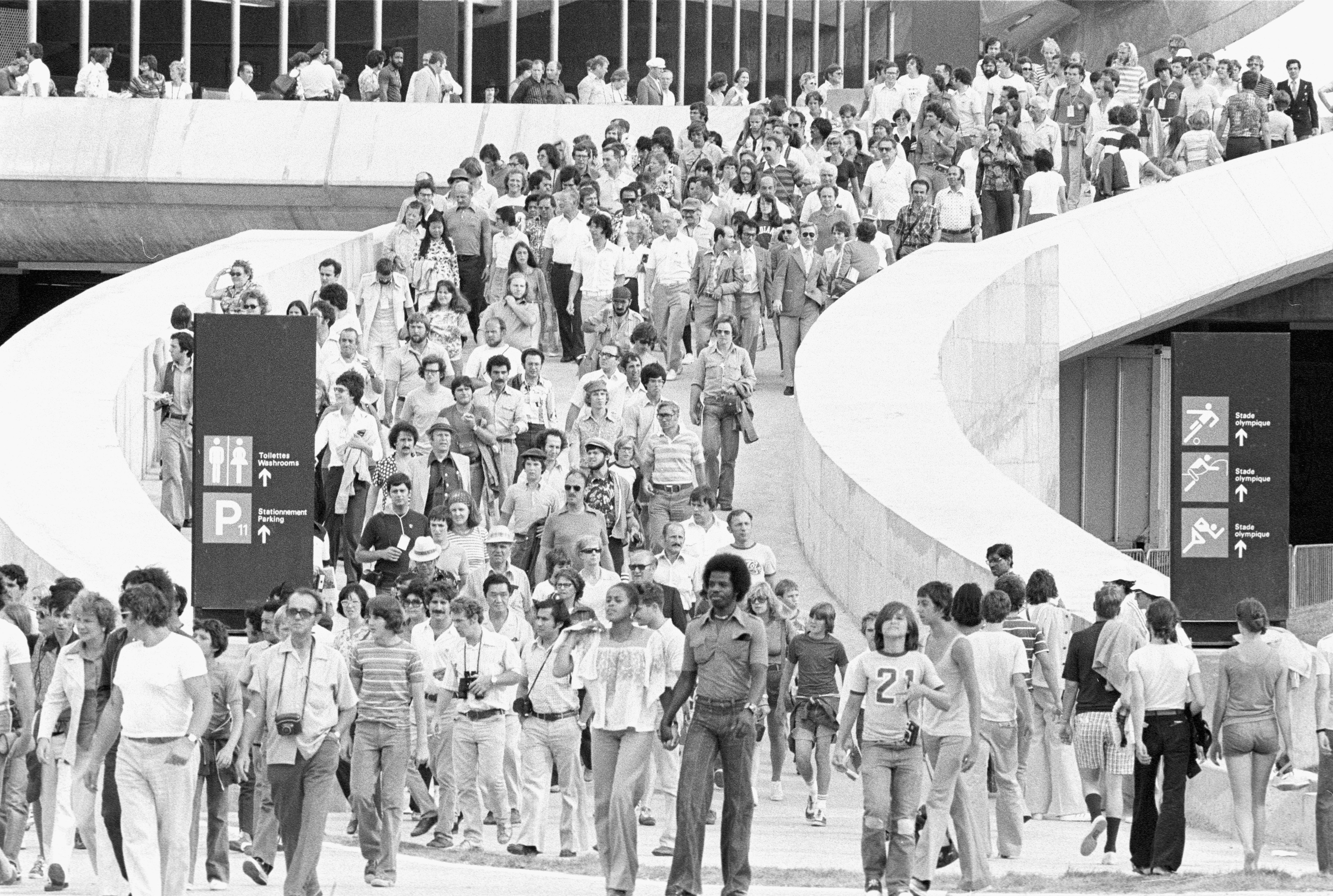
Black-and-white photo featuring a crowd of people walking down a ramp at the Montréal Olympic Stadium.

Crowds walking down a stadium ramp at the 1976 Montréal Olympics Games. Photo: Paul Taillefer. (e004923378)

Since the documents pertained to security matters, most were classified as confidential, secret, and at times top secret upon their creation and remained classified when transferred to LAC. Many of these documents are still classified almost 50 years after the closing ceremonies of the 1976 Olympics. This creates delays in granting access to these records. Even worse, there is no way to know exactly which records are classified. How is this possible?

Decades ago, recordkeeping and transfer protocols differed significantly. File lists of documents transferred to LAC often lacked any indication of their security classification. As a result, to determine if the Montréal Olympic records remain classified, we first need to identify what we have in our collections about the Games. Once identified, we then need to review the documents to ascertain their classification status—a time-consuming process.

Over the summer and early fall of 2023, we focused on nine boxes of material from the Montréal Olympic Games series in the Department of External Affairs fonds—a relatively small selection of records compared to other series in LAC’s collections. It took days to sift through and analyze the contents of these boxes to determine how much of it remained classified. This review determined that around a third of the files within this one series are still classified.
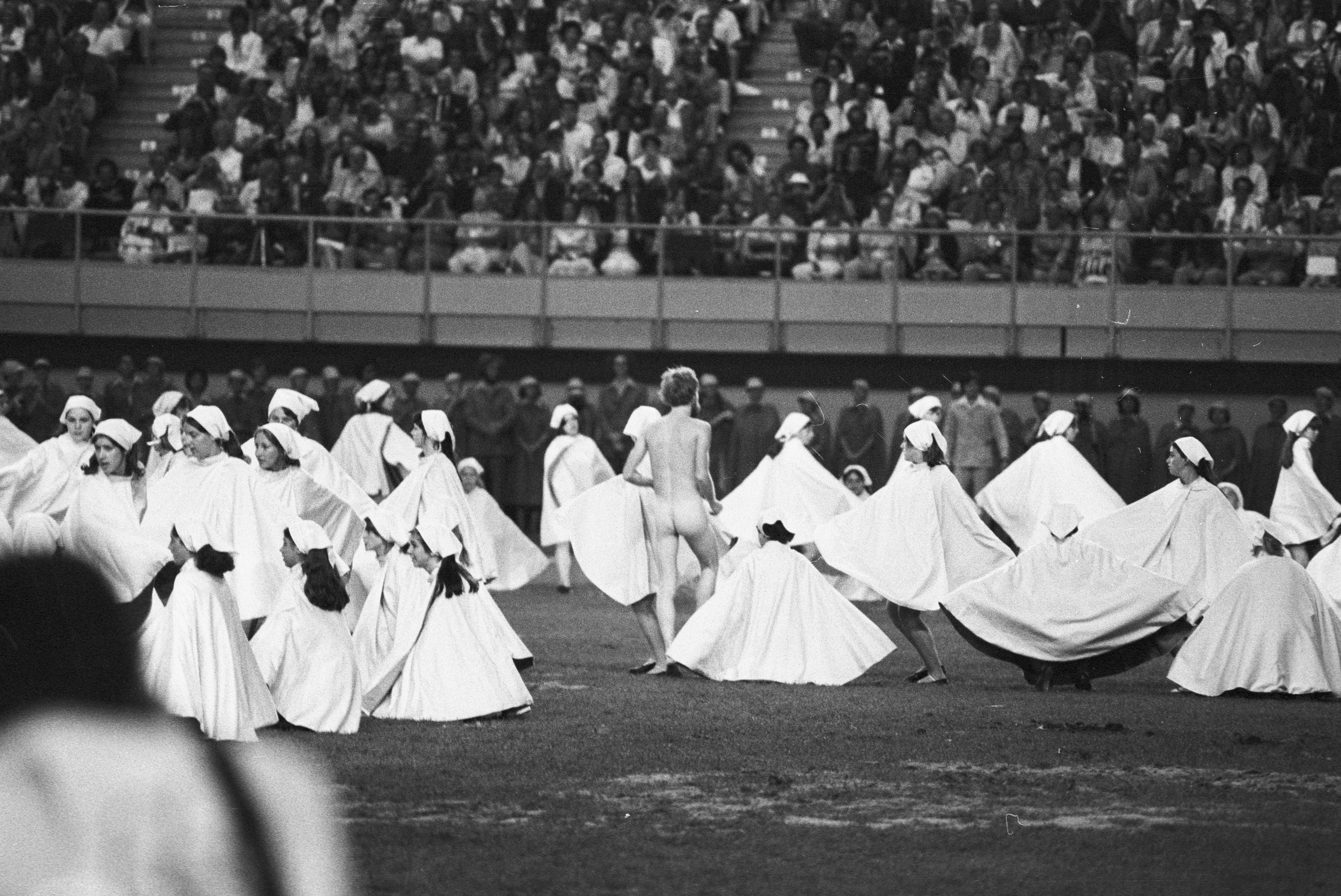
A black-and-white photo of a group of women dancing in white robes at the closing ceremony of the Montréal Summer Olympics. A man is streaking in the middle of them.

Closing ceremony at the Montréal Olympic Games featuring 500 young women dancing while a male streaker poses among them, August 1, 1976. Photo: Paul Taillefer. (e004923381)

After examining the contents of the boxes and information within the files, an analytical report was compiled. According to the fundamental principle of declassification, only the creator of the records can declassify them. Consequently, the results of our analysis were submitted to the relevant departments for their decision.

The classified records related to the security measures for the 1976 Montréal Olympic Games are not the only ones that remain classified decades after their creation. The declassification section of the Access to Information and Privacy Branch at LAC works closely with other departments to enhance access to historical records for all Canadians. This collaboration aims to unlock more of our collective past and ensure that valuable historical information is accessible to the public.

Additional Resources


Brittany Long is an archivist working on declassification in the Access to Information and Privacy Branch at Library and Archives Canada.
Now it’s personal: a look at personal archives at Library and Archives Canada

By Stephen Danilovich

Imagine that an archive of you has been donated to Library and Archives Canada (LAC). Picture the sorts of things that make it into your collection: a high school diary, this month’s grocery receipts, your last social media post.

Now imagine that you are the archivist processing your own archive. How would you organize all of these items into distinct groupings? Where would you restrict access to sensitive information, and why? And would you try to describe your records fairly … or would you be tempted to tidy things up?

These are some of the questions that arise when working with personal archives: archives produced by individual people, as opposed to institutions or corporations. Needless to say, things can get personal with personal archives. Nowhere else do questions of privacy, original order, donor relations and other archival concerns come into contact so closely with the day-to-day questions of being human.

One thing that makes personal collections unique is that they tend to turn the tables on you, the archivist. You start to consider all of the traces you leave behind, how some future archivist might try to piece together your life. You also notice the many things that slip through the cracks and go unrecorded.

As any archivist will tell you, much of an archivist’s work happens in those blind spots. An archivist has to draw connections between or across the actual items, creating an intellectual arrangement that will give future researchers a way into the collection. So what happens when archivists try to create intellectual order out of a human life, its records and traces?

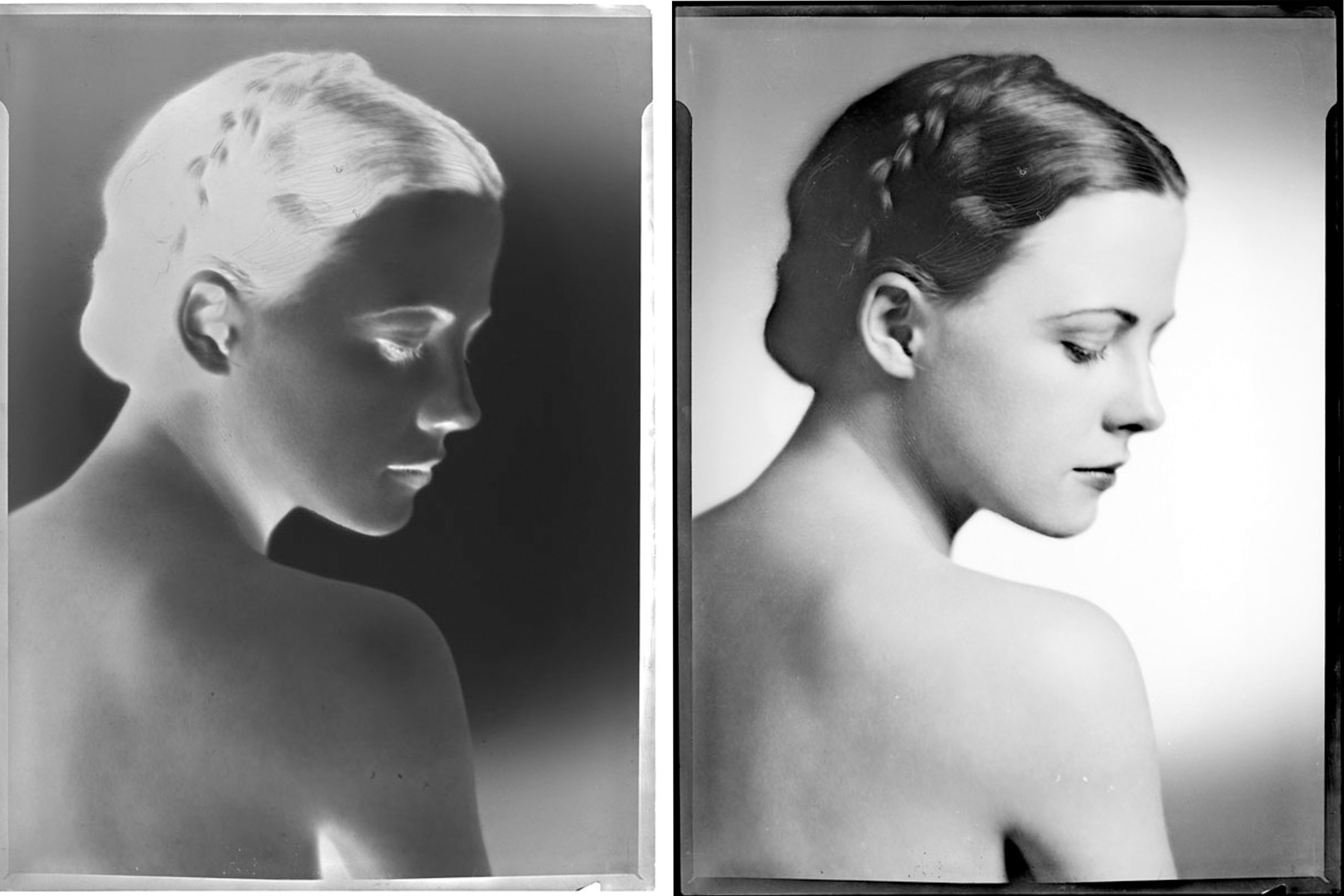
Two black-and-white images, side-by-side, of a woman in profile with dark hair. The image on the left is the negative, and the one on the right is the final photograph.

Two ways of seeing: negative, positive. Miss Ethel Hand, November 10, 1934, photo by Yousuf Karsh (e010680101)

To answer this question, I spoke to archivists in the Social Life and Culture Private Archives Division, which includes the collections of such celebrated authors as Carol Shields, Michael Ondaatje, Daphne Marlatt and others. The fact that many of these authors are still living today makes these questions all the more vital.

“It puts your own life into perspective,” says archivist Christine Waltham, who has been working with the collection of Thomas King. “It’s someone giving their life, really.”

“You really feel you know these people,” says Christine Barrass, a senior archivist whose first encounter with personal archives was the fonds of Doris Anderson. “It seems very transactional, but when you get to know the nitty-gritty of it, it’s a real honour and a real privilege.”

Black-and-white photograph of a woman in profile with grey hair and a dark necklace.

A portrait of a subject: Doris Anderson, October 10, 1989, photo by Barbara Woodley (e010973512)

Perhaps the most unexpected challenge to arise while working with personal archives is the emotional investment that the archivist can begin to develop for the archive and its creator.

“The emotions that come up, that you don’t get in institutional archives, that can be hard to deal with,” Waltham says. “How to describe it respectfully.”

“It can be a bit too much, if that’s not something you want in your daily life,” explains Barrass, who believes that the good and the bad about personal archives are two sides of the same coin: how intimate things can get.

Often, the archivist is the first person to see the material aside from the creator, which calls for an implicit relationship of trust. This privileged view of someone’s life comes with a deep sense of responsibility, leading to what Catherine Hobbs, a literary archivist, calls “archival paranoia.”

“It is the sense of never being able to do enough,” Hobbs says, “which is the sign of any responsible archivist.”

Processing someone’s archive becomes a constant tightrope walk between the creator’s public and private lives. Any item can turn out to be a clue to a secret affair, a feud kept under wraps, or a side of the person that no one knew before. To add to the stakes, what future researchers will find useful can be impossible to predict.

All this requires a careful balancing act between the donor’s privacy on the one hand and access for future researchers on the other, while at the same time upholding LAC’s mandate.

“Our role is to stand in the middle distance: act as guardian, and as the facilitator of research,” says Hobbs.

It is this strange mix of personal intimacy and a bird’s-eye distance that makes working in personal archives so special.

Black-and-white photograph of a woman with long dark hair in a flowing white dress, seated in front of an oval mirror and looking toward the camera.

Between mirror and lens: “The Mob,” Dominion Drama Festival, April 24, 1934, photo by Yousuf Karsh (e010679016)

As a summer student employee, taking on archival work for the first time, I hoped to get some clarity on the proper practices for processing a personal archive. But I quickly learned that personal archives are as varied and nuanced as their creators.

“The messiness of life that’s in personal archives is what makes it special,” Waltham says.

And that messiness requires a special touch. Given how unique each personal collection is in both arrangement and content, being too prescriptive about predetermined procedures for creating intellectual order may not always be the best approach. If an archivist tries to formalize too much, some of the uniqueness of a collection could be lost.

“How much you can tell just from what the records look like, the conditions they were kept in,” Waltham adds, “that says a lot about the person.” An overly standardized processing method could mean losing some of that granularity. One could even claim that personal archives go beyond the realm of social science and into something like art—even a collaboration with the archive’s creator.

Hobbs argues that working in an archive is more than a science, “it’s a responsible practice.” The most important thing that an archivist can bring to a personal archive is a sense of “the honesty of the endeavour”: being present with the actual life of these records in an empathetic way, and understanding the rare intimacy that is involved when someone gives up such a private part of himself or herself.

After all, maybe what is required for personal archives is a little self-awareness on the part of archivists—an understanding of the role they play in this grand procession between everyday human lives, record keeping and research. Creating order out of someone’s personal records is itself an unavoidably personal practice. Archivists working with personal archives have to be especially sensitive to the way that we are all participating in what Hobbs calls this “human experiment,” co-creating as much as we are cataloguing when we try to make sense out of another human being.

For all the challenges and emotions that come with personal archives, archivists at LAC do the best they can. The ultimate hope, as Hobbs puts it, is to “leave the archives better than we found them.”


Stephen Danilovich is a student archivist in the Social Life and Culture Private Archives Division of the Archives Branch at Library and Archives Canada.