All “aboat” searching for ship registries in LAC’s collections

Version française

By Elaine Young

Did you know that Canadian vessels over a certain size have had to be registered with government authorities as far back as the 18th century? Library and Archives Canada (LAC) holds various types of records related to the registration of vessels and has recently transcribed and made searchable almost 84,000 of these records. The transcriptions include the ship’s name, port of registry, registration number and year of registration, all key fields for researching the rich (and sometimes surprising!) histories of the vessels. These records are a vast resource for researching maritime history across Canada and are also a genealogical tool for tracing the family lineages tied to those ships.

This transcription project is part of LAC’s effort to improve research into the records in its collection. LAC took custody of these records, many of them ledger books, in prior years as Transport Canada (the regulator) moved increasingly towards digital recordkeeping. To support digital access to the records, LAC took digitized copies of some of these ledgers and worked with researchers in the field to identify the best information to transcribe.

The transcribed material relates to ships that were operated then de-registered (closed out) between 1838 and 1983. It includes vessels from the Atlantic, Pacific and inland waterways.

These registries contain a wealth of information about each vessel, including a description, the type of ship, its size, the ownership and when it was built. The registries offer valuable insights for anyone researching shipbuilding, shipping or coastal and open ocean industries. For example, over time these records illustrate the transition from wind to steam-powered ships, as well as the introduction of fibreglass and composite hulls. The records also contain information relevant for genealogical research, as many ships were passed down within families.

Example of a typical ship registration:
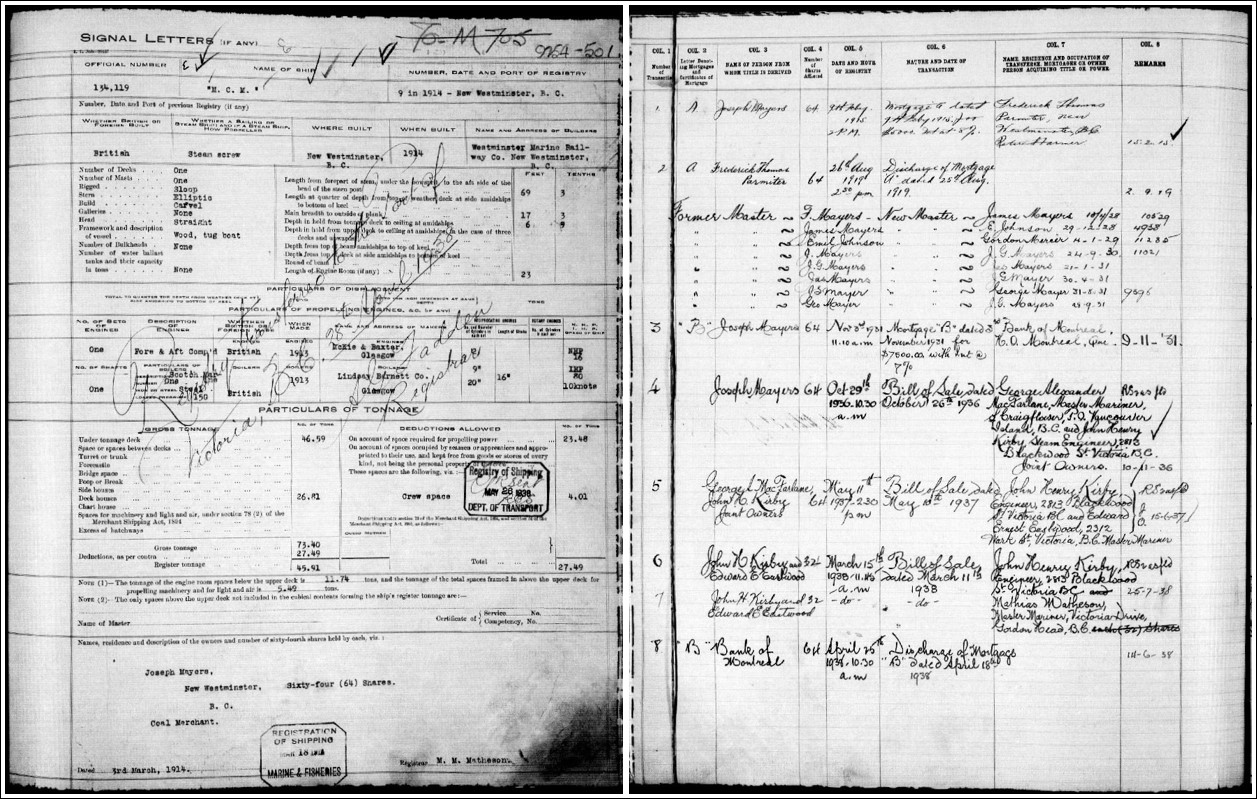
Page one and page two of the registration document for the ship M.C.M. The document has been filled out using both a typewriter and by hand in cursive writing.

[M.C.M., Port of Registry: NEW WESTMINSTER, BC, 9/1914] R184, RG12-B-15-A-i, Volume Number: 3041. (e011446335_355)

The first page of this register for M.C.M., a ship registered in 1914 in New Westminster, British Columbia, contains details about the ship such as its construction, size and so on. The second page includes the names of the vessel’s owners over time.

The caption above demonstrates the naming convention that users will see in Collection search: Vessel name / port of registry / a consecutive number assigned for each vessel newly registered at that port in a year / year of registration.

To find the records on LAC’s website using Collection search:

1. Go to advanced search
2. Select “Collections and Fonds” under Collection
3. Select “Ship Registration” under Subset of Collections and Fonds
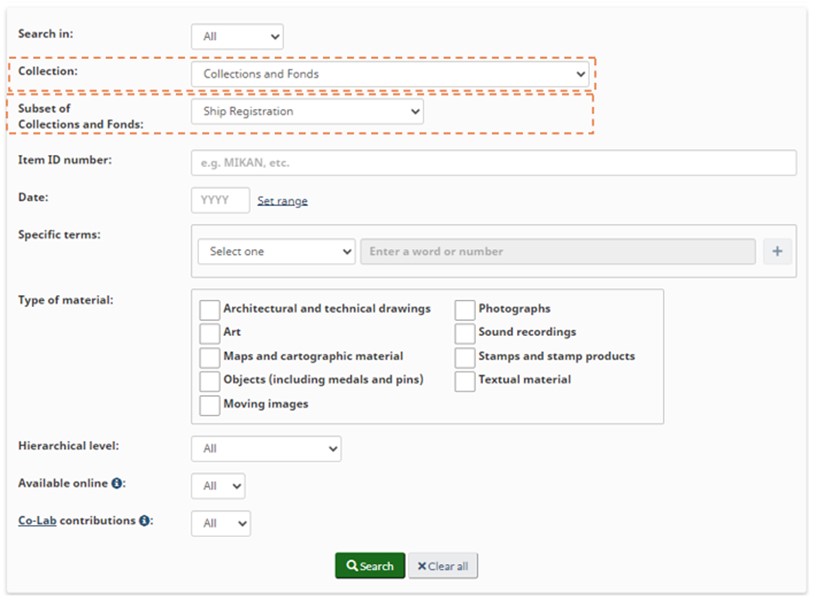
Screenshot of the Collection search advanced search page. The “Collection” and “Subset of Collections and Fonds” drop down menus are marked with orange boxes.

How to locate Ship Registrations in Collection search. (Library and Archives Canada)

4. To search specific word(s) in the database, enter them in the search bar at the top. You may also enter a date or date range in the Date field (this will reflect when the ship was closed out). If you prefer to browse all ship registrations, leave the fields blank and click “Search.”

Screenshot of the Collection search advanced search page. The search term “Dora Mae” is entered in the “All of these words” search box, and the date range of 1940 to 1950 has been entered in the date range boxes. These fields are highlighted with orange boxes.

How to narrow down your vessel search using keywords and date ranges. (Library and Archives Canada)

For a more specific search, use the “All of these words” field at the top to search by name, port of registry, official number and year of registration.

Name:

  • The name is assigned by the owner at the time of initial registration and usually lasts the lifetime of the vessel, but it can be changed (often when there is a change of ownership).
  • Once a vessel has been closed out, there is a waiting period before that ship’s name can be used again. Two vessels cannot have the same name at the same time.
  • Vessels may have similar, but different names (for example, Karen Dawn, Karen and Dawn, and Karen & Don). Adding a Roman numeral after a name that had been taken remains a common way to create a new name (for example, Dora-Mae II).

Port of registry:

  • The port where the vessel was registered.
  • Vessels may be registered in ports close to where they were built or operated.
  • This can be useful in identifying shipbuilding activity in a specific area.
  • Vessel registration may have passed to different ports over time, as owners were expected to update their ship registration to the closest port of registry when they moved or if the ship was sold and transferred to another region.

Official number:

  • The unique number assigned to a vessel when it was registered—no other vessel will ever have this number.
  • The number remains the same for that vessel’s life, even if it is no longer in service or destroyed.
  • The official number can help you find information on that vessel in other record types:
    • Appropriation books: books that include the inventory of official numbers assigned to various ports of registry
    • Transaction books: books documenting supplemental transactions when the two pages per vessel in a registry book were filled
    • Construction books: books documenting ships under construction
    • Ship dockets: individual files opened by port of registry offices for specific ships

Year of registration

  • The consecutive number, starting from 1, assigned to each ship that was newly registered / (slash) the year that the vessel was registered. For example, 22/1883 would mean the 22nd vessel registered at a particular port of registry in 1883.

The closed-out ship registries can also be accessed via LAC’s staff research list, which provides direct access to the records at the series level. From there, you can navigate to individual ship registration records.

The new searchable ship registries transcriptions make tens of thousands of records accessible in a way that was not possible before. Users can now more easily research information on family histories, shipbuilding, shipping and many other areas. This valuable resource illuminates the complex and varied histories of Canadian shipping and shipbuilding, the communities built around these trades and the lives of the individuals and families who owned these vessels.

The team and LAC wish to thank Don Feltmate residing in Nova Scotia and John MacFarlane residing in British Columbia, who have been tireless advocates for the importance of these records and for making them more accessible.

Additional resources


Elaine Young is an analyst in the Partnerships and Community Engagement Division at Library and Archives Canada.

Sweet treats from far away—anticipating Japanese “Christmas oranges”

Version française

By Caitlin Webster

This Christmas, many children will find a mandarin orange in the toe of their stocking. Few will realize how rare a treat this once was.

In our current era of multinational trade agreements, large-scale container shipping, and modern cold-storage technology, Canadians have come to expect international products on their grocery shelves year-round; however, for much of the 20th century, many foreign-grown items were available only as seasonal luxuries. Not surprisingly, their arrival each year drew excitement and publicity on par with today’s latest high tech.

A particularly sweet example was the introduction of oranges from overseas to the Canadian market. For northern consumers accustomed to local fare, these delicacies were an exotic change of pace from their usual root-cellar staples. In fact, to publicize the availability of these oranges, some early promotional posters looked more like educational pamphlets.

Poster showing a colour drawing of an orange, surrounded by the phrase “Oranges from South Africa.” Poster also includes the text “When it was winter here it was summer in South Africa and the fruits have been ripened and ready for you to eat them to-day. Try them.”

Oranges from South Africa—try them (e010758837)

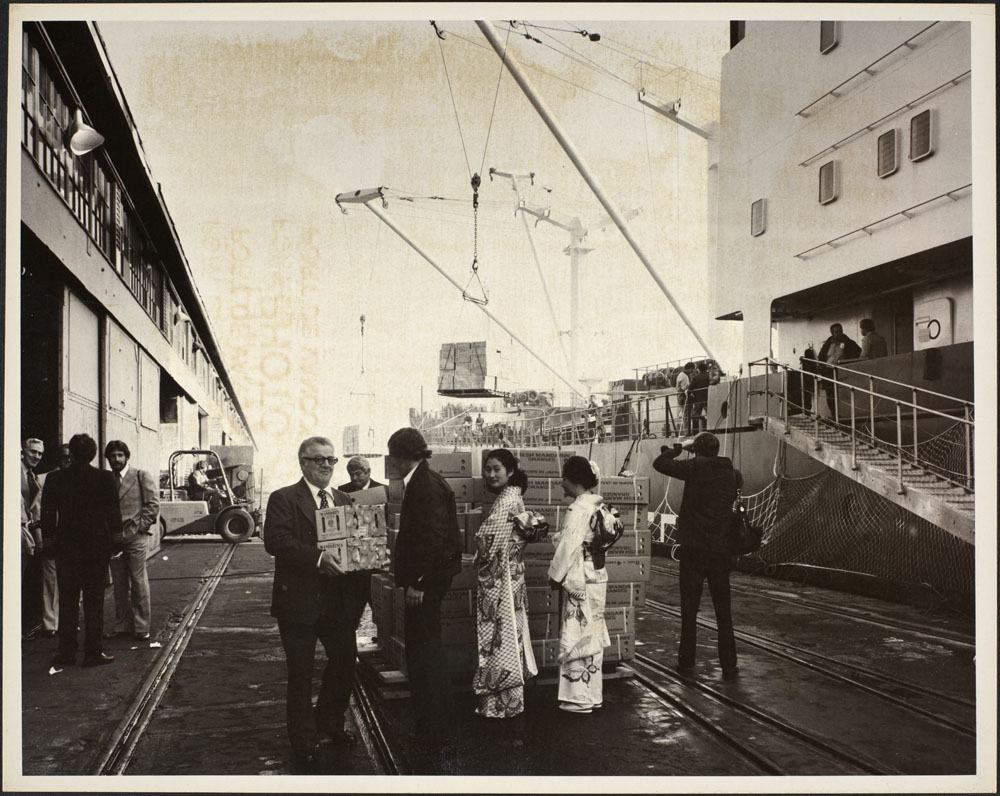
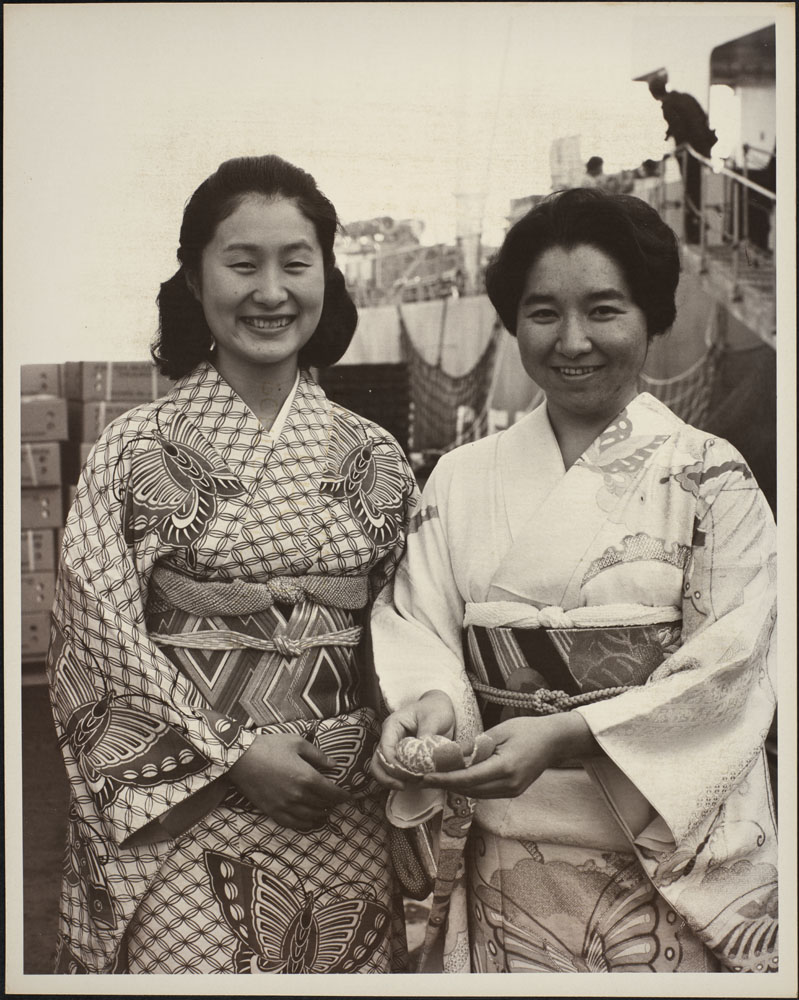
While all fresh fruit was welcome during cold Canadian winters, the introduction of Japanese “Christmas oranges” became a holiday tradition, as well as a symbol of modern trade. Starting in the 1880s, the arrival of satsuma oranges from Japan generated great excitement each year. British Columbians eagerly anticipated the first shipments every winter, when the Port of Vancouver hosted celebrations and media events beside ships delivering oranges.

Photograph showing port officials holding boxes of mandarin oranges, two Japanese women in traditional dress standing by a pallet of orange boxes, and other people and equipment on a pier adjacent to a ship.

Port officials and two Japanese women in traditional dress with crates of mandarin oranges at the Port of Vancouver. Credit: M. Toddington (e011435438)

Photograph of two Japanese women wearing traditional dress, one of whom is holding a peeled mandarin orange. Crates of oranges and a ship are visible in the background.

Two Japanese women in traditional dress posing with a mandarin orange. Credit: M. Toddington (e011435437)

The oranges were then loaded onto special trains and trucks for shipment east.

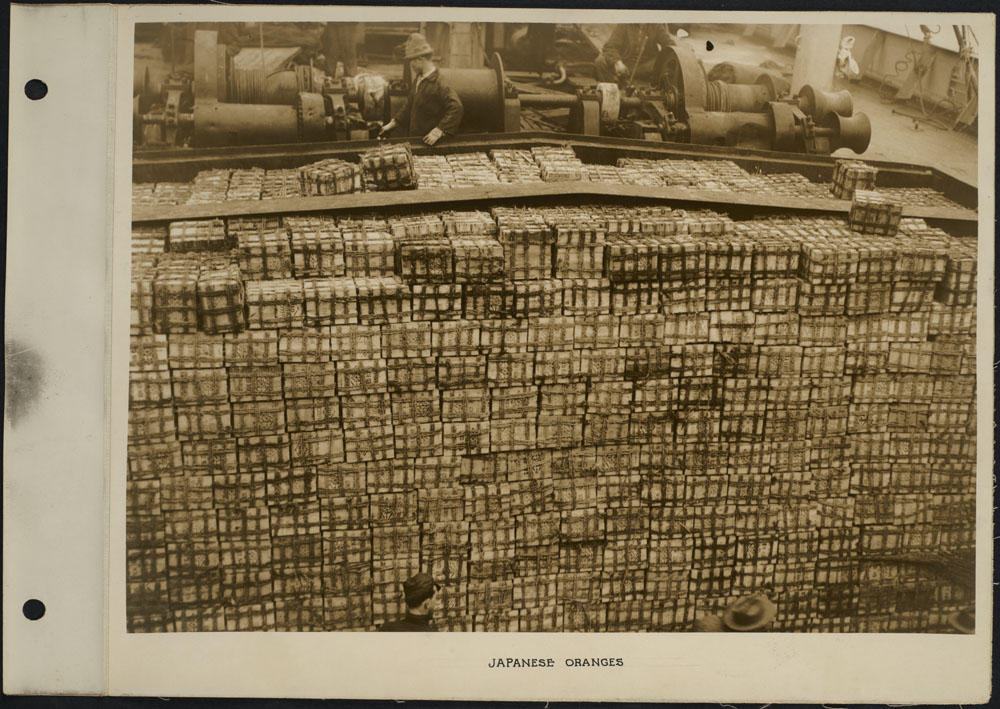
Photograph of workers with hundreds of crates of oranges on a ship deck.

Crates of Japanese oranges on a ship. Photo: Leonard Frank (e011435435)

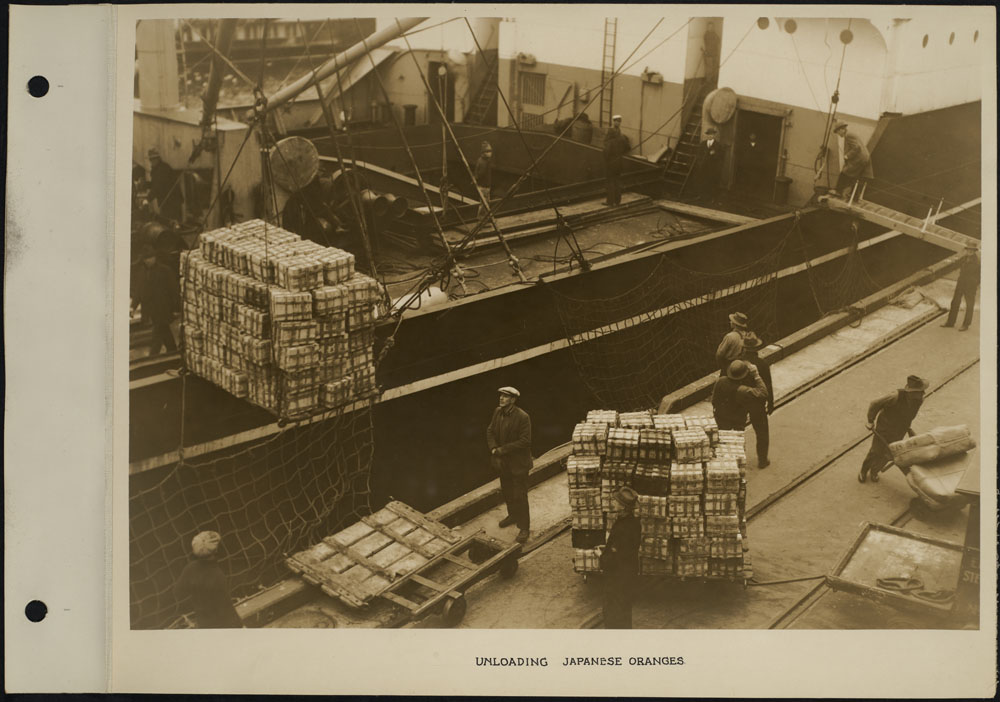
Port workers unloading crates of oranges from a ship, using cranes and carts.

Unloading Japanese oranges from a ship. Photo: Leonard Frank (e011435434)

An article entitled “Japanese Oranges for Canadian Christmas,” which appeared in several Canadian newspapers, including The Granby Leader-Mail on December 30, 1927, described this phenomenon vividly:

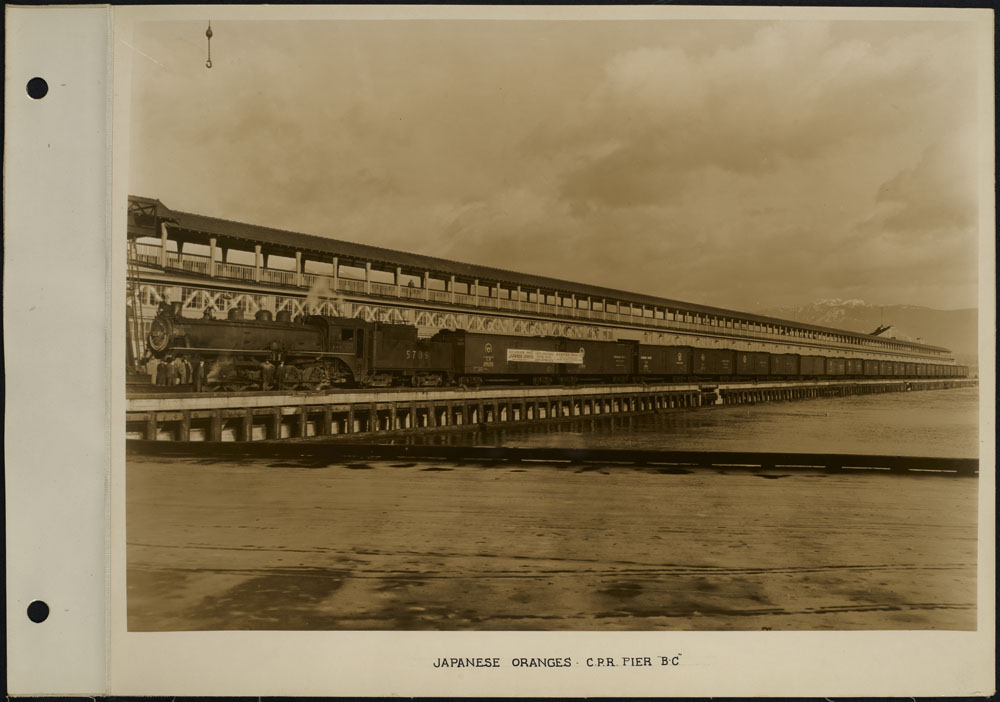
“Rather more than four oranges for every man, woman and child in Canada or a total of 482,000 boxes of this fragrant fruit were landed at Pier “B-C” of the Canadian Pacific Railway at Vancouver in December, and were rushed through the prairie provinces and to the east of Canada for the Christmas trade. … [I]n all seven special trains were used to convey this huge consignment. The likelihood is therefore pretty strong that many of the oranges you may see hanging from Christmas trees or peeping out of Christmas stockings were grown in the Land of the Rising Sun. It i[s] further an indication of the great trade passing through the port of Vancouver.”

Photograph of a train at a pier, with a banner on a sign indicating that the train has a special shipment of Japanese oranges.

Japanese oranges at CPR Pier “B-C.” Photo: Leonard Frank (e011435433)

By the 1980s, consumers no longer saw mandarin oranges as rare, special-occasion luxuries. Advances in modern container shipping, as well as an influx of oranges from China and California, meant that the fruit was now available in greater quantities, at lower prices, and for longer stretches of time. Nevertheless, “Christmas oranges” still make their way into stockings, gift baskets and fruit bowls every holiday season.

Check out our Flickr album on Oranges!

Photograph of four boys in matching striped pyjamas hanging Christmas stockings on a fireplace mantle.

Young boys hanging up their stockings. Photo: Malak Karsh (e011177219)


Caitlin Webster is a senior archivist in the Reference Services Division at the Vancouver office of Library and Archives Canada.

The George Ayoub fonds – a passion for ships

By Kelly Anne Griffin

Many people enjoy birdwatching, trainspotting or stargazing, but George Ayoub loved observing ships. Ship watching and nautical history fascinate many Canadians. This is no wonder, since our country has over 200,000 kilometres of coastline and almost 800,000 kilometres of freshwater shores.

George Ayoub was born in 1916 in Sault Ste. Marie, Ontario. In 1930, he became a sailor at age 14, with a lifelong passion for ships and maritime history. His collection, held at Library and Archives Canada, gives us a glimpse into the nautical past and the waterways that helped shape our nation and build our economy. The fonds includes over 20,000 of his photographs taken between 1940 and 1990 at various locations along our seaways, most notably the St. Lawrence Seaway, the Great Lakes, the Ottawa River and the Rideau Canal. The vast collection of images provides fascinating insight into the history of shipping as well as the use of leisure craft. The fonds also includes textual material that complements the photographs and that records not only the history of the shipping industry but also individual ships that sailed the waters.

St. Lawrence Seaway

The St. Lawrence Seaway, opened in 1959, transformed the shipping industry by opening the Great Lakes to ocean-going traffic. When the seaway opened, George Ayoub started to compile an important collection of records on the backgrounds of the different vessels that came to the Great Lakes and the St. Lawrence Seaway during the 20th century. He also photographed many of these himself. Today, the St. Lawrence Seaway is one of the great ship canals of the world, carrying freight between the heart of North America and the rest of the world. The George Ayoub fonds contains numerous images that reflect the variety of vessels that travelled the seaway.

A black-and-white photograph of a moored tugboat. The crew is on the deck.

Jean-T on the St. Lawrence Seaway, Iroquois, Ontario, September 28, 1975. Credit: George Ayoub/Library and Archives Canada/George Ayoub fonds/e011213397. Copyright: Copyright assigned to Library and Archives Canada by copyright owner the Estate of George Ayoub

A black-and-white photograph of a large ship passing through the canal.

Kingdoc on the St. Lawrence Seaway, Iroquois, Ontario, September 5, 1965. Credit: George Ayoub/Library and Archives Canada/George Ayoub fonds/e011213399. Copyright: Copyright assigned to Library and Archives Canada by copyright owner the Estate of George Ayoub.

Rideau Canal and Ottawa River

Officially opened in 1832, the Rideau Canal is the oldest continuously operated canal system in North America. The War of 1812 made clear the need to have a navigable waterway connecting Lake Ontario to the Ottawa River, because traffic on the St. Lawrence River was vulnerable to attack. The huge undertaking provided a secure supply route from Montréal to Kingston that avoided the St. Lawrence.

The Rideau Canal locks provide wonderful boat-watching opportunities. Around many locks, onlookers often watch in fascination as the locks move the vessels along. The George Ayoub fonds includes many excellent photos, taken over the years, of boats passing through the locks.

A black-and-white photograph of a moored leisure vessel on a canal beside a large building.

Korab in front of the National Arts Centre, Rideau Canal, Ottawa, June 14, 1971. Credit: George Ayoub/Library and Archives Canada/George Ayoub fonds/e011213400. Copyright: Copyright assigned to Library and Archives Canada by copyright owner the Estate of George Ayoub

A black-and-white photograph of a small moored fire boat in a wooded stretch of waterway

St. John’s Fire Boat (Gatineau Boom Company) at a dock near Hull, Quebec, November 19, 1967. Credit: George Ayoub/Library and Archives Canada/George Ayoub fonds/e011213403. Copyright: Copyright assigned to Library and Archives Canada by copyright owner the Estate of George Ayoub.

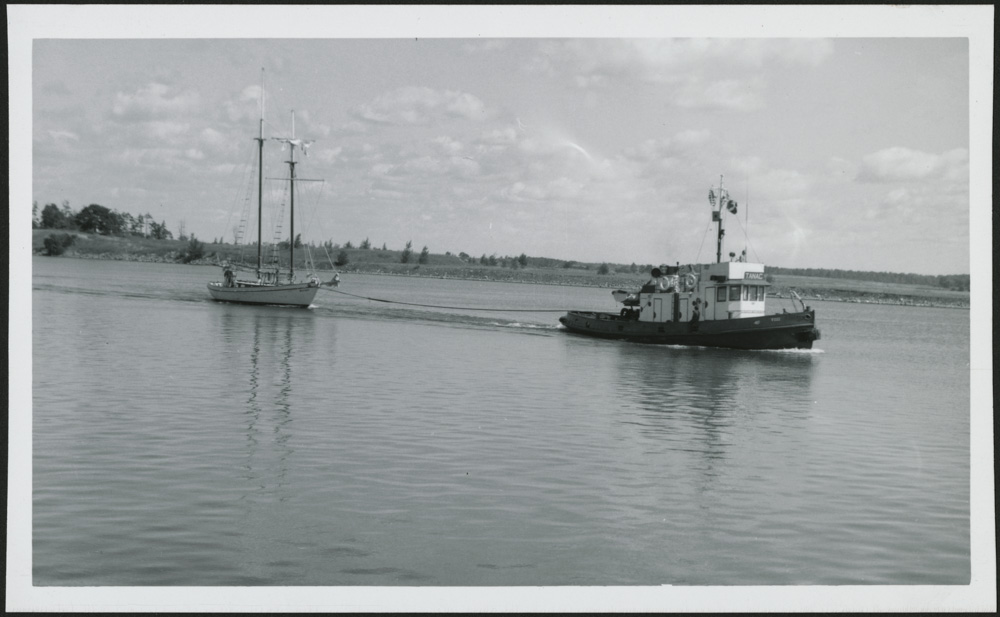
A black-and-white photograph of a tugboat towing a sailboat across the water.

Sailing yacht Wild Harp pulled by tugboat TANAC V-222, September 10, 1972. Credit: George Ayoub/Library and Archives Canada/George Ayoub fonds/e011213404. Copyright: Copyright assigned to Library and Archives Canada by copyright owner the Estate of George Ayoub.

A black-and-white photograph of a medium-sized boat in the process of crossing a system of locks.

Templeton in the Rideau Locks, Ottawa, April 17, 1964. Credit: George Ayoub/Library and Archives Canada/George Ayoub fonds/e011213405. Copyright: Copyright assigned to Library and Archives Canada by copyright owner the Estate of George Ayoub.

Canada’s affinity with water is shaped by our vast and beautiful shorelines. Ship watching continues to be a major tourist attraction for many communities along waterways. From busy shipping routes to quiet, peaceful lakes, Canadian waterways truly help us live up to our motto, “a mari usque ad mare”: “from sea to sea.”

Related material


Kelly Anne Griffin is an archival assistant in the Science and Governance Private Archives Division of the Archives Branch at Library and Archives Canada.