Soundscapes of the Stanley Grizzle Interview Collection

By Stacey Zembrzycki

This article contains historical language and content that some may consider offensive, such as language used to refer to racial, ethnic and cultural groups. Please see our historical language advisory for more information.

It is rare, when listening to oral history interviews, for the soundscape, the noises that one hears in the background, to be just as interesting and important as the stories being shared by interviewees. Practitioners today are trained to conduct interviews in quiet spaces, limiting noise so that every word spoken is clear and easy to understand. The crispness of each voice matters since it determines the life an interview will have among future listeners and within multimedia projects.

The Stanley Grizzle Interview Collection is fascinating because it flies in the face of this orthodoxy. When Stanley Grizzle travelled throughout the country documenting the stories of Canadian Pacific Railway (CPR) sleeping car porters, their fight to unionize and create the Brotherhood of Sleeping Car Porters (BSCP), and the important role of the women who served on the BSCP’s Ladies’ Auxiliary, he did so as an insider. A twenty-year CPR veteran, Stanley Grizzle conducted interviews that revolved around a clearly defined set of questions, which were replicated in each encounter. There were also, however, conversations among friends, many of whom Grizzle had worked with either on the railroad or during his time as a labour leader. Moving from home to home with a tape recorder that he started and stopped at will and at the request of interviewees, Grizzle instantly swept listeners into his world, where the formalities of the typical interview were cast aside, informal banter transpired, and drinks – complete with clinking ice cubes – were stirred in the background.

Grizzle’s insider knowledge both helped and hindered his ability to document the history of the BSCP. In most cases, he was immediately recognized as a “Brother.” Gaining trust was not difficult given the existence of prior relationships. As a result, many of the men tended to get right to the heart of what it meant to be a porter during the first part of the twentieth century. “Porter talk,” as Melvin Crump called it, allows listeners to see this world through the eyes of each porter with whom Grizzle met. It is an intimate look into a world that has now been lost. Viewing the job of a porter through this Black lens reveals how the men, and the women who supported them, thought about their everyday lives and viewed others. Ultimately, it also demonstrates the varied ways that they understood and negotiated societal inequality.
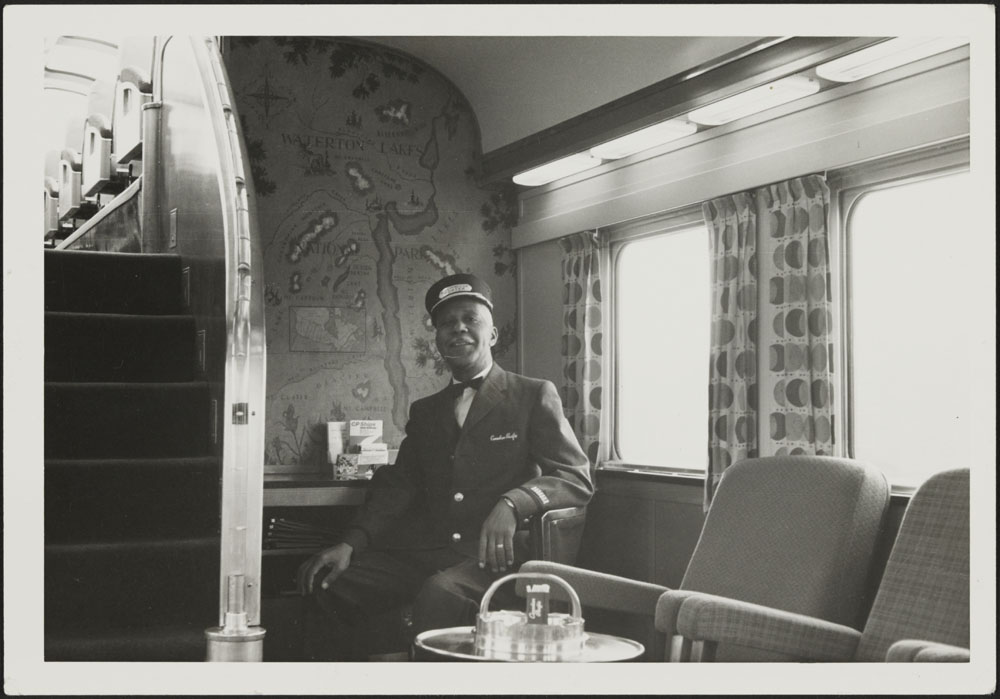
Canadian Pacific Railway sleeping car porter sitting in a train wagon.

Albert Budd, C.P.R., S.C. Porter, 1940s–1960s (e011781984)

Unfortunately, being an insider was not always beneficial. Given Grizzle’s own experiences, and his quest to document the history of the BSCP’s formation and of the men and women who made it possible, there were many missed opportunities along the way. In addition to Grizzle’s inclination to correct interviewees, stories pertaining to the fight for civil rights in the United States, experiences of migration, and some of the more problematic—and even controversial—issues that porters faced on the railroad are limited and, at times, absent from the record. The point was not to glorify porters’ diverse experiences, but there was a careful dance being done by those who recognized that reputations were at stake and the power that the company still wielded, despite the existence of the union, was real. In addition to these considerations, stories that should have been given space to be told were cut short given Grizzle’s objectives. Listeners hear the tape recorder stop and then restart at different stages in the life narratives being recounted. There is never any explanation. Listeners are left to try to listen for what was omitted, silenced, or simply lost to the past.

Nevertheless, along with these aspects of the interview, listeners are presented with wonderful opportunities to hear the ways that various sounds cut across these narratives and give us a way into a deeper understanding of who these interviewees were. Interviewees’ voices reveal the varied countries from which they descended. Heavy accents from America’s Deep South as well as those from a host of Caribbean nations tell us about lives lived elsewhere and the struggle of migrant labourers, who were often highly educated, to make a better life in Canada.
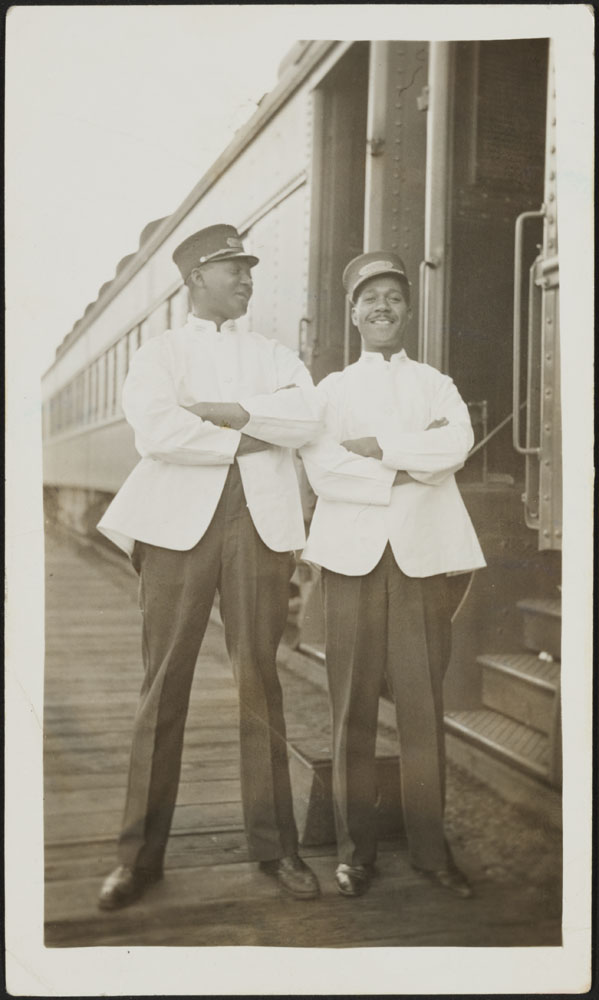
Two Canadian Pacific Railway sleeping car porters standing next to a train.

Left to right, Smitty from Montreal and Albert Budd (e011781983)

Everyday soundscapes also loom large. Radios and televisions wail alongside birds chirping in the background and children playing in neighbouring rooms. The banging of pots and pans reveals the presence of women in nearby kitchens, likely preparing a meal for their esteemed guest. The stomping of feet above the heads of Grizzle and his interviewees alongside the flushing of toilets speak to the substandard tenement housing from which some porters, then retired, were never able to escape.

We hear disability, too, when some stories are relayed. Heavy coughing and wheezing from smoking and its second-hand effects, as well as from years spent on the railcars, which picked up heavy amounts of pollutants through open windows, tell us about interviewees’ life choices in addition to the heavy toll this work took on their bodies. Men spoke of the disability pensions they collected as a result of the damage done to their backs by years of heavy lifting. On more than one occasion, Grizzle and his interviewees seem to be sitting in creaky wooden chairs, rocking back and forth, on creaky wooden floors, as the stories flow. One wonders whether the chairs speak to class, and the ability to own fancier furniture, or to disability, and the need for structure and support for aching bodies.

Group of Canadian Pacific Railway sleeping car porters gathered around a table.

C.P.R. porters, L–R Phil Witt, Jack Davis (e011781985)

The beauty of oral history is being able to listen to a story and take in the surroundings in which it is being created. It helps us process and make sense of the past. The Grizzle Interview Collection speaks to the complexity of understanding history as well as the importance of listening to the soundscapes in which everyday lives were captured and preserved for future listeners.

Additional resources

  • Oral History Off the Record: Toward an Ethnography of Practice, by Anna Sheftel and Stacey Zembrzycki (OCLC 841187000)

Stacey Zembrzycki is an award-winning oral and public historian of immigrant, ethnic and refugee experiences. She is currently doing research for Library and Archives Canada.

The Ladies’ Auxiliary of the Brotherhood of Sleeping Car Porters

By Stacey Zembrzycki

This article contains historical language and content that some may consider offensive, such as language used to refer to racial, ethnic and cultural groups. Please see our historical language advisory for more information.

Stanley Grizzle, citizenship judge, politician, civil servant, labour union activist, and porter of twenty years, travelled across the country in the late 1980s documenting the experiences of Canadian Pacific Railway (CPR) sleeping car porters and their struggle to unionize. His questions about the creation of the Brotherhood of Sleeping Car Porters (BSCP) always went hand in hand with those that documented the important role played by Black women in the BSCP’s Ladies’ Auxiliary.

Ten members of the Toronto Pullman Division’s Ladies Auxiliary posing for a photo.

Ladies Auxiliary, Toronto Pullman Division, Brotherhood of Sleeping Car Porters (e011181016)

While documenting the male “stalwarts,” as he called them, Grizzle was careful to ask about the mothers, sisters, wives, and daughters, who often lingered in this movement’s background, as well as in the background during these recorded sessions. The Stanley Grizzle Interview Collection thereby provides important gendered and generational perspectives into the forces that made unionization possible in Black communities across Canada. It also shows how involvement in the BSCP and its Ladies’ Auxiliary tended to serve as starting points for community mobilization around a broad array of issues and training grounds for community leaders.

Union leaders, inspired by A. Philip Randolph, an American labour unionist and civil rights activist as well as the organizer of the BSCP in the United States, recognized early on that women had integral roles to play in founding and sustaining this union movement. As Essex Silas Richard “Dick” Bellamy recalled:

I shall never forget when Brother Randolph came to Calgary, and Brother Benny Smith, he says, “There is no organization [that] will ever be successful unless the ladies are permitted into that organization.” And I have never forgotten, and I don’t believe you can find very many organizations [where] the ladies are…are not affiliated with the men in these various organizations. They seem to be able to give the men, uh-uh, a little more incentive to…in, in order to help them out. (Interview 417401)

Frank Collins succinctly echoed this sentiment: “…[You] had to have the women behind you before you had a strong union because, if you didn’t have them working with you, you were nowhere.” (Interview 417402)

Women’s solidarity was deeply rooted in the realities of the job. Being a porter required men to be on the road for as long as a month at a time. In their absence, porters’ wives, mothers, sisters, and daughters played principal roles, moving throughout their Black communities to encourage and promote the creation of the BSCP among both men and women, actively recruit and “card” porters at their local train stations and in their churches and community organizations, and, once the union was created, collect union joining fees and dues. Like other women, Velma Coward King, who was active in the Montreal BSCP Ladies’ Auxiliary, recognized the challenges of unionizing these men early on, noting that long stints away from home meant the men could not regularly attend meetings. Given that “[it] was the woman who was the back, uh, backbone in the house of the family,” they needed to step in. This was the only way forward, as she made clear, recognizing that: “Once you had a union to represent you and to speak for you, they knew that they couldn’t treat you as dirt.” (Interview 417383)

The power inherent in this aspect of the collection lies in its ability to tell the story of how upward mobility manifested out of unionization and women’s efforts to make that possible. The collective agreements that resulted from community solidarity led to improved working conditions and higher salaries, which, in turn, gave families the ability to move to suburbs, where they purchased homes. It also meant that there was money left over to help send children to university. Most importantly, as the Winnipeg BSCP’s Ladies’ Auxiliary first President Helen Bailey surmised: “I think men then became to even feel respect for themselves because then they had, uh, they were making a worthwhile living for their families.” (Interview 417400)

Poster advertising the tenth anniversary dance of the Toronto Division of The Brotherhood of Sleeping Car Porters and their Ladies Auxiliary.

Poster for a tenth anniversary dance organized by The Brotherhood of Sleeping Car Porters and their Ladies Auxiliary (e011536972)

The important generational thread that winds through these interviews clearly explains how BSCP Ladies’ Auxiliaries across the country brought women of all ages together to both organize and ultimately fundraise money through various community events, which included teas, socials, and dances. This money helped move union leaders across the country, giving the BSCP strength; funded travel to national and international conventions, giving Canadian labour leaders a voice in the movement; and supplemented education through scholarship funds.

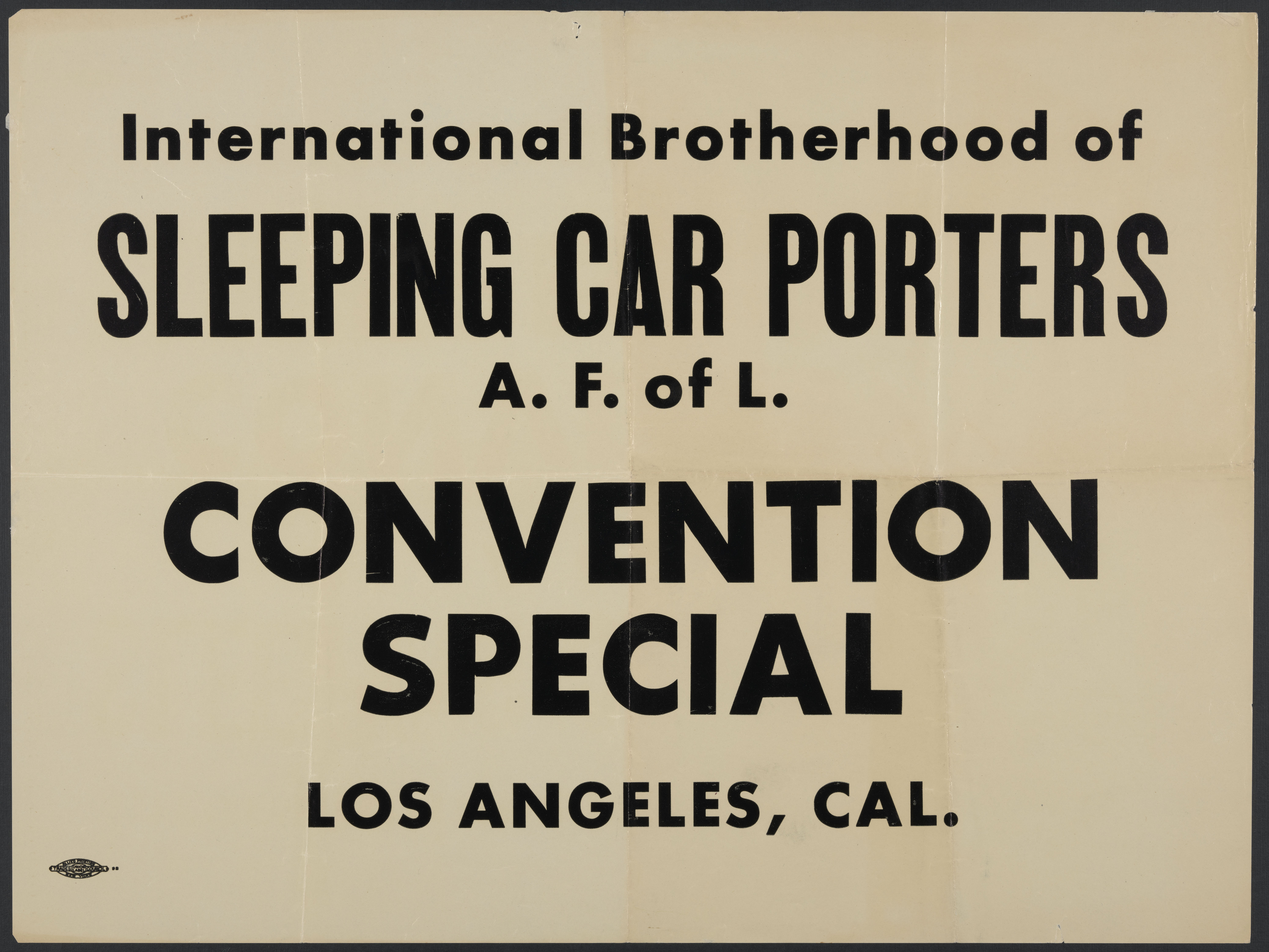
Poster for the International Brotherhood of Sleeping Car Porters’ Convention Special in Los Angeles, California.

International Brotherhood of Sleeping Car Porters poster for a Convention Special in Los Angeles, California (e011536973)

Breaking the generational reality of portering, wherein fathers and their sons were forced into this profession because of the absence of other employment opportunities, was never far from the minds of the women who were involved in the BSCP’s Ladies’ Auxiliaries. Women’s involvement also gave some, like Ivy Lawrence Mayniar/Maynier, glimpses into the systemic racism and discriminatory labour practices that were integral to Black experiences in Canada. In speaking about her father’s career as a porter and her drive to seek out higher education as a result of it, Mayniar shared a powerful memory from while she was a student at McGill University:

[…] I was then going to, to the university. And then I walked down to the…to work at the library for a while. And I walked down to the, uh, uh, station and looked for Dad’s car. And I remember one night, it was bitter. […] It was a bitter night. And I, I, I myself was just so upset about this. And…but I wanted to go down ’cause I knew Daddy was going on standby. He was standing out. And I went down, went to the station, went and looked down the track for Dad. And there he was standing outside. Dad was a short man and this, you know, tight little person. And I looked down there to catch his eye. And there he was standing with snow on top of his cap, and his shoulders pushed…pulled together like this, and the wind was going down that line there, just brutally. It was just awful. And he was just standing there, and, uh…and the snow piled up on him. And, uh, I went and I sat down in the concourse outside from where…from where the trains left…And I just sat on a bench and cried. I’ll never forget that. (Interview 417387)

Mayniar became the first Black woman to graduate from the University of Toronto Law School, but she went on to study in England, where she was called to the bar at the Inns of Court, because she recognized the limitations she would continue to face in Canada as a person of colour. She practiced law in Trinidad and Tobago, where she spent the remainder of her career fighting against the racism and discrimination that she saw exemplified in her father on that cold, wintry day at Windsor Station.

The interviews conducted by Grizzle not only document the history of the fight to unionize CPR sleeping car porters, but also speak to a history that is bound up in the advancement of Black families and their communities throughout Canada. There could not be one without the other. When listening to the voices of these men and women, one hears the power inherent in women’s collective actions, how ever small, and the pride these wives, mothers, sisters, and daughters had in knowing that they effected change on the ground for the men in their lives as well as their children and themselves. When Grizzle asked Evelyn Braxton whether the “Ladies’ Auxiliary lived up to the expectations, uh, of, uh, giving the Brothers the, the maximum support that they, uh, looked forward to,” she wholeheartedly declared: “Oh, they certainly did. The Ladies’ Auxiliary was the support of the Brotherhood men.” (Interview 417386) Women were not only the backbone of their families: they held up their communities and the generations that followed.

Additional resources:

  • My Name’s Not George: The Story of the Brotherhood of Sleeping Car Porters in Canada: Personal Reminiscences of Stanley G. Grizzle, by Stanley G. Grizzle with John Cooper (OCLC 883975589)
  • Deindustrializing Montreal: Entangled Histories of Race, Residence, and Class, Chapter 3: The Black City below the Hill, by Steven High (OCLC 1274199219)
  • North of the Color Line: Migration and Black Resistance in Canada, 1870–1955, by Sarah-Jane Mathieu (OCLC 607975641)

Stacey Zembrzycki is an award-winning oral and public historian of immigrant, ethnic and refugee experiences. She is currently doing research for Library and Archives Canada.
Black porters’ voices and stories: the Stanley Grizzle interview collection

By Stacey Zembrzycki

This article contains historical language and content that some may consider offensive, such as language used to refer to racial, ethnic and cultural groups. Please see our historical language advisory for more information.

The history of the railway in Canada is often narrated in a celebratory manner. It is seen as having united the country from coast to coast, with the last spike coming to symbolize the fruition of Confederation. And yet, this history is deeply rooted in the dispossession of Indigenous peoples from their ancestral lands and territories, the exploitation of Chinese migrant labourers, and the discriminatory labour practices experienced by Black sleeping car porters. The Stanley Grizzle interview collection, which consists of interviews with 35 men and 8 women who were either porters or had loved ones who worked the rails, offers a different account of the railway. The collection is exceptional because of its ability to bring us deep inside this history. It tells it from a new perspective that places Black Canadian and Black migrant labourers’ voices, as well as the stories of the racism that they experienced while employed by the Canadian Pacific Railway (CPR), at its centre. These interviews also offer glimpses into the Depression, the Second World War, the struggle to unionize porters, the creation of the Brotherhood of Sleeping Car Porters (BSCP) and its Ladies’ Auxiliary, and ultimately what life was like inside Black communities across the country. The difficult narratives in this collection speak to the strength and resilience of those who have long been discriminated against simply because of the colour of their skin.

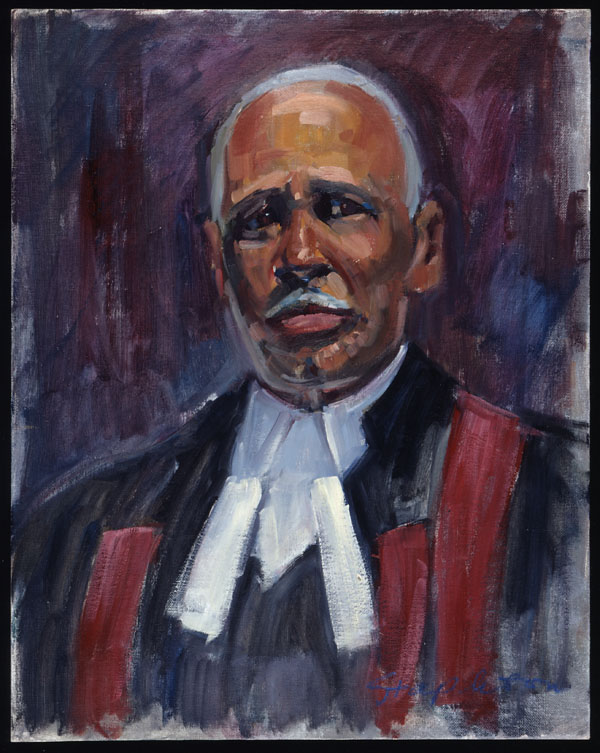
A painted head-and-shoulders portrait showing an older Black man dressed in judge’s robes and a crisp white shirt. His black robes are embellished with a burgundy sash. The man, who looks directly at the viewer, has short grey hair and a grey moustache.

Portrait of Citizenship Judge Stanley Grizzle by William J. Stapleton (c151473k)

In 1986 and 1987, Stanley Grizzle travelled across the country, to the CPR’s major junction points of Montréal, Toronto, Winnipeg, Calgary and Vancouver. There, he documented the experiences of those who were born in the first two decades of the 20th century and went on, in most cases, to have long and storied careers as porters. Grizzle was himself a porter for 20 years, as well as a labour union activist, political candidate, civil servant and citizenship judge. The narratives that he collected informed his 1998 memoir, My Name’s Not George: The Story of the Brotherhood of Sleeping Car Porters in Canada, Personal Reminiscences of Stanley G. Grizzle.

Portering was not a profession of choice. It was one of the only employment options available to Black men in the 1950s and 1960s. As Torontonian Leonard Oscar Johnston recounted:

I applied for jobs, but I was refused because of colour. Well, actually they called me “n….” And I remember one day, I walked from Jane and Bloor to River Street, along King Street, lookin’ for a job as a—I was a machinist. I had a couple of years machine shop, and I was told to shine shoes. Yeah. Now that’s 50, 60 years ago, but—and I decided, “Okay, I’ll shine shoes.” So, I went down the CPR.
(Interview 417394)

For others, being a porter was a way to escape the racial violence of the Deep South or to make a better life for themselves after leaving the Caribbean. Many of these migrant labourers were either university educated or held trade specializations but still could not find jobs in Canada. In desperation, they responded to CPR advertisements and recruitment campaigns, becoming porters. Some men stayed for 10 years, moving to other sectors once they opened up. Others remained for up to 40 years, to collect the pensions they earned for their service.

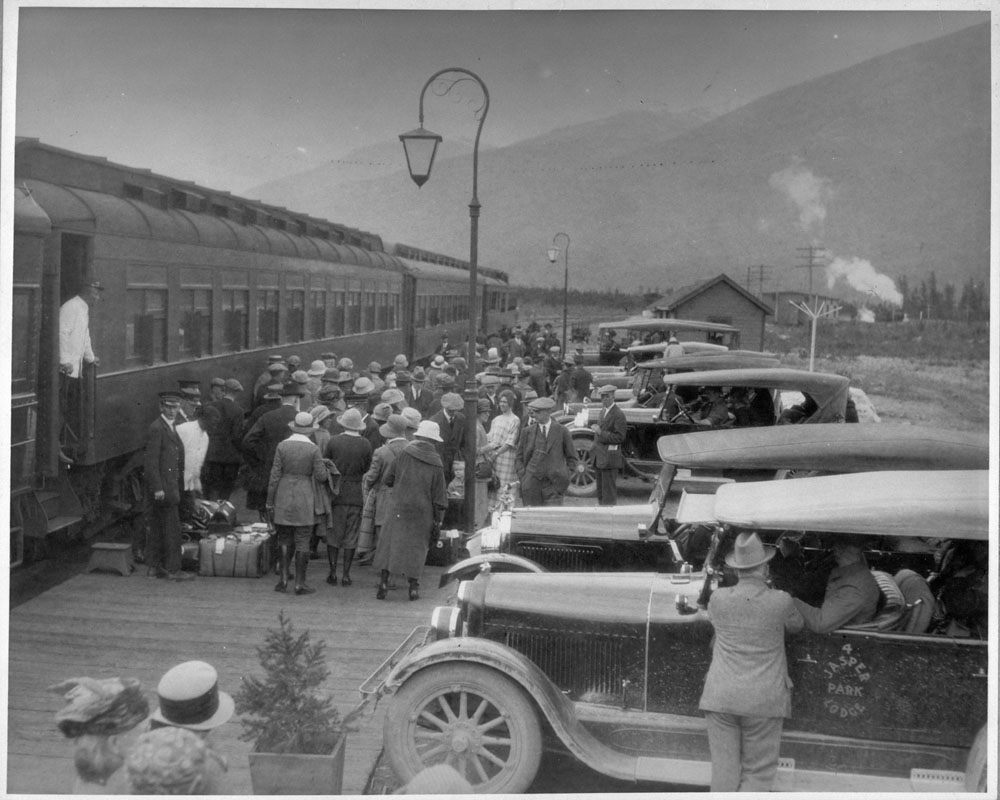
A crowd of people disembark from a train as railway employees and porters help them with their luggage.

Railway porters help passengers to disembark at a railway station (a058321)

These men were responsible for greeting rail passengers and attending to their every need while in transit. Prior to the creation of the BSCP, which ratified its first collective agreement in 1945, it was typical for porters to be on the road for three to four weeks at a time. While away from their families and communities, porters worked 21-hour days. They were permitted to sleep on the leather sofas in the smoking cars beside the bathrooms for just three hours a night, but only when all of their tasks, such as cleaning bathrooms, shining shoes, making beds, counting linens and attending to passengers’ needs, had been completed. The CPR also monitored porters’ time while on layovers, requiring them to report to the main stations daily, where they were forced to relay their activities and movements. For this work, the CPR paid porters a monthly salary of $75. This flat rate, coupled with the absence of overtime pay, meant that tips were the only way to survive.

The men, many of whom had knowledge of or experience working in other unions, knew that their situation could be improved only through unionization. They aligned themselves with famed American labour unionist, civil rights activist and organizer of the BSCP, A. Philip Randolph. The gains in their first collective agreement not only improved the lives of the men, leading to salary increases, overtime pay, assigned sleeping berths and decent meals, but also those of their families. Upward mobility, signified by purchasing homes, moving to the suburbs, and accessing higher education, were key developments that followed. The interviews in this collection describe the struggles to organize union locals across the country. They also depict the people, including the women participating in the Ladies’ Auxiliary, who made these efforts possible.

The experiences of the porters are still difficult to hear, but the interviews are fascinating, bringing us deep into the world of what Melvin Crump referred to as “porter talk” (Interview 417403). Namely, they give listeners the ability to view these experiences as the porters once did. We hear these men seamlessly move beyond the racism and discrimination that they experienced, spinning their everyday encounters into learning opportunities where fun could be had and power could be taken back. George Forray’s reflections were similar to those of others who recognized the systemic racism they faced:

“Well, I found it quite an education. I found it an education which I couldn’t have got at no university. An education in, uh, all the, uh, practically that we can say the facts of life all through and something I couldn’t have bought or earned or been taught, except when I went experienced it myself.”
(Interview 417383)

At heart, the Stanley Grizzle interview collection preserves voices and stories of survival. It tells us how porters viewed their passengers, themselves, and ultimately the world that worked so hard to beat them down.

Additional resources

  • My Name’s Not George: The Story of the Brotherhood of Sleeping Car Porters in Canada, Personal Reminiscences of Stanley G. Grizzle by Stanley G. Grizzle with John Cooper (OCLC 1036052571)
  • “Chapter 3: The Black City below the Hill,” in Deindustrializing Montreal: Entangled Histories of Race, Residence, and Class by Steven High, pp. 92–128 (OCLC 1274199219)
  • Unsettling the Great White North: Black Canadian History by Michelle A. Johnson and Funké Aladejebi, eds. (OCLC 1242464894)
  • North of the Color Line: Migration and Black Resistance in Canada, 1870–1955 by Sarah-Jane Mathieu (OCLC 607975641)
  • The Sleeping Car Porter by Suzette Mayr (OCLC 1302576764)

Stacey Zembrzycki is an award-winning oral and public historian of immigrant, ethnic and refugee experiences. She is currently doing research for Library and Archives Canada.