Spirit in Motion: Canada and the Paralympics

Version française

By Sali Lafrenie

With the Olympic Games winding down and the Paralympic Games winding up in 2 weeks, it’s time for a paralympic preview. The 2024 Paralympics will also take place in Paris, from August 28th to September 8th, and will include 22 sports:

  • Para archery
  • Para athletics
  • Para badminton
  • Blind football
  • Boccia (similar to bocce and pétanque)
  • Para canoe
  • Para cycling
  • Para equestrian
  • Goalball
  • Para judo
  • Para powerlifting
  • Para rowing
  • Shooting Para Sport
  • Sitting volleyball
  • Para swimming
  • Para table tennis
  • Para taekwondo
  • Para triathlon
  • Wheelchair basketball
  • Wheelchair fencing
  • Wheelchair rugby (previously called murderball)
  • Wheelchair tennis

While the Modern Olympic Games date back to 1896, the Paralympics have a different history. The Paralympic Games as we know them date back to 1984. But they had a different name from 1960 to 1980: the International Stoke Mandeville Games.

The International Stoke Mandeville Games

Although the International Stoke Mandeville Games began in 1960, their origin dates to 1948 at the Stoke Mandeville Hospital in England. Like the Inter-Allied Games and the Invictus Games, the Stoke Mandeville Games were meant to be a rehabilitative experience for people with disabilities and for veterans. The Games eventually grew into a large-scale sports competition.

Initially consisting of only wheelchair athletes, the Games grew over time to include athletes from other countries—making them international—as well as athletes with a range of disabilities, which lead to the inclusion of more sports.

While the International Stoke Mandeville Games are considered the precursor to the Paralympics, there are and were many different types of sports competitions for athletes with disabilities such as the World Abilitysport Games, the Special Olympics, the Parapan American Games, and the Deaflympics (first held in Paris in 1924).

Below, we can see photographs of athletes competing at the 1972 International Stoke Mandeville Games in sports like archery, swimming, and wheelchair basketball.
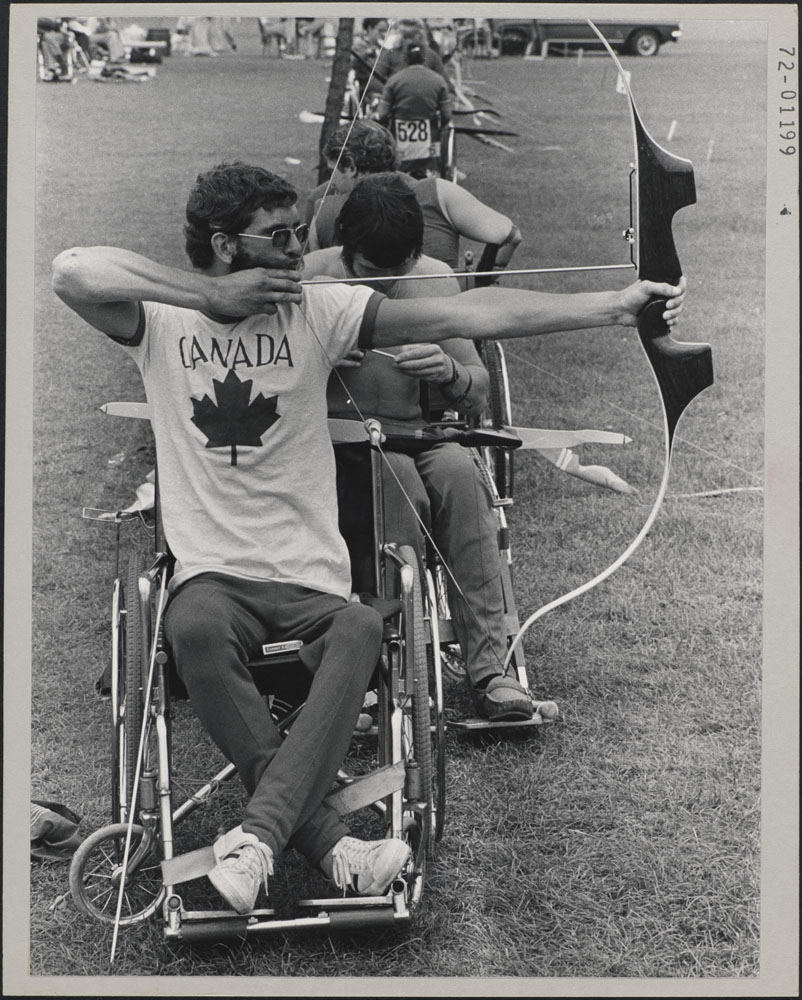
A black and white photograph of a wheelchair archer drawing a bow and wearing a t-shirt with a maple leaf on it.

Archery, 21st International Stoke Mandeville Games, Heidelberg, Germany, August 1–10, 1972. (e011783300)
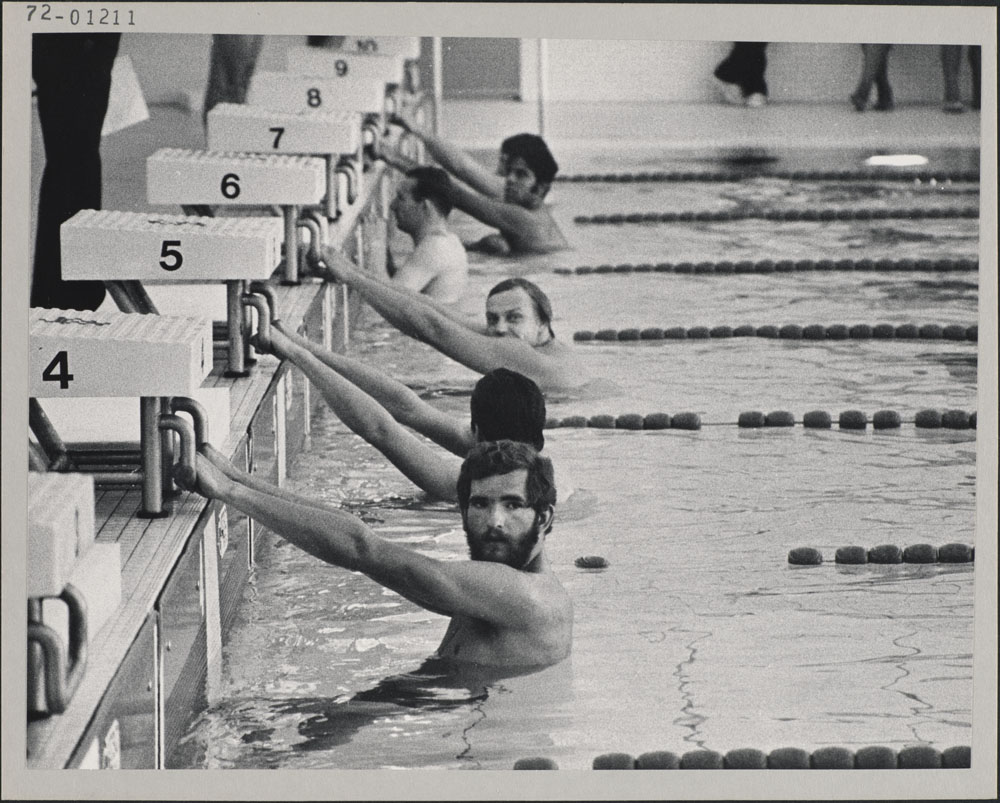
A black and white photograph of Para swimmers in the water holding onto the starting blocks.

Swimming, 21st International Stoke Mandeville Games, Heidelberg, Germany, August 1–10, 1972. (e011783302)
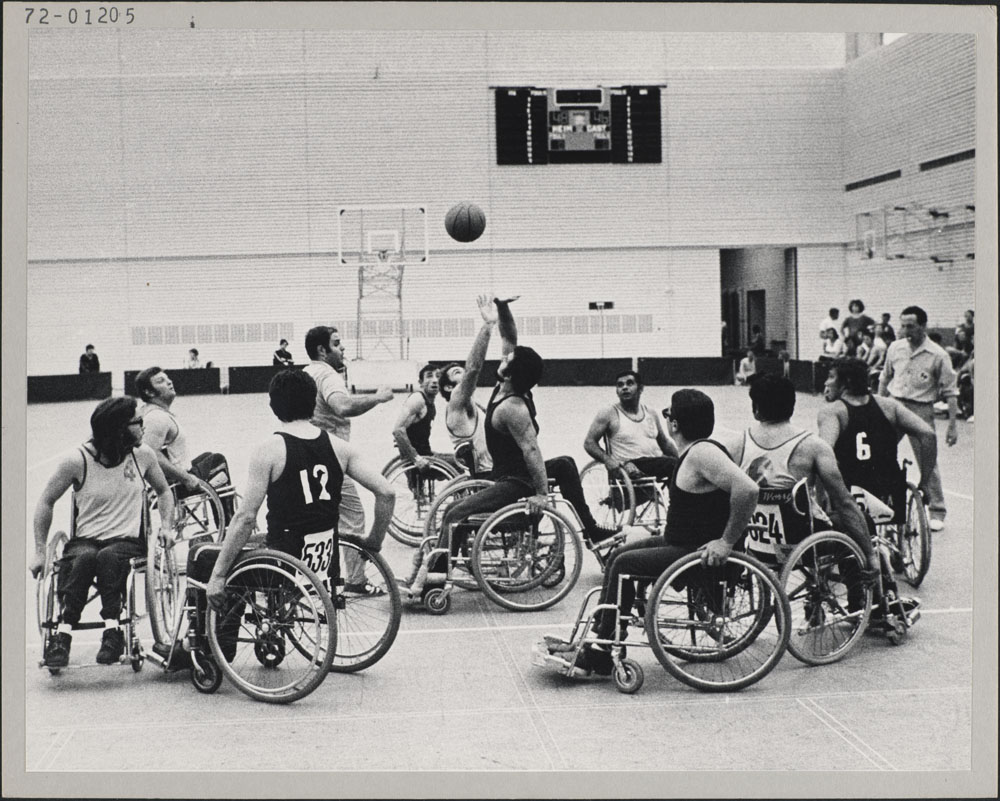
A black and white photograph of two wheelchair basketball teams at tip off.

Basketball, 21st International Stoke Mandeville Games, Heidelberg, Germany, August 1–10, 1972. (e011783301)

Canada and the Paralympic Games

Participating in the Games for over 50 years, Canadian Para athletes have a long and shiny history at the Paralympics. It’s safe to say that Canadian Para athletes tend to win a lot, given that they rank fourth in All-Time Paralympic Summer Games Medal Standings. Team Canada has dominating records in Para swimming, Para athletics, Para cycling, and wheelchair basketball. Notable athletes in these sports include Benoît Huot, Michelle Stilwell, Chantal Petitclerc, and Richard Peter.

Each of these athletes have made their mark on parasport history in different ways. Huot did so at Rio 2016 when he earned his 20th Paralympic medal, officially tying the record for second all-time Paralympic swimming medals. Stilwell left her mark in two different sports, wheelchair basketball and wheelchair racing, winning at least one gold medal in both sports. Senator Chantal Petitclerc, perhaps one of the most recognizable names in Canadian parasport alongside Rick Hansen, represented Canada at 5 Paralympics and won 21 medals. Richard Peter, also a dual-sport athlete and five-time Paralympian, competed in wheelchair basketball and in Para badminton, winning multiple medals with the wheelchair basketball team throughout his career. Peter was also featured in the docuseries “Chiefs and Champions” highlighting Indigenous athletes representing Canada in sports.
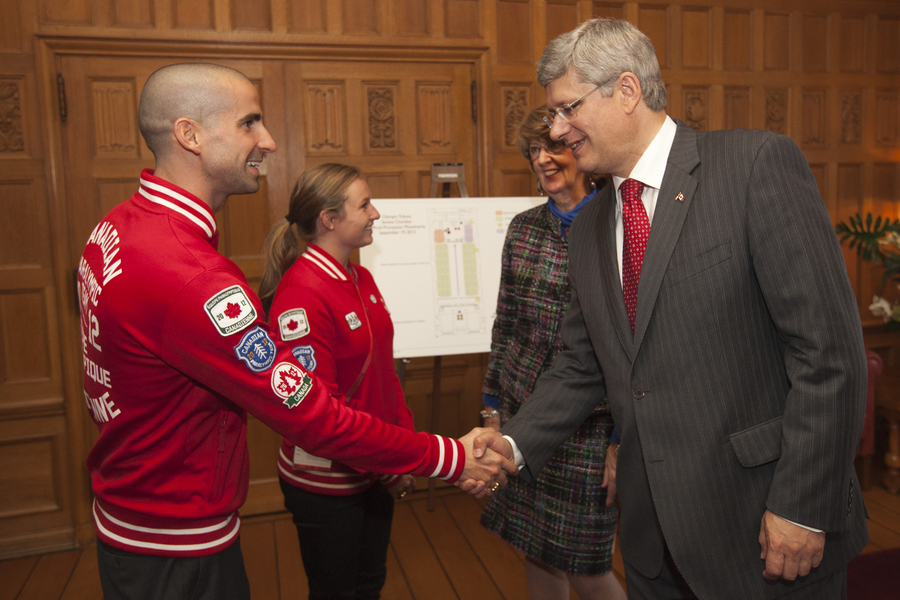
A colour photograph of athletes wearing red Team Canada jackets, one in the foreground standing and shaking the Prime Minister’s hand and another in the background speaking to someone.

Paralympic athlete Benoît Huot during recognition ceremony at Parliament Hill with Prime Minister Stephen Harper. Credit: Jason Ransom. (MIKAN 5586583)
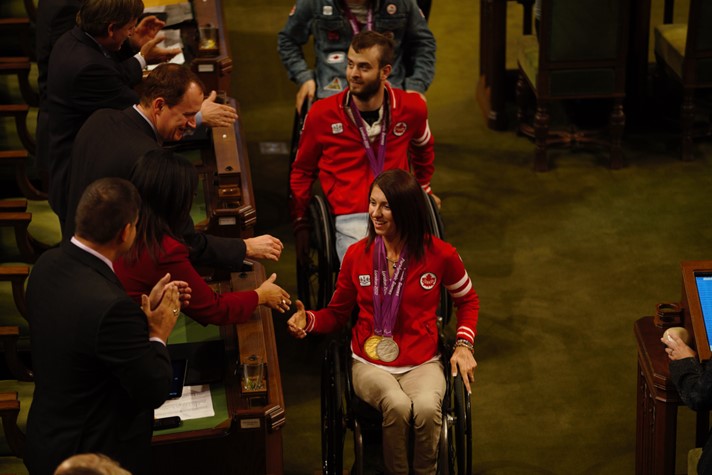
A colour photograph of athletes wearing red Team Canada jackets sitting in wheelchairs and moving in a line to shake the hands of members of parliament.

Paralympic athletes Michelle Stilwell and Jason Crone during recognition ceremony at Parliament Hill with Prime Minister Stephen Harper. Credit: Jill Thompson. (MIKAN 5609841)
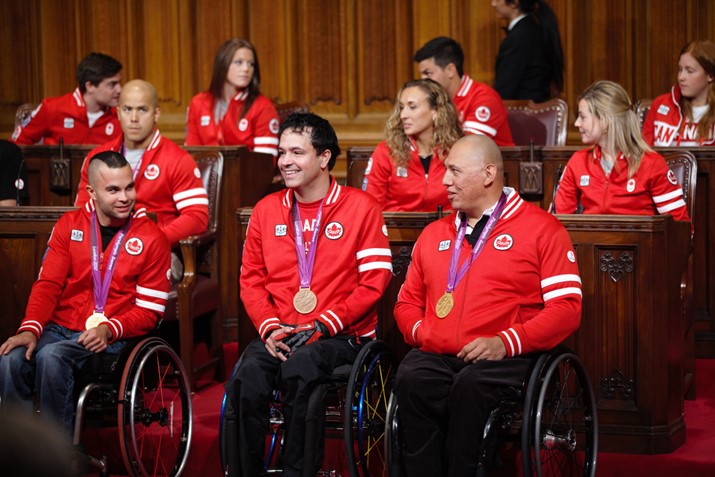
A colour photograph of athletes, three in the foreground in wheelchairs wearing Paralympic medals and seven sitting on benches in the background.

Paralympic athletes Tyler Miller, Marco Dispaltro, and Richard Peter during recognition ceremony at Parliament Hill with Prime Minister Stephen Harper. Credit: Jason Ransom. (MIKAN 5609841)

The Canadian Paralympic Hall of Fame

Canadians have made an impact on the Games inside and outside of the competition itself. Currently, the Canadian Paralympic Hall of Fame consists of 42 inductees in three categories: builders, coaches, and athletes.

One important builder is Dr. Robert W. Jackson, an orthopaedic surgeon who is credited with founding the Canadian Wheelchair Sports Association and as being a major advocate of parasports. While Dr. Jackson’s legacy lies in his contributions to the medical field as a pioneer of arthroscopic surgery, his legacy is also important to the world of sports. Outside of his work promoting parasports, Dr. Jackson also worked with professional athletes in two major leagues: the Canadian Football League (Toronto Argonauts) and the National Basketball Association (Dallas Mavericks). And in 1976, he was responsible for organizing the Paralympics in Toronto, also known as the Toronto Olympiad. All of this and more can be found in Dr. Jackson’s fonds here at LAC.

Another important Hall of Fame inductee is Eugene Reimer, a member of the first Canadian Paralympic team and a dominant wheelchair athlete. Throughout his athletic career, Reimer won 10 medals across 4 Paralympics and more than 50 medals at national and international competitions. He was also named Canadian male athlete of the year for these achievements. Reimer was an all-around athlete, a true competitor and multi-talented athlete who also played for the Vancouver Cable Cars wheelchair basketball team—the same team that Rick Hansen and Terry Fox played on in British Columbia. Check out this photo of Reimer competing in Para archery at the 1972 Games.
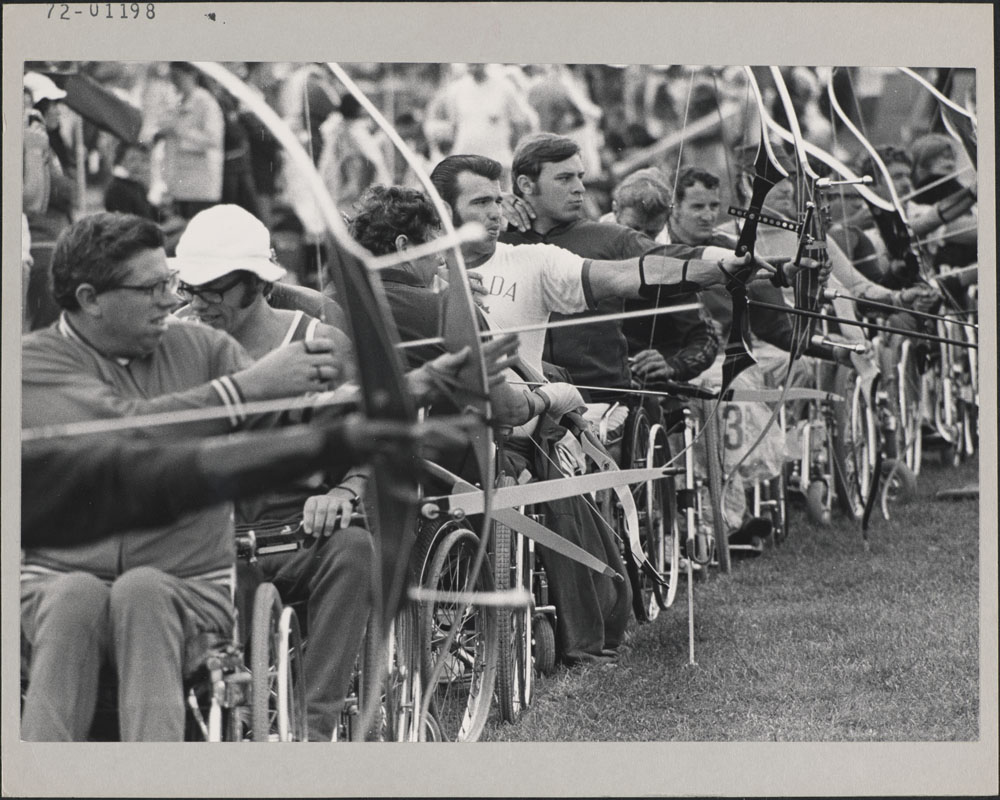
A black and white photograph of a row of archers sitting in wheelchairs.

Canada’s Eugene Reimer, archery, 21st International Stoke Mandeville Games, Heidelberg, Germany, August 1–10, 1972. (e011783299)

Athletes and sports to watch

Turning back to Paris 2024, let’s look at some of the athletes and sports coming up!

Given Canada’s success in Para swimming, it only makes sense to start there. This year, Canada is sending 22 Para swimmers to Paris. While there are some new faces, there are quite a few familiar ones including Aurélie Rivard, Nicholas Bennett, and Katarina Roxon, who will be competing in her fifth Paralympics.

While there are a lot of crossover sports between the Olympic and the Paralympic Games, one of the best parts of the Paralympics are the sports that are unique to them, like goalball. If you’ve never watched the sport, then you’re in for an exciting time, and if you have watched goalball, then you know exactly what I mean. The women’s goalball team has seen a lot of success recently and historically, securing their spot in Paris by winning gold at the 2023 Parapan American Games.

Just like the Olympics, the Paralympics are always evolving and changing. Sometimes that evolution looks like adding or removing sports, and other times it looks like providing more parity between athletes and prize money. In the last 16 years, the Paralympics have added five sports to their roster: Para rowing, Para triathlon, Para canoe, Para badminton, and Para taekwondo. It’s an exciting time to be a sports fan, and if you can’t get enough of the Paralympic Games and want to learn more, check out this list of 50 Things To Know About The Paralympic Games. Happy watching!

Additional Resources

  • 2012-09-19 Olympians, Library and Archives Canada (MIKAN 5609841)
  • 2015-07-10 Toronto Pan American Games, Library and Archives Canada (MIKAN 5610897)
  • Amazing athletes: an all-star look at Canada’s Paralympians by Marie-Claude Ouellet and Jacques Goldstyn; translated by Phyllis Aronoff and Howard Scott (OCLC 1240172154)

Sali Lafrenie is a Portfolio Archivist in the Private Archives Branch at Library and Archives Canada.

 

Faster, Higher, Stronger: Canada at the Summer Olympics

Version française

By Sali Lafrenie

The Olympics are heating up! With the games underway, now is the perfect time to dive back into our Olympic coverage here at Library and Archives Canada. While Canada is often considered a powerhouse in winter sports, Canadian athletes have earned more medals at the Summer Games than at the Winter Games. To date, Canada has earned a total of 326 medals at the Summer Olympics, with the most success in athletics, aquatics (swimming, artistic swimming, and diving) and paddle sports (canoe/kayak and rowing).

In this instalment of our Olympics series, we’re revisiting these popular medal sports and a few others!

Five Canadian postage stamps depicting various Olympic sports, such as diving, cycling, swimming, athletics, and gymnastics.

Canadian postage stamps depicting sports moments from the 1992 Olympic Games. (e003576364)

The Matchless Six: Amsterdam 1928

Remembered for their outstanding performances at the 1928 Olympics, the “Matchless Six” were Canada’s first Olympic women’s team. But why were they the first? And what did they do?

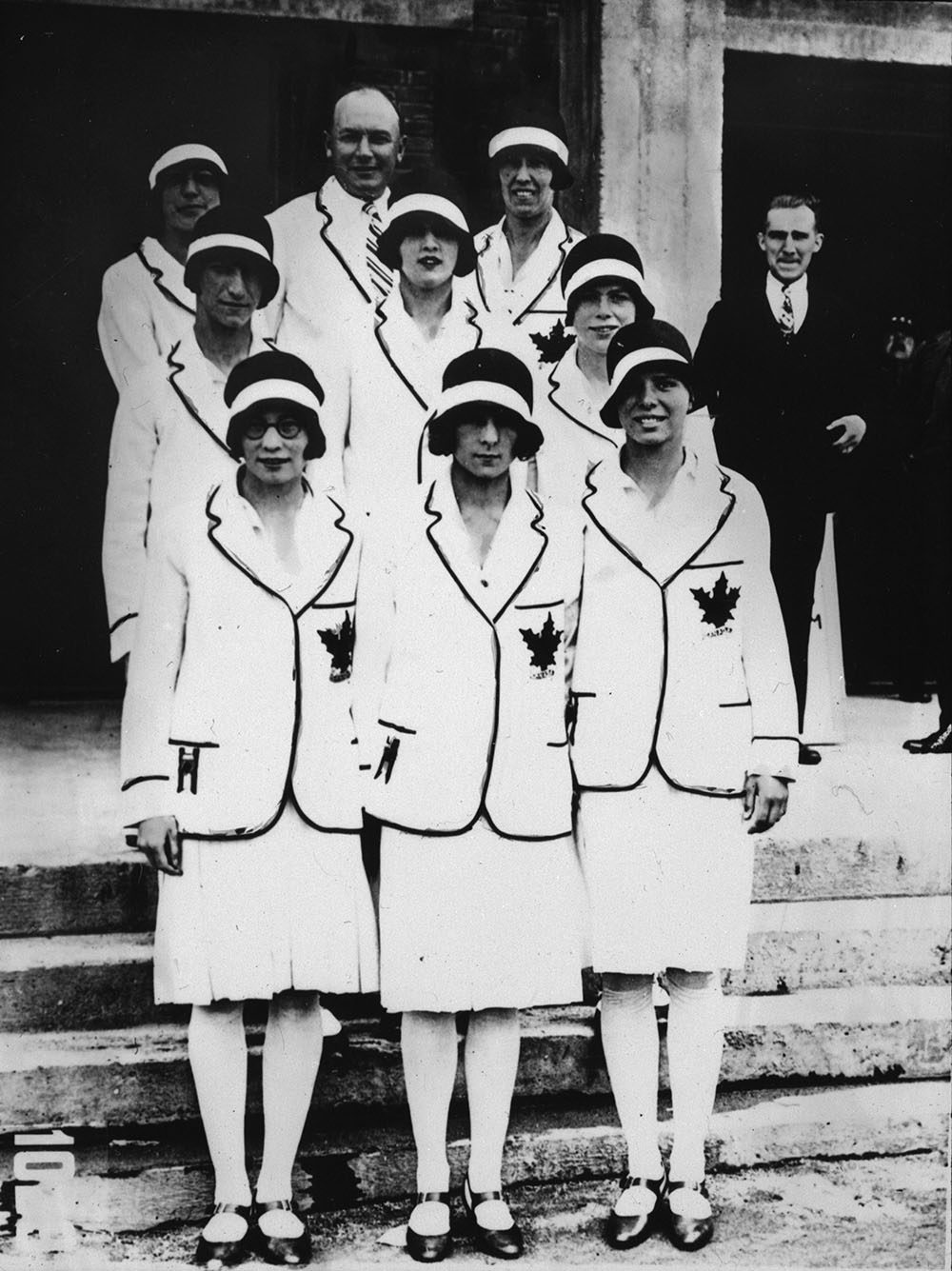
Despite the modern Olympic Games beginning in 1896, women were not allowed to compete in athletics until 1928. The team, consisting of Fanny Rosenfeld, Jean Thompson, Myrtle Cook, Florence Jane Bell, Ethel Smith, and Ethel Catherwood, made history by collectively winning four medals and competing in four events. Their dominance was particularly impressive given that women could only compete in five athletics events at the time.

The Matchless Six paved the way for future generations of Canadian women in athletics. They have since all been recognized individually in multiple halls of fame in Canada and in Parks Canada’s registry of National Historic Persons.

Photograph of six women dressed in white blazers and skirts posing for a photo. Four other individuals are present in the background.

The Matchless Six: Canadian women’s track and field team taking part in the 1928 Summer Olympics in Amsterdam. (a151001)

A Family of Olympians: 1912, 1960–1968

After qualifying for and competing in the 1912 Olympics, John “Army” Howard became the first Black Olympian to represent Canada (the first Black Canadian-born Olympian to medal was Raymond Lewis in 1932). Although his athletic career was put on hold while he served in the Canadian Expeditionary Force during the First World War, he got the chance to compete one more time for Canada at the 1919 Inter-Allied Games where he won bronze in the 100-metre event. Photos of the 1919 Inter-Allied Games can also be found in our collection.

His legacy continued through his grandchildren, Valerie and Harry Jerome, both of whom competed at the Olympics during the 1960s. Making their Olympic debut together in Rome 1960, the brother-sister duo made an impact on and off the track. They both won numerous medals at the National Championships, the Pan American Games, and the Commonwealth Games. However, it was Harry who made multiple Olympic appearances, winning bronze in the 100-metre event. Their family left an enduring mark on Canadian athletics and provided early representation for Black athletes on Team Canada.

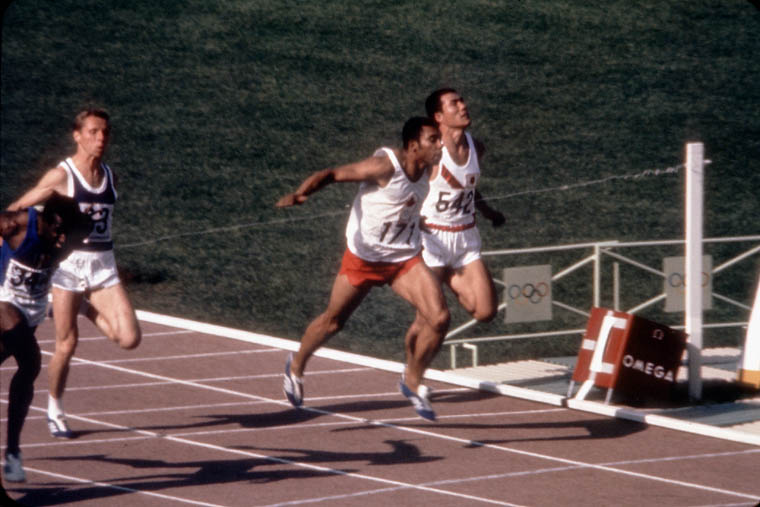
Photograph of three athletes running on a track across the finish line at the Olympics.

Harry Jerome competing at the 1968 Summer Olympics in Mexico. (a209764k)

Medal Droughts: 1912–1984 and 1936–2024?

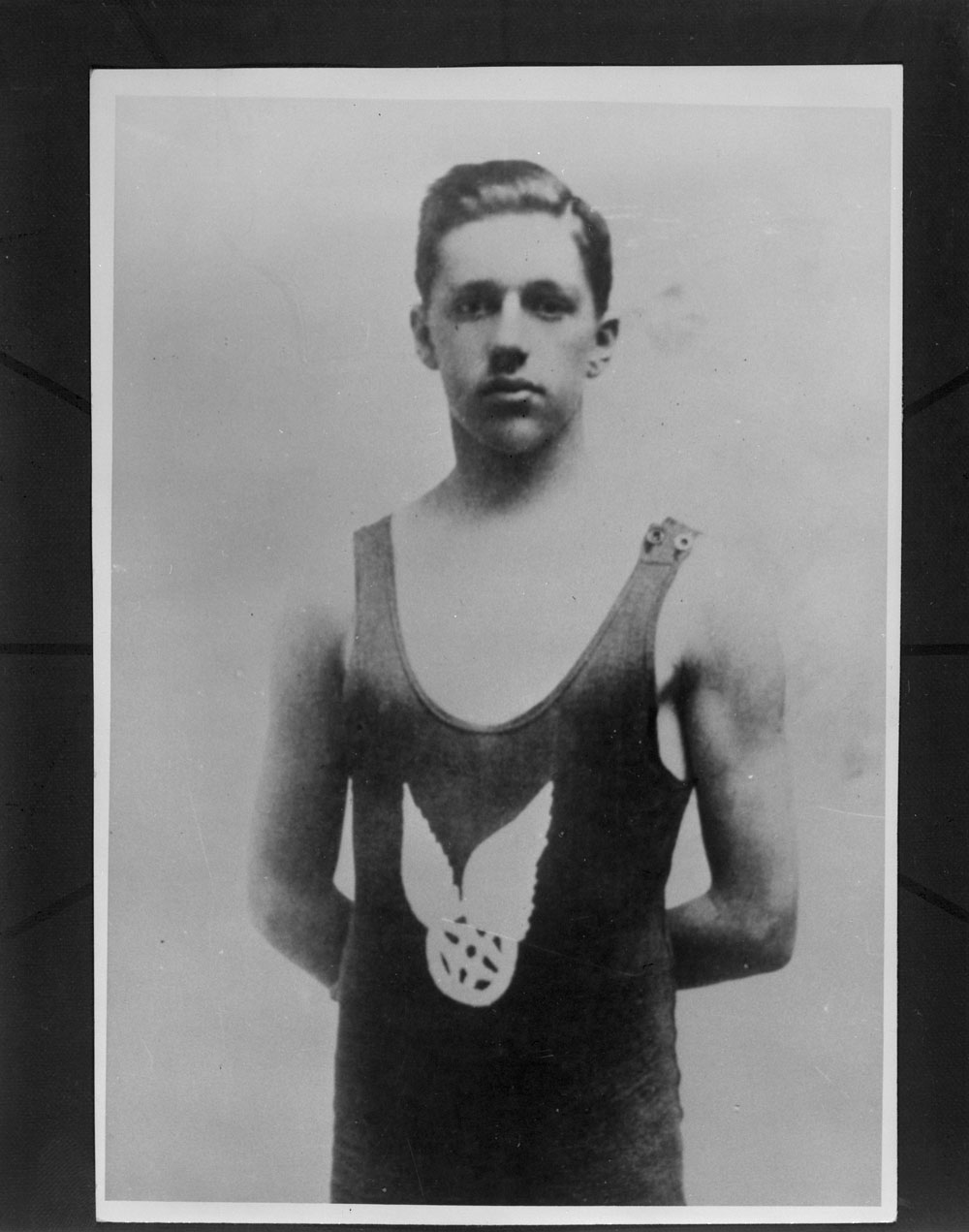
Sometimes medal droughts happen, but the important part is when they end. Canada has experienced two notable medal droughts, particularly in swimming and basketball. For decades, Canadian swimmers were shut out from the top of the podium, leaving George Hodgson as our sole gold medal winner—he won two gold medals and set four world records in 1912. With the outbreak of the First World War, Hodgson put his athletic career on hold to serve as a flight sub-lieutenant with the Royal Naval Air Service. In 1984, the 72-year drought ended spectacularly with golden finishes by Alex Baumann, Anne Ottenbrite (the first Canadian woman to win gold in swimming), and Victor Davis.

Photograph of a man in a swimsuit.

George Hodgson. (a050291)

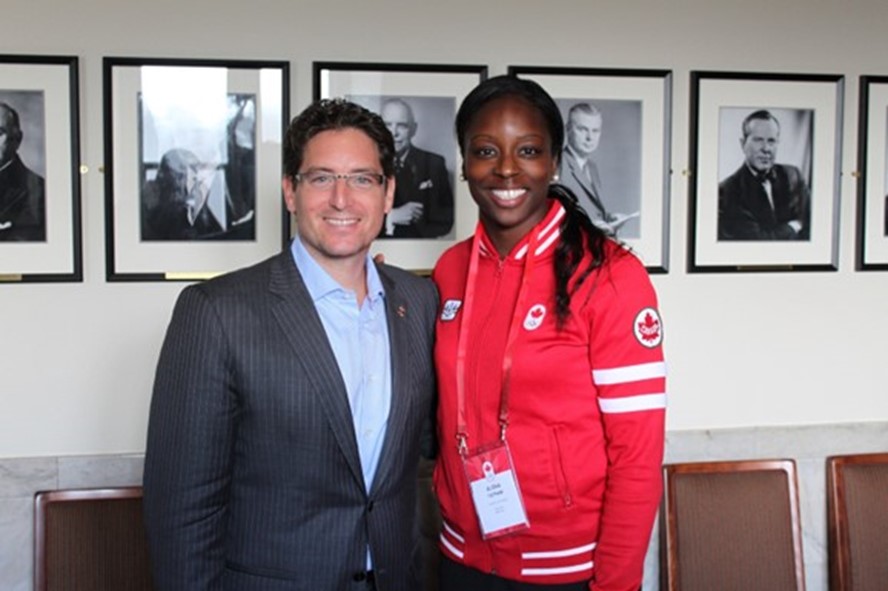
In basketball, Canadian teams have been working hard to end an 88-year drought. However, with recent success at the FIBA World Cup and the Pan American Games, both the men’s and women’s teams are suiting up for the Olympics together for the first time in over two decades. With Canadian players at an all-time high in the NBA and growing buzz about a new WNBA franchise coming to Canada in 2026, will 2024 be the year that Canadian basketball ends its medal drought?

Photograph of a man and a woman standing together.

Alisha Tatham, a member of the London 2012 women’s basketball team—the team’s first appearance since the Sydney 2000 Olympics. Credit: Jason Ransom. (MIKAN 5609841)

Paddling to the Podium: 1992–1996 and 2004–2012

Team Canada has an extensive history of success in paddle sports, winning a total of 69 medals at the Summer Games in rowing (introduced at the Paris 1900 Games) and kayaking (introduced at the Paris 1924 Games). So, it should come as no surprise that rowing ranks as the third most successful event for Canadians at the Summer Olympics, with kayaking coming in fourth.

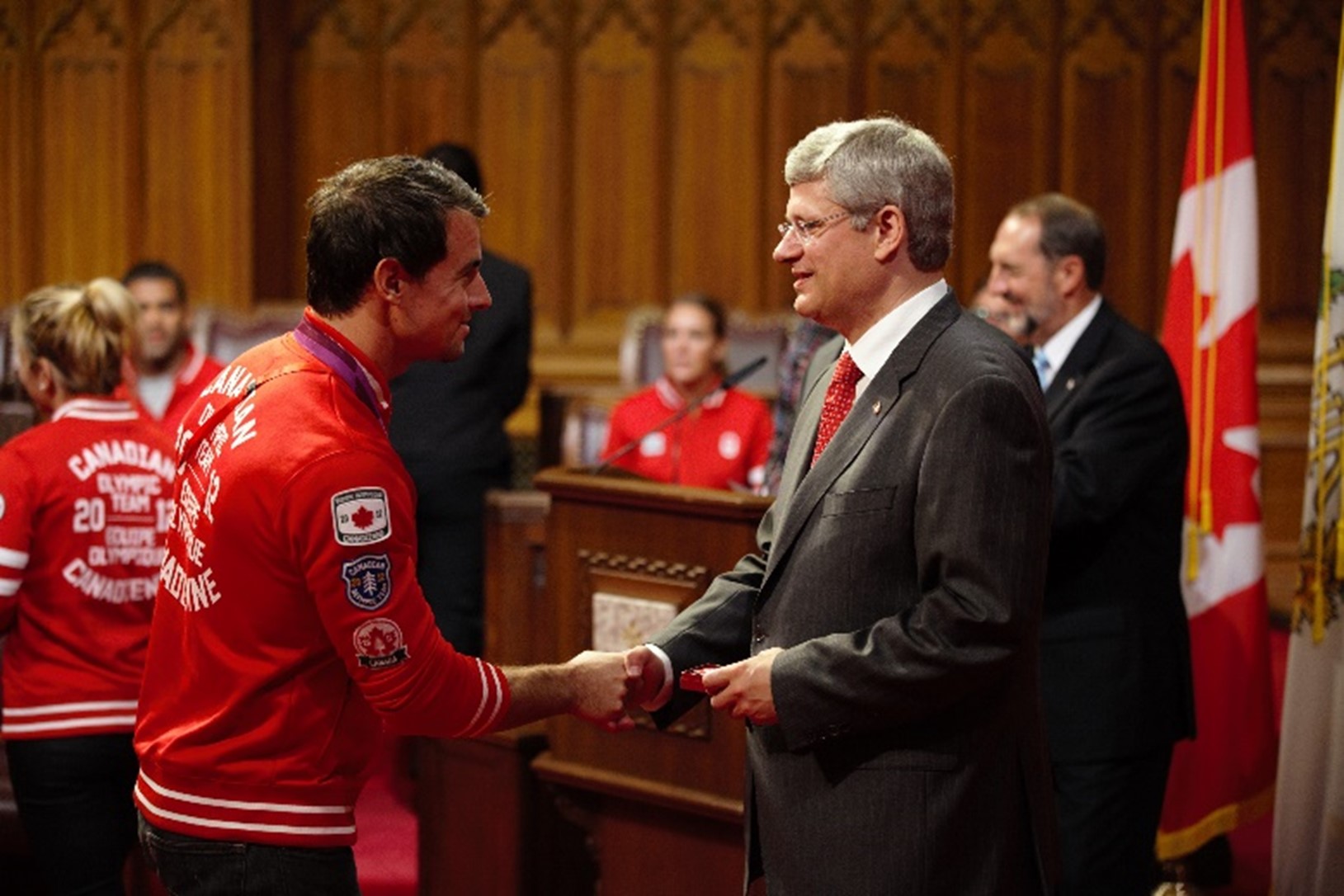
The most successful Canadian athletes in these sports have each earned four medals: Marnie McBean, Kathleen Heddle, and Adam van Koeverden. McBean and Heddle competed at Barcelona 1992 and Atlanta 1996, earning four medals in two games and the titles of triple gold medallists. Now a member of Parliament, kayaker van Koeverden earned four medals in three games and is often referred to as Canada’s most successful paddler.

McBean and Heddle’s golden achievements have earned them both induction into the Canadian Olympic Hall of Fame and Canada’s Sports Hall of Fame—a recognition van Koeverden should expect to receive as well.

Photograph of two men smiling and shaking hands.

Adam van Koeverden meeting with Prime Minister Stephen Harper after the London 2012 Olympics. Credit: Jason Ransom. (MIKAN 5609841)

Back-to-Back Appearances: 2000–2004 and 2020–2024

Competing in the women’s water polo event at Paris 2024, Team Canada is making their fourth appearance at the Summer Games. Earning their Olympic berth in dramatic fashion earlier this year, the women’s water polo team is looking to make some waves. While we eagerly wait to see how the team will do, let’s look back at the team from Sydney 2000 and their notable co-captain, Waneek Horn-Miller.

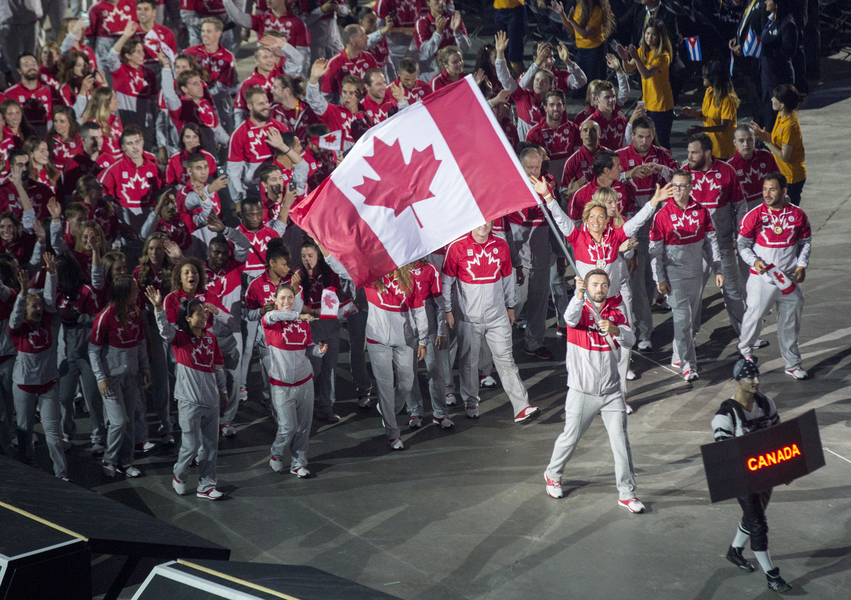
Known for her athletic skills and motivational speaking, Waneek Horn-Miller is one of Canada’s most influential women in sport. She’s also the first Mohawk woman to compete for Team Canada at the Olympics. Co-leading the first women’s Olympic water polo team in 2000 to their best-ever finish, she also competed at the 1999 Pan American Games and at the 2001 FINA World Championships. While Horn-Miller no longer competes, she continues to share her love for sports and community through her work as a sports commentator, brand ambassador, and public speaker. In addition to sharing her experiences of the Oka Crisis, Waneek is the director of the Storyboot Project and served as assistant chef de mission at the 2015 Pan American Games in Toronto.

Photograph of numerous athletes marching behind a man carrying a large Canadian flag.

Team Canada at the opening ceremony for the 2015 Pan American Games in Toronto. Waneek Horn-Miller can be seen in front with both of her arms stretched out wide. Credit: Deborah Ransom. (MIKAN 5603894)

While the hunt for the podium continues for popular sports like hockey, football, volleyball, and basketball, the games have yet to begin for newer sports like skateboarding, sport climbing, and breaking (making its debut). So, what’s in store for Team Canada? Which sports are you most excited to watch? And, who’s going to be the flagbearer for the closing ceremony?

Additional Resources


Sali Lafrenie is a Portfolio Archivist in the Private Archives Branch at Library and Archives Canada.
Images of Swimming and Pools now on Flickr

Swimming is an important survival skill. However, it wasn’t considered a sport or leisure activity until organized competitions were held in countries like Japan in the 1600s, and eventually in Europe in the 1800s. Men’s swimming was included in the 1896 Olympic Games, and women competed in the 1912 competitions, cementing its place as a sport. Various associations around the world were created to support and promote swimming as a leisure activity and sport. Canada was no different, in this regard.

Over time, a variety of pool facilities appeared across Canada, near natural bodies of water and purpose-built ones in more populated urban centres. Examples include in Vancouver near English Bay, Toronto’s Lakeshore Drive, and Montreal’s Bain Maisonneuve and Bain Généreux. Swimming and its facilities eventually evolved into places of fitness, hygiene, leisure and community gathering.