James Edward Tait, VC

By John Morden

Today on the blog series commemorating Canadian Victoria Cross recipients, we remember Lieutenant James Edward Tait, who was awarded the Victoria Cross one hundred years ago, in August 1918, for his actions on the battlefield in France.
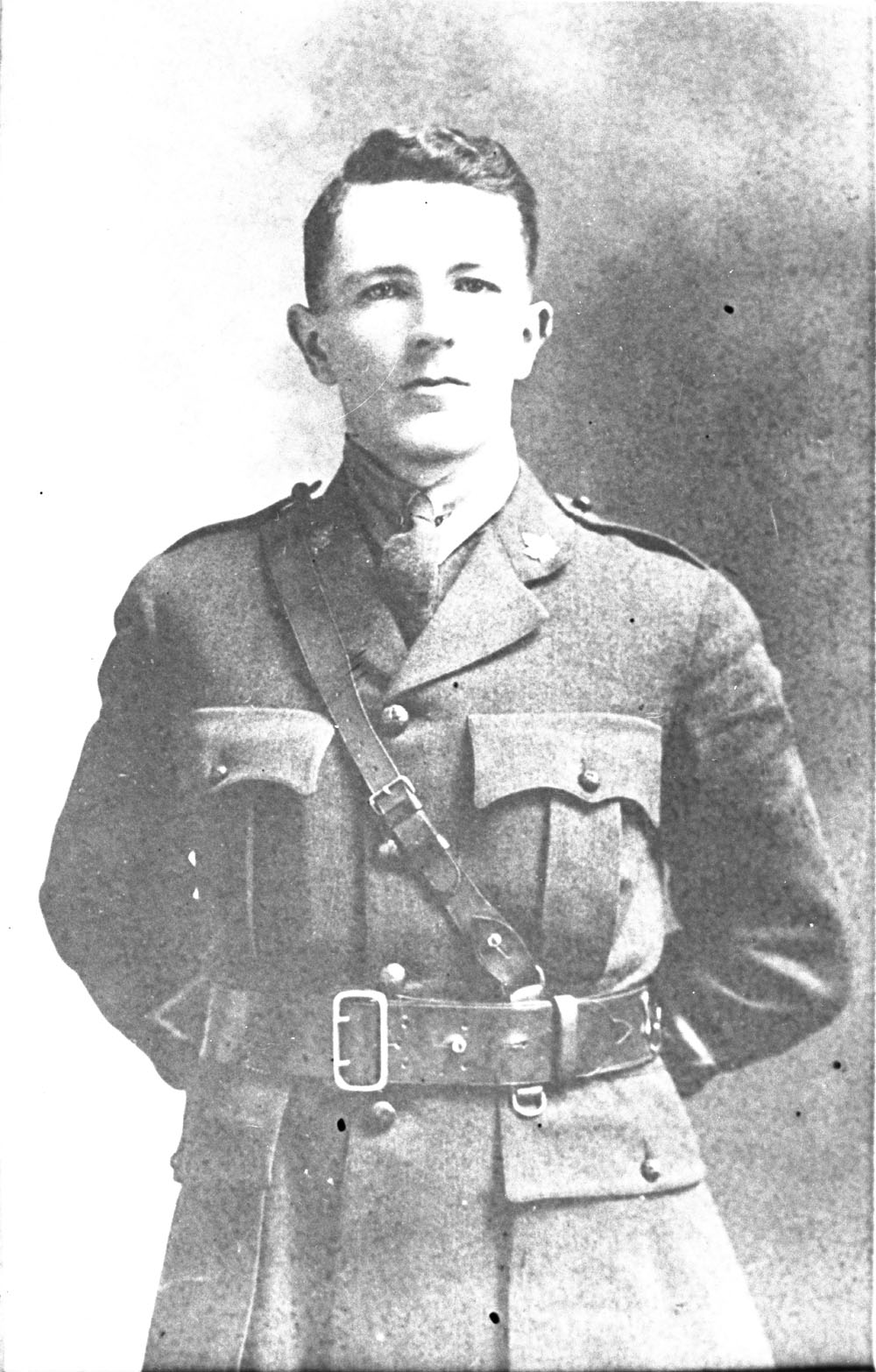
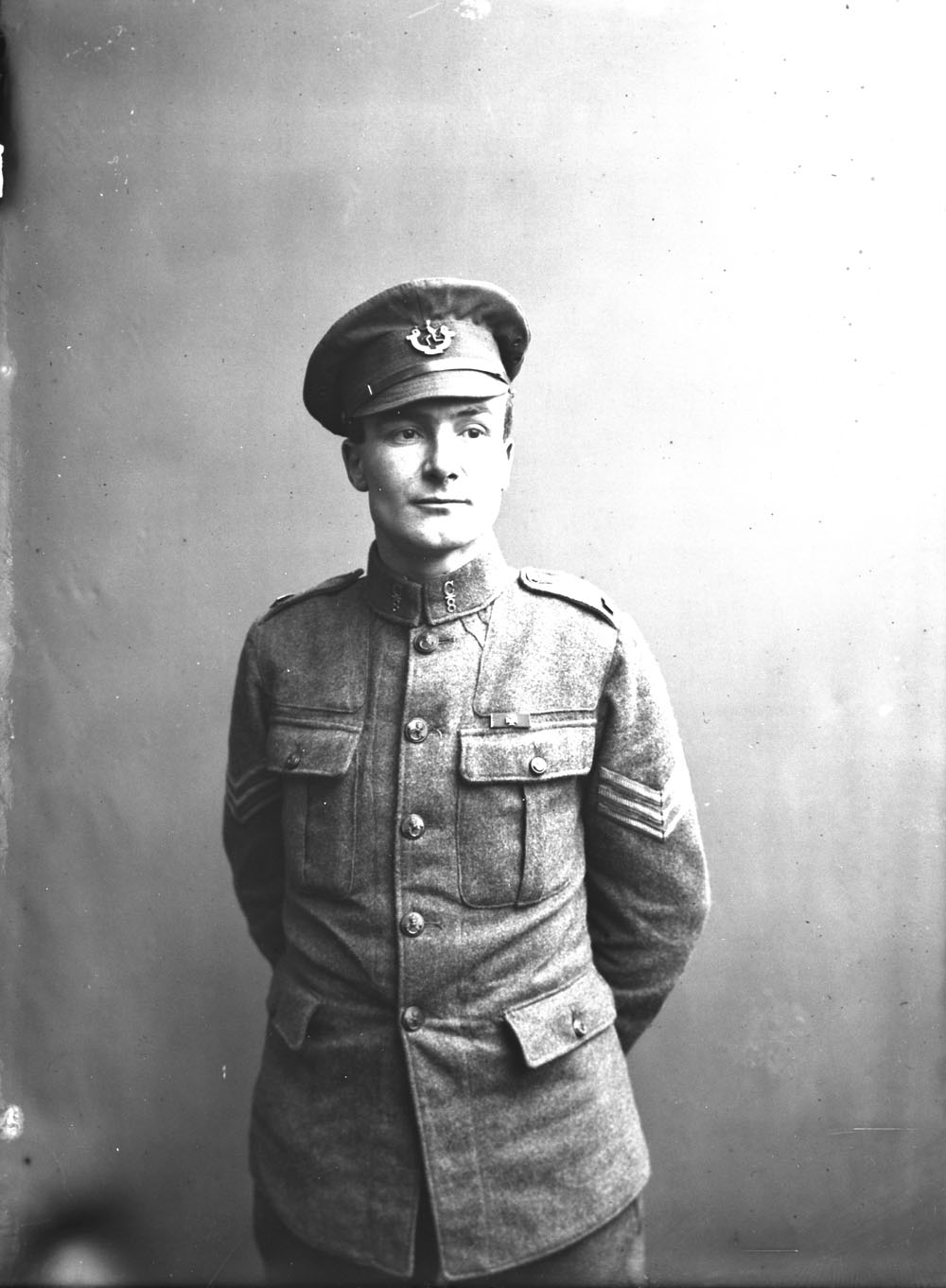
A black-and-white photograph of an officer wearing a Sam Brown belt, with his hands behind is back.

Lieutenant James Edward Tait, VC, undated (a006775)

Born on May 27, 1888, in Dumfries Scotland, James Edward Tait later immigrated to Winnipeg, Manitoba. Prior to the war, he was a civil engineer who was active in the 100th Winnipeg Grenadiers as militia. He also had prior military service, having served five years in the Imperial Yeomanry, four years in the Regimental Scouts and one year in a unnamed squadron. Tait enlisted in the 100th Battalion of the Canadian Expeditionary Force on January 22, 1916. He transferred to the 78th Battalion in the winter of 1917. He was wounded twice in 1917, on April 1 and September 16, and then again on April 21, 1918. On August 16, 1917, he was awarded the Military Cross.
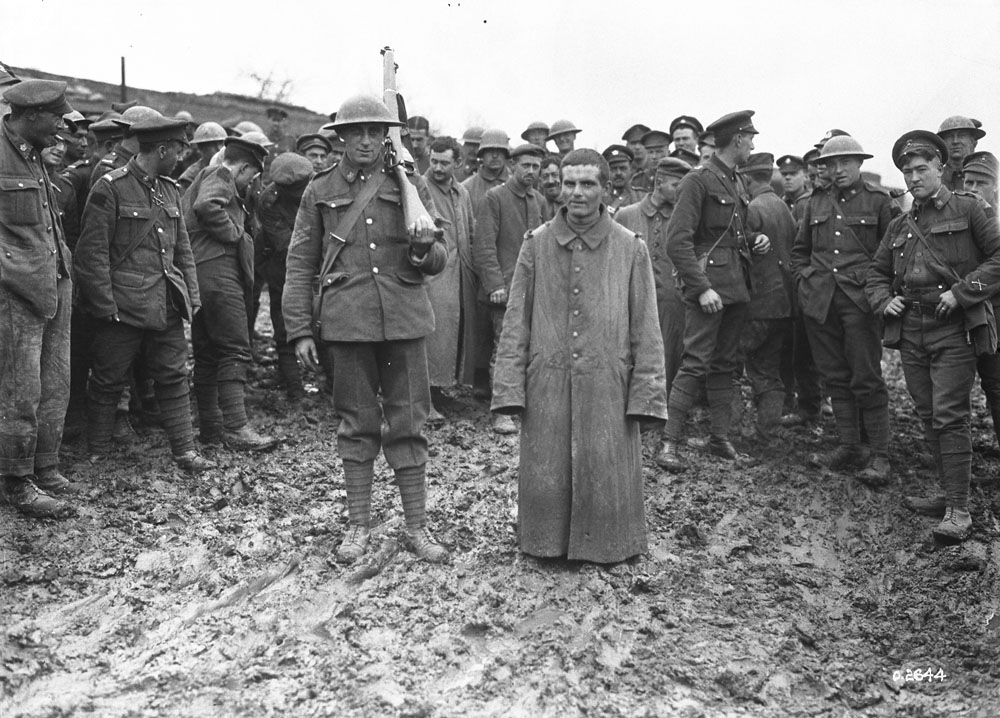
A black-and-white photo showing a group of soldiers surrounding a recently captured enemy combatant.

German prisoner captured by the 78th Battalion during a night raid, May 1918 (a002628)
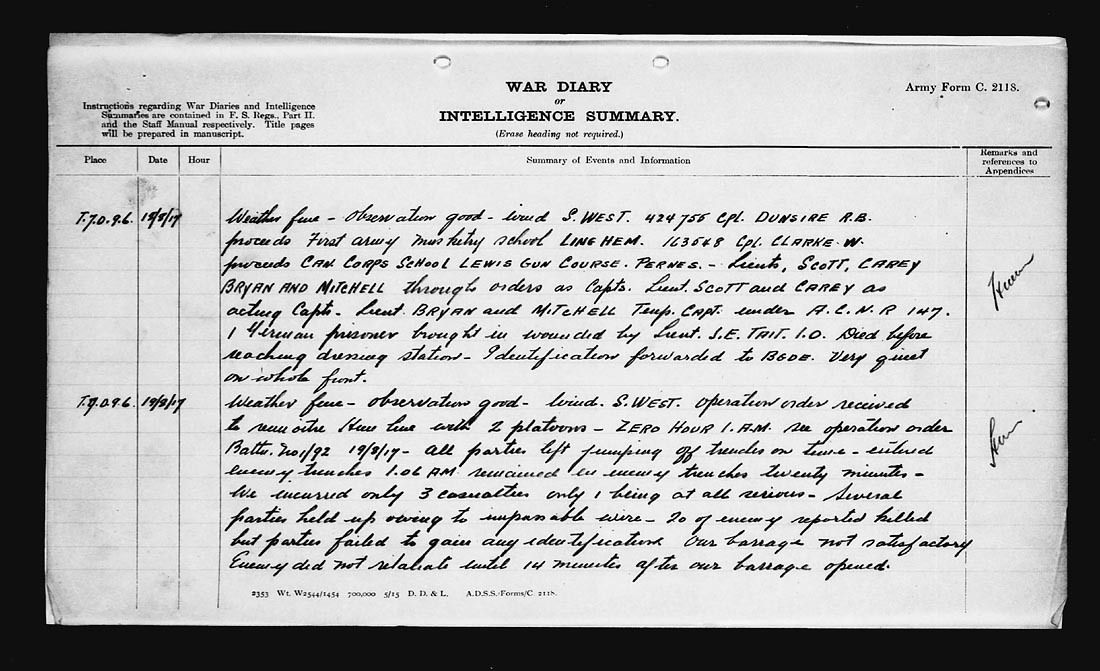
A handwritten description of the weather and events of the day.

War diary of the 78th Canadian Infantry Battalion for August 18, 1917, showing that James Edward Tait captured a German soldier. Tait is also mentioned in the war diary of September 17 (MIKAN 1883274)

Tait earned the Victoria Cross for his bravery on August 11, 1918. By this stage of the war, the Allies had begun the Hundred Days Offensive, their final push on the Western Front. On the first day of the Battle of Amiens, August 8, British and Canadian forces made massive gains in what German commanders later coined the “black day” of the German army. Over the next several days, German resistance stiffened. Tait’s unit came upon reorganized and strengthened German positions in France’s Beaucourt Wood. Here, the 78th was hampered by German machine gun fire. Tait continued to lead his men forward despite the shower of bullets. One German machine gun was still blunting the Canadian advance, so Tait charged the position himself, killed the German operating the position, and rallied his men. His actions are described in the London Gazette in September 1918:

“For most conspicuous bravery and initiative in attack. The advance having been checked by intense machine-gun fire, Lt. Tait rallied his company and led it forward with consummate skill and dash under a hail of bullets. A concealed machine-gun, however, continued to cause many casualties. Taking a rifle and bayonet, Lt. Tait dashed forward alone and killed the enemy gunner. Inspired by his example his men rushed the position, capturing twelve machine-guns and twenty prisoners. His valorous action cleared the way for his battalion to advance.”

Later that day, however, Tait was mortally wounded by a German shell. Nevertheless, he continued to give orders and rally his men until he died. Tait is buried in the Fouquescourt British Cemetery near the Somme, France. Today, Tait’s Victoria Cross is at the Glenbow Museum in Calgary.

Library and Archives of Canada holds the digitized service file of Lieutenant James Edward Tait.


John Morden is an honours history student from Carleton University doing a practicum in the Online Content Division at Library and Archives Canada.
Victoria Cross Recipients Alexander Picton Brereton, Frederick George Coppins, John Bernard Croak, Raphael Louis Zengel

By John Morden

Today we honour four Canadians who earned the Victoria Cross during the last campaign on the Western Front, known as the Hundred Days Offensive. They are Alexander Picton Brereton, Frederick George Coppins, John Bernard Croak and Raphael Louis Zengel.

Alexander Picton Brereton

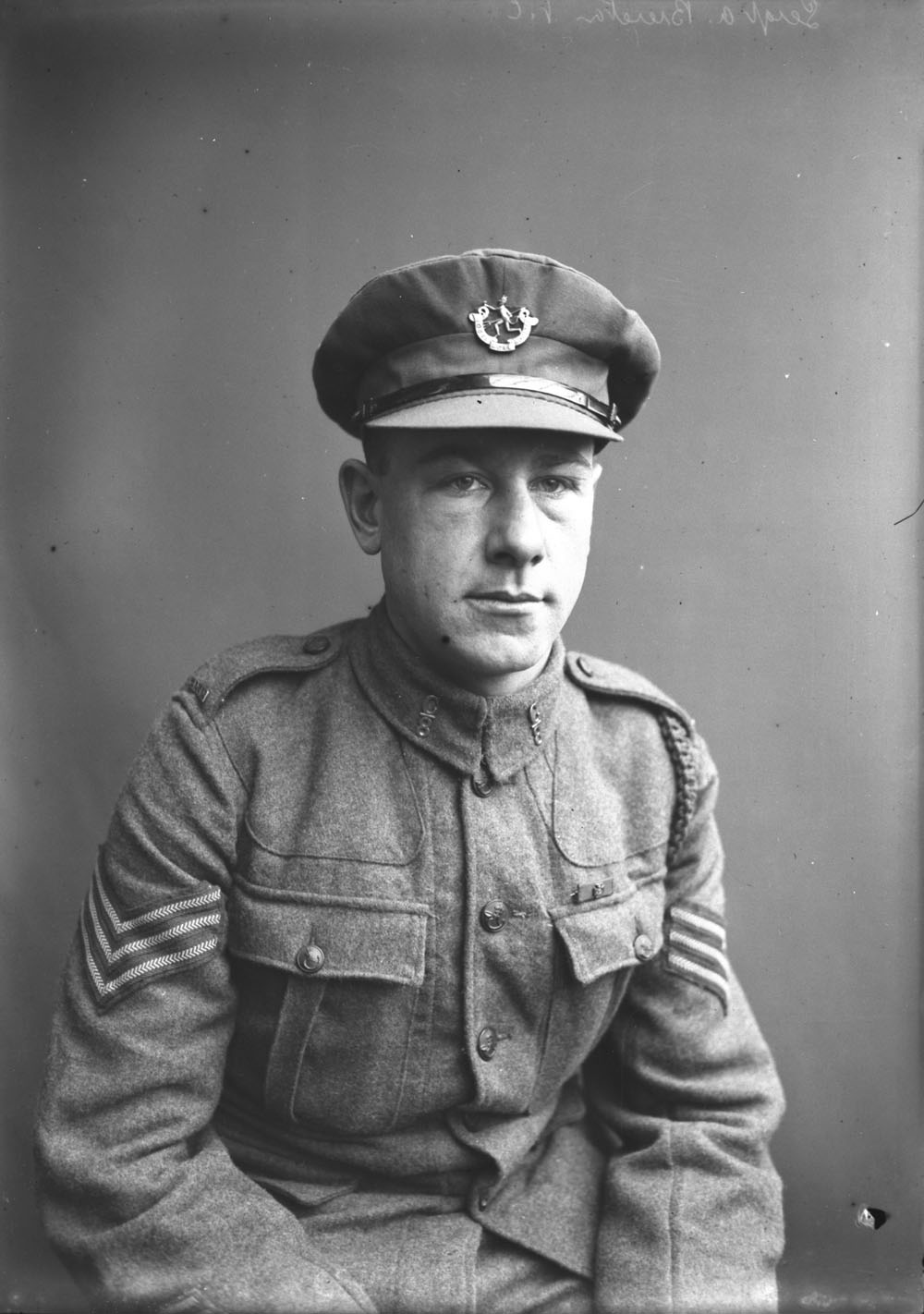
A black-and-white photograph of a seated soldier in uniform and cap.

Sergeant Alexander Picton Brereton, VC, 8th Battalion, undated (a006962)

Alexander Picton Brereton was born in Oak River, Manitoba, on November 13, 1892. Before enlisting in the 144th Battalion of the Canadian Expeditionary Force on January 31, 1916, Brereton worked as a barber and served in the militia. In April of 1917, he was transferred to the 8th Battalion. Brereton earned the Victoria Cross for his actions near Warvillers, France, on August 9, 1918. During an attack on German positions, Brereton and his men got caught in the open and were pinned down by heavy German machine-gun fire. With the most conspicuous bravery, realizing his unit faced certain destruction, Brereton single-handedly charged and captured a German machine-gun position. Brereton’s actions rallied his men to capture other German machine-gun nests. Brereton would survive the First World War and be discharged from the army on April 10, 1919. Brereton died on January 10, 1976, in Calgary, Alberta, where he was laid to rest in Elnora Cemetery.

Frederick George Coppins

A black-and-white photograph of a soldier in full uniform standing with his hands behind his back.

Sergeant Frederick George Coppins, VC, undated (a006765)

Born on October 25, 1889, in London, England, Frederick George Coppins served in the Royal West Kent Regiment before immigrating to Canada. Coppins enlisted with the Canadian Expeditionary Force much earlier than other Canadian soldiers. He joined the 19th Alberta Dragoons on September 23, 1914. By the time of the final Allied drive to victory in the summer of 1918, Coppins was a hardened veteran. Coppins was promoted to Corporal and transferred to the 8th Battalion, the same unit as Brereton. Coppins earned the Victoria Cross on August 9, 1918. Much like Brereton, Coppins and his men were held up by German machine-gun fire. Realizing the situation at hand, Coppins gathered a handful of men to attack a German machine-gun post. During the attack, Coppins was wounded and the rest of the men were killed. Yet, Coppins persisted and captured the position, taking several enemy soldiers prisoner. Despite his wounds, Coppins stayed in the field of battle until the Canadian objectives were secured. Coppins would miraculously survive four years of service and be discharged from the army on April 30, 1919. He died on March 30, 1963, in Livermore, California, at the age of 73.

John Bernard Croak

A candid black-and-white photograph of a soldier standing outdoors.

Private John Bernard Croak, VC, undated Photo from Directorate of History and Heritage.

John Bernard Croak was born on May 18, 1892, in Little Bay, Newfoundland. He then moved with his family to Glace Bay, Nova Scotia. Before the outbreak of war in the summer of 1914, Croak worked as a labourer. Croak joined the Canadian Expeditionary Force on August 7, 1915, and was assigned to the 55th Battalion. In April of 1916, he was transferred to the 13th Battalion. Croak earned the Victoria Cross for his actions at the battle of Amiens on August 8, 1918. During the Canadian attack on that day, Croak became separated from his unit. He encountered a German machine position and, on his own, captured the entire gun crew. Although he was wounded later, he remained in the field. After reuniting with his unit, Croak came upon a position holding numerous German machine guns. In response to this threat, Croak, again on his own, charged the German position, soon to be followed by his comrades. The charge was successful, as they captured three machine guns and the German soldiers operating them. But Croak suffered severe wounds and died minutes later in an action that was “an inspiring example to all.” Croak’s final resting place is in Hangard Wood British Cemetery near the Somme in France.


Raphael Louis Zengel

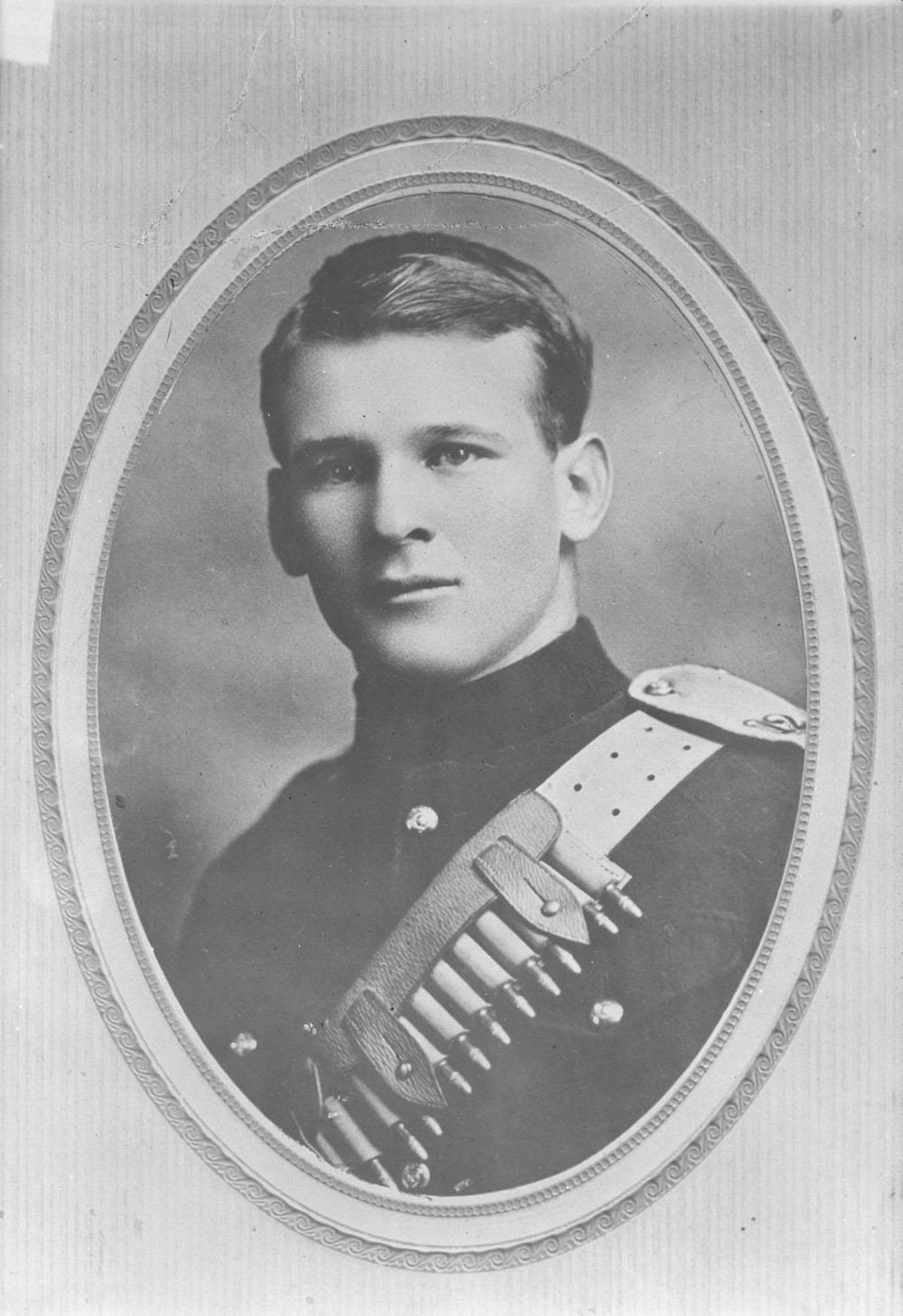
A black-and-white bust photograph of a soldier wearing a light coloured non-commissioned officer (NCO) belt with bullets across his chest.

Sergeant Raphael Louis Zengel, VC, 5th Battalion, 1914 (a006796)

Born in Faribault, Minnesota, on November 11, 1894, Raphael Louis Zengel was one of several American-born Victoria Cross recipients. As a young boy he moved with his mother to Plunkett, Saskatchewan. Before the war, Zengel worked as a farm labourer. In December of 1914, shortly after the outbreak of hostilities, Zengel enlisted in the 45th Battalion of the Canadian Expeditionary Force. He was later transferred to the 5th Battalion. On October 17, 1917, he was promoted to Sergeant.

Zengel earned the Victoria Cross on August 9, 1918, during the battle of Amiens. In that action, Zengel was leading his platoon in an attack when he noticed a gap had occurred on his flank. Under a hail of bullets from German machine-gun fire, Zengel charged ahead of his unit and captured the German machine-gun position. Later that day, a German shell knocked him unconscious. After coming to, Zengel continued to lead his men. His “work throughout the attack was excellent.” Though wounded in September, Zengel would live to see the end of the war on his 24th birthday and his discharge from the army on April 24, 1919. On February 27, 1977, at the age of 82, Zengel died in Errington, British Columbia.

Library and Archives Canada holds the digitized service files of Brereton, Coppins, Croak and Zengel.


John Morden is an honours history student from Carleton University doing a practicum in the Online Content Division at Library and Archives Canada.

Lieutenant Jean Brillant, Corporal Herman James Good, Corporal Harry Garnet Bedford Miner

By John Morden

Today, Honouring Canada’s Victoria Cross Recipients series remembers the first three soldiers to receive the Victoria Cross medal during Canada’s Hundred Days campaign: Jean Brillant, Herman James Good and Harry Garnet Bedford Miner.

Lieutenant Jean Brillant

A black-and-white photograph of a soldier in uniform looking straight at the camera. He is standing behind two other men in uniform whose faces are partially visible in the foreground. There is a tree in the background.

Lieutenant Jean (John) Brillant, VC, MC, June 1918 (c009271)

Born on March 15, 1890, in Assemetquaghan, Quebec, Lieutenant Jean Brillant served in the Canadian militia and as a telegraph operator before enlisting in the 189th Battalion of the Canadian Expeditionary Force on January 11, 1916. Brillant was later transferred to the 22nd French Canadian Battalion. In May 1918, Brillant successfully led a raid that earned him the Military Cross (MC). Early in the battle of Amiens, the first major action of the 100 days’ offensive, Brillant earned the Victoria Cross for his acts of heroism on August 8 to 9, 1918 outside Meharicourt, France. During this action, with his company pinned down by machine-gun fire, Brillant charged the position on his own and captured the German machine gun. Despite being wounded, he rallied two platoons, and together they captured another German machine-gun post. One hundred and fifty German soldiers were taken captive and 15 machine guns were seized. Brillant was wounded for a second time. When a German artillery piece was shelling Brillant’s units, he again led his men against the position and was wounded for a third time, eventually collapsing from exhaustion and loss of blood. Brillant would die of his wounds the next day, August 10, 1918. Read the description of his actions in the London Gazette. Brillant’s final resting place is in Villers-Bretonneux Military Cemetary near the Sommes, France.

Corporal Herman James Good

A black-and-white photograph of a soldier in uniform looking straight at the camera and wearing a large beret.

Corporal Herman James Good, VC, undated (a006663)

Corporal Herman James Good was born on November 29, 1887 in Bathurst, New Brunswick. Prior to the First World War, Good was a farmer. He joined the 55th Battalion of the Canadian Expeditionary Force on June 29, 1915. Good was later transferred to the 13th Royal Highlanders of Canada Battalion on April 15, 1916. Despite suffering from shell shock, he would continue to serve until the end of the war. On August 8, 1918, Good earned the Victoria Cross for his actions on the first day of the battle of Amiens. During this action, Good’s unit had been stalled by three German machine guns. In response to this, Good charged the position of his own accord, killed several German soldiers and captured the rest. Later in the day, Good stumbled upon a German artillery battery. He, along with three other men, captured the gunners and artillery. Good would survive the war and live a long life afterward. He passed away at the age of 81 in his hometown of Bathurst on April 18, 1969.

Corporal Harry Garnet Bedford Miner

Black-and-white photograph of a solider in uniform sitting in a chair with his hands crossed and looking at the camera.

Corporal Harry Garnet Bedford Miner, VC, undated. Source Directorate of History and Heritage (http://www.cmp-cpm.forces.gc.ca/dhh-dhp/index-eng.asp)

Born on June 24, 1891 in Cedar Springs, Ontario, Corporal Harry Garnet Bedford Miner worked as a farmer prior to the outbreak of war in the summer of 1914. In November of 1915, Miner joined the 142nd Battalion of the Canadian Expeditionary Force. He was later transferred to the 58th Battalion and would serve in this unit for the remainder of his war. Miner won the French Croix de Guerre military medal in 1917 for his actions in a mission from Lens, France. Miner’s deeds on the battlefield on August 8, 1918 earned him the Victoria Cross. On this day, despite suffering a severe wound, Miner charged and captured a German machine-gun nest, killed the soldiers operating the position and began firing at the enemy. Later that day, with two comrades, he captured another German machine-gun position, as well as a bombing post. Unfortunately, Miner would die of his wounds later that day. Miner is buried in Crouy British Cemetery near the Somme, France.

Library and Archives Canada holds the complete service files for Lieutenant Jean Brillant, Corporal Herman James Good, and Corporal Harry Garnet Bedford Miner. Find your family member who fought in the First World War by searching the personnel records of the First World War database.


John Morden is an honours history student from Carleton University doing a practicum in the Online Content Division at Library and Archives Canada.
Images of Cruises now on Flickr

Cruises are trips taken on ships or boats for leisure and may include stops along the way for vacation activities.

A black-and-white photograph of two girls and four boys sitting on the foredeck of the motorboat Queen.

Children on board the motorboat Queen for an all-day cruise from Waskesiu to Kingsmere Portage, Prince Albert National Park, Saskatchewan [MIKAN 3232476]

The first passenger cruise services began in Europe during the 1840s. Peninsular & Oriental Steam Navigation Company (P&O) initially offered a few stops in the Mediterranean Sea and the United Kingdom. P&O underwent rapid expansion during the second half of the 19th century and into the early 20th century, and featured more and more destinations around the world.

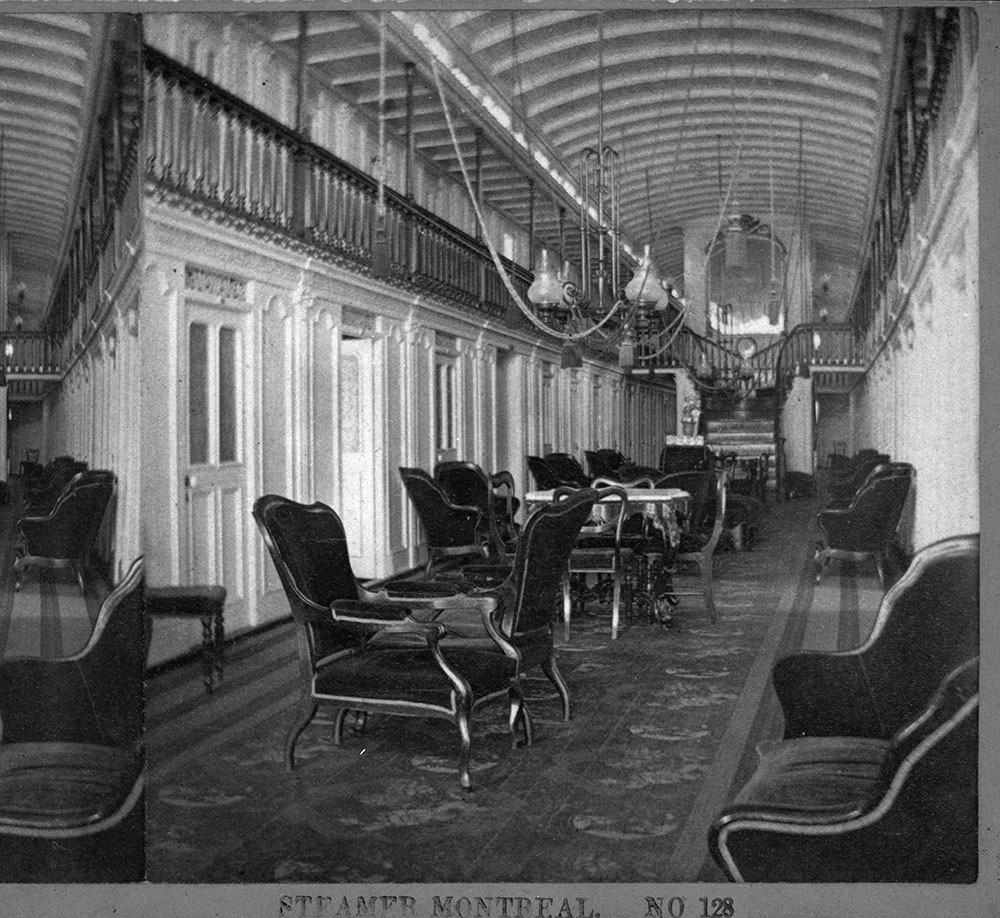
A black-and-white photograph of the interior of the steamer Montreal, showing a large carpeted sitting room with numerous cushioned chairs.

Interior of the steamer Montreal [MIKAN 3380611]

The company was the predecessor for today’s modern cruise lines, which cross the Atlantic and Pacific oceans, and travel the East and West coasts of Canada and the rest of North America. Canadians have access not only to ocean destinations, but also to an abundance of lake and river cruises.

A colour photograph of a boy playing shuffleboard, watched by a man and a woman on the Canadian Pacific Railway cruise ship Assiniboia.

Passengers play shuffleboard on the Canadian Pacific Railway cruise ship Assiniboia, Georgian Bay, Ontario [MIKAN 4312065]

Visit the Flickr album now!

The road to peace: Canada’s Hundred Days

By Emily Monks-Leeson

After years of static trench warfare, the Allies’ Hundred Days Offensive, which took place over the final 100 days of the First World War, succeeded in breaking the trench line and returning the belligerents to warfare on open ground. A rapid series of Allied victories ultimately pushed the Germans out of France and behind the Hindenburg Line, leading to the Armistice of November 11, 1918.

Following the successful attack on Vimy Ridge, the Canadian Corps did not lose a significant offensive operation for the remainder of the First World War. Having earned their reputation as “shock troops”, they were put into the line in the most difficult battlefields. As British Prime Minister David Lloyd George later wrote in his memoirs, “Whenever the Germans found the Canadian Corps coming into the line they prepared for the worst.” True to form, during the period from August 8 to November 11, 1918, the four Canadian Divisions of roughly 100,000 men caused the defeat or retreat of 47 German divisions or one-quarter of Germany’s fighting forces on the Western Front. Canadians fought at Amiens, Arras, the Hindenburg Line, Canal du Nord, Bourlon Wood, Cambrai, Denain and Valenciennes. These battles, which were instrumental in the defeat of the German Army, came to be known as “Canada’s Hundred Days”. In the final month of the war, Canadian troops engaged retreating German forces in a running series of battles over 70 kilometres, ending at Mons, Belgium, on November 10 to 11, 1918. The location of this final battle was highly symbolic for the Allies, as it was at Mons that the British had fought the Germans for the first time on August 23, 1914.

A black-and-white photograph showing a large group of German soldiers milling around between a village and a river or canal. The buildings in the background are mostly destroyed.

German prisoners captured by Canadians after the Battle of Amiens, August 1918 (a002858)

While Canadian successes were widely acknowledged, they came at a high cost: in the final hundred days, Canada suffered fully 20 percent of their total battle-sustained casualties of the war. Both the loss of lives and the victories of battle in Canada’s Hundred Days are commemorated on the le Quesnel Memorial, the Dury Memorial and the Bourlon Wood Memorial. The Canadian liberation of Mons is marked by a plaque at the City Hall of Mons.

A black-and-white photograph of stretcher-bearers and medical personnel caring for wounded soldiers while other soldiers are standing around in the background.

The wounded arrive at a Canadian field dressing station, Battle of Amiens, August 1918 (a002930)

Thirty Canadian soldiers were awarded the Victoria Cross, the Commonwealth’s highest award for gallantry, during Canada’s Hundred Days. Library and Archives Canada’s Discover Blog series, First World War Centenary: Honouring Canada’s Victoria Cross recipients will remember each of them in the next 100 days, leading up to the armistice on November 11.


Emily Monks-Leeson is an archivist in Digital Operations at Library and Archives Canada.

The mystery of the Franklin expedition

By Catherine Butler

The lost expedition

The story of the lost Franklin expedition is well known to many Canadians. Led by Sir John Franklin, the expedition comprised 24 officers and 110 men and set sail from Greenhithe, England, in May 1845 in search of the Northwest Passage. On board the HMS Terror and the HMS Erebus, the voyage initially progressed relatively smoothly.

The crew made it to the Whale Fish Islands off the coast of Greenland to stock up on supplies, and arrived in Baffin Bay in July 1845. There, the captains of two whaling ships, the Prince of Wales and the Enterprise, saw the crew while waiting for favourable conditions to cross Lancaster Sound. This was the last time they were ever seen.

What happened next is as horrifying as it is legendary. The crews of the Erebus and Terror spent the winter of 1845–1846 on Beechey Island, where three crew members died and were buried. Things would only get worse from there. In September 1846, the ships got stuck in ice off the coast of King William Island, where they remained for the winter and spring of 1847. By June 1847, Sir John Franklin was dead. The remaining crew, now captained by Francis Crozier, spent the rest of 1847 stuck in the ice, unable to continue their voyage.

By April 1848, the Erebus and the Terror were abandoned and the remaining crew set off on foot for the mainland. All the men perished along the way, and it would be years before anyone would learn of their fate.

Unlocking the mystery

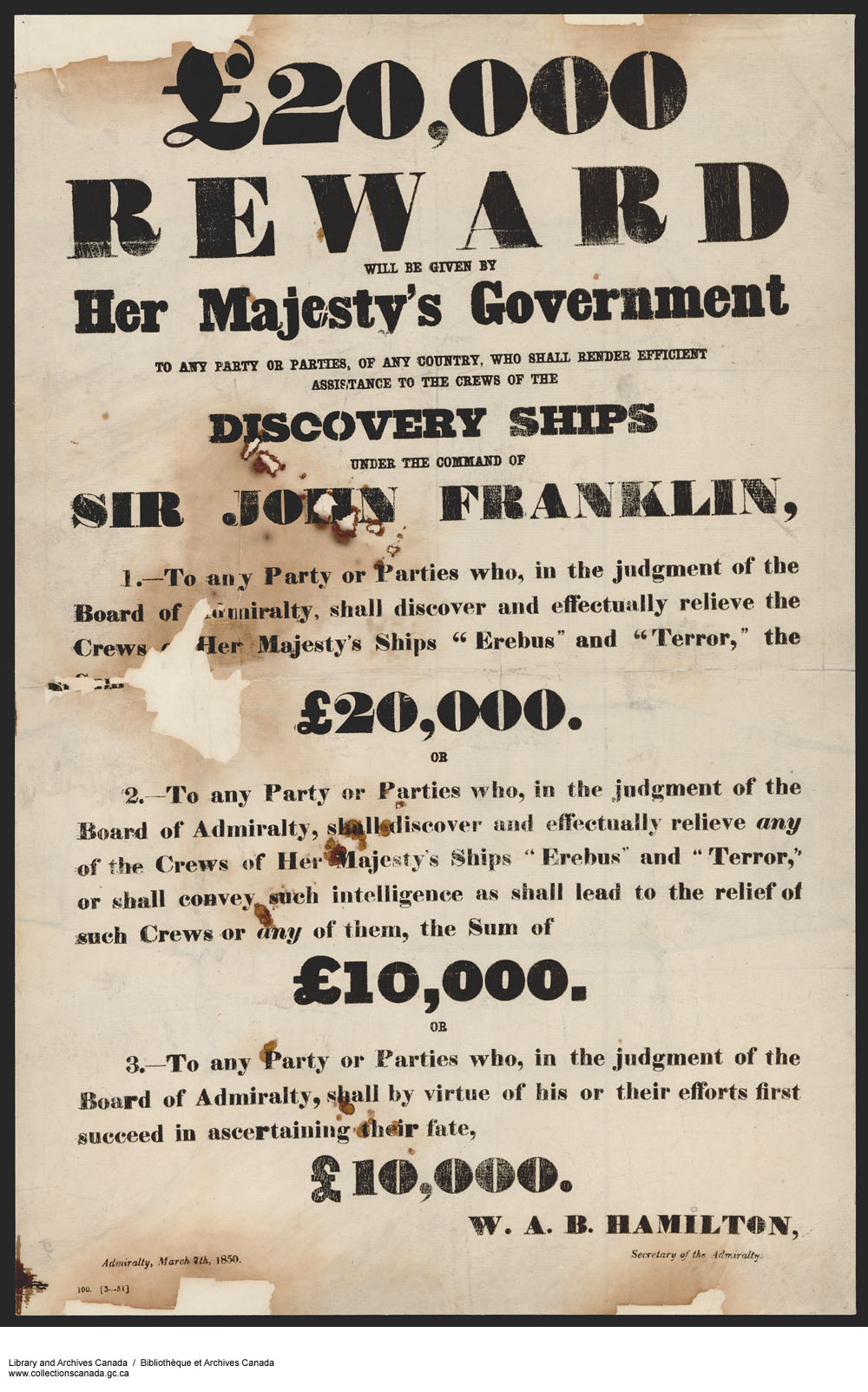
In the years immediately following the expedition, when no word from the crew was received, the British government made efforts to locate the men, offering rewards for information about their whereabouts or their discovery. The first mission dispatched to search for the Franklin expedition set off in 1848. The mission failed. No sign of the lost men emerged until 1850, with the discovery of their winter camp at Cape Riley and the graves of the men who died during the first winter on Beechey Island.

Poster offering a £20,000 reward for the discovery of the Franklin expedition.
£20,000 reward for the discovery of the missing Franklin expedition, March 7, 1850 (e010754422)

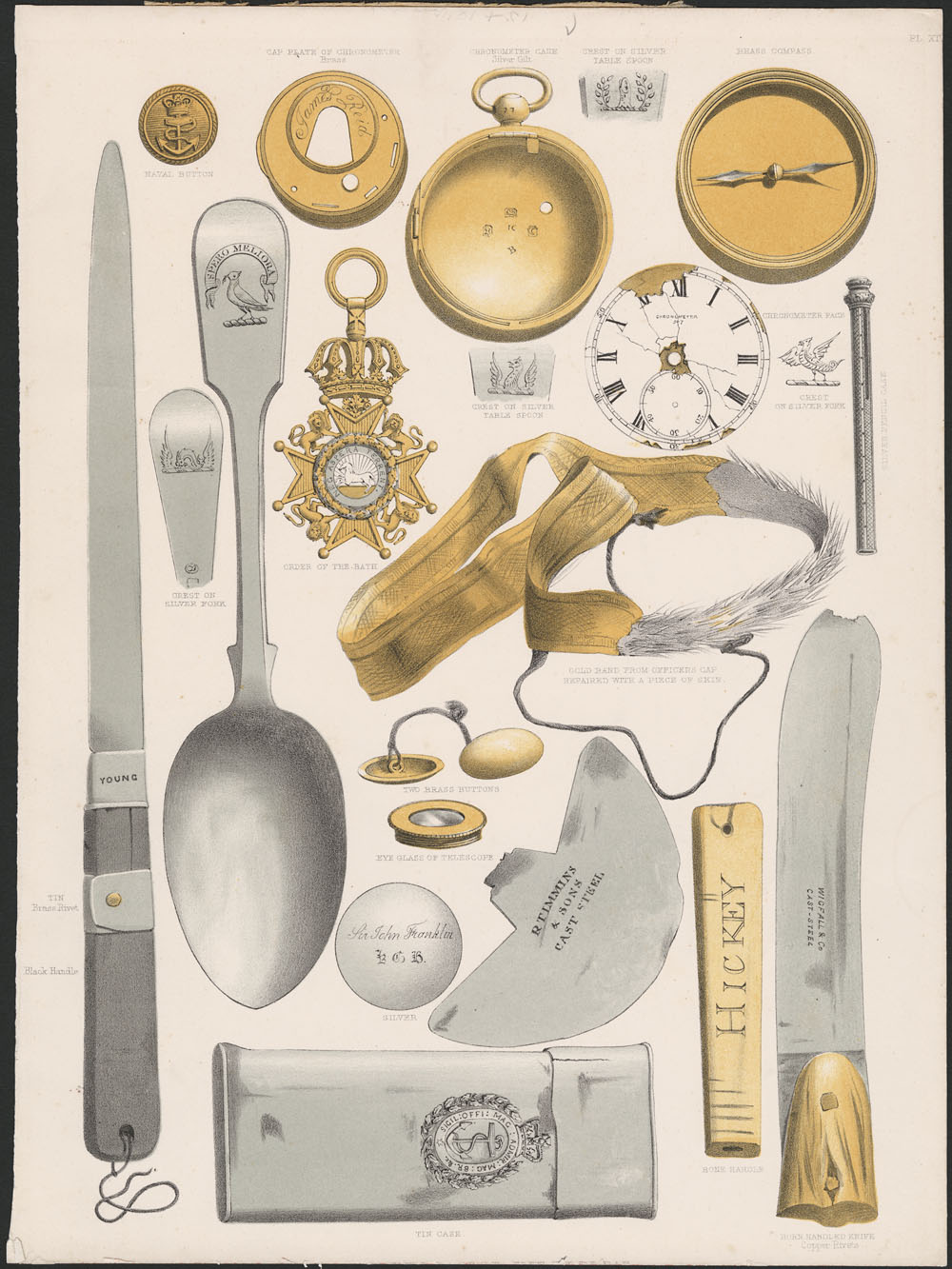
During an 1854 expedition sponsored by the Hudson’s Bay Company, John Rae arrived in the Boothia Peninsula, where he met an Inuit man who told him of a group of white men who had starved to death a few years earlier at the mouth of a large river. After speaking with a number of other Inuit people from the area, Rae was able to identify the Back River as the likely site of the sighting. During this voyage, Rae acquired a number of relics belonging to the lost expedition, including inscribed silverware.

Drawing of a number of different items recovered during various search operations dispatched by the British government to locate the lost Franklin expeditions. Items include silverware, blades, pocket-watches, knives and flasks.
Relics of the Franklin expedition, ca. 1845 (e010958396)

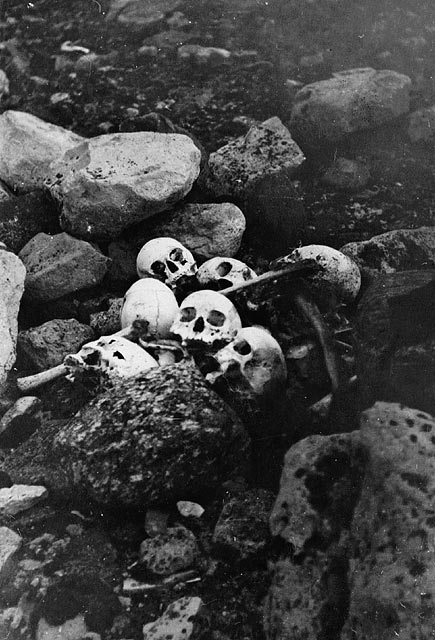
Throughout the years, numerous expeditions sought to locate the lost ships and recover the bodies of the crew. RCMP patrols, intrepid travellers and archeologists attempted to uncover the fate of the men and to locate the abandoned ships. Graves, skulls and countless artifacts were located, but the ships remained hidden. Crews would search for ships, but it would take nearly 170 years for them be found.

Black-and-white photograph depicting 5 skulls against black rocks. The skulls were found in 1945 during an expedition by William Skinner and Paddy Gibson.
Skulls of members of the Franklin expedition discovered and buried by William Skinner and Paddy Gibson in 1945 (a147732)

Uncovered at last

In 2008, the Canadian government launched a renewed effort to locate the wreckage of the Franklin expedition’s lost ships. Working more closely with Inuit historians and local communities, these efforts would soon pay off. In September 2014, the HMS Erebus was discovered near King William Island in the Queen Maud Gulf. Locating this ship, which had eluded so many experts for so many years, was made possible largely because of the oral histories known to historian Louie Kamookak.

Almost exactly two years later, the wreckage of the HMS Terror was located, thanks in large part to Sammy Kogvik, an Inuit hunter and Canadian ranger who joined the crew of the Arctic Research Foundation that lead search and recovery efforts. Without the assistance and knowledge of local Inuit communities, it is quite possible that the abandoned ships might never have been located.

Find out more

Library and Archives Canada holds a number of archival records relating to the search for the lost expedition, including journals kept by Francis McClintock during his four Arctic expeditions in search of Sir John Franklin between 1848 and 1859.

For more information on the importance of oral histories and Inuit knowledge, David Woodman’s Unravelling the Franklin Mystery: Inuit Testimony is an excellent source (OCLC 897576712)


Catherine Butler is a Reference Archivist in the Public Services Branch at Library and Archives Canada.