Library and Archives Canada Blog

This is the official blog of Library and Archives Canada (LAC).

Library and Archives Canada Blog

Images of Cheese now on Flickr

Cheese making in Canada can trace its origins to the early 1600s with the introduction of European, milk-producing cattle at settlements like Quebec City. Over time, as more settlers arrived, so too did more cattle and family cheese recipes. Today Canadians benefit from two types of recipes introduced in the 17th century—the soft-ripened cheeses from France, and the harder types, such as Cheddar, from the United Kingdom.
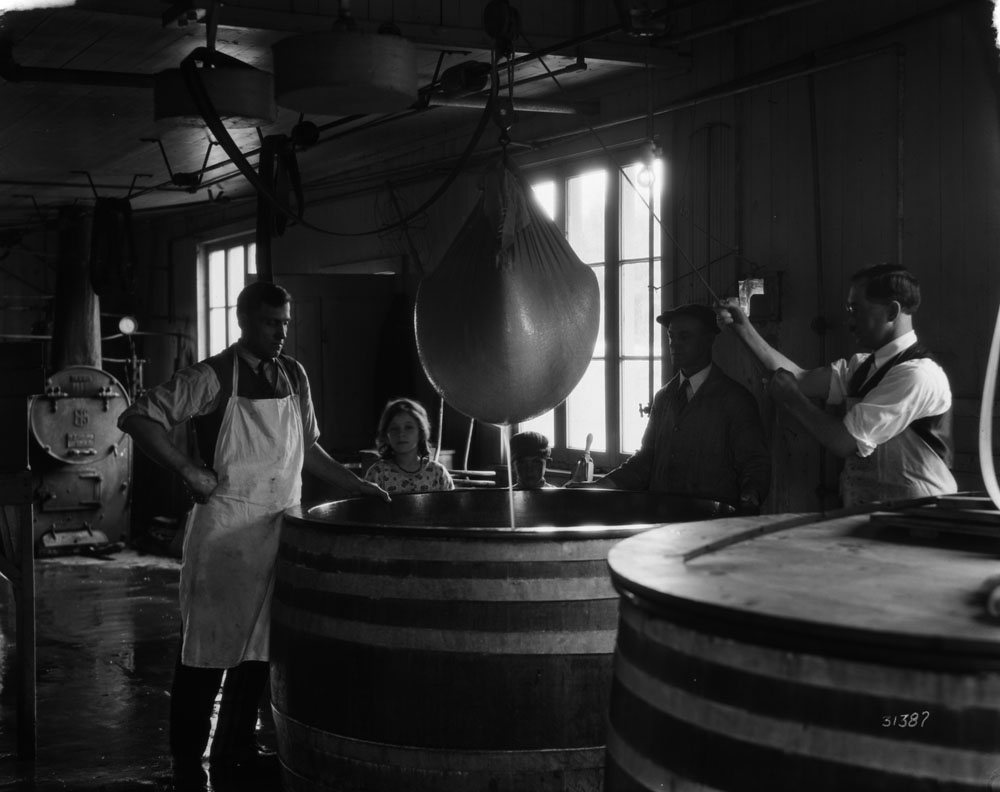
A black-and-white photograph of a man using a hoist to lift cheese from a vat. Two other men, a girl and a boy watch from behind the vat.

Drawing cheese from vats at the Gruyer cheese factory, La Malbaie, Quebec (MIKAN 3518025)

The production of cheese stayed mainly on the family farm and saw only a few exports during the early 19th century. However, an American named Harvey Farrington convinced local farmers to sell their milk stocks to his factory, allowing him to open the first Canadian cheese factory in Norwich, Ontario, in 1864. Since Confederation, a number of small and large cheese producers and cheese-making schools have made their mark on Canadian food production.
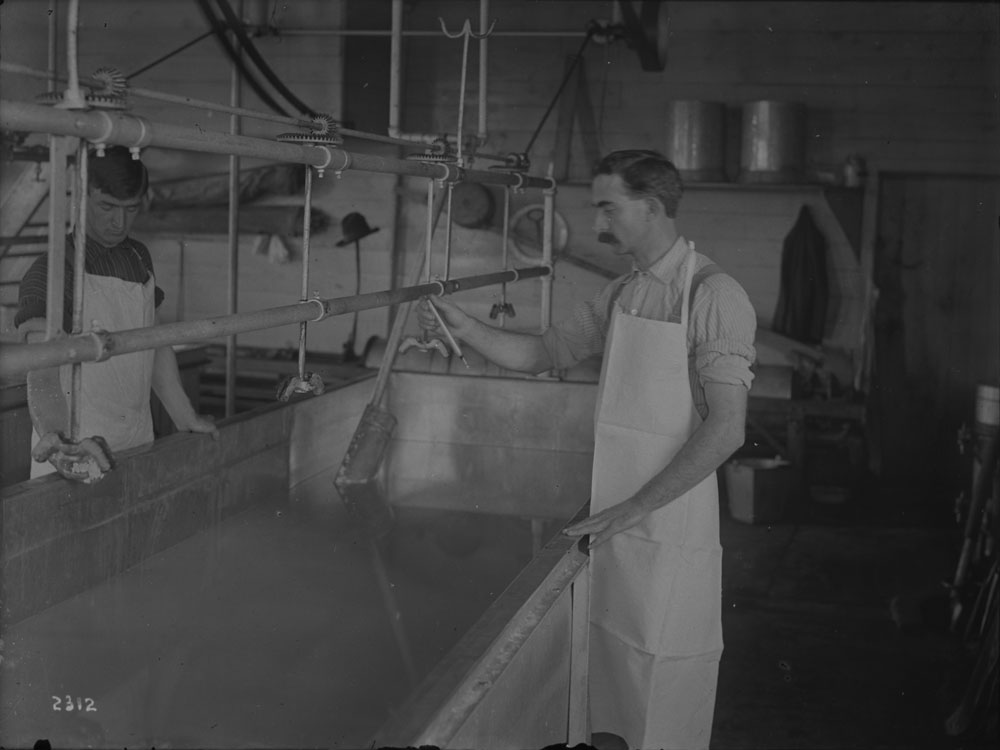
A black-and-white photograph of two men checking the temperature of milk at a cheese factory.

Taking temperature in cheese factory, Prince Edward County, Ontario (MIKAN 3371580)
Visit the Flickr album now!

Images of Bird’s-Eye Views now on Flickr

 The expression “a bird’s-eye view” indicates the perspective of an area or object in relation to other things, such as a map, blueprint, or cityscape. Often depicted in drawings or photographs, a bird’s-eye view offers a reference point from high overhead.
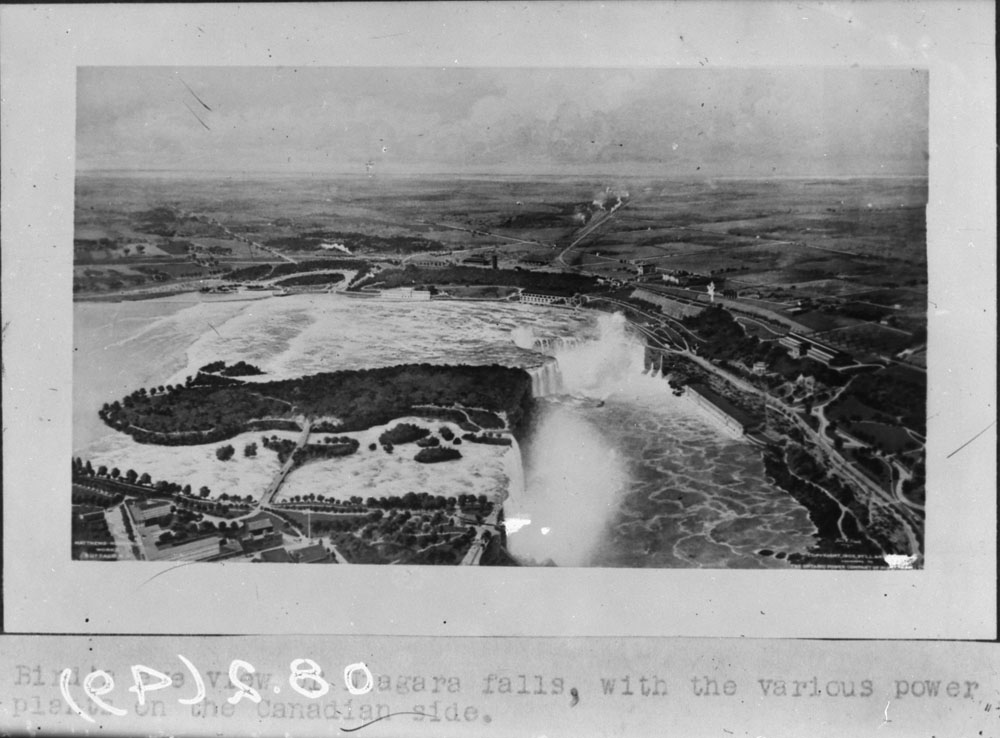
A black-and-white photograph of Niagara Falls from a bird’s-eye perspective. There are various buildings on either side of the border and roads leading up to and alongside the riverbanks.

Bird’s-eye view of Niagara Falls with the various power plants on the Canadian side, Ontario (MIKAN 3318089)

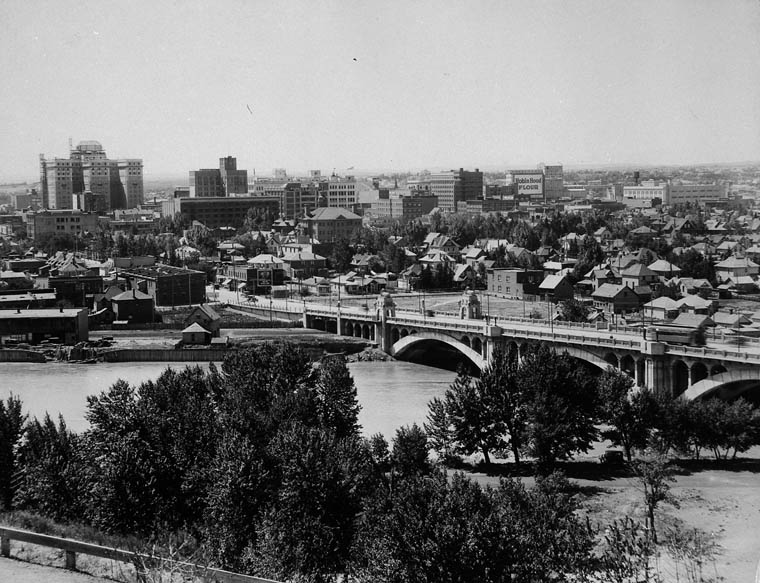
A black-and-white photograph of Calgary, Alberta, from a bird’s-eye perspective. The Bow River and a bridge are in the foreground with a number of homes and larger buildings in the background.

Bird’s-eye view of Calgary, Alberta (MIKAN 3302621)

Some synonyms for bird’s-eye view include aerial view, aerial viewpoint, overhead view, bird’s-eye shot, and bird’s-flight view. There are slight differences in perspective, but all appear to depict the area from up above.

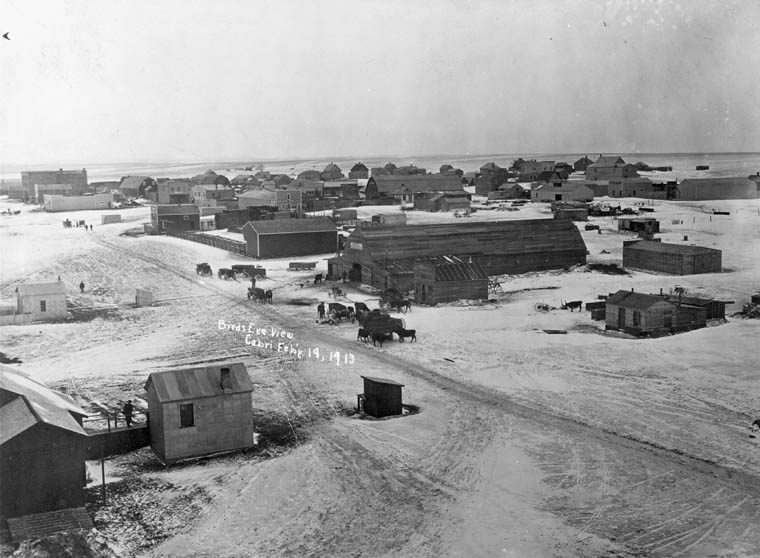
A black-and-white photograph of Cabri, Saskatchewan, from a bird’s-eye perspective. It shows a main dirt road with neighbouring houses and buildings. Some people, horses and wagons gather throughout the town.

Bird’s-eye view of Cabri, Saskatchewan (MIKAN 3259496)

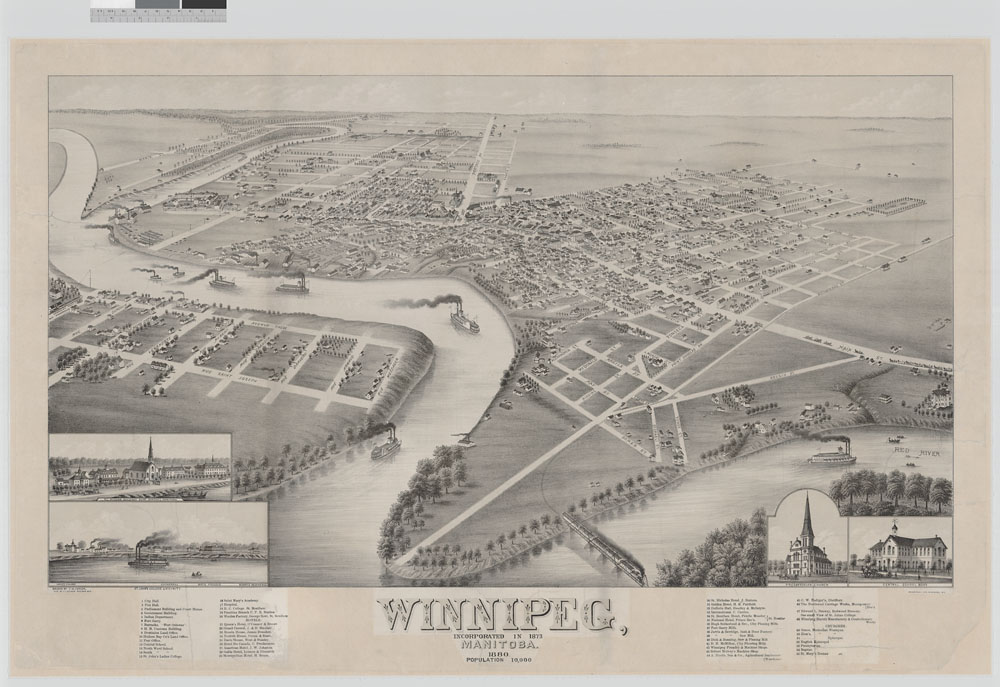
A black-and-white map of Winnipeg, Manitoba, from a bird’s-eye perspective. The Red River is central, showing steamboats navigating it and settlements and main roads established along its banks.

Bird’s-eye view of Winnipeg, Manitoba (MIKAN 4146329)

Visit the Flickr album now!

Images of Canada’s 1948 Olympic Hockey Team now on Flickr

This collective passport includes the photographs of, and information about, 19 men from the Royal Canadian Air Force Flyers who were on Canada’s 1948 Olympic Hockey Team. They departed on January 8, 1948, for the United States of America, Belgium, Czechoslovakia, France, the Netherlands, Sweden, Switzerland and the United Kingdom, and returned to Canada as gold medalists on April 8, 1948.

An image of Page 2 of the collective passport for Canada’s 1948 Olympic Hockey Team, issued by the Department of External Affairs. This page displays the photographs of, and information about (names, place of birth, date of birth, citizenship), Frank George Boucher, Hubert Brooks, Bernard Francis Dunster and Roy Austin Lowe Forbes.

Collective Passport Certificate of the 19 members of the Olympic Hockey Team: Boucher to Watson. Page 2, 1948 (MIKAN 4842034)

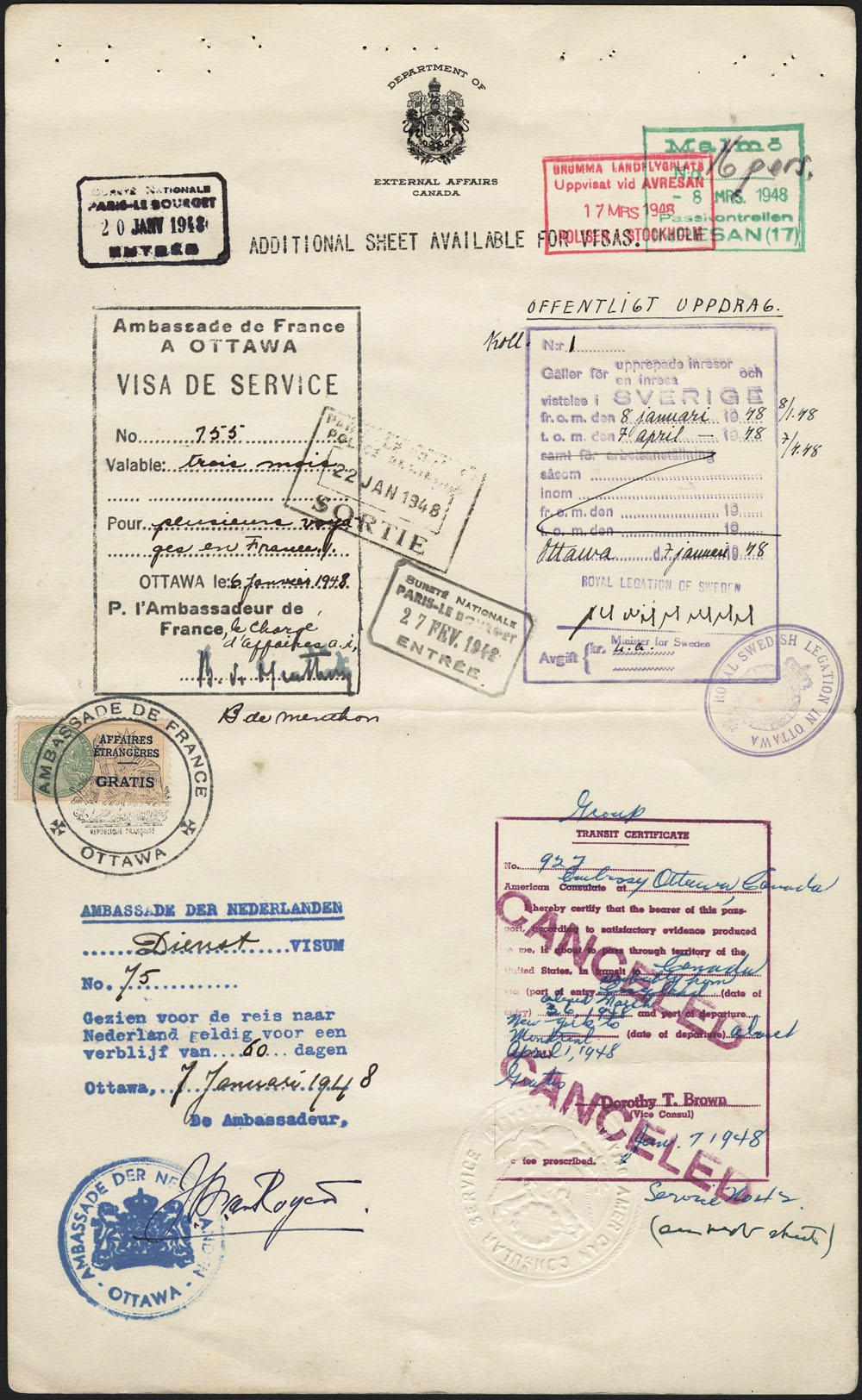
An image of Page 6 of the collective passport for Canada’s 1948 Olympic Hockey Team, issued by the Department of External Affairs. This page displays visas, and entry and exit stamps, from France, Sweden, the Netherlands and the United States of America.

Collective Passport Certificate of the 19 members of the Olympic Hockey Team: Boucher to Watson. Page 6, 1948 (MIKAN 4842034)

Visit the Flickr album now!

Radio Technology

I heard it on my radio—

The technology behind the radio allows for mass communication without using wires. Nikolai Tesla lectured on wireless communication in 1893 in St. Louis, Missouri at the World’s Fair. His theories laid the scientific groundwork for the development of the radio as we know it today.

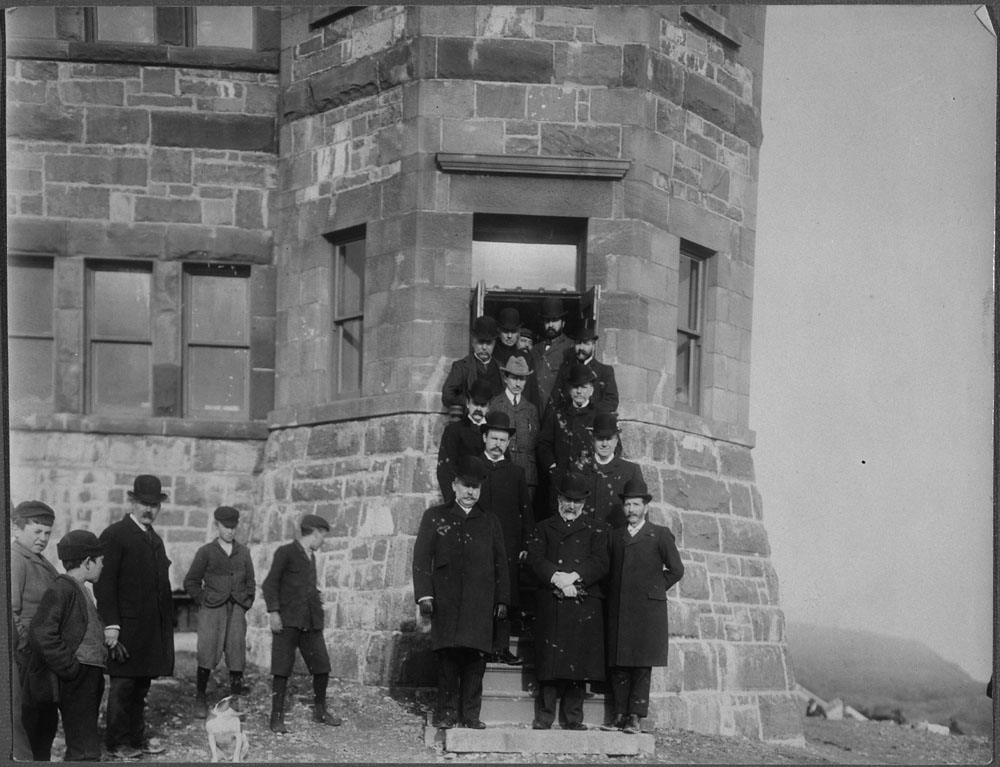
A black-and-white photograph of Guglielmo Marconi posing on the steps of a building with 12 members of the administration of Newfoundland, Signal Hill, St. John's.

Marconi (with light hat) and members of the administration of Newfoundland, Signal Hill, St. John’s (MIKAN 3380817)

Guglielmo Marconi is the person most associated with the radio and he has ties to Canada. He tested his transmission equipment on Signal Hill, St. John’s in Newfoundland, 1901. His early successes spurred the use of radio for long distance messaging using Morse code. The technology was not able to transmit speech at the time. However, advances during and after the First World War provided both the military and civilians with access to radios that sent transmissions as recognizable speech.

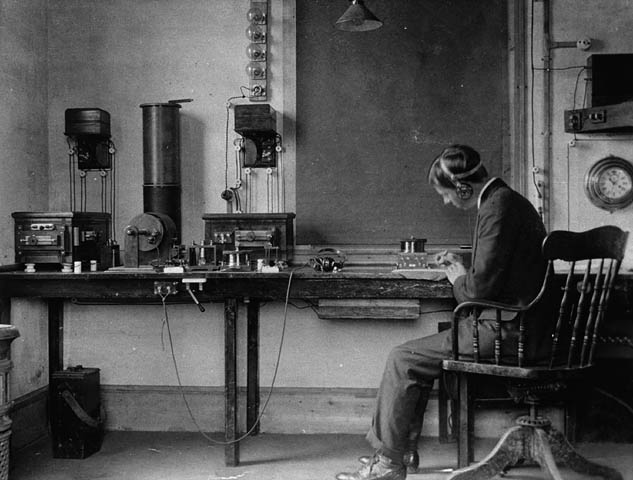
A black-and-white photograph of Donald Manson, an employee of the Marconi Company sitting at a table, wearing headphones and writing on paper while listening to a radio transmission.

Donald Manson, an employee of the Marconi Company (MIKAN 3193105)

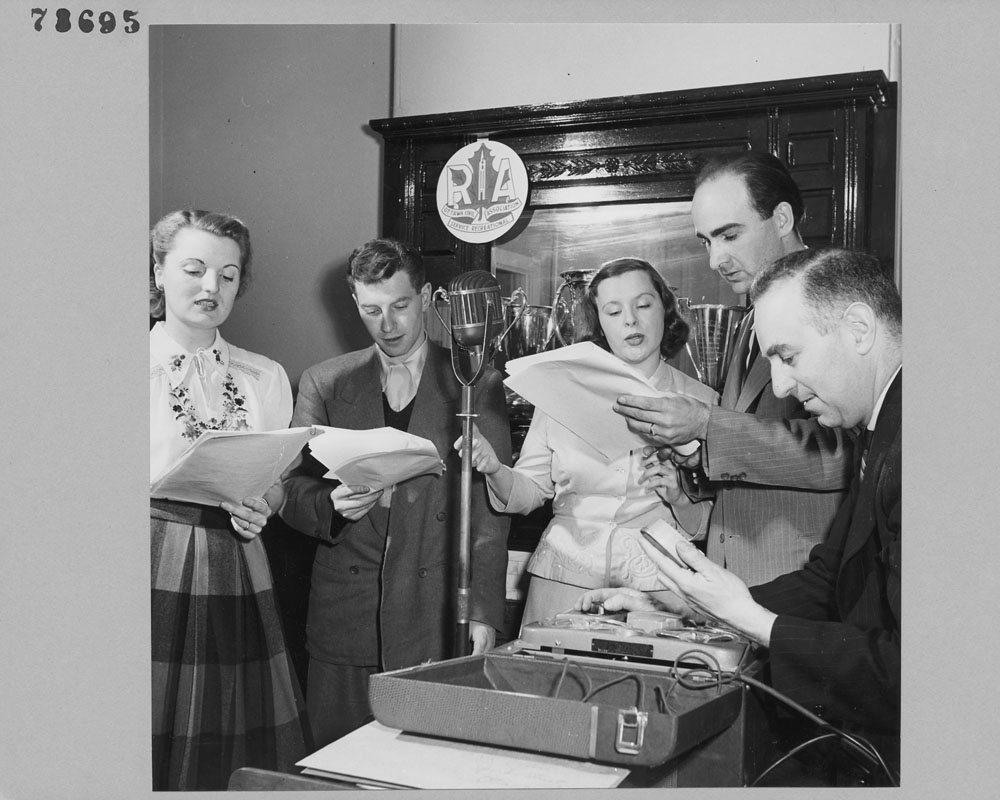
A black-and-white photograph of two women and three men, members of the R. A. Radio Acting Group, reading from a script into a microphone.

Members of the R. A. Radio Acting Group (MIKAN 4297976)

Local stations and federal agencies were created such as the Canadian Broadcasting Corporation, and broke into the news, music, and entertainment realms from the 1920s to the 1940s. Mass media was here to stay. Radio gave way to television, and then to the internet. Despite these leaps and bounds of its technological siblings, radio technology is widely used today due to its easy access and reliability.

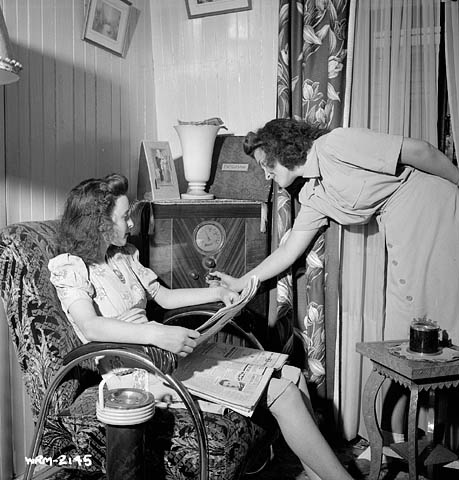
A black-and-white photograph of a two women listening to a radio. One woman sits in a chair, the second women stands and adjusts the station settings.

Female workers at the Dominion Arsenals plant relax and listen to a radio in their apartment, Québec, Quebec (MIKAN 3193885)

Visit the Flickr album now!

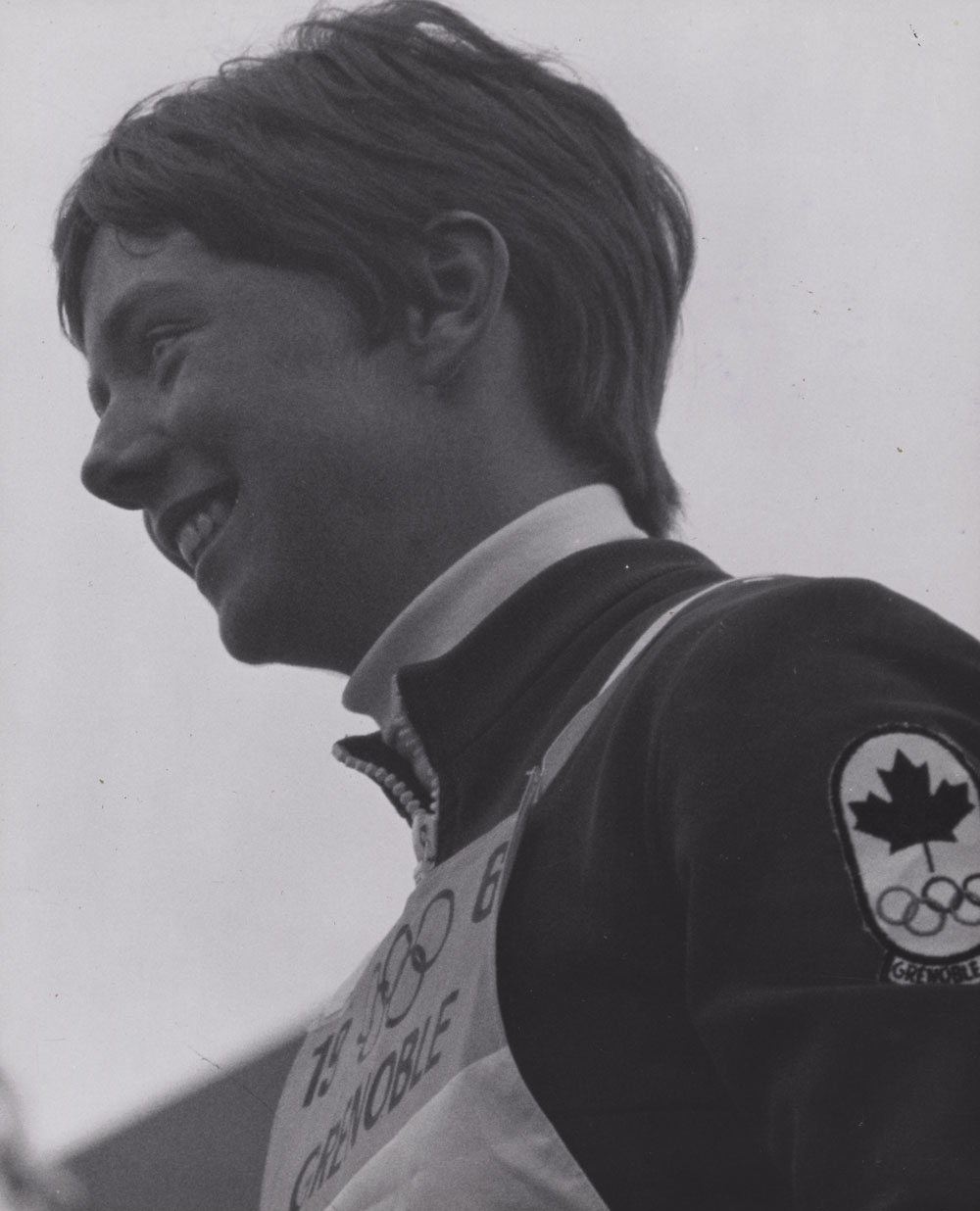
Images of Nancy Greene now on Flickr

A black-and-white photograph of Nancy Greene, winner of a gold medal in giant slalom.

Nancy Greene, winner of gold medal in giant slalom, Winter Olympics (MIKAN 5029732)

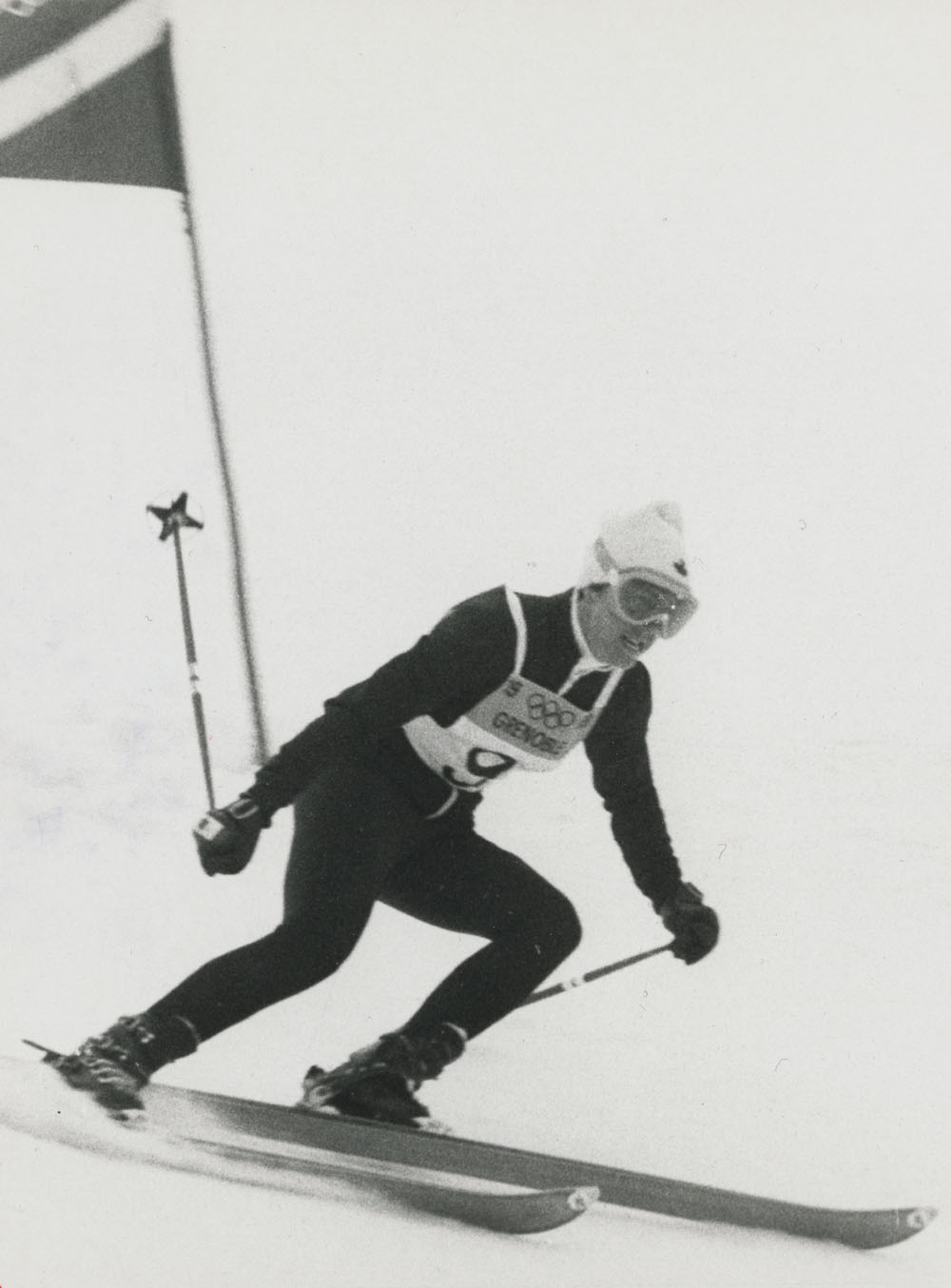
Ms. Greene Raine is an Officer of the Order of Canada and the Order of British Columbia and a member of both Sports Halls of Fame. She was named Canada’s female athlete of the 20th century by the Canadian Press and Broadcast News. She won gold and silver medals in alpine skiing at the 1968 Grenoble Olympics and overall World Cup titles in 1967 and 1968. Her total of 14 World Cup victories (including the Olympics) is still a Canadian record. During her nine-year career she won a total of 17 Canadian Championship titles.

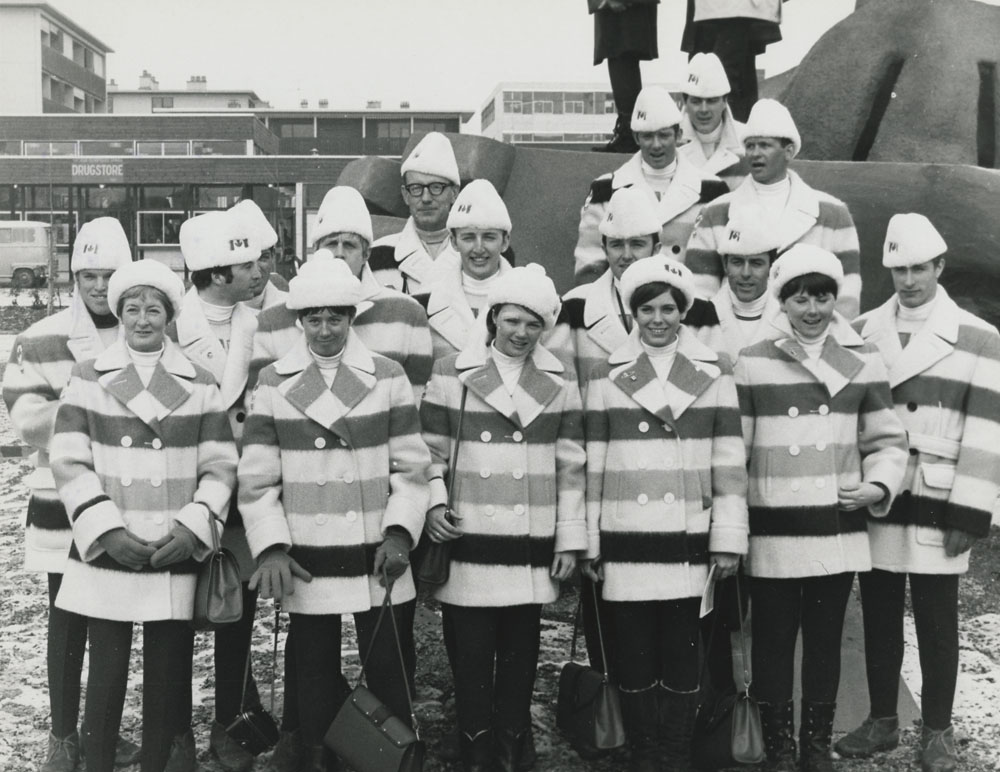
A black-and-white photograph of a group shot of the Canadian ski team at the Winter Olympics.

Group shot of the Canadian ski team at the Winter Olympics (MIKAN 5029774)

A black-and-white photograph of Nancy Greene during her gold medal run in giant slalom.

Nancy Greene during her gold medal run in giant slalom at the 1968 Winter Olympics (MIKAN 5029785)

A black-and-white photograph of Nancy Greene during her silver medal run in slalom.

Nancy Greene during her silver medal run in slalom at the Winter Olympics (MIKAN 5029788)

See also:

Visit the Flickr album now!

Images of Gilmour & Hughson Forestry now on Flickr

Allan Gilmour (1775–1849) was a senior partner in the firm of Pollok, Gilmour & Co. from which numerous co-partnerships and offshoots evolved, and played a prominent part in the Scottish and Canadian lumber and shipbuilding businesses. Allan Gilmour’s brothers and nephews opened numerous branches in Canada—at Miramichi, Quebec, Montréal and elsewhere. The Bytown operation began after the opening of a Montréal partnership in 1828, which dealt in supplies for the square timber trade on the Ottawa River. In 1841, his nephew Allan Gilmour Jr. took over this operation with James Gilmour, named it Gilmour & Co., and opened the Bytown branch to procure timber and sawn lumber for the Quebec market. Eventually, lumber operations grew significantly.

A black-and-white photograph of the Gilmour and Hughson mill on the river. The mill is in the foreground with timber floating on the river and along the bank.

View of the Gilmour and Hughson mill from the water (MIKAN 5006499)

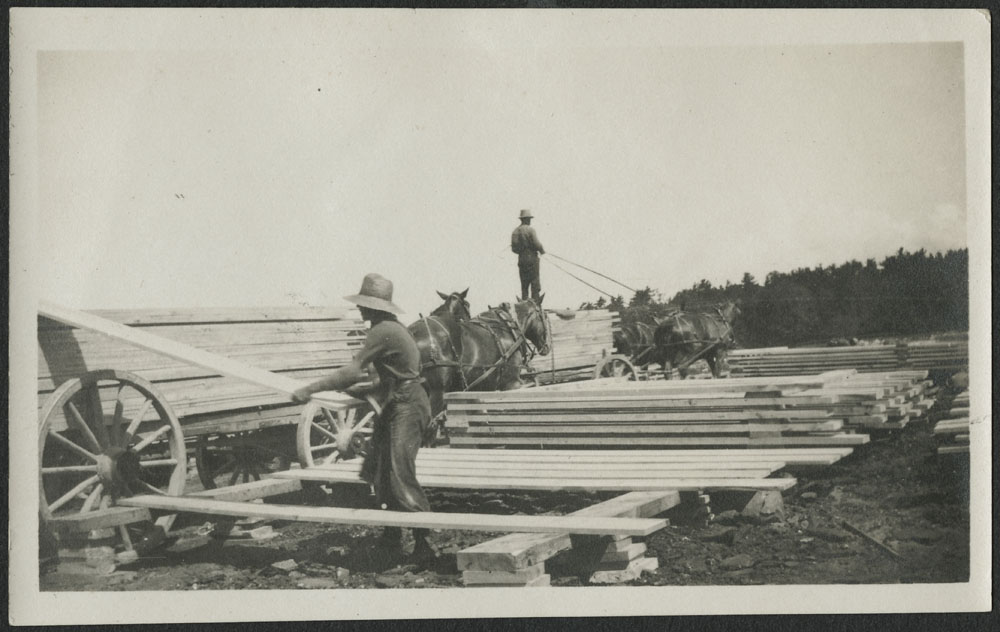
A black-and-white photograph of a man loading milled lumber onto a horse-drawn wagon. A second, full wagon is leaving the area with its driver and horses.

Men loading lumber at the Gilmour and Hughson mill (MIKAN 5006500)

In the 1870s, the branches at Miramichi, Quebec and Montréal closed, leaving the Ottawa lumber operation in the control of John Gilmour’s sons. In 1891, the company Gilmour & Hughson was formed by John Gilmour Jr. and Ward Hughson, an Albany lumberman. In 1895, the concern was incorporated (58-59 Vic., Cap. 89). In the mid-1920s, it was announced that Gilmour & Hughson Ltd. was being sold to the firm of Riordon & Co. However, Riordon & Co. went into bankruptcy and the properties owned by Gilmour & Hughson and its operations were taken over by the Gatineau Company Limited, a subsidiary of the Canadian International Paper Co.

A black-and-white photograph of the Gilmour and Hughson mill on the river. The mill is in the foreground with timber floating on the river and along the bank.

View of the Gilmour and Hughson mill from the water (MIKAN 5006499)

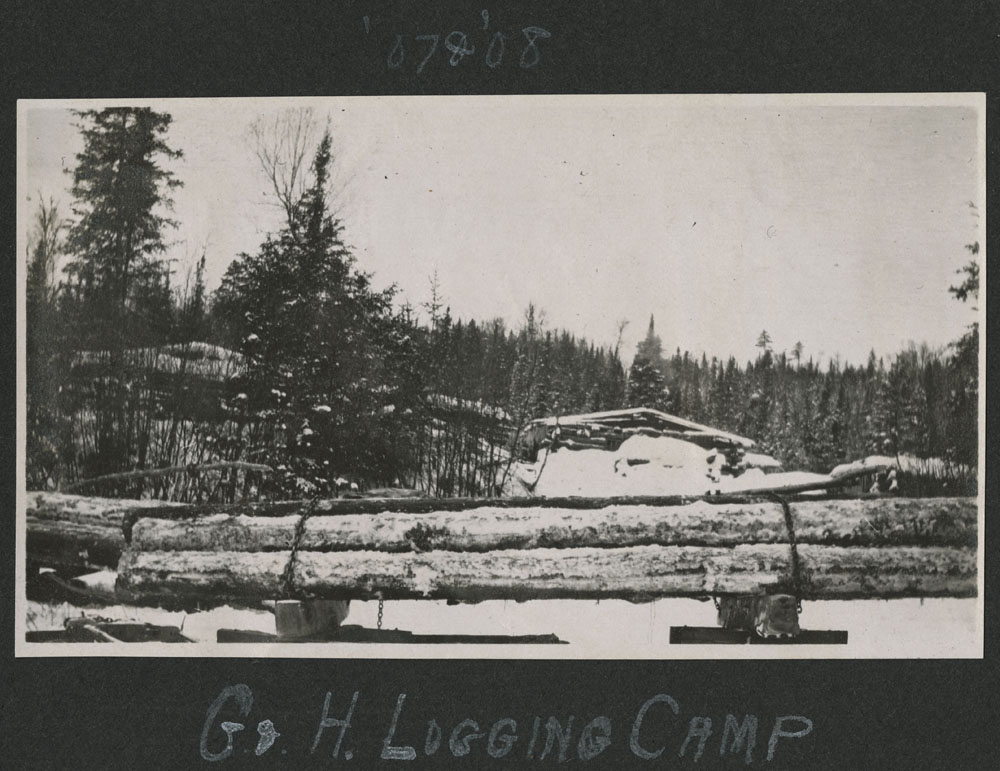
A black-and-white photograph of a Gilmour and Hughson logging camp during the winter. Log shelters are in the background along a line of trees. Fresh cut timber is stacked and chained in the foreground.

Gilmour and Hughson Logging Camp (MIKAN 5006507)

Visit the Flickr album now!

Images of Boxing now on Flickr

Boxing is the sport of fighting with padded, gloved fists in a square, roped-off ring under a set number of rounds and rules.

A black-and-white photograph of two boxers fighting on the deck of the SS Justicia, surrounded by the ship’s complement of soldiers.

Canadian troops aboard the SS Justicia, en route to Liverpool, England, watch a boxing match (MIKAN 3384735)

However, the first boxers in Canada did not use gloves. Bareknuckle fisticuffs were the norm during the early 19th century, with some bouts lasting 40 rounds. Outside of the military and a few men’s clubs, boxing was not sanctioned in the provinces of Canada, as the sport did not have a great reputation for fair play or honest promotion. Respectability for the sport came slowly, and views changed during the 1890s. The popularity of the sport grew steadily during the early 20th century.

A black-and-white photograph of two soldiers boxing. One wears black trunks and the other wears white trunks. Soldiers outside the ring watch the match.

Soldiers boxing in the exhibition grounds (MIKAN 3384740)

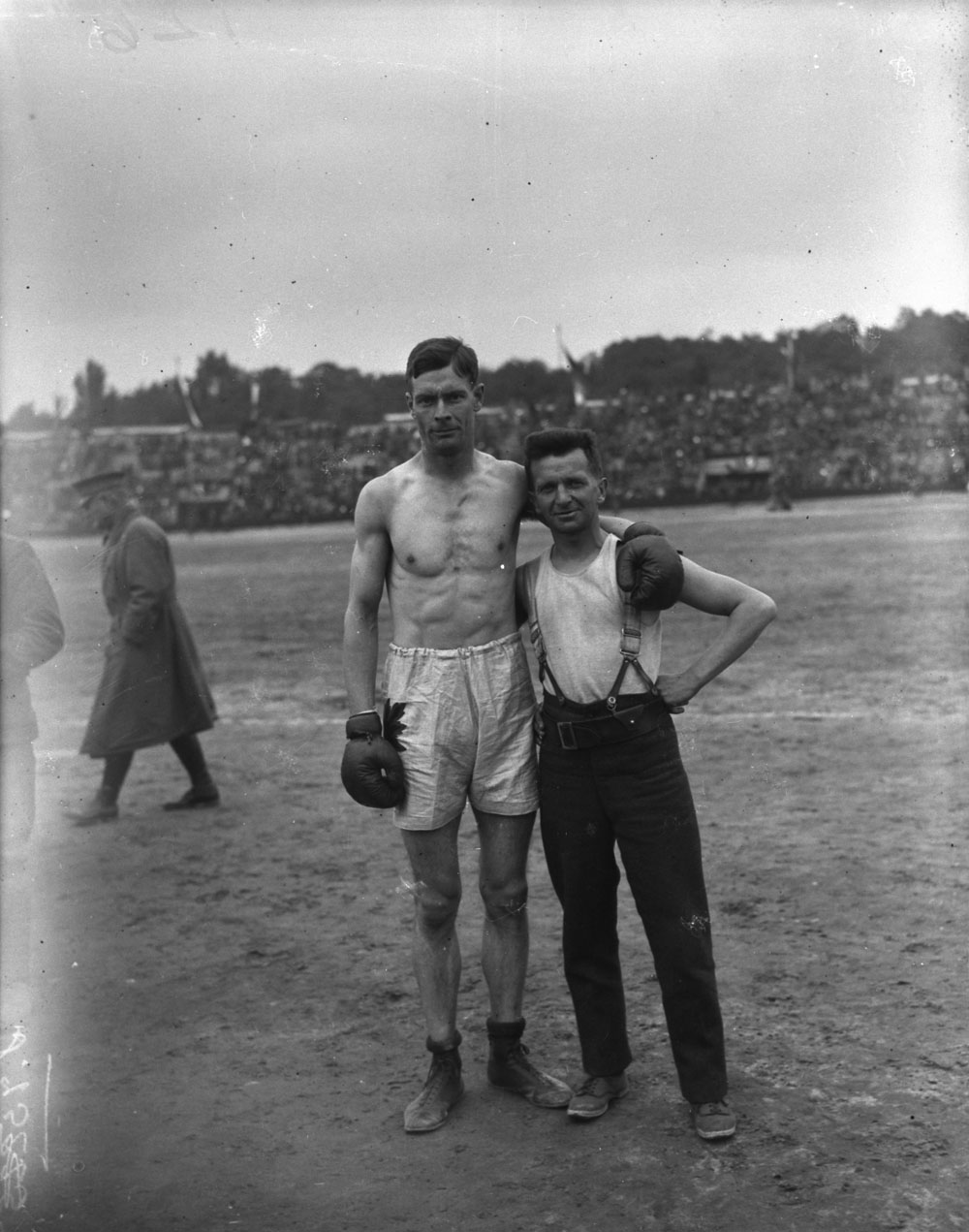
A black-and-white photograph of middleweight boxer Edwin A. Harris (Canada) in his trunks and gloves, posing with another soldier.

Edwin A. Harris (Canada), middleweight finalist in boxing, at the Inter-Allied Games, Pershing Stadium, Paris, France (MIKAN 3384730)

Today, the Canadian Amateur Boxing Association oversees the sport in coordination with 10 provincial and three territorial boxing associations. Some athletes eventually turn to professional boxing, while others retain their amateur status with the intent to represent Canada in international events, such as the Olympics or Commonwealth Games.

Visit the Flickr album now!

Images of snowshoes now on Flickr

Snowshoes distribute a person’s weight over snow, enabling one to walk without sinking too deeply.

A black-and-white photograph of an unidentified First Nations woman sitting on a chair and working on the webbing of a large round snowshoe.

Aboriginal woman making snowshoes, Pointe Bleue, Quebec (MIKAN 3367092)

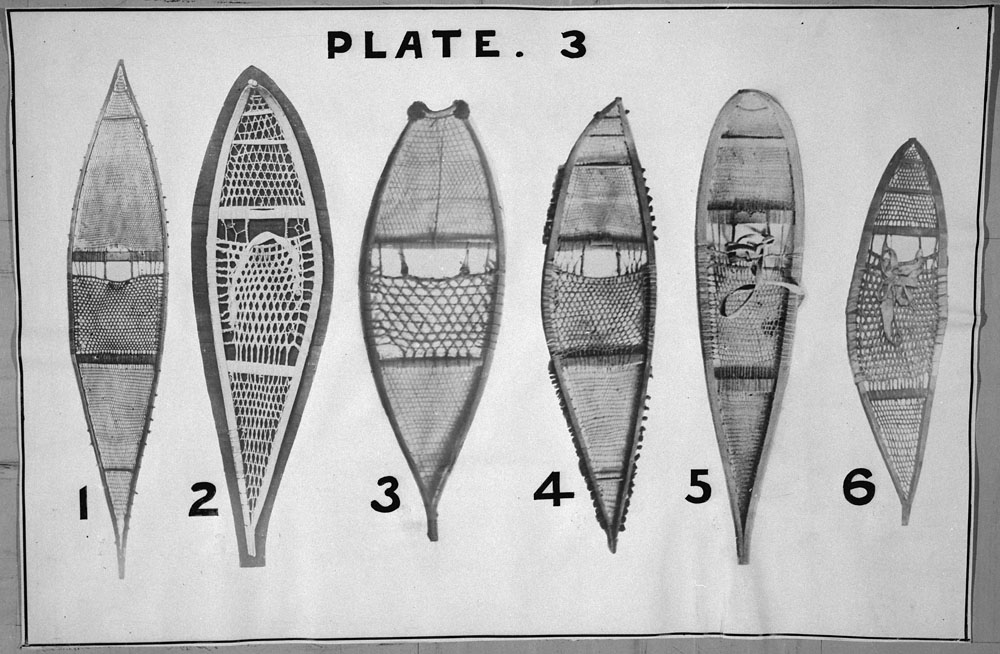
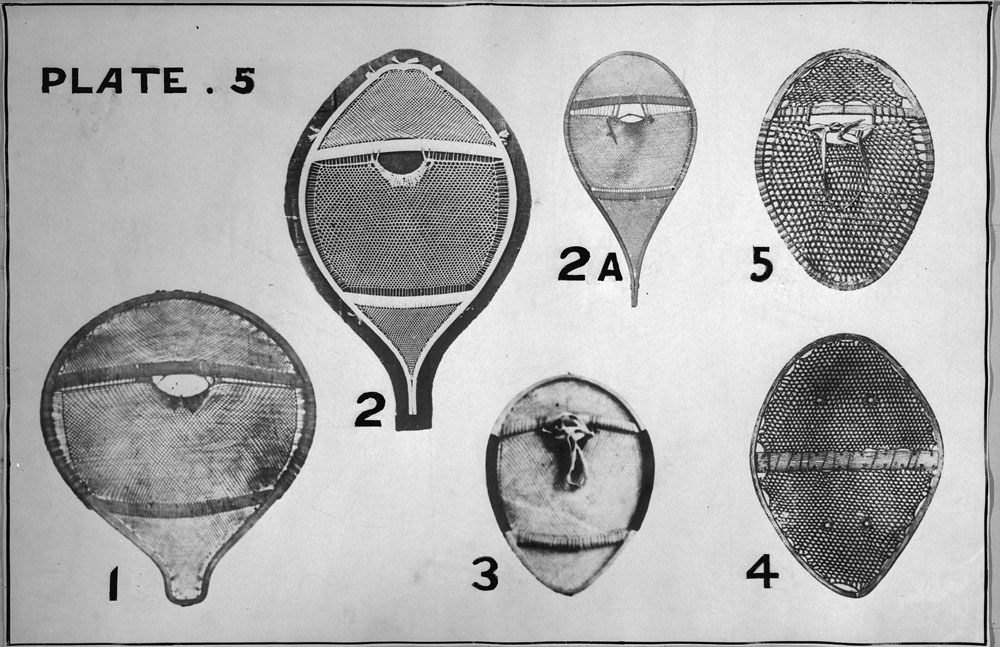
Traditional snowshoes are made with wooden frames and leather strips for webbing and boot bindings. Modern equivalents use metal or synthetic materials, but follow similar design characteristics to their predecessors. Early snowshoe design in North America spans the continent where regular snowfall occurs. The shapes and sizes vary dependent on the location. Snowshoes are available in round, triangular, and oval shapes, or can be very long. Each design addresses different types of snow, whether powdery, wet or icy. First Nations and Inuit communities are known for their design and use of snowshoes.

A black-and-white photograph showing six kinds of long snowshoes made with various materials and styles of webbing.

Styles of snowshoes (MIKAN 3401671)

A black-and-white photograph showing six kinds of round or oval-shaped snowshoes made with various materials and styles of webbing.

Styles of snowshoes (MIKAN 3401670)

European settlers were quick to adopt snowshoes for travel, hunting, and even military purposes. Snowshoeing clubs in Canada were started the mid-1800s for sport and leisure activities—leading the way for these unique aboriginal inventions to become a fixture in Canadian society.

A black-and-white photograph of thirteen children and their teacher posing with their snowshoes at the entry deck of a Canadian National Railway school car.

Canadian National Railway School Car, Capreol, Ontario (MIKAN 3381288)

Visit the Flickr album now!

Victoria Cross Recipients: First World War now on Flickr

The Victoria Cross (VC) is the highest military decoration in the Commonwealth and takes precedence over all other medals, decorations and orders. A recognition of valour in the face of the enemy, the VC can be awarded to a person of any rank of military service and to civilians under military command. So far, 98 Canadians have been awarded the Victoria Cross, beginning with Alexander Roberts Dunn who in 1854 fought in the Battle of Balaclava in the Crimean War. The Victoria Crosses were awarded to 71 Canadian soldiers during the First World War, and 16 were awarded during the Second World War. The remaining VCs were awarded to Canadians for the Indian Rebellion of 1857 (in which William Hall of Nova Scotia became the first-ever black recipient of the VC) and the South African War (1899–1902).

In 1993, the Canadian Victoria Cross was adopted in place of the British VC. The medal is identical to the British VC but the inscription is in Latin—Pro Valore—a linguistic ancestor to both English and French. The Canadian Victoria Cross has yet to be awarded.

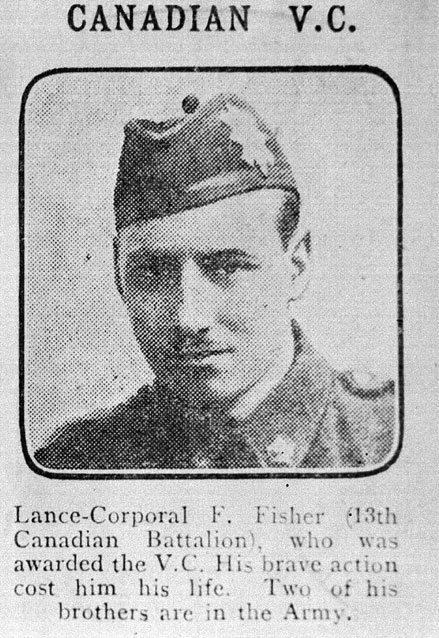
A black-and-white image of Lance-Corporal F. Fisher.

Lance-Corporal F. Fisher, April 23, 1915 (MIKAN 3215642)

A black-and-white photograph of Lieutenant George Burdon McKean.

Lieutenant George Burdon McKean, April 27-28, 1918 (MIKAN 3218939)

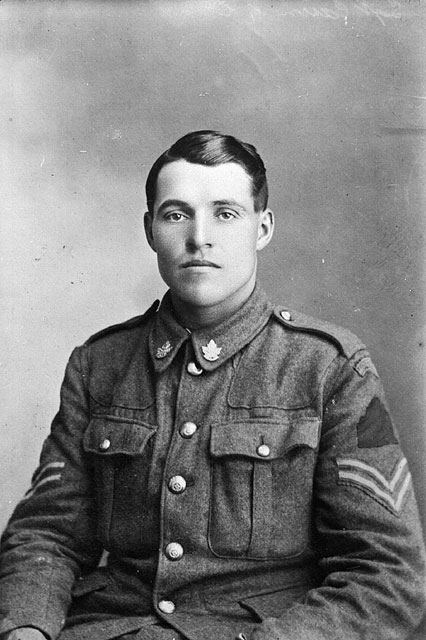
A black-and-white photograph of Sergeant Alexander Picton Brereton.

Sergeant Alexander Picton Brereton, August 9, 1918 (MIKAN 3213059)

A black-and-white photograph of Sergeant Hugh Cairns.

Sergeant Hugh Cairns, November 1, 1918 (MIKAN 3191892)

Visit the Flickr album now!

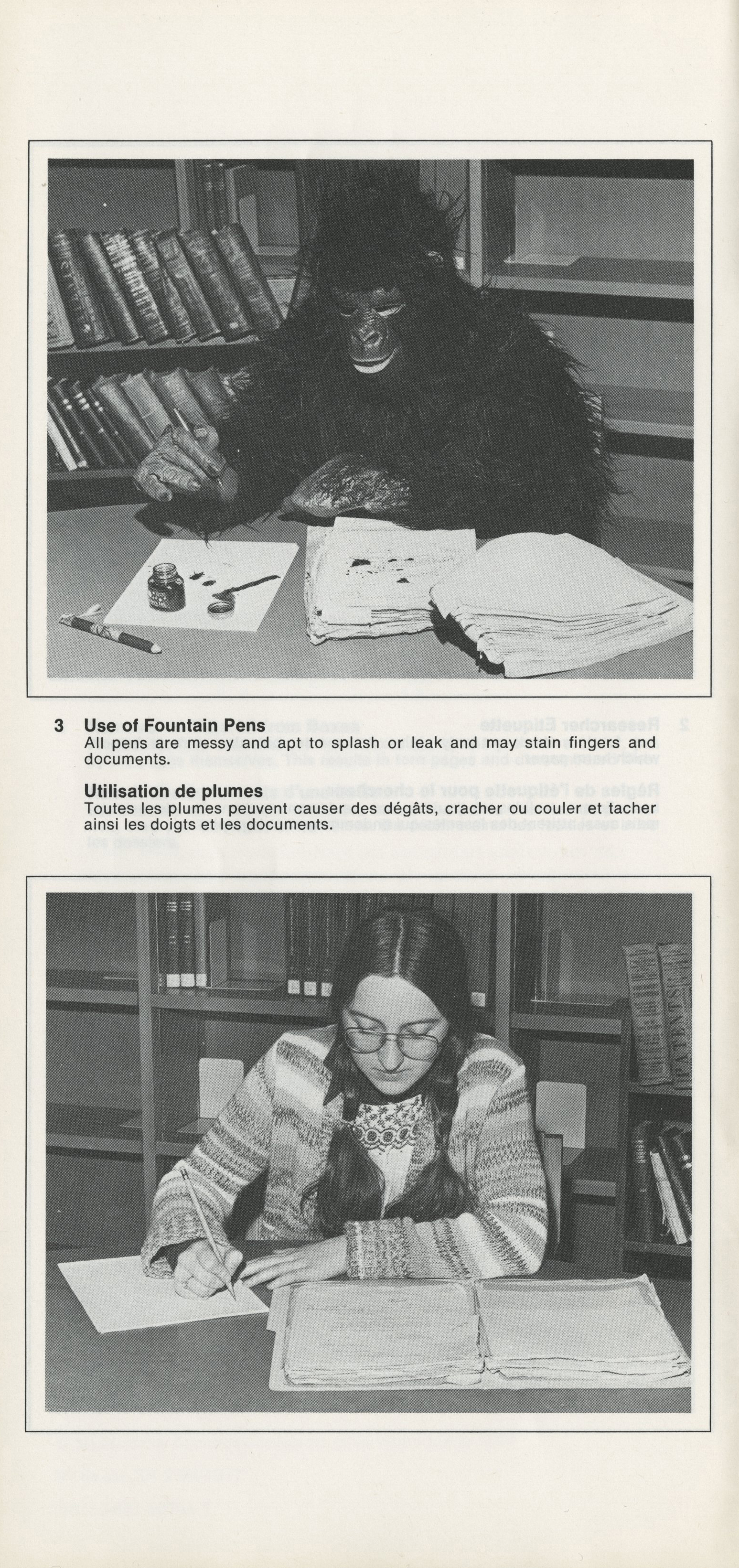
“Handle with Care, Fragile” now on Flickr

Circa 1981 –  Handle with Care, Fragile: A Guide to the Preservation of Archival Materials

“Improper handling is a major factor in the deterioration of archival documents. During the summer of 1976, the Archives Branch Conservation Committee attempted to illustrate techniques for the correct handling of archival materials through a photographic exhibition entitled HANDLE WITH CARE – FRAGILE – AVEC SOIN. The booklet resulting from that exhibition is intended to demonstrate, in a manner both pointed and humorous, these handling techniques. Only the most common archival media has been used as examples; similarly, only the most obvious causes of damage have been illustrated. We hope that this booklet will promote an appreciation of the fact that everyone who handles archival materials shares a responsibility towards our heritage.”

Wilfred I. Smith, Dominion Archivist

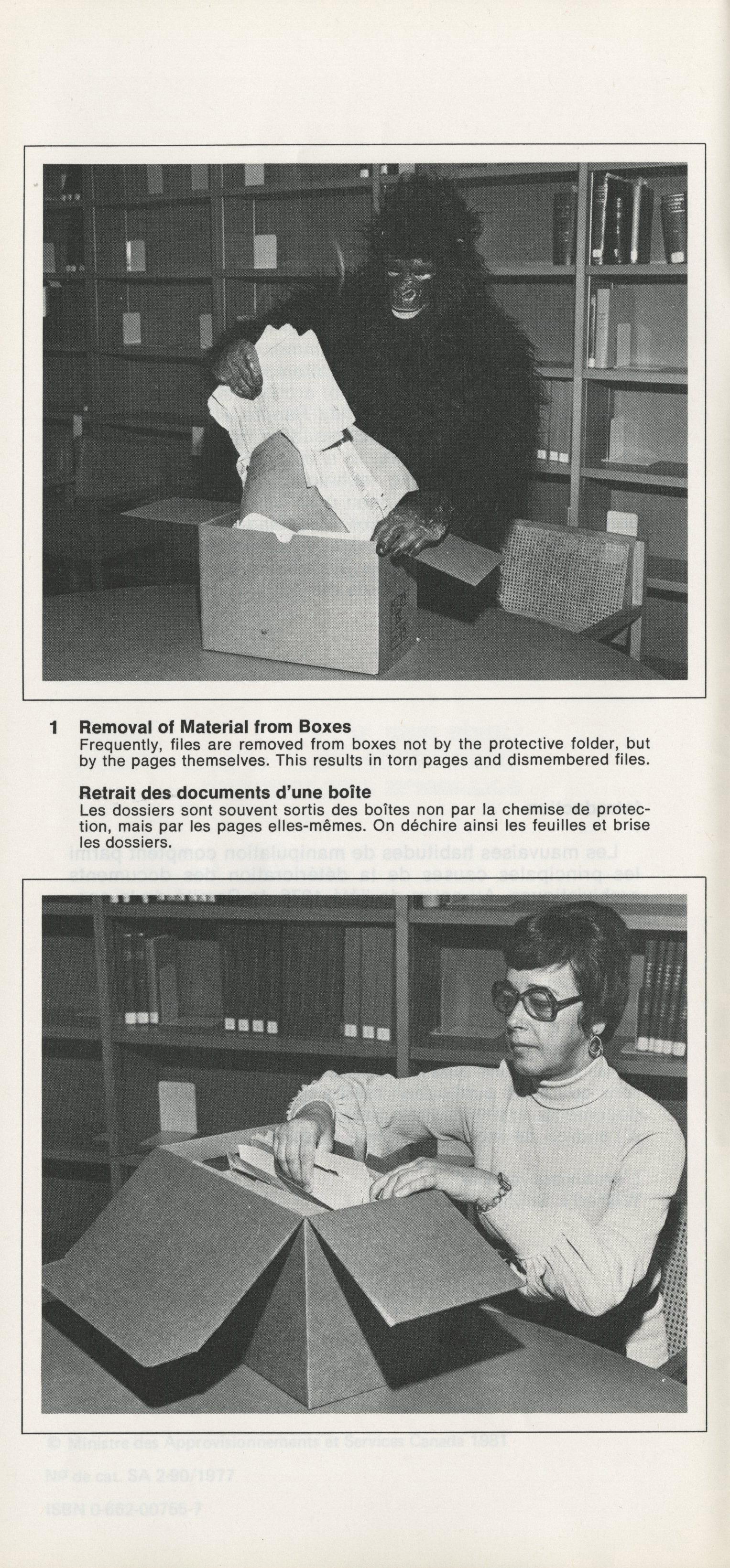
A black-and-white photograph displaying the improper and proper ways to remove archival material from a box. The improper manner shows a person dressed as a gorilla forcibly pulling the documents out. The proper manner depicts a female researcher carefully removing the documents.

Removal of Material from Boxes, Image 005 (AMICUS 23668326)

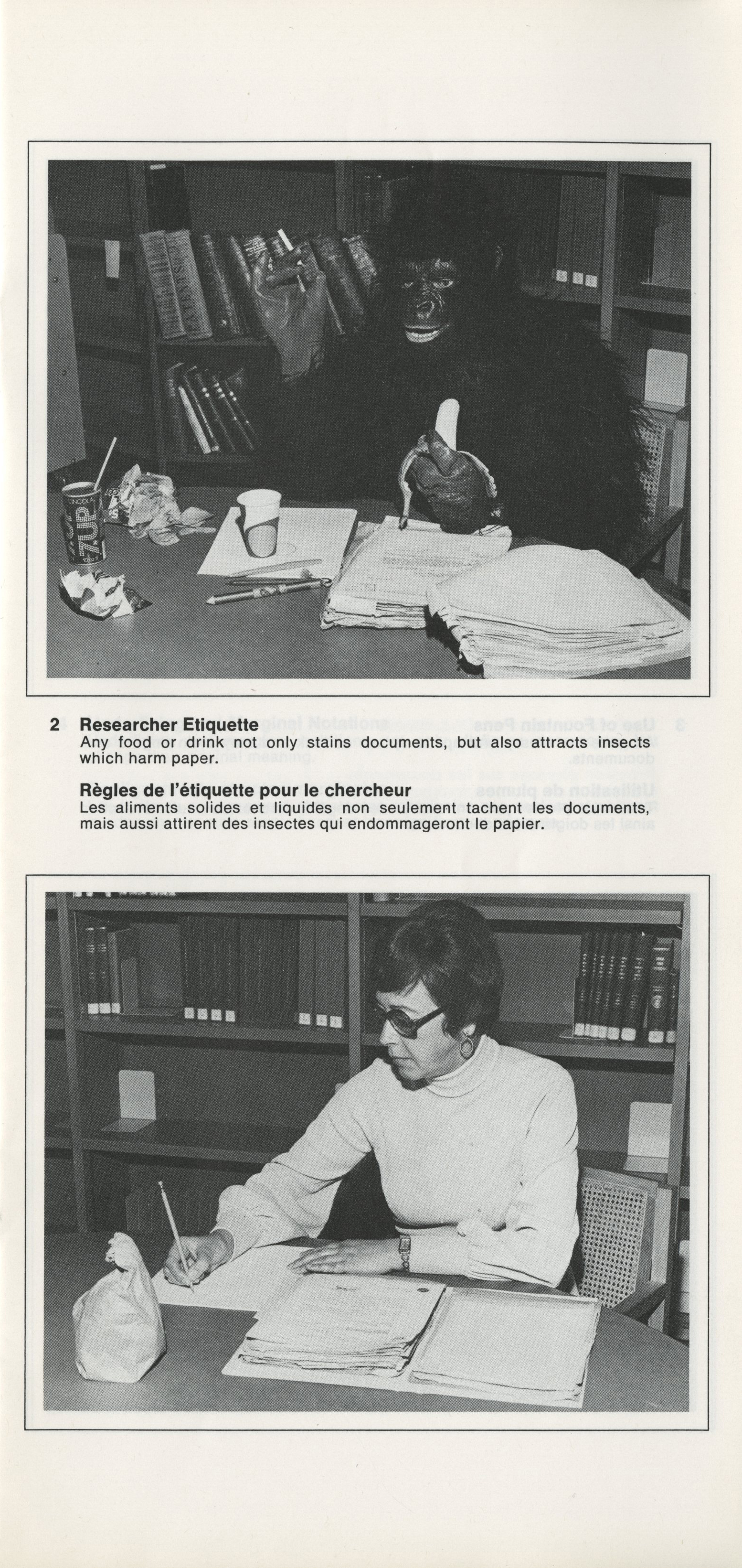
A black-and-white photograph displaying improper and proper research etiquette. The improper manner shows a person dressed as a gorilla eating a banana near the documents, with open beverages close by. The proper manner depicts a female researcher with no open food or drink near the documents.

Researcher Etiquette, Image 006 (AMICUS 23668326)

A black-and-white photograph displaying the improper and proper ways to handle archival documents. The improper manner shows a person dressed as a gorilla leaving fingerprints on documents after handling them without wearing white cotton gloves. The proper manner depicts a female researcher wearing white cotton gloves to handle the documents.

Holding Documents While Reading Them, Image 014 (AMICUS 23668326)

Visit the Flickr album now