The Rare Book Collection: recent additions

A collection of 500 pre-1800 books were recently relocated to a permanent location in Library and Archives Canada’s rare books vault. The vault is equipped with optimal environmental conditions to ensure this special collection is properly preserved for generations to come. Prior to being transferred to Library and Archives Canada, the books were owned by the Library of Parliament. Most of this collection consists of books published in England or France, and many are multi-volume sets. The subject matter ranges from geography and history to theatre and essays.
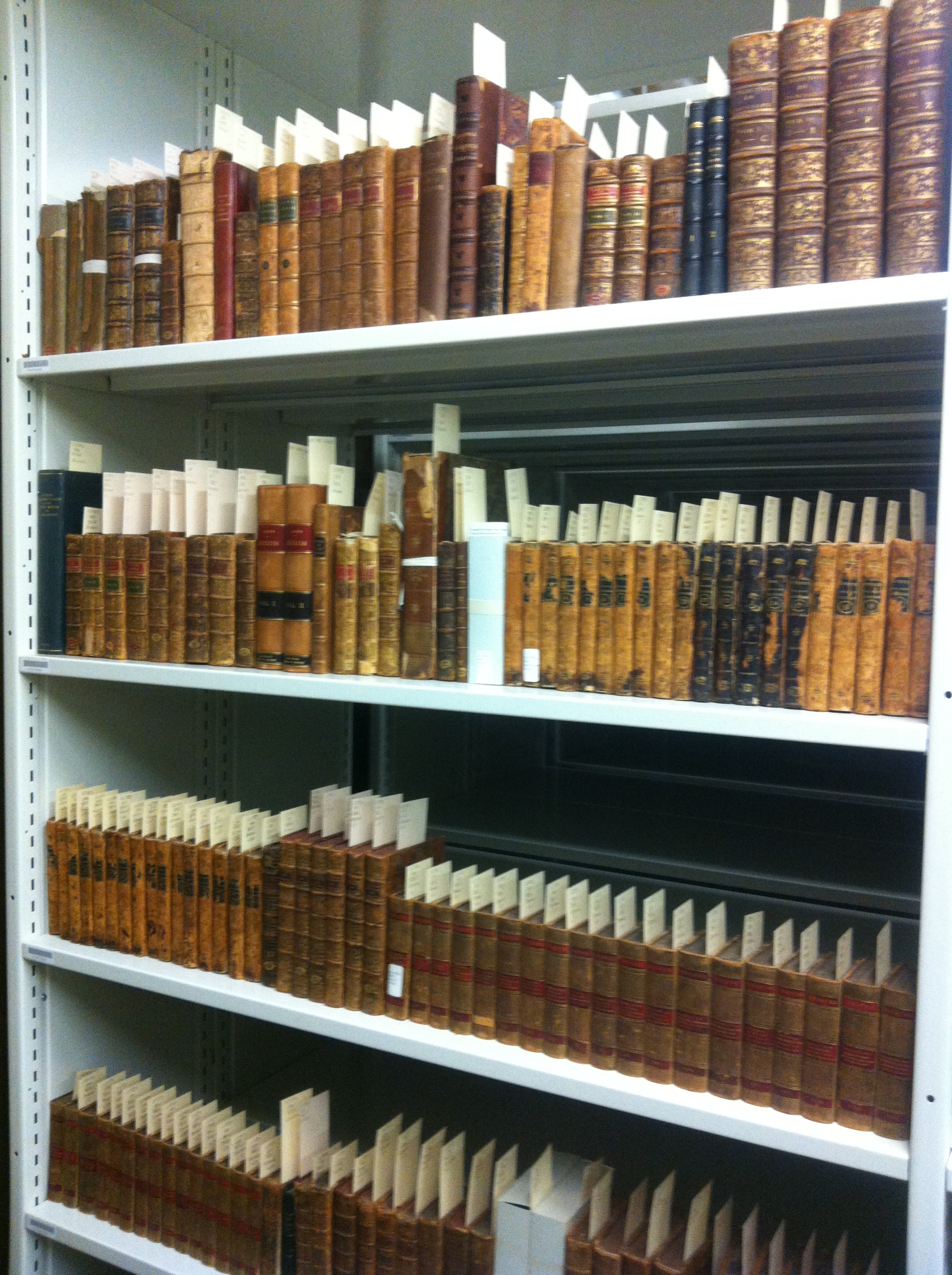
 

Colour photograph showing rows of books on a shelf. All the books are flagged with a slip of paper with a call number on it.

The permanent location in the rare books vault.

About the Collection

The majority of the books are 18th-century hand bindings bound in full or partial leather. The collection also comprises some books made of paper, cloth or parchment. The books are decorated with intricate gold titling and tooling and are often accented with unique and stunning marbled papers, commonly used as the endpapers.

Colour photograph of an open book showing a sumptuous marble paper used for the end paper.

Marble paper detail.

Colour photograph collage of four beaver-stamp images showing the different stamp styles on the books.

The Library of Parliament “beaver” stamp on the spine of many of the books. The style and intricate details of the beaver changes over the years, but the familiar trademark remains easily identifiable.

The condition of the books

Before being added to the Rare Book Collection, factors such as moisture, temperature, light and dust contributed to the deterioration of many of the books. Although some books are in excellent condition, with the binding structures and text blocks intact, many are damaged and show signs of damage. Some items have suffered from water and fire damage, or contain traces of a pest infestation, while others are weakened and damaged due to centuries of physical use.

Red rot and leather deterioration

A large percentage of the collection (approximately 90%) suffers from various levels of leather deterioration. In some extreme cases, the type of damage is referred to by conservators as red rot. The deterioration of leather is a common issue in leather from this period as the tannins used in the manufacturing process contain chemicals that, over time, and in the presence of oxygen, undergo a chemical change that breaks down the leather molecules. This causes the leather to weaken, flake and powder.
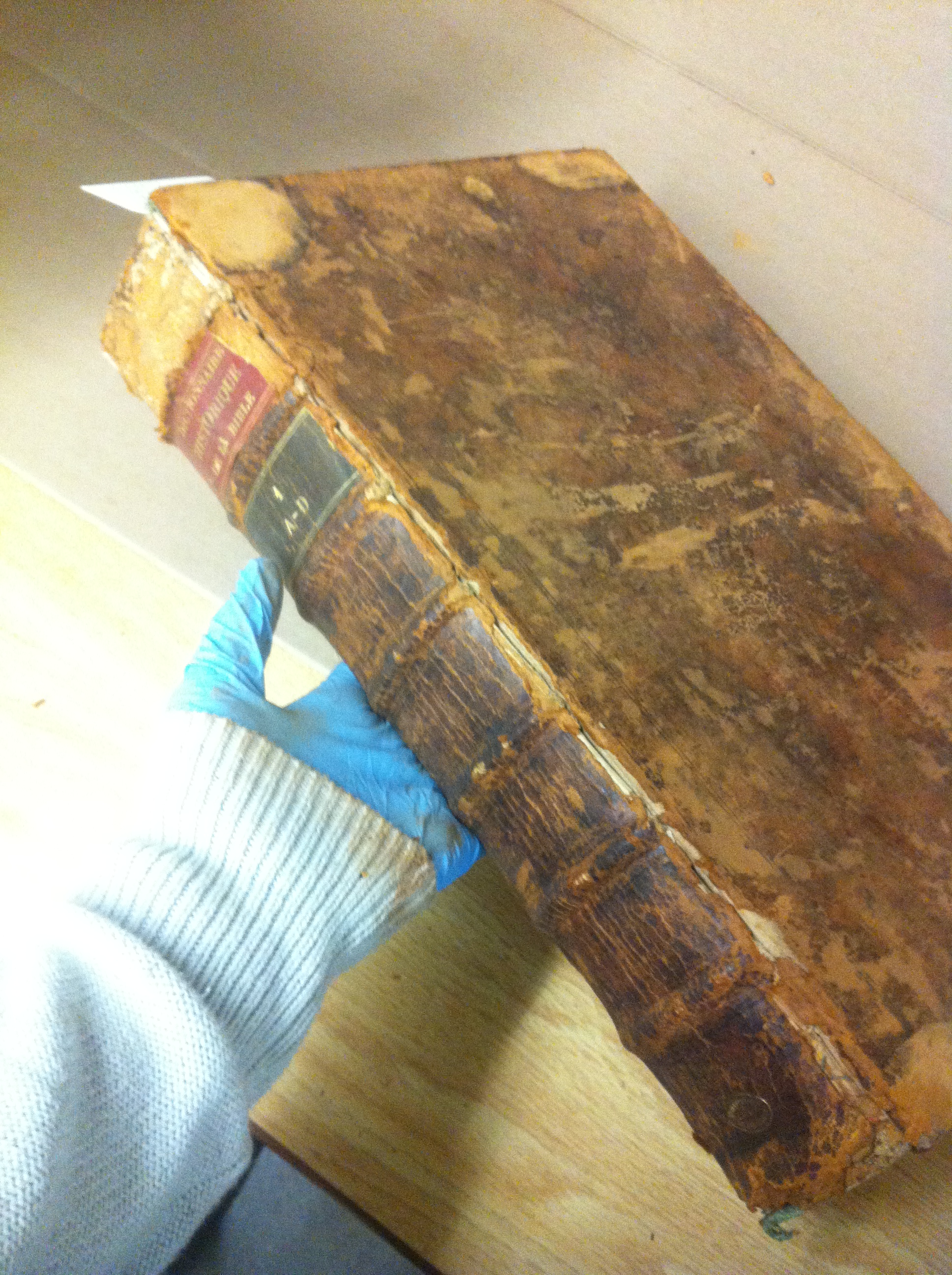
Colour photograph of a gloved hand holding a book with the telltale signs of red rot. The glove and sleeve are covered in a fine reddish-brown coloured dust.

An example of red rot—the term describes the red-coloured powder that appears on the surface of badly deteriorated leather.

Next steps for this collection

So much can be learned from this collection of historical and beautiful books. Check back with us for the next blog posts on the physical inventory of this collection , which includes a detailed inventory of the state of the collection, the levels of conservation treatment required, the material composition of the books, type of decorations, etc. Also have a look at the following post, detailing what steps will be taken to preserve this fine collection.

From the Lowy Room: the magnificent 1657 Walton Polyglot Bible

Although Brian Walton sounds like a guy you could google or find on LinkedIn, one glance at his likeness in the 1657 Polyglot Bible, resplendent in bishop’s robes, quill in hand, will quickly disabuse you of that notion. Walton, indeed, was a product of the 17th century and left a legacy in the form of the magnificent multilingual Bible comprised of original tongues and early translations. Two versions of the bible were printed, the earlier one is known as the “Republican” version which thanks Cromwell in the dedication for removing the import tax on paper. The latter one is known as the “Loyal” version as it was printed after the Restoration of the Monarchy. Library and Archives Canada (LAC) has the privilege of owning both versions. These bibles are just some of the treasures available in the Jacob Lowy Room at 395 Wellington Street for scholars and the general public due to the foresight of Mr. Lowy and LAC.

Colour photograph of a richly ornate book with gold leaf and the inscription “Bibla Polyglotta Walton” on the spine.

The 1657 Walton Polyglot Bible (AMICUS 940077)

If not for the Polyglot that bears his name, Walton’s face and backstory might not have made it to the 21st century, as his grave was destroyed in the Great Fire of London. An active and controversial clerical figure in the 1600s, he disagreed with some of his puritan parishioners and a House of Commons committee over the issue of tithes. Forced into early retirement in Oxford, he used the opportunity of enforced leisure to brush up on a few ancient languages, conceive a plan to create a polyglot Bible, sell the idea to eminent scholars of the day, and enlist the services of his colleagues who specialized in Eastern learning.

Colour photograph showing an image of a man standing in bishop’s robes with a quill in his hand and looking directly at the reader.

Engraving of Brian Walton in the introduction to the 1657 Polyglot Bible.

At least three polyglot Bibles had appeared in Europe in the 1600s but Walton was interested in creating a less costly, more saleable version. It was a successful commercial venture, even though Walton had priced it at £50. It often was the most expensive book on the shelves of scholars and gentlemen. This was the first work to be sold in England by subscription. By the time the work was ready for press, over £9,000 had been collected. It also represented a technological triumph of the day, being the first Bible to print all versions side by side on the same page.

Colour photograph showing the different languages side by side.

An example from the 1657 Polygot Bible with all the languages and scripts laid out

That is just one of the incredible features of this six-volume set that gives new meaning to the word “tome.” Seeing the ancient biblical text appearing in nine languages, including Hebrew, Greek, Syriac, Arabic, Ethiopic, and Persian on one page, with Latin translations of each language, makes you wish you had taken more languages at school.

The Walton Polyglot is a unique work with a unique story to tell, not only through its content but also through its more than 400-year journey from London into the Montreal home of Jacob Lowy who donated his entire world-class library of rare and old Hebraica to LAC in 1977.

For more information about the Lowy Collection, please visit http://www.collectionscanada.gc.ca/lowy-collection/index-e.html.