Expanded Version of the Service Files of the Second World War – War Dead, 1939-1947 Database

Library and Archives Canada recently launched an updated and expanded version of the Service Files of the Second World War – War Dead, 1939-1947 database. Researchers can now access more than 1000 digitized genealogy packs of service files for Canadian servicemen and servicewomen killed in action during the Second World War.

More search fields

The database, available on the Library and Archives website through the Military Heritage portal, can now be searched using an increased number of access fields. These include: first and last name of the enlisted person, service number, date and place of birth, date and place of enlistment. By using these search features, Canadian students participating in Lest We Forget, a national project that gives them the opportunity to research the life stories of Canadian servicemen and servicewomen, will be able to quickly identify service files related to their community.

What kind of information can I find in these records?

The digitized service files contain documents and correspondence pertaining to enlistment and appointment, training and qualifications, awards and medals, medical history, and wills and insurance. Researchers can expect to find records such as the Canadian Active Service Force attestation paper, a Record of Service with information on training and education before and during service, documents from the Department of National Defence Estates Branch, and grave registration and post-war exhumation reports.

More information on the Killed in Action database

Along with details of service, this database offers a window into the lives of those who served and the families they left behind. Throughout the Second World War (1939-1945), Canadian men and women served in great numbers with the Canadian Army, Royal Canadian Air Force, and Royal Canadian Navy. From a population of just over 11,000,000 in 1939, Canada saw more than 1,159,000 of its citizens enlist. The price of victory was high: approximately 45,000 Canadians and close to 1000 Newfoundlanders lost their lives during and immediately following the war. In addition to these, more than 55,000 servicemen were wounded and countless civilians experienced the suffering and loss brought about by war. While providing a valuable resource for research, the KIA database helps to tell the story of those who served, fought, and died in a war that stretched across the globe.
The United Empire Loyalists – Finding their Records

The term “United Empire Loyalists” (often referred to as UEL) refers to the American colonists who remained loyal to the British Crown during the American Revolution, and many of which fought for Britain during that conflict. They fled the United States and settled in what are now the provinces of Nova Scotia, New Brunswick, Prince Edward Island, Quebec and Ontario. All the archives in these provinces hold records relating to Loyalists, some of which are searchable online.

Here are the records held at Library and Archives Canada (LAC):

Loyalists in the Maritimes – Ward Chipman Muster Master’s Office 1777-1785

These references include business records and papers relating to the Loyalists and to boundary commissions.

Land Records

Many Loyalists and their descendants submitted petitions for land for their service in the war or as compensation for lands lost during the American Revolution. Databases on this subject:

Sir Frederick Haldimand Fonds

The collection contains some provision lists and muster rolls relating mostly to Loyalists, disbanded soldiers and their families in the province of Quebec. It includes a nominal index.

Black Loyalist Refugees, 1782-1807 – Port Roseway Associates

Many black Loyalists served and were affected by the evacuation of New York which led to their resettlement in the Port Roseway, now Shelburne, Nova Scotia.

British Headquarters papers

The records known as the Carleton Papers or the American Manuscripts contain lists of refugees in New York, lists of persons who were evacuated from New York, lists of refugees from Massachusetts and Rhode Island who were evacuated through the port of New York and numerous references to Port Roseway in Nova Scotia.

British military and naval series

These records cover the period from the American Revolution to the mid-1800s. The nominal/subject card index (provide a brief description of the document, date, C Series volume number and a page number)

Also discover:

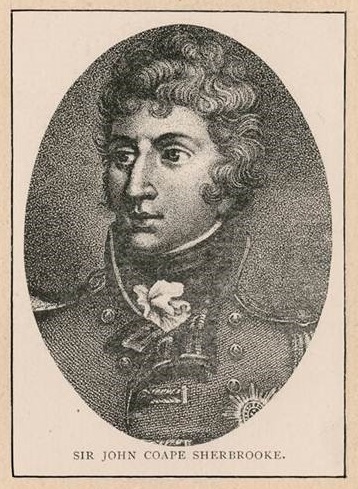
Sir John Coape Sherbrooke: Military Hero, Governor General, Clairvoyant?

Last year, Library and Archives Canada (LAC) acquired an important collection of documents relating to the Canadian career of Sir John Coape Sherbrooke (1764-1830). His pivotal role in the defence of the British colonies that would become the Atlantic Provinces during the War of 1812 led to his appointment as Governor General of British North America in 1816. However, his arrival in Nova Scotia in October of 1811 was not his first time in Canada.

Detail from an engraving. Portrait of Sir John Coape Sherbrooke

Portrait of Sir John Coape Sherbrooke (Mikan 4310479)

Continue reading

Validating your ancestor’s arrival in Canada before 1865

So you have searched the immigration records prior to 1865, and still no trace of your ancestor? If you didn’t find your ancestor’s arrival before 1865, Library and Archives Canada (LAC) has other genealogical resources that can assist in confirming an ancestor’s arrival in Canada.

Where did he or she settle?
Is he or she listed in census returns? LAC’s collection of census databases, which can be searched by a person’s name, can confirm an individual’s presence as early as 1825. Perhaps a reference exists for one of the parents (recorded as the head of the family) or for a sibling.

Many early settlers submitted petitions to obtain land where they could establish their family in Upper Canada or Lower Canada. LAC’s databases provide references to land transactions that give the person’s name, the date of the application and the county or township within a province.

Perhaps he served in the military?
Muster rolls, pay lists and various registers can reveal useful information when tracing former military personnel. Have a look at the Military page where many finding aids are searchable by name. For example, the RG8, C Series (British Military and Navy Records) includes records about Loyalist regiments, the War of 1812, and the Canadian militia. The documents for the RG8, C Series have been digitized and are searchable by name on our website. Refer to the Help pages for explanations of the records.

Life events in records
The date of arrival in Canada can be estimated by searching birth, marriage, and death records for first occurrences such as the birth of a child to confirm the presence of the family in a location. Consult our previous blog on how to search for Birth, Marriage and Death Records.

Published sources
Family histories, historical atlases and other published works can be searched in AMICUS, LAC’s online catalogue. It is also possible that your ancestor lived in a location that published a city directory.

The genealogical community
Many genealogical societies have resources specific to where your ancestor settled. Finding aids that describe a location are valuable tools when searching for ancestors.

Happy discoveries!

The Battle of Ortona

December 1943. While the Allied offensive in Italy stagnated on the Western Front outside Cassino, the British Eighth Army, which included the 1st Canadian Division, was advancing on the Eastern Front. The Canadians received orders to push forward and liberate the port town of Ortona.

From December 6 to December 8, Canadian regiments crossed the Moro River. Only three kilometres from the road to Ortona, they encountered a huge obstacle: a gully running parallel to the road. Canadian units would suffer extensive casualties in repeated attempts to cross the gully. On December 13, “C” Company of the Royal 22e Régiment, supported by the Ontario Regiment’s Sherman tanks, made it across the gully and advanced toward the road between Rome and Ortona. Under German fire, the survivors withdrew to Casa Berardi and fiercely defended their position. Captain Paul Triquet, commander of “C” Company, would be awarded the Victoria Cross for his courageous and determined leadership throughout this engagement.

Despite the breach, Canadian forces met strong German resistance from the many entrenched positions along the length of the gully. However, the capture of a strategic crossroads by the Royal Canadian Regiment on December 19 paved the way for the final push to Ortona.

On December 21, troops from the Loyal Edmonton Regiment and the Seaforth Highlanders of Canada, supported by tanks from the Régiment de Trois-Rivières, launched an assault on the town of Ortona. Canadian Command had expected the German paratroopers to retreat as soon as the Allies struck; instead, they put up a stubborn defence of the town.

The Canadians finally took Ortona on December 27. The ruined town was dubbed “Little Stalingrad.” With the Italian winter setting in, it was here their advance was halted. Canadian troops left the Adriatic front at the end of April and moved south of Cassino in preparation for the Liri Valley offensive.

Library and Archives Canada’s collection contains numerous textual, photographic, audiovisual and published materials relating to the Battle of Ortona. You can also consult Mark Zuehlke’s book, Ortona: Canada’s Epic World War II Battle, to learn more about the topic.

Be sure to view our Battle of Ortona photo set on Flickr, and read our previous post, “Understanding the Italian Campaign,” if you haven’t already!

Understanding the Italian Campaign (1943-1945)

This year marks the 70th anniversary of the battles fought by Canadian troops on Italian soil during the Second World War. Why Italy? In 1942, the Soviets were calling for the opening up of a second front in Western Europe to provide relief from German attacks on their territory. Convinced that there were insufficient resources to invade France, the Americans backed Britain’s proposal to organize a landing on the coast of French North Africa instead, which took place on November 8, 1942 (Operation Torch) The campaign to drive the Germans out of Africa was successfully concluded in Tunisia on May 13, 1943. The offensive continued in Italy, considered to be the weakest link in the German defences in Europe.

Under the command of the British Eighth Army, the 1st Canadian Division came ashore on the beaches of Sicily on July 10, 1943. With the capture of Messina by the Americans on August 18, the conquest of Sicily was complete. On September 3, Canadian troops landed in mainland Italy. Meeting no opposition, the brigades were able to deploy rapidly. Italy capitulated on September 8, and the next day, Anglo-American landings were launched in the Gulf of Salerno.

Three critical battles will forever stand out in Canadian military history: the battle of Ortona, the breach of the Hitler Line (Liri Valley), and the breach of the Gothic Line. The Italian Campaign continued until the spring of 1945, but the Canadians would not participate in the final victory; after having engaged in vicious fighting for 18 months, Canadian troops were withdrawn from the front at the end of January 1945 and redeployed to the Netherlands.

As a result of the attention focused on the Normandy landings and the North-West Europe Campaign, there is a tendency to overlook the importance of the Italian Front and the Allied soldiers who fought there. A total of 92,757 Canadians served in Italy. Of these, 5,764 were killed, 19,486 were wounded and 1,004 were captured. Library and Archives Canada’s collection contains numerous textual, photographic and audiovisual records and published materials relating to the Italian Campaign.

Learn more about this subject:

Contributions of Indigenous Peoples in the First World War (1914–1918)

Indigenous peoples have a long tradition of military service in Canada dating back several centuries. Although not legally required to participate in the war, an estimated 4,000 Status Indians, and an unrecorded number of Métis and Inuit enlisted voluntarily and served with the Canadian Corps in the Canadian Expeditionary Force (CEF).

Almost all of the young men on many reserves enlisted for service. For example, approximately half of the eligible Mi’kmaq and Maliseet from New Brunswick and Nova Scotia volunteered for overseas duty. In other provinces, the number was even higher. In the small Saskatchewan community of File Hills, nearly all of the eligible men signed up to fight.


A number of Indigenous men who served in the CEF became snipers or scouts. Private Henry Norwest, a Métis from Fort Saskatchewan, Alberta, was one of the most famous snipers. Another proficient sniper was Corporal Francis Pegahmagabow, an Ojibwa from Parry Island Band, near Parry Sound, Ontario. Three-time recipient of the British Military Medal and two bars, Corporal Pegahmagabow was the most highly decorated Aboriginal soldier of the First World War. Lieutenant Cameron D. Brant, from the Six Nations of the Grand River Reserve near Brantford, Ontario, enlisted only three days after the Germans declared war on August 4, 1914. He died from poisonous gas during the Second Battle of Ypres, Belgium, in April 1915. Another Aboriginal man who served in the war was Olympic runner Tom Longboat, also from the Six Nations of the Grand River Reserve.

Indigenous women also made great sacrifices and played significant roles working behind the battle scenes. Nurse Edith Anderson, a Mohawk from the Six Nations of the Grand River Reserve, joined the Army Nurse Corps of the American Expeditionary Forces, and worked at an American hospital base in Vittel, France. Most of her work involved caring for patients who had been shot or gassed.

The exact number of Indigenous soldiers who lost their lives during the First World War is not known. It is estimated that at least 300 men were killed during battles or died from illness, such as tuberculosis.

Five Heritage Films on Canada at War now on YouTube

Library and Archives Canada (LAC) has released the last set of heritage films on its YouTube channel. Easy to access, you can now enjoy the following short films:

You can see our previous announcements on Snapshots of Canadian Life, Scenic Canada, and Agriculture and Industry.

The “ghost” Colonel…and other “spooky” portraits in Library and Archives Canada’s collection

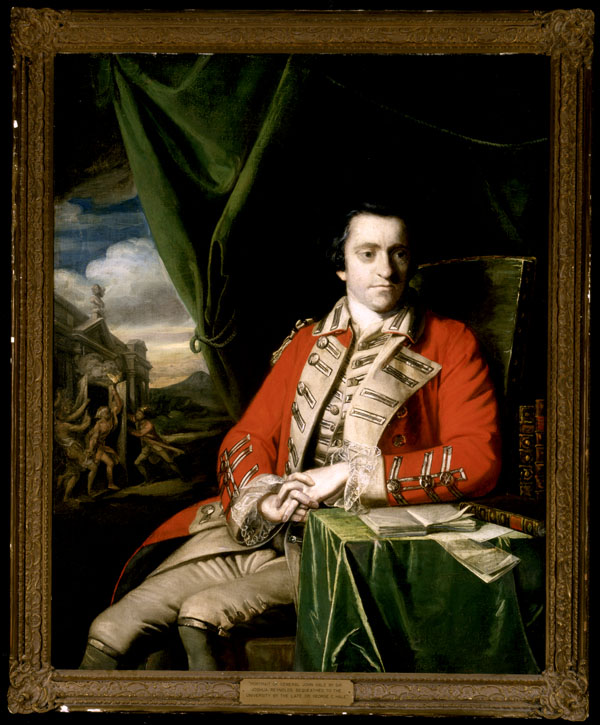
One of the most beautiful and rare oil paintings in Library and Archives Canada’s collection is this portrait of Colonel John Hale (1728–1806). After returning to England as a hero of the Battle of the Plains of Abraham (1759), Hale had this portrait painted by Sir Joshua Reynolds (1723–1792), a famous portrait artist, who is also renowned for his experiments with paint materials and for his stubborn attitude towards the use of one particular colour.

Portrait of Colonel John Hale, circa 1763-1764.

Portrait of Colonel John Hale, circa 1763-1764. Source

In the portrait, the lapels of Hale’s uniform are edged in black in honour of the death of General James Wolfe (1727–1759), a reminder of the most recent and significant battle in Colonel Hale’s career. The unusually pale colour of Hale’s face and hands fits well with this serious subject matter. It also seems appropriate for a portrait of a man who lived a long time ago — as modern viewers might expect, Hale appears to be a ghost out of the past.

But Hale’s otherworldly appearance is really a complete accident. To create a flesh colour for faces and hands, Reynolds mixed white pigment with carmine, a dark red pigment made from crushed South American beetles. Unfortunately, early carmine was “fugitive” — it disappeared quickly when exposed to light. This is especially true when, as in this portrait, carmine is mixed with white. White is a colour pigment that is less able to protect carmine from light exposure. Carmine fades away, and white is the main colour that remains behind.

Even within Reynolds’ lifetime, the pale faces in many of his early portraits were noticed. Yet Reynolds is famous for refusing to use vermilion, the more stable but less natural shade of red. He is said to have responded to the suggestion by looking at his own hand and saying: “I can see no vermilion in flesh.”

For more “spooky” portraits, visit our Flickr album.