The invention of basketball and the Canadian participants in the first ever basketball game

By Normand Laplante

December 21, 2016 marks the 125th anniversary of the invention of basketball by Canadian James Naismith and of the first game ever played. In the fall of 1891, Naismith was studying to become a YMCA physical education instructor at the International YMCA Training Institute in Springfield, Massachusetts. He was given the task of finding a suitable indoor recreational sport for a physical education class for men aspiring to become executive YMCA secretaries. This group of “incorrigibles” had shown little interest in undertaking traditional calisthenics and gymnastics exercises and their reluctance had led the two previous physical instructors assigned to the group to quit. Naismith first attempted to have the class play modified indoor versions of football, soccer and even the Canadian game of lacrosse. However, these initiatives proved unsuccessful, largely due to the physical restraints imposed by a small gymnasium. Naismith then came up with the idea of a new sport, based on a children’s game Duck on the rock, where two teams would battle each other to throw a ball into the opposing team’s basket to score points. On December 21, 1891, Naismith presented his 13 rules for the new game to the class and separated the group into two teams of nine players. While the final score of the game was only 1-0, the new sport proved to be a big hit with the players.

A black-and-white photograph with a list of all the players pictured, as well as those missing from the photograph who were part of the first team.

Members of the world’s first basketball team, Springfield, Massachusetts, 1891 (c038009-v8)

The participants in the first game included four Canadians who, like Naismith, were studying at the International YMCA Training Institute in Springfield: Lyman W. Archibald, Finlay G. MacDonald and John George Thompson, from Nova Scotia, and Thomas Duncan Patton, from Montreal. As graduate trainees of the Institute returning to their new duties in Canada, some members of the “First Team” were
instrumental in spreading the new sport through the YMCA network in different regions of Canada.
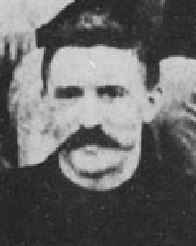
Detail from a black-and-white photograph of the first basketball team.

Lyman W. Archibald, Springfield, Massachusetts, 1891 (c038009-v8)

Originally from Truro, Nova Scotia, Lyman W. Archibald (1868-1947) became general secretary and physical director of the St. Stephen, New Brunswick, YMCA in 1892 and organized one of the first basketball games played in Canada in the fall of 1892 in this town on the Canada-US border. In 1893, Archibald moved on to Hamilton, Ontario where, as a YMCA physical instructor, he brought the sport to that region.

Update (January 2024): While the St. Stephen court is the oldest surviving basketball court in the world, new research reveals that it is highly probable Ottawa is the birthplace of the sport in Canada, since it was the first place on record to organize a game of basketball. As described in The Ottawa Journal newspaper, the first recorded game took place at the Ottawa YMCA on Monday, October 3, 1892, when the facility reopened for the winter. This was less than 10 months after the first ever basketball game played at Springfield College under Dr. Naismith.
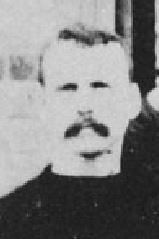
Detail from the black-and-white photograph of the first basketball team.

John G. Thompson, Springfield, Massachusetts, 1891 (c038009-v8)

After graduating from the YMCA Training Institute in 1895, John G. Thompson (1859-1933), from Merigomish, Nova Scotia, returned to his home province and, in 1895, was appointed physical education director at the new YMCA building in New Glasgow, where he introduced basketball to the Pictou County region.
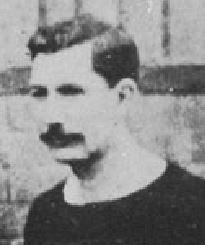
Detail from the black-and-white photograph of the first basketball team.

T. Duncan Patton, Springfield, Massachusetts, 1891 (c038009-v8)

T. Duncan Patton (1865-1944), originally from Montreal, was one of the two team captains selected by Naismith for the first game. He is said to have introduced the sport to India as a YMCA missionary in 1894. Later on, as YMCA secretary in Winnipeg in the early 1900s, Patton influenced the early organizers of the game in that city.

Library and Archives Canada (LAC) holds the D. Hallie Lowry collection which includes photographs of Naismith and of participants of the first basketball game in Springfield. The National Council of Young Men’s Christian Associations of Canada fonds includes a copy of James Naismith’s 1941 book, Basketball: Its Origins and Development, autographed by some of the members of the first basketball team, including Canadians T. Duncan Patton and Lyman W. Archibald; and Patton’s personal published account of the origins of the sport, Basketball: How and When Introduced, written before 1939. LAC’s collection also has photographs of early basketball teams which provide visual documentation of the development of the sport in Canada.

A black-and-white photograph showing four young men posing around a basketball.

An early photograph of a Canadian basketball team which included Norman Bethune (second from the bottom) with Clark, Lewis and McNeil, members of the Owen Sound Collegiate Institute basketball team, ca 1905 (a160721)

Related Links


Normand Laplante is a senior archivist in the Society and Culture Division of the Private Archives Branch at Library and Archives Canada.

Update (January 2024): Leo Doyle is the founder of the Ottawa Basketball Network, a not-for-profit organization that advocates for improved growth and equitable access to the game of basketball.

Images digitized through the Documentary Heritage Communities Program

This album features examples of images that have been digitized by external heritage communities and that have received funding for digitization and access projects.

The Documentary and Heritage Communities Program (DHCP) ensures that Canada’s continuing memory is documented and accessible to current and future generations by adopting a collaborative approach with local documentary heritage communities. The program is delivered in the form of contributions that support the development of Canada’s local archival and library communities by increasing their capacity to preserve, provide access to and promote local documentary heritage. Additionally, the Program provides opportunities for local documentary heritage communities to evolve and remain sustainable and strategic.

The DHCP provides financial assistance to the Canadian documentary heritage community for activities that:

  • increase access to, and awareness of Canada’s local documentary heritage institutions and their holdings; and
  • increase the capacity of local documentary heritage institutions to better sustain and preserve Canada’s documentary heritage.

How much does your collection weigh? – Part two

By Lisa Hennessey

In 2011, construction of Library and Archives Canada’s (LAC) new Nitrate Film Preservation Facility (NFPF) was complete. This building was constructed following the National Fire Protection Association’s Standard for the Storage and Handling of Cellulose Nitrate Film (NFPA 40) and, as such, LAC had to follow certain rules. One of these rules limits the total amount of nitrate film that can be housed in each fire-resistant storage compartment to 305 metres (1,000 feet).

The NFPA 40 guidelines speak in terms of length of film and were clearly written for motion picture film, this format being easily measured in metres or feet. Dealing in length of material is harder, however, when planning for the storage of nearly 600,000 still photographic negatives of various formats stored across 1,600 containers. How much is 305 metres when you are talking about a container full of 4×5 negatives? Instead, LAC decided to deal in weight. It was estimated that 305 metres of motion picture film represents approximately 4.5 kilograms (10 pounds) of nitrate. This would be our new maximum amount per compartment.

For the most part, LAC’s nitrate negatives are housed in paper envelopes (sometimes multiple negatives per envelope) and stored in cardboard containers. To determine the total weight of nitrate film per container the first step was to find out the weight of an empty container. LAC staff weighed an empty sample of each of the various container types found in the collection. We also weighed an empty sample of each size of envelope. Next, a survey team worked through the entire collection weighing each full container and then estimating the number of envelopes of each size inside. Once this was known, it was simply a matter of subtracting the weight of the physical container and the paper envelopes from the total weight, which resulted in a pretty good estimate of how much nitrate was in each container. Any container that was found to have more than 4.5 kilograms of nitrate film was rehoused in two containers.

A colour photograph of a woman wearing nitrile gloves and taking a negative out of an envelope. The table in front of her is full of envelopes and archival boxes.

Rehousing nitrate film in new containers

Continue reading

How much does your collection weigh?

By Lisa Hennessey

This may not be a typical question faced by an archive or library, but it was a question Library and Archives Canada (LAC) had to answer back in 2009 when preparing to move its nitrate film collection to a new storage facility.

At first blush, the obvious solution to this question would be to bring in a scale and weigh all the boxes. However, in this particular case LAC needed to calculate only the weight of the nitrate film itself, not the weight of any containers, envelopes, film cans or albums. That was a challenge. How do you weigh a collection without actually weighing it?

LAC’s nitrate collection consists of 5,575 reels of film, dating from as early as 1912, and close to 600,000 still photographic negatives. From the early 1970s on, this material was stored at a facility on the Rockcliffe Air Base in Ottawa, Ontario. Built in the 1940s to house aerial photographic material produced by the Department of National Defence, the Rockcliffe building was showing its age by the late 1990s and a proposal was put forward to build a new storage building for the nitrate film. In 2011, construction on the new Nitrate Film Preservation Facility (NFPF) was completed.

A colour photograph of the entrance of a grey building with a row of yellow flowers in front.

The Nitrate Film Preservation Facility

Continue reading

Five years of blogging at Library and Archives Canada!

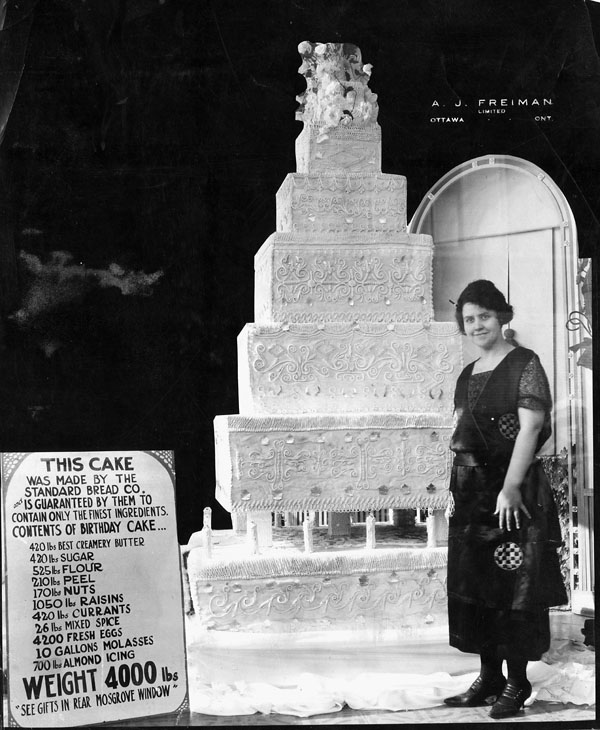
A black-and-white photograph of a giant cake with a young woman standing on one side of the cake and on the other side is a poster with a list of ingredients contained in the cake.

Woman standing next to a 4,000 pound cake made to promote Freimans department store (MIKAN 3615467)

It’s been five years today since we published our first blog, “Published Histories: Discover what individuals or military units did during the war” and since then more than 650 posts have been published.

It is very easy to forget major milestones in a project and yet it is so important to look at the past to realize the progress we have made.

This is the perfect opportunity to thank everyone who made it possible to succeed. We can’t name all who contributed to the success of the blog, but we want to thank everyone who did.

How does an article get published?

Before a blog is posted, there is a lot of collaboration among the different teams throughout the organization. First, the blog has to be written by content experts working at Library and Archives Canada (LAC) and they do it on a completely voluntary basis. Then there’s an initial review and formatting of the text before sending it off to Communications for editing and translation. Once we have final copies in both languages, they are uploaded to WordPress simultaneously.

Our blog highlights our collection and our services. We have a lot of awesome images and documents, but sometimes copyright stands in the way. And even though we double- and triple-check articles prior to publishing, sometimes a mistake gets through or a link is broken—so we appreciate it when our readers let us know.

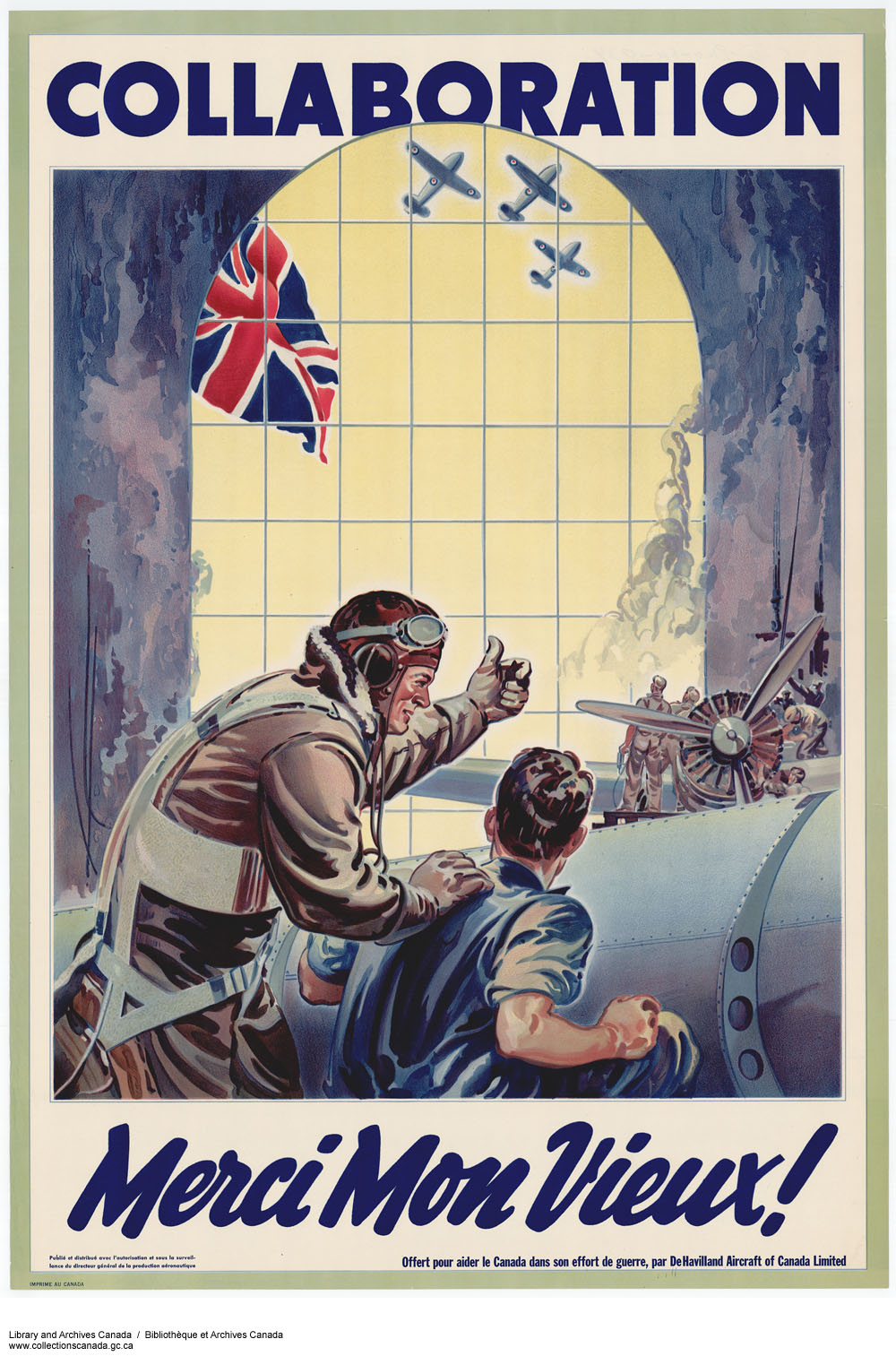
A colour print showing a pilot talking to a mechanic in an airplane hangar. Flying planes and a British flag can be seen through the window. The word “Collaboration” is written at the top of the poster and “Merci Mon Vieux!” is at the bottom.

A poster about Canada’s war effort and production sensitive campaign titled, “Collaboration: Merci Mon Vieux!” (MIKAN 2846765)

What we have written about

In five years, we have touched upon many subjects such as searching the collection, genealogy and family heritage, rare books, immigration, and military heritage. The most popular topics are military heritage for the English blogs, and genealogy for the French blogs. The most popular English blog is The 1940 National Registration File and the most popular French blog is Recherche d’actes de naissance, de mariage et de décès (English version). We will continue to make our collection known with some special projects scheduled for next year such as a series of blogs resulting from a partnership between LAC and The National Archives (UK), another series about Canada 150, and a lot more. Follow us so you won’t miss any of it!

Of course, the blog wouldn’t exist without you—so a big thank you to all our readers! We are happy to share our knowledge so you can learn and discover more about your Canadian heritage.

Now how about a slice of that cake?

The Altona Haggadah: The conservation and rebinding of an 18th-century illuminated manuscript

By Doris St-Jacques, Lynn Curry and Maria Trojan-Bedynski

The 1763 Haggadah manuscript is part of the Jacob M. Lowy collection of Judaica and Hebraica at Library and Archives Canada. It was created in Altona, Germany, which at the time was one of the Danish monarchy’s most important harbour towns and a major center of Jewish life and scholarship. The manuscript could be described as a sophisticated form of folk art and an important social document, giving testimony to how middle-class Ashkenazi Jewish families celebrated Passover. The Haggadah contains 97 illuminated miniatures and was intended to be read during the Jewish Passover Seder meal.

An analysis of the 48 pages of handmade paper textblock conducted at the Canadian Conservation Institute (CCI) revealed that the text is handwritten in iron gall ink and the pigments used in the miniature paintings are predominantly vermilion (red), Prussian blue, and atacamite/verdigris (green copper-based). A yellow glaze-like paint was also identified and the gold-toned colours were found to contain flakes of brass.

The paper, inks and many painted areas were in fragile condition due to corrosion of the iron gall inks and the copper-based pigments. There are also large brown stains on several pages caused by splashed red wine, likely having occurred during the Seder meal.

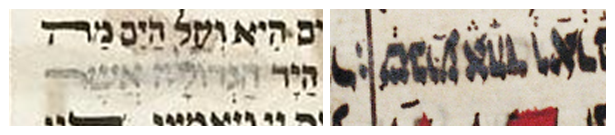
Two close-up colour images of pages from the manuscript. On the left, Hebrew writing with cracks in the ink letters and on the right, some colour miniature paintings in red and green.

Two examples of cracks and losses in the manuscript, caused by the corrosive nature of the iron gall inks and copper-based pigments.

Over 20 years ago, the Haggadah was removed from its covers for deacidification of the textblock and repair of cracks and tears. A more recent examination of the manuscript revealed new cracks and losses in the paper, inks and pigments (media). It was evident that the previous deacidification treatment was unable to completely protect the paper from continued deterioration. Damage caused by the corrosion of copper-based media is a problem in archival collections worldwide. To find a treatment that would protect the Haggadah media from further corrosion, a joint research project between Library and Archives Canada (LAC) and CCI was conducted to test known antioxidants. Due to the water sensitivity of the media in the Haggadah, only solvent-based antioxidants were included in the research project.

Laboratory-prepared inks and pigments similar to that of the Haggadah—iron gall ink, iron-copper ink, atacamite and verdigris pigments—were applied to strips of paper. These samples were then artificially aged to simulate the aged paper and media of the Haggadah. The aged samples were then treated with one of the six treatment combinations used in the study, followed by additional heat aging intended to simulate the effectiveness of the various treatments after many years. Tests conducted on the samples included colour analysis, pH measurements and strength testing of the paper, carried out before and after the treatments and aging.

Colour photograph of laboratory material: four clear glass containers placed side by side with a sheet of paper in each one and bottles of chemicals behind them.

Ink and pigment samples in glass trays are being treated with solvent-based antioxidants.

We will confirm the results of this project with other research studies before selecting a specific antioxidant treatment for the Haggadah. In the meantime, the cracks and losses in the paper were mechanically stabilized using a solvent-remoistenable, ultra-thin transparent paper called Berlin tissue, which had been pre-coated with gelatin. Gelatin is known to prevent the spread of corrosive iron ions further into the surrounding paper.

Close-up images side by side of an old, opaque repair and a new transparent repair which allows the text to be read easily through it.

On the left, a close-up of an old repair, which obscured the text beneath. On the right, a new ultra-thin Berlin tissue repair, which allows the text to be read easily.

To prevent the transfer of inks, pigments or corrosion products onto facing pages, interleaving paper was required. Though the Haggadah was not being treated directly with an antioxidant, we decided to improve the aging properties of the manuscript indirectly by impregnating the interleaving papers with both an alkaline buffer and an antioxidant.

It was not possible to re-use the damaged original cover boards of the binding for various reasons. Instead, possible binding structures were researched and many samples were created and tested. We concluded that a sewn-board binding would meet the requirements for the Haggadah. The binding opens flat and stress-free and will provide optimal support during handling. Using supple boards and very little adhesive, the binding integrates the interleaving tissue, is dimensionally stable, and will be reversible in the future if further treatments of the Haggadah are conducted. The sewn-board binding style is also documented and supported as a conservation binding for 17th to 19th century volumes, so it was an appropriate style for the Haggadah.

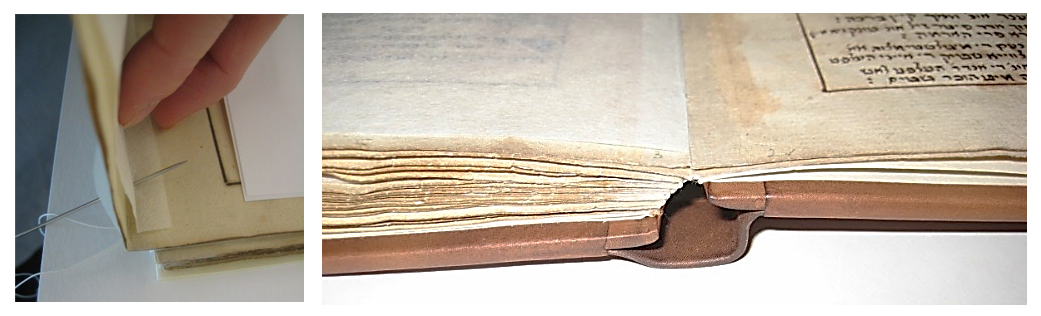
On the left, a close-up of a hand holding a page of a book and a needle piercing through the page. On the right, a close-up of the bottom spine of the book laying open on a table.

On the left, a conservator is sewing the interleaving into the textblock. On the right, the sewn-board binding is open showing that the manuscript can be viewed without stress.

To be consistent with the design elements on the covers of the previous binding, the new leather covers were finished with blind tooling, which is the impressing of text or a design on a book cover without the use of colour or gold leaf. Five small fleuron were blind stamped onto the spine to provide a visual clue to the orientation of the book, which opens left to right.

The newly bound Haggadah manuscript is currently stored in a custom clamshell box along with the original covers in a controlled environment of 18°C and 40% RH. Its condition has been greatly improved, and it can now be handled safely while awaiting a future antioxidant treatment.

For more historical information, read the previous blog, “From the Lowy Room: the brightly illuminated manuscript of the Altona Haggadah.”

Links to articles about the conservation of the 1763 Altona Haggadah:

Tse, Season, Maria Trojan-Bedynski and Doris St-Jacques. “Treatment Considerations for the Haggadah Prayer Book: Evaluation of Two Antioxidants for Treatment of Copper-Containing Inks and Colorants.” The Book and Paper Group Annual, American Institute for Conservation, Vol. 31, 2012, pp. 87–97.

St-Jacques, Doris, Maria Bedynski, Lynn Curry, Season Tse. A 1763 Illuminated Haggadah Manuscript: How Ineffective Past Treatments Resulted in an Antioxidant Research Project, Impacting Current Treatment Decisions.” Paper Conservation: Decisions and Compromises, Vienna, 17–19 April 2013, pp. 17–20.

Bedynski, Maria, Doris St-Jacques, Lynn Curry, Season Tse. “The Altonah Haggadah: The History, Conservation and Rebinding of an Eighteenth-Century Illuminated Manuscript.” Care and Conservation of Manuscripts 14: Proceedings of the thirteenth international seminar held at the University of Copenhagen, 17–19 October 2012, Museum Tusculanum Press, edited by M.J. Driscoll pp. 157–176.

“Collaborative Research on Antioxidants and Its Impact on Treatment Decisions for the 1763 Altona Haggadah.” Annual Review 2012–2013, Canadian Conservation Institute, pp. 6–7.


Doris St-Jacques is Paper Conservator in the Preservation Branch at Library and Archives Canada.

Lynn Curry is a Book Conservator in the Preservation Branch at Library and Archives Canada.

Maria Trojan-Bedynski is a Paper Conservator in the Preservation Branch at Library and Archives Canada.

New Books in the Genealogy Services Collection at 395 Wellington – October 2016

We’re excited to announce recently acquired genealogy publications. You can consult them in the Genealogy and Family History Room located on the 3rd floor of the Library and Archives Canada building at 395 Wellington Street.

Check out the list below. The link to the AMICUS record gives the call number you need to find the book on the shelves.

If you’re just starting out in genealogy, you should visit the Genealogy and Family History section of our website.

Happy exploring!

Church, Cemetery and Newspaper Indexes

Obituaries from the Christian guardian, 1891 to 1895, by Donald A. McKenzie (AMICUS 42197735)

Répertoire des naissances, des mariages et des décès de la paroisse de Saint-Ludger-de-Milot, 1934-1941, et de la paroisse de Saint-Augustin, 1924-1941, by the Société d’histoire du Lac-Saint-Jean, Service d’archives et de généalogie, Comité de Généalogie (AMICUS 43692197)

Baptêmes, mariages, annotations marginales et sépultures de Notre-Dame-du-Rosaire de Sherbrooke, 1942-1995, by the Société de généalogie des Cantons de l’Est (AMICUS 42040268)

Baptêmes, mariages, sépultures et annotations marginales de Sainte-Jeanne-d’Arc de Sherbrooke, 1913-2012, by the Société de généalogie des Cantons de l’Est (AMICUS 41994325)

Baptêmes, mariages, annotations marginales et sépultures de Christ-Roi de Sherbrooke, 1936-2012, by the Société de généalogie des Cantons de l’Est (AMICUS 41849903)

Baptêmes, mariages, annotations marginales et sépultures de Saint-Antoine-de-Padoue de Lennoxville, 1878-2010, by the Société de généalogie des Cantons de l’Est (AMICUS 41849905)

Baptêmes, mariages, annotations marginales et sépultures de Saint-Joseph de Sherbrooke, 1946-2010, by the Société de généalogie des Cantons de l’Est (AMICUS 42040250)

Baptêmes des paroisses Notre-Dame-de-Lourdes, 1928-1941 et Notre-Dame-Auxiliatrice, 1939-1941, by Michel Chrétien (AMICUS 41279336)

Baptêmes, mariages, sépultures et annotations marginales de Saint-Fortunat, comté de Wolfe, 1877-2013, by the Société de généalogie des Cantons de l’Est (AMICUS 42160267)

Cataraqui Cemetery burial registers: Kingston Township, Frontenac County, by the Kingston Branch, Ontario Genealogical Society (AMICUS 41669821)

Outremont, naissances : archives civiles (greffe) 1921-1941, St-Germain 1929-1942, Ste-Madeleine 1908-1941, St-Raphaël 1930-1941, St-Viateur 1902-1941, by Cécile de Lamirande (AMICUS 43564793)

Military

American loyalists to New Brunswick: the ship passenger lists, by David Bell (AMICUS 43913838)

Dictionnaire prosopographique des militaires beaucerons incluant le Régiment de la Chaudière depuis 1914, by Sylvain Croteau (AMICUS 43027689)

Family Histories

Généalogie ascendante de Irénée Bergeron, 1838 (Sainte-Croix-de-Lotbinière) – 1923 (Saint-Paul-de-Chester), by Linda Bergeron Szefer (AMICUS 42856232)

Généalogie des familles-souches de Saint-Casimir, by G.-Robert Tessier (AMICUS 43150466)

Saint-Just-de-Bretenières: cent ans d’histoire, 1916-2016: de la mémoire à la plume, by Louise Lefebvre (AMICUS 44279124)

Images of the Altona Haggadah now on Flickr 

The Altona Haggadah, a colourful handwritten and hand-illuminated manuscript on paper, created in 1763, is one of the treasures of the Jacob M. Lowy Collection at Library and Archives Canada (LAC).

The Haggadah, which means “telling” in Hebrew, is an important text in the Jewish tradition that is used during the Passover Seder, a ceremonial meal held in Jewish homes to commemorate the Israelites’ liberation from Egypt. It is a compilation of biblical passages, prayers, hymns and rabbinic literature.

You can also find incunabula (books printed before 1500), Bibles, ancient Jewish manuscripts and about 80 other Haggadot (plural of Haggadah) in LAC’s collection.

From the Lowy Room: the brightly illuminated manuscript of the Altona Haggadah

By Leah Cohen

The Altona Haggadah is one of the treasures of the Jacob M. Lowy Collection. This handwritten, colourfully illuminated manuscript on paper was created in 1763 for the holiday of Passover in Altona, Germany.

A haggadah, which means “telling” in Hebrew, is a text read during the Passover seder (“order” of service), a ceremonial meal that follows ritual steps laden with symbolic meaning. It is held in Jewish homes or public places, to commemorate the Israelites’ liberation from Egypt. The seder takes place on the first night of the holiday in Israel, and on the first two nights of the holiday outside Israel.

The rabbis instituted this “telling” based on the biblical Book of Exodus 13:8: “And thou shalt tell (higadeta) thy son in that day, saying: It is because of that which the LORD did for me when I came forth out of Egypt.”

The idea behind the seder and the haggadah is not a mere recounting of facts. Rather, the goal is to convey the experience of being a slave in Egypt who was liberated suddenly by God’s hand, and who as a free man witnessed God giving the Torah to Moses at Mount Sinai.

Examples of seder rituals

The family, or any group gathered together for a seder, carries out specific ritual steps. For example, they eat foods evocative of the slave/liberation experience, such as haroset, a mixture of ground fruit or nuts (the recipe varies), to convey the slaves’ arduous work carrying bricks. Or participants eat bitter herbs such as horseradish to recall the bitterness of slavery. They drink four glasses of wine while leaning to the left, a pose of ease, showing the behaviour of free men. The four cups of wine are intended to echo the four expressions of God’s redemption of the Israelites in the biblical Book of Exodus 6:6–8 (“I will bring you out from under the burdens of the Egyptians … I will redeem you with an outstretched arm, and with great judgments”).

Participants are encouraged to ask questions and debate, not just to read the haggadah passively. The seder aims to pique children’s curiosity, so traditionally the children recite a song asking why this night is different than any other night. The haggadah also includes prayers of Hallel, praising God. Fun-loving table songs, though not required, were added over time and are still enjoyed today.

The challenge of transmission or making the evening meaningful is accentuated because of the variety of people living in different times and places. An olive farmer in ancient Galilee would have related to the story of the Exodus from Egypt differently than, say, a 21st-century techie in Silicon Valley.

Therefore a specific haggadah is one source, among others, of popular culture for learning about a particular community. An artifact shows “mind in matter” (to quote Jules Prown), in addition to its textual content.

Why is the Altona Haggadah different from other haggadot?

The Altona Haggadah was part of a trend in Central Europe initiated by the “Court Jews.” These people, who often worked as financiers for noblemen, collected artistically designed Judaica objects for the home, such as handwritten and illuminated manuscripts. Such manuscripts were prized, even though Hebrew printing had existed since the 15th century! The existence of the Altona Haggadah shows that the collection of manuscripts was later adopted by the middle class. Because of the naive style of the art, an artist–scribe with less training could probably be commissioned—and at a lower cost than a “high-end” artist.

The small but lively Jewish community in Altona had been granted the privilege of engaging in shipbuilding by King Christian IV. As a result, there was economic stability and a middle class. The scenes of contemporary participants on the page that shows the ritual steps of the seder indicate a certain degree of comfort. For example, they are sitting on chairs that appear to be upholstered, around a sturdy table that is covered with a red cloth. In a room lit by a chandelier, each person also has the luxury of using his own haggadah.

Colourful image, in red, brown and grey, of a page from a manuscript of a Passover haggadah. The 12 ritual steps of the seder are illustrated. On the outer and inner margins beside the illustrations, text in Hebrew names the ritual and gives directions on how to carry it out in Yiddish (written in the Hebrew alphabet).

The illustrations show the ritual steps of the seder being carried out by contemporary participants. The scenes provide a snapshot of the Jewish lifestyle in Altona in the 1760s (AMICUS 33226322).

The Altona Haggadah also informs us that Jews in Altona had much in common with Jews elsewhere during the early modern period. For example, the scribe painstakingly wrote the commentary of Don Isaac Abravanel, 1437–1508, in small cursive letters, wrapped around the central text. This commentary, with its emphasis on redemption, written by a Jewish man who was forced to flee the Iberian Peninsula, was first printed in 1505 and is commonly found in Passover haggadot.

The artist and his work

The study of the Altona Haggadah, like that of any visual source, is an opportunity to learn about the artist and the iconography.

The name of the artist–scribe Elkanah “Pituhe Hotem” (literally, Elkanah, “engraver of the seal,” referring to the engraved stones in the shoulder piece of the High Priest in biblical Jerusalem), son of Meir Malir (Meir, the Painter, in Yiddish) is found in the colophon, the closing statement at the end of the Altona Haggadah.

We know of only two other manuscripts that Elkanah created. One of these, at the Jewish Theological Seminary in New York, is a haggadah on vellum, or animal skin, whereas the haggadah at the Jacob M. Lowy Collection is on paper. The other manuscript, “Tikune Shabat” (special prayers for the Sabbath), is found in the Klau Library of Hebrew Union College in Cincinnati.

The Lowy haggadah has a unique feature: an “omer” calendar. This is a calendar used to count the 49 days from the second night of Passover until the holiday of Shavuot, which celebrates the giving of the Torah to the Israelites. An omer is a biblical unit: a measure of grain. On the second night of Passover, an omer of barley was brought to the Temple as an offering, which marked the first day of the count. Since no Jewish calendars were printed in Altona during the 1750s and 1760s, the omer calendar may have been a welcome way to keep track of the count.

A colour image of two pages from a book. The writing is in Hebrew, in red and black, and includes mystical references. Some squares are colourful pieces of paper with a simple floral design, which were affixed to the calendar.

The Omer calendar, in which each square represents the cumulative days counted from the second day of Passover to Shavuot (AMICUS 33226322).

The scribe–artist Elkanah, or the patron who commissioned the Altona Haggadah, was influenced by the Amsterdam Haggadah or its many subsequent imitations. The Amsterdam Haggadah, which was printed in 1695, featured innovative copperplate engravings.

A collage presenting, side by side, the same page from two different editions of a book. In both images, there are drawings of two men standing on each side of a text in Hebrew. The page on the left is in colour, while the page on the right is in grey tones.

The colourful title page of the Altona Haggadah, 1763, is on the left (AMICUS 33226322); the engraved title page of the Amsterdam Haggadah, 1695, is on the right (AMICUS 29060785). Both show Moses and Aaron as well as vignettes (small illustrations) of Bible stories. The imagery in the Altona Haggadah has been simplified, and there are fewer vignettes—only three in medallions on the top of the page.

Another example of the influence of the Amsterdam Haggadah can be seen in both editions’ representations of the four sons. The four sons symbolize the attitudes of four types of participants in the seder: the wise son, the wicked son, the innocent son and the son who does not even know how to formulate a question.

A collage presenting, side by side, part of a page from two different editions of a book. Both images have four men with different clothes and poses; the images are alike because the corresponding men are dressed and posed similarly. The page on the left is in colour, while the page on the right is in grey tones.

The colourful illustration of the four sons in the Altona Haggadah is on the left (AMICUS 33226322); the engraved version of the four sons in the Amsterdam Haggadah is on the right (AMICUS 29060785).

Elkanah, the artist–scribe, used iron gall ink, notorious now for its corroding effect on paper, to write the text. He illuminated it with colours whose pigments included copper and other metals. Both ink and pigments caused corrosion that even a de-acidification in 1987 could not stop. The Altona Haggadah was brought to Library and Archives Canada’s conservators in 2007. How would they save this cultural artifact? They will share their secrets in the following blog, to be published next week.

Related sites:


Leah Cohen is a curator at the Jacob M. Lowy Collection, Library and Archives Canada.

Published Sources for Aviation Accident Reports

By Megan Butcher

In our previous blog post on searching for aviation accident reports, you learned that you need to know a few basic details before starting your search:

  • Aircraft model
  • Accident date and location
  • Aircraft registration number
  • Aircraft type (civilian or military)

This is a great starting point if you have those details already. But what if you don’t? There are a few different ways to find what you need.

To start with the most broadly accessible resources, while the following two databases aren’t exhaustive, they do include quite a number of Canadian aircraft accidents, including the first fatal accident in 1913:

Local newspapers can also be a great resource to find at least some of the details. You could start your newspaper research here at Library and Archives Canada (LAC) by checking out our microform holdings. If you aren’t able to visit us in Ottawa, you could contact your local library instead to see if they’re able to borrow the reels you need from us or another library.

If you’re still missing some important details, you may have some luck with the Canadian Aviation Safety Board annual reports and aircraft accident synopses. Most of the entries are very short, but sometimes they include a surprising amount of occasionally heartbreaking information:

A typewritten document on white paper giving details about an aircraft accident that occurred on September 8, 1978.

Synopsis of an aircraft accident from the annual report of the Canadian Aviation Safety Board, 1980, Issue 5, p 56 (AMICUS 2828768)

Our collection includes many issues from the following years:

  • 1967: Accidents to Canadian registered aircraft. Canadian Air Transportation Administration. Aircraft Accident Investigation Division. AMICUS 3236225
  • 1968-74: Aircraft accidents. Canadian Air Transportation Administration. Aircraft Accident Investigation Division. AMICUS 11371
  • 1975-84: Synopses of aircraft accidents; civil aircraft in Canada. AMICUS 2828768
  • 1984-89: Annual report. Canadian Aviation Safety Board.  AMICUS 5348822

There are also two other publications that we don’t have, but about which you could ask your local librarian:

  • 1947-1958: Canada. Civil Aviation Division. Annual report on aircraft accidents: 1947-1958. — [Ottawa], Dept. of Transport, Air Services Branch, Civil Aviation Division
  • 1960-1963: Canada. Civil Aviation Branch. A survey of accidents to aircraft of Canadian registry, 1959-1962. — Ottawa, [1960-1963]

If you find anything in our collection you’d like to see, you can view it onsite, request a reproduction, or talk to your local library about the possibility of borrowing it through our Loans to Other Institutions program

.And, as always, if you’re stumped and need help, don’t hesitate to ask us a question!


Megan Butcher is a Reference Librarian in Reference Services Division at Library and Archives Canada.