Looking for the Debates of the House of Commons (Hansard) online?

Are you searching for the Debates of the House of Commons, also known as Hansard? Depending on the dates you are looking for, a great place to start your research is online. However, only the very early years and the very recent years are available online; those in between are not.

Here is the breakdown:

1867–1900

The full texts of Hansard for the years 1867–1900 are available online through the Early Canadiana Online (ECO) website [http://eco.canadiana.ca/?usrlang=en]. While some of the content in ECO is only available to subscribers, the Debates of the House of Commons are available for free and do not require a subscription.

1901-1993

Hansard for the years 1901–1993 are not yet available online. Library and Archives Canada holds these years in print and in microform. Many university and public libraries hold print or microfilm/microfiche copies of Hansard. Please contact your library for more information. If you are a university or college student, check your school library website to see if there is a research guide for government or parliamentary publications, which can save you a lot of time.

Library and Archives Canada has participated in a project to digitize the full-text of Hansard for 1901-1993. When this digitized content is available online, we will post an announcement on this blog.

1994-Present

The full texts of Hansard from the 35th Parliament (January 1994 onwards) are accessible online from the Parliament of Canada website [www.parl.gc.ca]. Select “Parliamentary Business” (top left), then “In the House of Commons Chamber” (left column). Choose the Parliament and Session from the list on the left.

Tips

  • The Debates are always organized by Parliament and Session. A handy reference tool to find the Parliament and Session [www.parl.gc.ca/ParlInfo/Lists/Parliament.aspx?Language=E] that correspond to the dates you are looking for is available on the Parliament of Canada website.
  • The Debates have detailed indexes. In the early years, these indexes were in the same volume as the Debates. In the later years they were printed in a separate volume.

Questions or comments? We would love to hear from you!
Did your ancestors come from Italy?

Do you wonder who your first Italian ancestor was and when he or she left Italy and arrived in Canada? Are you curious about your family’s Italian heritage?

If so, the LAC website is a great place to begin your research. For instance, you will find a page specific to genealogical research for the Italians. It provides you with historical background, LAC‘s archival collections and published material, as well as links to other websites and institutions.

If your ancestor came to Canada between 1865 and 1935, you might find his or her name on passenger lists.

Tip

Tracing your Italian ancestor in Canada is the first step. Joining a genealogical society is an ideal way to begin your genealogy research.

Questions or comments? We would love to hear from you!

The Top Five Things You Need to Know Before You Visit

Are you visiting Ottawa to do some research at Library and Archives Canada? Before you arrive, there are five things you need to know:

1. All researchers need a user card

You can register for a user card in two ways, either in person at the registration desk or online by submitting the User Card Registration Form. Present your photo ID at the registration desk to retrieve your user card.

You must read and agree to the terms and conditions in the User Agreement before you can obtain the user card.

2. There is a difference between service hours and opening hours

Our service points, including the registration desk, are only open during service hours when staff is on site and ready to help you. The building is accessible during opening hours, but staff is unavailable. These hours are posted on the Visit Us section of our website and in the building.

3. Order your research material in advance

At least five business days before your visit, order up to ten items of archival material by using our online Material Retrieval (Onsite Consultation) Form. You may order up to five items of published materials the same way as above, or place your order by telephone at 613-996-5115 or 1-866-578-7777 (toll-free in Canada and the US) by selecting option 8 in the automated menu.

4. Book your reference appointment, if necessary

We are applying a new approach to service delivery. This means that no appointment is necessary for basic orientation and genealogy services, which are available from 10 a.m. to 3 p.m., Monday to Friday. However, you must book an appointment if you need to consult our reference experts or genealogy specialists.  See the Contact Us section of our website for more information.

5. Where to start your online search

There are a variety of databases to choose from, so we encourage you to watch this 90-second video tutorial to help you determine “How to Begin your Search Online.”

Questions or comments? We would love to hear from you!

Summary of comments received in French up to September 30th, 2013

  • LAC added that there is no need to make an appointment for basic assistance for genealogical research. Staff is available from 10 AM to 3 PM, Monday to Friday. However, you must book an appointment if you want to consult with staff before or after those hours.

Royal Tour: The Duchess of Cornwall’s Canadian Ancestors

Did you know that Camilla, Duchess of Cornwall and wife of Prince Charles, has among her ancestors a Premier of the Province of Canada and two New France pioneers, Zacharie Cloutier and Jean Guyon?

How is this possible?

It’s simple. The Duchess of Cornwall’s great-great grandfather, William Coutts Keppel (1832-1894), visited Canada and married Sophia Mary MacNab (1832-1917), on November 15, 1855, in Hamilton, Ontario.  She was the daughter of Sir Allan Napier MacNab (1798-1862),  Premier of the Province of Canada from 1854 to 1856, and Mary Stuart.
As we continue to climb Mary Stuart’s family tree, we discover the names of Zacharie Cloutier and Jean Guyon.

You can find many archival and published materials regarding these historical figures in our collection; some are digitized and available online. Try finding them by “Searching all”!

Learn more about Allan Napier MacNab’s career by consulting the Dictionary of Canadian Biography Online.

Do you wish to know if you have someone famous as an ancestor? Learn more by discovering our Genealogy Services!

Questions or comments? We would love to hear from you!

Listen to Canada’s Musical History with the Virtual Gramophone

From patriotic songs and sentimental ballads from the First World War era to classical vocalists and instrumentalists from the 1920s to 1940s; that is what you will find on the Library and Archives Canada website the Virtual Gramophone. This is a great place to listen to recordings from our music collection!

Our Virtual Gramophone website documents the history of the recorded sound industry in Canada, provides biographies of Canadian performers, presents a video of a working gramophone, allows you to search the database, and you can listen to some recordings.

Some of the recordings available online include:

  • Patriotic songs and sentimental ballads of the First World War era
  • Recordings from the rising vaudeville and jazz scenes, and the dance band craze of the 1920s
  • Music from Quebec in the 1920s and 1930s, including the recordings of Madame Édouard (Mary Travers) Bolduc
  • Popular music of the post-First World War era, including recordings from New Brunswick’s Henry Burr, the most prolific recording artist of his time
  • Classical vocalists and instrumentalists from the 1920s, 1930s, and 1940s, including Emma Albani, Pauline Donalda, Sarah Fischer, and Hubert Eisdell
  • Military bands, popular songs, and other material in both English and French recorded or released by the Berliner Gramophone of Montreal circa 1901 to 1910

Although the website is no longer updated, it is still a great place to access some of our digitized recordings of the 78-rpm and cylinder music collection held by Library and Archives Canada.

If you have a keen interest in Canadian music, our other websites may also be of interest:

Questions or comments? We would love to hear from you!

Did Your Ancestors Come From Poland?

Do you wonder who your first Polish ancestor was and when he or she left Poland and arrived in Canada? Are you curious about your family’s Polish heritage?

If so, you will find a specific page about genealogical research for the Poles on our website.  It provides historical background, main LAC archival collections and published material and links to other websites and institutions.

If your Polish ancestor came to Canada before 1865, a good starting point would be to consult the three following databases:

If your ancestor came between 1865 and 1935, you might find his name on passenger lists.

Tip:

Tracing your Polish ancestor in Canada is the first step. Joining a genealogical society is an ideal way to start your genealogy research.

Questions or comments? We would love to hear from you!

Did Your Ancestors Come From the Netherlands (Holland)?

Do you wonder who your first Dutch ancestor was and when he or she left the Netherlands and arrived in Canada? Are you curious about your family’s Dutch heritage?

You will find on our website a specific page about genealogical research for the Dutch. It provides historical background, main LAC archival collections and published material and links to other websites and institutions.

If your Dutch ancestor came to Canada before 1865, a good starting point would be to consult the three following databases:

If your ancestor came between 1865 and 1935, you might find his name on passenger lists.

Tip

Tracing your Dutch ancestor in Canada is the first step. Joining a genealogical society is an ideal way to start your genealogy research.

Questions or comments? We would love to hear from you!


Remembering the Titanic at LAC – Part III: Canadians on the Titanic

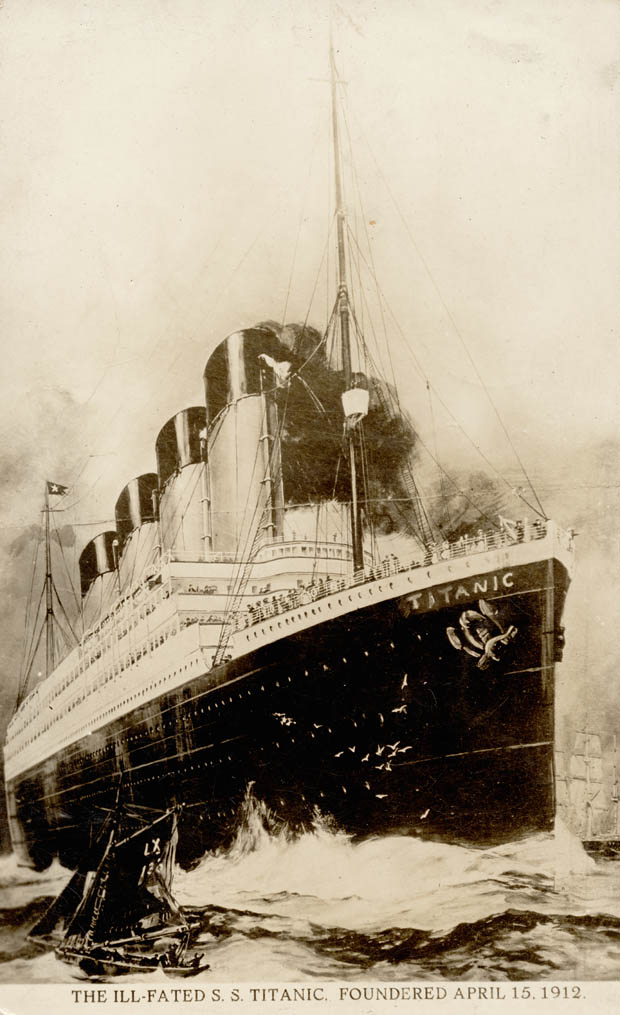
A postcard of a large ship on the ocean

A postcard of the “Ill-fated Titanic”, circa 1912 (e004155512_s1)

The Titanic set sail on April 10, 1912, with 2,227 passengers and crew onboard; on April 15, 1912, the tragic collision with an iceberg claimed over 1,500 lives, mostly among the second and third class passengers.

Among the first class passengers were two Canadian businessmen; Charles Melville Hays and Harry Markland Molson.

Charles Melville Hays was born in 1856 and educated in the United States. He worked on several railways in the U.S.A. before coming to Canada in 1896. He was the General Manager of the Grand Trunk Railway, from 1896 to 1909 with the exception of a period in 1901 when he was president of the Southern Pacific Railway. In 1905 he became president of the Grand Trunk Pacific Railway, which was largely his own creation. In 1909, he was appointed president of the Grand Trunk Railway and retained this office until his death on the Titanic.  Charles was the husband of Clara J. Gregg and father of four daughters.  Learn more about Hays in the Dictionary of Canadian Biography Online.

Harry Markland Molson, also born in 1856, was the great grandson of John Molson, founder of the famous Canadian brewery.  He lived in Montreal and was former Mayor of Dorval and a member of the board of directors for the Molson Bank. You can learn more about the Molson family by reading the Dictionary of Canadian Biography online.

Library and Archives Canada has some records relating to both these gentlemen:

Questions or comments? We would love to hear from you!

Remembering the Titanic at LAC – Part II: Published Materials

A postcard of a large ship on the ocean

A postcard of the “Ill-fated Titanic”, circa 1912 (e004155512_s1)

The sinking of the Titanic was a source of inspiration for musicians and filmmakers and Library and Archives Canada has some interesting pieces of audio-visual and music material in its collection! Let’s continue exploring:

Music

  • Titanic [music], words by Charles Lavell, music by Norman Fraser, 1912 (OCLC 498649021)
  • Men be British!, words and music by C.A. Frame, 1912. (OCLC 1007608738)
  • The ice king’s bride: song, words by Cecil E. Selwyn, music by Arthur A. Penn, 1913.  (OCLC 1007535382)
  • The loss of the Titanic : song, words and music by Arthur S. Leslie, 1912 (OCLC 1007608969)
  • Back to Titanic , original music composed and conducted by James Horner. Includes My heart will go on performed by Céline Dion, (OCLC 1006762159)
  • Titanic [music]: a voyage in piano music by Rebekah Maxner (OCLC 758437127)

Films and Audio Recordings

  • G. Kleine collection R8745-0-3-E,3 film reels (7 min). Collection consists of short documentary clips about skating in Montreal, skating on the canal and the sinking of the Titanic .
  • The discovery of the Titanic [sound recording] by Robert D. Ballard, with Rick Archbold, 1989. (OCLC 1032981850)
  • Titanic troubles [sound recording], part of The time capsule series of books by Ouita Petty, 1996, (OCLC 79684269)
  • Titanic [sound recording]: survivors in their own voice (1915-1999), (OCLC 226950845)

Books

  • RMS Titanic : the first violin : the life and loss of  the Titanic’s violinist, John Law Hume by Yvonne Hume with a foreword by Millvina Dean, Titanic’s last survivor (OCLC 766386309)
  • Poems that will interest everybody [microform]  by Angus McLaughlin (OCLC 53656650)
  • The wreck of the Titanic by Andrew O’Malley* (OCLC 433993426)
  • Titanic disaster : report of the Committee on Commerce,  United States Senate, pursuant to S. Res. 283, directing the Committee on Commerce to investigate the causes leading to the wreck of the White Star liner Titanic : together with speeches thereon by Senator  William Alden Smith of Michigan, and Senator Isidor Rayner of Maryland (OCLC 560852846)

*E-copy available.

For information on how to order published material, please read our post “How to Consult Material that Is Not Yet Available Online”.

 Questions or comments? We would love to hear from you!


Remembering the Titanic at LAC – Part I: Archival Records

A postcard of a large ship on the ocean

A postcard of the “Ill-fated Titanic”, circa 1912 (e004155512_s1)

One hundred years later, the sinking of the Titanic continues to fascinate and captivate people as perhaps the most famous sea-faring disaster in modern history.  The Titanic was billed as the most grandiose and extravagant ship ever built; it was the pride of the White Star Line. “Not even God himself could sink this ship”, claimed one employee at its launch.  Nonetheless, on its maiden voyage, the Titanic hit an iceberg off the coast of Newfoundland and sank on April 14, 1912.  More than 1500 lives were lost.

Did you know?

Within Library and Archives Canada’s collections you can find some interesting records about the Titanic . In fact, over the next few days, The Library and Archives Canada Blog will help you discover some of these records, which deal directly with the sinking of the Titanic and subsequent rescue activities.  These records can be found in our archival government records collection:

Stay tuned for more information on the Titanic over the next week, as we help you discover Library and Archives Canada’s collection.

Questions or comments? We would love to hear from you!