Naturalization Records, 1915-1951 database – 2015 Update

Library and Archives Canada is pleased to announce the release of a new version of the online database Naturalization Records, 1915-1951. The nominal index has been extended with the addition of more than 68,000 names and now covers the years from 1915 to 1944, inclusively. Work is ongoing to extend the nominal index to 1951, and volunteers are welcome to help. Those interested should write to Cdn-Nat-Coord@jgs-montreal.org.

This database is one of the few Canadian genealogical resources specifically designed to benefit researchers having roots other than British. The reference numbers indicated in the database can be used to request copies of the original naturalization records, which are held by Citizenship and Immigration Canada.

Library and Archives Canada would like to thank the Jewish Genealogical Society of Montreal and its volunteers, without whom this project would not have happened.

Self-portraits by women artists in Library and Archives Canada’s collection

Until the beginning of the last century, official self-portraits by women artists were rare, compared to those created by men. This was, in large part, because few women worked and were recognized as professional artists during the early periods. But it is also because many self-representations created by women were in non-traditional formats—hidden within amateur sketchbooks, or private diaries… even stitched or sewn.

A few of Library and Archives Canada’s (LAC) most interesting sketched and painted examples are currently on display as part of The Artist Herself: Self-Portraits by Canadian Historical Women Artists, a new exhibition co-curated by Alicia Boutilier of the Agnes Etherington Art Centre and Tobi Bruce of the Art Gallery of Hamilton.

The exhibition deliberately expands the traditional definition of ‘self-portrait’; most of the works it showcases would not have been considered self-portraits at the time they were created.

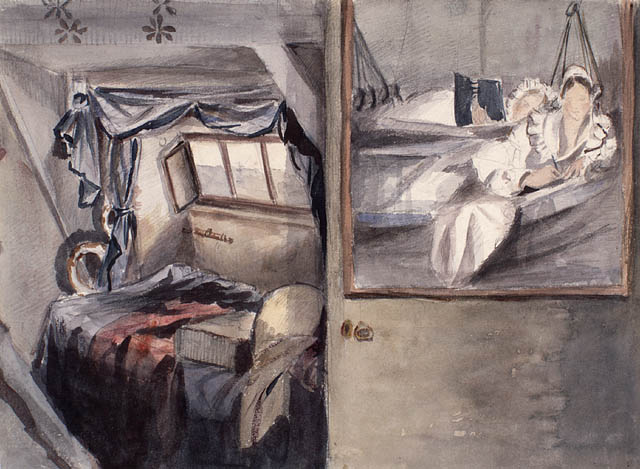
It includes this page from the private sketchbook of Katherine Jane (Janie) Ellice (1813–1864), an accomplished amateur artist and wife of an official with the North West (fur trading) Company. Ellice used the reflection from a mirror on the wall of her ship’s cabin to capture a quick, and very private, image of herself aboard ship.

Watercolour sketch shows the artist and her sister, dressed in nightwear, reclining in a bunk of their ship’s cabin.

Mrs. Ellice and Miss Balfour reflected in the looking glass of their cabin on board the H.M.S. Hastings (MIKAN 2836908)

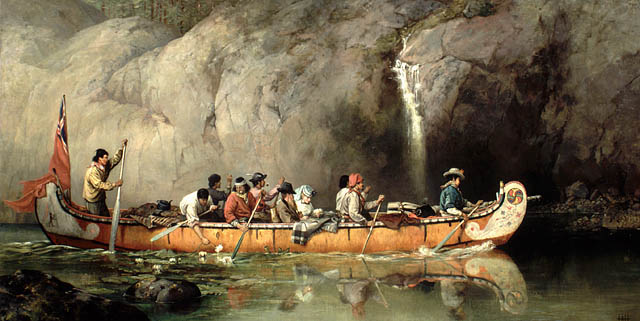
It also includes Canoe Manned by Voyageurs Passing a Waterfall, by Frances Anne Hopkins (1838–1919), another ‘fur-trade wife’—but one who would develop something of a professional artist career. Hopkins’ enormous voyageur-themed canvases often include representations of herself that seem almost incidental. It’s believed that she appears, in this painting, as a passenger in the canoe:

Painting shows a group of fur trade workers steering a Hudson’s Bay Company canoe past a small waterfall; the artist and her husband may be passengers seated in the middle of the canoe.

Canoe manned by voyageurs passing a waterfall (MIKAN 2894475)

These are only a few examples, from LAC’s collection, of historical self-portraits made by women. It’s worth noting that the collection also includes many others, both historical—and modern.

The Artist in her Museum was created by contemporary Métis artist Rosalie Favell in 2005.

Colour digital print shows the artist, full-length, and flanked by a mammoth, a beaver, and an artist’s palette. She draws aside a red curtain to reveal a gallery of mounted black-and-white photographs.

The Artist in her Museum, 2005. © Rosalie Favell (MIKAN 3930728)

Favell used digital technology to manipulate an iconic American self-portrait from the 19th century. By putting her own image in place of the original sitter, Favell appropriated a classic work, assigning new meanings within an older convention.

Modern self-portraits, like Favell’s, compare intriguingly with the historical self-representations showcased in The Artist Herself. Today’s more relaxed and expanded definitions of portraiture allow contemporary artists to successfully play within the genre. They also allows us to look back, with fresh eyes, on the self-representations created by women in the past.

Visit the exhibition in Kingston between May 2 and August 9, 2015. Stay tuned for further dates as the exhibition tours nationally, before closing in Hamilton during the summer of 2016.

Newly discovered Robert Hood watercolours help tell Canada’s Arctic history

On April 16, 1821, midshipman Robert Hood made the last entry in his journal. A 24-year-old British Royal Navy petty officer under the command of Captain John Franklin, Hood participated in an expedition to chart the Coppermine River as part of the search for the Northwest Passage. Hood’s final journal entry ended his descriptions of the daily activities as the group of British sailors, Canadian voyageurs, Indigenous guides and interpreters trekked from York Factory to Cumberland House and then on to Fort Enterprise and the Coppermine River. Although the journal entries discontinued, Hood continued to note weather conditions and navigational data in other expedition volumes, and to produce at least one more visual record.

Library and Archives Canada (LAC) is pleased to announce the recent purchase of four watercolours from a Hood family descendant.

Portraits of the Esquimeaux Interpreters from Churchill Employed by the North Land Expedition is likely the final surviving work of Robert Hood. Completed in May 1821, the watercolour depicts Tattannoeuck (Augustus) and Hoeootoerock (Junius).

Watercolour portraits of two young Inuit men wearing western-style clothing. One is captioned Augustus and the other, Junius.

Portraits of the Esquimaux Interpreters from Churchill Employed by the North Land Expedition, May 1821 (MIKAN 4730700)

Three other watercolours were acquired that were painted during the previous year while the expedition wintered at Cumberland House.

In January 1820, he drew a mink as it dipped a paw into the water along a rocky shore and a cross fox just as it caught a mouse in the snow.

Watercolour of a mink on a riverside dipping one of its paws into the water.

Mink, January 20, 1820 (MIKAN 4730702)

Watercolour of a fox having caught a mouse in a snowy landscape.

Cross fox catching a mouse, January 26, 1820 (MIKAN 4730703)

Two months later, Hood set out on a trek to the Pasquia Hills where he encountered a group of Cree. Invited into their tent, he recorded with extraordinary detail this watercolour, The Interior of a Southern Indian Tent [original title]. This image would be the basis of the print, Interior of a Cree Tent, which appeared in Captain John Franklin’s account, Narrative of a Journey to the Shores of the Polar Sea in the Years 1819, 20, 21 and 22.

Watercolour showing the interior of a tent. Seven people are sitting around a fire. One is a mother with a child in a cradleboard. Pelts or meat are drying on a cross beam and a pot of food is over the fire. There is a musket and a bow and arrows leaning on the side of the tent. One person is eating and another is smoking a pipe while the others appear to be listening intently.

Interior of a Southern Indian Tent [original title] (MIKAN 4730705)

Unfortunately Robert Hood would not live to see his paintings published in Franklin’s account. Plagued by horrendous weather and insufficient supplies, the expedition resorted to eating lichens to survive. By early October 1821, it was clear that Robert Hood had become too weak from hunger to continue the journey. He was left behind with two British participants, while the others set off for Fort Enterprise in search of food and supplies. One of the voyageurs, Michel Terohaute, changed his mind and left Franklin’s group, returning to the Hood camp. On October 23, 1821, while the two other men were out searching for food, Terohaute shot and killed Robert Hood. Captain John Franklin managed to retrieve Hood’s journal and watercolours, which were given to Hood’s sister and distributed among her grandchildren. LAC was fortunate to acquire these four previously unknown watercolours which document a key expedition in Canada’s Arctic history.

Related resources


Opening the vaults: 10 million pages and counting!

In 2010, Library and Archives Canada (LAC) initiated a new risk-based process called “block review” to open more federal government records under the auspices of Canada’s Access to Information Act and Privacy Act. This initiative has been very successful and LAC is proud to announce that we have opened more than 10 million pages of Canadian government records, which are now available to the public.

What is a block review?

It is the systematic review of blocks or series of government records currently held in LAC’s permanent holdings. It incorporates a risk-based approach that looks at both the age of the record and the subject. Block review is completed by using various sampling strategies to determine whether the records can be opened for public access under both the Access to Information Act and the Privacy Act. The process involves identifying and examining representative parts of the archival record and, based on the findings, the records are either opened or not.

What records were targeted for the block review process?

LAC holds a myriad of Canadian federal government records documenting all aspects of Canadian public life. The block review process has opened material on many of these subjects. Of particular interest are:

  • records documenting Canada’s military history
  • records providing evidence of the relationship between the federal government and Canada’s Aboriginal population
  • archival material detailing our significant diplomatic and trade relationships with foreign governments and international organizations
  • regional documents created across all of Canada as the federal government administered its numerous functions and activities
  • archival material documenting how we celebrated our centenary in 1967—of timely interest as Canadians prepare for this country’s 150th anniversary
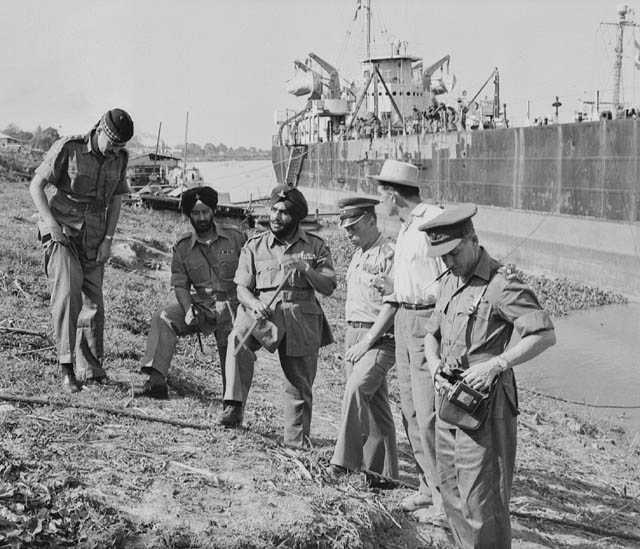
Black-and-white photograph of six men standing on the seashore, with a ship visible in the background.

An example of a collection that is now more widely available through the block review process. The photograph relates to the Canadian delegation for the International Commission for Control and Supervision in Vietnam in 1955 (MIKAN 3192391).

More records will open up as LAC continues to contribute to Canada’s Open Government initiative. We will be posting updates on the progress of the initiative, so watch for highlights of the collections being opened up to Canadians.

New Books in the Genealogy Services Collection at 395 Wellington—January 2015

Below is a list of our recently acquired genealogy publications. You can consult these publications in the Genealogy and Family History Room located on the 3rd floor at 395 Wellington. The link takes you to the AMICUS record which gives the call number to help you find the book on the shelves.

If you’re just starting out in genealogy, you should check out our Genealogy and Family History pages.

Happy exploring!

Family Histories

De nos ancêtres Houallet en France aux descendants Ouellet-te en Nouvelle-France, de François Houallet et Isabelle Barré, à leur fils René et son rêve américain by Jeannine Ouellet (AMICUS 43057598)

Généalogie ascendante de Maurice Fortier by Lise Lefebvre (AMICUS 42357176)

La descendance de Pierre Gilbert, capitaine de vaisseau: Petite-Rivière-Saint-François à partir de 1756 by Jules Garneau (AMICUS 42913904)

André Marsil dit Lespagnol: l’ancêtre des Marcil et Mercille d’Amérique (1642-1725) by Denis Marsil (AMICUS 42507286)

La famille Miville-Dechêne, Julie: l’arrivée en Nouvelle-France et les pérégrinations à Québec et dans les environs du 17e au 21e siècle by Michel Émond (AMICUS 42421839)

Larocque family by Charles G. Clermont (AMICUS 42544482)

L’histoire de la famille acadienne des Lejeune dit Briard: les sept premières générations et plus by André-Carl Vachon (AMICUS 43023469)

Looking back: a history of the Robert and Hannah (Swinton) Williamson family, 2013-1783 by M. Yvonne Brown (AMICUS 42487533)

The Amos B. Weber family history by Tim Campbell (AMICUS 42624120)

The legacy of Peter Martin by Tim Campbell (AMICUS 43040697)

The Noah B. Martin family history by Tim Campbell (AMICUS 42624089)

The scent of oil: a Nicklos/Perkins family saga by Gary May (AMICUS 39274484)

Ethnic and Local Histories

Atlas généalogique de la France ancestrale: pays des migrants vers la Nouvelle-France by Micheline Perreault (AMICUS 42213484)

Dictionnaire des souches allemandes et scandinaves au Québec by Claude Kaufholtz-Couture and Claude Crégheur (AMICUS 42651679)

Irish presence: the protestant religious history, volume 1: Villages et visages en Lotbinière (includes cemetery transcriptions), research and writing by Sylvie Bernard; translation by Claude Crégheur and Mélanie St-Jean (AMICUS 38820935)

La colonie nantaise de Lac-Mégantic: une implantation française au Québec au XIXe siècle by Marcel Fournier (AMICUS 41526971)

Le pays des filles du Roy… au confluent du Saint-Laurent et de la Richelieu by Louise Biron, Danielle Mailloux and Louise Pelletier (AMICUS 42139559)

Les Filles du roi au XVIIe siècle: orphelines en France, pionnières au Canada by Yves Landry (AMICUS 42011241)

Les sépultures du coteau des Cèdres, 1750-1780 by Jean-Luc Brazeau and Isabelle Aubuchon (AMICUS 43036058)

Patriotes, reformers, rebels & raiders: tracing your ancestors during the troublous times in Upper and Lower Canada, 1820-1851 by Kenneth Cox (AMICUS 42726565)

Pour que rien ne s’efface: Notre-Dame-de-Lourdes, 2014 by Robert Charbonneau, Mario Cyr and Huguette Plourde (AMICUS 43043082)

Répertoire des naissances, des mariages et des décès de la paroisse de Saint-Émilien, Desbiens, 1926-1941 by Société d’histoire du Lac-Saint-Jean (AMICUS 42654710)

The Irish Catholic families of Puslinch Township, Wellington County, Ontario: a genealogy by Marjorie Clark (AMICUS 42756767)

Discovering the Héritage Collection Through Archives Search

Since Library and Archives Canada (LAC) extended its long-standing partnership with Canadiana.org to digitize microfilms in August 2013, 17.4 million images and 535 collections have been added to the Héritage website. These microfilms cover personal, administrative and government records.

Up until recently, clients looking for microfilmed records in the collection would start their search on the LAC website, then go to the Héritage website to check if that content was already digitized. But now, you can find out whether a microfilmed record has been digitized or not just by consulting the MIKAN description!

In this example for the Royal Canadian Air Force files, the following graphical notice is displayed at the top of the page in the Title section:Graphical notice indicating that all or part of the records described have been digitized and are available online.Scrolling down to the Finding aid section, you will find the link to the Héritage website:

Exemple of a MIKAN entry with a the link to the Héritage website.

As other microfilms are digitized and made available on the Héritage website, similar links will be added to the corresponding MIKAN descriptions.

Happy hunting!

Canadian Library images now on Flickr 

Canada’s libraries foster connections between people, ideas, communities and information.

Library and Archives Canada’s Alma Duncan fonds

Art lovers interested in researching the life and working methods of Canadian artist Alma Duncan (1917–2004) must make Library and Archives Canada (LAC) one of their first stops. With the acquisition of Duncan’s complete records (fonds) between 1998 and 2005, LAC became the major centre for the study and preservation of artworks, and supporting material documenting Duncan’s personal and professional life.

The collection includes major oil paintings such as this early self-portrait:

Self-Portrait with Braids

Self-Portrait with Braids (MIKAN 2996876)

In this painting, Duncan portrays herself wearing pants at a time when this type of attire was still considered somewhat risqué for a woman.

The collection also includes drawings, preparatory work, material related to Duncan’s separate career as a graphic designer, and original films by Duncan. Probably the most fascinating items are related to the film company, Dunclaren Productions, formed by Duncan and Canadian photographer Audrey McLaren between 1951 and 1960. That collaboration resulted in three internationally acclaimed short animated films created for the most part in an Ottawa attic. Today these films are recognized as milestones in the history of short animated film, a genre in which Canada has always been a leader.

The Dunclaren Productions holdings include most of the original handmade puppets and props that Duncan created for the films.

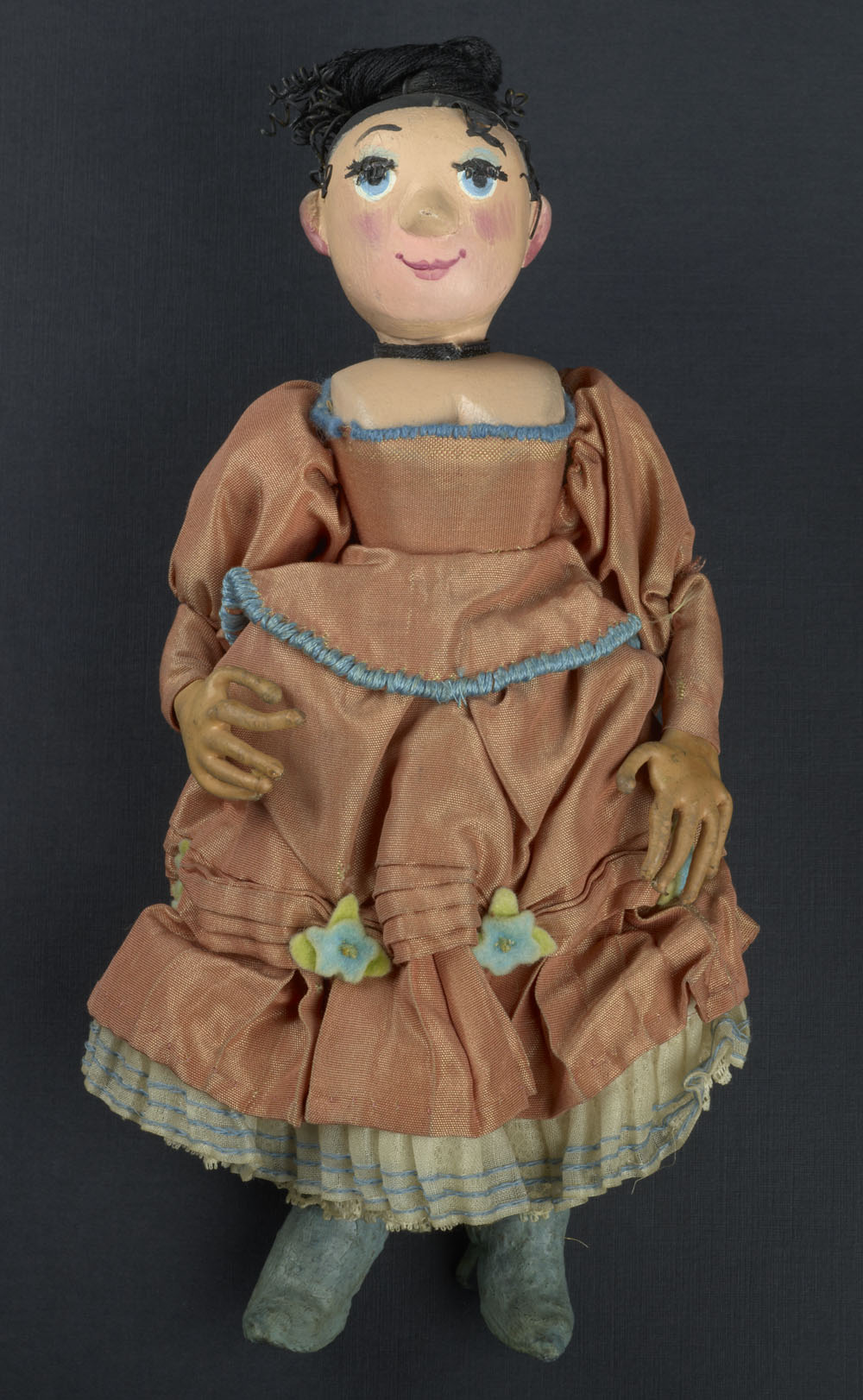
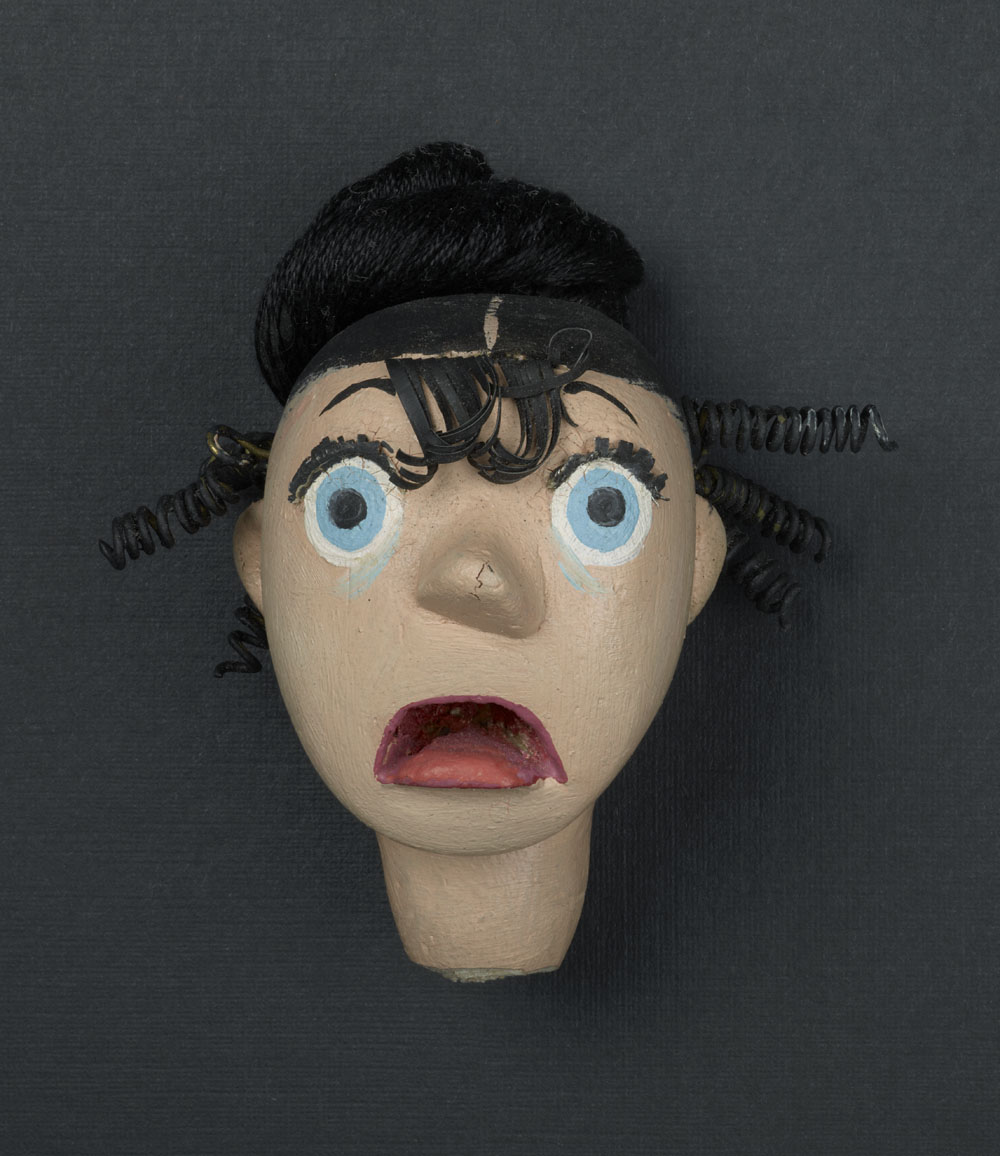
This puppet and its accompanying “scared” replacement head created for the film, Folksong Fantasy, illustrate the painstaking methods Duncan used to make the characters in her films appear to change expression.

Wife Puppet in Orange Dress

Wife Puppet in Orange Dress (MIKAN 4488575)

Wife Puppet Head—Scare

Wife Puppet Head—Scared (MIKAN 4488578)

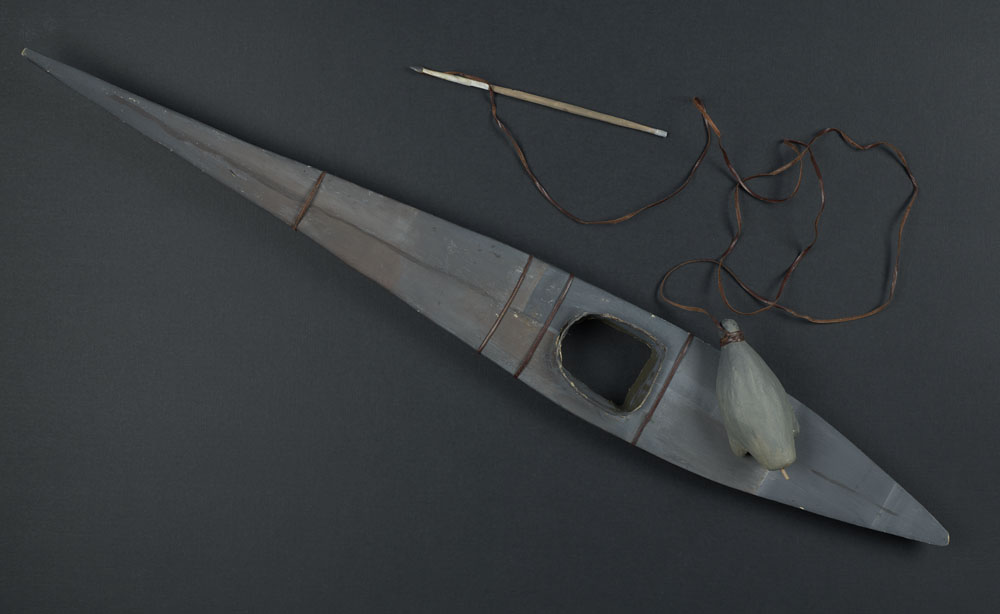
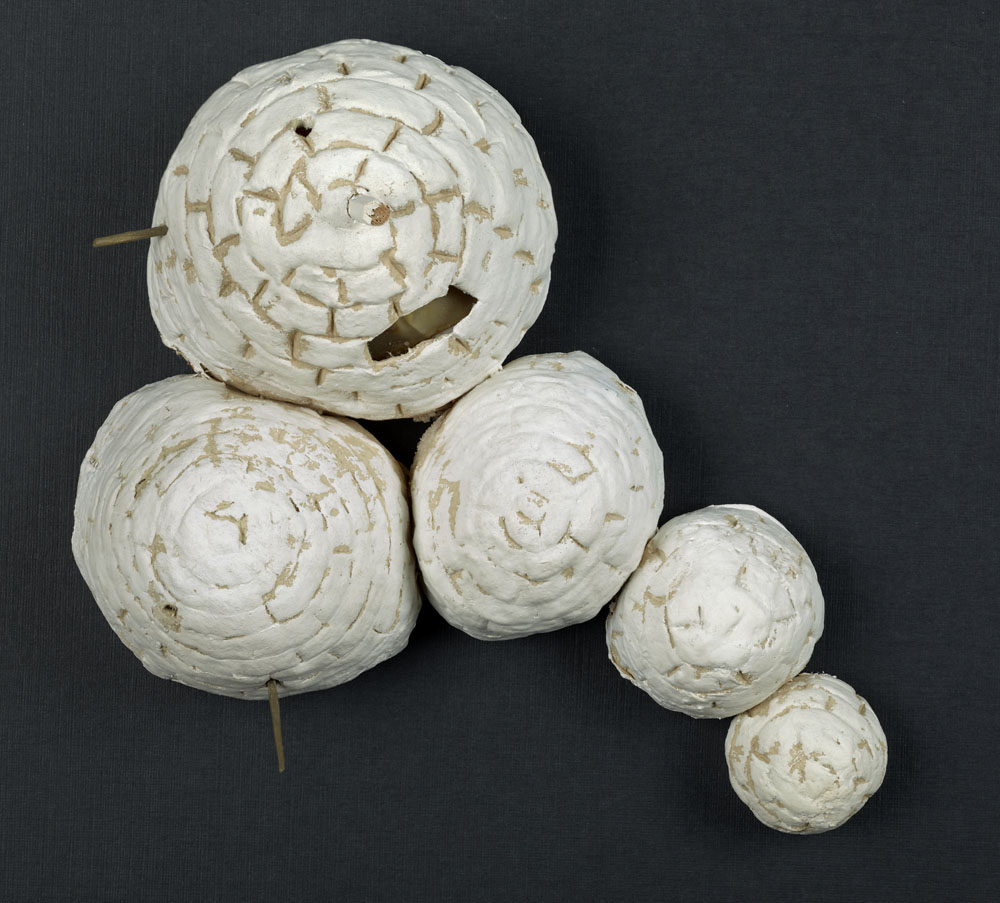
Meticulously crafted props like this tiny igloo and kayak created for the film, Kumak, the Sleepy Hunter, highlight Duncan’s lifelong interest in themes related to the Canadian arctic:

A major retrospective exhibition on Duncan’s life and work, ALMA: The Life and Art of Alma Duncan (1917-2004), opens on October 2, 2014 at the Ottawa Art Gallery. LAC is a major lender to this exhibition, which will include many of the original art works illustrated above.

War Diaries of the First World War and Image Search

War diaries—records held at Library and Archives (LAC)—are daily accounts of First World War units’ “actions in the field.” They provide the most complete, first-hand record of how and where individual units were deployed and the wartime experiences of their members.

A page from the war diaries of the 22nd Canadian Infantry Battalion

A page from the war diaries of the 22nd Canadian Infantry Battalion (MIKAN 2004664)

Searching War Diaries

To search the war diaries, use Image Search, a great, fast and easy way to view and consult these digitized records. Tips for searching specific diaries are available on our How to Search for War Diaries section; using keywords will also help you narrow down your search. For example, here are the search results for the diaries of the famous “Van Doos,” better known as the 22nd Battalion. We used the search terms war diaries 22nd battalion and selected “Textual material” in the “Type of material” drop-down menu.

Finding Related Materials

After consulting a unit’s diaries, redo the search you just performed, but this time leave out war diaries, and in the “Type of material” drop-down menu, select the default “All.” Here are the search results for the 22nd Battalion. Your results will still include the war diaries, but you will also see photographs, works of art and other documents related to your search term, provided that it appears in the title of these documents.

Enjoy searching and exploring the digitized materials that we have to offer!

Taking It All In: The Photographic Panorama and Canadian Cities Exhibition at the National Gallery of Canada

Most of today’s digital cameras come with a simple, point-and-shoot mode for creating panoramic images.

But back in the days of film cameras, creating a panoramic photograph meant either spending hours in the darkroom, painstakingly stitching images together by overlapping exposures onto the finished photo paper or buying an expensive panoramic format camera.

Possibly members of the Benjamin Low family on a passenger steamer showing various types of cameras, including a panoramic camera, 1904.

Possibly members of the Benjamin Low family on a passenger steamer showing various types of cameras, including a panoramic camera, 1904 (MIKAN 3191854)

Continue reading