The Battle of Vimy Ridge
Everything was in place for the hour of the assault, 5:30 a.m. on April 9, 1917.
The preceding hours of darkness aided by cloud cover had permitted the infantry to file forward unobserved into their jumping-off positions, many of which were clearly observable to the enemy in daylight. Had this movement been witnessed, an enemy barrage might have broken up the assault wave with serious casualties; as it was, the positions were gained without notice.
In the half-light of zero hour under a cold overcast sky, when manoeuvring was still largely obscured from the enemy, the intense bombardment opened with sudden fury, and the advance of the infantry began. Continue reading
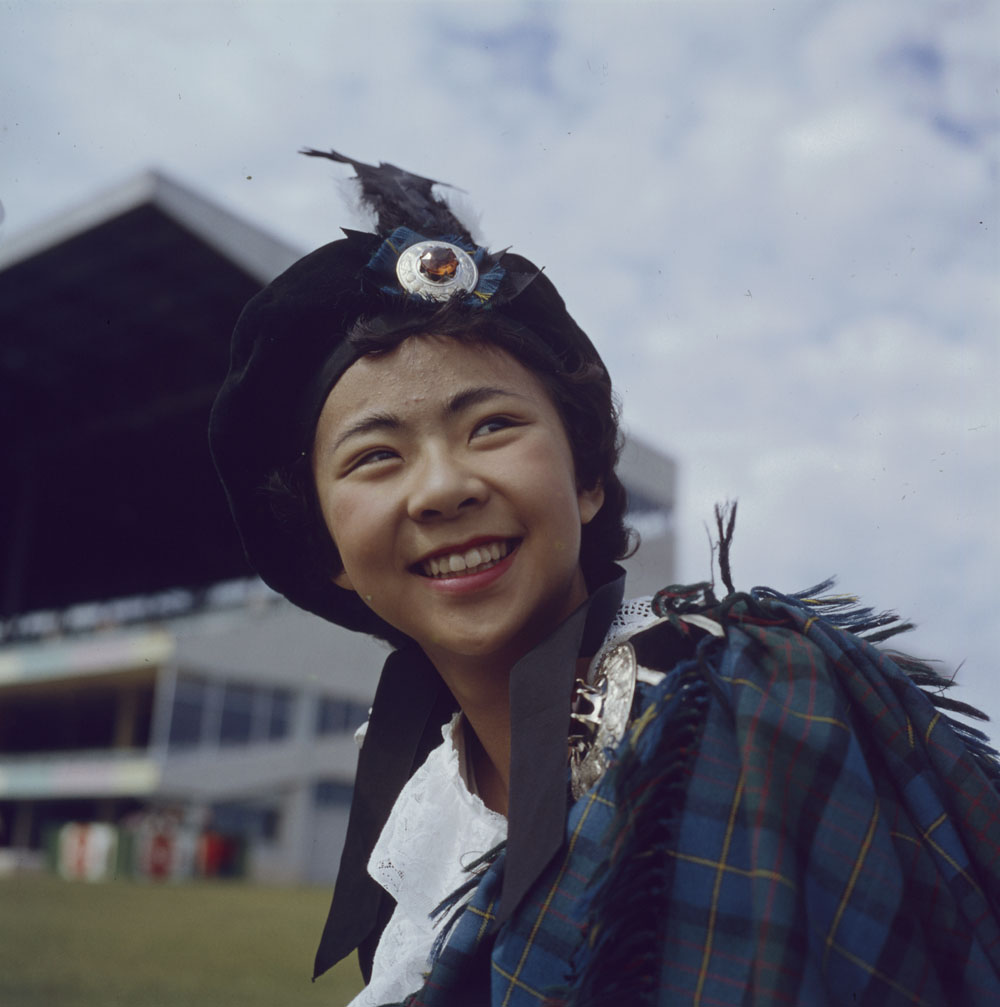
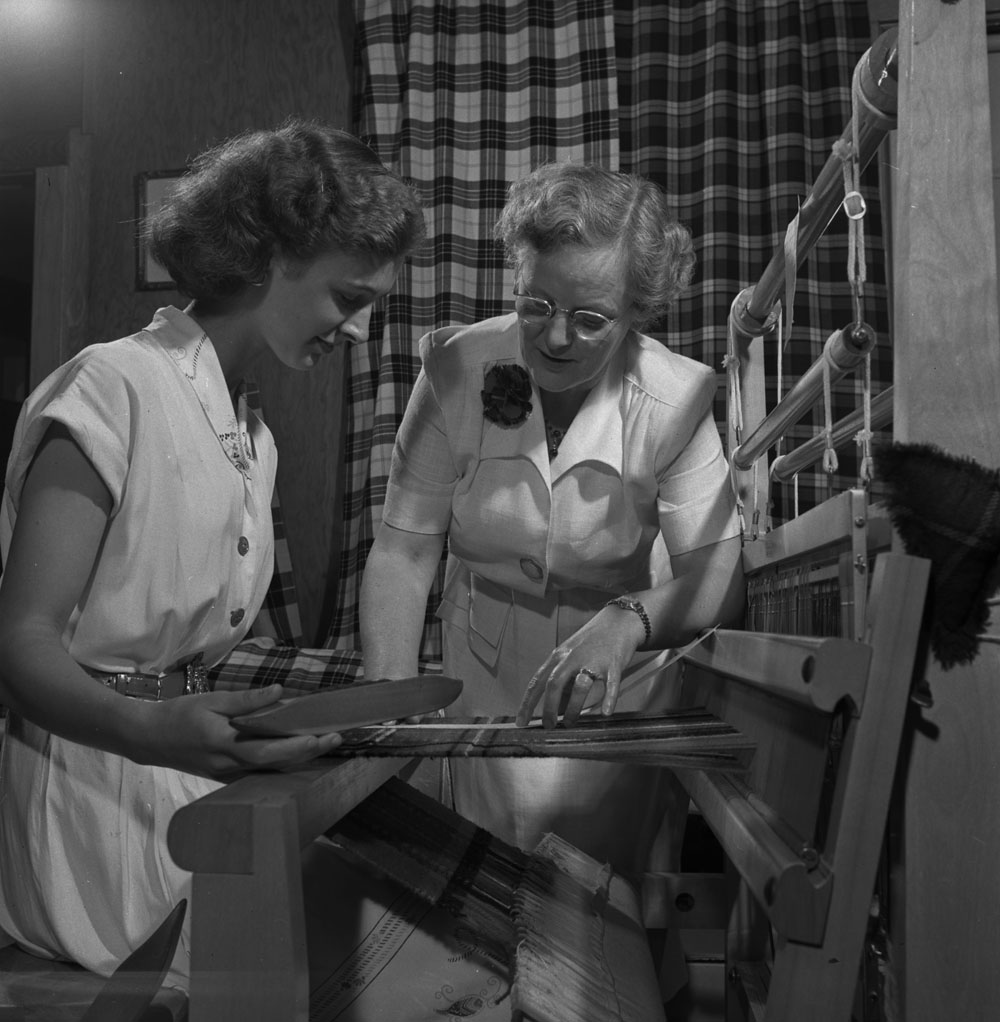
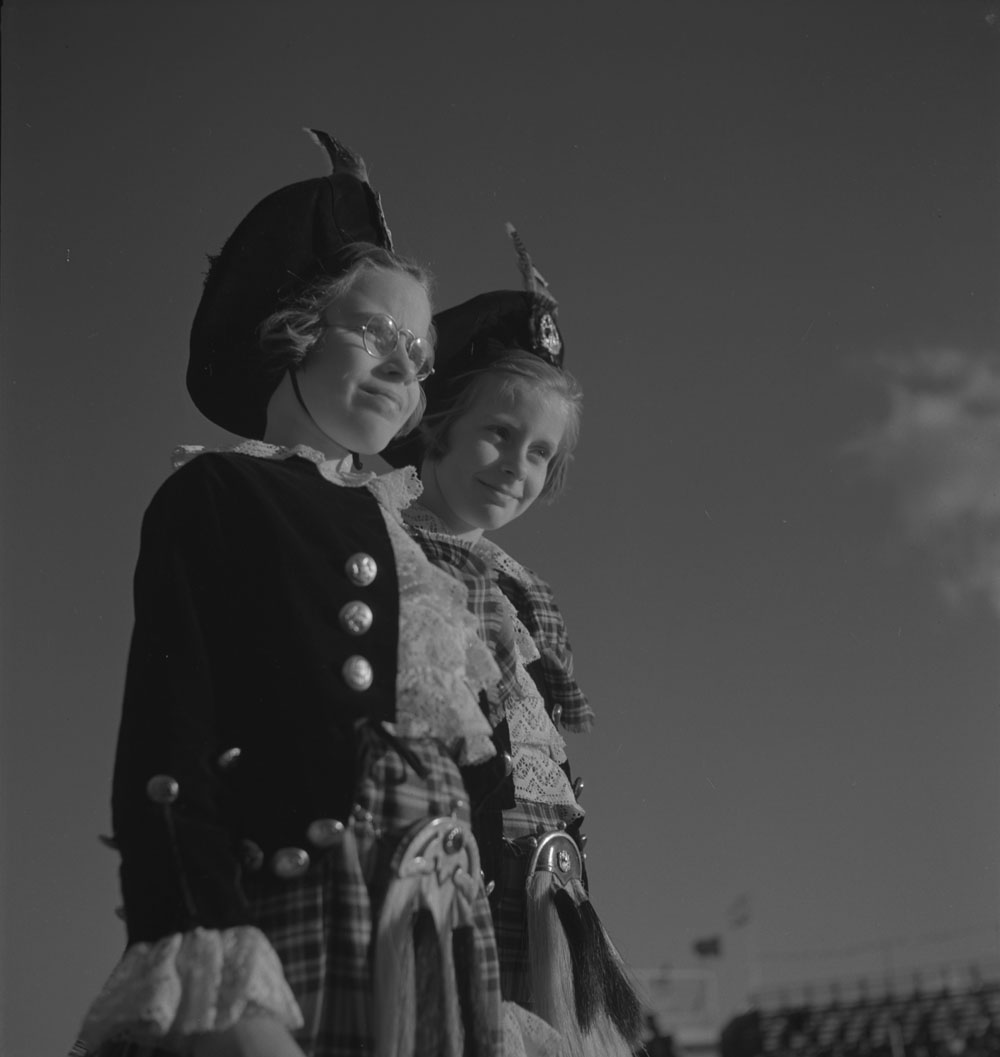
Images of Tartans and Kilts now on Flickr

Betty Chan at Scottish games, Winnipeg, Manitoba. [MIKAN 4302026]

Tartan being woven, St. Ann’s, Cape Breton Island, Nova Scotia. [MIKAN 4948510]

Two girls dressed in kilts at Highland games, Antigonish, Nova Scotia. [MIKAN 4315223]
Pre-Confederation Land Patents issued by the Registrar General
By Rebecca Murray
Reference Services frequently receives requests about land patents in Canada. Here, we will focus on pre-Confederation land documents. Be sure to refer also to Crown land patents: Indian land sales for more information. The next post on land patents will focus on post-Confederation land patents.
What is a Land Patent?
Land patents are issued by the Crown to grant or confirm title to a portion of land. They represent the first title to land, and serve as proof that the land no longer belongs to the Crown.
How Do I Find a Land Patent?
As this is a challenging request even for practiced archivists, this post will guide you through an example of how to approach this type of research from home or while onsite at Library and Archives Canada (LAC).
Step 1:
Start with the information you have: a date, a location, a person or organization (patentee). It is preferable to proceed with all three pieces of information (especially the date), but you can find the answer with one or more of the pieces of information.
Example:
- Date (specific or general): June 7, 1856
- Location (detailed or general): Lot 8, Range 3, east of Plank Road, Township of Seneca
- Patentee: David Patterson
Step 2:
With the patentee and date, or the date and location, you can look at the Indexes to Indian and Ordnance Land Patents (nominal [by name] and geographical indices) for the period 1845–1867 found in RG68, volume 911, microfilm reel M-1638. With the patentee and location, you can consult either the nominal or the geographical indices but without the date, you will have to perform a wider search using the General Index.
In this case, I found an entry for David Patterson in the Indexes to Indian and Ordnance Land Patents (RG68 volume 911, microfilm reel M-1638) and noted that the corresponding entry would be found in Liber EO (some libers are titled by letters rather than numbers), on folio 172.
Step 3:
Once you know the liber (register) and folio (page number), you need to find that liber within RG68 records. There are two options for continuing your search:
Web-Based Search
- Begin in Collection Search with the search string: RG68 68-2 land
- Select the Archives tab and then filter by date (left-hand menu)
Many records for this period are available on digitized microfilm. Search Héritage to see if the reel has been digitized.
Onsite at LAC
When onsite at 395 Wellington St., you can use paper finding aid 68-2 to look up the liber number and find the corresponding volume and microfilm reel numbers. Microfilm reels are also available for self-serve consultation in room 354.

Land patent confirming title to land granted to David Patterson in Haldimand County, dated June 8, 1856. (RG68 volume 231, file EO, page 172)
How to Use the Key to the General Index / the General Index
If your date does not fall in the 1845 to 1867 period, or you are unsure of the date, you can rely on the Key to the General Index for 1651–1867 to identify entries in the General Index related to the individual in question.
- RG68 volume 893, “Key to the General Index” (1651–1841)—microfilm reel C-2883
- RG68 volumes 894 and 895, “General Index” (1651–1841)—microfilm reel C-2883>microfilm reel C-2883
- RG68 volume 896, “Key to the General Index” (1841–1867)—microfilm reel C-2884>microfilm reel C-2884
- RG68 volumes 897 and 898, “General Index” (1841–1867)—microfilm reel C-2884>microfilm reel C-2884
Paper copies of the Keys and General Indices for the pre-Confederation period are also available in the 2nd floor Reference Room of 395 Wellington St. Please keep in mind that the General Index applies to all types of documents produced by the Registrar General, not just land documents. Hence the importance of using the Key to the General Index to expedite your search.
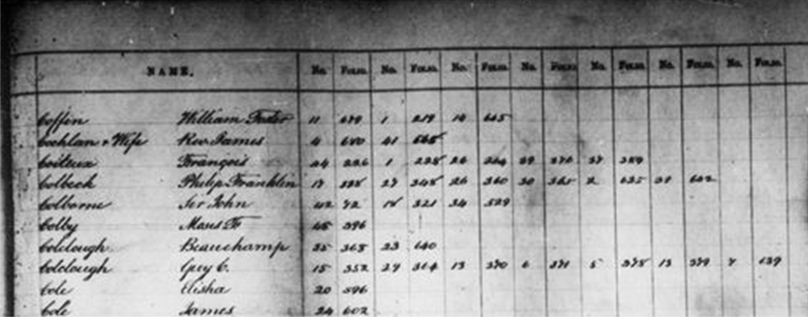
For example, the Key to the General Index for the period 1841–1867 can be found in RG68 volume 896, which is available on microfilm reel C-2884. The Key to the General Index is organized by name. Find the individual in question and copy down each pair of numbers next to the name, as they will allow you to locate the relevant entries in the corresponding General Index. The pair of numbers is associated with two columns: the “No.” column indicating the “line number” and the “Folio” column indicating “page.” This allows you to jump directly to the correct page of the General Index and locate the corresponding entry. From this line, you get more information, namely the liber and folio numbers necessary to locate the patent itself. For example, in the image, take note of the first pair of numbers associated with the Rev. James Cochlan and wife: “4” and “680.”

Excerpt from the Key to the General Index for 1651–1841 (RG68 volume 893), showing the liber (No.) and folio numbers associated with each name (RG 68, Volume 893 on Canadiana). Take note of the first pair of numbers associated with the Rev. James Cochlan and wife: “4” and “680.”

Excerpt from the General Index for (RG68 volumes 894 and 895), showing the entry on line 4 of page 680. The liber and folio for the document in question are “KM” and “6.”
After identifying the liber and folio numbers using the General Index you can review Step 3, from home or onsite, to determine the complete reference for the patent including the microfilm reel number.
It can be very challenging to navigate this research; please try it on your own, but do not hesitate to contact us if you need any assistance!
Rebecca Murray is a Reference Archivist in Reference Services at Library and Archives Canada.
Lieutenant Gordon Muriel Flowerdew, VC
By Emily Monks-Leeson
Today our First World War Centenary: Honouring Canada’s Victoria Cross recipients, remembers Lieutenant Gordon Muriel Flowerdew, who received the Victoria Cross, the Commonwealth’s highest award for gallantry, for his actions at the Battle of Moreuil Wood on this day 100 years ago.

Lieutenant Gordon M. Flowerdew, Victoria Cross recipient (MIKAN 3521609)
Flowerdew was born in Billingford, England, on January 2, 1885. He immigrated to Saskatchewan in 1903 and later settled in British Columbia as a rancher. He enlisted in September 1914 in Lord Strathcona’s Horse, a cavalry brigade, and became a commissioned officer in 1916. By 1918, Flowerdew was Lieutenant (Acting Captain) in command of “C” Squadron of Lord Strathcona’s Horse. Though the cavalry brigades had not engaged in much direct fighting because of the static nature of trench warfare, this changed in the spring of 1918 with the return to rapid, open warfare. On March 30, 1918, the Strathconas were engaged in heavy fighting at Moreuil Wood, France, having been tasked with preventing the Germans from crossing the Avre River and advancing on Amiens.
As German soldiers entered Moreuil Wood, Acting Captain Flowerdew spotted two lines of German infantry positions supported by machine guns. He ordered a cavalry charge. His squadron passed over both German lines, attacking with their swords, and then turned and passed over the lines again, driving the defending German soldiers into retreat. According to Flowerdew’s Victoria Cross citation, by then the squadron had suffered 70 percent casualties, killed and wounded, and Acting Captain Flowerdew was badly wounded in both thighs. Nonetheless, Flowerdew continued to encourage his men, ordering them to dismount.
Through hand-to-hand fighting, the survivors managed to hold the previously occupied German positions until a unit led by Lieutenant Frederick Maurice Watson Harvey joined them. Harvey had received the VC in 1917 for his role in the attack on German positions at the Guyencourt, France. Flowerdew and his men prevented the capture of Moreuil Wood and denied the advancing German army a strategically important position.

Lord Strathcona’s Horse war diary page with a description of Flowerdew’s actions of the day, Page 422 (MIKAN 2004721)
Lieutenant Gordon Muriel Flowerdew died of his wounds on March 31, 1918. He is buried at Namps-au-Val British Cemetery in France. Library and Archives Canada holds Lieutenant Gordon Muriel Flowerdew’s digitized service file.
Emily Monks-Leeson is an archivist in Digital Operations at Library and Archives Canada.
New podcast! Check out our latest episode, “Gratien Gélinas: One of Our Own.”
Our latest podcast episode is now available. Check out “Gratien Gélinas: One of Our Own.”
Gratien Gélinas is considered one of the founders of modern Canadian theatre and film. He was a playwright, director, actor, filmmaker and administrator of cultural organizations. His personifications of the common man paved the way for many of Quebec’s leading scriptwriters, and he gave a voice, at home and abroad, to French Canada’s culture and society. On today’s episode, we travel to Saint-Bruno, near Montréal, to speak with Anne-Marie Sicotte, granddaughter of Gratien Gélinas, who tells us about his life and legacy.
Subscribe to our podcast episodes using RSS, iTunes or Google Play, or just tune in at Podcast–Discover Library and Archives Canada: Your History, Your Documentary Heritage.
For more information, please contact us at bac.balados-podcasts.lac@canada.ca.
A Little History: the Hidden Stories of Children—an exhibition at the Canadian Museum of History
Too often the experiences, stories and contributions of children are romanticized, overlooked, or entirely absent from our history books. As is often the case, the least powerful in society leave little trace of their lives. Those childhoods that were documented and preserved can be quite telling.
The exhibition, A Little History: the Hidden Stories of Children, at the Canadian Museum of History presents rarely seen archival documents, photographs, works of art and artifacts from the collections of both the Canadian Museum of History and Library and Archives Canada. The exhibition recounts the unique experiences of children found in archival documents.
Children are rarely the authors of their own histories. Fragments of their stories lie within the materials that adults produce—from formal portraits found in family collections to documents in government and institutional records. These traces of their experiences help reveal the attitudes of adults toward them and the impact of laws and policies on them throughout history.

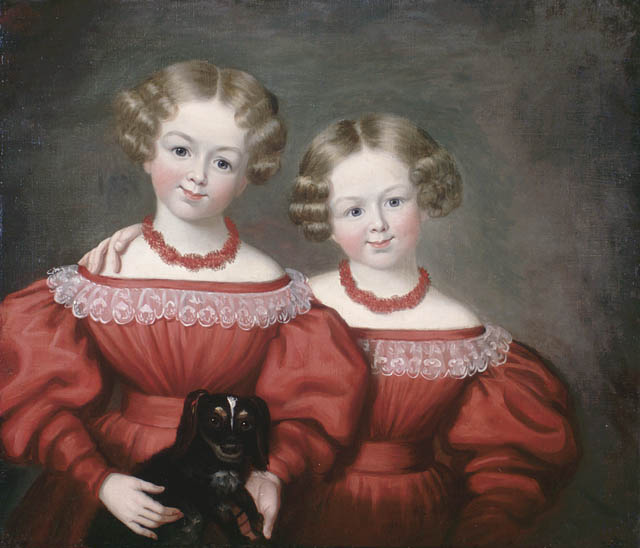
Céline and Rosalvina Pelletier, attributed to James Bowman, ca. 1838, oil on canvas (MIKAN 2837219)
Before the advent of photography, painted portraits were the only visual records of individuals. The absence of portraits of poor children demonstrates how this type of art was exclusive to the affluent. This portrait of the Pelletier sisters reflects their wealth and status. Depicted as little adults, the girls are dressed stiffly, holding a miniature dachshund (a symbol of fidelity), and wearing coral necklaces, which were believed to ward off childhood diseases.

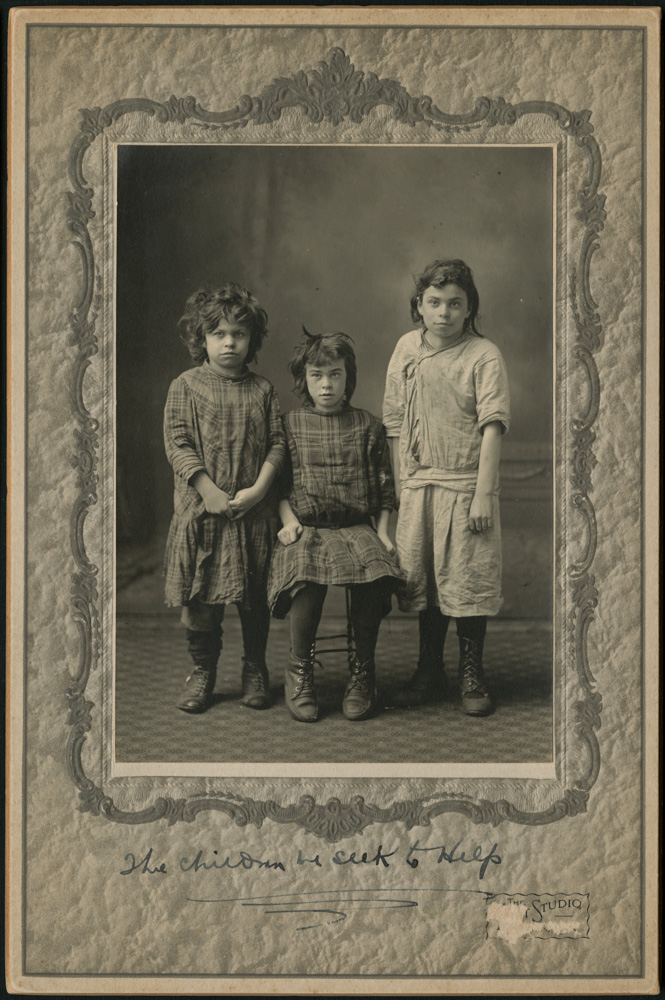
The Children We Seek to Help, photographer unknown, ca. 1900, silver gelatin print. (MIKAN 3351178)
Institutional records are a key source of information about children. The “child-saving” era of the late 19th century saw the creation of a number of child welfare organizations, such as the Children’s Aid Society. These charities sought to help poor, abandoned and neglected children by operating orphanages and training schools, and providing adoption services. Child-rescue workers used photography to both document and promote their work, often invoking contradictory images to draw attention to their cause by portraying children as both innocent victims and criminals in training.
When viewing the past through adult eyes, the role and presence of children is sometimes obscured. But children were also involved in or felt the impact of significant events in Canadian history.

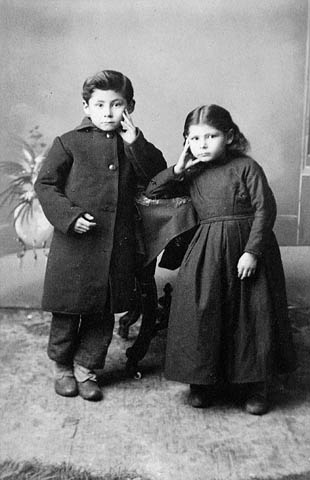
Jean-Louis and Marie-Angélique Riel, ca. 1888, by Steele & Wing, albumen print (MIKAN 3195233)
Jean-Louis and Marie-Angélique were born in Montana during the political exile of their father and Métis leader, Louis Riel for his role in the 1870 Red River Resistance. After their father’s execution in 1885, Marie-Angélique went to live with an uncle in Winnipeg, where she died of tuberculosis in 1896. Jean-Louis took his mother’s family name, moved to Montréal, and later died at the age of 25 in a horse-and-cart accident.

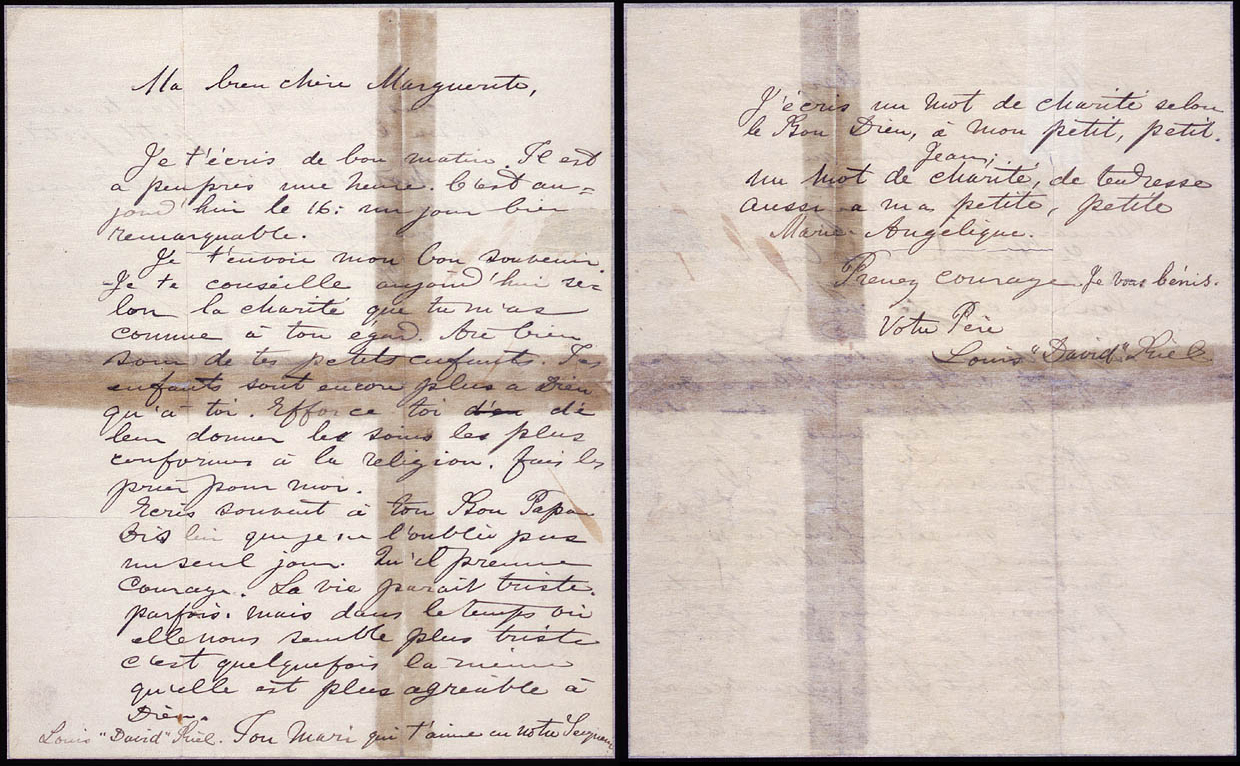
Letter from Louis Riel to his wife and children, dated November 16, 1885, ink on paper (MIKAN 126629)
This last letter from Louis Riel to his wife and children offers a private view of the Métis leader. Written on November 16, 1885, the day of his hanging in Regina, Riel speaks of his children, asks his wife to “have them pray for me” [translation] and ends his letter with “Take courage. Bless you. Your father, Louis ‘David’ Riel.” [translation].
Items created by children are often ephemeral and seldom preserved in collections. Those that have been preserved can be challenging to find as they are frequently subsumed within the broader histories and heritage of their families and communities and are rarely catalogued as being child-made. For these reasons, it is easiest to find material created by children who grew up to be important adults or were related to a famous adult.

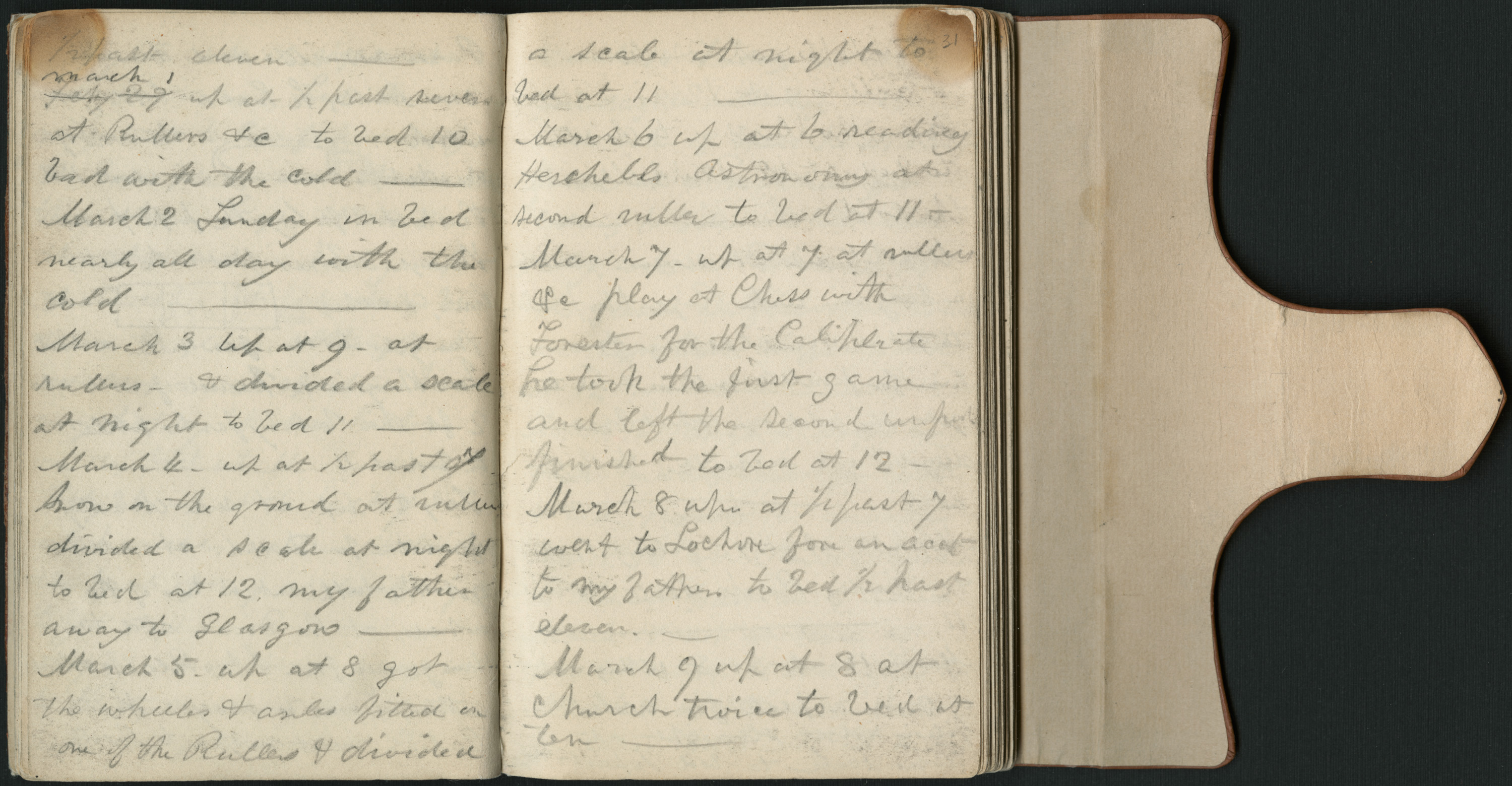
Diary of Sandford Fleming, 1843, pencil and paper (MIKAN 4938908)
This diary, kept by 16-year-old Sandford Fleming, seems to foretell his later success as an engineer and inventor. Filled with architectural plans, scientific formulas, and inventions, the diary exemplifies Fleming’s industriousness.
Children’s letters and diaries provide a rare glimpse into their private worlds, revealing their unique ways of speaking, thinking and interpreting the world around them. Intimate, candid, and sometimes whimsical, the diaries, letters and drawings created by children invite us to see history with fresh eyes.

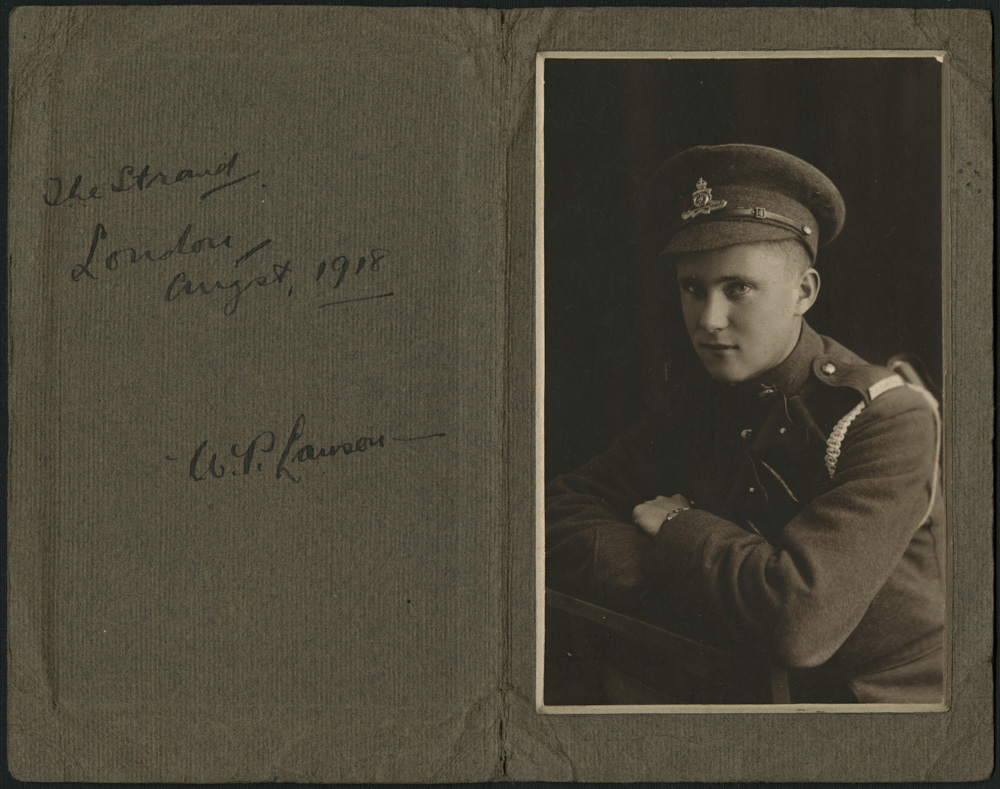
Portrait of Arthur Wendell Phillips Lawson, photographer unknown, 1918, matt collodion print (MIKAN 187937)

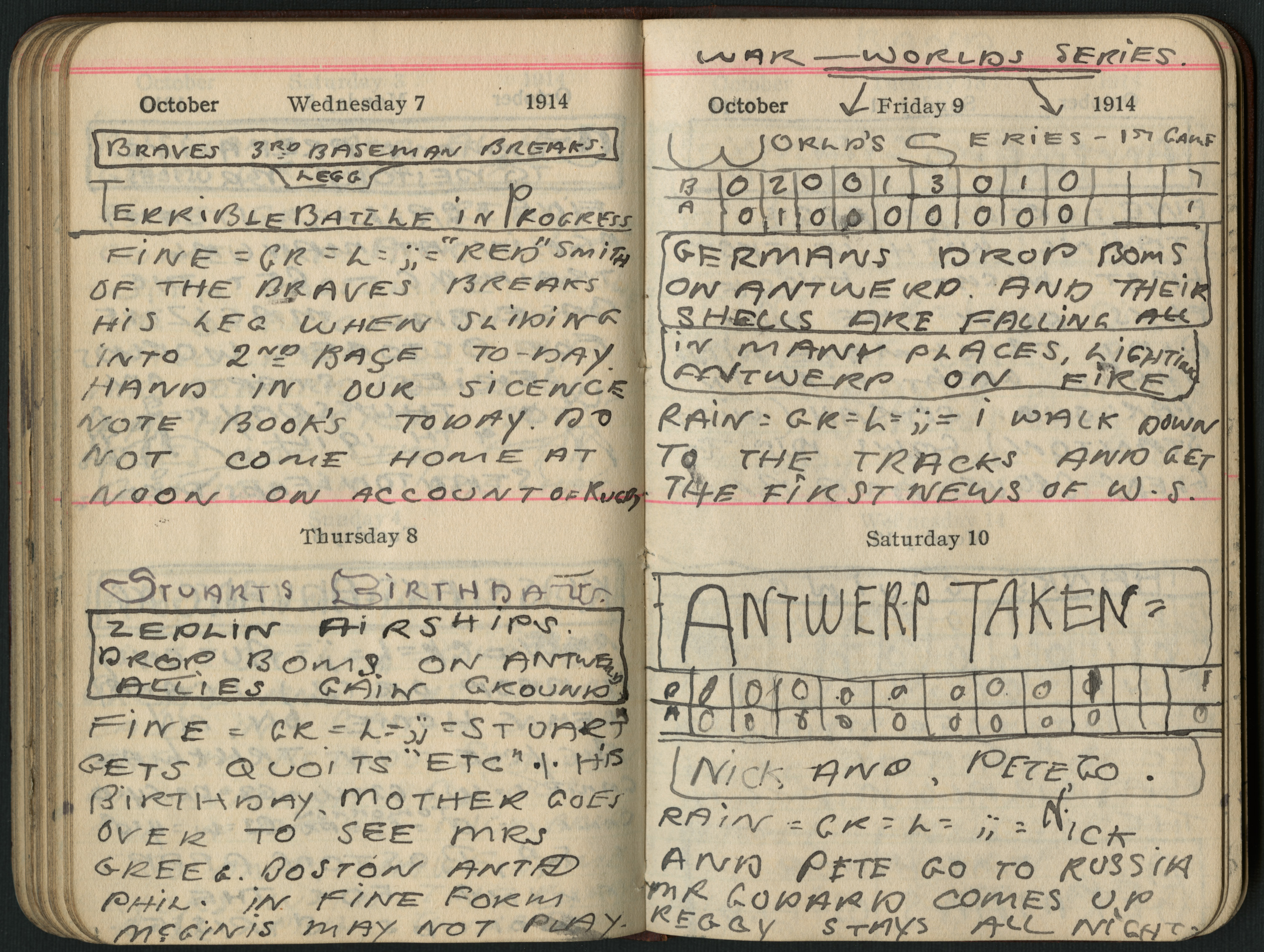
Diary of Arthur Wendell Phillips Lawson, 1914, ink, paper, and leather (MIKAN 129683)
This diary of 16-year-old Arthur Lawson invites us to understand his childhood sense of self and the world around him. Written at the beginning of the First World War, Lawson’s headlines about the battles raging overseas seem casually inserted alongside mundane notes about the weather, family events (like his brother’s birthday) and the scores of the 1914 World Series between the Boston Braves and the Philadelphia Athletics. Before the war was over, Lawson enlisted.
For more examples of these intriguing stories, visit A Little History: the Hidden Stories of Children on display in the Treasures from Library and Archives Canada gallery at the Canadian Museum of History from March 30, 2018 to January 27, 2019.
The Treasure Trove of a Great Performer: The Gratien Gélinas Fonds
By Théo Martin
It took Library and Archives Canada (LAC) over 20 years to acquire the archives of Canadian theatre great and creator Gratien Gélinas. Between 1973 and 1997, many national archivists and archivists at the National Archives of Canada worked hard to convince Gélinas to donate his documents. Active to the end of his life, he simply never had the time to focus his full attention on donating his archives.
Through one of his sons, Michel Gélinas, the National Archives of Canada finally acquired the documents in the Gratien Gélinas fonds in 1997, two years before the artist’s death. Thanks to a family member’s initial work in sorting Gélinas’s archives, the documents were already arranged in an organized, logical order when LAC received them, making them all the easier for researchers to consult. LAC archivists performed the final task of processing, describing and detailing conditions governing access between 1999 and 2004.
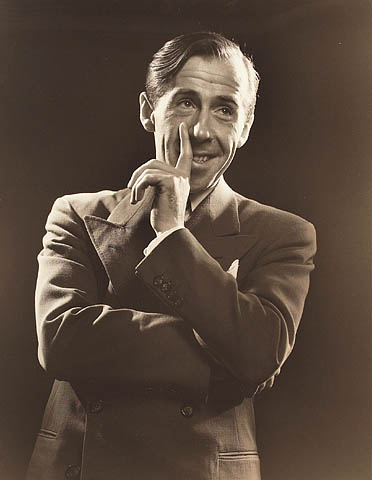
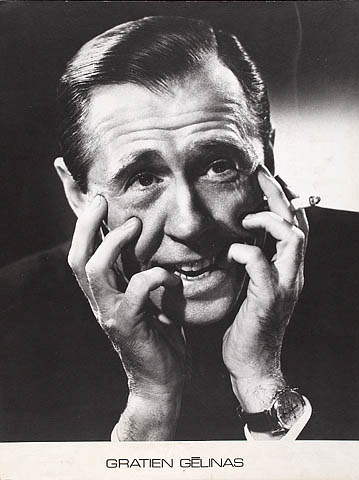
Portrait of Gratien Gélinas by Yousuf Karsh, 1942. Credit: Yousuf Karsh. (MIKAN 3591652)
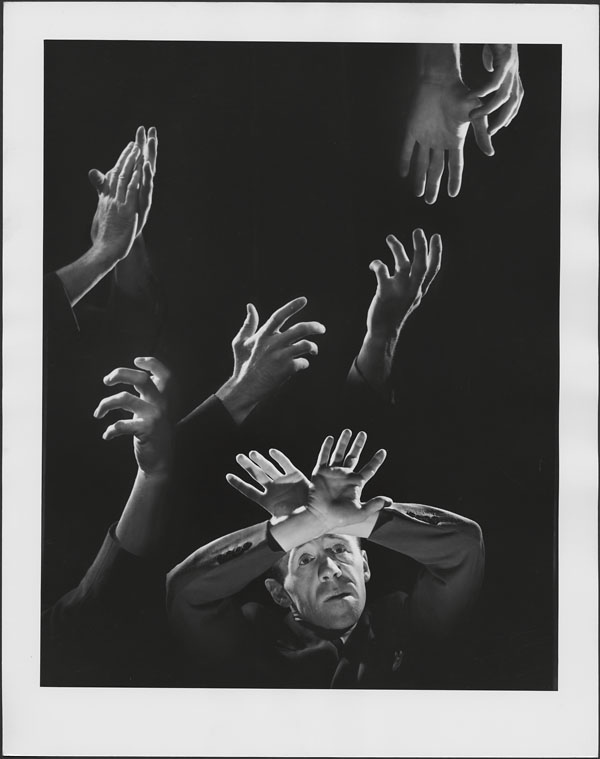
Gratien Gélinas by Yousuf Karsh, March 29, 1945. Credit: Yousuf Karsh. (MIKAN 3916385)
The Gélinas fonds contains 16 series on different aspects of Gratien Gélinas’s career and personal life.
For example, it contains a series on his literary works comprising several metres of handwritten text or typed manuscripts. It also includes scripts from radio broadcasts written by Gélinas that entertained a generation of French-speaking Canadians in the 1930s, like Carrousel de la gaieté or Train de plaisir, which aired on CKAC and Radio-Canada and eventually gave rise to his trademark character, Fridolin. Fridolin would later become the central character in the Fridolinons, an annual review produced by Gélinas and his team between 1938 and 1946 (and later 1956) at the Monument National, in Montreal.
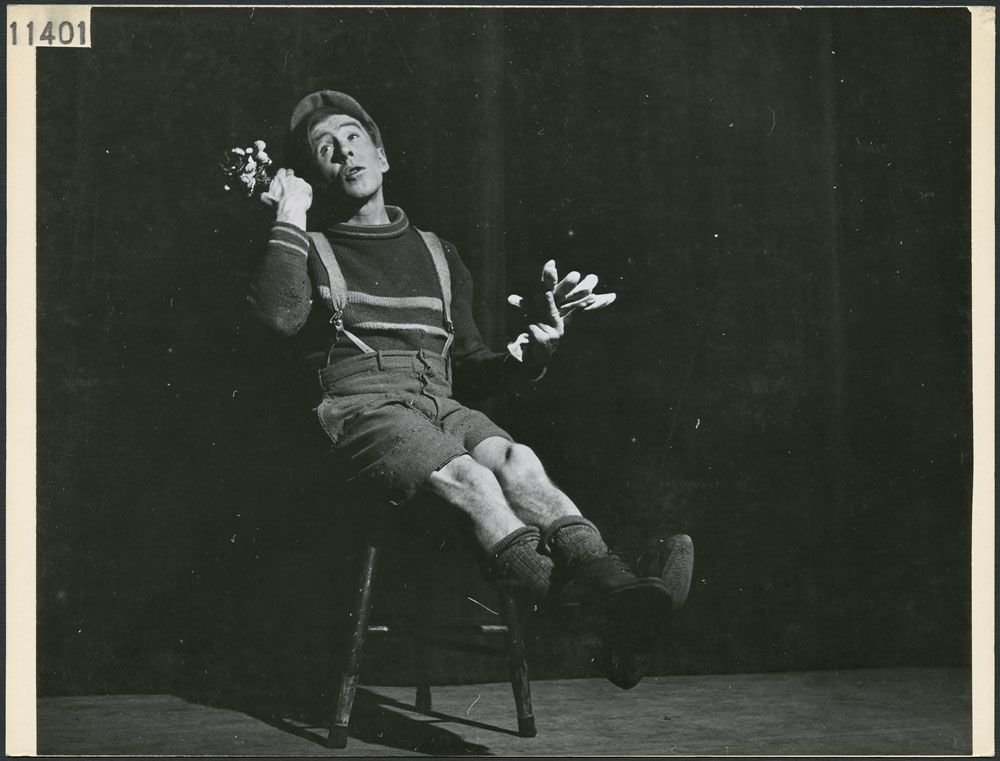
Gratien Gélinas playing Fridolin in a scene from “Fridolinons,” March 1945. Photo: Ronny Jacques for the National Film Board. (MIKAN 4295832)
The fonds contains manuscripts of seminal theatrical works by Gratien Gélinas: Tit-Coq; Bousille et les justes; Hier, les enfants dansaient; and La passion de Narcisse Mondoux, his last dramatic creation, written in 1985 essentially for himself and actor Huguette Oligny whose archives are also at LAC.
In addition, entire files of notebooks and annotated drafts perfectly illustrate how Gélinas developed and wrote his plays. They show the additions, deletions, impressions and scribbles of an artist constantly creating and questioning himself.
![A personal note handwritten in French. [Translation] “I have to get my life organized in the next few months so that everything I do, say and think is centred on this ultimate, magnificent goal. A play that will be the best thing I’ve ever done.”](https://thediscoverblog.com/wp-content/uploads/2018/03/e000001292.jpg)
“Tit-Coq”—personal notes made during the writing process, around 1946–1947. (MIKAN 2402016)
The fonds contains a large amount of multimedia materials, including extremely rare films, and very early Canadian short films like La dame aux camélias, la vraie (produced by Gélinas in 1942) and the feature-length Tit-Coq (produced in 1953). Incidentally, LAC has managed to convert most of the films in the fonds to digital format. Also included are a number of sound recordings dating as far back as the 1930s, with reviews, radio programs and shows produced by Gratien Gélinas. The fonds is a true treasure trove of information for any researcher interested in Canadian theatre and film.

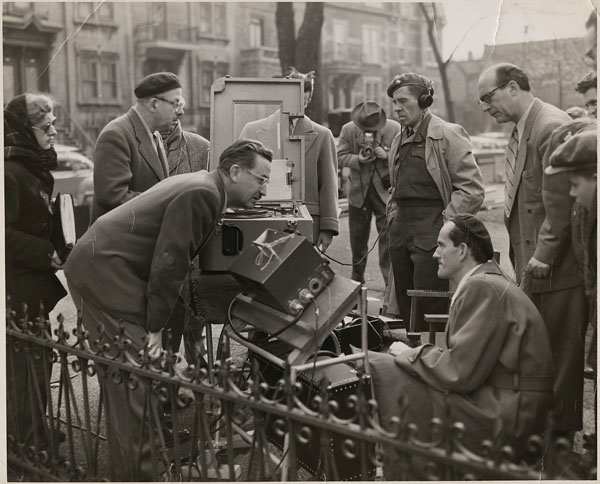
Filming of Tit-Coq, around 1952–1953. (MIKAN 3919038)
Added to this body of work are over 4,000 photographs, some of which document Gélinas’s early days in radio and on stage as well as all the theatre productions he participated in during a career spanning more than 60 years. Specifically, the fonds contains stunning photos by the National Film Board of Gratien playing Fridolin in 1945, other beautiful shots of him at the Stratford Festival in the 1950s and multiple photos from his private life and personal universe.
Equally remarkable about the Gélinas fonds are its visual arts materials: costume drawings and watercolours, set mock-ups, publicity drawings and collages that add a vibrancy and a visual element to the fonds as a whole. It becomes clear just how extensively Gélinas surrounded himself with many artists to produce and promote his performances throughout his career. We need simply consider the colourful, image-rich drawing by Robert LaPalme used as a set mock-up for Fridolinons ’45.
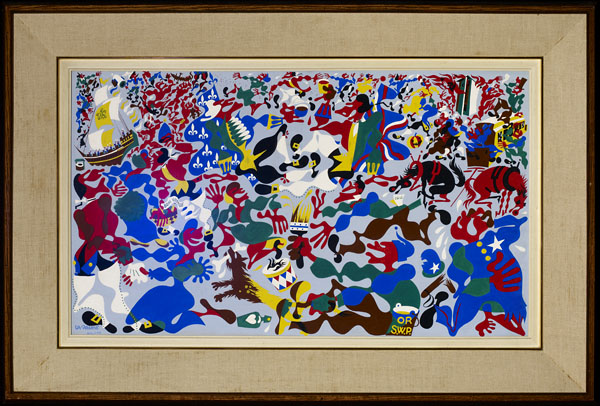
“Bon voyage” by Robert LaPalme, for Fridolinons ’45. (MIKAN 3926980)
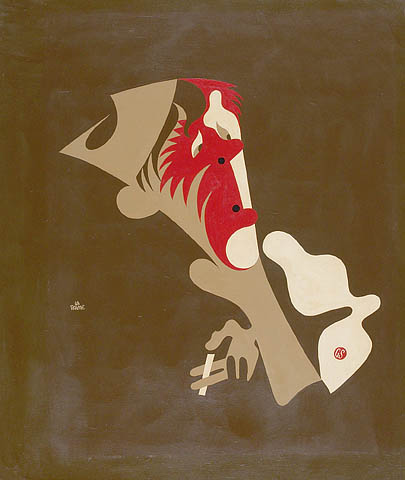
“Tit-Coq” drawing mock-up by Robert LaPalme. Original drawing used for the play’s poster and program. (MIKAN 3010586)
Many other documents also illustrate his career in Canadian arts and culture. Engagement contracts, correspondence and various promotional documents are also part of the fonds. Other papers relate to his work as an arts and cultural activist, including his involvement in the Union des artistes, or his career as a director of cultural institutions, such as La Comédie-Canadienne, which he founded in 1957, and the Canadian Film Development Corporation, which he chaired starting in 1969.
Adding special interest to this fonds are the documents related to his personal life. We discover a more intimate side of the multi-talented artist: notebooks, travel logs, various correspondence, photographs and works of art that offer a deeper insight into the person and his relationships with family and friends. In addition to correspondence with his family are a number of letters to or from figures from the world of arts or politics, such as Jean-Louis Roux, Lionel Daunais, Émile Legault, Jean Despréz, Robert LaPalme, Jean Drapeau and more.
Finally, we should mention that LAC also owns the fonds of Gratien Gélinas’s granddaughter, novelist Anne-Marie Sicotte, who wrote several biographies on Gélinas (La ferveur et le doute – Éditions Québec/Amérique 1995–1996; Gratien Gélinas, Naïve de Naïve Fridolin – XYZ Publisher, 2001), based in particular on archives in LAC’s possession. During her research, Sicotte not only transcribed various archival documents but also produced several audio recordings and transcripts of interviews with her grandfather.
The Gratien Gélinas fonds (and the related fonds conserved by LAC) portrays the life and work of a pioneer of Canadian theatre and broadcasting. It represents a veritable treasure trove of rich and varied documents accumulated over the lifetime of an unsurpassed artist and creator. This documentary jewel conserved by LAC awaits discovery and rediscovery by researchers and devotees of the performing arts from Canada and abroad.
Related resources
- Gratien Gélinas fonds
- Anne-Marie Sicotte fonds
- Huguette Oligny fonds
- Sicotte, Anne-Marie. Gratien Gélinas – La ferveur et le doute. Typo Essai, 2009.
- Sicotte, Anne-Marie. Gratien Gélinas en Images : Un p’tit comique à la stature de géant. VLB éditeur, 2009.
- Flickr album on Gratien Gélinas
- Podcast – “Gratien Gélinas: One of Our Own”
Théo Martin is an archivist in the Literature, Music and Performing Arts Archives Section at Library and Archives Canada.
Lieutenant Alan Arnett McLeod, VC
By Emily Monks-Leeson
In today’s profile for Library and Archives Canada’s blog series, First World War Centenary: Honouring Canada’s Victoria Cross Recipients, we remember Lieutenant Alan Arnett McLeod who was awarded the Victoria Cross for gallantry.
Born in Stonewall, Manitoba, in 1899, McLeod attempted to enroll in the 34th Fort Garry Horse in 1913, at the age of 14 despite being underage. After war was declared, he tried several times to enlist in the army in Winnipeg and again in the Royal Flying Corps (RFC) in Toronto, but was repeatedly rejected. Upon turning 18, he enrolled in the RFC and trained as a pilot in Long Branch, Ontario. He graduated with 50 hours of flying experience and left for service in France on August 20, 1917.

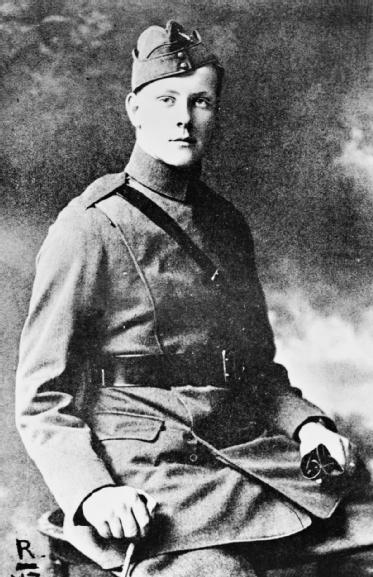
Lieutenant Alan Arnett McLeod, VC, of No. 51 and 2 Squadrons RAF. (© Imperial War Museums, Q-67601)
Originally posted to No. 82 Squadron, McLeod was assigned to home defence duties flying nighttime runs in a B.E.12 after his commander found out he was only 18 years old. His first operational flight took place in December 1917 with No. 2 Squadron over Hesdigneul, France. By January 1918, McLeod and his gunner had claimed one Fokker Dr.I and an observation balloon destroyed, an act for which McLeod was mentioned in despatches.
On March 27, 1918, Second-Lieutenant McLeod and his observer Lieutenant Arthur Hammond were in an Armstrong Whitworth F.K.8 over Albert, France. They destroyed a German triplane and were immediately attacked by a formation of eight more. McLeod and Hammond shot down three German aircraft before the petrol tank of their aircraft was hit and burst into flames. McLeod tried to keep the flames away from his observer by side slipping steeply as the plane went down, all the while continuing to fire on the enemy planes. When the plane crashed in “no man’s land,” an injured McLeod dragged Hammond from the burning plane and carried him to safety under heavy fire. Both men were gravely injured but survived. Lieutenant Hammond, wounded six times, ultimately lost his leg and was awarded a bar for his Military Cross.

Lieutenant Alan Arnett McLeod, VC, 1918 (MIKAN 3219066)
Lieutenant Alan Arnett McLeod received the Victoria Cross for his actions that day. After a period in hospital, he was sent back to Canada for further recovery. He died on November 6, 1918, in Winnipeg, Manitoba, from Spanish Influenza. McLeod Street in Stonewall, Manitoba, is named in his honour.
Library and Archives Canada does not hold the service record for Lieutenant Alan Arnett McLeod, VC. Men wishing to enlist in the air service joined the Royal Flying Corps, the Royal Air Force (RAF) or the Royal Naval Air Service. Personnel files for those British units are in the custody of the National Archives in England.
Emily Monks-Leeson is an archivist in Digital Operations at Library and Archives Canada.
Images of Tintype Photographs now on Flickr
Dates of major use: 1855-1860s

Group of five women, a baby, a man and a dog on a porch. (MIKAN 4955139)
Inventor: Adolphe-Alexandre Martin (1853), Hamilton A. Smith (1856)

Portrait of three women sitting on the floor. (MIKAN 4958586)
A tintype is a monochromatic direct positive image that is formed on a thin metal plate covered with a black varnish. They were often hand-coloured. Tintypes can be presented in paper mounts to be slid into albums or protected in American cases under glass.

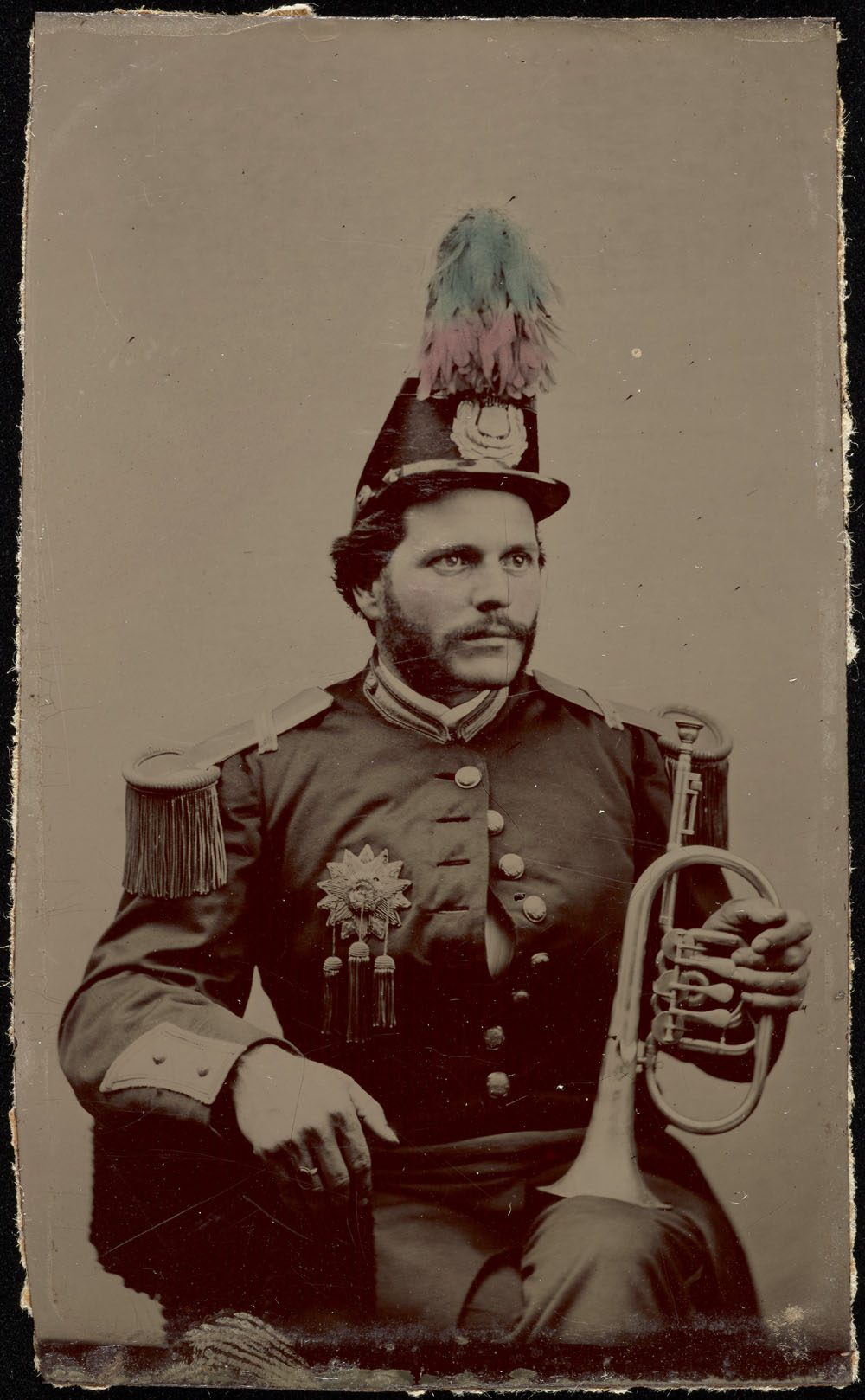
Portrait of a man wearing a municipal band uniform and holding his flugelhorn. (MIKAN 3511014)

Family portrait of a mother, three daughters, a son, and a dog. (MIKAN 3262041)