The greater game of war

Canadian hockey stars were not immune to the call to duty when the First World War erupted in 1914. In fact, the strong young men who made up teams across the country represented the prime demographic for potential soldiers and helped promote the war as the ultimate game an athlete could play.

Developed in partnership with the Hockey Hall of Fame in Toronto, the new exhibition Hockey Marching as to War: The First World War and a Century of Military Ties to the Game recounts how the First World War impacted hockey players and transformed organized hockey during and after the war.

War poster depicting a soldier holding a rifle from which billowing smoke transforms into an illustration of an arena filled with fans watching hockey players on the ice; the soldier is looking at the representation.

“Why don’t they come?” Join the 148th Battalion, recruitment campaign, ca. 1914–1918 (MIKAN 3635547)

The 228th Battalion (Northern Fusiliers) was formed in 1916 and fielded a battalion hockey team who played for the National Hockey Association (NHA). The battalion included 12 professional or semi-professional hockey players. Ultimately, the team was a publicity stunt used to encourage recruitment, to boost morale and to deal with the shortage of players in the NHA during wartime.

But when the battalion was eventually called to the front, scandal erupted as it was revealed that some players were promised they would never have to go to war. Those players who went abroad found themselves assigned to a construction unit, building rails for the next two years.

Black and white panoramic photograph of four groups of soldiers standing outside in winter.

228th Battalion, CEF, 1916 (MIKAN 4474052)

Conn Smythe

Hockey legend Conn Smythe enlisted in 1915, a week after winning the Ontario Hockey Association championship. Smythe served in the Canadian Artillery, earning the Military Cross, before being transferred to the Royal Flying Corps in 1917. He then served as an airborne observer until being shot down and captured. Despite two escape attempts, he spent more than a year in a German prisoner-of-war camp. Smythe would later go on to become principal owner of the Toronto Maple Leafs.

Black and white photograph of a man in uniform looking directly at the camera.

Portrait of Lt. Conn Smythe, ca. 1914–1919 (MIKAN 3221254)

One-eyed Frank McGee

“One-eyed” Frank McGee, as he was known, enlisted in the army in 1914 despite having lost his left eye more than a decade earlier. McGee supposedly bluffed his way through the medical exam by trying to memorize the vision chart with his good eye. The doctor wrote “good” on his medical chart for McGee’s right eye, but left the assessment of his left eye blank—perhaps not wanting to tell the league’s top scorer that he was unable to fight for his country.

Digitized image of a form displaying medical information with fields in black print and handwritten answers in black ink.

Medical certificate of Lt. Frank Clarence McGee (from McGee’s CEF file PDF, p. 28)

In August 1916, McGee joined the Battle of the Somme and died one month later when he was hit by enemy shrapnel. A passage in his obituary read:

“Canadians who knew the sterling stuff of which Frank McGee was made . . . were not surprised when he donned another and now more popular style of uniform and jumped into the greater and grimmer game of war. And just as in his sporting career he was always to be found in the thickest of the fray, there is no doubt that on the field of battle Lieut. McGee knew no fear nor shunned any danger in the performance of his duty.”

(Ottawa Citizen, September 23, 1916)

If you’re in Toronto, check out the exhibition at the Hockey Hall of Fame until February 2015!

Photography of the First World War – Part II: Finding First World War Photos

Following on the first part of this series: The Canadian War Records Office, here are some strategies for locating photographs of the First World War produced by the Canadian War Records Office.

Browsing

You can browse the lower-level records by selecting the ‟sub-series” or ‟sub-sub-series consists of” hyperlinked entries. For example, trying this within the “O” prefix record yields “4134 lower level description(s)” (Note: records are being continually added so this number may change).

Browsing the “O” prefix Sub-sub-series.

Browsing the “O” prefix Sub-sub-series.

Choosing this strategy makes it possible to view the pictures by browsing through them sequentially. This works well if you’re not quite sure what you are searching for but want to have an idea of the way the pictures are described and the type of photographs that can be found in the collection.

Searching

A more robust strategy to locate specific photographs within each series is to use the advanced Archives Search function. You can search using the “O-?” (with the quotes) or the original accession number “1964-114,” and a name or keyword. Using quotes limits the search words to a specific order. Using the question mark (?) allows for an open-ended search. A similar use of the asterisk (*) allows a search that looks for the variants of a word, for example: nurs*: nursing, nurse, nurses.

Searching for nursing-related photographs in the “O” prefix series in Advanced Archives Search.

Searching for nursing-related photographs in the “O” prefix series in Advanced Archives Search.

If you are unsure which series will contain photographs that are of interest to you, try entering the accession number “1964-114” and a specific term, such as “Vimy” (349 results) or “bishop” (21 results).

The following image shows items for nurs*, resulting in nurse and nursing sisters.

Search results for the nurs* search.

Search results for the nurs* search.

Some of the search results may yield records that appear to be duplicates. This is because archivists often create bilingual records to make it easier for all Canadians to find items in the language of their choice. In the case of panoramas, duplication may come from multiple negatives for one finished photographic print, with each part of the negative having its own record.

Explore the Canadian War Records Office images, and discover the “official” photographic record of Canada’s involvement in the First World War.

Other related materials:

Photography of the First World War – Part I: The Canadian War Records Office

The year 2014 marks the centenary of the First World War. In preparation for this date, archivists at Library and Archives Canada (LAC) have been cleaning up the Official Canadian War Photographs Records. They have been made more accessible to Canadians by enhancing their descriptions through thematic organization in the online database. This has been part of a much larger project to organize and describe the entire Department of National Defence’s photograph collection at LAC to ensure that the records are accurate, complete and accessible to the public. When the war began in 1914, most photographers and journalists were ordered away from the front. The First Canadian Division entered the European war theatre the following year. Finally, in 1916, millionaire press baron Max Aitken was granted permission to start the Canadian War Records Office (CWRO) and it became Canada’s “eyewitness to war” sending reports home from the front. Soon, these reports were also accompanied by photographs and paintings.

In addition to acquiring photographs from various sources, over the course of the war the CWRO hired three photographers—Captain Henry Edward Knobel, William Ivor Castle and William Rider-Rider—to travel to France and photograph battles, life at the front, and other activities. These photographs can be accessed under the Canadian War Records Office and were organized and given prefixes by the CWRO such as:

The largest of these CWRO-created prefixes is the “O” prefix. It includes about 4705 images, which were taken between May 1916 and May 1919. We find some of the most famous Canadian images of the war in this series. It includes William Ivor Castle’s shots of “Going over the Top” and the “29th Battalion advancing over No Man’s Land during the Battle of Vimy Ridge.”

Black and white photograph showing soldiers climbing over a ridge.

Canadian troops ‟going over the top” during training course at a trench-mortar school. (MIKAN 3206096)

Both of these photographs were later found to be manipulations: the first being a photograph of a drill, and the latter being a composite of two images to add dead bodies and puffs of smoke.

Black and white composite photograph of soldiers advancing through a field of mud. There's puffs of smoke in the air and bodies in the foreground.

The 29th Infantry Battalion advancing over “No Man’s Land” through the German barbed wire and heavy fire during the Battle of Vimy Ridge (MIKAN 3192389)

The next part of this series will explain how to search for First World War photographs in the Canadian War Records Office collection.

Other related materials:

120th birthday of William George Barker, Canadian flying ace and Victoria Cross recipient

November third marked the 120th anniversary of the birth of William George Barker, Canadian First World War flying ace and Victoria Cross recipient. One of Canada’s most renowned fighter pilots and the most decorated serviceman in the history of the British Commonwealth, Barker shot down 50 enemy aircraft during the First World War.

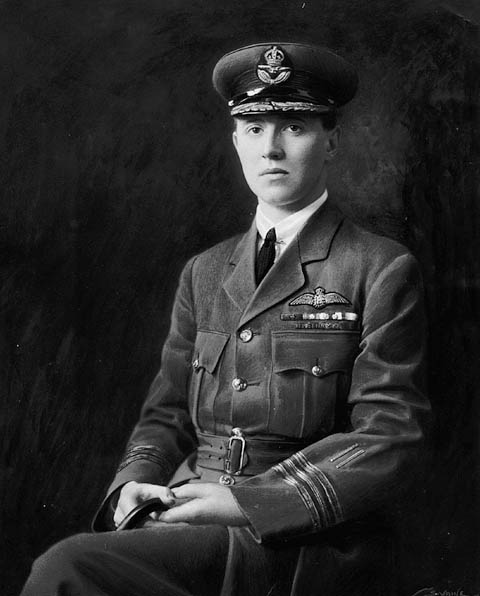
Major William G. Barker, 1918.

Major William G. Barker, 1918 (MIKAN 3623168)

Barker was born in Dauphin, Manitoba on November 3, 1894. He enlisted in the 1st Canadian Mounted Rifles in December 1914 and arrived in France in September 1915 where he served as a machine gunner. In early 1916, Barker transferred to 9 Squadron, Royal Flying Corps, and was commissioned as a second lieutenant. He transferred to 15 Squadron in July and shot down his first enemy aircraft from the rear of a B.E.2 aircraft. He was awarded the Military Cross in the concluding stages of the Battle of the Somme for spotting German troops massing for a counter-attack and calling down an artillery attack that broke up the 4,000-strong force. After an injury in August 1917, Barker served as a flight instructor in the UK but his ongoing requests for front-line service saw him join the 28 Squadron by the end of the year. Though unexceptional as a pilot, Barker exceled through his aggression in combat and highly accurate marksmanship, coupled with a tendency to ignore orders and fly unofficial patrols.

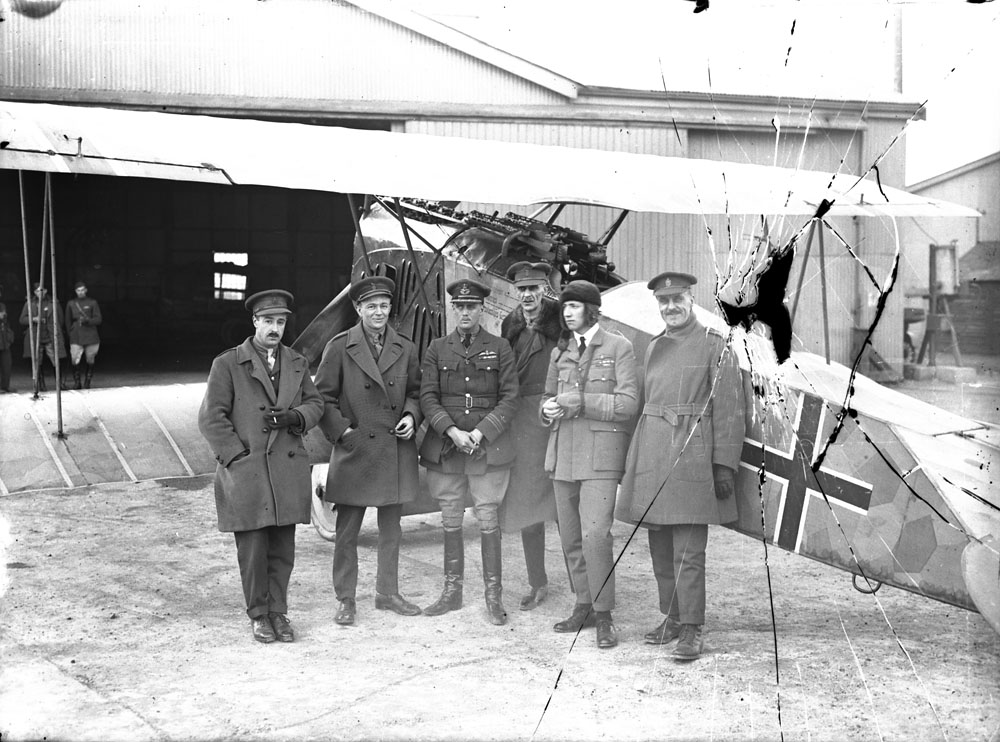
Major W. G. Barker, VC, (5th from left) with captured Fokker D.VII aircraft at Hounslow Aerodrome, April 1919.

Major W. G. Barker, VC, (5th from left) with captured Fokker D.VII aircraft at Hounslow Aerodrome, April 1919 (MIKAN 3523053)

On October 27, 1918, Barker was attached to 201 Squadron, Royal Air Force and flying a solo excursion over the Fôret de Mormal when he encountered a formation of Fokker D.VIIs from Jagdgruppe 12. In the ensuing battle, which took place immediately above the Canadian lines, Barker shot down four enemy aircraft before crash-landing inside Allied lines. Severely wounded, Barker had only recovered enough to walk the few paces at his Victoria Cross investiture ceremony at Buckingham Palace by March 1919.

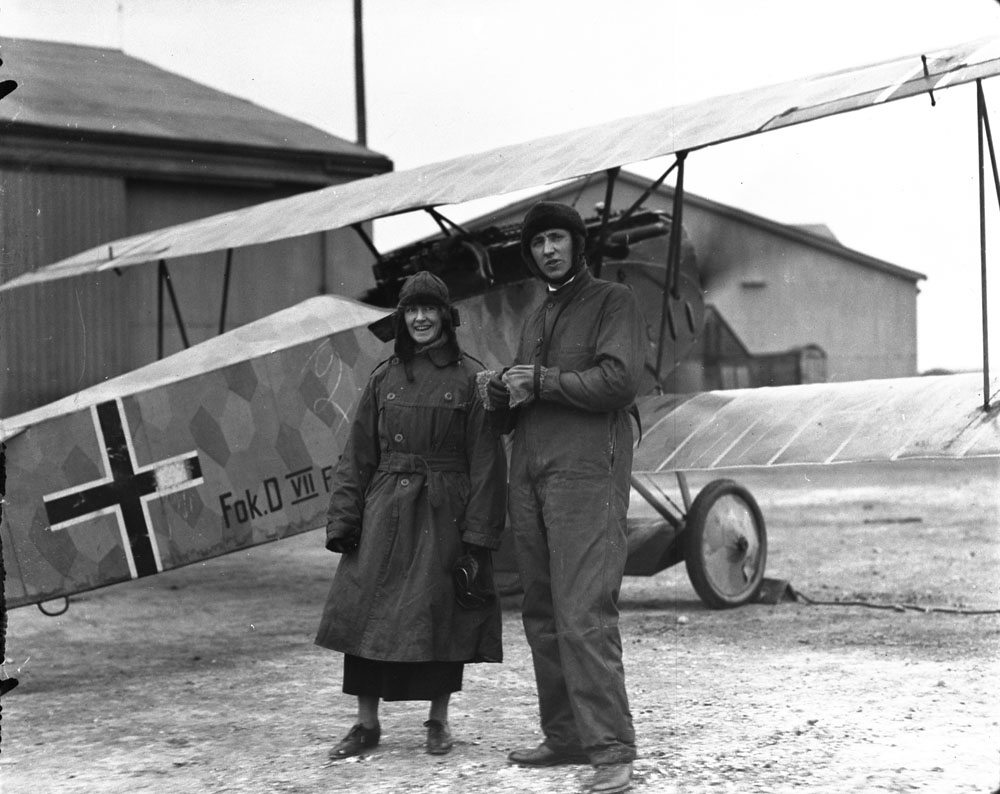
Major W. G. Barker, VC, with captured Fokker D.VII aircraft at Hounslow Aerodrome, April 1919

Major W. G. Barker, VC, with captured Fokker D.VII aircraft at Hounslow Aerodrome, April 1919 (MIKAN 3214719)

As the most decorated serviceman in the British Commonwealth, Barker is credited with one captured and two (seven shared) balloons destroyed, 33 (and two shared) aircraft destroyed, and five aircraft out-of-control.

Following the war, he and fellow flying ace William “Billy” Bishop formed Bishop-Barker Aeroplanes Limited. Barker joined the fledgling Canadian Air Force as Wing Commander in 1922 and was appointed Acting Director in 1924. He suffered the physical effects of his injuries throughout his post-war life.

He died on March 12, 1930, aged 35, when he lost control of his Fairchild KR-21 biplane trainer during a demonstration flight at Rockcliffe Air Station. His funeral was the largest national state event in Toronto’s history.
Library and Archives Canada holds the CEF service file for Major William George Barker.

To learn more about Canada’s military past, visit the Military Heritage pages.

First Canadian casualties of the First World War

It is well documented that George Lawrence Price, who was killed by a sniper two minutes before the Armistice on November 11, 1918, was the last Canadian soldier to die in combat during the First World War. But who was the first?

It turns out, the answer is a bit complicated. On August 4, 1914, Britain declared war on Germany. As a dominion of the British Empire, Canada automatically entered the war. Members of the Canadian Expeditionary Force only arrived at the battlefields of France and Belgium in early 1915; however, some Canadians who were overseas when war broke out joined British forces and saw active service more quickly. British units were fighting in Belgium and France as early as August 1914, with intense combat at Mons, the Marne and Ypres, resulting in 500,000 casualties by October 1914.

Canada’s Books of Remembrance, along with the Canadian Virtual War Memorial, contain the names of more than 118,000 Canadians who fought and died in wars since Confederation. While primarily commemorating soldiers killed within Canadian units, the Books of Remembrance also commemorate those killed serving with British regiments. They include the names of Canadians who died in service of other causes—disease, illness, accident, or injury—as well as those killed in action and as the direct result of injuries received in or related to combat.

Death in service, but not in combat

Private Harry B. Little of the Princess Patricia’s Canadian Light Infantry enlisted on August 10, 1914, at the age of 26. He died four days later from heart failure while on a troop train in Alberta. Little was buried in Czar Cemetery, Alberta.

Death in battle, but not for Canada

Corporal Charles Raymond served with the British infantry, 2nd Battalion, King’s Royal Rifle Corps. Raymond was born in Windsor, Ontario, and was killed in combat on September 14, 1914, at the age of 32. He is buried in La Ferté-sous-Jouarre Memorial cemetery, Seine-et-Marne, France.

Death in battle and for country

Finally, the first Canadians to die in combat while serving with a Canadian unit during the First World War were Malcolm Cann, John Hatheway, William Palmer, and Arthur Silver, on the Pacific Ocean, approximately 80 kilometres off the coast of Chile in the Battle of Coronel. They were in the first class of the newly created Royal Naval College of Canada. Under the command of British Rear Admiral Sir Christopher Cradock of the Royal Navy’s North American and West Indies station, Cann, Hatheway, Palmer, and Silver were taken as midshipmen on the HMS Good Hope, part of a squadron of ships that set out to defend British commerce from German naval aggression in the eastern Pacific. They engaged a German squadron commanded by Admiral Graf Maximilian von Spee on November 1, 1914, off the coast of Chile. In what would be the worst British naval defeat in a century, more than 1,600 Allied sailors were killed in the battle, including the four Canadian midshipmen, whose ship was sunk with all hands on board.

Related resources

Sharing genealogical data in the electronic age: the GEDCOM application

You have just met relatives who share your passion for family history and you are looking forward to gathering data about your “new” relatives. In order to share the genealogical records you already have, here’s how you can exchange genealogical data, no matter what software your recipient is using
The GEDCOM file format specification was designed to transmit and receive genealogical data such as location and date of birth, marriage and death information in a standard format. Welcome then to the equivalent of an online family reunion!

About GEDCOM

Developed by  Family Search, GEDCOM text files contain information and links for exchanging genealogical data between two parties regardless of the software. Files can also be downloaded from a website, imported into genealogical software, and added to Family Tree. The files can also be transmitted as attachments to emails. You can recognize a GEDCOM file by its extension, “.ged”.

Library and Archives Canada releases fifteenth podcast episode, “Out of the Ordinary: Rare Books”

Library and Archives Canada (LAC) is releasing its latest podcast episode, Out of the Ordinary: Rare Books.

Special Collections librarian Meaghan Scanlon joins us to discuss rare books and the collection (held at Library and Archives Canada) that has grown from relatively modest beginnings into one of the finest collections of rare printed material in the country.

Subscribe to our podcast episodes using RSS or iTunes, or just tune in at Podcast–Discover Library and Archives Canada: Your History, Your Documentary Heritage.

For more information, please contact us at podcasts@bac-lac.gc.ca.

New Research Guides Online!

Library and Archives Canada is pleased to announce the launch of two new guides: Guide to Sources Relating to the Canadian Militia, 1855–1988 and Guide to Sources Relating to Canadian Naval Vessels, 1909–1983. The guides were originally compiled over many years by the late Barbara Wilson (1931–2014), an archivist with the former National Archives of Canada, now Library and Archives Canada.

Guide to Sources Relating to the Canadian Militia, 1855–1988

This guide is an indispensable starting point for researching the records that document Canadian militia units. It is a unique finding aid that brings together, by militia unit name, references to records and files scattered throughout several different archival fonds held at Library and Archives Canada.

Guide to Sources Relating to Canadian Naval Vessels, 1909–1983

This guide is an indispensable starting point for researching the records documenting Canadian naval vessels that served with the Royal Canadian Navy. It is a unique finding aid that brings together—by ship’s name—references to records and files scattered throughout several different volumes of archival fonds of the Department of National Defence.

On Pointe–A Dancing Force to be Reckoned With

Celia Franca—dancer, teacher, choreographer, founder and artistic director of the National Ballet of Canada—has been described as beautiful, graceful, talented, determined, a powerhouse and a tour de force. Other descriptions have been more pointed, alluding to Ms. Franca’s no-nonsense teaching methods as well as her drive and tenacity in her successful attempt to establish a Canadian classical ballet company in only ten months while at the same time working as a file clerk in a Toronto department store.

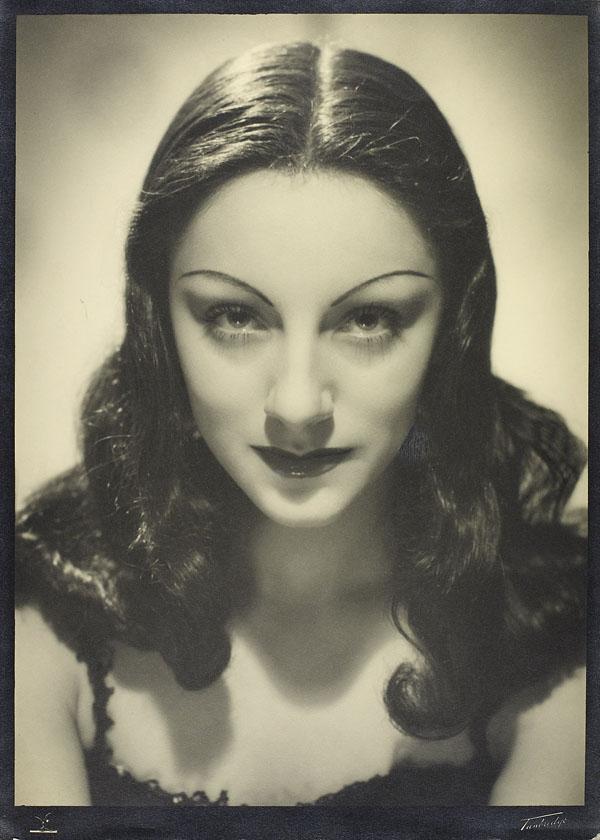
A black-and-white publicity portrait of Celia Franca facing the camera

Portrait of Celia Franca (MIKAN 3803233)

Celia Franca was born Celia Franks in London, England in 1921. Her parents were Polish Jewish immigrants, her father a tailor in London’s East End. She surprised her family when at a very young age, she announced that she wanted to be a dancer. After earning scholarships, she studied at London’s Guildhall School of Music and the Royal Academy of Dance. Franca made her London stage debut at the age of 14, after which there was no turning back. By the age of 20, Franca was considered to be one of the most accomplished ballerinas with the Sadler’s Wells Ballet Company (a forerunner of the Royal Ballet) and by the age of 26, Franca was ballet mistress, choreographer and soloist with the London-based Metropolitan Ballet.

A black-and-white studio portrait of Celia Franca as a young girl. She is dressed in a tutu and is on pointe.

Portrait of Celia Franca on pointe (MIKAN 3803737)

In 1950, a new national Canadian ballet company was being contemplated by some Toronto arts patrons and members of that city’s business community. When it was time to choose a director, Franca was approached and accepted the job. She was not only director of the newly formed National Ballet of Canada, but also principal dancer with the company until 1959. Under her direction, the National Ballet of Canada flourished and became recognized and applauded internationally. As a result of Franca’s tenacity and teaching style, “Canadian dancers now had no need to leave Canada to become world-renowned artists.”

In 1959, Celia Franca along with Betty Oliphant, founded the National Ballet School of Canada as a training institution for aspiring dancers and teachers. It was also a very ingenious way to provide definitive dancers for the National Ballet of Canada. Franca resigned from the National Ballet in 1974, and in 1978 co-founded The School of Dance in Ottawa with Merilee Hodgins.

Throughout her lifetime, Celia Franca was the recipient of many awards and honours. In 1968, she was invested as an Officer of the Order of Canada and later promoted to Companion. Celia Franca died in Ottawa in 2007, but her dancing legacy lives on.

Celia Franca’s legacy at Library and Archives Canada: