Porter Talk

By Stacey Zembrzycki

This article contains historical language and content that some may consider offensive, such as language used to refer to racial, ethnic, and cultural groups. Please see our historical language advisory for more information.

Stanley Grizzle was born in Toronto in 1918, to parents who had immigrated separately from Jamaica in 1911. His mother laboured as a domestic servant while his father found work as a chef with the Grand Trunk Railway (Grizzle, My Name’s Not George, p.  31). The eldest of seven children, Grizzle became a porter for the Canadian Pacific Railway (CPR) at the age of 22, pulled away from school to help his parents meet their dire financial obligations. “Porters,” as he puts it in his memoir My Name’s Not George: The Story of the Brotherhood of Sleeping Car Porters in Canada, “were well respected, and looked up to by many in the community because they had steady employment. In essence, they were the aristocrats of African-Canadian communities. They were the most eligible bachelors and parents often encouraged their daughters to marry a porter” (p. 37).
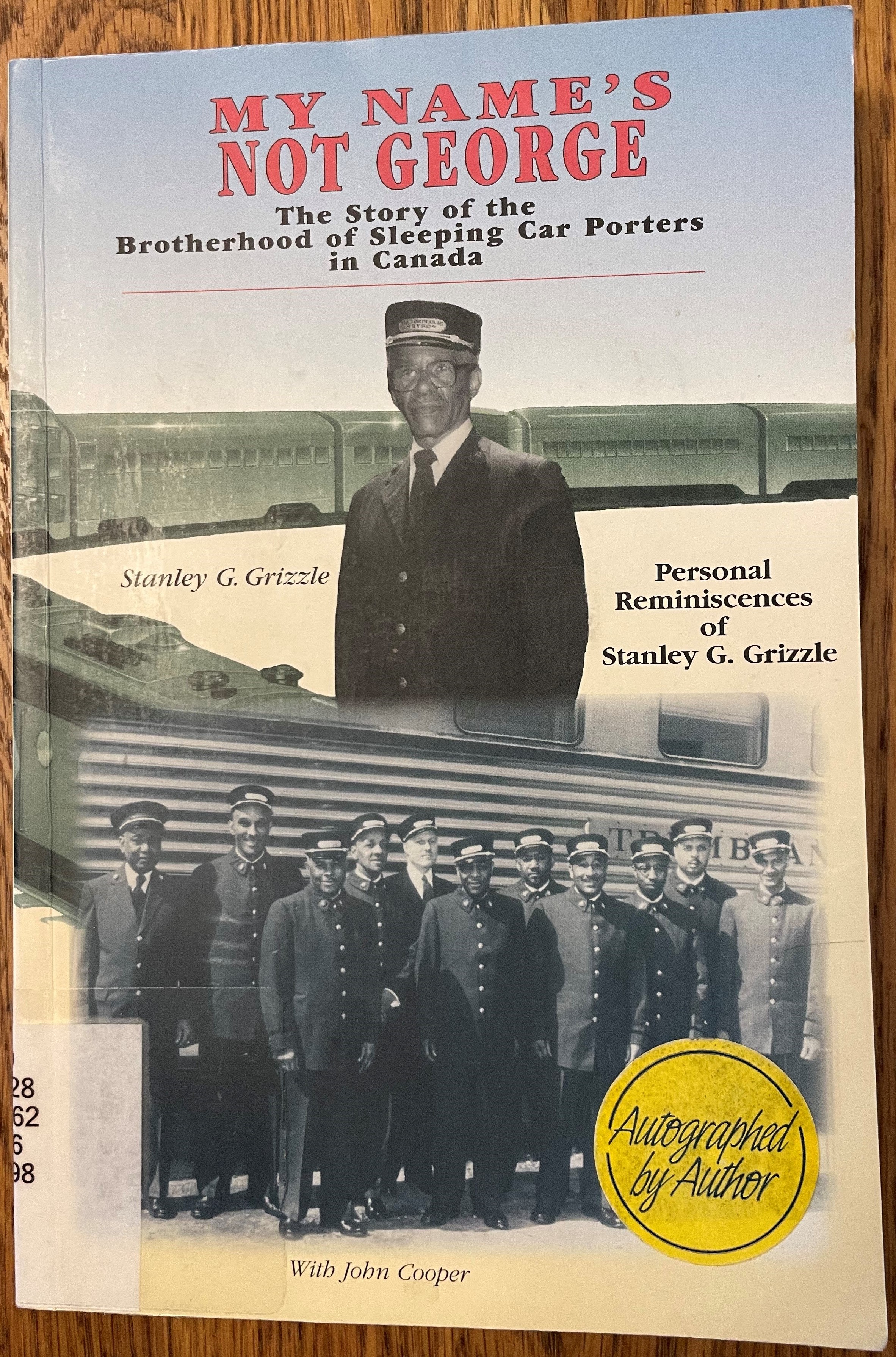
Book cover featuring a man with a train behind him, and a group of men below, all dressed in uniforms.

Book cover of My Name’s Not George: The Story of the Brotherhood of Sleeping Car Porters in Canada: Personal Reminiscences of Stanley G. Grizzle (OCLC 1036052571). Image courtesy of the author, Stacey Zembrzycki.

Grizzle’s early life began to follow this well-established trajectory, especially since portering was one of the only employment options available to Black men in the mid-twentieth century, until it was interrupted by the realities of the Second World War. Conscripted into the Canadian Army in 1942—legislation he firmly opposed throughout his life—Grizzle spent an extended amount of time away from the family he had only just started. In fact, his first child, Patricia, arrived on the very day he departed for Europe and did not have the opportunity to meet her father until he returned home, when she was three years old (Grizzle, My Name’s Not George, p. 57).

Grizzle’s early experiences with poverty, and the racism he encountered as a porter and a soldier, went on to dictate the new career path he paved for himself. First, as a celebrated labour union activist with the Toronto division of the Brotherhood of Sleeping Car Porters (BSCP), then as the first Black Canadian to be employed by the Ontario Ministry of Labour as a clerk with the Ontario Labour Relations Board, and later as the first Black Canadian to be appointed as a judge in the Court of Canadian Citizenship. There is no doubt that these experiences also informed the interviews he conducted in 1986 and 1987, now held by Library and Archives Canada (LAC).

As I mentioned in a previous blog, these 53 informal conversations among friends and acquaintances constituted what many, including Melvin Crump, referred to as “porter talk.” Meeting in Crump’s Calgary living room on November 1, 1987, the two men spent the afternoon discussing the intricacies of what it meant to be a porter. Not only did they describe what the job signified for them as Black men, they also explained how it shaped their identities and the larger Black communities that supported them.

Having been born in Edmonton in 1916 after his parents immigrated in 1911 as homesteaders from Clearview, Oklahoma, Crump’s early circumstances were much different from Grizzle’s. However, the men had both experienced the abject racism that was central to Black experience in Canada, which ultimately led them to a career with the CPR. Like Grizzle, Crump went to work for the company because it offered stable employment, away from the meatpacking plants and farms in the region that provided little stability and paid poor wages. In fact, Crump knew that this would be the only way to get ahead, so he lied about his age to obtain a job when he was just nineteen years old, thereby defying the age restriction that limited employment to those over twenty-one.

Like Grizzle, Crump spent about twenty years working for the CPR before seeking employment beyond the rails. The move from steam to diesel engines, coupled with automation, drastically changed the size, shape and appearance of this labour force, as well as passenger experience forever. As they had always done, the men moved toward a secure future. Regardless of their similar but divergent histories, both men prided themselves on having done their jobs well, and continued to stress the inherent value of unionization, regardless of the risks, nearly thirty years after leaving portering.
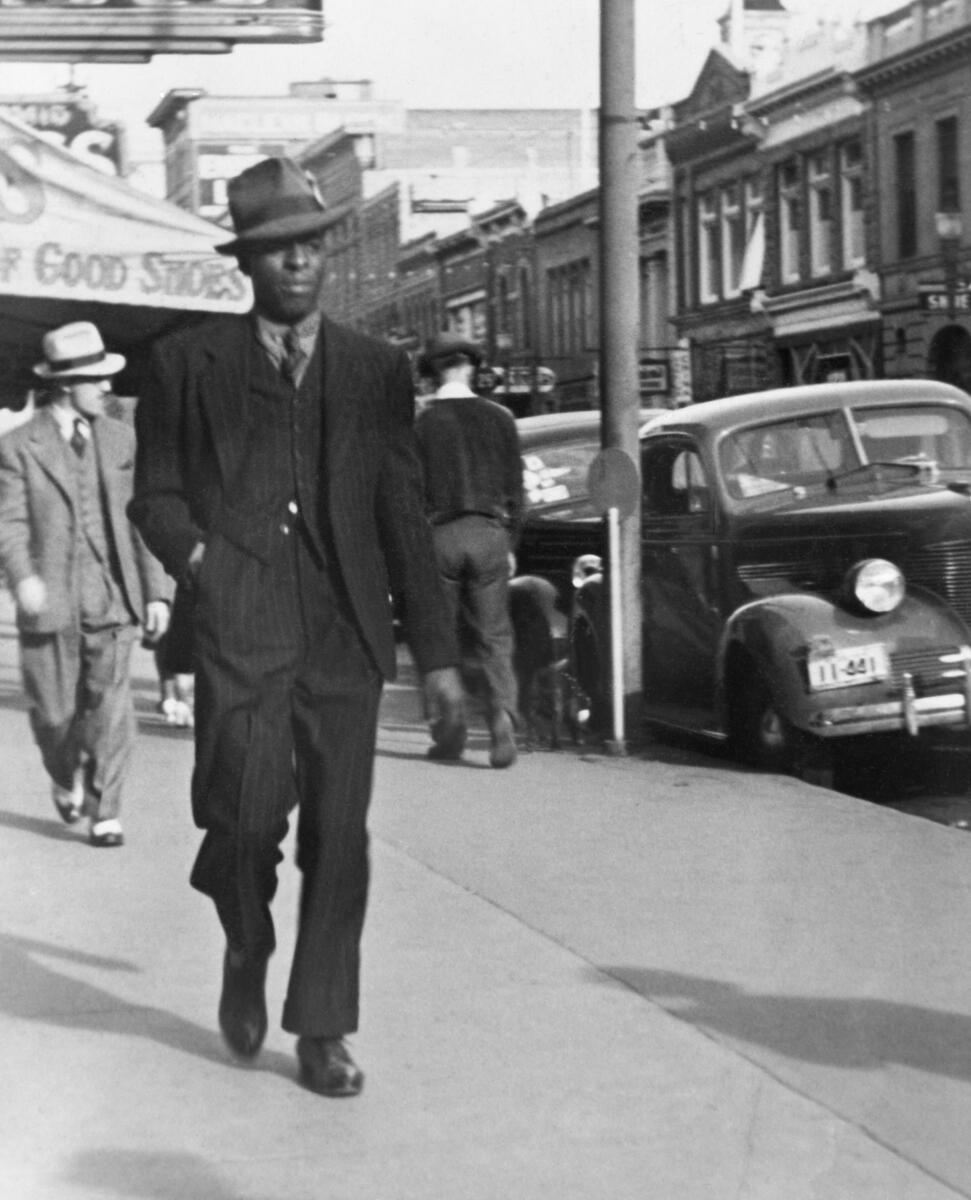
A man in a suit and hat walking down a sidewalk lined with cars and buildings.

Melvin Crump on 8th Avenue, Calgary, Alberta, ca. 1940, (CU1117465).
Photograph: Collection, Libraries and Cultural Resources Digital Collections, University of Calgary.

There is a coded language to this conversation. It is implicit, organic and almost impossible to understand without having lived through the institutional racism and systemic segregationist policies that guided nearly every aspect of these men’s lives, on and off the rails (Mathieu, North of the Color Line). The conversation is warm, the laughter is heartfelt, and the experiences intersect in complex ways. There is no need for detailed explanations between the men. These conversations were meant to support the writing of Grizzle’s memoir. While he was committed to documenting and preserving the history of portering in Canada, one wonders if these conversations were meant to be heard by others. And yet, here we are, listening in, translating their meaning and breaking the coded nature of these exchanges nearly forty years later.

By pushing Crump to articulate the particular circumstances that defined his experiences in Calgary—the friendships that were made, nurtured and even broken there, the specifics of unionization within that branch and the role of the wider community in fighting for change and supporting porters and their families—Grizzle highlighted the similar ways in which porters across the country were bound together by this demanding and often degrading profession.

And yet these intersections, which we hear across the collection, quickly become more complex when Grizzle asks Crump, as he did with all interviewees, to recount memorable railroad anecdotes. Porter talk offers insight into how each man put one foot in front of the other and built a life around portering. We get brief but powerful glimpses of who these men were, how they saw the world and why they tolerated and overcame the abuse they endured daily. As we gain a superficial understanding of each man’s personality, we also hear about resilience. Stories about memorable passengers naturally shift to stories about the other Black men with whom they shared railcars and responsibilities. The sense of community among porters and the conversations that started on the trains and flowed over into these interviews are what make these recordings so special. The laughter, reinforced by years of hindsight, reflection, recognition of service and a job well done, fuels the jovial exchanges that lead us into the realm of porter talk.

When Grizzle asked Crump to tell him about the prominence of nicknames between porters, Crump let out a roaring laugh, declaring:

Oh nicknames used between porters? Oh-oh-oh-oh, yes. Yeah, I know what you mean. You mean porter talk? You mean porter talk? Well, uh, uh, some of the porter talk names I wouldn’t wanna mention on tape, because if I did uh, it would shock some of the readers or some of the listeners, but they had a language all of their own, I’ll tell you. And some of the conversations that they would get in between themselves. I couldn’t dare, I wouldn’t dare to start to-to mention none of those things. (Interview 417403, File 2 [22:33])

And yet, porter talk is exactly what he, and nearly all of Grizzle’s other interviewees, transmit on these recordings. He couldn’t dare and yet he does. We are offered a seat at the proverbial table to listen, learn and take in a world that no longer exists, and yet remains central to who we are as Canadians.

It is this passing reference that inspired Discover Library and Archives Canada’s new miniseries Porter Talk. This will be the first in a new podcast production entitled Voices Revealed, which will delve into the vast and rich oral history holdings at LAC. While porters have figured prominently in popular culture in recent years, this will be the first time that these men, along with their wives and children, will speak for themselves. It is not enough to write about their exceptional experiences. Readers must hear these narratives. They must be able to differentiate accents, listen to laughter alongside rage, pause to ponder the challenges of portering and the resilience of Black communities in Canada, and grasp the power in these men’s voices and the history they convey.

Grizzle, Crump and all those who graciously agreed to be interviewed, will guide us through this history on their own terms, revealing why it is imperative for us to keep listening, to keep remembering, and to keep porter talk alive, especially as we continue to navigate the many challenges posed by institutional and systemic racism and discrimination in this country and beyond. The structures that these men, alongside their wives and children, worked so hard to dismantle, continue to matter. These voices remind us of the work that remains to be done.

To listen to this miniseries, you can subscribe to Discover Library and Archives Canada for free wherever you get your podcasts.

Additional resources


Stacey Zembrzycki is an award-winning oral and public historian of immigrant, ethnic, and refugee experiences. She is currently employed as a Podcast Development Specialist in the Outreach and Engagement Branch at Library and Archives Canada.
Black porters’ voices and stories: the Stanley Grizzle interview collection

By Stacey Zembrzycki

This article contains historical language and content that some may consider offensive, such as language used to refer to racial, ethnic and cultural groups. Please see our historical language advisory for more information.

The history of the railway in Canada is often narrated in a celebratory manner. It is seen as having united the country from coast to coast, with the last spike coming to symbolize the fruition of Confederation. And yet, this history is deeply rooted in the dispossession of Indigenous peoples from their ancestral lands and territories, the exploitation of Chinese migrant labourers, and the discriminatory labour practices experienced by Black sleeping car porters. The Stanley Grizzle interview collection, which consists of interviews with 35 men and 8 women who were either porters or had loved ones who worked the rails, offers a different account of the railway. The collection is exceptional because of its ability to bring us deep inside this history. It tells it from a new perspective that places Black Canadian and Black migrant labourers’ voices, as well as the stories of the racism that they experienced while employed by the Canadian Pacific Railway (CPR), at its centre. These interviews also offer glimpses into the Depression, the Second World War, the struggle to unionize porters, the creation of the Brotherhood of Sleeping Car Porters (BSCP) and its Ladies’ Auxiliary, and ultimately what life was like inside Black communities across the country. The difficult narratives in this collection speak to the strength and resilience of those who have long been discriminated against simply because of the colour of their skin.

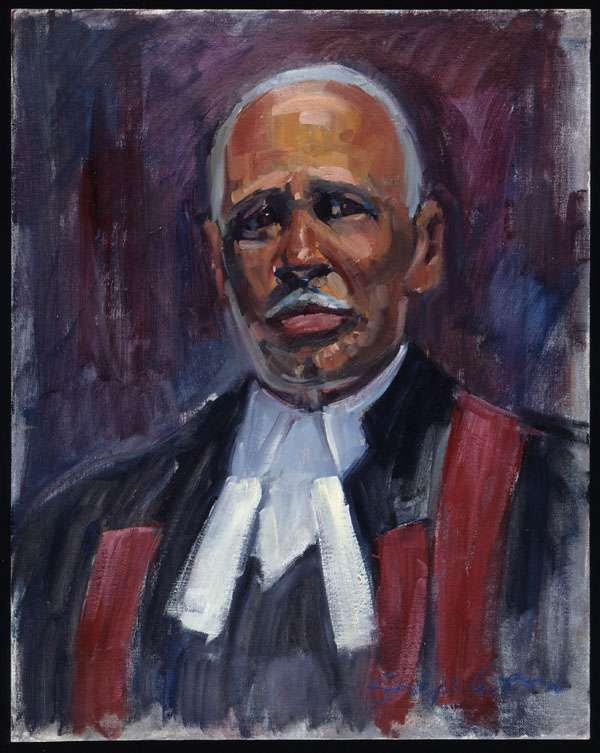
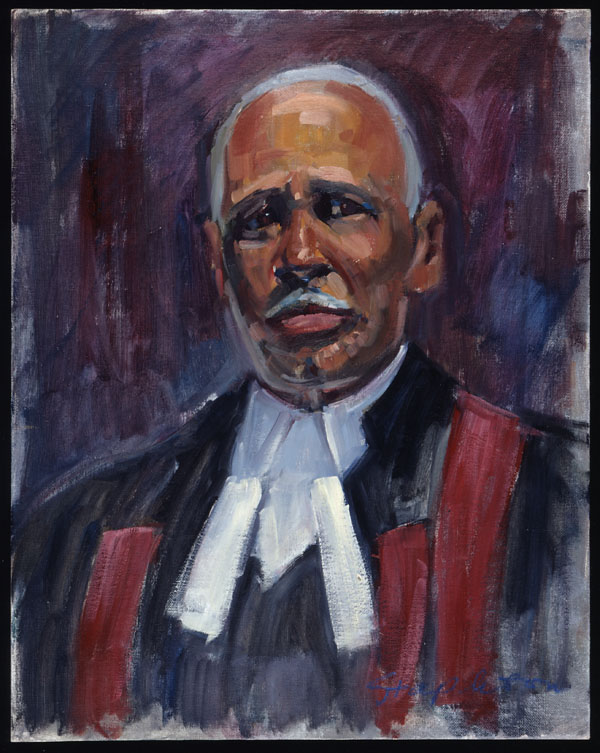
A painted head-and-shoulders portrait showing an older Black man dressed in judge’s robes and a crisp white shirt. His black robes are embellished with a burgundy sash. The man, who looks directly at the viewer, has short grey hair and a grey moustache.

Portrait of Citizenship Judge Stanley Grizzle by William J. Stapleton (c151473k)

In 1986 and 1987, Stanley Grizzle travelled across the country, to the CPR’s major junction points of Montréal, Toronto, Winnipeg, Calgary and Vancouver. There, he documented the experiences of those who were born in the first two decades of the 20th century and went on, in most cases, to have long and storied careers as porters. Grizzle was himself a porter for 20 years, as well as a labour union activist, political candidate, civil servant and citizenship judge. The narratives that he collected informed his 1998 memoir, My Name’s Not George: The Story of the Brotherhood of Sleeping Car Porters in Canada, Personal Reminiscences of Stanley G. Grizzle.

Portering was not a profession of choice. It was one of the only employment options available to Black men in the 1950s and 1960s. As Torontonian Leonard Oscar Johnston recounted:

I applied for jobs, but I was refused because of colour. Well, actually they called me “n….” And I remember one day, I walked from Jane and Bloor to River Street, along King Street, lookin’ for a job as a—I was a machinist. I had a couple of years machine shop, and I was told to shine shoes. Yeah. Now that’s 50, 60 years ago, but—and I decided, “Okay, I’ll shine shoes.” So, I went down the CPR.
(Interview 417394)

For others, being a porter was a way to escape the racial violence of the Deep South or to make a better life for themselves after leaving the Caribbean. Many of these migrant labourers were either university educated or held trade specializations but still could not find jobs in Canada. In desperation, they responded to CPR advertisements and recruitment campaigns, becoming porters. Some men stayed for 10 years, moving to other sectors once they opened up. Others remained for up to 40 years, to collect the pensions they earned for their service.

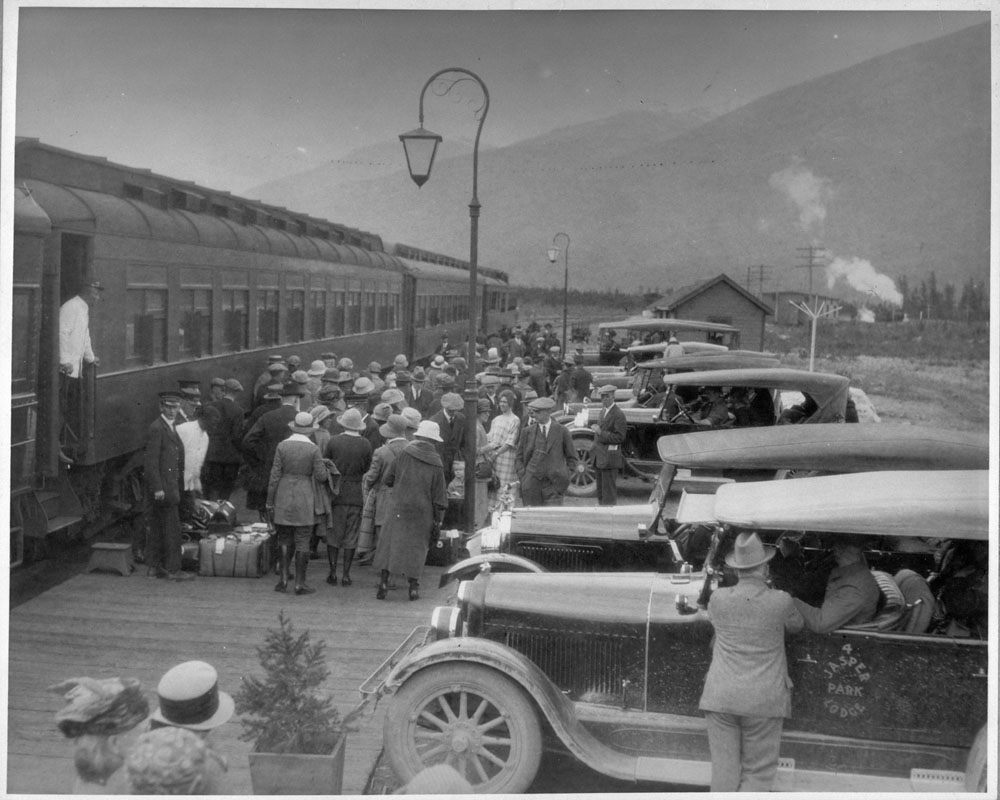
A crowd of people disembark from a train as railway employees and porters help them with their luggage.

Railway porters help passengers to disembark at a railway station (a058321)

These men were responsible for greeting rail passengers and attending to their every need while in transit. Prior to the creation of the BSCP, which ratified its first collective agreement in 1945, it was typical for porters to be on the road for three to four weeks at a time. While away from their families and communities, porters worked 21-hour days. They were permitted to sleep on the leather sofas in the smoking cars beside the bathrooms for just three hours a night, but only when all of their tasks, such as cleaning bathrooms, shining shoes, making beds, counting linens and attending to passengers’ needs, had been completed. The CPR also monitored porters’ time while on layovers, requiring them to report to the main stations daily, where they were forced to relay their activities and movements. For this work, the CPR paid porters a monthly salary of $75. This flat rate, coupled with the absence of overtime pay, meant that tips were the only way to survive.

The men, many of whom had knowledge of or experience working in other unions, knew that their situation could be improved only through unionization. They aligned themselves with famed American labour unionist, civil rights activist and organizer of the BSCP, A. Philip Randolph. The gains in their first collective agreement not only improved the lives of the men, leading to salary increases, overtime pay, assigned sleeping berths and decent meals, but also those of their families. Upward mobility, signified by purchasing homes, moving to the suburbs, and accessing higher education, were key developments that followed. The interviews in this collection describe the struggles to organize union locals across the country. They also depict the people, including the women participating in the Ladies’ Auxiliary, who made these efforts possible.

The experiences of the porters are still difficult to hear, but the interviews are fascinating, bringing us deep into the world of what Melvin Crump referred to as “porter talk” (Interview 417403). Namely, they give listeners the ability to view these experiences as the porters once did. We hear these men seamlessly move beyond the racism and discrimination that they experienced, spinning their everyday encounters into learning opportunities where fun could be had and power could be taken back. George Forray’s reflections were similar to those of others who recognized the systemic racism they faced:

“Well, I found it quite an education. I found it an education which I couldn’t have got at no university. An education in, uh, all the, uh, practically that we can say the facts of life all through and something I couldn’t have bought or earned or been taught, except when I went experienced it myself.”
(Interview 417383)

At heart, the Stanley Grizzle interview collection preserves voices and stories of survival. It tells us how porters viewed their passengers, themselves, and ultimately the world that worked so hard to beat them down.

Additional resources

  • My Name’s Not George: The Story of the Brotherhood of Sleeping Car Porters in Canada, Personal Reminiscences of Stanley G. Grizzle by Stanley G. Grizzle with John Cooper (OCLC 1036052571)
  • “Chapter 3: The Black City below the Hill,” in Deindustrializing Montreal: Entangled Histories of Race, Residence, and Class by Steven High, pp. 92–128 (OCLC 1274199219)
  • Unsettling the Great White North: Black Canadian History by Michelle A. Johnson and Funké Aladejebi, eds. (OCLC 1242464894)
  • North of the Color Line: Migration and Black Resistance in Canada, 1870–1955 by Sarah-Jane Mathieu (OCLC 607975641)
  • The Sleeping Car Porter by Suzette Mayr (OCLC 1302576764)

Stacey Zembrzycki is an award-winning oral and public historian of immigrant, ethnic and refugee experiences. She is currently doing research for Library and Archives Canada.

Douglass Day featuring Mary Ann Shadd Cary – a Co-Lab challenge

Version française

Born around 1818 as an enslaved person, Frederick Douglass became a leader in the abolitionist movement in the United States. A prolific writer and a masterful speaker who captivated audiences throughout the U.S. and Great Britain, Frederick Douglass contributed to the rise of antislavery sentiment. He is widely considered the most influential civil and human rights advocate of the 19th century.

Like many enslaved people, Douglass never knew his birthdate. He chose to celebrate every year on February 14. In recognition of his birthday and to honour his legacy, Douglass Day is an annual celebration that highlights resources for learning about Black history and makes them more available. Douglass Day focusses frequently on important Black women’s archives. In 2023, the day will highlight the archives of Mary Ann Shadd Cary, a teacher, journalist, lawyer and activist who worked on both sides of the border, and made history when she became the first Black woman in North America to start and publish a newspaper.

A black-and-white photograph of a Black woman looking towards the camera.

Mary Ann Shadd Cary. (c029977)

Mary Ann Shadd Cary was born free in the slave state of Delaware in 1823. Her parents, Abraham and Harriet Parnell Shadd, were abolitionists, and their home was a station on the Underground Railroad. In 1850, Congress passed the Fugitive Slave Act, which compelled Americans to assist in the capture of runaway slaves and levied heavy penalties on those who did not comply. Shadd Cary and her family moved to Canada West (known today as Ontario) in 1851, where she opened a school in Windsor catering to the area’s growing fugitive slave population.

Following her move to Windsor, Shadd Cary gained prominence as an important figure and influential leader within several antislavery societies. In 1853, Shadd Cary was actively involved in founding the weekly newspaper The Provincial Freeman, in which she published content that advocated for equality, integration, and self-education of Black people in Canada and the United States, and promoted emigration to Canada. Shadd Cary continued in her role as a schoolteacher in Chatham, Ontario, and in 1862 became a naturalized citizen of Canada West during the first years of the American Civil War, but returned to the United States thereafter.

A two-tone legal-sized document with print and handwritten text.

Mary Ann Shadd Cary’s naturalization certificate. (e000000725)

Having later moved to Washington, D.C., Mary Ann Shadd Cary pursued law at Howard University, where she reached another historic milestone in 1883 by becoming the second Black woman in the United States to earn a law degree. During this time, she continued to participate in both civil and equal rights movements in the United States, returning to Canada only briefly, to organize a suffragist rally in 1881.

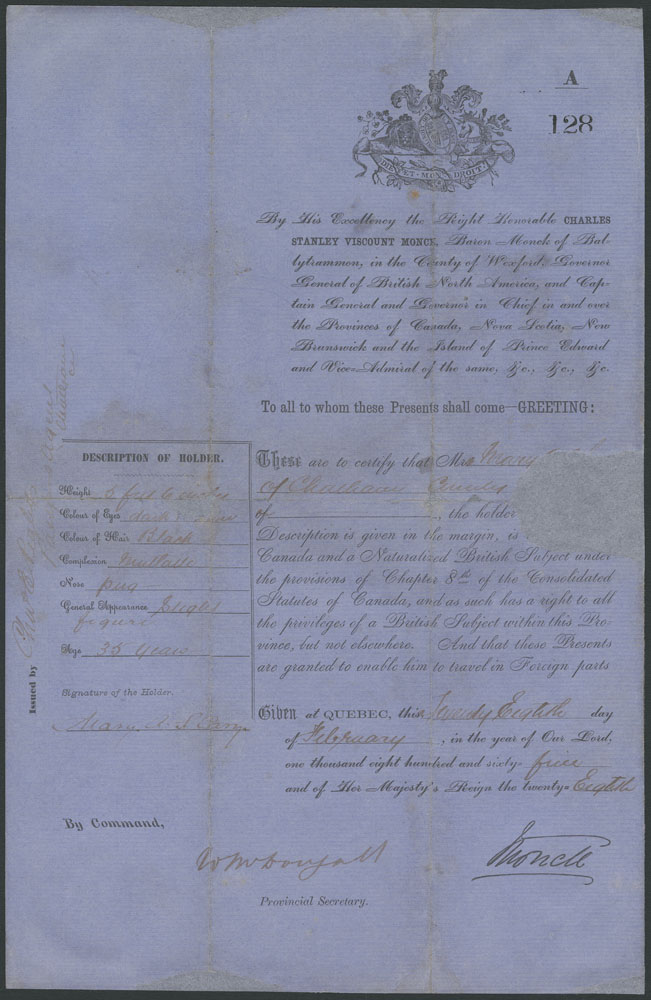
A document with handwritten and text portions, with a crest along with the letter “A” and the number “128” at the top.

Mary Ann Shadd Cary’s passport. (e011536884-004)

LAC received the collection of original material relating to Mary Ann Shadd Cary in 1960 and 1964 from her granddaughter Muriel E. Thompson. This donation included correspondence between Shadd Cary’s family members, her naturalization certificate for Canada West, her passport for the Province of Canada (now Ontario and Quebec), as well as portions of an edition of The Pioneer Press, published in Martinsburg, West Virginia. Most significantly, however, this donation included the only known photograph of Mary Ann Shadd Cary.

Mary Ann Shadd Cary’s archives are found not only at Library and Archives Canada, but also at the Archives of Ontario and Howard University in Washington. This year, Douglass Day will feature virtual and local events to help transcribe, read and teach the papers of Mary Ann Shadd Cary held at LAC and the Archives of Ontario. At the centre of the celebration will be a crowdsourcing transcription project called a transcribe-a-thon. During this event, thousands of participants will transcribe the digitized collections. Once their work is complete, this fascinating and important material will be accessible to researchers around the world.

We invite you to use our Co-Lab tool to transcribe, tag, translate and describe the digitized records that are part of this challenge. You can also make contributions to any image through our Collection Search tool.

The extraordinary life of John Freemont Smith—a Black History Month Co-Lab challenge

By Caitlin Webster

Please note that some of the terms used and documents displayed in this article may contain language that is outdated, insensitive or offensive.

The late 19th century saw thousands of people flock to British Columbia, but few were as remarkable as John Freemont Smith. With an enthusiasm for his new home and a determination to succeed, he flourished as a businessperson, a municipal and federal official, and a civic volunteer. His accomplishments were all the more outstanding given that he was a Black man in a white settler community. He endured racism throughout his life while also earning respect and admiration from his contemporaries. Library and Archives Canada (LAC) holds many records relating to Smith’s work as the Indian Agent for the Kamloops Agency from 1912 to 1923, and a selection of these documents has been prepared as a Co-Lab challenge.

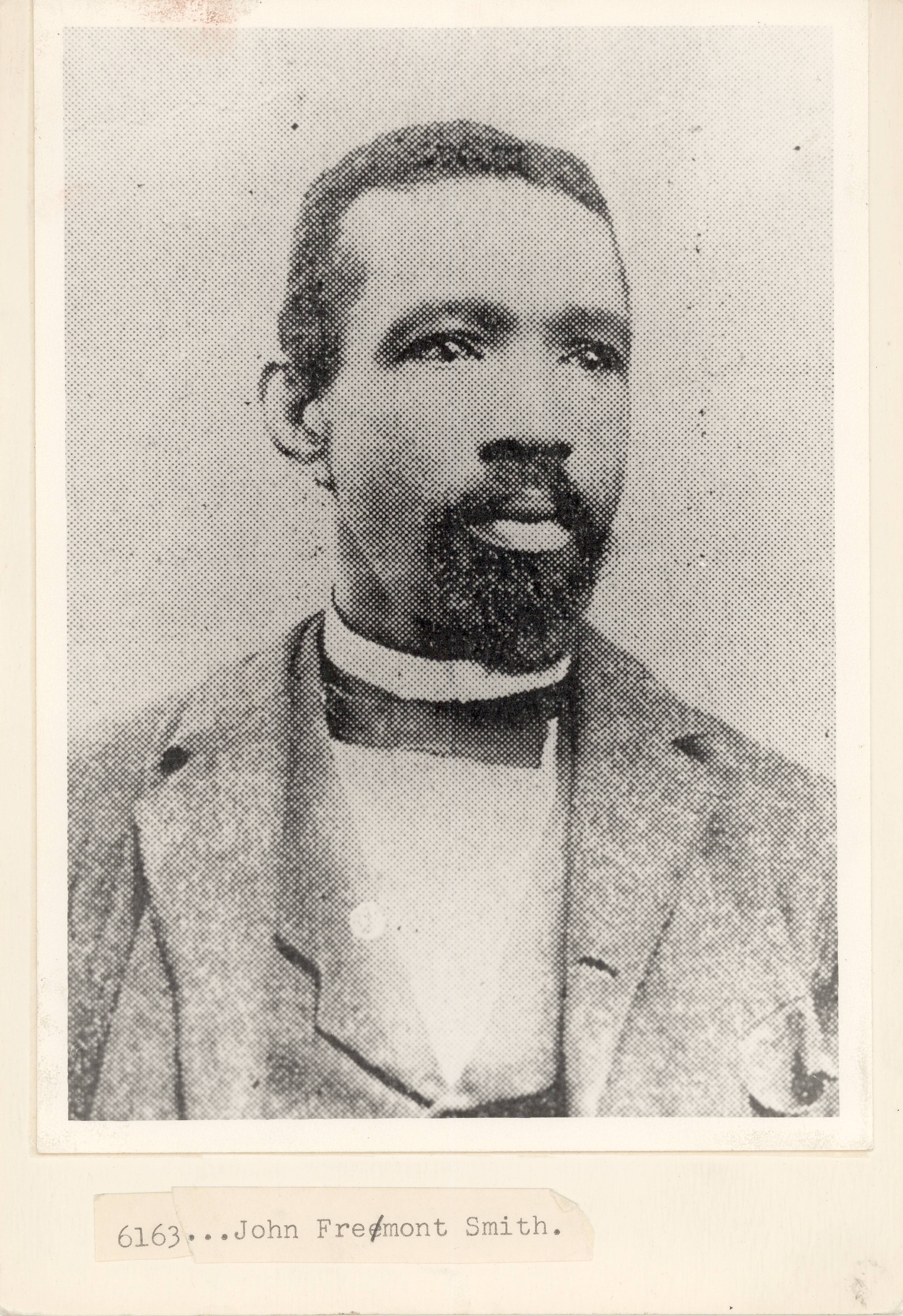
Head-and-shoulders portrait of John Freemont Smith.

John Freemont Smith, ca. 1870s. Credit: Kamloops Museum and Archives KMA 6163

John Freemont (also spelled Fremont) Smith was born in Saint Croix on October 16, 1850, a few years after slavery was abolished in the Danish West Indies. He received his education and training as a shoemaker in Copenhagen and Liverpool before travelling through Europe and South America. He arrived in Victoria, British Columbia, in 1872, set up a shoemaking business, and in 1877, he married Mary Anastasia Miller.

Black-and-white studio family portrait, showing Mary Smith and John Freemont Smith seated, and five of their children standing around them.

John Freemont Smith and family, including wife Mary and children Agnes, Louise, Mary, Leo and Amy, ca. 1907–1910. Credit: Kamloops Museum and Archives KMA 10008

After brief stays in New Westminster and Kamloops, the family settled in the Louis Creek area in 1886. There Smith set up a store, prospected for minerals and dabbled in freelance journalism. He also served as Louis Creek’s first postmaster, a position he held until 1898.

That year, a fire destroyed the Smith home in Louis Creek, and the family relocated to Kamloops.

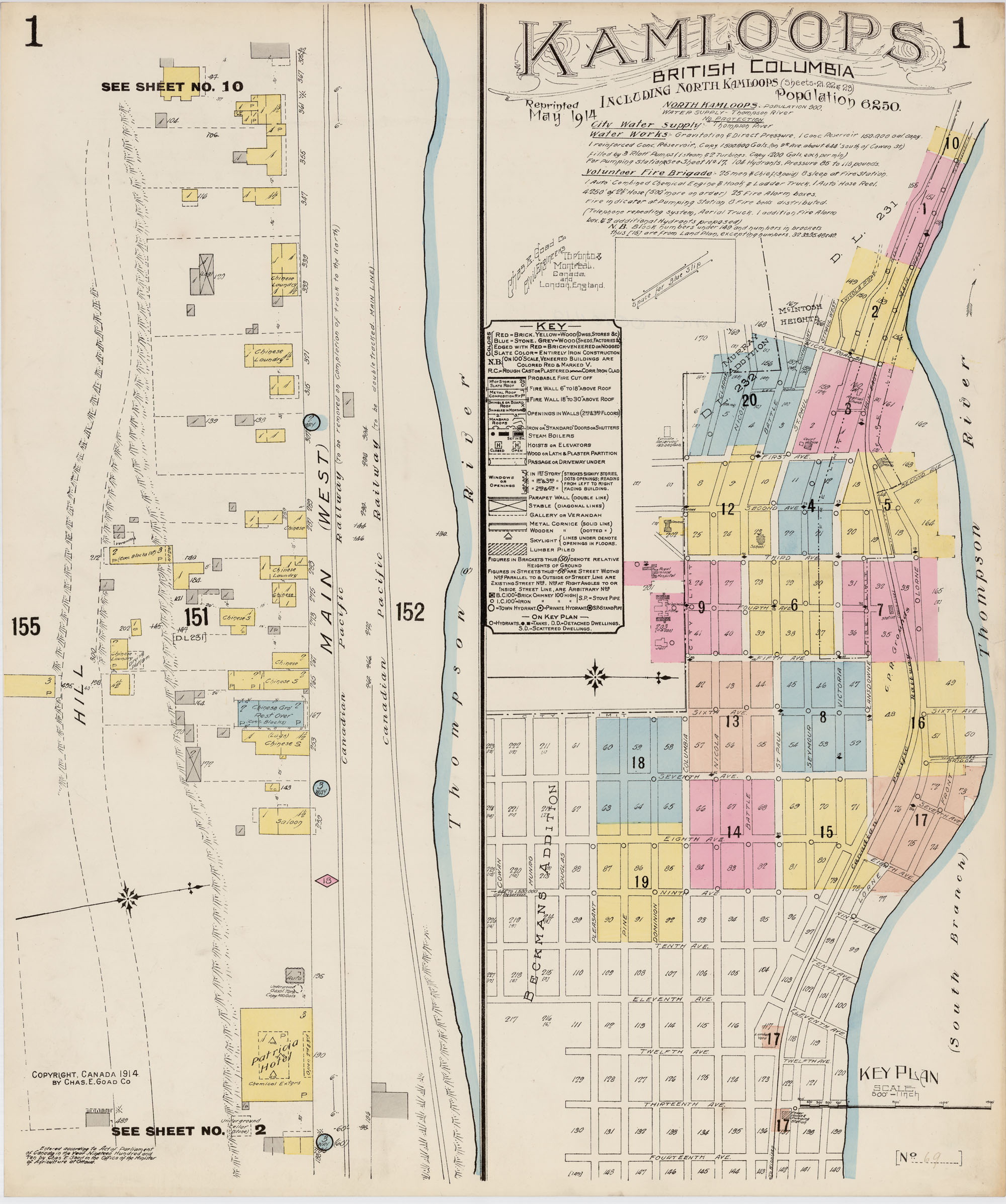
Colour-coded map of a portion of the city of Kamloops, showing streets and building locations.

Fire insurance plan of Kamloops, British Columbia, May 1914 (e010688881-v8)

Smith continued to thrive in Kamloops, serving as alderman from 1902 to 1907, and as city assessor in 1908. He was also active in the community in other ways, helping to organize groups such as the local Agricultural Association, the Society for the Prevention of Cruelty to Animals, the Conservative Association, and the Kamloops Board of Trade, where he served as secretary for several years. In 1911, Smith constructed the Freemont Block building on Victoria Street in Kamloops, which still stands today.

Black-and-white photograph of seven men in suits posing on a wooden sidewalk in front of a building entrance. Bystanders, including two men in suits and two unidentified young girls in white dresses and hats, appear in the background.

Kamloops City Council of 1905: Alderman J.F. Smith, Alderman D.C. McLaren, Alderman R.M. MacKay, Mayor C.S. Stevens, Alderman J.M. Harper, Alderman J. Milton and Alderman A.E. McLean; in background: J.H. Clements and William Charles; taken at the corner of Victoria Street and 3rd Avenue. Credit: Kamloops Museum and Archives KMA 2858

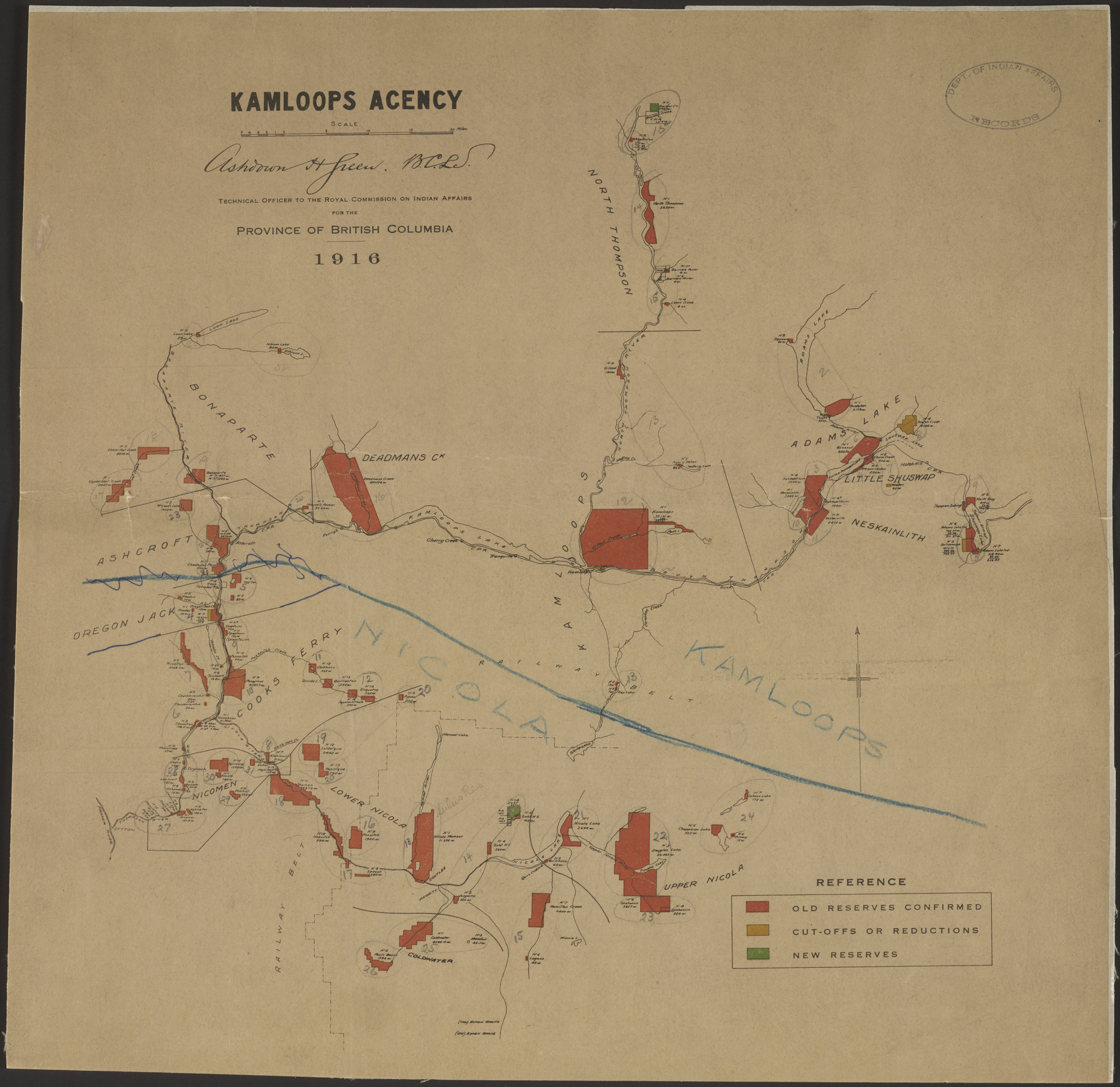
In 1912, at the age of 62, Smith was appointed Indian Agent for Kamloops, a position he held for over a decade. Smith took this role at a challenging time. His predecessor was generally considered ineffective and absent, and the interests of the local First Nation, the Secwepemc, suffered even further as a result. In addition, the Royal Commission on Indian Affairs for the Province of British Columbia was established in 1912. Commonly known as the McKenna-McBride Royal Commission, it had a significant impact on First Nations land bases by adding to, reducing or eliminating reserves throughout the province. Some of Smith’s earliest tasks as Agent were to travel throughout the sprawling agency to collect data for the commission, and then to advocate for the Secwepemc against attempts to cut off the most valuable portions of their reserve lands.

Map showing reserves in the Nicola and Kamloops agencies, with colour coding indicating existing reserves, new reserves and land cut off from reserves.

Kamloops Agency, 1916 (e010772172)

In addition, Smith’s situation was complicated. As a Black settler in a predominantly white society, he experienced racism from many in his community. Yet his task as Agent was to carry out the Canadian government’s policy of assimilation for Indigenous peoples. As shown by the 1910 general instructions given to new Agents in British Columbia, the goal was to steer the Secwepemc toward farming and ranching rather than their traditional ways of living, implement a Western system of separate land plots for each family instead of collective land, and encourage an ideal of individual independence over values of mutual aid.

One page of a typewritten letter, with some handwritten annotations.

Page six of a “copy of general instructions to newly appointed Indian Agents in British Columbia,” 1910 (e007817641)

Given Smith’s status and work, it is likely he was not naïve about the nature of these policies, as implementing them would be a requirement of any Agent. This resulted in a complex situation: a racialized individual imposing assimilation policies on another racialized community, on behalf of a colonial governance system. It is evident throughout Smith’s time as an Agent, however, that he approached the work with intelligent pragmatism, an outstanding work ethic and a spirit of advocacy for the Secwepemc.

The vast size of the Kamloops Agency and a constant lack of funds were two overarching challenges of Smith’s tenure as Agent. Additionally, the difficulties of encroaching settlement and its resulting strain on reserve land and irrigation were issues that plagued Smith throughout the 11 years that he held the position. From Smith’s earliest Royal Commission testimony to his reports that were logged a decade later, LAC’s holdings show the frustrating dilemma he faced. His task was to implement a policy to encourage farming and ranching, but there were few financial resources to help move this goal forward. Meanwhile farmers, ranchers and corporations from the settler community diverted water sources, trespassed on Secwepemc territory and lobbied for the removal of desirable lands from reserves.

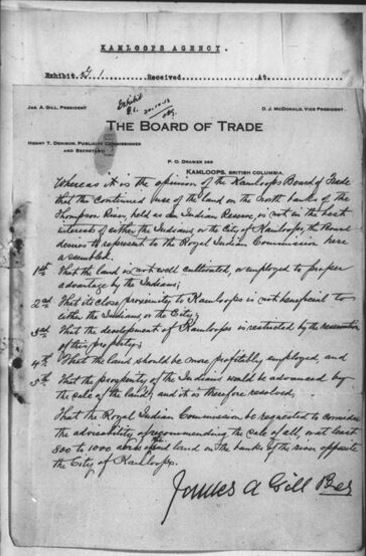
An example of this pressure was the continual vigilance and advocacy required to protect and retain Kamloops Reserve No. 1, which was situated directly across the Thompson River from the city of Kamloops. Prominent individuals in the city lobbied for the removal of the Secwepemc from the reserve as well as the subsequent sale of the land. Attempts during Smith’s tenure as Agent included a submission by the Kamloops Board of Trade to the Royal Commission in 1913 arguing that the Secwepemc would be better off if they sold the land and moved away from Kamloops, and that the city could more readily expand with the removal of the reserve.

Handwritten letter on Kamloops Board of Trade letterhead, affixed to a Royal Commission form with an exhibit number.

Application to the Royal Commission on Indian Affairs for British Columbia by the Kamloops Board of Trade, to sell all or most of Kamloops Reserve No. 1 (RG10 volume 11021 file 538C from Canadiana Héritage)

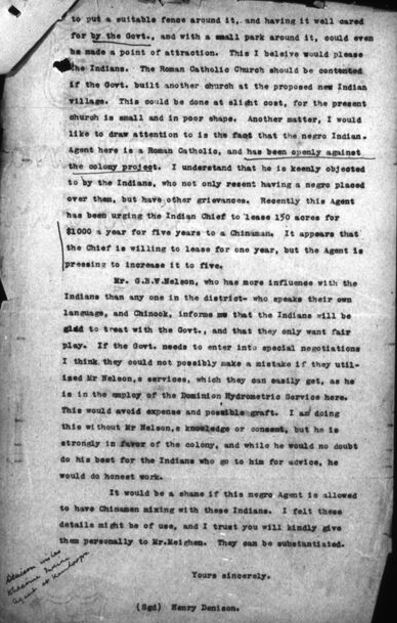
An additional attempt took place in 1919 when Henry Denison, secretary of the Kamloops branch of the Canadian Patriotic Fund, put forward a proposal to use the land as a settlement colony for soldiers returning from the First World War. Unsurprisingly, Smith opposed the renewed bid to obtain the reserve land. This elicited a racist response from Denison in a letter to Member of Parliament H.H. Stevens claiming, without evidence, that the Secwepemc resented having a Black man serve as Agent.

One page of a typewritten letter, with some handwritten annotations.

Page two of a letter from Henry Denison to H.H. Stevens, expressing racist and anti-Catholic views (RG10 Volume 7538 File 26 154-1 from Canadiana Héritage)

These experiences, as well as his wealth of knowledge of local politics and officials, made Smith well placed to identify unfair tactics used against the Secwepemc. Acquainted with the cronyism operating in many small towns, Smith could spot the discriminatory practices of some local governments. For example, while attempting to have a peddler’s fee refunded to Chief Titlanetza of the Cook’s Ferry Band, Smith explained the approach of one municipal government: “It is common property that the overhead maintenance charges of the City of Merritt are considerably maintained from money extorted from Indians in fines and other methods.”

Smith continued as Agent until 1923, and he remained in Kamloops for the rest of his life. He continued to write for the local newspaper and carried on with his volunteer duties in civic organizations such as the local Rotary Club. Smith died at his office in the Freemont Block on October 5, 1934.

Co-Lab is LAC’s online tool to tag, transcribe, translate and describe digitized holdings on our website. To commemorate Black History Month, LAC has created a Co-Lab challenge to transcribe records relating to John Freemont Smith’s work as the Kamloops Agent. Please note that some of the documents in this challenge may contain language that is outdated, insensitive or offensive.

To learn more about John Freemont Smith and the lives of the Secwepemc at the time, check out the following resources:


Caitlin Webster is a senior archivist in the Reference Services Division at the Vancouver office of Library and Archives Canada.
Pushing Back: The Ongoing History of Black Activism in Canada

Version française

By Amina Musa and Krista Cooke

Black and white photograph showing three young people seated at a meeting room table, holding what appear to be speaking notes or meeting agendas. On the left is a white woman with short cropped hair and a suede jacket. In the centre, a Black woman wearing sunglasses and wide headband. To the right, a Black man wearing a patterned shirt and plain coloured jacket. Behind them, on the wall above their heads, is a large formal photographic portrait of an older white man in a jacket and tie.

Speakers at a Greater Windsor Foundation meeting, 1963 (MG28-I119)

Fighting for respect and legal equality has been a centuries-old battle for Black Canadians. These young people, photographed in 1963 by Irv King at the height of the American civil rights movement, were working with the Greater Windsor Foundation in Ontario to make positive changes in their community. From individual moments of courage to collective actions like this one, improving the lives of a racially marginalized people has been an ongoing fight.

In 1628, a six-year-old boy taken by slave traders in Madagascar became New France’s first documented slave. The fight against slavery and its long lasting legacy of racism continues today. The Library and Archives Canada (LAC) collection includes works of art, photographs, documents, maps and audiovisual materials that capture the changes and continuities of Black Canadian lives. While many gaps remain, the Black history collection has some notable strengths, including resources related to the United Empire Loyalists, the Elgin Settlement, railway porters, and late 20th century authors, politicians and civil rights activists, like the ones featured here.

For hundreds of years, many individuals have pushed back against systemic racism in Canada. Some concentrated their efforts on celebrating, documenting and preserving their community’s rich and diverse cultures. Some have fought the status quo through legal challenges and policy changes. Some have worked to build networks of support to help others thrive financially and emotionally. Many have done all three, building better futures for coming generations of Black Canadians.

A crowd of people walk down the centre of the road in a small town parade. On either side, wooden storefronts line the street. The crowd, led by a distinguished mustached Black man wearing a top hat and tails and riding a horse, consists of a marching band, groups of small boys, and a handful of adults. Most of the people whose faces are visible in the crowd appear to be Black. In the background, a second horse pulls a parade float with women in white dresses and large hats.

Emancipation Day parade in Amherstburg, Ontario, 1894 (a163923)

Celebrating Black culture in Canada today takes many forms. Rich literary, musical and artistic scenes; a number of cultural centres, museums and historic sites; Black History Month; Black Studies university programs; and several festivals mark the importance of the Black community to Canadian culture. Emancipation Day—pictured above in Amherstburg, Ontario, in 1894—is one such annual event. It has been celebrating the Abolition of Slavery Act since 1834! All of these festivals, books and museums have one thing in common: determined people who believed in the importance of celebrating Black culture and history. LAC holds collections related to many of these individuals and organizations, including authors like Dionne Brand; the historically-minded Daniel G. Hill, one of the co-founders of the Ontario Black History Society; journalist Mary Ann Shadd Cary; advocacy groups including the Jamaican Canadian Association and Black Artists in Action; scholar Clarence Bayne, co-founder of the Black Theatre Workshop; and many others. Their activism, along with that of so many others, has shaped how Canadians of all backgrounds have understood the Black experience.

A painted head and shoulders portrait showing an older Black man dressed in judge’s robes and a crisp white shirt. His black robes are embellished with a burgundy sash. The man, who looks directly at the viewer, has short grey hair and a white moustache.

Portrait of Citizenship Judge Stanley Grizzle by William Stapleton (c151473k)

The fight against anti-Black discrimination involved many legal hurdles. During the early 20th century, many Black people were not given access to resources or allowed the same opportunities as others. Struggling for equality often meant challenging these restrictions in court. Stanley Grizzle began fighting for equality in the 1930s as a founding member of the Railway Porter’s Trade Union Council in Toronto. Grizzle worked to document other community activists and left an extensive collection of research files at LAC.

One of the people Grizzle documented was Charles Roach, a human rights lawyer and activist. Roach used his legal expertise to represent many people who were dealing with oppression and hardships, including refugees immigrating to Canada. Roach was one of the co-founders of the Black Action Defence Committee, a Toronto-based organization created in the 1970s in response to the deaths of several Black men at the hands of police. This Committee was instrumental in the formation of the Ontario Special Investigations Unit (SIU).

Pearleen Oliver, recently the subject of a new biography, led a successful 1940s campaign that overturned the exclusion of Black women from nursing schools. She and her husband, Dr. William Pearly Oliver, founded the Nova Scotia Association for the Advancement of Coloured People to fight against discrimination related to employment, education and housing. Roach, Grizzle and the Olivers were just a few change makers in a community of activists, many of whom have left important marks on Canadian society.

A sketched portrait of a seated woman. The artist has used the barest of lines at the base of the portrait to depict the woman’s skirt, but has completed the watercolour portrait of the woman’s face, with detail increasing toward the top of the page. The woman, who is Black, is wearing a black-and-white patterned headscarf, a shawl, a wide-sleeved blouse gathered at the wrists, gloves, and a skirt. She is seated with her hands folded in her lap and appears to be looking off into the distance, over the viewer’s left shoulder.

The “Good Woman of Colour” by artist Lady Caroline B. Estcourt (c093963k)

Racial prejudice in Canada has taken many forms. From outright slavery, through legally sanctioned inequality that left many Black Canadians unable to choose where to work, live, worship or study, to the grinding reality of systemic racism, generations of Black Canadians have suffered marginalization. As a result, it has been especially important for community members to support each other. This unnamed Niagara region woman impressed the artist who sketched her portrait by taking in an impoverished Black man who had taken ill and fallen behind on rent. The Black Swan (Elizabeth Greenfield), an American concert singer and former slave, donated the benefits of an 1855 concert to help fund the movement of runaway slaves to Canada. More recently, organizations like the Home Service Association in Toronto and the Negro Community Centre in Montréal have provided aid to those who needed it, promoted Black cultural events, and hosted speakers on important topics such as apartheid and the civil rights movement.

A black-and-white photograph of three little girls holding toys. The two girls on the left are holding porcelain dolls and the girl on the right is holding a large stuffed teddy bear. All three of the children, who are Black, are smiling shyly at the photographer and onlookers. They are dressed up, with their hair in braids and ribbons, and are standing in front of a poster-covered wall.

Three young girls celebrate Brotherhood Week at the Negro Community Centre in Montréal—(left to right) Eleitha Haynes, Elizabeth Phillips and Camille Haynes, 1959. Photo Credit: Dave Legget (e011051725)

From individual acts of courage and support, to community organization and formal legal challenges, the Black community in Canada has worked for centuries to overcome racism. The Black Lives Matter movement, which in 2020 brought anti-racist activism into the media spotlight, has built upon the bravery and outspokenness of previous generations of Black Canadians, drawing attention once again to the realities of racism in Canada.


Krista Cooke is a curator with the Public Services Branch and Amina Musa is an Archival Assistant with the Archives Branch.