Oliver Hockenhull’s Multimedia Scenarios

Version française

By Brian Virostek

This article contains historical language and content that may upset some readers, including an illustration of a public hanging. For more information, please consult our historical language advisory.

What goes through the mind of an experimental filmmaker as they grapple with issues of control, resistance, and—crucially—how to capture all that on film in a way that stimulates their audience to engage in the reflection?

What kind of archival materials could we expect to shed light on a film that never had a script, and whose director eschewed conventional methods? It was this curiosity that led me to ask media artist Oliver Hockenhull if he had any images or documentation he might consider donating alongside his films Determinations (1988, updated for 2022) and Exiles (1991). He responded by generously donating a small but fascinating assortment of materials that provide a glimpse into his creative process.

For Determinations, a key item is a copy of Hockenhull’s grant application to the Canada Council of the Arts. It offers a detailed description of the film’s subject and themes, allowing us to gauge the artist’s deep commitment to the project and understand his creative approach.

A government form filled out by typewriter.

Page one of Hockenhull’s grant application for Determinations. (MIKAN 6523363)

The application also sheds light on the film’s polyvalent collage form. Hockenhull draws from multiple facets of his experience, conscious that the act of making this film will itself be a process of understanding. By this point, he had attended the trials of Direct Action (also known as The Squamish Five) and had written to each of the members. We can see that he isn’t satisfied to watch the news. He feels compelled to be personally present and open to dialogue. The film retains the quality of a frank correspondence.
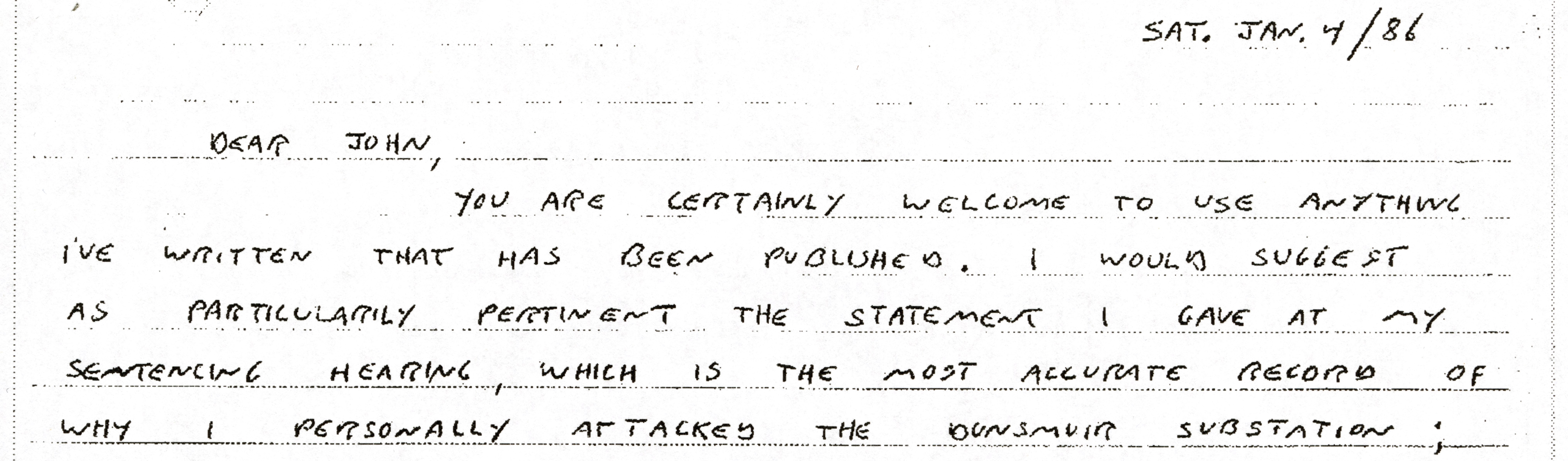
The first few lines of a handwritten letter.

Letter to John Oliver Hockenhull written on January 4, 1986, by Doug Stewart. (MIKAN 6523363)

In the next letter, a scribbled five-pointed star stands out. It appears to be five As joined at the base. It’s unclear when this symbol was added to the letter.
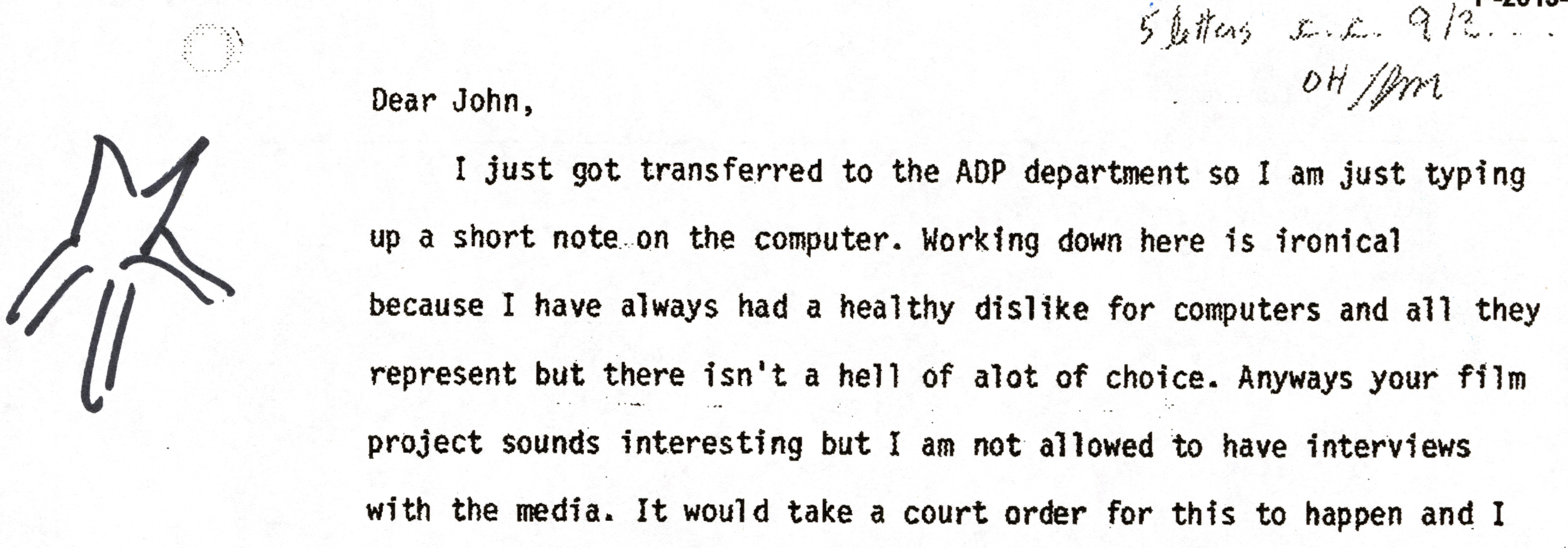
Typed letter with a hand-drawn star at the top-left side.

Letter to John Oliver Hockenhull signed by Ann Hansen. (MIKAN 6523363)

One last detail stands out in the grant proposal: the document appears to have been obtained through a Privacy Act request—a process that allows individuals to request access to the personal information held about them by the Government of Canada. True to the subject of his film Determinations, Oliver Hockenhull has pried and leveraged the inner workings of a system and invited us to share in his investigation.

Photographs and slides in this archival fonds show that the film’s conception unfolded not in a word processor, but in an artist studio. Advertisements for weapons and photographs are pasted to the walls, collaged, combined and painted over. We see here the meeting of the personal in the family photo and of the technically mediated with the details from the fax machine.
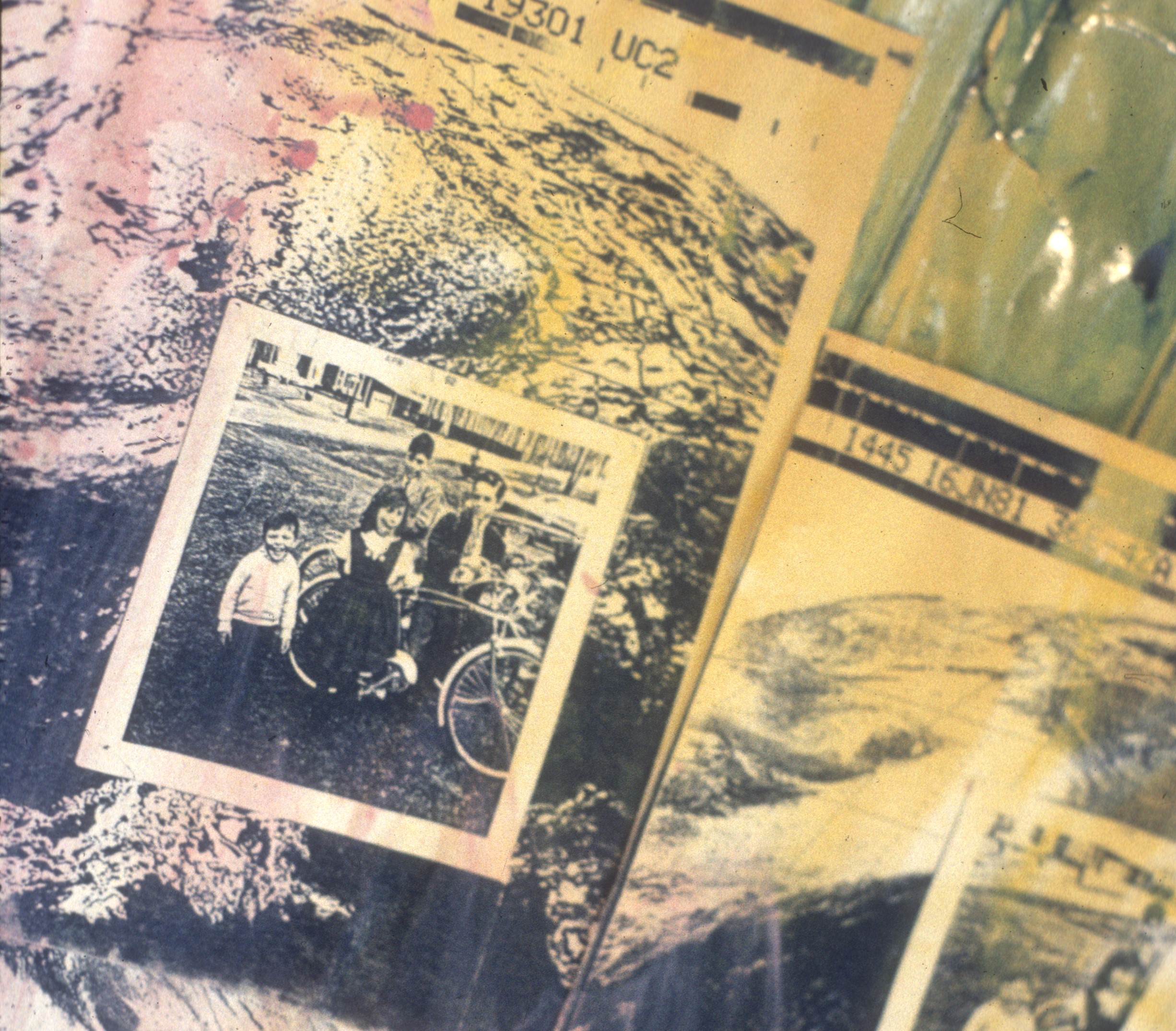
Copies of a family photo and a fax document collaged with coloured varnish.

A collage created on the walls of the artist studio where part of the film Determinations was shot. (MIKAN 6523363)

Along with visual artists, we can see that dancers and actors are now part of the studio and are becoming part of the collage. In the image below, an advertisement for weapons has been copied onto a slide and projected into the studio on top of the actor.
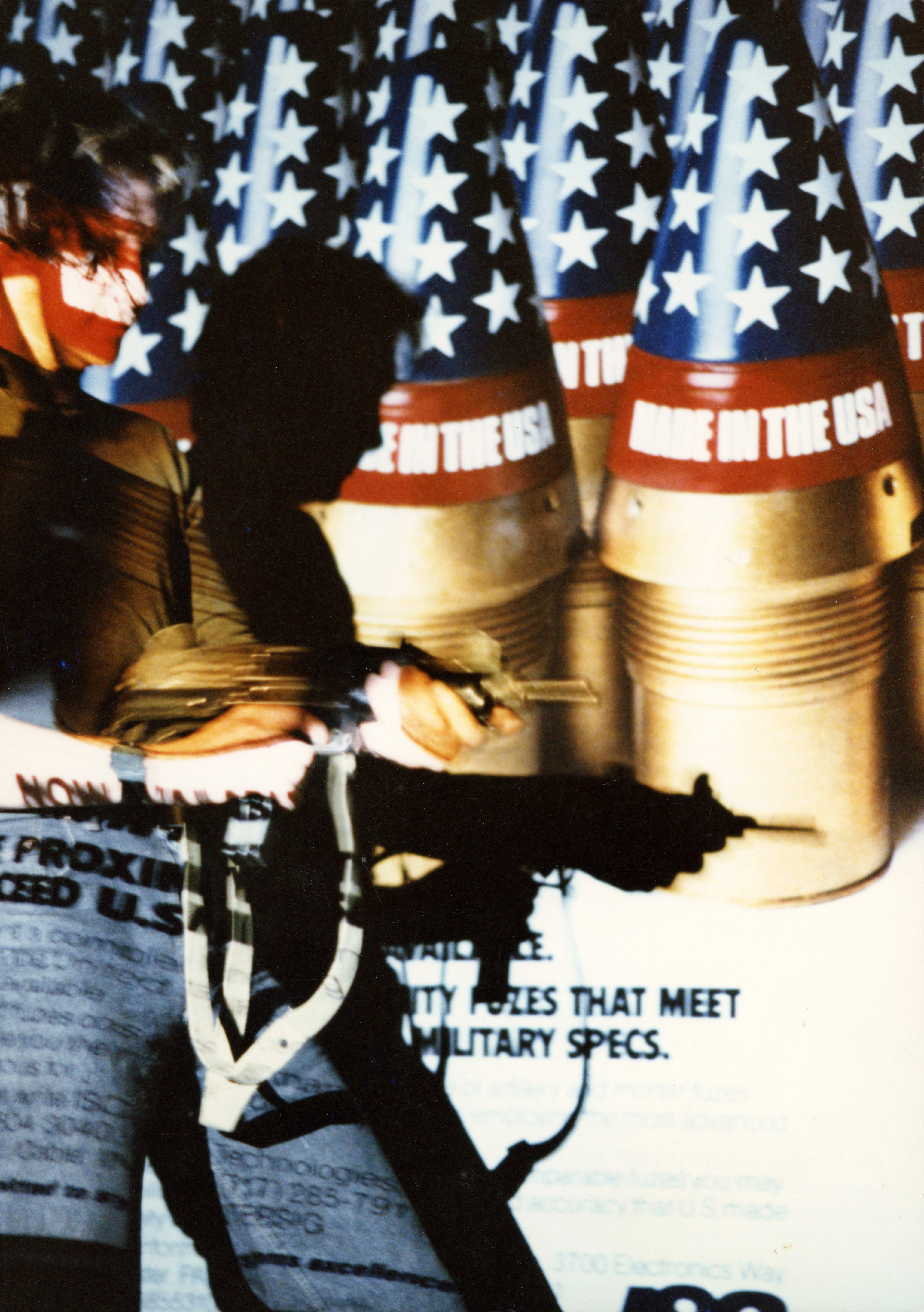
A person holds a gun in the foreground, while an advertisement for weapons—featuring warheads adorned with stars and stripes—fills the background.

An example of multimedia collage from Determinations: printed media, projection, and performance. (MIKAN 6523363)

In the next photograph, we see the camera operator and the sound recordist working in close quarters. For this kitchen scene, the director chose to use a lived-in space even though it was small and cramped. There wasn’t enough room to fit both actors in the frame or even to shoot from two angles in a traditional shot-counter-shot. Instead, the director opted to frame the conversation using split-screen, capturing both characters within the same physical space but in separate visual fields. It’s another example of the filmmaker imposing material constraints on himself while confronting his characters with tough questions. Each solution contributes to the mosaic of understanding.
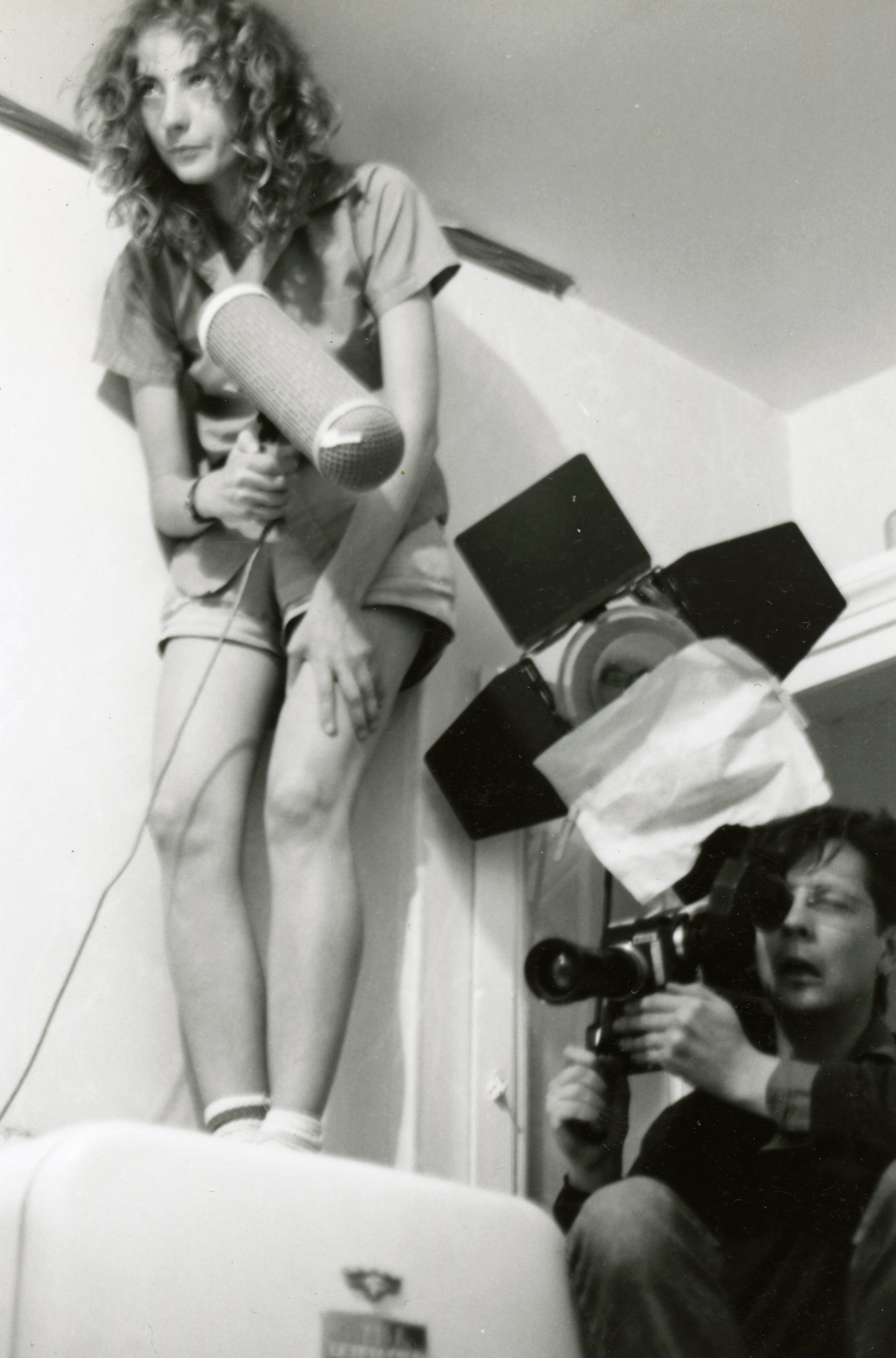
Woman on top of a fridge holding a microphone and a man holding a camera, with a spotlight behind them.

Filming Determinations. (MIKAN 6523363)

Here, working in a sculptural and painterly way, Hockenhull distorts the image of a character’s face in a carnival mirror. Through his persistent exploration of his theme through a variety of plastic and performance media, the director lands at a single frame that will represent the film in photographs and press releases: a person torn in two, with a third eye gazing into a mediated state.
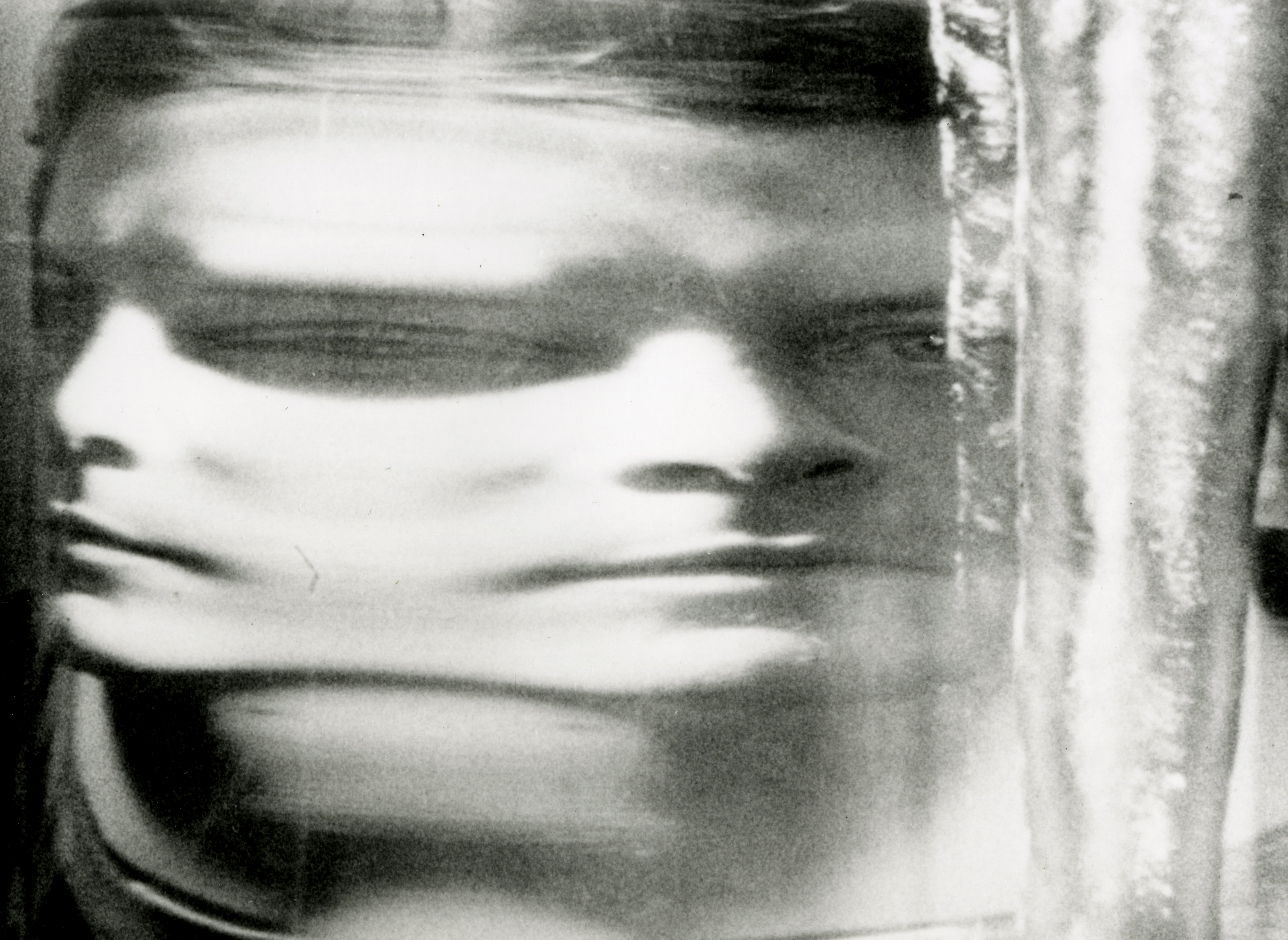
Image of a man’s face that is distorted.

A person torn in two, with a third eye gazing into a mediated state. (MIKAN 6523363)

Library and Archives Canada has a copy of both the original 1988 version of Determinations and Hockenhull’s 2022 version, which features music by Gerry Hannah, a former member of the Squamish Five.

For his next film, Exiles, Oliver Hockenhull began his research at Library and Archives Canada, drawing on the published version of Journal d’un patriote exilé en Australie, 1839-1845, by François-Maurice Lepailleur, along with related texts and illustrations. The reproductions he requested fuelled his creative process.
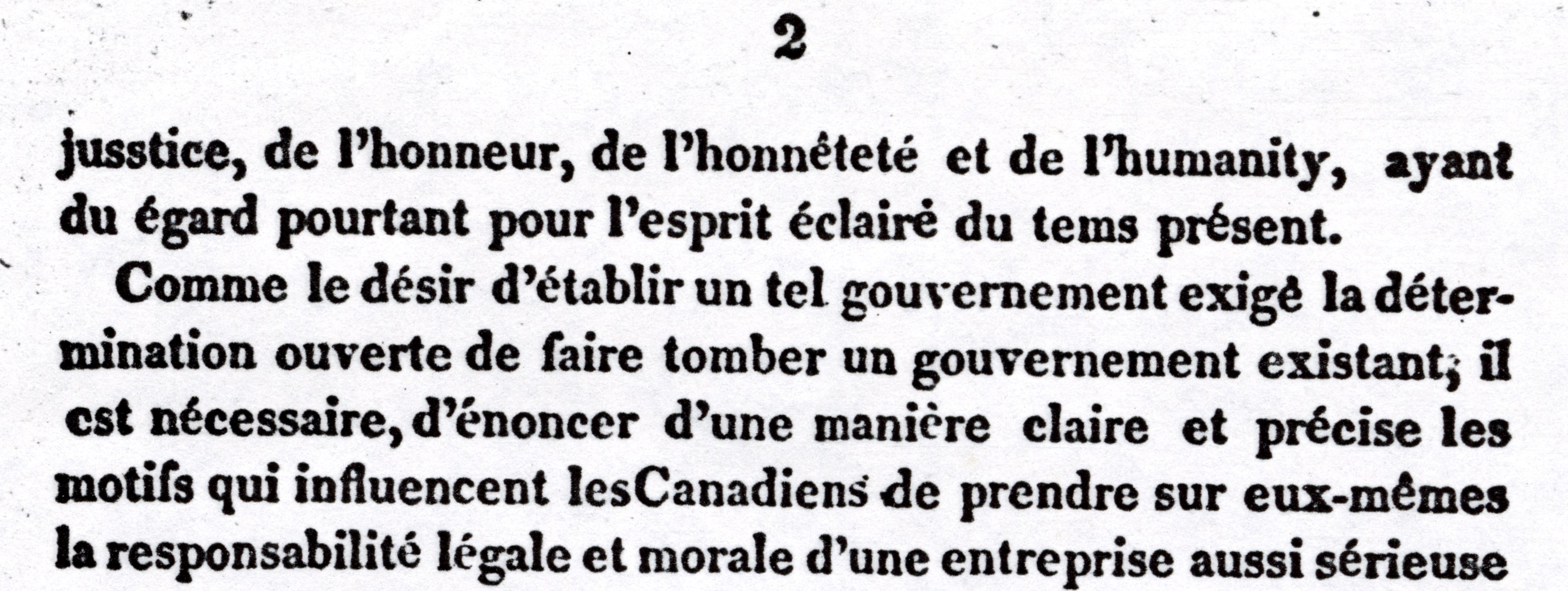
Typed text.

Text from Journal d’un patriote exilé en Australie, 1839-1845, by François-Maurice Lepailleur. (MIKAN 6523364)

From the revolutionary idealism of the previous text, we move to correspondence of colonial officials immersed in a world of intrigue and violence warning that “plots are formed to destroy you by poison or assassination.”
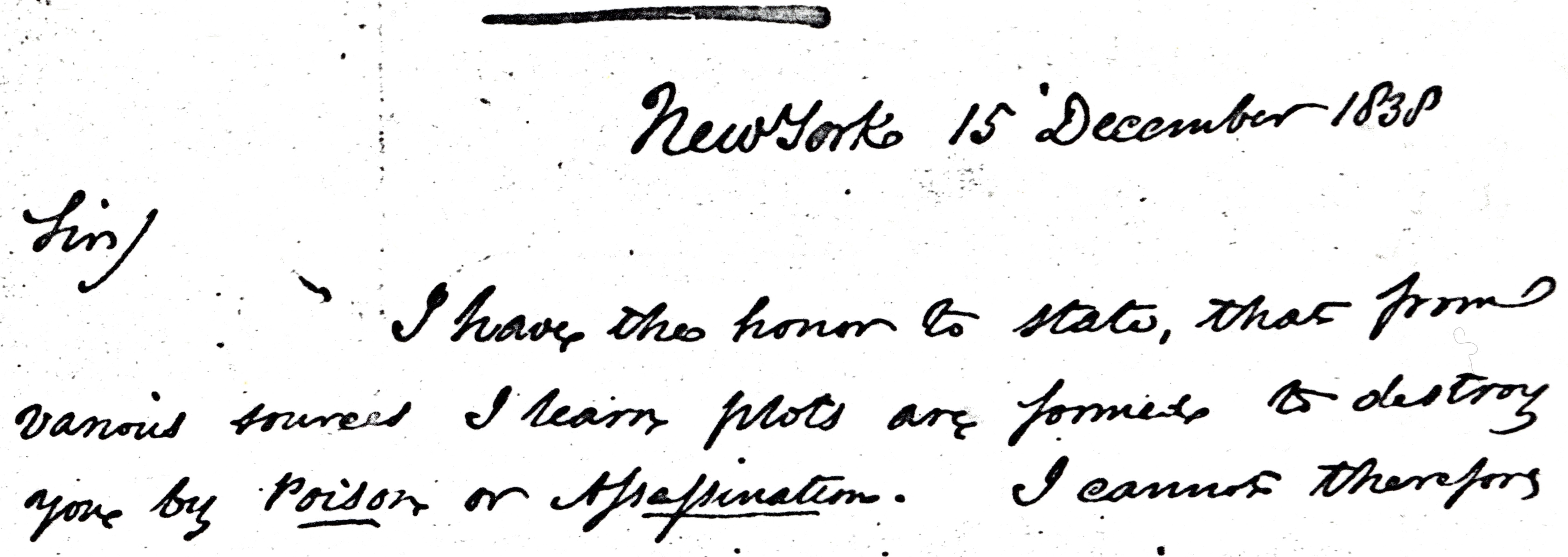
Handwritten letter.

Letter addressed to Lieutenant General Jim John Colborne, written in New York on December 15, 1838. (MIKAN 6523364)

The director’s research reveals that revolutionary Patriotes such as Lepailleur faced a different kind of violence, as illustrated in the image below. The Patriotes-au-Pied-du-Courant prison, visible in the background, is now a small museum in Montréal well worth a visit.
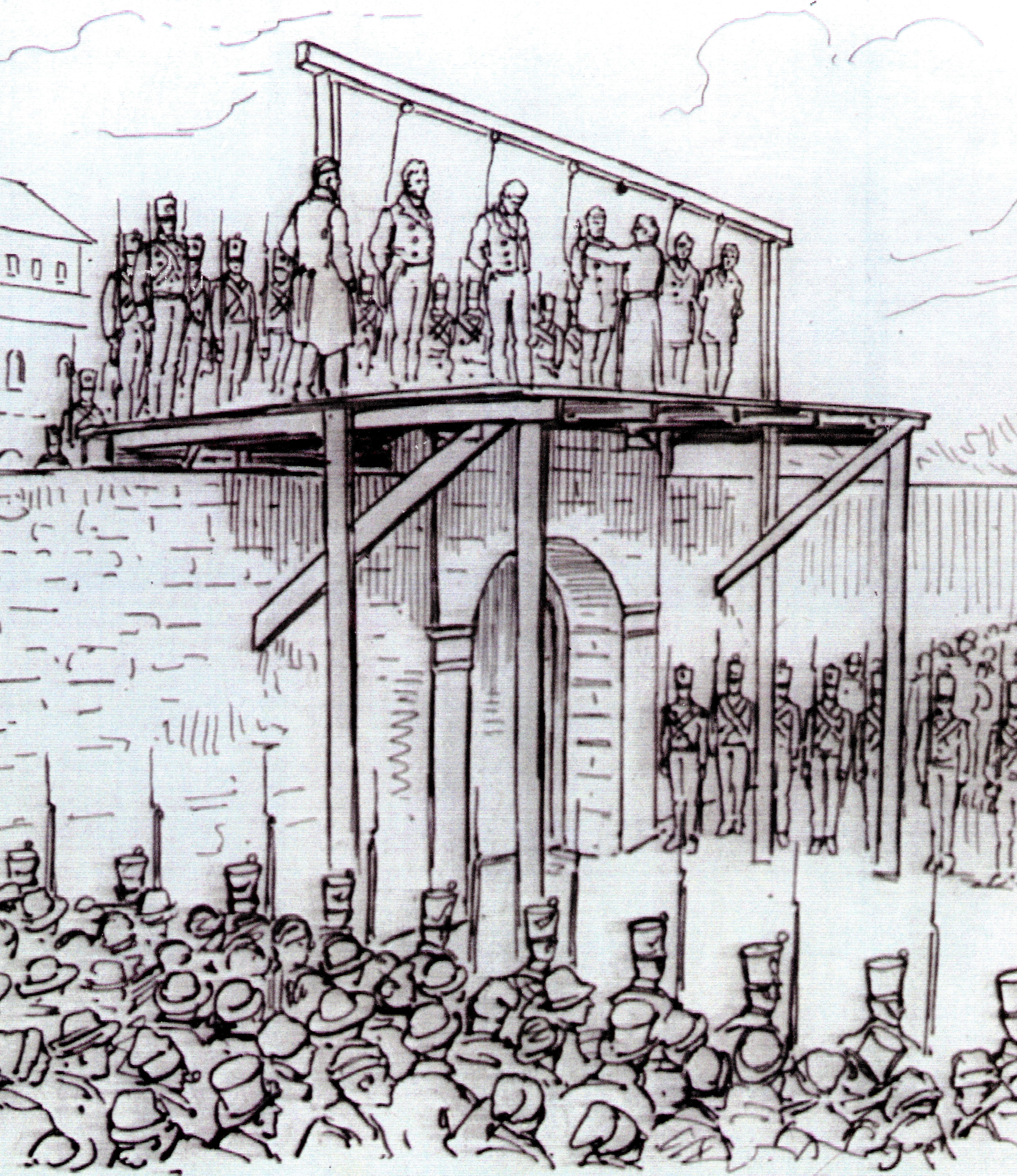
Drawing by Henri Julien depicting an execution in front of a prison in Montréal.

A sense of violent oppression permeates the film, conveyed symbolically rather than depicted literally. (MIKAN 6523364)

As in his previous film, Determinations, Hockenhull seeks an authentic voice, turning to journals and correspondence to tell his story. The longer, more fluid writing and illustrations are reflected in the production, not only in the costumes and locations, but also in a more sumptuous and composed mise-en-scène. From one of the several slides of set photography:
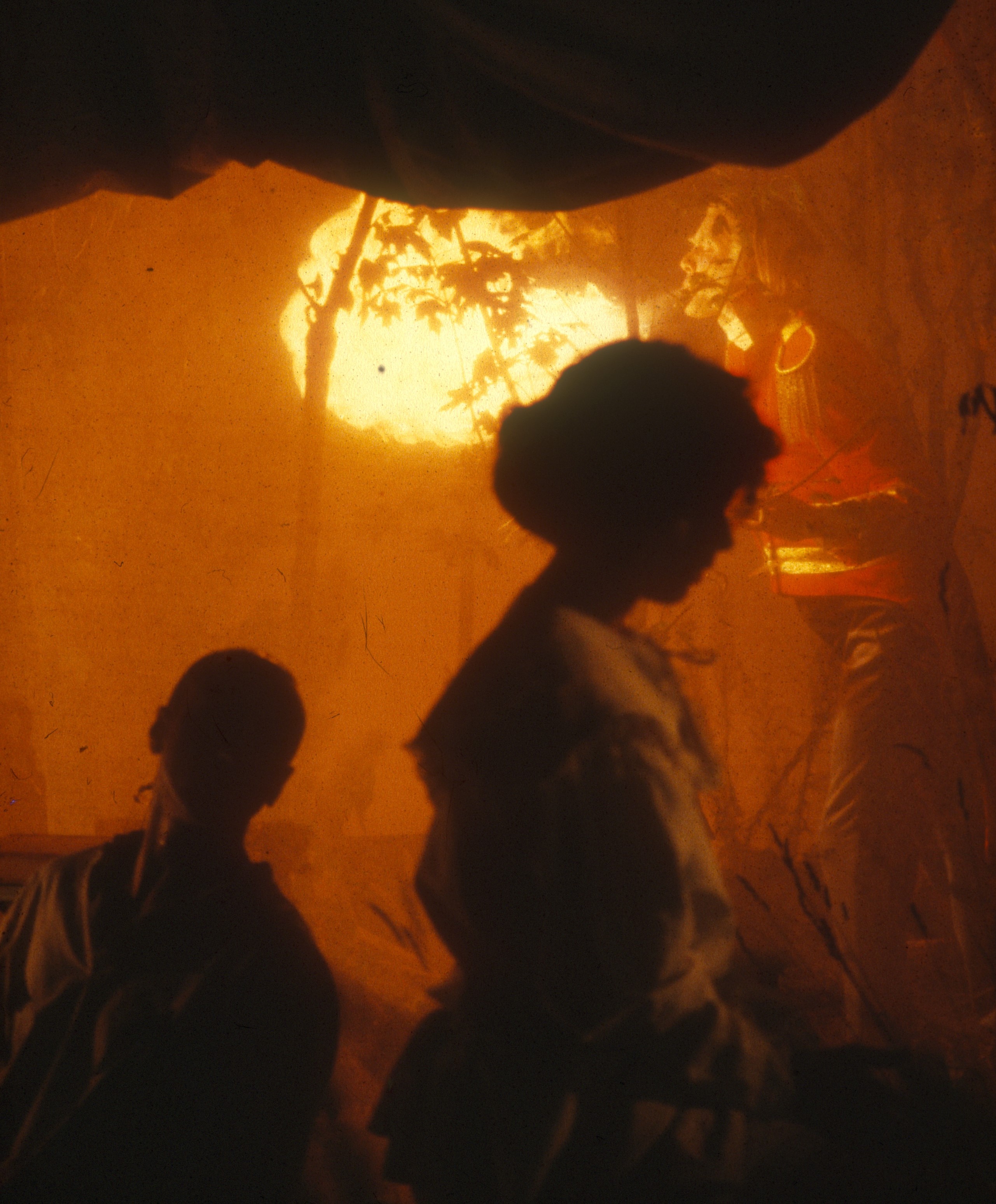
Two silhouetted figures in front of a curtain, illuminated in orange-red hues by a fireball breathed by a circus performer in the background.

Theatrical mise-en-scène from Exiles, featuring non-diegetic elements such as a circus performer in the background. (MIKAN 6523364)

The following image shows a collage of Polaroid film stills with timecodes, assembled by Hockenhull. In the images of Lepailleur seated in the chair, you can see an old map of Australia in the background. As with his earlier work on Determinations, the director collected visual material during his research phase, copied the images to slides, and projected them into the scene. But there is refinement here: in keeping with the mise-en-scène, the image is integrated using front projection—a special effects technique that allows the projected images to fill the backdrop seamlessly without obscuring the actors.

A grid of six images—five featuring various people and one displaying the years “1837” and “1838.” Each image has a timecode in the bottom-right corner.

Collage of Polaroid film stills created by Oliver Hockenhull. (MIKAN 6523364)

An expression of history as split seconds, like a storyboard after the fact, composed of Polaroid impressions and cropped illustrations. Here, the filmmaker connects these discrete events, letting their edges touch, building these blocks back into a world.


Brian Virostek is an Archivist in the Archives and Published Heritage Branch at Library and Archives Canada.
Five Heritage Films on Canada at War now on YouTube

Library and Archives Canada (LAC) has released the last set of heritage films on its YouTube channel. Easy to access, you can now enjoy the following short films:

You can see our previous announcements on Snapshots of Canadian Life, Scenic Canada, and Agriculture and Industry.

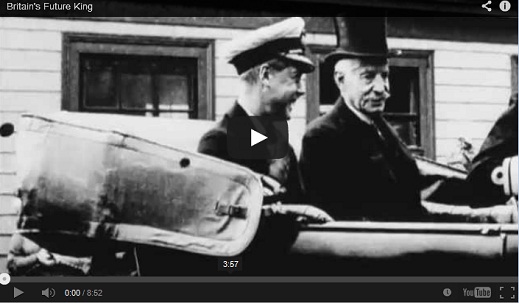
Britain’s Future King – A Silent film of the visit of Edward, Prince of Wales, to Canada in 1919– Now on YouTube

The visit of the Prince of Wales to Canada in autumn 1919 was one of the first major cross-Canada events covered by the motion picture newsreels. Library and Archives Canada has preserved silent film of the event, including the film entitled Britain’s Future King.

Black and white image of three women, smiling in a crowd.

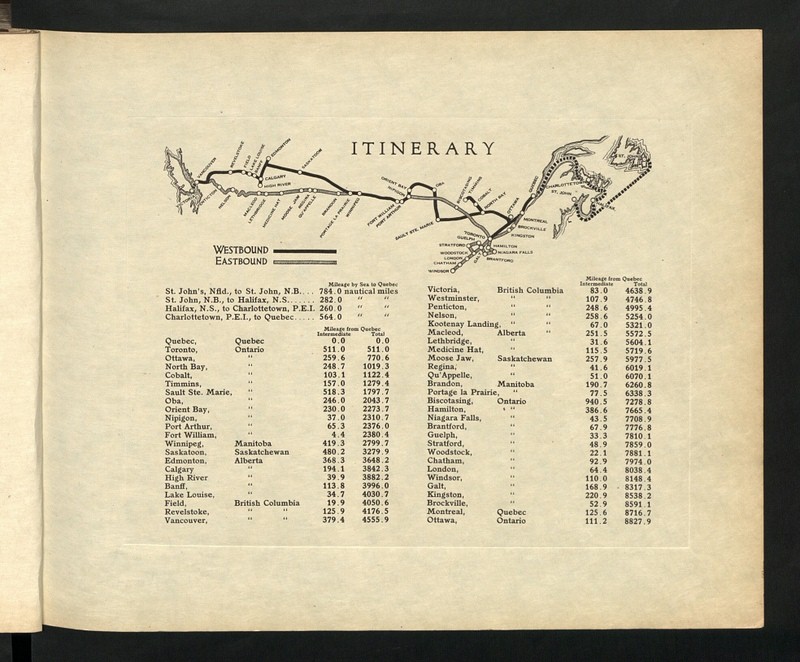
The Prince’s Canadian tour began on August 11, 1919, when his ship arrived at Newfoundland. It ended on November 10, when he left Canada by train to begin his visit to the United States. His Canadian itinerary took him to many cities across the country. Canadians gathered in cities, towns and villages along the route to see the Prince.

Itinerary from “Prince of Wales’ tour of Canada, 1919, a volume of photographs published by the Canadian Pacific Railway.” The National Archives, UK. CO 1069-286-7.

The visit had all the ingredients ideal for media coverage: an itinerary packed with photo opportunities and a public fascinated by celebrity and eager to see its community celebrations depicted in the newsreels and newspapers. Radio broadcasting was in its infancy, so it was up to the newsreels and the print media to report on the visit. In addition, Canada was in the mood for celebrating after the hardship of the war years.

Canadian weekly newsreels carried reports of the tour as it unfolded, bringing to audiences film of such events as receptions with First World War veterans, the opening ceremony of the Québec Bridge, the Prince laying the cornerstone of the Peace Tower of the new Parliament building in Ottawa, and a visit to a British Columbia sawmill.

The Prince viewed films of his trip while he travelled across Canada. Newsreels in Britain and other countries also showed film from the tour. Some of the newsreel companies compiled their footage into documentaries. For example, Pathéscope of Canada Limited issued two films, Britain’s Future King, and The Prince of Wales in Canada.

Son of George V, Edward became Prince of Wales in 1911. When his father died in January 1936, he became King Edward VIII but abdicated 10 months later. After his abdication, he was given the title Duke of Windsor.

Discover more:

New Library and Archives Canada Film on YouTube

Did you know that Library and Archives Canada (LAC) has a YouTube channel where historical films are made available from our holdings?

The latest addition to our YouTube channel is the silent documentary The Tide of Immigration. This film is part of the Canadian National Pictorial Series and was produced by Pathéscope of Canada Limited between 1919 and 1921.

Black and white image of three women, smiling in a crowd.

Early 20th-century films depicting the lives of newcomers to Canada are rare, especially film footage of immigrant children who were cared for at the Dr. Barnardo Homes. This compilation of news reels includes varied footage of new settlers and life in Canada during that time period.

Film sequences show Irish immigrants in a knitting factory; people enjoying the scenery at Grand Beach, Manitoba; and other stories for you to discover. Intertitles (text that appears between the film sequences) provide some contextual information.

Discover more! Consult Discover the Collection: Films, Videos and Sound Recordings to begin your online search today!

Questions or comments? We would love to hear from you!

Lights, Camera, Action! Searching for Film, Video and Sound Recordings

If you’re looking for information about audiovisual recordings in the archival collection of Library and Archives Canada, use our Film, Video and Sound database, which contains details on individual audiovisual recordings that cannot be found in our Archives Search.

If you are looking for published audiovisual recordings, such as commercial film or television production, use Library Search.

Tips:

  • It is not yet possible to view the recordings online. Please see our blog post on How to Consult Material that IS Not Yet Available Online for details.
  • In the Film, Video and Sound database, the statement No consultation copies available indicates that a consultation copy must be made before you can consult or order a copy of the document. This will take approximately six weeks.

*Please consult our clarification regarding this article.

Questions or comments? We would love to hear from you!

A Behind-the-Scenes Look at LAC: The Nitrate Film Preservation Facility

In our last article we discussed the Gatineau Preservation Centre. Today, we would like to introduce to you LAC’s Nitrate Film Preservation Facility.

Colour photograph of the exterior of a building. Front: Parking lot area; Back: Main entrance to the building

Exterior view of the LAC Nitrate Film Preservation Facility

Did you know that a portion of LAC’s film and photographic negative collection is nitrate-based? The collection consists of 5,575 reels of film, dating from as early as 1912, and close to 600,000 photographic negatives. Because of the potential for nitrate-based cellulose film to combust if storage temperatures are too high, LAC chose to house this material in a facility that provides a stable, cold, dry environment essential for preservation.

Colour photograph of light boxes on a table. Nitrate negatives are on top of the boxes. Back: Three people standing next to the table.

Light boxes displaying nitrate negatives, some of which show obvious signs of deterioration

This collection captures some of Canada’s most significant moments up until the 1950s when the medium became obsolete. Among the materials preserved at the new facility is one of Canada’s first feature films, Back to God’s Country, along with works produced by the National Film Board of Canada and photographic negatives from the collections of Yousuf Karsh.

The Nitrate Film Preservation Facility, which opened in 2011, is an eco-designed building with various sustainable features that include a “green” roof, well-insulated walls to reduce energy consumption, high-efficiency mechanical systems to reclaim energy, and technology to reduce water use.

Colour photograph of workers at a nitrate work station. Front: A female employee handling a nitrate negative; Back: A group of people discussing another nitrate negative.

Nitrate Film Preservation Facility work station

The state-of-the-art facility also features a range of technical innovations that meet the current standards for preservation environments and provide the required fire prevention and protection measures. The building is also equipped with 22 individual vaults, specialized monitoring and an exterior buffer zone of land for added security.

For more photographs of the Nitrate Film Preservation Facility, visit Flickr!

Questions or comments? We would love to hear from you!