Early Canadian Sound Recording Images Now on Flickr
1

The Sochi 2014 Games mark 90 years of Canadian athletes representing their country on the Winter Olympic stage. Canadians have competed in all Winter Olympics, starting with the first Games in Chamonix in 1924. Canada is also part of a handful of countries that have won medals at every Winter Games.
Library and Archives Canada holds a rich collection documenting memorable Canadian performances at the Games, the athletes behind these achievements, and the historical development of winter Olympic sports disciplines in Canada.
The Canadian Olympians site provides a visual history of Canada’s participation in the Games. It consists of more than 10,000 images of athletes who participated in the Winter and Summer Olympics, from the early 1900s through 2004.
Find out more about the following winter sports:
Use the Archives Search tool to discover many historical documents and images by using keywords such as athletes, sports, Olympics or medals. Here are some examples of what you may find on our website:


See also:
Enjoy the Sochi Games!

Although Albert Henry George Grey, 4th Earl Grey won’t be at this year’s 100th Grey Cup game and party, he would no doubt be proud of his legacy. Earl Grey, who served as Governor General of Canada from 1904 to 1911, commissioned and donated the trophy, which bears his name for posterity.
In the spirit of promoting Canadian sports and culture, Lord Grey first intended to donate a trophy for the senior amateur hockey championship in Canada. But Sir Hugh Andrew Montagu Allan beat him to it, and today the Allan Cup continues to serve that role. Not to be deterred from making a name for himself in Canadian sports, Lord Grey donated the Grey Cup as an annual award for the senior amateur football champions, in 1909.
Lord Grey only lived eight more years after donating the cup, dying in his home in Howick, England, in 1917. However, his…
View original post 173 more words
In 2008, Library and Archives Canada (LAC) launched its first Flickr set, The Shamrock and the Maple Leaf, which provided a sample of items that could be found in the LAC collection. The set complemented a symposium on Irish-Canadian studies hosted by LAC and supported by the National Archives of Ireland.
This new LAC endeavour quickly proved to be a highly positive one, with viewership of LAC’s Flickr site continuing to grow every time a new set was added.
As LAC’s Flickr site drew more and more viewers, the participation of LAC staff members with specialized knowledge of the collection also grew rapidly. Thanks to those employees, 2012 in particular saw a major increase in the number of sets, covering a variety of significant and interesting topics.
As of September 2013, LAC’s Flickr page featured 74 sets and 2,576 images.
Thanks go out to our staff, and especially to all the people who visit LAC’s Flickr page, for helping us reach 1.7 million views. We hope you enjoy this unique window into our collection.
The visit of the Prince of Wales to Canada in autumn 1919 was one of the first major cross-Canada events covered by the motion picture newsreels. Library and Archives Canada has preserved silent film of the event, including the film entitled Britain’s Future King.
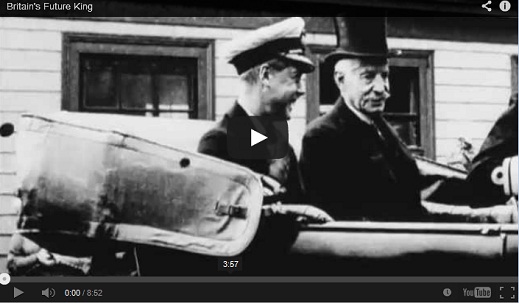
The Prince’s Canadian tour began on August 11, 1919, when his ship arrived at Newfoundland. It ended on November 10, when he left Canada by train to begin his visit to the United States. His Canadian itinerary took him to many cities across the country. Canadians gathered in cities, towns and villages along the route to see the Prince.
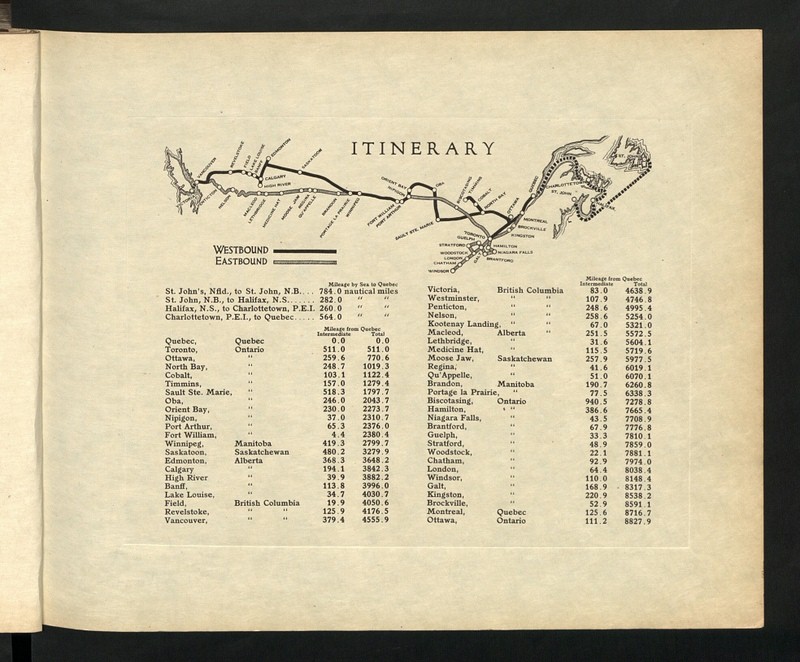
The visit had all the ingredients ideal for media coverage: an itinerary packed with photo opportunities and a public fascinated by celebrity and eager to see its community celebrations depicted in the newsreels and newspapers. Radio broadcasting was in its infancy, so it was up to the newsreels and the print media to report on the visit. In addition, Canada was in the mood for celebrating after the hardship of the war years.
Canadian weekly newsreels carried reports of the tour as it unfolded, bringing to audiences film of such events as receptions with First World War veterans, the opening ceremony of the Québec Bridge, the Prince laying the cornerstone of the Peace Tower of the new Parliament building in Ottawa, and a visit to a British Columbia sawmill.
The Prince viewed films of his trip while he travelled across Canada. Newsreels in Britain and other countries also showed film from the tour. Some of the newsreel companies compiled their footage into documentaries. For example, Pathéscope of Canada Limited issued two films, Britain’s Future King, and The Prince of Wales in Canada.
Son of George V, Edward became Prince of Wales in 1911. When his father died in January 1936, he became King Edward VIII but abdicated 10 months later. After his abdication, he was given the title Duke of Windsor.
During the Second World War, Allied maritime traffic in the Mediterranean was under constant threat of Italian and German attack. In an effort to turn the tide, at the Casablanca Conference in January 1943, the Allies proposed an invasion of Sicily, code named “Operation Husky.”

Canadian troops en route to Sicily. Source
After long months of preparation, Allied troops, made up of American, Canadian, British, French, Australian and South African units, landed in the night of July 9 to 10. The 1st Canadian Infantry Division and the 1st Canadian Army Tank Brigade were under the command of Major-General Guy Simonds. Canadian troops fought in difficult conditions, dealing with very hilly terrain and temperatures of over 40 degrees Celsius.

Personnel of Princess Patricia’s Canadian Light Infantry advancing past a Sherman tank, Valguarnera, Italy, July 19, 1943. Source
From their landing point on the Sicilian beaches near Pachino, Canadian troops advanced toward the interior of the island, taking part in the battles at Grammichele, Piazza Armerina and Valguarnera. The towns of Leonforte and Assoro, situated in good strategic positions at the top of hills, put up a strong defence, but the Canadians prevailed in the end. A total of 562 Canadian soldiers lost their lives during this campaign.
The Sicily landing opened the way for the Allies to launch the Italian campaign a few weeks later.
Library and Archives Canada holds a large collection of military documents relating to Operation Husky and the Sicilian Campaign. Other examples can be accessed via the links below.
To view more photos, please visit our Flickr album.
In the wake of the Second World War, the Korean Peninsula was divided into two zones along the 38th parallel, with the North occupied by the Soviet Union and the South by the United States. Soon after the election of a northern communist government in 1948, open war broke out on June 25, 1950, when North Korean troops invaded the South.
Given the situation, the United Nations Security Council passed a resolution to approve sending troops to defend South Korea; a number of countries, including Canada, contributed by supplying armed forces.

The Royal 22e Regiment mortar platoon ready to fire, (left to right) Private Daniel Primeau, Private Raymond Romeo, and Private Julien Blondin, all of Montreal, Quebec. Source
More than 26,000 Canadian soldiers fought in the Korean War. They battled communist troops on the ground, while the Royal Canadian Navy—with eight warships—helped control the Korean coasts. The Royal Canadian Air Force did its part transporting troops and equipment. A few pilots saw combat at the controls of American fighter planes.

Two snipers. Source
On July 27, 1953, an armistice agreement was signed at Panmunjom, bringing three years of fighting to an end.
In all, 516 Canadians lost their lives during this armed conflict. Their names are entered in The Books of Remembrance… The Korean War, exhibited at the Peace Tower in Ottawa and available online. These registers remind us of the important contribution and tremendous sacrifice of these Canadians.
The Library and Archives Canada collection contains many documents about this war, which marks the 60th anniversary of its armistice in 2013. Here are a few examples:
Part of the war diaries (War Diary, 1951) of the Commonwealth troops, including Canadian troops:
The war diary (1950–1951) of the advance party:
For more photos, visit our Flickr album.
For more information about ordering military service files, please read our blog article on this topic.
At the beginning of the 20th century the Canadian government, led by Sir Robert Borden, wanted to strengthen Canada’s sovereignty in the Arctic, in response to the presence of the United States and Russia in the North. The Canadian Arctic Expedition was established by Order-in-Council 406, dated February 22, 1913, under the responsibility of the Ministry of Naval Services and other government bodies.
The expedition was comprised of two groups, each with its own objective: the Northern Party, led by Vilhjalmur Stefansson, was responsible for geographic exploration of the Arctic to ensure Canadian sovereignty in the western part, while the Southern Party, led by Dr. Rudolph M. Anderson, focused on scientific discovery.
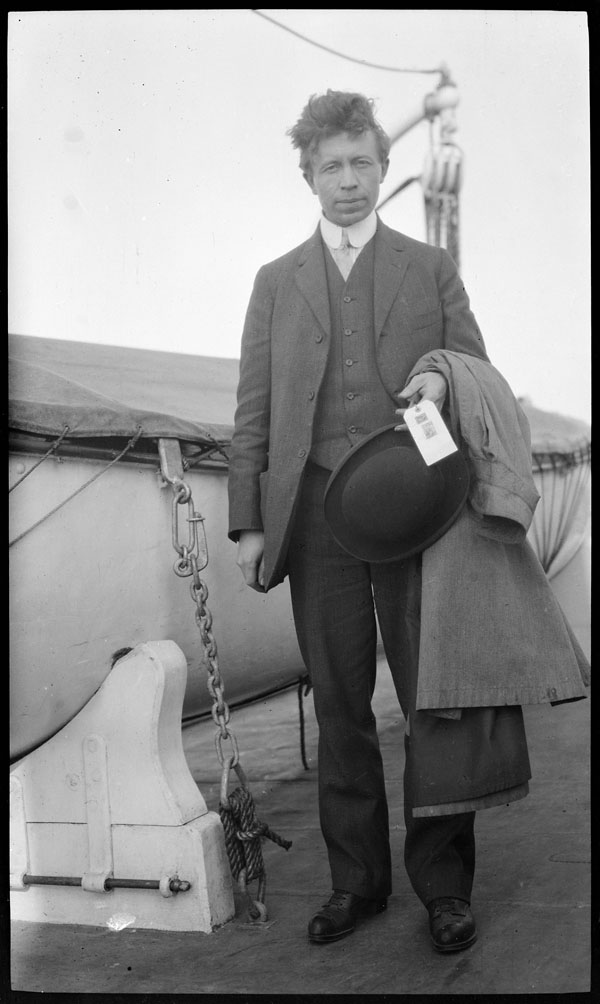
V. Stefansson on board the Karluk. Source

Rudolph Martin Anderson. Source
An expedition fraught with challenge
On June 17, 1913, the expedition set sail from Esquimalt Harbour in British Columbia aboard the Karluk headed for Herschel Island in the Beaufort Sea. In August, the ship became trapped in ice and drifted for over four months, eventually sinking in Siberia. The ship’s captain, Robert Bartlett, describes the final days of the voyage in his book Northward ho! The last voyage of the Karluk. Stefansson’s decision to leave the ship on September 19, 1913, to continue his exploration occurred in a climate of crisis. Stefansson’s departure remains a source of controversy and debate among historians.

The Karluk sails near Esquimalt Harbour. Source
To find out more
The following are some of the archival documents and government reports that constitute the information resources related to this expedition.
For consultation on-site at Library and Archives Canada:
Available online from Library and Archives Canada:
Other sources:
Please note that the majority of the documents are available in English only.
For more information, be sure to visit the virtual exhibition at the Canadian Museum of Civilization: Northern People, Northern Knowledge: The story of the Canadian Arctic Expedition 1913-1918.
Visit our Flickr album for more photographs.
 Library and Archives Canada Blog