William Redver Stark: Restoring the Sketchbooks

Different approaches have been tried over the years for conserving sketchbooks or bound volumes. For a long time, the works were simply detached in order to remove the binding. Nowadays, the historical and archival value of the binding is widely recognized. Library and Archives Canada (LAC) is no exception in this regard, and conservation treatments are now designed to preserve the work in its entirety, including the binding.

In a previous article, we introduced you to the work of soldier William Redver Stark. The sketchbooks that are part of the William Redver Stark fonds were never repaired or preserved, and were beginning to show signs of wear:

  • Tears and holes
  • Pages detached, missing or in the wrong order
  • Broken binding threads
  • Covers weakly bound to pages or completely detached

The sketchbooks therefore are undergoing various conservation treatments, undertaken by a team of LAC’s highly specialized conservators in the field of book conservation and restoration. These conservators worked with the collection managers and archivists to respect the integrity of Stark’s work, and to give him his full moment of glory.

The drawings and watercolours in this collection are in very good condition. Some even look like they might have been completed only a few days ago. It should be noted that the sketchbooks remained closed for nearly a hundred years, and that the pages were rarely exposed to air or light. Thus, to study a Stark work is to travel through time, to see the work of an artist exactly as it was created a hundred years ago, during one of the most deadly and crucial wars of our time.

In sum, the restoration work done by LAC‘s conservation and restoration team will make it possible to stabilize the condition of the sketchbooks in order to ensure that they will withstand the ravages of time, and will allow future generations to have access to an important part of our history.

Example of a required restauration treatment: the adhesive tape must be removed.

Another example of a required restauration treatment : the cover must be sewn back on.

See Also:

Summary of comments received in French between July 1, 2014 and September 30, 2014

  • A reader from Wimereux (France) thanks LAC for its work on the restauration of William Stark’s sketchbooks. It turns out that William Stark was stationed in Wimereux and made a lot of sketches of the surroundings. The reader was able to identify some of the sketches and he is offering his work to LAC.
William Redver Stark, the Soldier and the Artist

Version française

Canada’s experience of the First World War was captured by officially commissioned artists such as A.Y. Jackson and David Milne from 1916 onwards through the Canadian War Memorials Fund. However, many other artists—amateur and professional—captured their experiences of the war while they were busy fighting, building roads, transporting goods or providing care to others, but still creating vivid imagery of the world around them.

The William Redver Stark fonds at Library and Archives Canada (LAC) is a rare illustrated record of one of these undeclared artists’ lives in the military. Through 14 sketchbooks of remarkably well-preserved drawings and watercolours, we discover the life of a soldier through his eyes, which were closer to the action than those of his official counterparts, and which provide a more spontaneous, intimate perception of how day-to-day activities may have looked.

In these sketchbooks, we find images of soldiers at work and at rest, captured German prisoners and artillery, landscapes through which battalions moved, and sights at the London Zoo where Stark went while on leave. The illustrations serve as a rich and indispensable complement to the artist’s military file, to his battalion’s history, and to our visual understanding of a serviceman’s experience during the First World War.

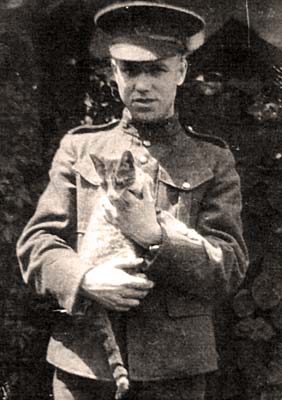
William Redver Stark with cat. Courtesy of Veterans Affairs Canada.

William Redver Stark with cat.
Courtesy of Veterans Affairs Canada.

The William Redver Stark fonds was donated to Library and Archives Canada in 2005 by his nephew, Douglas Mackenzie Davies and his family: his wife, Sheila Margaret Whittemore Davies, and their two sons, Kenneth Gordon Davies and Ian Whittemore Davies.

How to search the sketchbooks

All 14 sketchbooks of the William Redver Stark fonds have been individually described and digitized, making it easier to search for themes or types of scenes. For example, you can search the fonds for all images that contain bridges or construction.

To search the sketchbooks, go to the Advanced search and in the drop-down menu under “Any of these words,” enter either the archival reference number (R11307) or the MIKAN number (616998). If you want to narrow down your search even more, enter a keyword such as “bridges” in the second box.

Other related materials:

Be sure to read William Redver Stark: Restoring the Sketchbooks to learn more about the work done by LAC’s conservators to restore the sketchbooks.

Mary Riter Hamilton, Canada’s First Unofficial War Artist

Version française

It has been 90 years since Mary Riter Hamilton donated 180 of her oil paintings and dozens of her chalk, pastel and pencil drawings depicting the devastation in Europe after the First World War to the Public Archives of Canada (now Library and Archives Canada). These works by Riter Hamilton are not light-hearted. The subject matter deals almost exclusively with the destruction of war. They depict muddy trenches and blighted landscapes, graves and cemeteries, churches and towns ripped apart from shelling.

Memorial for the Second Canadian Division in a Mine Crater near Neuville St. Vaast.

Memorial for the Second Canadian Division in a Mine Crater near Neuville St. Vaast (e011201067)

Mary Riter Hamilton was born in 1873 in Teeswater, Ontario and grew up in Clearwater, Manitoba where her family moved to farm. She married Charles W. Hamilton at the age of 18 and by the age of 23 was widowed. It was soon before the death of her husband that Mary began attending art classes in Toronto. Recognizing her talent, most of her European-trained teachers urged her to further her studies in Paris. Mary studied first in Germany then moved to Paris where she lived and studied for the next eight years. Mary returned to Manitoba for a year in 1906 then again for eight years in 1911. During these years, Mary’s work was exhibited in galleries in Montreal, Ottawa, Toronto, Winnipeg and Calgary.

The Sadness of the Somme

The Sadness of the Somme (e011205200)

Always wanting to return to Europe, it was in 1919 while Mary was living and working on Canada’s west coast, that she was offered a commission by the Amputation Club of British Columbia to provide art work for The Gold Stripe, a veteran’s magazine. Mary left immediately, “ … to paint the scenes where so many of our gallant Canadians have fought and died.” For three years, Riter Hamilton worked tirelessly in post-war France and Belgium, painting battlefields including Vimy Ridge and the Somme, Ypres and Passchendaele. Conditions were harsh. She lived in make-shift shelters while enduring foul weather and meagre rations. She returned to Canada physically and emotionally spent. Refusing to sell her paintings, Riter Hamilton donated her work to the Public Archives of Canada. She died, poor and visually impaired, in 1954.

As the centenary of the First World War approaches, these works take on a renewed poignancy. Mary Riter Hamilton was never an official ‘war artist’ yet through her courage and talent and indomitable dedication, the sombre beauty and mournful tone of her collection serve as an enduring account of the ravages of war.

Trenches on the Somme

Trenches on the Somme (e011202180)

To learn more about Mary Riter Hamilton, to view more of her work, or to see what materials are contained in the LAC collection, visit:

Looking for your Newfoundland Ancestors Who Served in the First World War?

Newfoundland was a Dominion of the British Empire when the First World War broke out. At the time, there was no formal military presence in Newfoundland, but the Government of Newfoundland went on a recruiting drive to provide a force for British service. Many Newfoundlanders also joined the war effort by joining the Canadian Expeditionary Force (CEF) in Canada.

After Newfoundland joined confederation in 1949, the personnel records for the Royal Newfoundland Regiment and the Newfoundland Forestry Corps were transferred to the Government of Canada as these individuals became eligible for veterans’ benefits. Later, the files were microfilmed by Library and Archives Canada (LAC) and FamilySearch. The originals remain in LAC’s holdings.

Searching for Newfoundland service files

If you aren’t sure in which service your ancestor served or where he joined, you will need to look at both the CEF records using the Canadian soldiers of the First World War: 1914-1918 database for people from Newfoundland who enlisted in other parts of Canada and the general Archives Search for people who enlisted in Newfoundland regiments. For the latter group, enter the surname of the person, “Newfoundland” and RG38 in the keyword search. The results page will identify which microfilm reel you will need to order to consult the service record.

Meanwhile, the microfilms can be consulted onsite at LAC, through the Family History Centre or in the Newfoundland Provincial Archives at The Rooms in St. John’s. The latter has digitized some of the service files and these can be found in the Newfoundland Regiment and the Great War database.

LAC is presently digitizing all of the remaining 640,000 service files of the men and women who served in the First World War with the Canadian Expeditionary Force. The digitized service records will be made available on the website as they become available, but access restrictions may be in effect at times. Learn more about the digitization of the Canadian Expeditionary Forces Service Files by consulting the Fact Sheet: Digitization of Canadian Expeditionary Force Service Files.

Find colour photos of Canadian Second World War soldiers

Did you know that Library and Archives Canada (LAC) has rare colour photographs from the Second World War? During that time period, colour film was a new and untested medium for most professional photographers. These images were captured on Kodak Kodachrome film by members of the Canadian Film and Photo Unit (CFPU) in the days and weeks following D-Day, on June 6, 1944.

The CFPU, formed in 1941, was under the command of Captain William Abell of Winnipeg and was staffed by enlisted Canadian men and women. Their goal was to capture images of Canadian military personnel in action, which would then be released by the Department of National Defence to various media outlets. Today these images provide an invaluable record, in living colour, of Canadian servicemen and servicewomen, as well as changing photographic technologies and techniques.

The images are part of a larger set of 1,200 digitized Second World War colour photographs that can be viewed through LAC’s online database. Included are photos of various subject matter, such as Canadian troops in England, France, Holland, Germany, Italy, and on bases and in training in Canada; portraits of notable military figures; the Canadian Women’s Army Corps; troop entertainment; hospital transport ships; and the Canadian role in liberation/occupation duties as photographed by CFPU member Ken Bell.

Search the collection

LAC’s complete digitized collection of colour images from the CFPU includes over 2,000 additional digitized colour images dating to 1961. To view them, consult the ZK prefix. To search within this collection, go to Advanced Archives Search and search using “ZK prefix” and the search term of your choice. An electronic finding aid for the ZK prefix sub-series is also attached to this record and can aid in locating specific images. To learn more about using finding aids in your research, read Discover Finding Aids – Part Two.

See also:

Expanded Version of the Service Files of the Second World War – War Dead, 1939-1947 Database

Library and Archives Canada recently launched an updated and expanded version of the Service Files of the Second World War – War Dead, 1939-1947 database. Researchers can now access more than 1000 digitized genealogy packs of service files for Canadian servicemen and servicewomen killed in action during the Second World War.

More search fields

The database, available on the Library and Archives website through the Military Heritage portal, can now be searched using an increased number of access fields. These include: first and last name of the enlisted person, service number, date and place of birth, date and place of enlistment. By using these search features, Canadian students participating in Lest We Forget, a national project that gives them the opportunity to research the life stories of Canadian servicemen and servicewomen, will be able to quickly identify service files related to their community.

What kind of information can I find in these records?

The digitized service files contain documents and correspondence pertaining to enlistment and appointment, training and qualifications, awards and medals, medical history, and wills and insurance. Researchers can expect to find records such as the Canadian Active Service Force attestation paper, a Record of Service with information on training and education before and during service, documents from the Department of National Defence Estates Branch, and grave registration and post-war exhumation reports.

More information on the Killed in Action database

Along with details of service, this database offers a window into the lives of those who served and the families they left behind. Throughout the Second World War (1939-1945), Canadian men and women served in great numbers with the Canadian Army, Royal Canadian Air Force, and Royal Canadian Navy. From a population of just over 11,000,000 in 1939, Canada saw more than 1,159,000 of its citizens enlist. The price of victory was high: approximately 45,000 Canadians and close to 1000 Newfoundlanders lost their lives during and immediately following the war. In addition to these, more than 55,000 servicemen were wounded and countless civilians experienced the suffering and loss brought about by war. While providing a valuable resource for research, the KIA database helps to tell the story of those who served, fought, and died in a war that stretched across the globe.

The United Empire Loyalists – Finding their Records

The term “United Empire Loyalists” (often referred to as UEL) refers to the American colonists who remained loyal to the British Crown during the American Revolution, and many of which fought for Britain during that conflict. They fled the United States and settled in what are now the provinces of Nova Scotia, New Brunswick, Prince Edward Island, Quebec and Ontario. All the archives in these provinces hold records relating to Loyalists, some of which are searchable online.

Here are the records held at Library and Archives Canada (LAC):

Loyalists in the Maritimes – Ward Chipman Muster Master’s Office 1777-1785

These references include business records and papers relating to the Loyalists and to boundary commissions.

Land Records

Many Loyalists and their descendants submitted petitions for land for their service in the war or as compensation for lands lost during the American Revolution. Databases on this subject:

Sir Frederick Haldimand Fonds

The collection contains some provision lists and muster rolls relating mostly to Loyalists, disbanded soldiers and their families in the province of Quebec. It includes a nominal index.

Black Loyalist Refugees, 1782-1807 – Port Roseway Associates

Many black Loyalists served and were affected by the evacuation of New York which led to their resettlement in the Port Roseway, now Shelburne, Nova Scotia.

British Headquarters papers

The records known as the Carleton Papers or the American Manuscripts contain lists of refugees in New York, lists of persons who were evacuated from New York, lists of refugees from Massachusetts and Rhode Island who were evacuated through the port of New York and numerous references to Port Roseway in Nova Scotia.

British military and naval series

These records cover the period from the American Revolution to the mid-1800s. The nominal/subject card index (provide a brief description of the document, date, C Series volume number and a page number)

Also discover:

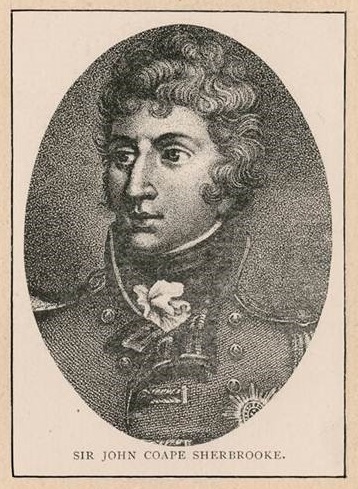
Sir John Coape Sherbrooke: Military Hero, Governor General, Clairvoyant?

Last year, Library and Archives Canada (LAC) acquired an important collection of documents relating to the Canadian career of Sir John Coape Sherbrooke (1764-1830). His pivotal role in the defence of the British colonies that would become the Atlantic Provinces during the War of 1812 led to his appointment as Governor General of British North America in 1816. However, his arrival in Nova Scotia in October of 1811 was not his first time in Canada.

Detail from an engraving. Portrait of Sir John Coape Sherbrooke

Portrait of Sir John Coape Sherbrooke (Mikan 4310479)

Continue reading

Validating your ancestor’s arrival in Canada before 1865

So you have searched the immigration records prior to 1865, and still no trace of your ancestor? If you didn’t find your ancestor’s arrival before 1865, Library and Archives Canada (LAC) has other genealogical resources that can assist in confirming an ancestor’s arrival in Canada.

Where did he or she settle?
Is he or she listed in census returns? LAC’s collection of census databases, which can be searched by a person’s name, can confirm an individual’s presence as early as 1825. Perhaps a reference exists for one of the parents (recorded as the head of the family) or for a sibling.

Many early settlers submitted petitions to obtain land where they could establish their family in Upper Canada or Lower Canada. LAC’s databases provide references to land transactions that give the person’s name, the date of the application and the county or township within a province.

Perhaps he served in the military?
Muster rolls, pay lists and various registers can reveal useful information when tracing former military personnel. Have a look at the Military page where many finding aids are searchable by name. For example, the RG8, C Series (British Military and Navy Records) includes records about Loyalist regiments, the War of 1812, and the Canadian militia. The documents for the RG8, C Series have been digitized and are searchable by name on our website. Refer to the Help pages for explanations of the records.

Life events in records
The date of arrival in Canada can be estimated by searching birth, marriage, and death records for first occurrences such as the birth of a child to confirm the presence of the family in a location. Consult our previous blog on how to search for Birth, Marriage and Death Records.

Published sources
Family histories, historical atlases and other published works can be searched in AMICUS, LAC’s online catalogue. It is also possible that your ancestor lived in a location that published a city directory.

The genealogical community
Many genealogical societies have resources specific to where your ancestor settled. Finding aids that describe a location are valuable tools when searching for ancestors.

Happy discoveries!