Friends of the LAC and the Treasures found at the Cubby/Librairie Le Recoin

Version française

By Evan Dalrymple

Many people know about the Friends of the Ottawa Public Library and their book stores across Ottawa, but the Friends of Library and Archives Canada (FLAC) and its Cubby bookshop is one of 395 Wellington’s best kept secrets. For those who know, it’s a treasure!
Two images of a book in the shape of a person. The open book is the head, with two hands holding the bottom corners of the cover and back cover. Above one of the images, it says “The Cubby Friends of LAC BOOKSTORE gently used books”. Under the second image, it says “Le Recoin LIBRAIRIE Les Amis de BAC livres légèrement usagés”.

The National Library and Friends’ logo on the bookshop. This logo is derived from the original mural by Alfred Pellan, titled La Connaissance / Knowledge. This mural is in the Pellan Room within the Public Archives and National Library Building at 395 Wellington. (MIKAN 4932244).

The Cubby is open every Tuesday from 10 a.m. to 3 p.m. in room 185 on the main floor of the Public Archives and National Library Building. I urge you to visit the Cubby in person or online to find the next addition to your personal library.

History of the Friends in Ottawa

In the early 1980s to the mid-1990s, Friends associations flourished in galleries, libraries, archives and Museums in Canada. Particularly in Ottawa, Friends’ associations earliest examples are the National Gallery of Canada (1958), the Canadian War Museum (1988) and the Ottawa Public Library (OPL) Main Branch (1982), which is the most well known of the associations.

The Friends of National Library of Canada was founded in 1991 by Marianne Scott, a former National Librarian of Canada (1984–1999) and the current president of FLAC.

In 2003, The Friends of the National Library of Canada and the Friends of the National Archives of Canada formed one single Friends organization—The Friends of Library and Archives Canada—in anticipation of the fusion of the National Archives with the National Library, which occurred in May 2004 with the official proclamation of the Library and Archives Canada Act.

The newsletter of the Friends of the National Library, “A note among friends,” published between 1992 and 2008, clearly demonstrate how book sales, boutiques and antiquarian book auctions have been monumentally successful ways to reach out to the larger community and to develop the National Library collection.
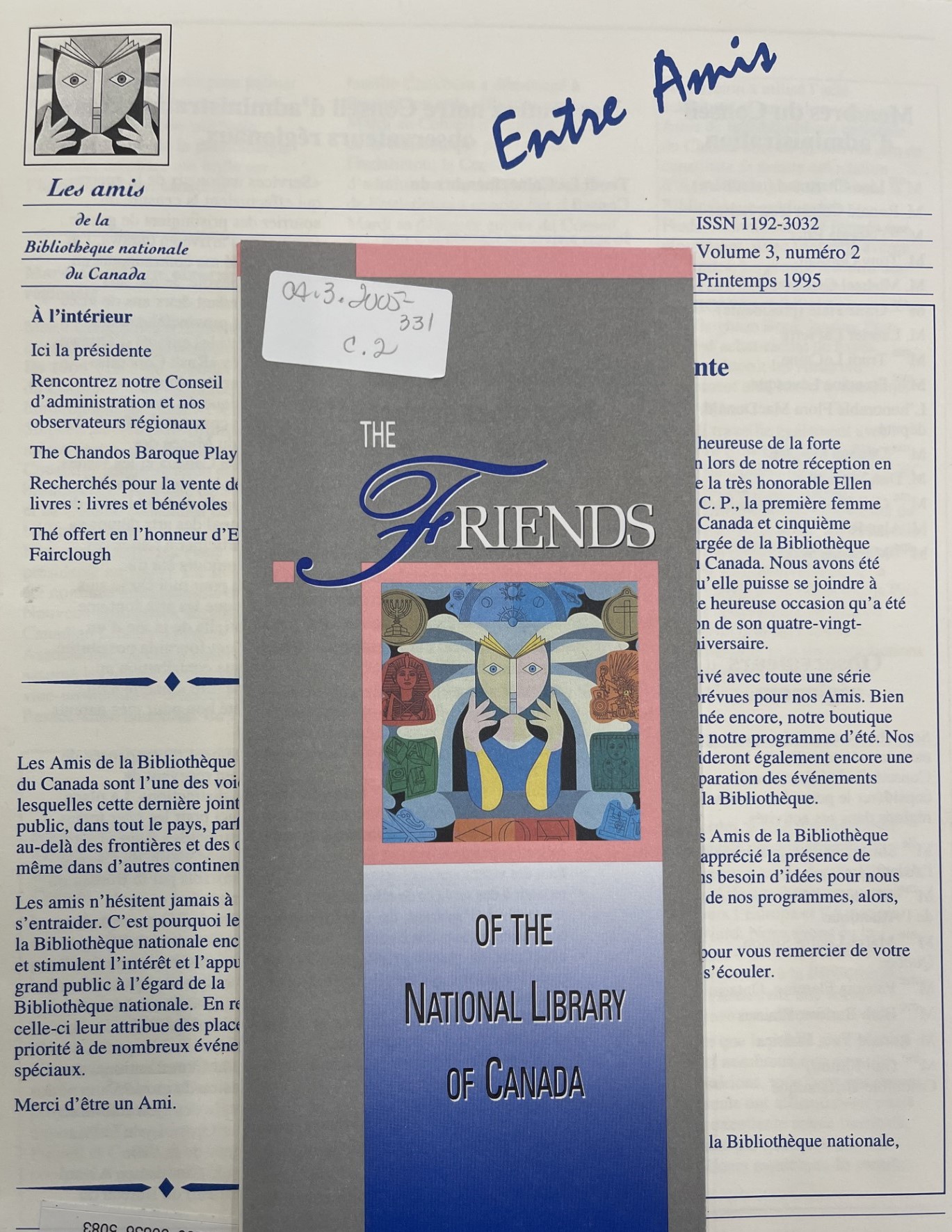
Page from a pamphlet with writing and the image of a logo.

A note among friends and The Friends of the National Library of Canada pamphlets (OCLC 1082162430 & OCLC 61127762).

Encouraging donations and gifts of treasures and fundraising for special acquisitions is central to the Friend’s constitution.

The Friends of National Archives organization also formed in 1995 under the leadership of Jean-Pierre Wallot (1985–1997), with their own newsletter “Between friends.” The National Archives also had a boutique, but less is known about their activities.

FLAC’s Big Book Sales and antiquarian book auctions

Many perhaps have heard of OPL’s yearly Mammoth Book Sales (MBS), but did you know that FLAC once hosted its own enormously successful “Big Book Sales”? These book sales, hosted alongside the Friends organizations of the Nepean Public Library, the Kanata Public Library, the Cumberland Public Library and local booksellers, have been a success in Ottawa for well over a decade. Even before consolidating in 2003 to create the Friends of the Ottawa Public Library Association, Friends organizations were thriving in various public libraries across Ottawa.
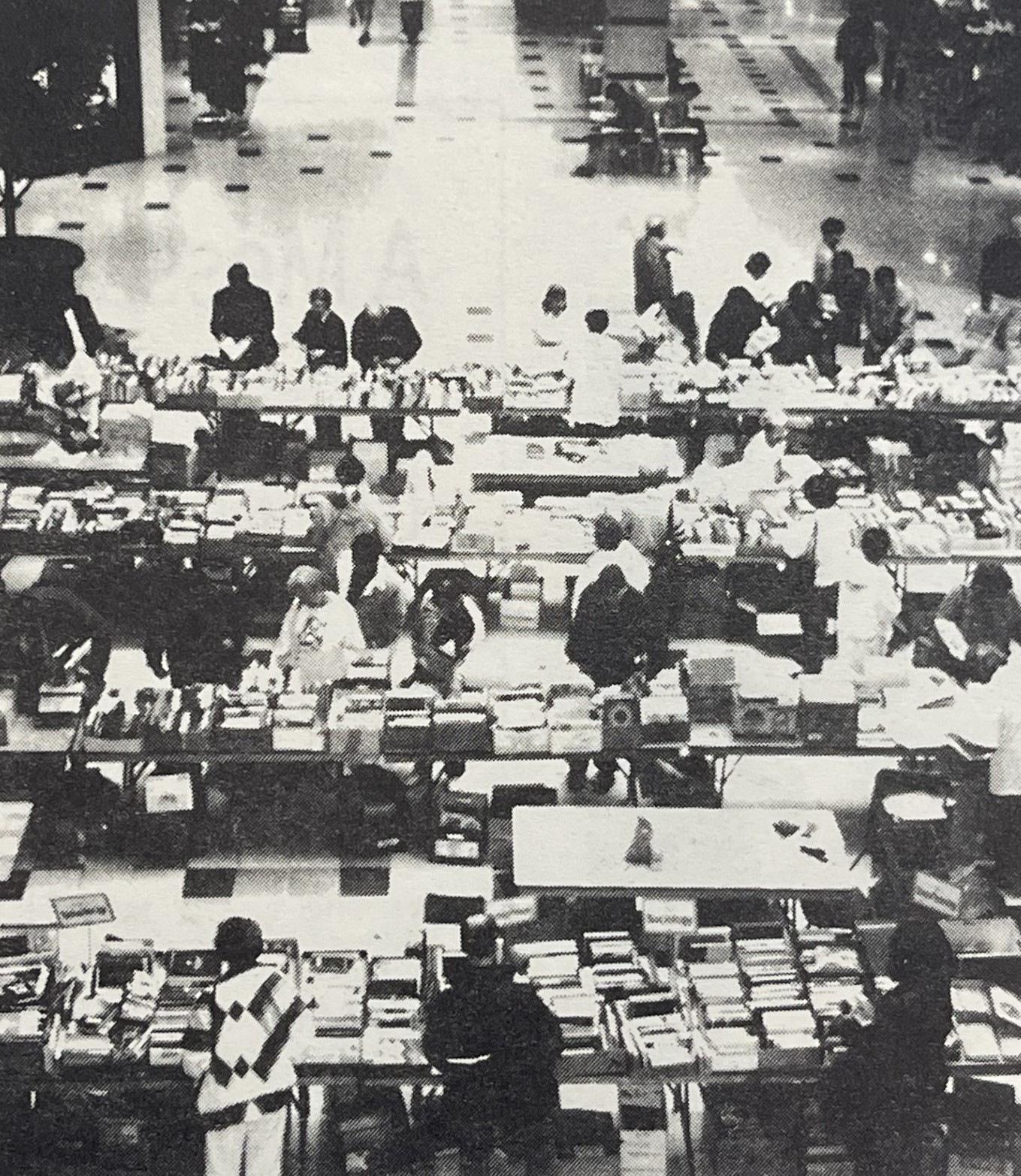
Photograph of people going through books placed on tables in a mall.

The first sale at St. Laurent mall from A note among friends, 1995, Winter, Volume 4, No. 1. (OCLC 1082162430).

The inaugural Big Book Sale took place September 23–25, 1995 at the St. Laurent Shopping Centre. According to the book sale committee, the sale by all measures was a resounding success. It raised $17,164.49, and an additional 423 books were donated to the National Library. In subsequent years, the Friends often doubled or tripled this amount.

FLAC initiated its first antiquarian book auction in the winter of 2000, continuing it until about 2008. As is the case today, all Canadian book donations are set aside and reviewed by a National Library staff member before they become part of the library collection. The Friends earmarked their rarer books for antiquarian book auctions. Today, FLAC features select books on their online store, inviting bids that are too good to pass up, so don’t miss out!

A history of the Cubby

Initially known as the “Friends Boutique,” the Cubby started in 1993 as a pop-up store situated in the sunken lobby of the Public Archives and National Library building. The Boutique was open from 11 a.m. to 3 p.m. daily from June 1st to the end of August.
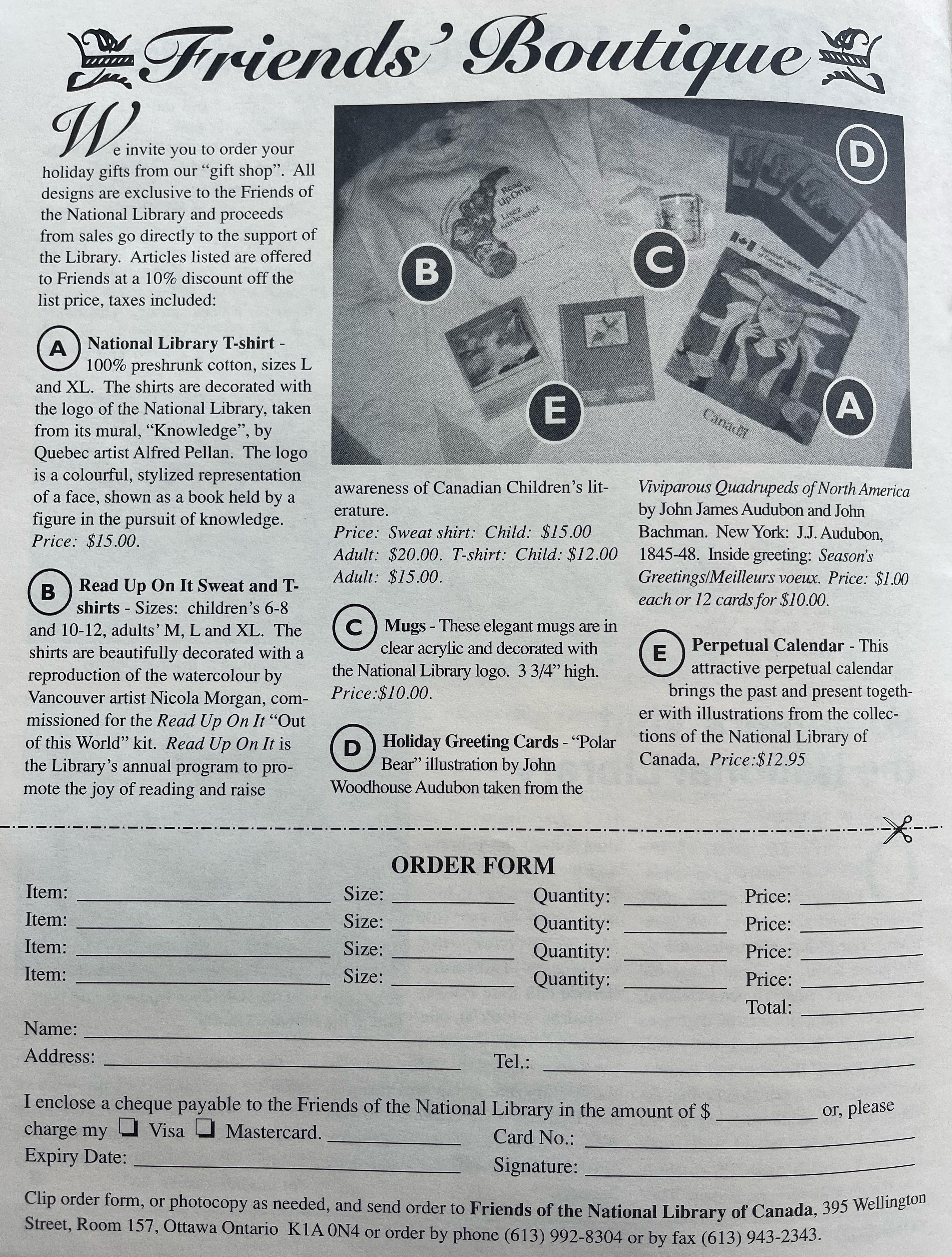
Page from a catalogue with a title “Friends' Boutique”, a photo with merchandise in the top right corner, descriptions of the merchandise and an order form at the bottom.

Thank you for being a Friend! The Fall 1996 catalogue, which featured the new Friends’ Boutique selling interesting merchandise (OCLC 1082162430).

The Boutique was staffed by two volunteers who also provided tours of the National Library in English and French, and it offered a remarkable selection of items, including postcards, posters, CDs from celebrated Canadian Musicians, as well as magnetic tapes from the National Library Music Division. T-shirts and sweatshirts emblazoned with “WOW” for Wellington Street West became especially popular. Many of the cherished items remain available at the Cubby today. Additionally, membership cards to FLAC are on offer—consider joining today!

In 2014, the Friends’ book sales division relocated to room 185 at 395 Wellington, attached to the Morley Callaghan meeting room. The basement now houses an extensive storage area for sorting a vast collection of books and hosts an office where Library and Archives Canada (LAC) staff can meticulously assess each donation.

By 2017 the FLAC bookstore, affectionately known as the Cubby, made its debut. The Cubby offered gently used books, with proceeds supporting the acquisitions of Canadiana for LAC. The store is open three days a week, bolstering its presence by running an annual big book sale and by opening its doors to the public on special occasions, including Canada Day.

Come 2019, the Cubby had enlisted the aid of over ten volunteers and succeeded in raising $3000, contributing to the purchase of significant works such as the rare edition of “Adventures of a Field Mouse,” by Catharine Parr Traill, and Leacock’s best-known book, “Sunshine Sketches of a Little Town” —the American version in the original dust jacket.

The pandemic in 2020 necessitated the closure of the Cubby, yet in response, FLAC pivoted to an online version of its antiquarian book sales of the past. So bid away!

Treasures found at the Cubby

The second and third laws of library science proposed by S.R. Ranganathan in 1931 (OCLC 1007655699)—that every reader has a book, and every book its reader—are ideas that resonate with my experiences at the Cubby.

In 2019, I visited an exhibit at the National Gallery of Canada which contained the Archives of Thoreau and J. E. H. MacDonald collection and the book West by East and other Poems by J. E. H. Macdonald (OCLC 11487298). This Ryerson Press book, enriched by Thoreau MacDonald’s drawings and the original dust jacket, are images that have etched themselves in my memory.

To my delight, I recently managed to acquire a rare copy—the first of five hundred pulled—through negotiation on the Cubby’s online platform!
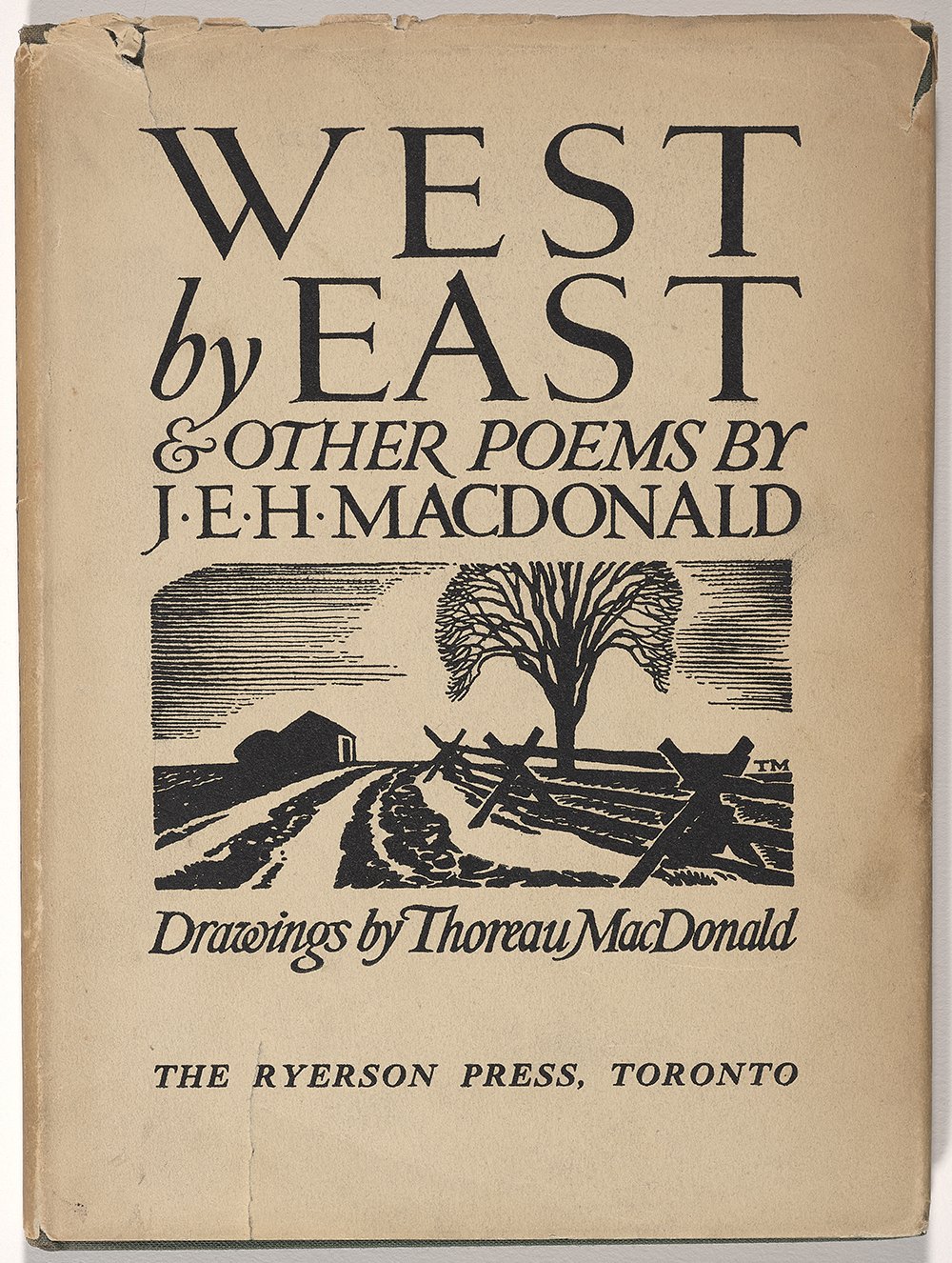
Book cover with drawing of a road lined by a fenced going towards a house. A tree can be seen in the background. West by East & other poems by J.E.H MacDonald is written on top of the drawing. Below its written Drawings by Thoreau MacDonald. The Ryerson Press, Toronto.

My copy of West by East by J.E.H MacDonald (OCLC 11487298) is one of the first five hundred copies produced.
Photo credit: J.E.H. MacDonald, West by East and other poems, with illustration by Thoreau MacDonald. Toronto 1933. National Gallery of Canada Library and Archives Photo: National Gallery of Canada

I have since discovered a treasure trove of Thoreau MacDonald-designed books at the Cubby store. These books are all in very good condition with original dust jackets from the 1930s from Ryerson Press Books and adorned with illustrations by Thoreau Macdonald.

First, I discovered a very handsome copy of Thoreau MacDonald: A Catalogue of Design and Illustration. My copy is signed by the humble compiler, Richard Landon, and is noted for its significance in Canadian book illustration history. Richard Landon was the head of Thomas Fisher Rare Book Library, which has been referred to as “the house that Richard Built.”

Since armed with this catalogue of book design and illustration, I also located two other treasures by the Confederation poets Duncan Campbell Scott (1862–1947) and Sir Charles George Douglas Roberts. Both books were inscribed and signed by the authors and had rare ephemera placed within. Could it be that these books were waiting on the cart of the Cubby for me?

In the Village of Viger (OCLC 3634059), by Duncan Campbell Scott, was designed and signed by Thoreau MacDonald. Duncan Campbell Scott was a poet and a controversial civil servant, leaving a complicated legacy for Canadians to consider regarding his part as an architect of the Residential Schools.
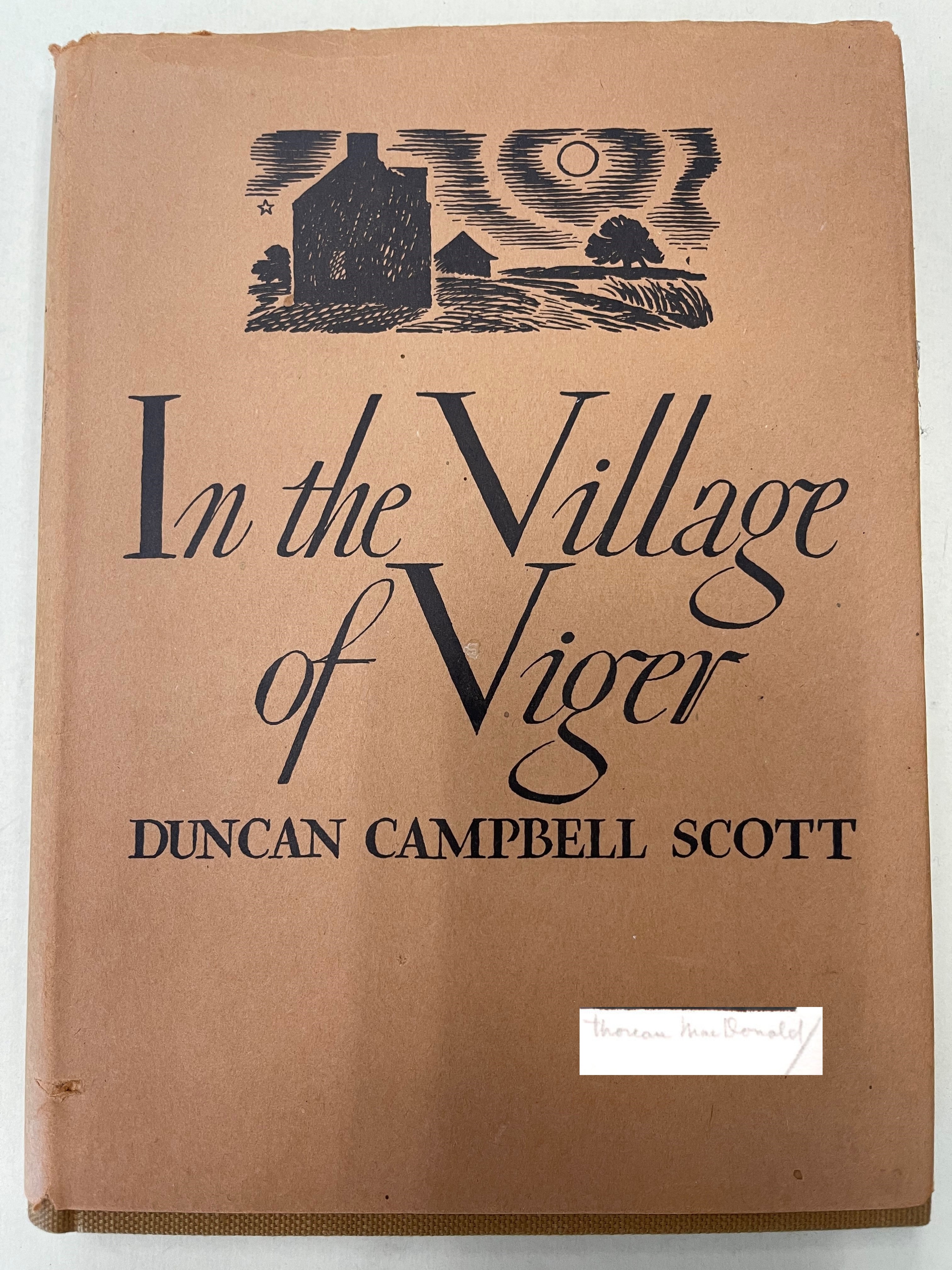
Book cover with a drawing of a house in forefront, a second house in the back, trees, grass, and a sun in the sky. The middle of the book cover reads In the Village of Viger, followed by the author’s name, Duncan Campbell Scott.

In the Village of Viger (OCLC 3634059) by Duncan Campbell Scott, a Confederation poet and an architect of the Residential Schools in Canada. My copy from the Cubby was signed by Thoreau MacDonald. Photo courtesy of the author, Evan Dalrymple.

My next find was the Selected Poems of Sir Charles G. D. Roberts (OCLC 27780946). This book was personally inscribed, and to my astonishment, I found various pieces of ephemera, including a signed mimeograph of his poem “Those Perish, Those Endure” about the Spanish Civil War and a signed article from the Dalhousie Review in April 1930, “More Reminisces About Bliss Carman”. Bliss Carman was Charles Robert’s cousin and a prolific Confederation Poet.
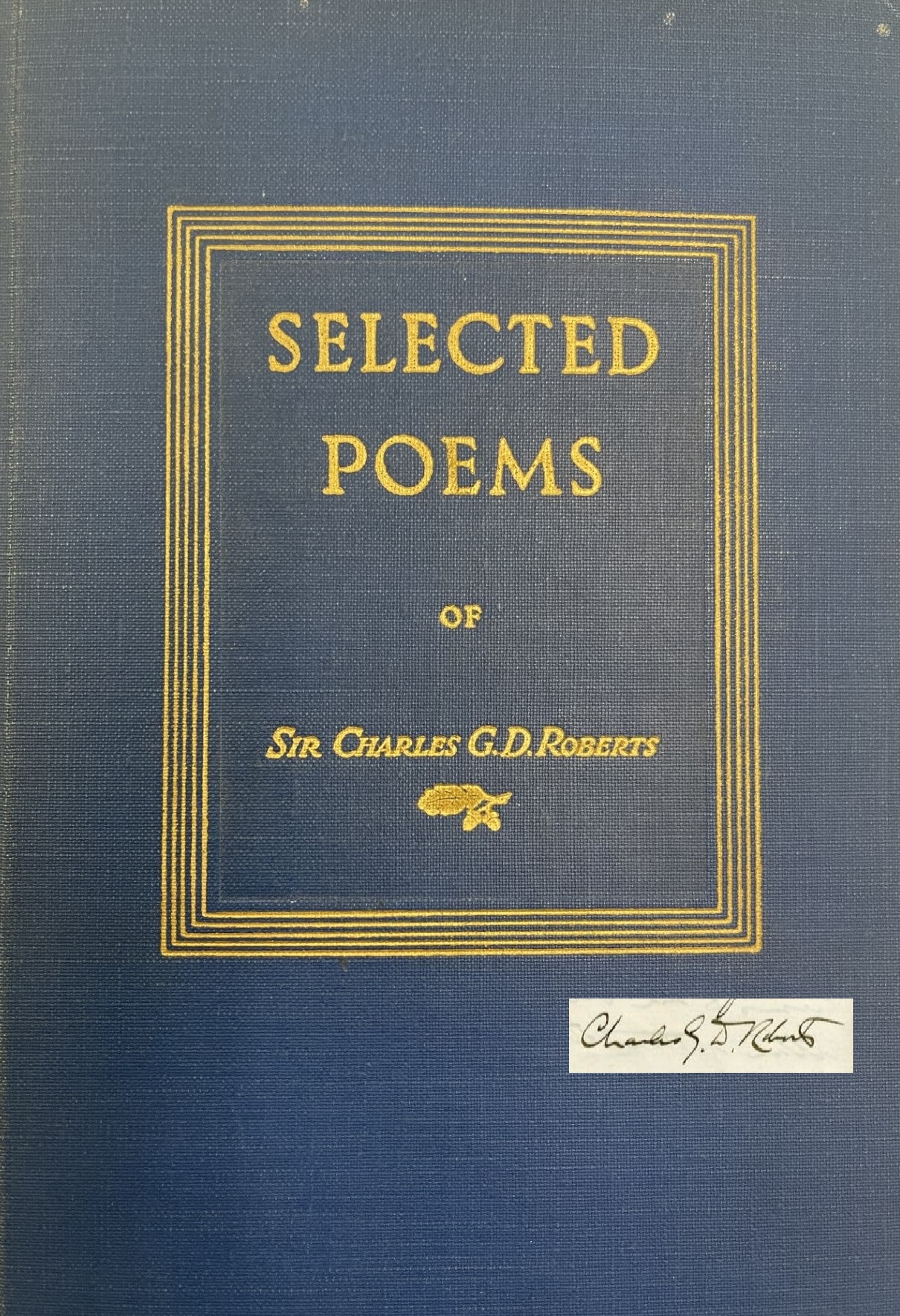
Cover page of a book with a frame-like rectangle with its title “Selected Poems” and the author’s name “Sir Charles G. D. Roberts” inside.

Selected Poems of Sir Charles G. D. Roberts (OCLC 27780946). My copy from the Cubby was signed and full of ephemera. Photo courtesy of the author, Evan Dalrymple.

The next chapter of the Cubby/ Le Recoin

At Ādisōke, a joint facility shared by the Ottawa Public Library and Library and Archives Canada, construction is well under way. Ādisōke is Anishinaabemowin word that means “storytelling,” and it promises to be a hub for our community. The question is—what will become of our Cubby?

Will it be a charming pop-up as from the bygone days, with “Big Book Sales” and auctions, or will it forge a new path? The fusion of the Ottawa Public Library and Library and Archives Canada may recreate the collaborative spirit we remember.

As we turn the page to the next chapter for the Friends and discover the new gathering space that will emerge at Ādisōke, we anticipate the new treasures that await us.

In closing, find your own treasures at the Cubby Big Book sale that will occur during LAC’s Doors Open Ottawa event on June 1 and 2, 2024. This will also mark 31 years of selling books—see you all at the Cubby!

To contact the Cubby, email Amis-friends@bac-lac.gc.ca or call 613-992-8304.

Further reading

  • Abley, Mark. 2013. Conversations with a Dead Man: The Legacy of Duncan Campbell Scott. Madeira Park, BC: Douglas & McIntyre (OCLC 856726449).
  • Landon, Richard, Marie Elena Korey, and Thomas Fisher Rare Book Library. 2014. A Long Way from the Armstrong Beer Parlour: A Life in Rare Books: Essays. Toronto, Ontario: Thomas Fisher Rare Book Library (OCLC 890957110).
  • From our rare book vault: What makes a book rare?, Library and Archives Canada Blog

Evan Dalrymple is a Reference Librarian for the Access and Services Branch at Library and Archives Canada, located at 395 Wellington.

A new old book for LAC

Version française

By Meaghan Scanlon

Library and Archives Canada (LAC) recently acquired a copy of the book Relation de ce qvi s’est passé en la mission des pères de la Compagnie de lésvs aux Hurons, pays de la Nouuelle France, és années 1648. & 1649. The acquisition was supported by the Library and Archives Canada Foundation.

Published in Paris in 1650, the book is part of a series of publications known as the Jesuit Relations. The Jesuit Relations are reports written by Jesuit missionaries who were stationed in New France. Published annually from 1632 to 1673, these reports served to update the missionaries’ superiors in France about the progress of the mission. Through their publication, the Relations became widely available and thus also helped build support among the French public for the Jesuit efforts in New France. While the content of the Jesuit Relations must be viewed in the colonial context of their production, the books are nonetheless significant documents of the history of New France. They are a valuable—albeit one-sided and heavily edited—source of information about the Indigenous peoples of the area known as New France and their early interactions with the European settler missionaries.

The item purchased by LAC is the first edition of the Jesuit Relation that details the events of the years 1648 and 1649. The credited author, Paul Ragueneau, was the superior of the Jesuit mission in the territory of the Huron-Wendat people. The report deals with major historical events. These include the conflict between the Haudenosaunee (Iroquois) and the Huron; the resulting destruction of the Jesuits’ mission in Huron territory (Wendake) by the Haudenosaunee; and the deaths of Jesuits Jean de Brébeuf and Gabriel Lalemant, both of whom were later canonized by the Catholic Church.

LAC’s Rare Book Collection focuses on Canadiana published before 1867. (LAC defines published Canadiana as publications produced in Canada, about Canada, or created by people from or with ties to Canada.) Within the Rare Book Collection, LAC has an outstanding collection of about 65 Jesuit Relations. While LAC does not have a copy of the earliest report published in 1632, it does hold at least one copy of one edition for almost every subsequent year.

Today, the Jesuit Relations are considered “important” rare books, but they were likely viewed as more akin to mass market literature at the time of their publication. This historical perception is reflected in the way the copies in LAC’s collection are bound. Several of the books are in “limp vellum” bindings. A limp binding is opposed to a hardcover binding, in which the book’s cover materials are glued to some type of board to create a hard cover. With a limp binding, there are no boards. Think of limp bindings as the historical equivalent to paperback books, except that instead of paper, the covers of older books are usually made of animal skin. In the case of many of LAC’s Jesuit Relations, the specific skin used is known as vellum, hence the term limp vellum.

Just as modern paperbacks are now an economical option, limp bindings would have been less expensive for seventeenth-century book buyers than hardcover books. Another sign of the inexpensive nature of the bindings of the Jesuit Relations in LAC’s collection is that they are also mostly very plain, with no decorations other than the titles handwritten in ink on the spines. Additionally, the books tend to be very small, typically around 20 cm in height.

The new acquisition is so slight, in fact, that the delivery person who brought it to LAC said he was sure he was dropping off an empty box! It too is in a limp vellum binding. Interestingly, its vellum cover is made from an old piece of sheet music that looks as though it could date from the sixteenth or seventeenth century. Historically, it was common for bookbinders to use scrap materials like old manuscript pages in their work. Of course, recycling supplies is a way to save money, and a cover made from reused vellum is perhaps another indication that the book in question was considered “cheap,” for lack of a better word.

However, there are signs that this binding does not date from the time of the book’s publication. The endpapers are made of different, newer paper than the text block of the book. The margins of the book’s pages are also very thin, indicating that the pages were cropped at some point, likely when the book was rebound.

The specific details of what alterations may have been made to this book over its lifespan are a mystery for LAC’s book conservators to attempt to unfold. However, if, as it appears, the volume was rebound at some point in the almost 400 years since its publication, whoever did the work made the effort to use materials and techniques faithful to those that might have been employed during the era when the book was originally published.

A photograph showing a small book bound in a piece of vellum with musical notations handwritten on it in red and black ink in a calligraphic style. The vellum appears to date from the sixteenth or seventeenth century.

Cover of LAC copy 2 of Relation de ce qvi s’est passé en la mission des pères de la Compagnie de lésvs aux Hurons, pays de la Nouuelle France, és années 1648. & 1649, published in Paris by Sébastien Cramoisy, 1650 (OCLC 1007175731).

Additional resources


Meaghan Scanlon is a Senior Special Collections Librarian in the Published Acquisitions Division at Library and Archives Canada.

Expect the Unexpected!

By Forrest Pass

What do Inuit mapmakers, German composer Ludwig van Beethoven, a notorious Italian stamp forger and Soviet spies have in common? Their works are all represented in the collections at Library and Archives Canada. These artifacts are also showcased in Unexpected! Surprising Treasures From Library and Archives Canada, which opens at the Canadian Museum of History on Thursday, December 8, 2022. This new exhibition gives curious visitors a chance to see, first-hand, many intriguing items that they might not expect to find at Canada’s national library and archives.

The exhibition features some 40 original documents, maps, photographs, rare books and works of art. Regular readers of this blog will know that researchers and staff are always coming across surprises in the collection. A few of the items displayed in Unexpected! are perennial favourites. Others are new finds, the never-before-exhibited results of research into the unusual stories that library and archival collections can reveal.

A handwritten document on lined paper, with some words in black ink scratched out in red ink.

A secret agent receives instructions from his handlers. The delivery of this and other Soviet espionage documents to Canadian authorities in 1945 helped to start the Cold War. (e011316511_s1)

These stories are clustered around three themes. The first, Wonders, presents artifacts that delighted or intrigued their audiences when they were created, and they continue to do so today. Visitors will discover how a manuscript composition by Beethoven ended up in Canada. They can experience an 18th-century version of virtual reality. They may also contemplate two contrasting visions of the Arctic: one, the product of an imaginative European cartographer who had never visited the region, and the other, the work of two Inuit mapmakers with deep connections to the land.

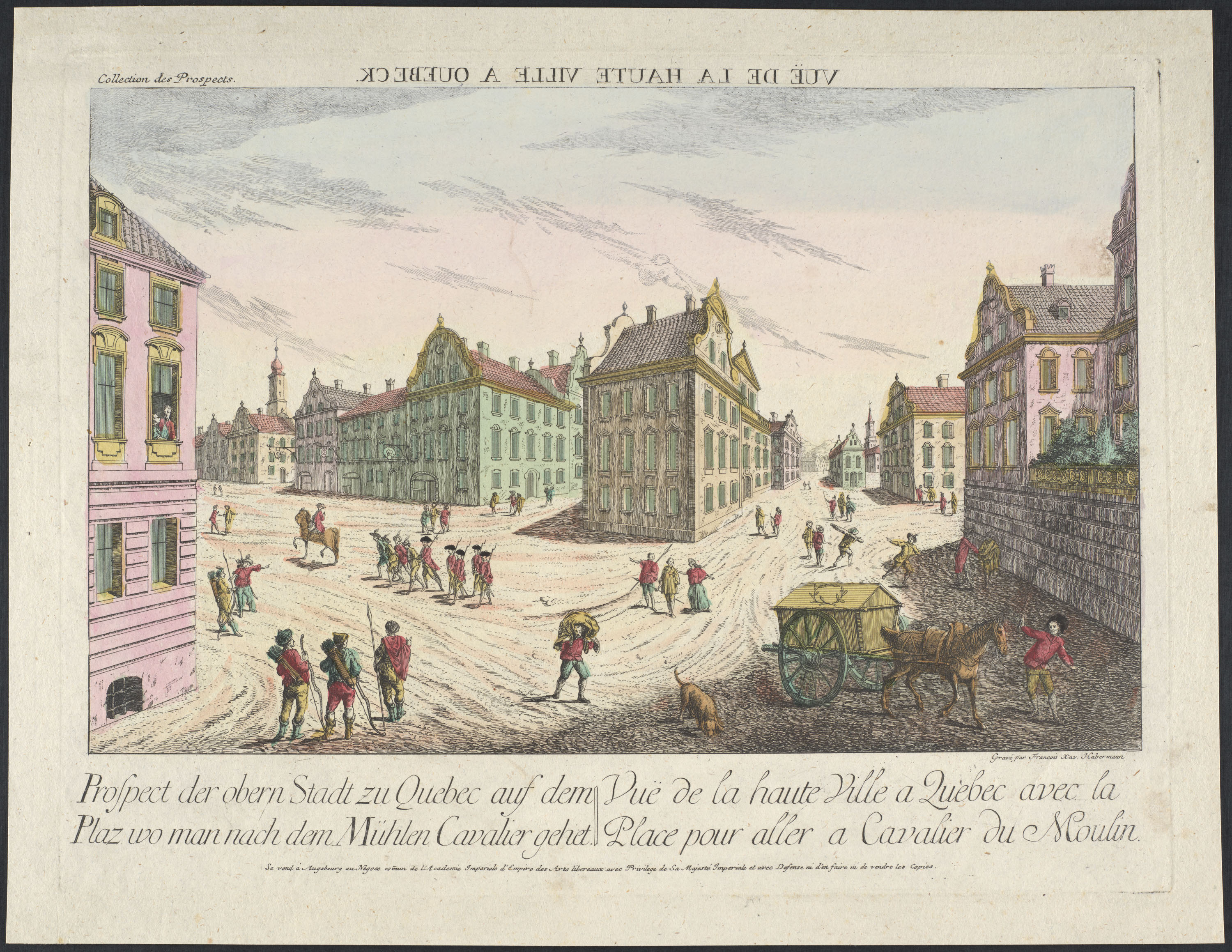
A street with pink, green and beige buildings, soldiers, a dog, and a horse and carriage.

Perspective views, like this imaginary street scene in the city of Québec, appear to be three-dimensional when viewed through a device called a zograscope. The exhibition features a reconstructed zograscope, enabling visitors to experience virtual reality, 1770s-style. (e011309357)

In the second theme, Secrets, Unexpected! explores how and why people keep secrets, and how they share secrets with those who need to know. Visitors can crack a coded love letter, ponder the rich symbolism of a centuries-old masonic ritual painting, and find out why the Dominion Archivist once mused (or “mew-sed”?) about putting cats on the government payroll.

The final theme, Mysteries, presents some unresolved puzzles. Here, visitors can pore over the contents of a UFO investigation file, or come face to face with the rare “Fool’s Cap Map,” printed in the 1500s and perhaps the most mysterious map ever created.

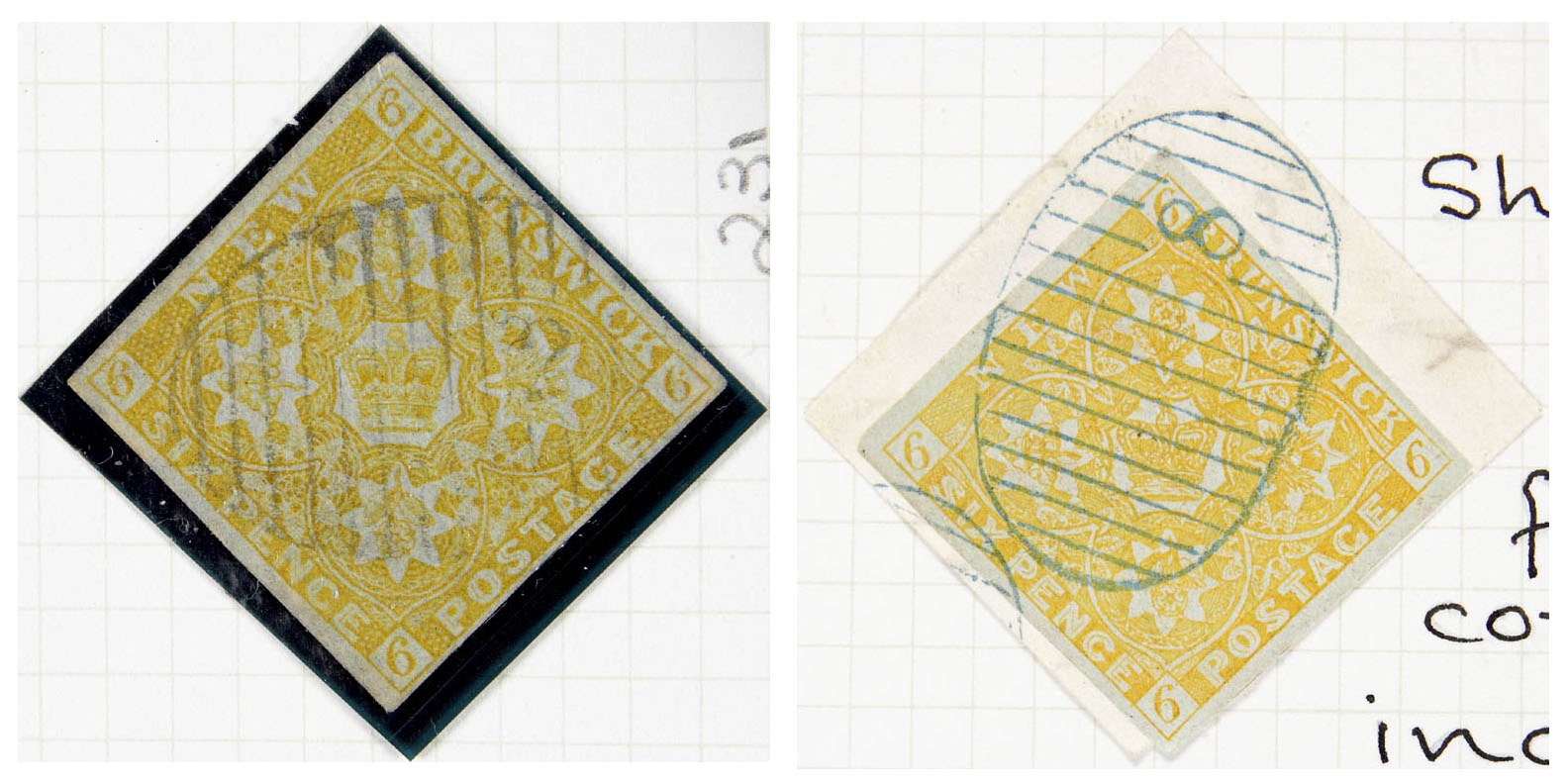
Two yellow stamps placed diagonally on a page. They both have a blue ink stamp.

One of these 1851 New Brunswick postage stamps is a forgery. Can you spot the fake? (e011309360 and e011309361)

The stories that these artifacts tell can be funny, thought-provoking or simply curious. What links them all is that each artifact, when you scratch beneath its surprising surface, reveals something important about the past. There are good reasons why they have found their way into the collections at Library and Archives Canada.

This is the latest in a series of exhibitions developed in partnership between Library and Archives Canada and the Canadian Museum of History. As the curator for Unexpected!, I have had the privilege and pleasure of collaborating on this project with a multidisciplinary team of exhibition and collections professionals from both institutions. In addition to providing the venue, the museum has contributed creative development expertise and a scenographic approach that recalls the look and feel of mid-century mysteries and spy thrillers. The museum’s technicians also took up the challenge of constructing several interactive elements that will enhance visitors’ understanding and appreciation of the original artifacts.

Unexpected! Surprising Treasures From Library and Archives Canada is at the Canadian Museum of History until November 26, 2023. Watch this blog as well as Library and Archives Canada’s social media channels in the coming weeks and months to learn more about the astonishing treasures on display.


Forrest Pass is a curator in the Exhibitions team at Library and Archives Canada.

The gloves come off!

By Alison Harding-Hlady

We are often asked why our book conservators and librarians don’t wear gloves when handling rare or fragile books. This question is understandable given the iconic imagery in film and television of rare book curators wearing gleaming white gloves to hand over priceless artifacts. But the answer is very simple: it is better for the books!

It’s true that protective gloves are needed to handle some archival material, such as art or photographs. When it comes to rare books, however, the industry standard has always been to use clean, dry, bare hands. Guides published by the British Library and Library of Congress don’t just recommend using bare hands to handle collection material—they actually warn against using gloves. Wearing gloves while handling books can do more harm than good!

Have you ever tried to read a book or do anything requiring fine motor control while wearing a pair of gloves? It’s impossible! Gloves reduce the control necessary to manipulate a book or turn pages and make an accidental drop, page rip, or other damage much more likely. When a conservator performs a detailed and exacting repair, it is essential that they can feel the paper and work with as much dexterity as possible.

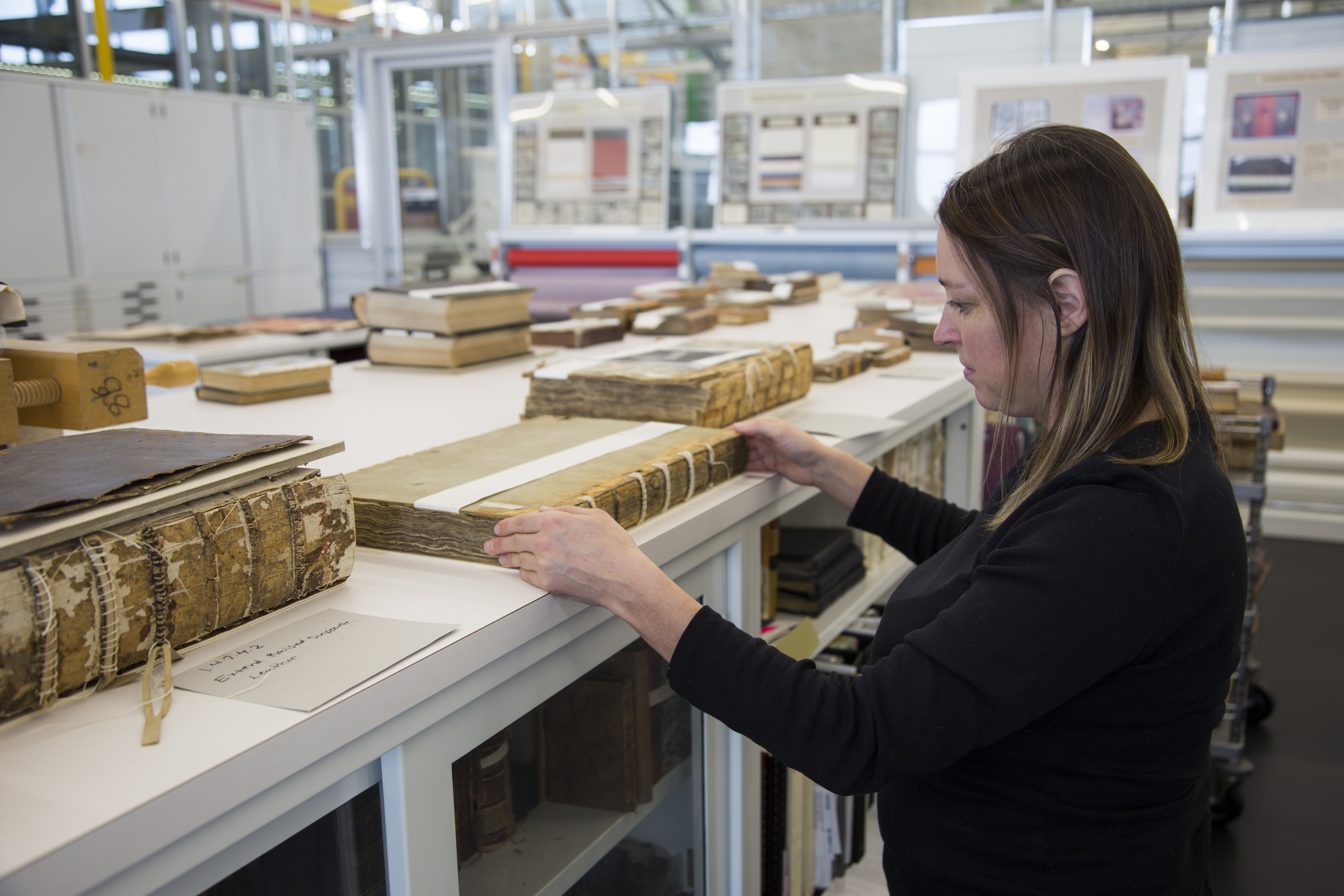
: A colour photo of a person standing at a table in the book conservation lab, repairing the spine of a book.

Manise Marston, Head Book Conservator, works in the book lab at LAC

Gloves aren’t always clean and they can transfer lint or dirt to a book. They can also make your hands hot and the thin cotton gloves normally used are no barrier against sweat. Book bindings and pages are sturdy and meant to be handled. And rare books have been handled by many people in the centuries before becoming part of the library collection. With care and caution, rare books can be handled by many more people for centuries to come!

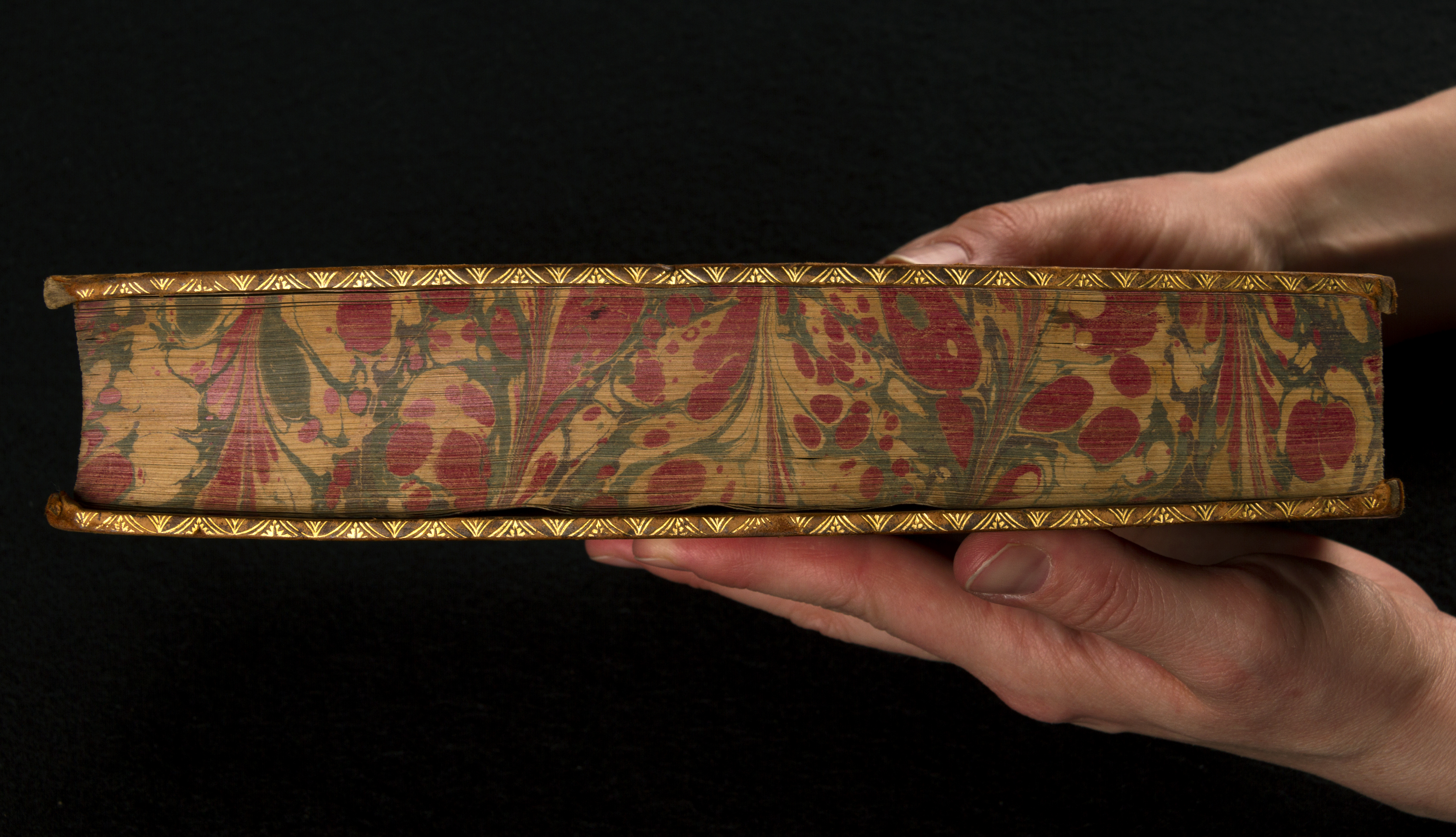
A close-up colour photo of hands holding an elaborately decorated book.

Details on a 1758 edition of Paradise Lost (OCLC 228137), held in LAC’s Rare Book Collection

This is not to say, of course, that precautions should not be taken when handling rare books. Hands should be clean, dry, and free of lotion or other products. Proper bookstands or supports should always be used and the books should be handled as little as possible and always with great care. Pages should be turned slowly and the book should never be forced open past where the spine or binding comfortably opens. Should gloves ever be worn? Occasionally. If there is original artwork or photographs, if the binding has elements of metal or another unusual material, or if there is evidence of a contaminant like mould, then a pair of gloves might make sense. However, in general it is standard practice at LAC and in similar institutions around the world to not wear gloves when working with this precious, beautiful and fascinating part of our collection.

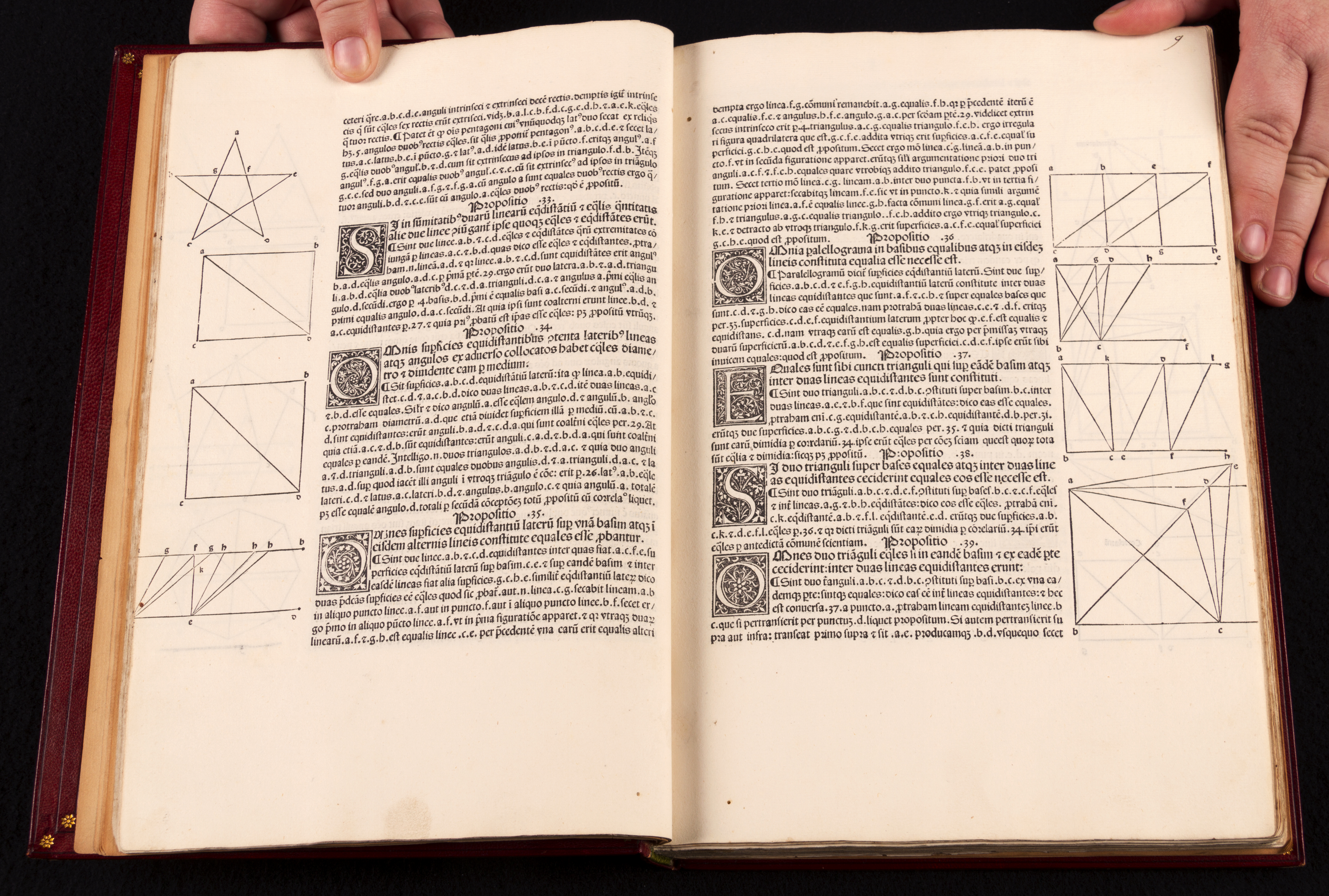
A colour photograph of two pages of illustrated text from an early printed book.

A 1482 copy of Euclid’s Elementa (OCLC 1007591701), held in LAC’s Rare Book Collection


Alison Harding-Hlady is the senior cataloguing librarian responsible for rare books and special collections in the Published Heritage branch at Library and Archives Canada.


Canada’s Earliest Printers

By Meaghan Scanlon

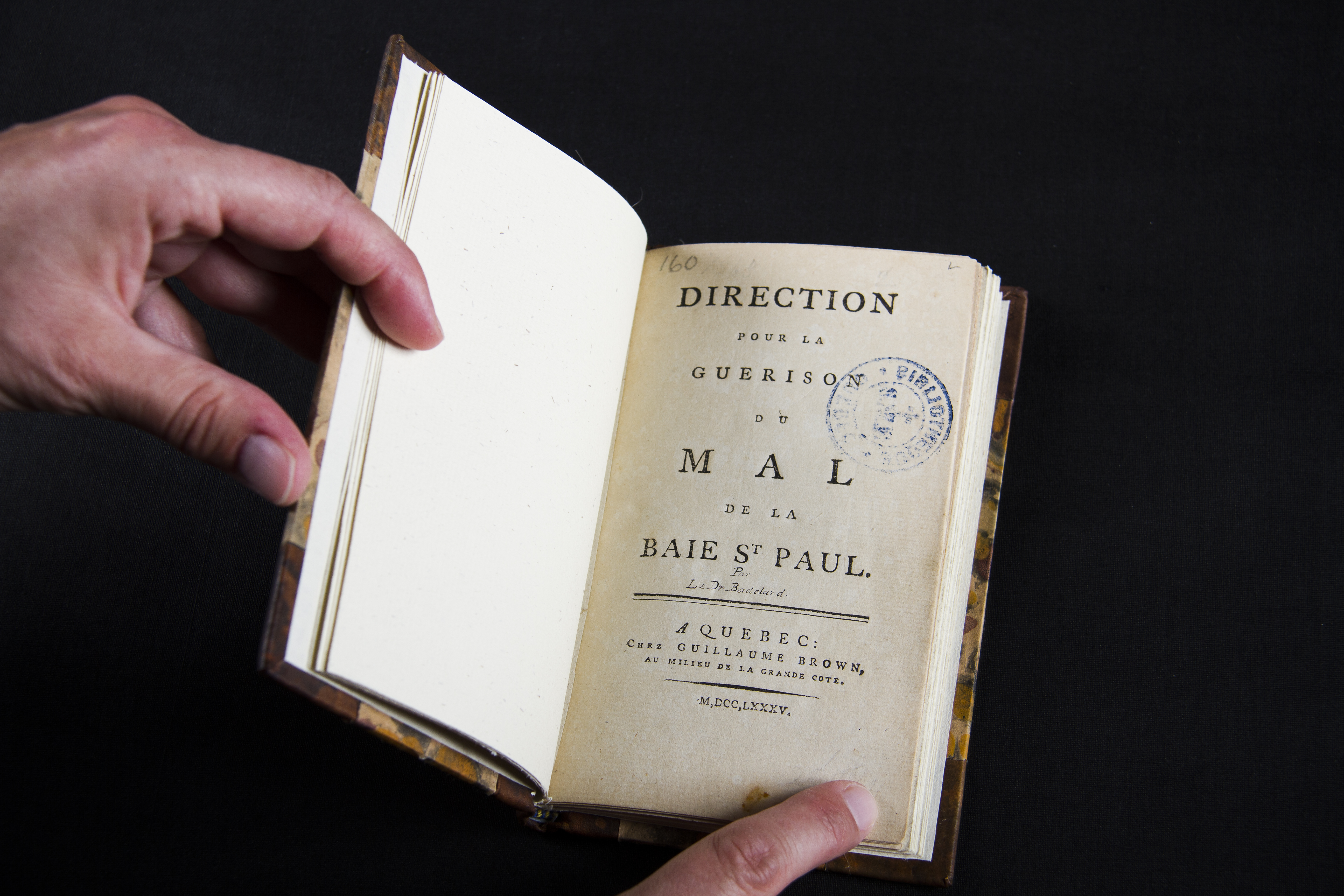
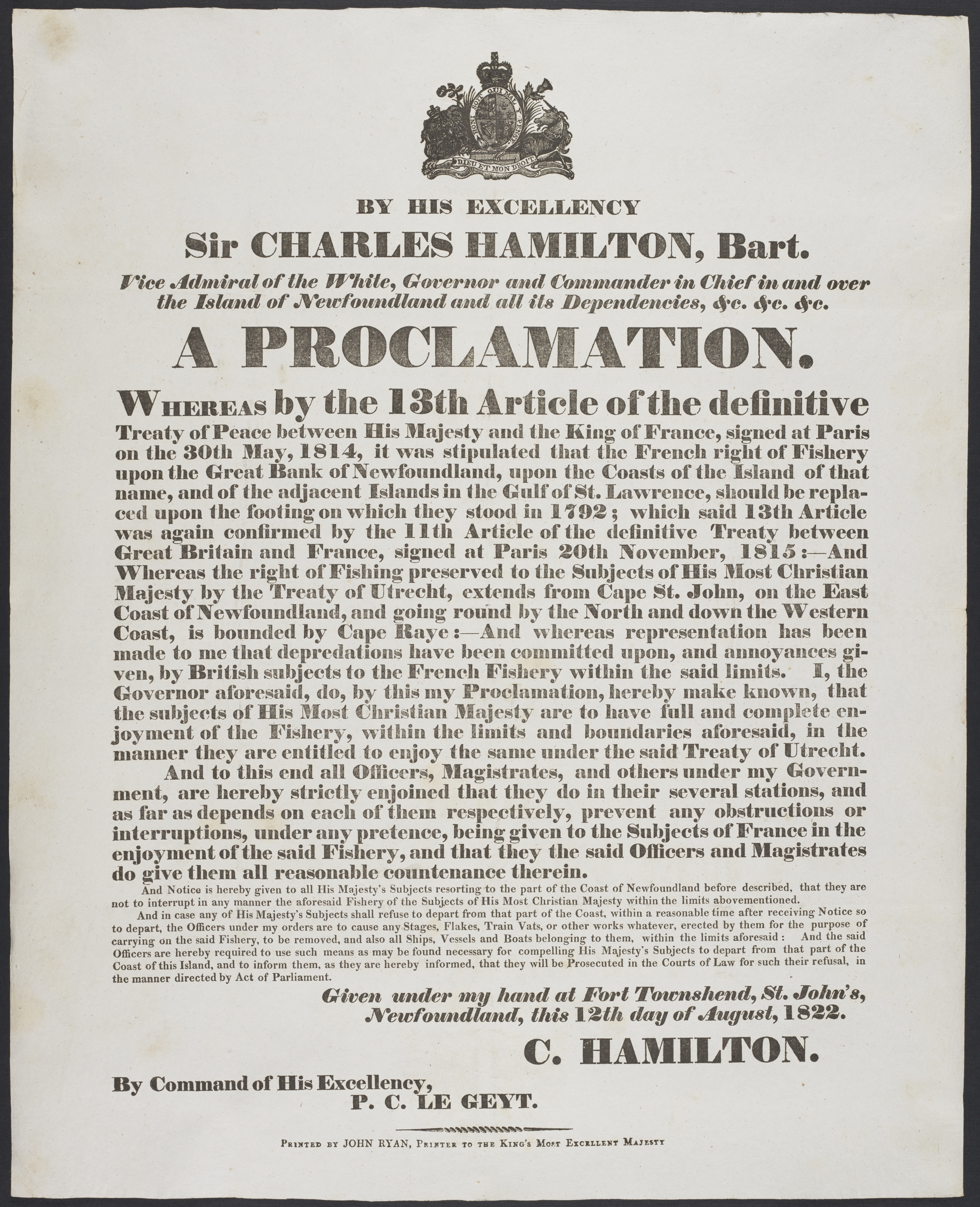
As you walk through the exhibition Premiere: New acquisitions at Library and Archives Canada, you will see two items from Library and Archives Canada’s (LAC’s) Rare Book Collection. One is a short medical pamphlet published in Quebec in 1785 that explains the symptoms and treatment of a disease thought to have been a form of syphilis. The other is a proclamation on the subject of French fishing rights, issued by the Governor of Newfoundland in 1822.

A colour photograph of a book open to the title page. It reads: Direction pour la guerison du mal de la Baie St Paul. A Quebec : Chez Guillaume Brown, au milieu de la grande cote. M, DCC, LXXXV.

Title page of Direction pour la guerison du mal de la Baie St Paul. Printed by Guillaume (William) Brown at Quebec City in 1785 (AMICUS 10851364)

These two publications may not appear to have much in common. In fact, though, they share an interesting historical connection: both are the work of the first printers in their respective provinces. William Brown, publisher of Direction pour la guerison du mal de la Baie St Paul [A guide to treating the Baie St Paul malady], and his partner, Thomas Gilmore, became the first printers in the province of Quebec when they set up shop at Quebec City in 1764. John Ryan, who produced the Newfoundland broadside, holds the distinction of having been the first printer in two separate provinces. Ryan and his partner, William Lewis, were already in business in Saint John when the province of New Brunswick was created in 1784. Ryan then relocated to St. John’s, Newfoundland, in 1806, and opened the island’s first press.

A black-and-white document proclaiming the rights of French fishermen under the Treaty of Paris, which confirmed the rights laid out in the Treaty of Utrecht, to fish in the waters off Newfoundland without hindrance or harassment by British subjects. The proclamation directs officers and magistrates to prevent British subjects from obstructing the French fishery, and gives warnings about potential actions to be taken against those British fishermen who refuse to comply.

By His Excellency Sir Charles Hamilton … a proclamation. Printed by John Ryan at St. John’s, Newfoundland, ca. 1822 (AMICUS 45262655)

Johann Gutenberg introduced printing to Europe in the middle of the 15th century, completing his famous Bible in Mainz, Germany, around 1454. By 1500, Gutenberg’s innovation had been adopted widely in Europe. European colonists then transported printing technology to the Americas. It was not until 1751—almost 300 years post-Gutenberg—that the first press reached Canada. This alone seems to us like an incredibly lengthy interval, accustomed as we are to rapid changes in technology. But it actually took close to another 150 years for printing to spread to all regions of the country. Through holdings like these items printed by William Brown and John Ryan, LAC’s Rare Book Collection documents the long and fascinating history of how printing made its way across Canada.

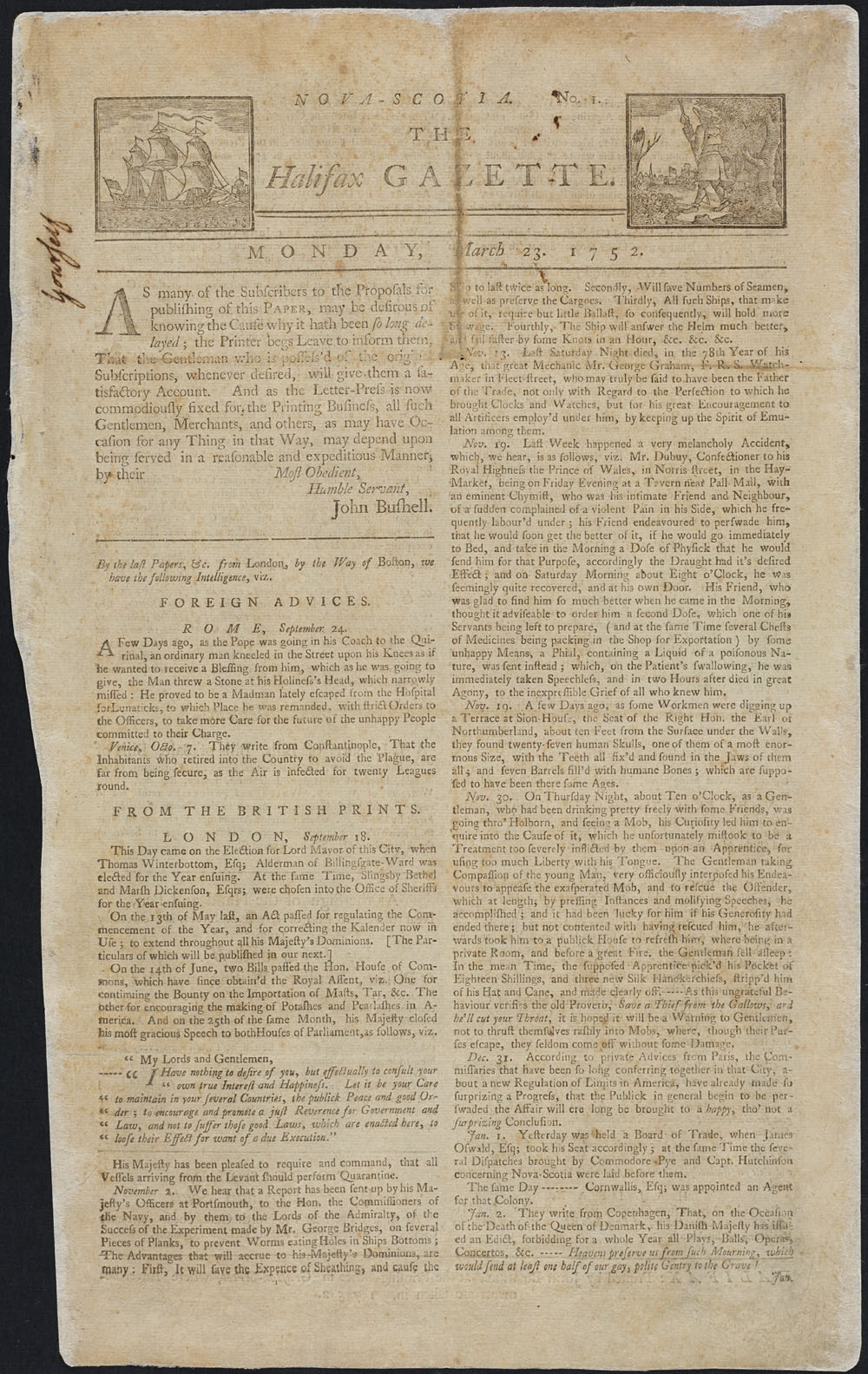
A colour reproduction of the cover page of a newspaper. The newsprint is creased near the top and sepia-tinged.

The Halifax Gazette, no. 1 (March 23, 1752). Printed by John Bushell (AMICUS 7589124)

This history begins with John Bushell, Canada’s first printer. In 1751, Bushell moved from Boston, Massachusetts, to Halifax, Nova Scotia. There, he published the country’s first newspaper, The Halifax Gazette, on March 23, 1752. As previously noted, Quebec and New Brunswick got their first presses in 1764 and 1784, respectively. By the end of the 18th century, printers had come to Prince Edward Island and Ontario, where Louis Roy established the first press in Newark (Niagara-on-the-Lake) in 1792. After John Ryan’s arrival in Newfoundland in 1806, there were presses in all of the eastern provinces. Many early eastern Canadian printers, including Ryan and Prince Edward Island’s first printer, James Robertson, were Loyalists—Americans who left the United States during the American Revolutionary War out of loyalty to the British monarchy.

The advent of printing in Western Canada and the North occurred before the close of the 19th century. In both Alberta and Manitoba, the first printers were missionaries who produced Indigenous language translations of Christian religious texts. Using a makeshift press and type he had cast himself, Methodist minister James Evans started printing in Cree syllabics at Rossville, Manitoba, in 1840. The Oblate priest Émile Grouard brought the first press to Alberta when he settled at Lac La Biche in 1876. In 1878, Grouard completed the province’s first book, entitled Histoire sainte en Montagnais (“Montagnais” was the term non-Indigenous people used for the Dene language). That same year, Saskatchewan’s first printer, Scottish-born Patrick Gammie Laurie, began publishing his newspaper, the Saskatchewan Herald (AMICUS 4970721), in Battleford. Laurie had walked to Battleford from Winnipeg—a distance of about 1000 kilometres!—leading an ox cart that carried his press.

The Fraser River gold rush lured prospectors to the west coast in 1858. A demand for printed news accompanied this influx of people, resulting in the establishment of British Columbia’s first five newspapers, all in Victoria. One of the five was The British Colonist (AMICUS 7670749), founded by the future premier of British Columbia, Amor de Cosmos. Gold also spurred the introduction of the press to Canada’s northern territories. During the Klondike gold rush in 1898, printer G.B. Swinehart left Juneau, Alaska, with the intention of starting a newspaper in Dawson City, Yukon. Swinehart’s journey stalled at Caribou Crossing due to the weather, so he published a single issue there while he waited. This paper, the Caribou Sun (AMICUS 7502915) for May 16, 1898, is the first document known to have been printed in Canada’s North.

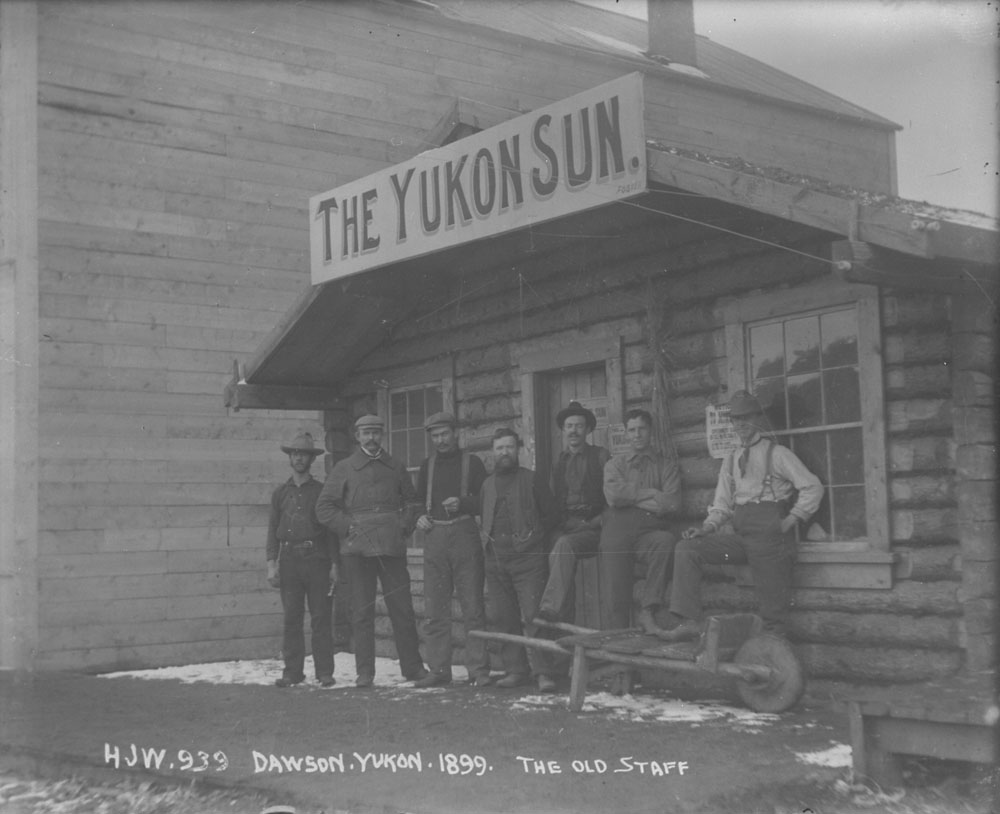
A black-and-white photograph of a group of men standing in front of a log building with a sign that reads The Yukon Sun.

Office of G.B. Swinehart’s paper, renamed The Yukon Sun, at Dawson City, 1899. (MIKAN 3299688)

LAC’s published collection holds a lot of early Canadian printed material, including over 500 items printed in Canada before 1800. This is a significant number, but the collection still has many gaps. It is always exciting for LAC staff when we come across imprints that aren’t already in the collection because documents printed by Canada’s first printers tend to be very rare. The two publications featured in the Premiere exhibition are good examples. Only about five copies of Direction pour la guerison du mal de la Baie St Paul survive today. The John Ryan broadside was previously unrecorded, meaning that no other copies are known to exist.

If you’re in the Ottawa area, check out Premiere: New Acquisitions at Library and Archives Canada to see these rare early Canadian imprints in person, along with new acquisitions from other parts of LAC’s collection. The exhibition runs at 395 Wellington Street in Ottawa until December 3, 2018. Admission is free!

Additional resources


Meaghan Scanlon is Senior Special Collections Librarian in the Published Heritage Branch at Library and Archives Canada.

Tracing history through books

By Meaghan Scanlon

When you’re browsing in a used book store, you might not want to buy something if its pages are covered in marks left by previous readers. For researchers looking to learn more about where a book came from and how it was used, though, such traces are rich sources. Annotations, inscriptions, bookplates, and stamps are evidence of the history of a book’s ownership. This history, referred to as provenance, tells a story about the book and its owners.

Most of the items in the Rare Book Collection at Library and Archives Canada (LAC) passed through the hands of one or more owners before arriving here, and many of them bear physical signs of their former lives. LAC’s second copy of The Polar Regions, or, A Search after Sir John Franklin’s Expedition by Sherard Osborn is an interesting example. LAC acquired this book only a short time ago, in 2015, as a transfer from the department known at the time as Aboriginal Affairs and Northern Development Canada. But the marks on the book’s pages indicate that it has actually been the property of the Government of Canada for about a century.

A colour photograph of two pages of an open book showing a stamp and a signature on the right-hand page.

Pages from copy 2 of The Polar Regions, or, A Search after Sir John Franklin’s Expedition by Sherard Osborn. A stamp at the top-right corner of the right-hand page reads “Commission on Conservation”; a handwritten signature in ink reads “W.A. Malcolm [?] / Jan’y [January] 1864 / Yokohama.” (AMICUS 6359969)

The book was printed in 1854. The oldest evidence of its provenance comes in the form of a signature on one of the pages that tells us the book spent some time in Yokohama, Japan, in 1864. Above the signature is an oval-shaped stamp reading “Commission on Conservation.” This likely means the book was part of the library of the Canadian Commission of Conservation. This commission was an advisory body established by the government to make recommendations on the stewardship of Canada’s national resources. It existed from 1909 to 1921; we can therefore guess that the book joined the public service during that period. In 1921, when the Senate was debating the Commission’s dissolution, one senator asked whether its “valuable library” would become part of the Library of Parliament’s collection. It seems that the books were instead distributed among the libraries of the various government departments that absorbed the Commission’s functions.

A colour photograph of the front endpapers of an open book showing a bookplate on the left-hand page and four stamps on the right-hand page.

Front endpapers of copy 2 of The Polar Regions, or, A Search after Sir John Franklin’s Expedition by Sherard Osborn, showing marks of past owners. Left: Bookplate from Indian and Northern Affairs Canada. Right: Stamps from Indian and Northern Affairs Canada (top right), the Lands, Parks and Forests Branch of the Department of Mines and Resources (blue stamps at middle and bottom left), and the Northwest Territories and Yukon Branch of the Department of the Interior (bottom right). (AMICUS 6359969)

This particular item’s Arctic subject matter made it a resource for the people responsible for the Canadian government’s administration of its northern territories. Over the years, this responsibility has landed with various federal bodies. The book apparently travelled with the staff who needed it, staying with them through several changes in bureaucratic structure. Much like the stamps on a passport, the jumbled departmental stamps on the book’s front free endpaper provide an illustration of its journey. After the closure of the Commission of Conservation in 1921, the book went to the Northwest Territories and Yukon Branch of the Department of the Interior (green stamp at bottom right), where it remained from 1922 to 1936. From 1937 to 1953, the Department of Mines and Resources took over northern administration, and got the book as part of the deal (blue stamps at middle and bottom left). Ownership marks from Indian and Northern Affairs Canada (black stamp at top right, and bookplate on facing page) and the Department of Northern Affairs and National Resources (stamp behind Indian and Northern Affairs Canada bookplate; not visible in photograph) depict the volume’s continuing odyssey through the government.

It is not always possible to glean so much from the traces of a book’s past. Still, next time you find a ratty old tome on a shelf, take a moment to look at what other readers have left behind. Maybe you’ll find more than you expect!

Additional resources


Meaghan Scanlon is a Special Collections Librarian in the Published Heritage Branch at Library and Archives Canada.

From the Lowy Room: remnants of Spanish Jewry

By Michael Kent

As a librarian, people often question me about the value of the print book in the digital age. After all, many of the books in the collections I serve can be found in digital formats online. While it is true that even the oldest works in Library and Archives Canada’s collections are now accessible in a range of formats online, I maintain that the power of the physical items—and the stories behind them—go far beyond the mere content of the page.

One of the items that evokes this sentiment in a powerful way is the fragment of the 1491 Pentateuch, the Jewish canonical scriptures, from Spain.

This Bible, printed by Eliezer ibn Alantansi in Hijar, Spain, was the last dated Hebrew book printed in Spain before the Spanish expulsion of the Jews in 1492. While the age, the print quality, or the level of scholarship necessary to produce this book alone make it an important work in early printing, it is the story it tells about the expulsion of Spain’s Jews that makes it a powerful item to behold.

Sadly, refugee crises are not new. Currently, our world is in the midst of a global refugee crisis, a crisis we are able to observe almost first-hand due to the rise of social media. The modern world has allowed us to gain an important and humbling glimpse into the struggles of those living in refugee camps.

The breadth of media content, blogs, pictures and personal accounts will allow future generations of scholars to understand the struggles of contemporary refugees in a way previous generations of scholars could never have imagined. But what about past refugees—how do we try to understand the struggles of medieval refugees, their expectations, their former lives, their hopes for the future, and the devastation caused by their upheavals?

These questions represent a tremendous challenge for historians who wish to uncover the experiences of those in the past. History needs to be more than dates and the stories of the elites; the stories of the masses and the collective experiences we need to learn from are the important episodes that should be investigated.

This is where I return to the biblical fragment found in the Lowy collection. From a content-on-the-page perspective, does the Pentateuch represent anything more than a standard Rabbinic Bible, the type that could be downloaded for free? The simple answer is no. Looking outside the text, does this item provide insights into the lives of Spanish Jewry on the eve of expulsion? I believe the answer is a resounding yes.

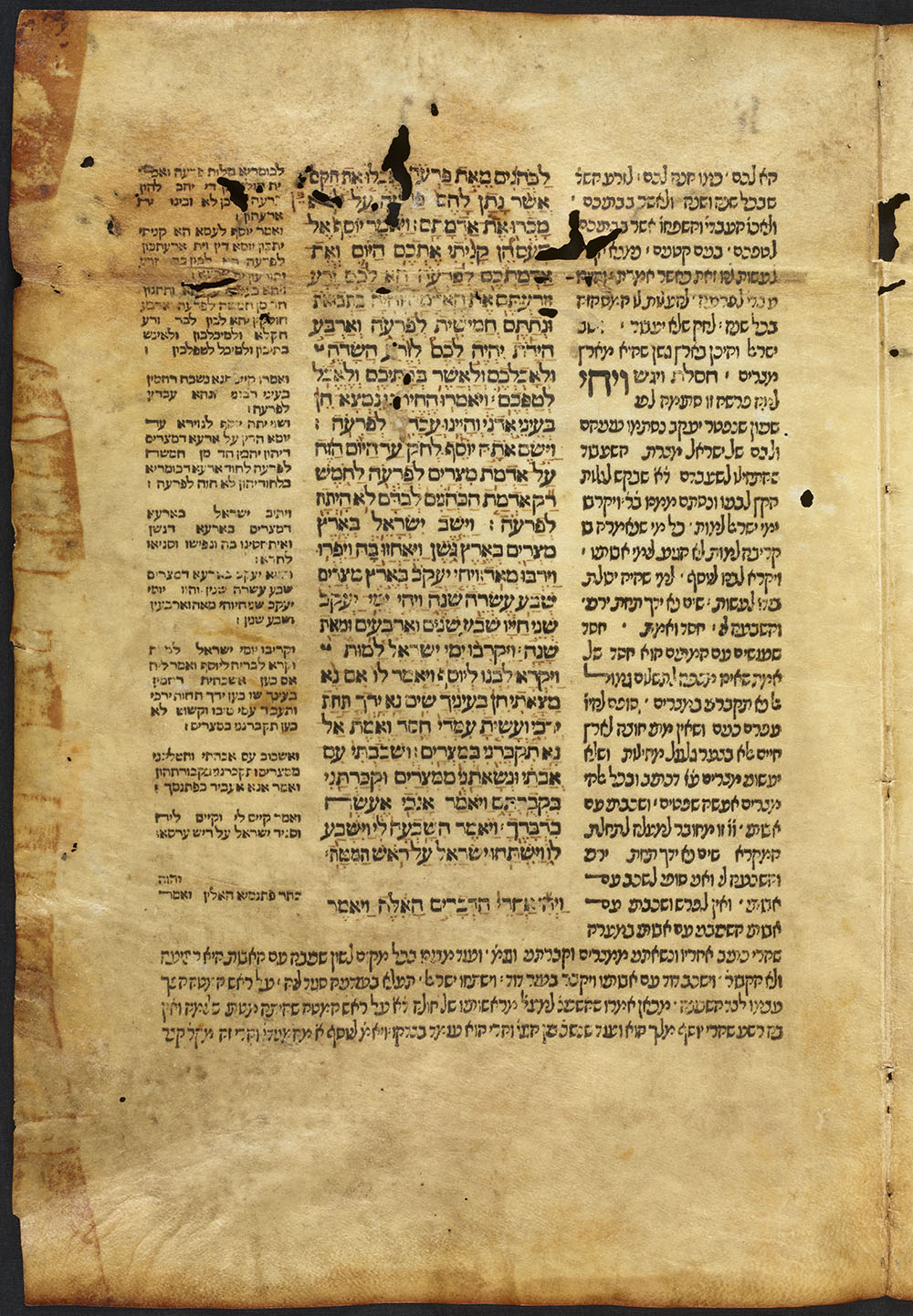
A colour photograph of a yellowed, printed page written in Hebrew.

A leaf of the 1490 Hebrew Bible printed by Eliezer ben Avraham Alantansi (AMICUS 32329787)

I look at this page and see a community that saw itself as stable and with a future in Spain. In the early days of printing, a Bible like this would have been a major undertaking. The establishment of communal infrastructure in the form of a printing press, the investment in scholarship, and a major economic undertaking are, to me, evidence that Spain’s Jews saw themselves as secure and with a long and stable future in the Iberian Peninsula. I look at this page and see people who did not imagine the major upheaval and communal devastation that was less than two years away. In short, I see firsthand evidence of one of Medieval Europe’s largest refugee experiences.

As a librarian and curator, I strongly believe in the power of the physical book, a power that goes far beyond the content of the work. While e-books and websites ensure global access to a range of intellectual content, the humbling experience and historic evidence offered by the physical book are irreplaceable.


Michael Kent is the Curator of the Jacob M. Lowy collection

New additions to Rare Books album now on Flickr


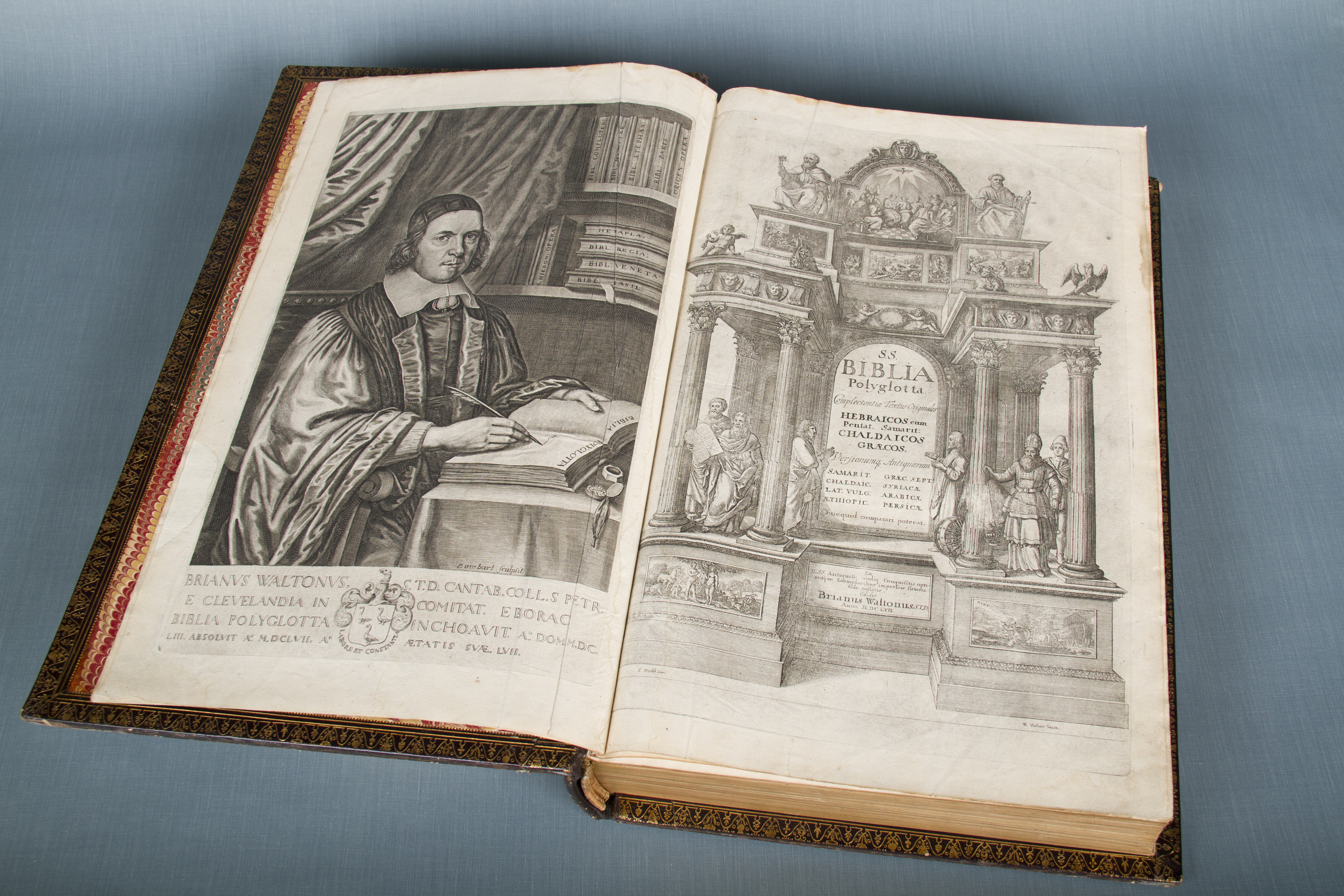
A colour photograph of an open book on a blue background showing a very well dressed man on the verso and an elaborately illustrated frontispiece on the recto.

Walton’s Polyglot Bible, Volume 1, 1654. Left: engraved portrait of Brian Walton. Right: engraved title page (AMICUS 940077)

The Rare Book Collection at Library and Archives Canada is one of the largest collections of rare Canadiana in the world. Canadiana is defined as works printed in Canada or printed outside of Canada but concerning Canada, written or illustrated by Canadians.

Visit the Flickr album now!

Guest curator Meaghan Scanlon

Version française

Banner for the guest curator series. CANADA 150 is in red along the left side of the banner and then the bilingual text: Canada: Who Do We Think We Are? and under that text is Guest curator series.Canada: Who Do We Think We Are? is a new exhibition by Library and Archives Canada (LAC) marking the 150th anniversary of Canadian Confederation. This exhibition is accompanied by a year-long blog series.

Join us every month during 2017 as experts, from LAC, across Canada and even farther afield, provide additional insights on items from the exhibition. Each “guest curator” discusses one item, then adds another to the exhibition—virtually.

Be sure to visit Canada: Who Do We Think We Are? at 395 Wellington Street in Ottawa between June 5, 2017, and March 1, 2018. Admission is free.


Les voyages du sieur de Champlain…, Samuel de Champlain, 1613 and its map, the Carte geographique de la Nouvelle Franse faictte par le sieur de Champlain [Geographical map of New France by Samuel de Champlain, 1613]

Les voyages du sieur de Champlain…, 1613 and its map Carte geographique de la Nouvelle Franse faictte par le sieur de Champlain [Geographical map of New France by Samuel de Champlain], engraved by David Pelletier in 1612. (MIKAN 3919638) (AMICUS 4700723)

Les voyages du sieur de Champlain…, 1613 and its map Carte geographique de la Nouvelle Franse faictte par le sieur de Champlain [Geographical map of New France by Samuel de Champlain], engraved by David Pelletier in 1612. (MIKAN 5012227) (OCLC 1056962381)

Explorer Samuel de Champlain saw Canada as a land of potential. He published this book, with an eye-catching map, to advertise its possibilities to investors. The beautiful drawings of plants are probably his own. Continue reading

From the Lowy Room: Canada’s Talmud

By Michael Kent

One of the most common questions I am asked as the curator of the Jacob M. Lowy collection is “which is your favourite book in the collection?” While I am unsure if I will ever be able to pick one, there is a work in the collection which I often highlight. Visitors are not surprised when I mention it is one of our Talmuds, the written compendium of Jewish oral law codified in antiquity and arguably the most important Jewish text after the Torah, after all we have impressive volumes from Soncino from the 1400s and Bomberg from the 1500s. I often get a surprised look when instead of selecting a 500 year old volume, I pick a volume that is not even 100 years old.

The item, and one of my favourite works in the collection, is the 1919 Montreal Talmud, which’s publication was termed “the most important event in the annals of Canadian Jewry,” by Canadian Jewish Congress president Lyon Cohen.

To truly appreciate my admiration for this printing of the Talmud, one needs to understand Canadian Jewish history. While some Jews did arrive in Canada during the 1700s, large scale Jewish immigration to Canada did not begin until 1880s. In the early 1900s, the majority of Canadian Jews were actually born in Eastern Europe.

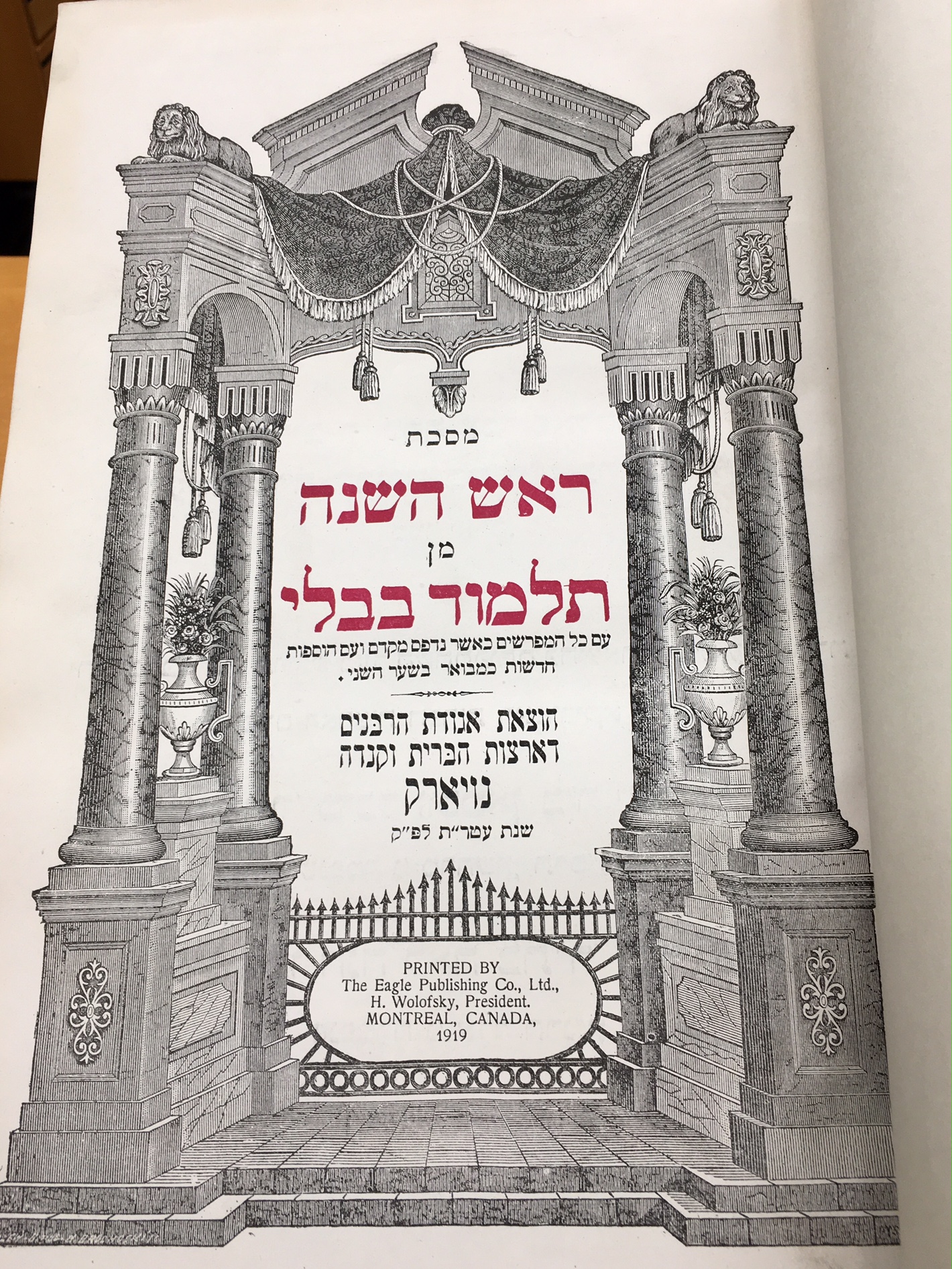
A colour photograph of an open book showing Hebraic writing.

Frontispiece of the 1919 Montreal Talmud in the Jacob M. Lowy Room at Library and Archives Canada.

Continue reading