Vimy Memorial visit: fact or fiction (now a trilogy)

Version française

By Rebecca Murray

In 2022, I wrote about researching my great-grandfather’s attendance at the 1936 unveiling of the Vimy Memorial. A year later, I shared another instalment, and now, I’m back with what feels like the conclusion to this journey through my family history.

We left off with the exciting discovery that Thomas C. Phillips had indeed been at or very near the Vimy Memorial in July 1936. However, we were still missing a key piece of the puzzle—how exactly did he get there and back home again?

Given the era, it’s likely that Thomas travelled by passenger ship. Family documents tell us that he sailed to France on the SS Alaunia and I confirmed online that this ship left Montréal on July 20, 1936—a tight, but feasible window for him to make it to the unveiling on July 26. So, this is where we pick it back up!

I turned my attention to passenger lists and related records, hoping to trace Thomas’s journey. My first stop—because I have learned that a problem shared is a problem halved AND I know how smart my colleagues are—was the Genealogy Desk! I spoke with one of my colleagues (you can do this too!), who advised me that post-1935 passenger lists are under the custody of Immigration, Refugees and Citizenship Canada and are accessible through Access to Information requests. Pre-1935 records, however, are organized into various datasets that are searchable on the Library and Archives Canada (LAC) website using a variety of keywords such as “passenger,” “immigration,” and “border.”

I hummed and hawed over this—those of you who love research will understand that handing over the reins to someone else wasn’t my first choice. Not wanting to rely entirely on others, I approached the research from a new angle. Which angle you ask? Well, I went all the way to the other side of the ocean! Instead of looking for arrival records, I decided to look for departures (or, Thomas’s return trip)! This led me to the National Archives of the United Kingdom and their digitized records on Findmypast, where I discovered not one, but two passengers named Thomas Phillips who sailed to Montréal in the summer of 1936. Another big thank you to my colleagues at the Genealogy Desk, whose expertise proved invaluable in this stage of the research.

I reviewed the search results knowing that I should look for a departure date in the late summer and use Thomas’s birth year (1877) as an additional filter. I quickly found the relevant record: a passenger list for the SS Antonia, a Cunard ship built in the 1920s. Spotting Thomas’s name felt like one of those moments in the Reference Room where you want to fist pump and high-five someone—except, when you’re working remotely, all you get is a side-eye from the dog for interrupting his nap.

The form tells us a lot about the voyage and about Thomas. The SS Antonia departed Liverpool on August 28, 1936, bound for Quebec City and Montréal, Quebec. While most of the passenger data is standard, I found it neat to see column 8 or “Country of Last Permanent Residence,” which offers a breakdown of regions across the United Kingdom as well as options for “Other Parts of the British Empire” and “Foreign Countries.” Unsurprisingly, most of the passengers heading to Quebec on this voyage are listed as from “Other Parts of the British Empire”—perhaps other Canadian pilgrims who, like Thomas, had been in France the previous month for the unveiling of the Vimy Memorial.
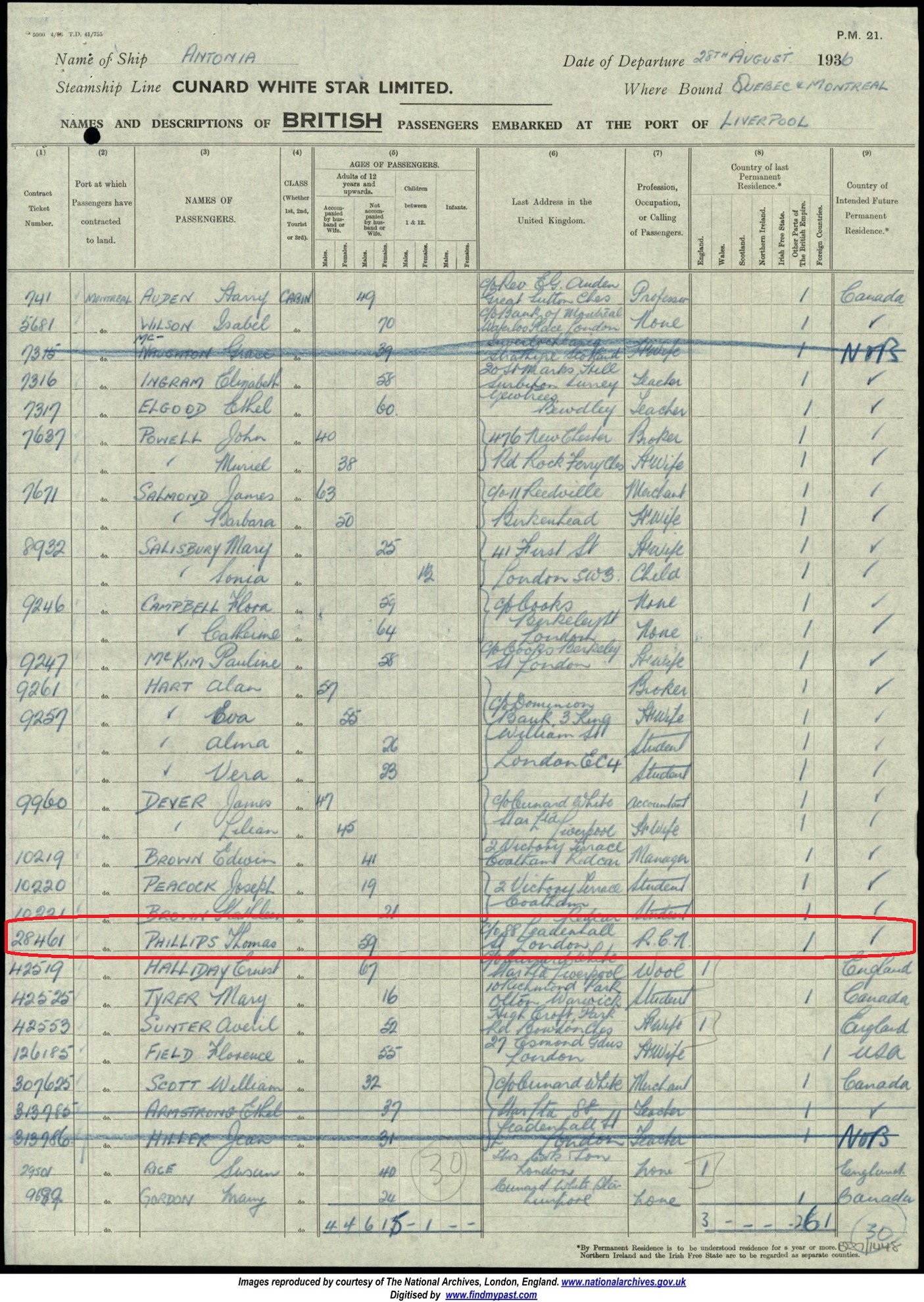
Page from the passenger list of the SS Antonia, featuring the name of Thomas Phillips circled in red.

Passenger list for Cunard White Star Line’s SS Antonia with a departure date of August 28, 1936, from Liverpool, England. Information about Thomas Phillips is circled in red. Source: National Archives of the United Kingdom.

We also learn that Thomas’s last address in the United Kingdom was “c/o 88 Leadenhall St, London.” Naturally, my curiosity led me to investigate what was located at 88 Leadenhall Street in 1936. A quick Internet search revealed it was Cunard House, an eight-story building that housed the business offices of Cunard Line and its affiliated companies. Further digging suggested that it wasn’t uncommon for travellers by sea to use a “care of” (c/o) address, likely for ease of correspondence during their journey.

With this new information in hand, I turned to LAC’s archives to explore what else I could find about the SS Antonia and Thomas’s voyage. Archival holdings at LAC provide a rich narrative of the SS Antonia—from her early days as a passenger liner to her later role as a troop transporter during the Second World War. But of most interest to this researcher are the records related to the Vimy Pilgrimage! LAC even holds footage of the SS Antonia, as well as this beautiful photograph of her Europe-bound voyage earlier that summer.
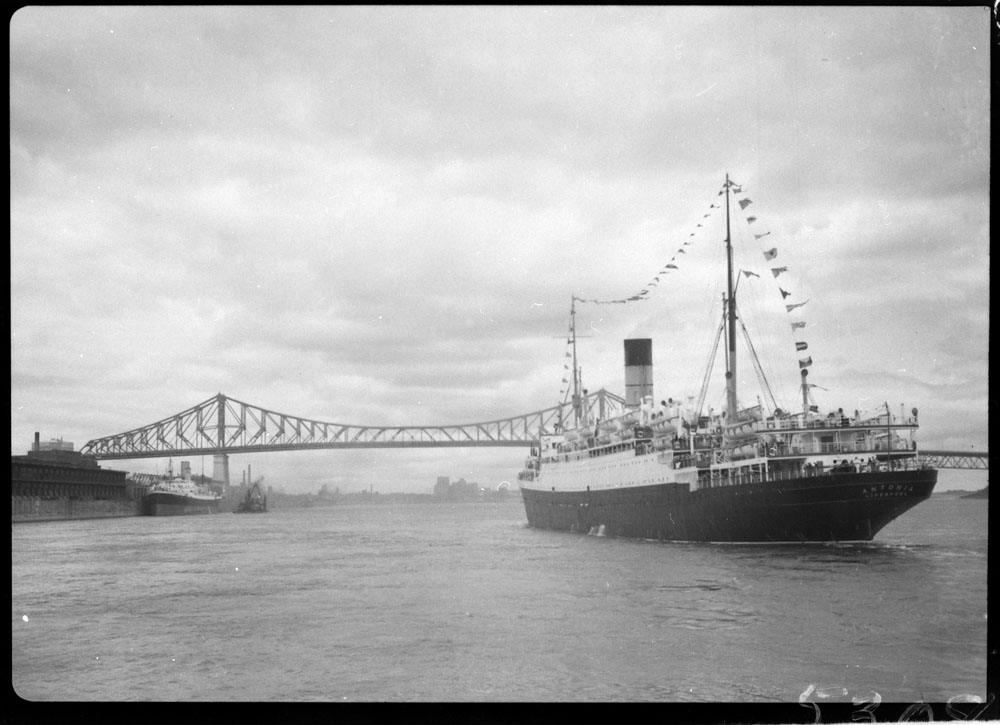
A black-and-white photograph showing the SS Antonia, a two-toned passenger ship, moving across the water. In the background, the Jacques-Cartier Bridge and several docked ships can be seen.

Members of the Vimy Pilgrimage aboard the SS Antonia, departing from Montréal, Quebec, 1936. Source: Clifford M. Johnston/Library and Archives Canada/PA-056952.

I even scoured Montréal newspapers from early September to see if Thomas’s return was noted in the shipping news. While the Antonia’s arrival was documented, my great-grandfather didn’t make the papers. And so, this brings me to the conclusion of my research—sometimes the hardest part of archival work is knowing when you’re done.

I’ve delved into the original question of why my great-grandfather attended the unveiling of the Vimy Memorial, and along the way, uncovered answers to how he made the journey there and back. The research brought both exciting discoveries and inevitable disappointments—common in any archival exploration. Along with new insights, I’ve gained valuable research skills, which is always a welcome bonus. And far from feeling discouraged, I’m more eager than ever to tackle the next family history mystery. Bring it on!


Rebecca Murray is a Literary Programs Advisor in the Outreach and Engagement Branch at Library and Archives Canada.
Vimy Memorial visit: fact or fiction? (the sequel)

By Rebecca Murray

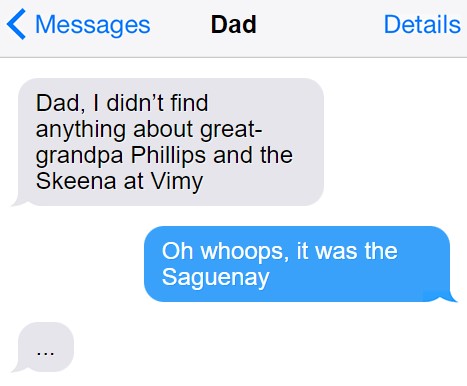
Conversation between the author and her father via text message. She texts: “Dad, I didn’t find anything about great-grandpa Phillips and the Skeena at Vimy.” Dad replies: “Oh whoops, it was the Saguenay.” She responds: *silence*.

Text messages between the author and her father. Image courtesy of the author, Rebecca Murray.

Has this ever happened to you? You started your primary research with abandon and came up empty, only to discover that the facts you were using were incorrect. This can be extremely frustrating. You might feel like you have wasted your time and energy. And yet, this happens more often than you might think, even to seasoned researchers.

Happily, history is not going anywhere, so we can take a second kick at the proverbial can. Come along and see what we find this time!

Do you remember my previous blog about trying to trace my great-grandfather’s attendance at the unveiling of the Vimy Memorial in July 1936?

We knew that Thomas Caleb Phillips went to France alongside a Canadian naval band. We thought it was the band associated with the HMCS Skeena, but in fact, it was the HMCS Saguenay.

What a difference this one word, this one piece of information, makes in the search!

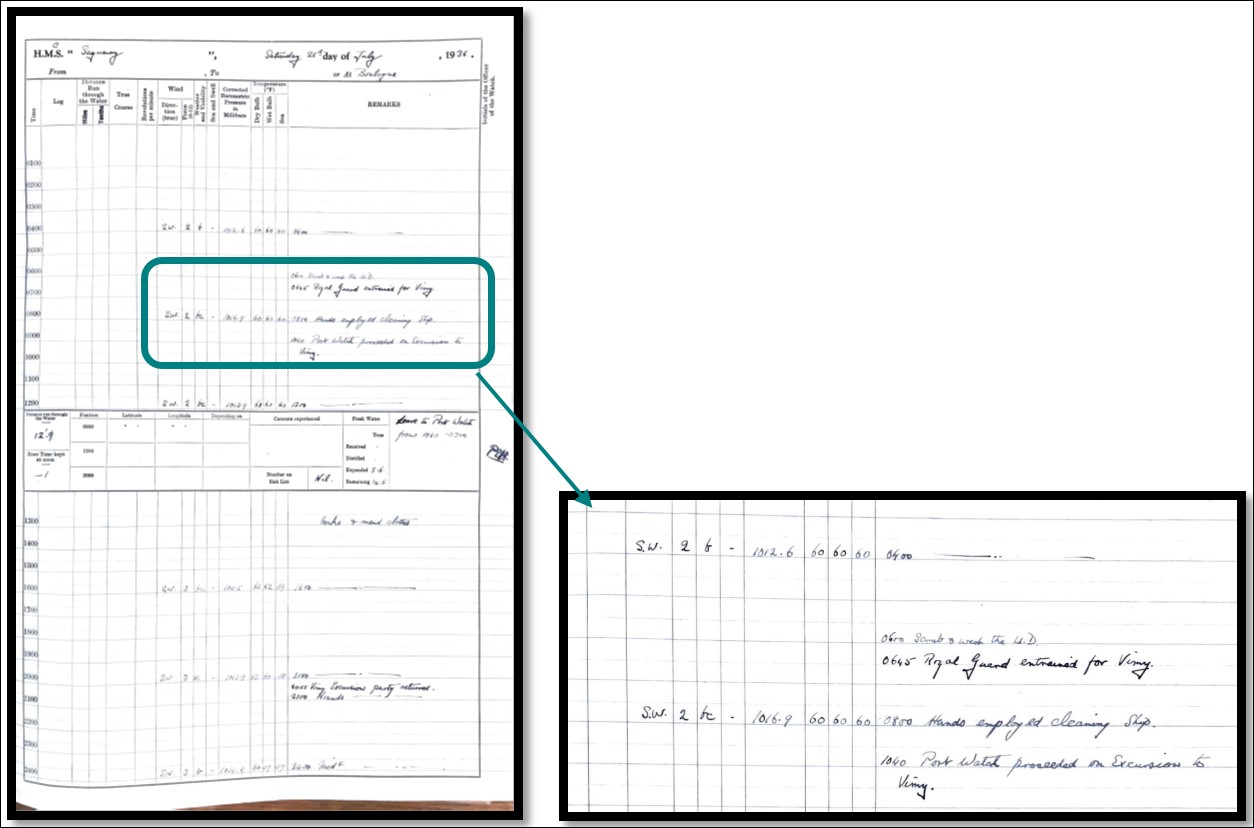
To confirm, with archival records, that the HMCS Saguenay was even in the vicinity of Arras, France, in the summer of 1936, I consulted RG24 volume 7812 file “Ship’s log – SAGUENAY – Old,” 1935/07 – 1937/09.

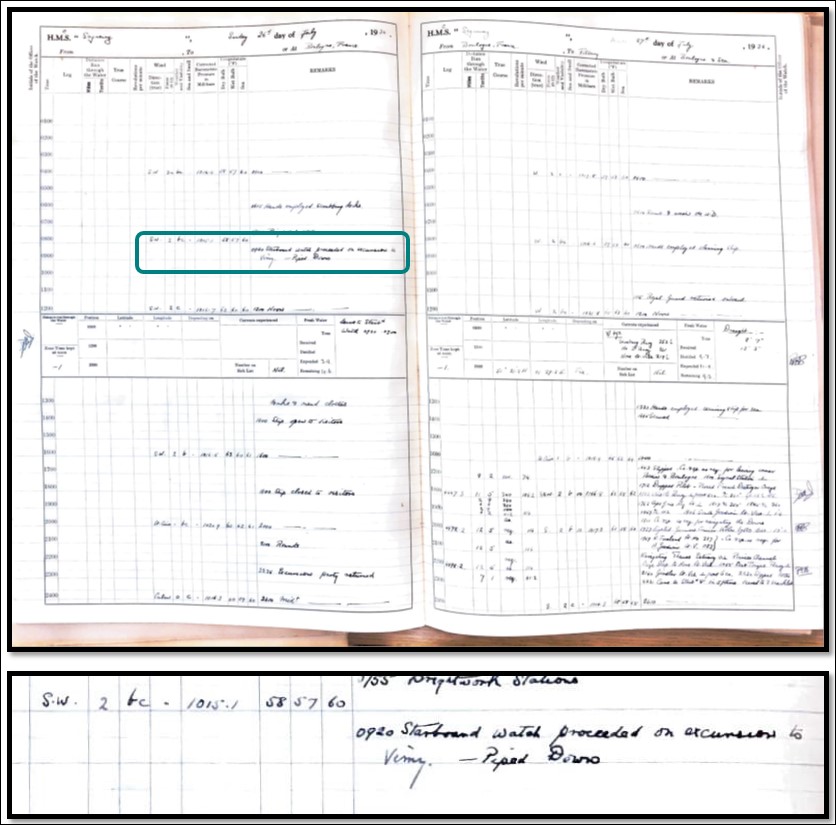
Look at what I found in the log for July 1936: the first image shows that a group from the ship visited the memorial the day before the unveiling.


A handwritten logbook for the HMCS SAGUENAY, dated July 25, 1936. The excerpts read: “Royal Guard entrained for Vimy” and “Port Watch proceeded on Excursion to Vimy.”

Ship’s log, HMCS SAGUENAY, July 25, 1936 (MIKAN 1084556). Image courtesy of the author, Rebecca Murray.

The next day’s information is even better, providing further details about the memorial from the perspective of the crew’s movements.

A handwritten logbook for the HMCS SAGUENAY, dated July 26, 1936. The excerpt reads: “Starboard watch proceeded on excursion to Vimy. – Piped Down.”

Ship’s log, HMCS SAGUENAY, July 26, 1936 (MIKAN 1084556). Image courtesy of the author, Rebecca Murray.

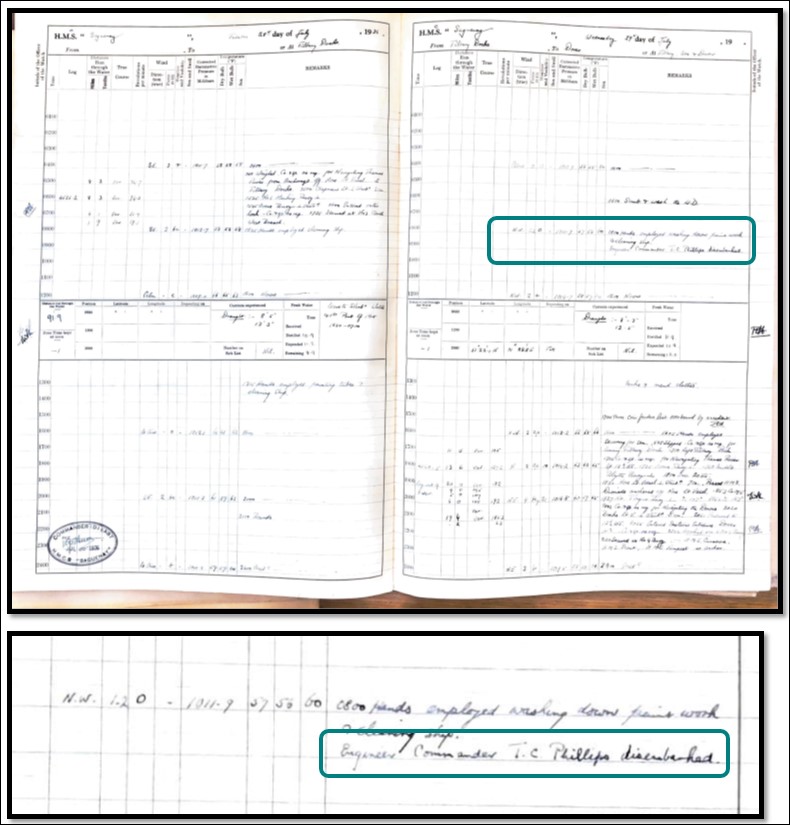
For me, reading these entries was one of those exciting moments where you are in a very quiet room surrounded by other researchers and staff doing important work, and you just want to jump up and down and squeal with delight at what you have found! Then I turned the page, because you never know what is waiting around the corner, and lo and behold, what did I find? A truly unexpected mention of my great-grandfather, the very man I was looking for, in the handwritten logbook.

A handwritten logbook for the HMCS SAGUENAY, dated July 29, 1936. The excerpt reads: “Engineer Commander T.C. Phillips disembarked.”

Ship’s log, HMCS SAGUENAY, July 29, 1936 (MIKAN 1084556). Image courtesy of the author, Rebecca Murray.

Now it is July 29, and the ship is at Dover in England, and look who went ashore for a visit!

This is the link I had been searching for! (Exaggerated fist pump.) Let us just hit pause for a moment and make an observation: I previously wrote about how research with archival records, especially government records, can be very time consuming and take a lot of patience. I did not expect to find any mention of T.C. Phillips in the ship’s log. I was simply trying to confirm that the HMCS Saguenay had been near Vimy Ridge (or as close as a ship can get to rural northern France). This “find” was almost enough to convince me to stop searching for further records—almost.

Something else that I was happily reminded of by the experience of sharing my research on the previous blog is that when you share a problem, it can be halved. One of the benefits of working with naturally curious colleagues is that they will offer their suggestions about how you might find the answer you are looking for. For example, one colleague suggested checking specific sailing lists related to the Vimy Pilgrimage.

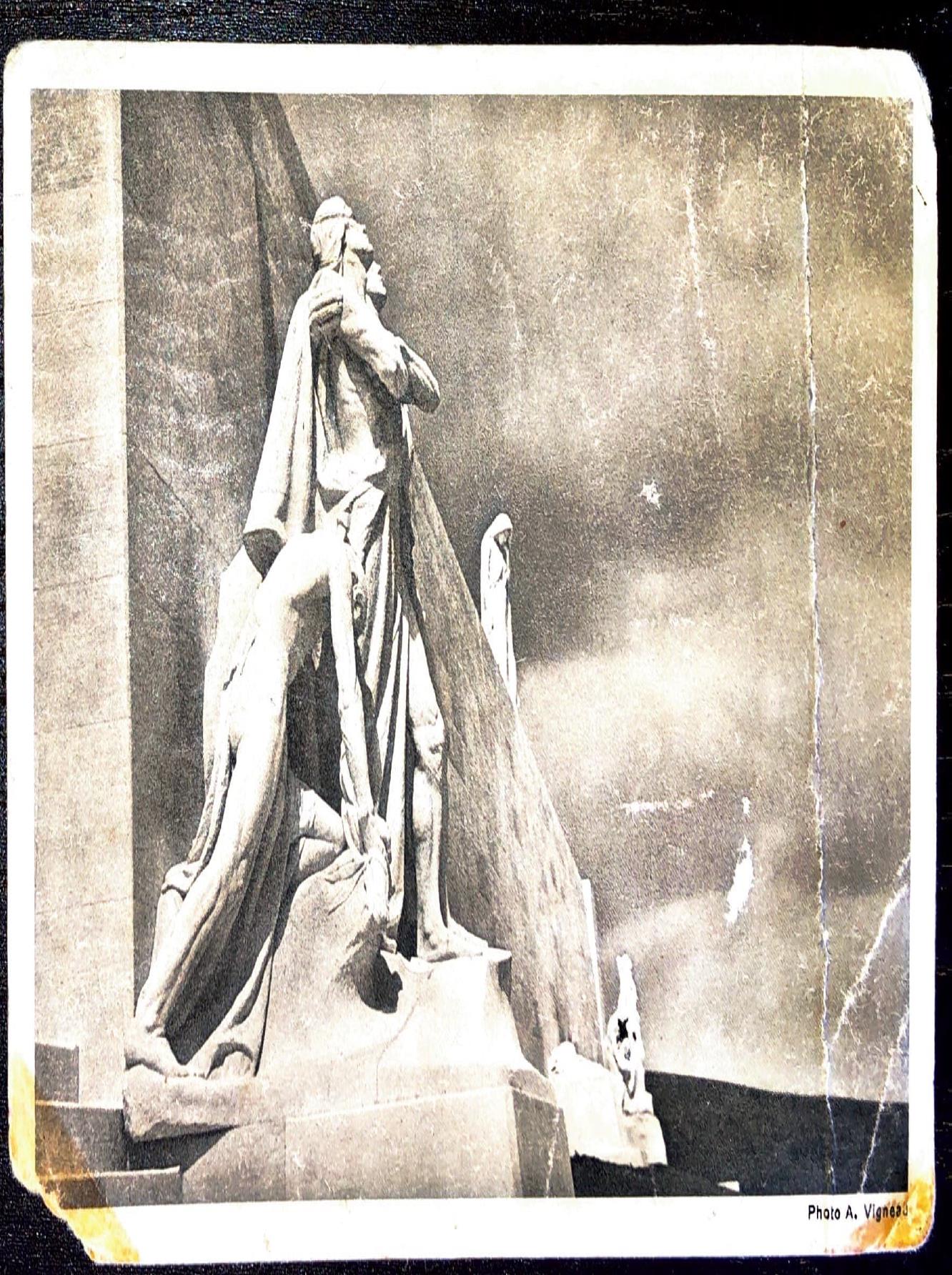
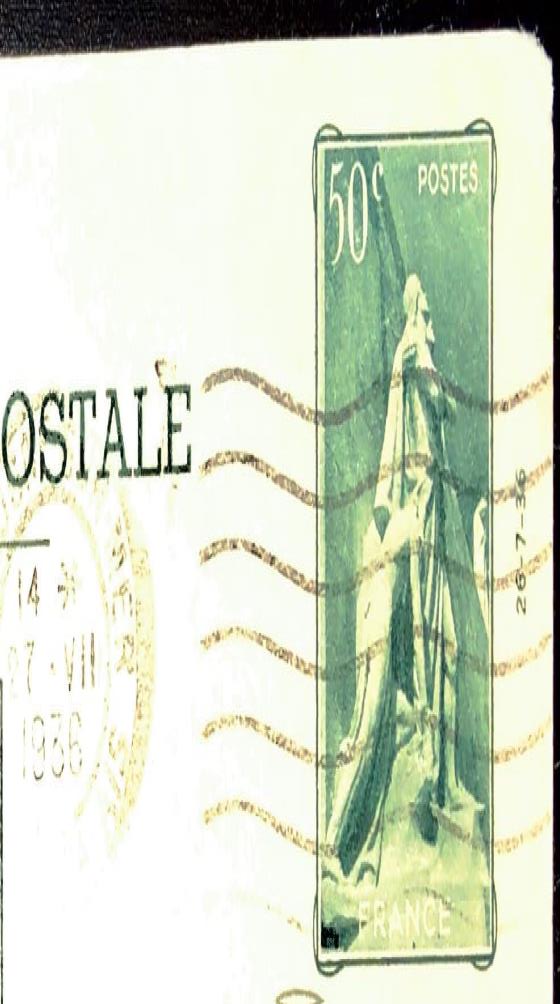
And in sharing the story of my research with extended family, I not only gathered corrected secondary information (ahem!), but also an item that I will be filing away for my own archives: a worn postcard that T.C. Phillips sent to his wife, my great-grandmother, in Ottawa, dated July 27, 1936. Although the message itself tells us little about the role he was fulfilling by being at the unveiling of the memorial, the card itself is full of information that could send any researcher, let alone the writer’s great-granddaughter, down any number of rabbit holes. For example, the stamp affixed to the postcard appears to be an image of the sculpted figures, The Defenders, shown on the card itself.

A sepia-tone image on the front of a postcard showing some stone figures of the Vimy Memorial.

Postcard sent by T.C. Phillips on July 27, 1936, from France to Ottawa. Image courtesy of the author, Rebecca Murray.

A green-hued stamp depicting a stone sculpture from the Vimy Memorial. The stamp has been cancelled, and a partial postmark is visible to the left of the image.

Part of the postcard with the cancelled stamp. Image courtesy of the author, Rebecca Murray.

Another research path that I could explore is the journey that T.C. Phillips took to get to France. A bit more research in the family album tells me that he travelled to France on the SS Alaunia, a ship that served mainly on Cunard’s Canadian service. I found historic passenger lists confirming that the ship departed from Montréal on July 20, 1936, and arrived in London, England, but T.C. Phillips’s name is not among those who “landed” there. For today, though, this is far enough, and that too is a valuable lesson to learn and incorporate into our research. There is always one more lead to follow up on, one more potentially relevant fonds or publication to check, but, as I mentioned in the previous post, where is the fun in being done? So I will hold on to this particular mystery until my next foray into this story.

Family lore can be subjective, so it can be challenging to match it with primary source records. As such, it requires a delicate approach, whether you are working with your own family or helping someone else, as we so often find ourselves doing in Reference Services. I cannot emphasize enough the importance of good secondary research and preparation before a visit to an archive for primary source research.


Rebecca Murray is a Senior Reference Archivist in the Reference Services Division at Library and Archives Canada.

My great-grandfather’s Vimy Memorial visit: fact or fiction?

By Rebecca Murray

As a reference archivist, I absolutely love receiving questions from researchers that tap into their family histories. One such story—very close to home—arrived in my inbox on the morning of April 9, 2020, when my father sent his annual reminder to our extended family of his grandfather’s attendance at the unveiling of the Vimy Memorial in 1936. My father and I had visited this memorial near Arras, France, on a foggy day in November 2010.

A white stone structure with carved human figures against a foggy sky.

A view of the Vimy Memorial near Arras, France, 2010. Photo: Rebecca Murray

As family members chimed in with expressions of interest, I was intrigued—why, out of all of the senior military officials in Canada, did my great-grandfather attend the unveiling? Might I find more information about his visit to the Vimy Memorial in archival records held at Library and Archives Canada?

Before I discuss my search, I should provide some context. My great-grandfather, Thomas Caleb Phillips, was a Captain Engineer in the Royal Canadian Navy during the interwar period. A family anecdote told me that he was at the unveiling of the memorial alongside the “band from Skeena,” one of the ships that he had helped to design.

A screenshot of Collection Search on the Library and Archives Canada website, using the search term “vimy memorial.”

The author’s keyword search in Collection Search

I began with some keyword searches in Collection Search, relying on various combinations including, but not limited to, Vimy unveiling, Vimy memorial, Vimy monument, Vimy Skeena, Vimy Phillips. I did not expect to find any records that included Phillips in the title, but for the sake of a diligent search, I decided to include his name. I was focused on archival records, so I filtered my results by the Archives tab and then by date (1930s) and type of document (textual). When presented with long lists of results, I further filtered by year (1936), since this was the year of the unveiling and the period that I thought most likely to include records relevant to my research.

I then compiled a list of potentially relevant files, most of them from the Department of External Affairs fonds (RG25), with a smattering from other government records and private fonds. Here are three examples:

  • RG25 volume 400 file Ex7/65 part 8 “Vimy Memorial Unveiling Ceremony,” 1936
  • RG25 volume 1778 file 1936-184 parts 1–3 “UNVEILING OF VIMY MEMORIAL,” 1934–38
  • RG24 volume 11907 file AE 30-2-2 [Superintendent, Esquimalt] – HMCS SKEENA – Movements 1932–37

These three files listed above were among 19 textual files that I identified for consultation. My research strategy is usually to identify somewhere between 5 and 10 files for preliminary review, but due to limited time for on-site work with records this past winter, I decided to “go big” before “going home.”

I reviewed all of the files, keeping my eyes open for the name Thomas Caleb Phillips (or T.C. Phillips) and any references to a “band from Skeena.”

And I found nothing!

No reference to Phillips’s attendance.

And no indication that the HMCS SKEENA or an associated musical ensemble was even at the event.

This was, of course, very disappointing. And yet, something similar probably happens every day as researchers wade through pages of textual documents, sift through contact sheets of images, and scour lists, reports and other records to confirm family anecdotes like the one that my father had shared with me.

I am not saying this to be discouraging, nor am I saying that these anecdotes are untrue. But what can be done when information, or lack thereof, contradicts family lore?

I have been working in Reference Services for eight years now; I believe that in that time, I have fine-tuned my research skills, learned how to think outside the box, and can read between the lines when doing archival research. Yet I too have come up against this obstacle.

Archival research, especially with government records, requires a patient, diligent approach. It also takes willingness on the part of researchers to continually learn from their findings and incorporate those learnings back into their research. For example, I chose to focus on textual records because I was not sure whether I would be able to identify T.C. Phillips in a photograph, especially in negative format. I also chose to start with a set of facts that I myself had not double-checked, nor had I conducted secondary research before starting my primary research.

I made presumptions about the period and the type of record to focus on, and my great-grandfather’s relative importance, which led me to a narrow scope for my research. Would I need to backtrack? Expand the scope of my research? Query different fonds? Might I be better served by an item in the published holdings? Or what about a document unrelated to the unveiling of the memorial but relevant to Phillips’s transatlantic crossing? There are a lot of different avenues of research that I could choose to follow, so the next step is to decide on my approach: forward or backward? Published or archival? It is
not easy, it is not simple, and frankly if it were, would it be as much fun?

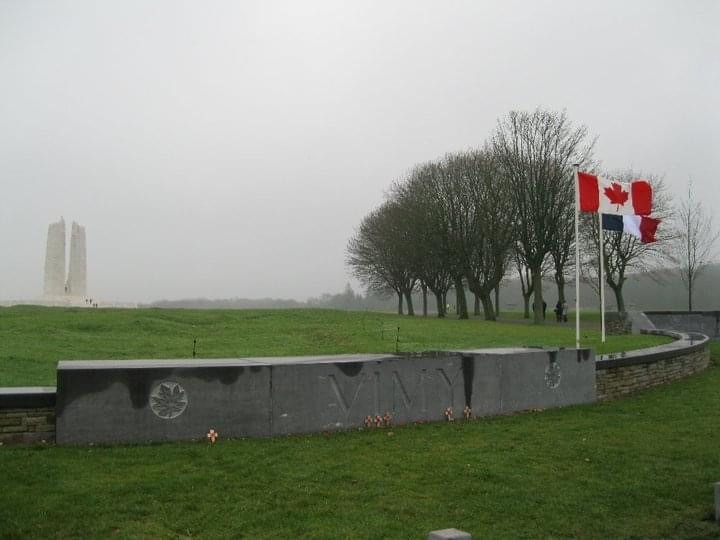
An expanse of green grass showing a white stone memorial in the distance, a grey stone sign with the engraved word VIMY and maple leaf symbols. The Canadian and French flags are on the right, against a foggy sky.

A view of the Vimy Memorial near Arras, France, 2010. Photo: Rebecca Murray

For me, this search was never about proving my great-grandfather’s attendance—I do not doubt the general accuracy of the family anecdote—but it would have been nice to find a document that told just a bit more. A document that helped make a small but valuable connection across close to 100 years of Canadian history. Something concrete to share when my father tells the story again next year. So I will keep searching!

For more information about the Canadian National Vimy Memorial:


Rebecca Murray is a Senior Reference Archivist in the Reference Services Division at Library and Archives Canada.
The Battle of Vimy Ridge – memorialization

Version française

A banner that changes from a black-and-white photograph of a battle scene on the left to a colour photograph of the Vimy Memorial on the right.By Andrew Horrall

In the days following the battle of Vimy Ridge, newspaper headlines throughout the allied countries proclaimed that Canada’s soldiers had captured an objective that had long-seemed impossible. Families of those in uniform greeted the news with excitement and worry; as one father wrote to his son who had fought at Vimy: “The press are giving the Canucks great praise. They certainly had the place of honour, but according to the casualties, they are paying a price for it.” Over 10,000 Canadians had been killed or wounded.

An immense sense of pride about this all-Canadian victory was felt by those who had fought at Vimy, their families, and civilians. The battle almost immediately became a symbol of Canada’s emerging nationhood. The battle’s first anniversary was marked with fundraising drives, and by the end of the war many Canadians believed that France was planning to give Vimy Ridge to Canada in grateful tribute to this military triumph. Over the following years, the battle’s anniversary was marked by banquets, concerts, and church services on what was known as “Vimy Ridge Sunday.” Towns, streets, parks, businesses, and lakes throughout the country, as well as a mountain and quite a few babies were named for the battle, becoming ever-present reminders of what Canadians had achieved in 1917.

A colour photograph of a group of people on horseback by a river with a mountain peak in the background. One is dressed in “cowboy” attire and appears to be leading a family on a trail.

Vimy Peak, Alberta, 1961. (Library and Archives Canada, MIKAN 4314396)

A map titled, “Canadian Battle Exploit, Memorial Site. Hill 145.”

Map of the proposed site of the Vimy memorial, undated. (The National Archives, WO 32-5861)

Amid this widespread commemoration, in October 1921, the federal government chose Toronto sculptor Walter Allward to design the Canadian National Vimy Memorial that now commands Vimy Ridge’s highest and most important feature, situated on land given to Canada by France. Over the next 15 years, the ground was cleared of unexploded shells, bombs and grenades and landscaped, a system of trenches was preserved and the memorial was erected.

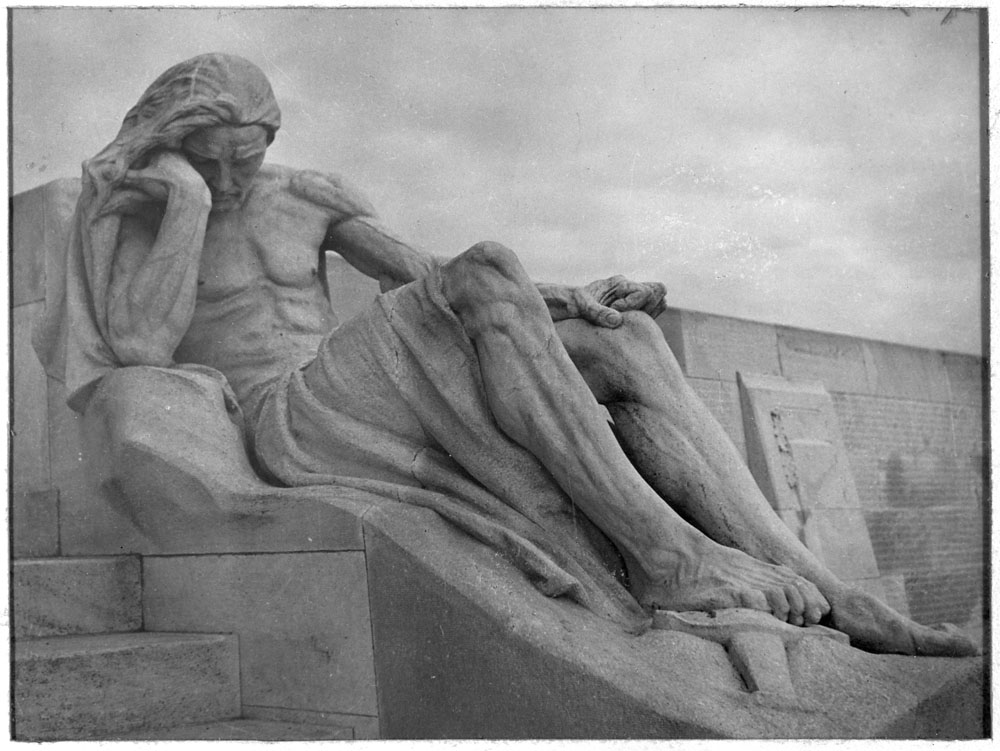
A black-and-white photograph of a dramatic view of a larger-than-life sculpture from the Vimy Memorial, a man in mourning with his foot resting on a sword. In the background are side panels bearing the names of Canadian dead.

One of the statues on the Vimy Memorial. (Library and Archives Canada, MIKAN 3329415)

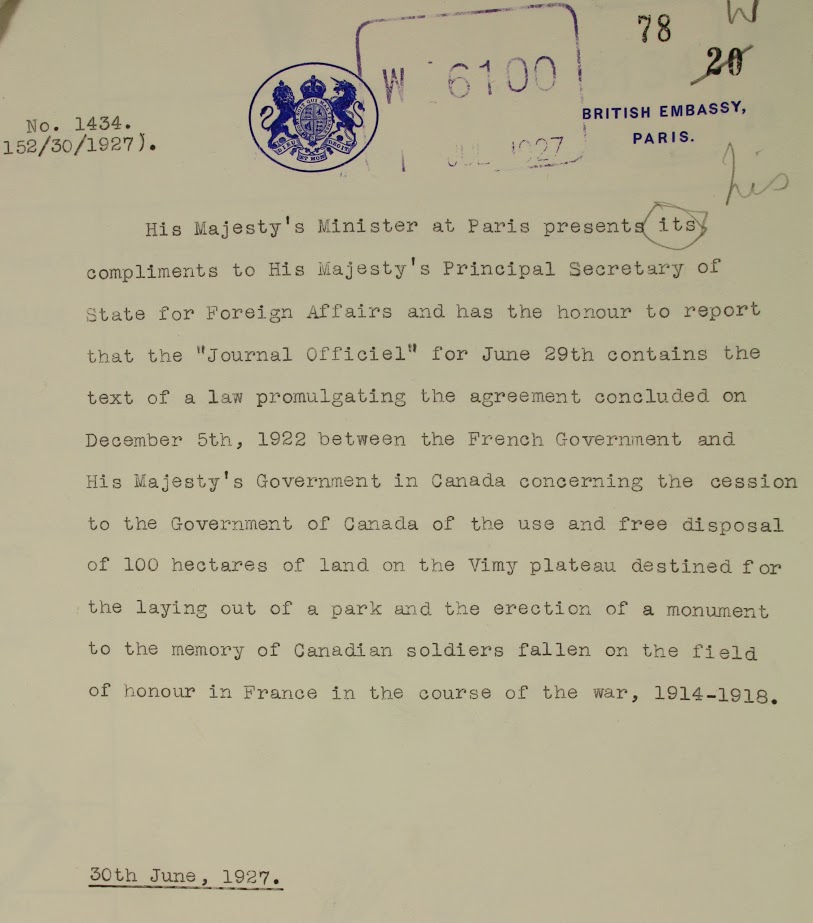
A typewritten letter reading: His Majesty’s Minister at Paris presents his compliments to His Majesty’s Principal Secretary of State for Foreign Affairs and has the honour to report that the “Journal Officiel” for June 29th contains the text of a law promulgating the agreement concluded on December 5th, 1922 between the French Government and His Majesty’s Government in Canada concerning the cession to the Government of Canada of the use and free disposal of 100 hectares of land on the Vimy Plateau destined for the laying out of a park and the erection of a monument to the memory of Canadian soldiers fallen on the field of honour in France in the course of the war, 1914–1918.

Letter confirming the transfer of land in France to the Canadian Government, June 30, 1927. (The National Archives, FO 371/12638)

In the late 1920s, veterans groups began planning a pilgrimage of those who had fought at Vimy and their next of kin to ensure that a large Canadian contingent would attend the memorial’s dedication ceremony. In July 1936, over six thousand pilgrims boarded five specially chartered ocean liners in Montréal. Pilgrims were given distinctive berets and badges and told that they were Canada’s ambassadors to Europe. For many British-born pilgrims, the voyage was also an opportunity to visit their families, which had been one of the allures of joining the Canadian Expeditionary Force two decades earlier.

Among the pilgrims was Charlotte Wood, who had immigrated to Alberta from Chatham, Kent, England in 1904. Eleven of her sons and step-sons had served in uniform. Five of them had been killed, including Peter Percy Wood who had died near Vimy Ridge shortly after the battle. He has no known grave and is among more than 11,000 Canadians declared missing and presumed dead in France, and whose names are inscribed on the memorial. Mrs. Wood was the first Silver Cross Mother, a woman chosen annually to represent all Canadian mothers who have lost children in the service of the country. The Japanese-Canadian community also sent two representatives to commemorate the members of the community who had served during the war.

A black-and-white photograph of a woman saluting wearing a beret and coat with many medals pinned upon it.

Charlotte Wood at the Vimy Ridge Memorial, July 26, 1936. (Library and Archives Canada, MIKAN 3224323)

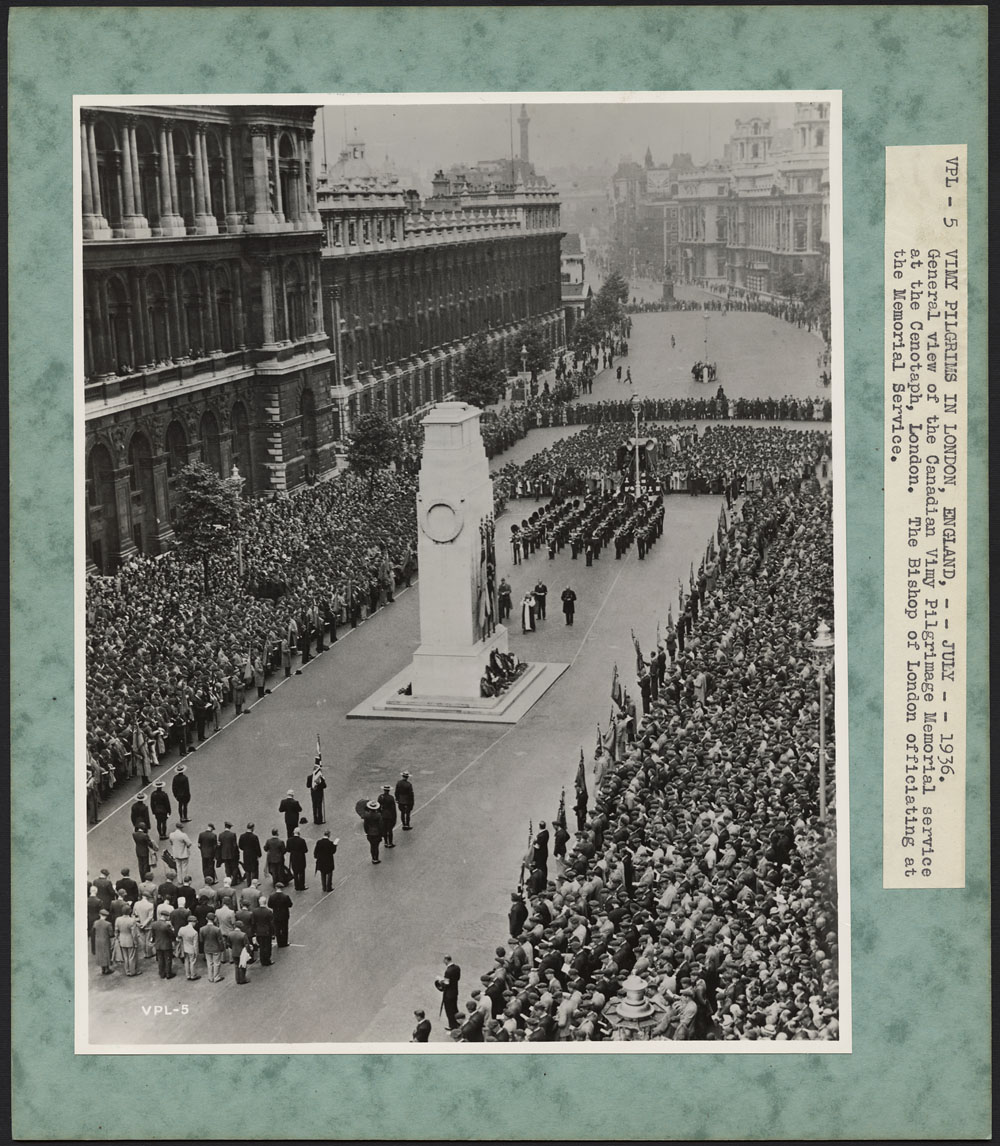
The pilgrims first disembarked in Antwerp, Belgium where they boarded buses that carried them past First World War battlefields and cemeteries to Vimy Ridge. The memorial was dedicated by King Edward VIII on July 26, 1936 before a huge crowd of pilgrims, veterans from many nations, military personnel and dignitaries. The King was very popular in Canada and even owned a ranch in Alberta. The pilgrims then sailed to London where they laid wreaths at the Cenotaph in Whitehall. These veterans were now in London as the representatives of a country that had gained significant autonomy since the war. The pilgrimage concluded in Paris where wreaths were laid at the Tomb of the Unknown Soldier.

A black-and-white photograph of a large crowd lined on the sidewalk of street while a cenotaph ceremony is taking place in the centre with soldiers in formation in front of a large white cenotaph.

Vimy pilgrims at the Cenotaph, Whitehall, London, July 29, 1936. (Library and Archives Canada, MIKAN 4939444)

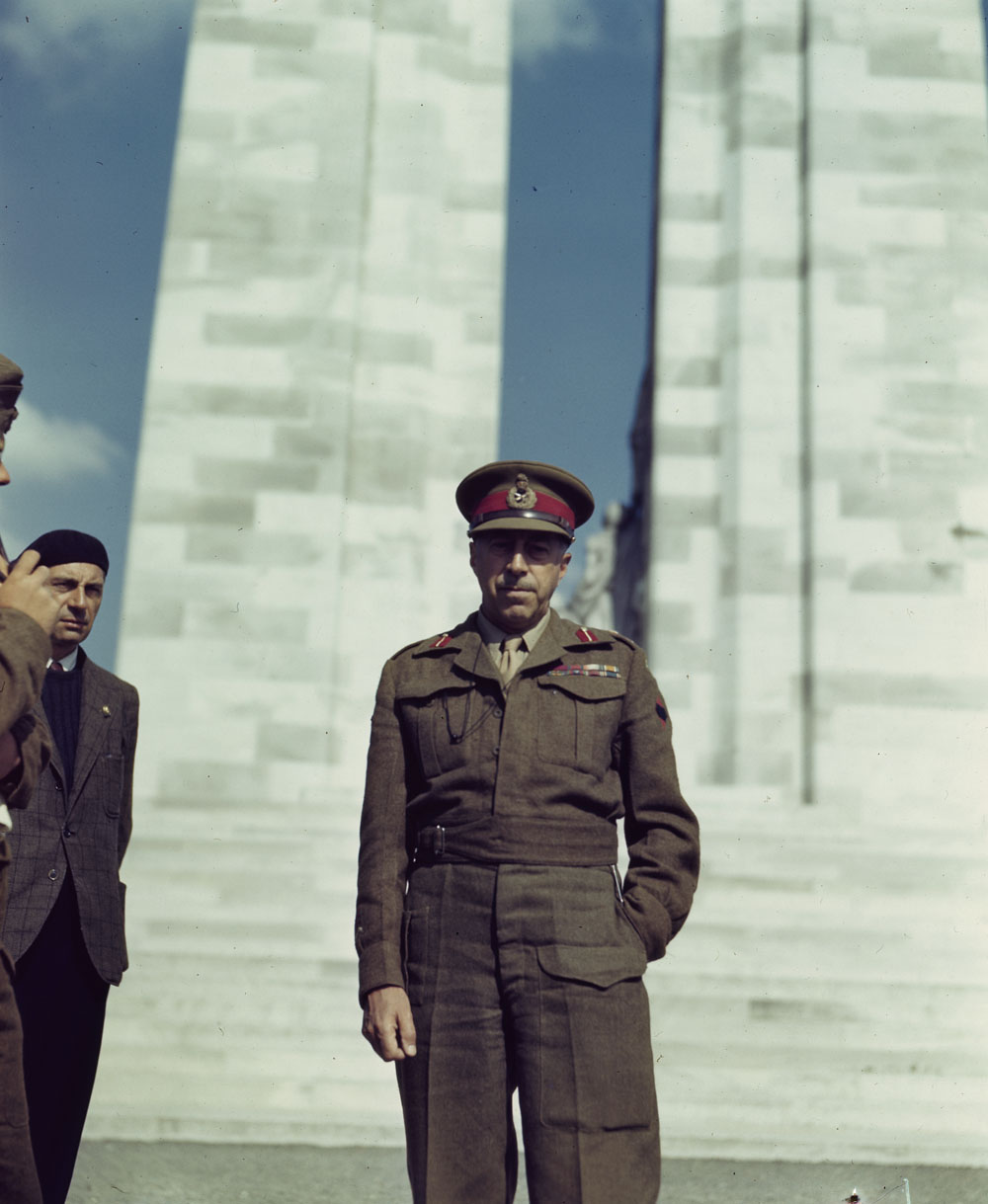
In 1940, the Vimy Memorial’s Canadian caretaker was captured by German forces as they overran northeastern France at the start of the Second World War. Rumours abounded throughout the war that the memorial had been damaged or destroyed. On September 11, 1944, Lieutenant-General Harry Crerar, who had fought in the battle of Vimy Ridge and now commanded the First Canadian Army, made a highly publicized visit to this symbol of national military strength. Photographs of his visit proved that the newly liberated memorial was in remarkably good condition, thanks in large part to Paul and Alice Piroson, a Belgian couple who had looked after it throughout the war.

A colour photograph of man standing in front of a large stone structure. Two people are on the left side of the photograph, one is in uniform and mostly cut off and the other is wearing a vest, sweater and beret.

Lieutenant-General H.D.G. Crerar and Paul Piroson at the Vimy Memorial, September 11, 1944. (Library and Archives Canada, MIKAN 4233251)

Paul Piroson continued working at Vimy after the war. When he retired in 1965, Prime Minister Lester B. Pearson personally invited the Pirosons to make their first visit to Canada. They toured the country in 1967, being honoured at a series of events that marked the battle’s fiftieth anniversary.

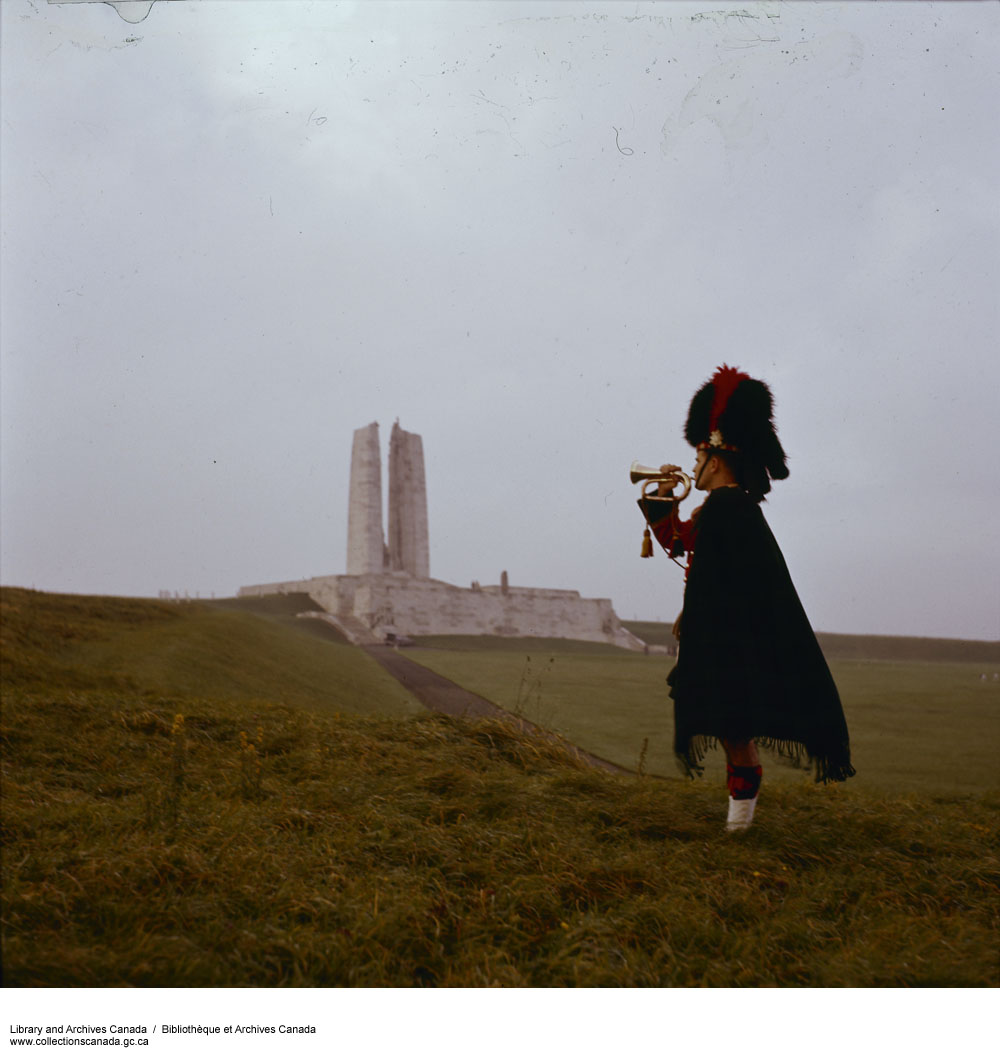
A colour photograph of a bugler in Highland uniform in front of the Vimy Ridge memorial.

View of Vimy Memorial, undated. (Library and Archives Canada, MIKAN 4234839)

The men who fought at Vimy Ridge believed it was the moment when they became Canadian and in which the nation was born. The idea grew over the years, and today the battle symbolizes Canadian service and sacrifice in all wars. The name “Vimy” is invoked in many military commemorative projects, while thousands of people from Canada and elsewhere visit the memorial each year to learn what Canadians achieved there in 1917.

Biography

Andrew Horrall is an archivist in charge of military records and an historian of English music hall. He holds a PhD in History from the University of Cambridge.

This blog was developed under a collaborative agreement between Library and Archives Canada and The National Archives.