The roots of Labour Day

Version française

By Dalton Campbell

Labour Day first became a national holiday 130 years ago in 1894. In April of that year, labour leaders met with Prime Minister Sir John Sparrow David Thompson. They made a number of demands; he agreed to only one, saying that he would work towards establishing Labour Day. By summer, legislation was enacted to make the first Monday of September a statutory holiday.

A parade through city streets.

Labour Day parade, Main Street, Winnipeg, Manitoba, 1895. Sir William Van Horne fonds (e011367824-005). Desmond Morton writes that in the 19th century, “[p]rocessions, with floats, banners, and regalia, were a form of mass entertainment and a demonstration of order and respectability rather than militancy.”

By choosing early September, the Canadian government chose a date for a national holiday that would bridge the gap between July 1 (now Canada Day) and Thanksgiving, fit into the rhythm of the seasons (when summer turns to autumn) and avoid any associations with the overtly political May Day.

Parade through city streets.

Labour Day parade, Front Street, Belleville, Ontario, 1913. Topley Studio fonds (a010532).

A national day celebrating labour was not a new idea in 1894. The holiday had been recommended five years earlier in the final report (1889) of the Royal Commission on Relations of Labor and Capital in Canada.

The Commission’s recommendations were not implemented. However, the report still represents a significant document in Canadian labour history. It included testimonies from workers and their family members discussing the unsafe working conditions, long work hours, low wages, workplace fines, discipline, child labour and other problems. Factories in 19th century Canada were, as Jason Russell describes, “dark spaces with machinery that lacked guards to protect the workers operating them. The factories were places of boilers, steam engines and open flywheels […] and achieving even a 10-hour workday was a major objective for craft unions.”

Before Labour Day was proclaimed, local labour day celebrations had been, as Craig Heron and Steven Penfold write, “an established event on the local holiday calendar in several cities and towns.” There was a long tradition of people taking over public spaces for parades and festivals throughout the 19th century in Canada; in the 1880s, “unionized craft workers in the country took over the traditions [of parades] and made up a new one.”

A parade with marching band through city streets.

Knights of Labor procession, King Street, Hamilton, Ontario, 1880s. Edward McCann collection (a103086). Originally from the United States, the Knights of Labor entered Canada when they became established in Hamilton in 1881. They quickly expanded to become one of the most important labour organizations in 19th century Canada.

Miners in Nova Scotia organized what appears to have been the first local labour holiday in 1880, followed by Toronto in 1882 and then by Hamilton and Oshawa (1883), Montreal (1886), St. Catharines (1887), Halifax (1888), Ottawa and Vancouver (1890) and London (1892).

The Trades Union Advocate, a weekly labour newspaper, described the July 1882 labour parade in Toronto in detail.

The parade featured workers from various craft unions with small workstations set up on flatbed wagons. As they went through the city, they presented their work to the crowds: the lithographers printed leaflets and pictures, the cigar makers rolled tobacco “with remarkable dexterity and nimbleness,” the seafarers had equipped their trailer as a ship and so on. The parade included dignitaries, union members marching on foot holding banners and signs and a dozen marching bands scattered among the floats. The Toronto Globe reported that at least 3 000 people marched in the parade and 50 000 watched from the sidewalks.

In addition to the Trades Union Advocate, the LAC labour collection also has a number of Labour Day photographs: some of these images are included here and others are available in this LAC Flickr album, with all of them being available through Collection Search.

A woman at a microphone.

Labour leader and social activist Madeleine Parent at the microphone. Labour Day, Valleyfield, Quebec, 1948. Madeleine Parent and R. Kent Rowley fonds (a120397).

The LAC labour collection also includes approximately 50 Labour Day messages from the 1930s to the 1970s by labour leaders A.R. Mosher, Pat Conroy, Jim MacDonald, Donald MacDonald, Jean-Claude Parrot and others. The messages touch on universal themes: the gains of labour unions, the need to organize more workplaces and the vital role of workers to corporate profits, production and the economy. Each year’s message also touched on contemporary events, making the speeches a small historical snapshot of that year. The perennial message, however, was one of support for workers. In 1966, Canadian Labour Congress (CLC) president Claude Jodoin captured this in words that still resonate in the 21st century, “Trade unions have devoted a major part of their efforts to obtaining for workers the right to leisure and relaxed enjoyment of the fruits of their labour.” Labour Day, a holiday enjoyed today by millions of Canadians, is one of the results of those efforts.

Further research:

Published sources:

  • Craig Heron and Steven Penfold, The workers’ festival: a history of Labour Day in Canada (OCLC 58545284)
  • Jason Russell, Canada, a working history (OCLC 1121293856)
  • Desmond Morton, Working people: an illustrated history of the Canadian labour movement (OCLC 154782615)
  • Report of the Royal Commission on the Relations of Labor and Capital in Canada (OCLC 1006920421, Government of Canada publications publications.gc.ca 472984)
  • Greg Kealey, ed., Canada investigates industrialism: the Royal Commission on the Relations of Labor and Capital, 1889 (OCLC 300947831)

Dalton Campbell is an archivist in the Science, Environment and Economy section of the Private Archives Division at Library and Archives Canada.

The Expropriation of LeBreton Flats (1962)

Version française

By Ariane Gauthier

LeBreton Flats was once one of the oldest neighbourhoods in Ottawa. It began as the home of many lumber mills as early settlers sought to use the strong current of the Chaudière Falls to move massive quantities of lumber from a densely forested area. With this industry came its horde of workers, who chose to establish their families near their workplaces. These were the principal elements that helped to shape the Flats.

Map of Ottawa showing part of the so-called Lumber District, including the Ottawa River and the Chaudière Falls.

Insurance plan of Ottawa, Ontario, June 1878 – Sheet 3. (e010695480)

Despite the lively atmosphere prompted by this active industry and the additional hustle and bustle of the railway yards, LeBreton was an impoverished area mostly populated by Francophones, the Irish and, later, Italians. Still, the Flats endured. Even after the Great Fire of Ottawa-Hull—a massive fire that erupted in Hull, Quebec, on April 26, 1900, and jumped the Ottawa River to decimate parts of Ottawa—reduced the area to ashes, the neighbourhood was quickly rebuilt and life picked up where it had left off.

Black-and-white photo depicting thick columns of billowing smoke suffocating the LeBreton Flats area, as seen from Parliament Hill.

Great Fire of Ottawa-Hull. (a009286)

Things changed, however, on April 18, 1962, when the National Capital Commission issued a letter to the residents of the Flats informing them of their abrupt expropriation. Residents and business owners had until May 1, 1964—this date was later revised to December 31, 1964—to vacate their homes, after which plans had been made to raze everything to the ground. On the bones of this old neighbourhood, a massive new building for the Department of National Defence would take shape, destined to serve as its headquarters.

However, these ambitious plans were then abandoned. In 1965, after the final building was knocked down, Ottawa residents waited to see what would become of the vacated LeBreton Flats. None could have guessed that any plans to remake the area would be tabled for some 40 years.

In my search to understand this part of Ottawa history, I often found myself wondering about the families who had to leave their homes: those who had inherited familial houses they had known their whole lives, the new immigrants who had so recently settled into the city, and the business owners who had once served as the life force of LeBreton Flats. How sad it was to think about their lost dreams, ambitions and memories!

Plowing through our vast archival collection in a bid to find personalized experiences of the expropriation, I came across the following sub-series from the National Capital Commission fonds (RG34/R1181):

Central registry files
Reference: R1181-18-X-E, RG34-C-1-b
http://central.bac-lac.gc.ca/.redirect?app=fonandcol&id=134479&lang=eng

The central registry files mostly pertain to the management of National Capital Commission properties through negotiations and transactions to acquire and expropriate property. Among other things, they include many files on residences and businesses expropriated from the Flats in 1962. Uniquely, many of these files include photos of houses, apartment complexes, stores, etc., which figure as the core motivator for this blog post, particularly photos of buildings and streets that no longer exist.

Black-and-white photo of a man walking past a two-storey apartment building.

Man walking in front of apartment unit. The photograph is dated June 1962. (Photo taken by Ariane Gauthier – from R1181-18-X-E, box: 77.)

Black-and-white photo of a two-storey building with a corner store on the ground floor and apartments on the second floor.

A self-service corner store. (Photo taken by Ariane Gauthier – from R1181-18-X-E, box: 77.)

Three black-and-white photos of a two-storey apartment building. Top photo is the front view. Bottom left photo is the rear view, with clothing hanging from two clothing lines. Bottom right photo is the side view.

Three photos of the same apartment unit: front view, rear view and side view of the property. (Photo taken by Ariane Gauthier – from R1181-18-X-E, box: 77.)

Two black-and-white photos of a two-storey apartment building. Top photo is the front view. Bottom photo is the rear view.

Front and rear views of the Ottawa Feather & Mattress company building. (Photo taken by Ariane Gauthier – from R1181-18-X-E, box: 77.)

This is just a sample of what can be found by going through these files. Much more can be learned by carefully examining the textual documents accompanying these photos, but this is work I will leave to city historians.

After the neighbourhood was levelled in 1965, replaced by grass fields and shrubs, the Flats sat empty for some 40 years until the Canadian War Museum opened its doors in 2005. The construction of condo buildings and parks followed five years later. In 2019, the development of the City of Ottawa’s O-Train Confederation line led to the opening of Pimisi Station, which serves the LeBreton Flats area. Ongoing projects are seeing the area filled once again with new residential buildings, a possible hockey arena and, of course, Ādisōke. This shows us that the expropriation of 1962 was not the coup de grâce for LeBreton Flats. Just like after the Great Fire of Ottawa-Hull, LeBreton Flats is rebuilding and will soon continue from where it left off.

Additional Resources


Ariane Gauthier is a Reference Archivist in the Access and Services Branch at Library and Archives Canada.

Reflecting on my path in photography

Version française

By Ellen Bond

Photos surround us every day. Whether its framed photos hanging on a wall, advertisements seen as you drive by, or folks taking selfies, images are everywhere. In honour of World Photography Day, I want to share how much photography means to me and how it has shaped my world.

Photography brings me joy. I remember my parents’ Polaroid camera and the excitement of seeing the photo magically appear after it slid out of the camera and the air exposed the image. Though the quality wasn’t as great compared to a film camera, the instant gratification was like today’s cell phone cameras—you could see what you captured right away.

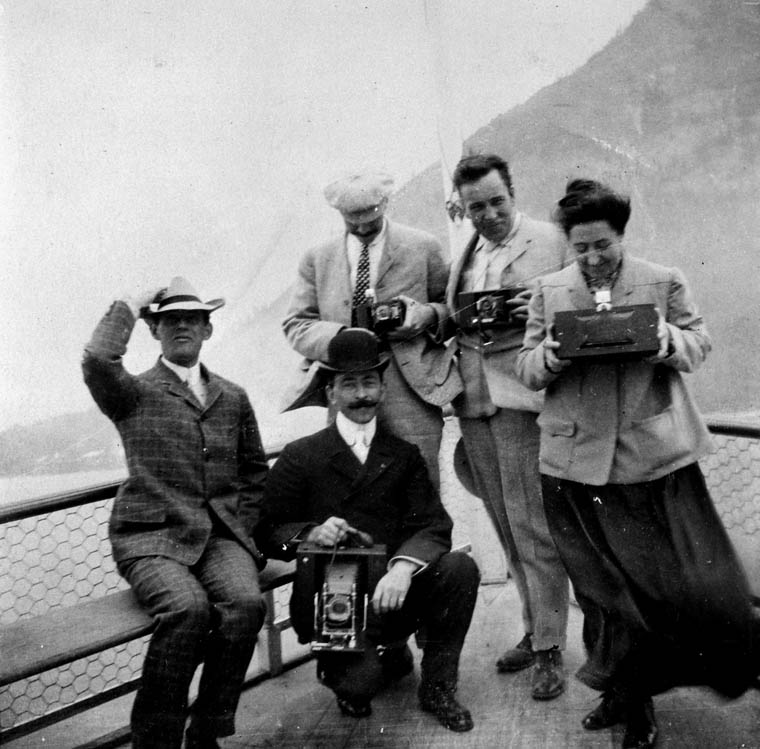
A woman and four men posing for a photograph. Four of them are holding cameras of their own.

People showing various types of cameras, 1904. (a148285)

While finishing my photography diploma, I began taking pics for a community newspaper in Ottawa. This had me visiting local stores and events and interviewing and photographing locals for a regular feature. The summer between my first and second year, I shot thousands of photos in and around Ottawa. At the end of my last semester, our class took a field trip to Library and Archives Canada’s (LAC) Preservation Centre in Gatineau, and I knew I wanted to work there.

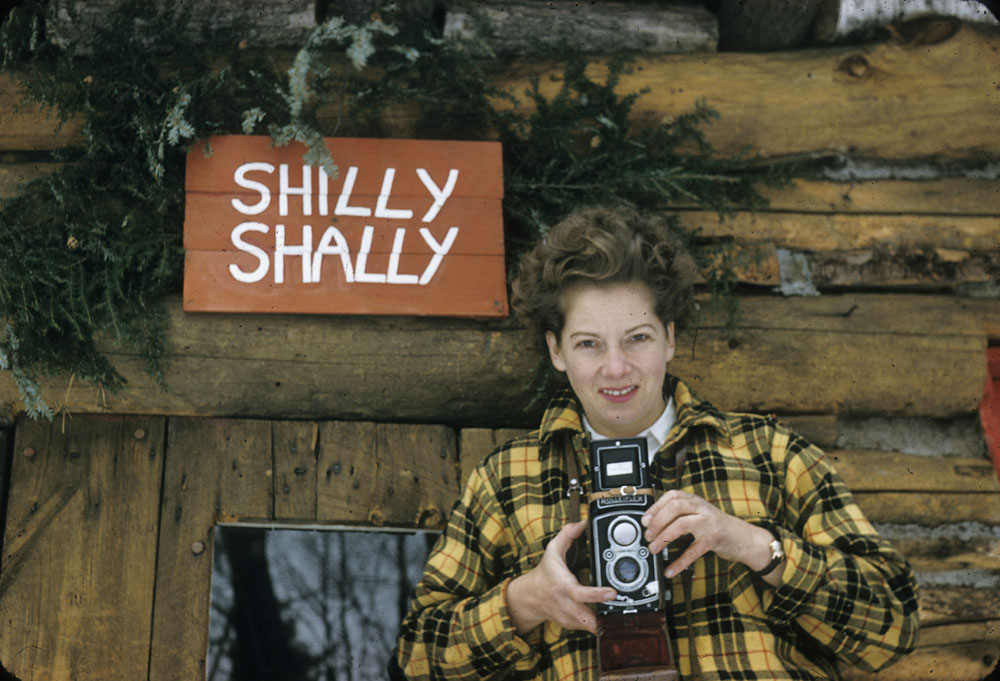
Woman holding a camera while posing for a picture leaning against a wooden cabin with a Shilly Shally sign.

Photographer Rosemary Gilliat Eaton holding a twin-lens camera. LAC holds many of Gilliat’s photos in its collection. Credit: Rosemary Gilliat Eaton. (e010950230)

In the summer of 2016, after graduating, my vision came true. I began working on LAC’s Canadian Expeditionary Force digitization project, during which time I helped digitize over 622,000 files relating to Canadians who served in the First World War. You can now search for those files by name using LAC’s Personnel Records of the First World War database. I used my skills to digitize a variety of files, maps, certificates, X-rays, pay forms, medical forms, attestation papers, personal correspondence, and too many files labelled “missing in action” or “killed in action.” I gradually learned more and more about LAC and applied for a job with their Online Content team.

When I started working with the Online Content team, I contributed to blog posts, the podcast, and finding photos for Flickr albums. I also began working on Project Naming and eventually became the project manager of this endeavour, which is rooted in sharing historical photographs of First Nation, Inuit and Metis Nation people whose names were not recorded when their photos were captured.

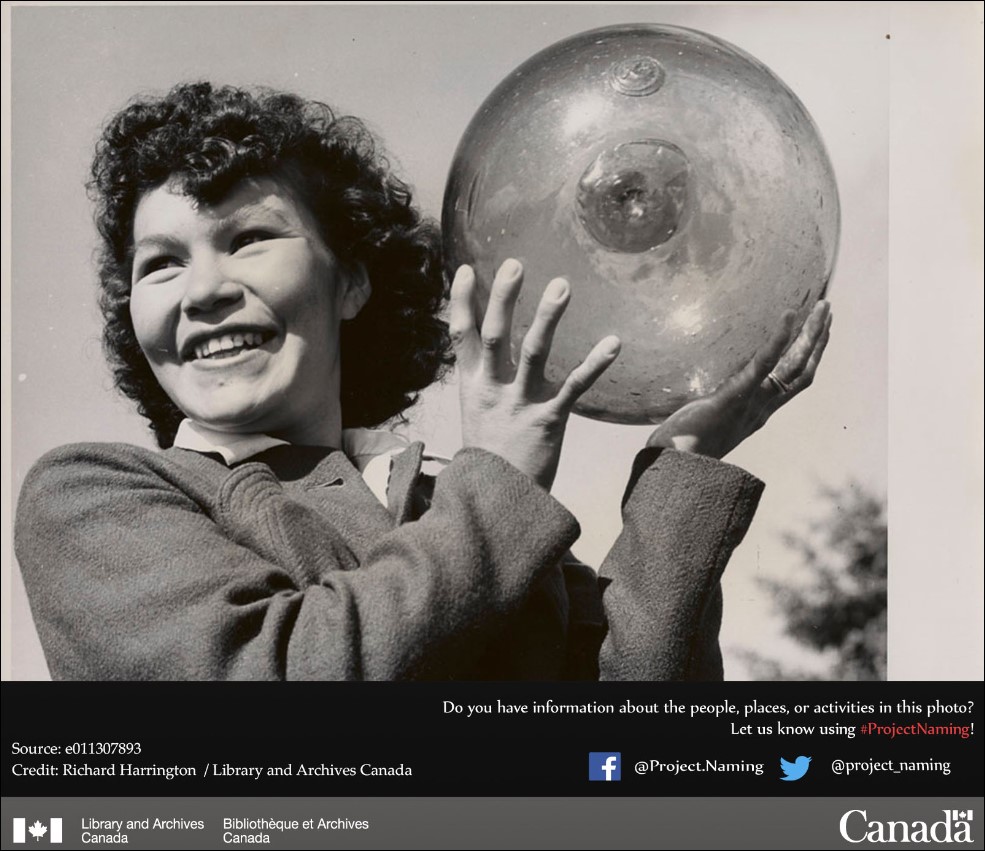
A photo used as part of Project Naming with text inviting the public to provide information about the person photographed.

A Haida woman holding up a Japanese glass net float, Skidegate, Haida Gwaii, British Columbia, ca. 1959. Thanks to Project Naming, the person in this photo was identified as Flossie Yelatzie, from Masset. Credit: Richard Harrington. (e011307893)

Participation in Project Naming helps improve the narrative of photographic records held at LAC. Photos are posted three times a week on Project Naming’s social media pages. When names or information are received, the records are updated, which helps preserve and honour the people in the photos for generations to come. As a way of saying thank you, we offer a high-resolution print of the photo at no charge to the people who shared the information. The best part of my job is adding someone’s name to the record database. That name becomes attached to the record, making it searchable forever.

Outside of LAC, I continue to hone my photography skills by working for local college athletic teams and theatres, a local newspaper, other athletic teams, and various Ottawa events. This past year, I photographed the Professional Women’s Hockey League (PWHL) for The Hockey News. This led to an opportunity to take photographs at the 2024 International Ice Hockey Federation (IIHF) Women’s World Championships, where Canada defeated the United States in the gold medal game. I hope to someday donate my hockey photos to LAC to document the first year of the PWHL, Canada’s gold-medal win, and this major step in women’s hockey.

Female hockey players celebrating their win on the ice with the crowd celebrating them in the background.

The moment after Canada defeated the United States for the gold medal at the 2024 IIHF Women’s World Hockey Championship. Photographer: Ellen Bond.

Female hockey players posing with their gold medals, championship banner and trophy on an ice rink.

Team Canada, 2024 IIHF Champions. Photographer: Ellen Bond.

I look forward to the future with my camera in hand!


Ellen Bond is a Project Manager with the Online Content team at Library and Archives Canada.

Spirit in Motion: Canada and the Paralympics

Version française

By Sali Lafrenie

With the Olympic Games winding down and the Paralympic Games winding up in 2 weeks, it’s time for a paralympic preview. The 2024 Paralympics will also take place in Paris, from August 28th to September 8th, and will include 22 sports:

  • Para archery
  • Para athletics
  • Para badminton
  • Blind football
  • Boccia (similar to bocce and pétanque)
  • Para canoe
  • Para cycling
  • Para equestrian
  • Goalball
  • Para judo
  • Para powerlifting
  • Para rowing
  • Shooting Para Sport
  • Sitting volleyball
  • Para swimming
  • Para table tennis
  • Para taekwondo
  • Para triathlon
  • Wheelchair basketball
  • Wheelchair fencing
  • Wheelchair rugby (previously called murderball)
  • Wheelchair tennis

While the Modern Olympic Games date back to 1896, the Paralympics have a different history. The Paralympic Games as we know them date back to 1984. But they had a different name from 1960 to 1980: the International Stoke Mandeville Games.

The International Stoke Mandeville Games

Although the International Stoke Mandeville Games began in 1960, their origin dates to 1948 at the Stoke Mandeville Hospital in England. Like the Inter-Allied Games and the Invictus Games, the Stoke Mandeville Games were meant to be a rehabilitative experience for people with disabilities and for veterans. The Games eventually grew into a large-scale sports competition.

Initially consisting of only wheelchair athletes, the Games grew over time to include athletes from other countries—making them international—as well as athletes with a range of disabilities, which lead to the inclusion of more sports.

While the International Stoke Mandeville Games are considered the precursor to the Paralympics, there are and were many different types of sports competitions for athletes with disabilities such as the World Abilitysport Games, the Special Olympics, the Parapan American Games, and the Deaflympics (first held in Paris in 1924).

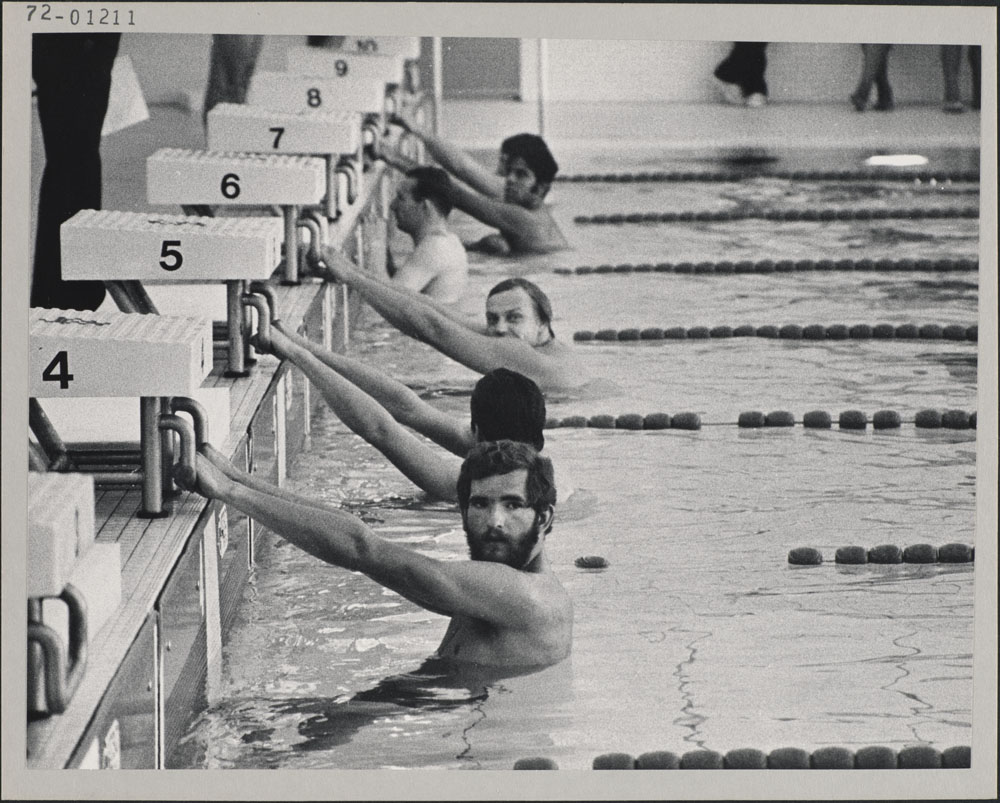
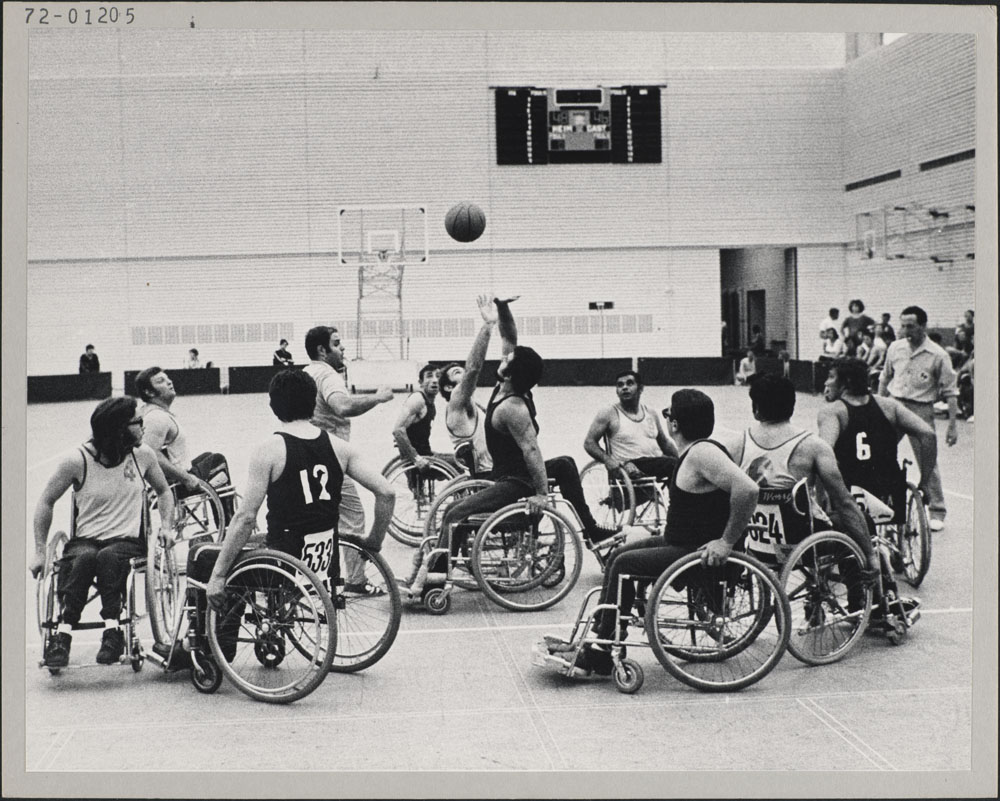
Below, we can see photographs of athletes competing at the 1972 International Stoke Mandeville Games in sports like archery, swimming, and wheelchair basketball.

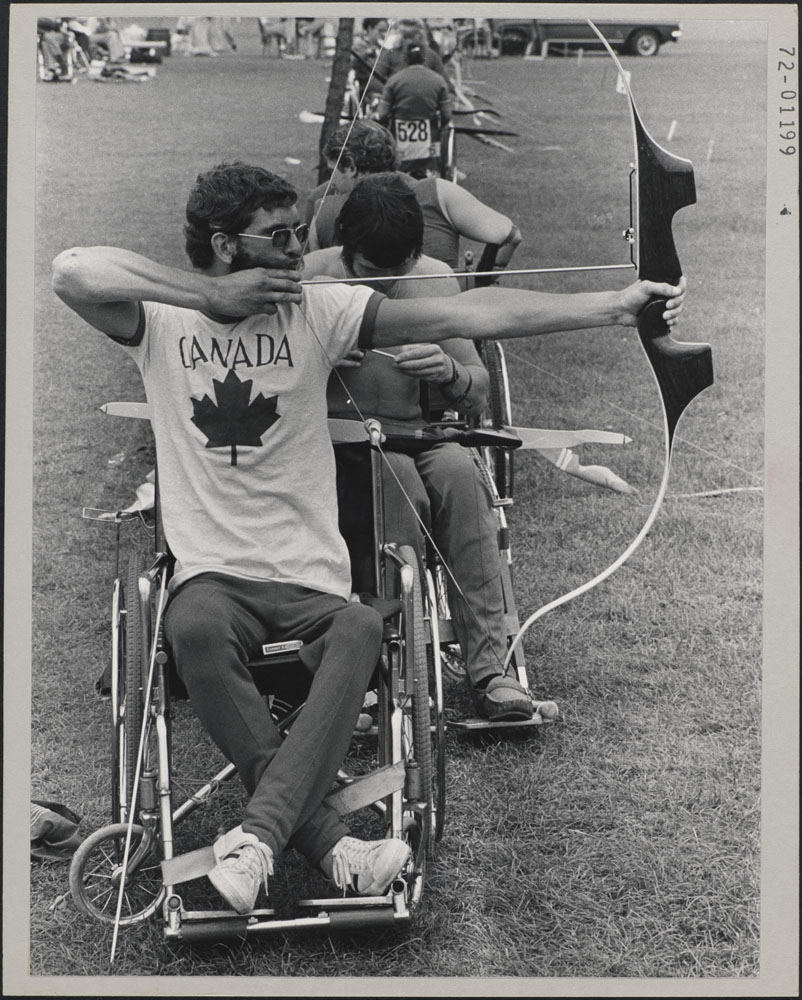
A black and white photograph of a wheelchair archer drawing a bow and wearing a t-shirt with a maple leaf on it.

Archery, 21st International Stoke Mandeville Games, Heidelberg, Germany, August 1–10, 1972. (e011783300)

A black and white photograph of Para swimmers in the water holding onto the starting blocks.

Swimming, 21st International Stoke Mandeville Games, Heidelberg, Germany, August 1–10, 1972. (e011783302)

A black and white photograph of two wheelchair basketball teams at tip off.

Basketball, 21st International Stoke Mandeville Games, Heidelberg, Germany, August 1–10, 1972. (e011783301)

Canada and the Paralympic Games

Participating in the Games for over 50 years, Canadian Para athletes have a long and shiny history at the Paralympics. It’s safe to say that Canadian Para athletes tend to win a lot, given that they rank fourth in All-Time Paralympic Summer Games Medal Standings. Team Canada has dominating records in Para swimming, Para athletics, Para cycling, and wheelchair basketball. Notable athletes in these sports include Benoît Huot, Michelle Stilwell, Chantal Petitclerc, and Richard Peter.

Each of these athletes have made their mark on parasport history in different ways. Huot did so at Rio 2016 when he earned his 20th Paralympic medal, officially tying the record for second all-time Paralympic swimming medals. Stilwell left her mark in two different sports, wheelchair basketball and wheelchair racing, winning at least one gold medal in both sports. Senator Chantal Petitclerc, perhaps one of the most recognizable names in Canadian parasport alongside Rick Hansen, represented Canada at 5 Paralympics and won 21 medals. Richard Peter, also a dual-sport athlete and five-time Paralympian, competed in wheelchair basketball and in Para badminton, winning multiple medals with the wheelchair basketball team throughout his career. Peter was also featured in the docuseries “Chiefs and Champions” highlighting Indigenous athletes representing Canada in sports.

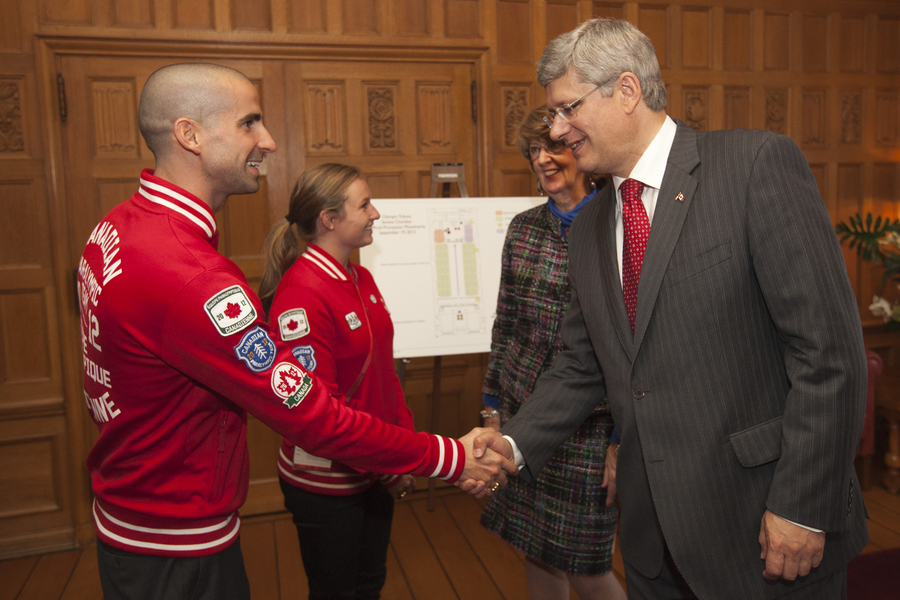
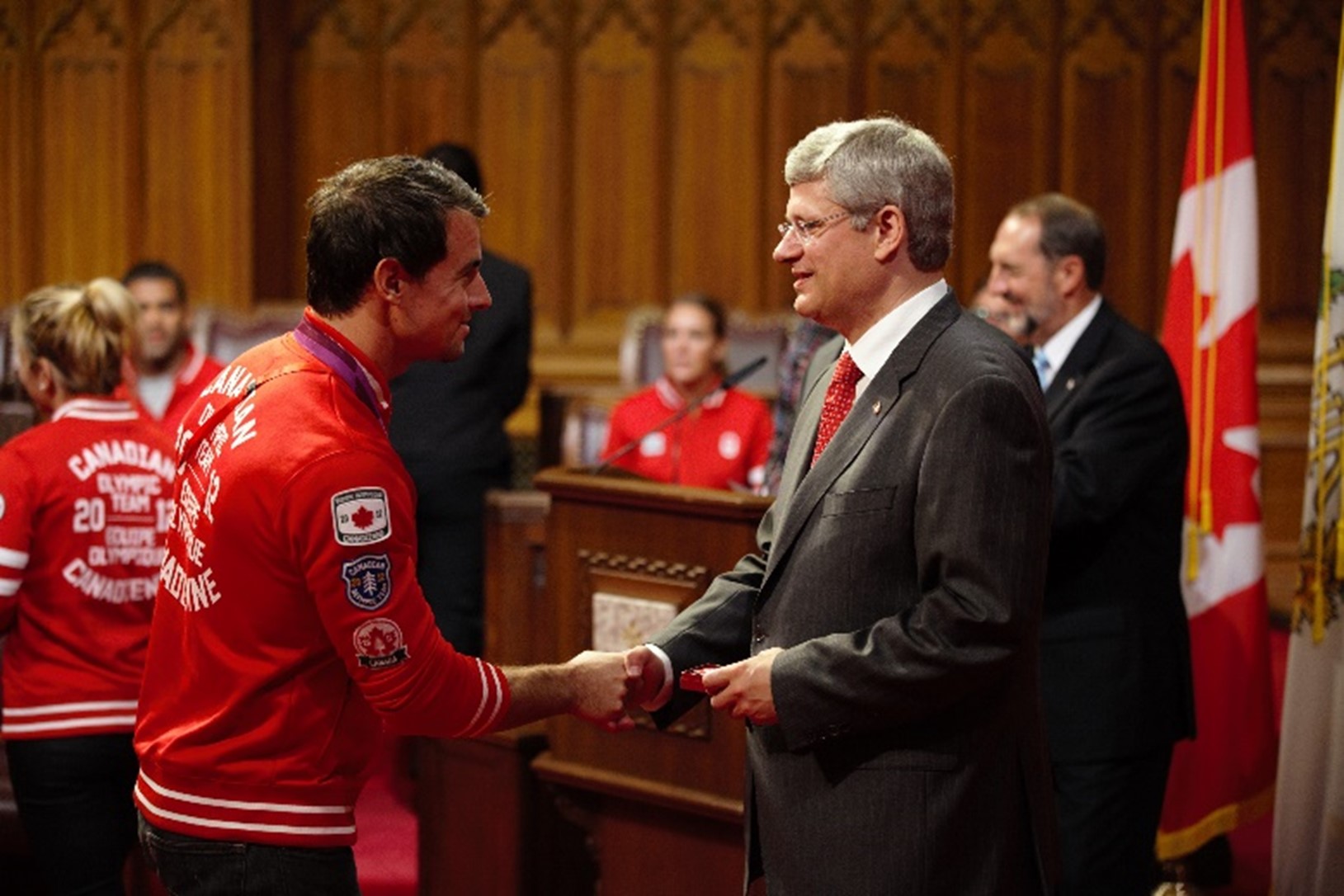
A colour photograph of athletes wearing red Team Canada jackets, one in the foreground standing and shaking the Prime Minister’s hand and another in the background speaking to someone.

Paralympic athlete Benoît Huot during recognition ceremony at Parliament Hill with Prime Minister Stephen Harper. Credit: Jason Ransom. (MIKAN 5586583)

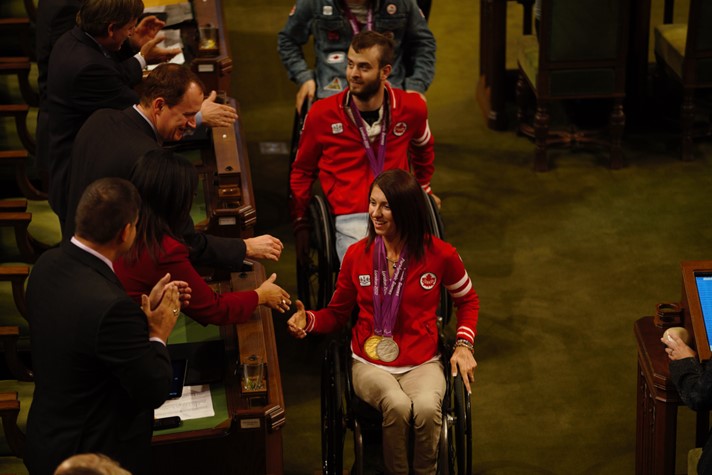
A colour photograph of athletes wearing red Team Canada jackets sitting in wheelchairs and moving in a line to shake the hands of members of parliament.

Paralympic athletes Michelle Stilwell and Jason Crone during recognition ceremony at Parliament Hill with Prime Minister Stephen Harper. Credit: Jill Thompson. (MIKAN 5609841)

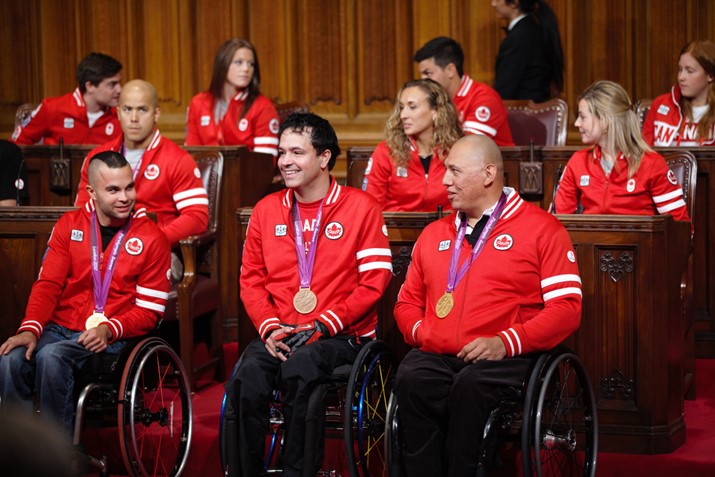
A colour photograph of athletes, three in the foreground in wheelchairs wearing Paralympic medals and seven sitting on benches in the background.

Paralympic athletes Tyler Miller, Marco Dispaltro, and Richard Peter during recognition ceremony at Parliament Hill with Prime Minister Stephen Harper. Credit: Jason Ransom. (MIKAN 5609841)

The Canadian Paralympic Hall of Fame

Canadians have made an impact on the Games inside and outside of the competition itself. Currently, the Canadian Paralympic Hall of Fame consists of 42 inductees in three categories: builders, coaches, and athletes.

One important builder is Dr. Robert W. Jackson, an orthopaedic surgeon who is credited with founding the Canadian Wheelchair Sports Association and as being a major advocate of parasports. While Dr. Jackson’s legacy lies in his contributions to the medical field as a pioneer of arthroscopic surgery, his legacy is also important to the world of sports. Outside of his work promoting parasports, Dr. Jackson also worked with professional athletes in two major leagues: the Canadian Football League (Toronto Argonauts) and the National Basketball Association (Dallas Mavericks). And in 1976, he was responsible for organizing the Paralympics in Toronto, also known as the Toronto Olympiad. All of this and more can be found in Dr. Jackson’s fonds here at LAC.

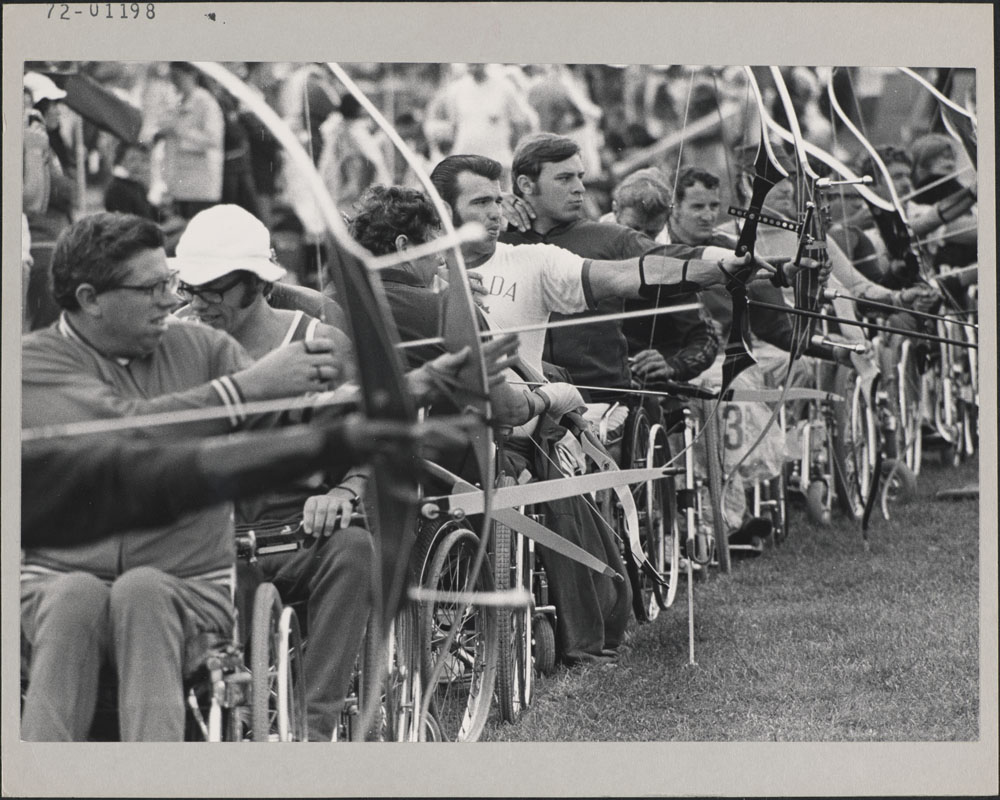
Another important Hall of Fame inductee is Eugene Reimer, a member of the first Canadian Paralympic team and a dominant wheelchair athlete. Throughout his athletic career, Reimer won 10 medals across 4 Paralympics and more than 50 medals at national and international competitions. He was also named Canadian male athlete of the year for these achievements. Reimer was an all-around athlete, a true competitor and multi-talented athlete who also played for the Vancouver Cable Cars wheelchair basketball team—the same team that Rick Hansen and Terry Fox played on in British Columbia. Check out this photo of Reimer competing in Para archery at the 1972 Games.

A black and white photograph of a row of archers sitting in wheelchairs.

Canada’s Eugene Reimer, archery, 21st International Stoke Mandeville Games, Heidelberg, Germany, August 1–10, 1972. (e011783299)

Athletes and sports to watch

Turning back to Paris 2024, let’s look at some of the athletes and sports coming up!

Given Canada’s success in Para swimming, it only makes sense to start there. This year, Canada is sending 22 Para swimmers to Paris. While there are some new faces, there are quite a few familiar ones including Aurélie Rivard, Nicholas Bennett, and Katarina Roxon, who will be competing in her fifth Paralympics.

While there are a lot of crossover sports between the Olympic and the Paralympic Games, one of the best parts of the Paralympics are the sports that are unique to them, like goalball. If you’ve never watched the sport, then you’re in for an exciting time, and if you have watched goalball, then you know exactly what I mean. The women’s goalball team has seen a lot of success recently and historically, securing their spot in Paris by winning gold at the 2023 Parapan American Games.

Just like the Olympics, the Paralympics are always evolving and changing. Sometimes that evolution looks like adding or removing sports, and other times it looks like providing more parity between athletes and prize money. In the last 16 years, the Paralympics have added five sports to their roster: Para rowing, Para triathlon, Para canoe, Para badminton, and Para taekwondo. It’s an exciting time to be a sports fan, and if you can’t get enough of the Paralympic Games and want to learn more, check out this list of 50 Things To Know About The Paralympic Games. Happy watching!

Additional Resources

  • 2012-09-19 Olympians, Library and Archives Canada (MIKAN 5609841)
  • 2015-07-10 Toronto Pan American Games, Library and Archives Canada (MIKAN 5610897)
  • Amazing athletes: an all-star look at Canada’s Paralympians by Marie-Claude Ouellet and Jacques Goldstyn; translated by Phyllis Aronoff and Howard Scott (OCLC 1240172154)

Sali Lafrenie is a Portfolio Archivist in the Private Archives Branch at Library and Archives Canada.


Faster, Higher, Stronger: Canada at the Summer Olympics

Version française

By Sali Lafrenie

The Olympics are heating up! With the games underway, now is the perfect time to dive back into our Olympic coverage here at Library and Archives Canada. While Canada is often considered a powerhouse in winter sports, Canadian athletes have earned more medals at the Summer Games than at the Winter Games. To date, Canada has earned a total of 326 medals at the Summer Olympics, with the most success in athletics, aquatics (swimming, artistic swimming, and diving) and paddle sports (canoe/kayak and rowing).

In this instalment of our Olympics series, we’re revisiting these popular medal sports and a few others!

Five Canadian postage stamps depicting various Olympic sports, such as diving, cycling, swimming, athletics, and gymnastics.

Canadian postage stamps depicting sports moments from the 1992 Olympic Games. (e003576364)

The Matchless Six: Amsterdam 1928

Remembered for their outstanding performances at the 1928 Olympics, the “Matchless Six” were Canada’s first Olympic women’s team. But why were they the first? And what did they do?

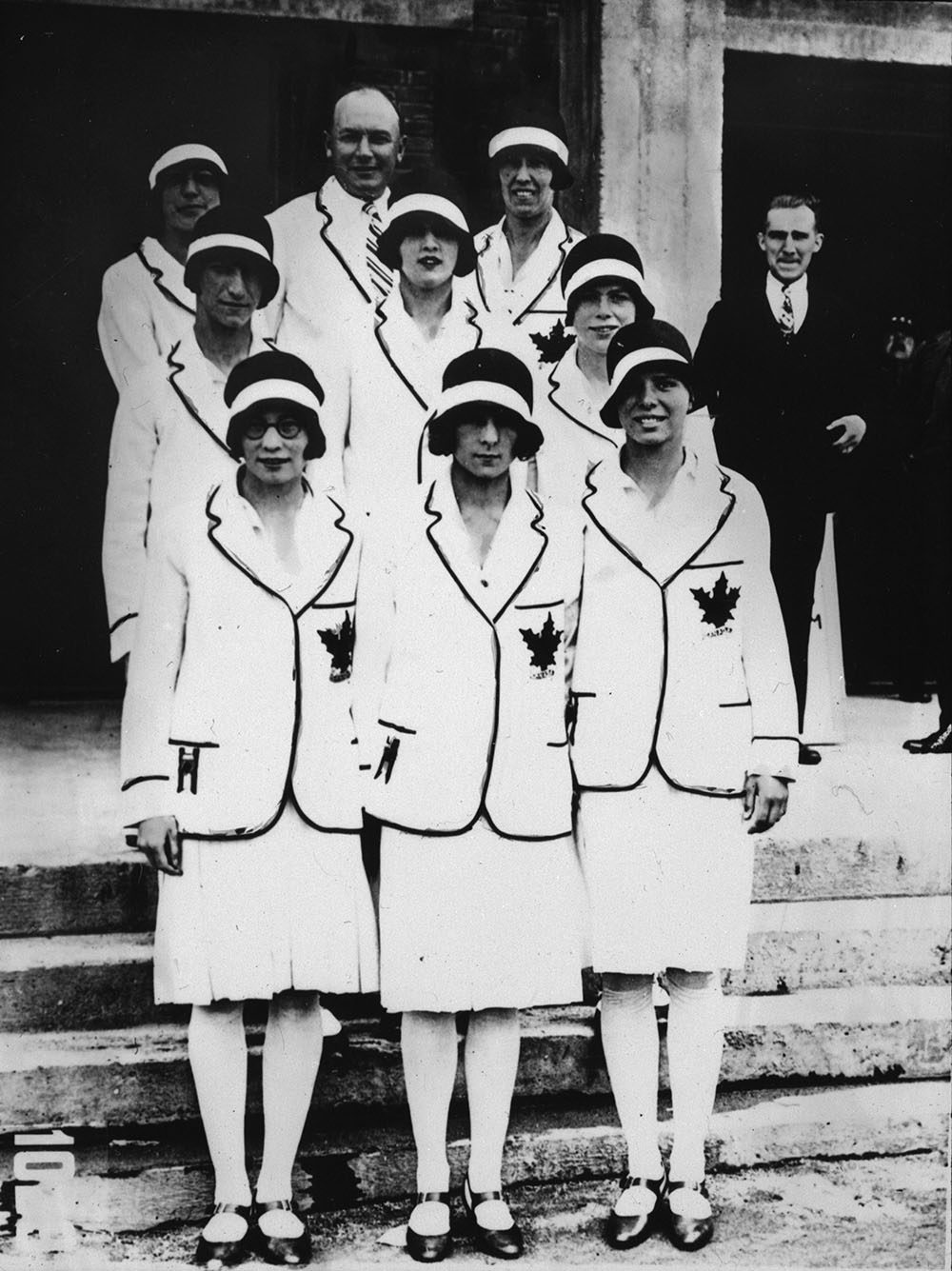
Despite the modern Olympic Games beginning in 1896, women were not allowed to compete in athletics until 1928. The team, consisting of Fanny Rosenfeld, Jean Thompson, Myrtle Cook, Florence Jane Bell, Ethel Smith, and Ethel Catherwood, made history by collectively winning four medals and competing in four events. Their dominance was particularly impressive given that women could only compete in five athletics events at the time.

The Matchless Six paved the way for future generations of Canadian women in athletics. They have since all been recognized individually in multiple halls of fame in Canada and in Parks Canada’s registry of National Historic Persons.

Photograph of six women dressed in white blazers and skirts posing for a photo. Four other individuals are present in the background.

The Matchless Six: Canadian women’s track and field team taking part in the 1928 Summer Olympics in Amsterdam. (a151001)

A Family of Olympians: 1912, 1960–1968

After qualifying for and competing in the 1912 Olympics, John “Army” Howard became the first Black Olympian to represent Canada (the first Black Canadian-born Olympian to medal was Raymond Lewis in 1932). Although his athletic career was put on hold while he served in the Canadian Expeditionary Force during the First World War, he got the chance to compete one more time for Canada at the 1919 Inter-Allied Games where he won bronze in the 100-metre event. Photos of the 1919 Inter-Allied Games can also be found in our collection.

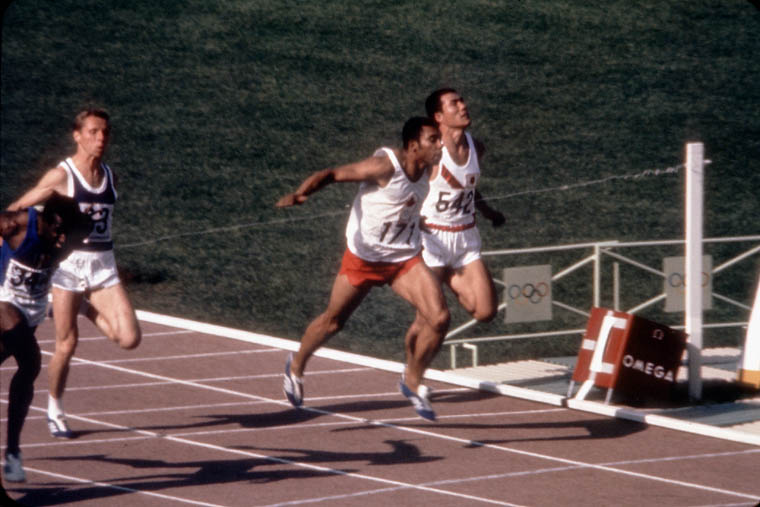
His legacy continued through his grandchildren, Valerie and Harry Jerome, both of whom competed at the Olympics during the 1960s. Making their Olympic debut together in Rome 1960, the brother-sister duo made an impact on and off the track. They both won numerous medals at the National Championships, the Pan American Games, and the Commonwealth Games. However, it was Harry who made multiple Olympic appearances, winning bronze in the 100-metre event. Their family left an enduring mark on Canadian athletics and provided early representation for Black athletes on Team Canada.

Photograph of three athletes running on a track across the finish line at the Olympics.

Harry Jerome competing at the 1968 Summer Olympics in Mexico. (a209764k)

Medal Droughts: 1912–1984 and 1936–2024?

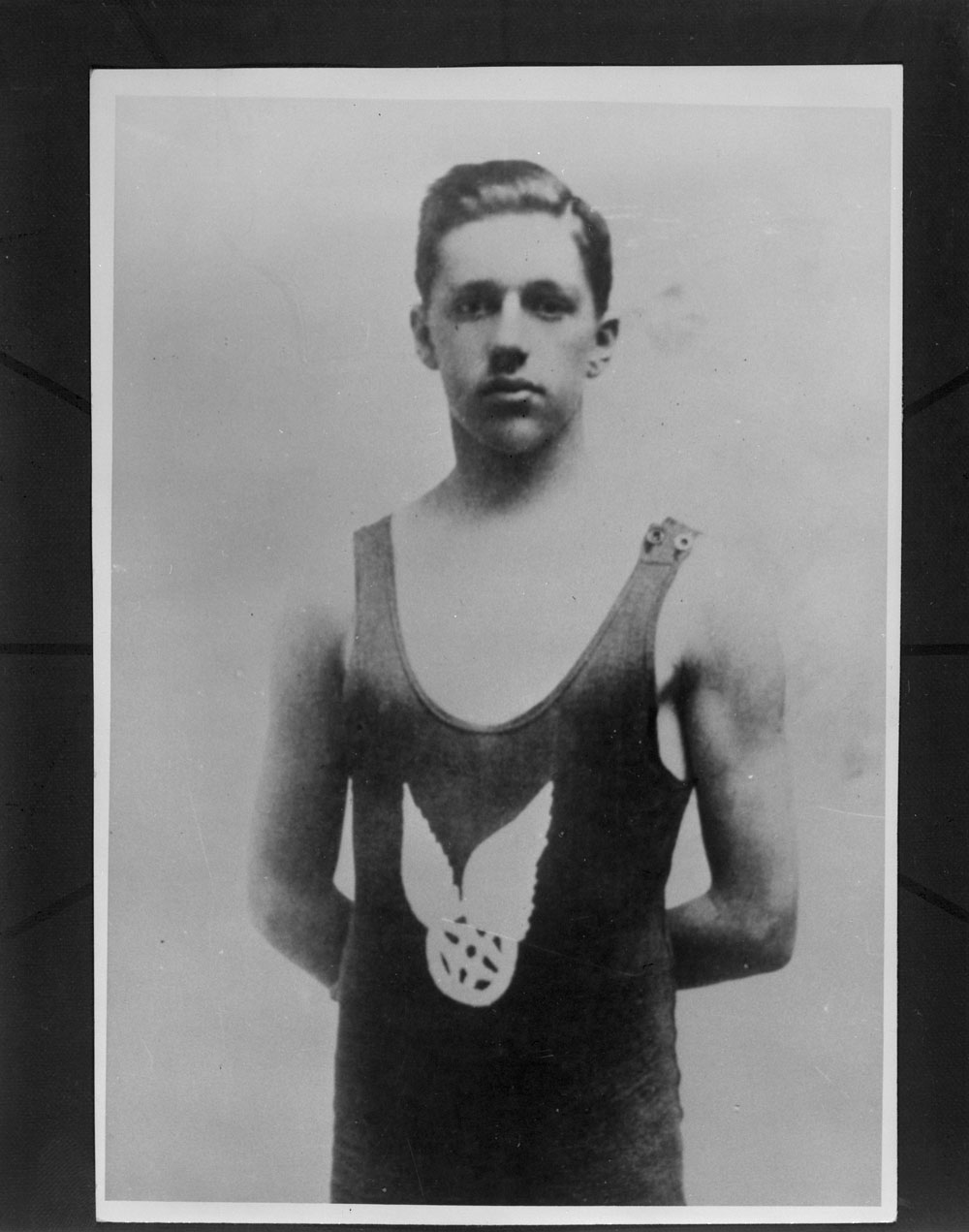
Sometimes medal droughts happen, but the important part is when they end. Canada has experienced two notable medal droughts, particularly in swimming and basketball. For decades, Canadian swimmers were shut out from the top of the podium, leaving George Hodgson as our sole gold medal winner—he won two gold medals and set four world records in 1912. With the outbreak of the First World War, Hodgson put his athletic career on hold to serve as a flight sub-lieutenant with the Royal Naval Air Service. In 1984, the 72-year drought ended spectacularly with golden finishes by Alex Baumann, Anne Ottenbrite (the first Canadian woman to win gold in swimming), and Victor Davis.

Photograph of a man in a swimsuit.

George Hodgson. (a050291)

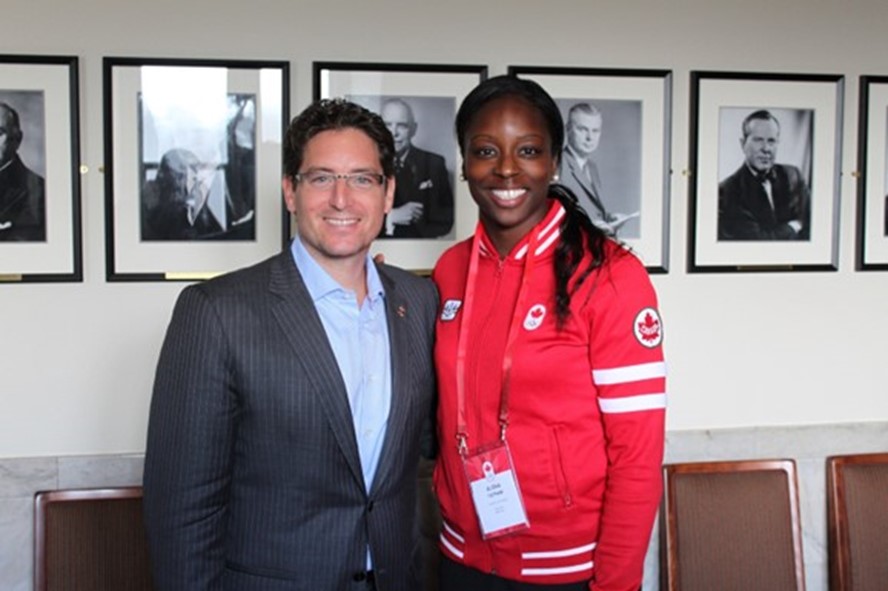
In basketball, Canadian teams have been working hard to end an 88-year drought. However, with recent success at the FIBA World Cup and the Pan American Games, both the men’s and women’s teams are suiting up for the Olympics together for the first time in over two decades. With Canadian players at an all-time high in the NBA and growing buzz about a new WNBA franchise coming to Canada in 2026, will 2024 be the year that Canadian basketball ends its medal drought?

Photograph of a man and a woman standing together.

Alisha Tatham, a member of the London 2012 women’s basketball team—the team’s first appearance since the Sydney 2000 Olympics. Credit: Jason Ransom. (MIKAN 5609841)

Paddling to the Podium: 1992–1996 and 2004–2012

Team Canada has an extensive history of success in paddle sports, winning a total of 69 medals at the Summer Games in rowing (introduced at the Paris 1900 Games) and kayaking (introduced at the Paris 1924 Games). So, it should come as no surprise that rowing ranks as the third most successful event for Canadians at the Summer Olympics, with kayaking coming in fourth.

The most successful Canadian athletes in these sports have each earned four medals: Marnie McBean, Kathleen Heddle, and Adam van Koeverden. McBean and Heddle competed at Barcelona 1992 and Atlanta 1996, earning four medals in two games and the titles of triple gold medallists. Now a member of Parliament, kayaker van Koeverden earned four medals in three games and is often referred to as Canada’s most successful paddler.

McBean and Heddle’s golden achievements have earned them both induction into the Canadian Olympic Hall of Fame and Canada’s Sports Hall of Fame—a recognition van Koeverden should expect to receive as well.

Photograph of two men smiling and shaking hands.

Adam van Koeverden meeting with Prime Minister Stephen Harper after the London 2012 Olympics. Credit: Jason Ransom. (MIKAN 5609841)

Back-to-Back Appearances: 2000–2004 and 2020–2024

Competing in the women’s water polo event at Paris 2024, Team Canada is making their fourth appearance at the Summer Games. Earning their Olympic berth in dramatic fashion earlier this year, the women’s water polo team is looking to make some waves. While we eagerly wait to see how the team will do, let’s look back at the team from Sydney 2000 and their notable co-captain, Waneek Horn-Miller.

Known for her athletic skills and motivational speaking, Waneek Horn-Miller is one of Canada’s most influential women in sport. She’s also the first Mohawk woman to compete for Team Canada at the Olympics. Co-leading the first women’s Olympic water polo team in 2000 to their best-ever finish, she also competed at the 1999 Pan American Games and at the 2001 FINA World Championships. While Horn-Miller no longer competes, she continues to share her love for sports and community through her work as a sports commentator, brand ambassador, and public speaker. In addition to sharing her experiences of the Oka Crisis, Waneek is the director of the Storyboot Project and served as assistant chef de mission at the 2015 Pan American Games in Toronto.

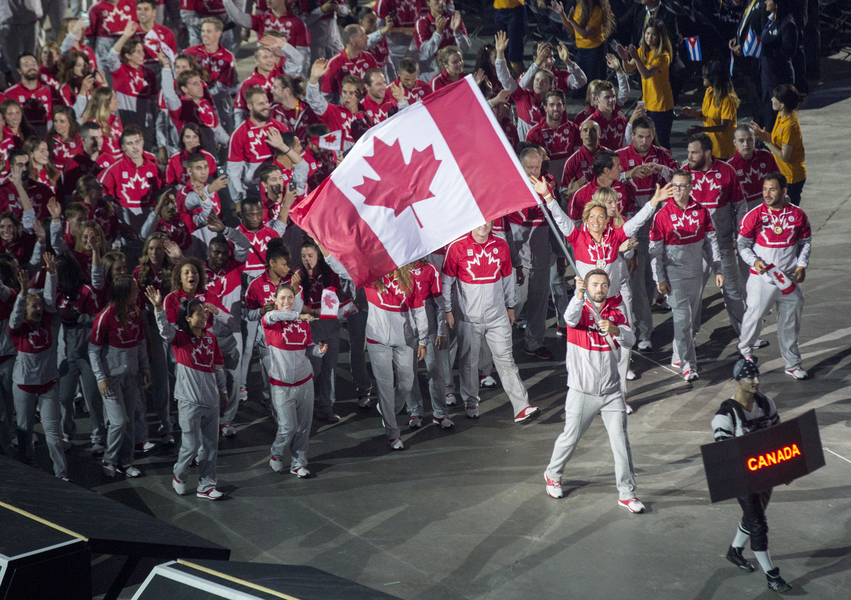
Photograph of numerous athletes marching behind a man carrying a large Canadian flag.

Team Canada at the opening ceremony for the 2015 Pan American Games in Toronto. Waneek Horn-Miller can be seen in front with both of her arms stretched out wide. Credit: Deborah Ransom. (MIKAN 5603894)

While the hunt for the podium continues for popular sports like hockey, football, volleyball, and basketball, the games have yet to begin for newer sports like skateboarding, sport climbing, and breaking (making its debut). So, what’s in store for Team Canada? Which sports are you most excited to watch? And, who’s going to be the flagbearer for the closing ceremony?

Additional Resources


Sali Lafrenie is a Portfolio Archivist in the Private Archives Branch at Library and Archives Canada.

Ahead by a Century: remembering the Paris 1924 Olympics

Version française

By Sali Lafrenie

Picture it. Paris, 1924.

You’re at the Summer Olympic Games. And there are roughly 3,000 other athletes there with you.

What sport are you playing? Tennis? Maybe soccer? Basketball? Oh wait, is it aquatics? Athletics? No, boxing? Well, whatever it is, I bet you’re excited. You should be: Team Canada only sent 65 competitors, and this is the first time the Games are going to be broadcast live on the radio!

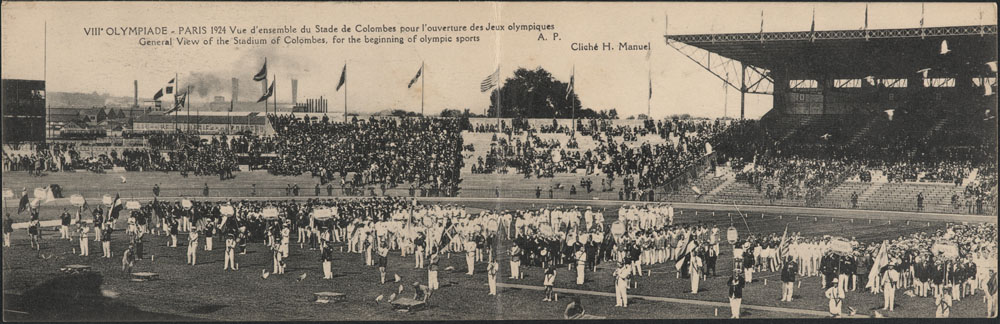
A black and white panoramic photograph of an outdoor stadium with hundreds of athletes.

General view of the Stadium of Colombes at the beginning of the 1924 Olympic Games (e011783298).

Considered to be the most successful of the Modern Games, the 1924 Summer Games in Paris looked very different from the Olympics that we know and love today. For starters, there were only 17 sports included in these Games. Five sports had been dropped from the previous iteration in 1920, with others included solely for demonstration or exhibition purposes.

Playing host for a third time, Paris 2024 will see Canada send 338 athletes to compete. The Games boast a whopping 32 sports, doubling the number of sports included at the 1924 Olympics.

In honour of the centenary, let’s dive into the 1924 Olympic Games!

1924 Winter Olympics

Did you know that when France bid to host the Summer Olympics in 1924, they accidentally started a new trend? That trend was the Winter Olympic Games.

The practice of hosting the Summer and Winter Games in the same year—sometimes in the same country—continued until 1992 when the International Olympic Committee decided to shift the Games to an alternating two-year schedule.

Before 1924, the Olympics only consisted of summer sports and did not have a winter sports equivalent. But there’s always a first. Hosted in Chamonix, France from January 25 to February 5, 1924, 260 athletes competed across 16 events. This means that 2024 is also the 100-year anniversary of the first Winter Olympic Games.

While Canada only sent 12 athletes to these Games—collectively earning a singular medal—there’s more to the story than that. The Chamonix Olympics was just the beginning for these athletes and the Canadian Winter Olympic Team, which had a roster of 215 athletes in 2022.

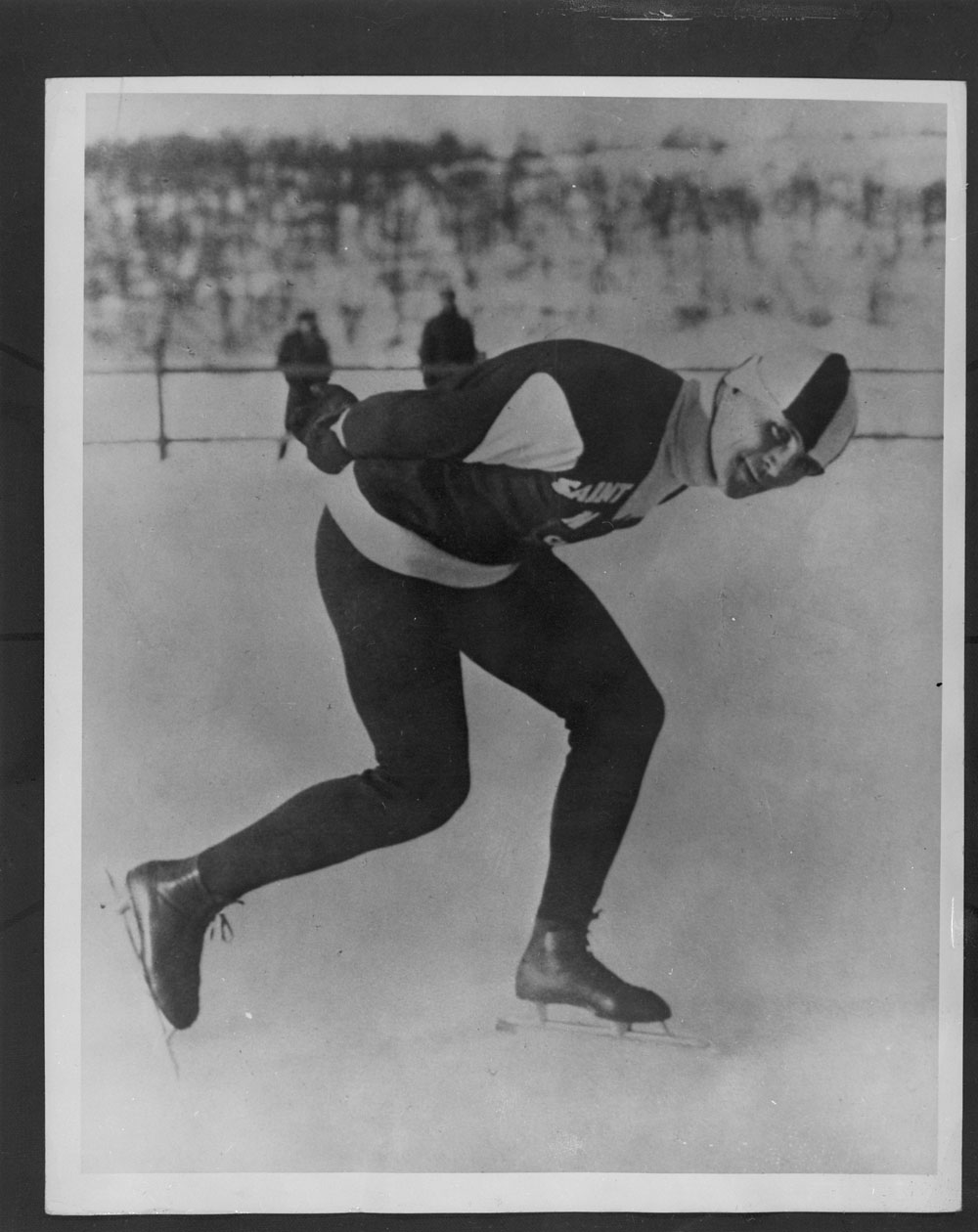
Charles “Charlie” Gorman, New Brunswicker and First World War Veteran, was one of these athletes. He made his Olympic debut in speed skating alongside the debut of the sport itself. Despite a disappointing finish in the 1924 Games, Gorman competed and won medals for Team Canada in numerous competitions, such as the American Championships, the Canadian Championships, and the World Championships.

A black and white photograph of a man speed skating and looking directly at the camera.

Photo of Charles Gorman speed skating (a050382).

Cecil Smith Hedstrom also made history at these Olympic Games when she became the first female Olympian to represent Canada. Competing in figure skating, Smith appeared in three Olympic Games and achieved many early feats to propel Canadian figure skating onto the world stage. For all these reasons and more, Smith was inducted into the Skate Canada Hall of Fame in 1991.

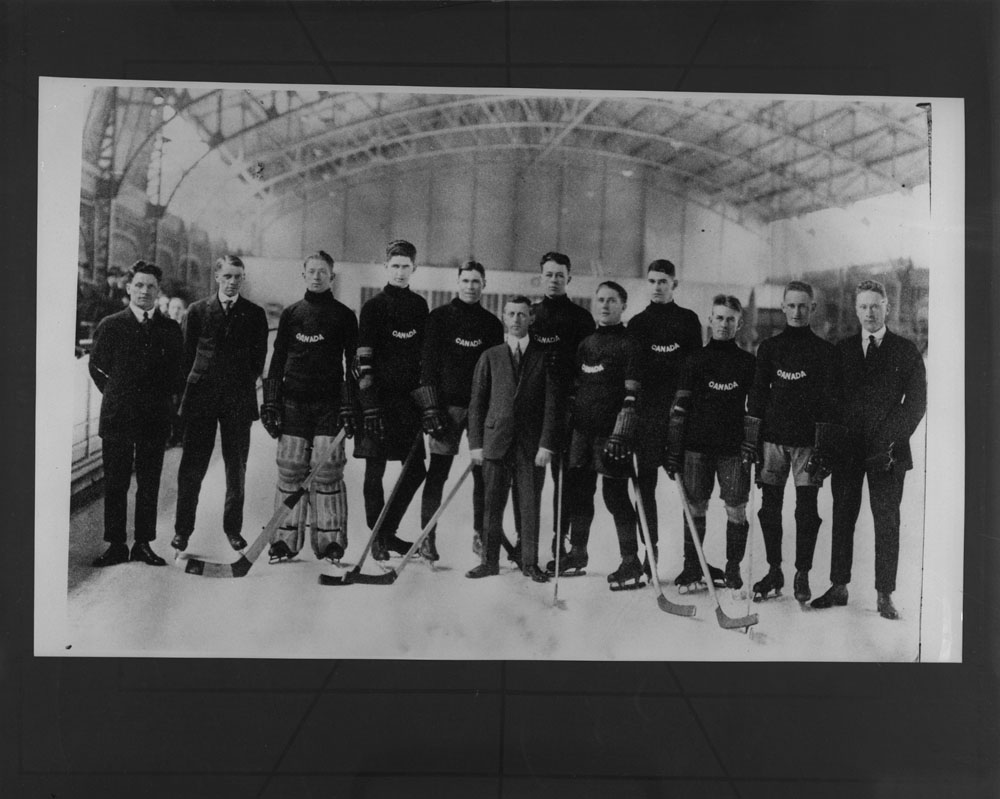
Earning the only medal for Team Canada at the Chamonix Games, the Toronto Granites Hockey Club won Canada’s first Winter Olympic gold medal. With this win, the Granites extended Canada’s Olympic ice hockey medal streak, initiated in 1920 by the Winnipeg Falcons who won gold in Antwerp. While ice hockey made its debut in the Antwerp Games, that was the first and last time the sport was included in the Summer Olympics. This means that Canada is the only country to have won a gold medal in ice hockey at both the Summer and the Winter Olympic Games.

A black and white photograph of a men’s hockey team standing on the ice holding hockey sticks.

Winnipeg Falcons, Olympic Champions (a049622).

1924 Summer Olympics

While all Olympic Games are important, the 1924 Summer Games had a special glow to it: live radio transmissions, the introduction of the Athlete’s Village, and the debut of the Olympic motto, “Faster, Higher, Stronger.”  The Modern Games ushered in a new era of international sports competitions that has only continued to expand in size and spectacle since 1924.

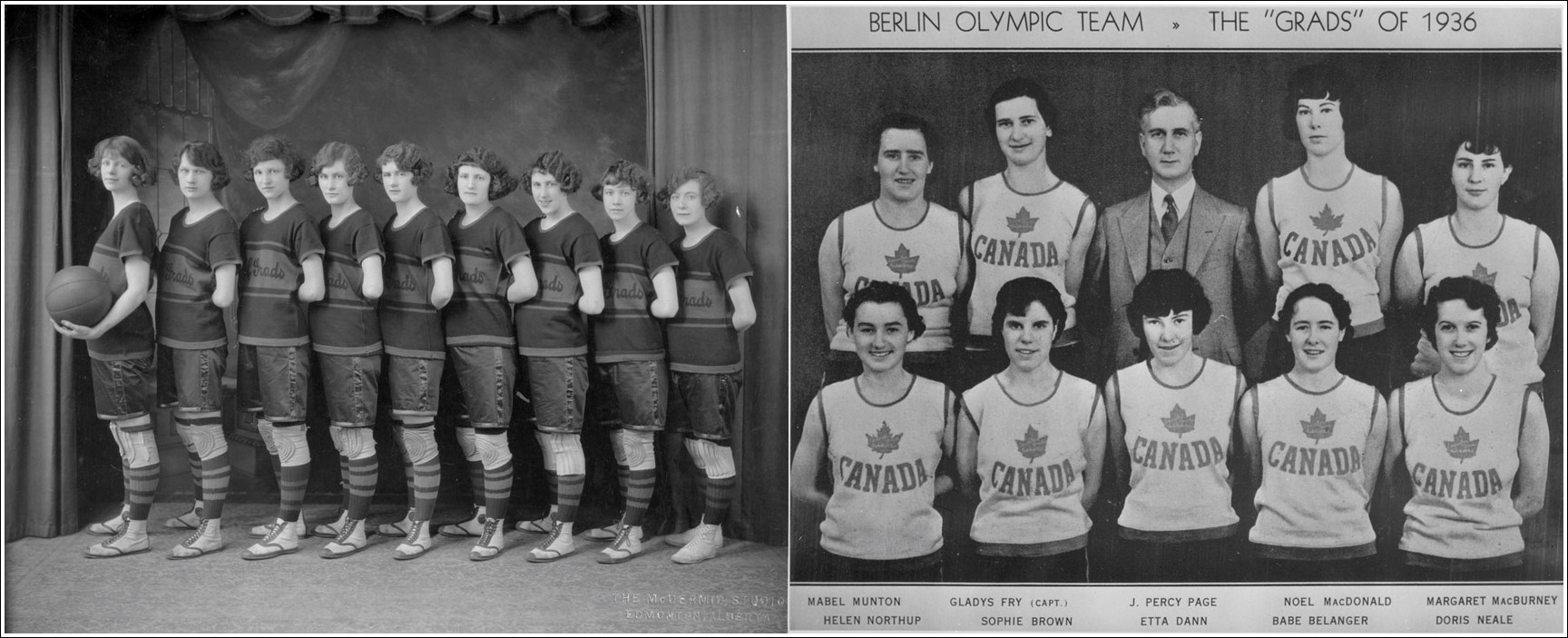
One of the greatest success stories of the 1924 Olympics comes from a group of athletes who technically were not a part of the Games: the Edmonton Grads. Although basketball was not officially included in the Olympics—men’s basketball would join in 1936 and women’s basketball would join in 1976—the Fédération sportive féminine internationale (FSFI) decided to hold their own matches alongside the Summer Games.

At home and abroad, the Grads were a difficult team to beat. They won approximately 95% of all the games they ever played and won the FSFI women’s basketball tournaments in 1924, 1928, and 1936.

Two black and white photographs of a group of female athletes. The first photograph has nine women standing in a line with one holding a basketball. The second photograph has nine women posing in two rows with a man standing in the middle of the back row.

Team photos of the Edmonton Grads in 1924 and 1936 (a050440) and (a050442).

Making his Olympic debut, Canadian hurdler Warren “Monty” Montabone soared onto the world stage in Paris 1924 and then again in Amsterdam 1928. In between Olympic appearances, Monty also set a Canadian record that stood for 58 years in the 110 m hurdles event. His athletic career can be traced beyond the Olympics all the way back to his time as a student athlete at Loyola and as an amateur athlete with the Montreal Amateur Athletic Association.

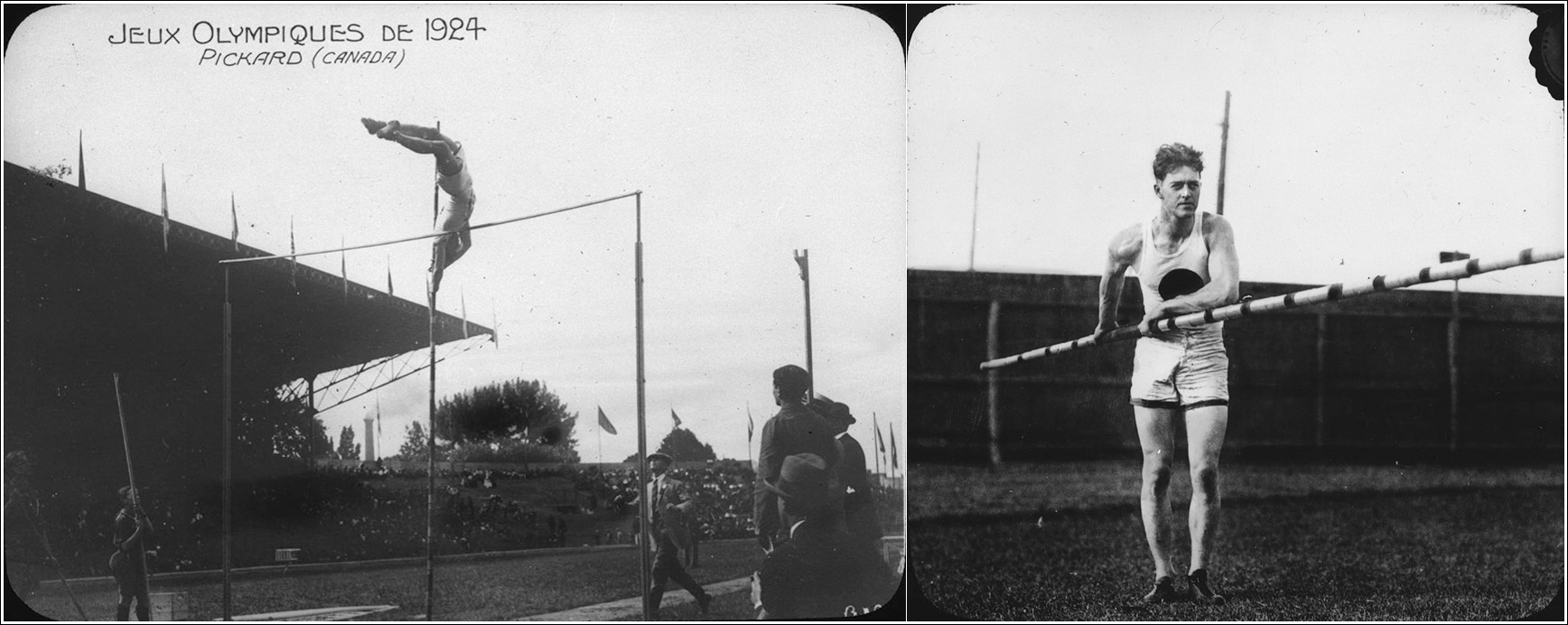
Another athlete who made his Olympic debut in 1924 is Victor Pickard, the pole vaulter and javelin thrower. Pickard represented Canada at two Olympic Games (1924 and 1928) and won a gold medal in pole vaulting at the British Empire Games in 1930. During his athletic career, Pickard’s highest jump at the Olympics was 3.45 m, but his personal best was 4.15 m. Today, the Canadian pole vault record stands at 6.00 m and the world pole vault record stands at 6.24 m.

Two black and white photographs of a male pole vaulter. The first shows a man jumping over a bar with a vaulting pole. The second shows a man holding a vaulting pole horizontally before beginning to run.

Victor Pickard at the 1924 Olympics (a151000) and (a151014).

While every Olympic Games is different, they always guarantee two things: excitement and excellence. Whether that’s through record-breaking performances, making a political statement or rallying around an athlete in need, the Olympics have got something for everyone. The Games have come to symbolize a lot more than just fair play, athleticism, and national identity. They’re a cultural moment. They bring people together in bars, in living rooms, and in schools. They’re history in the making and they’re just getting started.

Additional Resources


Sali Lafrenie is a Portfolio Archivist in the Private Archives Branch at Library and Archives Canada.

Unrevealed Secrets: The 1976 Montréal Olympics

Version française

By Brittany Long

The 1960s and 1970s were marked by global turbulence, with terrorist attacks, airplane hijackings, and kidnappings frequently dominating the headlines. Against this backdrop of uncertainty, preparing the security for the 1976 Olympic Games in Montréal posed a monumental challenge for Canadian security agencies. The Royal Canadian Mounted Police (RCMP), the Canadian Armed Forces, and local authorities had to coordinate their efforts to ensure the safety of athletes and spectators from around the world.

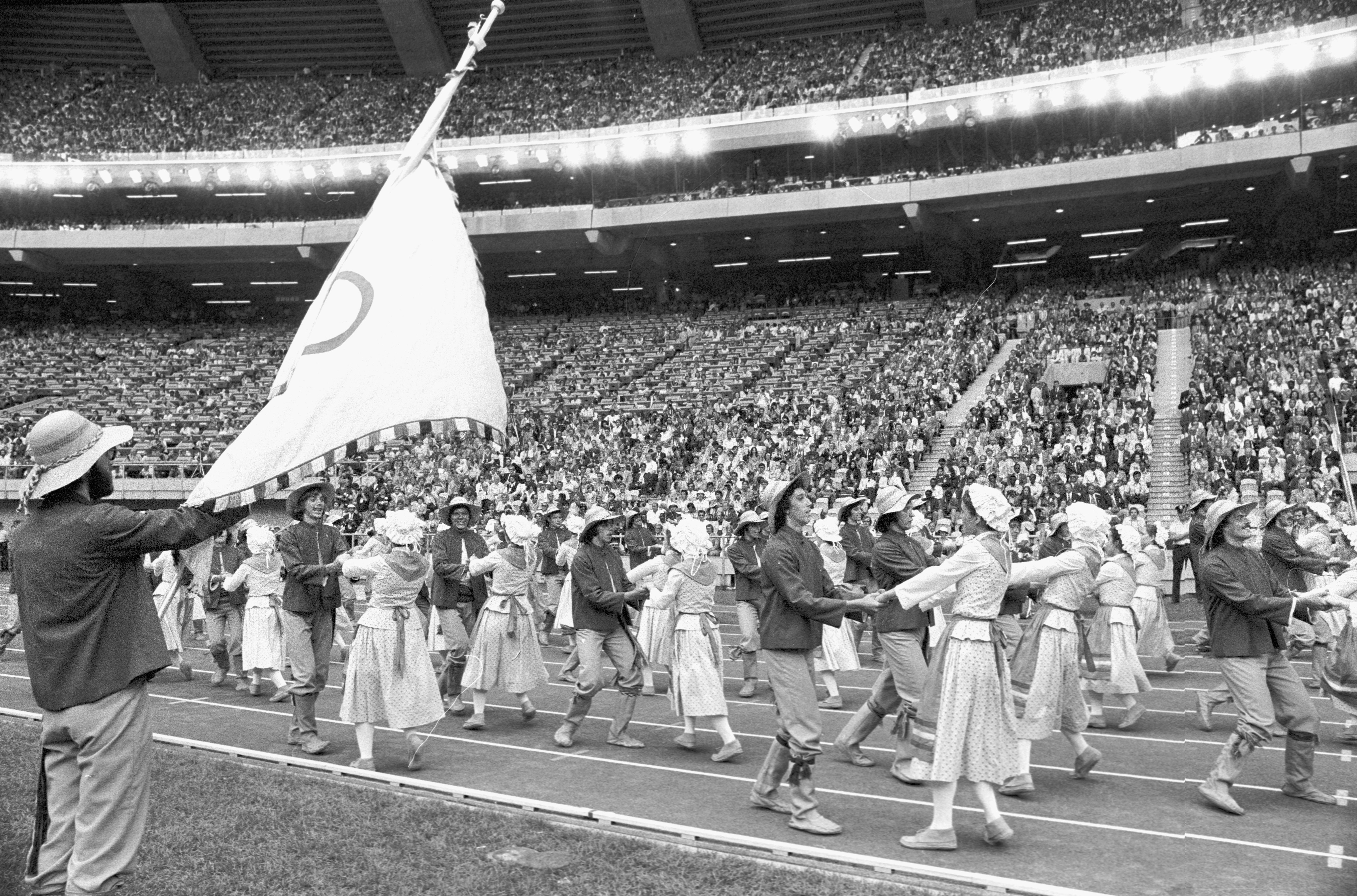
A black-and-white photograph of a group dancing in the Montréal Olympic Stadium during the opening ceremony at the 1976 Summer Olympics.

Opening ceremony at the Montréal Olympic Games, July 17, 1976. Photo: Paul Taillefer. (e004923376)

Not only was Queen Elizabeth II set to visit and officially open the Games, but Montréal was set to host 6,084 Olympic athletes from 92 different countries. Given the scale of the event, no one wanted a repeat of the tragic events at the 1972 Munich Olympics, where 11 athletes were killed in a terrorist attack.

With the 1976 Summer Olympics taking place during the Cold War, it was crucial to assess possible threats, identify areas of vulnerability, and ensure the security of all venues. Security measures needed to be meticulously planned and kept confidential in the lead-up to and during the Games to protect Canadians, foreign visitors, and athletes. For instance, intensive security plans were required for something as simple as Queen Elizabeth II’s route from her lodging to the venue.

Preparation began months before the event, during which the alert level was at its peak, particularly for departments such as External Affairs, the RCMP, and National Defence. All of the agencies and federal departments involved generated a large legacy of records, which were created in order to maintain the security surrounding the Olympic Games.

Eventually, some of these documents were transferred to Library and Archives Canada (LAC). For example, the Department of External Affairs fonds holds at minimum nine boxes worth of material related to the 1976 Games, while the RCMP fonds holds approximately 170 boxes. Additional records are scattered throughout various other fonds as well.

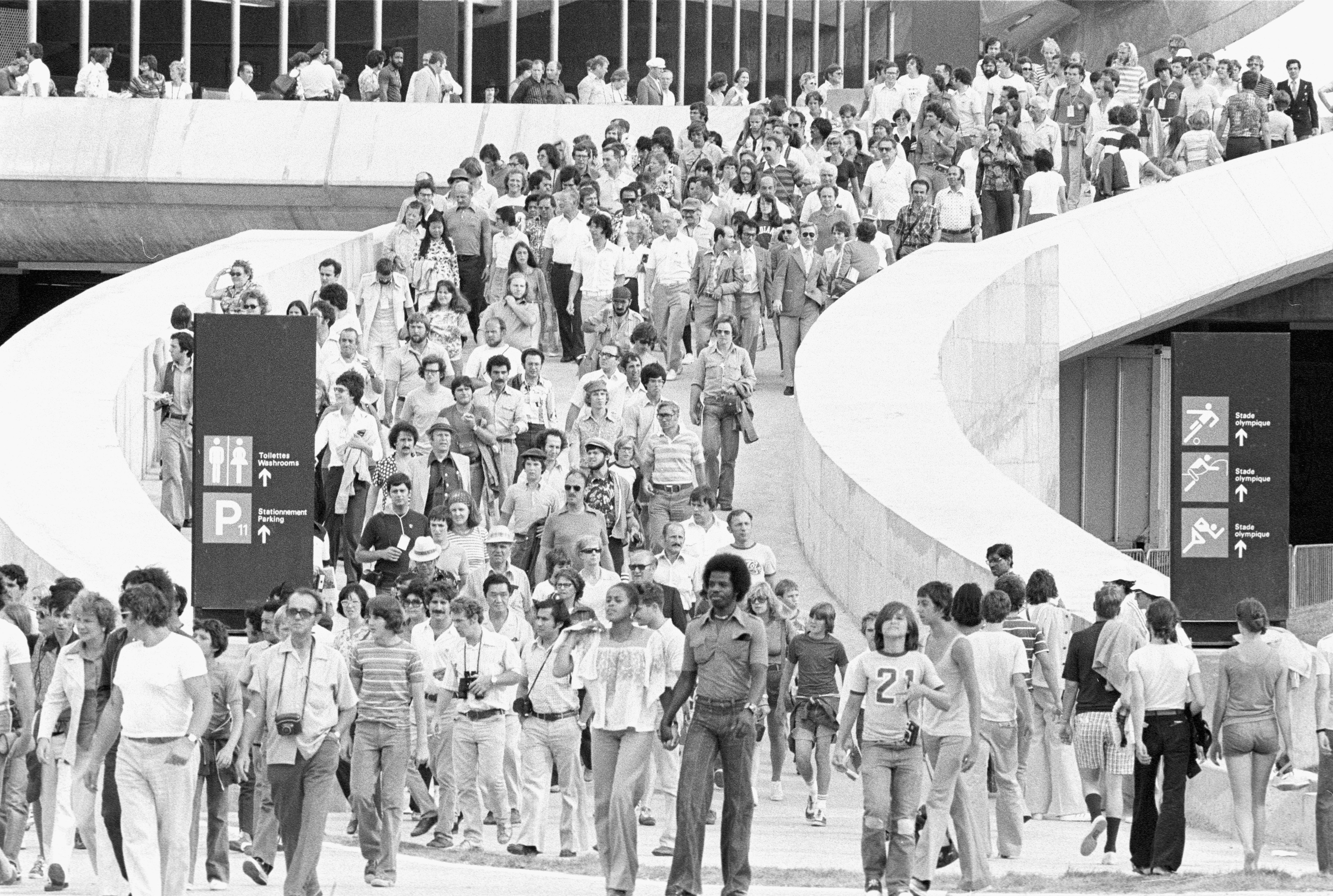
Black-and-white photo featuring a crowd of people walking down a ramp at the Montréal Olympic Stadium.

Crowds walking down a stadium ramp at the 1976 Montréal Olympics Games. Photo: Paul Taillefer. (e004923378)

Since the documents pertained to security matters, most were classified as confidential, secret, and at times top secret upon their creation and remained classified when transferred to LAC. Many of these documents are still classified almost 50 years after the closing ceremonies of the 1976 Olympics. This creates delays in granting access to these records. Even worse, there is no way to know exactly which records are classified. How is this possible?

Decades ago, recordkeeping and transfer protocols differed significantly. File lists of documents transferred to LAC often lacked any indication of their security classification. As a result, to determine if the Montréal Olympic records remain classified, we first need to identify what we have in our collections about the Games. Once identified, we then need to review the documents to ascertain their classification status—a time-consuming process.

Over the summer and early fall of 2023, we focused on nine boxes of material from the Montréal Olympic Games series in the Department of External Affairs fonds—a relatively small selection of records compared to other series in LAC’s collections. It took days to sift through and analyze the contents of these boxes to determine how much of it remained classified. This review determined that around a third of the files within this one series are still classified.

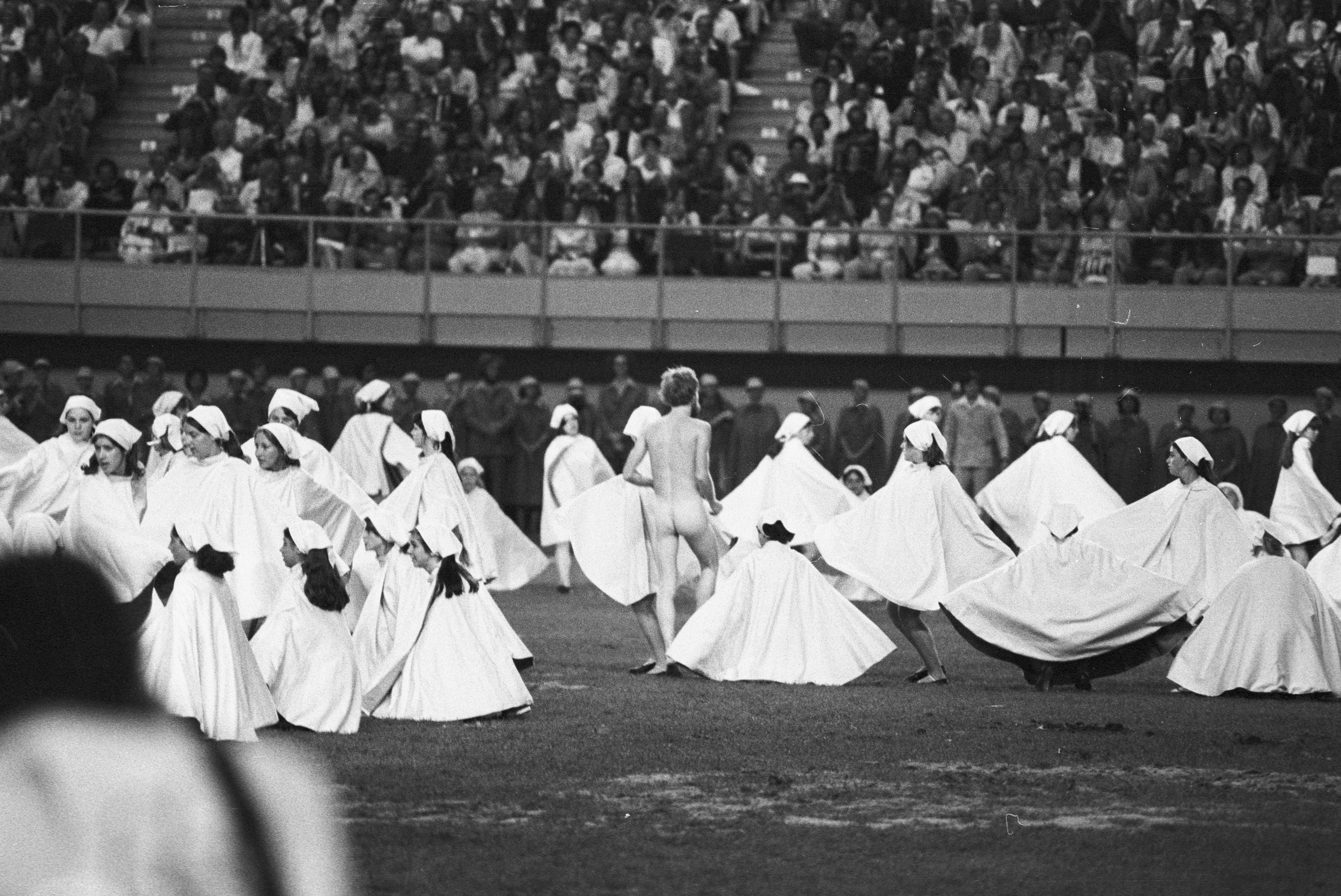
A black-and-white photo of a group of women dancing in white robes at the closing ceremony of the Montréal Summer Olympics. A man is streaking in the middle of them.

Closing ceremony at the Montréal Olympic Games featuring 500 young women dancing while a male streaker poses among them, August 1, 1976. Photo: Paul Taillefer. (e004923381)

After examining the contents of the boxes and information within the files, an analytical report was compiled. According to the fundamental principle of declassification, only the creator of the records can declassify them. Consequently, the results of our analysis were submitted to the relevant departments for their decision.

The classified records related to the security measures for the 1976 Montréal Olympic Games are not the only ones that remain classified decades after their creation. The declassification section of the Access to Information and Privacy Branch at LAC works closely with other departments to enhance access to historical records for all Canadians. This collaboration aims to unlock more of our collective past and ensure that valuable historical information is accessible to the public.

Additional Resources


Brittany Long is an archivist working on declassification in the Access to Information and Privacy Branch at Library and Archives Canada.

Advice for genealogy newbies

Version française

Are you new to researching your family tree? Not sure how to start exploring your roots? We are here to help! Visit our new How to begin your genealogy research page to discover:

Hopefully, you will find this to be an enjoyable hobby, or maybe it will become a passion for lifelong learning about Canada, Canadian history, and beyond.

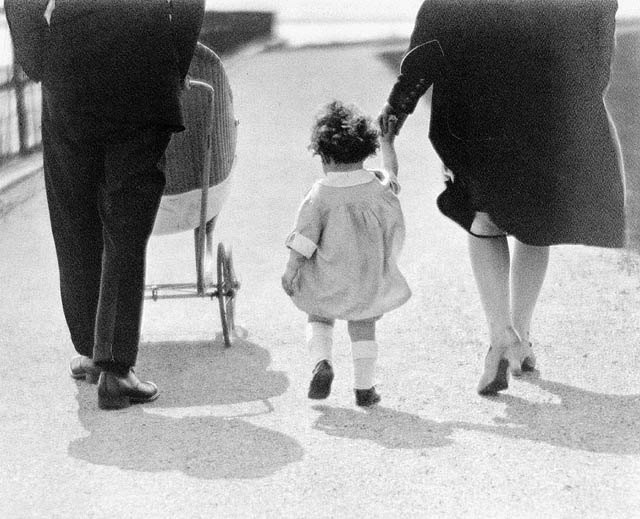
Black-and-white photograph featuring three people walking from behind. A man on the left pushes a stroller, while a small child in the centre holds the hand of a woman on the right.

“The Family,” Toronto, Ontario, ca. 1928. Photographer: John Pearson Morris. Library and Archives Canada/PA-126728

Continue learning from our Genealogy and family history pages. These resources are frequently updated, so be sure to check back often. Feeling more adventurous? Explore our A to Z tools and guides covering a wide range of topics related to Canada.

If you get stuck with your genealogy searches or need advice, use our handy online form to Ask genealogy a question.

Happy ancestor hunting!

The Green Interview fonds

Version française

By Dalton Campbell

In 2008, broadcaster and author Silver Donald Cameron and videographer Chris Beckett started The Green Interview. They would go on to record a series of more than a hundred interviews and create six documentaries on sustainability, climate change and other environmental issues.

Silver Donald Cameron died in June 2020, and the recordings and research files of The Green Interview were donated to Library and Archives Canada in 2023. The transcripts have been digitized and will be available to the public through the LAC catalogue.

Interviewees included Jane Goodall, Chris Turner, Robert Bateman, David Suzuki, Margaret Atwood, Sarika Cullis-Suzuki, James Lovelock, and Indigenous leaders such as Edmund Metatawabin, Todd Labrador, Albert Marshall and John Borrows, among others.

A man painting a picture.

Robert Bateman (pictured here in 1979) spoke to The Green Interview in 2010. National Postal Museum fonds. Library and Archives Canada/Post Office Department fonds/e001217390. Credit: Norm Lightfoot.

The final interview was with Silver Donald Cameron. Although it is the last interview, it is an excellent introduction to the series: Cameron discusses their thinking behind the series, how they made the interviews and what they learned throughout the series itself.

He said that they wanted the interviews to show how one person with an idea can make a difference and the wide range of solutions to environmental problems. He also said that most interviewees welcomed the chance to sit for a long-form interview, because when someone has dedicated years to a project, they are happy to discuss it at length.

Cameron stated that one of the most important things he learned through doing The Green Interview was how people were using the legal system and the courts to solve environmental problems. In 2012, he spoke with David Boyd, “who literally wrote the book on environmental rights.” Cameron said that he realized that this was “the key. […] If we had the right as individual Canadians to go to court and challenge anybody who was infringing on our environmental rights […] [then someone] can say, ‘I can prove this is infringing on my right to healthy environment and therefore you’ve got to stop it.’”

Citing Tony Oposa, Cameron said that with the courts, you tell a story using legal procedure and evidence. If you are unhappy with the decision, you can often appeal and tell the story again. In one sense, Donald Cameron says that even if you lose, you have won because you have been able to tell the story in a formal setting; the story is part of the public record and someone else can build on that.

Cameron said he realized that the law is “the tool that could apply to almost any environmental issue.” Many of the interviews discuss using the legal system to stop pollution in Aamjiwnaang First Nation (near Sarnia, Ontario) and in Buenos Aires, Argentina; to protect the Amazon; to enforce policies to fight climate change; to provide legal defence for environmentalists; to add environmental rights to the constitution; to explore the legal consequences of rising sea levels for island nations that may disappear; and so on. Cameron said that they used these interviews as inspiration and raw material for the book “Warrior Lawyers” and their documentary “Green Rights.”

Stamps featuring peregrine falcon.

First-day cover of a 12-cent Canadian stamp (1978) featuring a painting of the peregrine falcon. The painting is by Robert Bateman, who spoke with The Green Interview in 2010. Canada Post Corporation philatelic collection. Library and Archives Canada/Post Office Department fonds/e002071274.

The law and legal system are not the only themes explored in The Green Interview. In a brief blog post, it is not possible to discuss all of the themes: climate change and climate change denial; sustainable business; clearcutting of forests; scientists who study birds and migration patterns, fish populations and the health of oceans; Indigenous leaders who teach traditional knowledge; writers who stress hope and artists who try to capture the beauty of natural world; among many other subjects.

In the introduction to the final interview, Chris Beckett said that their interviewees made them “think about environmental solutions in new and innovative ways.” He also said, “Don and I both hoped that The Green Interview would still be a useful resource and educational tool long after we’re gone.” The recordings, transcripts and research files are now part of the LAC permanent collection. The recordings are being processed and will be made available to the public. In the meantime, the videos are available through The Green Interview website and YouTube channel. The transcripts are available through LAC collection search.

Further research:

The Green Interview fonds (MIKAN 5811850)

Archival fonds with environmental focus

  • Rosalie Bertell fonds (MIKAN 107192)
  • James P. Bruce fonds (MIKAN 5665879)
  • James MacNeill fonds (MIKAN 5673182)
  • Greenpeace Canada fonds (MIKAN 163472)
  • Sierra Club of Canada fonds (MIKAN 185222)
  • Department of Environment fonds (MIKAN 358)
  • National Round Table on the Environment and the Economy (MIKAN 3634450)

Books by Silver Donald Cameron

  • The living beach: life, death and politics where the land meets the sea (OCLC 957581431)
  • The education of Everett Richardson: the Nova Scotia fishermen’s strike, 1970-71 (OCLC 855272616)
  • Getting wisdom: the transformative power of community service-learning (OCLC 662578649)
  • Ideas, energy, ambition, dreams: stories of community-driven economic initiatives from across Canada (OCLC 50022657)
  • Wind, whales, and whiskey: a Cape Breton voyage (OCLC 28799807)

Dalton Campbell is an archivist in the Science, Environment and Economy section of the Private Archives Division at Library and Archives Canada.

Chocolate Cake from 1961

Version française

Cooking with Library and Archives Canada bannerBy Rebecca Murray

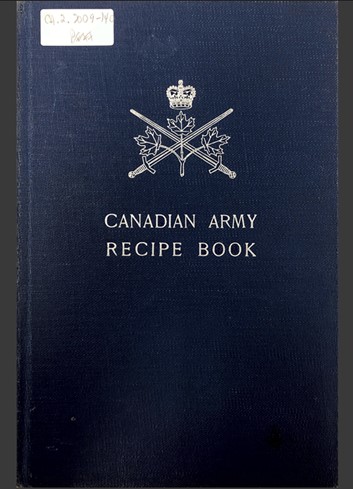
Who doesn’t love a slice of rich, moist chocolate cake? That’s what I thought when I took on the challenge of trying out a recipe from this Canadian Army Recipe Book from 1961.

A blue book cover with some suggestions of wear with the words “Canadian Army Recipe Book” written in capital letters under the badge of the Canadian Army: the St Edward’s Crown, three maple leaves on one stem and a pair of crossed swords, all in silvery grey.

The cover of the Canadian Army Recipe Book by the Department of National Defence circa 1961 (OCLC 299227447).

As I reviewed the recipes, many of which were familiar to me, I remarked three notable trends.

One: the quantities. Most of the recipes are written for 100 servings or more! As a home cook, I’m used to halving or doubling recipes, not trying to figure if I want to make a quarter or a fifth of the recipe at hand. Honestly, my usual deciding factor is the number of eggs; hard to split those in two! In tandem with the expected output of the recipe, the ingredients are all measured here in weight rather than in volume, to which I am much more accustomed. It’s clear that, in comparison with my colleague who looked at army recipes from 1943, this recipe book isn’t concerned at all with rationing!

Two: the organization. I have never encountered such a well laid-out, detailed and descriptive (yet not overly descriptive) cookbook. The first chapter is a general introduction that spells out method particulars (including what “folding” means — a note for Schitt’s Creek fans!), conversion charts and suggestions for choosing cuts of meat and how to prepare other ingredients for best results. As you can see in the particular recipe I tried, it also provides handy references to other recipes in the book so that duplication is minimal. I have, of course, seen this in other cookbooks, but what makes this one different is that everything is numbered for very easy reference.

Three: the simplicity of it all. Maybe I shouldn’t have been surprised, but in this age of new and exciting recipes and an abundance of “how to build a mashed potato mountain complete with gravy lava and dinosaurs” videos online, I was pleasantly surprised to find a selection of recipes that really speak to the basics. There’s a clear link between effort for maximum output!

Chocolate Cake.

Brown Bread.

Baked Beans.

Doughnuts.

The list goes on, and many recipes include variations that might have been appropriate for different seasons or holidays. There’s also a handy section that I copied out about “haversack lunches” because as a mom, you can never have too many ideas for what to put in a lunchbox. But I digress!

Chocolate cake!

A page of text including notes and methods as well as a list of ingredients for chocolate cake.

Recipe for chocolate cake from the Canadian Army Recipe Book, 1961 (OCLC 299227447).

The first step was to decide on an approximate quantity (output) and adjust the recipe accordingly. If you’ve got an eagle eye, you’ll see that I’ve made a math mistake in my conversions: the original quantities for sugar and flour differ, but I’ve converted and adjusted them to be equal measures.

That said, I didn’t notice this until after having mixed the ingredients and seen the cake pans into the oven — a small mistake that didn’t have an immediate impact on the final dish (or taste). A good reminder to measure twice and mix once!

Ingredient Original quantity (full) Adjusted quantity (quarter)
Fat 3 pounds, 8 ounces ⅞ pounds (396 grams)
Sugar 7 pounds 1 ¾ pounds (793 grams)
Eggs 4 ⅔ cups (approximately 24) 6 eggs
Vanilla 3 tbsp ¾ tbsp
Flour, pastry, unsifted 6 pounds, 4 ounces 1 ¾ pounds (793 grams)
Cocoa 1 pound ¼ pound (113 grams)
Baking Powder 5 ounces 1 ¼ ounces
Salt 1 ounce ¼ ounce
Milk 2 ½ quarts 2 ½ cups

Next, I assembled the ingredients. This wasn’t too daunting of a task, the ingredients for this cake being part and parcel of the basic pantry of many home cooks. A note for those who might be curious: I chose to use butter as my “fat” in the recipe. Alas, my experience with the butter wrapper was nothing compared to the day that inspired this blog post.

Wet and dry ingredients for a cake arranged in various vessels on a green tea towel.

The mise-en-place or preparation of ingredients. From left to right: flour, vanilla, sugar, eggs, butter, cocoa/baking powder/salt, milk. Courtesy of the author, Rebecca Murray.

I mixed ingredients as indicated in the method and then combined them gradually. Confession: I’m not always great at following recipe instructions. I tend to want to rush ahead, and sometimes I don’t take the care suggested in the early stages of many recipes. I also had a sous-chef with me who didn’t appreciate the pauses for photo taking and re-reading of the recipe! That said, with a lot of trial and error, I can now usually muddle through most basic recipes with a good balance of respect for the suggested method and the splash of personality I like to bring to my cooking.

I divided the batter into three (yes, three!) different cake pans and set them to bake at 350 degrees for the suggested 30 to 45 minutes. The cakes smelled SO good! The round cake was ready after approximately 40 minutes and the square one closer to 45, whereas the bundt pan cake needed between 50 and 55 minutes to fully cook. Remember that every appliance is different and that the presence of three cakes rather than just one probably impacted the bake time.

Three cakes on wire cooling racks, all light brown in colouring.

Three cakes baked from this recipe as they cool on the counter. Courtesy of the author, Rebecca Murray.

We chose to ice one of the cakes with a basic homemade recipe of icing sugar, butter, a splash of milk, peppermint extract and food colouring.

A cross section shot of a brown cake topped with green frosting. The cake sits on a glass platter.

A post taste-test cross section shot of the iced cake. Delicious! Courtesy of the author, Rebecca Murray.

The final consensus from those who taste tested the various cakes is that the recipe stands the test of time. As someone who doesn’t usually make cakes from scratch, this was a great reminder of how simple recipes can be so good and that the extra steps didn’t really take too much more time than I might normally need when whipping up something with a mix. Next time, I’d try a more classic icing flavour and colour – but green mint was fun too!

If you try this recipe, please share pictures of your results with us using the hashtag #CookingWithLAC and tagging our social media: FacebookInstagramX (Twitter)YouTubeFlickr and LinkedIn.


Rebecca Murray is a Literary Programs Advisor in the Outreach and Engagement Branch at Library and Archives Canada.