Images of Point Pelee National Park and Pelee Island now on Flickr

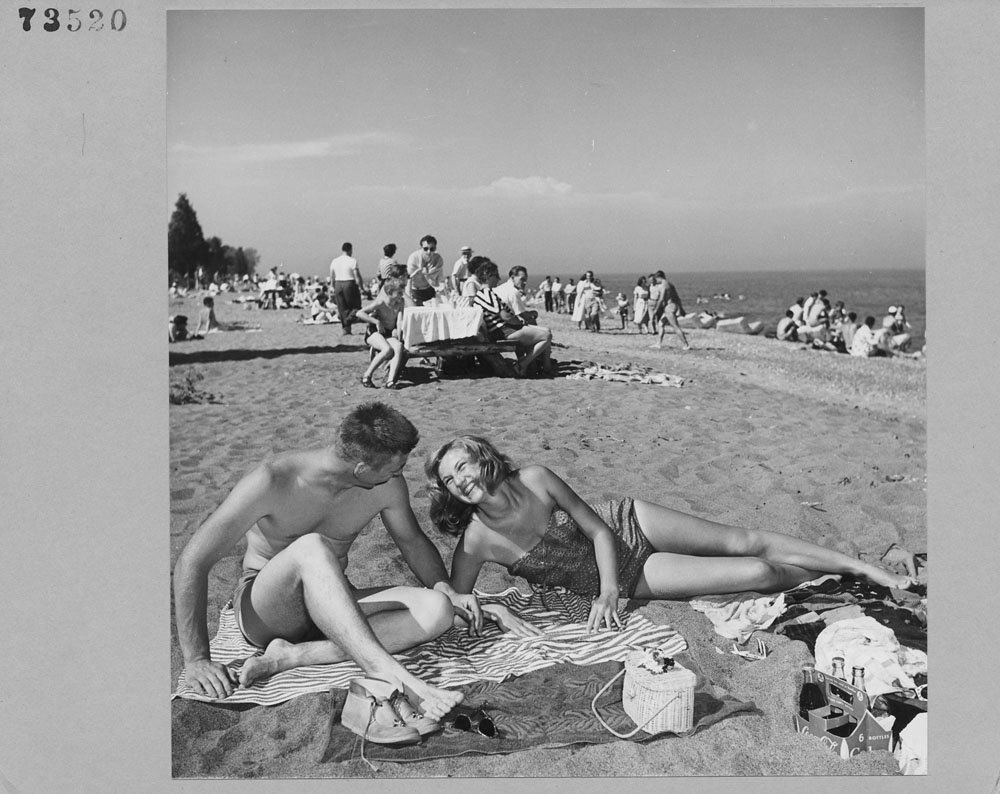
A black-and-white photograph of Kathleen Hart and Dave Phipps sunbathing on the beach.

Kathleen Hart and Dave Phipps sunbathing on the beach at Point Pelee National Park, Ontario. [MIKAN 4297909]

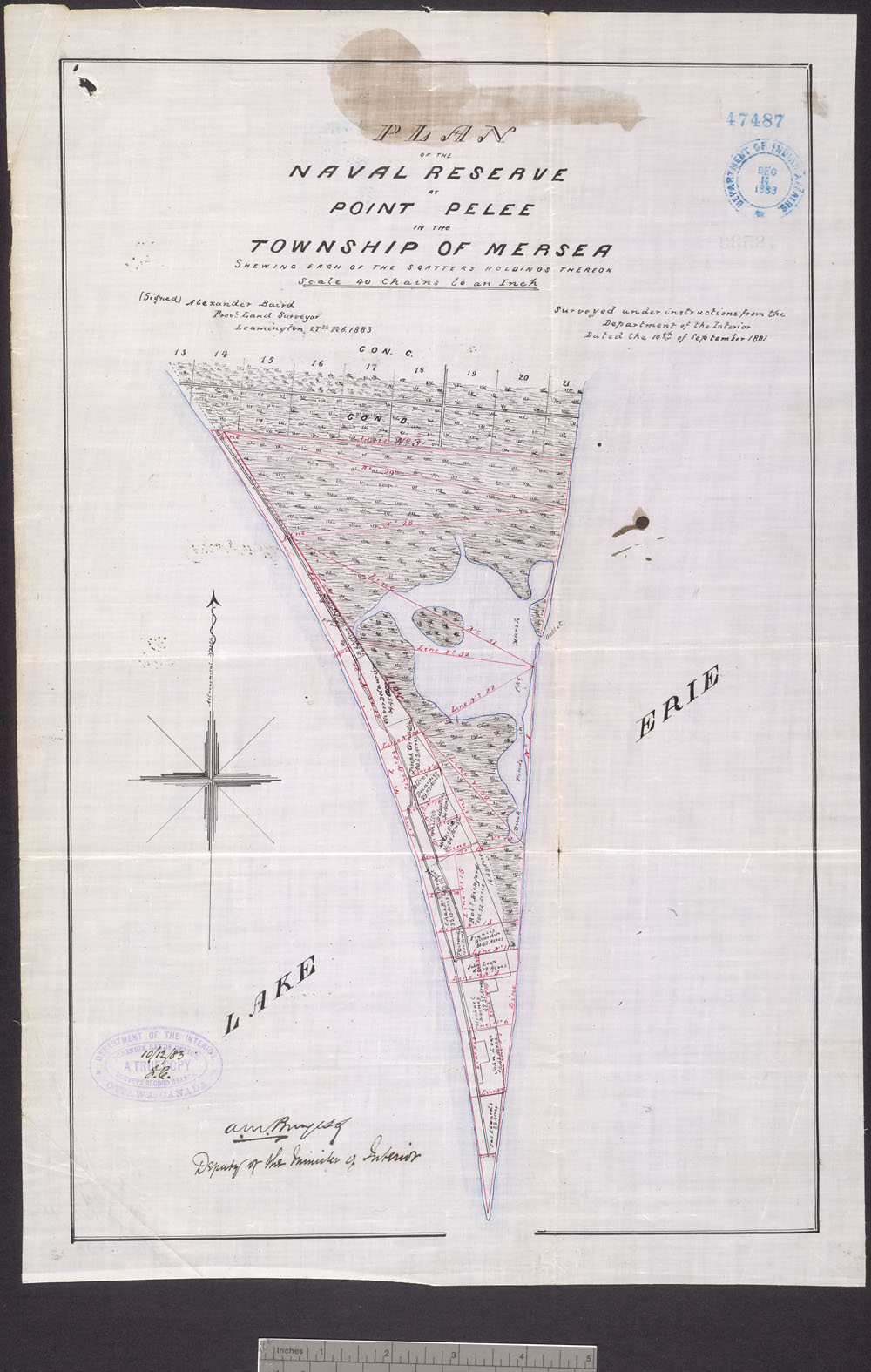
Point Pelee National Park is located in southwestern Ontario. The park is a peninsula that extends into Lake Erie and consists of marsh and woodland that are home to diverse flora and fauna. In 1918, Point Pelee was the first national park created for conservation at the urging of birdwatchers and hunters.

A black-and-white “Plan of the Naval Reserve at Point Pelee in the Township of Mersea..."

“Plan of the Naval Reserve at Point Pelee in the Township of Mersea…,” Ontario. [MIKAN 3670979]

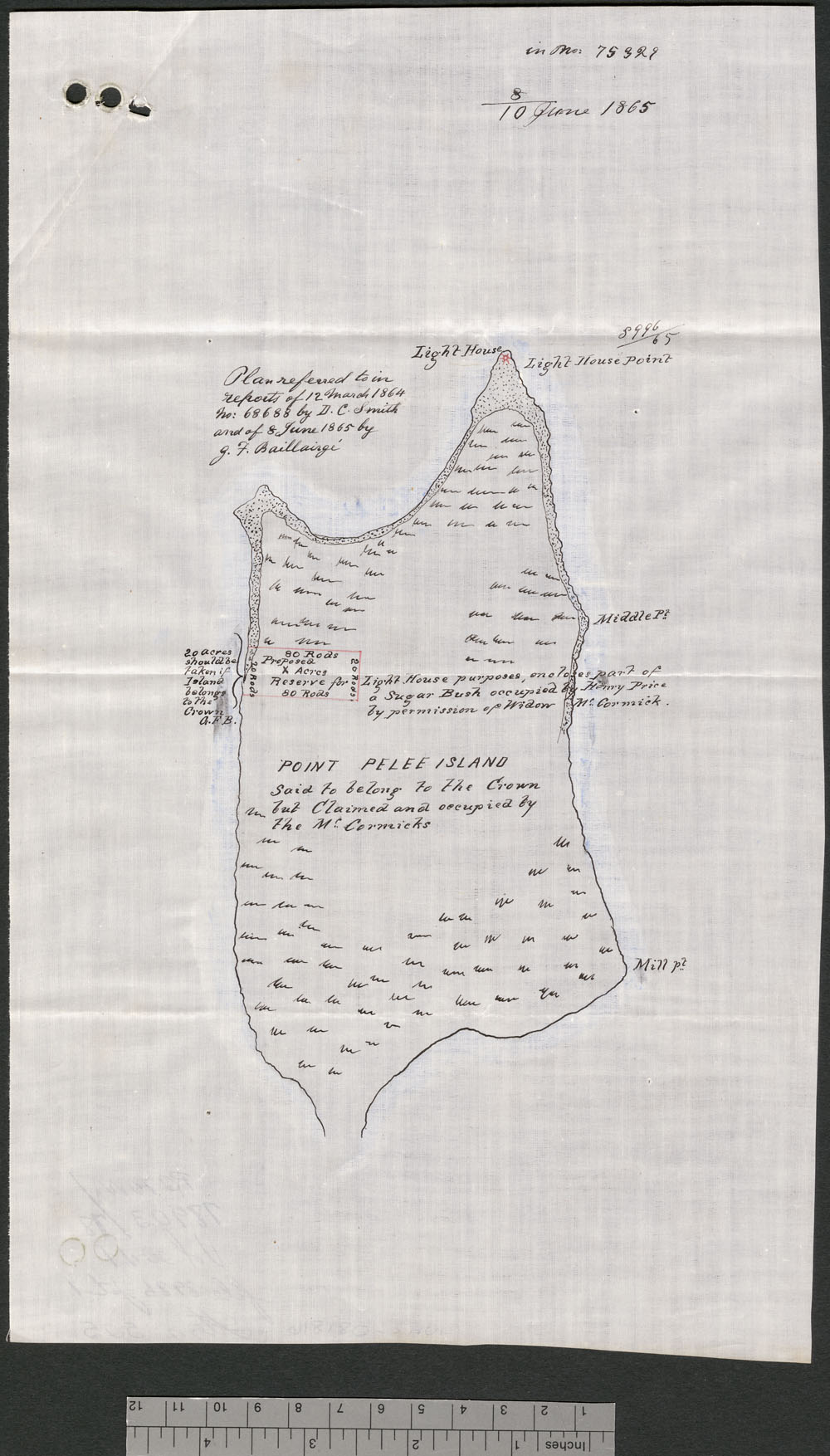
A black-and-white map of Point Pelee Island, Ontario.

Point Pelee Island, Ontario. [MIKAN 3670898]

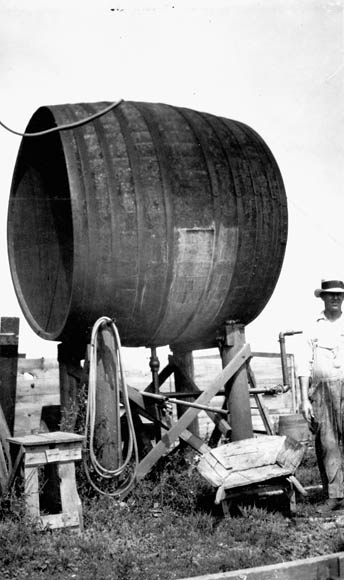
Pelee Island is the largest island in Lake Erie and lies southwest of Point Pelee National Park, but is not part of the park. The island is abundant with wildlife and is an important flyway for migrating birds between Ohio and Ontario. The island also has a long history of wine making.

A black-and-white photograph of a Pelee Island wine vat now used as a water reservoir.

Pelee Island wine vat now used as a water reservoir, Pelee Island, Ontario. [MIKAN 3642953]

Visit the Flickr album now!

Images of blacksmiths now on Flickr

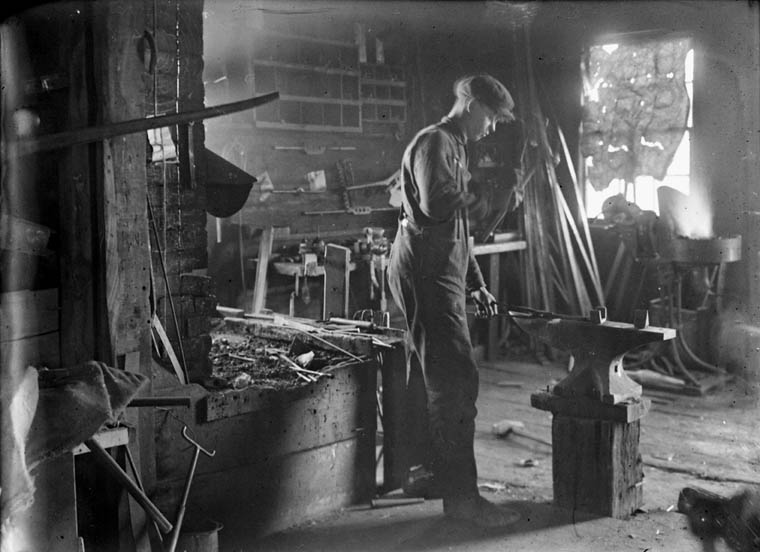
Blacksmiths manipulate iron or steel to create objects, such as tools, household goods, and art. They use specific tools to hammer, bend, or cut metal heated in a forge.

A black-and-white photograph of a man hammering a piece of metal at the Jolly Blacksmith shop.

Interior of Jolly Blacksmith shop, Ottawa, Ontario [MIKAN 3265334]

Many blacksmiths travelled to Canada during the mid-17th century to help build the trading posts of the Hudson’s Bay Company and its rival, the North West Company. As settlements grew, these metalworkers working in their workshops became an important technological and industrial hub of business and trade. They honed their skills to specialize in different domains. For example, a farrier was a blacksmith who specialized in the care and trimming of horses’ hooves, including shoeing them with horseshoes they created.

A black-and-white photograph of thirteen men posing for a group picture in front of the blacksmith shop.

Blacksmith shop, Harris Camp, Peter Co., Parry Sound, Ontario [MIKAN 3300810]

A black-and-white photograph of three soldiers watching a blacksmith shoeing a horse.

Personnel of the 7th Canadian Infantry Brigade watching a blacksmith shoeing a horse, Creully, France [MIKAN 3229115]

Around the mid-19th century, blacksmiths expanded their roles and continued to offer multiple services related to ironwork into the early 20th century.

A black-and-white photograph of a man in heating a horseshoe in a forge.

Harper Rennick heating a horseshoe, Shawville, Quebec [MIKAN 4948714]

Visit the Flickr album now!

Images of Tartans and Kilts now on Flickr

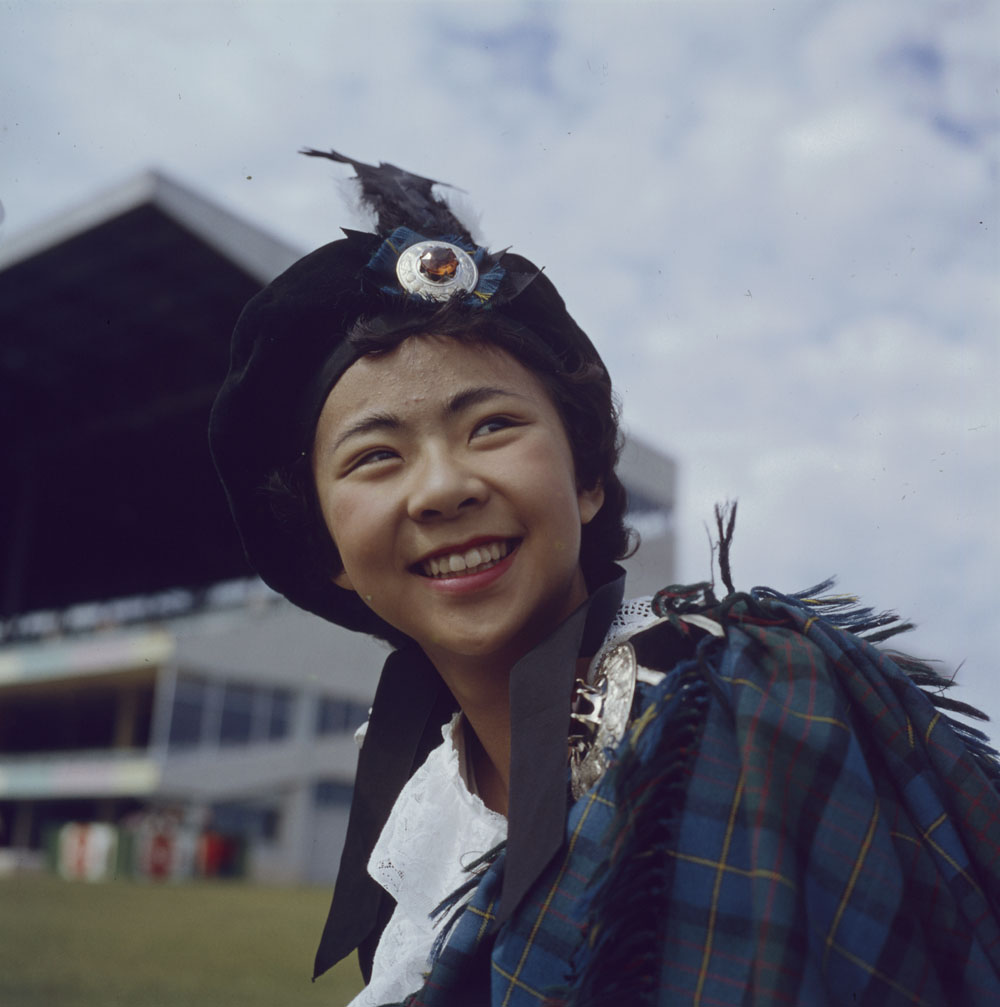
A colour photograph of a smiling girl wearing a tam and tartan shoulder accessory.

Betty Chan at Scottish games, Winnipeg, Manitoba. [MIKAN 4302026]

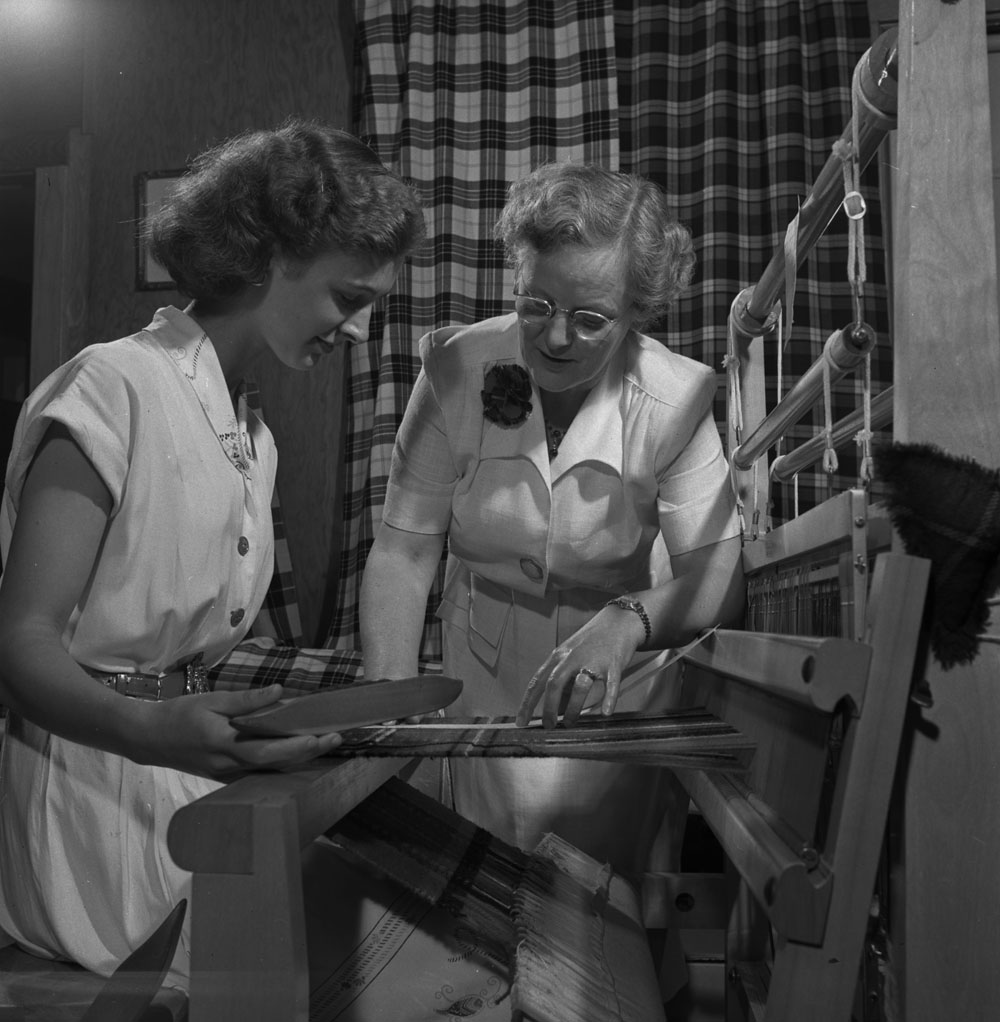
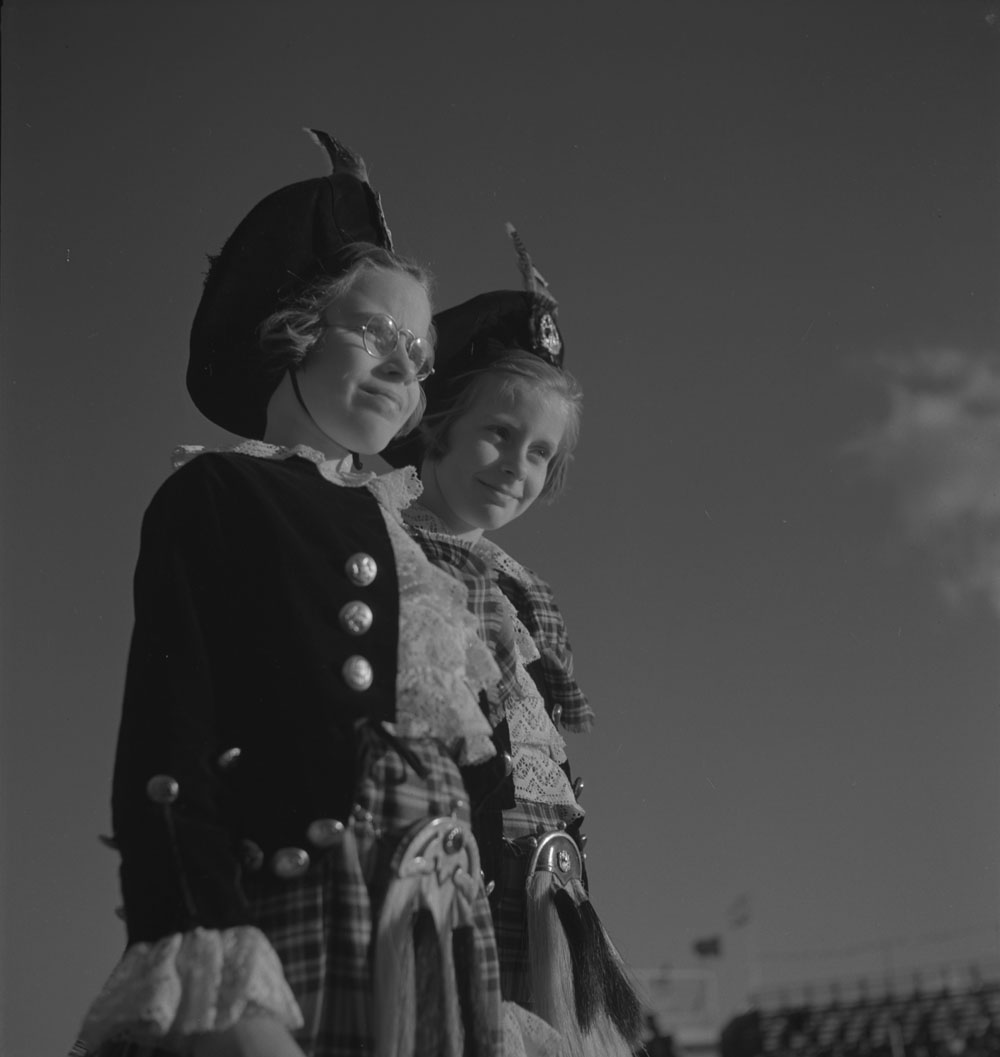
Tartan is a multicoloured cloth pattern of criss-crossed horizontal and vertical bands. Traditionally, tartan is made with wool, but other kinds of materials may be used. Scotland and kilts in particular are associated with tartan patterns; however, the steady immigration of Scots to Canada created a special environment for tartan in this country. Cultural events, such as Highland games across Canada, showcase the various patterns seen in kilts, jackets, blankets and clothing accessories. For less traditional clothing, these patterns are often referred to as plaid. There are unique Canadian tartans, such as the provincial and territorial patterns, most of which are registered with the Court of the Lord Lyon. This court regulates Scottish heraldry, including tartan patterns. Canada’s green, gold, red and brown tartan, known as the “maple leaf,” became an official national symbol in 2011.

A black-and-white photograph of two women at a loom. The woman sitting on the left holds a shuttle. The woman standing on the right inspects the tartan pattern and weave.

Tartan being woven, St. Ann’s, Cape Breton Island, Nova Scotia. [MIKAN 4948510]

A black-and-white photograph of two girls who are standing and wearing tams, matching jackets and kilts.

Two girls dressed in kilts at Highland games, Antigonish, Nova Scotia. [MIKAN 4315223]

Visit the Flickr album now!

Pre-Confederation Land Patents issued by the Registrar General

By Rebecca Murray

Reference Services frequently receives requests about land patents in Canada. Here, we will focus on pre-Confederation land documents. Be sure to refer also to Crown land patents: Indian land sales for more information. The next post on land patents will focus on post-Confederation land patents.

What is a Land Patent?

Land patents are issued by the Crown to grant or confirm title to a portion of land. They represent the first title to land, and serve as proof that the land no longer belongs to the Crown.

How Do I Find a Land Patent?

As this is a challenging request even for practiced archivists, this post will guide you through an example of how to approach this type of research from home or while onsite at Library and Archives Canada (LAC).

Step 1:

Start with the information you have: a date, a location, a person or organization (patentee). It is preferable to proceed with all three pieces of information (especially the date), but you can find the answer with one or more of the pieces of information.

Example:

  1. Date (specific or general): June 7, 1856
  2. Location (detailed or general): Lot 8, Range 3, east of Plank Road, Township of Seneca
  3. Patentee: David Patterson

Step 2:

With the patentee and date, or the date and location, you can look at the Indexes to Indian and Ordnance Land Patents (nominal [by name] and geographical indices) for the period 1845–1867 found in RG68, volume 911, microfilm reel M-1638. With the patentee and location, you can consult either the nominal or the geographical indices but without the date, you will have to perform a wider search using the General Index.

In this case, I found an entry for David Patterson in the Indexes to Indian and Ordnance Land Patents (RG68 volume 911, microfilm reel M-1638) and noted that the corresponding entry would be found in Liber EO (some libers are titled by letters rather than numbers), on folio 172.

Step 3:

Once you know the liber (register) and folio (page number), you need to find that liber within RG68 records. There are two options for continuing your search:

Web-Based Search

  1. Begin in Collection Search with the search string: RG68 68-2 land
  2. Select the Archives tab and then filter by date (left-hand menu)

Many records for this period are available on digitized microfilm. Search Héritage  to see if the reel has been digitized.

Onsite at LAC

When onsite at 395 Wellington St., you can use paper finding aid 68-2 to look up the liber number and find the corresponding volume and microfilm reel numbers. Microfilm reels are also available for self-serve consultation in room 354.

A black-and-white reproduction of an official Province of Canada document describing the exact location and size of the land grant.

Land patent confirming title to land granted to David Patterson in Haldimand County, dated June 8, 1856. (RG68 volume 231, file EO, page 172)

How to Use the Key to the General Index / the General Index

If your date does not fall in the 1845 to 1867 period, or you are unsure of the date, you can rely on the Key to the General Index for 1651–1867 to identify entries in the General Index related to the individual in question.

Paper copies of the Keys and General Indices for the pre-Confederation period are also available in the 2nd floor Reference Room of 395 Wellington St. Please keep in mind that the General Index applies to all types of documents produced by the Registrar General, not just land documents. Hence the importance of using the Key to the General Index to expedite your search.

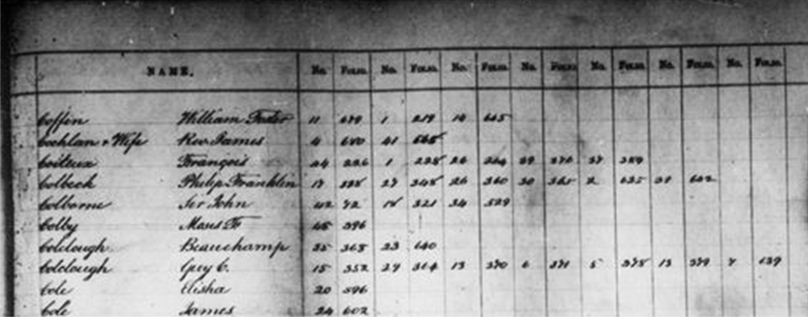
For example, the Key to the General Index for the period 1841–1867 can be found in RG68 volume 896, which is available on microfilm reel C-2884. The Key to the General Index is organized by name. Find the individual in question and copy down each pair of numbers next to the name, as they will allow you to locate the relevant entries in the corresponding General Index. The pair of numbers is associated with two columns: the “No.” column indicating the “line number” and the “Folio” column indicating “page.” This allows you to jump directly to the correct page of the General Index and locate the corresponding entry. From this line, you get more information, namely the liber and folio numbers necessary to locate the patent itself. For example, in the image, take note of the first pair of numbers associated with the Rev. James Cochlan and wife: “4” and “680.”
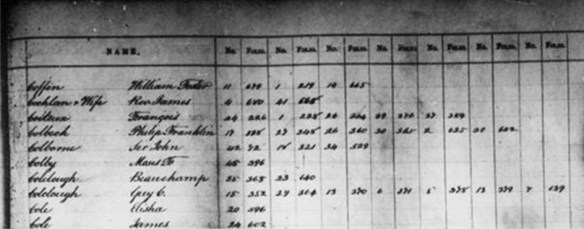
A black-and-white reproduction of a nominal index with a few columns: Name, No., Folio, No., Folio, etc.

Excerpt from the Key to the General Index for 1651–1841 (RG68 volume 893), showing the liber (No.) and folio numbers associated with each name (RG 68, Volume 893 on Canadiana). Take note of the first pair of numbers associated with the Rev. James Cochlan and wife: “4” and “680.”

A black-and-white reproduction of a ledger with five columns: No., Lib, Folio, Date and Surrenders.

Excerpt from the General Index for (RG68 volumes 894 and 895), showing the entry on line 4 of page 680. The liber and folio for the document in question are “KM” and “6.”

After identifying the liber and folio numbers using the General Index you can review Step 3, from home or onsite, to determine the complete reference for the patent including the microfilm reel number.

It can be very challenging to navigate this research; please try it on your own, but do not hesitate to contact us if you need any assistance!


Rebecca Murray is a Reference Archivist in Reference Services at Library and Archives Canada.

Images of Cheese now on Flickr

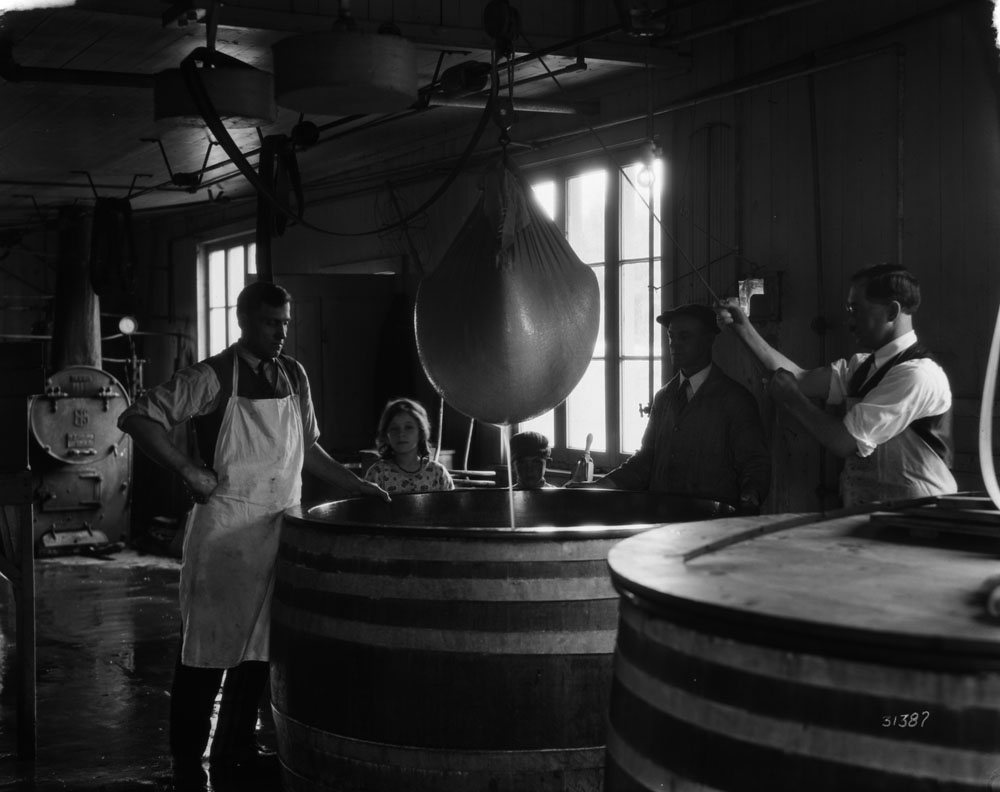
Cheese making in Canada can trace its origins to the early 1600s with the introduction of European, milk-producing cattle at settlements like Quebec City. Over time, as more settlers arrived, so too did more cattle and family cheese recipes. Today Canadians benefit from two types of recipes introduced in the 17th century—the soft-ripened cheeses from France, and the harder types, such as Cheddar, from the United Kingdom.

A black-and-white photograph of a man using a hoist to lift cheese from a vat. Two other men, a girl and a boy watch from behind the vat.

Drawing cheese from vats at the Gruyer cheese factory, La Malbaie, Quebec (MIKAN 3518025)

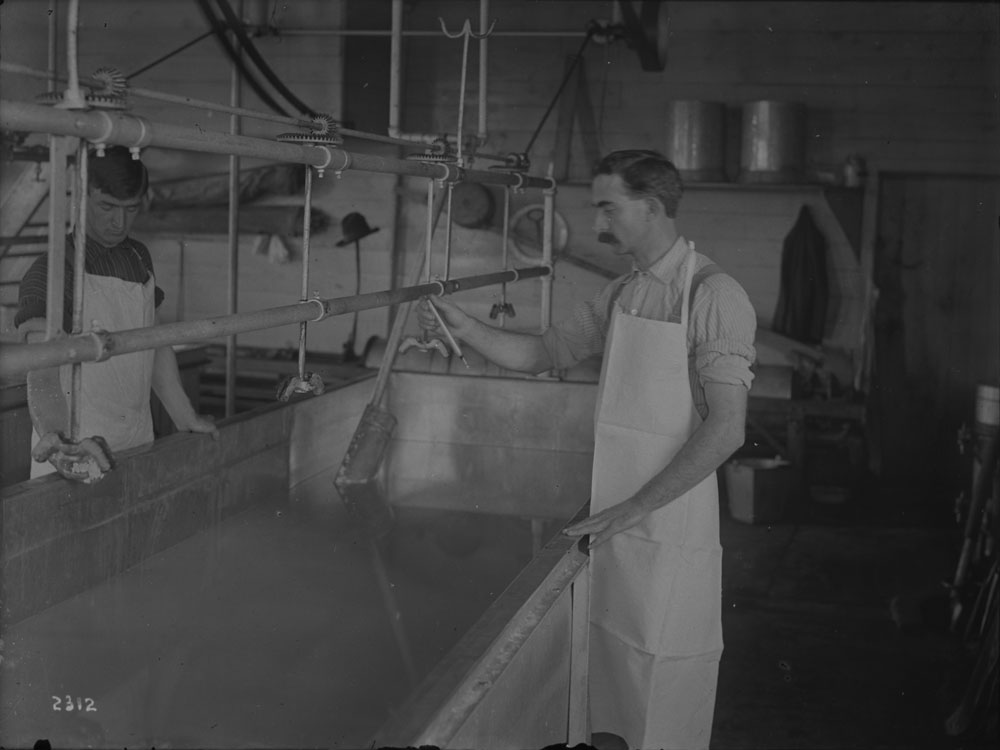
The production of cheese stayed mainly on the family farm and saw only a few exports during the early 19th century. However, an American named Harvey Farrington convinced local farmers to sell their milk stocks to his factory, allowing him to open the first Canadian cheese factory in Norwich, Ontario, in 1864. Since Confederation, a number of small and large cheese producers and cheese-making schools have made their mark on Canadian food production.

A black-and-white photograph of two men checking the temperature of milk at a cheese factory.

Taking temperature in cheese factory, Prince Edward County, Ontario (MIKAN 3371580)

Visit the Flickr album now!

Images of Bird’s-Eye Views now on Flickr

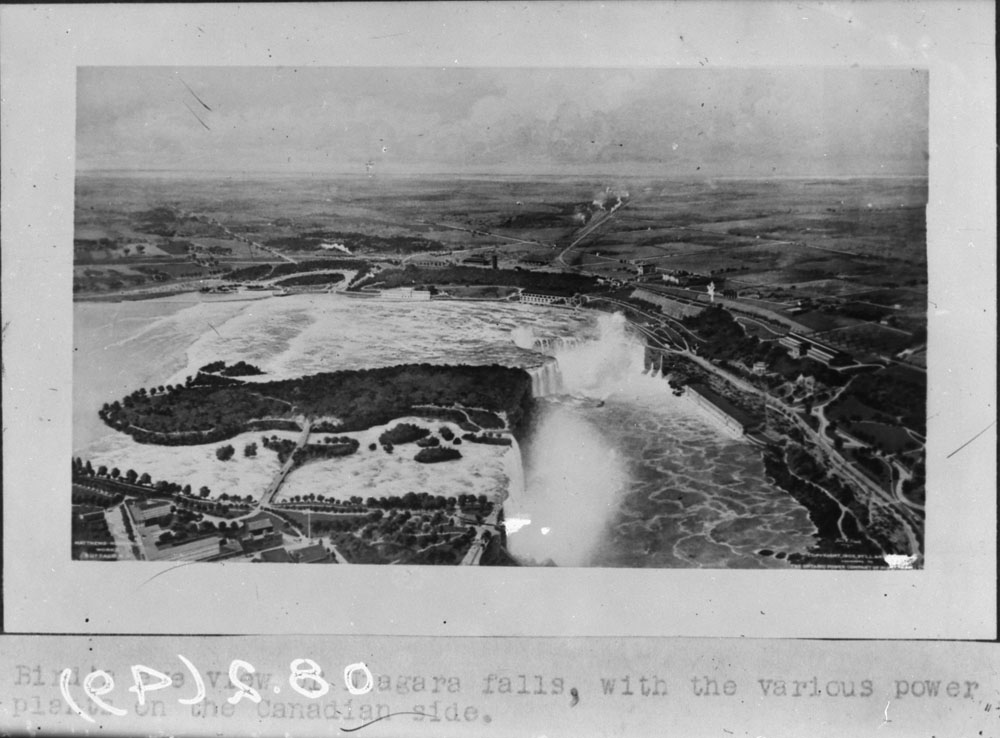
 The expression “a bird’s-eye view” indicates the perspective of an area or object in relation to other things, such as a map, blueprint, or cityscape. Often depicted in drawings or photographs, a bird’s-eye view offers a reference point from high overhead.
A black-and-white photograph of Niagara Falls from a bird’s-eye perspective. There are various buildings on either side of the border and roads leading up to and alongside the riverbanks.

Bird’s-eye view of Niagara Falls with the various power plants on the Canadian side, Ontario (MIKAN 3318089)

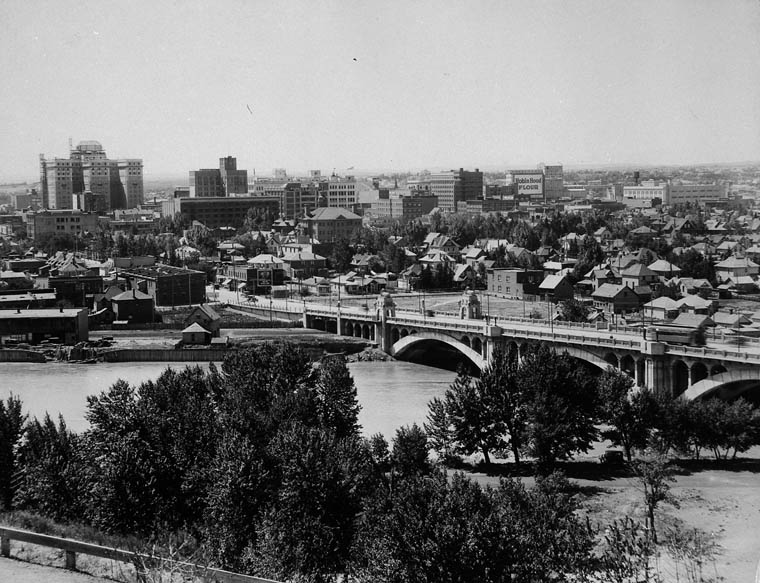
A black-and-white photograph of Calgary, Alberta, from a bird’s-eye perspective. The Bow River and a bridge are in the foreground with a number of homes and larger buildings in the background.

Bird’s-eye view of Calgary, Alberta (MIKAN 3302621)

Some synonyms for bird’s-eye view include aerial view, aerial viewpoint, overhead view, bird’s-eye shot, and bird’s-flight view. There are slight differences in perspective, but all appear to depict the area from up above.

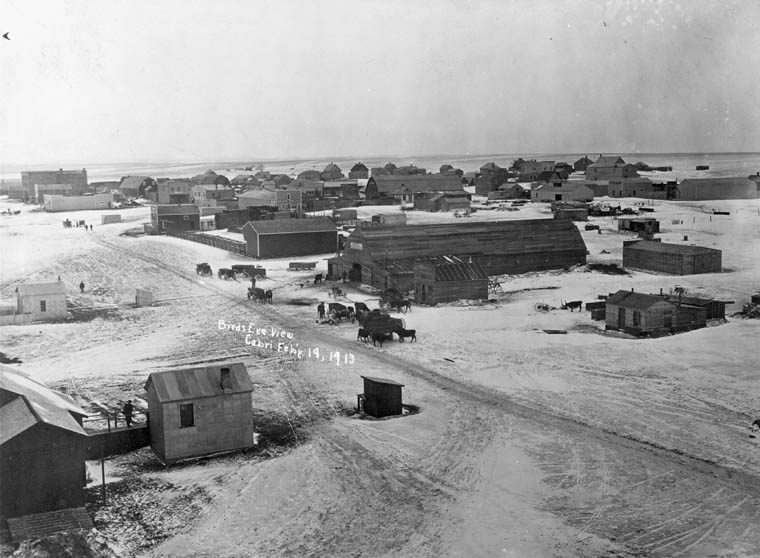
A black-and-white photograph of Cabri, Saskatchewan, from a bird’s-eye perspective. It shows a main dirt road with neighbouring houses and buildings. Some people, horses and wagons gather throughout the town.

Bird’s-eye view of Cabri, Saskatchewan (MIKAN 3259496)

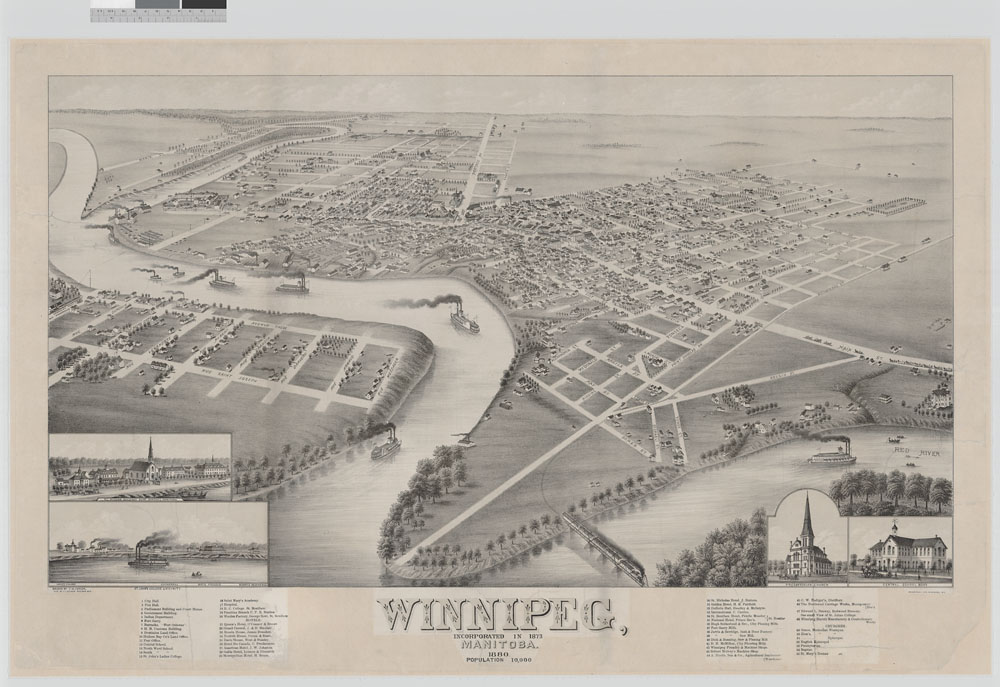
A black-and-white map of Winnipeg, Manitoba, from a bird’s-eye perspective. The Red River is central, showing steamboats navigating it and settlements and main roads established along its banks.

Bird’s-eye view of Winnipeg, Manitoba (MIKAN 4146329)

Visit the Flickr album now!

Radio Technology

I heard it on my radio—

The technology behind the radio allows for mass communication without using wires. Nikolai Tesla lectured on wireless communication in 1893 in St. Louis, Missouri at the World’s Fair. His theories laid the scientific groundwork for the development of the radio as we know it today.

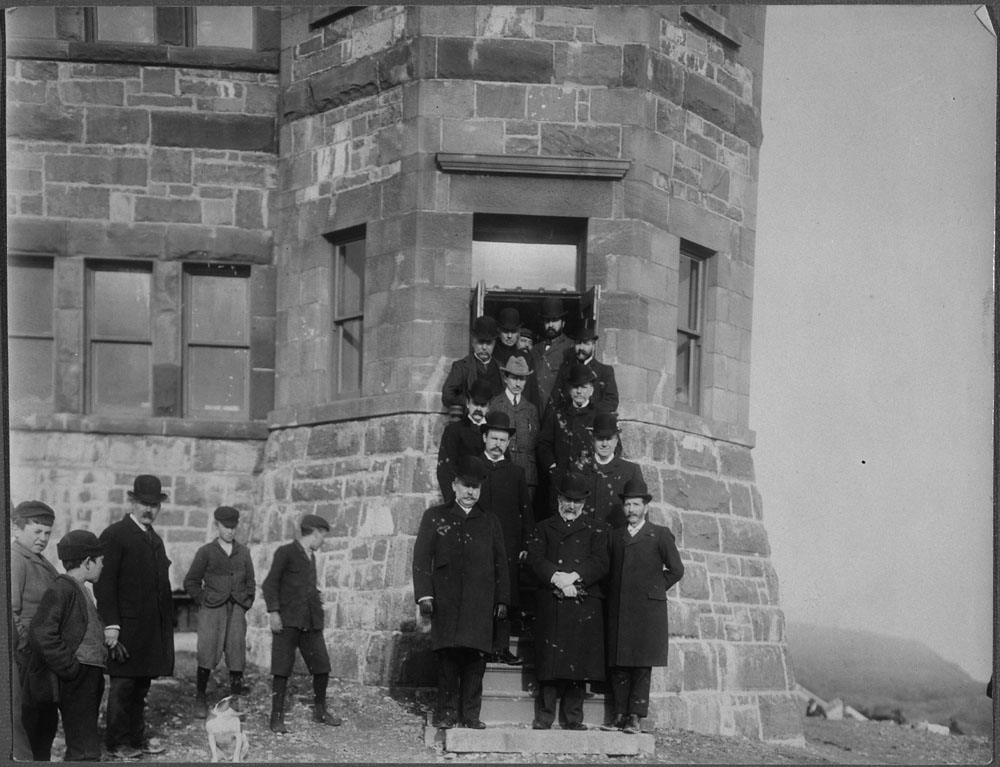
A black-and-white photograph of Guglielmo Marconi posing on the steps of a building with 12 members of the administration of Newfoundland, Signal Hill, St. John's.

Marconi (with light hat) and members of the administration of Newfoundland, Signal Hill, St. John’s (MIKAN 3380817)

Guglielmo Marconi is the person most associated with the radio and he has ties to Canada. He tested his transmission equipment on Signal Hill, St. John’s in Newfoundland, 1901. His early successes spurred the use of radio for long distance messaging using Morse code. The technology was not able to transmit speech at the time. However, advances during and after the First World War provided both the military and civilians with access to radios that sent transmissions as recognizable speech.

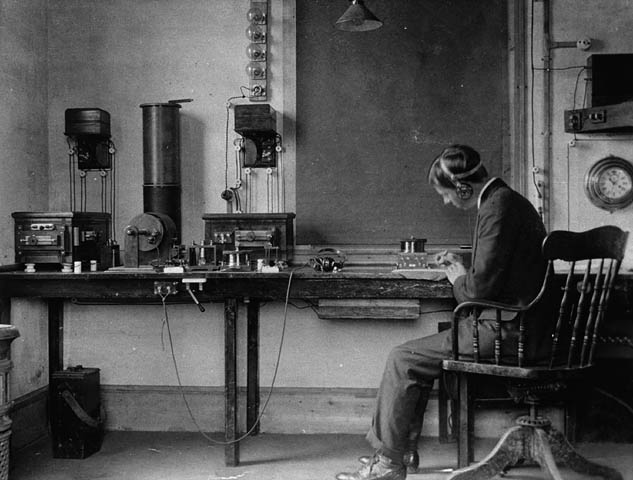
A black-and-white photograph of Donald Manson, an employee of the Marconi Company sitting at a table, wearing headphones and writing on paper while listening to a radio transmission.

Donald Manson, an employee of the Marconi Company (MIKAN 3193105)

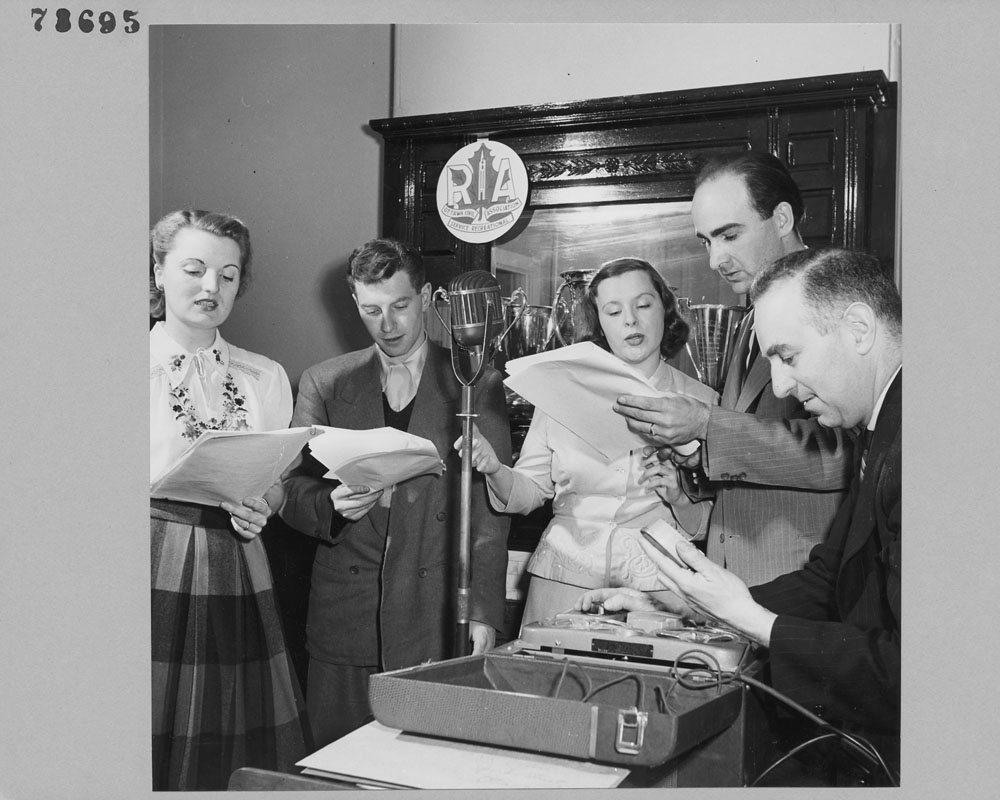
A black-and-white photograph of two women and three men, members of the R. A. Radio Acting Group, reading from a script into a microphone.

Members of the R. A. Radio Acting Group (MIKAN 4297976)

Local stations and federal agencies were created such as the Canadian Broadcasting Corporation, and broke into the news, music, and entertainment realms from the 1920s to the 1940s. Mass media was here to stay. Radio gave way to television, and then to the internet. Despite these leaps and bounds of its technological siblings, radio technology is widely used today due to its easy access and reliability.

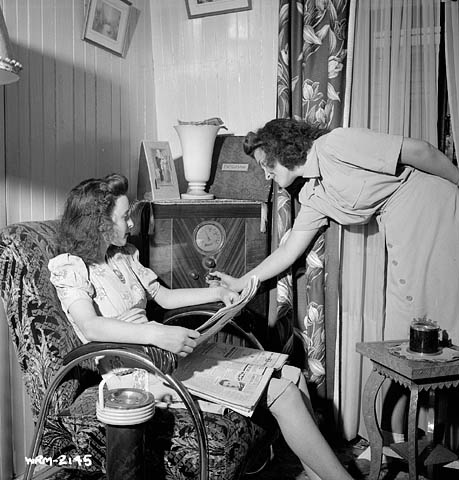
A black-and-white photograph of a two women listening to a radio. One woman sits in a chair, the second women stands and adjusts the station settings.

Female workers at the Dominion Arsenals plant relax and listen to a radio in their apartment, Québec, Quebec (MIKAN 3193885)

Visit the Flickr album now!