Photo Album 47: Record of a real and a constructed journey to western Canada: a mystery!

In the previous posts, Sir Arthur Conan Doyle Tour of Western Canada, June 1914 and Visit to Jasper National Park, we followed on Sir Arthur Conan Doyle’s trail as he travelled through Canada in 1914. The images of the trip came from a large album of photographic prints put together by William Topley capturing the author’s travels—supposedly. Upon doing further research, there are some curiosities with the way the album has been presented.

The photo album (see pages from the album below) appears to be not only a record of the Conan Doyle tour of 1914, but also a constructed record of a journey that an immigrant or tourist would take on the Grand Trunk Pacific Railway.

A black-and-white photograph showing a group of people sitting on a veranda overlooking a wooded area.

The Conan Doyle party sitting on a veranda. Sir Arthur Conan Doyle is on the far right.

Clues

First, the original nitrate and glass plate negatives are located in the Topley fonds rather than the Department of the Interior, which employed the photographer for the Conan Doyle tour.

Second, the photo album resides within the Department of the Interior’s fonds in a series entitled, Immigration Branch — Photographic Albums of Canadian Settlement. The MIKAN record notes that the albums in this series contain photographs taken by two photographers, John Woodruff and Horatio Topley, working for the William Topley Studio. However, the photographs in the Sir Arthur Conan Doyle album are clearly identified as having been taken by William Topley, rather than his brother, who died in 1910.

Third, while the MIKAN record—Sir Arthur Conan Doyle Tour—suggests that the entire album is of Conan Doyle’s tour, a close inspection of the physical album reveals that only a portion of the photographs are from the tour! The last part of the album has photos of places along the remainder of the Grand Trunk Pacific Railway route from Jasper, Alberta through central northern British Columbia to Prince Rupert on the Pacific coast—places which Conan Doyle did not visit as he returned east after his stay in Jasper National Park.

So why are these other photos in the album? By looking at the finding aid for the Topley Studio Series SC, we learn that Topley may have travelled on the Grand Trunk Pacific Railway to photograph the Mount Robson Glacier and Berg Lake in 1913. In July 1915, he may have taken the railway from Jasper, Alberta all the way to Prince Rupert, British Columbia. Along the way, he photographed:

Photograph of a typewritten list with photograph numbers and titles of locations along the Grand Trunk Railway.

The finding aid at the beginning of the Sir Arthur Conan Doyle photo album from the Immigration Branch listing the photographs contained in the album.

Topley was quite probably employed by Department of the Interior to record these trips as he had a number of prominent assignments with the Department in the first two decades of the 20th century.

In 1917, the Department of the Interior published the book, Description of and Guide to Jasper Park, which includes several of Topley’s photos from his 1914 trip with Conan Doyle and one photo of his 1915 trip.

A photograph of an album, showing three black-and-white photographs of a city.

A page taken from the album showing photographs of the city of Edmonton.

A photograph of a photo album, showing four black-and-white photographs of groups of people with horses and tents.

A page from the album showing photographs taken of a press excursion at Jasper Park that are clearly labelled 1915.

A photograph of an album, showing four black-and-white photographs of various scenes in British Columbia, including the totem poles at Kitwanga, a view of the village, an unidentified medicine man and a person fishing on a stream.

The album showing locations in British Columbia that Conan Doyle did not go to during this trip.

A collage of two images. The first one is a label explaining how to reorder the binder if necessary, and the second one shows two black-and-white photographs: one of an Ottawa bridge and the other captioned, “Str. Prince Rupert leaving for Vancouver.”

First and last pages of the album. The last photograph shows a steamer heading towards Vancouver. However the Conan Doyle party never made it past Mount Robson.

Whether the Department of the Interior album was intended for public viewing or not, one thing is certain—Topley’s western excursions were addictive. The photographer was drawn to the grand western landscapes. Retired Library and Archives Canada photo archivist and Topley expert Andrew Rodger writes in the Dictionary of Canadian Biography: “Topley and his wife, who died in 1927, spent much of their last years in Edmonton with their daughter, Helena Sarah, and son-in-law, Robert C.W. Lett, an employee of the Grand Trunk Pacific Railway. The latter was probably influential in the naming of the town of Topley, a community on the rail line in northern British Columbia.

William Topley died in Vancouver in 1930.

Conserving the William Redver Stark sketchbooks: dates and locations

In this last article on page mapping, we are looking at the dates and locations of Stark‘s sojourn in Europe, matching the ones inscribed in his sketchbooks to the events and locations of his military unit.

In many of his sketchbooks, Stark wrote the name of the town or village that he was sketching. Occasionally, he would also include the date. These notations give the modern viewer a real sense of the time Stark spent in France and Belgium, and were a great help in the re-sequencing of the detached leaves.

We were able to verify dates and locations by looking at the war diaries of the 1st Battalion of the Canadian Railway Troop. War diaries are the daily accounts of First World War units.

Colour photograph showing an open sketchbook with a watercolour of a train with a German naval gun on a wagon. The gun is wildly patterned with a camouflage paint. Soldiers are standing around, looking at it and talking.

A sketchbook showing a German gun captured during the Second Battle of the Somme and dated August 1918 by Stark. (MIKAN 3029137)

Black-and-white reproduction of a typewritten page for August 14, 1918 reading, “The large 11,2 inch German naval gun on railway mountings, captured in the recent push was brought down from Chemin Vert. This was captured complete, with ammunition and locomotive. […]

Entry in the war diary of the 1st Battalion of the Canadian Railway Troop showing the entry for the captured German naval gun on August 14, 1918.

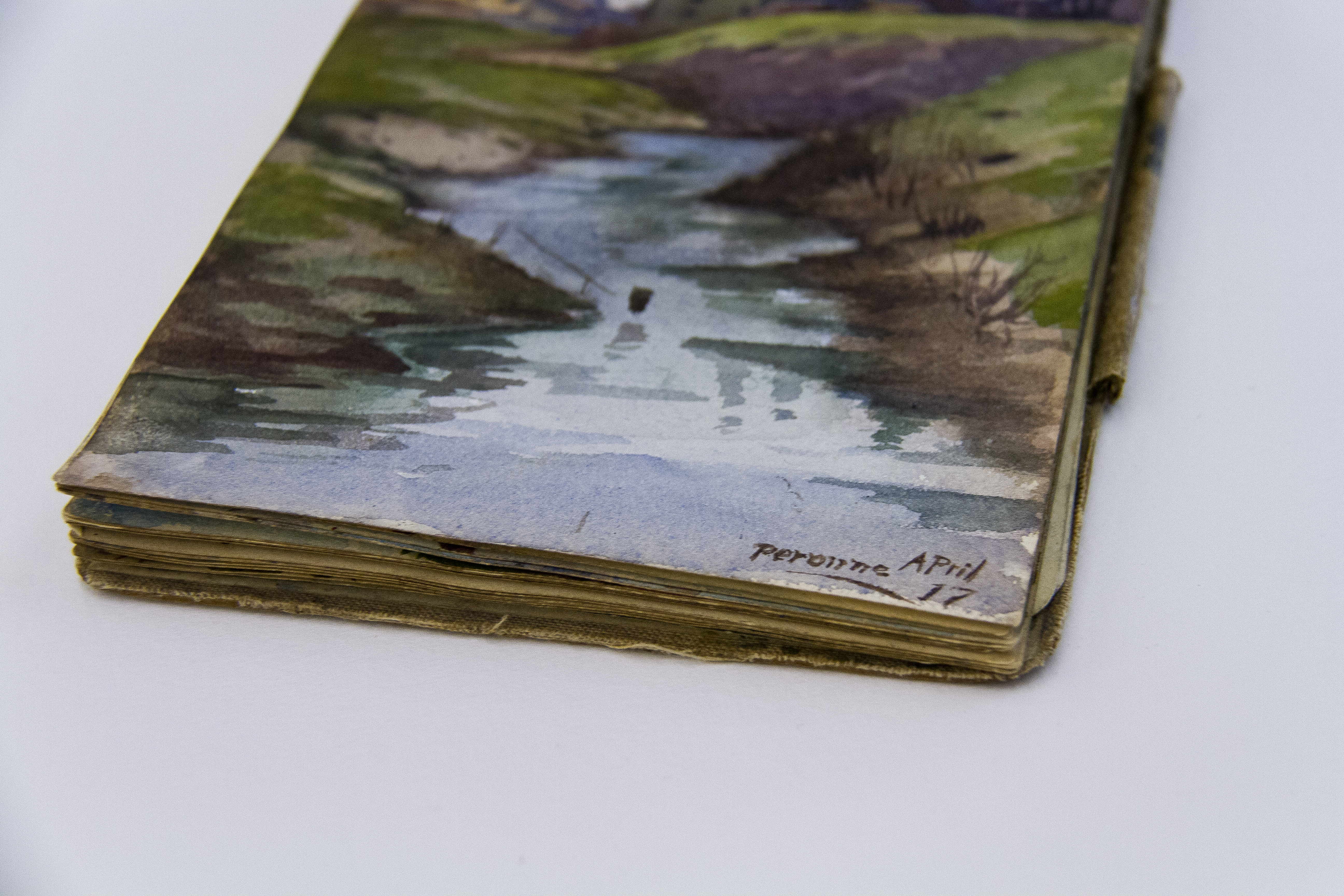
A colour photograph of a sketchbook at an angle showing a riverbank with the date and location in the lower right corner, “Perrone April 17.”

A view of Pérrone dated April 1917 found in sketchbook 7 (MIKAN 3028908).

A black-and-white reproduction of a handwritten page for April 15, 1917 reading: “[…] Battalion Headquarters moved to Peronne.”

The war diary of the 1st Battalion of the Canadian Railway Troop showing the first entry referencing the move of the battalion headquarters to Pérrone.

Visit Flickr to view more images of the conservation of books and visual material.

Open Data: Providing access to historical Government of Canada studies

Canada’s Action Plan on Open Government details how the federal government is promoting transparency and accountability and encouraging citizen engagement by releasing unrestricted government data and information. Releasable information falls under two categories: structured data (machine readable) and open information (unstructured documents and multimedia assets). To make this information easily discoverable and reusable, it will be located on the Open Government website and made available under the unrestricted Open Government Licence. Structured data is made available through the Open Data portal of the website and unstructured information through the Open Information portal.

Library and Archives Canada is in the process of extracting and preserving datasets from outdated storage devices that are related to studies undertaken by federal departments. The studies cover a wide range of topics, such as the environment, health and immigration. The digital content from these studies, acquired since the early 1970s, is being converted from its outdated file structures and encoding schemes so it can be used by contemporary computers that are based on the ASCII encoding scheme.

Once the datasets are migrated, they will be made available on the Open Data portal. Codebooks that describe the file structure of the data and define the variables contained in each field will also be supplied. These migrated datasets will be in the form of raw data. To interpret and analyze the content in each file, you will require specialized software, such as a spreadsheet or a statistical tool. Raw data preserves the integrity of this archival content and will allow you to perform your own interpretation and analysis.

Stay tuned in the coming months for news about dataset releases.

Sir Arthur Conan Doyle Tour of Western Canada – Visit to Jasper National Park

On June 11, 1914, Sir Arthur Conan Doyle and his wife travelled via the Grand Trunk Pacific railway to the town of Jasper within Alberta’s Jasper National Park. Of the place, the author later wrote:

“Jasper Park is one of the great national playgrounds and health resorts which the Canadian Government with great wisdom has laid out for the benefit of the citizens. When Canada has filled up and carries a large population, she will bless the foresight of the administrators who took possession of broad tracts of the most picturesque land and put them forever out of the power of the speculative dealer.”

This statement proved to be pure gold for government travel marketers! During Conan Doyle’s visit, the commissioner for Canada’s national parks, J.B. Harkin, created his own promotional campaign for national parks, releasing the booklet entitled “Just a Sprig of Mountain Heather.”

The Jasper Park trip lasted eight days. Conan Doyle was the guest of an old friend, Colonel Rogers, who was the park’s superintendent. The author noted: “For a week we lived the life of simplicity and nature.”

A black-and-white photograph showing a veranda with seating to take advantage of the view. The architectural style is rustic, with river stones and rough-hewn beams.

The veranda of the Administration Building in Jasper Park, Alberta, by William Topley, 1914 (MIKAN 3587685)

Conan Doyle wrote of his experience in the town of Jasper as follows: “Life in Jasper interested me as an experience of the first stage of a raw Canadian town. It will certainly grow into a considerable place, but at that time, bar Colonel Rogers’ house and the station, there were only log-huts and small wooden dwellings.” He and his wife visited many now-famous locations, such as Pyramid Lake, Lake Edith, and the Maligne River and Canyon.

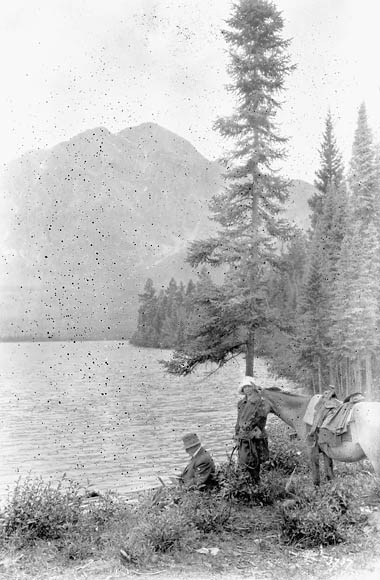
A black-and-white photograph showing a man and a woman with a horse by a lake. The man is seated and the woman is holding the lead to the horse. There are tall coniferous trees behind them.

A couple with a horse at Pyramid Lake, Alberta, by William Topley, 1914 (MIKAN 3587697)

A black-and-white photograph of a group of people outside a rustic log cabin.

The Conan Doyle party preparing lunch outside (MIKAN 3587725)

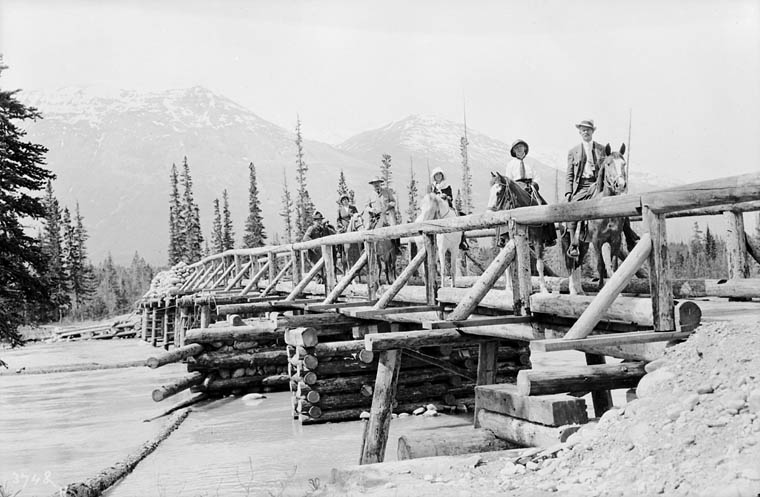
A black-and-white photograph showing one person walking and five people on horseback, on a log bridge crossing a river, with mountains in the background.

The Conan Doyle party crossing the Athabasca River in Alberta (MIKAN 3303264)

A special train was organized to take Conan Doyle, his wife, and friends to visit the area near Mount Robson. The mountain, located just over the Alberta border in British Columbia, is one of the highest and most iconic mountains in the Canadian Rockies. William Topley, the celebrated Ottawa photographer, dutifully took these photos.

A black-and-white photograph showing a train stopped beside a river.

The train near Lucerne, British Columbia, by William Topley, 1914 (MIKAN 3587749)

A black-and-white photograph showing a man walking along train tracks, with a view of Mount Robson in the distance.A black-and-white photograph showing a man walking along train tracks, with a view of Mount Robson in the distance.

A man walking along the railway tracks, with a view of Mount Robson in the background, by William Topley, 1914 (MIKAN 3587770)

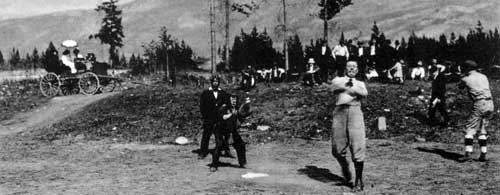
Today, a century later, the landscape looks much the same. Mount Robson is notoriously difficult to photograph without clouds obscuring its peak, so Topley was extremely lucky to get such clear shots. After this excursion, Conan Doyle would survey the layout for the first golf course in Jasper (as noted in the 1914 edition of “Golf Illustrated”) and take part in a baseball game between teams from the towns of Jasper and Edson, making sure to pitch the first ball! Although Topley missed capturing the moment, another local photographer was lucky enough to get this shot.

Conan Doyle’s Return Journey East

We do not have any images of the return trip back East, perhaps because the point of the expedition was to promote the Canadian West and its newly minted national park. We do know that the couple left Jasper on June 19 and that the return journey meandered through Winnipeg, along the north shore of Lake Superior, through Algonquin Park, down to Niagara Falls, and finally back to Ottawa for Dominion Day (Canada Day). They headed back to England on July 4. The visit resonated deeply with them as they would take their children to Jasper Park in the 1920s.

The First World War would begin one month later, giving Conan Doyle’s daydream poem The Athabasca Trail an even greater poignancy.

In the last article in this Blog series, we will take a closer look at the photo album associated with Conan Doyle’s trip, and explore some of the mysteries surrounding the images it contains. Why, for example, are there photos of places in British Columbia that Conan Doyle never visited?

Sir Arthur Conan Doyle Tour of Western Canada, June 1914

Imagine if the Canadian government invited a famous British writer to travel across Canada by train and stay at one of the country’s newest national parks—all at the expense of taxpayers! Think this scenario is impossible? Well, it happened a little over a century ago. In the spring of 1914, Sir Arthur Conan Doyle (of Sherlock Holmes fame) was invited to travel on the newly opened Grand Trunk Pacific Railway from Montreal to Jasper National Park. Conan Doyle accepted the invitation, and he and his wife, Jean Leckie, conducted the trip between May and July, 1914. The official photographer for the journey was none other than the celebrated William James Topley—a real public relations coup! Topley’s son-in-law, R.C.W. Lett, held a prominent position with the Grand Trunk Pacific Railway, and persuaded him to photograph Conan Doyle’s travels.

Montreal to Winnipeg

Conan Doyle’s trip to Jasper by train was, as it is today, a quintessential Canadian travel adventure. Writing about the experience later in Memories and Adventures, Conan Doyle stated:

“…We accepted an invitation from the Canadian Government to inspect the National Reserve at Jasper Park in the Northern Rockies. The Grand Trunk Railway (Canadian) made matters easy for us by generously undertaking to pass us over their system and to place a private car at our disposal. This proved to be a gloriously comfortable and compact little home consisting of a parlour, a dining-room and a bedroom. It belonged to Mr. Chamberlin, the president of the line, who allowed us the use of it. Full of anticipation we started off in May upon our long and pleasant journey.”

Thus the celebrated author set out with his wife by ship from England to New York City in late May 1914, and travelled by train to Montreal, arriving in the city on June 3, 1914.

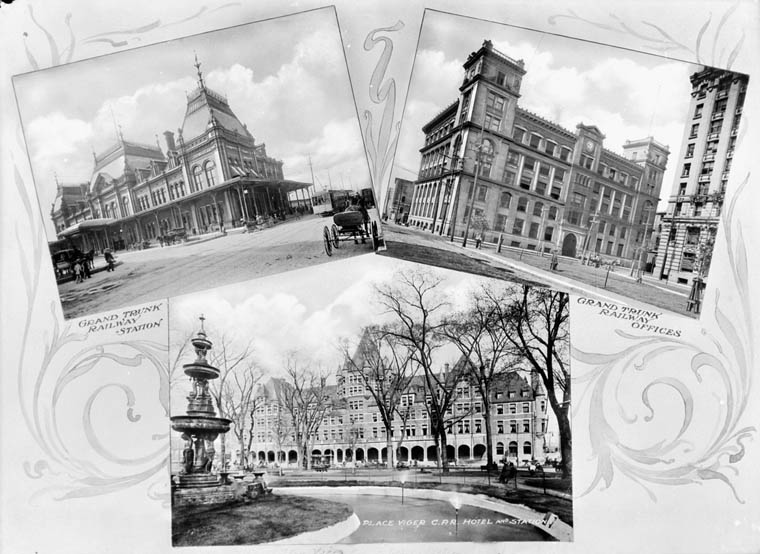
A black-and-white postcard featuring three photographs of the sights around the train station in Montreal.

A postcard published by the Albertype Company, showing three views: Grand Trunk Railway Station, Grand Trunk Railway Offices and Place Viger C.P.R. Hotel and Station (MIKAN 3335217)

Conan Doyle visited the sights of the city and went on a side trip to Trois-Rivières. The author then spoke to the Montreal branch of the Canadian Club on The Future of Canadian Literature. This same speech would be repeated in Winnipeg, Edmonton and Ottawa. Between June 5 and 8, Conan Doyle travelled from Montreal to Winnipeg by train and by boat. First, by train to Sarnia, Ontario, then on the S.S. Harmonic steamship to Fort William (near Thunder Bay). Of this part of the trip, he observed: “Then comes the enormous stretch of the Great Lakes, those wonderful inland seas, with great oceangoing steamers.”

Of Northwest Ontario, he noted: “The true division between the East and West of Canada is not the Great Lakes, which are so valuable as a waterway, but lies in the 500 miles of country between the Lakes and Winnipeg.” They stayed one night at the Minaki Lodge near Sioux Lookout, arriving in Winnipeg, Manitoba, late on June 8.

A black-and-white photograph showing the entrance to an imposing building. Automobiles and horse-drawn buggies are lined outside, and people are standing near the entrance.

The entrance of the Grand Trunk Pacific and Canadian National Railway Station in Winnipeg, by William Topley, 1914 (MIKAN 3587592)

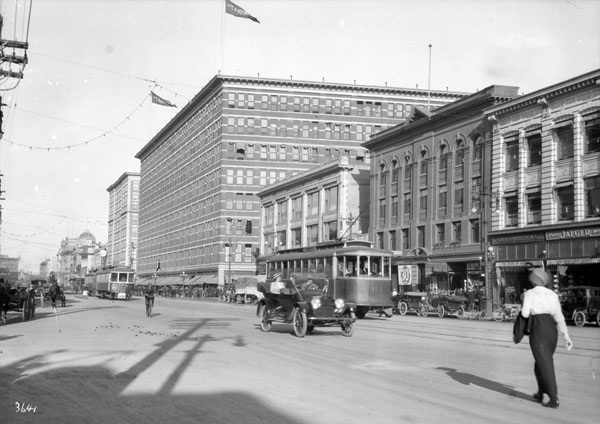
A black-and-white photograph showing a wide street, busy with streetcars, automobiles, horse-drawn buggies, cyclists and pedestrians. The buildings along the street look new and prosperous.

The Eaton’s store on Portage Avenue, in Winnipeg, by William Topley, 1914 (MIKAN 3587605)

These images are superb at documenting the bustling prairie city. The stop in Winnipeg was not long, but Conan Doyle remarked: “I do not suppose the average Briton has the least conception of the amenities of Winnipeg. He would probably be surprised to hear that the Fort Garry Hotel there is nearly as modern and luxurious as any hotel in Northumberland.”

From Winnipeg to Edmonton

By June 9, Conan Doyle was in Edmonton, having crossed the Prairies.

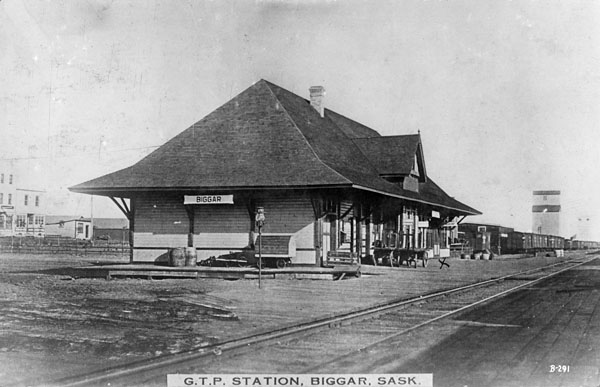
A black-and-white photograph of a train station taken from the other side of the tracks. There is a sign with the word Biggar, and there’s a note at the bottom of the photograph identifying it as G.T.P. Station, Biggar, Sask.

The Grand Trunk Pacific Railway Station, Biggar, Saskatchewan (MIKAN 3393480)

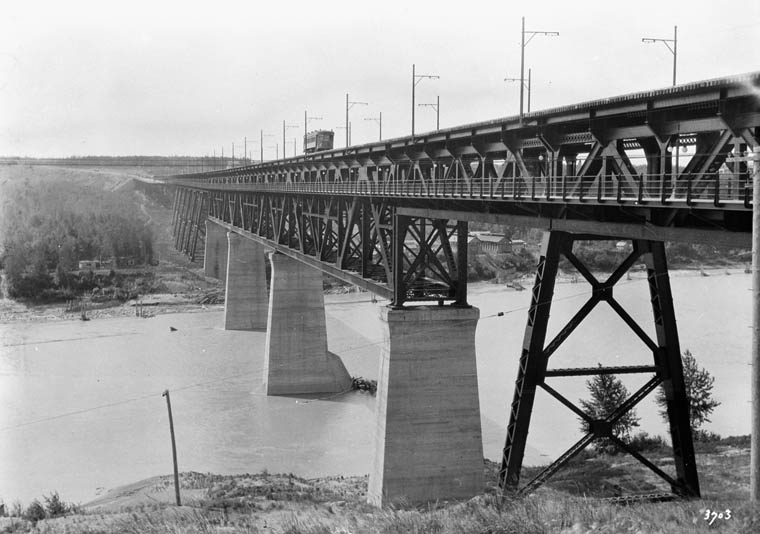
And he would have crossed over the high-level bridge entering Edmonton.

A black-and-white photograph showing a high-level railway bridge spanning a river.

The high-level bridge in Edmonton, by William Topley, 1914 (MIKAN 3587671)

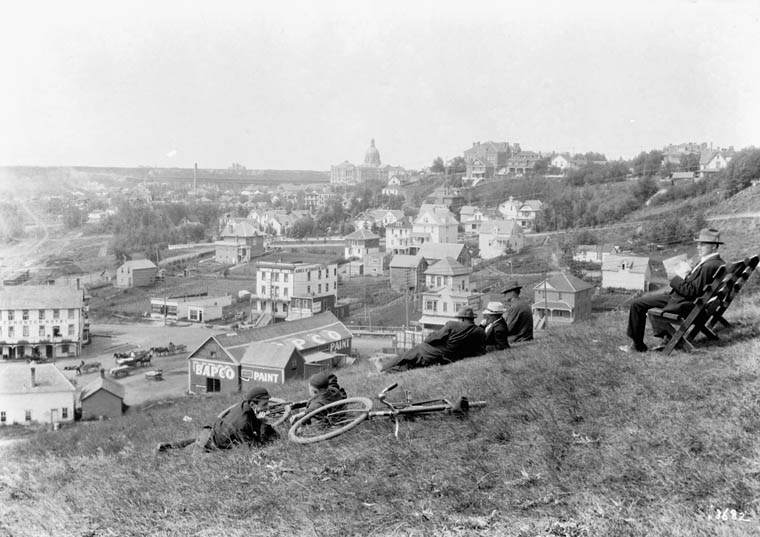
The couple stayed in Edmonton for two days. Here, Conan Doyle noticed the rough-hewn nature of the city, comparing it to Winnipeg: “There were no such luxuries in 1914 in Edmonton. The town was in a strangely half-formed condition, rude and raw, but with a great atmosphere of energy, bustle, and future greatness. With its railway connections and waterways it is bound to be a large city.”

A black-and-white photograph taken from a hillside overlooking a town, showing cyclists resting on the grass and other men seated nearby.

The town of Edmonton from “Summer House,” by William Topley, 1914 (MIKAN 3587646)

A black-and-white photograph showing a wide avenue, roughly paved, where streetcars, horse-drawn carriages and automobiles share the road. It is a streetscape bustling with activity.

Edmonton—a street view of this frontier town, by William Topley, 1914 (MIKAN 3587667)

The two prairie cities, Winnipeg and Edmonton, contrasted greatly with the breathtaking mountain scenery of Jasper National Park. In the next Blog, we will look at Conan Doyle’s extended stay at Jasper, a place that inspired him to write a poem of some importance…

New additions to the Rare Books Collection: a census

After receiving the recent additions to the Rare Books Collection, the conservation team conducted a census or survey, to determine the state of the collection. The questions on the census were developed by Library and Archives Canada (LAC) conservators, in consultation with the rare book librarians. The conservation team then assessed the books individually and recorded the information.

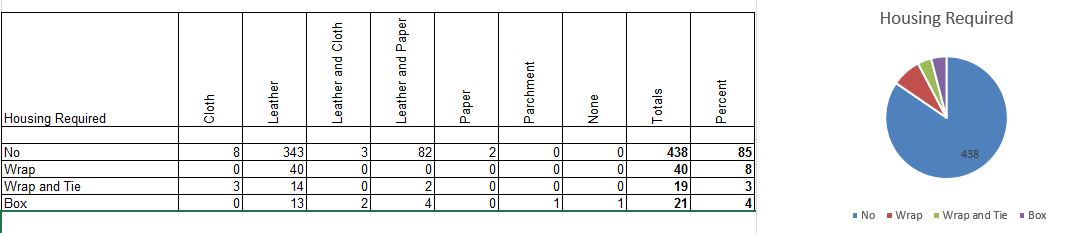
The primary information recorded was on the condition of the collection, but also included information about the decoration and style of the books. Everything was documented regarding the initial condition of each book and any need for conservation—whether minor or major conservation was needed, and if there was any structural damage. The level of leather deterioration and the need for leather consolidation (a surface treatment to stop the deterioration of the leather) was also noted. The specific housing needs for each book was also assessed and noted—whether a wrap, wrap and tie or box was needed. Other details recorded were: cover decoration, the presence of marbled paper and bookplates, and any interesting inscriptions, missing volumes, etc.

Pie chart showing the portions of the new collection in conditions ranging from poor to excellent.

Figure 1. The results of the new rare books condition census.

After the completion of the census, leather consolidation was carried out on 499 of the 518 books. Following these treatments approximately 8% of the collection was upgraded from fair to good condition. The number of books in fair condition decreased from 38% to 30% and the number of books in good condition increased from 27% to 35%. Rehousing was only needed for 15% of the collection and has been completed.

A table and pie chart showing the housing types required for the collection. The vast majority do not require any special housing, while some require wrap, wrap and tie, or boxes.

Figure 2. How much of the collection required rehousing.

Now that the census has been completed, the team has written a report that summarizes and presents all the results in easy-to-read graphs and charts. The report will be an invaluable tool for conservators, and will help plan future conservation projects as well as serve as a research tool for librarians and archivists.

Molly Lamb Bobak: Canada’s first female Canadian war artist

May 24, 2015 marks the 70th anniversary of Molly Lamb Bobak’s appointment as Canada’s first female war artist during the Second World War.

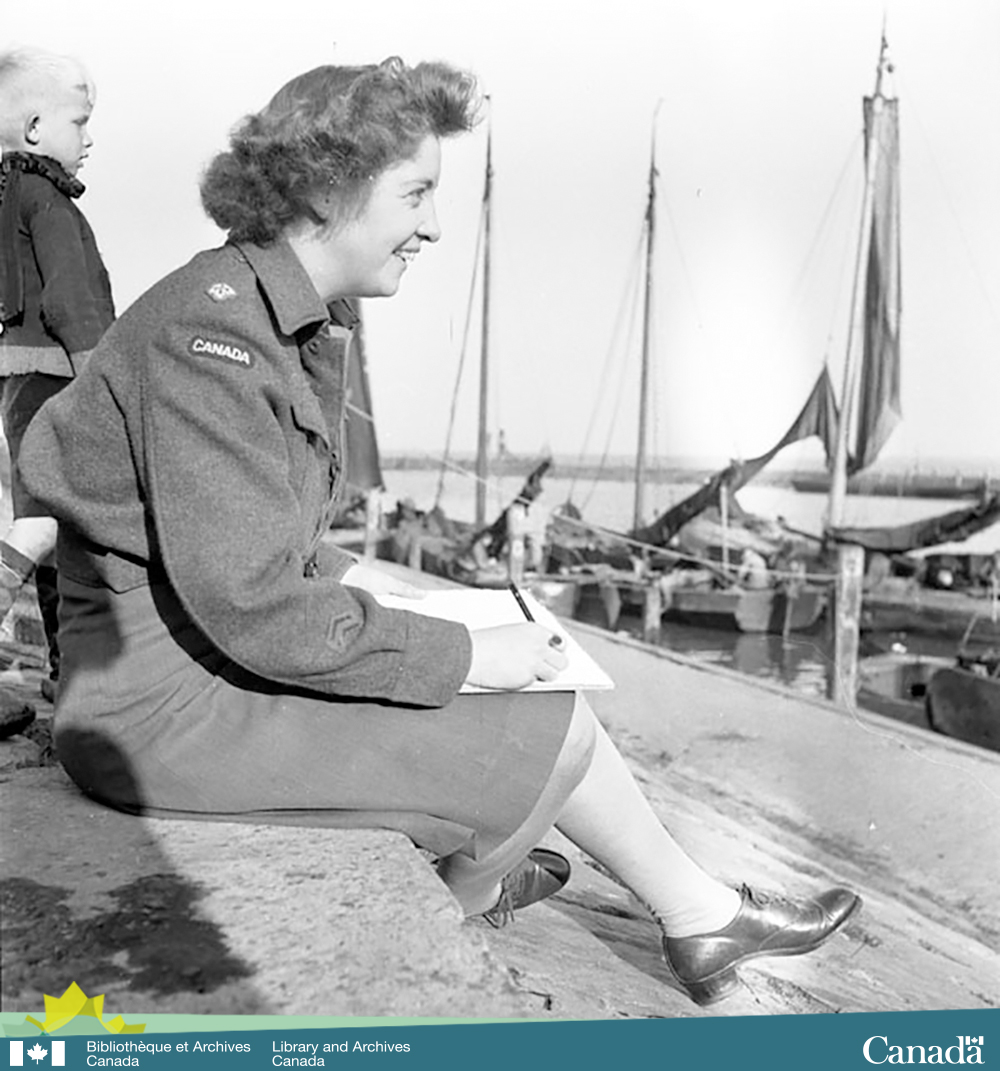
In 1942, Molly Lamb Bobak was fresh out of art school in Vancouver. The talented young painter promptly joined the Canadian Women’s Army Corps (CWAC) as a draughtswoman—dreaming of one day becoming an official war artist. She worked serving in canteens before being sent on basic training in Alberta, eventually being promoted in 1945 to Lieutenant in the Canadian Army Historical Section.

Black-and-white photograph taken from the side showing a smiling woman in uniform sitting on a pier with a drawing tablet and pencil in hand. In the background, there is a young blond child and sailboats docked nearby.

War artist Lieutenant Molly Lamb, Canadian Women’s Army Corps, sketching at Volendam, Netherlands, September 1945 (MIKAN 3217951)

Shortly after enlisting, Lamb Bobak began writing a unique diary that provides an invaluable record of the CWAC’s role in the war effort. Titled simply W110278, after her service number, it is a personal and insightful, handwritten account of the everyday events of army life, accompanied by her drawings. Dating from November 1942 to June 1945, the diary contains 147 folios and almost 50 single sheet sketches that are found interleaved among its pages.

The diary’s first page captures the humorous tone and unique approach of the diary. Written as a pseudo newspaper, with the pages resembling big-city broadsheets, the first headline reads “Girl Takes Drastic Step! ‘You’re in the Army now’ as medical test okayed.”

What follows are handwritten news bulletins with amusing anecdotes and vibrant illustrations that reveal women’s experiences in Second World War army life and form part of a personal daily record of Lamb Bobak’s time in the CWAC.

Three years after enlisting, Moly Lamb Bobak achieved her ultimate goal when she was appointed as Canada’s first female official war artist and was sent overseas, after the ceasefire, where she painted in England, the Netherlands, Belgium and Germany.

To celebrate the 70th anniversary of Molly Lamb Bobak’s appointment as the country’s first female official war artist, Library and Archives has digitized her entire Second World War diary in colour, making this national treasure available online.

Related resources

Stabilizing the new books added to the Rare Book Collection

A collection of pre-1800 books were recently transferred to Library and Archives Canada’s Rare Books Collection. A census of the collection revealed that the majority of the books had various levels of leather deterioration. In some cases, the leather was cracked and flaking, and in other, more extreme cases, the leather was powdering and crumbling. This is an inherent and common issue seen in manufactured skins from this period. Leather deterioration takes place by two processes: Reaction of tannins used in leather manufacture to environmental pollutants (hydrolysis) and exposure of leather to light, heat and oxygen (oxidation). Both hydrolysis and oxidation result in the gradual disintegration of the leather fibre network and weaken its structural integrity. The by-product of leather disintegration is an acidic powder, often orange or red in colour. Not only does this deterioration cause an immediate threat to the individual book structure, but it also threatens the rest of the collection through the contamination of leather dust and particulate. In many cases, the leather leaves visible residue on surfaces and surrounding books. For these reasons, the conservators at Library and Archives Canada (LAC) developed and carried out a remedial treatment to stabilize the leather.

A colour photograph showing several books on a table. The book in the foreground has extremely deteriorated leather and the spine has separated from the front cover.

Deteriorated leather: The first step in the process was to assess the level of deterioration and carry out an initial surface cleaning of the books to remove as much leather dust as possible. This was carried out in the rare books vault, on all 500 books, using a gentle vacuum and small brush.

The most effective method of stabilizing deteriorated leather is through the use of a surface consolidant. A consolidant is a solution which is applied directly to the leather to seal the surface. Although it can’t stop or reverse the chemical instability in degraded leather, it creates a barrier that protects the leather from airborne pollutants and reduces the flaking and powdering. Handling affected leather books after surface consolidation is a much cleaner experience as well.

Testing

A series of tests were performed to determine the sensitivity of the leather to water and solvents. Based on these findings, we were able to reach a conclusion on the most suitable consolidant recipe to use.

Colour photograph showing a piece of paper that has been marked out into squares with leather samples in each square. Each square shows the pre- and post-shrink test samples.

The testing carried out was called Shrink Temperature Test, where small samples of leather removed from the books were heated in water until a reaction occurred. The lower the reaction temperature the less stable the leather. The tests concluded that some leathers were quite unstable and that they could be easily damaged by the application of consolidants containing water and solvents.

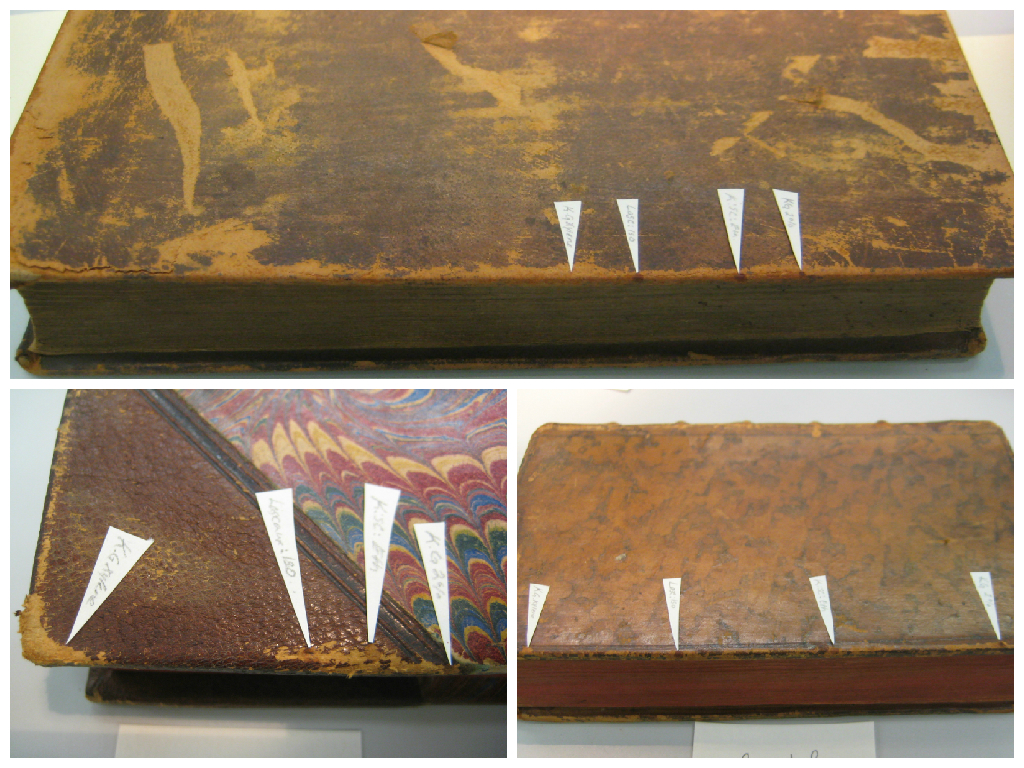
A collage of three colour photographs each showing a book with little white flags on it. The flags are located in the areas that were spot tested with the consolidants.

Spot testing: Four consolidant recipes were made up and tested on three volumes representing the identified species of leather found in the pre-1800 books, that of goat, sheep, and calf. The test relied on visual examination to determine the likelihood of discolouration by staining or residue deposit by the various surface consolidants.

The tests conclusively revealed that one particular consolidant exhibited no visible signs of staining or residue on the leather; Hydroxypropylcellulose dissolved in one solvent, then diluted in another. It was decided to use this recipe to treat the collection.

A colour photograph showing a woman holding a book in her gloved hands applying the consolidant with a fine brush under a fume hood.

Applying the consolidant under a fume hood.

The consolidant was applied to localized areas using a small brush. The treatment was carried out in a fume hood, due to the solvents used in the consolidant recipe. The books were then left to off-gas for 24 hours in the fume hood before being returned to permanent storage.

Now that the leather surface of the book has been stabilized, we can determine, with the help of the census information, what other, if any, treatments are necessary to make these books more resilient and available for future generations to access.

The William Redver Stark sketchbooks: impressions and paper

In this part of the sketchbook examination, we are exploring two additional facets of page mapping. The first part will look at impressions left from the artist’s instruments on the drawing paper; the second will examine the paper and the bookbinding techniques in the sketchbooks.

Tool impressions

When an artist is drawing or sketching, his or her tools frequently leave deep impressions on the pages. These are great visual indicators that help to reposition out-of-order pages. The indentations on the paper surface appear as a repetitive pattern of a mark from one page to the next.

Colour photograph showing a sketchbook that has some deeply indented impressions on one of the pages.

Artist’s pencil impression; view from the verso of the drawing.

Other examples of impressions left on a paper surface are the binding materials used by the bookbinder. For example, after a text block is sewn, the bookbinder will apply an adhesive on the spine. He or she may apply too much adhesive, which then oozes through some of the sewing holes, forming a drop of glue inside the central folio. Upon drying and hardening, the drop can make an impression onto the adjacent sheet of paper.

Colour photograph showing the inside of a folio; the glue drop is clearly visible with the corresponding impression on the other page.

Glue residue in the binding structure that overflowed into the central folio leaving a mirror impression.

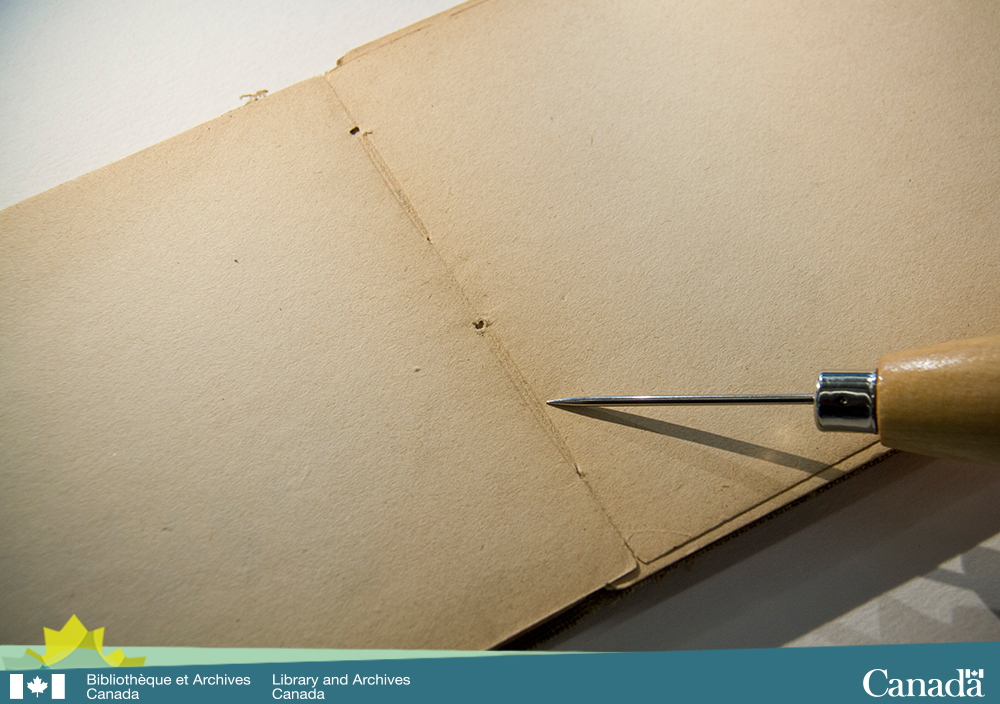
The sewing tapes and threads used in a binding can also leave impressions on the pages. The sewing tapes are glued underneath the paper of the inside covers. They often leave a repeating mirror impression of the tape, which helps determine the order of pages near the front or the back of a sketchbook. The sewing thread impressions found on detached pages also provide a good clue as to which sheets of paper are located in the centre folio of a section.

Colour photograph showing the detached spine of a sketchbook. The impression of the sewing tape is clearly visible on both the board paper and on the first page of the folio.

Detail of the sewing tape located under the board paper and the impression left on the adjacent page.

Colour photograph showing an open sketchbook lying flat on a table. An awl points to the sewing thread marks on the paper.

Visible transfer of the sewing thread mark onto the paper.

Page and paper analysis

A number of the Stark sketchbooks have soft, gradual convex and concave warping that extends across or along the edges of pages. This cockling happens when sketchbooks are in a high humidity environment. Here, the humidity causes a permanent distortion of the pages.

One of the sketchbooks was distorted along the edges of three sections. The undulating edges matched each other perfectly only when the pages were placed in the correct position. This gave us the verification needed for proper orientation and sequencing of the pages.

Colour photograph showing a sketchbook from the top; the bottom sections are clearly warped and distorted while the top ones are perfectly flat.

An example of cockling and undulation from the first to the third sections of the sketchbook and none in the last two sections.

Binding techniques

Paper can also reveal other clues to determine page order. One way to confirm page order is to look closely at the binding techniques, which leave very useful evidence.

When pages are first folded into sections, groups of three to eight sheets of paper are folded together. The folio on the inside of the section naturally has a sharper fold than each subsequent folio in the section. The folds become less sharp and incrementally wider as the number of folios per section increases. An examination of the fold of each half or complete folio can help determine the likely location within the sections: first, or centre of folio, second, third, fourth position, etc. An exact measurement of each page confirms the position as well.

Rounding and backing is another binding technique that provides an indication of page sequence. The technique is usually accomplished by using a hammer to shape a previously sewn and glued spine. Rounding and backing results in a slight bend of the sections close to the spine; the sections near the front of the book bend slightly toward the front; the central sections are fairly straight; and the sections near the back of the book bend slightly toward the back. Rounding and backing was clearly visible in the Stark sketchbooks and thus a helpful indication of the sequence of sections and pages.

Colour photograph showing an angled view of a sketchbook that highlights the curving produced by the bookbinding technique.

View of the slight bend of the section near the front of the text block showing the effects of the binding technique that can help determine the right page order.

In our next instalment on page mapping, we will look at the dates that are scattered throughout the sketchbooks and how they match up with other sources of information at Library and Archives Canada.

Visit our Flickr or Facebook albums to view more images of the conservation examination.

Get the munchers!

The word “pest” certainly has many uses, but, at Library and Archives Canada, it refers to any of a number of creatures that can pose a threat to library and archival collections. Many insects like to feed on substances found in documents, photographs and books, such as cellulose, starch and glue. And mice like to shred paper for their nests. Pests can work very quickly, and in a short time precious documents can be irreversibly damaged. It is important, therefore, to be aware of such pests and to know what to do to prevent them.

An improperly disposed of muffin wrapper can provide enough nourishment to sustain a population of 9 female mice to produce litters of 5 to 10 pups each. Proper cleaning of areas where food is consumed makes the area less attractive to mice. Having garbage receptacles with tight-fitting lids is also a good deterrent.

One of the ways to discourage the pests listed in the table below is by controlling humidity within the facility, either by improving an existing heating, ventilation and air conditioning system, setting up fans in high-humidity areas, or installing weather stripping and door seals on exterior doors, etc. Installing dehumidifiers in areas of high humidity can also be very beneficial. It is imperative to always clean and remove any mould or mildew in areas containing excessive moisture. Careful cleaning and good general housekeeping will also contribute to minimizing pest problems in a facility. In areas where there is a pest problem, vacuum in addition to sweeping. If the problem persists, consider taking these additional actions: seal cracks in foundations, concrete or floors, repair any leaks from pipes, such as sinks, roof drains, etc.

The top five most unwanted creepy crawlers in libraries and archives

Pest Size Image Notes

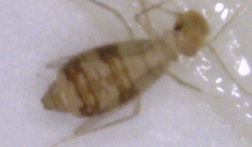
Booklice
Psocoptera

1 mm  one Booklice will eat starch and fungi or mould and dead insects, especially if moist as they require damp areas in which to thrive.*
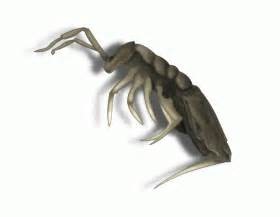
Springtail
Entomobryidae family
1 mm  two Springtail will migrate indoors in large numbers and die quickly, forming mould and detritus for other insects to eat. These organisms feed on decaying plant material, fungi, bacteria, arthropod feces, algae and pollen.*
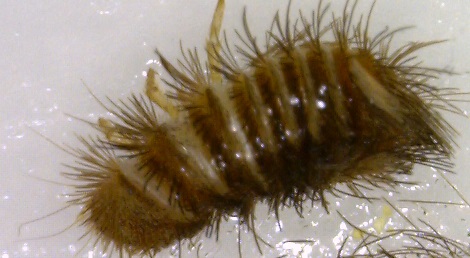
Carpet Beetle
Anthrenus verbasci
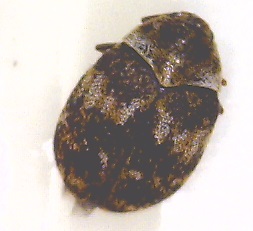
2 mm to3 mm  three three1 Carpet Beetle larvae are particularly destructive and eat animal specimens, fur and feathers, and woolen textiles.
Sow Bug
Armadillidiidae family
8 mm to12 mm  four Sow Bugs will attract other pests and provide a food source for them.*
Silverfish
Lepisma saccharina
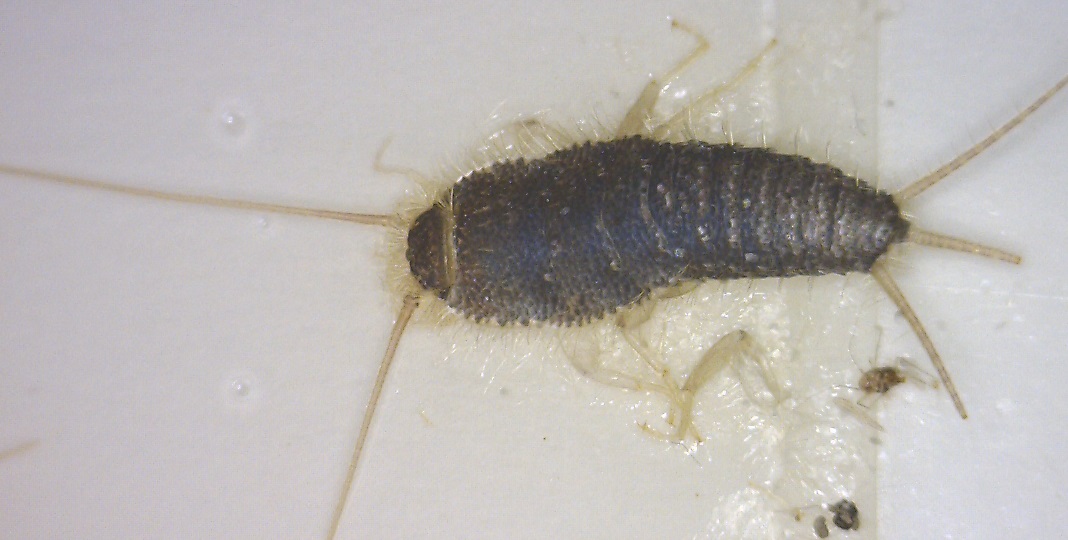
5 mm to15 mm  five Silverfish will actually graze across the surface of items, leaving a clearly defined pathway.*

*See damage below

Examples of insect damage

Colour photograph of an open book and the pathways of the bookworm can be clearly seen.

Booklice infestation (Wikipedia)

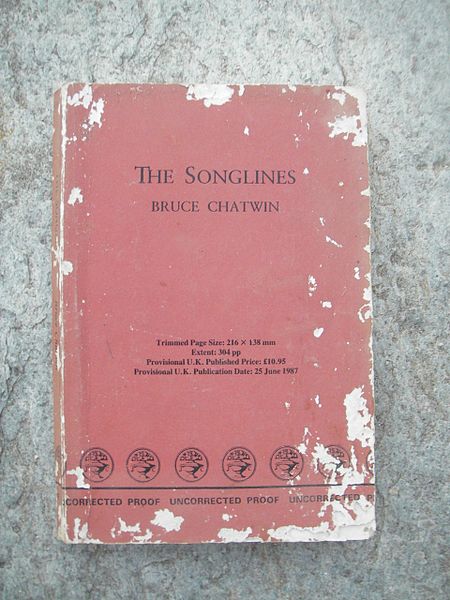
Colour photograph of a red book showing white patches where the silverfish have grazed upon the cover.

Destruction after grazing of silverfish (Wikipedia)

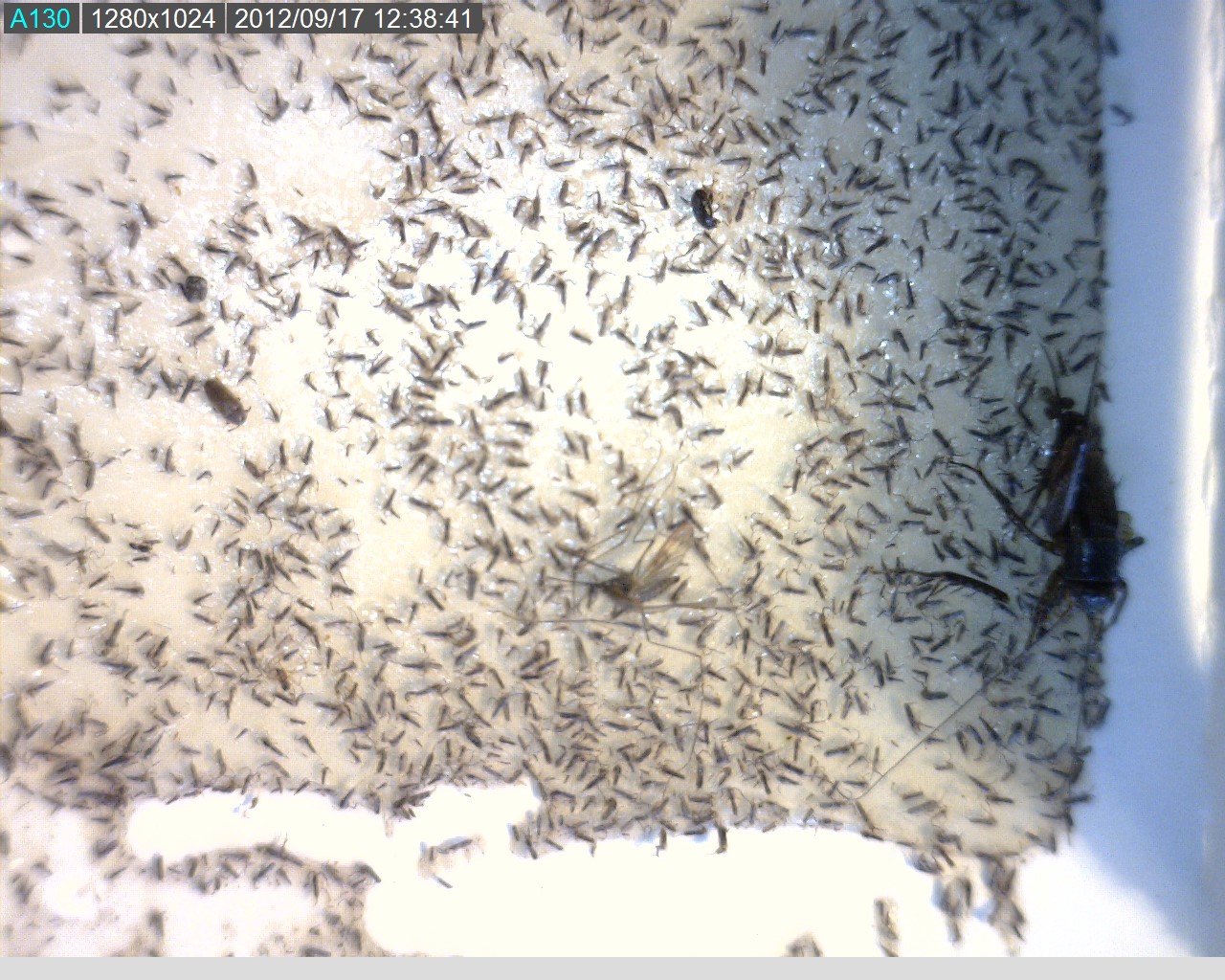
Colour photograph showing hundreds of springtails scattered over an area.

Springtail migration indoors—causes staining of documents and provides food for other insects ©Library and Archives Canada

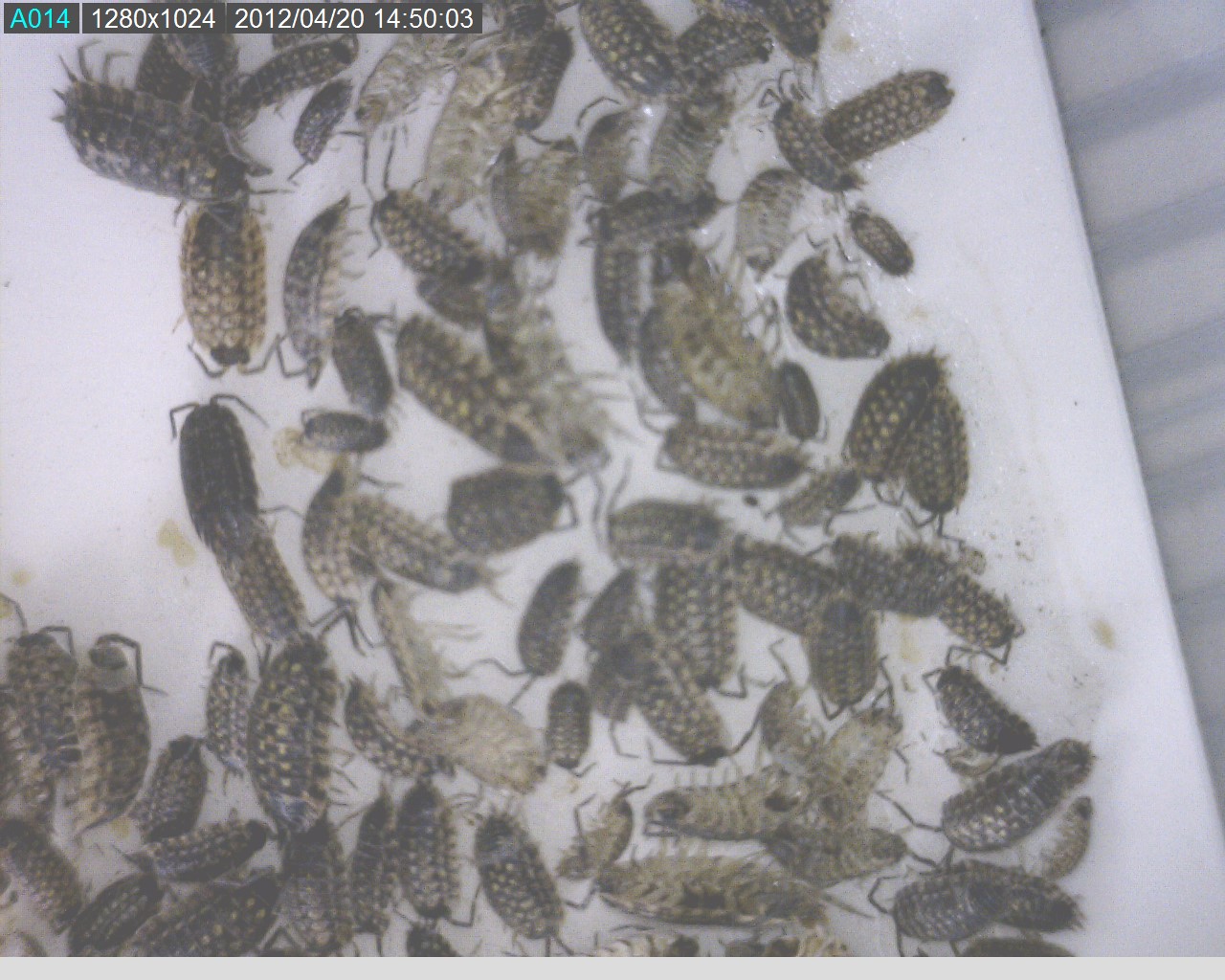
Colour photograph showing a large group of sowbugs

Sow Bugs provide a food source for mice and other insects. ©Library and Archives Canada