Sir Sandford Fleming: a great Canadian

By Andrew Elliott

The year 2017 marks the 190th anniversary of the birth of Sir Sandford Fleming (1827–1915). Born in Kirkcaldy, Scotland, Fleming became a truly great Canadian. He was a successful surveyor, draftsman, and engineer. Among many accomplishments, he is noted for designing one of the first Canadian postage stamps, for helping to link Canada together by directing construction of the Canadian Pacific Railway, and for bringing international standard time to Canada and the world.
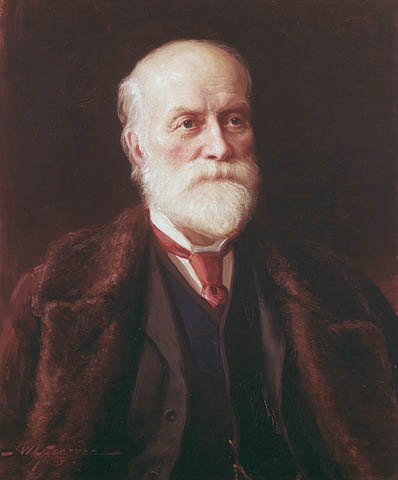
An oil painting of an older man with a white beard wearing a dark suit with a red cravat and a brown fur coat.

Sir Sandford Fleming, painted by John Wycliffe Lowes Forester, 1892 (MIKAN 2837695)

Like his British contemporary Charles Dickens, Fleming had an abundance of energy and productivity that would put a 21st-century individual to shame. Fleming recorded every aspect of his life, and was a great collector. He had a fine library and the walls of his house were covered with European art. Library and Archives Canada (LAC) is fortunate to hold the vast majority of records pertaining to Fleming’s life. It is a rich collection of text, photographs, and art, and has been with LAC since 1915.

After receiving an education in Kennoway and Kirkcaldy from the Scottish engineer and surveyor John Sang, Fleming immigrated to Canada from Scotland in 1845. To finish his certificate in engineering, Fleming prepared maps of Peterborough, Hamilton, Cobourg, and Toronto in 1849. After this, Fleming’s career took off.

In 1849, Fleming helped found the Royal Canadian Institute in Toronto, a professional society of architects, surveyors, and engineers. At the age of 30, in 1857, he was appointed engineer-in-chief of the Ontario Northern Railway.

Six years later, in 1863, the Canadian government appointed him chief surveyor of a proposed route for the Intercolonial Railway linking Upper Canada and Lower Canada to the Maritime colonies. He subsequently became chief engineer.
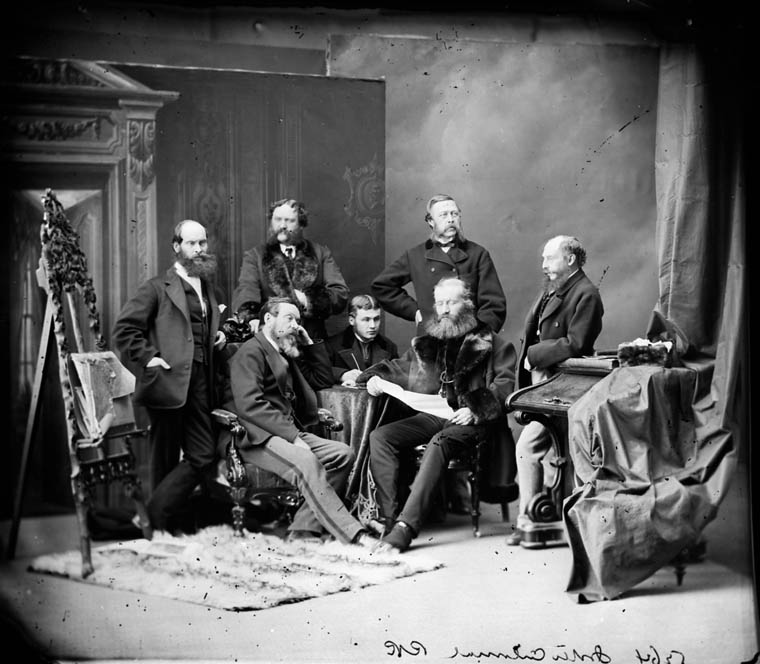
A black-and-white studio photograph of a group of men in various poses, facing in different directions.

The Intercolonial Railway group with Sir Sandford Fleming seated on the right. Photograph by William James Topley, March 1870 (MIKAN 3378651)

Continue reading

Library and Archives Canada releases its latest podcast episode, “Glenn Gould: Remixing the Classics”

Library and Archives Canada (LAC) is releasing its latest podcast episode, “Glenn Gould: Remixing the Classics”.

Thirty-four years after his death, Glenn Gould’s extensive catalogue of recordings, and the bold artistic vision behind them continue to resonate with music fans the world over. His irreverent interpretations of piano repertoire and perplexing idiosyncrasies have become the stuff of legend. In this episode we speak with Kevin Bazzana, author of the award-winning biography Wondrous Strange: The Life and Art of Glenn Gould. He tells us about Gould’s extraordinary career in music and the surprising secrets revealed to him about Gould’s private life while conducting research at Library and Archives Canada.

Subscribe to our podcast episodes using RSS, iTunes or Google Play, or just tune in at Podcast–Discover Library and Archives Canada: Your History, Your Documentary Heritage.

For more information, please contact us at bac.balados-podcasts.lac@canada.ca.

Guest curator: James Bone

Banner for the guest curator series. CANADA 150 is in red along the left side of the banner and then the bilingual text: Canada: Who Do We Think We Are? and under that text is Guest curator series.Canada: Who Do We Think We Are?

Canada: Who Do We Think We Are? is a new exhibition by Library and Archives Canada (LAC) marking the 150th anniversary of Canadian Confederation. This exhibition is accompanied by a year-long blog series.

Join us every month during 2017 as experts, from LAC, across Canada and even farther afield, provide additional insights on items from the exhibition. Each “guest curator” discusses one item, then adds another to the exhibition—virtually.

Be sure to visit Canada: Who Do We Think We Are? at 395 Wellington Street in Ottawa between June 5, 2017, and March 1, 2018. Admission is free.


A square sepia stamp. Each corner has the number three indicating the cost. A ring around the center reads, “Canada Postage Three Pence” with a crown between the top words. In the center of the circle is a beaver beside running water with a mountain and trees in the background.

The Three-Pence Beaver designed by Sir Sandford Fleming, 1851 (s002250k) ©Canada Post.

The beaver was seen as a good stand-in for the average Canadian: industrious, tenacious… and with great building skills. This is one reason why it appears on the nation’s first postage stamp.


The Three-Pence Beaver designed by Sir Sandford Fleming, 1851

Tell us about yourself

I acquire and process philatelic archives from private, or non-governmental, sources. Although LAC holds the extremely important Post Office Department fonds containing the records of Canada Post, the study of philately is one that happens entirely in the private sphere. So to complement the official records, LAC also collects the records of stamp designers, engravers and artists along with those of printing companies, Canada’s philatelic study societies and prominent philatelic researchers and exhibitors.

I recently represented LAC at the 2016 British North America Philatelic Society Exhibition in Fredericton, New Brunswick where I sought to foster knowledge of LAC’s holdings and how to use them, while also making a pitch that members of the society could have archival records of interest to LAC’s growing collection.

I did not entirely expect to find myself at LAC. After completing my undergraduate studies in 2006, I received a full scholarship for a year to continue my studies in Chinese language at Beijing Normal University in preparation for a planned MA program in Chinese history. However, illness and a change of direction brought me into the workforce. I worked in technical support in London, Ontario and later supervised a technical support team in Montréal for several years before returning to graduate school. Continue reading

Protecting Fort Anne – One of Canada’s First Parks

By Vasanthi Pendakur

Fort Anne National Historic Site in Annapolis Royal sits at the edge of the Annapolis and Allain Rivers in Nova Scotia. The park, established 100 years ago, is Canada’s first federally administered national historic site (Fort Howe in New Brunswick is the first historic site). This designation is thanks to the efforts of Annapolis Royal residents to protect the fort for future generations and the desire of the federal Parks Branch to create national parks.

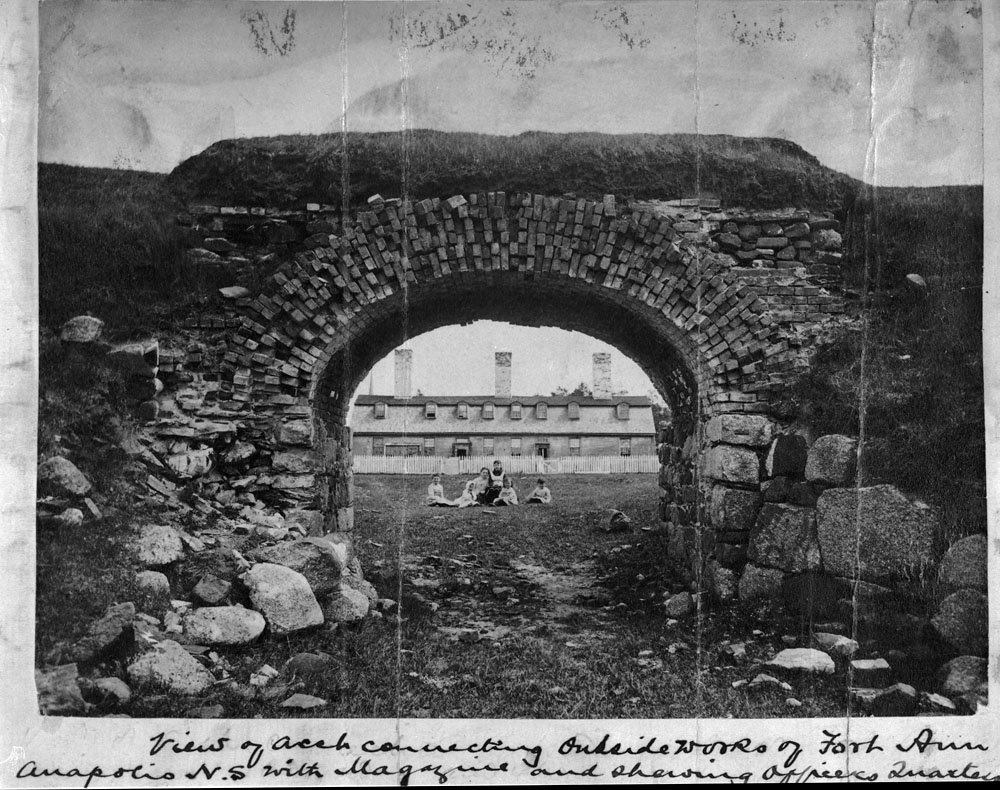
Black-and-white photograph of a stone archway and the view through it showing a large fenced building in the background with land in front. A woman and five children are pictured in the centre, seated on the ground.

View of arch connecting outside works of Fort Anne, Annapolis, N.S. with magazine and showing Officers’ Quarters in the distance (MIKAN 3305260)

Fort Anne is significant for its role in the French and British wars during the early settlement of Europeans. Both the French and the British gained control over the land at different times before the French built their fort at Port Royal in 1702. Pierre-Paul de Labat, an engineer and lieutenant in the French navy, designed the fort located at the edge of the Annapolis and Allain Rivers.

A map showing the location and shape of the Annapolis Royal area.

A general plan of Annapolis Royal surveyed by Capt. John Hamilton in 1753 (MIKAN 4128803)

Continue reading

Inuit women and seals: a relationship like no other

By Julie Dobbin

Seals are a central part of life and an essential source of locally-harvested food for Inuit peoples. Many traditions, customs, beliefs and oral histories revolve around the seal. Inuit peoples were and still are in an important and direct relationship with this animal. Inuit hunters have great respect for the spirit of the seal, an animal that is so heavily relied upon. Every single part of the seal is used, as the harvesting must be sustainable, humane and respectful. Most importantly, cold and harsh arctic climates demand that people have the right shelter and clothing to keep warm and dry, and seals help meet this need through their skins, fur and oil.

Black-and-white photograph of an Inuit woman inside an igloo wearing a floral print parka and tending a seal oil lamp, with a young Inuit child wearing a fur parka.

Woman tending a seal-oil lamp inside an igloo, Western Arctic, probably Nunavut, 1949 (MIKAN 3202745)

Inuit women developed highly skilled techniques in order to treat and use seal in various ways throughout the seasons. They scraped the skins clean of blubber with an ulu (a traditional, women’s knife with a crescent-shaped blade) then stretched and dried them, as seen in this photograph of Taktu.

A colour photograph of an Inuit woman wearing a red cloth jacket, crouching on a rocky coastline and scraping fat from a seal skin with an ulu (a woman’s knife).

Taktu cleaning fat from a seal skin, Kinngait (Cape Dorset), Nunavut, summer 1960 (MIKAN 4324316)

Continue reading

Images from the Peter Winkworth Collection now on Flickr 

The Peter Winkworth Collection at Library and Archives Canada (LAC) is a nationally significant, rare and valuable art collection that documents more than four centuries of Canadian history. This comprehensive collection is a testament to Peter Winkworth’s commitment to preserving Canada’s early art forms and heritage.

Peter Winkworth inherited his love for collecting from his family. He had all the qualities and attributes necessary to make a great collector: knowledge, a keen eye, resources and a sustained passion. After a devastating accident that cost him his leg, Winkworth began studying Canadiana seriously and devoted the next 50 years of his life to building one of the largest private collections of Canadiana art. He passed away in 2005 at the age of 76.

In 2002, with the assistance of funds from the Government of Canada, the National Archives of Canada purchased more than 700 watercolours and drawings, more than 3,300 prints and nine paintings from Winkworth’s London-based collection. In 2008, LAC acquired a further 1,200 works of art from his collection, thus keeping the bulk of this irreplaceable treasure intact. These works of art are now preserved at LAC for future generations to discover.

Visit the Flickr album!

Guest curator Meaghan Scanlon

Version française

Banner for the guest curator series. CANADA 150 is in red along the left side of the banner and then the bilingual text: Canada: Who Do We Think We Are? and under that text is Guest curator series.Canada: Who Do We Think We Are? is a new exhibition by Library and Archives Canada (LAC) marking the 150th anniversary of Canadian Confederation. This exhibition is accompanied by a year-long blog series.

Join us every month during 2017 as experts, from LAC, across Canada and even farther afield, provide additional insights on items from the exhibition. Each “guest curator” discusses one item, then adds another to the exhibition—virtually.

Be sure to visit Canada: Who Do We Think We Are? at 395 Wellington Street in Ottawa between June 5, 2017, and March 1, 2018. Admission is free.


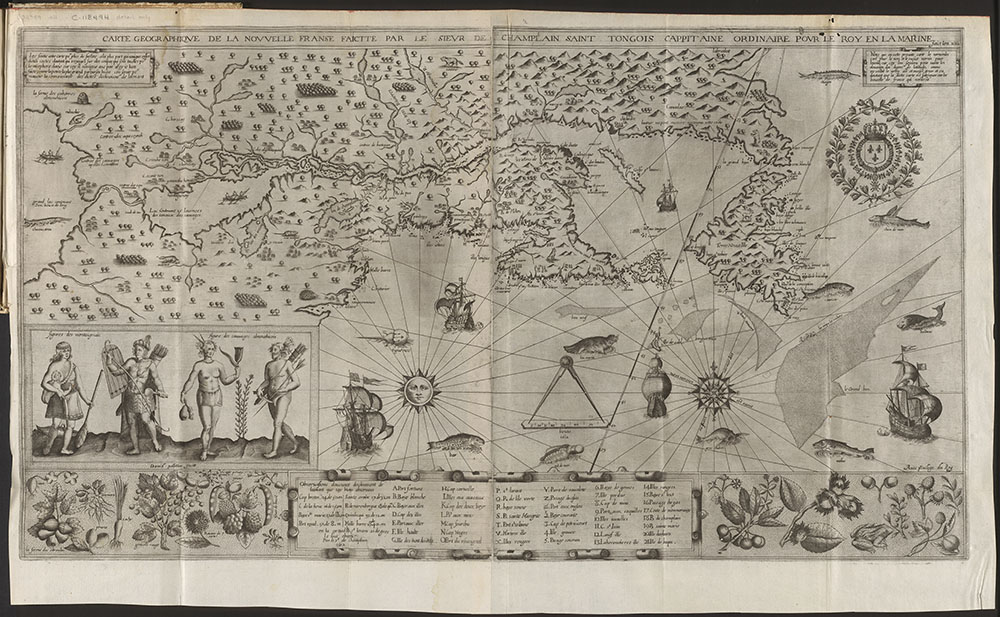
Les voyages du sieur de Champlain…, Samuel de Champlain, 1613 and its map, the Carte geographique de la Nouvelle Franse faictte par le sieur de Champlain [Geographical map of New France by Samuel de Champlain, 1613]

Les voyages du sieur de Champlain…, 1613 and its map Carte geographique de la Nouvelle Franse faictte par le sieur de Champlain [Geographical map of New France by Samuel de Champlain], engraved by David Pelletier in 1612. (MIKAN 3919638) (AMICUS 4700723)

Les voyages du sieur de Champlain…, 1613 and its map Carte geographique de la Nouvelle Franse faictte par le sieur de Champlain [Geographical map of New France by Samuel de Champlain], engraved by David Pelletier in 1612. (MIKAN 5012227) (OCLC 1056962381)

Explorer Samuel de Champlain saw Canada as a land of potential. He published this book, with an eye-catching map, to advertise its possibilities to investors. The beautiful drawings of plants are probably his own. Continue reading

From the Lowy Room: Canada’s Talmud

By Michael Kent

One of the most common questions I am asked as the curator of the Jacob M. Lowy collection is “which is your favourite book in the collection?” While I am unsure if I will ever be able to pick one, there is a work in the collection which I often highlight. Visitors are not surprised when I mention it is one of our Talmuds, the written compendium of Jewish oral law codified in antiquity and arguably the most important Jewish text after the Torah, after all we have impressive volumes from Soncino from the 1400s and Bomberg from the 1500s. I often get a surprised look when instead of selecting a 500 year old volume, I pick a volume that is not even 100 years old.

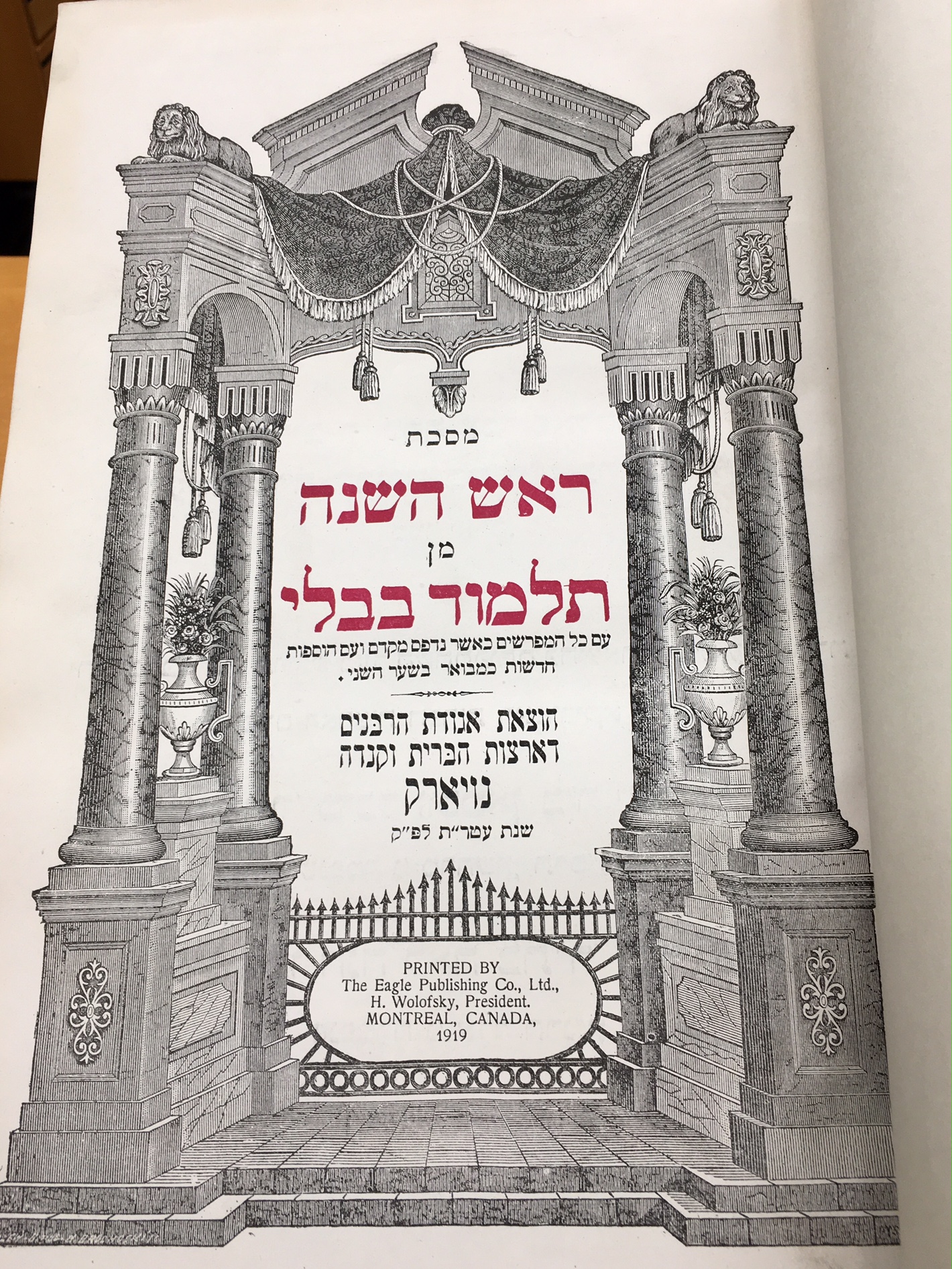
The item, and one of my favourite works in the collection, is the 1919 Montreal Talmud, which’s publication was termed “the most important event in the annals of Canadian Jewry,” by Canadian Jewish Congress president Lyon Cohen.

To truly appreciate my admiration for this printing of the Talmud, one needs to understand Canadian Jewish history. While some Jews did arrive in Canada during the 1700s, large scale Jewish immigration to Canada did not begin until 1880s. In the early 1900s, the majority of Canadian Jews were actually born in Eastern Europe.

A colour photograph of an open book showing Hebraic writing.

Frontispiece of the 1919 Montreal Talmud in the Jacob M. Lowy Room at Library and Archives Canada.

Continue reading

Word recognition: Governor General’s Literary Awards winners in LAC’s collection

By Sara Viinalass-Smith

The Governor General’s Literary Awards are one of Canada’s most prestigious suites of literary prizes, and the awards’ long history can shed light on the evolution of publishing, writing and reader tastes within Canada over the past eight decades. Created by the Canadian Authors Association and supported by prolific author and Governor General John Buchan, 1st Baron Tweedsmuir, the awards originated in 1937.  This year marks their 80th anniversary. At first honouring works of fiction and non-fiction, over the decades the awards have expanded to include, also, poetry, translation, drama and children’s literature in both French and English.

Since 1969 Library and Archives Canada (LAC) has been building a literary archives collection that includes the papers of many of the English- and French-language Governor General’s literary award winners, such as Robertson Davies, Marie-Claire Blais, Dionne Brand, Gabrielle Roy and Carol Shields. In examining their papers you can, for instance, track the life of an award-winning novel from the author’s original kernel of an idea, developed in notes and drafts, through heavily edited galley proofs and proposed cover art to review clippings and even the author’s invitation to the Governor General’s awards ceremony.

A yellowed black-and-white photograph of an officer in uniform.

Thomas Findley, the source of inspiration for Timothy Findley’s The Wars. (MIKAN 4933177)

The long path a work can take from idea to publication to recognition is well illustrated by Timothy Findley’s The Wars. Findley won the Governor General’s Literary Award for Fiction in 1977 for his novel, which tells the story of a young Canadian soldier who enlists in the First World War. The protagonist of the novel was inspired in part by Findley’s uncle, Thomas Irving Findley. Contained within Findley’s archives is a family album of letters from the front written by Thomas Irving Findley to his relatives in Canada. The album also includes one of the few known photographs of Findley’s uncle, dressed in uniform. Findley used these records as source material for the development of the characters in The Wars. From the letters, you can trace how Findley used the thoughts, feelings and actions of his uncle to create the character of Robert Ross and his fictional, wartime experience. Findley’s research, notes, outlines and drafts show the evolution of the text, and a mock-up of the final cover art shows how the book was physically presented to its original audience. Reviews from the year of publication reveal the book’s initial reception by critics. Finally, scripts Findley wrote for radio and film adaptations of The Wars speak to the overwhelming success of the novel and show how he carried his beautifully crafted prose through to different genres.

To honour this milestone anniversary of the awards, the Canada Council for the Arts, which administers the awards, is hosting an exhibition in Ottawa entitled People – Places – Things: Reading GG Books. The exhibition celebrates the more than 700 winning titles from the awards’ history, the people who write them and the places where we read them. Archival records from LAC’s literary archives collection make up part of the exhibition. These include the photograph of Thomas Irving Findley, the first page of Gabrielle Roy’s handwritten manuscript of Ces enfants de ma vie (1977), and notes and a manuscript for the children’s book Pien (1996) by Michel Noël. The exhibition is on until February 24th.

Related resources


Sara Viinalass-Smith is a literary archivist (English language) in the Private Archives Branch at Library and Archives Canada.

Introducing LAC’s guest curator blog series and our upcoming exhibition!

Banner for the guest curator series. CANADA 150 is in red along the left side of the banner and then the bilingual text: Canada: Who Do We Think We Are? and under that text is Guest curator series.Over the next year, keep your eyes open for a new and exciting series of blog articles, promoting Library and Archives Canada’s (LAC) upcoming exhibition, Canada: Who Do We Think We Are?, developed in recognition of the 150th anniversary of Canadian Confederation. The exhibition opens on June 5, 2017, while the year-long blog series starts in January 2017.

Reading the blogs

Through this series, you will hear from staff who helped develop the exhibition, including anecdotes about their work at LAC. The series also includes articles by scholars, experts and ordinary Canadians, who all depend upon LAC’s collection, from across Canada—and even the other side of the globe!

In each article, a different “guest curator” will examine one item from the exhibition. We have come up with four questions, which we have had each of our guest curators answer. The questions give the curators a chance to tell us a bit about themselves, to provide extra information about their item and, finally, to virtually add an item or two to the exhibition.

The guest curator blog series will be published every month, between January and December 2017. Be sure to stay tuned all year, in order to find out who our guest curators are and what they chose.

Visiting the exhibition

And be sure to visit the physical exhibition in downtown Ottawa where you can see these, and many other Canadian treasures, in person. Canada: Who Do We Think We Are? will be on display free of charge at 395 Wellington Street between June 5, 2017, and March 1, 2018.

The exhibition explores different ideas of Canada, and being Canadian, over time.

Some of these ideas will be familiar today, and rather comfortable to us all—something like old, worn-down slippers. The idea of Canada as a “northern” nation, for example, goes right back to the colony’s earliest days. Others may simply seem old fashioned, like a 1944 image of the “typical” Canadian family. And still others may seem wrong, or even shocking, to modern eyes. These include certain past attitudes towards immigration, for example, and the country’s First Nations peoples.

Engraved map of New France. The land mass with trees, mountains and rivers is bordered by the ocean, which depicts ships and sea life. A compass, seal and sun are also included. A scene of First Nations people is set above a band of plant life surrounding the legend.

Carte geographique de la Nouvelle Franse faictte par le sieur de Champlain, 1613 [Geographical map of New France by Samuel de Champlain, 1613]. Samuel de Champlain’s beautiful illustration advertises the land’s wealth to investors (MIKAN 3919638 or AMICUS 4700723)

Continue reading