New books in the Genealogy Services Collection at 395 Wellington Street—March 2016

Here is a list of our recently acquired genealogy publications. You can consult them in the Genealogy and Family History Room located on the 3rd floor at 395 Wellington Street in Ottawa. The link to the AMICUS record gives the call number you need to find the book on the shelves. Please note that CD-ROMs must be pre-ordered.

If you’re just starting out in genealogy, you should check out our Genealogy and Family History section.

Happy exploring!

Church, Cemetery and other indexes

La population des forts français d’Amérique, XVIIIe siècle : répertoire des baptêmes, mariages et sépultures célébrés dans les forts et les établissements français en Amérique du Nord au XVIIIe siècle : volume 3 – Détroit by Marthe Faribault-Beauregard (AMICUS 4941584)

Fegan’s homes newsletters. Volume 10: the Red Lamp 1913-1920 compiled by Douglas V. Fry & Fawne Stratford-Devai (AMICUS 32667771)

Arnprior area death notices, 2000-2007: compiled from Arnprior newspapers and funeral home notices [electronic resource] by Andriend Schlievert

Naissances & sépultures de Cabano, 1901-1939, St-Elzéar, 1933-1940, St-Honoré, 1871-1940, St-Louis du Ha! Ha!, 1878-1940 by Cécile de Lamirande (AMICUS 43564794)

Répertoire des baptêmes Saint-Sauveur, 1853-2013 by Société d’histoire et de généalogie des Pays-d’en-Haut (AMICUS 43711495)

Registres paroissiaux de Saint-Adelme de 1930 à 2014 : avec l’historique de quelques familles (extrait du livre du 50ième anniversaire de Saint-Adelme), (paru en 1981) et photo de mariage et d’anciens de chez-nous compiled by Madona Ouellet (AMICUS 43249438)

Inhumations sous l’église Sainte-Famille de Boucherville by Gilles Senécal (AMICUS 43918276)

Répertoire des mariages Saguenay-Lac-Saint-Jean, mise à jour 1972 à 1992 : 70 établissements by Jacques Gagnon (AMICUS 40910246)

Family histories and dictionaries

The Linossier and Montagnon family pioneers in the Interlake region: homesteading – R.M. of Eriksdale, Manitoba, Canada by John Paul Linossier (AMICUS 43525032)

Dictionnaire généalogique des familles Thériault : descendance de Claude, 1601-2011 by Camille Albert (AMICUS 39364192)

Les premiers Audet dit Lapointe d’Amérique by Guy Saint-Hilaire (AMICUS 43306689)

The legend of four Weber brothers by Tim Campbell (AMICUS 43188991)

Les Filles du Roy de 1663 : recueil de biographies des 36 premières Filles du Roy arrivées en Nouvelle-France by Irène Belleau (AMICUS 43919407)

L’Association des Saindon de l’Amérique du Nord : Le recueil (AMICUS 34986778)

Mariages Larocque = Larocque marriages [electronic resource] by Charles G. Clermont (AMICUS 43727175)

Local histories

Mercier fête son histoire : des histoires de familles by La Société du patrimoine et de l’histoire de Mercier (AMICUS 43223569)

Très-Sainte-Trinité, Rockland : regards sur notre histoire, vision vers l’avenir : 125e anniversaire, 1889-2014 by Corporation de la communauté Sainte-Trinité (AMICUS 43474887)
Did your ancestors come from Hungary?

Do you want to know who your first Hungarian ancestor was and when he or she left Hungary and arrived in Canada? Are you curious about your Hungarian origins?

If so, our website is a great place to begin your research. Here you will find a page dedicated to genealogical research on the Hungarians. This page provides you with historical information, archival documents and published material from the Library and Archives Canada collection, as well as links to other websites and institutions.

If your ancestor came to Canada between 1865 and 1935, you might find his or her name on the passenger lists.

“Great Fun…”—A Letter from the Honourable George Brown

The slow process of Canadian Confederation largely progressed by way of debates and conferences— a series of delicate negotiations, deliberations and compromises. The hard work of the politicians paid off after the Charlottetown Conference of 1864, which resulted in a general agreement and a commitment to hammer out more details at a further conference a month later in Quebec City.

But it wasn’t all long hours of serious toil.

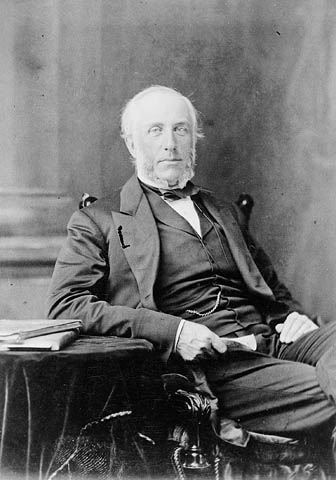
The Honourable George Brown, journalist and former member of the Legislative Assembly of the Province of Canada, was one of the most famous delegates to the Charlottetown Conference. Ever since he himself had been converted to the idea of Canadian Confederation, Brown had been deeply involved in the negotiating process. He detailed his engagement with the councils, debates and conferences of Confederation in his correspondence with his wife, Anne. Sometimes, as in the case of the Charlottetown Conference, Brown’s letters are the only record we have of the proceedings, since no official minutes were taken at Charlottetown.

A black-and-white photograph of a man sitting at a desk, holding a letter.

George Brown, ca. 1880 (MIKAN 3213216)

Continue reading

Images of Sugar Shacks now on Flickr

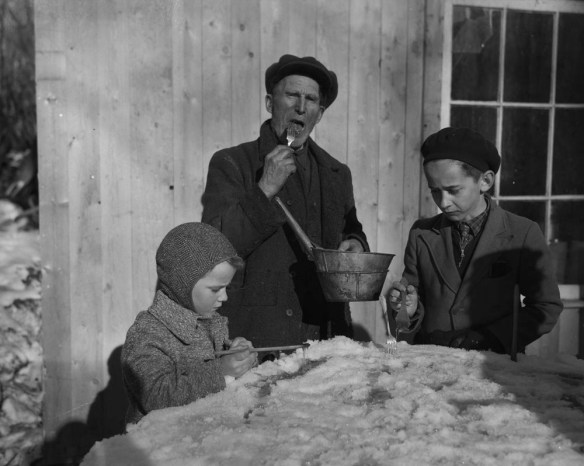
A black-and-white photograph showing three people eating maple taffy on snow.

People tasting maple taffy at a sugar bush.

The collection of maple sap and the production of maple products has evolved from the early practices of First Nations communities, such as the Ojibwa and Iroquois. The bark of a maple tree is pierced, the sweet sap is collected, and then the excess water is boiled off leaving a syrup. The syrup can be used as a sweetener or cooking additive. Neighbouring First Nations communities most likely taught French colonists how to process maple sap. The maple industry has evolved technologically over the years, but its core process of tapping trees and collecting sap has remained basically the same. Today, Quebec provides a majority of the maple syrup products on the global market. Numerous sugar shacks new and old fuel the world’s desire for this tasty treat.

Tracing Historical Legislation at Library and Archives Canada

Are you thinking of doing some research on Canada’s past laws? Although current legislation is available on the Justice Laws website, the Reference Team at Library and Archives Canada (LAC) frequently assists clients in tracing historical legislation. While it might seem like a daunting task, with the right tools it often proves easy and interesting.

Most research of this type will require consulting one or more of the following sources:

  • Statutes of Canada (S.C.): The S.C., also known as the annual or sessional statutes, include the text of all acts and amendments passed during a given session of Parliament, in both official languages. The annual statutes for 2001 onwards are available on the Justice Laws website. You may access the earlier S.C. here at LAC or at many public and academic libraries.
  • Revised Statutes of Canada (R.S.C.): The R.S.C. represent the periodic revision of all current laws to incorporate any amendments. Any subsequent modifications to legislation will be carried out on the basis of these new, revised statutes, preventing the Table of Public Statutes (see below) from becoming too unwieldy. The latest revision occurred in 1985 and had previously been carried out in 1886, 1906, 1927, 1952 and 1970. The R.S.C. are also available to consult here at LAC, as well as at select public and academic libraries.
  • Table of Public Statutes: This useful resource lists all of the amendments to and repeals of legislation from either the previous revision or from the date of a law’s enactment, whichever is more recent. Modifications since the most recent revision in 1985 are also found on the Justice Laws website. For any legislation or amendments prior to 1985, the table will be at the end of the annual editions of the Statutes of Canada.

Continue reading

Martha Louise Black: First Lady of the Yukon

By Katie Cholette

A signed and matted black-and-white photograph of a woman smiling, dated 1932.

Martha Louise Black, 1932. Photographer: Pierre Brunet (e011154526)

Hidden among the millions of items in the collection of Library and Archives Canada are a set of 10 floral postcards. Unassuming in size, and modest in subject matter, they were produced by an exceptional and adventurous woman named Martha Louise Black. Dubbed “First Lady of the Yukon,” and the second woman elected to Canada’s House of Commons, Martha Black was an astute businesswoman, an expert on the wildflowers of the Yukon and British Columbia, an author and lecturer, and the recipient of several honours. February 24, 2016 marks the 150th anniversary of her birth.

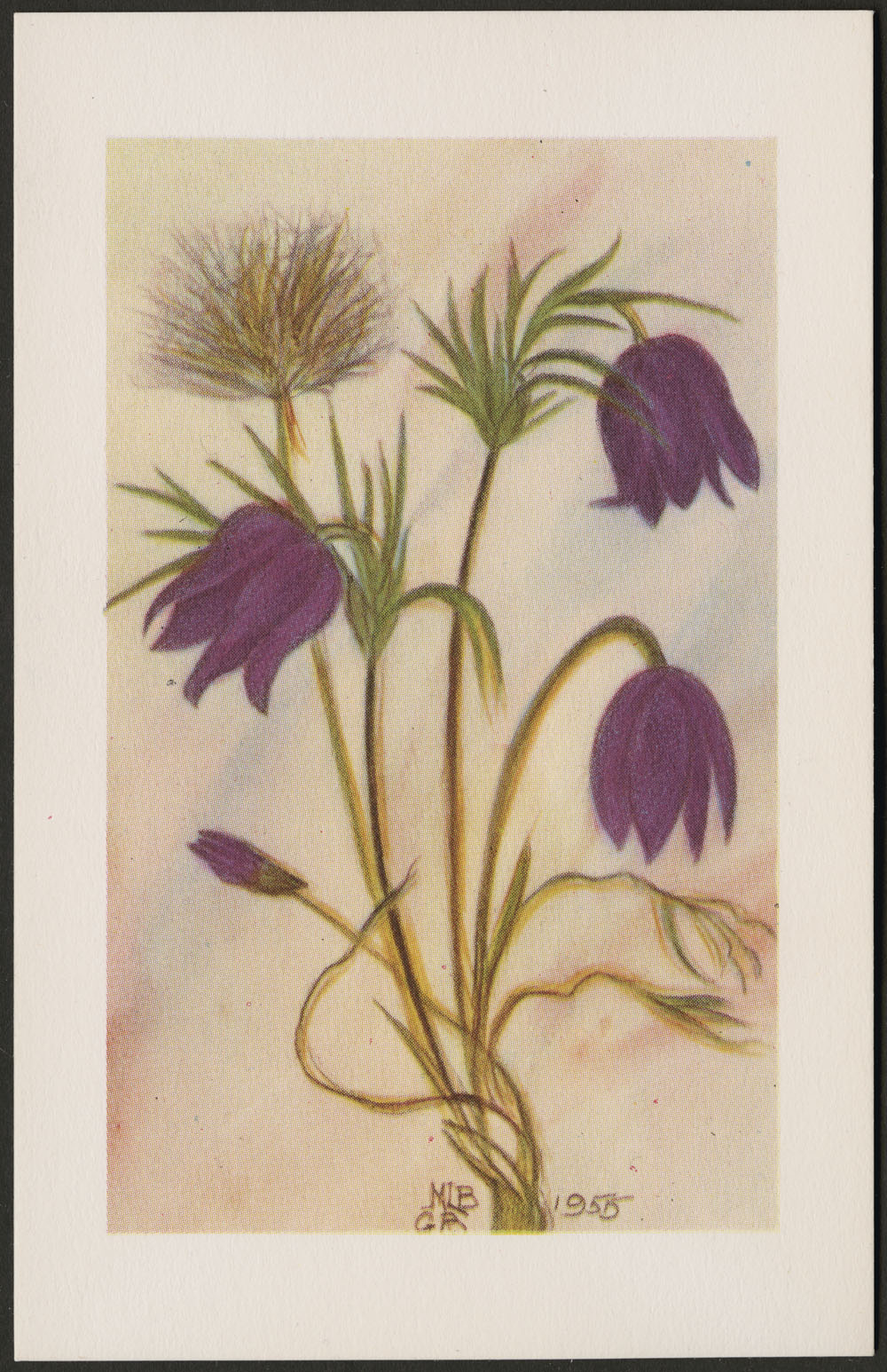
A colour reproduction of a plant with four purple flowers and one that has turned to seed. Centred at the bottom are the initials MLB and GB, and it is dated 1955.

“Pasque Flower” by Martha Louise Black. Photomechanical print, 1955. (e011154530)

When Martha was born in Chicago, Illinois, no one could have predicted what an exciting life she would lead. In 1898, at the age of 23, she left behind the comforts of her home in Chicago (and her first husband) to follow the Gold Rush to the Yukon. Financed by family money, Martha and her brother George crossed the Chilkoot Pass to the Yukon River. They continued to the Klondike where she staked gold mining claims. Her first stay in the Yukon lasted just over a year, but Martha had been bitten by the bug of the North. When she returned in 1901 she staked more claims, opened a successful sawmill and married her second husband, George Black. She would spend a large portion of the rest of her life living in the Yukon.

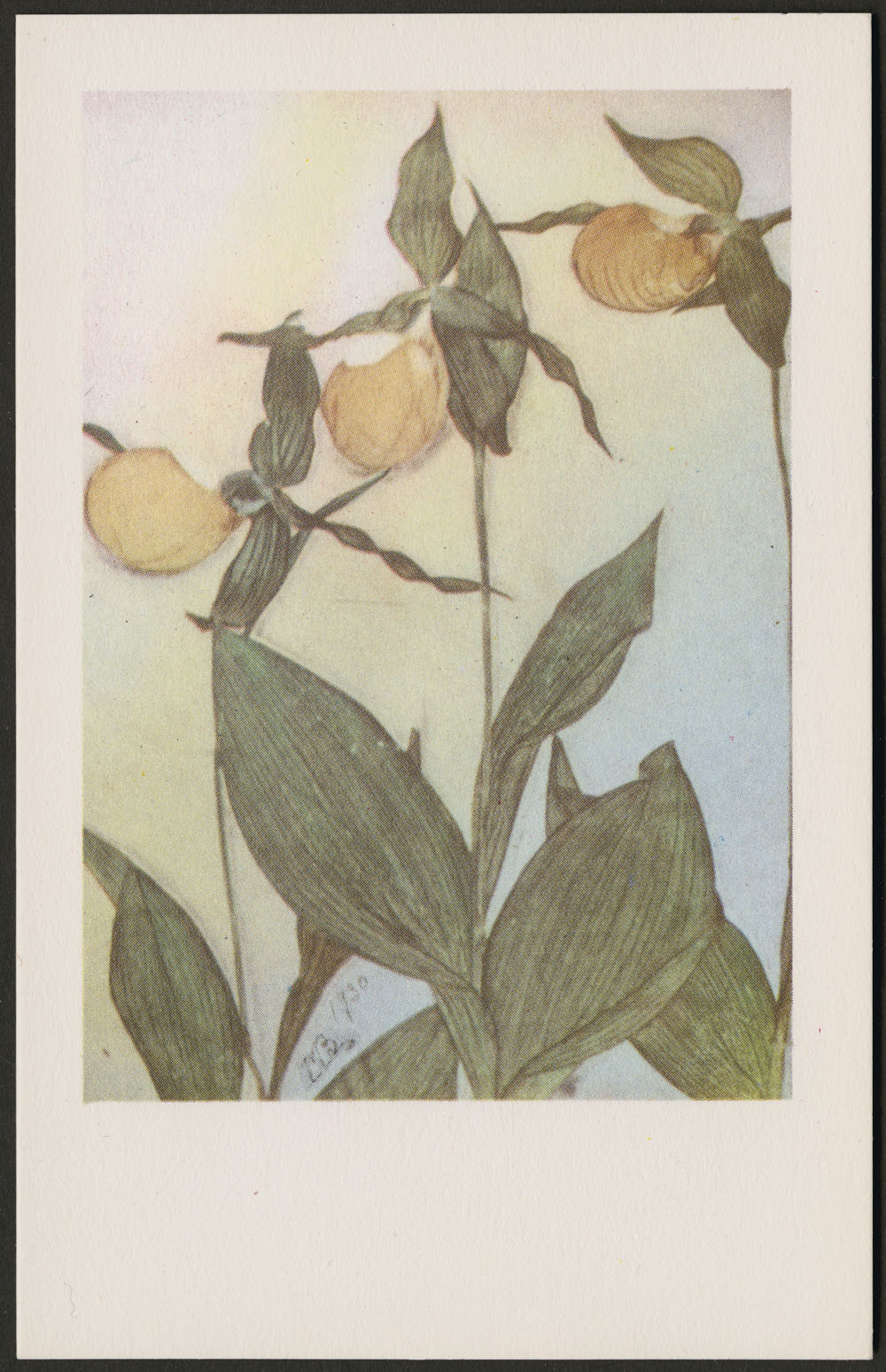
A colour reproduction of a plant with three yellow flowers with wide leafy bases. It is initialed MB and dated 1930.

“Cyprepedium, Large Yellow Lady Slipper” by Martha Louise Black. Photomechanical reproduction, 1955 (e011154531)

Martha and George built a life for themselves in the Yukon, where she raised three sons from her first marriage. George, a lawyer by profession, became the 7th Commissioner of the Yukon in 1912. Together, the Blacks played a central role in Dawson and later Whitehorse.

A colour reproduction showing a plant with small purple flowers and wide, deeply lobed leaves. It is initialed MB and dated 1930.

“Crane’s Bill – Wild Geranium” by Martha Louise Black. Photomechanical reproduction (e011154532)

Martha’s lifelong interest in botany flourished in the north. In 1909 she began collecting and pressing wildflowers, filling in the backgrounds with watercolour—a practice she called ‘artistic botany.’ Her works garnered praise, and over the next two summers she was commissioned to collect and mount wildflowers from the Rocky Mountains for exhibition at Canadian Pacific Railway stations and hotels. A series of her works were subsequently published as postcards, and she was made a fellow of the Royal
Geographical Society.

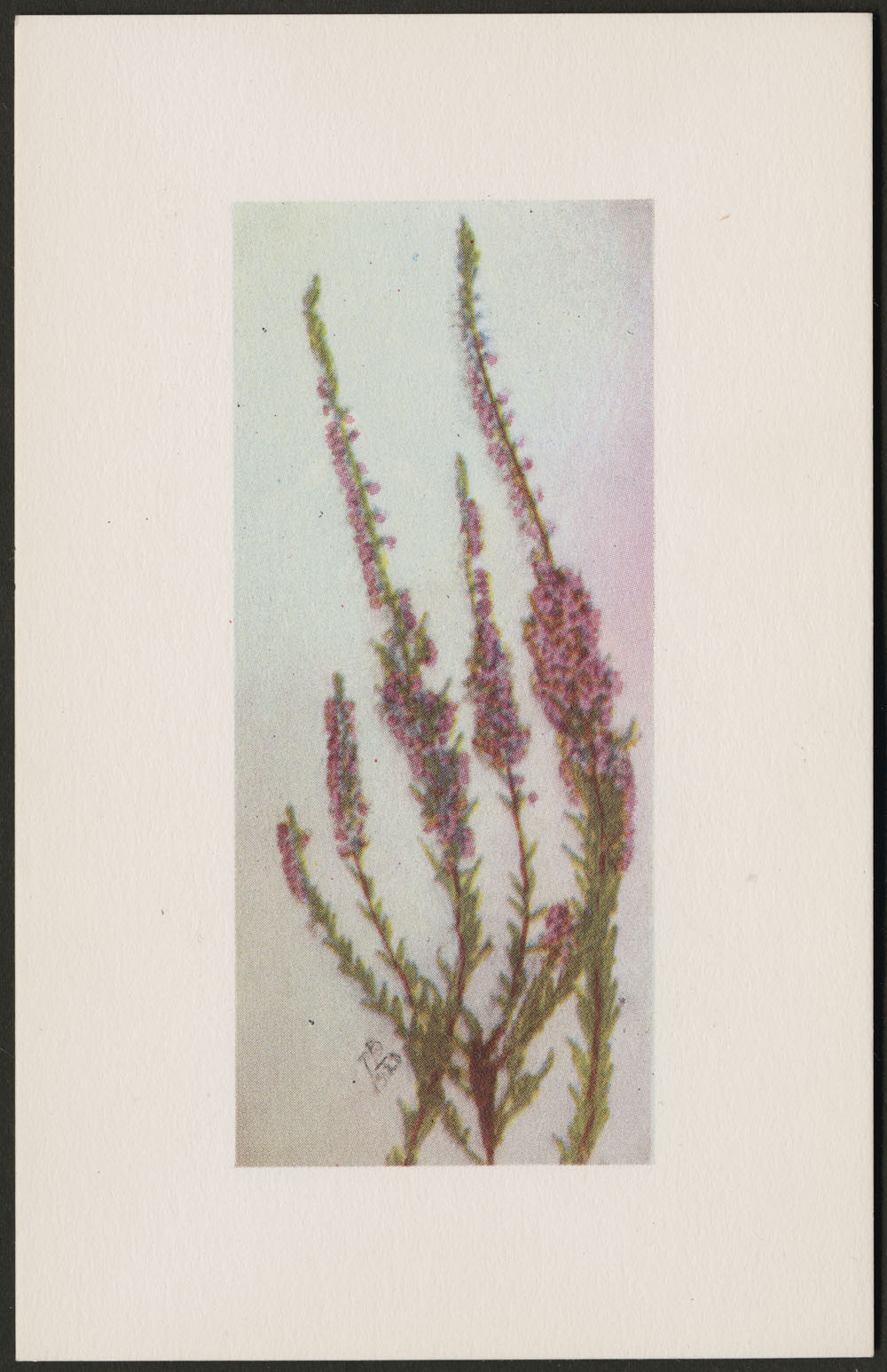
A colour reproduction showing a plant with long woody stems, closely clustered tiny pink flowers and small leaves. The print is initialed MB and dated 1920.

“Heather” by Martha Louise Black. Photomechanical reproduction (e011154538)

In 1935, at the age of 69, Martha was elected to the House of Commons. She served as Member of Parliament for the Yukon until 1940. In 1948 she was awarded the Order of the British Empire for her contributions to Yukon servicemen. Martha died in Whitehorse on October 31, 1957 at the age of 91.

Learn more about her life and work:

Written by Katie Cholette

Captain James Peters: War correspondent and photographer

Photography is now an integral part of our lives; our daily events are recorded whether they be monumental or mundane. From its beginnings in the 1830s, photography was used to chronicle the events of war. Early photographers struggled to capture the rapid action of combat as photographic equipment was unable to record movement. Consequently, early images of war were often staged recreations of the actual campaign. Generally, they depicted the less active aspects of war, such as portraits of soldiers, camp life, fortifications, artillery placements, and the battle sites before and after the action.

Captain James Peters recorded the dramatic events of the North-West Resistance as a photographer and a correspondent for the Quebec Morning Chronicle. The North-West Resistance was a five-month insurgency against the Canadian government, fought mainly by citizens of the Métis Nation and their First Nations allies. Peters was a pioneer in capturing the events on the battlefield.

Captain Peters and the “A” Battery of the Canadian Artillery left Quebec City on March 28, 1885 for the northwest. The “A” Battery was to provide artillery support for Major-General Frederick D. Middleton and the Canadian Militia. Peters would serve with Middleton at Fish Creek, Batoche and during the militia’s search for Mistahimaskwa (Big Bear). Continue reading

Prime Ministers’ Speeches

Are you interested in speeches made by Canadian prime ministers? Library and Archives Canada (LAC) has a unique collection of resources to help you find speeches given by past prime ministers from the very beginning of our nationhood. LAC’s historical resources complement the Government of Canada resources which include more recent speeches.

The archived website, First Among Equals, contains a section devoted to select speeches made by past prime ministers. From the introduction page of this virtual exhibit, click the “Speeches” link from the left menu, which will take you to a page of speeches organized by topic. To view speeches given by a particular PM, click on “Profiles” in the left menu. Please note that this website is archived and will no longer be updated.

Among the sources originally used for putting together the First Among Equals website was LAC’s collection of speeches on microfiche, a reproduction of a collection of speeches held at the Library of Parliament. This collection is located in the 2nd floor reading room of LAC’s main building at 395 Wellington Street in Ottawa. In addition to speeches given by PMs, this resource includes speeches delivered by other Ministers and Leaders of the Opposition from 1914 to 1993. Continue reading

Finding patents of invention held at Library and Archives Canada

The most important thing to know when searching for a patent of invention at Library and Archives Canada (LAC) is the date range when the application was filed. Following are some search options and strategies for each time period.

Pre-1869

The original patents of invention series includes applications that originated in present-day Ontario and Quebec dating back as far as 1824. Two publications, the Index of Inventors and Inventions for Canadian Patents, 1824–1872 and the List of Canadian Patents, from the Beginning of the Patent Office, June, 1824, to the 31st of August, 1872 serve as the finding aids for this series. LAC also holds pre-Confederation patent applications that were filed in Nova Scotia, New Brunswick and Newfoundland. These documents are individually described in finding aids that can be consulted onsite in Ottawa or via Reference Services.

1869–1919

The Canadian Patents, 1869–1919 database is searchable by patent title keyword, inventor or year filed. For example, the patent application for a hockey goal can be found by searching with the keyword “hockey.” The associated digitized documentation includes one drawing. Continue reading

The Persons Case, 1929

The Persons Case is a historic part of women’s fight for political equality in Canada. The case is significant for establishing that interpretation of the Canadian Constitution is adaptable to the changing needs of society and for determining that “qualified persons” in the British North America Act, 1867 (BNA Act, now known as the Constitution Act, 1867) includes women. This decision paved the way in Canada by asserting women’s rights to be active in political life.

The events leading to the Persons Case began in 1916 when Emily F. Murphy was appointed as the first female police magistrate in the British Empire. Undermining her authority, lawyers challenged her position as illegal on the grounds that a woman was not considered to be a person under the BNA Act, and therefore she was unable to act as magistrate. Although the Provincial Court of Alberta would confirm Murphy’s appointment by declaring women as “persons,” this decision was not proclaimed federally.

Over the next 10 years, the federal government faced pressure from women’s groups to appoint a female senator. The government declared the appointment of a women impossible according to the BNA Act, which specified only “qualified persons” could hold a senate position. Turning to the law, Murphy found that under section 60 of the Supreme Court Act, five interested persons are allowed to petition the government for interpretation on a constitutional point.

Murphy enlisted the help of Henrietta Muir Edwards, Nellie Mooney McClung, Louise Crummy McKinney, and Irene Marryat

Parlby—now known as the “Famous Five”—who were engaged politically and championed equal rights for women.

A black-and-white photograph showing five women standing on either side of a man.


(Front row, L-R): Mrs. Muir Edwards, daughter-in-law of Henrietta Muir Edwards; Mrs. J.C. Kenwood, daughter of Judge Emily Murphy; Hon. Mackenzie King; Mrs. Nellie McClung. (Rear row, L-R): Senators Iva Campbell Fallis and Cairine Wilson. This photograph was taken at the unveiling of a plaque commemorating the five Alberta women whose efforts resulted in the Persons Case, which established the rights of women to hold public office in Canada. Photograph taken by Eugene M. Finn, National Film Board of Canada, June 11, 1938, Ottawa, Ontario. (MIKAN 3193154)

Continue reading