Vimy Ridge: a journey of maps (part 2)

By Ethan M. Coudenys

Picture the scene of the moments leading up to a massive military advance. On the morning of April 9, 1917, a cold rain falls on the Douai plain in France. To the west, a great number of Canadians have gathered to begin their attack on Vimy Ridge at precisely 5:30 a.m. Of the approximately 30,000 men preparing to advance that day, roughly a third are hidden underground in tunnels built specifically to hide them from the German forces’ lookouts. At the moment of attack, the men burst from the tunnels and shower brimstone and hellfire on the forces that oppose their advance.

A tunnel at Vimy Ridge.

Grange Subway under Vimy Ridge, August 17, 2022. Image courtesy of the author, Ethan M. Coudenys.

These tunnels were mainly constructed by the Welsh Companies of the Royal Engineers. The Welsh miners were mostly professional miners, and they would cut through the chalk stone 10 to 15 metres below the battlefield in near-total darkness. Some 10 kilometres of underground tunnels ran from the furthest Canadian rear trench to the front of the line. They were used to move supplies, run messages and conceal the advancing army on the day of the attack.

Speaking from my experience as a tour guide at the Canadian National Vimy Memorial at Vimy Ridge, these tunnels, often filled with water, bats, rats and unusual smells (probably far worse back then), were incredibly confusing to traverse during the First World War. There were electric lights every 20 metres or so, but the tunnels were dark, twisting and loud. Chalk conducts sound, so soldiers could hear, not only every shell falling on the surface with some clarity, but also miners digging away and the few soldiers and officers shuffling through the tunnels.

To avoid confusion, maps were created to prevent messengers and officers from getting lost in the subterranean labyrinth. Only one of these tunnels, the Grange Subway, is currently open to visitors at the Vimy Ridge National Historic Site. The Durand Group, a research and exploration association, is carrying out the dangerous work of investigating and uncovering tunnels and redoubts, but these efforts have not yet resulted in additional tunnels being opened to the general public. Nevertheless, the Durand Group’s work provides insights into what the maps of different tunnels were like at this time in the war, as the association maps and reports on newly uncovered tunnel systems in France and Belgium.

The attack on Vimy Ridge consisted of two different phases. The first, and most famous, is the taking of the ridge along the 12-kilometre-long front line for which the Canadian Expeditionary Force (CEF) was responsible. The CEF had four main objectives, but Hill 145, the highest part of the ridge, was the declared central target for the operation. The second phase was taking the Pimple (also known as Hill 119). This was a heavily fortified and well-manned artillery and heavy machine gun post at the top of a hill. It was very easy to defend, and very useful if the German forces wanted to regain territory lost in the first phase. Thus, the second phase of the Battle of Vimy Ridge is now known as the Battle of Hill 119 (or the Pimple).
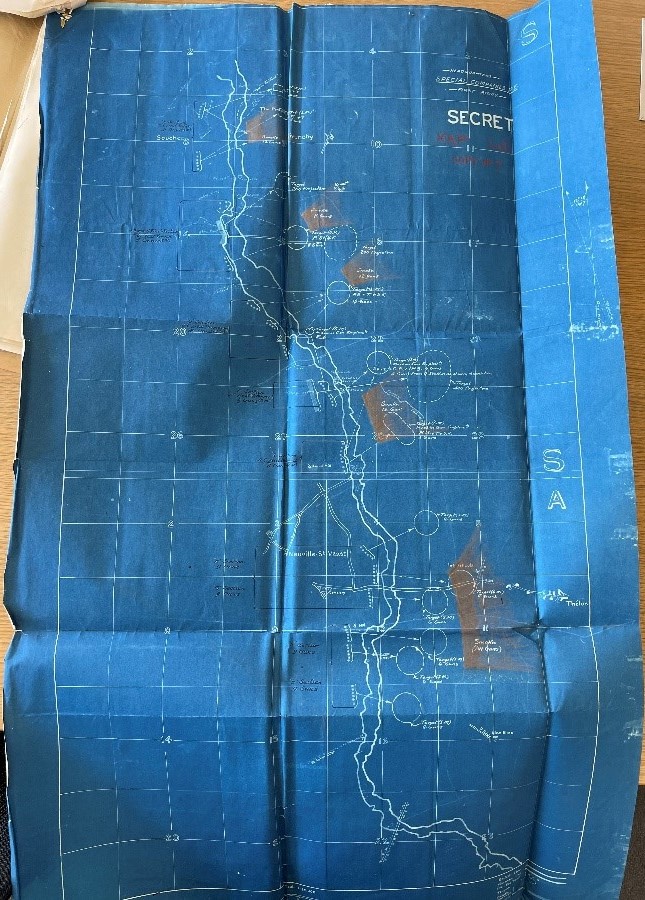
Map showing artillery plan, including smoke screens.

Artillery barrage plan – Battle of Hill 119 (or the Pimple) (MIKAN 3946966). Photo: Ethan M. Coudenys.

Mapping the artillery attack

The Vimy Ridge and Pimple attacks were Canada’s contribution to the larger military operation of the Battle of Arras, which took place along a 30-kilometre front led by mostly British forces. One of the most important elements of the attacks was the efforts of the artillery brigades, for which both Canadian and British artillery units worked in tandem to aid the advance of the infantry troops. This effort required immense preparedness and incredible tenacity. It was critical for artillery units to follow the same schedule, to ensure that the barrage of artillery shells would advance at a very specific pace of 100 metres every three minutes. Every unit was therefore issued maps and specific timings on each of the changes in range, as well as the speed of firing. This tactic was called a rolling (or creeping) barrage.

To expand on the discussion in part 1 of this post, a rolling barrage is a military tactic largely developed by British and Canadian generals who had witnessed the failure of artillery support at the Battle of the Somme in France (July–mid-November 1916). The rolling barrage tactic involved firing a wall of shells into no man’s land and advancing the wall slowly, so that the opposing forces could not exit their shelters to mount an effective defence before the infantry troops reached their line. This tactic was effective in eliminating defensive enemy snipers and machine guns during the start of the Vimy Ridge battle. Canadian writer Pierre Berton states in his work on Vimy Ridge that the roar of the artillery firing was so loud that it could be heard as far away as London. To the soldiers advancing into dangerous territory, it seemed as though the sky was made of lead, because of the sheer number of shells flying overhead.

Let us now turn to the various maps of the artillery on Vimy Ridge. For the assault on Hill 145, it was important for the infantry and artillery to be synchronized. The artillery commanders received the same maps as the infantry units so they could measure the advances of the various divisions and brigades, sometimes kilometres away.

More importantly, the artillery officers received maps of specially chosen target areas, to help them destroy major defensive installations before the infantry came into range of those positions. These target areas could be machine-gun nests, sniper posts, defensive artillery pieces or mortar emplacements. Part of the plan of attack was to ensure that there was a significant time gap between the first and second advance. For example, the distance between a red line and a black line would be roughly a 30-minute interval, during which the secondary wave of infantry and supporting troops could move up. In other words, the artillery would fire on specific targets for a set amount of time, wait 30 minutes to allow the infantry to advance, then fire on more distant targets. This allowed for the infantry to rest and fortify their newly taken positions, while the artillery targeted the potentially dangerous defensive fortifications further along the front.

To capture the Pimple, the strategy was quite different. While the artillery continued to use the rolling barrage, they also used two new tactics that were introduced and developed during the Great War. The first was creating what some scholars have called a “killing field,” where, through heavy artillery fire, defending troops are forced to leave their shelter for open space and then are targeted by machine guns and artillery. The second was the launching of smoke screens. The artillery would launch barrels of burning oil into the battlefield, creating a thick, black cloud of smoke to hide the advancing infantry. These two tactics would become a trademark approach of the Canadians in later battles, including the Battle of Hill 70 in Lens, France (August 15–25, 1917) and the Third Battle of Ypres (Passchendaele) in Belgium (July 31–November 10, 1917).

While the rolling barrage was successful in the preliminary attacks on Hill 145, the capture of the Pimple was one of the most costly battles in Canadian military history, with over 10,000 men killed, injured or missing.

Conclusion

The mapping of a battlefield is not a new concept. From the age of the Roman Empire to the Napoleonic Wars, generals and warlords have used maps to plan attacks and navigate battlefields. However, the development and production of these maps was usually done exclusively for high-ranking officers and non-commissioned members. At the Battle of Vimy Ridge, to ensure better overall preparedness among troops and to prevent confusion among infantry soldiers, maps of the battlefield were produced and distributed widely, so that even low-ranking lieutenants and lance-corporals would have access to the plan of attack. This innovation in how the allies fought during the First World War resulted in a hugely successful attack upon the German forces’ position on Hill 145 (Vimy Ridge) and Hill 119 (the Pimple) during the Battle of Vimy Ridge, part of the greater Battle of Arras. Maps illustrated clear and focused goals for individual units, and they demonstrated the tactics that the soldiers, artillery and support services would use to take the ridge. These maps followed many months of preparations for the Vimy Ridge battle; they were a major contributing factor in the CEF’s successful capture of Hill 145.

Additional resources


Ethan M. Coudenys is a Genealogy Consultant at Library and Archives Canada.

Vimy Ridge: a journey of maps (part 1)

By Ethan M. Coudenys

Cartography is the practice of drawing or making maps; during the First World War, this was vital for planning and preparing attacks and defensive actions. Battles in France like those of the Marne, Somme and Verdun were mostly planned with large maps by high-ranking officers and non-commissioned members. However, for the battle at Hill 145—better known as Vimy Ridge—cartography played an integral role in the planning of the assault by the Canadian Expeditionary Force (CEF).

Group of men going through barbed wire with shells exploding in the background.

Canadians advancing through German wire entanglements, Vimy Ridge, April 1917 (a001087).

Before we begin, we should set the scene by talking about the CEF before the Battle of Vimy Ridge. The Canadians had fought in various battlefields in France and Belgium, including with distinction at Flers-Courcelette (August–November 1916) in France, about 50 kilometres from Vimy. Under the command of Lieutenant-General (later Field Marshal and Governor General) Sir Julian Byng, the CEF had become a very successful fighting force. In November 1916, the Canadians began moving to the east of the French town of Arras. There, they began preparing for an attack on Hill 145, where the German forces had taken nearly three years to build very heavily fortified lines of trenches.

The Battle of Vimy Ridge, which began on April 9, 1917, was not an isolated operation; it was a small part of the Battle of Arras. The two major points of the battle for the ridge, for which the Canadians were responsible, were the ridge itself (Hill 145) and the Pimple (Hill 119). Incredible preparations went into planning this attack.

Between the beginning of the war in 1914 and when the Canadians took up positions in late November 1916, French and Moroccan divisions had tried to take Vimy Ridge. They advanced the allied front line closer to the ridge. During the Battle of Verdun, the British took over these positions, and they expanded and strengthened the relatively weak fortifications. By November 1916, the CEF entered the front line at Vimy with very good fortifications.

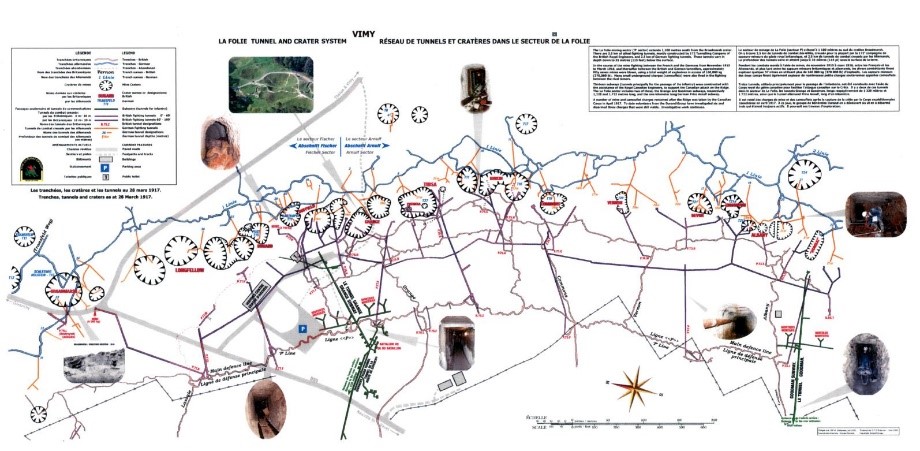
Map showing a tunnel-and-crater system.

Map 1 – Map of La Folie battlefield: group of tunnels, near Vimy. Courtesy of Veterans Affairs Canada – European Operations.

The Canadians were called to the line at Vimy for the first time as an entire corps, fighting side by side. This was incredibly important not only for the soldiers but also for the young nation. For many, it signified the start of a process whereby Canadians would collectively build their cultural and national identity.

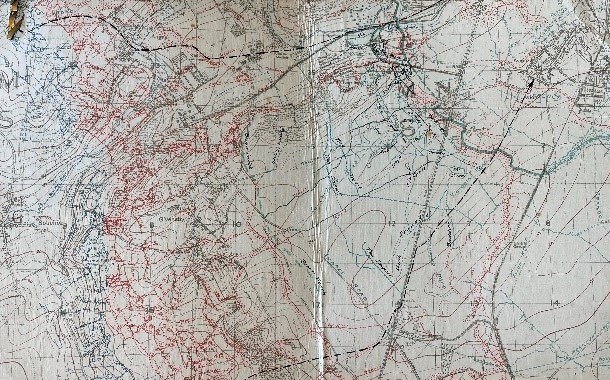
We can better understand the importance of cartography in battle by first reviewing some of the maps that are presented today at the Visitor Education Centre in the Canadian National Vimy Memorial in France. There, Canadian guides—all university and college students—educate the public about the Battle of Vimy Ridge, including the tunnels that were built to support the advance of Canadian troops in April 1917. In maps 1 and 2, the different tunnels and trench lines used during the battle for the ridge are shown.

Map showing the battlefield during the Battle of Vimy Ridge.

Map 2 – Battlefield map of the Battle of Vimy Ridge: modern map. Courtesy of Veterans Affairs Canada – European Operations.

How were the maps made?

Maps were important for infantry soldiers because they helped to ground and situate them in an environment marked by constant fear, confusion and proximity of death. During the months leading up to the Vimy Ridge battle, soldiers were sent into the German forces’ trenches to gain information about the enemy’s fortifications and weapon emplacements that lined the front. Moreover, the Royal Flying Corps (later the Royal Air Force) used aerial photography to pinpoint areas of fortifications and map points of interest for the attack. Let us examine this gathering of information by soldiers.

The CEF collected information by sending small incursions into the German lines, with soldiers memorizing the layouts of the other side’s trench systems. These could be completed by a small group of men or a very large group (5,000 or more in one instance) and took place from November 1916 until the eve of the battle in April 1917.

During the infamous trench raids, Canadian soldiers would be tasked with memorizing the layout of the trenches and important locations in the German forces’ lines. These vital recollections were later reflected in detailed maps, which were used by the Canadians to help reduce confusion among the infantry. The trench raids could be incredibly dangerous, both for the men raiding and for the defenders. Often these attacks would take place at night, and both attackers and defenders could suffer heavy losses.

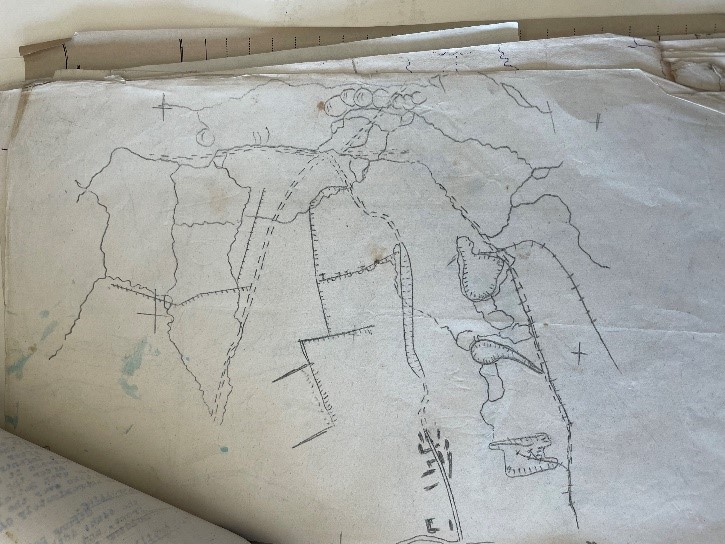
Hand-drawn map of German trenches after a raid before the Battle of Vimy Ridge.

Hand-drawn map of German forces’ trenches after a raid, Vimy Ridge, 1917 (MIKAN 4289412). Photo: Ethan M. Coudenys.

The maps that were created as a result of these raids, such as the example above, were often drawn by hand, from memory, by individual soldiers.

What maps were made?

Map showing artillery barrage in the Vimy region in France.

Artillery barrage map, 1st Field Survey Company, Royal Engineers, near Vimy, 1917 (e000000540).

We are very fortunate to have access to a vast number of maps from the Great War in the collection at Library and Archives Canada. Some of the most frequently requested by researchers are the trench line maps of the Western Front. As mentioned above, these maps were drawn through painstaking and sometimes bloody collection of information by soldiers, engineers and pilots. These maps were issued widely to both low-ranking officers and non-commissioned members of the infantry to help them succeed in the attack on April 9, 1917.

The first map issued, and perhaps the most important for the advance, was the barrage map. During the attack on Vimy Ridge, the Canadian artillery, supported by numerous British field artillery units, used the tactic of a rolling (or creeping) barrage to subdue resistance by the German forces while the infantry advanced behind a wall of falling shells. This process was incredibly well timed, and it needed to be, to avoid any friendly fire casualties. Thus, maps were created and used by the artillery units to launch this barrage on the German forces’ lines. These maps detail the targets of the artillery leading up to the four main objectives of the CEF between April 9 and 12, 1917. They show the 100-metre advances of the rolling barrage every three minutes, allowing the infantry units following the barrage to successfully move behind the wall of fire. The maps also show the various targets of particular interest, including fortifications, machine gun emplacements, mortar emplacements and munitions storage areas.

Cardboard map detailing the Western Front at Vimy Ridge.

Infantry soldier’s pocket map, made of cardboard, Vimy Ridge, 1917 (MIKAN 4289412). Photo: Ethan M. Coudenys.

The most widely used maps in the attack on Vimy Ridge were those issued to infantry units. These maps were small copies of larger planning maps used by high-ranking officers, but they included the individual objectives of each platoon and company. This was an incredibly important step in planning and executing the attack on the ridge. Despite the confusion caused by gun and rifle fire, the maps helped the advancing soldiers to stay on course.

The change of policy allowing soldiers to carry their own battlefield maps might seem like a minor one, but it had a significant effect on the CEF’s success in the Battle of Vimy Ridge.

 Additional resources

  • The Underground War: Vimy Ridge to Arras by Phillip Robinson and Nigel Cave (OCLC 752679022)
  • Vimy by Pierre Berton (OCLC 15063735)
  • Vimy 1917: Canadians and the Underground War by Dominique Faivre (OCLC 1055811207)

Ethan M. Coudenys is a Genealogy Consultant at Library and Archives Canada.

Vimy Memorial visit: fact or fiction? (the sequel)

By Rebecca Murray

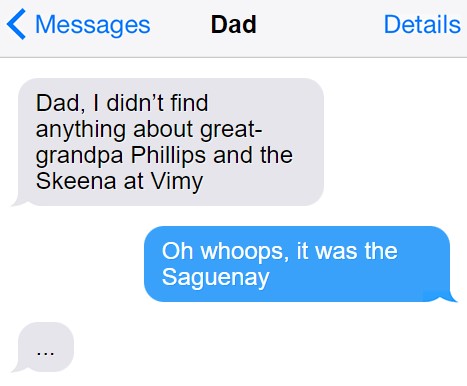
Conversation between the author and her father via text message. She texts: “Dad, I didn’t find anything about great-grandpa Phillips and the Skeena at Vimy.” Dad replies: “Oh whoops, it was the Saguenay.” She responds: *silence*.

Text messages between the author and her father. Image courtesy of the author, Rebecca Murray.

Has this ever happened to you? You started your primary research with abandon and came up empty, only to discover that the facts you were using were incorrect. This can be extremely frustrating. You might feel like you have wasted your time and energy. And yet, this happens more often than you might think, even to seasoned researchers.

Happily, history is not going anywhere, so we can take a second kick at the proverbial can. Come along and see what we find this time!

Do you remember my previous blog about trying to trace my great-grandfather’s attendance at the unveiling of the Vimy Memorial in July 1936?

We knew that Thomas Caleb Phillips went to France alongside a Canadian naval band. We thought it was the band associated with the HMCS Skeena, but in fact, it was the HMCS Saguenay.

What a difference this one word, this one piece of information, makes in the search!

To confirm, with archival records, that the HMCS Saguenay was even in the vicinity of Arras, France, in the summer of 1936, I consulted RG24 volume 7812 file “Ship’s log – SAGUENAY – Old,” 1935/07 – 1937/09.

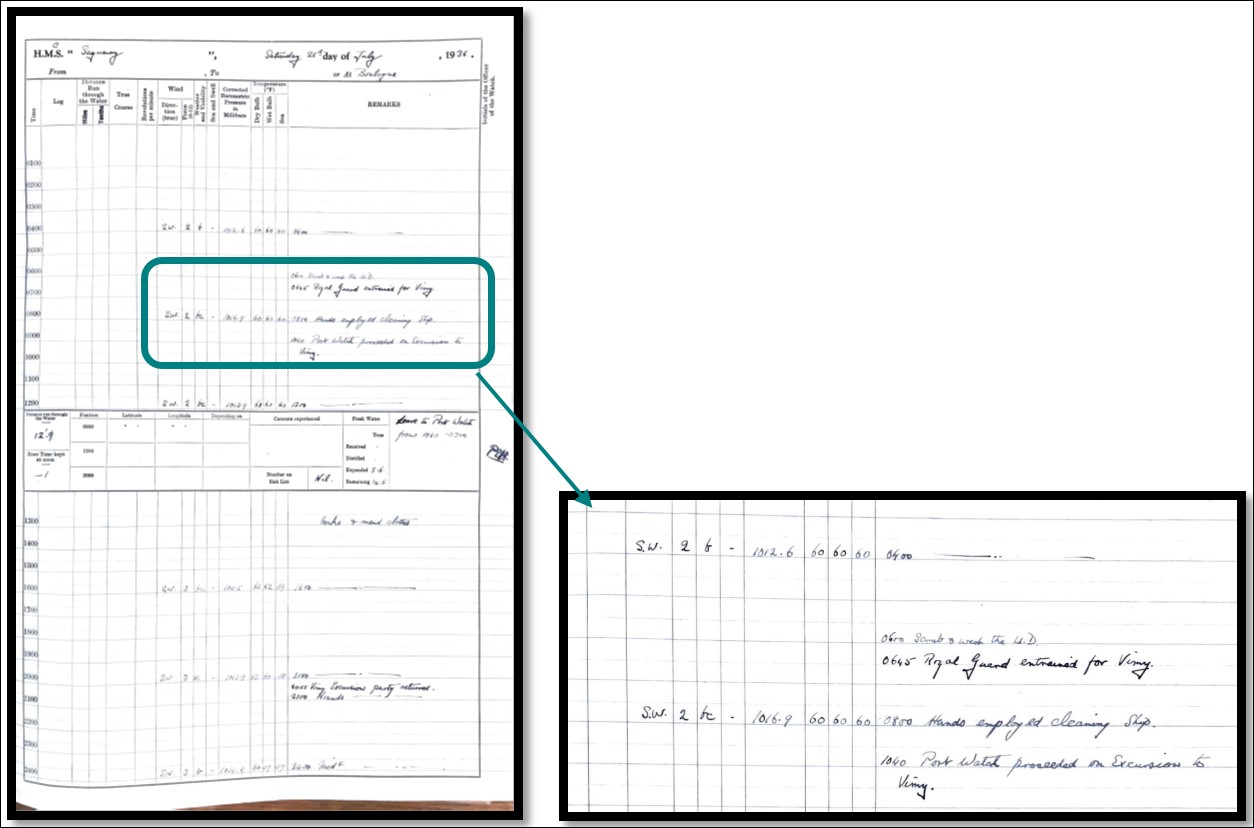
Look at what I found in the log for July 1936: the first image shows that a group from the ship visited the memorial the day before the unveiling.


A handwritten logbook for the HMCS SAGUENAY, dated July 25, 1936. The excerpts read: “Royal Guard entrained for Vimy” and “Port Watch proceeded on Excursion to Vimy.”

Ship’s log, HMCS SAGUENAY, July 25, 1936 (MIKAN 1084556). Image courtesy of the author, Rebecca Murray.

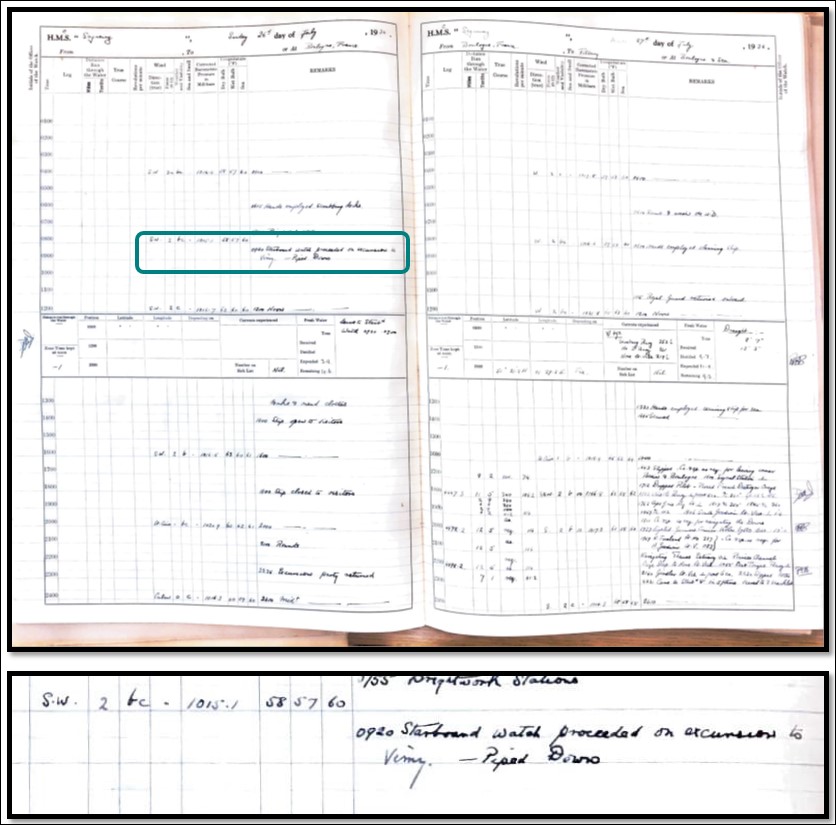
The next day’s information is even better, providing further details about the memorial from the perspective of the crew’s movements.

A handwritten logbook for the HMCS SAGUENAY, dated July 26, 1936. The excerpt reads: “Starboard watch proceeded on excursion to Vimy. – Piped Down.”

Ship’s log, HMCS SAGUENAY, July 26, 1936 (MIKAN 1084556). Image courtesy of the author, Rebecca Murray.

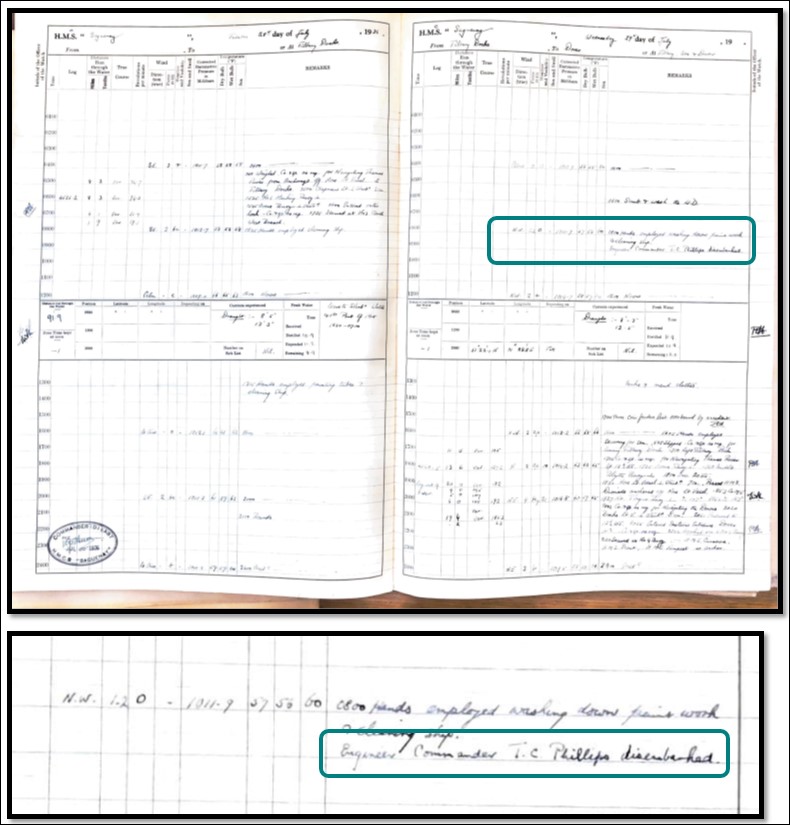
For me, reading these entries was one of those exciting moments where you are in a very quiet room surrounded by other researchers and staff doing important work, and you just want to jump up and down and squeal with delight at what you have found! Then I turned the page, because you never know what is waiting around the corner, and lo and behold, what did I find? A truly unexpected mention of my great-grandfather, the very man I was looking for, in the handwritten logbook.

A handwritten logbook for the HMCS SAGUENAY, dated July 29, 1936. The excerpt reads: “Engineer Commander T.C. Phillips disembarked.”

Ship’s log, HMCS SAGUENAY, July 29, 1936 (MIKAN 1084556). Image courtesy of the author, Rebecca Murray.

Now it is July 29, and the ship is at Dover in England, and look who went ashore for a visit!

This is the link I had been searching for! (Exaggerated fist pump.) Let us just hit pause for a moment and make an observation: I previously wrote about how research with archival records, especially government records, can be very time consuming and take a lot of patience. I did not expect to find any mention of T.C. Phillips in the ship’s log. I was simply trying to confirm that the HMCS Saguenay had been near Vimy Ridge (or as close as a ship can get to rural northern France). This “find” was almost enough to convince me to stop searching for further records—almost.

Something else that I was happily reminded of by the experience of sharing my research on the previous blog is that when you share a problem, it can be halved. One of the benefits of working with naturally curious colleagues is that they will offer their suggestions about how you might find the answer you are looking for. For example, one colleague suggested checking specific sailing lists related to the Vimy Pilgrimage.

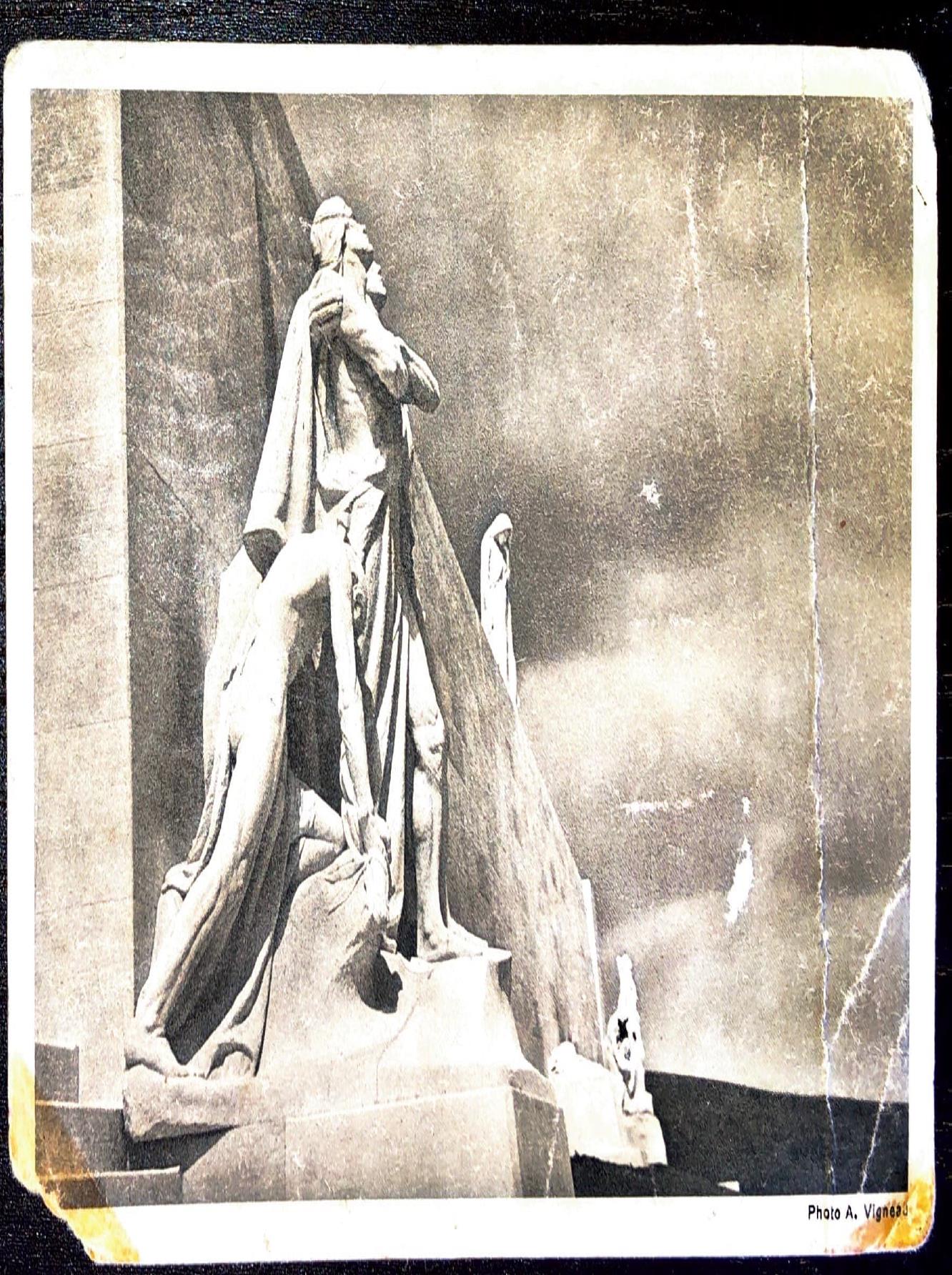
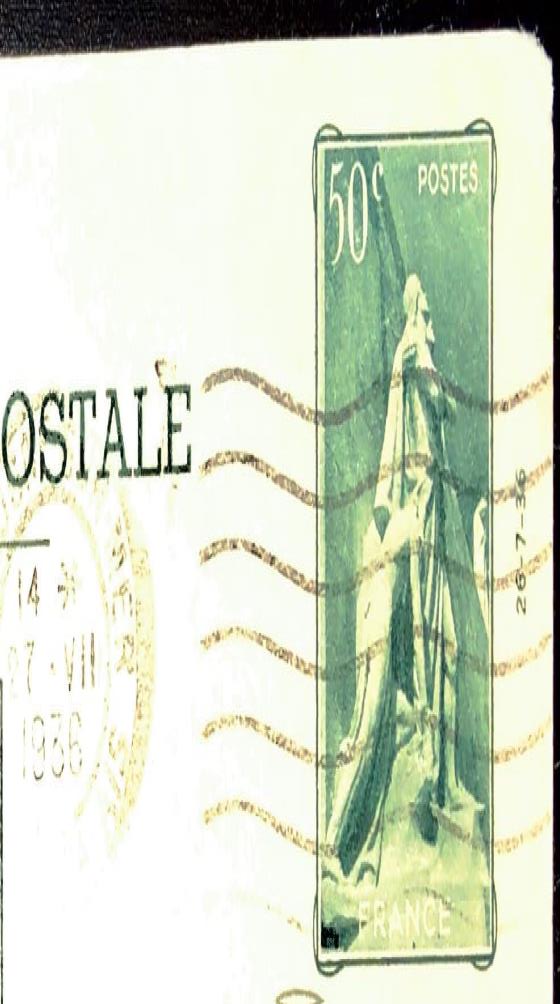
And in sharing the story of my research with extended family, I not only gathered corrected secondary information (ahem!), but also an item that I will be filing away for my own archives: a worn postcard that T.C. Phillips sent to his wife, my great-grandmother, in Ottawa, dated July 27, 1936. Although the message itself tells us little about the role he was fulfilling by being at the unveiling of the memorial, the card itself is full of information that could send any researcher, let alone the writer’s great-granddaughter, down any number of rabbit holes. For example, the stamp affixed to the postcard appears to be an image of the sculpted figures, The Defenders, shown on the card itself.

A sepia-tone image on the front of a postcard showing some stone figures of the Vimy Memorial.

Postcard sent by T.C. Phillips on July 27, 1936, from France to Ottawa. Image courtesy of the author, Rebecca Murray.

A green-hued stamp depicting a stone sculpture from the Vimy Memorial. The stamp has been cancelled, and a partial postmark is visible to the left of the image.

Part of the postcard with the cancelled stamp. Image courtesy of the author, Rebecca Murray.

Another research path that I could explore is the journey that T.C. Phillips took to get to France. A bit more research in the family album tells me that he travelled to France on the SS Alaunia, a ship that served mainly on Cunard’s Canadian service. I found historic passenger lists confirming that the ship departed from Montréal on July 20, 1936, and arrived in London, England, but T.C. Phillips’s name is not among those who “landed” there. For today, though, this is far enough, and that too is a valuable lesson to learn and incorporate into our research. There is always one more lead to follow up on, one more potentially relevant fonds or publication to check, but, as I mentioned in the previous post, where is the fun in being done? So I will hold on to this particular mystery until my next foray into this story.

Family lore can be subjective, so it can be challenging to match it with primary source records. As such, it requires a delicate approach, whether you are working with your own family or helping someone else, as we so often find ourselves doing in Reference Services. I cannot emphasize enough the importance of good secondary research and preparation before a visit to an archive for primary source research.


Rebecca Murray is a Senior Reference Archivist in the Reference Services Division at Library and Archives Canada.
My great-grandfather’s Vimy Memorial visit: fact or fiction?

By Rebecca Murray

As a reference archivist, I absolutely love receiving questions from researchers that tap into their family histories. One such story—very close to home—arrived in my inbox on the morning of April 9, 2020, when my father sent his annual reminder to our extended family of his grandfather’s attendance at the unveiling of the Vimy Memorial in 1936. My father and I had visited this memorial near Arras, France, on a foggy day in November 2010.

A white stone structure with carved human figures against a foggy sky.

A view of the Vimy Memorial near Arras, France, 2010. Photo: Rebecca Murray

As family members chimed in with expressions of interest, I was intrigued—why, out of all of the senior military officials in Canada, did my great-grandfather attend the unveiling? Might I find more information about his visit to the Vimy Memorial in archival records held at Library and Archives Canada?

Before I discuss my search, I should provide some context. My great-grandfather, Thomas Caleb Phillips, was a Captain Engineer in the Royal Canadian Navy during the interwar period. A family anecdote told me that he was at the unveiling of the memorial alongside the “band from Skeena,” one of the ships that he had helped to design.

A screenshot of Collection Search on the Library and Archives Canada website, using the search term “vimy memorial.”

The author’s keyword search in Collection Search

I began with some keyword searches in Collection Search, relying on various combinations including, but not limited to, Vimy unveiling, Vimy memorial, Vimy monument, Vimy Skeena, Vimy Phillips. I did not expect to find any records that included Phillips in the title, but for the sake of a diligent search, I decided to include his name. I was focused on archival records, so I filtered my results by the Archives tab and then by date (1930s) and type of document (textual). When presented with long lists of results, I further filtered by year (1936), since this was the year of the unveiling and the period that I thought most likely to include records relevant to my research.

I then compiled a list of potentially relevant files, most of them from the Department of External Affairs fonds (RG25), with a smattering from other government records and private fonds. Here are three examples:

  • RG25 volume 400 file Ex7/65 part 8 “Vimy Memorial Unveiling Ceremony,” 1936
  • RG25 volume 1778 file 1936-184 parts 1–3 “UNVEILING OF VIMY MEMORIAL,” 1934–38
  • RG24 volume 11907 file AE 30-2-2 [Superintendent, Esquimalt] – HMCS SKEENA – Movements 1932–37

These three files listed above were among 19 textual files that I identified for consultation. My research strategy is usually to identify somewhere between 5 and 10 files for preliminary review, but due to limited time for on-site work with records this past winter, I decided to “go big” before “going home.”

I reviewed all of the files, keeping my eyes open for the name Thomas Caleb Phillips (or T.C. Phillips) and any references to a “band from Skeena.”

And I found nothing!

No reference to Phillips’s attendance.

And no indication that the HMCS SKEENA or an associated musical ensemble was even at the event.

This was, of course, very disappointing. And yet, something similar probably happens every day as researchers wade through pages of textual documents, sift through contact sheets of images, and scour lists, reports and other records to confirm family anecdotes like the one that my father had shared with me.

I am not saying this to be discouraging, nor am I saying that these anecdotes are untrue. But what can be done when information, or lack thereof, contradicts family lore?

I have been working in Reference Services for eight years now; I believe that in that time, I have fine-tuned my research skills, learned how to think outside the box, and can read between the lines when doing archival research. Yet I too have come up against this obstacle.

Archival research, especially with government records, requires a patient, diligent approach. It also takes willingness on the part of researchers to continually learn from their findings and incorporate those learnings back into their research. For example, I chose to focus on textual records because I was not sure whether I would be able to identify T.C. Phillips in a photograph, especially in negative format. I also chose to start with a set of facts that I myself had not double-checked, nor had I conducted secondary research before starting my primary research.

I made presumptions about the period and the type of record to focus on, and my great-grandfather’s relative importance, which led me to a narrow scope for my research. Would I need to backtrack? Expand the scope of my research? Query different fonds? Might I be better served by an item in the published holdings? Or what about a document unrelated to the unveiling of the memorial but relevant to Phillips’s transatlantic crossing? There are a lot of different avenues of research that I could choose to follow, so the next step is to decide on my approach: forward or backward? Published or archival? It is
not easy, it is not simple, and frankly if it were, would it be as much fun?

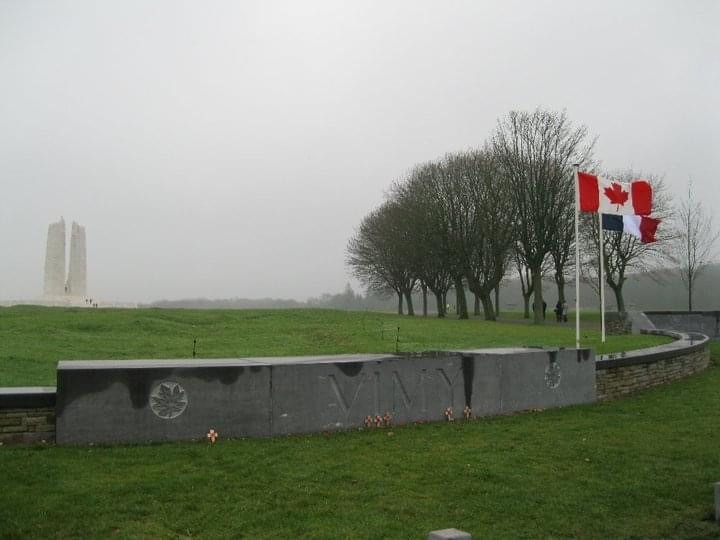
An expanse of green grass showing a white stone memorial in the distance, a grey stone sign with the engraved word VIMY and maple leaf symbols. The Canadian and French flags are on the right, against a foggy sky.

A view of the Vimy Memorial near Arras, France, 2010. Photo: Rebecca Murray

For me, this search was never about proving my great-grandfather’s attendance—I do not doubt the general accuracy of the family anecdote—but it would have been nice to find a document that told just a bit more. A document that helped make a small but valuable connection across close to 100 years of Canadian history. Something concrete to share when my father tells the story again next year. So I will keep searching!

For more information about the Canadian National Vimy Memorial:


Rebecca Murray is a Senior Reference Archivist in the Reference Services Division at Library and Archives Canada.