The Kapuskasing Internment Camp

Version française

By Ariane Gauthier

We make surprising connections throughout our lives. Things we thought were confined to our work or social circles unexpectedly surface in other areas. For me, several long drives with my husband to Northern Ontario led me to learn more about the Kapuskasing internment camp. Few people know that there were internment camps in Canada during both world wars. And even fewer know that these camps were not all for prisoners of war—many detained Canadian civilians of so-called “enemy” nationality.

The Kapuskasing camp was active from the start of the First World War in 1914 until 1920. It mainly held Ukrainian civilians. They were sentenced to forced labour, including constructing buildings and clearing several hectares of surrounding forests so the government could establish an experimental farm.

Black-and-white photograph of the Kapuskasing internment camp in July 1916. The image features a row of wooden huts with rows of prisoners and camp guards lined up in front.

The Kapuskasing internment camp. (e011196906)

My work as a reference archivist has allowed me to delve deeper into the resources of Library and Archives Canada to learn more about this grim period in Canadian history. During my research, I came across the documents of William Doskoch, born on April 5, 1893, in Laza, Galicia, a territory of the Austro‑Hungarian Empire that is now part of Ukraine.

In 1910, at the age of 17, William Doskoch joined his brother in Canada to work in the coal mines in Nanaimo, British Columbia. While he was in Vancouver in 1915, he was arrested, as he was considered an enemy alien. He was interned in several camps: first at Morrissey, then at Mara Lake, and later at Vernon, before finally being transferred to Kapuskasing. It was from there that he was released five years later, on January 9, 1920.

The William Doskoch fonds is rich in resources that help us understand internment camps from an internee’s perspective. While it contains information on several camps, I was mainly interested in William’s notes about Kapuskasing. According to his writings, the conditions were similar to those at Vernon: mistreatment of prisoners, random executions, many cases of tuberculosis, and inadequate internment conditions for the cold weather.
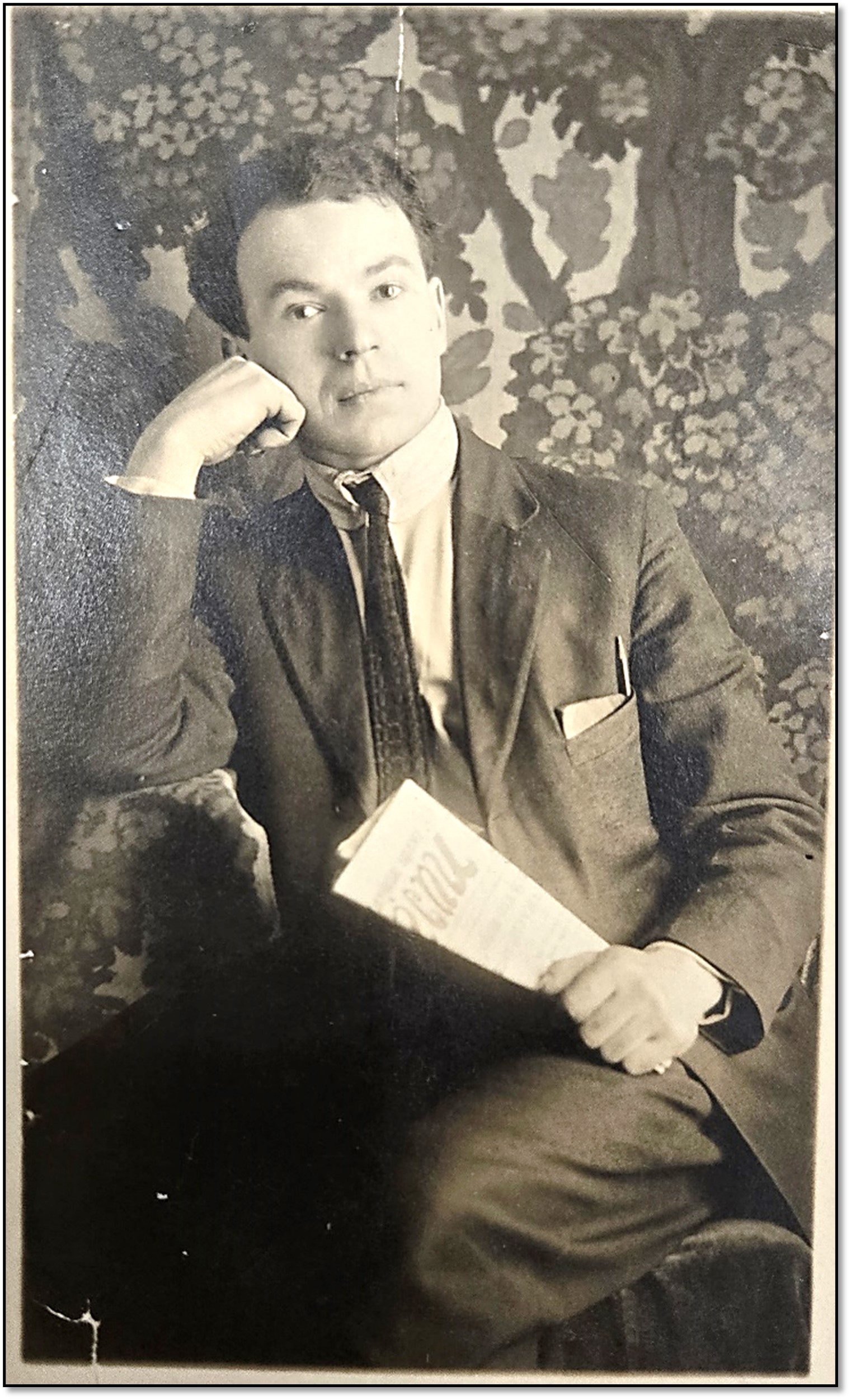
Studio portrait of a seated man. He is holding a newspaper.

Portrait of William Doskoch. (MIKAN 107187)

I also found a letter written by George Macoun, a guard at the Kapuskasing camp, detailing events that occurred there between November 1917 and the summer of 1919. Although of lesser magnitude than the William Doskoch fonds, the letter provides us with a rare glimpse into the experience of an internment camp guard.
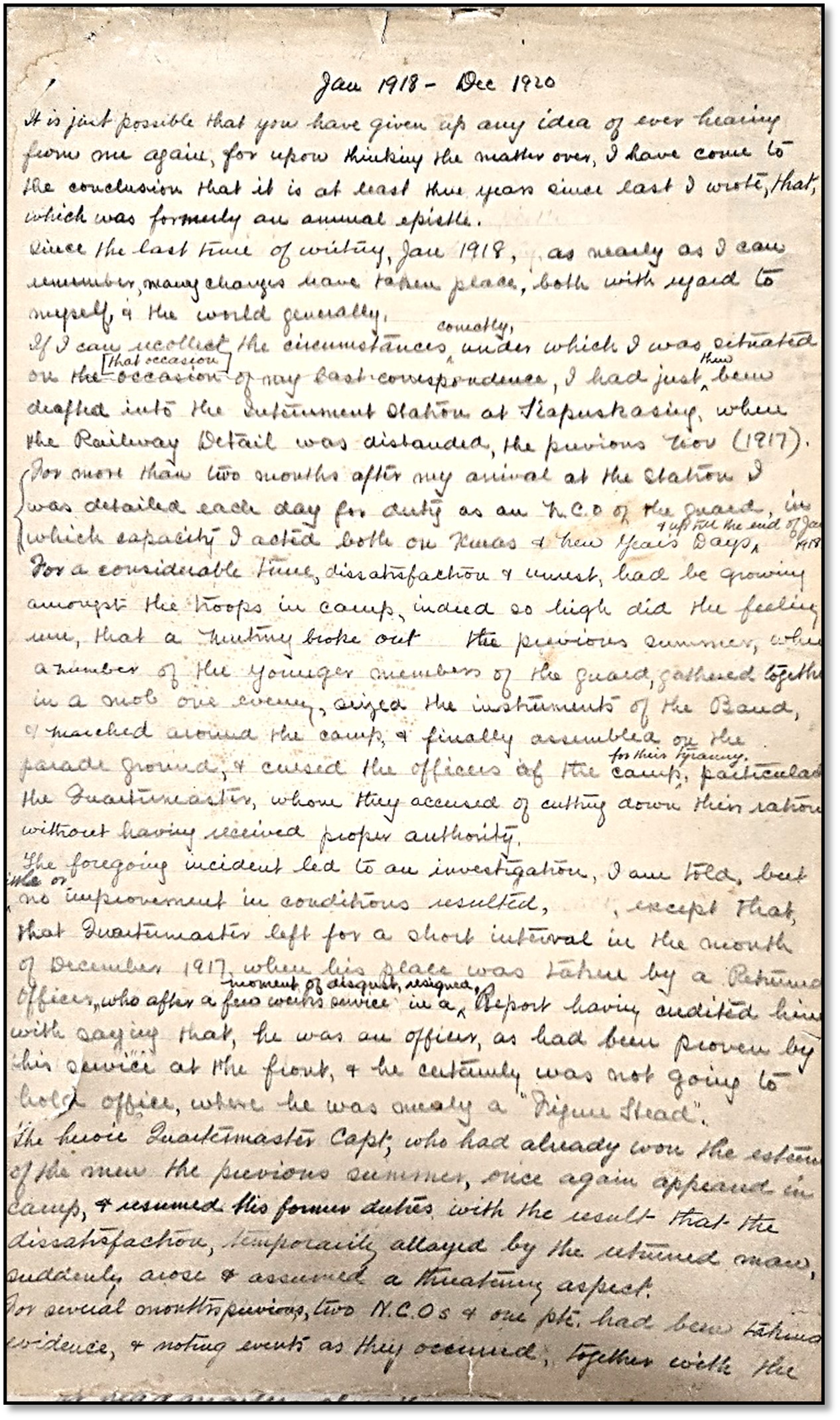
First page of a letter written by hand.

Letter from George Macoun, a guard at the Kapuskasing internment camp. (MIKAN 102082)

Originally from Ireland, George Macoun immigrated to Canada, where he joined the militia in February 1915. This is how he became involved in the operations at the Kapuskasing internment camp. He wrote this letter after the war ended, following his dismissal as a guard. Reminiscent of a memoir, he recalls the significant experiences of his time in Kapuskasing, including the conflicts and tensions among the guards due to abuses of power. He recounts the following:

“One little incident took place in March 1918, which aroused the wrath of the company generally against this commander owing to the manner in which the case was brought up being considered, according to military custom, absolutely irregular. One evening, whilst an entertainment was being held in the recreation room about the last week of Feb 1918 a certain corporal, one of the most popular men of the guard had the misfortune to get drunk and a disturbance during the night, not only in his own room but also in one of the other rooms. This information was conveyed to the popular O.C. [officer commanding] by some weak about two weeks later, when a charge was at once laid against the corporal.”

The Department of the Secretary of State of Canada fonds also contains a wealth of information. Notably, it includes a sub‑series entitled Custodian of Enemy Property and Internment Operations records, covering the period from 1914 to 1951 (R174-59-6-E, RG6-H-1). During both world wars, the Secretary of State was responsible for, among other things, matters arising from internment operations. However, some activities, such as those related to the management of properties confiscated by the State from internees, were eventually transferred to other departments over the years. The fonds still contains documentation on the certificates of release from internment camps and on the administration of the camps. Boxes 760 to 765 inclusively hold documents concerning the operations of the Kapuskasing camp.

Because there’s a lot of information, I will only focus on a few interesting elements for Kapuskasing. For example:

  • According to correspondence from the director of internment operations, the experimental farm built by the prisoners at Kapuskasing was completed in early December 1917.
  • According to statistics from December 1918, the camp housed the following prisoners: 607 Germans, 371 Austrians, 7 Turks, 5 Bulgarians, and 6 classified as “other.” A note suggests that the term “other” was used for prisoners of war, but it is not clear.
  • Several letters written by prisoners to their family members were censored. This is the case for the letters that Adolf Hundt sent to his wife. Discouraged by the extent of censorship, he gave up writing to her, leading his wife to worry about his health.

This blog post gives you an overview of the information available about the Kapuskasing camp in the Library and Archives Canada collection. This rich resource offers valuable insights into this troubling chapter of Canadian history. To support further research, we have created a guide on internment camps in Canada during the two world wars, which was very helpful to me in writing this blog post.

To consult the guide, follow this link:


Ariane Gauthier is a reference archivist in the Access and Services Branch at Library and Archives Canada.

Censored Valentines: When Cupid Met Government Scrutiny

Version française

By Rebecca Murray

A few months ago, I stumbled upon something unexpected while digging through the archival database of the Office of the Chief Press Censor. Established by Order in Council on June 10, 1915, this office had sweeping authority to oversee the censorship of printed materials during wartime. It was authorized by the Secretary of State to “appoint a person to be censor of writings, copy or matter printed or the publications issued at any printing house.” Naturally, I was interested. I began to review the series of documents from 1915 to 1920 found within the Secretary of State fonds (RG6/R174). These records mostly pertain to censorship restrictions during the First World War, covering everything from subversive elements in Canada to war propaganda.

With over 1,500 file-level descriptions, the series details a variety of publications flagged by the Press Censor. Unsurprisingly, most of the materials under scrutiny were related to the war: German-language publications, pro-German writings, and other sensitive information. But a file on Valentine’s Day cards? Maybe they were too racy, I thought to myself.

Curious, I opened the file (available on digitized microfilm at Canadiana by Canadian Research Knowledge Network). The correspondence between the Deputy Postmaster General R.M. Coulter, Chief Press Censor Lt. Col. E.J. Chambers, and the Department of Justice began in mid-January 1916. The offending item in question was a Valentine’s Day card and envelope produced by the Volland Company of Chicago.

Valentine’s Day card depicting a woman wearing a wide-brimmed hat with black type below, partially obscured by the stamped words “CENSORED (ENEMY COUNTRY).”

The Valentine’s day card in question, published with censor markings. Source: RG6 volume 538 file 254, microfilm reel T-76, page 655.

The main issue? Deputy Postmaster General Coulter flagged the card on January 18, 1916, to Chief Press Censor Chambers, complaining that the label on the envelope and the facsimile of a rubber stamp on the card resembled official censorship markings. His concern was that these could “mislead the Officials of the Government.” Unfortunately, the file does not include a copy of the censored envelope.

Chambers responded the very next day, agreeing with Coulter: “I certainly think that it would be a grave mistake to allow these particular envelopes to gain general circulation in Canada, for they would not only attract unnecessary attention to the censorship, but might prove a stumbling block in the event of it being found necessary to apply a general censorship to the mails later.”

The issue continued to escalate with a memorandum sent to the Deputy Minister of Justice on January 20, followed by a letter dated January 21 explaining that “it would be most injudicious at the present time to permit Valentines and envelopes such as those referred to me, to be circulated in Canada.”

The same letter also sheds light on the broader role of the Office of the Chief Press Censor: “I might explain confidentially, that one of the main objects sought to be accomplished by Censorship in Canada at the present time, is to intercept enemy correspondence passing to and from Teuton Agents and sympathisers in Canada and Intelligence Officers of the enemy Governments in either enemy countries or neutral ones. Consequently, it is the established practice of the censorship to endeavor to conduct its operations with as little publicity as possible, it being felt that to advertise the fact that there is an active censorship system in Canada is but to defeat the object explained in the preceeding.”

Although the Valentine’s Day card in question was not labelled as “enemy correspondence,” its use of what appeared to be censor markings drew significant concern from both the Postmaster General and the Chief Press Censor. During a time when censorship was highly active but intentionally discreet, they were particularly wary of anything that might expose or ridicule their work.

Something that struck me in the latter part of the file was a series of notes exchanged between regional censor officials and booksellers, along with other vendors who had ordered or purchased the card. In response to government letters, several vendors replied promptly, assuring they would return the cards to the American publisher. However, it’s unclear how many cards were already in circulation or if any had been sold before the recall.

White page with black type, stamp and handwriting.

Letter to Chief Press Censor Chambers from the Regional Press Censor’s office in Western Canada. Source: RG6 volume 538 file 254, microfilm reel T-76, page 674.

In addition to the intergovernmental correspondence, the Chief Press Censor reached out to the publisher in a letter dated January 25, noting that the Canadian authorities wished to avoid letting the war interfere with trade and relations between Canada and the United States: “The sincere desire of the Canadian Authorities is to prevent as far as possible, the war from interfering with the trade and other relations existing between Canada and our good neighbours to the South.” Despite the firm stance, the Chief Press Censor’s diplomatic tone reflected a desire to manage the situation tactfully.

White page with black type and handwriting.

Letter from P.F. Volland & Co to Chief Press Censor for Canada. Source: RG6 volume 538 file 254, microfilm reel T-76, page 669.

A response letter from the publisher to the Press Censor dated January 24, sheds light on their reaction to the product’s removal from the Canadian market. Regardless of the original intent behind the censor markings, the publisher assured the Chief Press Censor that “it was not our intention to direct attention in any undesirable way to the censorship at present in force in the Dominion.”

The work of the Chief Press Censor during the First World War highlights the government’s influence over the flow of information during the conflict. While this particular case may seem benign—more likely to amuse than alarm us today—it serves as a reminder that censorship, in various forms, remains an ongoing issue. To learn more, explore Library and Archives Canada’s role in Freedom to Read Week, an annual campaign that raises awareness of censorship and book challenges across Canada.


Rebecca Murray is a Literary Programs Advisor in the Outreach and Engagement Branch at Library and Archives Canada.


Freedom to Read

By Mary-Francis Turk

At Library and Archives Canada (LAC), we never judge a book by its cover (or its content, for that matter)! We want to make sure that readers and researchers have access to all Canadian publications. LAC’s mandate, as outlined in the Preamble to the Library and Archives of Canada Act, puts emphasis on preserving the documentary heritage of Canada while making it available to the public.

Libraries across Canada have a responsibility to create policies that protect the freedom to read and intellectual freedom. As a national library, LAC has created a permanent collection by acquiring published books, rare and early editions of books and related print material of all kinds.

Through its legal deposit program, LAC acts as a quiet champion against censorship. Every Canadian publication has its place in the national collection. The program has been crucial in aiding LAC’s ongoing efforts to build an inclusive, expansive and accessible national collection.

LAC works closely with publishers to build its collection through the legal deposit program, which is responsible for collecting “materials created in Canada and intended for sale or public distribution.” In doing this, we are able to make material available and preserve it for future generations.

Materials accepted through legal deposit

Canadian publishers and producers submit materials such as

  • Books (monographs)
  • Serials (such as magazines, journals, newsletters)
  • Physical music and video recordings
  • Audiobooks
  • Sheet music
  • Maps
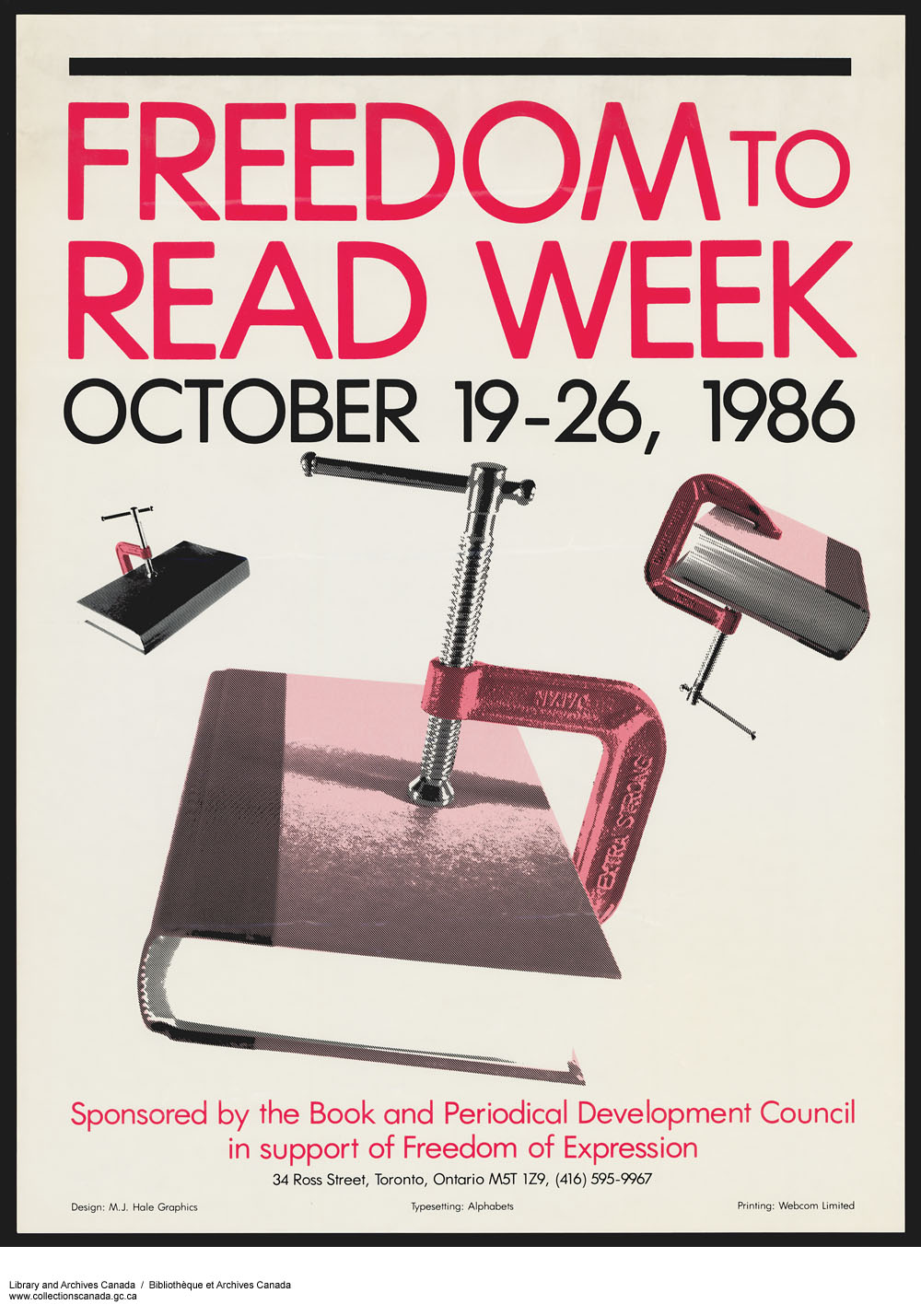
Poster for Freedom to Read Week dated October 19–26, 1986, with three books closed by clamps.

An advertisement promoting reading put out by the Book and Periodical Development Council for Freedom to Read Week in 1986. Library and Archives Canada/Robert Stacey fonds/e010758305. Credit: Michael Hale / Susan Reynolds.

Although it can sometimes feel like censorship is something from the past, there are many examples of more recent instances of challenged publications. This includes several publications that can be found in LAC’s collection:

  • In 2018, David Alexander Robertson’s book Betty: The Helen Betty Osborne Story was “not recommended” for use in Alberta classrooms.
  • In 2016, Robin Stevenson’s book Pride: Celebrating Diversity and Community met resistance during Stevenson’s school visits in British Columbia, Ontario and Quebec.
  • In 2011, Timothy Findley’s book The Wars was used by an Ontario school board in Grade 12 English classes and was subsequently challenged by parents. The school board ultimately decided to keep the book as part of the secondary curriculum.

Canada’s Book and Periodical Council’s Challenged Works List reminds us that publications have historically been and continue to be challenged and censored in Canada. Freedom to Read Week further reminds Canadians that access to publications should not be taken for granted.

Making Canadian publications available to the public and ensuring they are available for future generations is imperative to ongoing intellectual freedom in Canada. This is exactly what we strive to do here in LAC’s legal deposit team.

As we reflect on the freedom to read and the right to intellectual freedom, the task of acquiring and making Canadian publications available to readers across the country seems more important than ever.

Interested in learning more about free expression and censorship in Canada? See a list of the Book and Periodical Council’s English or French works on free expression and censorship in Canada.

Additional resources


Mary-Francis Turk is a Legal Deposit Supervisor in the Private Archives and Published Heritage Branch at Library and Archives Canada.
The Freedom to Read

By Liane Belway

[January 2024] This blog post has been updated to reflect changes to the Freedom to Read Week campaign.

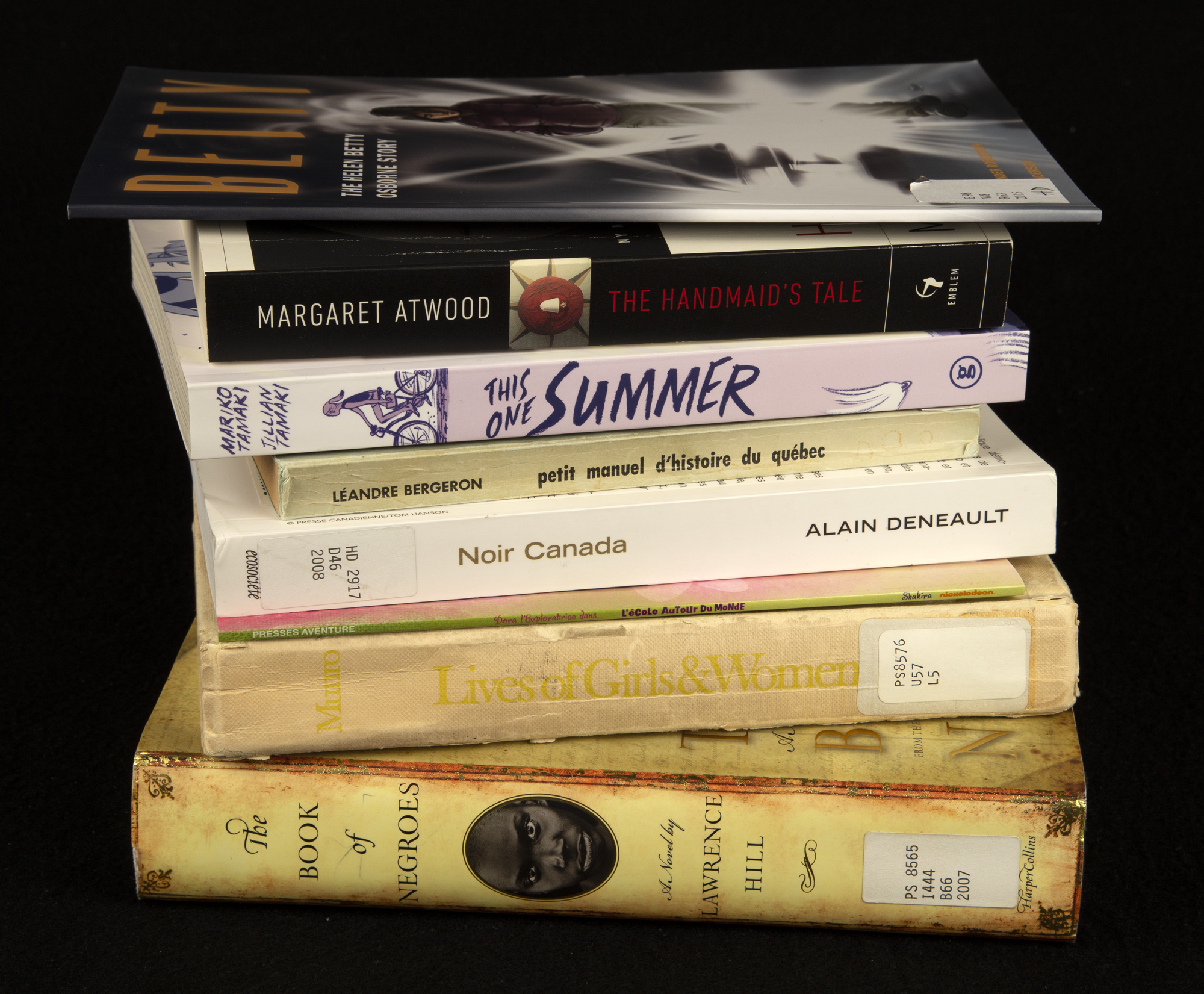
A colour photograph showing the spines of a stack of books against a black background.

A sample of the variety of books held in the Library and Archives Canada collection, which have been challenged.  Photo credit: Tom Thompson

In Canada, we enjoy the freedom to read what we choose, so much so that we may not always consider how important this right is, or whether it could be interfered with in a country such as ours. After all, our intellectual freedom is guaranteed under the Canadian Charter of Rights and Freedoms. Yet, freedom to read can never be taken for granted.  Even in Canada, books and magazines are frequently challenged in libraries and schools. Freedom to Read Week encourages Canadians to talk about and celebrate our intellectual freedom. Each year, Canada’s Book and Periodical Council ensures that this event raises awareness of Canada’s often little-known history of censorship and book banning, and the battles fought to keep books on the shelves of schools and libraries. Nationwide events throughout this week help raise awareness about the importance of protecting our right to read.

The right to intellectual freedom means that each person has the right to choose what to read, within the limits of Canadian law. Challenging a book’s right to be on a shelf and available to readers involves more than a personal expression of taste or the choice not to participate in a conversation about controversial issues. It is an attempt to limit public access to the works in schools, libraries, or bookstores, often for political or moral reasons, and prevent others from reading them. Libraries have a core responsibility to protect the freedom to read and are required to have library policies reflect this duty.

Each case is different, and libraries respond differently, according to their mandate and their responsibilities to users. Most public libraries have intellectual freedom policies in place to deal with individual concerns while protecting the collective right to read, for example by shelving according to age appropriateness, while the mandate of many school libraries is mainly to support the curriculum for the school’s relevant age group. At Library and Archives Canada, our mandate is to acquire, describe, and make accessible all Canadian publications to readers and researchers from Canada and around the world.

Not all challenged books wind up being banned. When a famous author like Margaret Atwood has a book like The Handmaid’s Tale challenged, the result is often greater media attention, increased sales, and more readers. Alice Munro’s Lives of Girls and Women was challenged decades before she won the Nobel Prize for Literature.

However, the process of trying to ban a book can have a more insidious effect, especially in school and public libraries. A children’s book with a controversial reputation can simply be dropped from reading lists and curricula to avoid confrontation. When books with themes like that of Maxine’s Tree, a picture book with an environmentally friendly message, are challenged, sometimes the challenge is denied, as in this case from 1992, where the book was allowed to remain in elementary schools. Today, we take for granted picture books that teach kids about the environment, or same-sex families, or different religious views, or any number of topics, but this was not always the case.

Who knows how many such books were not purchased (or not written) over the decades because of a culture of banning? We like to think that, today, we are more open to the views of others. Nevertheless, as Canadians, we should remain aware at all times of how valuable our right to read is and should protect this right for ourselves as well as for other readers.

For more information, check out Freedom to Read Week online.


Liane Belway is a librarian in the Acquisitions section of Published Heritage at Library and Archives Canada.