The life of Rifleman Sulo W. Alanen

Version française

By Ariane Gauthier

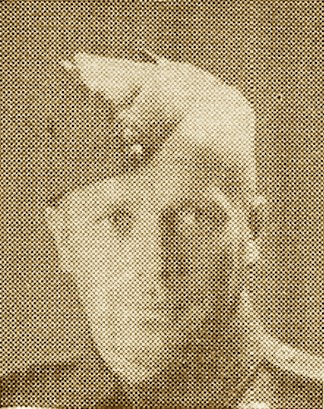
Sepia-coloured photograph of Sulo W. Alanen when he was about 30 years old, featured in a Finnish newspaper announcing his death.

Photo of Sulo W. Alanen as it appeared in a Finnish newspaper announcing his death. (Source: Canadian Virtual War Memorial)

The story of Sulo W. Alanen begins in the northern Ontarian village of Nolalu, a small settlement outside of Thunder Bay that emerged largely due to the arrival of Finnish settlers in the region. These settlers were likely drawn to the thriving lumber industry, the opportunities for farming, and the convenience of the railway passing through Nolalu.

Matti Alanen, originally from Jurva, Finland, was one of these immigrants who braved the journey to Canada in 1904, inspired by the promise of a better life. Like many of his compatriots, he settled in Nolalu, a growing Finnish community established just four years earlier. Here, he found familiarity in an unfamiliar land, with a supportive network of fellow Finns. Matti embraced farming as his livelihood. Hilma Lehtiniemi, originally from Ikaalinen, Finland, followed her family to Canada in 1908. After arriving in Nolalu, she met and married Matti, likely around 1910, as suggested by Sulo’s service file, which mentions their marriage in April 1910 in Port Arthur, Ontario.

Sulo, the couple’s third son and child, was born May 13, 1914, in Silver Mountain, Ontario, a mining settlement near Nolalu. The Alanen family’s farmstead appears to have been located between these two communities, as their place of residence alternates between Silver Mountain and Nolalu in Sulo’s service file.
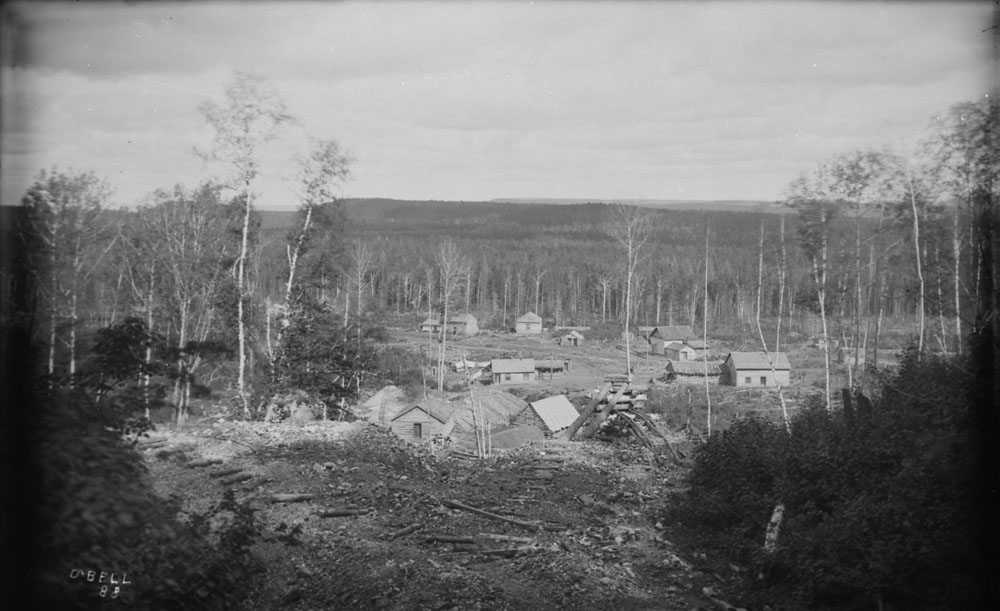
Black-and-white photograph from 1888 of the Silver Mountain mining settlement, showcasing the forest expanse and rural landscape.

Silver Mountain mining settlement, 1888. (Source: a045569)

Sulo was the middle child among five siblings. The 1931 Census provides insight into his upbringing, indicating that Finnish was his first language. This is unsurprising, given that Nolalu was a Finnish community where most settlers shared this cultural heritage. Census entries for neighbouring households confirm this pattern: nearly all family heads were originally from Finland and spoke Finnish as their first language.

Section of the 1931 Census for Nolalu, listing members of the Alanen family, their age, gender, and place of birth.

A screenshot of the 1931 Census featuring the Alanen family. Sulo’s name can be seen on line 42 of the 5th page. (Source: e011639213)

English came later for Sulo and his siblings, likely as a result of simply living in Canada, as none of them attended school or learned how to write. Much of Sulo’s childhood was spent working on the family farm. In adulthood, he continued working on his father’s farm until his enlistment for the Second World War. His service file also mentions that he occasionally worked as a bushman for extra income.

Sulo was forced to serve at the 102 Canadian Basic Training Camp in Fort William under the National Resources Mobilization Act (NRMA), enacted in 1941 by the King government as a compromise to avoid full conscription. The NRMA mandated that able-bodied men contribute to Canada’s defence and national security. After serving for 30 days under this program, Sulo made the pivotal decision to enlist voluntarily on May 4, 1943.

Sulo’s enlistment in the Canadian Army aligned with the critical Allied preparations for the D-Day landings, planned for the summer of 1944. From his initial training at Camp Shilo in Manitoba to boarding a ship bound for England, his focus was singular: preparing for the storming of Juno Beach.

Sulo’s ship arrived in England on April 11, 1944—just two months before Operation Overlord. On April 27, he was assigned to the Royal Winnipeg Rifles, specifically to the 2nd Canadian Base Reinforcement Group. This designation indicates that Sulo was not initially slated to participate in the first assault wave. Instead, as a part of C Company, he was positioned to join the Royal Winnipeg Rifles after they had pierced the Atlantic Wall.

The Royal Winnipeg Rifles’ war diary tells us what D-Day was like for Sulo and his comrades. The troops were informed at 9 p.m. the evening before that Operation Overlord was on, and all were fairly enthusiastic. The diary states: “There was an air of expectancy and sense of adventure on all craft this night, the eve of the day we had trained for so hard and long in England.”

The long day began at 4 a.m. with tea and a cold snack. The weather was cloudy and the sea was heavy. At 5:15 a.m., landing crafts were lowered from the motor vessel Llangibby Castle, still about 15 kilometres from the coast. At 6:55 a.m., the Royal Navy and air support began bombarding the coastline of France. The landing crafts arrived on shore around 7:49 a.m. with B and D companies landing first. As the war diary grimly notes: “The bombardment having failed to kill a single German or silence one weapon, these coys had to storm their positions “cold”—and did so without hesitation.”

A and C companies landed later around 9 a.m. C Company disembarked on the Mike and Love sectors of Juno Beach, where the beach and surrounding dunes were still under heavy mortar fire. Pinned down for about two hours, the soldiers eventually regrouped and, alongside A Company, pushed forward towards their objective, Banville, encountering several pockets of resistance en route but overcoming each one until just south of Banville, where the enemy had dug in on commanding ground.
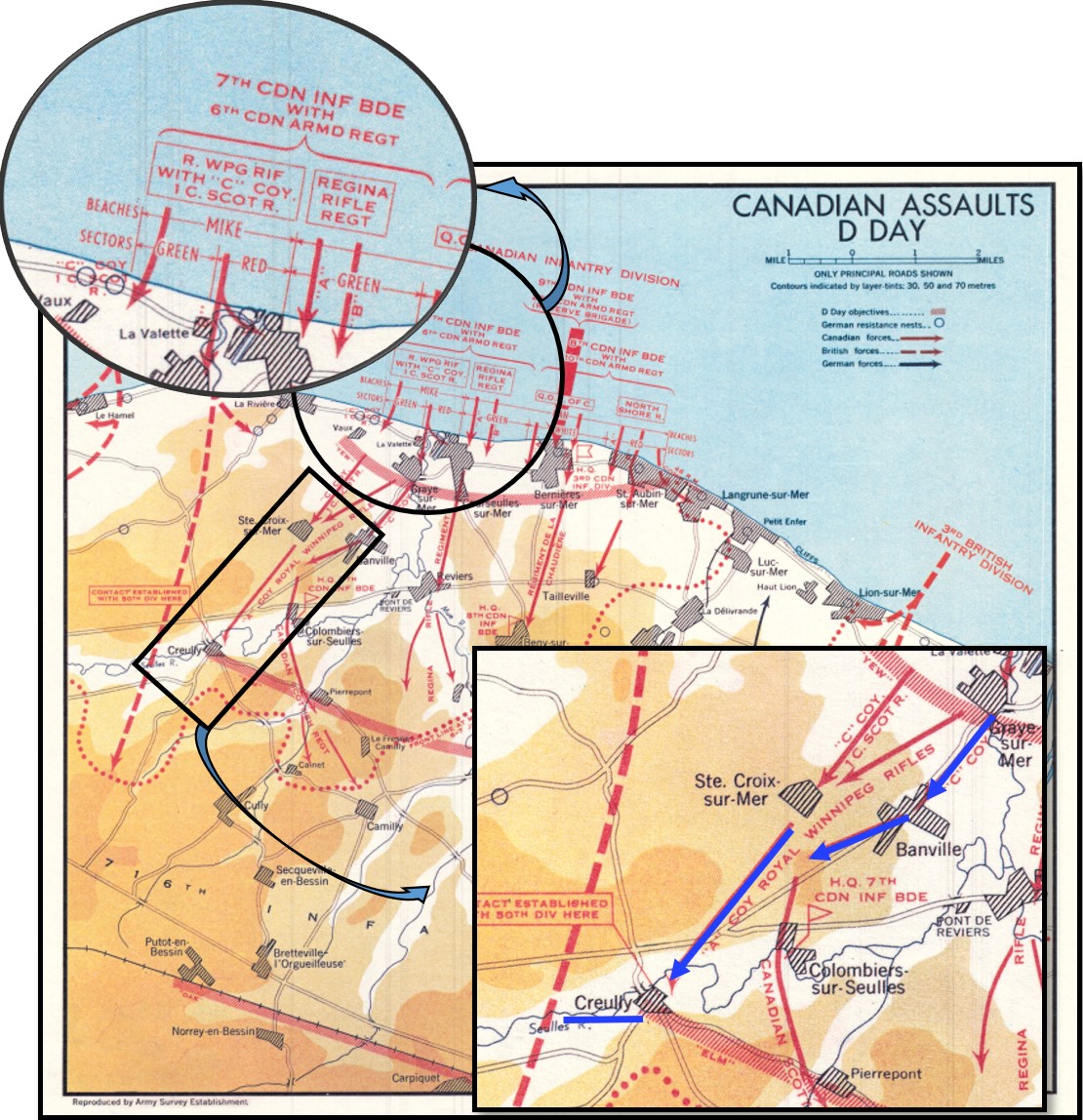
Map of Juno Beach showing the 3rd Canadian Infantry Division’s movements on D-Day. Highlights show the landing sector and path of the Royal Winnipeg Rifles’ C Company.

Map of Juno Beach showing the 3rd Canadian Infantry Division’s movements on D-Day. (Source: e999922605-u)

The first day of the Battle of Normandy brought surviving members of the Royal Winnipeg Rifles to Creully by 5 p.m., completing phase II of Operation Overlord. Little rest was had, especially for C Company, which faced an enemy patrol attack at 2 a.m. The soldiers repelled the assault and captured 19 German prisoners, allowing for a brief respite until 6:15 a.m., when they were ordered to advance once more. Their next objective was the OAK Line at Putot-en-Bessin.

This event set the tone for the Royal Winnipeg Rifles’ grueling experience in the aftermath of D-Day as they encountered some of the most ferocious and obstinate resistance by German forces.
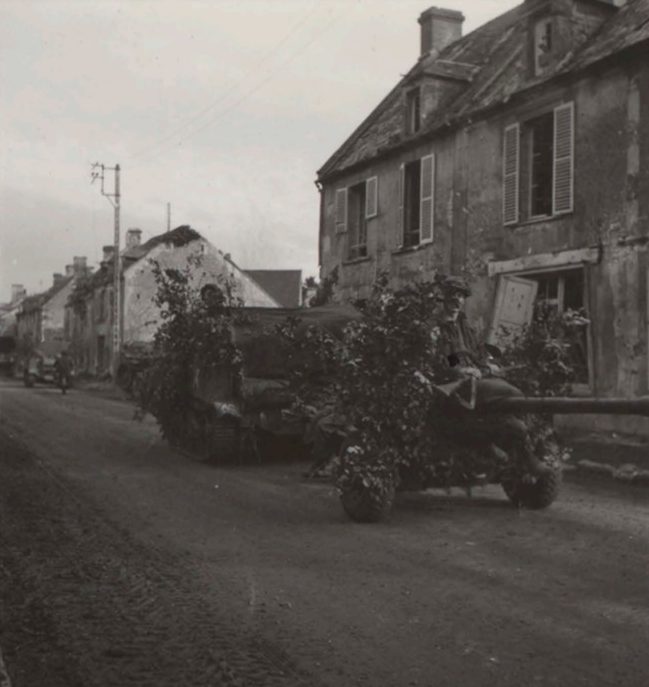
Photograph by military photographer Lt. Bell showing Canadian artillery camouflaged with foliage, Carpiquet, France, July 4, 1944.

Army Numerical 35899-36430—Northwest Europe—Album 75 of 110. (Source: e011192295)

By July 5, the Royal Winnipeg Rifles had painstakingly made it to the village of Marcelet, where they engaged in the battle for Carpiquet. While Sulo’s service file does not delve into the specifics of the injuries that ended his life on that day, the war diary tells us his regiment was subjected to enemy shelling and strafing from the air during the whole day. In this chaos, Sulo was either struck by shrapnel or collapsing buildings. Initially, he couldn’t be found and was reported missing, but when the battle calmed just enough by July 5, his body was discovered, and he was officially reported killed in action.

Like so many Canadians who gave their lives during D-Day and the battle of Normandy, Sulo W. Alanen rests at the Beny-sur-Mer Canadian War Cemetery in Calvados, France. He is buried in plot XV. G. 16, where his name liveth for evermore.

For more reading on this subject:


Ariane Gauthier is a reference archivist in the Access and Services Branch at Library and Archives Canada.
A selection of records about D-Day and the Normandy Campaign, June 6 to August 30, 1944

By Alex Comber

With part 1 of this post, we marked the 75th anniversary of D-Day and commemorated Canada’s participation in the June 6, 1944, invasion of northwestern Europe, and the Normandy Campaign, which ended on August 30, 1944. In part 2, we explore some of the unique collections that Library and Archives Canada (LAC) holds about these events, and highlight some records that are the most accessible to our clients online. Through outreach activities, targeted and large-scale digitization, DigiLab and our new and Co-Lab initiatives, LAC is striving to make records more easily available.

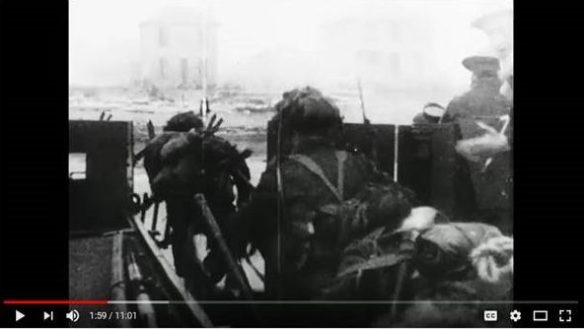
A black-and-white image taken from moving film, showing soldiers exiting a landing craft.

A frame of Canadian Army Newsreel No. 33, which includes a sequence of film from the Canadian D-Day landings on June 6, 1944

LAC staff receive many reference requests about our collections of photos. Canadian Film and Photo Unit (CFPU) personnel went ashore 75 years ago, on D-Day, filming and photographing as they landed. During the Normandy Campaign, they continued to produce a visual record that showed more front-line operations than official photographers had been able to capture in previous conflicts. Film clips were incorporated into “Canadian Army Newsreels” for the audiences back home, with some clips, such as the D-Day sequence above, being used internationally.

Photographers attached to the army and navy used both black-and-white and colour cameras, and the ZK Army and CT Navy series group the magnificent colour images together.

A colour photograph showing an armoured vehicle with a large main gun.

A British Centaur close-support howitzer tank assisting Canadians during the Normandy Campaign (e010750628)

Some of the most iconic imagery of the Canadian military effort in Normandy was incorporated into the Army Numerical series; by the end of hostilities, this had grown to include more than 60,000 photographs. The print albums that were originally produced during the Second World War to handle reproduction requests can help in navigating this overwhelming amount of material. Researchers at our Ottawa location refer to these volumes as the “Red Albums,” because of their red covers. These albums allow visitors to flip through a day-by-day visual record of Canadian army activities from the Second World War. LAC has recently digitized print albums 74, 75, 76 and 77, which show events in France from June 6 until mid-August 1944.

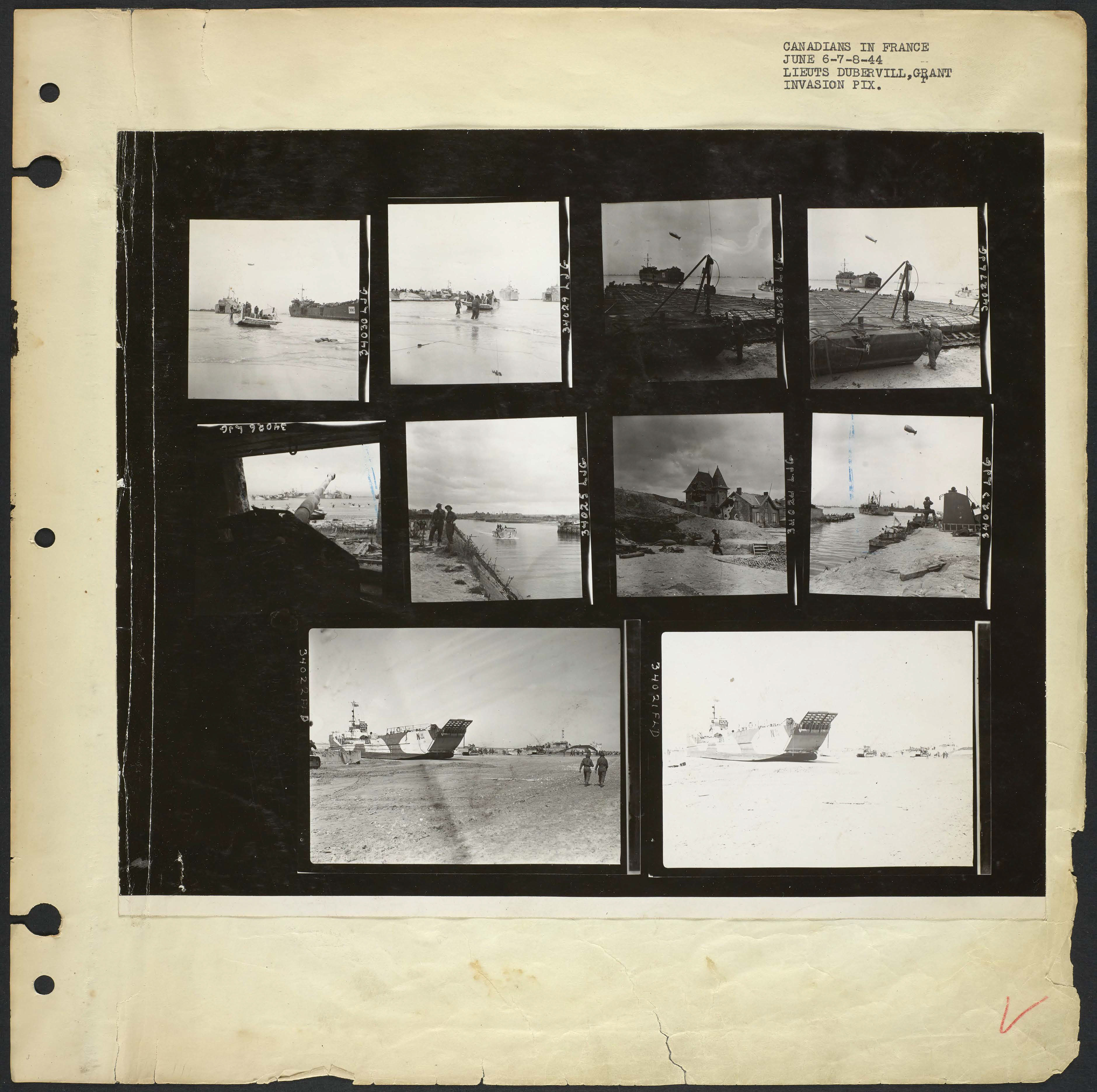
A page of black-and-white photographs showing photos of landing craft, destroyed enemy beach defences, and villages and landing beaches.

A page from Army Numerical print album Volume 74 of 110, showing the immediate aftermath of the landings (e011217614)

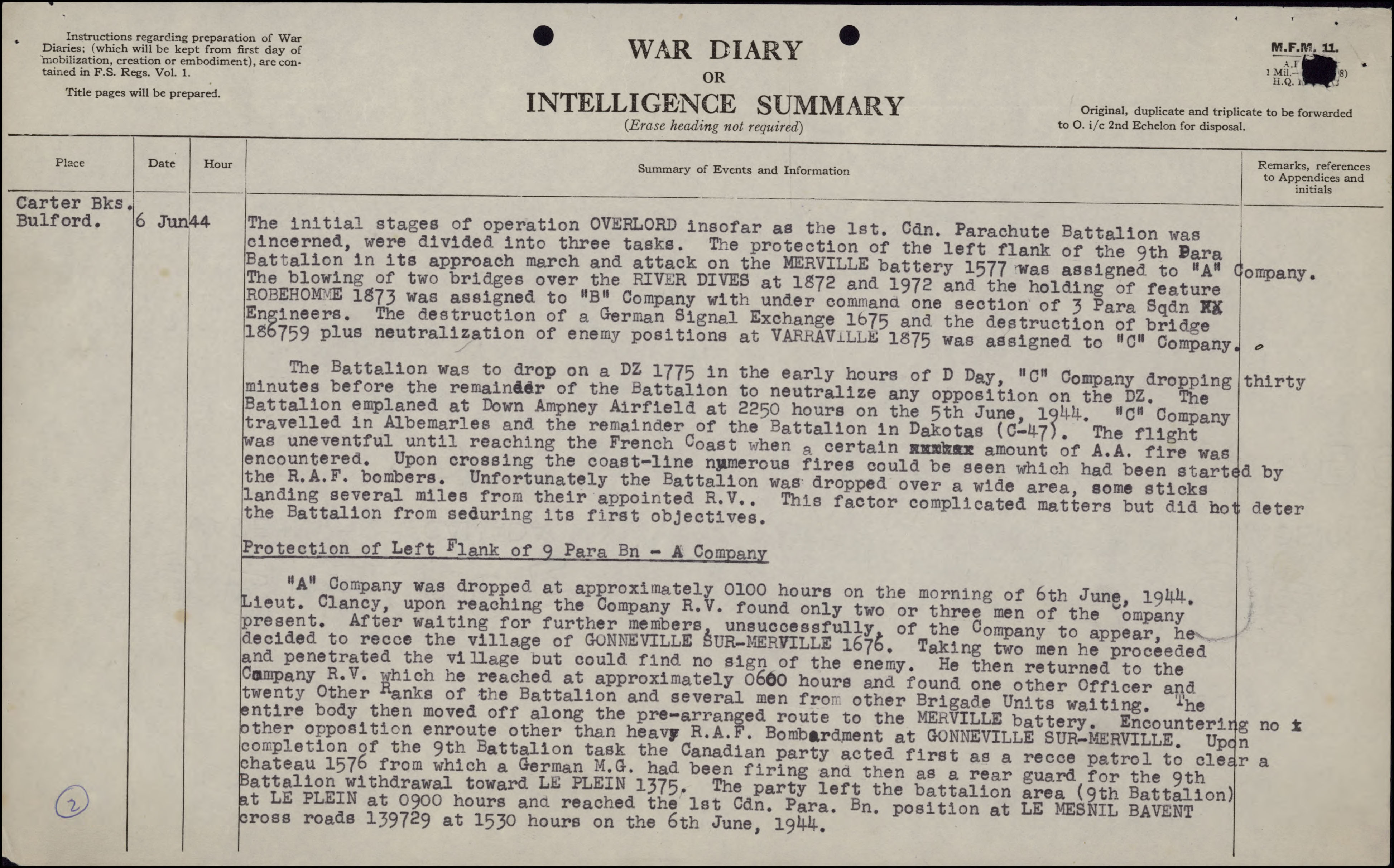
LAC also holds an extensive collection of textual records related to the events of June–August 1944. One of the most important collections is the War Diaries of Canadian army units that participated in the campaign. Units overseas were required to keep a daily record, or “War Diary,” of their activities, for historical purposes. These usually summarized important events, training, preparations and operations. In the Second World War, unit war diaries also often included the names of soldiers who were killed or seriously injured. Officers added additional information, reports, campaign maps, unit newsletters and other important sources in appendices. Selected diaries are being digitized and made accessible through our online catalogue. One remarkable diary, loaded in two separate PDF scans under MIKAN 928089, is for the 1st Canadian Parachute Battalion, the first Canadian soldiers in action on D-Day, as part of “Operation Tonga,” the British 6th Airborne Division landings.

A colour digitized image of a typescript account of D-Day operations.

Daily entry for June 6, 1944, from the War Diary of the 1st Canadian Parachute Battalion, detailing unit objectives for Operation Overlord (D-Day) (e011268052)

War diaries of command and headquarters units are also important sources because they provide a wider perspective on the successes or failures of military operations. These war diaries included documents sourced from the units under their command. Examples that are currently digitized include the Headquarters of the 3rd Canadian Infantry Division, from June and July 1944.

: A colour digitized image of a typescript account of D-Day operations.

War Diary daily entries for early June 1944, including the first section of a lengthy passage about operations on June 6, 1944 (e999919600)

LAC is also the repository for all Second World War personnel files of the Canadian Active Service Force (Overseas Canadian Army), Royal Canadian Navy and Royal Canadian Air Force. The service files of approximately 44,000 men and women who died while serving in these forces from 1939 to 1947 are open to the public. These records include the more than 5,000 files of those who died in operations during the Normandy Campaign. As the result of a partnership with Ancestry.ca, a portion of every open service file was digitized. This selection of documents was then loaded on Ancestry.ca, fully accessible to Canadians who register for a free account. To set up a free account and access these files on Ancestry.ca, see this information and instruction page on our website.

These records have great genealogical and historical value. As the following documents show, they continue to be relevant, and they can powerfully connect us to the men and women who served in the Second World War, and their families.

Medical document that shows a schematic view of upper and lower teeth, with annotations indicating missing teeth and dental work.

Private Ralph T. Ferns of Toronto went missing on August 14, 1944, during a friendly-fire incident. His unit, the Royal Regiment of Canada, was bombed by Allied aircraft as soldiers were moving up to take part in Operation Tractable, south of Caen. Sixty years later, near Haut Mesnil, France, skeletal remains were discovered. The Department of National Defence’s Casualty Identification Program staff were able to positively identify Private Ferns. The medical documents in his service file, including this dental history sheet, were important sources of information. Ferns was buried with full military honours at Bretteville-sur-Laize Canadian War Cemetery in 2008, with his family in attendance

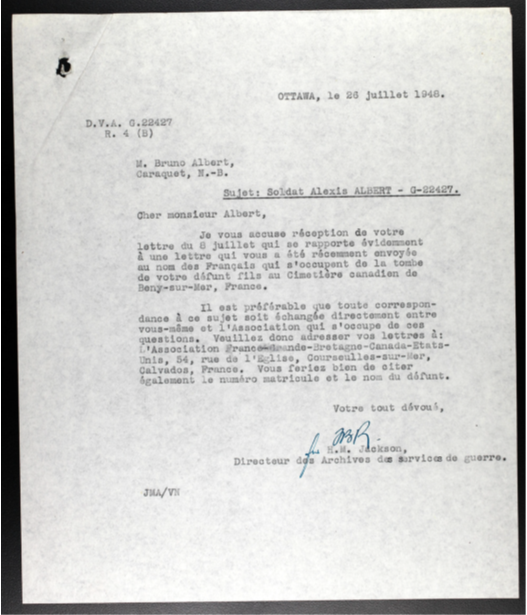
An official document written in French, dated July 1948, that responds to a family request to communicate with those caring for the grave of Private Alexis Albert, North Shore (New Brunswick) Regiment.

Private Alexis Albert, serving with the North Shore (New Brunswick) Regiment, was killed in action in France on June 11, 1944. Four years later, his father, Bruno Albert, living in Caraquet, New Brunswick, requested the address of the family that was tending his son’s grave at Bény-sur-Mer Canadian War Cemetery in France, to thank them. The Director of War Service Records, Department of Veterans Affairs, provided this response, which helped to connect the grieving family in Canada with French citizens carefully maintaining the burial plot in Normandy.

These are only a few examples of LAC records related to the Canadian military effort in France from June 6 until the end of August 1944. Our Collection Search tool can locate many other invaluable sources to help our clients explore the planning and logistical efforts to sustain Canadian military operations in France, delve deeper into the events themselves, and discover personal stories of hardships, accomplishments, suffering and loss.

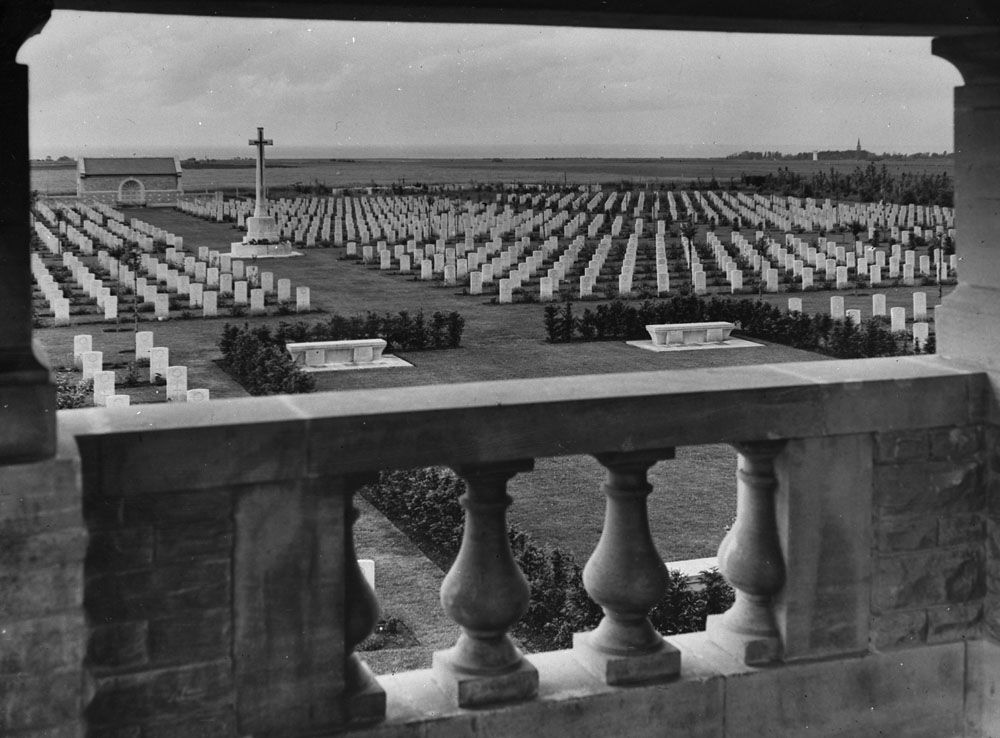
A black-and-white photograph showing many rows of Imperial War Graves Commission headstones, and a large Cross of Sacrifice.

Bény-sur-Mer Canadian War Cemetery, which includes the graves of 2,000 Canadian soldiers who died during the early phases of the Normandy Campaign (e011176110)


Alex Comber is a Military Archivist in the Government Archives Division at Library and Archives Canada.
D-Day and the Normandy Campaign, June 6 to August 30, 1944

By Alex Comber

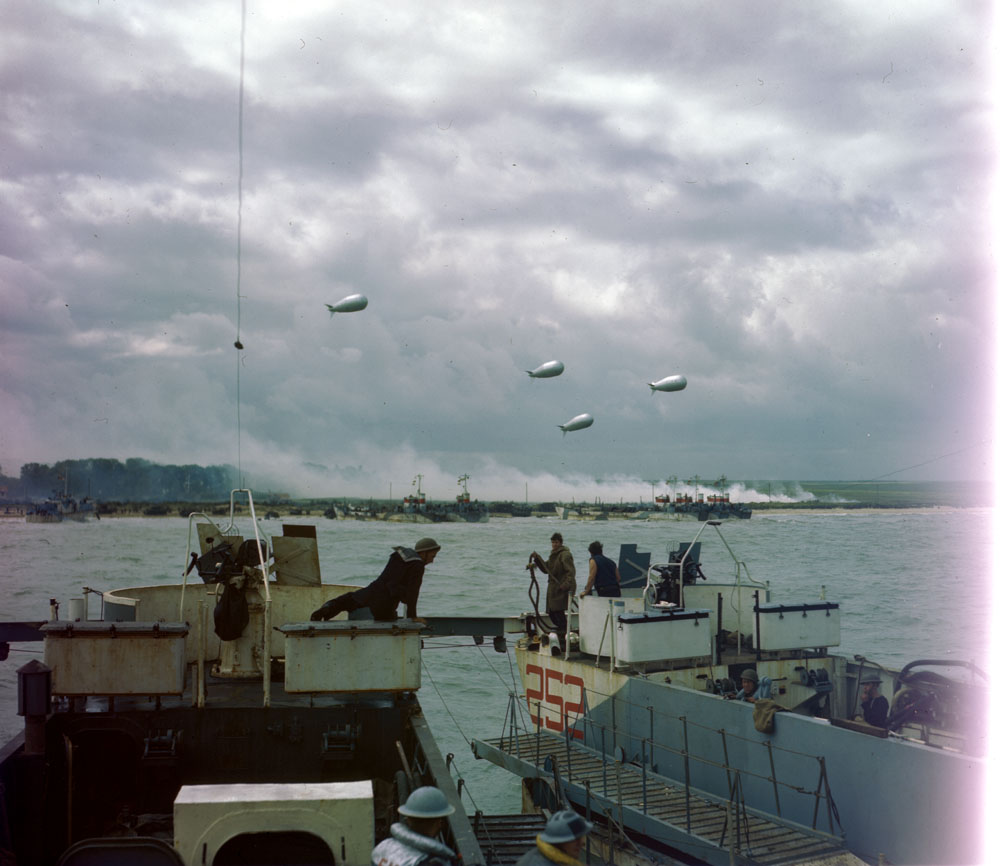
A colour photograph showing a landing craft approaching the beach, with smoke coming from a village and barrage balloons overhead.

Infantry landing craft at D-Day, June 6, 1944. (e010777287)

On this day 75 years ago, Canadian soldiers, sailors, pilots and aircrew were fighting in France in one of the largest military operations in history. Operation Neptune, or “D-Day,” was the first phase in the overall ground operations in Normandy, code-named “Operation Overlord.” Soldiers of the 3rd Canadian Infantry Division conducted an assault landing on a stretch of French coast, in the massive Allied effort to establish a new theatre of operations in Western Europe. Canadian units were tasked with creating a beachhead on a section of coast code-named Juno Beach. The assignment for Canadian forces was considered an honour, as the other four beaches, code-named “Utah,” “Omaha,” “Gold,” and “Sword,” were earmarked for landings by units of the powerful Allied members of the United States and Great Britain.

A black-and-white photograph of an officer briefing a small group of non-commissioned officers with a map of a village.

Lieutenant R.R. Smith briefing the non-commissioned officers of the Regina Rifles with a sketch of their objective, Courseulles-sur-Mer, France. (e011084119)

Senior Allied commanders and military planners at Supreme Headquarters Allied Expeditionary Force had learned from previous operations, such as the failure at Dieppe two years before, and the successful landings in Sicily in July 1943. This effort to open a new front in the war would benefit from a coordinated approach between land, sea, and air forces, along with comprehensive planning, attention to logistics, a massive build-up of equipment and personnel, feints and decoys to keep the enemy guessing, and a steady flow of accurate intelligence about enemy strengths and dispositions.

An armada of naval vessels escorted the invasion forces across the English Channel, while the airspace was controlled by squadrons of Allied aircraft. A vast array of specialized landing craft transported personnel, tanks, and artillery. In the Canadian sector, craft deposited men and equipment near the villages of Courseulles-sur-Mer, Bernières-sur-Mer, and Saint-Aubin-sur-Mer.

A colour photograph showing soldiers, laden with arms and equipment, walking in shallow water towards a French village.

Canadian infantry going ashore at Bernières-sur-Mer in Normandy, France. (e010750646)

Tanks of the 2nd Canadian Armoured Brigade struggled ashore and began supporting the advancing infantry soldiers by firing on reinforced enemy positions, while some units of the Royal Canadian Artillery had already been bombarding enemy positions from their landing craft on the final approach. Hours earlier, paratroopers of the 1st Canadian Parachute Battalion had been dropped deep behind enemy lines as part of Operation Tonga, the airborne landings by the British 6th Airborne Division. Their mission was to destroy bridges, secure strongpoints, support a nearby attack by British paratroopers, and generally create chaos and hamper enemy efforts to counter-attack.

A black-and-white photograph showing a soldier in a paratrooper jump smock, holding a Sten sub-machine gun, sitting on a bicycle in a field.

Private Tom J. Phelan, 1st Canadian Parachute Battalion, who was wounded at Le Mesnil on June 16, 1944, rides his airborne folding bicycle at the battalion’s reinforcement camp, England, 1944. (a204971)

A black-and-white photograph showing a column of soldiers marching up a street in a damaged village.

Infantrymen of Le Régiment de la Chaudière moving through Bernières-sur-Mer, France, June 6, 1944. (a131436)

The fighting on the ground was accompanied by more involvement from Canadians serving in other forces. Pilots and aircrew flying with many Royal Canadian Air Force and Royal Air Force squadrons provided air cover for the naval operation and ground fighting, patrolled the coasts, attacked enemy troops and armour, provided photo-reconnaissance, and served on bombing missions to support the landings.

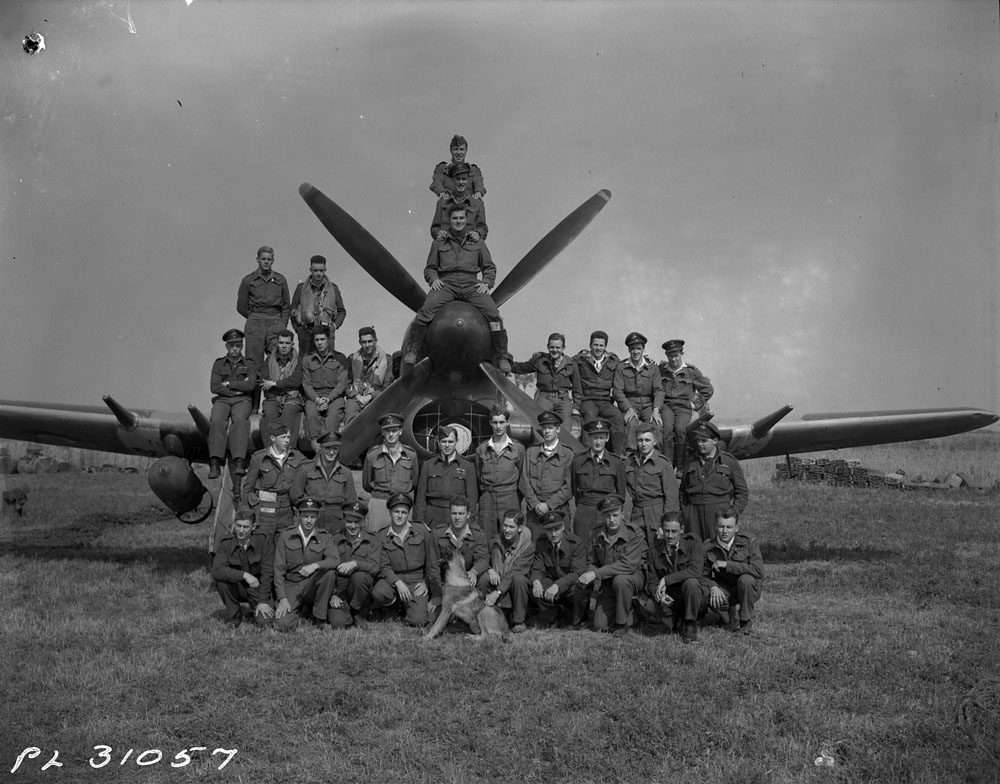
A black-and-white photograph showing a group of RCAF personnel posing beside and on top of a fighter-bomber aircraft, fitted with a large bomb.

RCAF 440 Squadron members pose with a Hawker Typhoon in Normandy, France. (e010775786)

On D-Day, Royal Canadian Navy personnel served in more than 70 naval vessels (landing craft, destroyers bombarding the coast, and minesweepers clearing the way for the invasion forces). In early July, a naval Beach Commando unit went ashore to direct forces and maintain order on the invasion beaches.

A black-and-white photograph showing two rows of sailors in battle dress, front row crouching, with a damaged fortified concrete structure behind them.

Personnel of W-2 Party, Royal Canadian Navy Beach Commando “W” outside a German fortification in the Juno sector of the Normandy beachhead, France, July 20, 1944. (a180831)

The first Canadian boots on the ground in France would be joined by an entire army in mid-July. The First Canadian Army would become the largest formation of men and women in uniform in Canadian history. Bitter fighting continued as the Allied ground forces resisted counter-attacks and pushed inland. Canadian army units would gain objectives in operations at Carpiquet, around Caen, and advancing towards Falaise, but at great human cost.

Approximately 350 Canadian military personnel were killed during the D-Day landings. By the end of August, Canadian land, sea, and air forces had suffered about 5,000 fatalities as a result of operations in France, while many more were wounded. Operation Overlord closed in late August, as opposition crumbled in Normandy and surviving German units withdrew to regroup.

A black-and-white photograph showing a long column of German soldiers being directed by Allied soldiers along a beach, with vehicles, a sea wall, and a prominent house in the background.

German personnel captured on D-Day embarking for England. (a132474)

Check back on July 4th to read Part two of LAC’s 75th Anniversary of D-day series, which will explore some of the unique collections LAC holds about these events.


Alex Comber is a Military Archivist in the Government Archives Division at Library and Archives Canada.
D-Day images now on Flickr