Collecting e-Books at Library and Archives Canada

Version française

By Michelle Foggett-Parker

International Read an e-Book Day, celebrated on September 18, serves as a reminder of the transformative impact digital books are having on reading habits worldwide. As readers delve into the immersive world of e-books, behind-the-scenes efforts ensure that these digital treasures are collected and preserved for future generations.

Library and Archives Canada (LAC) plays a pivotal role in safeguarding Canada’s many histories through its legal deposit program. Since 2007, Canadian publishers have been mandated by law to submit to LAC one copy of every e-book they publish. In that time, more than 3000 Canadian publishers, trade and self-published, have submitted over 60 000 e-books for permanent preservation. This collection underscores the commitment of publishers and LAC to collect and preserve the documentary heritage of Canadians as it continues to evolve.

In recent years, LAC has made significant strides in modernizing its processes for receiving and preserving e-books. One year ago, LAC embarked on advancing the automation of how publishers can submit their e-books and related metadata. LAC observed that most publishers use the ONIX standard to distribute electronic information about their books to booksellers. We understood that it would be easier for publishers to use the same workflow for LAC.

Through strategic partnerships with ONIX distributors, publisher associations and book industry groups, LAC has successfully onboarded 35 Canadian publishers onto a new, more automated workflow using ONIX. As a result, over 7000 eBooks, representing 10% of the total e-book collection, have been received and permanently preserved, enriching LAC’s digital collection and ensuring the accessibility of Canada’s many histories for generations to come.

The method employed by LAC for receiving and preserving digital monographs is both secure and efficient. Publishers can submit their ONIX metadata and e-books via a secure file transfer protocol (SFTP), ensuring the integrity and confidentiality of their submissions. Once received, e-books and metadata are stored in Preservica, the secure digital preservation software used by LAC, and made discoverable through Aurora, LAC’s online catalogue.

While the automated submission process via ONIX streamlines the submission process for publishers, LAC continues to offer manual submission options for those who prefer it. Publishers can still submit digital monographs through LAC’s single or bulk submission forms and spreadsheets, ensuring flexibility in the acquisition process.

The legal deposit program not only serves to collect and preserve digital publications, but also to make them accessible to users, today and in the future. By collaborating with publishers, LAC can build a comprehensive repository of Canada’s literary heritage, providing invaluable resources for historians, researchers, students, creators and the general public.

We have received some terrific new digital additions to the national collection because of the ONIX workflow.

Here are just a few highlights:

  • Jessie’s Island by Sheryl McFarlane, read-along version: A children’s audiobook about life in British Columbia from Orca Book Publishers. The digital audiobook format is a growing area, and we are now receiving more audiobooks through the ONIX workflow.
  • Black Activist, Scientist, Icon: The autobiography of Dr. Howard D. McCurdy: Nimbus Publishing, Atlantic Canada’s largest publisher, has sent us their entire back catalogue of digital books using the ONIX workflow. There are many gems, but we now have more digital titles representing Black history, including this particular title.
  • Glass Beads by Dawn Dumont: We received this title and the entire back catalogue of published titles from independent publisher Thistledown Press in Saskatoon, Saskatchewan.
  • The Paper Bag Princess by Robert Munsch: We did not have a digital edition of this Canadian classic, and now we do thanks to Annick Press sending in their entire back catalogue of eBooks.
  • Cora : l’ordinaire endimanché by Cora Tsouflidou: Published by Libre Expression, this collection of 50 letters from the founder of Cora restaurants reveals the reflections of the renowned entrepreneur and restaurant-owner.
  • L’homme de la Saskatchewan by Jacques Poulin: A novel by a celebrated Quebec author, published by Leméac.

As we mark International Read an e-Book Day, let’s celebrate the joy of digital reading and acknowledge the publishers, libraries and partners that safeguard our digital heritage. Through innovative initiatives like the legal deposit program, LAC remains at the forefront of collecting and preserving Canada’s rich cultural legacy in the digital age.

Did you know LAC published two e-Books of its own?

Additional resources:


Michelle Foggett-Parker is an acquisitions librarian with the Digital Legal Deposit team at Library and Archives Canada.

Improving your online experience: How we are making digital legal deposit better for publishers, LAC and you

Version française

Image of fingers on a keyboard

By Arlene Whetter

Along with highly visible improvements to its public website and research tools, LAC is making changes behind the scenes to how it adds new digital publications to its library collection. One example is our new submission methods for digital legal deposit. Legal deposit is the way that we build our library collection of published materials. Federal laws in place since 1953 require Canadian publishers to send copies of every publication to the national library. Over the years, the law has changed to include not only printed books but also new formats entering the publishing landscape. Digital publications have been subject to legal deposit since 2007.

No one is ever surprised to hear that the growth in the number of digital publications submitted for legal deposit since 2007 has been extraordinary. Not only is almost every trade publication now available in both print and digital versions, but the number of self-publishers submitting materials for legal deposit has grown exponentially as well. The ease of online publishing and distribution via self-publishing platforms, such as Amazon, allows many more Canadians to join the ranks of published authors. To cope with the influx, we’ve developed more efficient ways to collect and process digital publications.

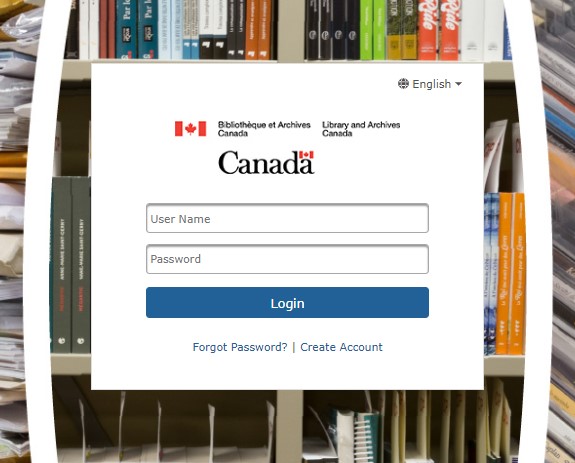
A white box with fields for User Name and Password and a login button. In the background are book spines of various colours.

A screen shot of the new digital legal deposit login page

Our new submission methods

In December 2021, LAC launched new online forms for low-volume submissions of digital publications, such as those from self-publishers who may have only a few books to submit. We’ll soon launch a new way for large commercial publishers to submit publications in high volumes, with hundreds of titles in a single submission. The new methods are convenient for publishers, and they allow us to acquire and catalogue the publications more quickly. The short-term impact for Canadians is that LAC can acquire more digital publications and provide timely access to them. The long-term impact is that we preserve more of Canada’s digital publishing heritage for the generations to come. We offer two types of public access: open or restricted. Access to trade publications and publications for sale is always restricted. These publications can be viewed onsite at LAC for research purposes.

To reach our goal of acquiring and providing access to more digital publications, we took a two-pronged approach. We needed to revise the submission methods and data requirements for publishers, and we needed to revise the internal processing methods for LAC staff. Our old methods, from publishers’ perspective, were simple: they transferred the files to us, either through bulk file transfer or by attaching files to a short online form. We did not request additional data such as lists of titles, author names, and ISBNs, because our systems were not set up to automatically transfer this data to our own records. After receiving the files, LAC staff would manually type all of the data into our library catalogue. We decided to develop new workflows that would take advantage of publisher-supplied data to give us a head start with catalogue records and reduce internal processing times.

Different methods for different publishers

We knew from the start of our planning process that a one-size-fits-all submission method would not work for Canadian publishers. We acquire digital publications from self-publishers, from associations, from government bodies, and of course from large commercial publishers and producers. Each type of publisher has specific needs. For example, commercial publishers create records about their publications in the form of ONIX data, the industry standard used to share information between publishers and booksellers. Since commercial publishers already have this rich source of data, it makes sense for LAC to build a workflow that can accept ONIX data and use it to create the first draft of a library catalogue record. We’re currently in the midst of the final testing for this workflow. We plan to launch it with trade publishers in 2023.

Another submission method is the one we’ve already launched for self-publishers, associations, and smaller publishers who typically do not use ONIX data. Since the efficiency of our new workflows depends on the receipt of additional data from publishers along with their publication files, we needed to develop a way for these publishers to provide the data via forms on our website. Filling in forms for every title is more time-consuming for publishers than our previous method. As a result, we thoroughly assessed our decisions at every step in the design process, looking for a happy medium that would not place a burden on publishers but would still allow us to create efficient workflows.

Spreadsheet showing columns for publisher, city, province or territory abbreviation, year of publication, language of publication, International Standard Book Number (ISBN), International Standard Music Number (ISMN) and series title.

Snapshot of spreadsheet with a red box when an error is made – a QA feature

We set up quality control functionality in the forms where possible, using drop-down boxes and rules to highlight data entry errors. We included instructions and examples that explain what information to include and how to format it. Once we had prototype forms ready for testing, we sent them out to variety of publishers and received a lot of useful feedback, which we incorporated before launching the forms last year.

Striking a balance

In the early stages of the project, we researched the methods used for digital legal deposit at every other national library we could find. We contacted many international librarians to find out more and to learn how, with hindsight, they might have done things differently. We found ideas to inspire us and gained confidence in our planned approaches. The British Library shared the data specifications for its ONIX workflow, which have been very helpful as a foundation for our own workflow.

In general, other national libraries use a variety of approaches. At one end of the spectrum, we found some that accept files without any data as we did with our previous workflow. At the other end, we found libraries with deposit requirements sufficiently complex that private companies have built niche businesses to help publishers meet their legal deposit obligations. At LAC, we set out to strike a balance between these two approaches.

The introduction of these new digital legal deposit workflows at LAC is a big improvement behind the scenes. There is no doubt that we are now more efficient. In addition, we are able to acquire and provide access to more digital material than before. We continuously monitor how publishers are using the forms and make improvements based on our experience and publisher feedback. We’re always happy to hear from publishers and encourage you to reach out to us at depotlegalnumerique-digitallegaldeposit@bac-lac.gc.ca


Arlene Whetter is the supervisor of the Digital Legal Deposit team at Library and Archives Canada.