Self-portraits by women artists in Library and Archives Canada’s collection

Until the beginning of the last century, official self-portraits by women artists were rare, compared to those created by men. This was, in large part, because few women worked and were recognized as professional artists during the early periods. But it is also because many self-representations created by women were in non-traditional formats—hidden within amateur sketchbooks, or private diaries… even stitched or sewn.

A few of Library and Archives Canada’s (LAC) most interesting sketched and painted examples are currently on display as part of The Artist Herself: Self-Portraits by Canadian Historical Women Artists, a new exhibition co-curated by Alicia Boutilier of the Agnes Etherington Art Centre and Tobi Bruce of the Art Gallery of Hamilton.

The exhibition deliberately expands the traditional definition of ‘self-portrait’; most of the works it showcases would not have been considered self-portraits at the time they were created.

It includes this page from the private sketchbook of Katherine Jane (Janie) Ellice (1813–1864), an accomplished amateur artist and wife of an official with the North West (fur trading) Company. Ellice used the reflection from a mirror on the wall of her ship’s cabin to capture a quick, and very private, image of herself aboard ship.
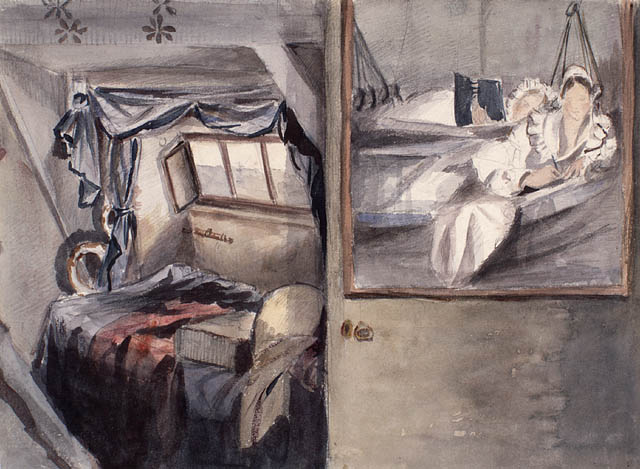
Watercolour sketch shows the artist and her sister, dressed in nightwear, reclining in a bunk of their ship’s cabin.

Mrs. Ellice and Miss Balfour reflected in the looking glass of their cabin on board the H.M.S. Hastings (MIKAN 2836908)

It also includes Canoe Manned by Voyageurs Passing a Waterfall, by Frances Anne Hopkins (1838–1919), another ‘fur-trade wife’—but one who would develop something of a professional artist career. Hopkins’ enormous voyageur-themed canvases often include representations of herself that seem almost incidental. It’s believed that she appears, in this painting, as a passenger in the canoe:
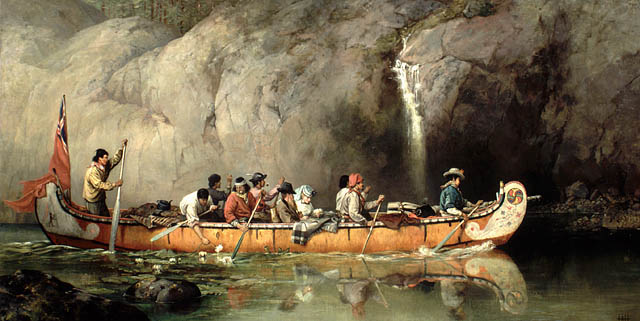
Painting shows a group of fur trade workers steering a Hudson’s Bay Company canoe past a small waterfall; the artist and her husband may be passengers seated in the middle of the canoe.

Canoe manned by voyageurs passing a waterfall (MIKAN 2894475)

These are only a few examples, from LAC’s collection, of historical self-portraits made by women. It’s worth noting that the collection also includes many others, both historical—and modern.

The Artist in her Museum was created by contemporary Métis artist Rosalie Favell in 2005.

Colour digital print shows the artist, full-length, and flanked by a mammoth, a beaver, and an artist’s palette. She draws aside a red curtain to reveal a gallery of mounted black-and-white photographs.

The Artist in her Museum, 2005. © Rosalie Favell (MIKAN 3930728)

Favell used digital technology to manipulate an iconic American self-portrait from the 19th century. By putting her own image in place of the original sitter, Favell appropriated a classic work, assigning new meanings within an older convention.

Modern self-portraits, like Favell’s, compare intriguingly with the historical self-representations showcased in The Artist Herself. Today’s more relaxed and expanded definitions of portraiture allow contemporary artists to successfully play within the genre. They also allows us to look back, with fresh eyes, on the self-representations created by women in the past.

Visit the exhibition in Kingston between May 2 and August 9, 2015. Stay tuned for further dates as the exhibition tours nationally, before closing in Hamilton during the summer of 2016.

For the Record: Early Canadian Travel Photography – an exhibition at the National Gallery of Canada

In the early 19th century, tourism in Canada was an emerging concept. Improved modes of transportation, such as new railways and passenger steamships, finally allowed Canadians and visitors alike the chance to witness some of the nation’s greatest sights and scenery.

Contrasting interests dictated what the most popular tourist attractions were, with pristine, untouched nature (waterfalls and mountains) as well as industrial, modern achievements (bridges and railways) being the biggest draws.

A new exhibition at the National Gallery of Canada in Ottawa showcases some of these fascinating images. Drawn from the collection of Library and Archives Canada, these photographs show us how visitors saw the country, often for the very first time. They demonstrate the wonder travellers felt with the natural world, and with the new impressive infrastructure that was developing all around them.

Black-and-white photograph of a woman standing in front of a large, hollowed-out tree.

Great Cedar Tree, Stanley Park, Vancouver, British Columbia, 1897 (MIKAN 3192504)

Almost immediately, capturing and recording these experiences became a popular and lucrative endeavour. Photography was the ideal medium with which to attract potential tourists, and it was quickly utilized by professional photographers who produced images for promotional material as well as traveller souvenirs. Later, as amateur photography became easier and more affordable, the personal snapshot rivalled these commercial images.

Black-and-white photograph of Montréal’s Victoria Bridge, with a young man seated on a rock in the foreground.

Victoria Bridge, Grand Trunk Railway, Montréal, Quebec, 1878 (MIKAN 3323336)

Niagara Falls was the first major tourist destination in North America, and was a bustling scene of commercialism even in the 19th century. Having your picture taken in front of the Falls was a prestigious event, but if you couldn’t make it there in person, you could always have Niagara as a painted backdrop in your studio portrait.

Black-and-white tintype photograph of a woman standing in front of a wooden fence with a painted backdrop of Niagara Falls behind her.

Studio portrait with Niagara Falls backdrop, ca. 1870 (MIKAN 3210905)

Vital components of both the burgeoning tourist industry and of the growing interest in amateur photography, the travel and tourism photographs produced during this period helped to define the country. By creating a familiarity with popular scenery, these images introduced the viewer to what are now recognized icons of the Canadian landscape.

Black-and-white stereograph of two men (one with binoculars) standing on a bluff overlooking Alberta’s Bow River.

Bow River Valley, Banff, Alberta, 1900 (MIKAN 3509496)

Black-and-white stereograph of three small children standing on a pathway in Halifax’s Public Gardens.

Public Gardens, Halifax, Nova Scotia, n.d. (MIKAN 3509481)

Visit the exhibition at the National Gallery of Canada, in Ottawa, from March 6 to August 30, 2015. Check out our Flickr set to see more 19th-century travel photographs or listen to the podcast – Canada’s photographic memory!

Library and Archives Canada’s Alma Duncan fonds

Art lovers interested in researching the life and working methods of Canadian artist Alma Duncan (1917–2004) must make Library and Archives Canada (LAC) one of their first stops. With the acquisition of Duncan’s complete records (fonds) between 1998 and 2005, LAC became the major centre for the study and preservation of artworks, and supporting material documenting Duncan’s personal and professional life.

The collection includes major oil paintings such as this early self-portrait:

Self-Portrait with Braids

Self-Portrait with Braids (MIKAN 2996876)

In this painting, Duncan portrays herself wearing pants at a time when this type of attire was still considered somewhat risqué for a woman.

The collection also includes drawings, preparatory work, material related to Duncan’s separate career as a graphic designer, and original films by Duncan. Probably the most fascinating items are related to the film company, Dunclaren Productions, formed by Duncan and Canadian photographer Audrey McLaren between 1951 and 1960. That collaboration resulted in three internationally acclaimed short animated films created for the most part in an Ottawa attic. Today these films are recognized as milestones in the history of short animated film, a genre in which Canada has always been a leader.

The Dunclaren Productions holdings include most of the original handmade puppets and props that Duncan created for the films.

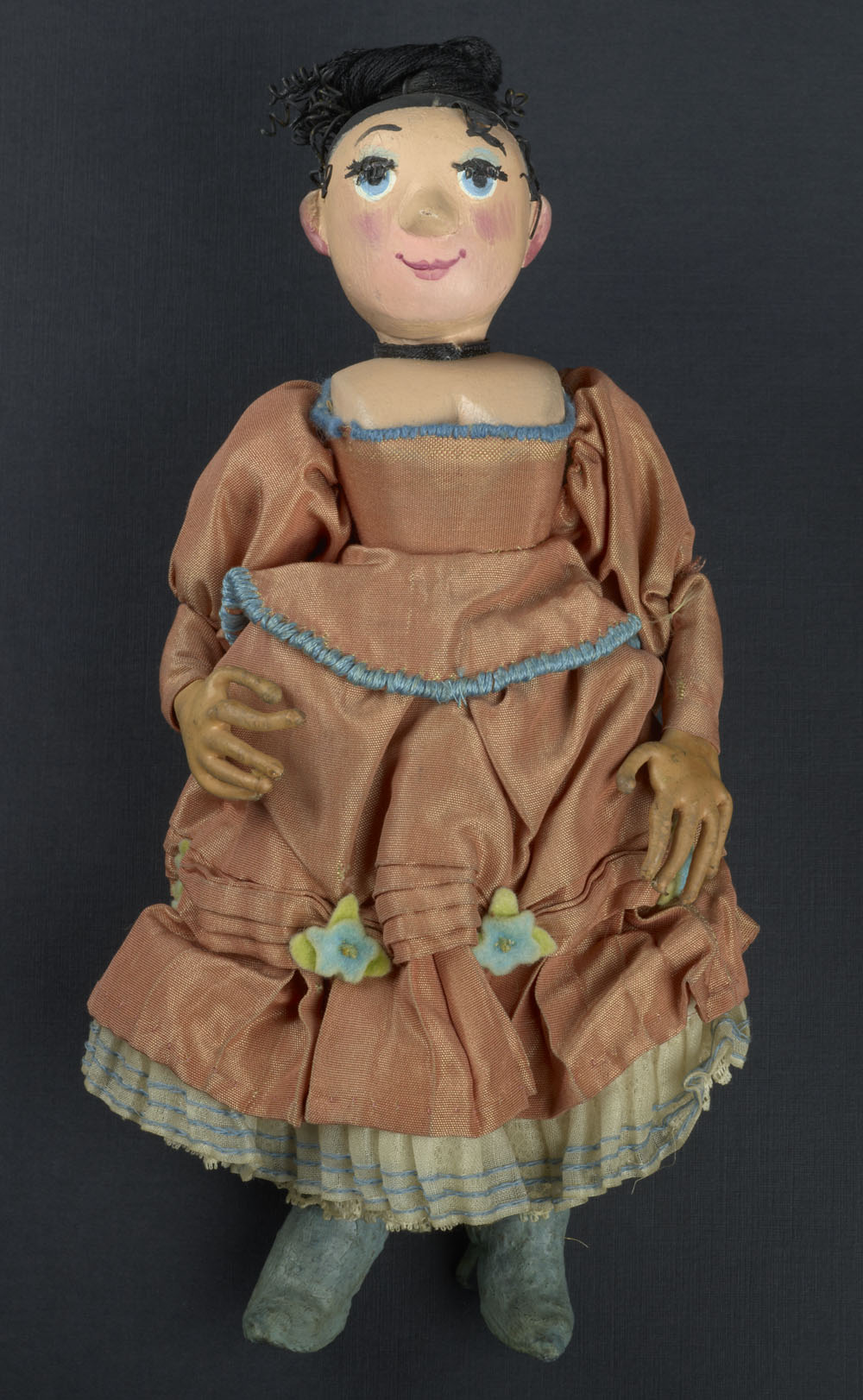
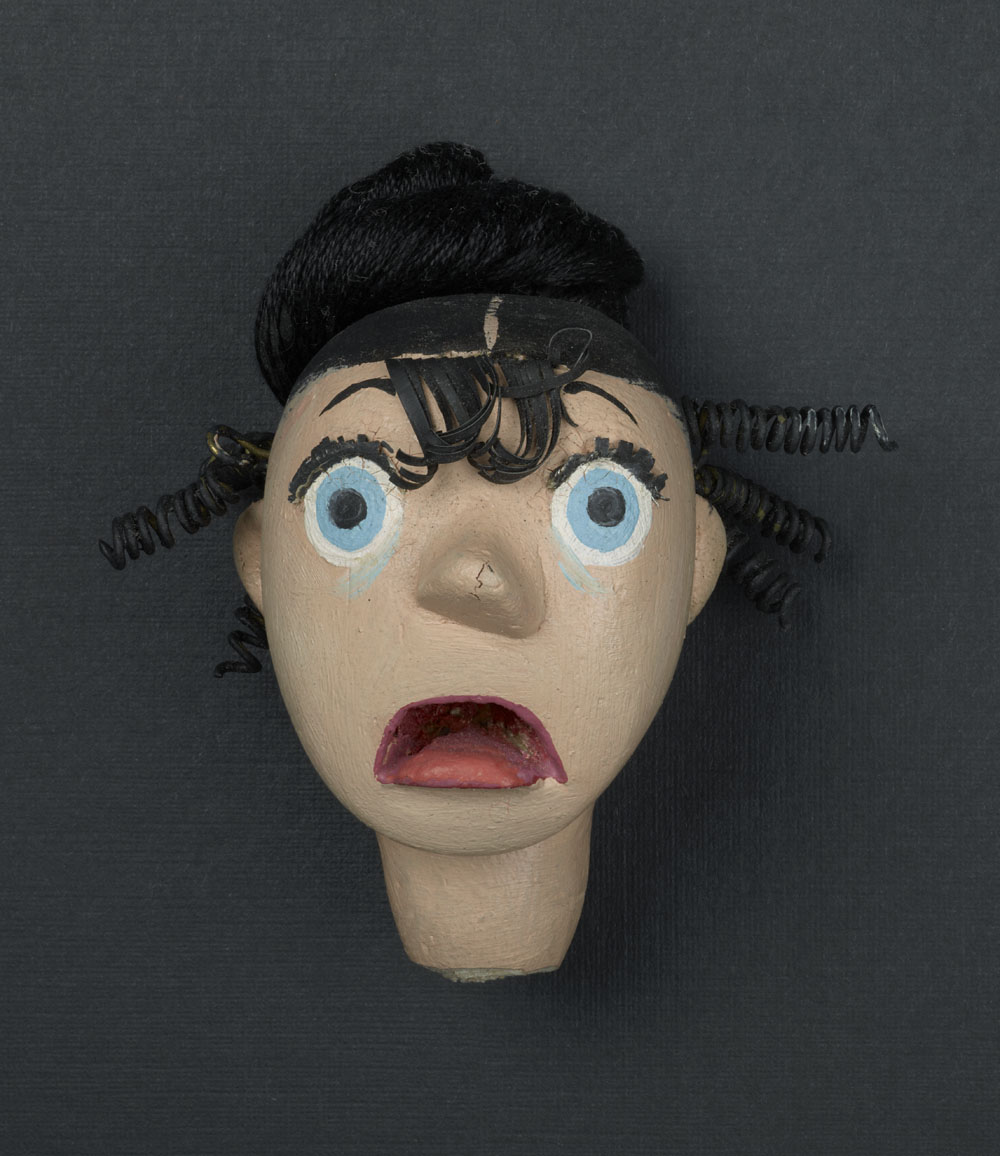
This puppet and its accompanying “scared” replacement head created for the film, Folksong Fantasy, illustrate the painstaking methods Duncan used to make the characters in her films appear to change expression.

Wife Puppet in Orange Dress

Wife Puppet in Orange Dress (MIKAN 4488575)

Wife Puppet Head—Scare

Wife Puppet Head—Scared (MIKAN 4488578)

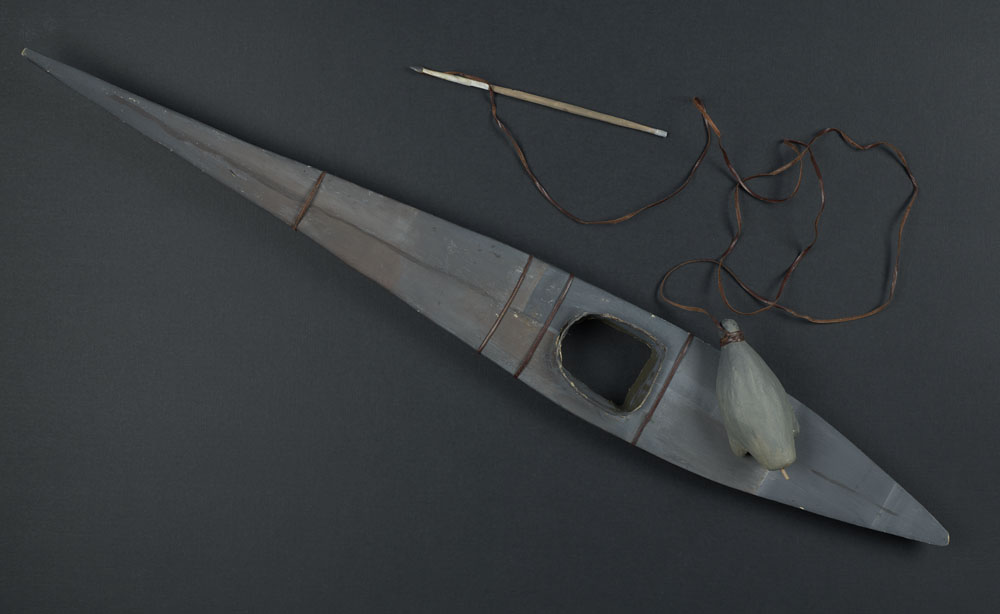
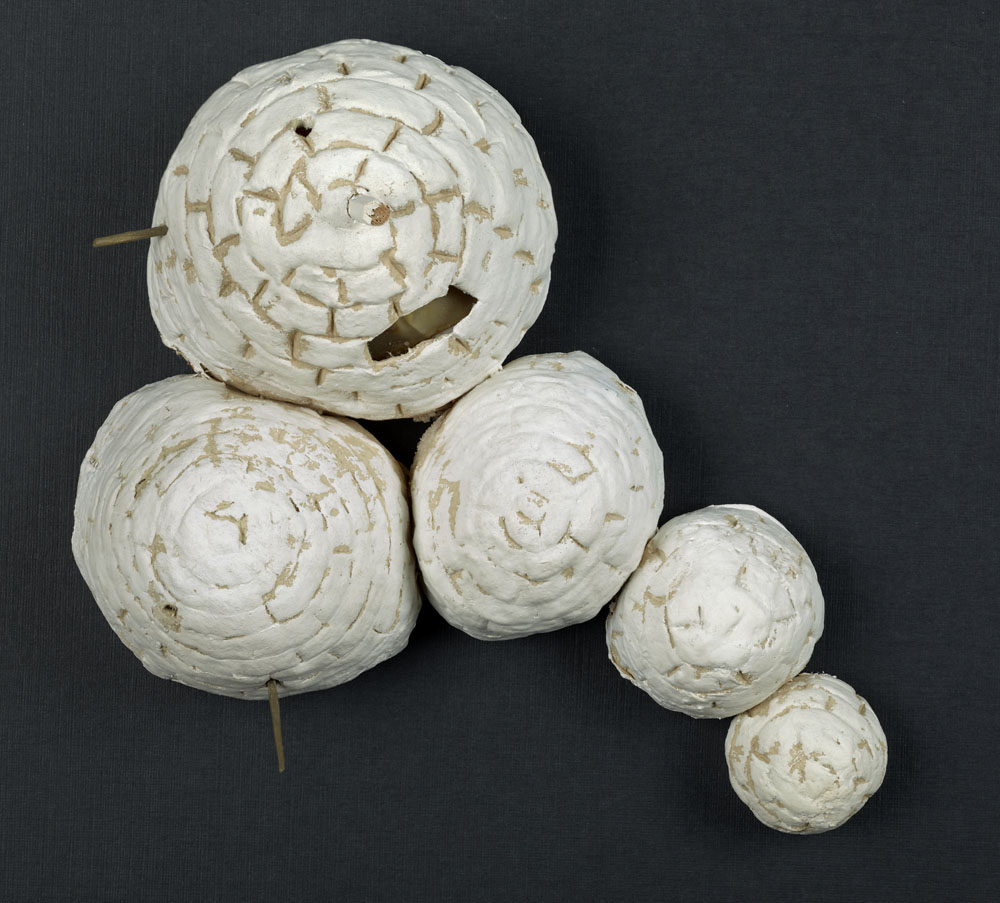
Meticulously crafted props like this tiny igloo and kayak created for the film, Kumak, the Sleepy Hunter, highlight Duncan’s lifelong interest in themes related to the Canadian arctic:

A major retrospective exhibition on Duncan’s life and work, ALMA: The Life and Art of Alma Duncan (1917-2004), opens on October 2, 2014 at the Ottawa Art Gallery. LAC is a major lender to this exhibition, which will include many of the original art works illustrated above.

Taking It All In: The Photographic Panorama and Canadian Cities Exhibition at the National Gallery of Canada

Most of today’s digital cameras come with a simple, point-and-shoot mode for creating panoramic images.

But back in the days of film cameras, creating a panoramic photograph meant either spending hours in the darkroom, painstakingly stitching images together by overlapping exposures onto the finished photo paper or buying an expensive panoramic format camera.

Possibly members of the Benjamin Low family on a passenger steamer showing various types of cameras, including a panoramic camera, 1904.

Possibly members of the Benjamin Low family on a passenger steamer showing various types of cameras, including a panoramic camera, 1904 (MIKAN 3191854)

Continue reading

Step back in time: Library and Archives Canada helps the National Gallery of Canada recreate a First World War exhibition experience

When Canadian troops joined the action on the western front, there were no official military photographers. The front line was unsafe for commercial photographers, and officers and men were not allowed to use personal cameras. As a result, there are no official photographic records of Canadian participation in early battles, such as the Second Battle of Ypres, in April 1915.

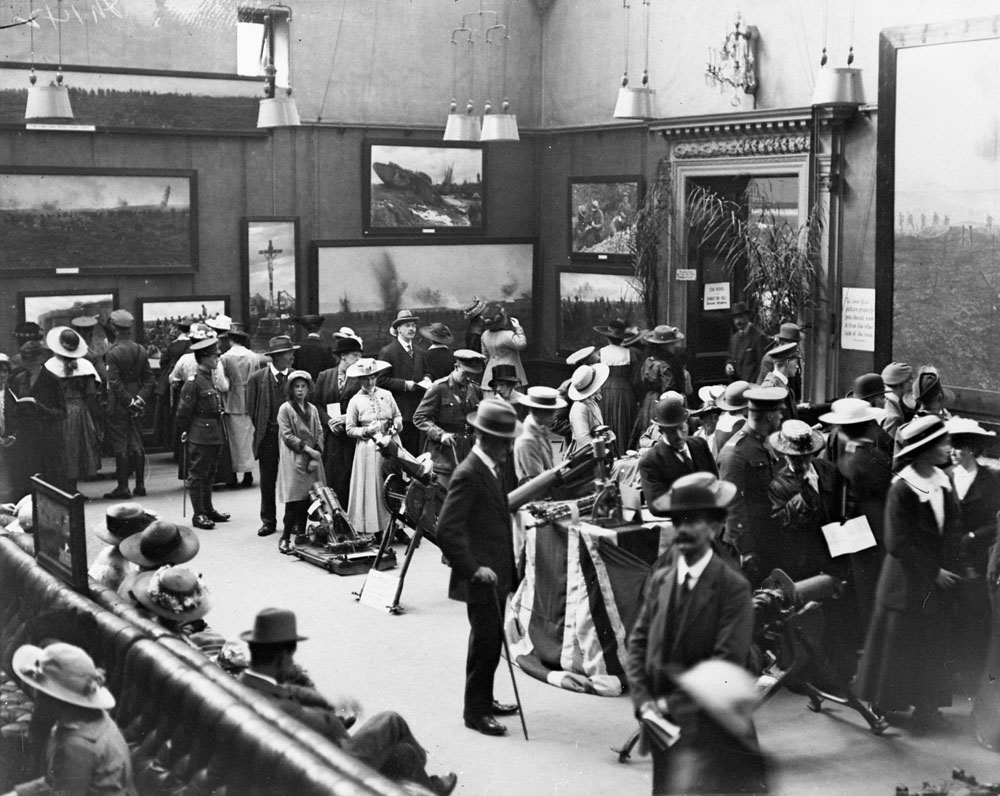
The Canadian War Records Office, established in January 1916, immediately recognized the importance of photography, both for keeping a lasting documentary record of the war and for boosting morale. The first official Canadian war photographer was appointed in April 1916. That same year, the first of several immensely popular exhibitions of official Canadian war photographs was unveiled at the Grafton Galleries, in central London.

Princess Christian among others viewing images at the Second Exhibition of Canadian Battle Pictures, Grafton Galleries, London, July 1917 (MIKAN 3394829)

Princess Christian among others viewing images at the Second Exhibition of Canadian Battle Pictures, Grafton Galleries, London, July 1917 (MIKAN 3394829)

Today, Library and Archives Canada’s (LAC) holdings include most of the negatives created by Canada’s official war photographers, preserved in their original glass plate format. These are some of the most poignant, horrifying, and yet compelling images in LAC’s photography collection.

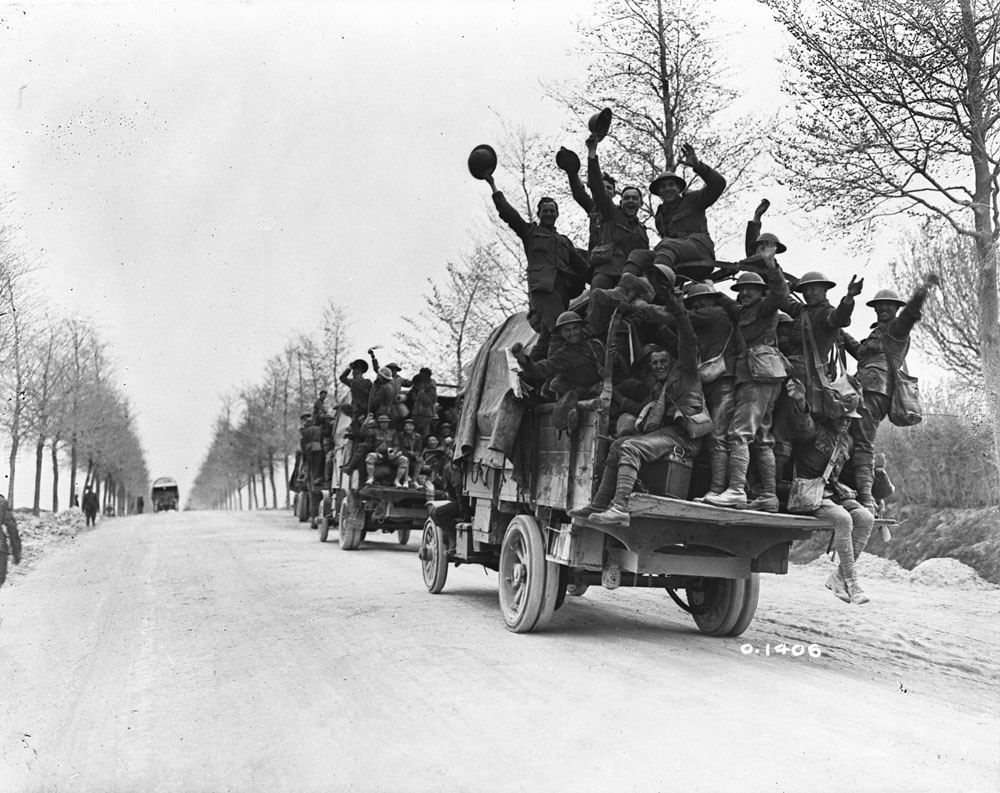
The Great War, the Persuasive Power of Photography, a new exhibition at the National Gallery of Canada, curated by Ann Thomas, incorporates many of these negatives in the near-exact recreation of one entire room from the second Grafton Galleries exhibition, held in 1917. The room, which is designed to put the modern viewer in the shoes of a viewer from 1917, features a dramatic to-scale reproduction of a photograph of the Battle of Vimy Ridge, called the largest photograph ever made during its time. It also includes a cropped version of this photograph of Canadian troops after the battle.

Canadian troops en route to destination for a rest period after taking part in the capture of Vimy Ridge (MIKAN 3521924)

Canadian troops en route to destination for a rest period after taking part in the capture of Vimy Ridge (MIKAN 3521924)

View from inside the Grafton Galleries, London, at the Second Exhibition of Canadian Battle Pictures, July 1917 (MIKAN 3394834)

View from inside the Grafton Galleries, London, at the Second Exhibition of Canadian Battle Pictures, July 1917 (MIKAN 3394834)

Canada’s official war photographers:

  • Captain Henry Edward Knobel (April 1916 to August 1916)
  • William Ivor Castle (August 1916 to June 1917)
  • William Rider-Rider (June 1917 to December 1918)

See other images reproduced for the room or visit the exhibition at the National Gallery of Canada from June 27 to November 16, 2014.

Where art and history meet: exhibitions of historical photographs at the National Gallery of Canada

What happens when the practical also has a poetic side?

In recent months, visitors to the National Gallery of Canada have had a chance to explore the answer to this question. A series of small exhibitions of historical photographs, drawn from Library and Archives Canada’s collection, considers the aesthetic, as well as the documentary properties of images created “on-the-job” by 19th-century surveyors, public servants and engineers.

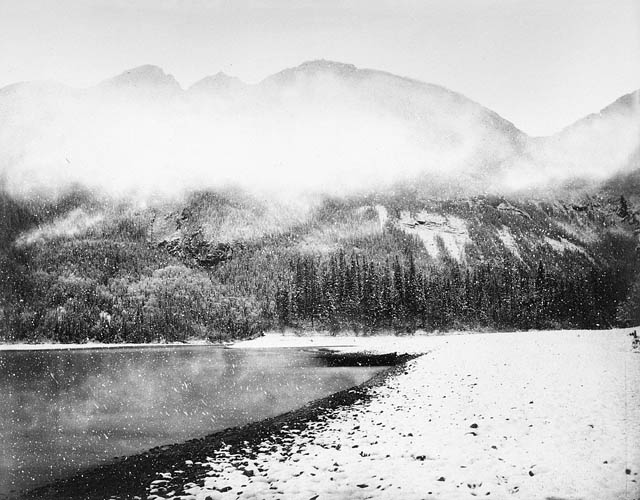
In the heart of the Rocky Mountains: A snowstorm, by Charles Horetzky

In the heart of the Rocky Mountains: A snowstorm, by Charles Horetzky (Source: MIKAN 3264251, e011067226)

At first glance, this beautiful photograph, which was part of the past exhibition Early Exploration Photographs in Canada, seem to be exactly as labelled — a view of the Peace River in British Columbia, as it appeared during a snowstorm in October 1872. It turns out, however, that Charles Horetzky, official photographer with Sir Sandford Fleming’s Canadian Pacific Railway survey team, deliberately enhanced its dramatic effect: paint splatters were added to the image in order to create the effect of non-existent snow.

The current exhibition, Paul-Émile Miot: Early Photographs of Newfoundland, on view until February 2, 2014, includes this portrait from the 1800s, by French naval officer Paul-Émile Miot.

Mi’kmaq man, by Paul-Émile Miot

Mi’kmaq man, by Paul-Émile Miot (Source: MIKAN: 3535989, e011076347)

It was taken while surveying and mapping the coastal areas of Newfoundland — at the time, France maintained a commercial fishing interest in these waters. Though Miot was capturing the earliest known photographs of members of the Mi’kmaq Nation, the extravagant pose of his subject suggests 19th-century European romanticism.

So-called inaccuracies or created effects in 19th-century documentary photographs do not negate the worth of these images as records of past events. If anything, they add fascinating nuances of meaning to these items, as artifacts.

We invite you to stay tuned for the next exhibition, on Arctic exploration photography, opening on February 7, 2014.

Library and Archives Canada’s Travelling Exhibitions

Library and Archives Canada (LAC) is on the road! With four travelling exhibitions on display in different venues across Canada, including one in the
National Capital Region, LAC is showcasing the richness and diversity of its collections. This is an excellent example of LAC’s commitment to making the
country’s heritage and history accessible to all Canadians—regardless of where they live.

The Art Gallery of Greater Victoria, in British Columbia, is hosting the exhibition Beyond Likeness: Contemporary Works from Library and Archives Canada until January 6, 2013. Through the works of 23 contemporary artists, the exhibition explores the evolving concept of portraiture from more traditional representations of likeness to works that challenge the conventions of the genre.

The New Brunswick Museum in Saint John is presenting the exhibition I Know You by Heart: Portrait Miniatures until December 31, 2012. Showcasing 35 recently restored portraits, the exhibition highlights the intimate, personal nature of portrait miniatures, and the reasons that such images are commissioned, created and carried. In March 2013, the exhibition will make its way to the Mendel Art Gallery in Saskatoon.
Find out more about the conservation of these portraits in LAC’s YouTube video.

The McMichael Art Gallery in Kleinburg, Ontario, is showcasing LAC’s most recent exhibition Double Take: Portraits of Intriguing Canadians until January 20, 2013.Double Take presents 50 Canadians who have left—and are leaving—their mark on our country and our culture. Tune in to LAC’s podcast for an overview of the featured works and the stories behind them.

Finally, the exhibition Faces of 1812 is on display at the Canadian War Museum in Ottawa until January 6, 2013. A commemorative exhibition, Faces of 1812 presents some of the men and women who experienced the War of 1812. LAC’s curatorial YouTube video and Faces of 1812 podcast will introduce you to the selected
works that document this significant historical event.

Keep following this blog to find out where these exhibitions will travel next. It could be your hometown!

Questions or comments? We would love to hear from you!