Government of Canada Web Archive Launches the Vancouver 2010 Olympic and Paralympic Collection

Version française

Image of fingers on a keyboard

By Tom J. Smyth

As we mark the fifteenth anniversary of the Vancouver 2010 Olympic and Paralympic Games, LAC is proud to launch a web archival collection documenting this important event in Canada’s history.
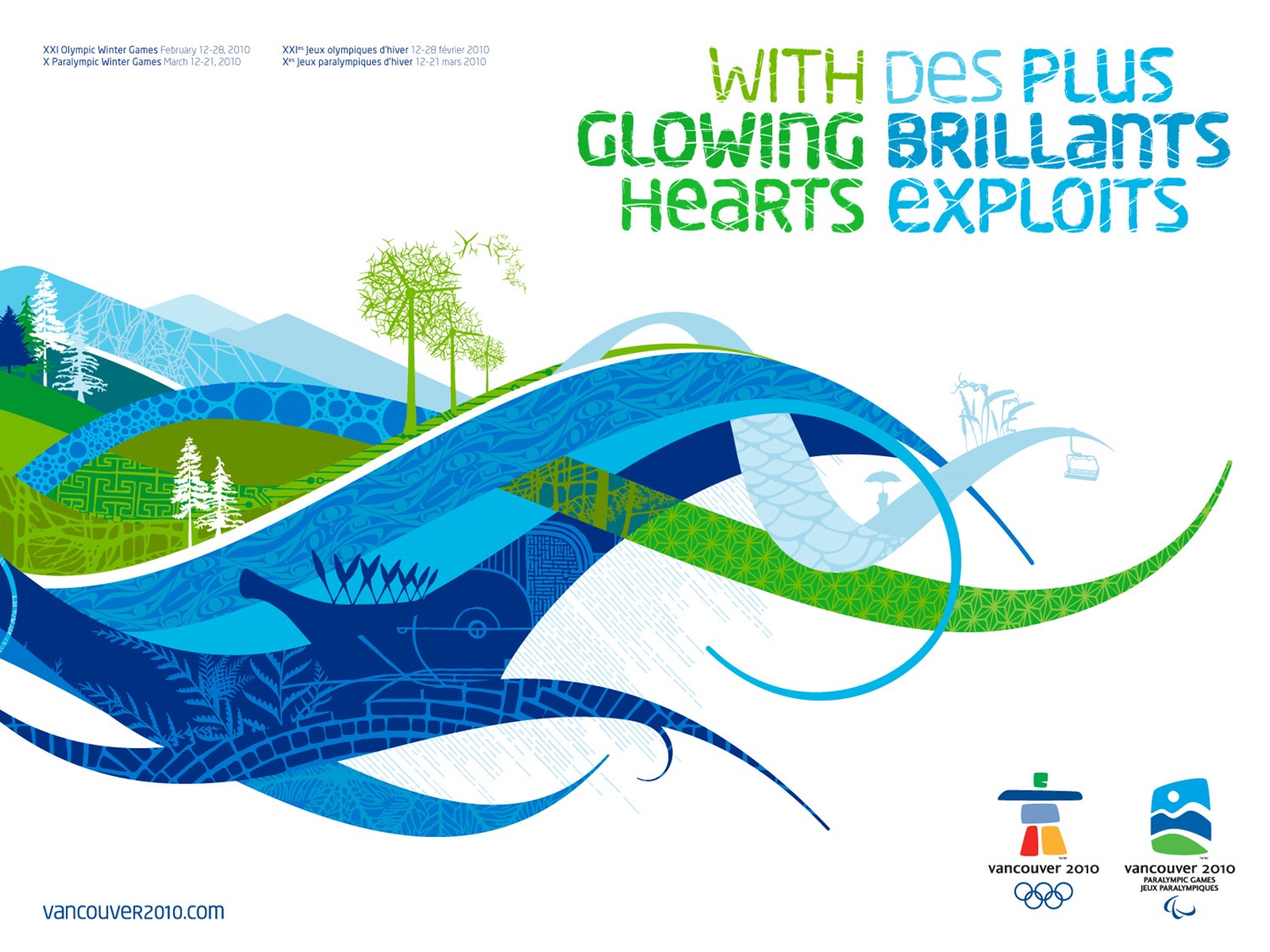
A poster for the Vancouver Olympics titled “With glowing hearts.”

Image from the web archive homepage of the Vancouver Olympics.

What is web archiving and why do we do it?

“Web archiving” is a specialized digital curation and preservation-based discipline that guarantees future access to unique resources from the Internet. It uses specialized hardware and software to target, download, arrange, describe, preserve and replay the original published and interactive context of web resources via emulation in a specialized public discovery and access portal.

Web archiving is practised by national libraries and archives all over the world to capture and preserve web resources that are usually unique and expressed in no other medium. Preserving our digital documentary heritage from our national Internet domain is, therefore, of vital importance to the nation’s history.

Acquiring web resources became a formal part of LAC’s mandate in 2004 under the Library and Archives of Canada Act, subsection 8(2). LAC’s means of realizing this part of its mandate is the Web and Social Media Preservation Program (WSMPP) within the Digital Services Sector, which has operated as a daily activity since mid-2005.

The program curates data and research collections of unique web resources documenting Canadian historical and cultural themes and events. Curating these collections aligns with LAC’s priorities and policy frameworks, requirements of computational use (e.g. in textual and data mining, AI, Machine Learning [ML], and Large Language Models [LLMs]) and modern digital humanities scholarship. We then make these resources publicly available for generations to come and to support future international research on Canada via the Government of Canada Web Archive (GCWA).

The discipline is advanced by the 50-plus members of the International Internet Preservation Consortium, of which LAC is a founding member and currently holds a Steering Committee chair.

Web archival collections curation for the Olympics

From the inception of the Web and Social Media Preservation Program, LAC has collected resources on the Olympic games as they were running, beginning with the Torino 2006 Winter Games (Turin, Italy).

In the beginning, our effort was modest and consisted of collecting the official Olympic site and the Canadian Olympic Committee site. We then progressed into collecting information on federal support programs (“Own the Podium”), individual Olympic sport organizations and the athlete blogs.

LAC’s extensive holdings in web archival Olympic and Paralympic collections now includes:

  • 2006 Winter, Turin, February 10–26, 2006
  • 2008 Summer, Beijing, August 8–24, 2008
  • 2010 Winter, Vancouver, February 12–28, 2010
  • 2012 Summer, London, July 27–August 12, 2012
  • 2014 Winter Games, Sochi, February 7–23, 2014
  • 2016 Summer, Rio de Janeiro, August 5–21, 2016
  • 2018 Winter, Pyeongchang, February 9–25, 2018
  • 2020 Summer, Tokyo, July 23–August 8, 2020
  • 2022 Winter, Beijing, February 4–20, 2022
  • 2024 Summer, Paris, July 26–August 11, 2024

Canada has hosted the Olympic Games on three occasions: the 1976 Summer Games in Montreal, the 1988 Winter Games in Calgary, and most recently, the 2010 Winter Games in Vancouver.

The Vancouver 2010 Winter Olympic and Paralympic Games ran February 12–28, 2010 (1). Canada sent some 209 athletes to the Olympic games, our fourth-greatest contribution historically, where they placed third in the overall medal standings with 14 gold, 7 silver, and 5 bronze (Canada however placed first in terms of total gold medals) (2).

Women’s hockey team celebrating their victory on the ice. Goalie’s net is displaced, helmets, gloves and hockey sticks are on the ice around the players as they are celebrating.

Team Canada celebrates after winning the women’s hockey gold medal game at the Vancouver Olympics in February 2010. Credit: Jason Ransom. (MIKAN 5570828)

The 2010 Games were special for Canada and involved “unprecedented partnerships” with some Indigenous communities (which does not speak for or reflect the opinion of all Indigenous groups). It was also the last and greatest Canadian Olympic hosting effort and marked an important milestone for the Web and Social Media Preservation Program in the development of the program and thematic collection and curation methodologies.

Evolving collection development and web archival digital curation

Beginning with Vancouver 2010, we have continuously elaborated our methodologies and curated extensive web archival collections documenting Canada’s performance and perspectives, as well as the experiences of Canadian Olympians at the Winter, Summer and Paralympic Games.

Curation for Vancouver 2010 began in June 2009. At that time, we were approached by an academic researcher who was interested in web archiving, particularly in the promotion of tourism and related sports activities. How was tourism in British Columbia being promoted while it hosted the games?

We had to admit that our answer to the question of tourism in British Columbia was… “no idea!” Starting the curation process early, however, gave us plenty of lead time to collect news media and web resources documenting preparations and developments leading up to the formal games. It also allowed us to consider new and uniquely Canadian perspectives in our curation, such as Indigenous viewpoints.

Data and web resources on “tourism” as a parallel topic to the Olympic and Paralympic Games wasn’t something we deliberately targeted and collected previously (again, we hadn’t hosted a Games event since Calgary 1988). This begged the question: what other resources or themes would researchers be looking for in our web archive that we hadn’t anticipated?

This question began something of a renaissance in our curation thinking and our alignment with broader principles of national legal deposit. Since client research needs can never be fully anticipated, it is important that we collect resources as broadly as possible. To take it a step further: how could we curate and arrange our data in such a way that it would support future computational and digital humanities research use of web archival collections as “big data”?

We then began considering new themes and sub-themes for curation, such as infrastructural and venue development, environmental and “green” impact, economic impact of hosting the Games and even anti-Olympic sentiment. Expanding our focus in this way required additional research but resulted in a much richer and more comprehensive web archive for future generations.

This effort paid off. Before the end of 2009, the work came to the attention of our host organization. The Federal Secretariat for the Olympic and Paralympic Games at Heritage Canada learned of our project and expressed interest in promoting the work.  The project was then showcased in the 2009-10 Government of Canada Performance Report (3) as part of LAC’s and the Secretariat’s deliverables for the Vancouver 2010 Games.

Our current collections methodology has matured to the point where many topics, such as the Olympics (also the federal government domain presence, change of government or cabinet, the federal elections and so on), now have a refined “core seedlist.” A core seedlist is a set of web URLs that are unlikely to change and that can be quickly, efficiently and frequently collected as the key resources for those topics. This frees web archiving specialists to concentrate on curating and including extra resources that are generated as a direct result of, and are attuned more specifically to, unique events. A pertinent example is the Paris 2024 games.

Paris 2024 and announcing public access for the Vancouver 2010 collection

For the Paris 2024 games, there would clearly be some new issues and topics that perhaps weren’t as relevant or that didn’t exist in 2010. For example, eSports first became a serious consideration for the formal Olympics, and we also witnessed the introduction of “breaking” as an Olympic sport. Security was also a major concern, which was curated as a major topic for the first time.

While our initial intention was to publish the Paris 2024 collection to kick off our Olympics curation, we discovered that most extensive work on this had already been done while preparing the web archival metadata and controlled vocabularies for the Vancouver 2010 collection. It should therefore be the Vancouver collection that kicked off our publishing on Olympics, as it could serve as the most complex and “template” model for arranging our historical Olympics collections via the Government of Canada Web Archive.

Wouldn’t it be grand(er), if we could lead our Olympics collections with the publication of one dear to our hearts, which was pivotal to the development of the program?

On that note, we are pleased to launch our Vancouver 2010 Olympic and Paralympic collection—within days of the fifteenth anniversary of the Games!

To facilitate browsing and discovery, the collection has been arranged into sub-topics including the following:

  • Blogs
  • Own the Podium
  • Sponsors
  • Tourism
  • Government – municipal
  • Government – provincial
  • Government – federal
  • Environment
  • Indigenous perspectives
  • Sports organizations
  • Non-profit organizations
  • Education
  • Canada Post
  • Official Olympics websites
  • Community
  • News media
  • Alternative perspectives and protests
  • Venues
  • Athletes
  • Paralympics
  • Corporate
  • Commemoration
  • Looking back

In establishing these topics and facets, controlled vocabularies and metadata architecture necessary to support, arrange and publish the Vancouver 2010 Olympic and Paralympic collection, we have set the groundwork on which to build, expand, augment, and publish all our other historical Olympics collections, which can now follow in due course.

We hope you enjoy the Vancouver 2010 collection!

References

  1. Vancouver 2010 – Team Canada – Official Olympic Team Website
  2. Team Canada’s Team Size by Olympic Winter Games – Team Canada – Official Olympic Team Website
  3. Report of the President of the Treasury Board of Canada. Canada’s Performance: The Government of Canada’s Contribution. Annual Report to Parliament 2009-10, pp. 77.

Tom J. Smyth is the Manager of the Web and Social Media Preservation Program (WSMPP) and the Government of Canada Web Archive (GCWA) at Library and Archives Canada. The WSMPP team includes Elizabeth Doyle, Jason Meng, Kevin Palendat and Russell White.

Launching the Federal Royal Commissions and Commissions of Inquiry Web Archival Collection: a Brief History of Some of Canada’s Most Important Publications

Image of fingers on a keyboardBy Tom J. Smyth

What is web archiving and why do we do it?

“Web archiving” is a specialized digital curation and preservation discipline that guarantees future access to unique resources from the Internet. It uses specialized hardware and software to target, download and replay the original published and interactive context of web resources via an access portal. This work involves committing to the permanent stewardship and preservation of the data comprising those resources and ensuring its informational continuity for research and use far into the future.

Web archiving is practiced by national libraries and archives internationally to ensure the preservation and future access to online (Internet) and digital cultural heritage that is expressed in no other medium. Preserving the resources comprising our digital documentary heritage from our national Internet domain is therefore of vital importance to our contemporary history.

What are Federal Royal Commissions and Commissions of Inquiry?

The Web and Social Media Preservation Program (WSMPP) is pleased to announce the launch of a new web archival collection via our access portal: the Federal Royal Commissions and Commissions of Inquiry Collection.

In the words of the Canadian Encyclopedia,

“[Commissions] descend from the British monarch’s prerogative power to order investigations, said by some to have been exercised under King William I [“the Conqueror” of Normandy] when he commanded the preparation of the Domesday Book, though the Commission on Enclosures initiated by Henry VIII in 1517 [nearly 450 years later] is a more likely prototype of contemporary royal commissions.”

Federal-level commissions may or may not use the word “royal” in their title, depending on their circumstances. These commissions, when struck to investigate a federal-level issue, are created under an Order in Council (OIC) from the Governor in Council and under the authority of the Inquiries Act (R.S.C., 1985) Part I. Investigations regarding a department of the federal government are struck under this Act, section II. The purpose of any commission is to investigate “any matter connected with the good government of Canada or the conduct of any part of the public business thereof.”

Generally, the Lieutenant Governor in Council or Commissioner in Executive Council of the provinces and territories of Canada may order commissions of inquiry under the authority of their Public Inquiry Acts; however, these are non-federal and so are not contained within the Government of Canada Web Archive (GCWA) collections. Royal commissions are also common to governments throughout the Commonwealth.

The Governor in Council appoints, via OIC, person(s) as commissioners by whom the inquiry shall be conducted; the commissions may summon any witnesses and require them to give evidence under oath, orally or in writing. They may also order witnesses to produce documents “and such things as the commissioners deem requisite to their full investigation”. Their legal authority to enforce the attendance of witnesses and to compel them to give evidence is as “any court of record in civil cases” (Inquiries Act (R.S.C., 1985), s. 3–5.).

While not binding on the government, a commission’s findings are highly influential. The final reports of commissions are therefore among the most important (quasi-official) publications produced in Canada. The investigations and resulting reports have highlighted and documented matters of importance to society since Confederation.

History of publishing practices and the digital Commission of Inquiries published collections at LAC

From the inception of digital publishing, LAC and the Privy Council Office (PCO) have collaborated for the stewardship of analog, digitized, born-digital and website-borne Federal Royal Commissions and Commissions of Inquiry.

Since 2008, PCO has expended considerable effort to locate and digitize paper-based commission documents for preservation and wider public access. In 2009, PCO and LAC established a partnership whereby PCO provided the digitized copies and LAC entered them into the national library collections, conducted the preservation and provided public discovery, access and reference (research support) services. The digitized collections resulting from this collaboration with PCO now date from 1868 to the present day.

Furthermore, starting with the Romanow Commission on the Future of Health Care (2001), the findings of commissions were published via specialized websites, which necessitated shifting acquisition strategies, with LAC responsible for preserving these special websites since 2005.

Replacing the legacy Index to Federal Royal Commissions at LAC

With the re-launch of the GCWA in August 2023, the WSMPP has also developed and launched a Digital Curation Tool. This tool enables web archiving staff to select, arrange, and present acquired web archival data and resources from within the web archive and present them as logical collections for discovery and public access via the GCWA (for example, as was done for the currently accessible Truth and Reconciliation, COVID-19 and Government of Canada collections).

There have been some technical, data, and logistical challenges over the years that have complicated access to these commissions and digital library publications. The GCWA and the new Digital Curation Tool now present an opportunity to restore a specialized portal that can enable full-text search, discovery and access to LAC’s historical commissions publications in a single place.

How do I access the Federal Royal Commissions and Commissions of Inquiry Web Archival Collection?

The GCWA Royal Commissions collection can be found here. The WSMPP staff have also created bibliographic records, which makes these web resources and publications discoverable and accessible by clients using Voilà, Aurora and LAC Collection Search.

This means any topical search from these search tools will now enable clients to discover and access web collections and resources in the GCWA. While this previously required the user to search the GCWA independently, now a search for commissions in Voilà, Aurora, or Collection Search will return a hit for the GCWA collection and enable its consultation with a single click.

This is a major advance for client research use of the GCWA and for clients looking for commissions-published information from anywhere on library-archives.canada.ca or webarchiveweb.bac-lac.canada.ca.

The impetus of this work was severalfold, but was driven primarily by the commissions that have closed in Canada:

The launch of the Federal Royal Commissions and Commissions of Inquiry Web Archival Collection in the GCWA will be most timely, as it provides a specialized access point at LAC for accessing all historical commissions websites and publications, as well as the most recent upon their respective closures.

This collection, the most comprehensive and authoritative in Canada, also restores and greatly advances client research capacity, efficiency, discovery and access for published data, websites and commissions publications, while adding new functionalities and tools in the form of extensive full-text search and commissions curation and discovery facets. For example, as is traditional for this type of publication, it is possible to search and browse by commissioner name (e.g., “Chair Roy Romanow”) as well as the commission name (e.g., “Commission on the Future of Health Care in Canada”).

This launch aligns closely with LAC’s Vision 2030 objectives for delivering advanced digital access services directly to the public (in this case, to a new degree of comprehension, where it was previously and technically impossible to search all commissions, and from multiple tools). We’re very proud of this work and our ability to restore the client research facilitation formerly provided by the Index to Federal Royal Commissions at LAC.

This work will be very welcomed by PCO and university libraries, but also by practitioners across the GC and Canada who specialize in official publications, legal work, government data and Royal Commissions and Commissions of Inquiry for the provision of their own research.

Clients can get in touch with us at archivesweb-webarchives@bac-lac.gc.ca.

Dedication

The launch of the Federal Royal Commissions and Commissions of Inquiry Web Archival Collection and this blog post are dedicated to the memory of our friend and valued colleague, Mr. Michael Maurice Dufresne (March 24, 1971–August 15, 2023), who spent many years as the PCO Portfolio Archivist at LAC and with whom I worked (i.e., who taught me the ropes) from my early days on PCO commissions, research and OIC matters. His help, expertise, wisdom, patience and quick wit will be sorely missed.


Tom J. Smyth is the Manager of the Web and Social Media Preservation Program and the Government of Canada Web Archive at Library and Archives Canada. The WSMPP team includes Elizabeth Doyle, Kevin Palendat, Jason Meng and Russell White.

Improving your online experience: Launch of the new Government of Canada Web Archive

Image of fingers on a keyboard

By Tom J. Smyth

Introduction and program history

Library and Archives Canada (LAC) is the nation’s designated national memory institution, with a legislated mandate to acquire, describe, preserve and provide long-term access to Canada’s documentary heritage.

This includes the Canadian Web! Resources in formats for the Web are recognized internationally as an important facet of a nation’s modern digital heritage. These irreplaceable web resources are important evidence of Canadian history and culture in the 21st century, but they are volatile and prone to disappearing without warning.

What can be done about this? How do we “rescue” resources generated in real time, which exist outside the normal production streams of archival records or traditional publications? How do we safeguard web resources that can therefore contain information found in no other medium, which may document national historic events or important aspects of culture as they are unfolding?

Owing to their precarious nature, immediate and managed action is required to select, arrange, make available and ensure the digital preservation and data continuity of web resources that constitute Canadian digital documentary heritage. This action is referred to internationally as “web archiving,” which is a discipline based on digital preservation and curation that is practiced and advanced by, for example, the 50-plus members of the International Internet Preservation Consortium (of which LAC is a founding member).

Acquiring web resources became a formal part of LAC’s mandate in 2004 under the Library and Archives of Canada Act, subsection 8(2). LAC’s means of realizing this part of its mandate is the Web and Social Media Preservation Program within the Digital Services Sector. The program curates data and researches collections of unique web resources documenting Canadian historical and cultural themes and events, in alignment with the requirements of modern digital scholars. It also makes these resources available to the public for posterity and to support future international research on Canada.

The web resources acquired by the program are made available through the Government of Canada Web Archive (GCWA). While the program and the GCWA are well known in Canada, their scale may not be.

How big is the GCWA? How much data does the GCWA contain?

In 2022–23, the Web and Social Media Preservation Program at LAC reached an important milestone.

As of February 2023, we are pleased that the GCWA exceeded 120+ terabytes of total data and surpassed over 3.1 billion assets or documents.

This is about the same amount of data as 4,600 Blu-ray movie discs (1,150 in 4K, or 384 copies of your favourite movie trilogies in 4K). If the GCWA were printed out on paper, it would take up some 57.5 billion sheets; stacking this up, it would reach the same height as 12,263 CN Towers!

Some program clients may be surprised to hear this, because since 2005, LAC has only provided public access to portions of its federal web archival collections. This means that fully 50 percent of the total collections have therefore never been available to the public until now.

Screenshot of a Government of Canada Web Archive page.

New functionalities and features of the relaunched Government of Canada Web Archive (GCWA)

New collections

We are delighted to announce that, with the relaunch of the GCWA in 2023, LAC will begin providing access to all non-federal collections curated since 2005. At the time of launch, the following collections will be available:

  • The Truth and Reconciliation Commission Collection (curated in partnership with the Centre for Truth and Reconciliation, the University of Manitoba and the University of Winnipeg)
  • The LAC collection on COVID-19 and its impacts on Canada (20+ terabytes of data)
  • All federal government data collected since 2005 (55+ terabytes of data)
  • Additional curated collections (to be arranged and published in the upcoming fiscal year)

The GCWA is one of the most comprehensive sources in existence for the following:

  • Canadian cultural and historical events as documented on the Web (2005–)
  • Official publications of the Government of Canada (GC) (2005–)
  • The federal and historical GC web presence (gc.ca domain, 2005–)
    • Historical GC financial and departmental plans and performance reports (2005–)
    • Historical GC policy frameworks (2005–)
    • Historical GC proactive disclosure (2005–)
    • Data and statistics from the federal web (2005–)
    • Material removed from the federal web under Common Look and Feel 2.0 (2005–08)
    • Material removed from the federal web under “CLF 3.0” (2008–13)
    • Material removed from the federal web under the Web Renewal Initiative (2013–)

Overall, the GCWA is the definitive source for any historical study of the Government of Canada web domain over time.

New portal design

From 2005 to 2019, the GCWA arranged data according to, and only provided access to federal government web resources under, Crown copyright (at maximum, approximately 15 terabytes of data were available). With the launch of the new GCWA in 2023, we have expanded our search tools and filters to help users explore our non-federal data and thematic web collections.

Clients will now be able to engage non-federal collections in a specialized portal and user interface. The relevant interface (government versus non-federal collections) will be presented automatically based on the collection being accessed.

Full text search of the web archive, individual collections or collection themes

Since 2011, LAC has not provided a full-text search capability or service to the public for navigating the GCWA. This situation was very problematic, and it limited client access to discovery and browsing. For the launch in 2023, a complex and powerful full-text search will be made available:

  • Clients will be able to search at multiple hierarchical levels, from the entire archive down to individual files.
  • An advanced search will also be available, including the ability to search by collection, keywords, exclusions, exact phrase, URL/domain, web resource type and date range.
  • An ability to quickly search by exact URL will also be available.
  • Further, clients will be able to discover and access the content of non-federal collections by sub-theme (for example: show all resources collected having to do with the “economic impact on Canada of COVID-19”).

Specialized reference services

LAC provides reference services and support for the GCWA. If you have difficulty locating a known resource within the GCWA, we would be pleased to assist you with the following:

  • Locating obscure Government of Canada official publications or decommissioned websites
  • Locating obscure historical reports, policies, financial data or proactive disclosure
  • Locating genres of Government of Canada content where exact titles or dates are not known
  • History and development of the Government of Canada domain (gc.ca)
  • Use of the web archives as a historical source or as computational data
  • Copyright or privacy concerns
  • Questions on how to have your web resource digitally preserved at LAC

Do you have ideas on what should be collected? Please let us know!

Ask us a question. We can help with all reference questions dealing with the web archive, nominations of Canadian web resources for acquisition, or requests for computational access to our web archival collections data.


Tom J. Smyth is the manager of the Web and Social Media Preservation Program at Library and Archives Canada.