Turning the Page on Censorship: Navigating Freedom to Read in Fourth Wing and Beyond

Version française

By Rebecca Murray

From fantasy to historical fiction, contemporary authors are incorporating the topic of banned and challenged books in their writing. In Rebecca Yarros’s popular Fourth Wing, a would-be archivist is thrust into the perilous world of dragon riders and, along the way (spoiler), uncovers the truth about a “rare” (i.e., banned) book passed down through her family. Meanwhile, Kate Thompson’s The Wartime Book Club follows a courageous librarian in German-occupied Jersey who smuggles books to her neighbours during the Second World War. Through these tales, both authors bring the issue of censorship to the forefront, celebrating heroines who share forbidden stories and defend the right to read.

However, one need not look to fictional realms or even historical accounts to grasp the importance of this issue. Established in 1984, Freedom to Read Week is an annual campaign that sheds light on the covert nature of censorship, raising awareness about the challenges faced by publication and library programs within our very own communities.

Did you know that even seemingly banal works such as The Complete Fairy Tales of the Brothers Grimm and Bambi have been challenged internationally? The history of censorship and challenges to books and other publications is long and varied both here in Canada and abroad. Library and Archives Canada (LAC) plays a unique role amongst Canadian libraries, preserving copies of all books published in Canada—including audio and electronic formats—to ensure these stories remain accessible for future generations.

Read on to learn about key themes in Freedom to Read Week’s history and how they relate to LAC’s mandate and involvement in the campaign.

Photograph of rows of shelves filled with books.

Access copies of books and other publications preserved at Library and Archives Canada. Photograph: Rebecca Murray, Library and Archives Canada.

School libraries

Classrooms and school libraries are often subject to book challenges due to wide-sweeping policies and book-specific complaints. Since the inception of Freedom to Read Week, numerous challenges in school settings have been documented with responses ranging from training teachers on how to address sensitive topics in literature, to stopping the removal of books from libraries to board meetings drawing hundreds of attendees and, in extreme cases, even book burnings.

National library collections, like the one at LAC, differ from public and school libraries in that they are non-circulating (outside of our reading rooms) and not influenced by public demand or policy changes. As a result, the removal of books from other libraries or schools does not affect the holdings at LAC.

Works about censorship

From the earliest days of Freedom to Read Week to now, writers and thinkers have explored the topic of censorship in Canada, examining its impact across literature, libraries, cinema, and beyond. These important works allow us to trace the history of censorship and publication bans in Canada, offering valuable perspectives on how these issues have evolved over time.

Examples in LAC’s published holdings include Dictionnaire de la censure au Québec: Littérature et cinéma (2006), by Pierre Hébert, Kenneth Landry and Yves Lever; Fear of Words: Censorship and the Public Libraries of Canada (1995), by Alvin Schrader; and Women Against Censorship (1985), by Varda Burstyn.

Three books displayed on a tabletop.

Dictionnaire de la censure au Québec: Littérature et cinéma (2006), by Pierre Hébert, Kenneth Landry and Yves Lever; Fear of Words: Censorship and the Public Libraries of Canada (1995), by Alvin Schrader; and Women Against Censorship (1985), by Varda Burstyn.
Photograph: Rebecca Murray, Library and Archives Canada.

Shifting trends

When we think of classic fairy tales and stories like Bambi, it might be hard to imagine how anyone could find fault with them. Yet, as our society evolves, so do our perceptions of what is considered offensive or appropriate. Ideas about acceptable content are always shifting, and this is evident in various policies and debates: from decisions on whether to include graphic novels (often referred to as comic books) in public libraries, to petitions seeking to revoke awards from past literary winners, to the regulations on importing and selling certain publications in Canada. These changes are part of a broader historical trend that will undoubtedly continue. By examining data on content challenges reported by librarians on the front lines, we can observe how these societal attitudes evolve over time.

You can read all about Freedom to Read Week’s history in Canada and find out about other challenged titles on the campaign’s website.

The 41st edition of Freedom to Read Week will take place from February 23rd to March 1st, 2025. Stay up to date on the campaign and related events.


Rebecca Murray is a Literary Programs Advisor in the Outreach and Engagement Branch at Library and Archives Canada.
Freedom to Read

By Mary-Francis Turk

At Library and Archives Canada (LAC), we never judge a book by its cover (or its content, for that matter)! We want to make sure that readers and researchers have access to all Canadian publications. LAC’s mandate, as outlined in the Preamble to the Library and Archives of Canada Act, puts emphasis on preserving the documentary heritage of Canada while making it available to the public.

Libraries across Canada have a responsibility to create policies that protect the freedom to read and intellectual freedom. As a national library, LAC has created a permanent collection by acquiring published books, rare and early editions of books and related print material of all kinds.

Through its legal deposit program, LAC acts as a quiet champion against censorship. Every Canadian publication has its place in the national collection. The program has been crucial in aiding LAC’s ongoing efforts to build an inclusive, expansive and accessible national collection.

LAC works closely with publishers to build its collection through the legal deposit program, which is responsible for collecting “materials created in Canada and intended for sale or public distribution.” In doing this, we are able to make material available and preserve it for future generations.

Materials accepted through legal deposit

Canadian publishers and producers submit materials such as

  • Books (monographs)
  • Serials (such as magazines, journals, newsletters)
  • Physical music and video recordings
  • Audiobooks
  • Sheet music
  • Maps
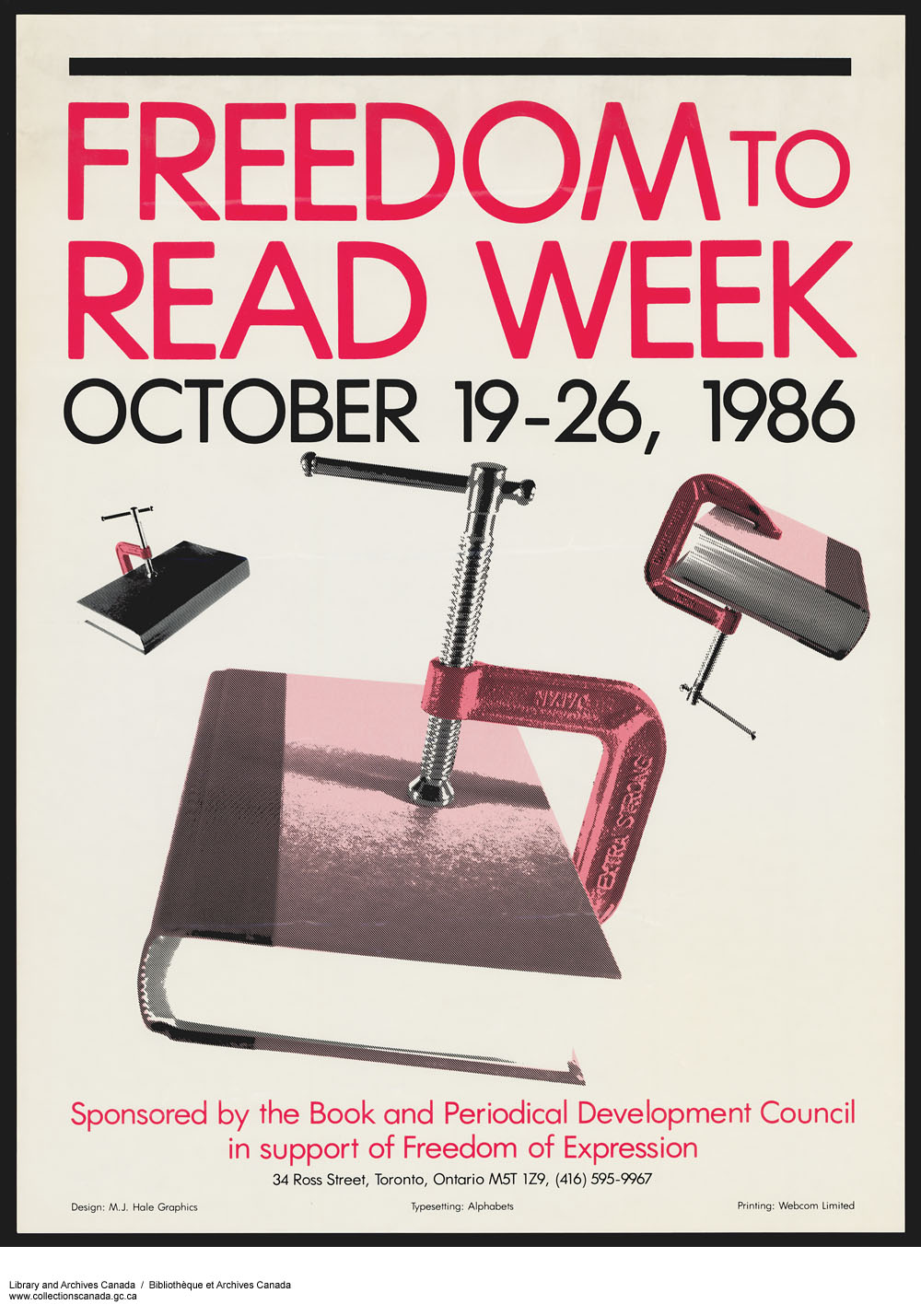
Poster for Freedom to Read Week dated October 19–26, 1986, with three books closed by clamps.

An advertisement promoting reading put out by the Book and Periodical Development Council for Freedom to Read Week in 1986. Library and Archives Canada/Robert Stacey fonds/e010758305. Credit: Michael Hale / Susan Reynolds.

Although it can sometimes feel like censorship is something from the past, there are many examples of more recent instances of challenged publications. This includes several publications that can be found in LAC’s collection:

  • In 2018, David Alexander Robertson’s book Betty: The Helen Betty Osborne Story was “not recommended” for use in Alberta classrooms.
  • In 2016, Robin Stevenson’s book Pride: Celebrating Diversity and Community met resistance during Stevenson’s school visits in British Columbia, Ontario and Quebec.
  • In 2011, Timothy Findley’s book The Wars was used by an Ontario school board in Grade 12 English classes and was subsequently challenged by parents. The school board ultimately decided to keep the book as part of the secondary curriculum.

Canada’s Book and Periodical Council’s Challenged Works List reminds us that publications have historically been and continue to be challenged and censored in Canada. Freedom to Read Week further reminds Canadians that access to publications should not be taken for granted.

Making Canadian publications available to the public and ensuring they are available for future generations is imperative to ongoing intellectual freedom in Canada. This is exactly what we strive to do here in LAC’s legal deposit team.

As we reflect on the freedom to read and the right to intellectual freedom, the task of acquiring and making Canadian publications available to readers across the country seems more important than ever.

Interested in learning more about free expression and censorship in Canada? See a list of the Book and Periodical Council’s English or French works on free expression and censorship in Canada.

Additional resources


Mary-Francis Turk is a Legal Deposit Supervisor in the Private Archives and Published Heritage Branch at Library and Archives Canada.

The Freedom to Read

By Liane Belway

[January 2024] This blog post has been updated to reflect changes to the Freedom to Read Week campaign.

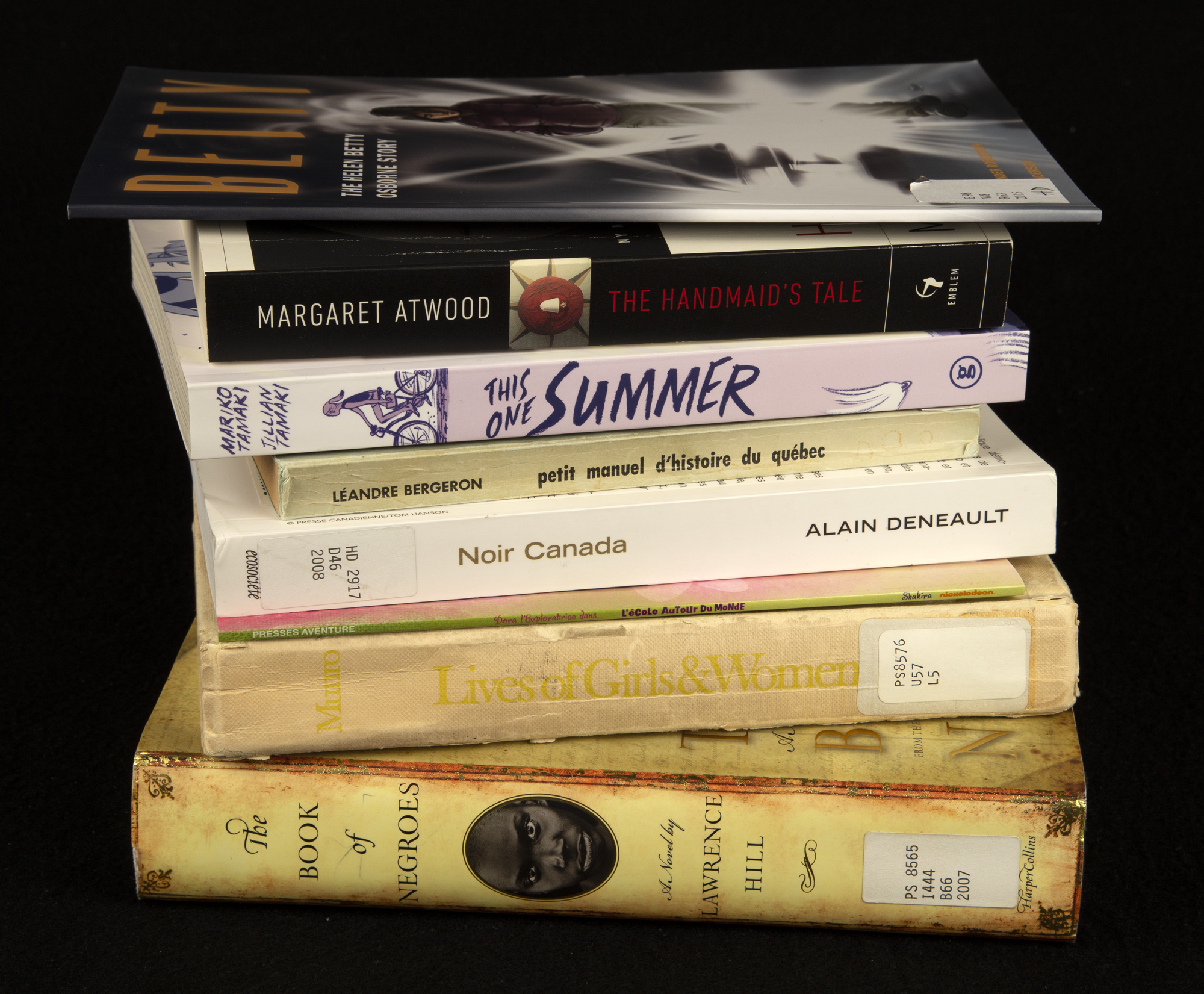
A colour photograph showing the spines of a stack of books against a black background.

A sample of the variety of books held in the Library and Archives Canada collection, which have been challenged.  Photo credit: Tom Thompson

In Canada, we enjoy the freedom to read what we choose, so much so that we may not always consider how important this right is, or whether it could be interfered with in a country such as ours. After all, our intellectual freedom is guaranteed under the Canadian Charter of Rights and Freedoms. Yet, freedom to read can never be taken for granted.  Even in Canada, books and magazines are frequently challenged in libraries and schools. Freedom to Read Week encourages Canadians to talk about and celebrate our intellectual freedom. Each year, Canada’s Book and Periodical Council ensures that this event raises awareness of Canada’s often little-known history of censorship and book banning, and the battles fought to keep books on the shelves of schools and libraries. Nationwide events throughout this week help raise awareness about the importance of protecting our right to read.

The right to intellectual freedom means that each person has the right to choose what to read, within the limits of Canadian law. Challenging a book’s right to be on a shelf and available to readers involves more than a personal expression of taste or the choice not to participate in a conversation about controversial issues. It is an attempt to limit public access to the works in schools, libraries, or bookstores, often for political or moral reasons, and prevent others from reading them. Libraries have a core responsibility to protect the freedom to read and are required to have library policies reflect this duty.

Each case is different, and libraries respond differently, according to their mandate and their responsibilities to users. Most public libraries have intellectual freedom policies in place to deal with individual concerns while protecting the collective right to read, for example by shelving according to age appropriateness, while the mandate of many school libraries is mainly to support the curriculum for the school’s relevant age group. At Library and Archives Canada, our mandate is to acquire, describe, and make accessible all Canadian publications to readers and researchers from Canada and around the world.

Not all challenged books wind up being banned. When a famous author like Margaret Atwood has a book like The Handmaid’s Tale challenged, the result is often greater media attention, increased sales, and more readers. Alice Munro’s Lives of Girls and Women was challenged decades before she won the Nobel Prize for Literature.

However, the process of trying to ban a book can have a more insidious effect, especially in school and public libraries. A children’s book with a controversial reputation can simply be dropped from reading lists and curricula to avoid confrontation. When books with themes like that of Maxine’s Tree, a picture book with an environmentally friendly message, are challenged, sometimes the challenge is denied, as in this case from 1992, where the book was allowed to remain in elementary schools. Today, we take for granted picture books that teach kids about the environment, or same-sex families, or different religious views, or any number of topics, but this was not always the case.

Who knows how many such books were not purchased (or not written) over the decades because of a culture of banning? We like to think that, today, we are more open to the views of others. Nevertheless, as Canadians, we should remain aware at all times of how valuable our right to read is and should protect this right for ourselves as well as for other readers.

For more information, check out Freedom to Read Week online.


Liane Belway is a librarian in the Acquisitions section of Published Heritage at Library and Archives Canada.