Guide to DIY personal military displays

Version française

By Sacha Mathew

Did you know that you can easily make your own military heritage display by using the tools and digitized records found on the Library and Archives Canada website? Using the display we presented at a recent event as an example, I’ll show you step-by-step how you can make your very own display at home or at school.

Library and Archives Canada held a hugely successful Open House event in May, welcoming more than 3000 visitors to our Gatineau facilities and allowing them to enjoy an opportunity to view treasures in our vaults.

This small display of photographs and textual documents from our military collection was very popular. It had a personal touch, and many visitors asked us how we selected the records to display.

Overhead view of glass display case containing military photos and textual documents.

Military display used during LAC Open House event. Image courtesy of Alex Comber, archivist.

Your display can easily be tailored to present a person, an anniversary or a specific military unit. In our case, we wanted to highlight the 100th anniversary of the Royal Canadian Air Force (RCAF) taking place this year. That was our starting point.

Next, we needed to narrow our focus to make it easier to tell a story. Records give facts, but they don’t tell a story — that’s where interpreting the records comes in. Since the event was in Gatineau, we thought the public would be interested in exploring the personal stories of servicemen from the local area. We started by choosing the 425 “Alouette” Squadron, an RCAF unit. This is a French-Canadian bomber squadron established at the outbreak of the Second World War. By researching the 425 Squadron personnel roster and cross-referencing it with a list of RCAF casualties provided by the RCAF Association, we were able to find two local airmen: one from Montreal and the other from Ottawa.
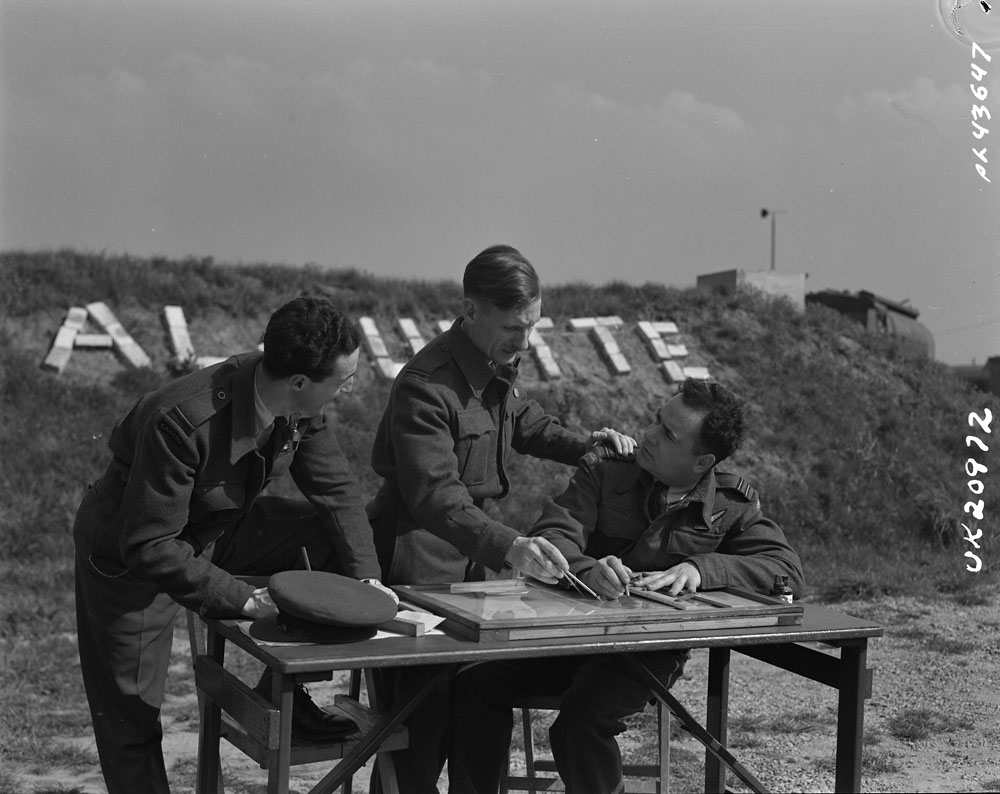
By an English airstrip, three Air Force officers planning while looking over a table with maps.

Pilot Officer J.W.L. Tessier; Pilot Officer J.A. Longmuir, DFC (Distinguished Flying Cross) of the Royal Air Force, attached to the Alouette squadron as Bomber Section Training Officer; and Flight Lieutenant Claude Bourassa, DFC, Commander of the French-Canadian squadron’s bomber section. 425 Squadron. 24 April 1945, PL-43647, e011160173.

For our display, we looked for specific individuals to feature in our display, which can also be done for local service members from your community or school. Choosing an individual is even easier if you are making a display for a family member, since you may already have someone in mind.

Once you’ve chosen an individual, you may look for their military personnel file. This file provides a tremendous amount of information and includes personal details (ever wonder what your great-grandfather’s address was in 1914?). The file can be easily found on the LAC website. However, it should be noted that not all records are open to the public and available online. All personnel files for the First World War are open and have been digitized (First World War Personnel Records), but only “War Dead” files are available online for the Second World War. “War Dead” refers to members that died during the war (Second World War Service Files – War Dead). Other Second World War and post-Second World War service files can still be obtained, but they must be requested through an Access to Information and Privacy request (Records you may request).
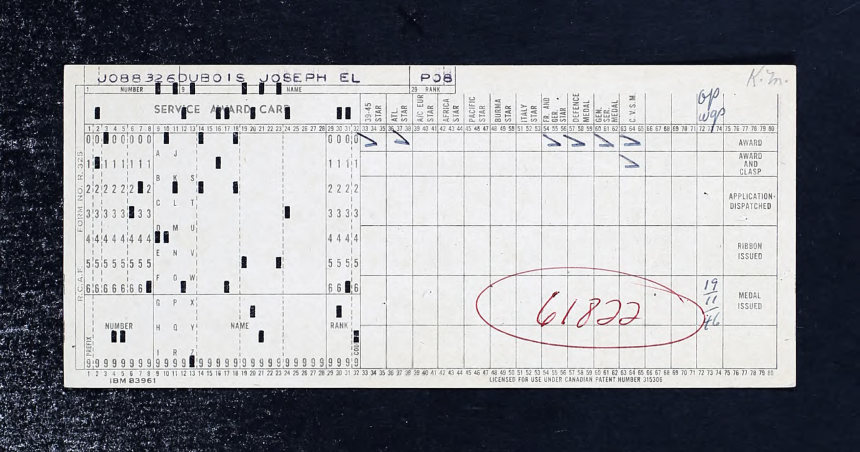
Now that you have the service file, you can decide what you want to display. For our display, we were limited by the size of the display case. If you have more space, you can pick as many documents as you like. You’ll find a variety of documents in the service file. For our airman, Pilot Officer (PO) J. Dubois, we selected a few documents that we found interesting: a letter of recommendation from his employer (T. Eaton & Co), his attestation papers, his medal card, his pay book, official correspondence with his parents in French and the report on his death. You can scroll through and read the digitized service file, then choose what you’d like to feature. Please remember to cite your sources, including reference numbers for archival documents.

As mentioned, interpreting the records you find can help you tell a story rather than just display your research. In the case of PO Dubois, we looked to his squadron records from the day he died, and we were able to better understand the circumstances of his final flight. Each of the three services has an official unit journal of their daily actions. They are called “War Diaries” for the Army, “Ship’s Logs” for the Navy and “Operations Record Books” for the RCAF. The personnel file gives you biographical information, and the unit journal gives you the context. The journal allows you to understand how the individual fits into the unit’s operations. You would interpret the documents by examining them together, giving you a much broader picture. That picture is the story, which you could write up or present orally.

The only thing remaining is to add some photos to make the display more visually compelling. You may find the member’s photo in the service file, but this is not common for files from the World Wars. To find photos, I suggest setting Collection Search to “Images”. Here you can search by the unit designation and choose a few photos that are appropriate to the time frame that you are looking at. For our display, we easily found a few photos of 425 Squadron in England during the 1940s. Like the textual documents, it is important to give accurate photo credits for any photographs used in your display.
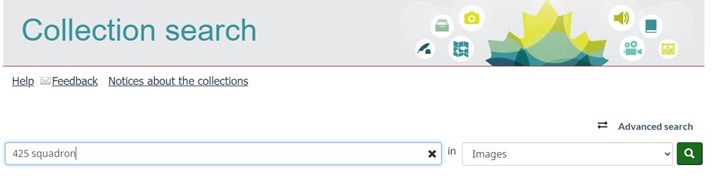
A screen capture from the LAC website showing the search bar set to “Images”.

Collection Search, LAC website.

By using the tools and resources from LAC’s online collection, you can make your own custom display for an individual or for a unit. It’s your choice how you’d like to present your display: you can print copies of documents and photos to make a framed display or scrapbook, or you can make a digital presentation. Making a display is an excellent way to connect with ancestors by learning about their lives, and it allows people to explore Canadian military heritage in a personal way. It is also an excellent research exercise and would prove a wonderful Remembrance Day project for young students.


Sacha Mathew is an archivist in the Government Archives Division at Library and Archives Canada.
Women in the War: the Royal Canadian Air Force at 100

Version française

By Rebecca Murray

Please note that many of the visuals for this article were taken from digitized microfiche; as such, the image quality varies, and individual item-level catalogue descriptions are not always available.

The Royal Canadian Air Force (RCAF) is celebrating 100 years in 2024. Library and Archives Canada (LAC) holds records from the RCAF’s earliest days through to the 21st century. From its role in Canadian aviation to operations abroad, the RCAF has an important place in Canadian military history. Other posts on this site address infrastructure like airports (specifically RCAF Fort St. John) and notable moments such as the Avro Canada CF-105 Arrow. This post will focus on the photographic holdings of the RCAF at LAC, specifically the Second World War–era photographs of servicewomen.

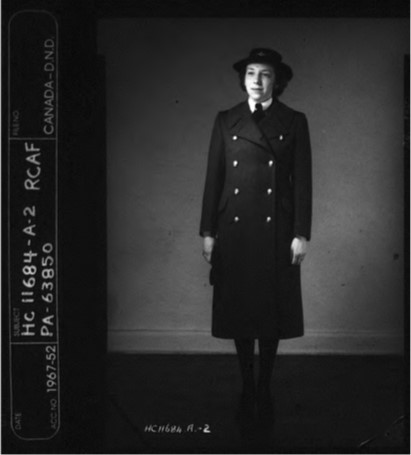
A uniformed woman stands against a blank wall.

HC 11684-A-2 “Great coat with hat and gloves,” 04/07/1941 (MIKAN 4532368).

Another colleague’s post outlines the history of the RCAF Women’s Division (RCAF-WD), so I won’t repeat it here, except to say that it was formed on July 2, 1941 (officially as the Canadian Women’s Auxiliary Air Force, changing its name by early 1942) and would eventually see more than 17,000 women serving within its ranks.

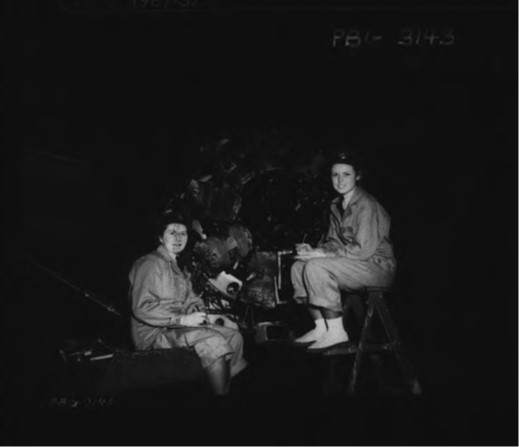
Two women wearing coveralls sit on either side of a propellor.

PBG-3143 “Women’s Division—Aero Engine Mech.,” 23/10/1942 (MIKAN 5271611).

The Department of National Defence fonds (RG24/R112) holds photographs of these women and documents their service during the Second World War era. Comprising over 500,000 photographs, this collection is a rich resource for anyone interested in the period as it includes photographs from both Canada and overseas. Over the past six years, I have been working closely with the photographs to find the servicewomen. Some of them are documented clearly and given centre stage in photographs. Others are found on the fringes, sometimes almost indistinguishable at first glance from their male counterparts in group photographs.

A seated uniformed man wearing glasses (left) looks towards a standing uniformed woman (right).

RE-1941-1 “Pay and Accounts Section (Crosswinds),” 25/09/1944 (MIKAN 4740938).

The occasion of the RCAF’s 100th birthday is a fitting moment to share the results of the work with this particular sub-series of photographs while highlighting the role that servicewomen played in the RCAF’s ranks during this period. Composed of 53 sub-sub-series of photographs, usually distinguished by location, the images vary widely—from aerial views of Canada to official portraits to post-war photographs of life and operations at European bases like North Luffenham and Station Grostenquin. The bread and butter of this sub-series, though, for most interested parties, is the imagery that documents the day-to-day operations and lives of servicemen and women during the Second World War, whether at home or abroad.

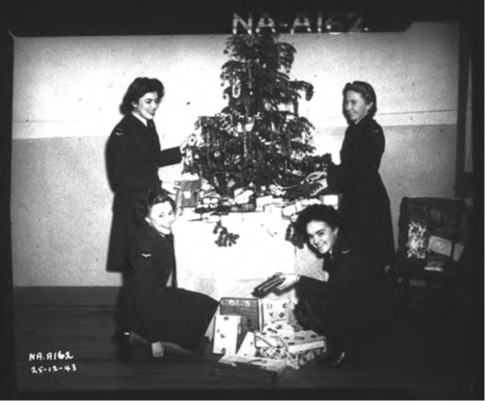
Four uniformed women stand and kneel around a Christmas tree positioned atop a table. Wrapped gifts appear on the floor and underneath the tree.

NA-A162 “WD’s Xmas tree & Xmas dance,” 25/12/1943 (MIKAN 4532479).

At over 160,000 distinct images, this sub-series is a treasure trove for any researcher with an interest in the period! Approximately 1,900 of those images (1%) are of servicewomen, both RCAF-WDs and nursing sisters who served in the RCAF. Servicewomen are best represented within this sub-series in photos from Ottawa, Rockcliffe or Headquarters, with strong representation from those taken at regional bases such as those in Newfoundland, Prince Edward Island and British Columbia.

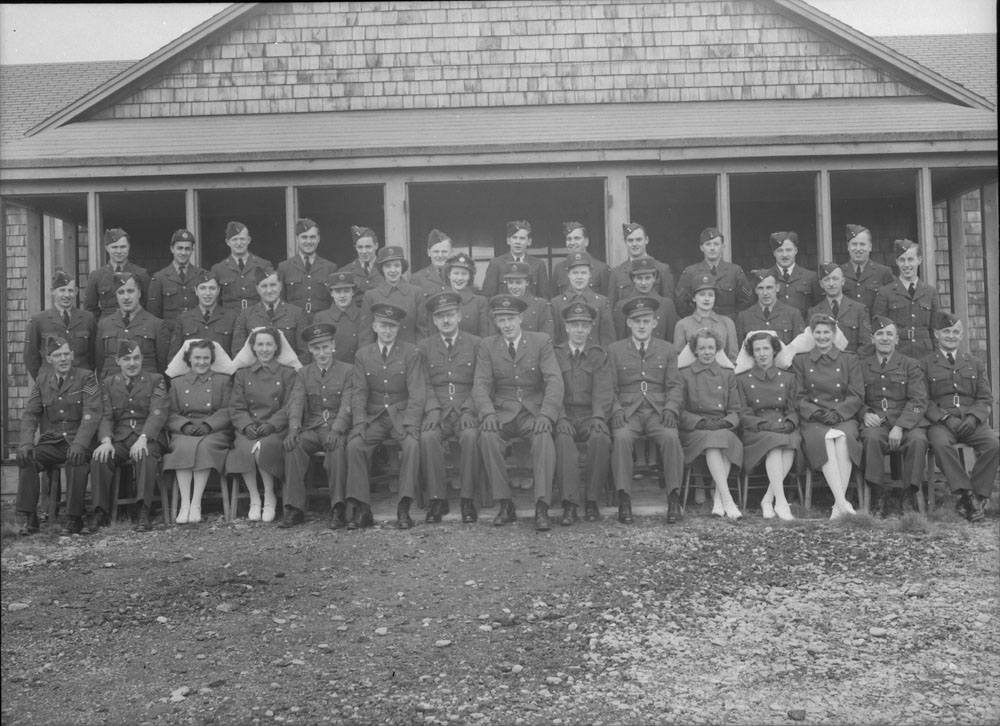
The photographic collection shows us the WDs (as they were known colloquially) at work and play. They are often shown in groups celebrating holidays or fun moments against the backdrop of a horrific war. Other images suggest levity (see images NA-A162 above and SS-230B below) but also show the serious work being done (see image PBG-3143 earlier in this post). Formal group photographs, such as the nursing sisters shown in G-1448 below, are very common. For many of the more remote or rural bases, especially in the earliest years of the war, nursing sisters are the only women present in the associated photographic records.

A formal group photo with 41 individuals, including 12 servicewomen, five of whom are wearing the distinctive white veil of a nursing sister. The group is organized in three rows; the front row is seated.

G-1448 “[Hospital staff, No. 1 Naval Air Gunnery School, R.N., Yarmouth, N.S.],” 05/01/1945 (a052262).

A group of fifteen women, mostly in civilian dress, engages in various leisure pursuits in what looks like a living room or lounge-like setting. Many appear to be engaged in needlecraft.

SS-230B “Sewing Circle (WD’s) Intelligence Officers,” 04/04/1943 (MIKAN 5285070).

Do you want to know more? Did your aunty or grandma serve in the RCAF-WD? Are you interested in knowing more about her service?

Check out LAC’s extensive resources and records related to the Second World War, including information on how to request military service files. Service files for Second World War—War Dead (1939–1947) are available via our online database.

Explore other photographic holdings at LAC, such as the PL prefix—Public Liaison Office sub-sub-series, a fabulous resource for RCAF photographs that sits, archive-wise, just outside of accession 1967-052 (the focus for this particular research project). Any researcher looking for a RCAF aunty or grandma (or grandpa!) in the archives should include these photographs in their search.

There’s more information about the RCAF’s Centennial on the official RCAF website.


Rebecca Murray is a Literary Programs Advisor in the Programs Division at Library and Archives Canada.
A selection of records about D-Day and the Normandy Campaign, June 6 to August 30, 1944

By Alex Comber

With part 1 of this post, we marked the 75th anniversary of D-Day and commemorated Canada’s participation in the June 6, 1944, invasion of northwestern Europe, and the Normandy Campaign, which ended on August 30, 1944. In part 2, we explore some of the unique collections that Library and Archives Canada (LAC) holds about these events, and highlight some records that are the most accessible to our clients online. Through outreach activities, targeted and large-scale digitization, DigiLab and our new and Co-Lab initiatives, LAC is striving to make records more easily available.

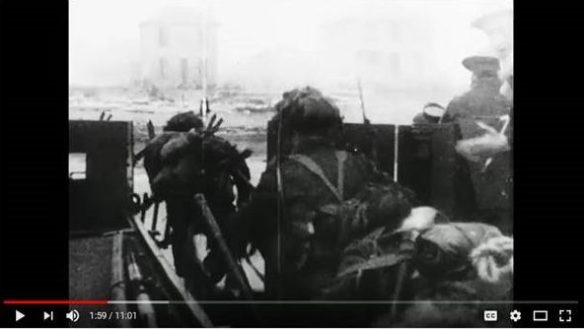
A black-and-white image taken from moving film, showing soldiers exiting a landing craft.

A frame of Canadian Army Newsreel No. 33, which includes a sequence of film from the Canadian D-Day landings on June 6, 1944

LAC staff receive many reference requests about our collections of photos. Canadian Film and Photo Unit (CFPU) personnel went ashore 75 years ago, on D-Day, filming and photographing as they landed. During the Normandy Campaign, they continued to produce a visual record that showed more front-line operations than official photographers had been able to capture in previous conflicts. Film clips were incorporated into “Canadian Army Newsreels” for the audiences back home, with some clips, such as the D-Day sequence above, being used internationally.

Photographers attached to the army and navy used both black-and-white and colour cameras, and the ZK Army and CT Navy series group the magnificent colour images together.

A colour photograph showing an armoured vehicle with a large main gun.

A British Centaur close-support howitzer tank assisting Canadians during the Normandy Campaign (e010750628)

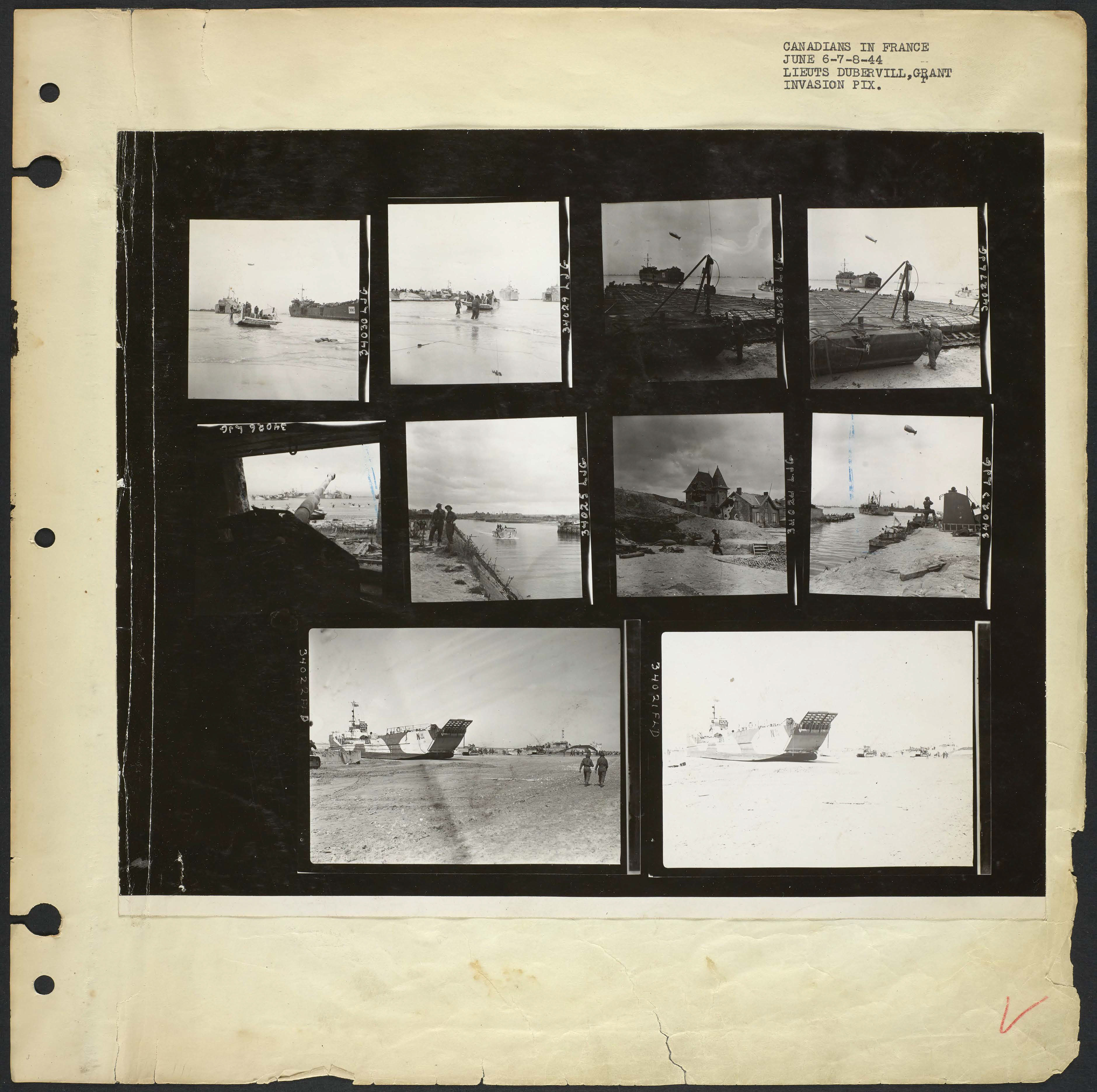
Some of the most iconic imagery of the Canadian military effort in Normandy was incorporated into the Army Numerical series; by the end of hostilities, this had grown to include more than 60,000 photographs. The print albums that were originally produced during the Second World War to handle reproduction requests can help in navigating this overwhelming amount of material. Researchers at our Ottawa location refer to these volumes as the “Red Albums,” because of their red covers. These albums allow visitors to flip through a day-by-day visual record of Canadian army activities from the Second World War. LAC has recently digitized print albums 74, 75, 76 and 77, which show events in France from June 6 until mid-August 1944.

A page of black-and-white photographs showing photos of landing craft, destroyed enemy beach defences, and villages and landing beaches.

A page from Army Numerical print album Volume 74 of 110, showing the immediate aftermath of the landings (e011217614)

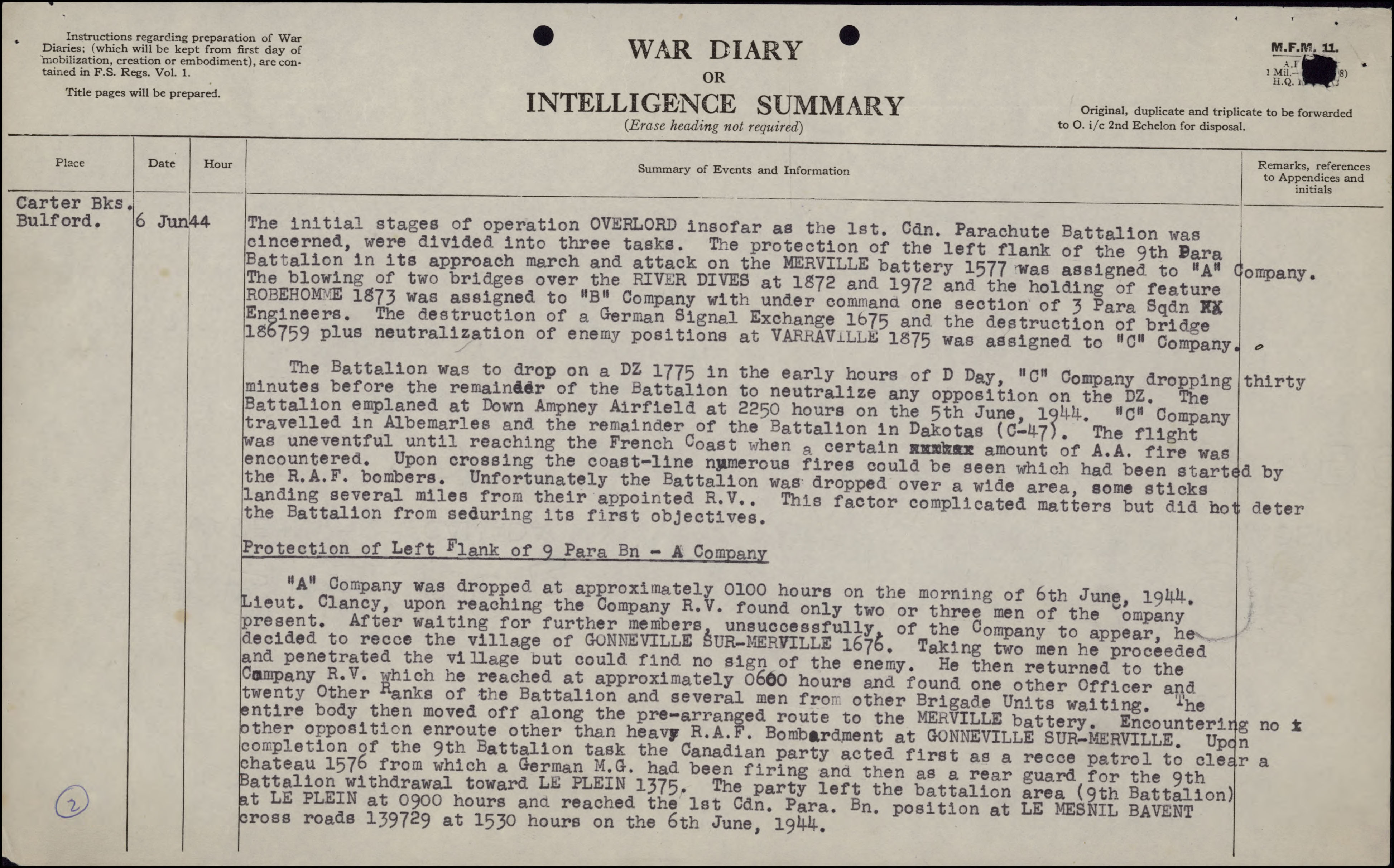
LAC also holds an extensive collection of textual records related to the events of June–August 1944. One of the most important collections is the War Diaries of Canadian army units that participated in the campaign. Units overseas were required to keep a daily record, or “War Diary,” of their activities, for historical purposes. These usually summarized important events, training, preparations and operations. In the Second World War, unit war diaries also often included the names of soldiers who were killed or seriously injured. Officers added additional information, reports, campaign maps, unit newsletters and other important sources in appendices. Selected diaries are being digitized and made accessible through our online catalogue. One remarkable diary, loaded in two separate PDF scans under MIKAN 928089, is for the 1st Canadian Parachute Battalion, the first Canadian soldiers in action on D-Day, as part of “Operation Tonga,” the British 6th Airborne Division landings.

A colour digitized image of a typescript account of D-Day operations.

Daily entry for June 6, 1944, from the War Diary of the 1st Canadian Parachute Battalion, detailing unit objectives for Operation Overlord (D-Day) (e011268052)

War diaries of command and headquarters units are also important sources because they provide a wider perspective on the successes or failures of military operations. These war diaries included documents sourced from the units under their command. Examples that are currently digitized include the Headquarters of the 3rd Canadian Infantry Division, from June and July 1944.

: A colour digitized image of a typescript account of D-Day operations.

War Diary daily entries for early June 1944, including the first section of a lengthy passage about operations on June 6, 1944 (e999919600)

LAC is also the repository for all Second World War personnel files of the Canadian Active Service Force (Overseas Canadian Army), Royal Canadian Navy and Royal Canadian Air Force. The service files of approximately 44,000 men and women who died while serving in these forces from 1939 to 1947 are open to the public. These records include the more than 5,000 files of those who died in operations during the Normandy Campaign. As the result of a partnership with Ancestry.ca, a portion of every open service file was digitized. This selection of documents was then loaded on Ancestry.ca, fully accessible to Canadians who register for a free account. To set up a free account and access these files on Ancestry.ca, see this information and instruction page on our website.

These records have great genealogical and historical value. As the following documents show, they continue to be relevant, and they can powerfully connect us to the men and women who served in the Second World War, and their families.

Medical document that shows a schematic view of upper and lower teeth, with annotations indicating missing teeth and dental work.

Private Ralph T. Ferns of Toronto went missing on August 14, 1944, during a friendly-fire incident. His unit, the Royal Regiment of Canada, was bombed by Allied aircraft as soldiers were moving up to take part in Operation Tractable, south of Caen. Sixty years later, near Haut Mesnil, France, skeletal remains were discovered. The Department of National Defence’s Casualty Identification Program staff were able to positively identify Private Ferns. The medical documents in his service file, including this dental history sheet, were important sources of information. Ferns was buried with full military honours at Bretteville-sur-Laize Canadian War Cemetery in 2008, with his family in attendance

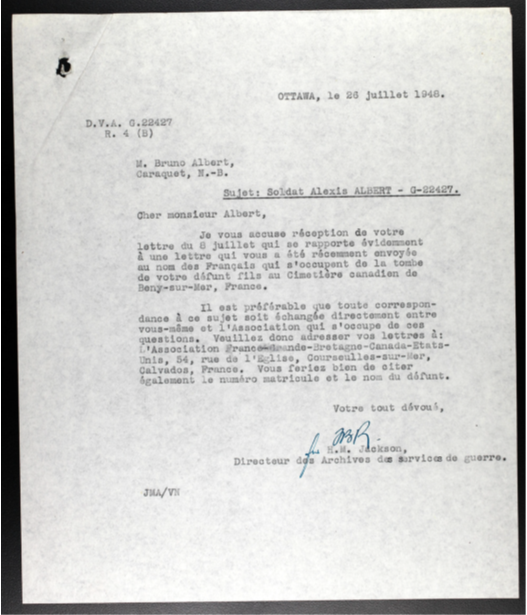
An official document written in French, dated July 1948, that responds to a family request to communicate with those caring for the grave of Private Alexis Albert, North Shore (New Brunswick) Regiment.

Private Alexis Albert, serving with the North Shore (New Brunswick) Regiment, was killed in action in France on June 11, 1944. Four years later, his father, Bruno Albert, living in Caraquet, New Brunswick, requested the address of the family that was tending his son’s grave at Bény-sur-Mer Canadian War Cemetery in France, to thank them. The Director of War Service Records, Department of Veterans Affairs, provided this response, which helped to connect the grieving family in Canada with French citizens carefully maintaining the burial plot in Normandy.

These are only a few examples of LAC records related to the Canadian military effort in France from June 6 until the end of August 1944. Our Collection Search tool can locate many other invaluable sources to help our clients explore the planning and logistical efforts to sustain Canadian military operations in France, delve deeper into the events themselves, and discover personal stories of hardships, accomplishments, suffering and loss.

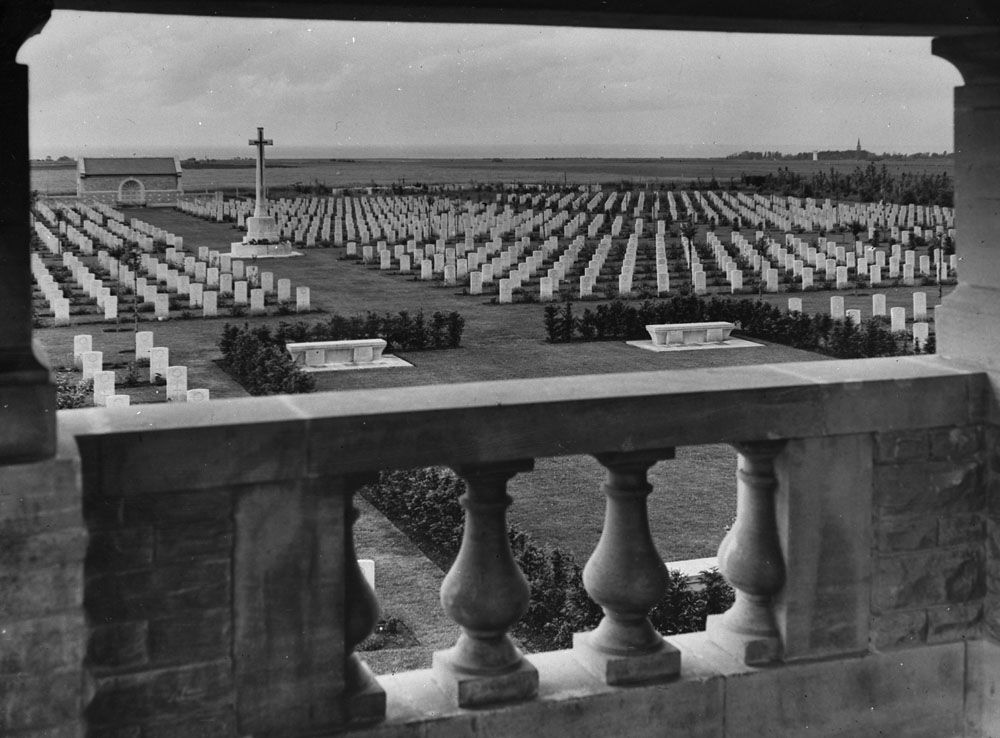
A black-and-white photograph showing many rows of Imperial War Graves Commission headstones, and a large Cross of Sacrifice.

Bény-sur-Mer Canadian War Cemetery, which includes the graves of 2,000 Canadian soldiers who died during the early phases of the Normandy Campaign (e011176110)


Alex Comber is a Military Archivist in the Government Archives Division at Library and Archives Canada.

The Korean War

In the wake of the Second World War, the Korean Peninsula was divided into two zones along the 38th parallel, with the North occupied by the Soviet Union and the South by the United States. Soon after the election of a northern communist government in 1948, open war broke out on June 25, 1950, when North Korean troops invaded the South.

Given the situation, the United Nations Security Council passed a resolution to approve sending troops to defend South Korea; a number of countries, including Canada, contributed by supplying armed forces.

The Royal 22e Regiment mortar platoon ready to fire, (left to right) Private Daniel Primeau, Private Raymond Romeo, and Private Julien Blondin, all of Montreal, Quebec.

The Royal 22e Regiment mortar platoon ready to fire, (left to right) Private Daniel Primeau, Private Raymond Romeo, and Private Julien Blondin, all of Montreal, Quebec. Source

More than 26,000 Canadian soldiers fought in the Korean War. They battled communist troops on the ground, while the Royal Canadian Navy—with eight warships—helped control the Korean coasts. The Royal Canadian Air Force did its part transporting troops and equipment. A few pilots saw combat at the controls of American fighter planes.

 Black-and-white photo of two Canadian snipers aiming at an unknown target..

Two snipers. Source

On July 27, 1953, an armistice agreement was signed at Panmunjom, bringing three years of fighting to an end.

In all, 516 Canadians lost their lives during this armed conflict. Their names are entered in The Books of Remembrance… The Korean War, exhibited at the Peace Tower in Ottawa and available online. These registers remind us of the important contribution and tremendous sacrifice of these Canadians.

The Library and Archives Canada collection contains many documents about this war, which marks the 60th anniversary of its armistice in 2013. Here are a few examples:

Part of the war diaries (War Diary, 1951) of the Commonwealth troops, including Canadian troops:

The war diary (1950–1951) of the advance party:

For more photos, visit our Flickr album.

For more information about ordering military service files, please read our blog article on this topic.

How to find out if a war diary from the Second World War is on microfilm

The article War Diaries: Discover what individuals or military units did during the war explores war diaries, their usefulness and how you can access them. Now, you may wonder: In what formats are they available?

Most First World War Army diaries have been digitized. As for Second World War diaries, some were microfilmed, but many are available in their original paper format only.

To find out if a war diary from the Second World War is available on microfilm, you must perform a search in the Archives Search database. After you have selected the relevant diary title, just refer to the Conditions of access section of the archival description.

For example, the war diaries of the 1st Armoured Car Regiment (Royal Canadian Dragoons) for September and October 1945 are accessible on microfilm reel T-12563.

Although some microfilm reel numbers are not entered in the Archives Search database, we have created a list of reel numbers that you can consult on-site at 395 Wellington Street, in Ottawa, or by contacting Reference Services.

Questions or comments? We would love to hear from you!