“If my work has stirred any interest in our country and its past, I am more than paid”––Charles William Jefferys

Charles William Jefferys (August 25, 1869 – October 8, 1951) determined that Canada needed a visual history and a national mythology and he would create it. He chose to portray Canada’s epic events of discovery, courage, war and nation-building. His images placed an almost mythological importance on the nation’s historical events.

In the early 20th century Canadians struggled to define what it meant to be Canadian and how to express their budding feelings of nationalism. Jefferys’ work reflects this and; his historical illustrations are an expression of this growing nationalism. They are representative of the period, and may not be how we would define ourselves today.

A pen and black ink drawing of four men standing and a vignette of four head portraits of other men wearing hats.

Métis Prisoners, North-West Rebellion, 1885 (MIKAN 2834663)

Some of his illustrations were faithfully copied from existing images such as portraits or photographs, while others were based on meticulous historical research on period costumes. In either case, he strove to accurately portray all aspects of early Canadian life. Continue reading

Images by Charles William Jefferys now on Flickr

Charles William Jefferys (August 25, 1869 – October 8, 1951) determined that Canada needed a visual history and a national mythology and he would create it. He chose to portray Canada’s epic events of discovery, courage, war and nation-building. His images placed an almost mythological importance on the nation’s historical events.

In the early 20th century Canadians struggled to define what it meant to be Canadian and how to express their budding feelings of nationalism. Jefferys’ work reflects this and; his historical illustrations are an expression of this growing nationalism. They are representative of the period, and may not be how we would define ourselves today.

Journey to Red River 1821—Peter Rindisbacher

Version française

By William Benoit

This article contains historical language and content that may be considered offensive, such as language used to refer to racial, ethnic and cultural groups. Please see our historical language advisory for more information.

Peter Rindisbacher was 15 years old when he immigrated to Selkirk’s Red River settlement in 1821. Already an accomplished artist when he arrived in North America, he produced a series of watercolours documenting the voyage to Rupert’s Land and life in the settlement. His watercolours from the Red River area are among the earliest images of western Canada. Peter Rindisbacher is considered the first pioneer artist of the Canadian and the American West.

Library and Archives Canada is possibly the largest holder of Rindisbacher’s works. Viewing the Rindisbacher watercolours in sequence allows Canadians to appreciate the difficulty of the journey to the Red River.

A watercolour on wove paper showing an anchored three-masted sailing ship surrounded by skiffs bringing passengers and loading supplies.

Departure from Dordrecht under Captain James Falbister, May 30, 1821. The English colonist transport ship Wellington of 415 tons. (MIKAN 2835769)

On May 30, 1821, Rindisbacher and his family left Dordrecht in the Netherlands with a contingent of mostly Swiss emigrants aboard the Lord Wellington, bound for York Factory, in what is now Manitoba, on Hudson Bay. During the sea voyage, Rindisbacher sketched icebergs, the Inuit and other ships. The route would take the settlers past the Orkney Islands and Greenland.

A watercolour on wove paper showing an anchored three-masted sailing ship surrounded by skiffs bringing passengers and loading supplies.

Departure from Dordrecht under Captain James Falbister, May 30, 1821. The English colonist transport ship Wellington of 415 tons. (MIKAN 2835770)

Continue reading

Martha Louise Black: First Lady of the Yukon

By Katie Cholette

A signed and matted black-and-white photograph of a woman smiling, dated 1932.

Martha Louise Black, 1932. Photographer: Pierre Brunet (e011154526)

Hidden among the millions of items in the collection of Library and Archives Canada are a set of 10 floral postcards. Unassuming in size, and modest in subject matter, they were produced by an exceptional and adventurous woman named Martha Louise Black. Dubbed “First Lady of the Yukon,” and the second woman elected to Canada’s House of Commons, Martha Black was an astute businesswoman, an expert on the wildflowers of the Yukon and British Columbia, an author and lecturer, and the recipient of several honours. February 24, 2016 marks the 150th anniversary of her birth.

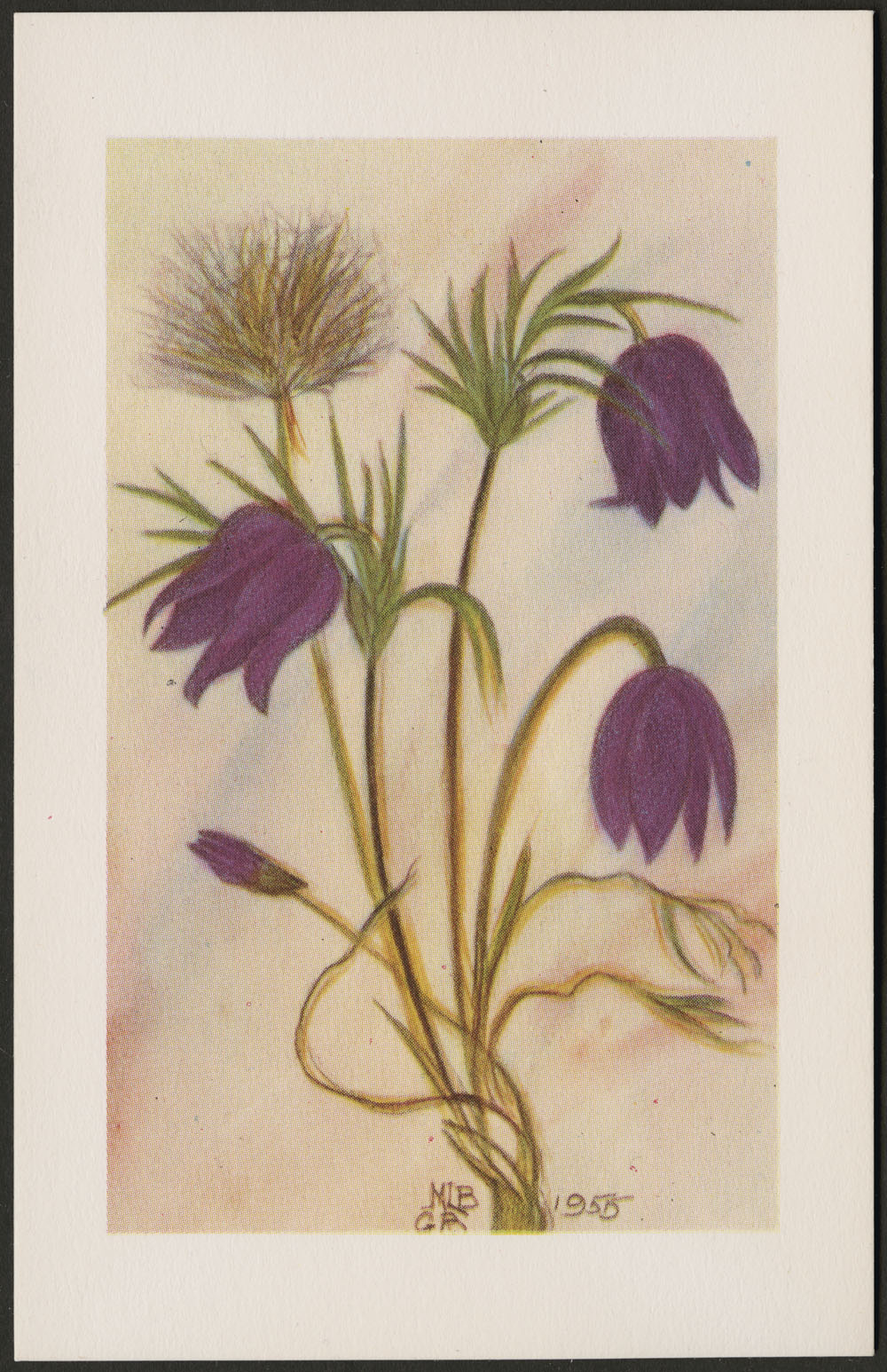
A colour reproduction of a plant with four purple flowers and one that has turned to seed. Centred at the bottom are the initials MLB and GB, and it is dated 1955.

“Pasque Flower” by Martha Louise Black. Photomechanical print, 1955. (e011154530)

When Martha was born in Chicago, Illinois, no one could have predicted what an exciting life she would lead. In 1898, at the age of 23, she left behind the comforts of her home in Chicago (and her first husband) to follow the Gold Rush to the Yukon. Financed by family money, Martha and her brother George crossed the Chilkoot Pass to the Yukon River. They continued to the Klondike where she staked gold mining claims. Her first stay in the Yukon lasted just over a year, but Martha had been bitten by the bug of the North. When she returned in 1901 she staked more claims, opened a successful sawmill and married her second husband, George Black. She would spend a large portion of the rest of her life living in the Yukon.

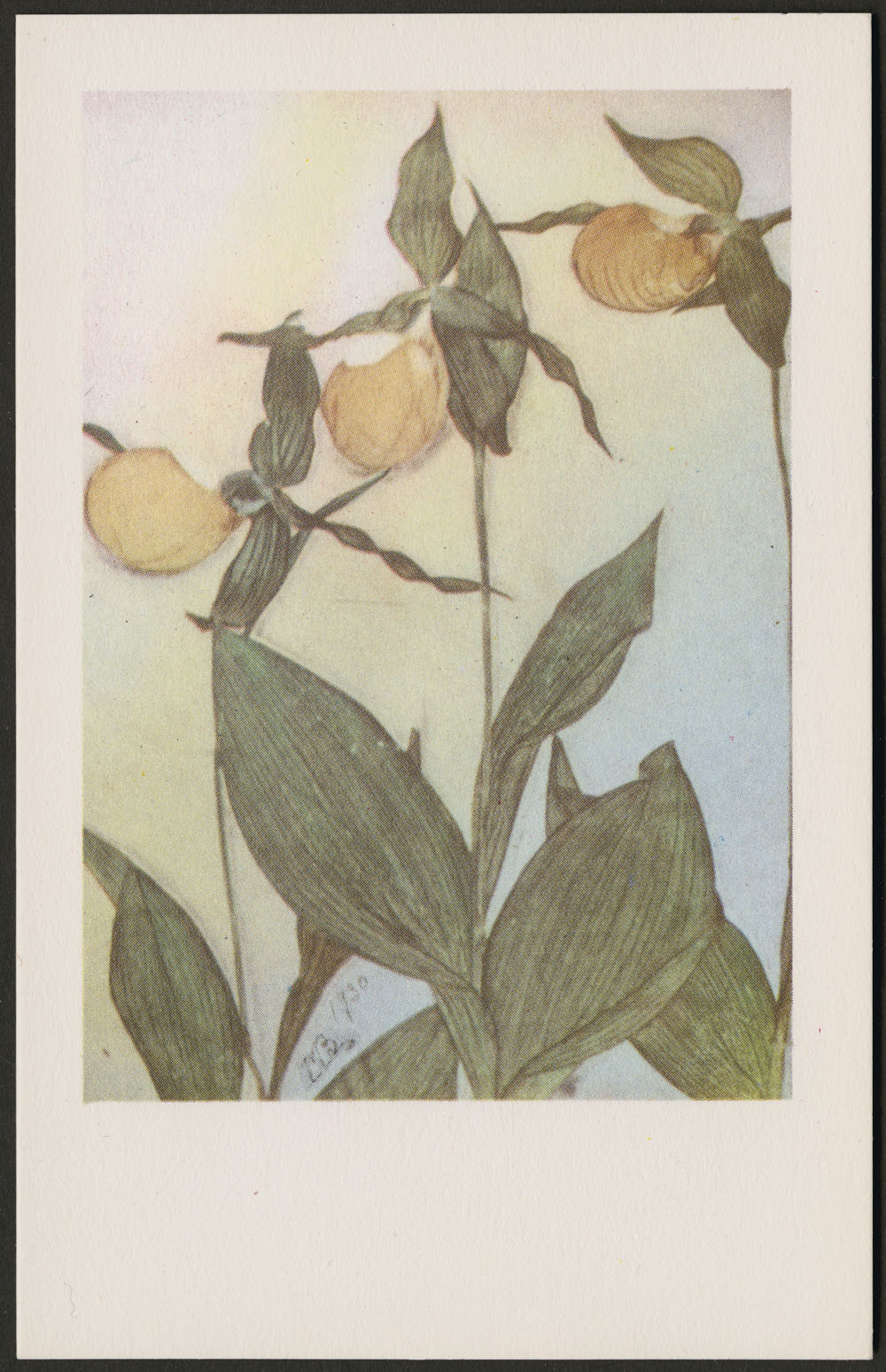
A colour reproduction of a plant with three yellow flowers with wide leafy bases. It is initialed MB and dated 1930.

“Cyprepedium, Large Yellow Lady Slipper” by Martha Louise Black. Photomechanical reproduction, 1955 (e011154531)

Martha and George built a life for themselves in the Yukon, where she raised three sons from her first marriage. George, a lawyer by profession, became the 7th Commissioner of the Yukon in 1912. Together, the Blacks played a central role in Dawson and later Whitehorse.

A colour reproduction showing a plant with small purple flowers and wide, deeply lobed leaves. It is initialed MB and dated 1930.

“Crane’s Bill – Wild Geranium” by Martha Louise Black. Photomechanical reproduction (e011154532)

Martha’s lifelong interest in botany flourished in the north. In 1909 she began collecting and pressing wildflowers, filling in the backgrounds with watercolour—a practice she called ‘artistic botany.’ Her works garnered praise, and over the next two summers she was commissioned to collect and mount wildflowers from the Rocky Mountains for exhibition at Canadian Pacific Railway stations and hotels. A series of her works were subsequently published as postcards, and she was made a fellow of the Royal
Geographical Society.

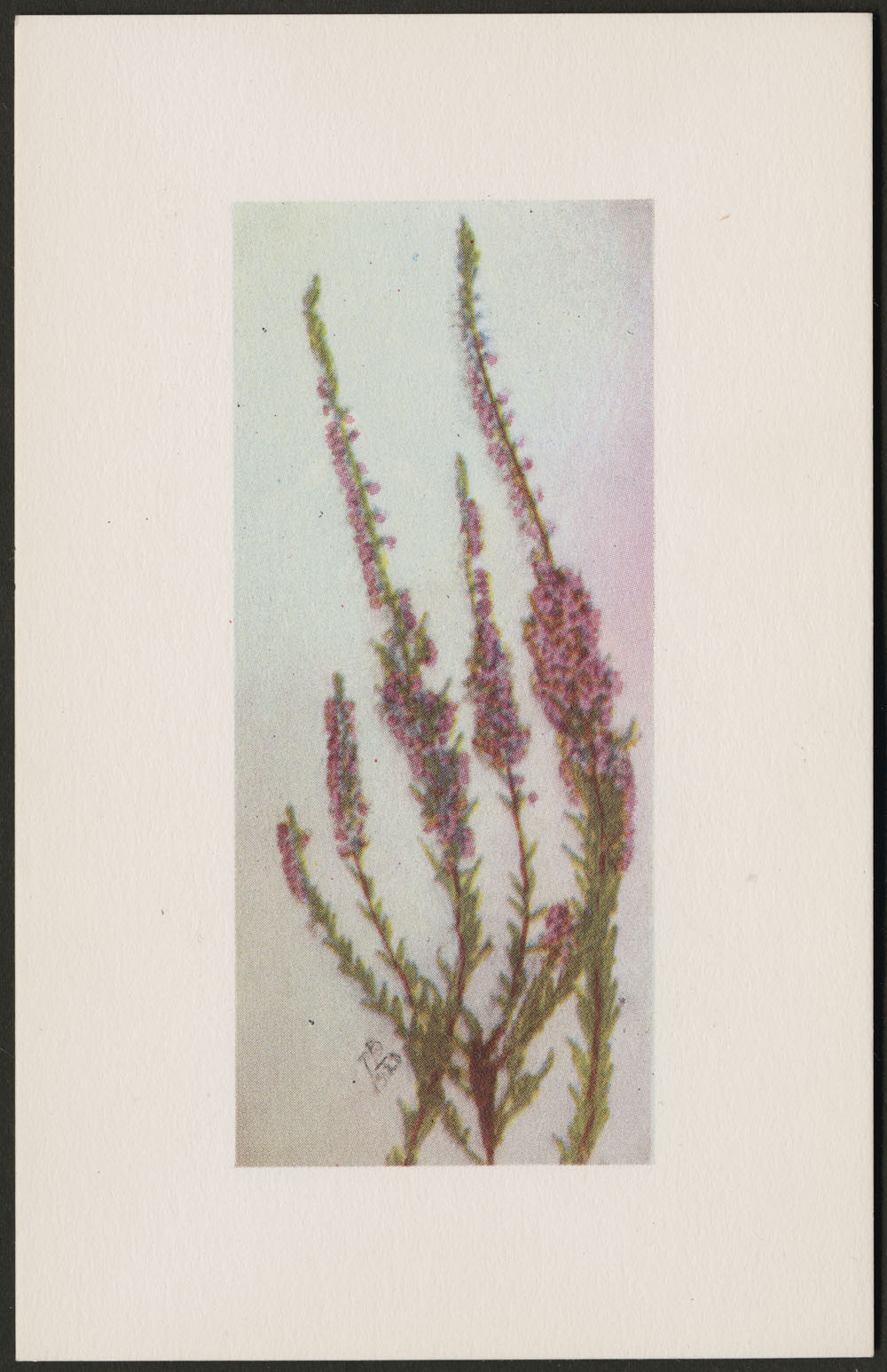
A colour reproduction showing a plant with long woody stems, closely clustered tiny pink flowers and small leaves. The print is initialed MB and dated 1920.

“Heather” by Martha Louise Black. Photomechanical reproduction (e011154538)

In 1935, at the age of 69, Martha was elected to the House of Commons. She served as Member of Parliament for the Yukon until 1940. In 1948 she was awarded the Order of the British Empire for her contributions to Yukon servicemen. Martha died in Whitehorse on October 31, 1957 at the age of 91.

Learn more about her life and work:

Written by Katie Cholette

Hiding in Plain Sight: Discovering the Métis Nation in the Collection of Library and Archives Canada

Banner for the Hiding in Plain Sight exhibitionBy Beth Greenhorn

This article contains historical language and content that some may consider offensive, such as language used to refer to racial, ethnic and cultural groups. Please see our historical language advisory for more information.

Who Are the Métis?

The Métis Nation emerged as a distinct people during the course of the 18th and 19th centuries. They are the second largest of the three Indigenous peoples of Canada and are the descendants of First Nations peoples and Europeans involved in the fur trade.

Métis communities are found widely in Manitoba, Saskatchewan, Alberta, and the Northwest Territories, with a smaller number in British Columbia, Ontario, Minnesota, Montana and North Dakota.

Library and Archives Canada (LAC) has a great variety of archival documents pertaining to the Métis Nation (including textual records, photographs, artwork, maps, stamps and sound recordings); however, finding these records can be a challenge.

Challenges in Researching Métis Content in the Art and Photographic Collections

While there are easily identifiable portraits of well-known leaders and politicians, including these portraits of Louis Riel and Gabriel Dumont, images depicting less famous Métis are difficult to find. Original titles betray historical weaknesses when it comes to describing Métis content.

In many cases, the Métis have gone unrecognized or were mistaken for European or First Nations groups—such as the people in this photograph entitled “Chippewa Indians with Red River Carts at Dufferin.”
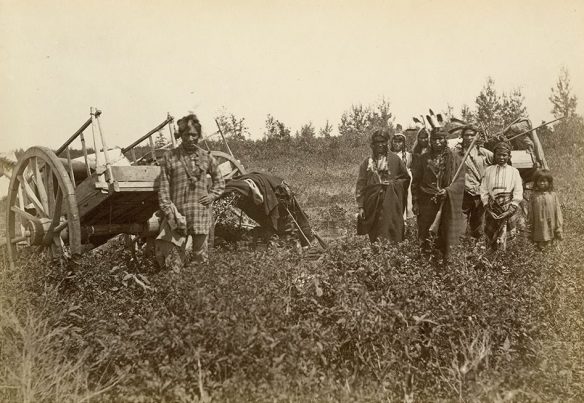
Black and white photograph of a man, on the left, wearing European clothing and standing in front of a Red River cart, and a group of First Nations men, women and children wearing First Nations-style clothing and standing in front of another Red River cart, on the right.

Chippewa Indians with Red River Carts at [Fort] Dufferin, Manitoba, 1873 (e011156519)

Clad in blankets and wearing feathered headdresses and other hair ornaments, the group on the right appears to belong to the Chippewa (Ojibwe) First Nation, as the title indicates. In contrast, the man on the left is dressed in a European jacket and pants and wears a different style of hat. However, both the man and the group pose in front of Red River carts, which are unique to Métis culture. Given his different style of clothing, coupled with the carts, it is possible that the man was Métis.

In other cases, archival descriptions exemplify colonial views of the “other” culture. Penned over a century ago, the language is often outdated, and the terminology racist, by today’s standards.
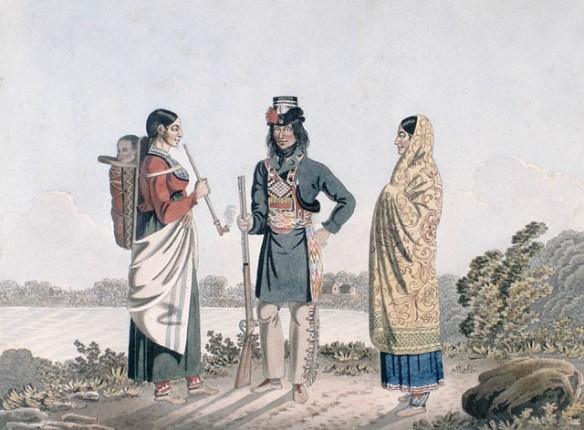
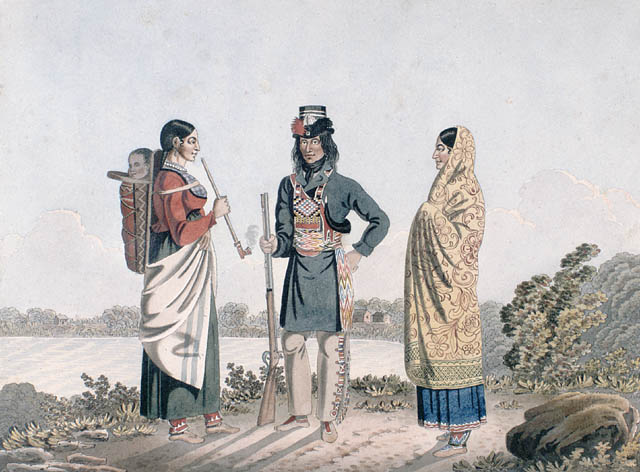
A watercolour landscape of a man, flanked by two women, standing in front of a body of water. The man is holding a rifle and the woman on the right is holding a long pipe and carrying an infant in a cradleboard on her back.

A halfcast [Métis] and His Two Wives, 1825-26 (e008299398)

Terms such as “halfcast,” “half-breed,” and “mixed breed” were widely used by the dominant society to describe members of the Métis Nation. This vocabulary is commonly found in older archival records.

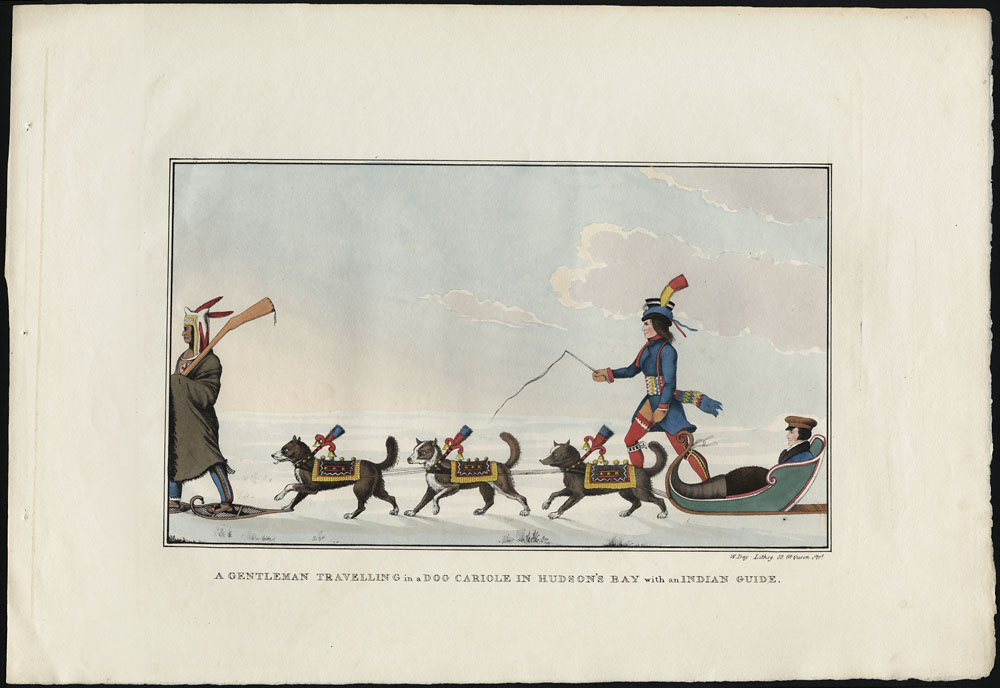
In other instances, descriptions of Métis were completely omitted, as is the case with this lithograph, entitled “A Gentleman travelling in a dog Cariole in Hudson’s Bay with an Indian Guide.”
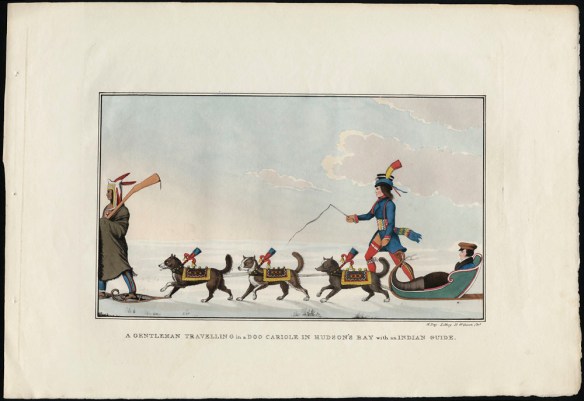
A lithograph of a snowy landscape with a man seated in a cariole (sled) pulled by three dogs in colourful coats. A man wearing a blanket and snowshoes is on the left in front of the dogs. A man holding a whip and wearing clothing associated with Métis culture (a long blue jacket, red leggings and an embellished hat) walks on the right-hand side of the sled.

A Gentleman travelling in a dog Cariole in Hudson’s Bay with an Indian Guide, 1825 (e002291419)

Hiding in Plain Sight: Discovering the Métis in the Collection of Library and Archives Canada

In the fall of 2014, a keyword search for “Métis” in art, photographic, cartographic and stamp records yielded less than 100 documents. LAC has since updated and revised over 1,800 records by adding “Métis” to the titles or descriptive notes in order to make these documents more accessible. In addition to improving existing records, LAC has digitized over 300 new photographic items pertaining to Métis history.

The Hiding in Plain Sight: Discovering the Métis in the Collection of Library and Archives Canada exhibition presents a selection of reproductions of artwork and photographs with Métis content. LAC hopes that the images featured in this exhibition will provide a better understanding of the history of the Métis Nation and that the public will be encouraged to research LAC’s collection.

The exhibition ran from February 11 to April 22, 2016, in the lobby of Library and Archives Canada at 395 Wellington Street, Ottawa.

Additional resources


Beth Greenhorn is a settler living on the unceded, traditional territory of the Kitigan Zibi Anishinabeg and the Algonquins of Pikwakanagan. She is a Senior Project Manager in the Outreach and Engagement Branch at Library and Archives Canada.

Prison Portraits by Jean-Joseph Girouard

Jean-Joseph Girouard (1794–1855) was a notary, an amateur artist, and a member of the Parti Patriote in Lower Canada during the first part of the 19th century. The Parti Patriote was a political party that sought political reform and rallied for French Canadian cultural heritage, rights and interests. The 1837–1838 Rebellion led by the Parti Patriote was a pivotal moment along the road to nationhood for pre-Confederation Canada.

Girouard was incarcerated twice for his role in the Rebellion. He maintained a notarial office and, unexpectedly, an artist’s studio while imprisoned in Montreal. Girouard created portraits of many of his fellow Patriote prisoners using drawing paper and pencils supplied to him by a supporter. The majority of these unique and rare drawings are now part of the holdings at Library and Archives Canada (LAC).

A pencil sketch of Jean-Joseph Girouard in profile, sitting in a chair and drawing on paper with a pencil.

Jean-Joseph Girouard, self-portrait in prison, Montreal, ca. 1837–1838 (c133430)

Continue reading

Frederick Horsman Varley (January 1881 – September 8, 1969)

The son of a commercial lithographer, Frederick Horsman Varley was born and raised in the steel town of Sheffield, England. Varley’s talent as an artist was recognized early when, at the age of 11, he was enrolled in the Sheffield School of Art. By the time Varley was 21, he had completed three years of fine arts study at the Académie Royale des Beaux-Arts in Antwerp, Belgium. Before immigrating to Canada in 1912, Varley had worked as a commercial artist in London, England, as well as an art teacher in his home town of Sheffield.

Black-and-white photograph showing a man standing up and holding a paint palette and brushes in one hand and looking a little to the side.

Frederick Horsman Varley, probably at the Vancouver School of Decorative & Applied Arts, ca. 1927 by photographer John Vanderpant (MIKAN 3509585)

Continue reading

The watercolour paintings of Edith Fanny Kirk

Since the 1970s, there has been a continuous effort to acknowledge women artists in history. As part of this effort, the Galt Museum and Archives in Lethbridge, Alberta has curated an exhibition on artist Edith Fanny Kirk. The exhibition entitled, A Legacy of Adventure & Art: Miss Edith Fanny Kirk, focuses on her sense of adventure and distinguishes her artistic achievements and legacy. The exhibition will include four watercolours from the Library and Archives (LAC) collection, and will be on display from June 6 until October 12, 2015.

Kirk was born in England in 1858 and immigrated to Canada in 1905. She eventually settled in Lethbridge, Alberta, where her artistic influence as an art teacher was fundamental to the community. She also presented papers on art at the Mathesis Club of Lethbridge and has been credited with the development of the Lethbridge Sketch Club in the 1930s (now the Lethbridge Artists Club).

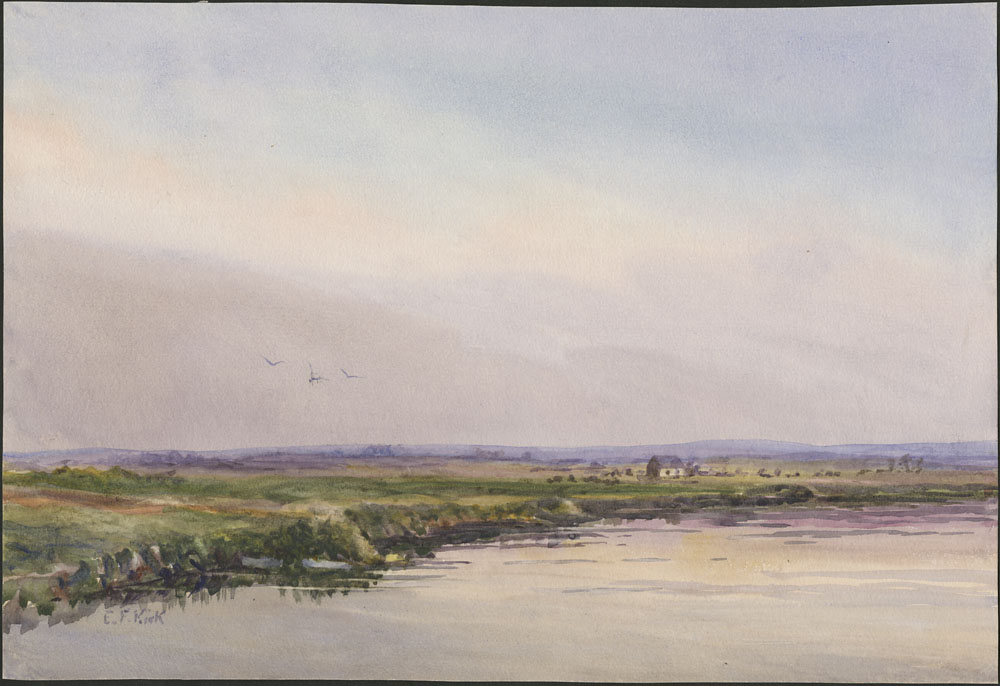
A colour reproduction of a watercolour depicting a landscape dominated by a light smoky sky. There is a river in the foreground with a green shore marking the boundary between sky and water.

Prairie in Weather Made Smoky from Forest Fires, Lethbridge (MIKAN 2948200)

The four watercolour paintings from the LAC collection included in the exhibition demonstrate Kirk’s adherence to the medium of watercolour—as opposed to the more traditional oil paint. Watercolours are ideal for rendering delicate tones and soft colour transitions, and this technique is especially apparent with the hazy atmospheric sky in Prairie in Weather Made Smoky from Forest Fires, Lethbridge where birds fly through a subtle cloud of smoke.

A colour reproduction of a watercolour landscape showing snow-capped mountains and green forested meadows.

Mount Edith Cavell, Jasper Park, Alberta (MIKAN 4626658)

Watercolours would have been a preferred medium for working outdoors as they were readily available, portable and compact. Kirk hiked backcountry trails and national parks to paint as a member of the Alpine Club of Canada, which she joined at age 60! Kirk’s painting of the now iconic Mount Edith Cavell, Jasper Park, Alberta demonstrates the expansiveness of Jasper National Park. We can see how the peaking mountains continue off the page so as to appear as if they infinitely continue, and the depth of the trees is rendered in purples, greens, and blues.

Kirk painted at a time when it was challenging for women to support themselves as artists due to social pressures and economic disparity. A Legacy of Adventure & Art: Miss Edith Fanny Kirk is an opportunity to look closely at her life and artwork, and to enrich our understanding of Canadian art history.

Be sure to visit the Galt Museum and Archives exhibition on Edith Kirk. You can also read more about women artists’ self-portraits in the recent blog post, Self-portraits by women artists in Library and Archives Canada’s collection.


For Better or For Worse: Library and Archives Canada’s collection of Lynn Johnston’s iconic comic strips

Lynn Johnston is best known for the creation and illustration of her popular syndicated comic strip, For Better or for Worse, which has run in over 2,000 newspapers in 160 countries. Inspired by Johnston’s experience with her own family life, the comic offers humorous, touching, and thoughtful renderings of the fictional Patterson family—John and Elly, their children Michael, Elizabeth and April, and beloved family dog Farley—as they move through the challenges and enjoyments of life.

This summer, the Art Gallery of Sudbury is curating a travelling retrospective exhibition of Johnston’s work entitled, For Better or for Worse: The Comic Art of Lynn Johnston. It will celebrate the 30-year run of the comic strip by exploring the artist’s life, creative process, and the responses she received from readers over the years. Library and Archives Canada (LAC) will be lending close to 50 of Johnston’s original panel drawings from its collection to be included in the exhibition.

Ranging from Johnston’s early strips in 1979 to later works created in 1995, the selection of drawings from LAC covers a variety of relatable and humorous subjects, a number of which focus on Elly Patterson’s experiences as a housewife.

The Lynn Johnston collection at LAC contains other objects that speak to the popularity of Johnston’s comic strip. Included among these is a collection of dolls that were made in the likeness of April Patterson, the youngest of the Patterson children. LAC also houses memorabilia from the Farley Foundation, an organization dedicated to assisting those in need with the finances associated with taking care of beloved pets. The organization is named after Farley Patterson, the family’s cherished Old English Sheepdog who passes away in the strip.

Finally, the collection holds a large amount of fan mail that was written by Johnston’s readers. Most notable are two sub-series of the collection that concentrate on major events that took place in the comic strip. For example, Johnston’s decision to incorporate an openly gay character in her strip generated a huge number of responses from readers across North America. Similarly, the death of Elly Patterson’s mother resulted in many fans reaching out to Johnston as they mourned for the fictional Pattersons alongside their own personal losses.

Be sure to check out the exhibition at the Art Gallery of Sudbury between July 11 and November 1, 2015 for more details about Johnston’s work and creative process!

When a landscape is more than a setting: Library and Archives Canada’s The Red River Expedition at Kakabeka Falls exhibited

Painting showing various activities of the men of Colonel Garnet Wolseley’s Red River Expedition (1870), as they portage canoes and supplies at Kakabeka Falls, on the Kaministiquia River, Ontario, including a sweeping view of the Kaministiquia gorge with white water and mountains in the background.

The Red River Expedition at Kakabeka Falls, by Frances Anne Hopkins, 1877 (MIKAN 2836614)

In 1870, British Colonel Garnet Wolseley (1833–1913) landed with his men at Kakabeka Falls (Ontario), a major canoe portage along the voyageur network of rivers and lakes to Fort Garry (now Winnipeg, Manitoba). Charged with putting down the Métis rebellion (Métis resistance) at the Red River Colony, over 1,000 men created corduroy roads to transport provisions, equipment, and even cannons over portages like Kakabeka. Wolseley’s able command, throughout one of the most daunting and difficult treks in military history, was recognized as an impressive feat of tactical leadership in early Canada.

A large-scale and richly detailed painting documenting the achievement, by an artist known for her astonishing technical realism, is one of the showpieces of Library and Archives Canada’s (LAC) collection. Commissioned by Wolseley himself in 1877, the painting represents the only occasion on which British painter Frances Anne Hopkins (1838–1919) represented an actual historical event.

Yet the Wolseley Expedition portrait remains, in the words of Georgiana Uhlyarik, Associate Curator of Canadian Art at the Art Gallery of Ontario (AGO), “insightfully reimagined.”

Uhlyarik is the Canadian co-curator of an ambitious new show which opens at the AGO today. The first exhibition to exclusively examine 19th- and early 20th-century Pan-American landscape painting, Picturing the Americas considers ways in which paintings featuring North American scenery, such as this one by Hopkins, may have worked as symbols for the development of national identities. The subject of Hopkins’s painting is, after all, a military action undertaken largely to counter potential American expansionism.

It’s long been recognized that Hopkins deliberately changed details of the Kakabeka landscape, in order to make her composition stronger. She probably never intended to include the entirety of the rather overwhelming waterfall, as this would have detracted from a focus on Wolseley’s men. The river rapids are a product of Hopkins’s imagination, together with background hills that are almost extended into mountains.

Detail of hills, in the Kaministiquia gorge, which the artist has portrayed as mountain-like Detail of rapids on the Kaministiquia River, invented by the artist for this painting

Would 19th-century viewers have read the mastery of one section of difficult territory as a stand in for the larger-scale mastery of the Canadian west? If so, Hopkins’s manipulation of the true landscape of the area may have served, in part, to reinforce this message.

Picturing the Americas remains at the AGO until September 7, 2015. It will then travel to the Crystal Bridges Museum of American Art in Bentonville, Arkansas (USA), and the Pinacoteca do Estado de São Paulo (Brazil)—opening just in time for the start of the 2016 Summer Olympic Games, in Rio de Janeiro.