Images of Island Life now on Flickr

Islands are portions of land surrounded by water, and Canada has an abundance of them. However, the exact number in the country has not been established. Of the many thousands of islands in Canada only a few hundred are significantly populated. The most densely populated island is the Island of Montreal, with approximately 1.75 million people. Whether situated in rugged, rural settings or in more densley populated urban environments, whether surrounded by fresh water or sea water, island communities throughout Canada continue to grow and evolve.

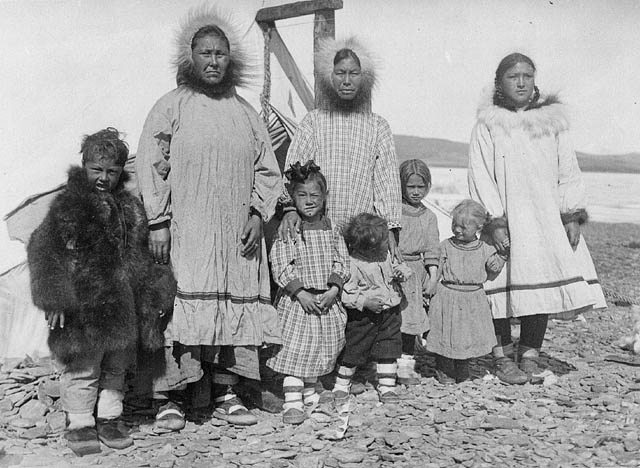
A black-and-white photograph of an unidentified Inuit family of eight people posing for a group portrait. From left to right: boy, woman, girl, woman, boy, girl, girl, woman.

Mackenzie Inuit family on Banks Island, Northwest Territories (MIKAN 3376397)

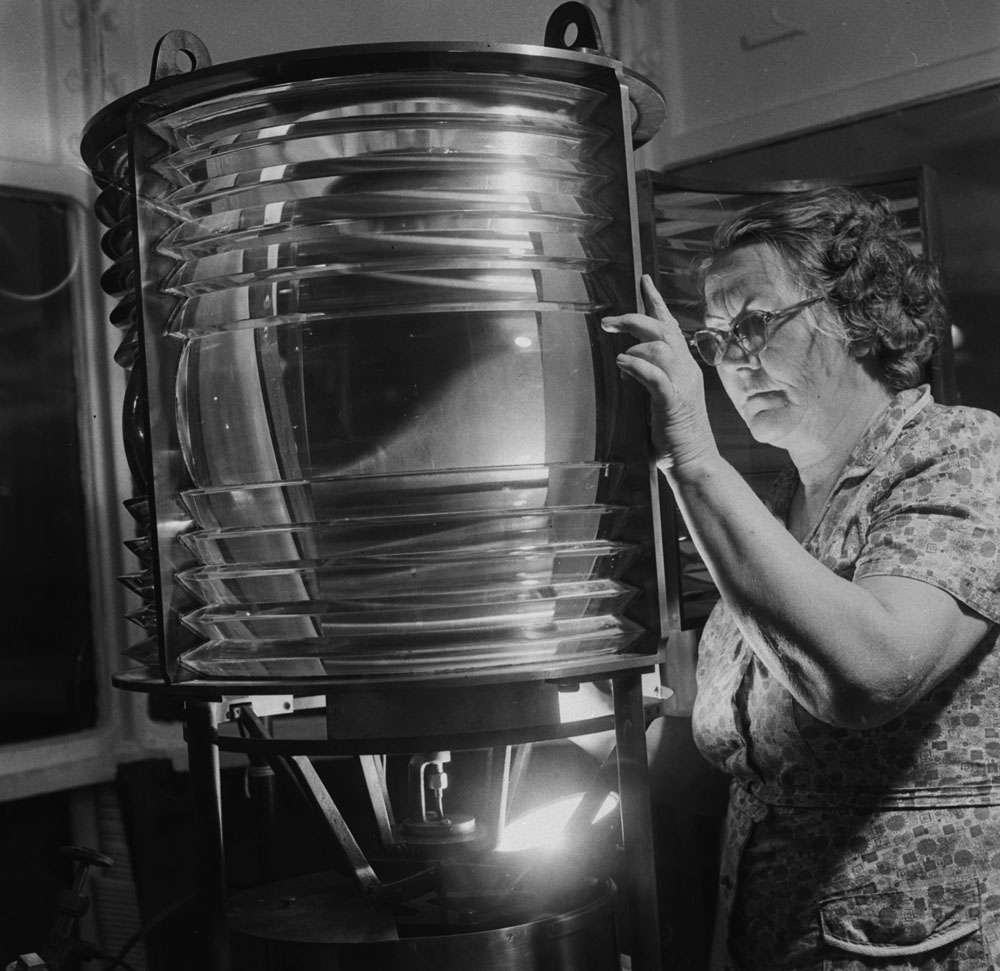
A black-and-white photograph of Eliza Campbell examining a lighthouse lamp.

Ms. Eliza Campbell, Scatarie Island light keeper, Nova Scotia (MIKAN 4949728)

A black-and-white photograph of a park and playground. There are two swing-sets and a teeter-totter. Boys and girls play on the equipment under the supervision of some adults.

Park and playground, St. George’s Island, Calgary, Alberta (MIKAN 3385072)

Visit the Flickr album now!

Images of Turkeys now on Flickr

Turkeys are large birds native to North America. The domestic turkey, also known as the wild turkey, is found from Canada to the midwestern and eastern United States, and in parts of Mexico. The ocellated turkey, which is smaller than the domestic turkey, inhabits the southeastern portion of Mexico and small areas of Central America. Males are typically larger and more colourful than females. The male sports a snood (a distinct fleshy proturberance), which hangs from the top of its beak. Because of their large size, domestic turkeys are hunted and raised for their meat. Many Canadians eat turkey on special occasions, such as Thanksgiving or Christmas.

A black-and-white close-up photograph of a male turkey.

A male turkey (MIKAN 4949749)

A black-and-white photograph of a young girl sitting on top of a bridled male turkey.

“I would like to turkey trot with you” (MIKAN 3259488)

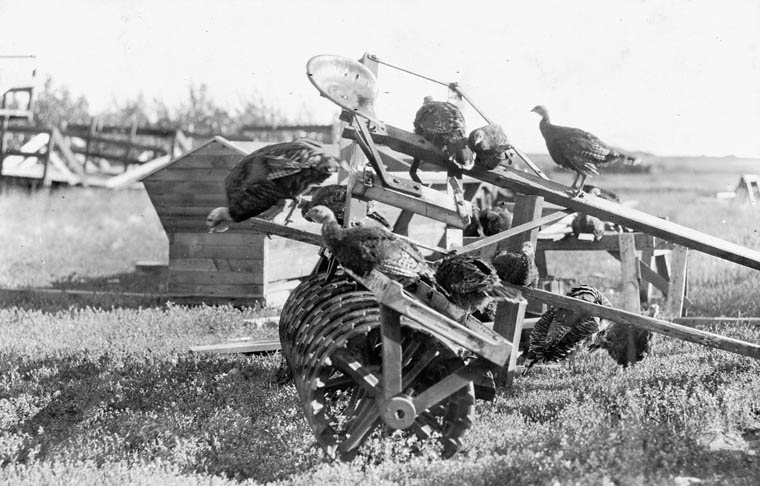
A black-and-white photograph of eight turkeys roosting on a horse-drawn disc harrow, with two turkeys on the ground behind it.

Turkeys on a horse-drawn disc harrow, Radisson, Saskatchewan (MIKAN 3361253)

Visit the Flickr album now!

Images of Steam Power now on Flickr

Boiling water creates steam, which is a hot vapour of water droplets.

A black-and-white photograph of a man on a small platform examining the pressure gauge of a turbine steam generator.

Workman checks the steam pressure on the turbine of the first steam generator in the steam and power plant of the Polymer Rubber Corporation facility (MIKAN 3197025)

Inventors, scientists and engineers experimenting with the capture of steam under pressure discovered that the expansive force of steam could be used to power machines, or in chemical processes. The basic steam engine and its variations were used for pistons, cranks, and pumps to power cars, boats, farm equipment, construction vehicles, and locomotives.

A black-and-white photograph of a steam pumper fire engine on a flatcar, as men use the pump to fight a fire near a rail line and sheds.

Steam pumper fire engine on flat car fighting fire at Grand Trunk Railway, Barton St. freight sheds, Hamilton, Ontario (MIKAN 3283663)

Canadian transportation and industry benefited immensely during the steam-powered era that lasted well into the 20th century. Steam power is still used today but to a much lesser extent.

A black-and-white photograph of a small steamboat on the Rideau Canal, with three men located at the stern, midship and bow of the boat, respectively.

Steam boat on the Rideau Canal, Ottawa, Ontario (MIKAN 3392841)

Visit the Flickr album now!

Images of Therapies and Treatments now on Flickr

Many medical treatments in Canada today use drugs or surgery to treat symptoms, or the signs of illness. However, Canada has a history of therapies and treatments that are less invasive. Some of these practices are still conducted, while others seem odd or outdated. Treatment using radiation, or physical and psychological therapies still enjoy a level of popular use by medical practitioners, therapists, and patients to address a wide range of ailments – while the use of electric shocks, or ultraviolet lighting is outdated.

A black-and-white photograph of a nurse positioning an x-ray apparatus over a male patient’s right cheek. The patient is lying down on a bed.

A nurse is giving cancer treatment to a patient using x-ray therapy (MIKAN 3603337)

A black-and-white photograph of a nurse attending a female patient receiving infrared ray treatment from a lamp. The patient is lying down on a bed.

Château Laurier Hotel – woman receives infrared ray treatment, therapeutic department, Ottawa, Ontario (MIKAN 3337271)

Visit the Flickr album now!

Images of Cowboys now on Flickr

Image

Cowboys. Cowhands. Cowpunchers. These are all names for people who move cattle from pasture lands to markets in North America. The occupation’s origins go back to 16th-century Mexico, where locals were hired by Spanish conquistadors to take care of cattle and herd them on horseback. Ranches and cowboys became integral to the economy and psyche of the southwestern United States in the 1830s. During the 1880s, ranching moved north into western Canada, and a Canadian cowboy culture developed there that still exists to this day.

A black-and-white photograph of a cowboy, wearing a black hat, bandana, gloves and fur riding chaps, who stands in front of a tent. His right hand rests on a holstered pistol.

A cowboy in front of a tent, Hazelton, British Columbia (MIKAN 3643972)

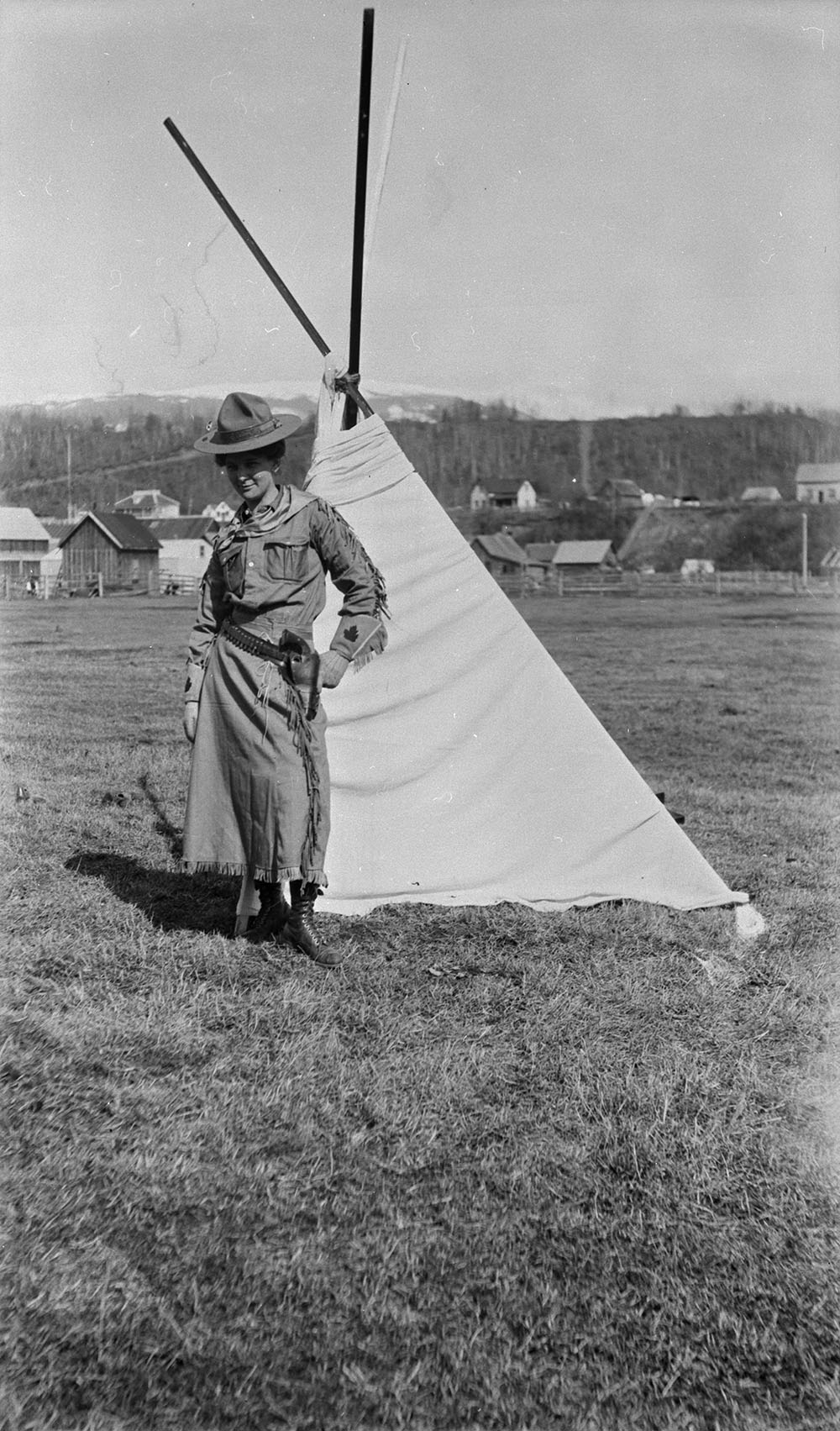
A black-and-white photograph of a cowgirl, wearing a hat, bandana, gloves with stitched maple leaves and a skirt, who stands in front of a tent. Her left hand rests on her left hip and a holstered pistol.

A woman dressed in cowgirl apparel, with her hand on a holstered gun, stands in front of a tent, Prince Rupert, British Columbia (MIKAN 3521147)

Visit the Flickr album now!


Images of Queen Elizabeth, the Queen Mother, now on Flickr

Elizabeth Angela Marguerite Bowes-Lyon (August 4, 1900–March 30, 2002) married Prince Albert, the Duke of York, on April 26, 1923, and became the Duchess of York. After the death of King George V on January 20, 1936, Albert’s elder brother succeeded their father on the throne. However, Edward VIII abdicated on December 11, 1936, to marry American divorcee Wallis Simpson. Albert then succeeded his brother, assuming the title King George VI.

On May 12, 1937, the day of George VI’s coronation, the Duchess of York became Queen Elizabeth of the United Kingdom and the Dominions, and the Empress of India. Neither Albert nor Elizabeth had expected to become king and queen. Nevertheless, they took to their new roles and responsibilities with commitment and empathy. At this time their two children, princesses Elizabeth and Margaret, were 10 and 6 years old respectively.

A black-and-white photograph of saluting King George VI beside Queen Elizabeth outside the Parliament Buildings of Canada.

King George VI and Queen Elizabeth at the Parliament Buildings, Ottawa, Ontario, 1939 (MIKAN 3194608)

During the Royal Tour of Canada in 1939, Queen Elizabeth demonstrated her ability to put people at ease, which contributed to her popularity and success in supporting her husband’s royal duties. It was during the Canadian tour that the first “royal walkabout” occurred, as King George VI and Queen Elizabeth spontaneously engaged a group of First World War veterans after the unveiling of the National War Memorial in Ottawa.

A black-and-white photograph of King George VI and Queen Elizabeth at the rear of the Royal Train

King George VI and Queen Elizabeth at the rear of the Royal Train, Hope, British Columbia, 1939 (MIKAN 3194610)

The Royal Family remained in London during the Second World War, narrowly escaping injury when Buckingham Palace was bombed during the German blitz of 1940–1941. Their popularity rose to new heights at this time, as they joined the rest of the country in observing wartime ration restrictions on food, water and heat. Throughout the war, Queen Elizabeth displayed her wry wit and perseverance. She continued her service to the monarchy well beyond the death of her husband on February 6, 1952. Her eldest daughter succeeded George VI as Queen Elizabeth II of the United Kingdom, Canada and other Commonwealth nations. To avoid confusion, the new queen’s mother became known as Queen Elizabeth, the Queen Mother.

Visit the Flickr album now!

Images of Geese now on Flickr

Geese are waterfowl and are found mainly in North America, Europe and parts of Asia. They range in size from the large Canada Goose to the small Ross’s Goose. Six species of geese (Brant, Cackling Goose, Canada Goose, Greater White-fronted Goose, Ross’s Goose, Snow Goose) breed in Canada’s boreal forest and tundra regions. Geese adapt to a variety of environments if there are plentiful grasses, grains and berries available. These waterfowl are migratory and normally spend their summer months in northern areas, heading south for the winter. However, being very adaptable birds, many geese stay in parks, golf courses and suburban areas as the weather gets colder.

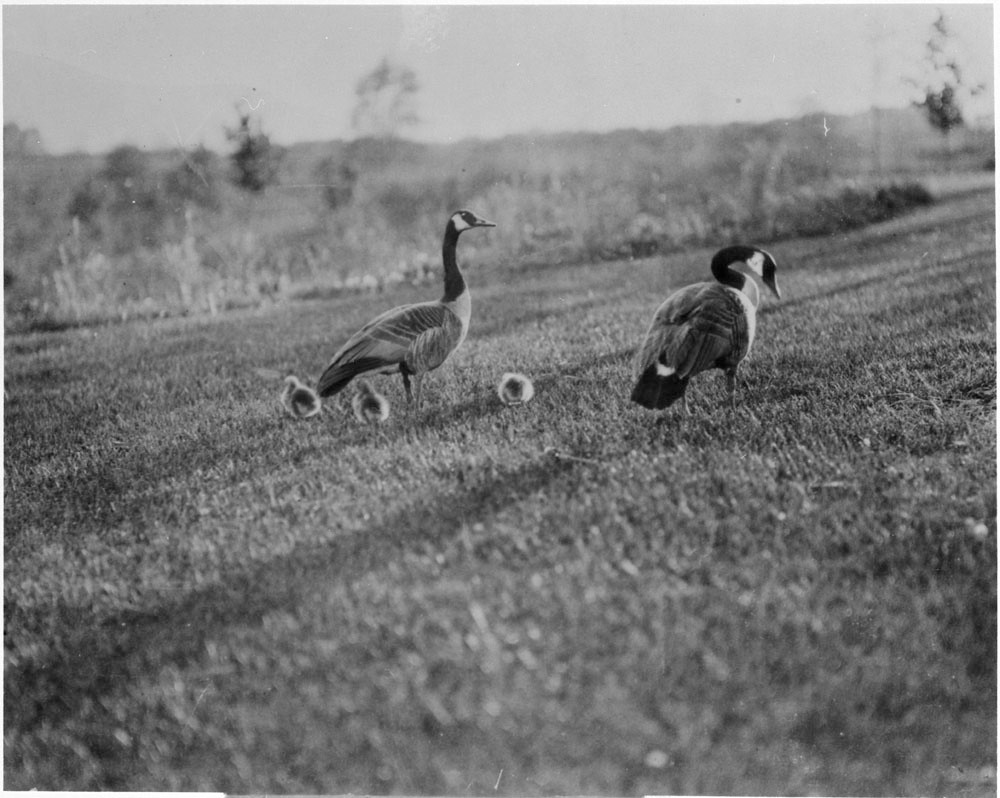
A black-and-white photograph of two adult Canada Geese and three one-day-old goslings standing on a lawn

Canada Geese and one-day-old goslings, Kingsville, Ontario (MIKAN 3359099)

A black-and-white photograph of a man supporting a Canada Goose under his right arm and holding its neck with his left hand. The goose’s right leg has an identification band around it

John Thomas Miner holding a Canada Goose (MIKAN 4315320)

Visit the Flickr album now!

Images of moose now on Flickr

Moose are the largest members of the deer family.

A coloured print of two moose calves lying on the ground and an adult bull moose standing next to them.

“Moose Deer,” coloured lithograph by John James Audubon, 1845 (MIKAN 3025621)

They are typically very tall, having long legs to help them wade through water or snow. Other characteristic features include a humped shoulder region, dark-coloured fur, an elongated face with prominent snout and lips, large ears, and broad flat antlers on the male. They inhabit the boreal forests across Canada and similar regions over the world. Preferring a colder climate, they seek out habitats with seasonal snow cover and move further north during the summer months.

Visit the Flickr album now!

Images of Yukon now on Flickr

Yukon, located in the northwestern corner of Canada, is one of the country’s three territories. Alaska is to the west, British Columbia to the south, and the Northwest Territories are to the east.

Early humans are thought to have arrived in Yukon at least 20,000 years ago. They eventually developed into Inuit and First Nations groups of the Na-Dene linguistic family.

A black-and-white photograph of the port side of a passenger steamer. People are gathered at the bow and on the second level deck.

Steamer Victorian on the Yukon River near Dawson, Yukon (MIKAN 3299679)

Since Yukon is one of the most remote areas of Canada, Europeans in the fur trade did not arrive in the region until the early 19th century. Rumours of gold brought in miners and prospectors starting in 1874. Then, from 1896 to 1899, the discovery of gold in the Klondike region triggered a rush of migrants. To deal with the large increase in population, the Yukon Territory, formerly part of the Northwest Territories, became a separate entity within the Canadian confederation in 1898.

Yukon’s population declined dramatically in the 20th century, but the construction of highways and a brief revival of mining triggered steady population growth in the 1970s. The economy has diversified to compensate for decreasing profits from mining.

Did you know?

  • The name “Yukon” is derived from the Gwich’in word “Yu-kun-ah,” which means “Great River” and refers to the Yukon River.
  • Yukon is home to the highest mountain in Canada and the second-highest on the North American continent: Mount Logan, 5,959 metres (19,551 feet).
  • Yukon has the smallest desert in the world, located near Carcross. This desert is approximately 2.58 square kilometres (1 square mile).

Visit the Flickr album now!

Images of the Dominion Archives Building now on Flickr

Library and Archives Canada collects and preserves the archives of some of Canada’s most notable architects, architectural firms and organizations. These archives contain many interesting collections, for example, records pertaining to the architects, design and construction of Ottawa’s former Dominion Archives building at 330 Sussex Drive.

A black-and-white photograph of a 3-storey, stone, and mortar building located on a large grassy area.

Public Archives of Canada, Sussex Street, Ottawa, Ontario (MIKAN 3192914)

Early in the first decade of the 20th century, Prime Minister Wilfrid Laurier suggested that the addition of an archives building to the nation’s capital would help “make the City of Ottawa the centre for intellectual development in this country, and the Washington of the North.” The archives building was subsequently constructed between 1904 and 1906, and opened officially in early 1907. This Ottawa landmark housed Canada’s archival heritage until 1967.

Visit the Flickr album now!

See also:

Signatures, Spring/Summer 2017