Launch of “Immigrants to Canada, Porters and Domestics, 1899–1949” Database

Library and Archives Canada is pleased to announce the launch of a new online database, Immigrants to Canada, Porters and Domestics, 1899–1949.

This online database allows you to access more than 8,600 references to individuals who came to Canada as porters or domestics between 1899 and 1949. Names were taken from lists contained in the Central Registry Files series of the Immigration Branch (RG76 BIA) and other files held at LAC.

Start searching porters and domestics now!

Naturalization Records, 1915-1951 database – 2015 Update

Library and Archives Canada is pleased to announce the release of a new version of the online database Naturalization Records, 1915-1951. The nominal index has been extended with the addition of more than 68,000 names and now covers the years from 1915 to 1944, inclusively. Work is ongoing to extend the nominal index to 1951, and volunteers are welcome to help. Those interested should write to Cdn-Nat-Coord@jgs-montreal.org.

This database is one of the few Canadian genealogical resources specifically designed to benefit researchers having roots other than British. The reference numbers indicated in the database can be used to request copies of the original naturalization records, which are held by Citizenship and Immigration Canada.

Library and Archives Canada would like to thank the Jewish Genealogical Society of Montreal and its volunteers, without whom this project would not have happened.

The Parliament Hill Precinct

Version française

The Parliament Buildings in Ottawa are some of the most recognizable structures in Canada. Although the Peace Tower may be the most iconic part of the exterior of the buildings, it’s the newest addition to the precinct. Originally built between 1859 and 1866 in the Victorian High Gothic Revival style, Centre Block officially opened on June 6, 1866 as Parliament for the Provinces of Canada. The location was chosen by Queen Victoria in 1857 and was the biggest construction project of its time in North America, running way over budget, in part due to the cost of blasting out the bedrock to build the foundation. On July 1, 1867, Centre Block was chosen to be the official Parliament for the Dominion of Canada. Its location was considered ideal for many reasons, namely its distance from the American border, as well as its visibility to those who lived in the area.

A black-and-white photograph of the original Centre Block on Parliament Hill.

Parliament Buildings, Centre Block, by Captain Jacobs, c. 1886. (MIKAN 3319558)

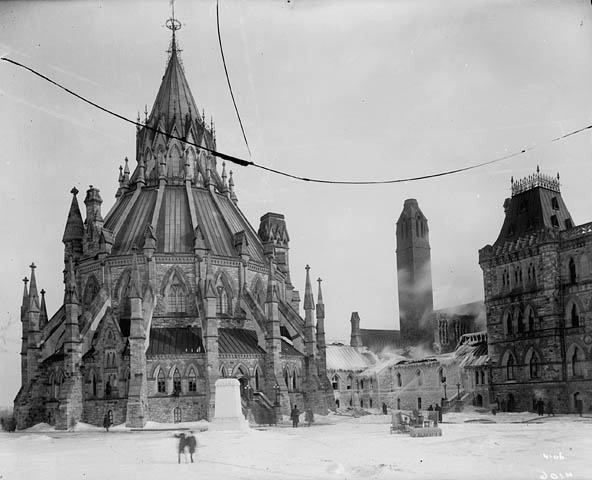
Centre Block stood on Parliament Hill for 50 years until the evening of February 3, 1916 when a fire broke out in the House of Commons’ reading room. The flames spread quickly and seven lives were lost that night. While many of the stone walls remained standing, the only part of the building to truly survive was the library, which was built in 1876 with iron doors (which were closed by a clerk before leaving that evening). Although rumours claimed arson was the cause, the fire was a result of a discarded cigar.

A black-and-white photograph showing a very elaborate round building with pinnacles and flying buttresses in a wintry setting next to a building partly encased in ice. Firemen are putting out a fire.

View of the Library of Parliament and Centre Block on the day after the Centre Block fire, taken by William Topley in 1916. (MIKAN 3194673)

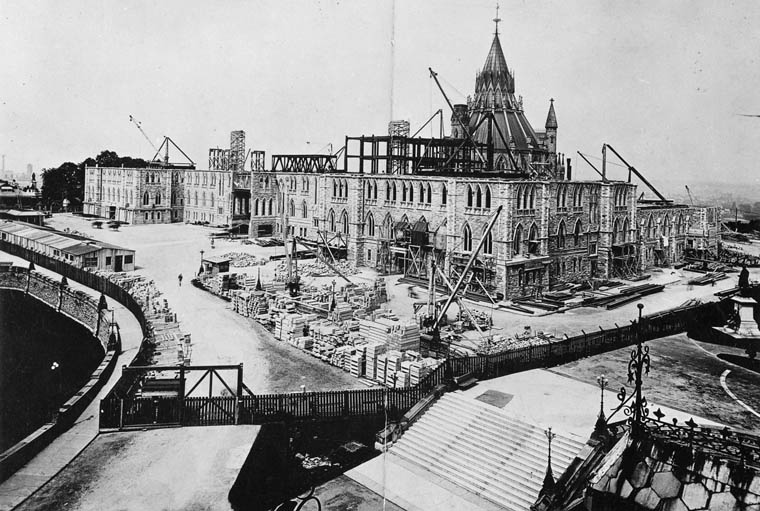
Despite Canada being heavily involved in the First World War at the time, it was clear that the buildings had to be rebuilt. With the country expanding, it was decided that the Parliament Buildings would follow suit. The plan was to keep the same Gothic Revival style as the original buildings without creating carbon copies of them. Construction started later that year and was completed in 1922. The Peace Tower, named in commemoration of Canada’s commitment to peace, was completed in 1927.

A black-and-white photograph showing the first three stories of a building with the rotunda of the Library of Parliament in the background. Cranes and construction materials surround the area.

Rebuilding of the Centre Block, Parliament Buildings, c. 1917-1918. Photo taken by Samuel J. Jarvis. (MIKAN 3319865)

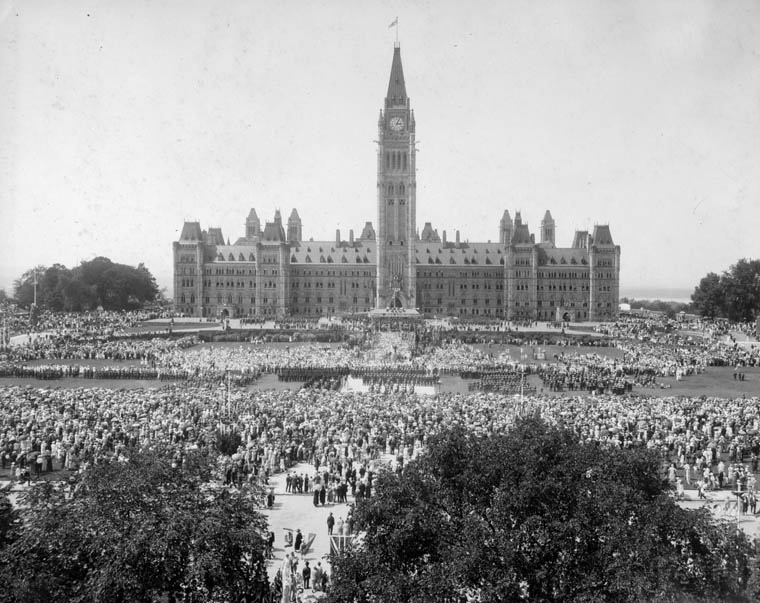
A black-and-white photograph showing the main Parliament building from the front with crowds of people filling Parliament Hill.

Jubilee celebrations on Parliament Hill in 1927. (MIKAN 3549627)

Today, Centre Block is bordered by the East and West Blocks and by a large public open space that serves many purposes—it’s a celebration area on Canada Day, a place for demonstrations and protests, a spot for noontime yoga in the summer, etc. Tours of Centre Block are given throughout the year and it’s become one of Ottawa’s most popular attractions.

Other resources

Mirrors with Memory: Daguerreotypes from Library and Archives Canada—an exhibition at the National Gallery of Canada

When the daguerreotype was invented in 1839, it was a revelation. The first photographic process to be made available to the public, daguerreotypes were shiny, reflective objects that delighted and astonished viewers by capturing the likenesses of friends and family with brilliant clarity. For the first time in history, portraits of loved ones could be recorded and shared or passed down to descendants. The impact of the daguerreotype and of photography on the lives of ordinary people was immense.

A hand-tinted daguerreotype portrait of a seated woman in a polka-dot dress.

Kate McDougall, ca. 1848 (MIKAN 3192966)

The science of capturing light on a photographic surface was co-developed in France by Louis-Jacques-Mandé Daguerre (1787–1851) and Joseph-Nicephore Niépce (1765–1833). Niépce died before practical success was achieved, and Daguerre went on to perfect the process. Highly polished silver-plated sheets of copper that were sensitized with iodine vapours and developed in mercury fumes, daguerreotypes created compelling, one-of-a-kind images with infinite detail.

A new exhibition at the National Gallery of Canada features examples of these special objects. While not rare, daguerreotypes are not often exhibited due to their susceptibility to light and environmental degradation. Drawn from the collection of Library and Archives Canada, the objects in this exhibition have undergone careful preservation and conservation treatment, and offer the viewer an extraordinary look at these unique photographs. Intimate, detailed and captivating, these objects—reflective by their very nature—are some of the earliest photographic glimpses of Canada in existence.

A daguerreotype photograph of a man (standing) and a woman sitting on the ground, among the destroyed remains of the brewery.

The Molson family brewery after the fire, Montréal, Quebec, 1858 (MIKAN 3192967)

The exhibition features street scenes as well portraits of both well-known and unknown personalities. Most likely taken in Europe in the late 1840s, the portrait of Maungwudaus, a member of the Anishnaabe Nation of the New Credit Mississauga, is one of the earliest photographic portraits of an Aboriginal person in the Library and Archives Canada collection. Maungwudaus grew up near what is now Kitchener-Waterloo, Ontario. Educated by Methodist missionaries, he later worked in mission outreach and as a translator and writer before finding acclaim as a performer in a “Wild West” show that he along with friends and family members, organized and travelled through parts of the U.S. and Europe. The troupe was celebrated in England and in France where Maungwudaus was presented with several medals by King Louis Philippe I.

Daguerreotype portrait of Maungwudaus wearing ceremonial dress including a feathered headdress and two medals.

Maungwudaus, ca. 1846 (MIKAN 3198805)

As one-of-a-kind objects designed to be stored in a closed case and looked at by one viewer at a time, daguerreotypes are intimate by nature. Some show the wear and tear expected of objects over a century old. Often, the names of the sitters or any other accompanying information has long since disappeared, making the exceptions even more special. One such example is the portrait of a group of merchants from Yarmouth, Nova Scotia, dated 1855. This daguerreotype had a small manuscript tucked inside at the back of the plate, which is signed by one of the sitters and lists all the members of the group, as well as the location of the sitting and the name of the daguerreotypist, Wellington Chase. In this portrait, among others, we can see Loran Ellis Baker, seated front row, centre. Twenty-four years old at the time of this portrait, Baker was one of Yarmouth’s most prominent businessmen and civic leaders, and a member of the Legislative Council of Nova Scotia from 1878 to 1900.

A velvet-lined case with a daguerreotype portrait of nine men: five seated in front, four standing.

Group of merchants from Yarmouth, Nova Scotia, 1855 (MIKAN 3622937)

Visit the exhibition at the National Gallery of Canada in Ottawa from September 4 to February 28, 2016.

Trailblazers: a road trip in the summer of ’54

Version française

By Beth Greenhorn

Four women, one Plymouth station wagon, five provinces, and four states in 38 days…

On July 31, 1954, freelance photographer Rosemary Gilliat and her girlfriends, Anna Brown, Audrey James and Helen Salkeld, left Ottawa, Ontario, for what would be an adventure of a lifetime—a road trip on the Trans-Canada Highway. Their final destination was Vancouver, British Columbia, and after a little more than a month of driving, the women covered over 12,000 kilometres before their return to Ottawa on September 6.
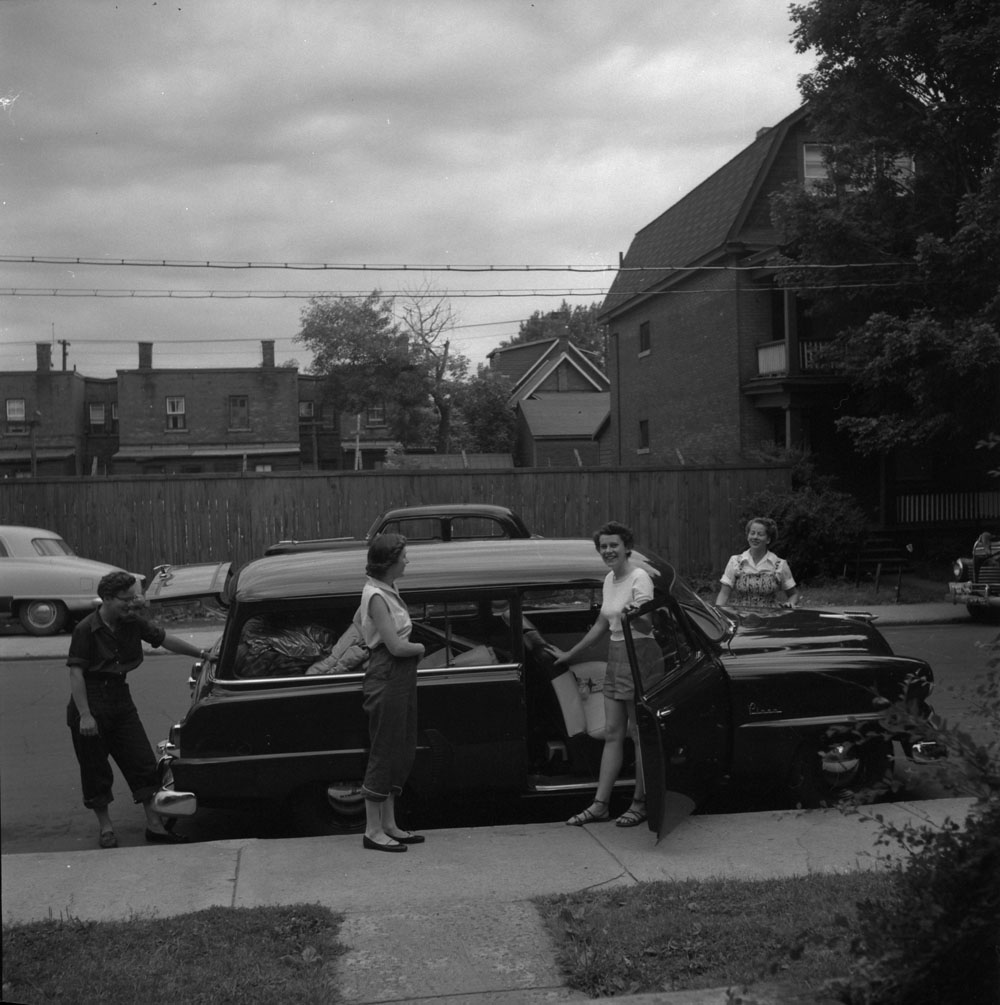
A black-and-white photograph of four women posing around a station wagon packed for a road trip.

Day One – July 31. Left to right: Helen Salkeld, Audrey James, Anna Brown and Rosemary Gilliat getting ready to leave Ottawa, Ontario, for their Trans-Canada Highway trip. (MIKAN 4306200)

Until the mid-twentieth century, the only way to travel and really ‘see’ Canada was by train. Following the Second World War, thousands of new immigrants from across the globe immigrated to Canada. This increase in population was coupled by a huge growth in the automobile industry. During the post-war years, and with Parliament passing the Trans-Canada Highway Act in 1949, construction had begun to link Canada’s major cities with paved roads.

By the summer of 1954, work on the Trans-Canada Highway going west from Ottawa had started, but many stretches were still under construction, and in some areas work had not even begun. Rosemary described the road conditions near Cochrane, Ontario as “dirt and rutted and huge bumps which could easily break a spring.” At the border of Manitoba and Saskatchewan “the average road turned into a downright bad road, dried mud, stones lying on the road, dips & holes.” Further west, just past Kicking Horse Pass, British Columbia, the conditions became even more treacherous. Rosemary wrote:

“We soon came to bits of road under construction—engineers have been working at it already for two years. They have to blast out the side of the mountain—most of it above the C.P. Railway. We marvelled once more at the building of the railway through this impossible territory. The road was often just a rocky lane with towering rock walls above and jumbled masses of blasted rock below—other places were mud, with streams & pools of water on the road & one got the feeling that the whole lot might easily slip into the canyon hundreds of feet below.”
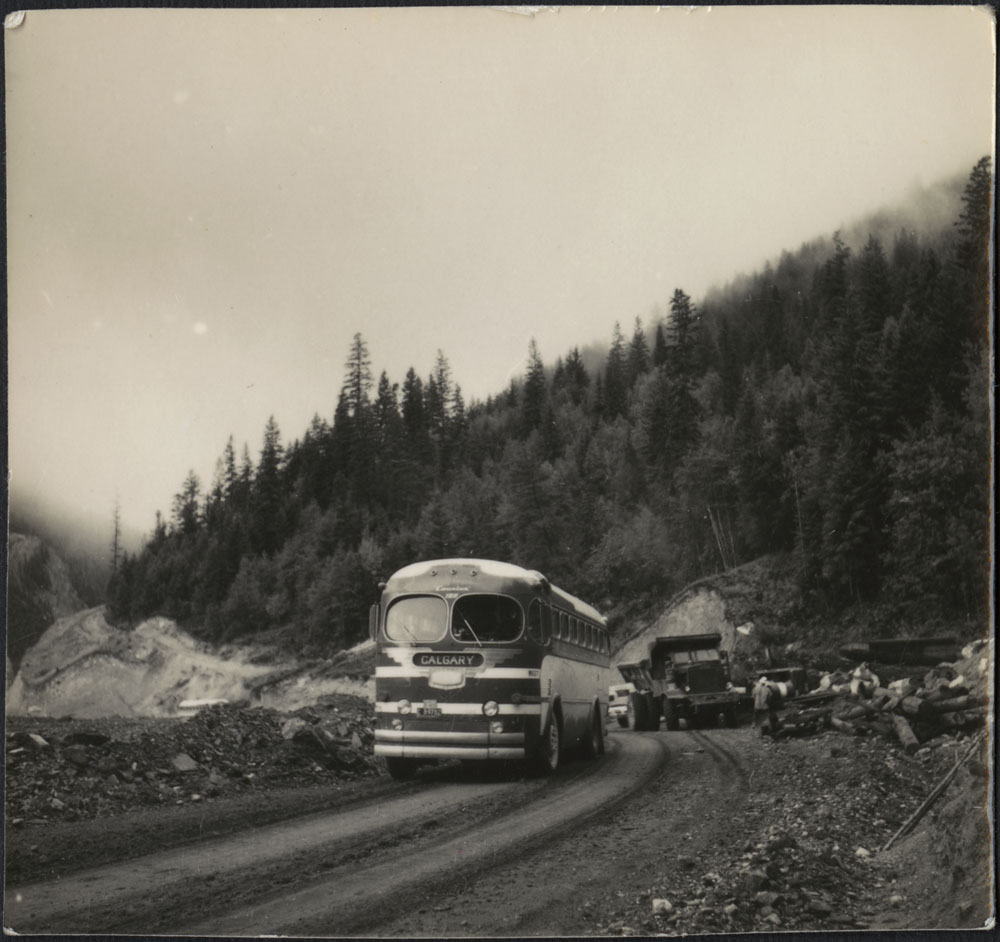
A black-and-white photograph of a public bus travelling on a gravel road and passing a construction crew working in the background. The area is mountainous.

Day 18 – August 17. The daily Calgary bus passes through a blasting area in Kicking Horse Canyon, British Columbia. Travel is between hours of 5 p.m. and 8 a.m. only on this stretch. (MIKAN 4359684)

In spite of the many challenging stretches of highway, the windshield of Helen’s Plymouth only suffered a few cracks from flying rocks and remained intact until the women returned to Ottawa, when it was replaced.

Rosemary and her friends were not what you would call stereotypical women, or even conventional tourists, for their era. While there were some amenities available along the Trans-Canada Highway in 1954, such as motels and public camping grounds, the women preferred to have lunch and camp in wooded and secluded areas off the beaten path. As Rosemary put it, “one wonders at all the days of the year one spends in bed—when it is so perfect camping—every morning and every evening being a revelation.”
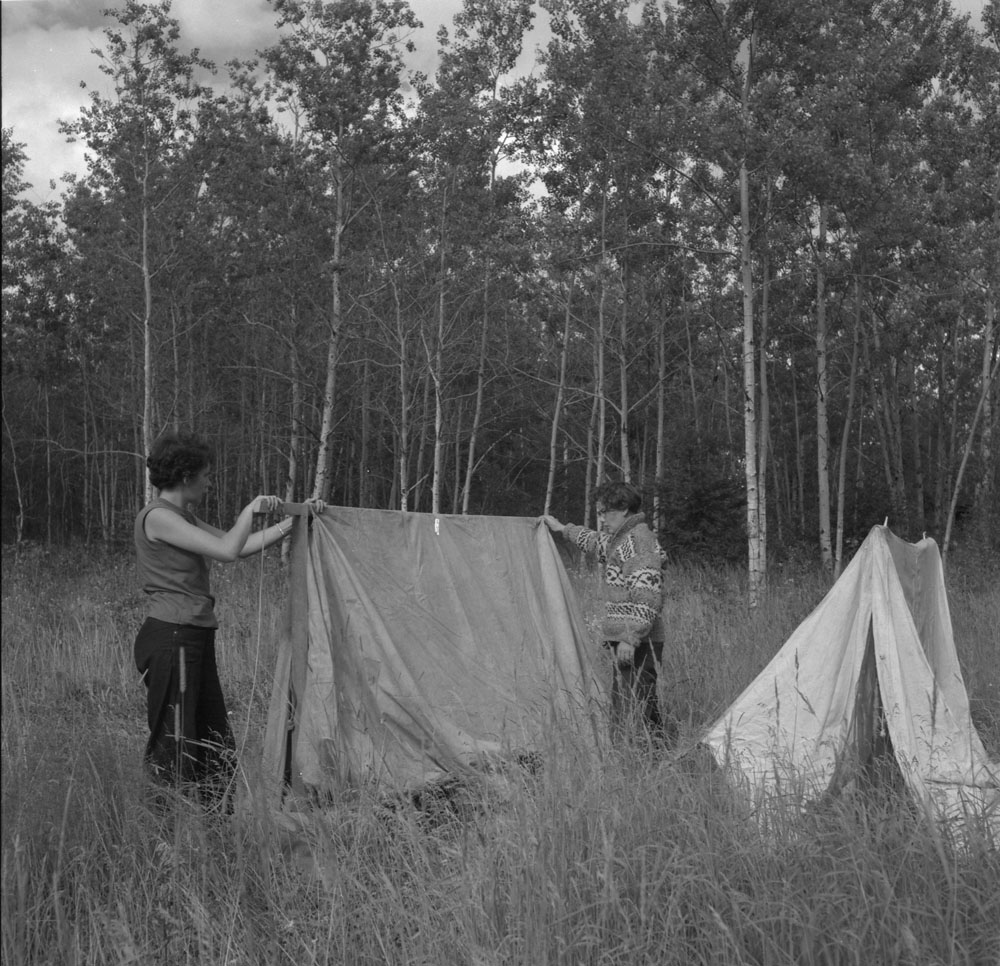
A black-and-white photograph of two women putting up two tents in a meadow with long grass surrounded by trees.

Day 4 – August 3. Anna Brown and Helen Salkeld pitching their tents, English River, Ontario. (MIKAN 4306206)

Rosemary and her friends were seeking an “authentic” wilderness experience and were not discouraged by insects, rain or possible encounters with wildlife. Midway through their trip, Rosemary observed: “What always strikes me as odd is this business of people motoring 1000’s of miles into the wildest country in order to have all the luxuries they have at home in a different setting.”

A black-and-white photograph of three women in a wooded area preparing dinner in the rain.

Day 20 – August 19. Making dinner in the rain, near Yale, British Columbia. (MIKAN 4306339)

Packed to the max, Helen’s station wagon was loaded with all of their camping supplies and utensils. Among their equipment was a Coleman stove and two water bottles, but no cooler or ice for perishable food. So part of their daily routine included picking up groceries and finding drinking water while getting gas for the car. This was not a luxury vacation!

A colour photograph of two women in a grassy area with mountains in the distance—one is reading reclined on a picnic blanket and the other is kneeling at a camp stove located behind a station wagon.

Day 20 – August 19. Helen Salkeld and Audrey James relaxing after lunch near Cache Creek, British Columbia. (MIKAN 4323864)

Their travels took them through remote forests and small towns of north and northwestern Ontario, endless kilometres of the golden prairies of Manitoba and Saskatchewan, the foothills and Rocky Mountains of Alberta, and along the rushing glacial rivers of British Columbia to Canada’s beautiful pacific coast. Rosemary recorded their fantastic adventures, taking hundreds of photographs and keeping a detailed travel diary that describes the people they met and things they experienced along the way, including friendly farmers, charismatic cowboys, and murderous mosquitoes.
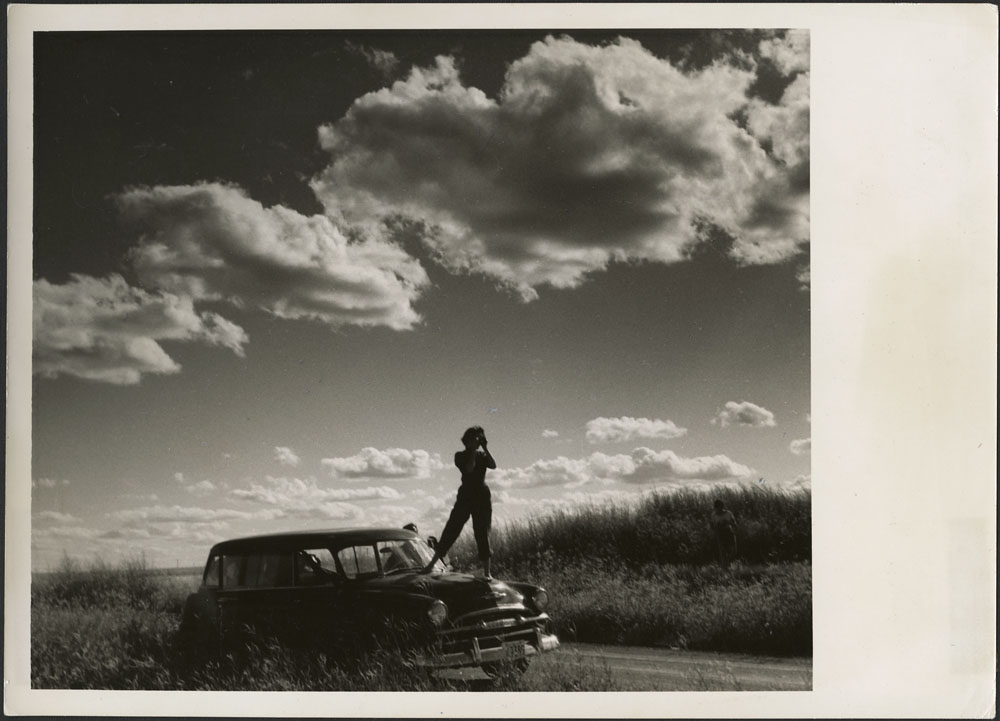
A black-and-white photograph of a woman in silhouette taking a photograph while standing on the hood of a station wagon parked on the side of the road in the prairies.

Day 9 – August 8. Audrey James standing on the hood of Helen Salkeld’s station wagon taking a photograph of the prairies, southern Saskatchewan. (MIKAN 4814411)

On July 31, 2015, Library and Archives Canada launched Road trip—summer of ’54 on Facebook, which features a selection of Rosemary Gilliat’s photos and diary excerpts. Visit Facebook daily to see where she and her friends travelled and who they met along their journey. At the end of each week, these photographs will be added to Flickr.


Beth Greenhorn is a Senior Project Manager in the Outreach and Engagement Branch at Library and Archives Canada.

James Naismith: his early formative years in Canada leading to the invention of basketball

The origins of popular sports such as baseball, football and hockey are often difficult to pinpoint; often a number of individuals and places claim to be the inventor or the birthplace of a sport. However, there is no dispute on who invented the sport of basketball: Canadian Dr. James Naismith. Born in the Ottawa valley town of Almonte, province of Canada on November 6, 1861, James Naismith was orphaned at a very young age and was raised along with his older sister Annie and younger brother Robbie by his uncle and aunt.

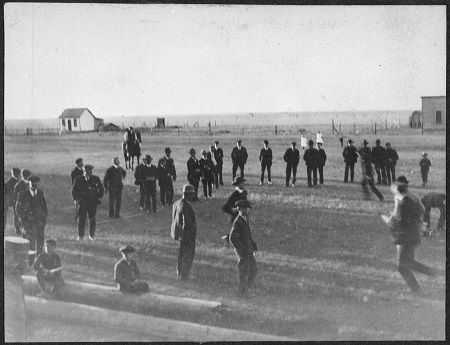
A popular childhood game in Naismith’s youth was “duck on the rock.” A stone called “the duck” was placed on a larger stone or a tree stump. The objective of the game was for players to knock the duck stone off its base, run to retrieve their own stone and return to the original throwing location. A participant would play the role of the “guard” whose role was to pick up the duck rock if it had been knocked off, place it back on its base, and race to tag one of the throwers before the latter returned to his starting point. While each player had his or her throwing technique, Naismith noticed that the most successful players lobbed their stone with aim and accuracy which would allow them more time to pick up their stone. The memory of this childhood game would influence his creation of the game of basketball.

A black-and-white photograph of a group of men standing in a field watching a game of duck on the rock.

A game of duck on a rock, Alberta, September 1906 (MIKAN 3386054)

Naismith struggled with his studies and decided to quit during his second year at Almonte High School at the age of 15. He preferred to work on the family farm in the summer and the logging camps in the winter. The 1881 Canadian census lists his occupation at the age of 19 as a farmer.

Later that year, Naismith decided to go back to high school and graduated in 1883 at the age of 21. He moved to Montréal and pursued a Bachelor of Arts in Honours and Philosophy and Hebrew at McGill University. Late 19th-century Montréal was an important centre for the early development of organized sports in Canada and North America. The first official rules for popular sports such as lacrosse and hockey were elaborated during that period. Naismith—blessed with natural athletic abilities—was drawn to many sports played at the university including gymnastics, rugby football and lacrosse. He graduated from McGill with a Bachelor of Arts in Physical Education in 1888. These interests led him to be named the first director of physical training at McGill in the fall of 1889.

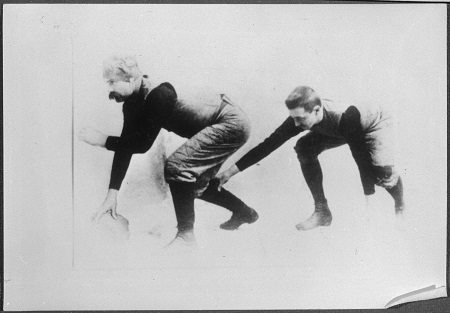
A black-and-white photograph of two rugby football players crouching, the man on the left is holding the ball, waiting to throw it to the other man behind him.

James Naismith (on the left) playing rugby football (MIKAN 3652828)

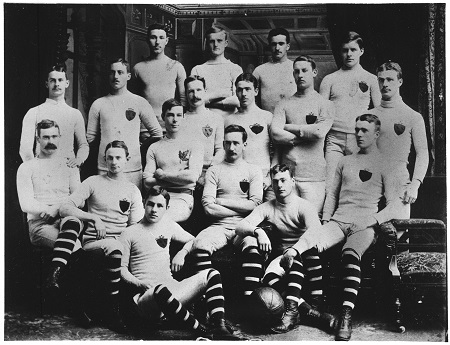
A black-and-white photograph of the McGill University rugby football team. They are wearing striped knee socks and white uniforms adorned with a crest.

James Naismith (far left, sitting down) part of the McGill rugby football team (MIKAN 3650079).

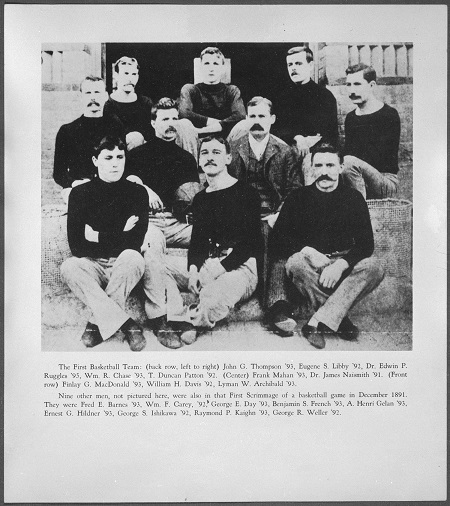
In September 1890, Naismith moved to Springfield, Massachusetts, U.S. to attend the International YMCA Training School. Tasked with creating a new indoor sport, he invented the game of basketball. The first game was played in the YMCA gymnasium in Springfield in December 1891. Basketball has since become of one of the most popular sports in the world.

A black-and-white photograph of a group of men sitting on a staircase. On each side are the baskets that were first used in the sport.

The world’s first basketball team. Dr. James Naismith is on the right in the center row (MIKAN 3652826)

For more photos documenting Naismith’s professional and personal activities, consult the D. Hallie Lowry collection held by Library and Archives Canada.

Open Data: Health and Welfare Canada Drug Studies

In the 1970s, Health and Welfare Canada sponsored several studies on the use of prescribed drugs, alcohol, and cannabis as well as drug-related deaths. Raw statistical data from four sets of surveys has recently been migrated into ASCII character-encoding scheme. Specialized software such as a spreadsheet or statistical tool is required to open, interpret and analyze the data. A codebook is provided that describes the file structure of the data and defines the variables contained in each field. If you are interested in any of the surveys listed below, they are now available on the Open Data portal.

Consumption of prescribed drugs in Canada 1977

In 1977, Health and Welfare Canada sponsored two studies relating to the use of prescribed drugs in Canada. Some of the main survey findings revealed:

  • Analgesics and antibiotics were found to be the most frequently used in the general population.
  • Anti-hypertensive and cardiac medications were used by elderly respondents.
  • Females were over-represented among users of sedatives and tranquilizers.

National surveys of alcohol consumption in Canada

The purpose of the Dialogue on Drinking Campaign was to increase public awareness of drinking behavior and encourage community involvement in programs directed toward alcohol-related problems. The campaign was carried out in phases using a variety of advertising mediums such as newspapers, magazines, radio and television broadcasts. This advertising was followed up by a series of surveys to investigate the public’s awareness of the Dialogue on Drinking Campaign itself and the drinking habits of Canadians. In 1976, one survey also collected data on the smoking habits of Canadians.

Use of cannabis by adult Canadians

In 1978, Health and Welfare Canada sponsored a survey of adults aged 18 and over. Respondents were interviewed on their use and frequency of use of marihuana and/or hashish. The study was undertaken to determine trends in cannabis use, identify populations at risk, assess social correlates of cannabis use, and formulate policy.

Drug related deaths in metropolitan Toronto

This data was collected in 1973 from the records of 18 full-time and part-time coroners from the Toronto area. The data was extracted from files which recorded alcohol- or drug-related deaths and includes the general drug category, specific drug, form of alcohol, name of solvents and poisons involved.

Shaping our national winter sport: hockey innovations

Version française

The first artificial ice arenas in Canada

In 1911, Frank and Lester Patrick, hockey players and entrepreneurs, built the first two artificial ice rinks in Canada—the Denman Arena in Vancouver, and the Victoria Arena in Victoria. The Denman Arena was the largest arena in Canada at the time with a seating capacity of 10,500. The rinks were constructed to be the main rinks for the new Pacific Coast Hockey Association games, created by the Patrick brothers to bring professional hockey to western Canada and to compete with the National Hockey Association (predecessor to the National Hockey League).

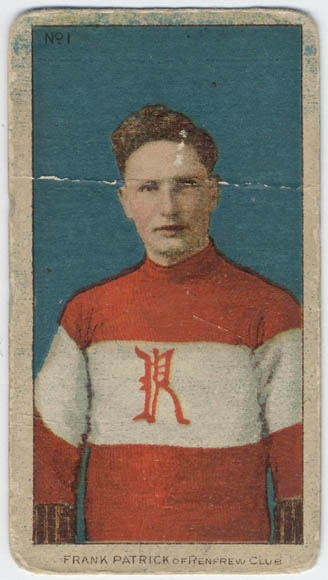
A colour reproduction showing a colourized photograph of a young man wearing a red-and-white sweater with a red “R” emblazoned in the middle of his chest.

Hockey card for Frank Patrick, circa 1910–1912. (MIKAN 2962979)

According to Library and Archives Canada’s database Canadian Patents, 1869-1919, Frank Patrick applied to the Canadian Patent Branch to patent the refrigeration system for their rinks in 1913. The patent seems to have been granted in June 1914, although the application does have “cancelled” stamped on it.

A black-and-white reproduction of a sketch showing the cooling mechanism for a hockey rink.

Ice rink patent application. (Patent number 156325)

Recognized as the leaders in the development of artificial ice hockey rinks in Canada, Frank and Lester Patrick are also credited for implementing many rules of hockey that are instrumental to how the game is played today.

The creation and evolution of the hockey net

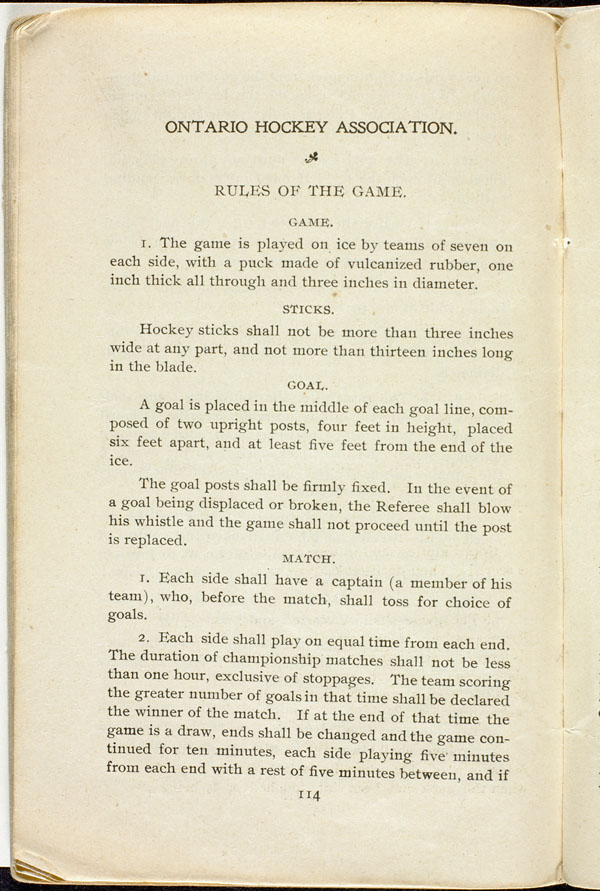
The first hockey goals consisted of two rocks, and later posts, which were placed at each end of the rink. The goal posts were first eight feet apart, then reduced to the 6-foot width still used today.

A black-and-white photograph showing hockey players during a game on an outdoor hockey rink

Hockey match at McGill University. (MIKAN 3332330)

A typewritten page showing the rules of hockey.

Ontario Hockey Association rules as found in Hockey: Canada’s Royal Winter Game.

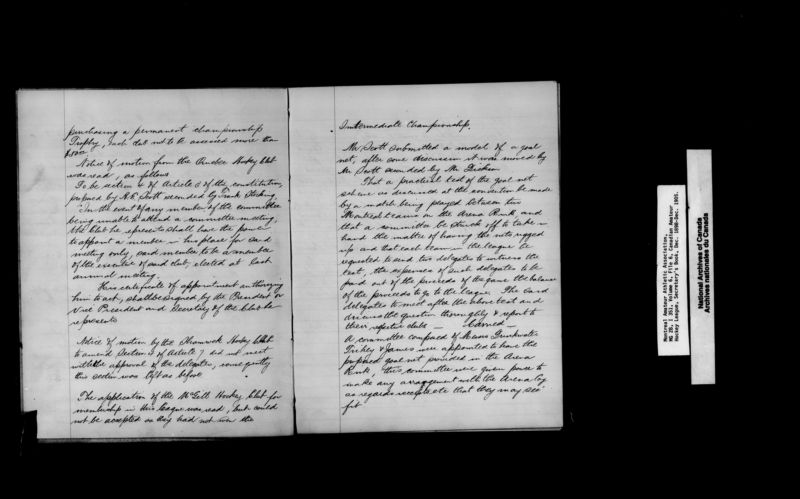
In the 1890s, a number of hockey leagues started to experiment with the use of fishing nets attached to the posts to avoid arguments over goals. In 1899, the newly-created Canadian Amateur Hockey League officially adopted the use of hockey nets during their games. The goal consisted of a net attached to a rope connecting the top of each goal post.

A black-and-white reproduction of a handwritten notebook titled “Intermediate Championship”

Minutes of the annual meeting of the Canadian Amateur Hockey League, December 9, 1899. (MIKAN 100095 or on the Héritage website, image 95)

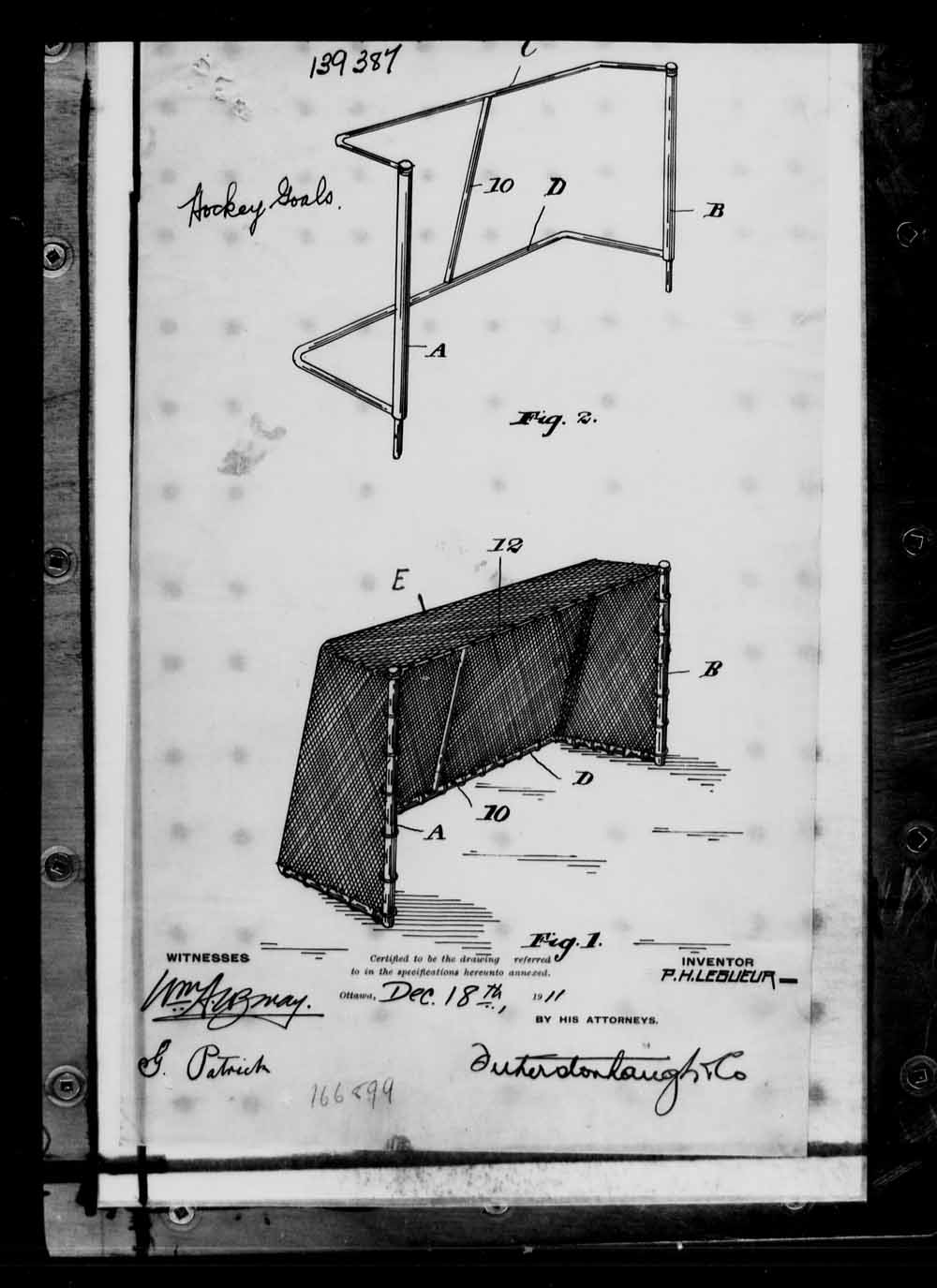
In 1911, Percy LeSueur, one of the best and most innovative goaltenders at the time, submitted a patent application to improve the hockey net. According to his application, the objective of his patent claim was to “enable much greater accuracy in deciding scores to be maintained.” LeSueur’s proposed hockey net improved on the existing goal type where the supporting top bar was set back a number of inches from the goal line and allowed a shot from close range and at an upward angle to go over the bar, even if it crossed the goal line. The patent was granted to Le Sueur in 1912 and the concept behind his patent remains the foundation for the hockey goal still used today.

A black-and-white photograph with medallions portraits of 12 men centered around a white square.

Group photo of the Ottawa Hockey Club in 1914, which includes Percy LeSueur (top middle). (MIKAN 3386140)

A black-and-white reproduction of a detailed illustration of a goal net with measurements.

Le Sueur’s patent application drawing showing the improved goal net. (patent number 139387)

For more information on the Canadian Amateur Hockey League Association, please consult the Montreal Amateur Athletic Association fonds held by Library and Archives Canada.

The goalie mask

In November 1959, the all-time great goaltender, Jacques Plante, would change the hockey world by starting to wear a face mask on a regular basis. Until then, goaltenders did not use protective masks. A few notable exceptions included Elizabeth Graham who used a fencing mask in a hockey game in 1927 and National Hockey League (NHL) goaltender Clint Benedict who used a leather mask in a few games in 1929. Plante of the Montreal Canadiens had experimented since the mid-1950s with different masks in practices and exhibition games to protect himself from pucks and sticks.

A black-and-white photograph of a man leaning on the hockey boards holding a transparent mask in his hands.

Jacques Plante showing off a mask, the “Louch Shield” which he experimented with in practice before 1959. (MIKAN 4814213)

On November 1st, 1959, after suffering a broken nose and cuts to the face during an NHL game against the New York Rangers, he returned from the dressing room with a mask created by fibreglass specialist, Bill Burchmore.

In January 1960, Jacques Plante began wearing a new lighter mask, commonly known as the “pretzel mask,” built by Burchmore and consisting of 540 woven ends of fibreglass yarn.

A black-and-white photograph of a goalie with a mask defending his net. Behind him other players (without helmets) are falling on the ice, reaching for the puck.

Jacques Plante in action wearing a second type of mask on January 17, 1960. (MIKAN 4814204)

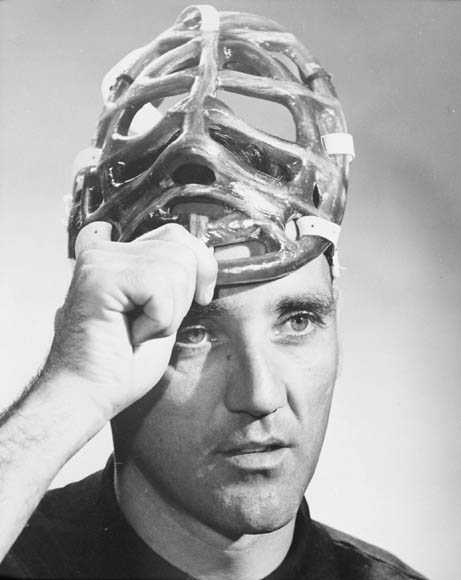
A black-and-white photograph of a man taking off a goalie mask.

Jacques Plante lifting his hockey mask. (MIKAN 3194972)

Other goaltenders would follow suit and the mask soon became a standard piece of equipment for a goaltender. Jacques Plante would continue improving goalie masks and created his own mask-making business towards the end of his hockey playing career.

For more information on Jacques Plante and his innovations, consult the Jacques and Caroline Raymonde Plante fonds held at Library and Archives Canada.

Railway sleeping car porters

By Dalton Campbell

Railway sleeping cars were introduced to Canada in the 1870s by the Pullman Palace Car Company. Pullman built and operated luxury passenger rail cars equipped with seating areas that converted into bunk beds; the seats were converted into the lower berth and the upper berth was pulled down from the ceiling. Pullman cars were known for their accommodations, comfort, and the service provided by the porters.

A black-and-white photograph of three men posing beside a railway car. A chef stands on the steps leading into the train, another man holds the handrail and the third, a porter, stands to the side beside the train.

A porter with two other employees at a stop during the tour of Sir Arthur Conan Doyle across Canada, 1914 (a011186)

A black-and-white photograph of a woman, in profile, lying under the blankets in the lower bunk reading a newspaper.

In the evenings, the porters would make up the beds. One of the seats was extended to create the comfortable lower bunk. While the passengers slept, the porters continued to work until after midnight. The porters could nap if there were no calls or emergencies during the night, but were awake to begin their workday before dawn, 1937 (e010861953)

A black-and-white photograph of people seated in a railway sleeping car, looking out the windows.

While the passengers were at breakfast, the porters would convert the berths back into seating. The upper berth would be stowed into the panels above the passenger seats, 1929 (e010861953)

The railways were one of the few Canadian companies to hire Black men in the early 20th century. It was an opportunity that appealed to many men. There were limitations, however. The railways hired Black men solely to be porters, and from the First World War until the 1950s, did not hire or promote black men to the post of engineer, conductor, or any other job on the train.

The porters served the passengers during their trip; they would help with boarding and disembarking, serve drinks and snacks, set up berths, make beds, polish shoes, tend to and entertain small children, and cater to the customers’ needs and wants. The porters were essential to rail travel—they were always present but also pushed to the background.

A black-and-white photograph of people in a train station. A porter, with luggage on a dolly, is facing away from the camera. Two well-dressed travellers are speaking to a ticket agent. An information board with destinations is on the wall behind the travellers announcing the train as “The Dominion” from Montréal to Vancouver. A passenger train is visible in the background.

A porter takes luggage for passengers about to board “The Dominion” at Windsor Station, Montréal, Quebec, circa 1947 (e003641861)

The men received regular wages, had the opportunity to see Canada and meet travellers. Stanley Grizzle, a former sleeping car porter, states in his autobiography that porters were admired within the Black community.

These benefits and rewards came at a cost. Porters worked long hours, often on call for 24 hours with their sleeping accommodations on the train in the men’s smoking room. They were frequently away from home for days at a time. They were also wary of passenger complaints and were often subject to harsh discipline from management. Porters would risk reprisals from passengers when they reported gambling, excessive drinking, or illegal activities.

The porters received demeaning and insulting comments and names from passengers. Stanley Grizzle wrote that passengers would frequently address porters as “George” after George Pullman, the original owner of the Pullman Car Company. The porters were also forced to rely on tips from passengers. While the money was welcome, Stanley Grizzle writes, the act of asking for a tip was demeaning, reinforced subservience, and allowed the company to justify keeping wages low because of the tips.

A black-and-white photograph of a crowd of people with baggage standing on the platform next to a passenger train. Two porters are seen beside the train. One is on the platform attending to some luggage; the other stands in the doorway of the train. An automobile in the foreground has a sign on the door reading “Jasper Park Lodge.” Mountains are visible in the distance.

Two porters assist passengers and other crew at the railway station in Jasper, Alberta, 1929 (a058321)

The Brotherhood of Sleeping Car Porters was organized in Canada during the Second World War. The union helped to negotiate higher wages, better working (and sleeping) conditions, fairer and more transparent disciplinary measures, and ended racial discrimination in hiring and promotions. Beginning in the 1960s with changes in the travel industry, the railways were employing fewer and fewer sleeping car porters. In 1999, Heritage Canada unveiled a plaque at Windsor Station, Montréal, Quebec, to honour the sleeping car porters.

Related resources


Dalton Campbell is an archivist in the Science, Environment and Economy Section of the Private Archives Division.

So many lockers, so little time

When visiting Library and Archives Canada (LAC) in Ottawa at 395 Wellington to do research, you may be asked more than once if you need a locker. Let’s explore why and where this might be the case. First off, when you arrive, the Commissionaire at the security desk on the ground floor will ask you if you need a locker to store your personal items, such as your jacket or coat, hat, large bag, or umbrella. As you can understand, none of these items is allowed in the reference or consultation rooms in order to keep the collection safe from damage or loss. These personal storage lockers are located on the ground floor, and are for day use only. You must leave the key to your locker with the security desk when leaving the building, both at the end of the day and for any reason during the day, even if you plan to come back.

The next locker you might require is located on the third floor. Here there are three types of lockers for temporarily storing archival, published, or restricted items. They are loaned out for up to a month at a time and may be renewed as required. The first type of locker is the one most commonly used for open archival material. You must ask the consultation staff to assign you one of these lockers, and you can request up to a maximum of three at a time. You can either request the locker(s) when requesting your material in advance or if you are planning on coming in person to do your research during or outside of service hours. Keys for these lockers are also kept with the security desk on the ground floor and must be returned daily or when leaving the building. The same applies for the second type of locker, a smaller one for when you only require a small space to temporarily store published items you have requested.

The third type of locker is the restricted one, for those researchers who have access to restricted (code 32) material. The same procedures apply for requesting this type of locker, but please note that keys are not issued automatically. The Commissionaire stationed in the lobby of the third floor must verify the researcher’s access to the restricted locker(s) before access can be granted.

Lastly, here are the most important things to remember when you are assigned any of the lockers located on the third floor:

  • Use lockers for LAC material only—no personal items please
  • Do not keep self-serve/archival microfilm in the lockers
  • Be aware that the expiry dates of lockers and items often differ
  • Make sure to renew your locker and archival items to ensure that the items are not sent back before you have completed your work
  • Note that overdue items may be removed and returned to storage even if the locker is not expired
  • Renew lockers or items after hours by contacting consultationtext@bac-lac.gc.ca. Be sure to provide all the details