Radio Technology

I heard it on my radio—

The technology behind the radio allows for mass communication without using wires. Nikolai Tesla lectured on wireless communication in 1893 in St. Louis, Missouri at the World’s Fair. His theories laid the scientific groundwork for the development of the radio as we know it today.

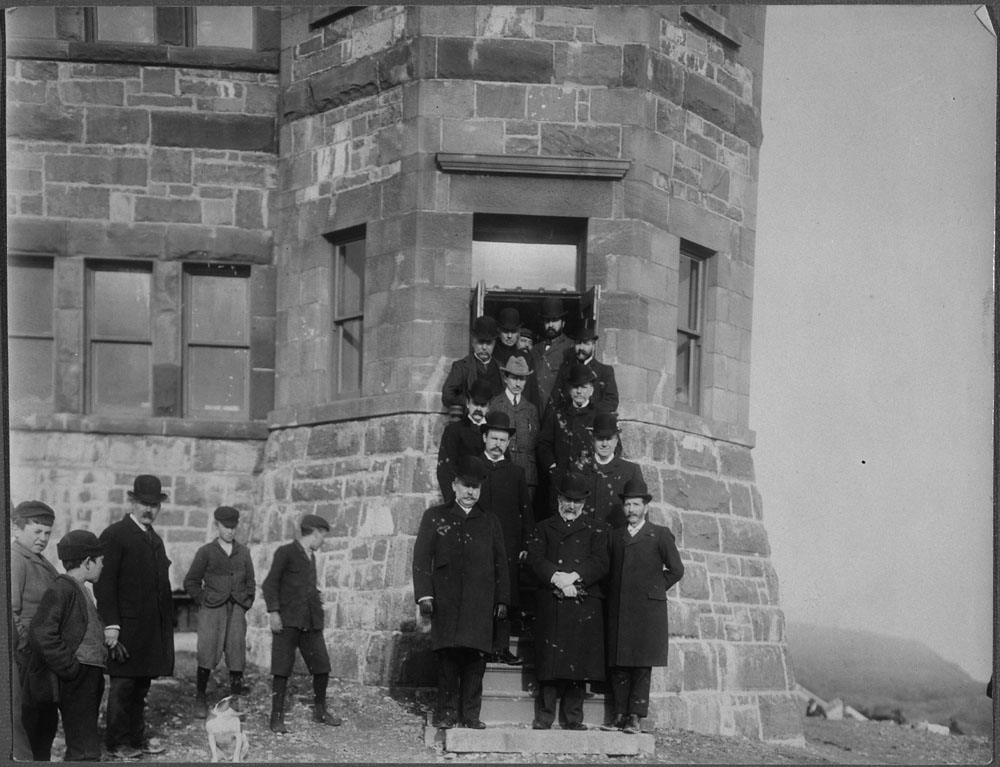
A black-and-white photograph of Guglielmo Marconi posing on the steps of a building with 12 members of the administration of Newfoundland, Signal Hill, St. John's.

Marconi (with light hat) and members of the administration of Newfoundland, Signal Hill, St. John’s (MIKAN 3380817)

Guglielmo Marconi is the person most associated with the radio and he has ties to Canada. He tested his transmission equipment on Signal Hill, St. John’s in Newfoundland, 1901. His early successes spurred the use of radio for long distance messaging using Morse code. The technology was not able to transmit speech at the time. However, advances during and after the First World War provided both the military and civilians with access to radios that sent transmissions as recognizable speech.

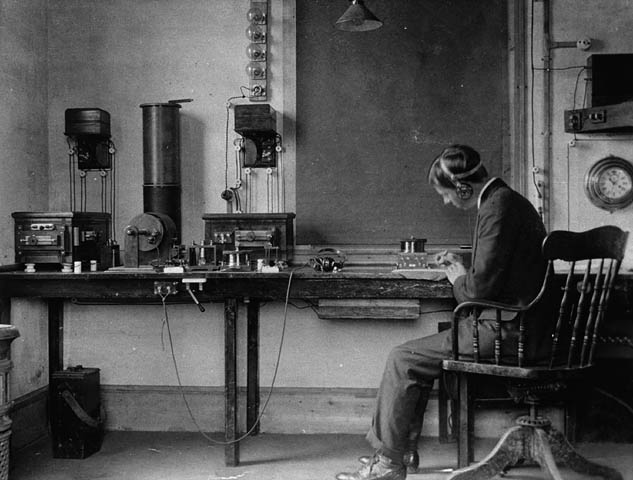
A black-and-white photograph of Donald Manson, an employee of the Marconi Company sitting at a table, wearing headphones and writing on paper while listening to a radio transmission.

Donald Manson, an employee of the Marconi Company (MIKAN 3193105)

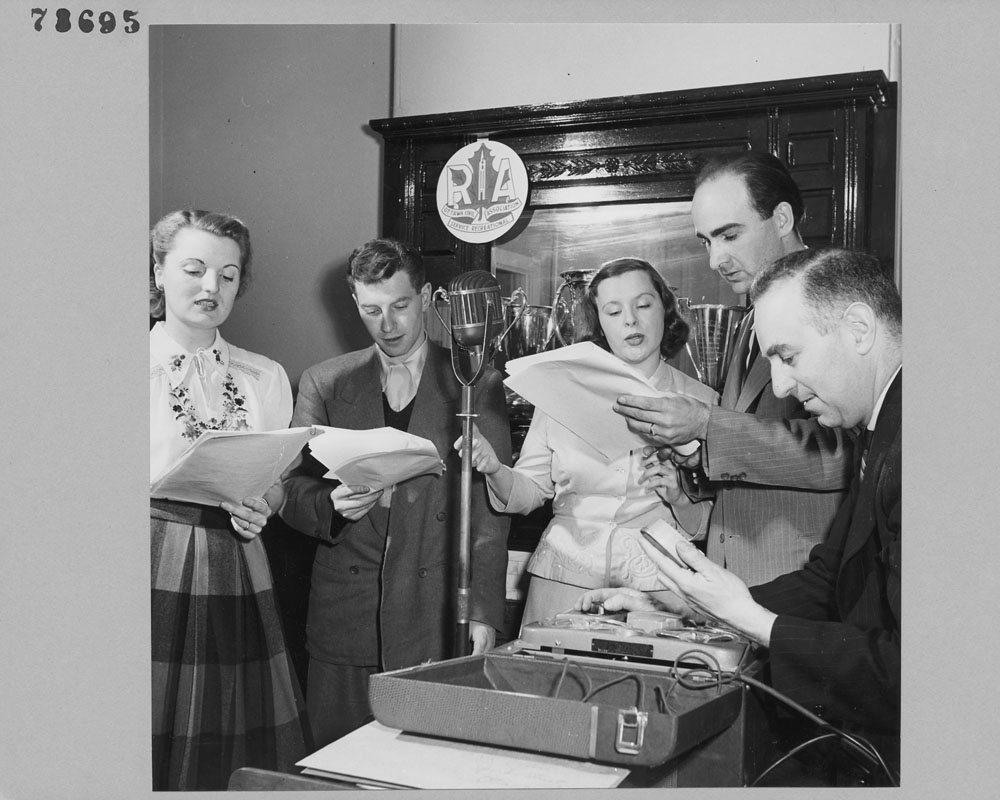
A black-and-white photograph of two women and three men, members of the R. A. Radio Acting Group, reading from a script into a microphone.

Members of the R. A. Radio Acting Group (MIKAN 4297976)

Local stations and federal agencies were created such as the Canadian Broadcasting Corporation, and broke into the news, music, and entertainment realms from the 1920s to the 1940s. Mass media was here to stay. Radio gave way to television, and then to the internet. Despite these leaps and bounds of its technological siblings, radio technology is widely used today due to its easy access and reliability.

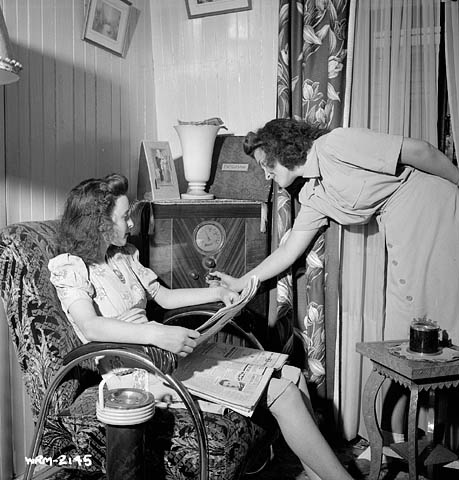
A black-and-white photograph of a two women listening to a radio. One woman sits in a chair, the second women stands and adjusts the station settings.

Female workers at the Dominion Arsenals plant relax and listen to a radio in their apartment, Québec, Quebec (MIKAN 3193885)

Visit the Flickr album now!

New additions to the Virtual Gramophone – band and instrumental music

By Margaret Ashburner

In addition to the many popular songs we have digitized, LAC is also fortunate to have a diverse collection of band and instrumental recordings in our 78-rpm collection. Some of the band music has military connections, such as the Band of First Regiment. However, we also have orchestra music, chamber music and folk music, such as the fiddle performances of Isodore Soucy.

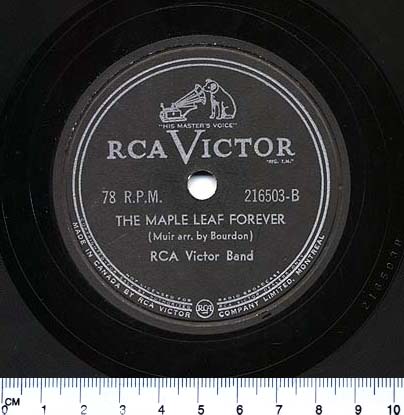
A colour photograph of a record label with RCA Victor on it with the dog and gramophone logo.

The Maple Leaf Forever record label. RCA Victor (AMICUS 31386771)

Explore other recordings on the Virtual Gramophone!


Margaret Ashburner is the Special Collections Librarian of the retrospective music collection at Library and Archives Canada

John Armstrong Howard, Canada’s first Black Olympian

By Judith Enright-Smith

The 1912 summer Olympics held in Stockholm, Sweden, from May 5 to July 27 was a venue for many firsts. This fifth Olympiad, comprised of 2,408 athletes from 28 nations, was the first to showcase women’s swimming and diving events as well as the men’s pentathlon. It was the first Olympics to use electronic timing and the first occasion a team from Asia (Japan) competed at the games. For Canada, the 1912 summer Olympics meant another first—the first Canadian Black athlete to compete in the Olympic Games.

John Armstrong Howard was born in Winnipeg, Manitoba, on October 6, 1888. Howard was a qualified mechanic and played baseball for Winnipeg’s Crescent Creamery Baseball Club; at 6 foot 3 inches tall, he was also an exceptional sprinter. He handily qualified for the 1912 Olympics and was looked upon not only in sporting circles but also in the Canadian media as the nation’s best hope for bringing home a gold medal.

Walter Knox was coach of the 1912 Canadian Olympic Track and Field Team. During training, Knox and Howard had several disputes and confrontations. Knox described Howard as outspoken and disobedient and, at a time when discrimination against Black athletes was common, recommended he be fired from the team for “insubordination.” It was only through the intervention of the Amateur Athletic Union of Canada that Howard remained on the team.

While en route to Sweden, Howard faced discriminatory and prejudicial treatment, an affront endured by people of colour in that time. Before setting sail from Montreal, he was barred from the hotel where the other athletes were staying, and while on board, he had to eat his meals in a different dining area away from his teammates.

Once in Stockholm, the cumulative stress of his interactions with Knox manifested itself in the form of severe stomach complaints. At the games, Howard’s health issues seriously hindered his efforts and he was defeated in the semi-finals of the 100- and 200-metre sprint. However, once back home, Howard redeemed himself at the 1913 Canadian Outdoor Championships by winning every race he entered.

After the outbreak of the First World War, Howard went overseas in 1917 as part of the Canadian Expeditionary Force. He worked in various English army hospitals carrying stretchers. His military records show that he suffered from chronic lung ailments. While overseas, Howard met Edith Lipscomb. Edith returned to Winnipeg with Howard in 1920 where they were married. They attempted to set up house in Ste. Rose du Lac, but experienced much hostility and prejudice as an interracial couple. Howard’s granddaughter, Valerie Jerome, tells of townspeople pelting the couple’s car with stones to drive them away. Eventually they settled near the Crane River Indian Reserve on the northwest shore of Lake Manitoba. The couple had three daughters, but the marriage did not last. Howard later died from pneumonia at the age of 48.

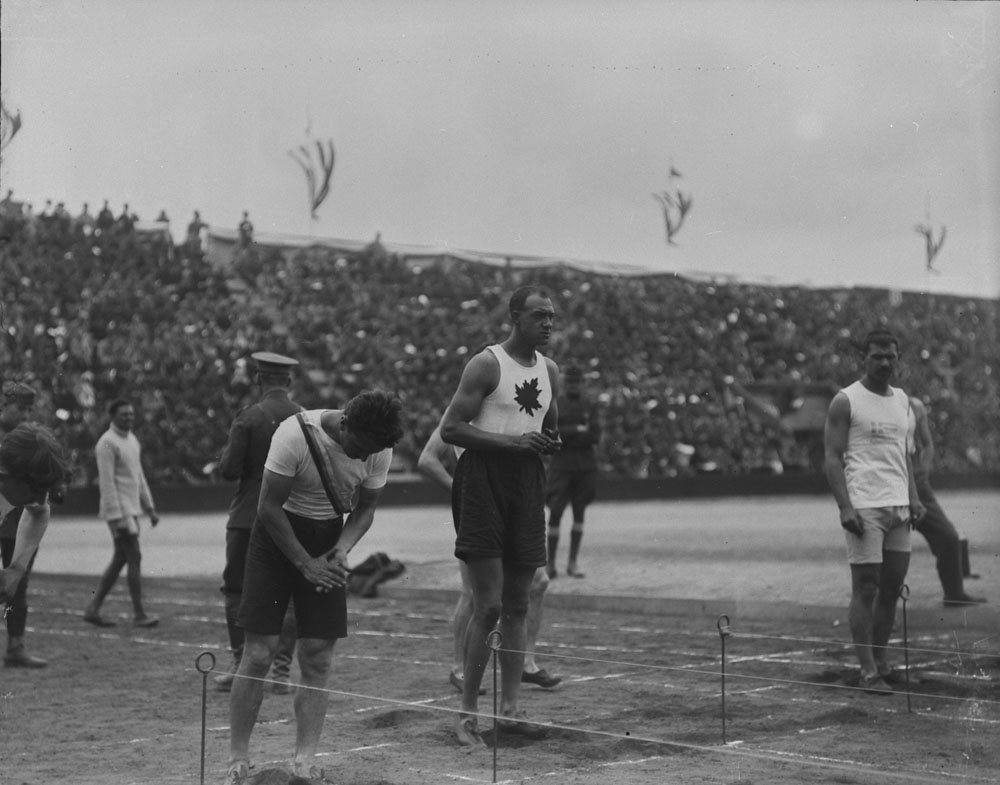
A black-and-white photograph of a group of runners at the starting line. One is wearing a white shirt with a maple leaf on the front.

John Armstrong Howard at the Inter-Allied Games in Pershing Stadium, Paris, July 1919 (a006650)

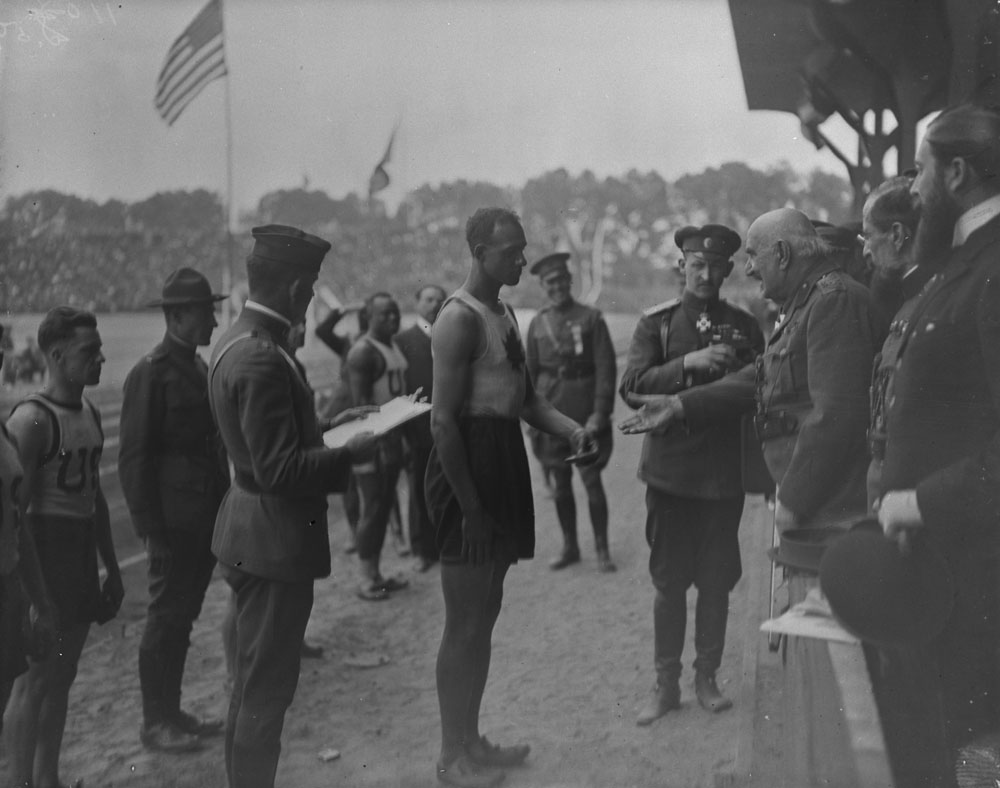
A black-and-white photograph of a man dressed in athletic wear, surrounded by other men in similar attire or in uniforms, receiving a medal from an older man in military dress.

John Armstrong Howard receiving his bronze medal for the 100-metre event from the King of Montenegro, at the Inter-Allied Games in Pershing Stadium, Paris, July 1919 (a006626)

John Armstrong Howard’s athletic legacy lives on. Two of Howard’s grandchildren are Canadian athletes. Valerie Jerome is a sprinter who competed in the 1960 summer Olympics. Her brother Harry Jerome competed in the 1960, 1964 and 1968 summer Olympics, winning a bronze medal in 1964 in the 100-metre dash.


Judith Enright-Smith is an archival assistant in the Aboriginal and Social Affairs Section of the Private Archives Branch of Library and Archives Canada.

Images of Nancy Greene now on Flickr

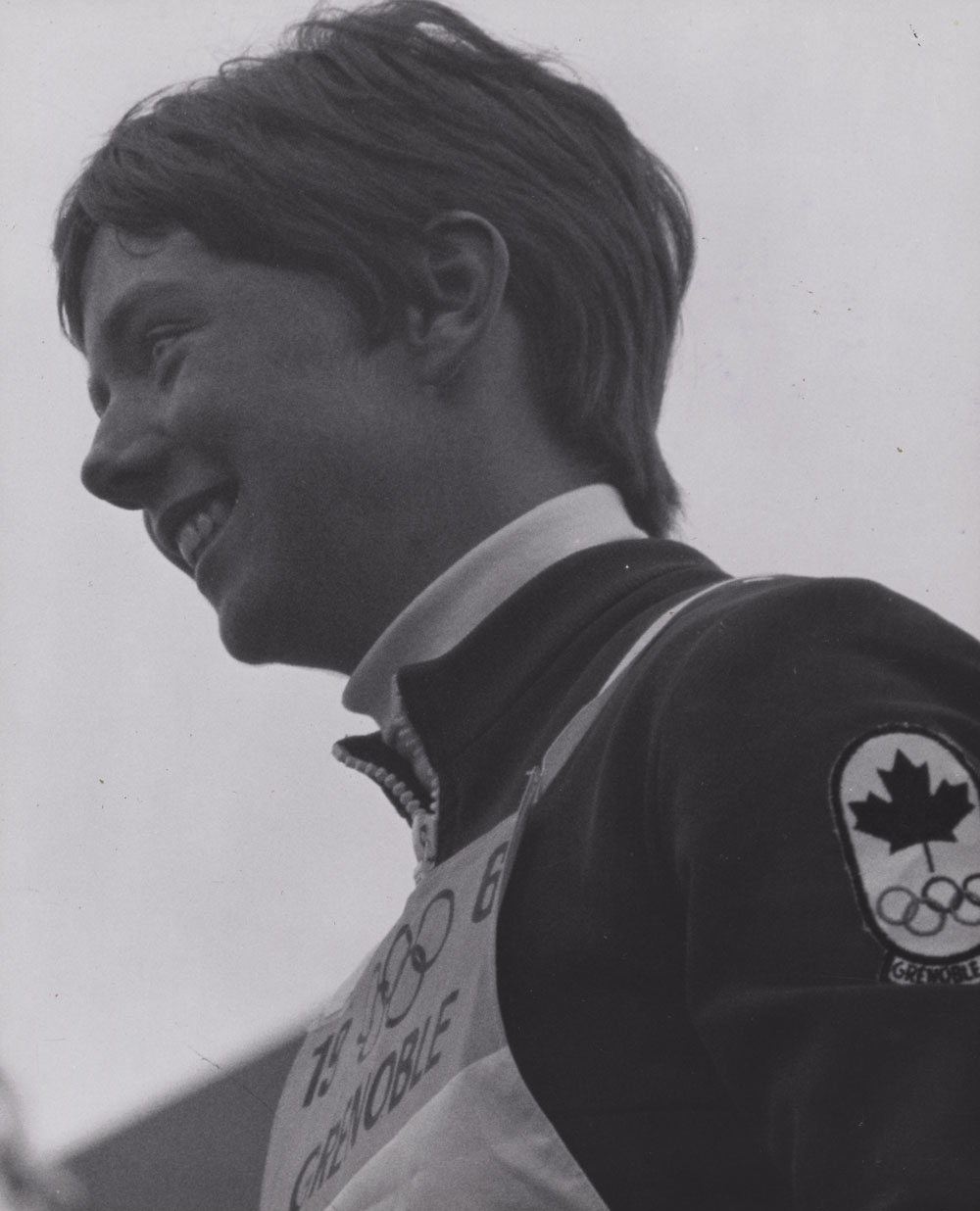
A black-and-white photograph of Nancy Greene, winner of a gold medal in giant slalom.

Nancy Greene, winner of gold medal in giant slalom, Winter Olympics (MIKAN 5029732)

Ms. Greene Raine is an Officer of the Order of Canada and the Order of British Columbia and a member of both Sports Halls of Fame. She was named Canada’s female athlete of the 20th century by the Canadian Press and Broadcast News. She won gold and silver medals in alpine skiing at the 1968 Grenoble Olympics and overall World Cup titles in 1967 and 1968. Her total of 14 World Cup victories (including the Olympics) is still a Canadian record. During her nine-year career she won a total of 17 Canadian Championship titles.

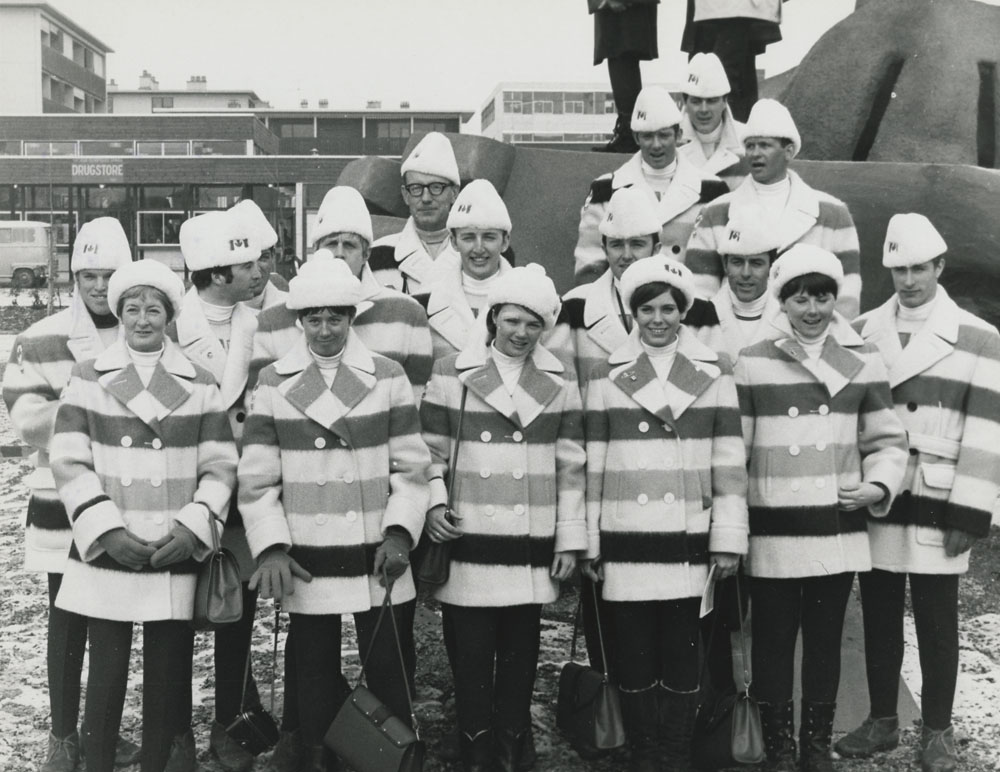
A black-and-white photograph of a group shot of the Canadian ski team at the Winter Olympics.

Group shot of the Canadian ski team at the Winter Olympics (MIKAN 5029774)

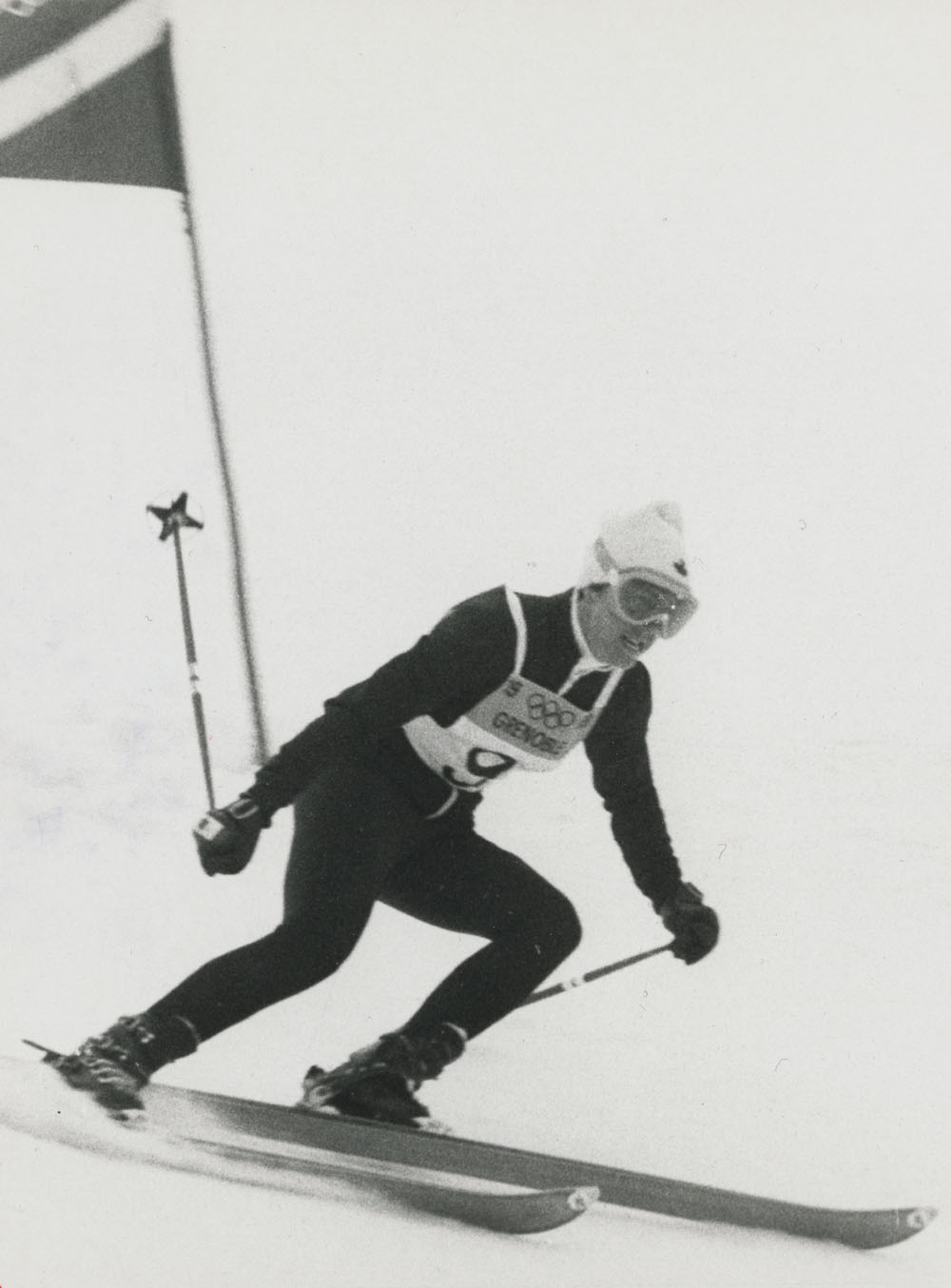
A black-and-white photograph of Nancy Greene during her gold medal run in giant slalom.

Nancy Greene during her gold medal run in giant slalom at the 1968 Winter Olympics (MIKAN 5029785)

A black-and-white photograph of Nancy Greene during her silver medal run in slalom.

Nancy Greene during her silver medal run in slalom at the Winter Olympics (MIKAN 5029788)

See also:

Visit the Flickr album now!

New Princes’ Toronto Band

By Margaret Ashburner

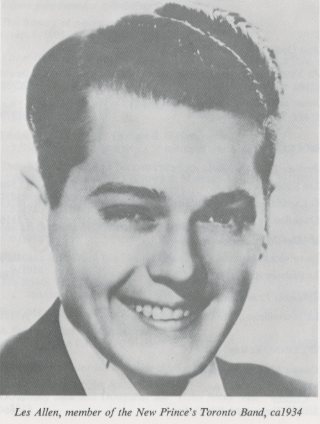
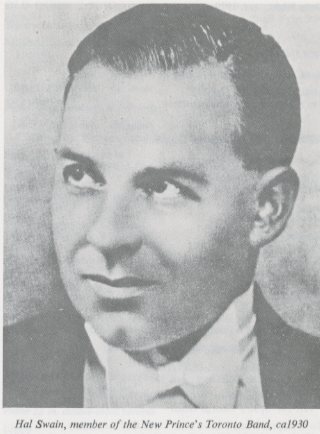
1920s Toronto was a busy time and place for the working musician. Dance bands were performing regularly, and multi-instrumentalists would have been in high demand. One such musician was Hal Swain who started his own ensemble with a number of local musicians including Les Allen, who had equally diverse abilities. These ambitious musicians hoped to make a name for themselves; Allen described the group as “a combination of mostly youngsters, all as keen as mustard” (Litchfield, p. 513).

A black-and-white photograph of a young man smiling.

Les Allen, Roll Back the Years, p. 249.Les ù

A black-and-white photograph of a young man looking pensively to the side.

Hal Swain, Roll Back the Years, p. 249.

Spotted by a recruiter the two were singled out for their strong performing abilities and asked to form a group that would perform at the Rector’s Club in London, England. Of this time, Swain declared his intention “…to feature the fact that they were from the Dominion and discover if the dancers in the empire’s greatest city would evince the same interest in a jazz band from Toronto as they would in a New York importation” (Mark Miller, p. 112).

This group of proud Canadians sailed for England following the instructions of the London recruiter. However when they arrived, they found that the Rector’s Club had closed. The recruiter must have felt responsible for the fiasco and made alternate arrangements for the Canadians to audition at the New Princes’ restaurant. They were hired to play and remained for two years—taking the band name from the restaurant’s name.
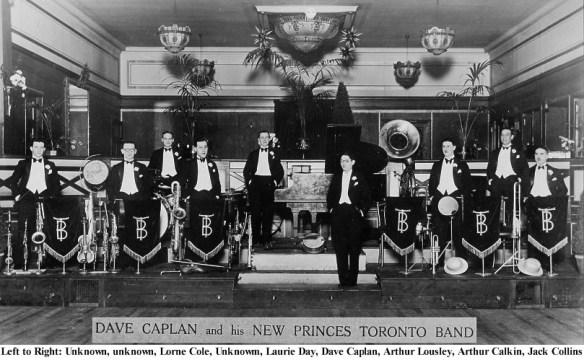
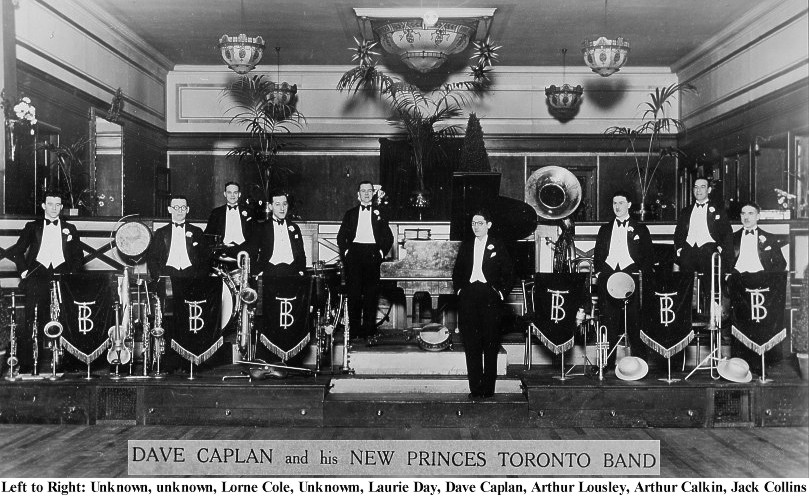
A black-and-white photograph of men dressed in formal wear standing with their musical instruments.

Dave Caplan and his New Princes’ Toronto Band (Left to right: unknown, unknown, Lorne Cole, unknown, Laurie Day, Dave Caplan, Arthur Lousley, Arthur Calkin, Jack Collins (The British Dance Band Encyclopaedia)

The New Princes’ Toronto Band was composed of gigging musicians, and as a result, saw regular changes in personnel as opportunities arose. People came and left over the years and there were several iterations of the band’s name as band leaders changed or some of the musicians formed other groups. Musicologists generally consider these different iterations to be the same band. Some of the key Canadian musicians in this group were Hal Swain, Dave Caplan, Les Allen and Art Christmas.

Library and Archives Canada (LAC) is pleased to have digitized some recordings from a set of recently acquired discs. This sampling includes songs that were mainly recorded from September to November 1926 when the band was called Dave Caplan’s Toronto Band.

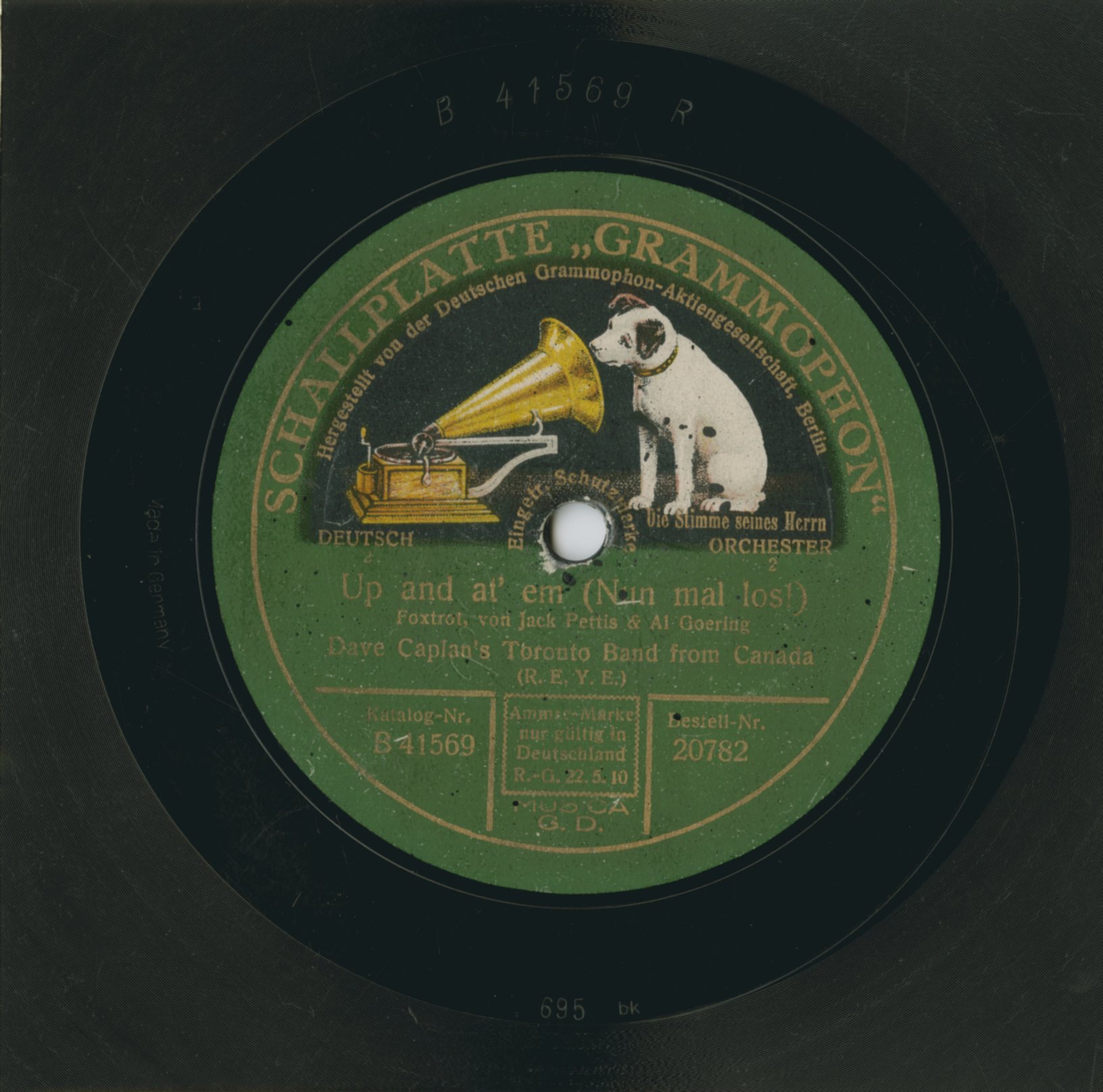
“Up and At ‘Em”

A colour photograph of a record label with the Deutschen Grammophon-Aktiengesellschaft logo of a dog peering into a record player horn.

“Up and At ‘Em” by Dave Caplan’s Toronto Band, 1926 (AMICUS 45168615)

[Listen to “Up and At ‘Em”] Recorded by Dave Caplan’s Toronto Band in November 1926, this piece is a lively foxtrot, one of the most popular dance forms of the time. This performance, like most jazz recordings of the time, includes several solos, likely improvised, from each band member. The raunchy trombone and light pattering percussion solos are particularly enjoyable.

“I Never See Maggie Alone”

A colour photograph of a record label from Polydor.

”I Never See Maggie Alone” by Dave Caplan’s Toronto Band, 1926 (AMICUS 45168601)

[Listen to “I Never See Maggie Alone”] A comedic song about a young man lamenting the ever-looming presence of his girlfriend’s family. At first the family turns up on the couple’s dates, but as the song progresses they appear in increasingly improbable situations including being stowed away in the hood of the car, lurking in the lake where the couple is fishing and eerily appearing when the lights are turned off and then on. Really, it walks a fine line between horror and comedy! The vocals in this performance are likely Hal Swain or Les Allen and show some excellent comedic timing.

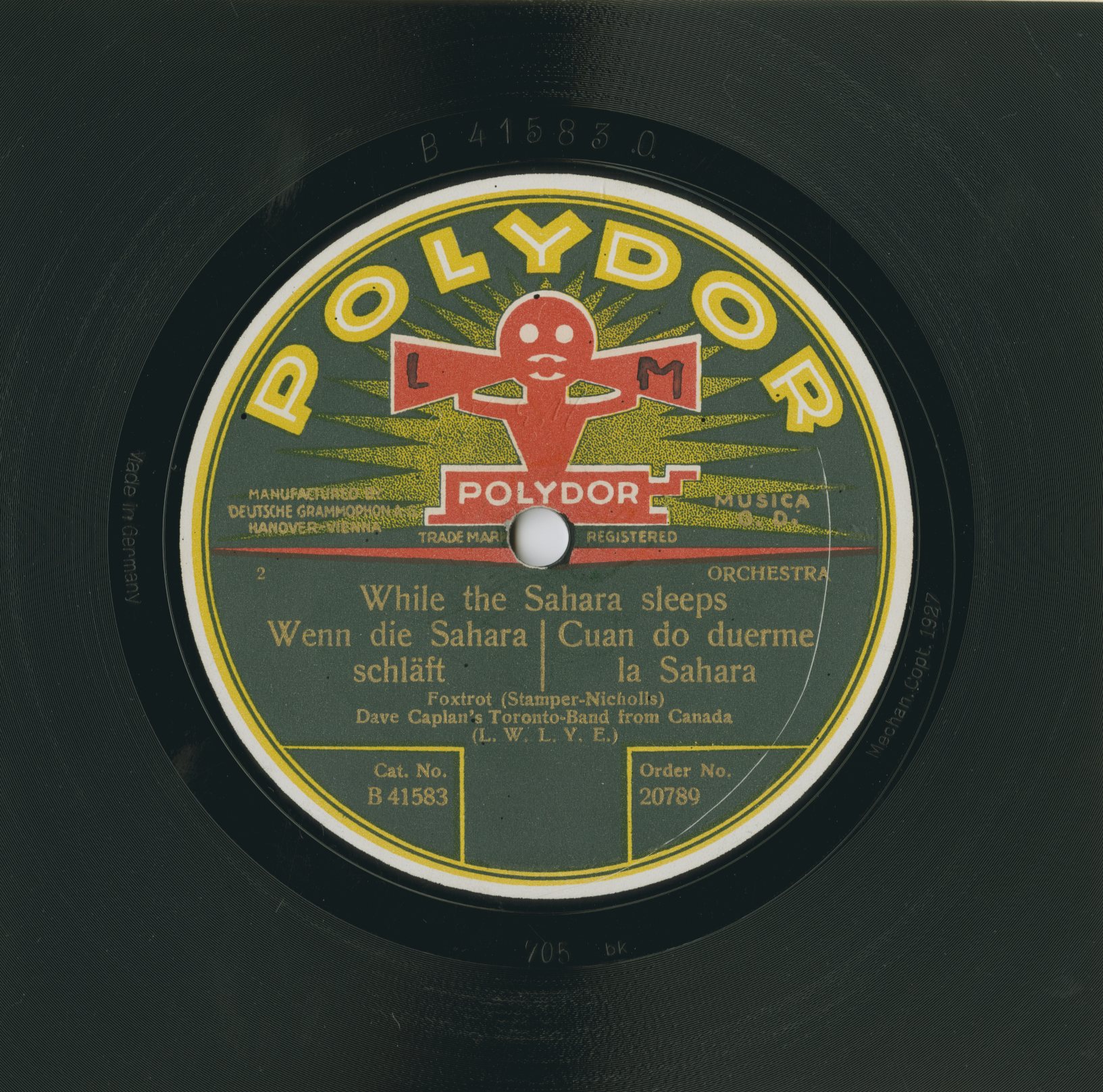
“While the Sahara Sleeps”

A colour photograph of a record label from Polydor.

“While the Sahara Sleeps” by Dave Caplan’s Toronto Band, 1926 (AMICUS 45168382)

[Listen to “While the Sahara Sleeps”] Fantastic brass playing with a great trumpet solo full of an idiomatic flutter tongue that is characteristic of jazz from this time.

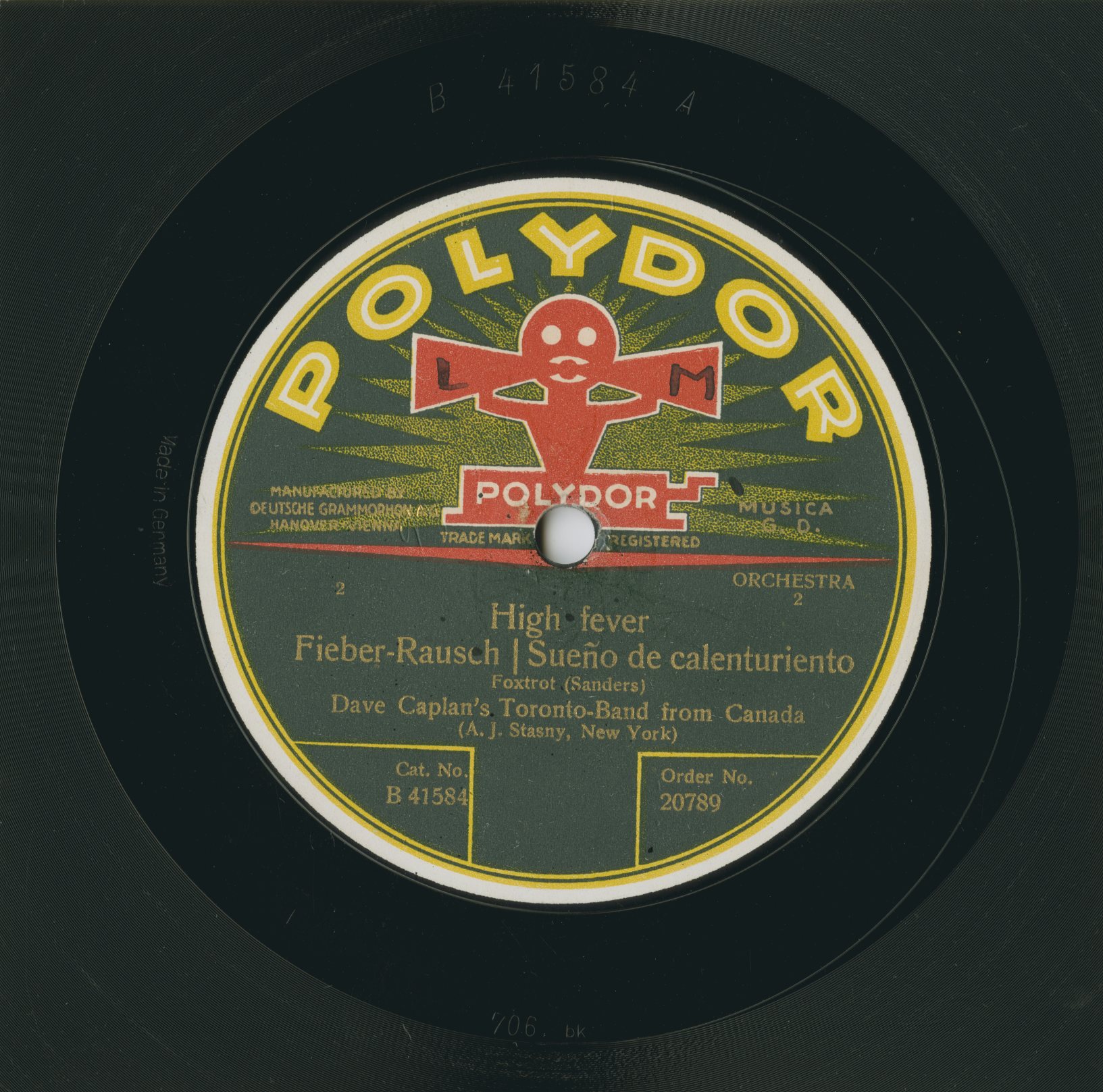
“High Fever”

A colour photograph of a record label from Polydor.

“High Fever” by Dave Caplan’s Toronto Band, 1926 (AMICUS 45168455)

[Listen to “High Fever”] Another foxtrot from the Dave Caplan Toronto Band, this one a little more mellow than “Up and At ‘Em” but still a cheerful and upbeat foxtrot sound. Several jolly piano solos interject from the band’s pianist Laurie Day as well as some playful trombone solos towards the end.

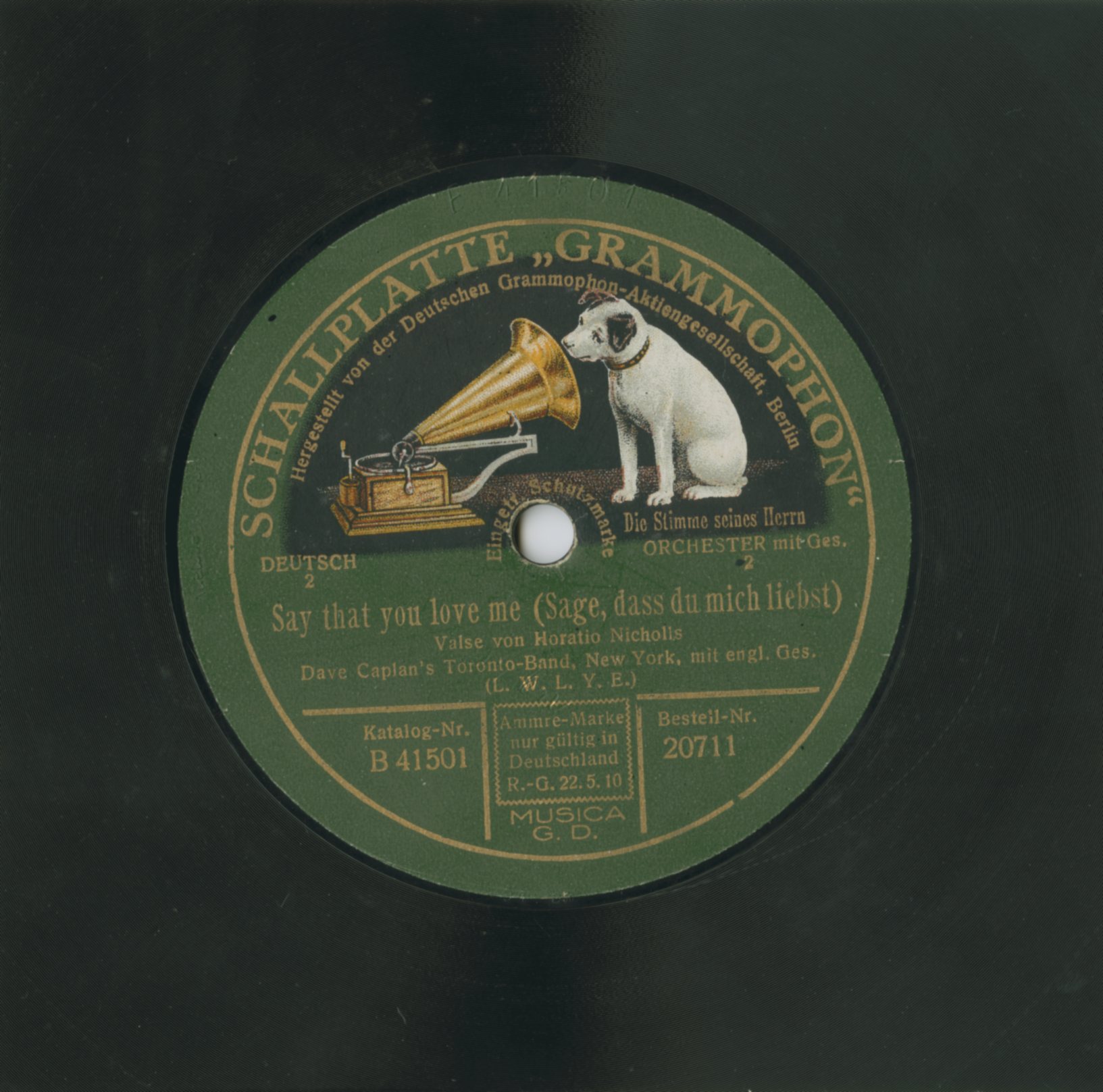
“Say That You Love Me”

A colour photograph of a record label with the Deutschen Grammophon logo of a dog peering into a record player horn.

“Say That You Love Me” by Dave Caplan’s Toronto Band, 1926 (AMICUS 45168037)

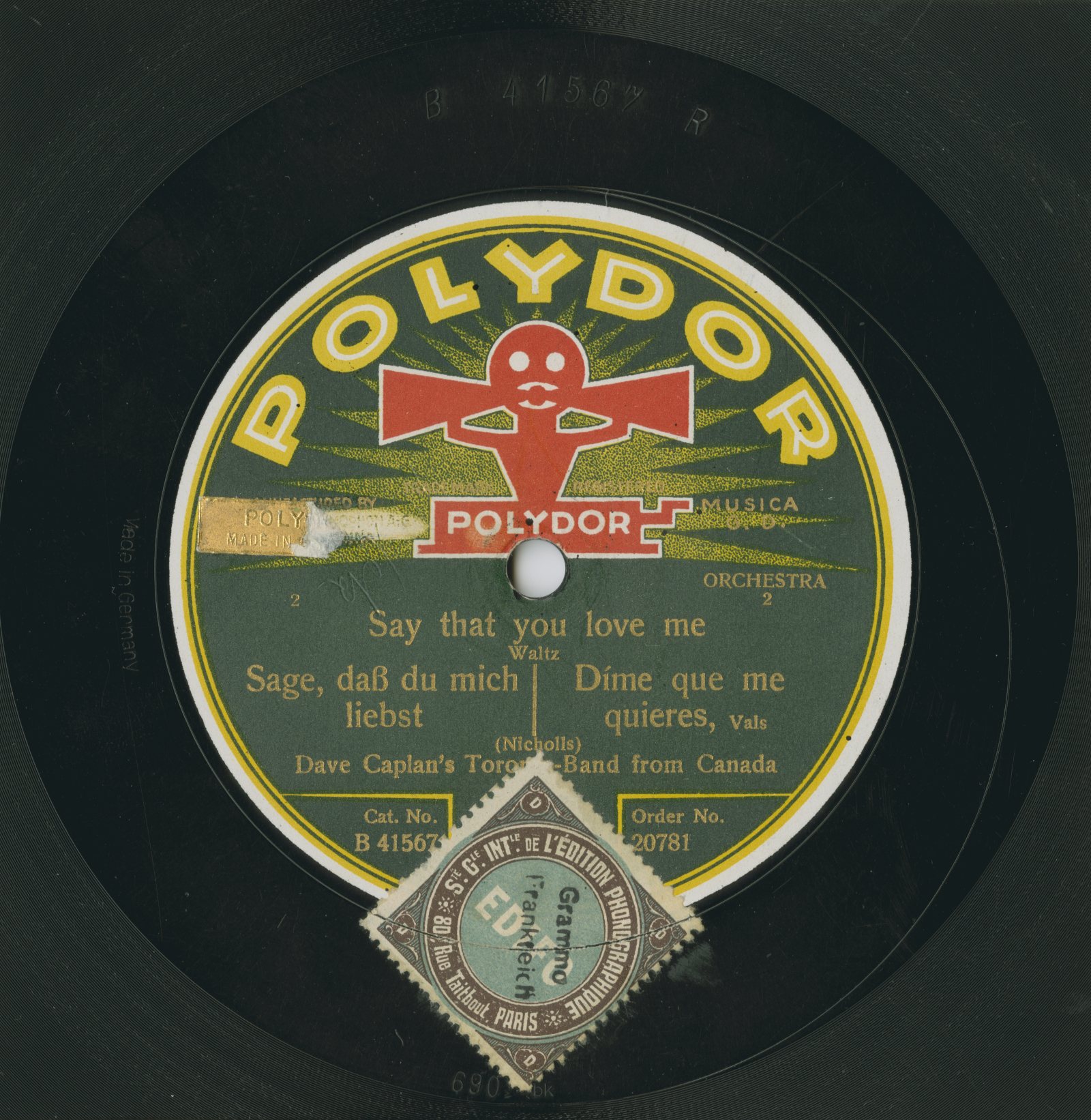
[Listen to “Say That You Love Me” by Deutschen Grammophon or “Say That You Love Me” by Polydor] The only waltz among this set—as the title suggests, this tune is schmaltzy, romantic and like most of big band music, pleasingly over the top. Halfway through the recording, we hear Les Allen add some vocals ending with the lyrics, “Say that you love me—I love you!” The disc was distributed by Deutschen Grammophon-Aktiengesellschaft and a second recording (instrumental only) from Polydor has also been digitized.

The Polydor release of “Say That You Love Me” by Dave Caplan’s Toronto Band, 1926 (AMICUS 45168371)

The Polydor release of “Say That You Love Me” by Dave Caplan’s Toronto Band, 1926 (AMICUS 45168371)

Head on over to the Virtual Gramophone to peruse other music from the same era.

Sources


Margaret Ashburner is the Special Collections Librarian of the retrospective music collection at Library and Archives Canada.

Voilà – Canada’s new National Union Catalogue

Banner with the word Volià in large font.

Library and Archives Canada is proud to launch of Voilà, Canada’s new National Union Catalogue, hosted on the OCLC website.

We have been working with the non-profit cooperative OCLC, a leader in library services, to implement a leading-edge library management system to make the published heritage of our country more visible than ever before, and share Canada’s culture and knowledge with the world.

Starting today, we invites members of the Canadian library community to use Voilà.

Learn more about Voilà

Images of Gilmour & Hughson Forestry now on Flickr

Allan Gilmour (1775–1849) was a senior partner in the firm of Pollok, Gilmour & Co. from which numerous co-partnerships and offshoots evolved, and played a prominent part in the Scottish and Canadian lumber and shipbuilding businesses. Allan Gilmour’s brothers and nephews opened numerous branches in Canada—at Miramichi, Quebec, Montréal and elsewhere. The Bytown operation began after the opening of a Montréal partnership in 1828, which dealt in supplies for the square timber trade on the Ottawa River. In 1841, his nephew Allan Gilmour Jr. took over this operation with James Gilmour, named it Gilmour & Co., and opened the Bytown branch to procure timber and sawn lumber for the Quebec market. Eventually, lumber operations grew significantly.

A black-and-white photograph of the Gilmour and Hughson mill on the river. The mill is in the foreground with timber floating on the river and along the bank.

View of the Gilmour and Hughson mill from the water (MIKAN 5006499)

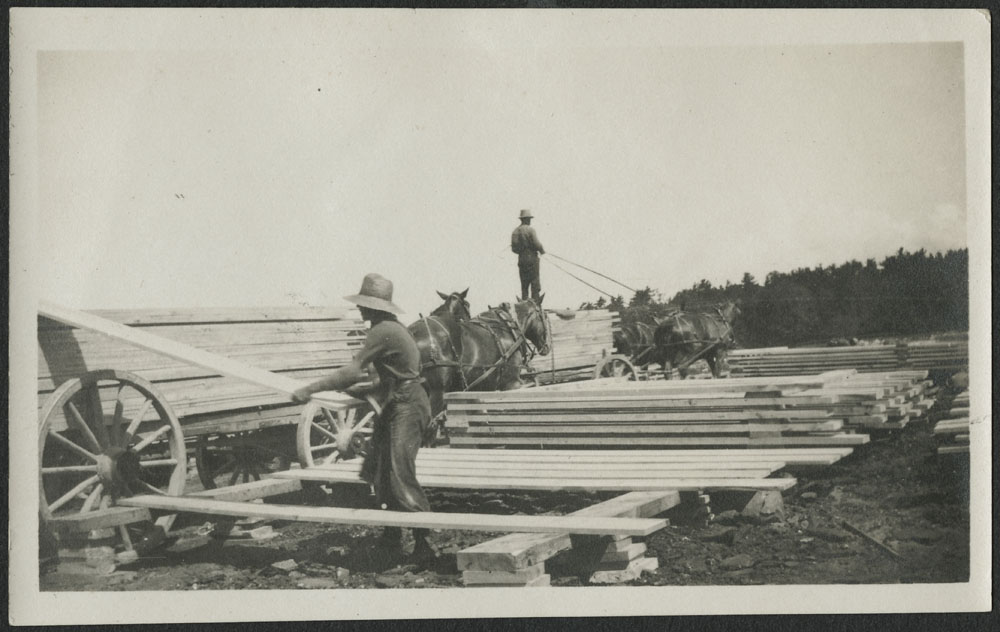
A black-and-white photograph of a man loading milled lumber onto a horse-drawn wagon. A second, full wagon is leaving the area with its driver and horses.

Men loading lumber at the Gilmour and Hughson mill (MIKAN 5006500)

In the 1870s, the branches at Miramichi, Quebec and Montréal closed, leaving the Ottawa lumber operation in the control of John Gilmour’s sons. In 1891, the company Gilmour & Hughson was formed by John Gilmour Jr. and Ward Hughson, an Albany lumberman. In 1895, the concern was incorporated (58-59 Vic., Cap. 89). In the mid-1920s, it was announced that Gilmour & Hughson Ltd. was being sold to the firm of Riordon & Co. However, Riordon & Co. went into bankruptcy and the properties owned by Gilmour & Hughson and its operations were taken over by the Gatineau Company Limited, a subsidiary of the Canadian International Paper Co.

A black-and-white photograph of the Gilmour and Hughson mill on the river. The mill is in the foreground with timber floating on the river and along the bank.

View of the Gilmour and Hughson mill from the water (MIKAN 5006499)

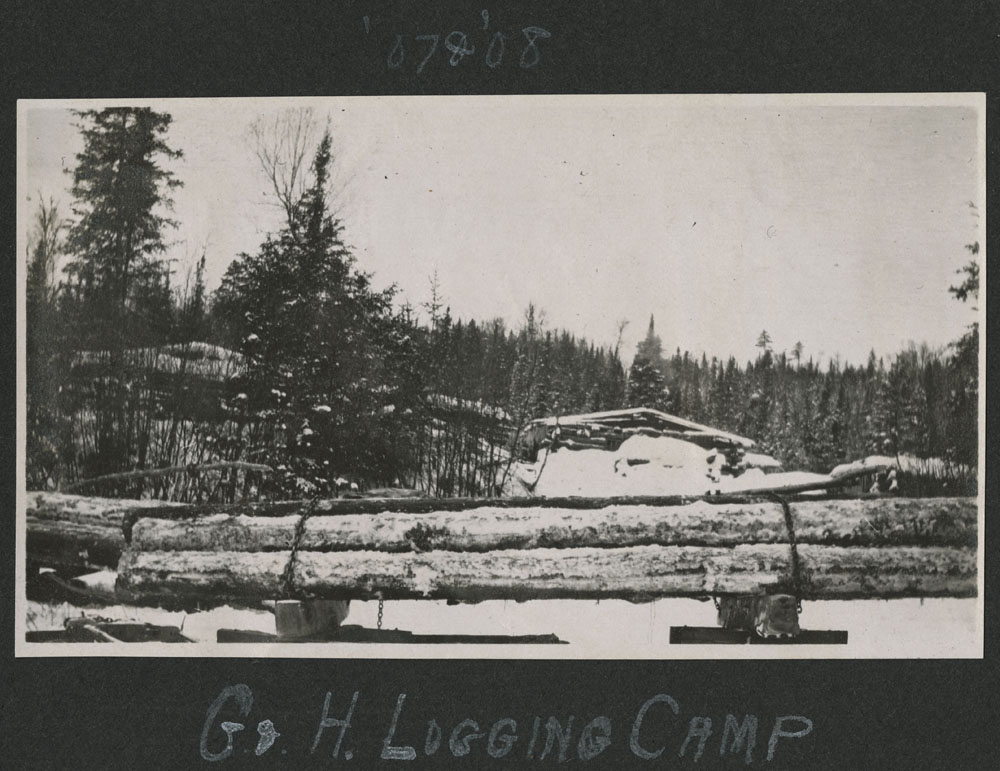
A black-and-white photograph of a Gilmour and Hughson logging camp during the winter. Log shelters are in the background along a line of trees. Fresh cut timber is stacked and chained in the foreground.

Gilmour and Hughson Logging Camp (MIKAN 5006507)

Visit the Flickr album now!

The literary season has just wrapped up; did you see it go by?

By Euphrasie Mujawamungu

In early autumn or more likely in late summer,
Before the birds—great and small—pull up stakes and fly south,
Well before Parliament resumes sitting,
And on the eve of the back-to-school rush,
While some employees are still enjoying the sun,
The new literary season magazine appears,
Awaited by bookshops, readers … and especially librarians,
Not to herald the falling leaves, oh no—
New releases, new novels, new poems, new ways of doing things, and more.

Publishers release most of their books during this period, to put themselves in a strong sales and marketing position. Those few months before the end-of-year holidays give readers the chance to shop and to benefit from the recommendations of other book lovers for holiday gifts. This is also when avid readers stock up on their literary supplies so they can curl up with good books during the fall and winter.

This is the time when publishers and bookshops suggest lists of candidates for various awards, as most of these are handed out in the fall. Books that win awards or are named “staff picks” are in high demand among readers; another reason not to miss the literary season!

It bears mentioning that according to the provisions of the Library and Archives of Canada Act, all publications, regardless of medium or form, must be legally deposited by their publishers or authors. Legal deposit enables Library and Archives Canada to collect, preserve and make accessible all of Canada’s published documentary heritage.

Colour photo of a book cart with two copies of each book.

A book cart with new releases.

Many publishers and authors meet their legal deposit obligations when their publications are released. Consequently, the Legal Deposit team receives more publications in the fall than during other times of the year.

Just imagine the passion of the authors, the enthusiasm of the bookshops, the excitement of the readers!

Books in all formats have a place of prominence—the library—cared for by a devoted staff!

Our contact information:

Legal Deposit
Library and Archives Canada
395 Wellington Street
Ottawa, Ontario  K1A 0N4
Canada

Telephone: 819-997-9565
Toll free (Canada): 1-866-578-7777 (Select 1+7+1)
Toll free (TTY): 1-866-299-1699
Fax: 819-997-7019

Email:
bac.Depotlegal-LegalDeposit.LAC@canada.ca (Physical or Analogue Legal Deposit)
bac.Depotlegalnumerique-DigitalLegalDeposit.LAC@canada.ca (Digital Legal Deposit)
bac.archivesweb-webarchives.LAC@canada.ca (Web Harvesting)


Euphrasie Mujawamungu is an acquisitions librarian with the Legal Deposit team in the Published Heritage Branch at Library and Archives Canada.
New Books in the Genealogy Services Collection at 395 Wellington

We’re excited to announce genealogy publications acquired during the past year, which you can consult in the Genealogy and Family History Room located on the 3rd floor of the Library and Archives Canada building at 395 Wellington Street.

Check out the list below. After each title, you will find our call number, which will help you find the book on the shelves. The link to the Aurora record provides additional information.

If you’re just starting out in genealogy, you should visit the Genealogy and Family History section of our website.

Church, cemetery and newspaper indexes

Répertoire des naissances, des mariages et des décès de la paroisse de Saint-Edouard, Péribonka de 1902 à 1941 et de la paroisse Sainte-Jeanne d’Arc, Lac Saint-Jean de 1921 à 1941 by the Société d’histoire du Lac-Saint-Jean. CS88 QC41 P47 2016 (OCLC 965703149)

Saint-Clément de Beauharnois : naissances et baptêmes, 1819-2009 by the Société du patrimoine de Sainte-Martine. CS88 QC43 B42 2016 (OCLC 971267216)

Saint-Clément de Beauharnois : décès et sépultures, 1819-2000 by the Société du patrimoine de Sainte-Martine. CS88 QC43 B42 2016b (OCLC 971267216)

Répertoire des pierres tombales du Lac Saint-Jean by the Société d’histoire du Lac-Saint-Jean. CS88 QC41 L316 2016 (OCLC 971267130)

Val-Brillant (Saint-Pierre-du-Lac) : naissances, annotations, mariages et décès by a collaboration of Madeleine Bélanger, Jeannine Cummings, Marie-France Daigle, Micheline Dubé, Francine Gagnon, Louise Roy, Benoît Sinclair. CS88 QC47 V34 2016 (OCLC 973043886)

Family histories

Les Otis en Matanie : de la Nouvelle-Angleterre en passant par Charlevoix by Claude Otis. CS90 O75 2016. (OCLC 959691961)

Les Saint-Hilaire d’Amérique et leurs cousins Guérin, Merpaw, Monpas, Montpas, Morpaw, et Vidricaire by Guy Saint-Hilaire. CS90 S236 2016 (OCLC 971267218)

Nos pionniers… : de leur histoire à la nôtre : Kedgwick 1915-2015 by Chloé Martineau and Guillaume Deschênes-Thériault. CS88 NB51 K42 2015 (OCLC 946651723)

Beam/Boehm Family: Immigration to Canada 1788-2000 by Lawrence R. Beam. CS90 B3222 2010 (OCLC 971267120)

Tout ou presque sur les Harvey du Québec by André Harvey. CS90 H328 2016 (OCLC 991290117)

Évidences de communautés métisses autour de la baie des Chaleurs, d’hier à aujourd’hui by Victorin N. Mallet, PhD. CS88 NB51 A1 2016 (OCLC 987578382)

Genealogy guides

Ontario municipal records: a beginner’s guide by Fraser Dunford and the Ontario Genealogical Society. CS88 ON3 D869 2015 (OCLC 907967857)

Ontario land records: a beginner’s guide by Fraser Dunford and the Ontario Genealogical Society. CS88 ON3 D867 2015 (OCLC 907967856)

Happy exploring!

A new way to search the Library and Archives Canada collections

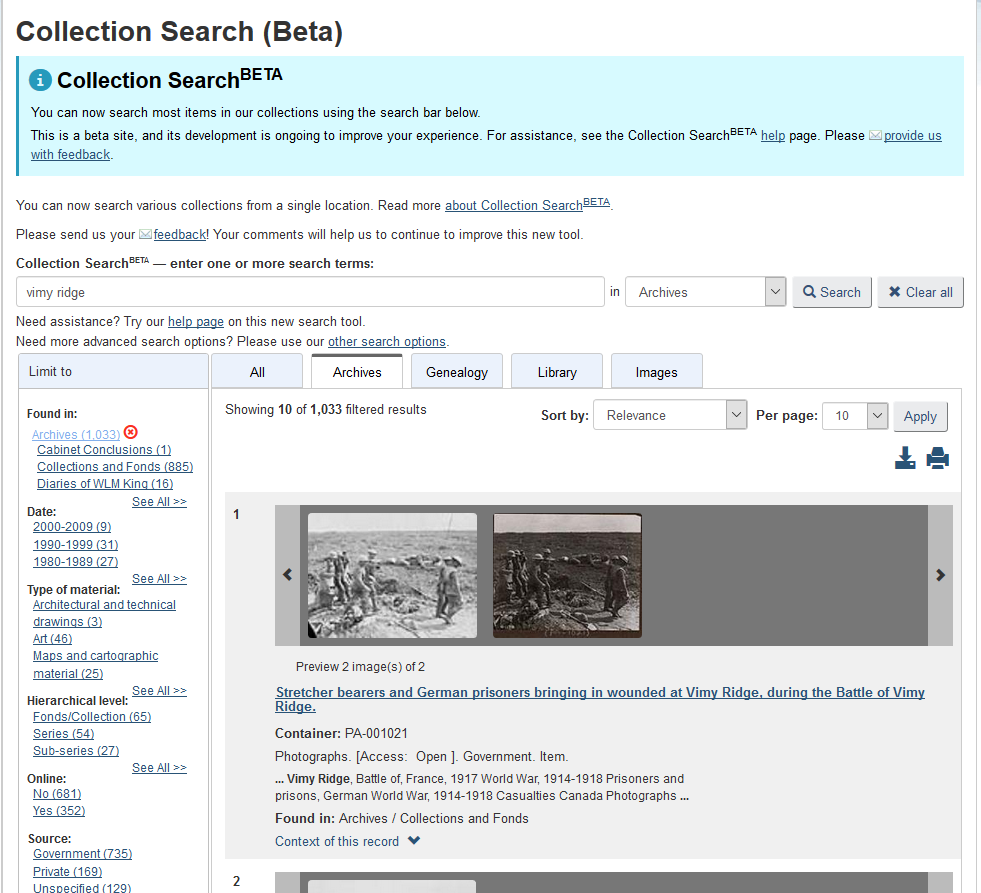
Library and Archives Canada (LAC) has just released its newest search tool, Collection SearchBETA, and is inviting you, as a member of the public, to try it out and provide your feedback. This new interface allows users to search through Library records and Archive records, including items from many of the different specialized databases at LAC, like the William Lyon Mackenzie King diaries; Film, Video and Sound database; and Cabinet Conclusions.

The new Collection SearchBETA enhances user experience by adding a ‘tab’ interface to explore the entire collection with just one search term or phrase. There are also some new features like the ability to download or print your search results. Simply navigate forward and back between the records you’ve found, and refine your search results by individual year.

A screen-capture of the new Collection SearchBETA interface, showing Archives results for the search term “vimy ridge.”

A screen-capture of the new Collection SearchBETA interface, showing Archives results for the search term “vimy ridge.”

Some important things to note about the new Collection SearchBETA:

  • This is a BETA website—there may be some technical issues as we continue to improve this new search interface—please continue to use our site and be patient as we make adjustments and improvements!
  • For now, the Collection SearchBETA is a simple keyword search interface. For advanced search capability and the ability to perform Boolean searches, you can continue to use our existing Advanced Library Search and Advanced Archives Search tools.
  • You can now search most of the items in our collections from one single location and we will continue to add to the list, but not everything is accessible via the Collection SearchBETA just yet. For an up-to-date list of what the Collection SearchBETA includes, check out  the about page.

Try it out and let us know what you think using the feedback link on the Collection SearchBETA home page—we’re eager to hear your thoughts so we can continue to improve this new tool.