Frederick Bourchier Taylor

Canadian artist Frederick Bourchier Taylor (1906–1987), was a man of many interests and many talents. He was born in Ottawa and mostly raised there; living briefly in London, England from 1916 to 1918 after his father was transferred there during the First World War. Upon returning to Ottawa, he graduated from Lisgar Collegiate in 1918. He became a student of McGill University in 1925 after his parents asserted that he must complete university before embarking on any sort of artistic career. While at McGill, Taylor studied architecture and developed a keen interest in skiing and boxing. As a testament to Taylor’s many talents, in 1927 he was awarded McGill’s Anglin Norcross Prize for drawing, and also became the university’s heavyweight boxing champion.

After graduating in 1930, Taylor studied, exhibited and worked in Britain as well as Canada, finally settling in Montreal by 1937. During this period, he earned a living by teaching drawing at the McGill School of Architecture and painting portraits.

After war broke out in 1939, Taylor began an unsuccessful lobbying campaign in an attempt to get the Canadian Government to put into place an officially sanctioned war-art program. Undeterred by the Government’s refusal, Taylor used his artistic talent as well as family connections (his brother was Canadian businessman and millionaire E.P. Taylor) to gain access to and document Canadian Pacific Railway′s Angus Shops in Montreal, along with several Canadian shipyards and other Canadian war industry factories.

During this period, Taylor was able to paint over 200 works that document the diverse, strenuous, and often unrecognized or under-appreciated work done by Canada’s factory workers. Library and Archives Canada has some of these works in its art collection. These paintings consist of 19 small-sized studies along with eight larger finished works documenting factory workers in the fur and garment industry of Montreal during the 1940s. In these works, Taylor has used a muted palette of industrial greens, browns and greys. Taylor has demonstrated an extraordinary ability to capture not only the industrial atmosphere and harsh fluorescent factory lighting, but also the intense look of concentration on the faces of the workers.

Taylor continued his artistic career after the War, exhibiting and participating in shows mostly in Quebec and Ontario. In 1960, he moved to Mexico where he tried his hand at sculpture and silk screening. Frederick Taylor died by suicide in Mexico, in 1987.

Resources

From the Lowy Room: the magnificent 1657 Walton Polyglot Bible

Although Brian Walton sounds like a guy you could google or find on LinkedIn, one glance at his likeness in the 1657 Polyglot Bible, resplendent in bishop’s robes, quill in hand, will quickly disabuse you of that notion. Walton, indeed, was a product of the 17th century and left a legacy in the form of the magnificent multilingual Bible comprised of original tongues and early translations. Two versions of the bible were printed, the earlier one is known as the “Republican” version which thanks Cromwell in the dedication for removing the import tax on paper. The latter one is known as the “Loyal” version as it was printed after the Restoration of the Monarchy. Library and Archives Canada (LAC) has the privilege of owning both versions. These bibles are just some of the treasures available in the Jacob Lowy Room at 395 Wellington Street for scholars and the general public due to the foresight of Mr. Lowy and LAC.

Colour photograph of a richly ornate book with gold leaf and the inscription “Bibla Polyglotta Walton” on the spine.

The 1657 Walton Polyglot Bible (AMICUS 940077)

If not for the Polyglot that bears his name, Walton’s face and backstory might not have made it to the 21st century, as his grave was destroyed in the Great Fire of London. An active and controversial clerical figure in the 1600s, he disagreed with some of his puritan parishioners and a House of Commons committee over the issue of tithes. Forced into early retirement in Oxford, he used the opportunity of enforced leisure to brush up on a few ancient languages, conceive a plan to create a polyglot Bible, sell the idea to eminent scholars of the day, and enlist the services of his colleagues who specialized in Eastern learning.

Colour photograph showing an image of a man standing in bishop’s robes with a quill in his hand and looking directly at the reader.

Engraving of Brian Walton in the introduction to the 1657 Polyglot Bible.

At least three polyglot Bibles had appeared in Europe in the 1600s but Walton was interested in creating a less costly, more saleable version. It was a successful commercial venture, even though Walton had priced it at £50. It often was the most expensive book on the shelves of scholars and gentlemen. This was the first work to be sold in England by subscription. By the time the work was ready for press, over £9,000 had been collected. It also represented a technological triumph of the day, being the first Bible to print all versions side by side on the same page.

Colour photograph showing the different languages side by side.

An example from the 1657 Polygot Bible with all the languages and scripts laid out

That is just one of the incredible features of this six-volume set that gives new meaning to the word “tome.” Seeing the ancient biblical text appearing in nine languages, including Hebrew, Greek, Syriac, Arabic, Ethiopic, and Persian on one page, with Latin translations of each language, makes you wish you had taken more languages at school.

The Walton Polyglot is a unique work with a unique story to tell, not only through its content but also through its more than 400-year journey from London into the Montreal home of Jacob Lowy who donated his entire world-class library of rare and old Hebraica to LAC in 1977.

For more information about the Lowy Collection, please visit http://www.collectionscanada.gc.ca/lowy-collection/index-e.html.

Opening the vaults: 10 million pages and counting!

In 2010, Library and Archives Canada (LAC) initiated a new risk-based process called “block review” to open more federal government records under the auspices of Canada’s Access to Information Act and Privacy Act. This initiative has been very successful and LAC is proud to announce that we have opened more than 10 million pages of Canadian government records, which are now available to the public.

What is a block review?

It is the systematic review of blocks or series of government records currently held in LAC’s permanent holdings. It incorporates a risk-based approach that looks at both the age of the record and the subject. Block review is completed by using various sampling strategies to determine whether the records can be opened for public access under both the Access to Information Act and the Privacy Act. The process involves identifying and examining representative parts of the archival record and, based on the findings, the records are either opened or not.

What records were targeted for the block review process?

LAC holds a myriad of Canadian federal government records documenting all aspects of Canadian public life. The block review process has opened material on many of these subjects. Of particular interest are:

  • records documenting Canada’s military history
  • records providing evidence of the relationship between the federal government and Canada’s Aboriginal population
  • archival material detailing our significant diplomatic and trade relationships with foreign governments and international organizations
  • regional documents created across all of Canada as the federal government administered its numerous functions and activities
  • archival material documenting how we celebrated our centenary in 1967—of timely interest as Canadians prepare for this country’s 150th anniversary
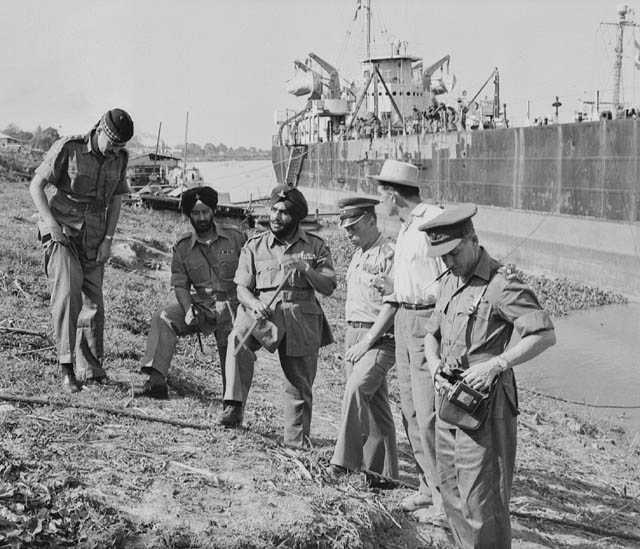
Black-and-white photograph of six men standing on the seashore, with a ship visible in the background.

An example of a collection that is now more widely available through the block review process. The photograph relates to the Canadian delegation for the International Commission for Control and Supervision in Vietnam in 1955 (MIKAN 3192391).

More records will open up as LAC continues to contribute to Canada’s Open Government initiative. We will be posting updates on the progress of the initiative, so watch for highlights of the collections being opened up to Canadians.

Library and Archives Canada releases eighteenth podcast episode, “Canada’s Flag: The Maple Leaf Forever”

Library and Archives Canada (LAC) is releasing its latest podcast episode, Canada’s Flag: The Maple Leaf Forever.

Our flag, with its distinctive maple leaf and bold red-and-white colour scheme has become such a potent symbol for our country that it’s hard to believe it has only been around for 50 years. On February 15, 1965, the new flag flew for the first time on Parliament Hill for all to see, but unveiling the new design was anything but easy. In this episode, we speak to retired LAC archivist Glenn Wright about the history of the flag, and the controversy that almost kept it from coming into being.

Subscribe to our podcast episodes using RSS or iTunes, or just tune in at Podcast – Discover Library and Archives Canada: Your History, Your Documentary Heritage.

For more information, please contact us at podcasts@bac-lac.gc.ca.

Celebrating 50 years of Canada’s national flag!

Canada’s national flag celebrates its 50th anniversary! Approved by Parliament on December 15, 1964, the flag was proclaimed by Queen Elizabeth II to take effect on February 15, 1965.

Colour reproduction of the proclamation of the Canadian flag. It describes the proportions of the flag and states the dates when the flag will come into effect.

The Proclamation of the Canadian Flag (MIKAN 2909612)

The issue of selecting a representative and unique Canadian flag went through waves of debate following the First and Second World Wars, and in 1964 it became a hotly contested government priority for Lester B. Pearson’s Liberal minority government. Announced in May 1964, Pearson’s push to select a Canadian flag by December 1964 was criticized by the Progressive Conservative opposition, headed by John G. Diefenbaker, who wanted to take such a decision to a public plebiscite.

In September 1964, Tommy Douglas, leader of the New Democratic Party, suggested an all-party committee to select this nationally significant symbol through parliamentary consensus. The idea was endorsed by the government and the fifteen-member National Flag Committee was created, chaired by Member of Parliament John Matheson. After reviewing thousands of submissions, the solitary red maple leaf on a white square between two red borders was selected by the Committee as the unifying symbol for Canada. This submission was made by historian George F. Stanley who described the idea as simple, devoid of British and French national symbols, and easily recognizable as being Canadian.

The selection of the red maple leaf was then debated and voted on by Canada’s 26th Parliament. The passion surrounding the debate did not dissipate. By the time the final vote occurred in the House of Commons, the debate had lasted into the early hours of December 15th and it was two o’clock in the morning!

Library and Archives Canada (LAC) has digitized several of the public’s submissions to the National Flag Committee. Some of these proposals can be found on LAC’s Flickr website.

Do you want to know more about this moment in Canadian history? Check out the links below to investigate other parts of LAC’s flag holdings:

Here are some other links from the Internet relating to Canada’s flag debate:

Did your ancestors come from Japan?

Do you want to know who your first Japanese ancestor was and when he or she left Japan and arrived in Canada? Are you curious about your Japanese origins?

If so, our website is a great place to begin your research. Here you will find a page dedicated to genealogical research on the Japanese. This page provides you with historical information, archival documents and published material from the Library and Archives Canada collection, as well as links to other websites and institutions. During the Second World War, more than 20,000 Japanese people were placed in internment camps and relocation centres in the interior of British Columbia, in Alberta and in Ontario.

If your ancestor came to Canada between 1865 and 1935, you might find his or her name on the passenger lists.

The William Redver Stark sketchbooks: page mapping

In the last article on William Redver Stark, we discovered that the 14 sketchbooks show signs of structural and physical damage. We also noted that all of the sketchbooks had some pages missing and five sketchbooks had numerous pages missing. It is impossible to determine if Stark removed the pages himself or whether they were removed by someone else at a later date. Nonetheless, removing pages resulted in a series of negative outcomes for the sketchbooks:

  • The remaining halves of the folio pages became loose in the text block
  • The loose pages were moved so that the original order and orientation were changed
  • The loose pages became damaged as their edges projected beyond the protective covers of the sketchbooks
  • The spines and sewing structures of the sketchbooks became unstable and deteriorated
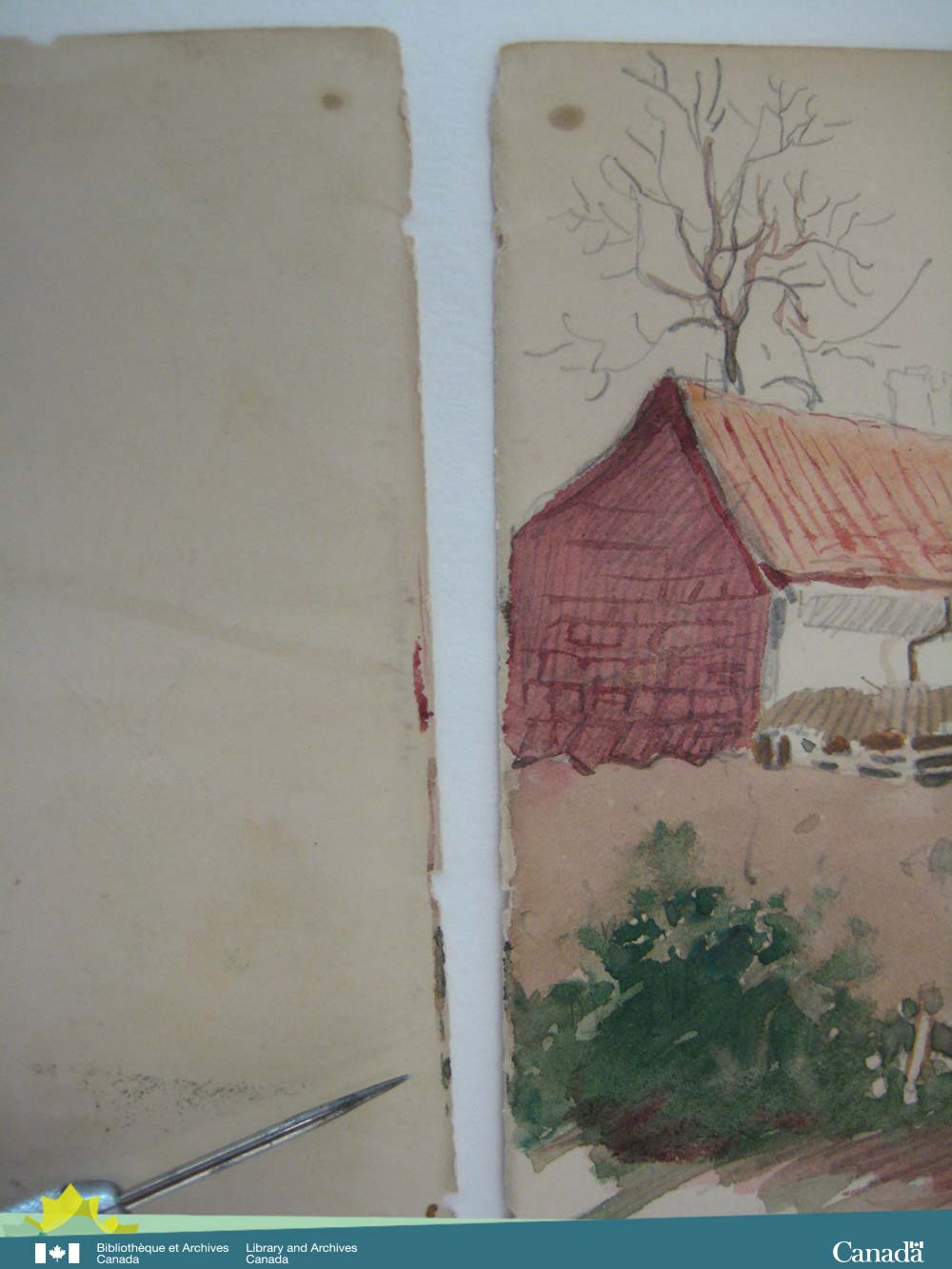
Colour photograph of two pages; the left hand page shows where there’s a thin line of the watercolour on the far right edge that is the continuation of the image.

The sequence of two single pages was discovered by a thin line of watercolour pigments on the edge of the left page which matches the right page.

To begin to remedy these issues, the conservation team examined each sketchbook page by page to determine the original orientation and order of pages. This was accomplished by looking at all the little details—the media, watercolour, ink or graphite, the bindings and every instance of damage to the pages—and mapping them out very carefully. The team used various light sources, angling the light to view physical details of the paper, a microscope for magnifying every minute detail and the precise measurement of each page.

Colour photograph of an open sketchbook showing a watercolour on the left and the transferred media on the right

Media transfer—this page was turned when the watercolour was still wet, transferring green and brown watercolour onto the facing page. The loose page is returned to sequence.

The most conclusive evidence for the original order of the pages was:

  • Media transfer and media overlap
  • Paper damage such as repetitive stains, tears and losses
  • Impressions left in the paper from the artist’s drawing instruments and the binding materials
  • Dimensions and undulations in the paper and the location of the binding’s sewing holes
  • Artist’s notations with dates and locations
Colour photograph of an open sketchbook. On the left page is a sketch of a lion which has transferred to the right page.

The graphite lion on the left is mirrored in a media transfer onto the right page confirming the sequence of these two loose pages.

Evidence that matched up two or more pages in a certain sequence was documented and the long process of revising the page order began. Each detail was catalogued in a template which really helped to develop an understanding of the sequence for each sketchbook.

Black-and-white image showing a chart that is used to catalogue the existing and the original order of the sketchbook pages.

The page mapping template describes the contemporary sequence and the most likely original collation of the sketchbook. The documentation includes details of the number of pages per signature (grouping of sheets folded and stitched together); the number and location of missing, repositioned and blank pages; pagination; and paper type. Artist’s inscriptions are recorded as well.

The first page mapping chart shows examples of media transfer and overlap. Media overlap would have occurred when Stark was actually sketching or painting as the media was applied beyond the intended area or page. Media transfer happened after sketching or painting when the sketchbook was closed and pages were in direct contact with either wet or friable (crumbly) pigments. In both cases, media was visible on the preceding or subsequent pages and provided evidence of the original order.

In the next part, we continue to explore page mapping by looking at damaged pages.

Do you have ancestors of Black heritage?

Version française

Do you want to know when or how your ancestor your first arrived in in Canada? If so, our website is a great place to begin your research. Here you will find a page dedicated to genealogical research on Black heritage. This page provides you with historical information, archival documents and published material from the Library and Archives Canada collection, as well as links to other websites and institutions.

After the American Revolution, the British gave passage to over 3,000 slaves and free Blacks who had remained loyal to the Crown. These Black loyalists joined the many other United Empire Loyalists in settlements across the Maritime Provinces of Nova Scotia, New Brunswick, and Prince Edward Island. Other Black slaves joined their Loyalist slave owners when they migrated to Canada. Names of those Black Loyalists can be found in the Port Roseway Associates, Muster Book of Free Blacks, Settlement of Birchtown, 1784 and Ward Chipman, Muster Master’s Office (1777–1785) databases.

Canadian directories online

Library and Archives Canada is pleased to announce the release of a new version of the online database Canadian Directories. An addition to the page includes full versions of the directories in PDF format, as well as newly digitized directories which are not available through the database.

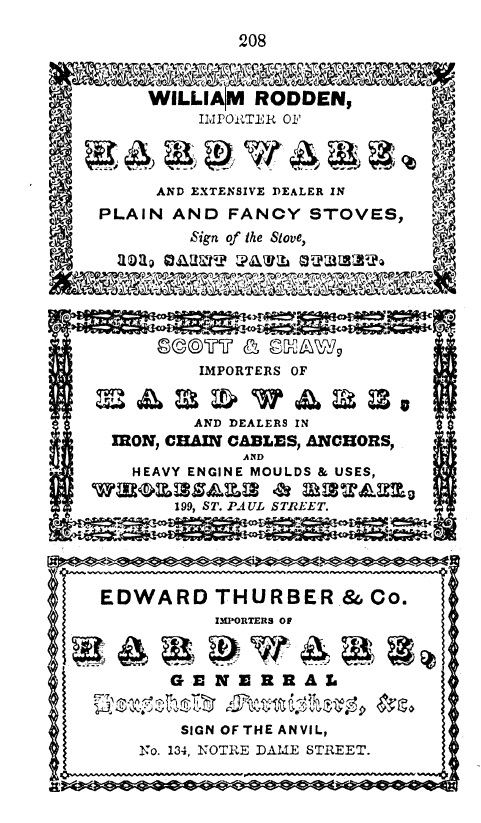
Black and white illustration of a page from the directory featuring three business card ads for hardware.

Business card-style advertisement from The Montreal Directory for 1842–3, page 213.

These 152 new directories are for the Ontario cities of Hamilton, Kingston and London and for the counties of Southwestern Ontario.

Enjoy!

All papers are not created equal

You may be aware that over the last 25 years, there has been a major effort to convert paper production from acidic products that deteriorate quickly to more stable paper. The movement largely came from the library community’s concerns about rapidly deteriorating paper in their collections. The result is that there are now no western producers making acidic papers anymore (other than newsprint), which is great news for libraries, archives and consumers.

Not all of these papers, however, can be guaranteed to truly last long-term (by that we mean over 300 years). Manufacturers can, and do, change the chemical composition of papers quite regularly, and as consumers and staff in a library/archive, it is good to know what is available and how to use it best.

So, let’s look at what’s around us. Our inexpensive everyday photocopy paper is not acidic when tested with a pH pen. This paper can be labeled “acid-free.”

Colour photograph of piece of paper with the words: “Purple = Ok!!” on it. This means that the paper is acid-free.

Test of the pH on everyday photocopy paper.

But it does not meet standards for longevity that we want for paper that will be incorporated with collections on a permanent basis. It’s perfectly fine for bookmarks and flags—items used temporarily.

For long-term quality, look for papers that are marked “permanent” or “archival,” with the infinity symbol set inside a circle.

An image of the acid-free paper symbol—the number eight lying on its side enclosed in a circle.

Infinity symbol designating a permanent or archival quality paper.

Permanent papers can be made with wood pulp (where the harmful acidic lignin is found), but the lignin is generally removed and no acidic additives are included during manufacture. Permanent papers are expected to last several hundred years under normal library or archival storage conditions. To be labeled “permanent” with the infinity symbol, the paper must meet either ISO 9706 or ANSI/NISO Z39.48-1992 standards.

Archival papers are made to an even higher standard and will last up to 1000 years. These papers are produced with cellulose fibres from plants other than wood and do not contain lignin (usually cotton or linen). Also, the standard for archival papers (ISO 11108) includes requirements for paper strength, which the standards for permanent papers do not include.

Papers labeled as either permanent or archival are recommended for long-term use with collections. It is probably best to choose archival papers when strength is a consideration, such as wrapping or enclosures.

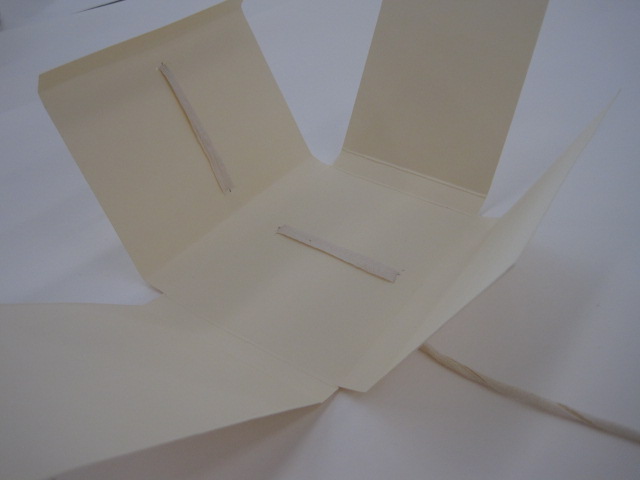
A colour photograph showing an enclosure to house textual documents.

An archival quality paper enclosure.

As a final note, it is important to remember that the storage environment for paper also has a huge impact on its longevity. For every five-degree reduction in temperature, it is estimated that the lifespan of paper doubles. Everybody put on a sweater!