Diversity and the Freedom to Read: Who’s Missing?

By Liane Belway

Readers and writers across Canada will celebrate Freedom to Read Week this February 18–24. This annual event raises awareness about access to books for all Canadians and about how published material can be challenged, all in support of the fundamental right of Canadians to freedom of expression. One way to gain perspective on the freedom to read is to ask the simple question: who’s missing?

Readers have opportunities to read material that reflects the diversity of Canadian authors, readers and communities, with increased opportunities to discover even more. Now more than ever, we celebrate and support this discovery. For instance, did you know that Canada has our very own Festival of Literary Diversity (FOLD) to celebrate Canadian and international authors? The FOLD even includes a monthly challenge to encourage readers to explore diverse authors and books. Spoiler alert: February’s challenge is to read a book that has been challenged in Canadian schools!

Social media is another great place to find diversity in Canadian books and reading. On some platforms, a quick search with keywords and hashtags devoted to discussing all things bookish will produce a wealth of reading recommendations. Some videos and other content celebrate and critique diverse and exciting books, sometimes bringing them to a mainstream audience that might otherwise have not had the chance to learn about them. Other social media posts include critical and often passionate discussions about why people love, and sometimes don’t love, certain books, all with an eye for the inclusion of ideas and voices and, of course, that encourage people to read! Reading diverse material is one of the best defenses against book challenges, as well as misinformation, misunderstanding, and generally missing out on so many interesting, moving and often award-winning books.
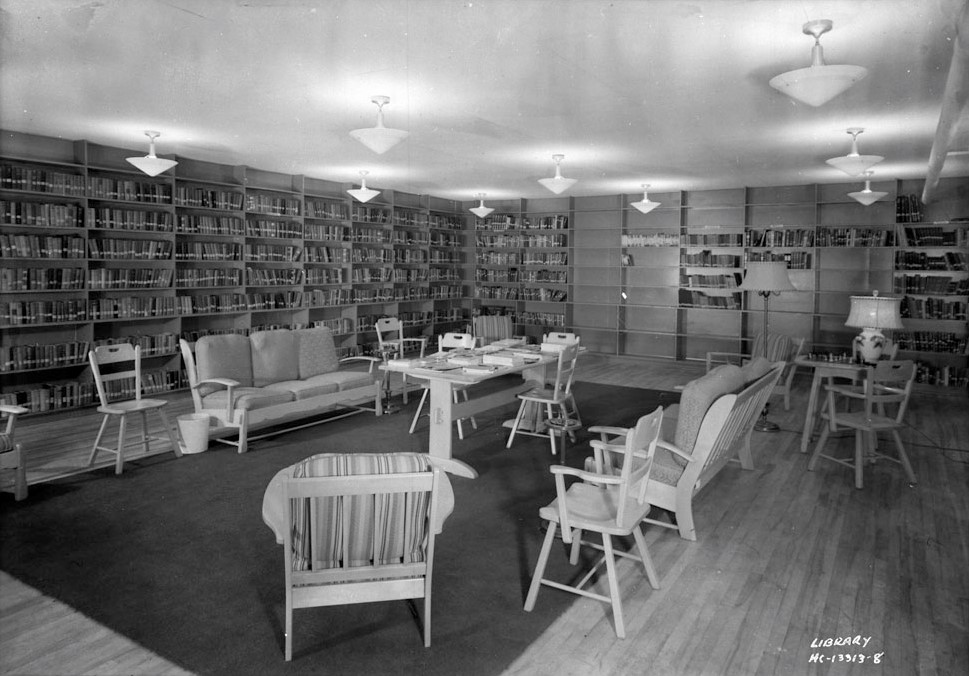
Chairs circling a table in the middle of a room surrounded by shelves with books.

Making sure there are enough seats to discuss diversity in Canadian books (a064449).

Library and Archives Canada (LAC) has always played a unique role in the protection of the freedom to read and in the preservation of Canada’s voices. Diversity takes work, and LAC strives to include and protect all voices, including taking steps to better reflect the realities of the past for the benefit of the present and the future. One example is determining what we might have missed or not fully represented historically, and then working to change that, improving both the collection and the experience of readers and researchers. As Canada’s national library, LAC’s role will also be changing and expanding this year to become a campaign partner for Freedom to Read Week.

For forty years, the Book and Periodical Council (BPC) has been championing Freedom to Read Week. Now LAC, along with the Canadian Urban Library Council and the Ontario Library Association, proudly joins BPC in the important work to support the Canadian freedom to read. In addition, LAC aims to facilitate co-operation among communities involved in the acquisition, preservation and diffusion of knowledge in Canada.

LAC also works tirelessly to preserve the diverse documentary heritage of all Canadians. We collect and make accessible published works that reflect this rich variety and depth. LAC’s mandate includes the monumental task of acquiring copies of Canadian publications. There are a few rules, of course! The Library and Archives of Canada Act requires us to collect works published in Canada: under the Act, a publisher who makes a publication available in Canada must submit copies to LAC in order to make the publication available to the public. This process includes steps like LAC accepting second physical copies, when required, and digital publications in non-proprietary formats to ensure long-term preservation for future generations. LAC also works to collect and preserve publications in formats accessible to all readers.

Did you know that LAC also collects and preserves books that have been challenged in Canada? You can consult the list of Challenged Titles and Authors from our collection to see for yourself. Another spoiler: you might be genuinely surprised by some of the books you find here.

Reading diverse material is more important than ever in a time where challenging publications can interfere with the freedom to read. Canada has a long, if often little-known, history of challenging books and voices. Across Canada, publications can be challenged for different reasons and for various audiences, including school libraries and public libraries with differing mandates and policies. The freedom to read can be notoriously challenging to protect, despite its inclusion in the Charter of Rights and Freedoms. Libraries and readers share the responsibility to protect and support the freedom to read and always work towards a vital goal: when it comes to authors that Canadians read, no one is missing.

Freedom to Read Week will take place from February 18–24, 2024. To learn more about this year’s campaign, check out the Freedom to Read website.


Liane Belway is an Acquisitions Librarian with the Industry Outreach team in the Private Archives and Published Heritage Branch at Library and Archives Canada.

Don’t fear virtual conferences!

By Sarah Potts

Recently, I’ve been thinking about how Library and Archives Canada (LAC) staff, like many Canadians, have been working full time from home for almost a year. I also thought about how my work has changed during the pandemic. The reality is, my work as an acquisitions librarian never stopped, but my usual way of working and interacting with my field did. So when I had the opportunity to attend a virtual professional event, I jumped at it.

A colour photograph of a laptop on a wooden table, with a lamp and pens in the background.
Welcome to my office (it’s really just my dining room table)

Virtually engaged

I attended the Library Journal (LJ) Day of Dialog, an event that was launched over 20 years ago. Traditionally, it’s a one-day in-person event with multiple iterations throughout the year. The LJ Day of Dialog allows librarians and publishers to connect, talk and highlight the latest trends in books.

Because of COVID-19, the event became free and went online. Most of the sessions were pre-recorded. What had originally sold me on attending the conference was having live sessions, because it would remind me of what it was like to participate in a discussion in person.

The conference did have elements of an in-person event, though. There were opportunities to interact with fellow attendees, but through a chat function. We were able to exchange ideas, and sometimes to have a group discussion with authors. This situation was challenging, since both my mental tabs and my Internet tabs were at their maximum. I spent so much time looking up concepts that I forgot to engage with the very conversation I was a part of and to pay attention to the event! There was so much I could do that I worried I wasn’t doing enough on the day of the conference.

Despite knowing that I could access the sessions afterward, I still worried that if I didn’t attend the event as it happened, I would miss something important at the moment. I found it hard to step away from my computer and take a break. I even found myself checking social media “just in case” I missed something. I knew then that I was experiencing FOMO, the “fear of missing out.”

Too much to attend, too little “time”

The term FOMO was popularized in the early 2000s by American author and researcher Patrick McGinnis. Essentially, it means that when you step away from an event or discussion, you worry that you’ll miss something important or exciting. In my case, I thought of never-ending what-ifs and questions. I asked things like, “If I step away from the event, will I miss making a connection with someone?,” “Could stepping away mean that I’m not fully engaged?,” “What if I don’t ask a question during the session? Will my colleagues think less of me?” I spent more time worrying about what could happen than enjoying what was actually happening.

My FOMO extended beyond the conference sessions. I had trouble disconnecting from my other work, too. When attending an in-person conference, I often don’t check my work emails, instant messages or phone. But while attending the LJ Day of Dialog, I couldn’t help myself. If a client emailed me, I would email back immediately; if one of my colleagues sent me an instant message, I felt compelled to respond right away. I felt that if I left my work for a while, I was doing something wrong. It’s an unsettling feeling, and it’s heightened when I work from home. I knew it wasn’t healthy, but I couldn’t disconnect.

Ottawa, we have a problem

It took someone else, in this case my mom, twisting my arm to get me out of that state of mind. She reminded me that it’s healthy to step away and reconnect with myself. Stepping away allowed me to refresh and engage in a more meaningful dialogue with publishers.

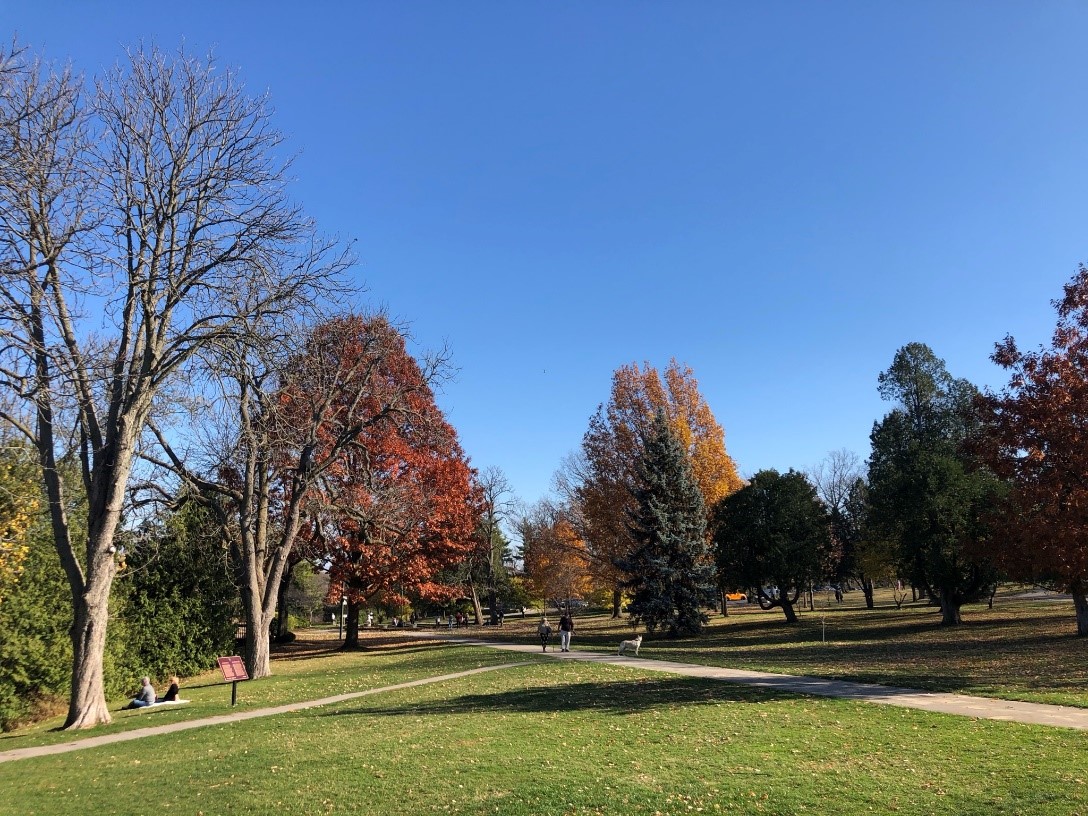
A colour photograph of a park with trees.
I became so obsessed with staying connected that I didn’t disconnect and ended up using my “break” when I went for a walk at a local park to continue listening to the conference (location: Queenston Heights National Historic Site, Niagara, Ontario)

I’m not saying that attending a virtual conference is terrible, but it presents challenges that I had never encountered before. I enjoyed the opportunity to connect with librarians worldwide; I connected with international authors and their publishers. Looking back, I now see the benefit of going and viewing the pre-recorded sessions once more. I can learn at my leisure, and catch concepts I missed the first time when I was caught up “in the moment.” I was able to grow and learn more about my work style.

Many Canadians have published online articles (in French) (isn’t it ironic?) and shared ideas (in French) about overcoming FOMO (in French). Most shared the same solution: step away and embrace the joy that comes with living in the moment. It may be hard at first—I can attest to this!—but it makes the event more enjoyable and, in my case, more comfortable to focus on.

At LAC, we’re lucky to hold a few books by Canadian authors and publishers on this topic. These are some fantastic options!

  • The Joy of Missing Out: Finding Balance in a Wired World by Christina Crook, New Society Publishers (2015). OCLC 897352546
  • Taking a Break from Saving the World: A Conservation Activist’s Journey from Burnout to Balance by Stephen Legault, Rocky Mountain Books (2020). OCLC 1201519705
  • It’s My Tree (translation of C’est mon arbre) by Olivier Tallec, Kids Can Press (2020). OCLC 1135581755

Sarah Potts is an acquisitions librarian in the Legal Deposit section of the Published Heritage Branch at Library and Archives Canada.