Superheroes of the Digital Universe: Digitizing the Bell Features Collection

By Meaghan Scanlon

Library and Archives Canada (LAC) is excited to announce a new digital resource for fans of Canadian comic books. The Bell Features Collection of Second World War-era comics has been completely digitized and is now available to researchers online.

The Bell Features Collection consists of 382 comic books, most in multiple copies, published in the 1940s by the Canadian comic book publisher Bell Features. These comics showcase an astounding selection of Canadian heroes such as Nelvana of the Northern Lights, Johnny Canuck, and Dixon of the Mounted.

Between November 2015 and March 2016, LAC’s digitization staff painstakingly photographed one copy of each issue held in the collection—a total of 193 comic books. At between 50 and 60 pages per comic, that’s around 10,000 pages!

Creating electronic copies of these delicate documents from LAC’s collection involved hours of careful labour from technicians in our digitization labs, who follow rigorous standards to get the best possible images while preserving the condition of the items.

The process begins with a technician placing a comic on a flat copy stand under an overhead camera, making sure to line the comic up with the camera so that the image taken will be straight. A sheet of Plexiglas is laid over the item to keep it flat. The Plexiglas is on small risers to ensure as little contact as possible with the surface of the comic. This helps prevent damaging the item by placing too much pressure on its spine. Every superhero has an archenemy, and so, too, does the digitization specialist: dust. A single particle on the Plexiglas can create a spot that ruins an image. The technician keeps an anti-static blower on hand to defeat this threat.
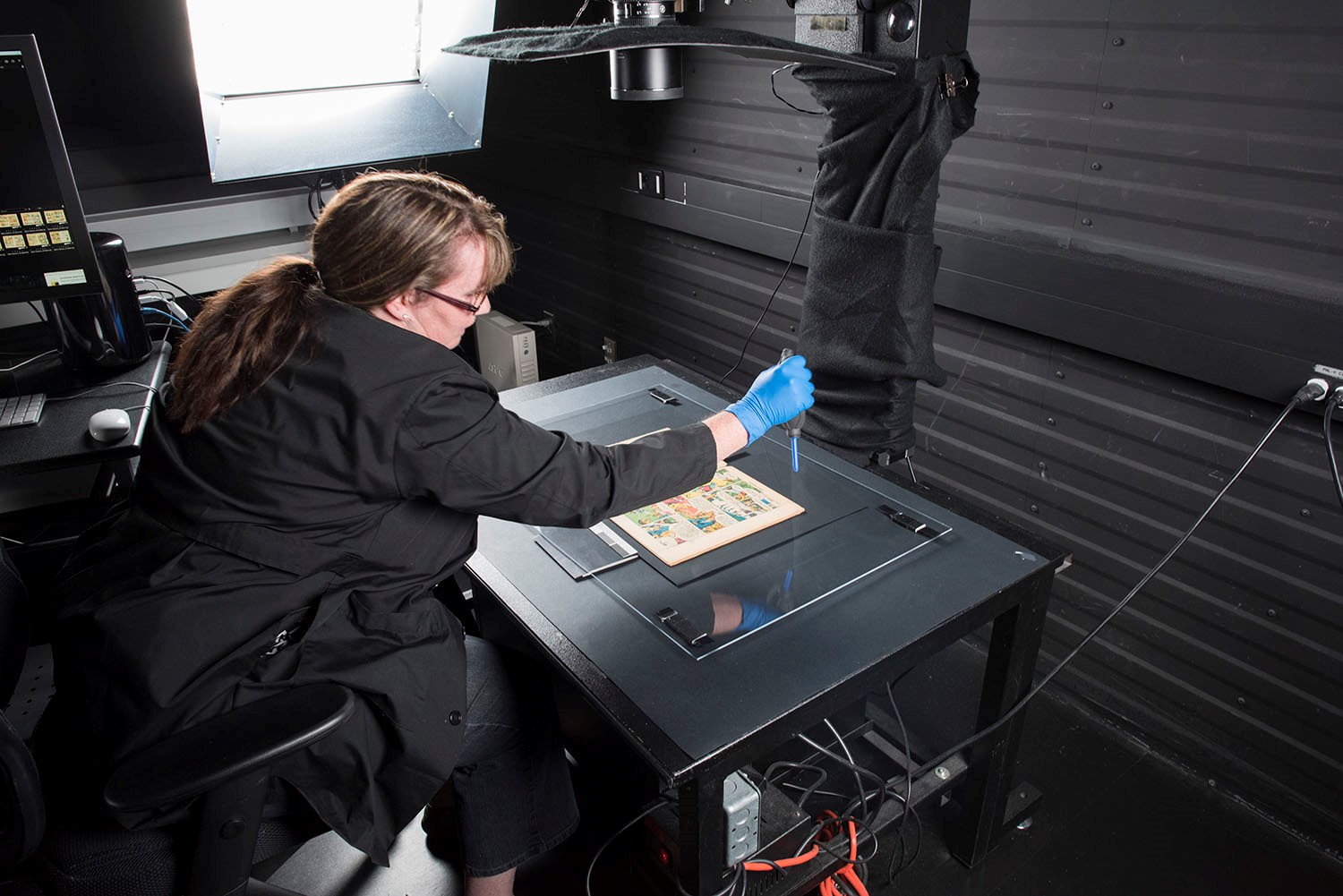
A comic book is placed on a flat black surface underneath a sheet of Plexiglas. A woman leans over the surface, using an anti-static blower to remove dust from the Plexiglas. The lens of a camera is visible above the table.

A digitization technician uses an anti-static blower to remove dust from the sheet of Plexiglas covering the comic book she is about to photograph. The camera lens can be seen suspended above the copy stand.

Once the comic book is in place, the technician uses an overhead camera to take a photograph. For the Bell Features Collection, a Phase One 645DF+ camera body with an IQ260 digital back and an 80-mm lens was used, with an F11 focus and a shutter speed of 1/13th of a second. The image taken with the camera is automatically uploaded to the technician’s computer, where she checks for imperfections. If she is satisfied with the image quality, she crops it in Photoshop and moves on to the next page.
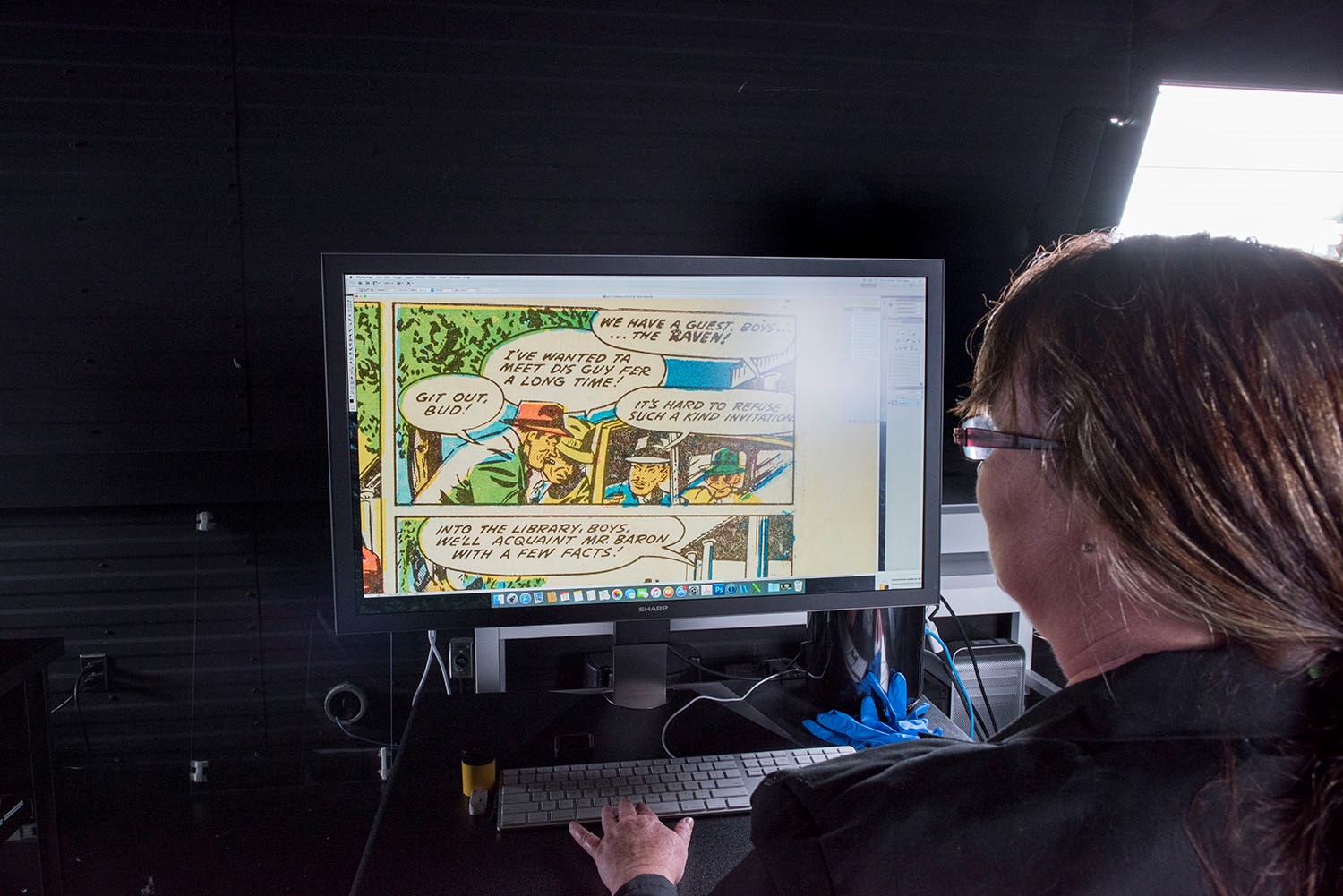
A woman faces a computer monitor showing an image of a page from a comic book.

A digitization technician checks for imperfections in the digitized image of a page from Slam-Bang Comics no. 7 (AMICUS 42623987), with art by Adrian Dingle.

This entire process is repeated for each page of each comic book. Once all the pages of an issue have been photographed and the images corrected, a PDF version is created. Finally, this PDF is uploaded to LAC’s servers and a link is added to the relevant record in LAC’s online library catalogue.

If you’re interested in checking out a few of these newly digitized old Canadian comics, you can find a small sample on our website. Hungry for more? The finding aid attached to the catalogue record for the Bell Features Collection (AMICUS 43122013) includes links to all of the digitized comics. You can also access them via the catalogue records for each of the individual titles in the Bell Features Collection; see for example the record for Active Comics (AMICUS 16526991).

In the Ottawa area? Encounter some of Bell Features’ characters on a bigger scale when you visit LAC’s exhibition Alter Ego: Comics and Canadian Identity. It runs at 395 Wellington Street in Ottawa until September 14th. Admission is free.

Additional resources


Meaghan Scanlon is the Special Collections Librarian in the Published Heritage Branch at Library and Archives Canada.
Anne in the library: introducing the Cohen Collection

Version française

By Meaghan Scanlon

In five accessions between 1999 and 2003, Canadian lawyer, film producer, and bibliographer Ronald I. Cohen donated his extensive Lucy Maud Montgomery collection to Library and Archives Canada. (See OCLC 1007773673 for a description of the collection.) The collection contains materials related to adaptations of Montgomery’s work, as well as anthologies and periodicals in which Montgomery is featured. But the bulk of the collection consists of various editions of Montgomery’s published novels, including, of course, her most famous book, Anne of Green Gables.

Among the approximately 420 items in the Cohen Collection are no fewer than 46 copies of Anne of Green Gables. Three of these are in Japanese, two in French, and one each in Korean, Finnish, Norwegian, and Swedish. The other 37 are in English.

Why, you might ask, would anyone need 37 English-language copies of Anne of Green Gables? Isn’t the story the same every time? The answer is that for book collectors, it’s often not about the story told in the text. Rather, collecting is an opportunity to discover the story of the book itself, its publication, and the way it has been marketed and received. Many book collectors set out to document the history of an author or title as completely as possible through their collections. For some, this means amassing many copies of the same title.

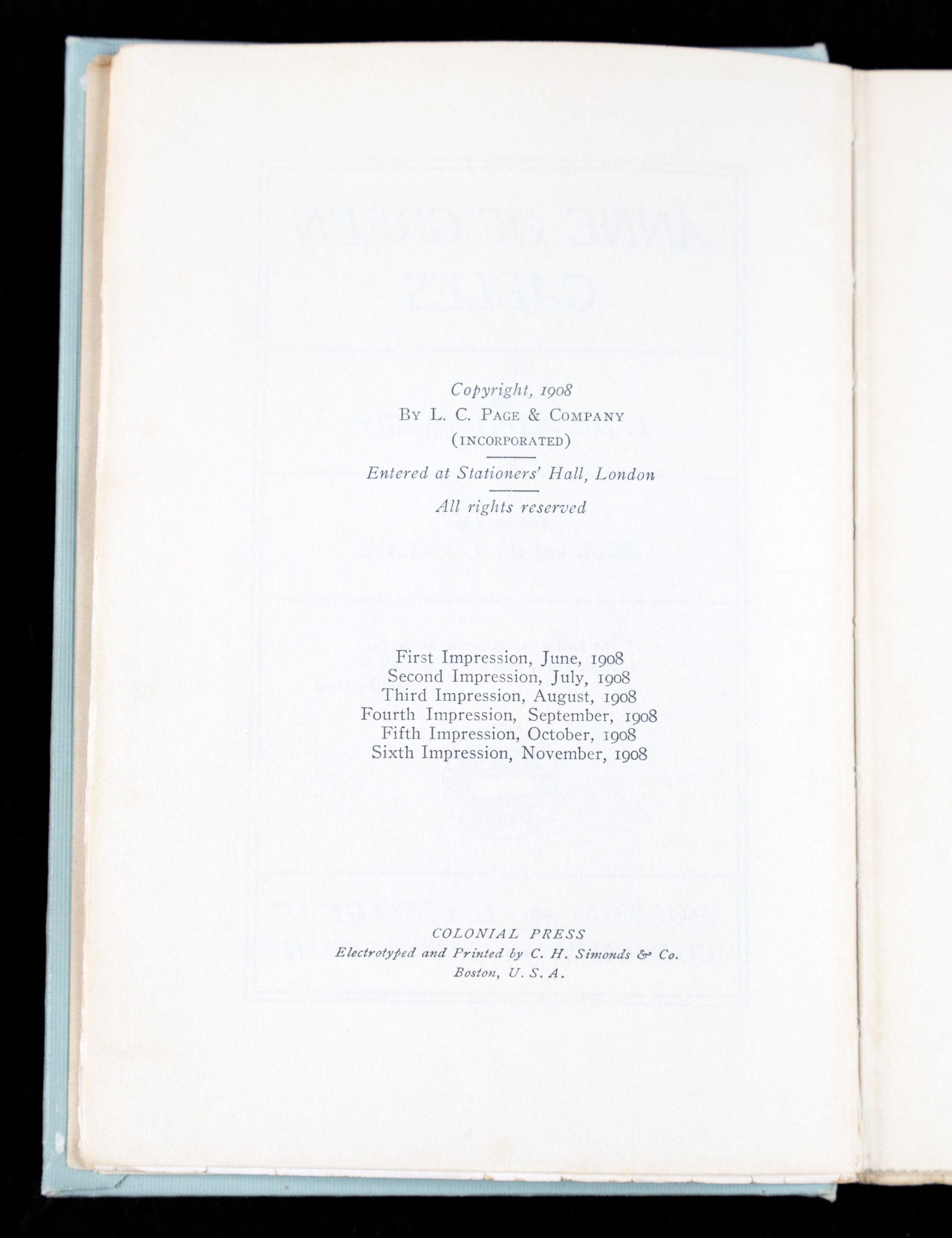
The Cohen Collection traces the spread of Anne of Green Gables across the English-speaking world through its inclusion of early American, British, Australian, and Canadian editions. The novel was originally published in Boston in April 1908 (OCLC 367111). This first edition was extraordinarily popular and Montgomery’s publisher, L. C. Page, reprinted it at least 12 times before the end of 1909. The Cohen Collection contains copies of the sixth (November 1908) and eleventh (August 1909) printings.

Copyright page of the Cohen Collection copy of the sixth printing of the first edition of Anne of Green Gables

Copyright page of the Cohen Collection copy of the sixth printing of the first edition of Anne of Green Gables (OCLC 367111, copy 5). “Impression” is another word for printing.

The first British edition of Anne of Green Gables was also published in 1908 (OCLC 19230504). Anne then made her way to Australia in 1925 (OCLC 220130129). Interestingly, despite the iconic status of Montgomery and her work in Canada, the first Canadian edition of Anne of Green Gables (OCLC 1006977498) did not appear until 1942. This edition, too, went through several printings; the earliest copy in the Cohen Collection dates from 1948.

Although the story remains the same in each edition, the depiction of its heroine, Anne Shirley, on the books’ covers does not. Audiences in different places and time periods have encountered different representations of Anne, from the mature-looking woman on the first edition to the sometimes cartoonish drawings on later versions. The Cohen Collection’s copies of Anne of Green Gables document the visual history of the character through their illustrations, cover art, and dust jackets.

In fact, when Ronald I. Cohen started collecting L. M. Montgomery’s books, finding copies with dust jackets was one of his main goals. Historically, dust jackets were often discarded by readers (and libraries!) and early examples can be extremely hard to find. The numerous rare dust jackets in the Cohen Collection are therefore a highly valuable resource for researchers looking at the history of one of Canada’s most beloved literary classics.

To learn more about the Ronald I. Cohen Collection of Works by L. M. Montgomery, listen to the latest episode of Library and Archives Canada’s podcast, Kindred spirits after all!


Meaghan Scanlon is the Special Collections Librarian in the Published Heritage Branch at Library and Archives Canada.
Images of fore-edge paintings now on Flickr

Fore-edge images are painted images on the edges of book pages. The pages are either fanned or closed for the image to be visible. These types of paintings can be found as far back as the 10th century. Early images were symbolic or decorative, but the art evolved into scenic landscapes or portraiture by the 18th century. Library and Archives Canada’s (LAC) Rare Book Collection has 12 volumes that are known to have fore-edge paintings.

Drawn from Real Life: Hillborough Studio’s First Canadian Comic Book Heroes

By Meaghan Scanlon

In August 1941, a small Toronto-based comic book publisher called Hillborough Studio released the first issue of its first title, Triumph Adventure Comics. The series is an anthology, with each issue containing several one-page humour strips along with a few longer feature stories. These features showcase heroic characters like Cape Breton strongman Derek of Bras d’Or and Inuit demigoddess Nelvana of the Northern Lights.

The fact that these characters both have distinctly Canadian identities is no coincidence. The first issue of Triumph Adventure Comics includes a letter from the comic book’s editor to its readers, which notes that the stories in issue no. 1 “all have a Canadian background, which will delight you not only in this edition, but in the many issues to follow.” Who would produce these Canadian stories? Naturally, the editor says Hillborough employs “the best artists in Canada.”

The team of artists and writers behind Triumph Adventure Comics sometimes drew on real-life Canadians for inspiration. The creators of Derek of Bras d’Or based the character on Angus McAskill (sometimes spelled MacAskill), a Cape Bretoner famous for his incredible strength and gigantic stature. McAskill, who was almost eight feet tall, toured the world as a curiosity during the 1840s and 1850s.

A black-and-white photograph of two men standing: one is very tall and the other is very short.

Angus MacAskill and Tom Thumb. (MIKAN 3531760)

Continue reading

Comic books at Library and Archives Canada

As the keeper of Canada’s national documentary heritage, Library and Archives Canada (LAC) collects a wide range of published Canadiana, including comic books. The collection includes not only comics published in Canada, but also comics by Canadian creators published in other countries. Comic books published in Canada are often acquired via legal deposit. But LAC has also received two important collections from private sources that greatly enhance its holdings of Canadian comics. The largest of these is the John Bell Canadian Comic Book Collection. Donated by comic book historian and former LAC archivist John Bell, the collection includes approximately 4,000 comic books, ranging from Second World War era superhero comics to 21st century zines. Currently, the collection is uncatalogued, but a complete list of all items in the first two accessions is available in AMICUS.

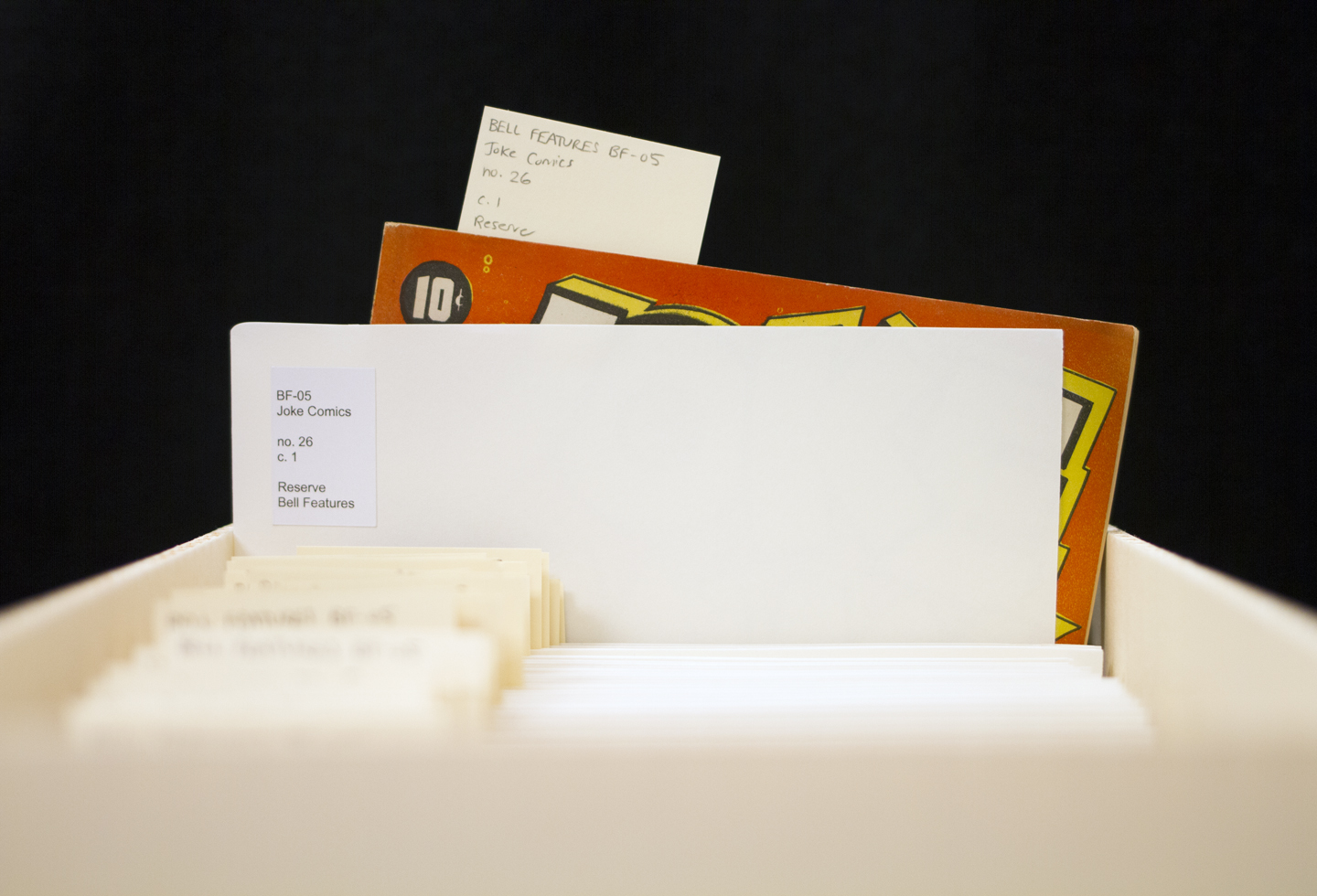
Colour photograph showing a filing box with folders with labels, one is pulled out half-way and a red comic book with the 10¢ price peeks out of the folder.

One box from the catalogued and housed Bell Features Collection

Second World War era Canadian comics are also well-represented in LAC’s Bell Features Collection, which consists of 382 comic books from the corporate archive of one of the major publishers of the period, Toronto-based Bell Features. These older Canadian comics are extremely rare, and the Bell Features Collection is one of the richest resources available. The collection has been fully catalogued, and a collection-level description listing all the titles is available in AMICUS. Over the last few decades, comic books and graphic novels have been increasingly recognized as a literary genre worthy of serious study. In the 1940s, however, comics were considered “throwaway” books for children, as demonstrated by the fact that many Bell Features comics include games and activities for young readers. Because of their ephemeral nature, 1940s comic books were printed on cheap, poor-quality newsprint. As a result, there are various conservation issues to consider when storing comics. Fortunately, the vaults at LAC’s state-of-the-art Preservation Centre provide optimal environmental conditions. The Bell Features Collection is stored in acid-free, closed boxes that protect the comics from harmful light exposure and dirt. Inside the boxes, each comic book is kept in a paper envelope that is open on the top and front edges allowing the comics to slide in and out of their housing with a reduced risk of catching or tearing on a tight opening. The envelopes also contain an alkaline reserve that helps slow down the harmful effects of the acid in the paper. Listen to the podcast Guardians of the North: Comic Books in Canada to learn more about Canadian comics.

Related resources

New additions to the Rare Books Collection: a census

After receiving the recent additions to the Rare Books Collection, the conservation team conducted a census or survey, to determine the state of the collection. The questions on the census were developed by Library and Archives Canada (LAC) conservators, in consultation with the rare book librarians. The conservation team then assessed the books individually and recorded the information.

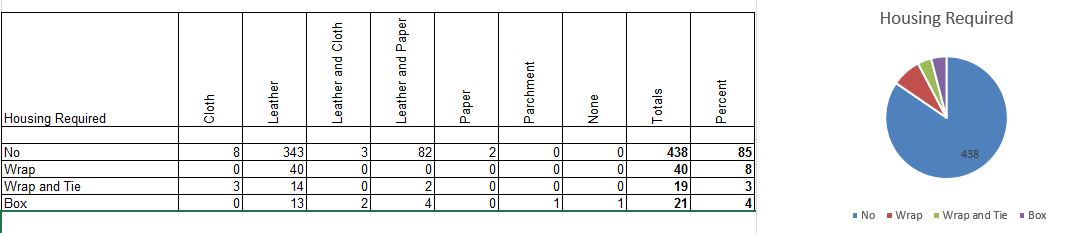
The primary information recorded was on the condition of the collection, but also included information about the decoration and style of the books. Everything was documented regarding the initial condition of each book and any need for conservation—whether minor or major conservation was needed, and if there was any structural damage. The level of leather deterioration and the need for leather consolidation (a surface treatment to stop the deterioration of the leather) was also noted. The specific housing needs for each book was also assessed and noted—whether a wrap, wrap and tie or box was needed. Other details recorded were: cover decoration, the presence of marbled paper and bookplates, and any interesting inscriptions, missing volumes, etc.

Pie chart showing the portions of the new collection in conditions ranging from poor to excellent.

Figure 1. The results of the new rare books condition census.

After the completion of the census, leather consolidation was carried out on 499 of the 518 books. Following these treatments approximately 8% of the collection was upgraded from fair to good condition. The number of books in fair condition decreased from 38% to 30% and the number of books in good condition increased from 27% to 35%. Rehousing was only needed for 15% of the collection and has been completed.

A table and pie chart showing the housing types required for the collection. The vast majority do not require any special housing, while some require wrap, wrap and tie, or boxes.

Figure 2. How much of the collection required rehousing.

Now that the census has been completed, the team has written a report that summarizes and presents all the results in easy-to-read graphs and charts. The report will be an invaluable tool for conservators, and will help plan future conservation projects as well as serve as a research tool for librarians and archivists.

The Rare Book Collection: recent additions

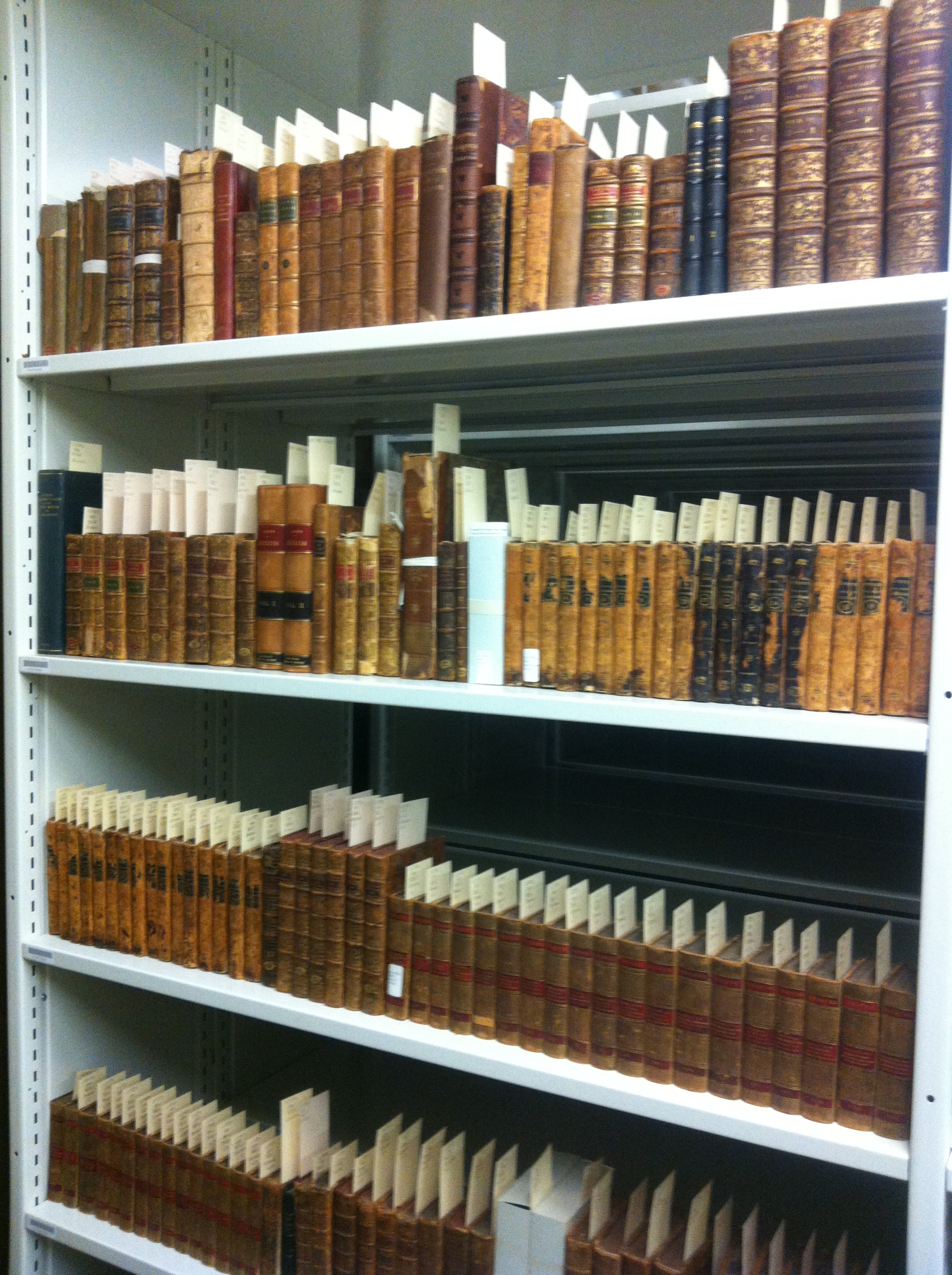
A collection of 500 pre-1800 books were recently relocated to a permanent location in Library and Archives Canada’s rare books vault. The vault is equipped with optimal environmental conditions to ensure this special collection is properly preserved for generations to come. Prior to being transferred to Library and Archives Canada, the books were owned by the Library of Parliament. Most of this collection consists of books published in England or France, and many are multi-volume sets. The subject matter ranges from geography and history to theatre and essays.


Colour photograph showing rows of books on a shelf. All the books are flagged with a slip of paper with a call number on it.

The permanent location in the rare books vault.

About the Collection

The majority of the books are 18th-century hand bindings bound in full or partial leather. The collection also comprises some books made of paper, cloth or parchment. The books are decorated with intricate gold titling and tooling and are often accented with unique and stunning marbled papers, commonly used as the endpapers.

Colour photograph of an open book showing a sumptuous marble paper used for the end paper.

Marble paper detail.

Colour photograph collage of four beaver-stamp images showing the different stamp styles on the books.

The Library of Parliament “beaver” stamp on the spine of many of the books. The style and intricate details of the beaver changes over the years, but the familiar trademark remains easily identifiable.

The condition of the books

Before being added to the Rare Book Collection, factors such as moisture, temperature, light and dust contributed to the deterioration of many of the books. Although some books are in excellent condition, with the binding structures and text blocks intact, many are damaged and show signs of damage. Some items have suffered from water and fire damage, or contain traces of a pest infestation, while others are weakened and damaged due to centuries of physical use.

Red rot and leather deterioration

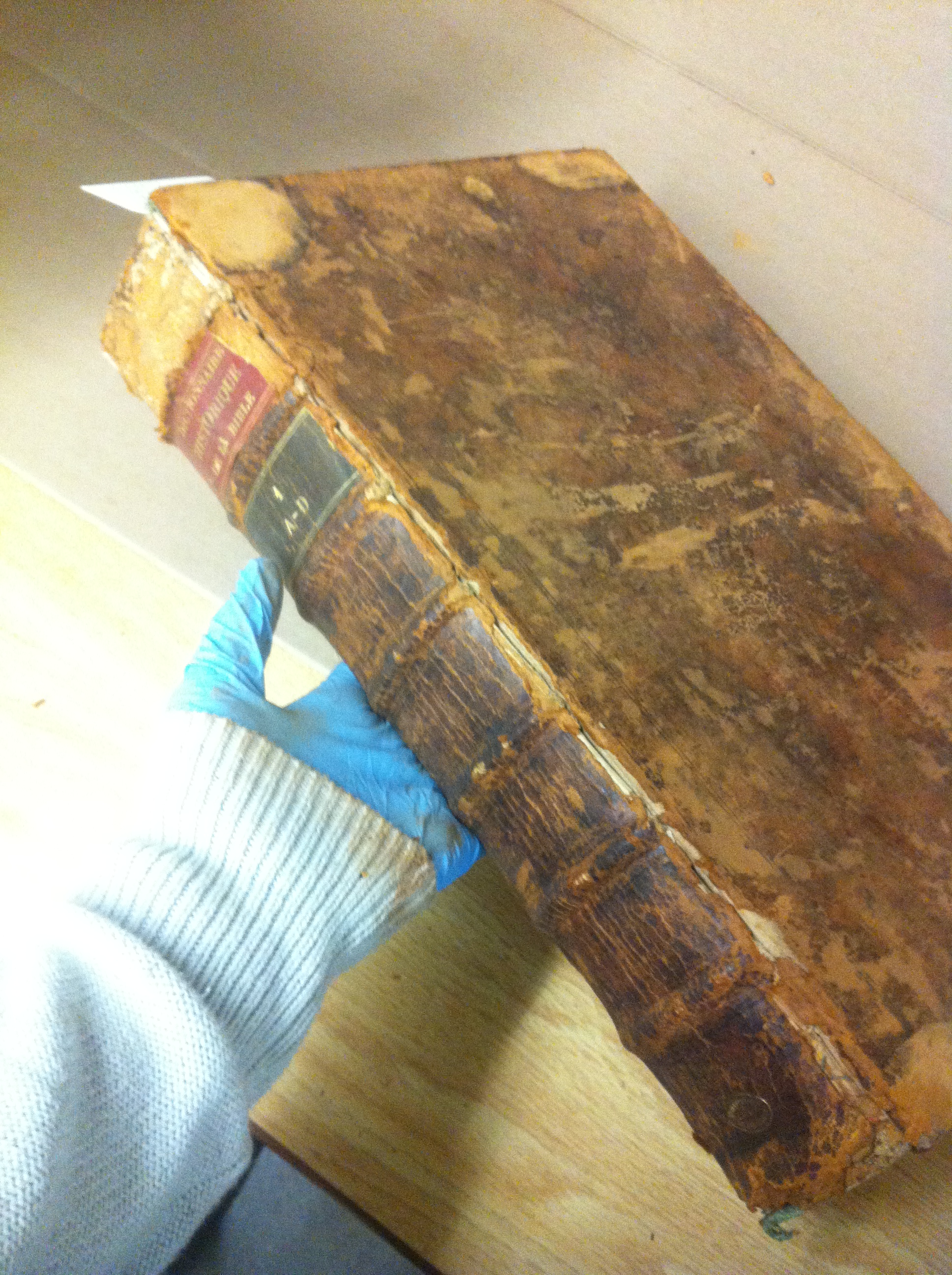
A large percentage of the collection (approximately 90%) suffers from various levels of leather deterioration. In some extreme cases, the type of damage is referred to by conservators as red rot. The deterioration of leather is a common issue in leather from this period as the tannins used in the manufacturing process contain chemicals that, over time, and in the presence of oxygen, undergo a chemical change that breaks down the leather molecules. This causes the leather to weaken, flake and powder.

Colour photograph of a gloved hand holding a book with the telltale signs of red rot. The glove and sleeve are covered in a fine reddish-brown coloured dust.

An example of red rot—the term describes the red-coloured powder that appears on the surface of badly deteriorated leather.

Next steps for this collection

So much can be learned from this collection of historical and beautiful books. Check back with us for the next blog posts on the physical inventory of this collection , which includes a detailed inventory of the state of the collection, the levels of conservation treatment required, the material composition of the books, type of decorations, etc. Also have a look at the following post, detailing what steps will be taken to preserve this fine collection.

From the Lowy Room: the magnificent 1657 Walton Polyglot Bible

Although Brian Walton sounds like a guy you could google or find on LinkedIn, one glance at his likeness in the 1657 Polyglot Bible, resplendent in bishop’s robes, quill in hand, will quickly disabuse you of that notion. Walton, indeed, was a product of the 17th century and left a legacy in the form of the magnificent multilingual Bible comprised of original tongues and early translations. Two versions of the bible were printed, the earlier one is known as the “Republican” version which thanks Cromwell in the dedication for removing the import tax on paper. The latter one is known as the “Loyal” version as it was printed after the Restoration of the Monarchy. Library and Archives Canada (LAC) has the privilege of owning both versions. These bibles are just some of the treasures available in the Jacob Lowy Room at 395 Wellington Street for scholars and the general public due to the foresight of Mr. Lowy and LAC.

Colour photograph of a richly ornate book with gold leaf and the inscription “Bibla Polyglotta Walton” on the spine.

The 1657 Walton Polyglot Bible (AMICUS 940077)

If not for the Polyglot that bears his name, Walton’s face and backstory might not have made it to the 21st century, as his grave was destroyed in the Great Fire of London. An active and controversial clerical figure in the 1600s, he disagreed with some of his puritan parishioners and a House of Commons committee over the issue of tithes. Forced into early retirement in Oxford, he used the opportunity of enforced leisure to brush up on a few ancient languages, conceive a plan to create a polyglot Bible, sell the idea to eminent scholars of the day, and enlist the services of his colleagues who specialized in Eastern learning.

Colour photograph showing an image of a man standing in bishop’s robes with a quill in his hand and looking directly at the reader.

Engraving of Brian Walton in the introduction to the 1657 Polyglot Bible.

At least three polyglot Bibles had appeared in Europe in the 1600s but Walton was interested in creating a less costly, more saleable version. It was a successful commercial venture, even though Walton had priced it at £50. It often was the most expensive book on the shelves of scholars and gentlemen. This was the first work to be sold in England by subscription. By the time the work was ready for press, over £9,000 had been collected. It also represented a technological triumph of the day, being the first Bible to print all versions side by side on the same page.

Colour photograph showing the different languages side by side.

An example from the 1657 Polygot Bible with all the languages and scripts laid out

That is just one of the incredible features of this six-volume set that gives new meaning to the word “tome.” Seeing the ancient biblical text appearing in nine languages, including Hebrew, Greek, Syriac, Arabic, Ethiopic, and Persian on one page, with Latin translations of each language, makes you wish you had taken more languages at school.

The Walton Polyglot is a unique work with a unique story to tell, not only through its content but also through its more than 400-year journey from London into the Montreal home of Jacob Lowy who donated his entire world-class library of rare and old Hebraica to LAC in 1977.

For more information about the Lowy Collection, please visit http://www.collectionscanada.gc.ca/lowy-collection/index-e.html.

Library and Archives Canada releases fifteenth podcast episode, “Out of the Ordinary: Rare Books”

Library and Archives Canada (LAC) is releasing its latest podcast episode, Out of the Ordinary: Rare Books.

Special Collections librarian Meaghan Scanlon joins us to discuss rare books and the collection (held at Library and Archives Canada) that has grown from relatively modest beginnings into one of the finest collections of rare printed material in the country.

Subscribe to our podcast episodes using RSS or iTunes, or just tune in at Podcast–Discover Library and Archives Canada: Your History, Your Documentary Heritage.

For more information, please contact us at podcasts@bac-lac.gc.ca.

From our rare book vault: What makes a book rare?

Version française

When you hear the words “rare book,” you might think of an old, valuable book that’s hard to find. That’s a pretty good general definition, but let’s take a closer look at some factors that can make a book “rare”:

Age

Although old books are often rarer than new books, age can be relative. The first printing press did not arrive in Canada until 1751—about 300 years after the first books were printed in Europe. A book printed in France in 1760 might not be considered very old. By contrast, one printed in Canada in the same year is extremely old, in Canadian terms. And, at Library and Archives Canada (LAC), we consider anything printed in Canada before 1867 old enough to go in the Rare Book Collection.

Provenance

A book’s provenance is the history of its origin and ownership. A book once owned by a famous person may have added value, particularly if the owner signed it or made notes in the margins.

[Coloured photo of a book’s front inside cover, with William Lyon Mackenzie King’s inscription dated September 8, 1894 on the right page. The opposite page has a Public Archives Canada/Archives publiques Canada book plate.]

William Lyon Mackenzie King’s inscription on the front page of An Introduction to the History of the Science of Politics by Sir Frederick Pollock (OCLC 1056964672).

Physical condition

A book in perfect condition is more desirable than one with a detached cover and missing pages. Maps or illustrations, or an intricate binding may also add to a book’s rarity. Old books do not always live their entire lives between the same covers, and it is common to find several copies of the same book that look different on the outside.

Scarcity

If there aren’t many copies of a book, it is, by definition, rare. Books printed in editions of fewer than 300 copies generally go into LAC’s Rare Book Collection, regardless of their publication date.

Significance

Some books, such as first editions of well-known novels, have more historical value than others. However, significance can be subjective; collectors may see value in a little-known edition of a favourite author’s work, while others might look at the same book and see no value at all.

That being said, a book might have all these qualities and still not be considered “rare” if no one is interested in it. In the end, rarity, like beauty, is often in the eye of the beholder.

Visit our Facebook album for illustrations of some of these points.

Stay tuned for upcoming articles as we explore the hidden gems in LAC’s rare book vault!