Library and Archives Canada’s “false” portraits

A false portrait is an imaginary portrait, usually of a well-known or famous person. The portrait is usually not based on a true likeness and is often created long after the person’s death.

Extremely significant historical figures often did not sit for portraits during their lifetimes. Yet, there has always been a demand for “true” portraits of them.

False portraits were not necessarily attempting to trick or fool people—in many cases, those who created or promoted them did so for very public-spirited reasons. From the 19th century onwards, this famous false portrait of Samuel de Champlain, the founder of Quebec City, served an important commemorative and educational role.
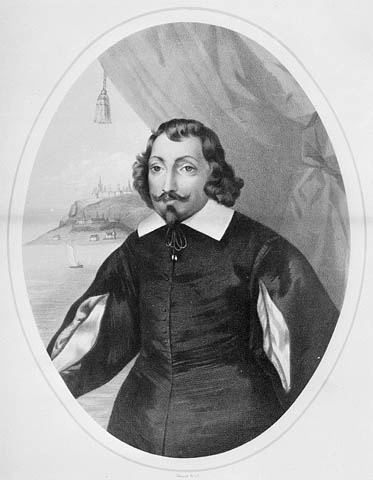
Lithograph attributed to Louis-César-Joseph Ducornet, 1854. It shows an image of a man facing slightly away from the viewer. He wears a black doublet with sleeves that reveal a white shirt underneath. In the background is a view of Quebec City.

False portrait of Samuel de Champlain (MIKAN 2919672)

A false portrait often tells us a lot more about the society that created it than about the historical figure that it is meant to represent. It has been suggested that this pious-looking image made the perfect frontispiece to 19th-century histories of New France, developed by historian-churchmen. It doesn’t seem to have mattered that the portrait is actually copied from a 17th-century engraving of a French civil servant, whose morality was dubious (in French only).

Library and Archives Canada (LAC) holds other intriguing false portraits in its collections. For example, LAC acquired this rare miniature wax portrait, one of very few portraits in this fragile medium to survive.
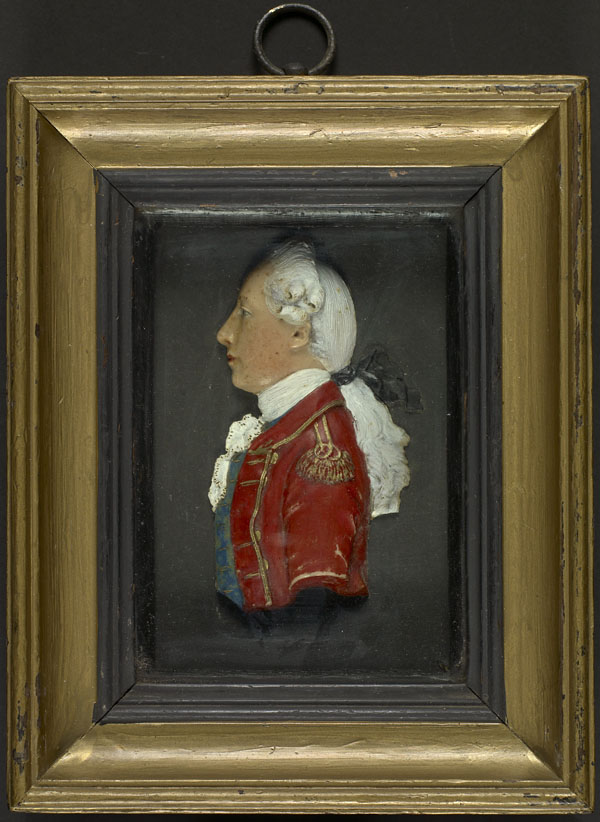
Wax miniature, by an anonymous artist, early 19th century. This rather generic wax miniature shows a man in profile wearing a red British coat embellished with gold trimming, a white cravat and a blue waistcoat. He has long white hair, tied back. The miniature is quite sculptural.

Wax portrait of General James Wolfe (MIKAN 3793977)

Though labelled a portrait of General James Wolfe, famous for his role during the decisive Battle of Quebec (1759), the miniature does not reproduce any of Wolfe’s known physical features. Yet several near identical wax miniatures exist in other collections—each of these also labelled, in the past, as Wolfe portraits. It’s possible to speculate that many casts of this portrait must have been made, for so many fragile examples to have survived.

Wax was cheap and easy to produce in multiple copies. The portrait was likely created as a kind of mass-produced celebrity image, in response to a vast appetite for portraits of “Wolfe the Hero” that arose among the general public during the 19th century. Probably created long after Wolfe’s death by an anonymous entrepreneur, it presents an idealized and heroic-looking profile view of a young officer—exactly the kind of image guaranteed to satisfy the public imagination.

Library and Archives Canada’s Alma Duncan fonds

Art lovers interested in researching the life and working methods of Canadian artist Alma Duncan (1917–2004) must make Library and Archives Canada (LAC) one of their first stops. With the acquisition of Duncan’s complete records (fonds) between 1998 and 2005, LAC became the major centre for the study and preservation of artworks, and supporting material documenting Duncan’s personal and professional life.

The collection includes major oil paintings such as this early self-portrait:

Self-Portrait with Braids

Self-Portrait with Braids (MIKAN 2996876)

In this painting, Duncan portrays herself wearing pants at a time when this type of attire was still considered somewhat risqué for a woman.

The collection also includes drawings, preparatory work, material related to Duncan’s separate career as a graphic designer, and original films by Duncan. Probably the most fascinating items are related to the film company, Dunclaren Productions, formed by Duncan and Canadian photographer Audrey McLaren between 1951 and 1960. That collaboration resulted in three internationally acclaimed short animated films created for the most part in an Ottawa attic. Today these films are recognized as milestones in the history of short animated film, a genre in which Canada has always been a leader.

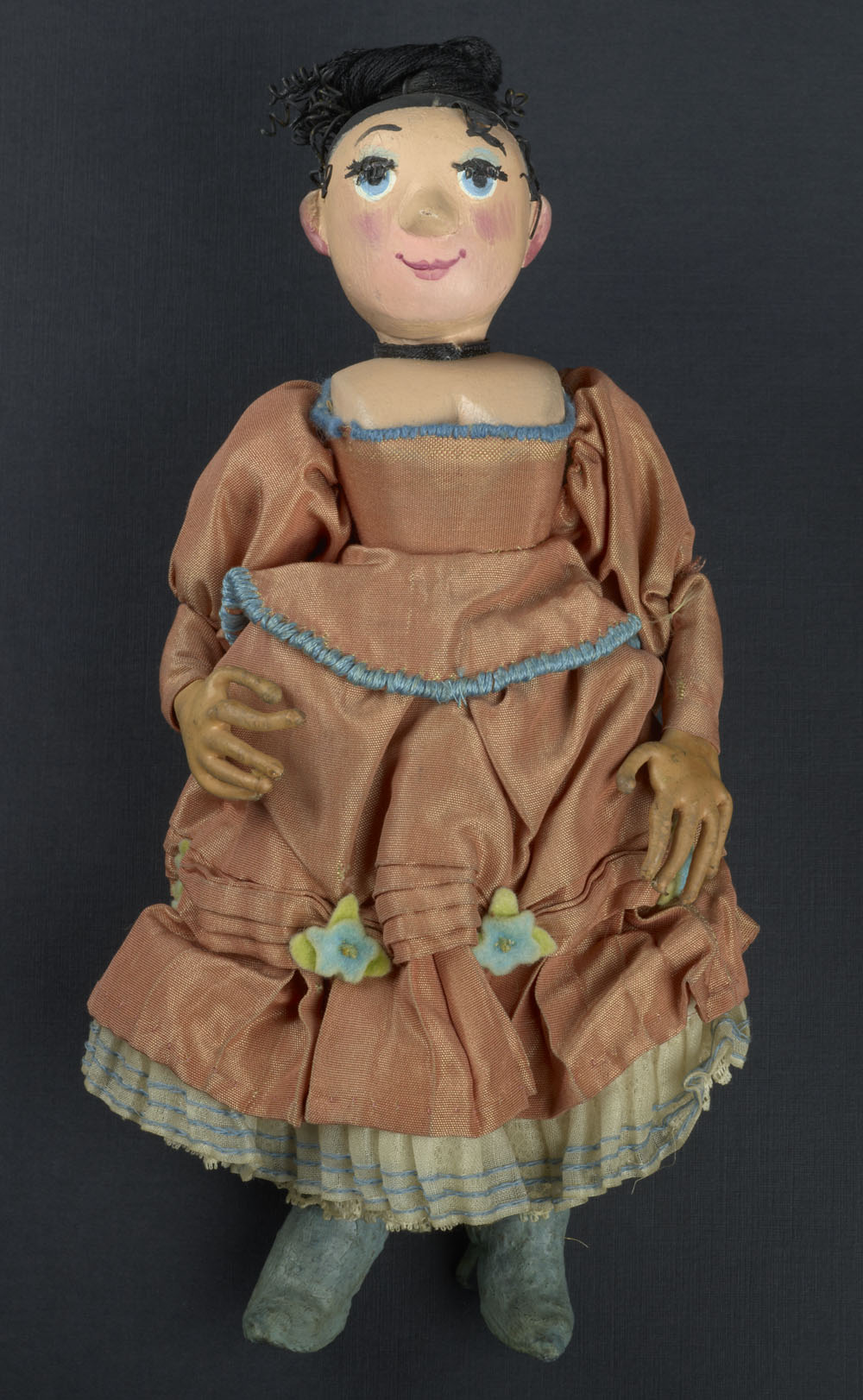
The Dunclaren Productions holdings include most of the original handmade puppets and props that Duncan created for the films.

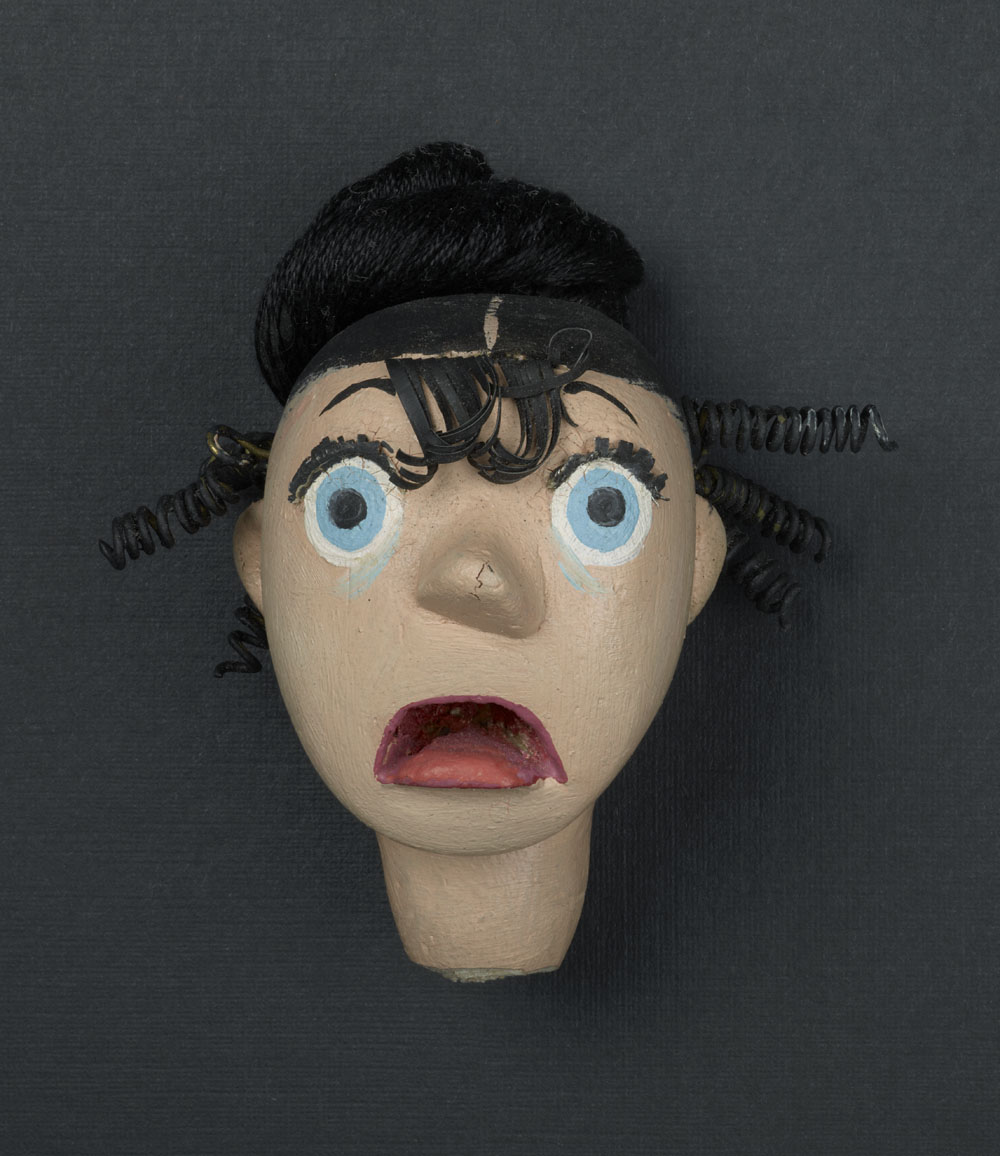
This puppet and its accompanying “scared” replacement head created for the film, Folksong Fantasy, illustrate the painstaking methods Duncan used to make the characters in her films appear to change expression.

Wife Puppet in Orange Dress

Wife Puppet in Orange Dress (MIKAN 4488575)

Wife Puppet Head—Scare

Wife Puppet Head—Scared (MIKAN 4488578)

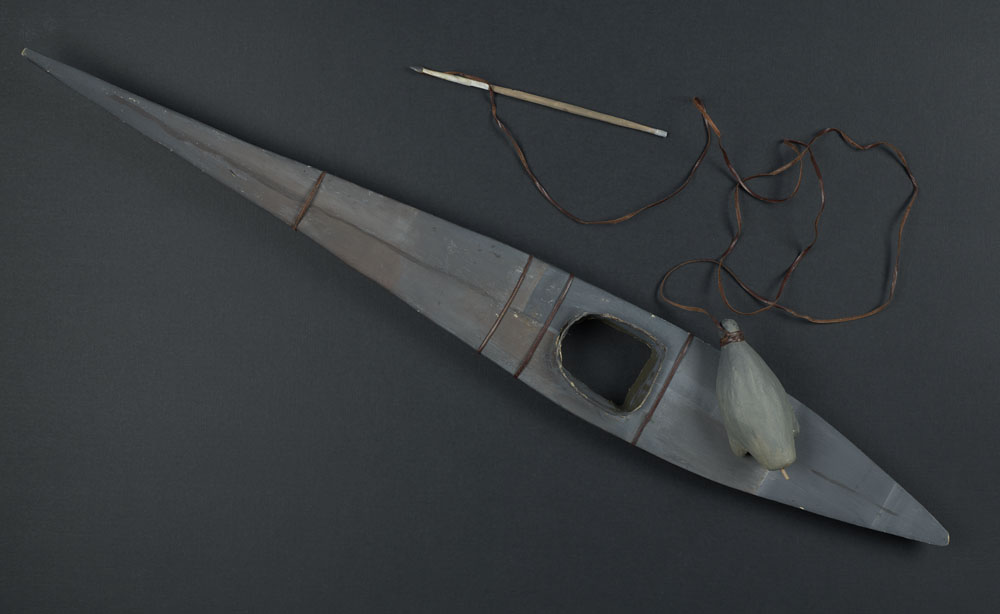
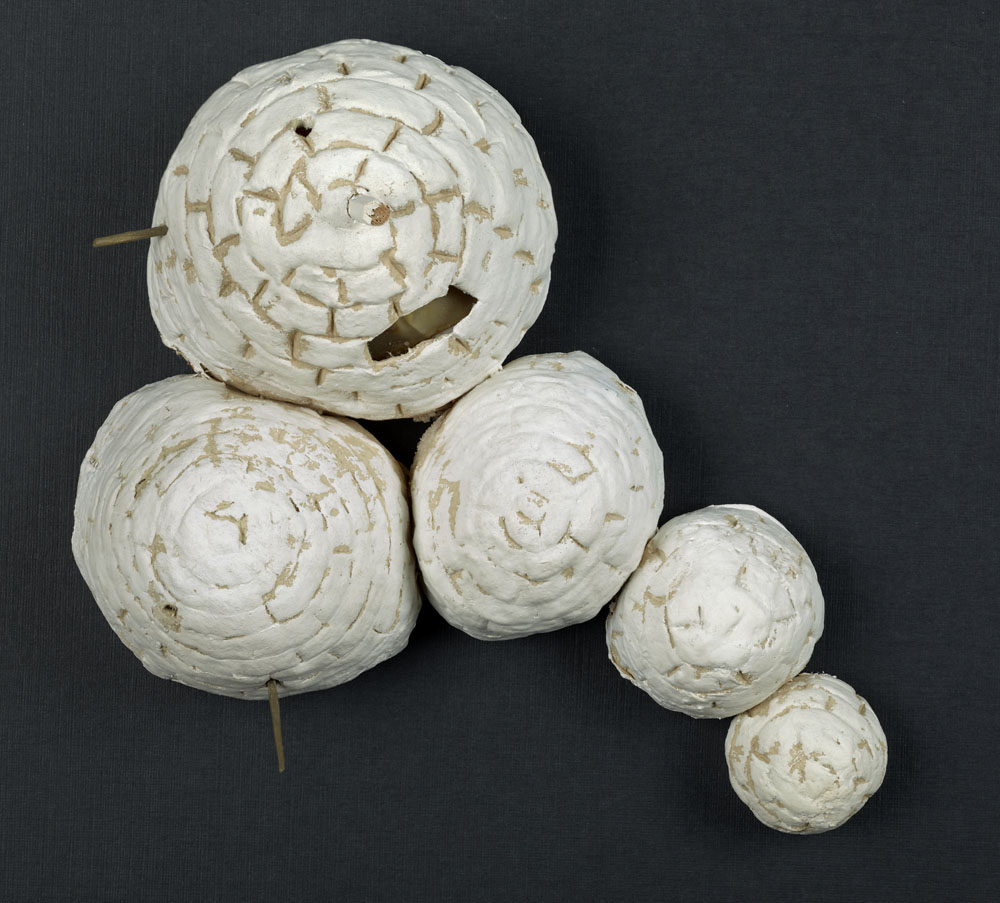
Meticulously crafted props like this tiny igloo and kayak created for the film, Kumak, the Sleepy Hunter, highlight Duncan’s lifelong interest in themes related to the Canadian arctic:

A major retrospective exhibition on Duncan’s life and work, ALMA: The Life and Art of Alma Duncan (1917-2004), opens on October 2, 2014 at the Ottawa Art Gallery. LAC is a major lender to this exhibition, which will include many of the original art works illustrated above.

Library and Archives Canada releases thirteenth podcast episode, William Redver Stark: The Soldier and the Artist

Library and Archives Canada (LAC) is releasing its latest podcast episode, William Redver Stark: The Soldier and the Artist.

Art Archivist Geneviève Morin and Conservator Lynn Curry from LAC discuss the William Redver Stark fonds. They explore William Redver Stark’s background, his time as a soldier during the First World War, and the artwork he produced, specifically the 14 sketchbooks included in his fonds.

Subscribe to our podcast episodes using RSS or iTunes, or just tune in at: Podcast – Discover Library and Archives Canada: Your History, Your Documentary Heritage.

For more information, please contact us at podcasts@bac-lac.gc.ca.

William Redver Stark: Restoring the Sketchbooks

Different approaches have been tried over the years for conserving sketchbooks or bound volumes. For a long time, the works were simply detached in order to remove the binding. Nowadays, the historical and archival value of the binding is widely recognized. Library and Archives Canada (LAC) is no exception in this regard, and conservation treatments are now designed to preserve the work in its entirety, including the binding.

In a previous article, we introduced you to the work of soldier William Redver Stark. The sketchbooks that are part of the William Redver Stark fonds were never repaired or preserved, and were beginning to show signs of wear:

  • Tears and holes
  • Pages detached, missing or in the wrong order
  • Broken binding threads
  • Covers weakly bound to pages or completely detached

The sketchbooks therefore are undergoing various conservation treatments, undertaken by a team of LAC’s highly specialized conservators in the field of book conservation and restoration. These conservators worked with the collection managers and archivists to respect the integrity of Stark’s work, and to give him his full moment of glory.

The drawings and watercolours in this collection are in very good condition. Some even look like they might have been completed only a few days ago. It should be noted that the sketchbooks remained closed for nearly a hundred years, and that the pages were rarely exposed to air or light. Thus, to study a Stark work is to travel through time, to see the work of an artist exactly as it was created a hundred years ago, during one of the most deadly and crucial wars of our time.

In sum, the restoration work done by LAC‘s conservation and restoration team will make it possible to stabilize the condition of the sketchbooks in order to ensure that they will withstand the ravages of time, and will allow future generations to have access to an important part of our history.

Example of a required restauration treatment: the adhesive tape must be removed.

Another example of a required restauration treatment : the cover must be sewn back on.

See Also:

Summary of comments received in French between July 1, 2014 and September 30, 2014

  • A reader from Wimereux (France) thanks LAC for its work on the restauration of William Stark’s sketchbooks. It turns out that William Stark was stationed in Wimereux and made a lot of sketches of the surroundings. The reader was able to identify some of the sketches and he is offering his work to LAC.

William Redver Stark, the Soldier and the Artist

Version française

Canada’s experience of the First World War was captured by officially commissioned artists such as A.Y. Jackson and David Milne from 1916 onwards through the Canadian War Memorials Fund. However, many other artists—amateur and professional—captured their experiences of the war while they were busy fighting, building roads, transporting goods or providing care to others, but still creating vivid imagery of the world around them.

The William Redver Stark fonds at Library and Archives Canada (LAC) is a rare illustrated record of one of these undeclared artists’ lives in the military. Through 14 sketchbooks of remarkably well-preserved drawings and watercolours, we discover the life of a soldier through his eyes, which were closer to the action than those of his official counterparts, and which provide a more spontaneous, intimate perception of how day-to-day activities may have looked.

In these sketchbooks, we find images of soldiers at work and at rest, captured German prisoners and artillery, landscapes through which battalions moved, and sights at the London Zoo where Stark went while on leave. The illustrations serve as a rich and indispensable complement to the artist’s military file, to his battalion’s history, and to our visual understanding of a serviceman’s experience during the First World War.

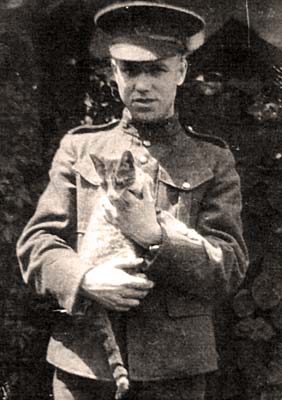
William Redver Stark with cat. Courtesy of Veterans Affairs Canada.

William Redver Stark with cat.
Courtesy of Veterans Affairs Canada.

The William Redver Stark fonds was donated to Library and Archives Canada in 2005 by his nephew, Douglas Mackenzie Davies and his family: his wife, Sheila Margaret Whittemore Davies, and their two sons, Kenneth Gordon Davies and Ian Whittemore Davies.

How to search the sketchbooks

All 14 sketchbooks of the William Redver Stark fonds have been individually described and digitized, making it easier to search for themes or types of scenes. For example, you can search the fonds for all images that contain bridges or construction.

To search the sketchbooks, go to the Advanced search and in the drop-down menu under “Any of these words,” enter either the archival reference number (R11307) or the MIKAN number (616998). If you want to narrow down your search even more, enter a keyword such as “bridges” in the second box.

Other related materials:

Be sure to read William Redver Stark: Restoring the Sketchbooks to learn more about the work done by LAC’s conservators to restore the sketchbooks.

Mary Riter Hamilton, Canada’s First Unofficial War Artist

Version française

It has been 90 years since Mary Riter Hamilton donated 180 of her oil paintings and dozens of her chalk, pastel and pencil drawings depicting the devastation in Europe after the First World War to the Public Archives of Canada (now Library and Archives Canada). These works by Riter Hamilton are not light-hearted. The subject matter deals almost exclusively with the destruction of war. They depict muddy trenches and blighted landscapes, graves and cemeteries, churches and towns ripped apart from shelling.

Memorial for the Second Canadian Division in a Mine Crater near Neuville St. Vaast.

Memorial for the Second Canadian Division in a Mine Crater near Neuville St. Vaast (e011201067)

Mary Riter Hamilton was born in 1873 in Teeswater, Ontario and grew up in Clearwater, Manitoba where her family moved to farm. She married Charles W. Hamilton at the age of 18 and by the age of 23 was widowed. It was soon before the death of her husband that Mary began attending art classes in Toronto. Recognizing her talent, most of her European-trained teachers urged her to further her studies in Paris. Mary studied first in Germany then moved to Paris where she lived and studied for the next eight years. Mary returned to Manitoba for a year in 1906 then again for eight years in 1911. During these years, Mary’s work was exhibited in galleries in Montreal, Ottawa, Toronto, Winnipeg and Calgary.

The Sadness of the Somme

The Sadness of the Somme (e011205200)

Always wanting to return to Europe, it was in 1919 while Mary was living and working on Canada’s west coast, that she was offered a commission by the Amputation Club of British Columbia to provide art work for The Gold Stripe, a veteran’s magazine. Mary left immediately, “ … to paint the scenes where so many of our gallant Canadians have fought and died.” For three years, Riter Hamilton worked tirelessly in post-war France and Belgium, painting battlefields including Vimy Ridge and the Somme, Ypres and Passchendaele. Conditions were harsh. She lived in make-shift shelters while enduring foul weather and meagre rations. She returned to Canada physically and emotionally spent. Refusing to sell her paintings, Riter Hamilton donated her work to the Public Archives of Canada. She died, poor and visually impaired, in 1954.

As the centenary of the First World War approaches, these works take on a renewed poignancy. Mary Riter Hamilton was never an official ‘war artist’ yet through her courage and talent and indomitable dedication, the sombre beauty and mournful tone of her collection serve as an enduring account of the ravages of war.

Trenches on the Somme

Trenches on the Somme (e011202180)

To learn more about Mary Riter Hamilton, to view more of her work, or to see what materials are contained in the LAC collection, visit:

Remembering cartoonist Roy Peterson

On September 30, 2013 Canada lost one of its most talented and renowned editorial cartoonists, Roy Peterson. As a tribute, let’s take a look at his remarkable career spanning 40 years at the Vancouver Sun.

Mr. Peterson was born in Winnipeg in 1936 and studied at the Vancouver School of Art. His first forays into the art of cartooning came when he was a young man. While working as a window display artist, he began mailing his cartoons to various newspapers in northern British Columbia. In 1962 Mr. Peterson began his cartooning career at the Vancouver Sun where he carried out his duties as staff editorial cartoonist until 2009.

Early career

In addition to his work with the Vancouver Sun, Roy Peterson also collaborated with journalist Allan Fotheringham, producing illustrations for Mr. Fotheringham’s back page editorials for Maclean’s magazine. Mr. Peterson also collaborated with journalist Stanley Burke, producing a number of bestselling books aimed at satirizing Canadian politics and politicians of the day in the form of serialized children’s stories. Titles of these stories include Swamp Song, Frog Fables and Beaver Tales and The Day of the Glorious Revolution. In 1979, The World According to Roy Peterson, a solo collection of his cartoons and caricatures, was published by Douglas & McIntyre.

A unique style

Mr. Peterson had a very unique artistic style, relying heavily on the use of cross-hatching when producing his work. In Mr. Peterson’s pre-digital artistic world, cross-hatching (being a series of small intersecting lines in close proximity to one another) was produced laboriously by hand and used to designate shading and to differentiate between light and darker areas.

Distinctions

Throughout his long and distinguished career, Mr. Peterson has been the recipient of many awards, most notably as the record-breaking winner of seven National Newspaper Awards. Mr. Peterson also helped found the Association of Canadian Editorial Cartoonists. His work has been well-received internationally with exhibits at both the Smithsonian Institution and the United Nations.

In December of 2004, Roy Peterson was invested into the Order of Canada, being cited as one of Canada’s “… finest editorial cartoonists. Expertly blending humour and satire, he has provided insightful commentary on our political landscape.”

Want to learn more about Roy Peterson?

Library and Archives Canada began acquiring the work of Roy Peterson in 2000. The Roy Peterson fonds (Mikan #160207) contains 1,871 pen and ink drawings and documents his work for the Vancouver Sun from 1962 to 1993.

The Hidden Room: An Intimate Look at P.K. Page’s Creative Space

P.K. (Patricia Kathleen) Page is regarded as one of Canada’s most beloved creative voices. Both a poet and artist, Page crafted beautiful images through her words and art in her home office in Victoria, British Columbia. When Page passed away in 2010, her literary executor Zailig Pollock documented the contents of her office to preserve a sense of the physical creative space that inspired her while she wrote and worked on her art pieces.

A photograph of P.K. Page’s computer desk holding her various papers, books and mementos

P.K. Page’s computer desk holding her various papers, books and mementos

Continue reading