Métis Scrip

We are pleased to inform you that more than 24,000 references about money scrip (certificates) given to Métis family members were recently added online. These cancelled land scrip certificates were once issued to the Métis by the Department of the Interior in exchange for the relinquishment of certain land claims. A scrip would be issued “to the bearer” and could be applied to the purchase of, or as a down payment on, any Dominion lands open for entry in Manitoba and the Northwest Territories. These scrip were awarded to Métis heads of families and their children in the amounts of $240, $160 and $80.

How to find references

  1. Go to the search screen for Archives Search—Advanced.
  2. In the drop-down menu, select “Finding aid number” and then in the box, enter 15-24.

Screen capture of an advanced Archives Search with the first drop-down menu showing "Finding aid number" and the value of "15-24" and the second drop-down menu showing "Any Keyword and the value "Riel." Continue reading

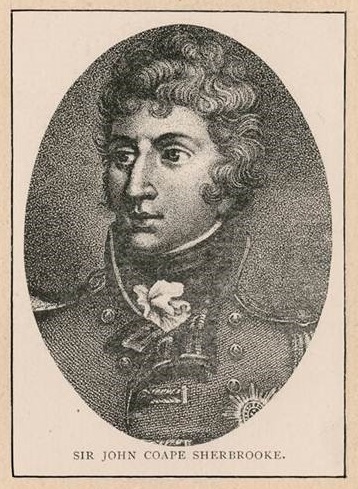
Sir John Coape Sherbrooke: Military Hero, Governor General, Clairvoyant?

Last year, Library and Archives Canada (LAC) acquired an important collection of documents relating to the Canadian career of Sir John Coape Sherbrooke (1764-1830). His pivotal role in the defence of the British colonies that would become the Atlantic Provinces during the War of 1812 led to his appointment as Governor General of British North America in 1816. However, his arrival in Nova Scotia in October of 1811 was not his first time in Canada.

Detail from an engraving. Portrait of Sir John Coape Sherbrooke

Portrait of Sir John Coape Sherbrooke (Mikan 4310479)

Continue reading

Historical Debates of the Parliament of Canada (Hansard) now online!

Congratulations to the Library of Parliament and Canadiana: the Historical Debates of the Parliament of Canada portal is now live!

This new portal contains the historical debates in both official languages from 1867 to the mid-1990s. This means you can now search and browse all published debates of both the Senate and the House of Commons from Parliament 1, Session 1, until the coverage begins on parl.gc.ca.

As mentioned above, the portal was developed by the Library of Parliament, in collaboration with Canadiana.org, a membership alliance dedicated to building Canada’s digital preservation infrastructure and providing wide-ranging access to Canadian documentary heritage. Library and Archives Canada is pleased to have provided support by producing the digital page images.

You can consult our blog Looking for the Debates of the House of Commons (Hansard) online? of June 2012 to help you find information on the House of Commons debates.

July 15, 1870: Manitoba joins Confederation

Before becoming a province, Manitoba was the stage for many events and pivotal moments in Canada’s history. Pending the transfer of Rupert’s Land to Canada, the federal government sent survey crews led by Lieutenant Governor William McDougall to map the Red River area in 1869. The Métis became concerned about the redistribution of land to future settlers and the effect this would have on their own lands.

The Métis group’s leader, Louis Riel, declared that the survey was a menace and established a “National Committee” of which he became secretary and John Bruce president. On October 25, 1869, Louis Riel was ordered to appear in front of the Legislative Assembly of Assiniboia to explain himself. Riel indicated that the “National Committee” would prevent the entry of McDougall or any governors into Red River unless the union with Canada was based on negotiations with the local population.

In November, Riel proposed a first provisional government to replace the Legislative Assembly of Assiniboia as part of the negotiations for the transfer of Rupert’s Land.

Drawing of a panoramic view of Fort Garry, 1868.

Fort Garry, Red River Settlement, 1868, the administrative centre for the provisional government. (c105625)

In January 1870, 20 English and 20 French representatives of the Red River Settlement met to debate a List of Rights and endorse Riel’s second provisional government. The fourth version of the List of Rights became the basis of the Manitoba Act.

Members of the Métis Nation Provisional Government , 1870.

Councillors of the Provisional Government of the Métis Nation, 1870. (http://central.bac-lac.gc.ca/.redirect?app=fonandcol&id=3194516&lang=enge011156794)

The secretary of the Provisional Government, Louis Schmidt, moved to accept the Manitoba Act, and enter the Dominion of Canada, on the terms proposed in the Confederation Act. The motion was passed.

In his closing statements, Louis Riel underlined the significance of the vote:

I congratulate the people of the North-West on the happy issue of their undertakings (cheers). I congratulate them on their moderation and firmness of purpose; and I congratulate them on having trust enough in the Crown of England to believe that ultimately they would obtain their rights (cheers). I must, too, congratulate the country on passing from under this Provisional rule to one of a more permanent and satisfactory character.1

The Manitoba Act went into effect on July 15, 1870.

1 http://www.gov.mb.ca/chc/archives/leg_assembly/pdf/leg_assembly_transcript.pdf

Related documents:

Journée internationale de la Francophonie

March 20 is an important date for both Francophones and Francophiles, as it marks the birth of the International Organisation of La Francophonie (IOF)—originally the Agency of Cultural and Technical Cooperation (ACTC)—at the Niamey Conference in Niger, in 1970.

Some 21 countries were involved in the founding of this institution, whose members include the federal government and the governments of Quebec and New Brunswick. In addition to its language-related activities, the intergovernmental organization also promotes cultural and technical cooperation among its members.

The 1987, 1999 and 2008 summits, the 2006 Ministerial Conference and the 2001 Games of La Francophonie*—all held in Canada—clearly demonstrate the importance our country places on La Francophonie and the IOF. A number of archival documents from the collection of Library and Archives Canada (LAC) are further evidence of this support. For example:

• Several philatelic records highlight the significance of La Francophonie. The collection includes 14 commemorative postage stamps created in its honour, 9 of which can currently be viewed online. One of the stamps marks the 25th anniversary of the ACTC, the first international Francophonie organization;

• The Fonds Jean-Louis Roy at LAC contains several ACTC-related records, including speeches and media clippings, administrative records and administrative correspondence. These documents must be consulted on-site, at 395 Wellington St., Ottawa.

*These are available in French only.

Cabinet Conclusions: A Window into Federal Policy

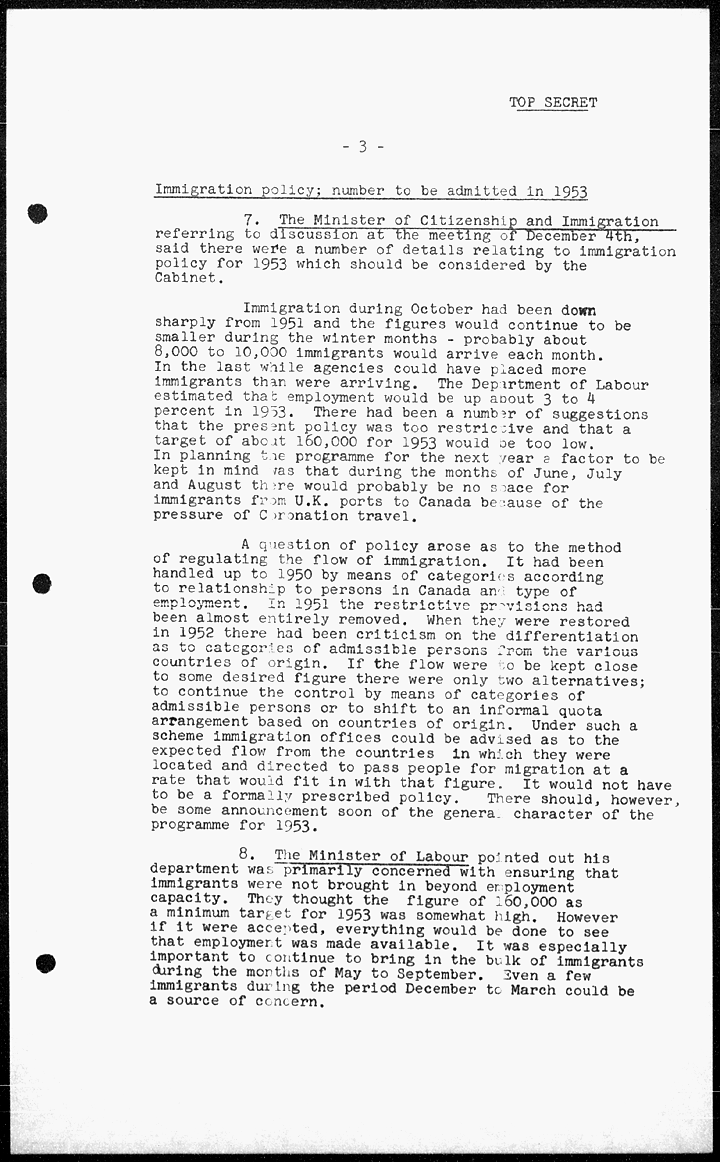
Are you curious about historic federal Cabinet discussions? Did you ever wonder what happened behind those closed doors? Find out more by using our Cabinet Conclusions database.

Here are some examples:

Cabinet Conclusions is a research tool that provides a record of the discussions that took place at federal Cabinet meetings for the years 1944–1976. Although they are not a verbatim transcript, the Cabinet Conclusions are the only official record of these Cabinet meetings.

For each meeting of Cabinet, the Clerk of the Privy Council prepared a summary of the discussions, a list of the officials who attended the meeting and an agenda. The summary can be very short or can cover several pages. The Cabinet Conclusions database does not include Cabinet Documents.

This research tool has a Search Help section that contains many useful search tips plus helpful background information on Cabinet and their records.

You may notice that the majority of the documents are in English, as this was the primary working language of the federal government at the time. For Cabinet Conclusions from 1944–1969, you can only search using English terms. For Cabinet Conclusions from 1970–1976, you can search using either French or English; however, the documents are usually only available in English.

Did you know?

  • The Privy Council Office only began to record Cabinet Conclusions in 1944. Prior to 1944, there were no formal records of Cabinet.
  • The Privy Council Office still holds the Cabinet Conclusions from 1977 onwards.

Questions or comments? We would love to hear from you!

The Queen’s Diamond Jubilee – Government Records and Private Archives

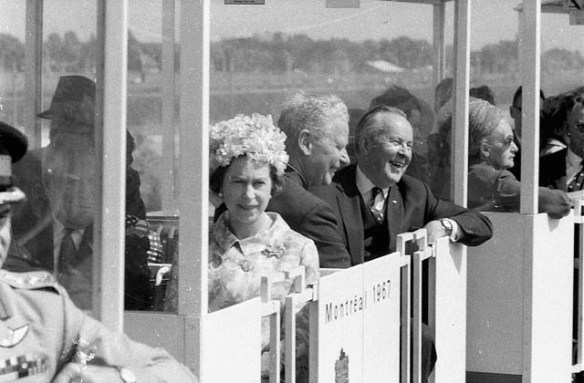
Black and white photograph of Her Majesty Queen Elizabeth II and Prime Minister of Canada Lester B. Pearson in the minirail at Expo 67

Her Majesty Queen Elizabeth II and Prime Minister of Canada Lester B. Pearson in the minirail at Expo 67 (e000996577)

As mentioned in previous articles, the collection at LAC contains a vast amount of information regarding Queen Elizabeth II. In this last article on The Queen, we present a selection of textual materials held by LAC. While few of them have been digitized, the descriptions are all accessible online so you can discover the contents.

Government Records

Private Archives

Questions or comments? We would love to hear from you!

Richard Bedford Bennett images now on Flickr