At the centre of it all: Library and Archives Canada’s Vancouver Office

By Caitlin Webster

After providing service for many years from a suburban warehouse, Library and Archives Canada (LAC) Vancouver is celebrating six months at its new public service point at the Vancouver Public Library’s central branch.

Since 1992, LAC clients in British Columbia had been travelling to the Western Canada Regional Service Centre in Burnaby to consult archival records in reading rooms set up within the vast facility.

More recently, LAC began a project to redefine our national presence, in an aim to broaden services outside Ottawa, collaborate more closely with local memory institutions, and have greater visibility and impact across the country. One result of these efforts has been the establishment of co-location arrangements for LAC offices in Halifax and Vancouver.

Following closely on the successful establishment of LAC‘s public service point in Halifax, the LAC Vancouver office implemented its co-location partnership with the Vancouver Public Library VPL. LAC launched its public service point in the central branch of VPL on November 8, 2017, with a Signatures Series interview featuring former Prime Minister Kim Campbell. At this public service site, LAC Vancouver provides in-person orientation and reference services, as well as kiosks for LAC research tools and subscription databases such as Ancestry.ca.
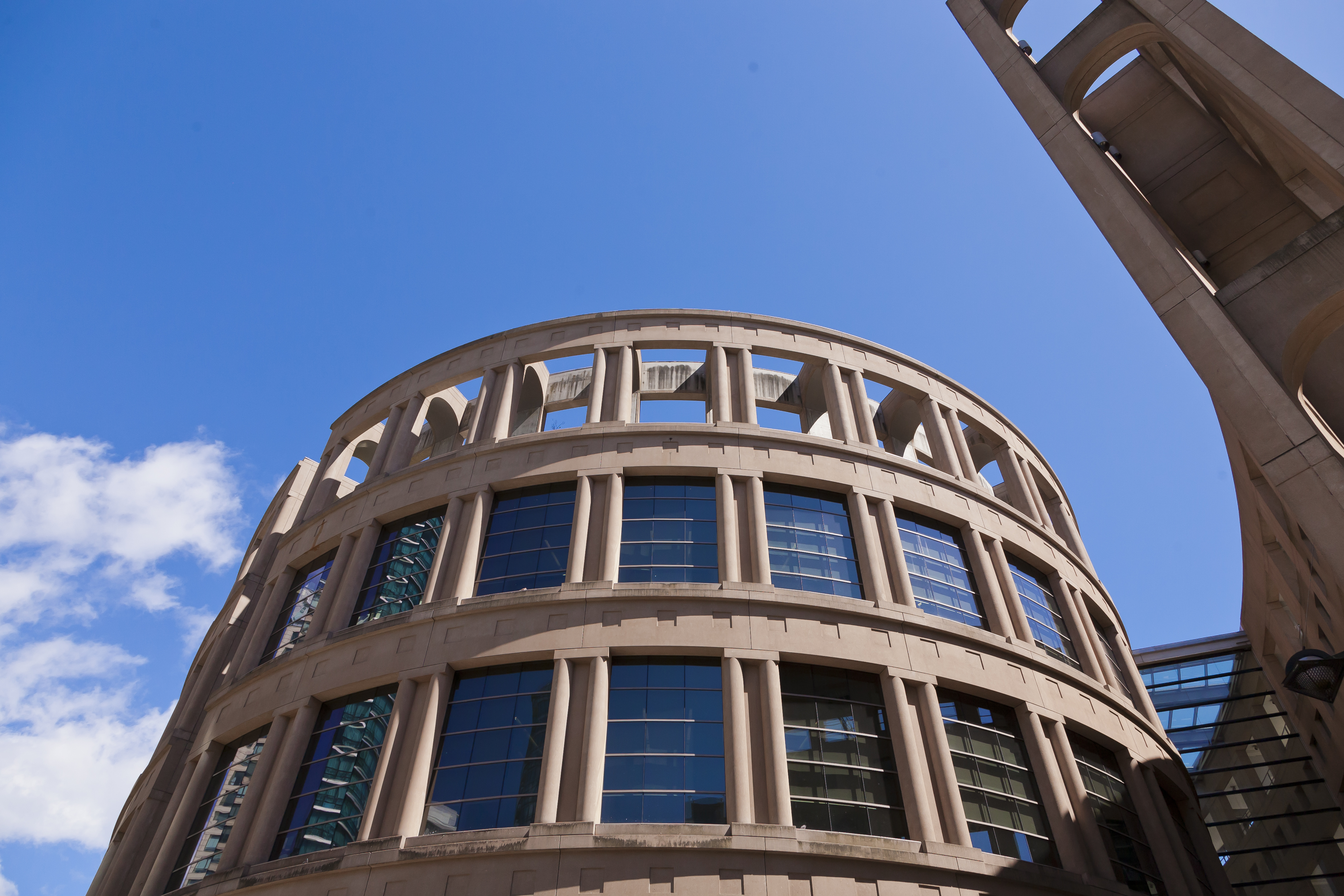
A colour photograph of a round building resembling the architecture of the Colosseum in Rome but clearly contemporary with its glass windows on the top two floors.

Exterior view of the Vancouver Public Library’s central branch in downtown Vancouver. Photo: Vancouver Public Library.

In the first six months of service, LAC staff have assisted clients with questions on a variety of subjects, including Scottish emigration agents, the first Chinese Ambassador to Canada, evolving land-title laws, Indigenous genealogy, and the history of local buildings and other sites.

A colour photograph of a woman sitting behind a service desk with a Library and Archives Canada banner behind her.

Public service desk and self-serve kiosks at Vancouver Public Library’s central branch. Photo: Caitlin Webster.

In addition, given the ongoing needs of the local community regarding Indigenous claims, treaties and other subjects, LAC Vancouver continues to provide access to original archival records of Indigenous and Northern Affairs Canada from British Columbia and Yukon. LAC Vancouver provides reference, Access to Information and Privacy review, consultation, reprography, and other services for this selection of archival records at another site, next door to VPL‘s central branch.
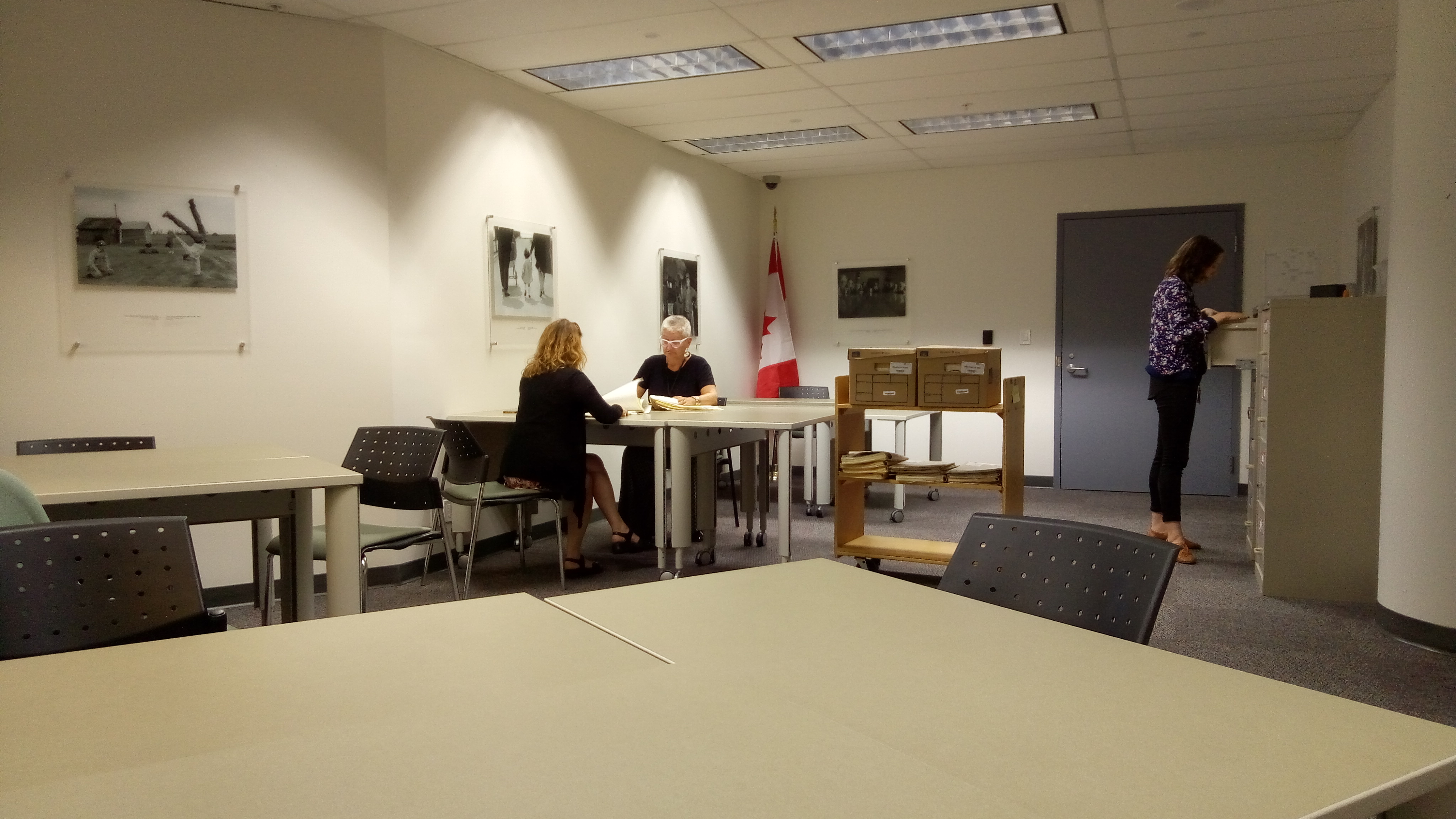
A colour photograph of a room with large tables for the purpose of consulting documents.

LAC Vancouver’s reference and document consultation room at 300 W. Georgia Street. Photo: Caitlin Webster.

Since the move to this new location, interest in on-site document consultation has risen dramatically. The amount of archival material consulted by clients has increased by 54 percent, and the number of pages copied or scanned for clients has more than doubled!

Collaborative projects are also in the works, including exhibitions, information sessions and learning opportunities. For instance, LAC recently held an Indigenous genealogy workshop in which it highlighted relevant resources. LAC’s goal is to host many sessions like this one, offering diverse services to local clients and making the most of this new partnership.

For details on LAC Vancouver’s hours of service, location, and other information, please visit the Service Points Outside of Ottawa page.


Caitlin Webster is an archivist at LAC Vancouver.
Canadian libraries invite kids to Get Your Summer Read On!

Summer has arrived, and libraries across Canada are inviting kids and their families to Get Your Summer Read On! Kids can register for the TD Summer Reading Club at their local participating library and pick up their free reading kit, which includes a notebook and stickers. There is also a special notebook for kids with print disabilities so they can participate fully. Kids can track their reading throughout the summer, participate in programs at the library, and visit www.tdsummerreadingclub.ca to create an online notebook and read great ebooks. While online, kids can also submit book reviews, share jokes, learn to draw like our illustrator (Anne Villeneuve), write stories, find great recommended reads and much more!

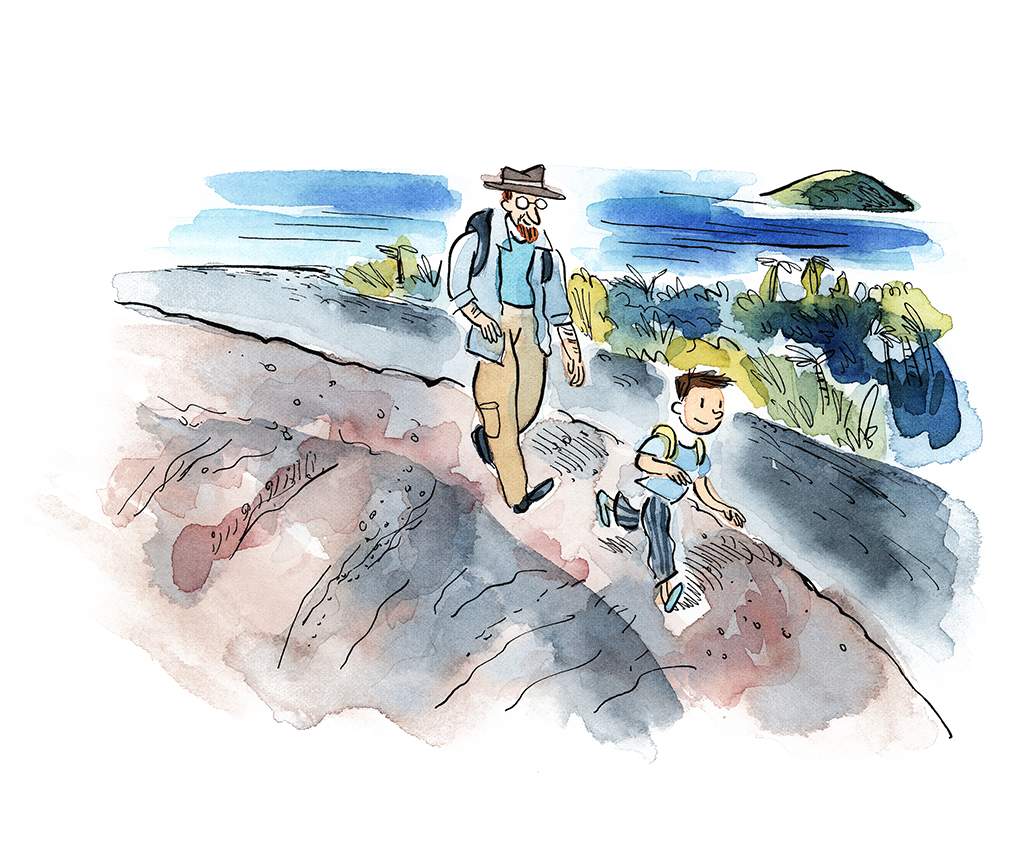
A watercolour illustration of a man and a child with backpacks hiking down an ocean pathway.

©Anne Villeneuve

A real impact

The Club is big—and it’s getting bigger every year! A recent tally of TD Summer Reading Club numbers shows the significant impact of the program: over 700,000 kids participated in more than 38,000 programs, which were delivered by over 2,000 library branches across the country. Studies show that kids who keep reading throughout the summer do better when they return to school in the fall. The TD Summer Reading Club is an ideal way for kids to stay engaged.

A watercolour illustration of a bear and two children lying down in a hammock that is being lifted into a blue sky by open books. The older child is reading a story while the baby listens attentively.

©Anne Villeneuve

Kids can read, listen to and comment on two different stories created exclusively for the TD Summer Reading Club, one written in English by author Kevin Sylvester and the other in French by author Camille Bouchard.

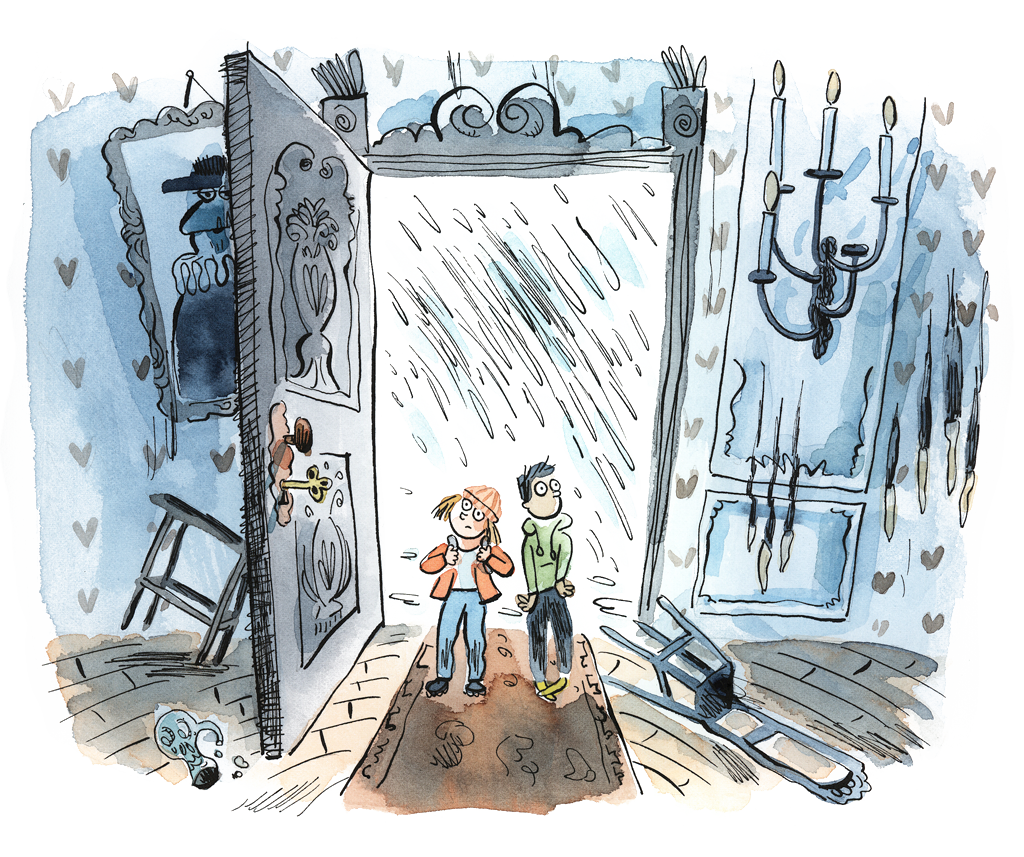
A watercolour illustration of two children escaping the rain by entering an old, spooky abandoned house.

©Anne Villeneuve

Kids can participate anytime, anywhere—at local public libraries across Canada as well as at home, online, on the road or wherever their summer takes them. The TD Summer Reading Club celebrates Canadian authors, illustrators and stories. It’s designed to inspire kids to explore the fun of reading their way—the key to building a lifelong love of reading.

The three libraries designated as Get Your Summer Read On headquarters have events on the following dates:

  • June 16: at Bibliothèque Paul-Aimé Paiment, Québec, Quebec
  • June 21: Bkejwanong First Nation Public Library, Walpole Island, Ontario
  • June 23: Spruce Grove Public Library, Spruce Grove, Alberta

These locations will feature special programming and participation by our partners, including Toronto Public Library, Library and Archives Canada, and TD Bank Group.

TD Summer Reading Club is Canada’s biggest, bilingual summer reading program for kids of all ages, all interests and all abilities. This free program is co-created and delivered by over 2,000 public libraries across Canada. Development of this national, bilingual program is led by Toronto Public Library in partnership with Library and Archives Canada. Sponsorship is generously provided by TD Bank Group.

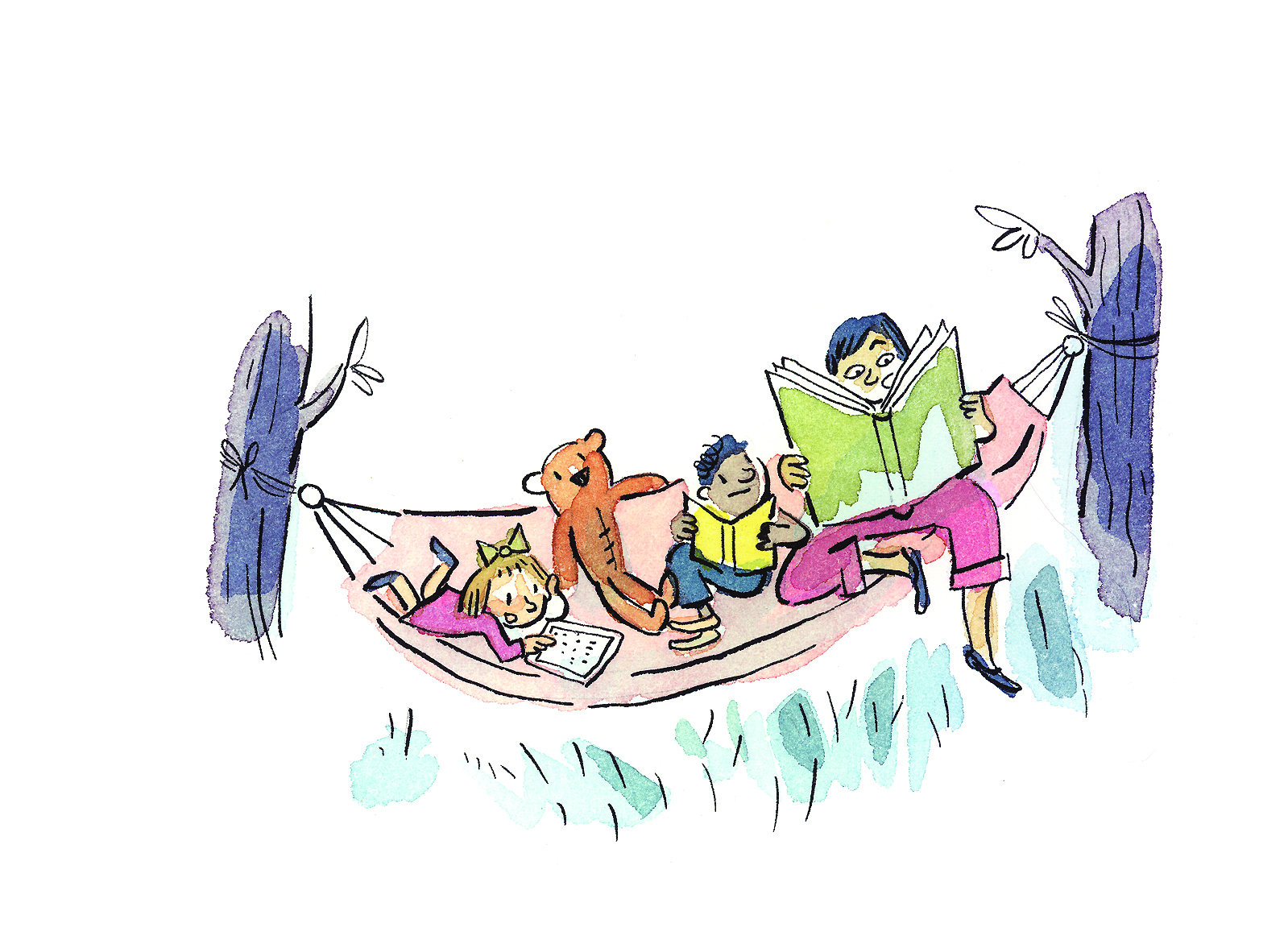
A colour illustration of three children reading in a hammock.

©Anne Villeneuve

And now, for something different…

To learn more about this year’s program, check out LAC’s most recent two-part podcast episode: “Get Your Summer Read On!” In part 1 of the episode, we sit down with Kevin Sylvester, the English author for the 2018 TD Summer Reading Club. Kevin is joined by our podcast host, Geneviève Morin, as well as a special co-host, 9-year-old Presley, who is a big Kevin Sylvester fan.

In part 2 of the episode, which comes out on June 19th, we catch up with Camille Bouchard, the French author for the 2018 TD Summer Reading Club. Camille took time to chat with us on the phone as he was travelling across North America in his RV. Part 2 of the episode also features a surprise interview with a famous Canadian writer who once served as Canada’s national librarian. You’ll have to tune in to find out more!

Images of Canada Washes Up now on Flickr

The Canadian washroom, or bathroom, has its roots in medieval times. The basic toilet and sewage systems built into castles during that era evolved into modern architectural design features for homes and large buildings. Later technological advances included internal running water, piping and community sewage systems.

A black-and-white photograph of a man standing and bathing in a travelling bath of the First World War era.

Motor transport travelling bath in the Canadian part of the line. [MIKAN 3396709]

A drawn plan listing the materials needed to build a wooden latrine.

Plan of a latrine. MIKAN 3699479]

When not indoors, Canadians have improvised and innovated in cleanliness and discharging their bodily wastes as cleanly as possible. Whether for the outdoors or for journeys, the solutions are reminiscent of home.

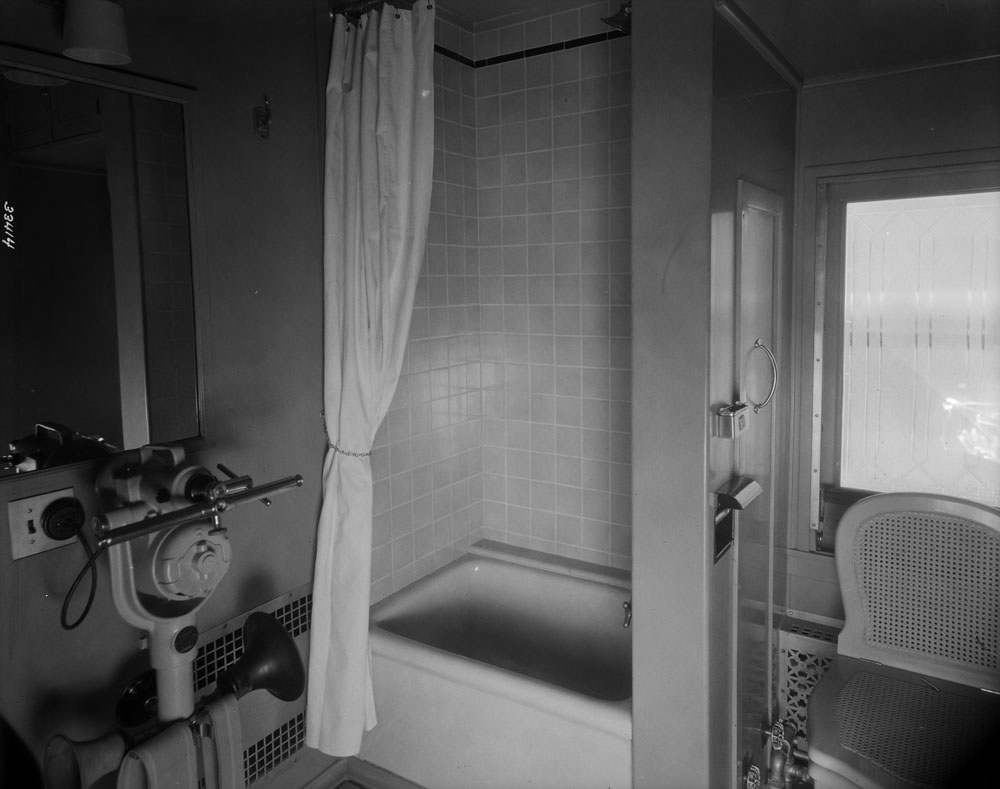
A black-and-white photograph of a shower, bath and toilet in a train lounge car.

New lounge car, shower bath. [MIKAN 3348414]

A black-and-white photograph of a ladies’ shower room in a Canadian Pacific Railway solarium car.

Women’s shower, Canadian Pacific Railway, new solarium car. [MIKAN 3380569]

Visit the Flickr album now!

Recent documents digitized through the DigiLab

By Karine Gélinas

The DigiLab is a new hands-on facility for clients to digitize and contextualize documents from the Library and Archives Canada (LAC) collections. Since its launch in 2017, the DigiLab has hosted more than 30 projects that have resulted in the digitization of over 30,000 pages of textual material and 9,000 photographs.

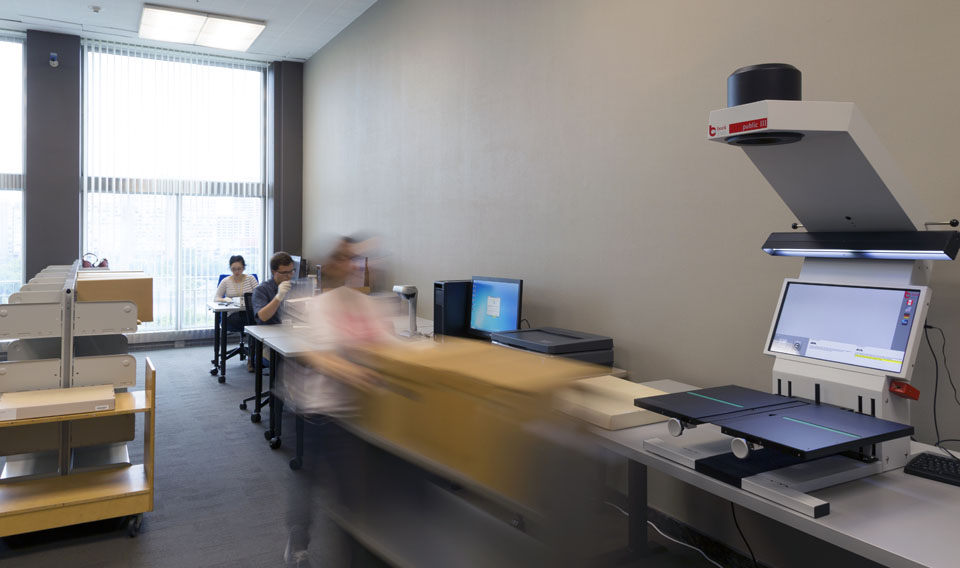
A colour photograph of a room containing a large-format scanner on a table in the foreground, a series of shelving on the left side, and two people sitting at workstations in the background.

The DigiLab space at 395 Wellington. Photo by Tom Thompson.

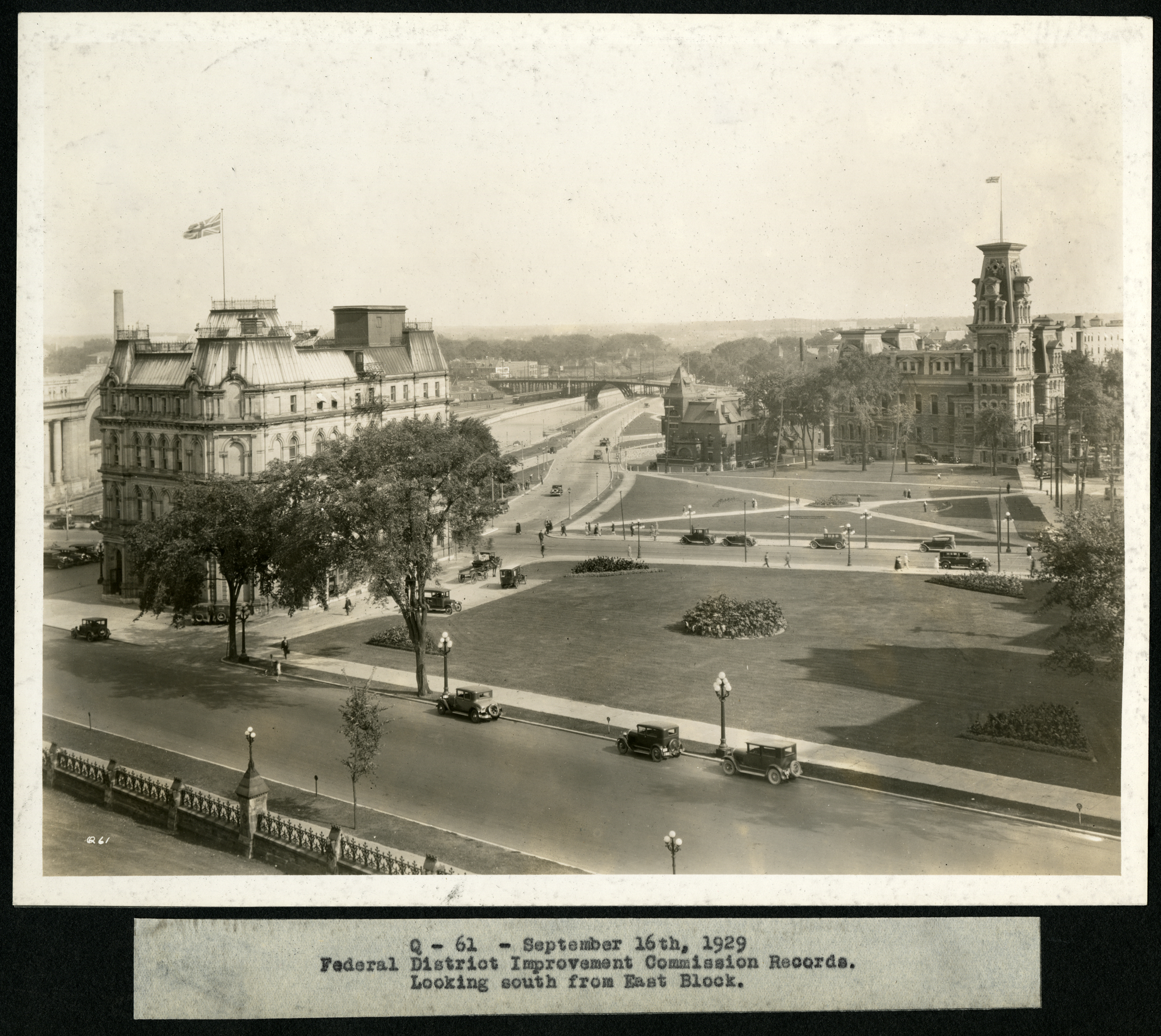
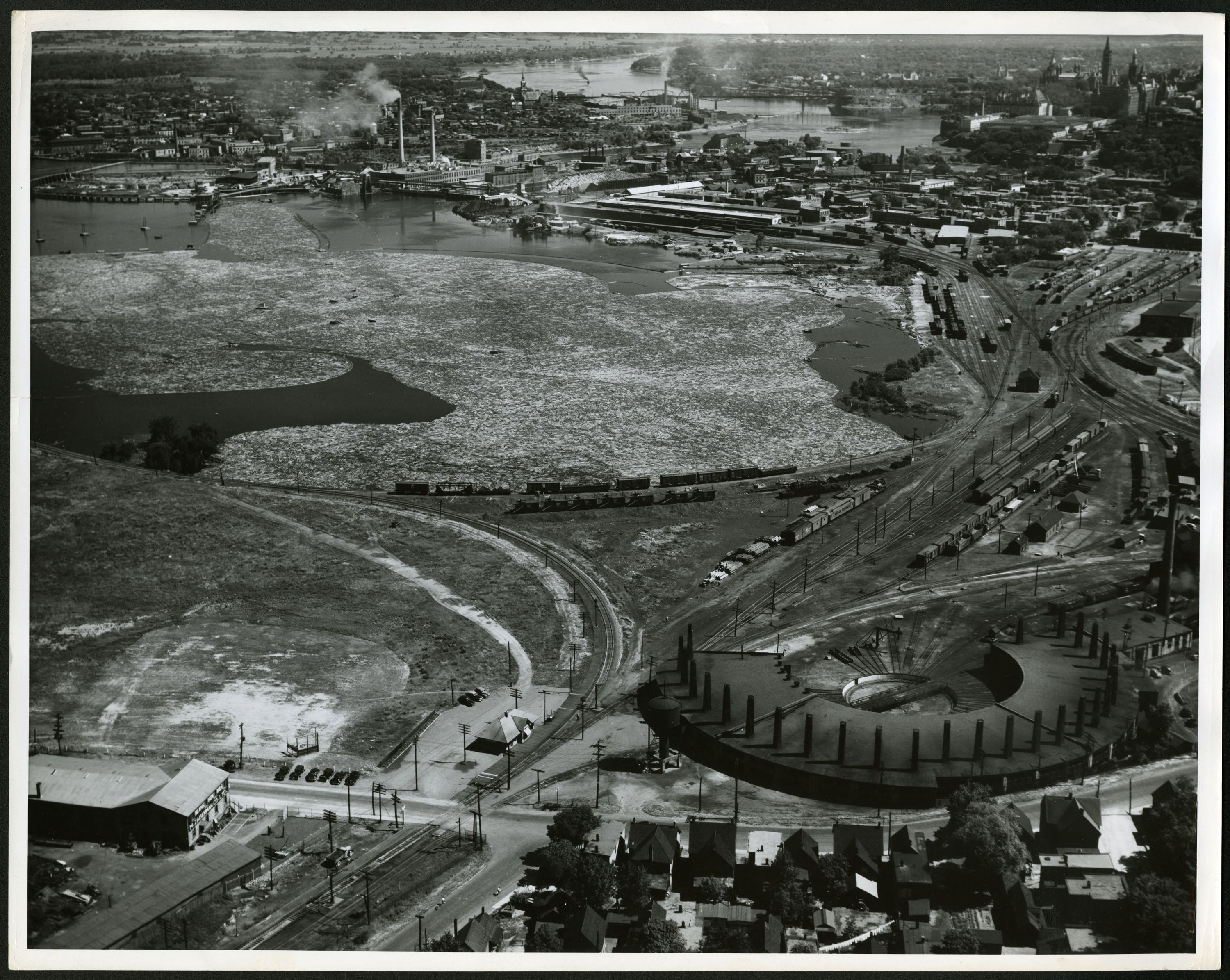
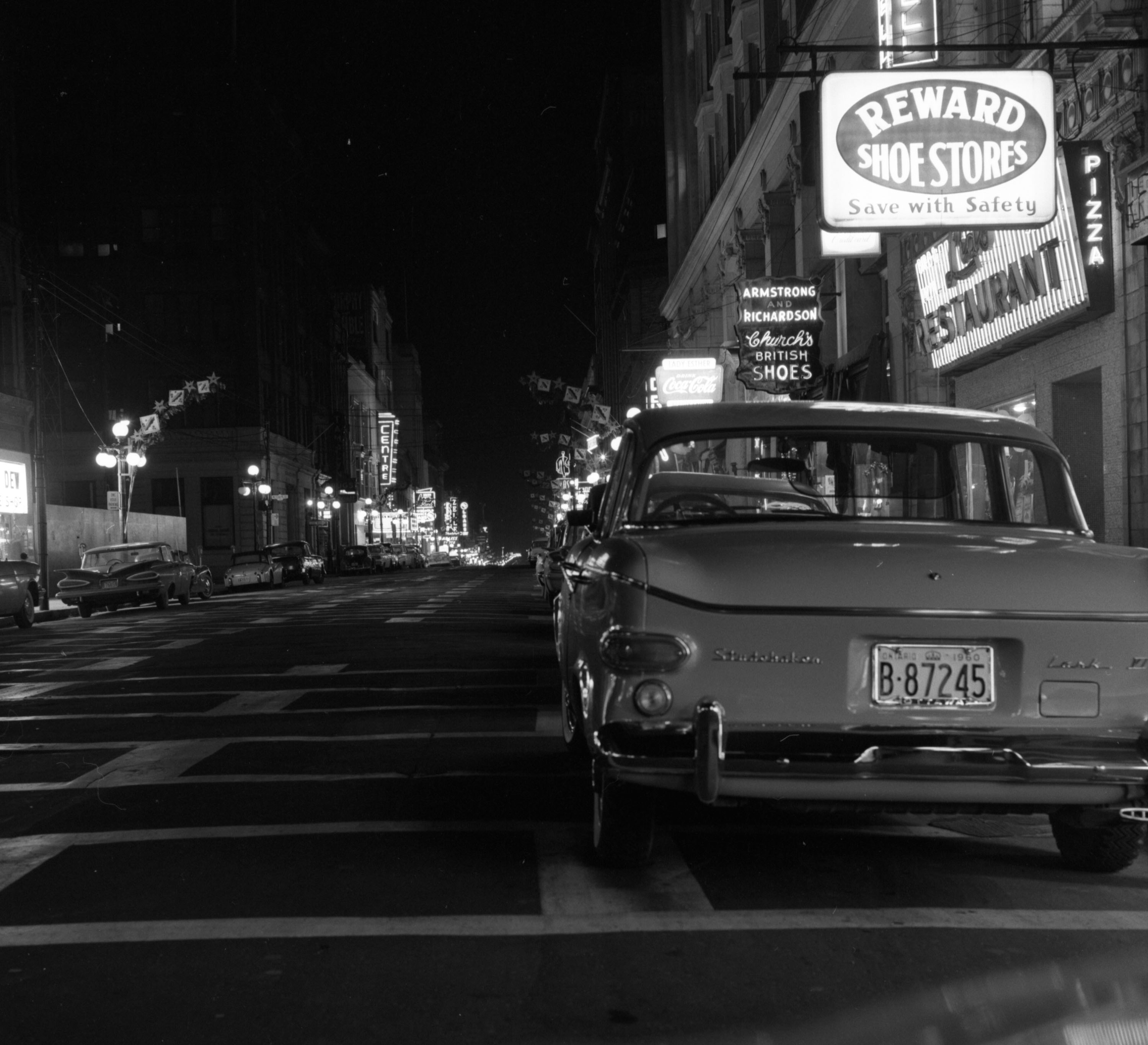
One of the projects hosted in the DigiLab was with the National Capital Commission (NCC), which digitized stunning historical images of the National Capital Region. You will find below some of the material the NCC digitized that is now available on LAC’s website.

Albums from the National Capital Commission fonds

  • Aerial views of Ottawa, 1952–1962 (8 images) – MIKAN 5025694
  • Federal District Improvement Commission, 1927–1929 (56 images) – MIKAN 5016537
  • Federal District Commission, 1927–1932 (291 images) – MIKAN 5023881
  • Photos by R.A. Ramsay showing installation of a steel railway structure (4 images) – MIKAN 5025167
  • Russell House block, Russell Hotel photographs (63 images) – MIKAN 3788413
  • Ottawa Region, Federal District Commission, 1902 (20 images) – MIKAN 5050722
A black-and-white photograph of a quiet park and streets surrounded by two major buildings flying the Union Jack flag from their highest rooftop. Old cars are parked on the main street in the foreground.

Looking south from East Block on Ottawa’s Parliament Hill, MIKAN 5026166

Aerial black-and-white photograph of an industrial landscape with logs floating in the water and a power station and rail lines in the foreground. The Parliamentary Precinct is in the background.

LeBreton Flats, Ottawa West Station & Turning House, ca. 1962. [Present-day City Centre Bayswater Station area] @Government of Canada (e999909317-u)

Ted Grant fonds

A black-and-white photograph of a street at night with cars parked on both sides and neon store signs adding light.

Sparks Street [Ottawa] at night, taken November 14, 1960. Credit: Ted Grant. (e999906140-u)

Federal District Commission fonds

Photographs, editorials catalogue and newspaper supplement proofs for the plan and model of the National Capital Planning Committee’s Master Plan, and its Canadian Tour – MIKAN 3788892

Interested in the DigiLab?

If you have an idea for a project, please send us an email at bac.numeri-lab-digilab.lac@canada.ca. Give us an overview of your project, the complete reference of the material you would like to digitize and any extra information you know about the collection.

After we verify the condition of the material to ensure it can be digitized safely, we’ll plan time for you in the DigiLab. We’ll provide training on handling the material and using the equipment and you’ll digitize and capture simple metadata. Material has to be free from restrictions and copyright.

We hope to hear from you soon!

Links of interest


Karine Gélinas is a project manager in the Public Services Branch at Library and Archives Canada.

A day in the life of a Reference Archivist

This article contains historical language and content that some may consider offensive, such as language used to refer to racial, ethnic and cultural groups. Please see our historical language advisory for more information.

By Alix McEwen

I’ve always thought that, to be a good reference archivist at Library and Archives Canada (LAC), you need certain qualities. You need to have a solid knowledge of Canadian history and culture. You need to have an understanding of what is in LAC’s holdings, and how the records are collected organized. You must also enjoy working with people. However, it really helps if you are a lover of puzzles and are prepared to do some digging to help solve them.

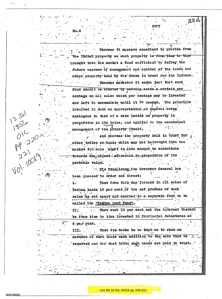
A recent puzzle that came my way originated with a question from a former colleague about a copy of a particular document presumed to be a pre-Confederation Order-in-Council (OIC). He wanted to know if the federal Cabinet of the time had actually approved the OIC. The date scribbled in the margin of the document is “12 July 1856 OIC pp. 220-221 Vol. 10019.” Almost exactly the same reference information appears at the bottom of the document: LAC RG 10 vol. 10019 pp. 220-221. The subject of the text is the formation of the Indian Land Fund.

The copy of the record of pre-Confederation OICs is found in RG 1 E-8 (RG 1 = Records of the Executive Council of the Province of Canada). However, the LAC reference given is to a Department of Indian Affairs document (RG 10). A brief moment spent in our Collection Search database showed that the RG 10 volume 10019 corresponds to Matheson’s Blue Books, which did not provide evidence that this was an exact copy of an OIC.

Back to the first steps: I searched the indexes and registers of RG 1 E-7 volumes 72-93. These sources are available to help a researcher locate pre-Confederation OICs. The problem is they are handwritten and the writing is not easy to decipher. I looked for the following entries: Indian Land Fund, then Fund on its own, then Land on its own—but no luck.

On to the next steps: Google Books (yes, we do use Google!). A search there provided some confirmation that there was an OIC relating to Indian Affairs signed on the date in question. More importantly, it led me to an unpublished Indian Affairs research paper “The Indian Land Management Fund,” by David Shanahan. My colleagues in the LAC Indigenous Archives section were able to provide me with a copy of this paper.

This was a turning point. In the introduction to this paper, Mr. Shanahan notes, “There is no satisfactory evidence that the fund was established by Order-in-Council as has been previously believed.” He then devotes a whole chapter to the origins of the Management Fund. Most important to me was the fact that there was indeed an OIC dated July 12, 1856; however, what it did was to set up the Pennefather Commission, tasked with discovering the “best mode of managing the Indian property.”

So, why could I not locate this OIC? This time I returned to the microfilm of the OICs themselves, not to the indexes and registers. As is the case with many of our unrestricted microfilm reels, access is much easier, now that they are digitized and available via Heritage. I found the section that covered the date in question, and was then able to turn from page to page before finally finding what I wanted. RG1 E 8 vol. 60 p. 443 12th July 1856 (reel H-1795)—that was my final reference. The OIC, indeed, did not set up the Indian Land Management Fund.

A microfilmed page with handwritten text from RG1 E 8 volume 60, page 443.

Order-in-Council dated 12th July 1856, RG1 E 8 volume 60 page 443 (microfilm reel H-1795)

I was still puzzled as to why I could not locate a reference to this OIC in the indexes and registers. Back I went, this time resolved to go slowly and start under the letter “I” for anything related to Indian. Before too long, I found my reward. The OIC was referenced in the index under “Indians, Civilization of”—an uncomfortable reminder that to search historical records you need to be aware of the terminology and attitudes of the time.

Do you have a puzzle that could use the attention of a problem-solving archivist or librarian? Submit your question in writing to us today.


Alix McEwen is a Reference Archivist in the Reference Services Division.

Images of Point Pelee National Park and Pelee Island now on Flickr

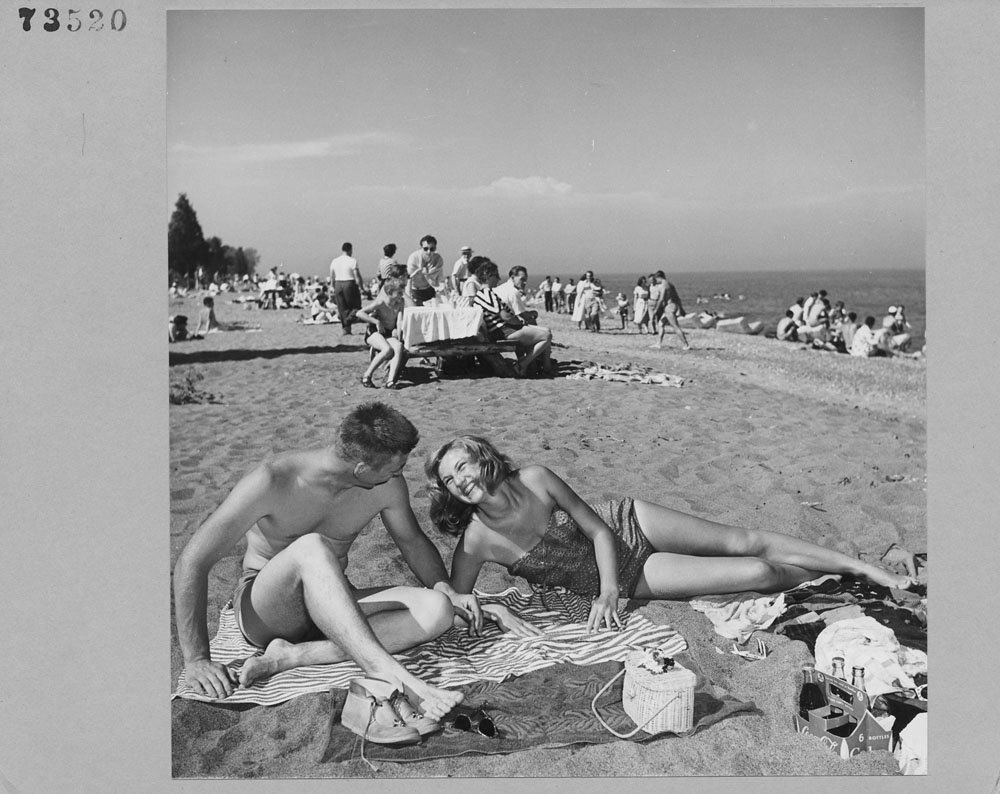
A black-and-white photograph of Kathleen Hart and Dave Phipps sunbathing on the beach.

Kathleen Hart and Dave Phipps sunbathing on the beach at Point Pelee National Park, Ontario. [MIKAN 4297909]

Point Pelee National Park is located in southwestern Ontario. The park is a peninsula that extends into Lake Erie and consists of marsh and woodland that are home to diverse flora and fauna. In 1918, Point Pelee was the first national park created for conservation at the urging of birdwatchers and hunters.

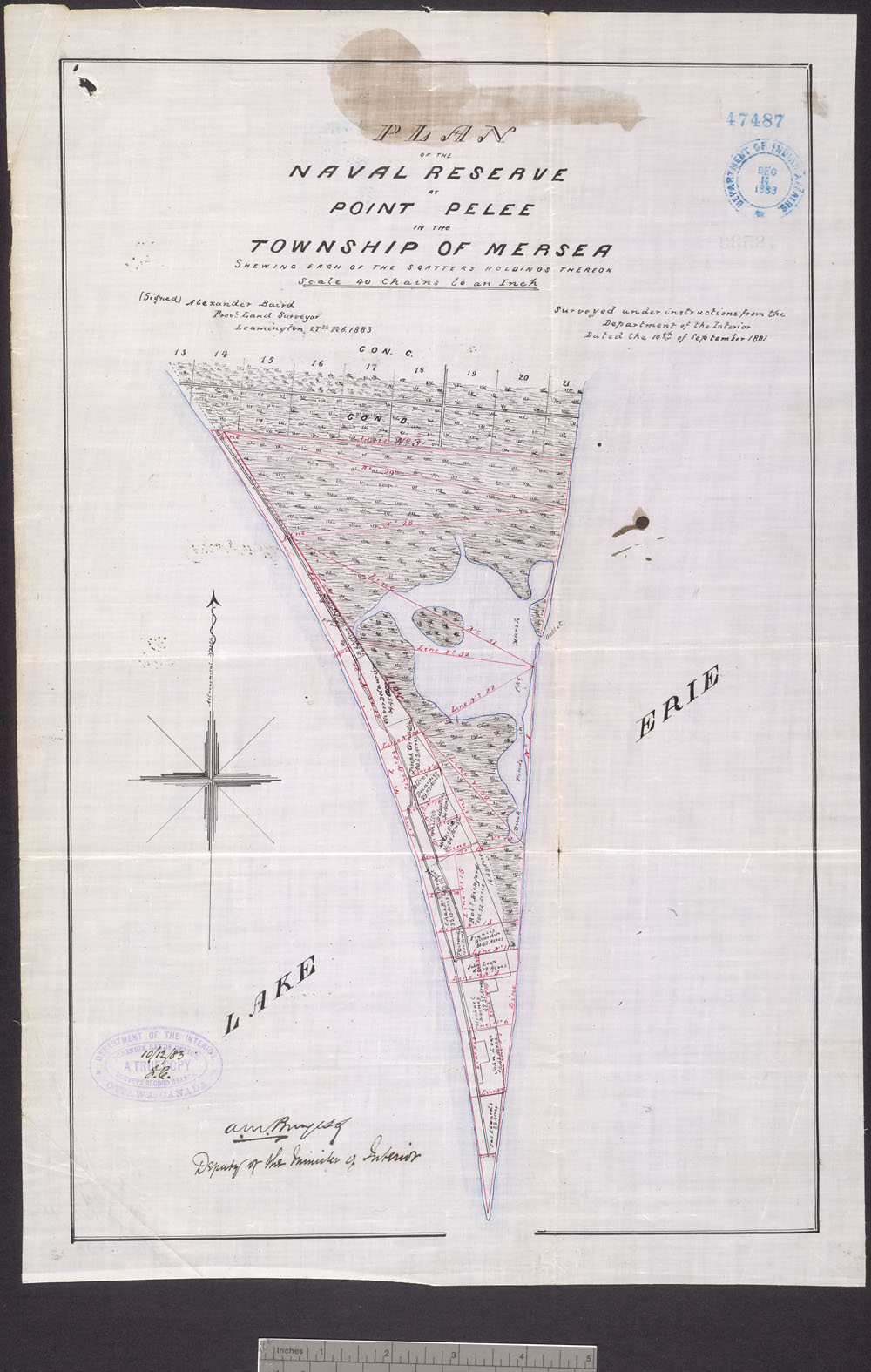
A black-and-white “Plan of the Naval Reserve at Point Pelee in the Township of Mersea..."

“Plan of the Naval Reserve at Point Pelee in the Township of Mersea…,” Ontario. [MIKAN 3670979]

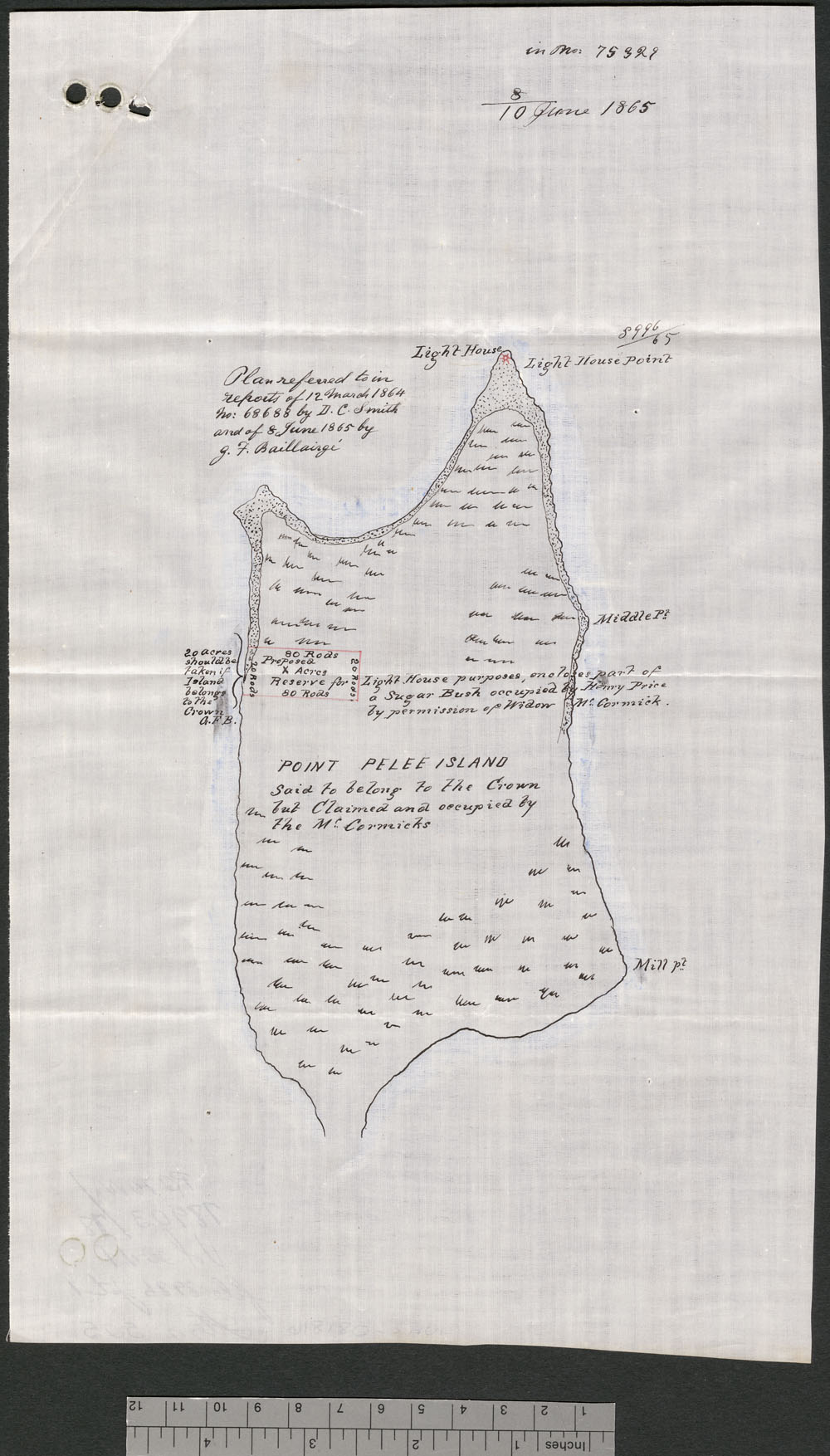
A black-and-white map of Point Pelee Island, Ontario.

Point Pelee Island, Ontario. [MIKAN 3670898]

Pelee Island is the largest island in Lake Erie and lies southwest of Point Pelee National Park, but is not part of the park. The island is abundant with wildlife and is an important flyway for migrating birds between Ohio and Ontario. The island also has a long history of wine making.

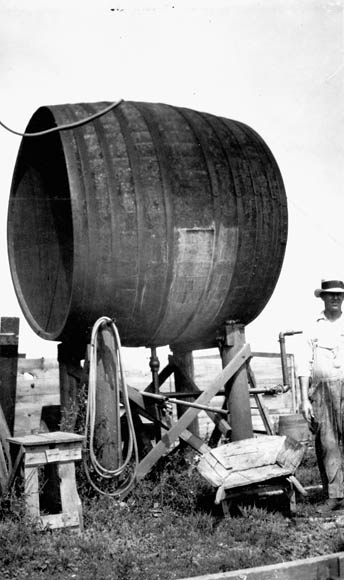
A black-and-white photograph of a Pelee Island wine vat now used as a water reservoir.

Pelee Island wine vat now used as a water reservoir, Pelee Island, Ontario. [MIKAN 3642953]

Visit the Flickr album now!

Found in translation: discovering Canadian literary translations

By Liane Belway

Discovering new and exciting books and authors is a rewarding experience for most readers. In Published Heritage—the library side of Library and Archives Canada (LAC)—we connect with the publishers who bring us these works and make our diverse published Canadian heritage accessible to a wider audience.

When Canadian publishers make material available, they deposit copies with LAC with the help of our Legal Deposit team. What kinds of material do we acquire in Legal Deposit? A wealth of Canadian content: books, music, spoken-word recordings, magazines and other serials, and digital material as well. Each offers a unique perspective on Canadian society and culture, reflecting the publisher’s vision, interests and identity. One source of new knowledge and literary artistry is the translation of such works, making these publications available to a completely new audience.

Canadian Translations

One way of making great literature available to wider audiences is through literary translation, an often overlooked literary skill but a highly valuable one in a multicultural and multilingual society. Translations offer a window into new perspectives and styles, and a chance to discover literary traditions and innovations often not otherwise easily accessible. In fact, the Governor General’s Awards have a category for Translation, acknowledging the value of bringing French-language works to new readers in English when they would not ordinarily have the chance to read them. Each year, this award recognizes the translation of a work into English for its literary excellence and cultural contribution.

Award Winners

The 2017 Governor General’s Literary Award for Translation was awarded to Readopolis, translated into English by Oana Avasilichioaei and published by BookThug in Toronto. It is a translation of Lectodôme by Bertrand Laverdure, published by Le Quartanier, a francophone publishing house in Montreal. The Peer Assessment Committee had high praise for Avasilichioaei: “In Readopolis, Oana Avasilichioaei has risen to and matched the stylistic acrobatics of Bertrand Laverdure’s Lectodôme. The many voices of Quebecois writing sing through in this intelligent translation – a vertiginous ode to the pure, if rarely rewarded, pursuit of literature.”

David Clerson’s Brothers, a worthy finalist for the same award in 2017, also offers an excellent introduction to a new publisher’s vision. QC Fiction, an imprint of Baraka Books with a fresh perspective, is a Quebec-based English-language book publisher in Montreal. Recognizing the value of translations, QC Fiction’s goal is to publish contemporary Quebec fiction originally published in French, in English translations for a wider Canadian and international audience. Another QC Fiction title, I Never Talk About It, contains 37 stories and as many translators. As Fiction editor Peter McCambridge states, “37 different translators to translate each of the short stories published in a collection by Véronique Côté and Steve Gagnon. It’s a reminder that there are at least 37 different ways to translate an author’s voice—something to consider the next time you pick up a book in translation!”

Six colourful book covers with similar designs laid out side by side, displaying all titles: Listening for Jupiter, I Never Talk About It, Behind the Eyes We Meet, Brothers, The Unknown Huntsman, Life in the Court of Matane.

A selection of publications from QC Fiction, including Brothers (2016), the finalist of the Governor General prize for translation. Image used with permission from QC Fiction.

Providing works in translation allows audiences outside of Canada access to a large and, in our ever more connected world, growing national literature, and Canadian authors are enjoying an increasingly international audience. QC Fiction is also a great example of Canadian fiction’s global appeal. Says McCambridge: “So far the formula seems to be working: 3 of our first 5 books have been mentioned in The Guardian newspaper in England and bloggers from Scotland to Australia have picked up on what we’re doing and praised our ‘intriguing light reads.’”

With these award-winning publishers—just two examples of the innovative work in the world of Canadian literary translations—Canadian publishing remains a creative, varied, and thriving world that LAC strives to collect and preserve for readers now and in the future. To see what else LAC has in its collections, try our new search tool at: http://www.collectionscanada.gc.ca/lac-bac/search/all.


Liane Belway is the Acquisitions Librarian for English monographs in the Published Heritage Branch at Library and Archives Canada.

“My darling dearest Jeanie” The Joseph Gaetz fonds

Web banner with the words: Premiere: New acquisitions at Library and Archives Canada showing a small picture of an otter fishing on the rightBy Katie Cholette

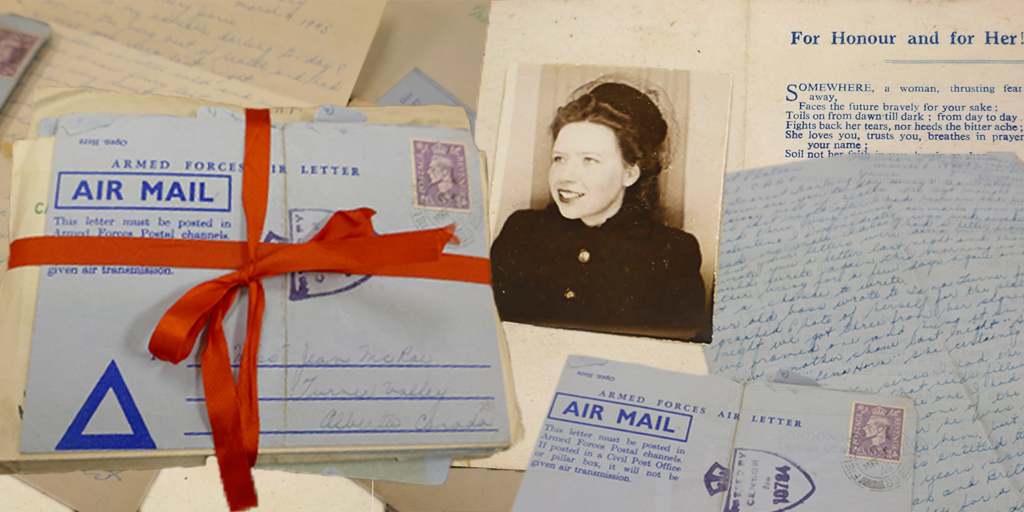
“My darling dearest Jeanie.” That’s how Joseph Gaetz began every one of the more than 530 letters he wrote to his fiancée, Jean McRae, during the Second World War. Stationed in England, France, Belgium, Holland and Germany during and after the Second World War, Joseph was, at times, desperately homesick. His deepest desire was for the war to be over so that he could return to Canada and marry his sweetheart. Between July 1943 and November 1945, Joseph wrote to Jean whenever he could, sometimes sending both an airmail and a regular letter in the same day. He also collected a number of souvenirs from German prisoners that he sent to Jean with his letters. In 2017, his three daughters, Cathy Gaetz-Brothen, Bonnie Gaetz-Simpson and Linda Gaetz-Roberts donated his letters and souvenirs to Library and Archives Canada.

A colour photograph of piles of letters, with one bundle held together by a red ribbon. Underneath them is a photograph of a young woman wearing a coat and stylish hat.

Letters addressed to Jean McRae of Turner Valley

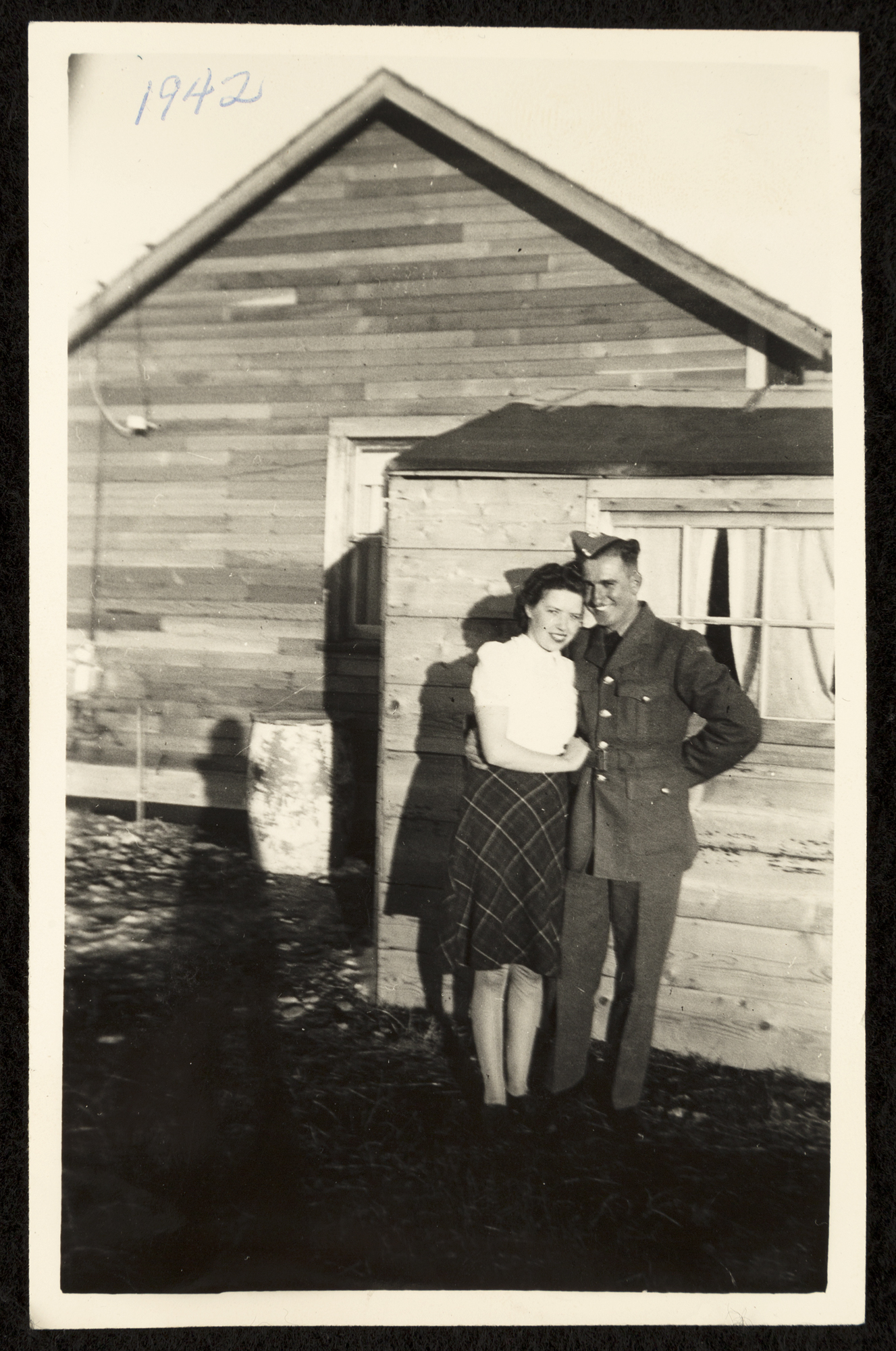
A black-and-white photograph of a man in a military uniform with his arm around a young woman wearing a flowered dress standing in front of a clapboard house.

Joe and Jean on their first day of engagement. November 1, 1942, Turner Valley.

Joseph Gaetz was from the small community of Faith, Alberta. His parents were Russian immigrants and he grew up speaking English and German. On 13 May 1942, he attested in the Calgary Highlanders; five months later, he became engaged to Jean McRae of Turner Valley, Alberta. In early 1943, he shipped out to England with the Canadian Infantry Reinforcement Unit.

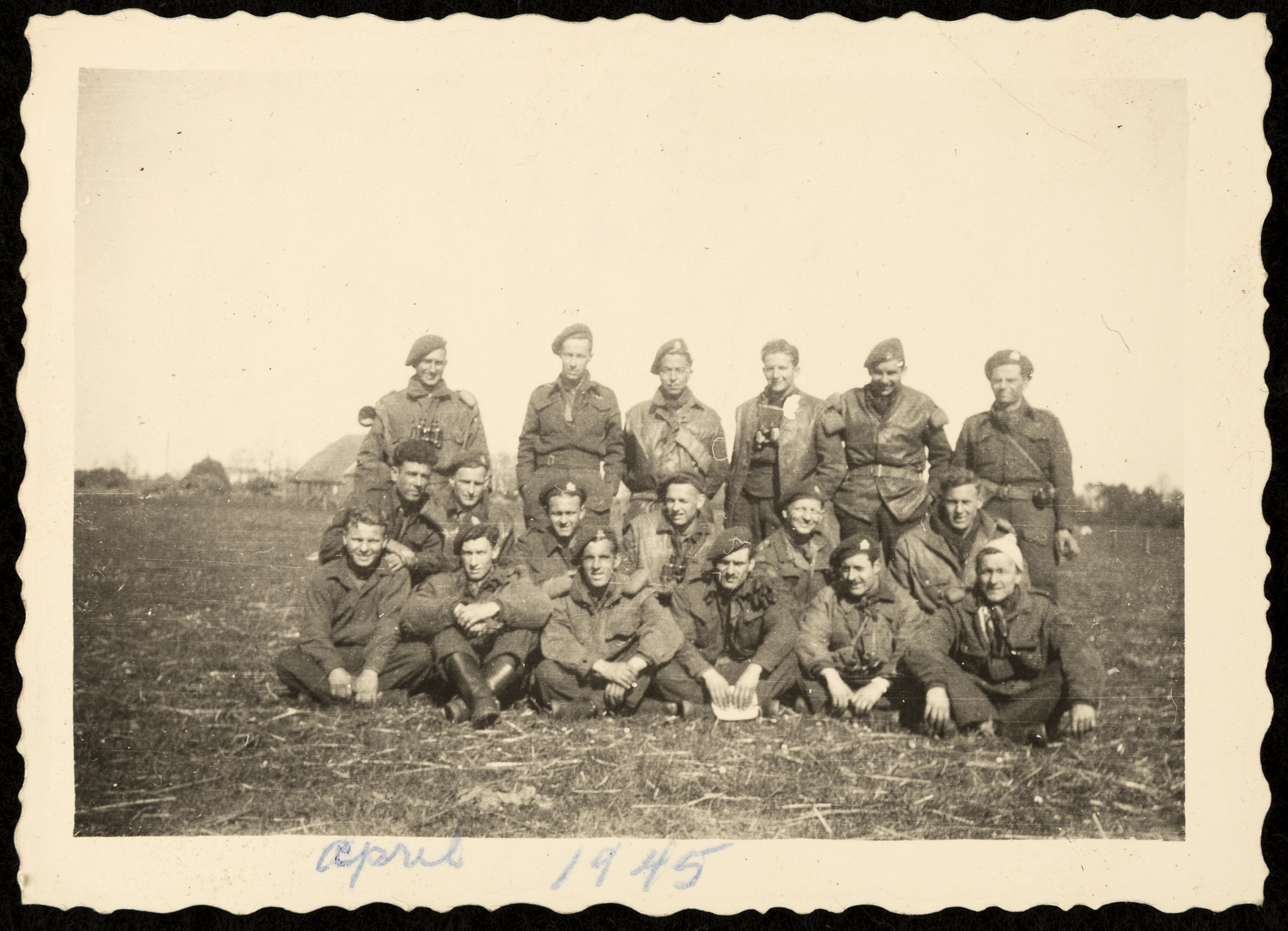
A black-and-white photograph of a group of 18 soldiers in uniform in a tilled field.

Royal Hamilton Light Infantry Scout Platoon.

In August 1944, Joe was sent into action in France with the Royal Hamilton Light Infantry; he would soon move into Belgium and Holland. When his superiors realized that he spoke German, Joe became an interpreter with their scout platoon, going on a number of expeditions behind enemy lines to bring back German prisoners. In one letter to Jean from late 1944, he wrote, “My officer and I went a mile into the Jerry lines one night and took 52 prisoners to a barn…That was quite an experience.” In another letter, he told Jean how odd it felt to be capturing Germans who had lived in Canada before the war. In still other letters, he talks about picking up a pistol (one of several he acquired during the war) from No Man’s Land. Joe also told Jean how he got nervous before every patrol but learned to walk silently to avoid detection. He attributed his ability to avoid injury or capture to the photo of Jean that he kept in his breast pocket. He called it his “lucky charm” and said that all the other men had some sort of talisman.

Joe’s ability to speak German allowed him to converse with the men they captured. Although Joe had no particular fondness for Germans, he did recognize their humanity and common plight. While guarding captured prisoners, or bringing them back to camp, Joe often talked with them. Sometimes he challenged their convictions—in one instance, he asked a group of prisoners if they thought Hitler was still a god. One young soldier, who surrendered, told Joe he was afraid he was going to be sent back to Germany after the war and shot for being a deserter. Joe told the young man not to worry; there wasn’t going to be a Germany after the war.

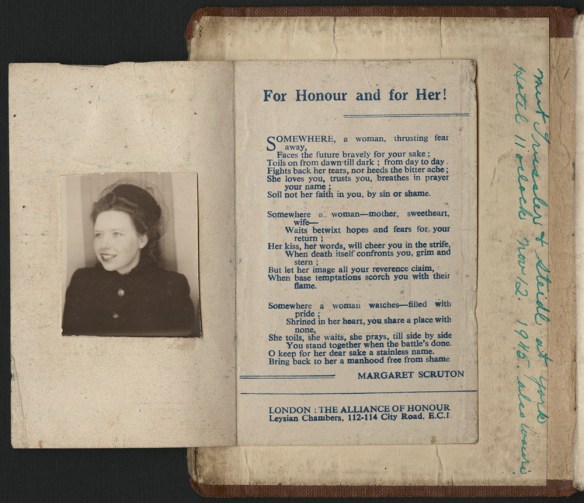
A colour photograph of a book opened at the first page. A pamphlet has been glued on the inside cover which has a photograph on one side and an ode to the women who stayed home entitled “For Honour and for Her!”

Joe’s Service Book showing the poem and photograph of Jeanie glued on the inside cover (e011202230)

Like many other soldiers, Joe kept a photo of his sweetheart tucked in the front of his Service Book, accompanied by a patriotic and moralistic poem entitled For Service and for Her! After inquiring about Jean’s health, he would reassure her that he was fine, tell her whether he had received her most recent letters, and then discuss the weather or some other inconsequential details. He followed these pleasantries with observations on military life—the routine chores he had to perform, what his accommodations were like, the food, who he’d met from back home, and so on.

Conditions at the front were often harsh, but Joe rarely complained. In fact, he joked about sleeping in trenches he’d dug himself and constructing makeshift chimneys from empty tin cans. Joe had a strong sense of personal duty; he refused to send anyone else in to do his job, and he went for seven months without a single day of leave. In one letter, he stoically told Jean about spending Christmas Day 1944 on duty in No Man’s Land.

Sometimes Joe and his fellow scouts were billeted with local families. Joe quickly picked up enough Flemish to be able to communicate with the people he came into contact with, and he writes how the locals would often invite the soldiers to dinner or offer to do their laundry. In his letters, he describes the little children he met, and he occasionally included photos of them in his letters home.

He came back to Canada on November 1945 and was discharged in Calgary, Alberta, on January 18, 1946, at the rank of Sergeant. He worked his way up to manager of the Fort Macleod lumberyard and he and Jean were finally married on June 21, 1948. They had three daughters before he died at the age of 41 of chronic hypertension. Cathy Gaetz-Brothen, the youngest of the girls was only one-year-old when her father died. The letters he wrote to her mother are especially important to her because they allowed her to get to know a father she had no memory of.

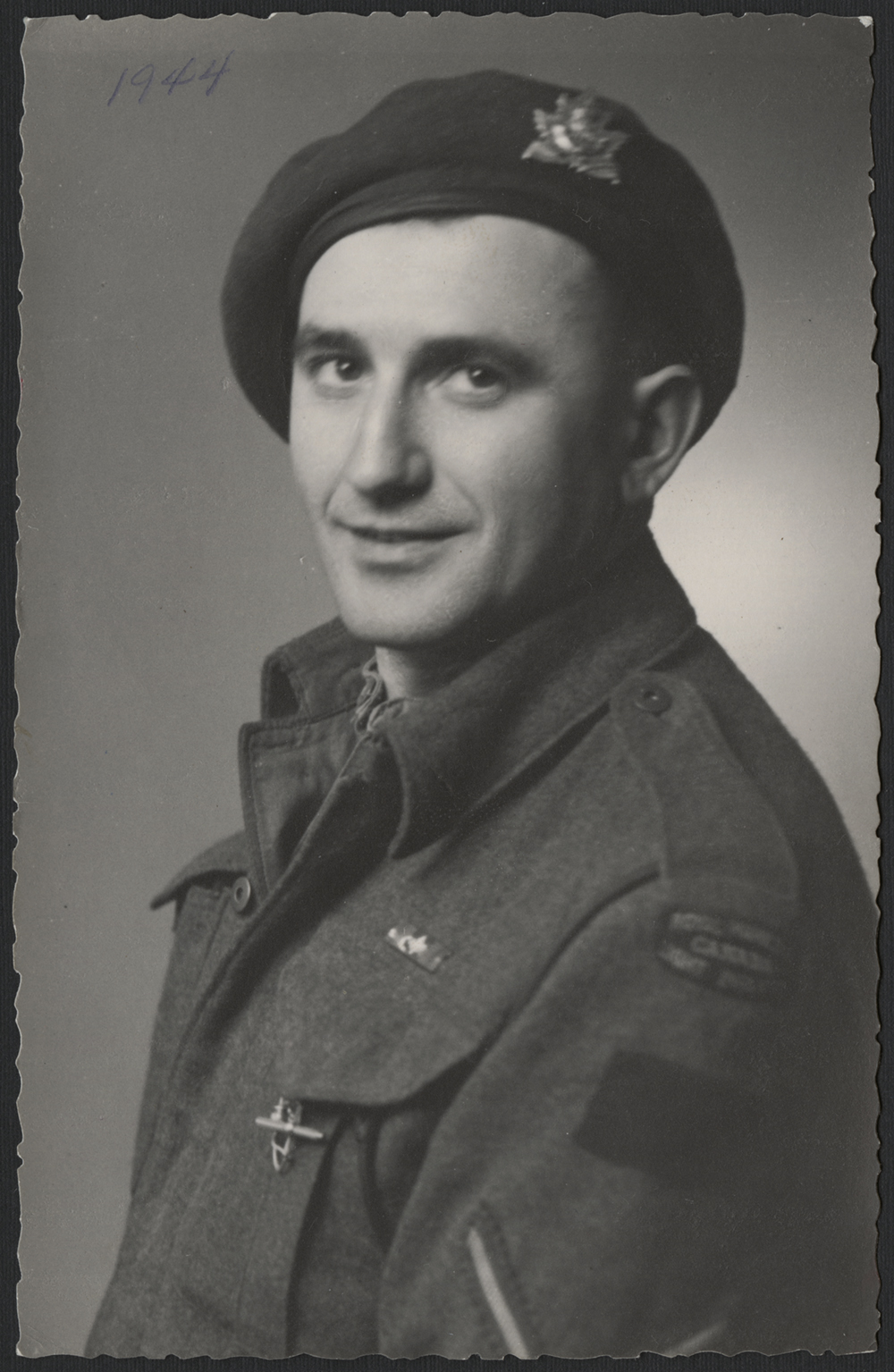
A black-and-white photograph of a man in uniform.

Joseph Gaetz in uniform (e011202231)

Joseph Gaetz didn’t have a particularly heroic war. He wasn’t a high-ranking commissioned officer leading a battalion; he didn’t singlehandedly storm any nests of German snipers. Instead he did what thousands of other Canadian soldiers did. He joined the army and fought alongside his fellow soldiers in the hope that he would one day come home to his sweetheart. Joe was one of the lucky ones.

Visit the exhibition Premiere: New acquisitions at Library and Archives Canada at 395 Wellington Street in Ottawa. The exhibition, which runs until December 3, 2018, features our most recent acquisitions and celebrates the expertise of Library and Archives Canada’s acquisition specialists. A librarian or an archivist thoughtfully selected every one of the items in the exhibition and wrote the caption for the item that they chose. Admission is free.


Katie Cholette is an archivist in the Specialized Media section of Library and Archives Canada.

St. Eugene Indian Residential School: Repurposing an Indian Residential School

This article contains historical language and content that some may consider offensive, such as language used to refer to racial, ethnic and cultural groups. Please see our historical language advisory for more information.

By Katrina Swift

Less than 10 kilometres from Cranbrook, British Columbia, St. Eugene Indian Residential School was the smallest one in the province. Open from 1898 to 1970, the school was primarily run by the Roman Catholic Sisters of Charity of Providence and the Oblates of Mary Immaculate. Construction of the main building was completed in 1912.

Background

As a project between the Canadian government and the Roman Catholic, Anglican, United and Presbyterian churches, the residential school system was in operation from 1892 to 1969. However, residential schools for Indigenous children predate Confederation, and the last one, run by the federal government, closed in 1996. Children from surrounding communities and reserves between the ages of 6 and 15 were coerced or taken away from their homes and forced to attend residential schools for 10 months each year, in many cases suffering physical, emotional, cultural and sexual abuse. By the late 1950s, St. Eugene was at its peak with 150 students, and even by its final year, it still had 56 students in residence.

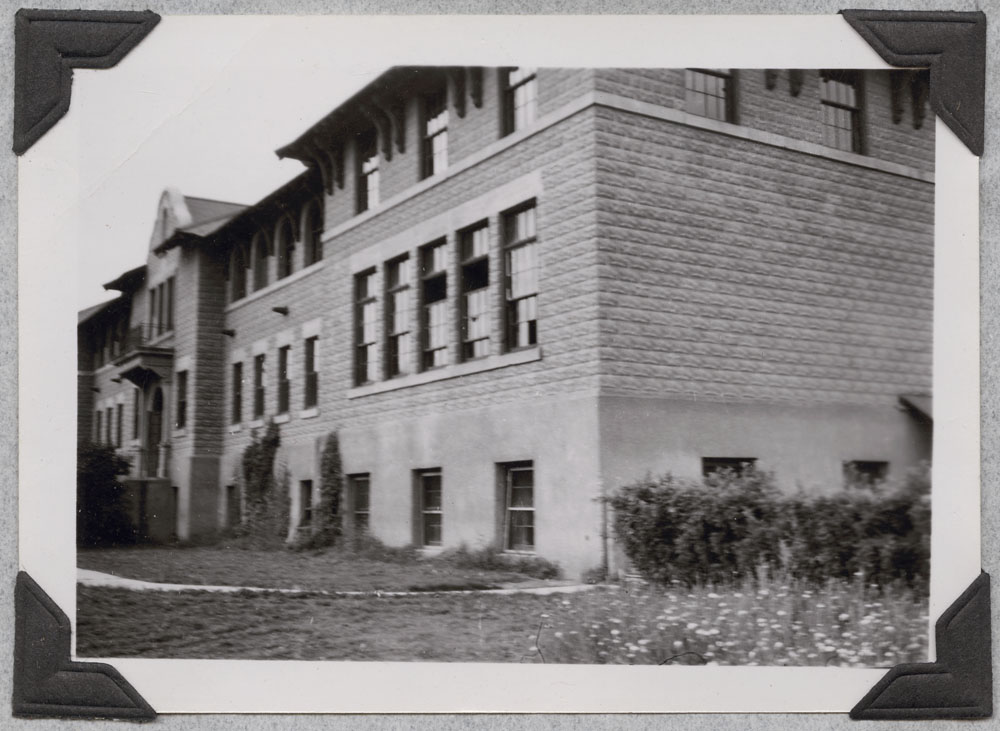
A blurry black-and-white photograph of a building taken from the side, showing the main entrance and the front of the building.

St. Eugene Indian Residential School – Kootenay, main building looking south, Cranbrook, B.C. Photograph taken on September 11, 1948 (e011080318)

The painful impact of these institutions continues to cut through generations. In Rick Hiebert’s 2002 article in Report Newsmagazine, Chief Sophie Pierre, who attended St. Eugene from ages 6 to 16, says, “…there was this feeling to just blow it up. Knock it down. No one wanted to see it anymore.” But, Pierre continues, they were swayed by the powerful words of Elder Mary Paul. “She said it was within the St. Eugene Mission that the culture of the Kootenay Indians was taken away, and it should be within this building that it is returned.”

A technical drawing of a three-story building with a high peaked roof. The central front entrance has a peak with a cross above it.

A technical drawing showing the front elevation of St. Eugene Mission in Cranbrook, B.C. (e010783622)

Moving forward

In 1996, the Ktunaxa Kinbasket Tribal Council submitted St. Eugene Residential School for designation as a site of national historic significance. According to Geoffrey Carr’s 2009 article in an academic journal, the application was rejected for a number of reasons: the site was going to be changed too radically, it did not satisfy the other criteria for the designations of schools, and finally, there was some wariness to commemorate a place that might be perceived as an embarrassment to the Canadian government. Instead, two years later, Coast Hotels & Resorts and the five bands of the Ktunaxa Kinbasket Tribal Council (St. Mary’s, Columbia Lake, Lower Kootenay, Tobacco Plains and Shuswap) announced that they would turn the historic site into a $30-million resort. The five bands would hold the lease to the property and control all the shares of the development corporation.

Chief Sophie Pierre, the major coordinator of the project, recalls her time at the school as terribly lonely. “Brothers and sisters were kept apart, not allowed to talk to each other,” she says in a 2003 Toronto Star article by Ian Cruickshank. Elder Mary Paul was a key inspiration for this project, saying,“…if you think you lost so much in this building, it’s not lost… You only really lose something if you refuse to pick it up again.” For the Tribal Council to maintain the building, studies showed that a resort would be the most profitable way to proceed. Although most funding came from federal government loans and grants, the Tribal Council made a particular effort to operate the business without governmental help.

The St. Eugene residential school is “…the only project in Canada where a First Nation has decided to transform the icon of an often sad period of its history into a powerful economic engine,” according to the resort’s website, “by restoring an old Indian Residential [S]chool into an international destination resort for future generations to enjoy.”

Critics argue that the redevelopment of St. Eugene has put economic gain before social memory. Carr writes that “…St. Eugene’s bears both the imprint of national contrition and the grotesque, enduring features of colonial violence.” Nevertheless, Chief Pierre takes great pride in how much this project will benefit the community in the long term.

In 2001, the resort’s golf course was named Golf Digest Magazine’s third-best golf course in Canada. According to statistics from Aboriginal Tourism BC, the main demographic group to visit such resorts are upper-middle-class baby boomers. By 2004, after some unfortunate financial struggles and a court order by the B.C. Supreme Court, the project was taken over by the Mnjikaning First Nations of Ontario, the Samson Cree First Nations of Alberta, and the Ktunaxa Kinbasket Tribal Council—effectively maintaining a complete First Nations operation, but with the Tribal Council no longer in its previous position of sole ownership.

Library and Archives Canada plays an important role in the collection and maintenance of information about residential schools across Canada. The records are integral for research regarding claims, architectural plans, and reports of administration and attendance. These records speak to the fact that the Indian residential school system was a deliberate choice by the Canadian government to take care of “the Indian problem,” as it was referred to in many government documents throughout this period.

Related resources

Sources

  • Aboriginal Affairs and Northern Development Canada. Indian Residential Schools Located in the Province of British Columbia – One-Page Histories. Government of Canada, 2013.
  • Geoffrey Carr. Atopoi of the Modern: Revisiting the Place of the Indian Residential School. English Studies in Canada 35:1 (March 2009): 109–135.
  • Ian Cruickshank. Indian chief brains behind resort. Toronto Star (July 5, 2003): J16.
  • Rick Hiebert. Holidaying in Auschwitz: a BC indian band is turning an old residential school into a new resort casino [St. Eugene Mission residential school]. Report Newsmagazine 29:1 (January 7, 2002): 54.
  • Eugene Golf Resort and Casino, www.steugene.ca.
  • Ted Davis. C.’s First Nations welcome the world; Baby boomers are now joining international travellers in exploring the province’s aboriginal-based attractions. CanWest News (June 17, 2008).

Katrina Swift is a master’s student in the School of Indigenous and Canadian Studies at Carleton University who was doing a practicum in the Government Archives Division at Library and Archives Canada.

Images of blacksmiths now on Flickr

Blacksmiths manipulate iron or steel to create objects, such as tools, household goods, and art. They use specific tools to hammer, bend, or cut metal heated in a forge.

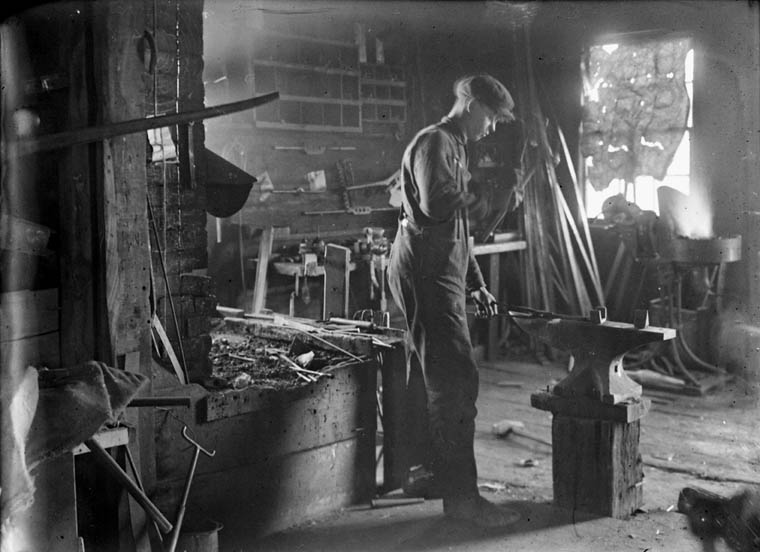
A black-and-white photograph of a man hammering a piece of metal at the Jolly Blacksmith shop.

Interior of Jolly Blacksmith shop, Ottawa, Ontario [MIKAN 3265334]

Many blacksmiths travelled to Canada during the mid-17th century to help build the trading posts of the Hudson’s Bay Company and its rival, the North West Company. As settlements grew, these metalworkers working in their workshops became an important technological and industrial hub of business and trade. They honed their skills to specialize in different domains. For example, a farrier was a blacksmith who specialized in the care and trimming of horses’ hooves, including shoeing them with horseshoes they created.

A black-and-white photograph of thirteen men posing for a group picture in front of the blacksmith shop.

Blacksmith shop, Harris Camp, Peter Co., Parry Sound, Ontario [MIKAN 3300810]

A black-and-white photograph of three soldiers watching a blacksmith shoeing a horse.

Personnel of the 7th Canadian Infantry Brigade watching a blacksmith shoeing a horse, Creully, France [MIKAN 3229115]

Around the mid-19th century, blacksmiths expanded their roles and continued to offer multiple services related to ironwork into the early 20th century.

A black-and-white photograph of a man in heating a horseshoe in a forge.

Harper Rennick heating a horseshoe, Shawville, Quebec [MIKAN 4948714]

Visit the Flickr album now!