Your ancestors and the War of 1812

During the War of 1812, many French Canadians fought under the command of Charles-Michel d’Irumberry de Salaberry in the Canadian Voltigeurs, a light infantry unit. The Voltigeurs’ main battle exploit was the Battle of the Châteauguay, which was fought on October 26, 1813, when some 1,700 Canadians helped drive back more than 3,000 Americans, preventing a major attack on Montréal.

Here are a few avenues for research that will help you determine whether your ancestors were among the Voltigeurs:

Library and Archives Canada has many documents on military service, including documents related to the War of 1812. Drafted mainly in English, these include muster rolls and paylists, along with land claims and petitions scattered throughout the collection. However, there are no military service files for specific individuals, unlike what is available for the First World War.

The starting point for your research is to find a contract of service, which all Lower Canada militiamen had to sign before a notary. This was the case for Joseph Auclair (1794-1861), who took part in the Capture of Detroit and in the Battle of the Châteauguay. This document provides physical details and the name of the regiment and of the commanding officer. The Notarial Records blog article explains how to find this key document.

Certificate of enlistment of Joseph Auclair by Jean-Baptiste-René Hertel de Rouville, captain, Canadian Voltigeurs unit, drafted before the notary Charles Pratte, December 27, 1812, Bibliothèque et Archives nationales du Québec.

Certificate of enlistment of Joseph Auclair by Jean-Baptiste-René Hertel de Rouville, captain, Canadian Voltigeurs unit, drafted before the notary Charles Pratte, December 27, 1812, Bibliothèque et Archives nationales du Québec.

You can also find references to medals awarded to veterans of the War of 1812 in our Medals, Honours and Awards database. With a bit of patience, you will be able to locate the name of your ancestor on paylists, also called Nominal Rolls and Paylists. Many militiamen were also granted land. These grants, announced in The Quebec Gazette, were confirmed by land patents, which can be found in our Lower Canada Land Petitions database.

Lastly, to save you time, it is very important to read the search help pages carefully to find out how documents are organized.

Samuel de Champlain’s General Maps of New France

Version française

In the fall of 1612, Samuel de Champlain had an engraving of his first detailed map of New France made in Paris. The map contained new geographic information, based on his own explorations from 1603 onward. The site of Montreal is clearly identified. Using information obtained from Aboriginal peoples, he was able to include previously uncharted areas, such as Lake Ontario and Niagara Falls. He also made use of other maps to depict certain regions, including Newfoundland. Although the engraving was made in 1612, the map was not published until the following year as an appendix to Voyages, Champlain’s 1613 account of his journeys.

Carte geographique de la Nouvelle Franse faictte par le sieur de Champlain Saint Tongois cappitaine ordinaire pour le roy en la marine. Faict len 1612.

Carte geographique de la Nouvelle Franse faictte par le sieur de Champlain Saint Tongois cappitaine ordinaire pour le roy en la marine. Faict len 1612.(e010764733)

While back in France in the summer of 1613, Champlain had an engraving made of a second version of a general map that he had begun the previous year, which he also published in his 1613 book. In that map, he incorporated his most recent geographic findings, including the Ottawa River, which he was the first to depict. His depiction of Hudson Bay was deliberately inspired by a map of Henry Hudson’s voyages.  

Carte geographique de la Nouvelle Franse en son vray meridiein. Faictte par le Sr Champlain, Cappine. por le Roy en la marine – 1613.

Carte geographique de la Nouvelle Franse en son vray meridiein. Faictte par le Sr Champlain, Cappine. por le Roy en la marine – 1613. (e010764734)

An incomplete general map by Champlain also exists. The engraving was made in 1616, although the map was never published. The only known copy is held by the John Carter Brown Library.

In 1632, Champlain published his last major map of New France, which was included in his final book, Les Voyages de la Nouvelle France occidentale, dicte Canada. He had been living in France for nearly three years, having been driven out of Quebec by the Kirke brothers in 1629. This updated map contains little new information verified by Champlain himself, as his own explorations came to an end in 1616. He based the revised version on the invaluable information conveyed to him by others, chief among them Étienne Brûlé. Nevertheless, this map represents an important milestone in the history of North American cartography and was widely used by other mapmakers. There are two versions of this map. Among the differences between them are the representation of Bras d’Or Lake or a chain of mountains on Cape Breton Island. Both versions of the map are held by Library and Archives Canada. The first can be seen here:

Carte de la Nouvelle France, augmentée depuis la derniere, servant a la navigation faicte en son vray meridien, 1632.

Carte de la Nouvelle France, augmentée depuis la derniere, servant a la navigation faicte en son vray meridien, 1632. (e010771375)

Suggested reading to learn more about this subject: Conrad E. Heidenreich and Edward H. Dahl, “Samuel de Champlain’s Cartography, 1603-32”, in Raymonde Litalien and Denis Vaugeois, eds., Champlain: The Birth of French America. Sillery: Les éditions du Septentrion; and Montreal and Kingston: McGill-Queen’s University Press, 2004, pp. 312-332.

How anonymous or little-known portrait sitters tell the Canadian story

No names are recorded on this 1913 photograph of an Ontario boys’ band.

Boy’s Brass Band Community Movement Pembroke, circa 1913.

Boy’s Brass Band Community Movement Pembroke, circa 1913. Source

Although the leader, “Bandmaster Wheeler,” is identified in a second photograph of this same group, we have found little information about him or the group of boys that he taught.

Bandmaster Wheeler and Boy’s Brass Band Community Movement Pembroke, circa 1913

Bandmaster Wheeler and Boy’s Brass Band Community Movement Pembroke, circa 1913 Source

A surprising number of portraits in Library and Archives Canada’s (LAC) collection are anonymous or little–known men, women and children. We may never know the identity of these people or discover more about their lives, yet these portraits are as important to LAC’s collection as portraits of well-known people.

These boys’ band photographs document an interesting social movement at the beginning of the 20th century. Community organizations concerned about the morals and manners of their children sponsored bands for young boys. Participation in these bands was seen as a way of learning community service and developing local and national pride.

Viewed together, these photographs illustrate this idea. We know that the first photograph was taken slightly earlier because the boys wear suits rather than band uniforms. Local records of the time show that they were still raising money through performances to earn their uniforms. The second photograph shows the group in uniform — the reward for learning this lesson in personal responsibility and hard work.

These group photographs probably helped to cement the band’s unity and team spirit. Membership in this band looks as though it might have been a lot of fun too, judging by Bandmaster Wheeler’s slightly loosened tie in one photograph, and the jaunty angle of his hat in the other. Wheeler is an interesting figure, being an early Black bandmaster in small-town Ontario. LAC holds few portraits of Black Canadians from this period. Wheeler’s presence in these photographs provides us with an important record.

We continue to research the identity of unknown portrait sitters. If you can help, please contact us.

To view other examples of anonymous or little-known sitters in LAC’s portrait collection, visit our Flickr Album.

Margie Gillis Dance Foundation Archival Holding at Library and Archives Canada

Did you know that, since 2010, Library and Archives Canada (LAC) has held the Margie Gillis Dance Foundation’s audiovisual, administrative and promotional materials?

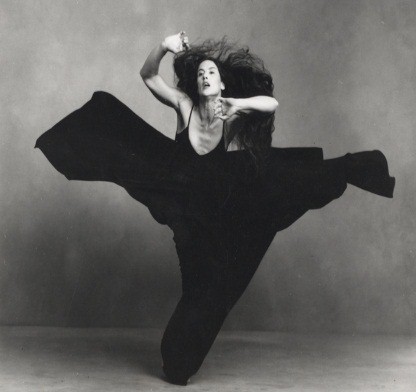
Dance performance advertisement featuring Margie Gillis.

Dance performance advertisement featuring Margie Gillis.
© Margie Gillis Dance Foundation. Credit: Michael Slobodian

The Foundation itself chose LAC to preserve its documentary heritage as a result of a 2008 analysis report that strongly urged the Foundation to ensure the long-term preservation of its documentary heritage in a Canadian archive.

LAC has more than 1,100 photographs illustrating the career of this internationally acclaimed Canadian contemporary dancer and choreographer. The collection features photographs by nationally and internationally renowned photographers and artists, including Annie Leibovitz, Lois Greenfield, Cylla Von Tiedemann, Michael Slobodian and Jack Udashkin.

Black and white artistic dance photo of Margie Gillis

Black and white artistic dance photo of Margie Gillis.
© Margie Gillis Dance Foundation. Credit: Annie Leibovitz

The archival holding also includes about 750 hours of audiovisual materials. This unique collection of recordings shows Margie Gillis’s choreographic and artistic work from the beginning of her career to today. Her dance performances in Canada, the United States and around the world are thus preserved for posterity, along with her choreography labs and rehearsal sessions, and a large number of media interviews and reports.

In addition, the textual records, brochures and multiple posters in a variety of formats provide an overview of the activities carried out by the Foundation, which was created in 1981. The Foundation’s primary mission is to support, protect and promote the artistic vision of Margie Gillis, a pioneer and an innovator in contemporary dance.

All the materials in the holding are accessible. However, they may not be reproduced or used without the Foundation’s consent.

The fonds can be consulted online.

For more information about Margie Gillis and her dance foundation, please consult the Foundation’s website.

The Mountain Legacy Project: An Archive-Based Scientific Project

Beginning in 1871, the Dominion Lands Branch had been surveying and mapping Canada from East to West. By 1886, the Dominion Lands Survey had extended to the Rocky Mountains, but the rugged terrain made traditional survey methods impractical. Édouard-Gaston Deville, Surveyor General of Canada, devised a new methodology called “phototopography,” (also known as photogrammetry) based on the use of survey photography from hot-air balloons in France and Italy. A special camera was constructed for surveyors, who ascended thousands of peaks in Alberta, British Columbia and the Yukon. They rotated and levelled their cameras on tripods to create 360-degree views of the surrounding terrain. Between 1887 and 1958, more than 100,000 glass plate negatives were used to create the first topographic maps of the Canadian Rockies, of which 60,000 are now part of the Library and Archives Canada (LAC) collection.

Since 2002, LAC has been a major participant in the Mountain Legacy Project, an ongoing partnership led by the University of Victoria, which includes stakeholders in universities, archives, government, and non-governmental organizations.

LAC identifies, describes and digitizes the original negatives. These photographic records are the foundation of this multidisciplinary project, which uses “repeat” photography. It consists of re-photographing the landscape from the precise original locations to provide information about environmental changes that have occurred over the last 120 years.

To search LAC holdings of original photographs, follow these easy steps:

  1. Go to the Basic Archives Search.
  2. Enter the archival reference number R214-350-0-E in the search box.
  3. From the Type of material drop-down menu, select Photographic material and then click on Submit. Your search will generate a list of results.
  4. Select an underlined title to access the full description of a photograph. The descriptive records display images of photographs that have been digitized.

For more information about how to search for photographs at LAC, consult our articles “How to Find Photographs Online” and “How to Search for Images Online.”

If you wish to narrow your search:

  1. Go to the Archives Advanced Search.
  2. Select Photographic material from the drop-down menu labelled Type of material
  3. Use one or a combination of the following options as keywords in the Any Keyword search box:
    1. Name of the surveyor (e.g., Bridgland, McArthur or Wheeler).
    2. Year of the survey (must be used along with another keyword to limit search).
    3. Name of a survey (e.g., Crowsnest Forest Reserve, or Interprovincial Boundary Survey, although these may have taken place over several years, by various surveyors).
    4. Name of a particular landscape feature, such as mountain peak, river, creek, or valley (often the views are identified by the station/peak they were taken from, rather than by the peak or landscape featured in the photograph).
    5. Name of the park (Note: The LAC collection does not contain reproductions of the images from Jasper and Banff National Parks).
  4. Limit your search results by selecting a decade under the label “Date” on the right side of the screen.

For more information about the Project, and to compare the archival images with the repeat photography, visit the Mountain Legacy Project website. To view a sampling of paired photographs, visit our Flickr Set. To view some images of the surveyors, visit our Facebook Album.

Questions or comments? We would love to hear from you!

TD Summer Reading Club 2013

Graphical element: Logo for the 2013 TD Summer Reading Club

This year, the TD Summer Reading Club invited children and their parents to become explorers and discover the world. Under the theme, Go!, the young people set off on an adventure, uncovered fascinating cultures and explored exotic locations, all the while making unforgettable discoveries through the magic of reading.

The TD Summer Reading Club is a bilingual program that aims to instil in children the fun of reading during the summer. This summer’s edition, launched by the TD Bank, the Toronto Public Library and Library and Archives Canada on May 29th, was a great success: 600,000 young people participated in over 28,000 activities and read a total of 2 million books!

Graphical element: An illustration from the 2013 TD Summer Reading Club

To continue the fun, the TD Summer Reading Club’s website is full of exciting activities and surprises. Young readers are invited to leave comments about their favourite books, participate in a scavenger hunt, write silly stories and share their favourite jokes with their friends! Lastly, they can also learn to draw with the Club artist, Matt James, and share their creations online!

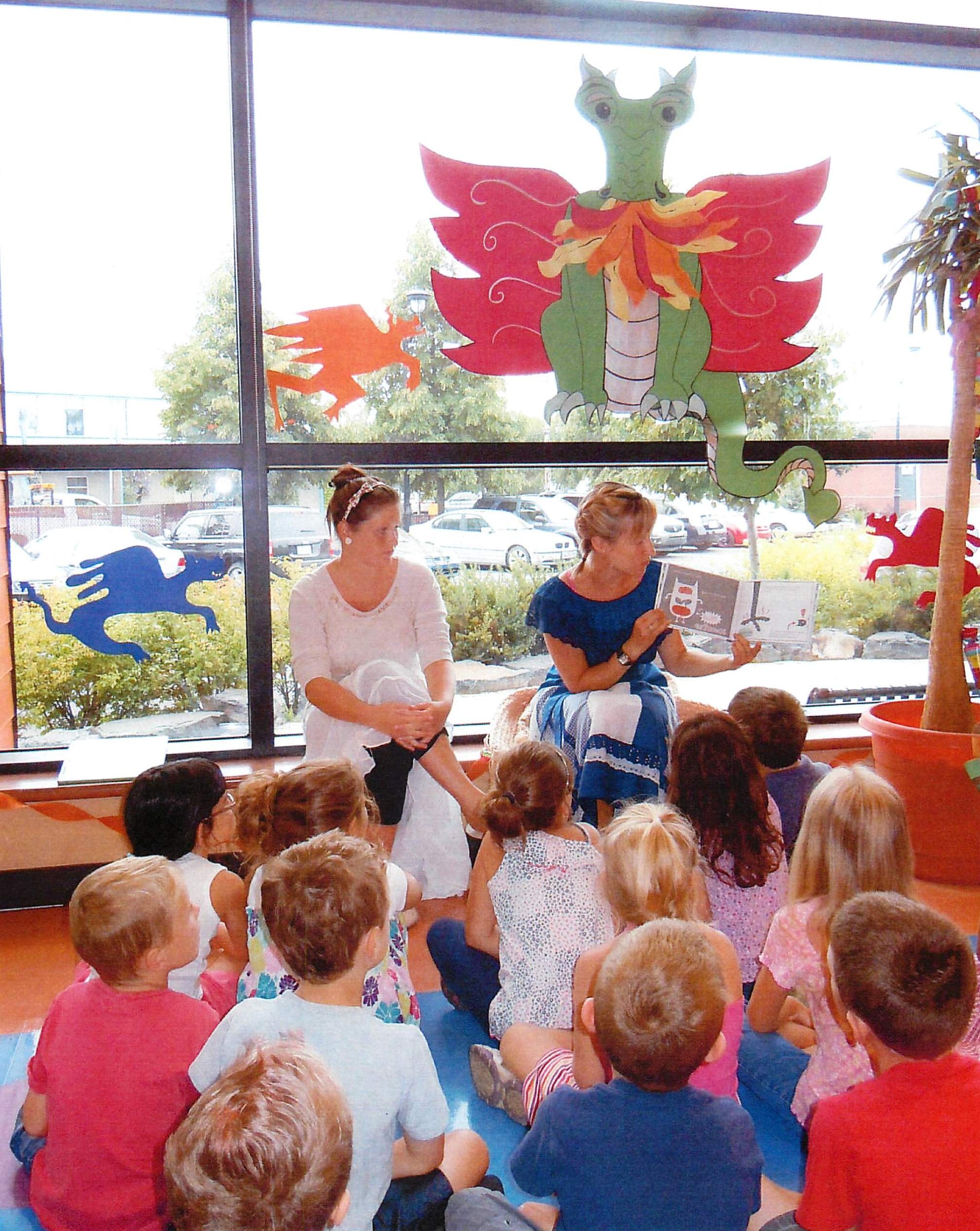
Children enjoy TD Summer Reading Club activities at Bibliothèque Sainte-Julie.

Children enjoy TD Summer Reading Club activities at Bibliothèque Sainte-Julie.

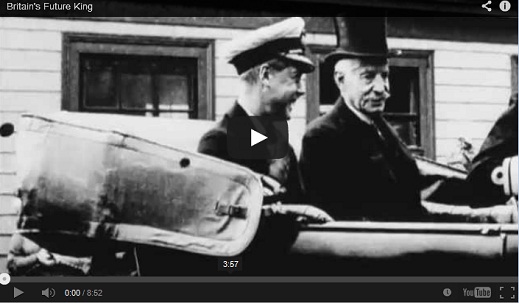
Britain’s Future King – A Silent film of the visit of Edward, Prince of Wales, to Canada in 1919– Now on YouTube

The visit of the Prince of Wales to Canada in autumn 1919 was one of the first major cross-Canada events covered by the motion picture newsreels. Library and Archives Canada has preserved silent film of the event, including the film entitled Britain’s Future King.

Black and white image of three women, smiling in a crowd.

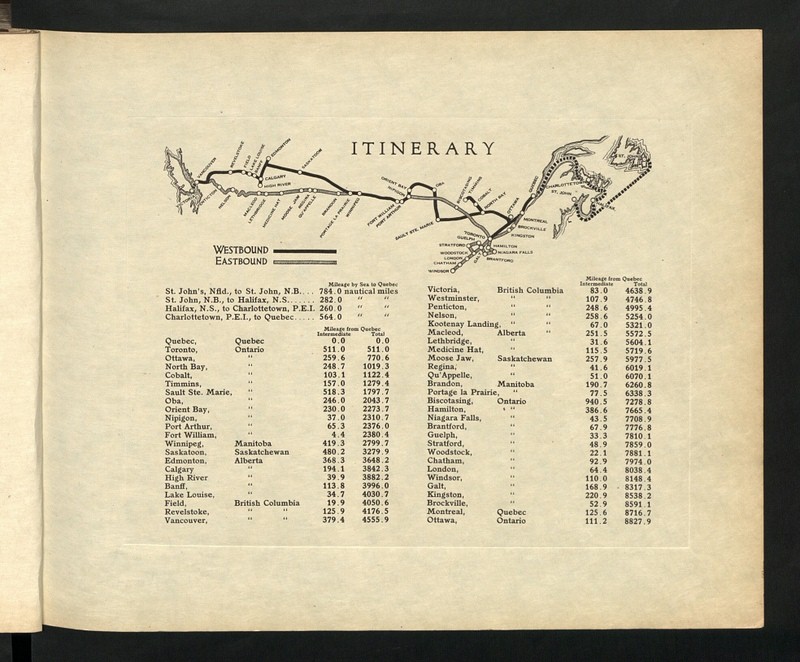
The Prince’s Canadian tour began on August 11, 1919, when his ship arrived at Newfoundland. It ended on November 10, when he left Canada by train to begin his visit to the United States. His Canadian itinerary took him to many cities across the country. Canadians gathered in cities, towns and villages along the route to see the Prince.

Itinerary from “Prince of Wales’ tour of Canada, 1919, a volume of photographs published by the Canadian Pacific Railway.” The National Archives, UK. CO 1069-286-7.

The visit had all the ingredients ideal for media coverage: an itinerary packed with photo opportunities and a public fascinated by celebrity and eager to see its community celebrations depicted in the newsreels and newspapers. Radio broadcasting was in its infancy, so it was up to the newsreels and the print media to report on the visit. In addition, Canada was in the mood for celebrating after the hardship of the war years.

Canadian weekly newsreels carried reports of the tour as it unfolded, bringing to audiences film of such events as receptions with First World War veterans, the opening ceremony of the Québec Bridge, the Prince laying the cornerstone of the Peace Tower of the new Parliament building in Ottawa, and a visit to a British Columbia sawmill.

The Prince viewed films of his trip while he travelled across Canada. Newsreels in Britain and other countries also showed film from the tour. Some of the newsreel companies compiled their footage into documentaries. For example, Pathéscope of Canada Limited issued two films, Britain’s Future King, and The Prince of Wales in Canada.

Son of George V, Edward became Prince of Wales in 1911. When his father died in January 1936, he became King Edward VIII but abdicated 10 months later. After his abdication, he was given the title Duke of Windsor.

Discover more:

Mission Accomplished! Access to 15 Databases in One Stop!

On December 18, 2012, Library and Archives Canada (LAC) announced the upcoming deployment of a series of 15 databases on Canadian census returns. Following the online publication of the 1861 Census returns database a few weeks ago, LAC is proud to report: mission accomplished!

Now, using the LAC website, it is possible to consult nominal indexes for census returns from 1825 to 1916. That is a total of more than 32 million documents. Moreover, all these indexes are available at no cost!

This massive undertaking required continuous cooperation from members of a number of LAC teams, as well as highly organized operations, over a number of
months. Continue reading