
By Martha Sellens
Several years ago, I was contacted by a researcher who was looking for the first photograph taken on a Geological Survey of Canada (GSC) survey expedition. They knew that the photograph was held by Library and Archives Canada (LAC), but they were having trouble finding it. At the time, I knew only a little about the GSC records that LAC holds. When I started looking into the GSC photograph collection, I immediately understood why the researcher was having difficulties. There was a lot of information about the collection, but not all of it was available to the public on our website, and what was available was difficult to navigate.
With a bit of digging and a few false starts, I was able to find the first photograph and a few others that the researcher was looking for. Together, we examined the glass plate negatives and fragile photograph albums at LAC’s Preservation Centre in Gatineau (fragile materials like these don’t travel from the storage site).
I was hooked. The GSC photograph collection has a huge variety of photographs taken across Canada as part of survey expeditions in the 19th and early 20th centuries. Yes, there are many photographs of rocks, as is only fitting for geologists, but there are also photographs of landscape views, Indigenous peoples, wildlife, European settlements, Chinese immigrants and the Canadian Pacific Railway, as well as other subjects.
The first GSC photograph was taken in 1860 by James Richardson on his expedition along the north shore of the Gulf of the St. Lawrence to the Strait of Belle Isle. It shows one of the expedition members sitting on a ridge of rock. The GSC photograph collection is numbered sequentially, and the photographs that Richardson and his assistant, Mr. Reeves, took on this expedition have GSC negative numbers between 1 and 28. At LAC, we have some of the original glass plate negatives as well as prints of the photographs.

GSC Negative 1, James Richardson, 1860, taken on his expedition to Quebec and Labrador (a038063)
After finding those photographs and learning more about the GSC photograph collection, I was determined to improve their description so that more people could make use of them. But how? The majority of these photographs were transferred to the archives in the 1970s, long before our current computer systems and databases were in use. Many of my predecessors have worked to improve the description of the collection over the years, and it was frustrating to see that their efforts could no longer be accessed or understood by the public for technical reasons.

Grand Trunk Pacific Engine No. 6 derailed at Fiddle Creek, Alberta, D.B. Dowling, 1911, GSC negative number 18883 (a045437)
My first step was to review the existing information that we had about the collection. The GSC photograph collection includes nearly 30,000 photographs. The existing finding aid provided online was a 150-page PDF that compiled a report, a box list, and a number of original captions in one giant document. In the late 1990s, LAC staff also created a dedicated database to make it easier to find individual prints and negatives. However, that database was never available online. Another issue was that it had to be migrated into a new software format in 2016, and some of the functionality was lost.

Camp fire group, D.B. Dowling, 1911, GSC negative number 18916 (a045420)
Analyzing and comparing all of this data became one of my work-from-home pandemic projects. Given the scale of the collection, I wasn’t able to do this work on an item-by-item level. Instead, I focused on two aspects of the collection: the photograph albums and the finding aids.
When I started, only two of the 78 photograph albums were described in our database. Now, each photograph album is described in LAC’s online database with information about the photographer, the geographic locations, the dates, the relevant GSC expedition, and the negative numbers assigned to the photographs by the GSC. I was also able to sort many descriptions of individual photographs into the albums where they are found.

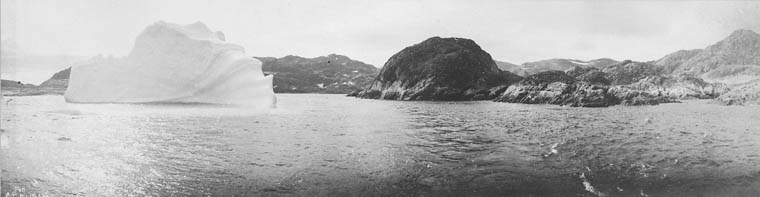
S.S. “Diana” with rudder crushed in ice off Big Island, Hudson Strait, A.P. Low, 1897, GSC negative number 2198 (a038232)
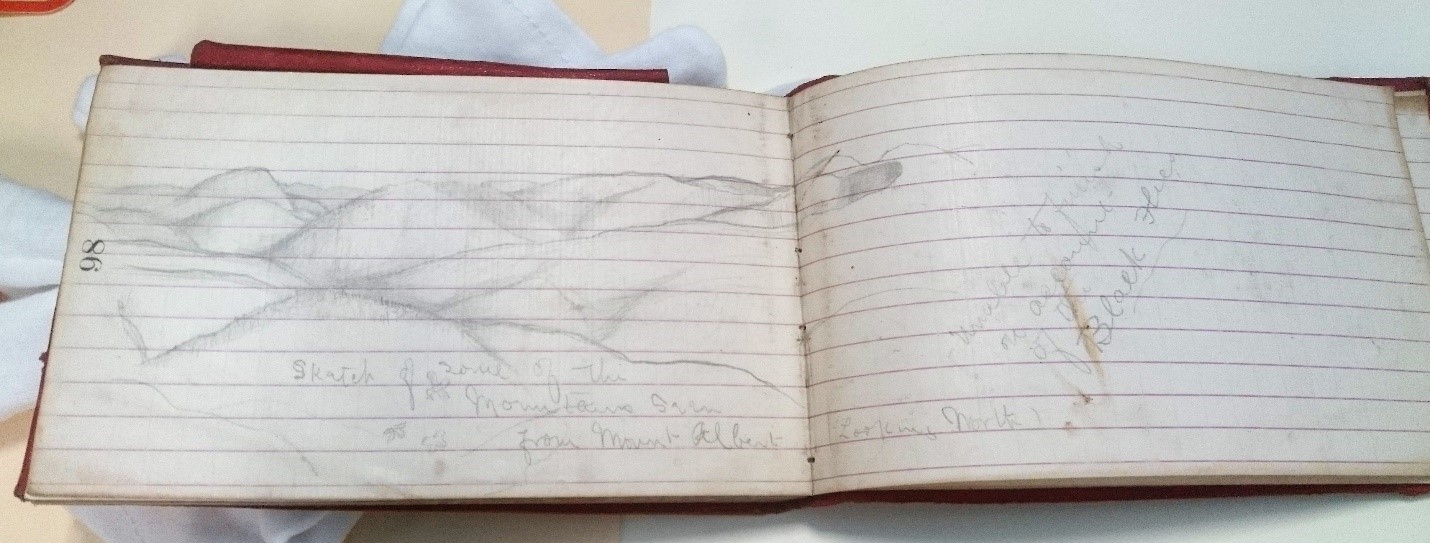
When it was available, I also included information about the GSC survey expedition depicted in each album, and I provided a reference to the original field notebooks also in the collection at LAC (see R214-65-1-E). James Richardson’s field notes (Québec – Manitou River and Île des Esquimaux regions and locations on Newfoundland) even discuss when he or his assistant took photographs!
I also created new finding aids by consolidating information from three or four different sources, so that researchers and archivists didn’t have to check multiple locations to learn everything. Through this process, I was also able to identify inconsistencies and errors, to ensure that the information was as up to date as possible.

Brokenhead River, Manitoba, at lowest rapids, J.B. Tyrrell, September 29, 1891 (a051459)
Now, if you’re looking for a photograph in the GSC collection, you can check one of several new finding aids that I created to find negatives (Finding Aid 45-36 Geological Survey of Canada Negatives), albums (Finding Aid 45-36 Geological Survey of Canada Albums) or prints (Finding Aid 45-36 Geological Survey of Canada Prints). The listings are not complete, but they provide information about nearly half of the photographs in the collection, and the updated format is easier to read and search. Most of the photographs in this collection are identified using a GSC negative number, like James Richardson’s GSC Negative 1. Sometimes we have both the original negative as well as one or more prints of the same image. For others, only the negative or a print have survived.

Dogs resting near Split Lake, Northwest Territories, J.M. Macoun, 1910, GSC negative number 14917 (a045274)
LAC also has many of the original catalogue cards that the GSC used to organize negatives in their photograph library. The cards often include the GSC negative number, photographer, date, location, and caption. Sometimes the cards will also mention if the negatives were damaged or broken. Portions of the cards are organized by location, subject, or negative number, so they can be used in different ways to find specific photographs. However, since the cards were created by the GSC, they don’t have LAC container information listed on them. These cards need to be used with the other finding aids to locate each item. But they are also useful for contextual information that we haven’t yet been able to add to LAC’s database. If you have found an interesting photograph, and want to know more, you can check the catalogue cards to see if they have any further information there.
My work on improving the GSC collection is far from over, but I hope that the new finding aids and descriptions will help more people to explore this fascinating collection.
Additional resources
- Geological Survey of Canada Photographs (R214-419-X-E)
- Photograph album: Quebec and Labrador 1860, James Richardson (R214-2999-9-E)
Martha Sellens is an archivist in the Government Archives Division at Library and Archives Canada.



 Library and Archives Canada Blog